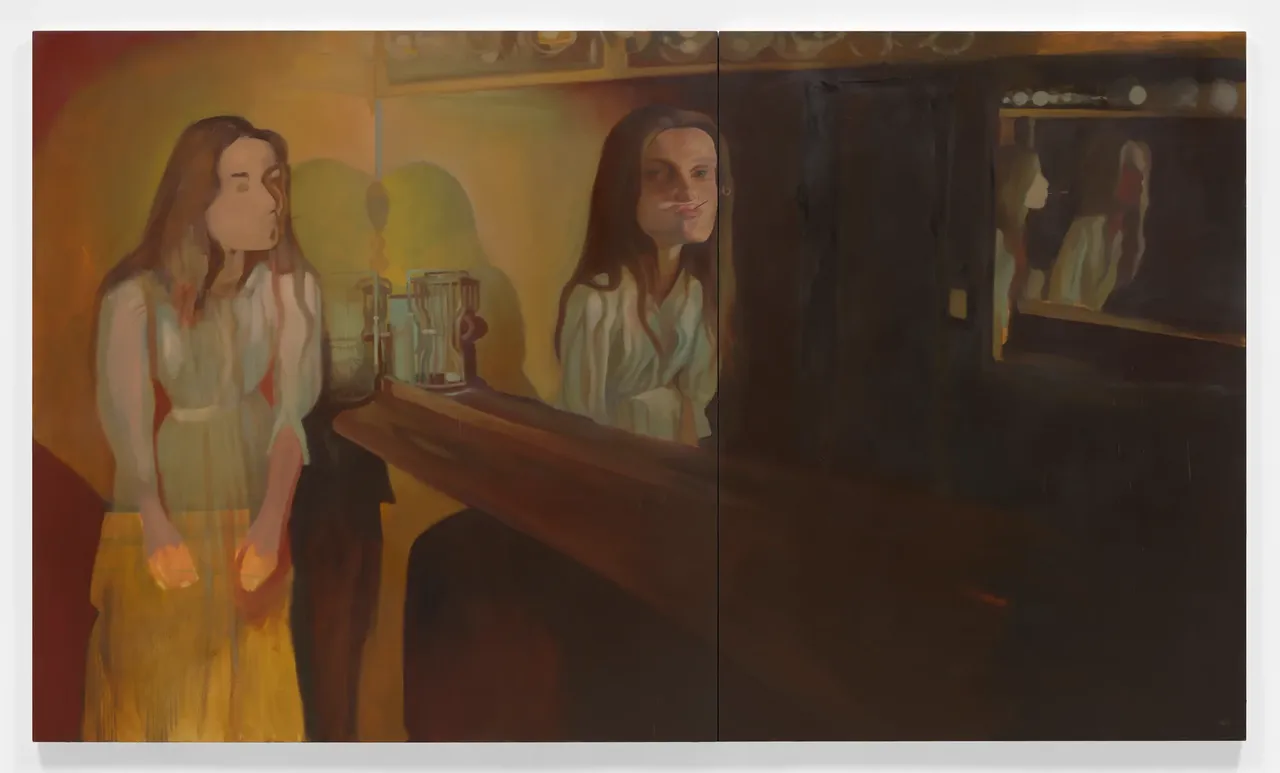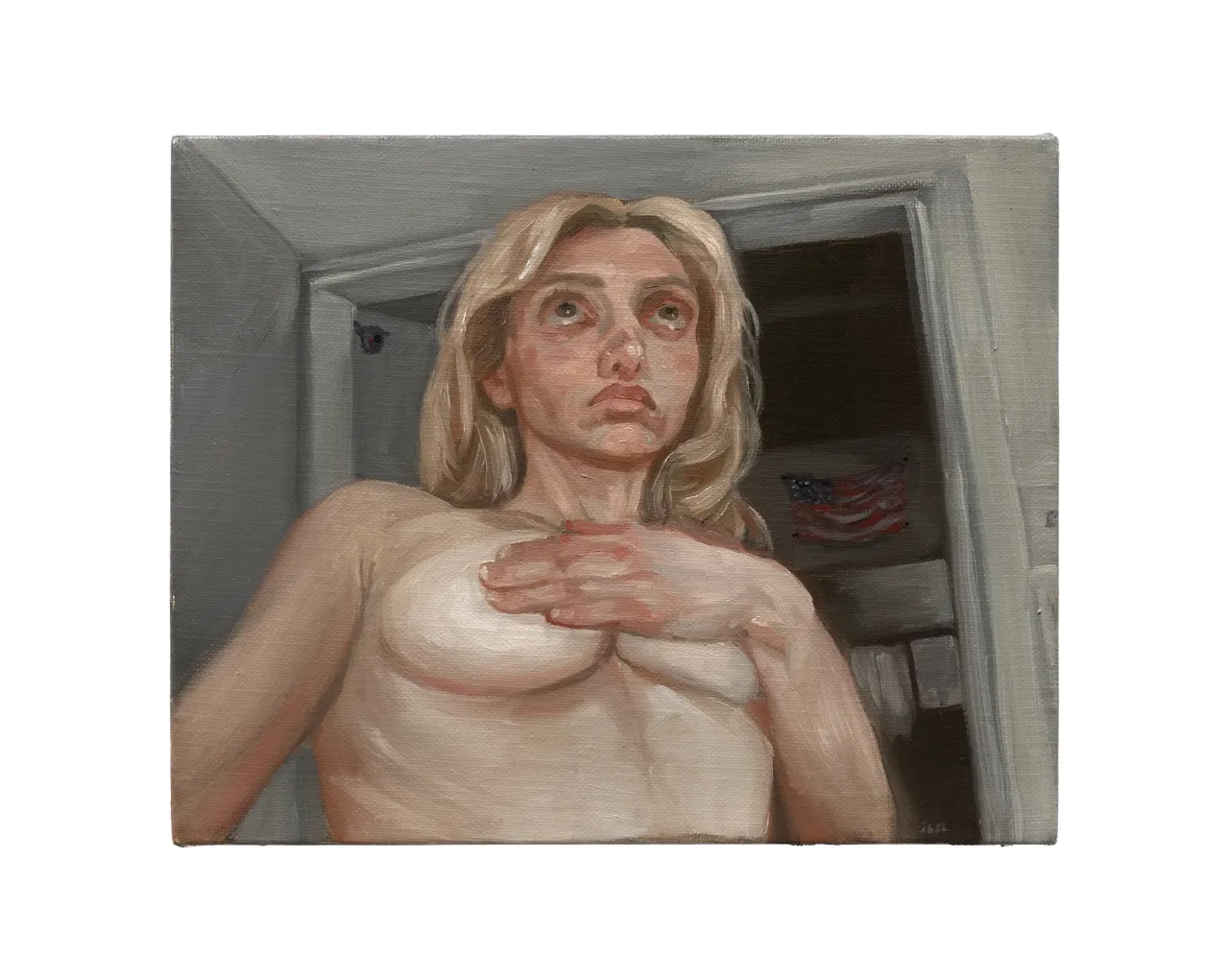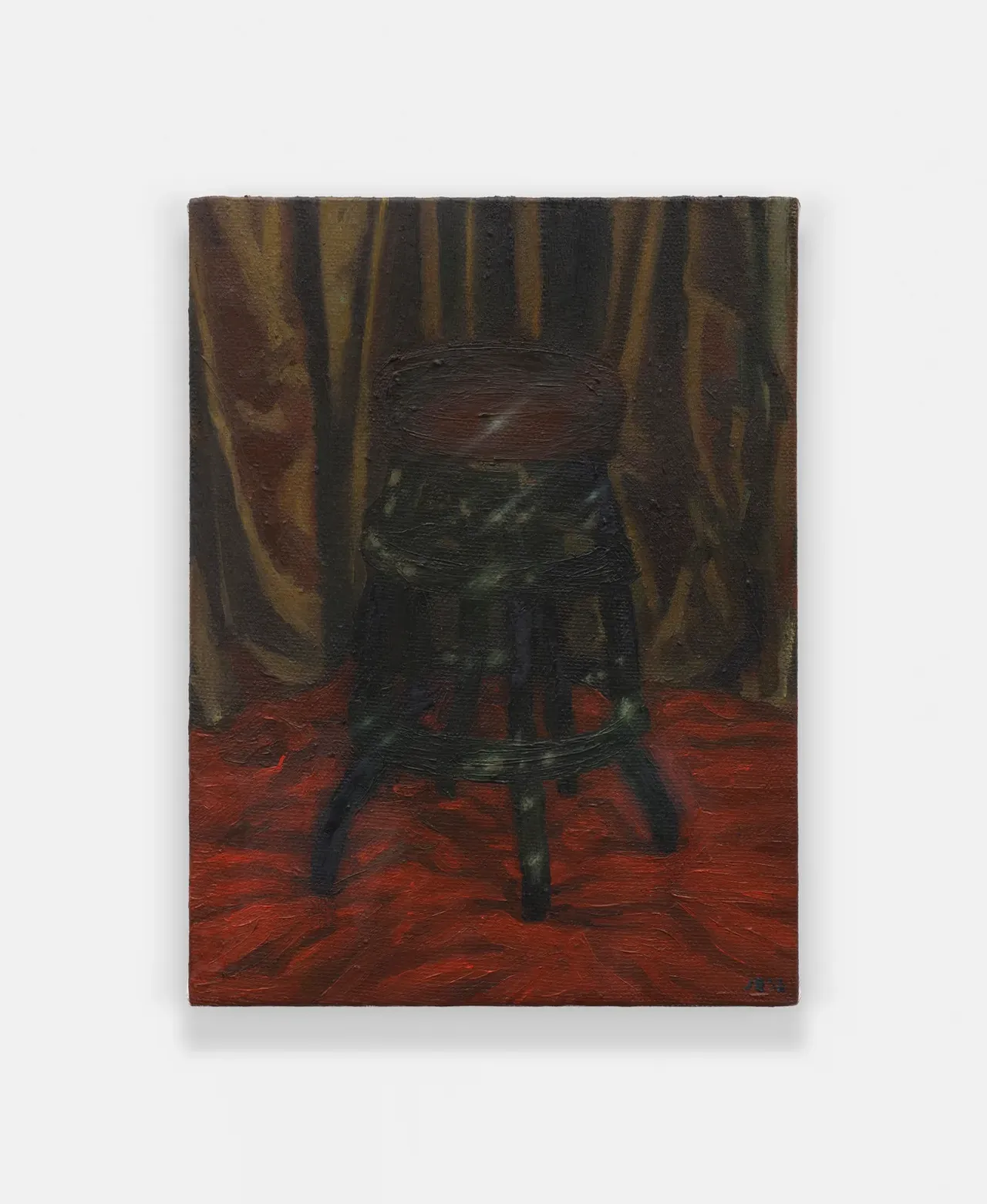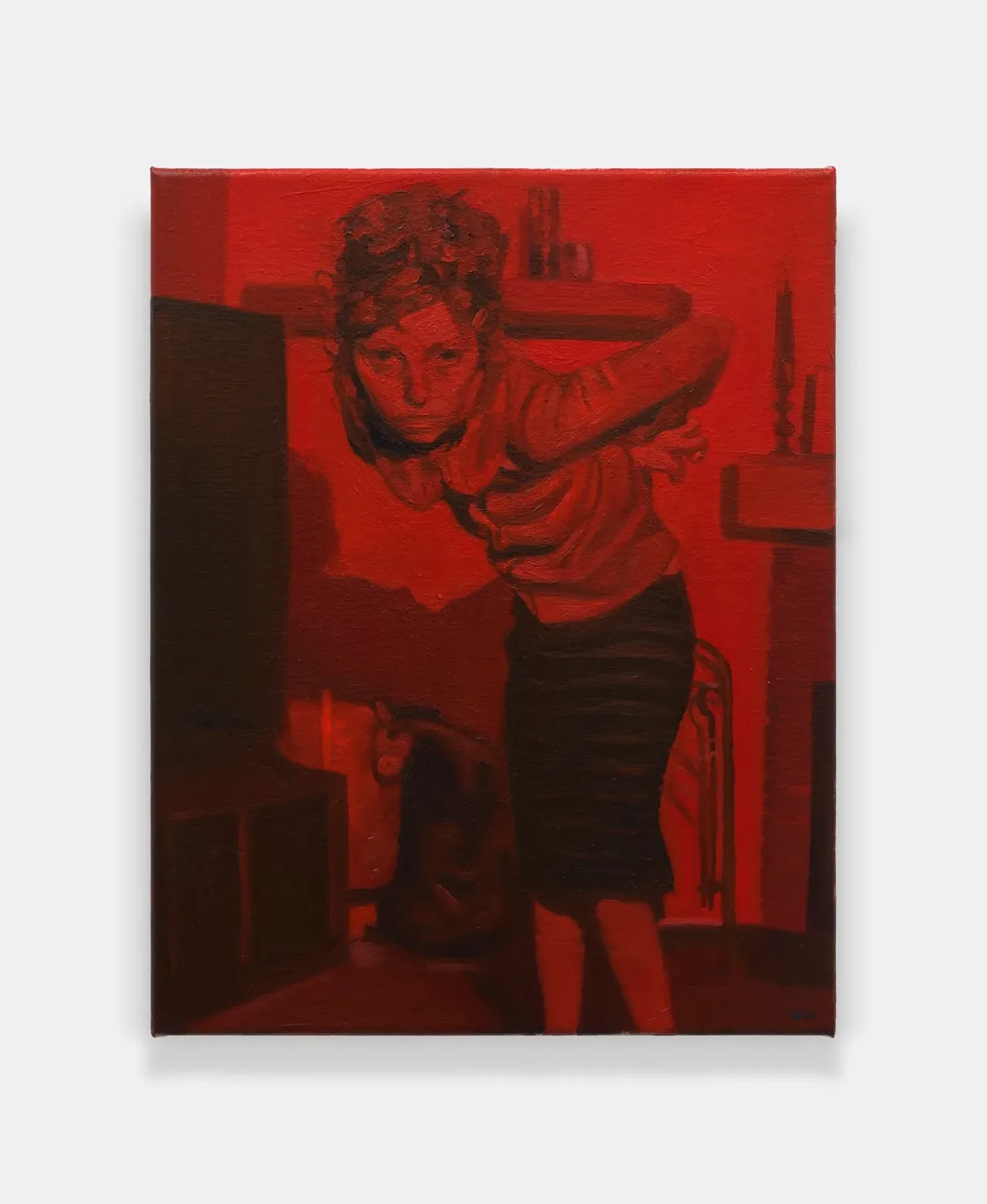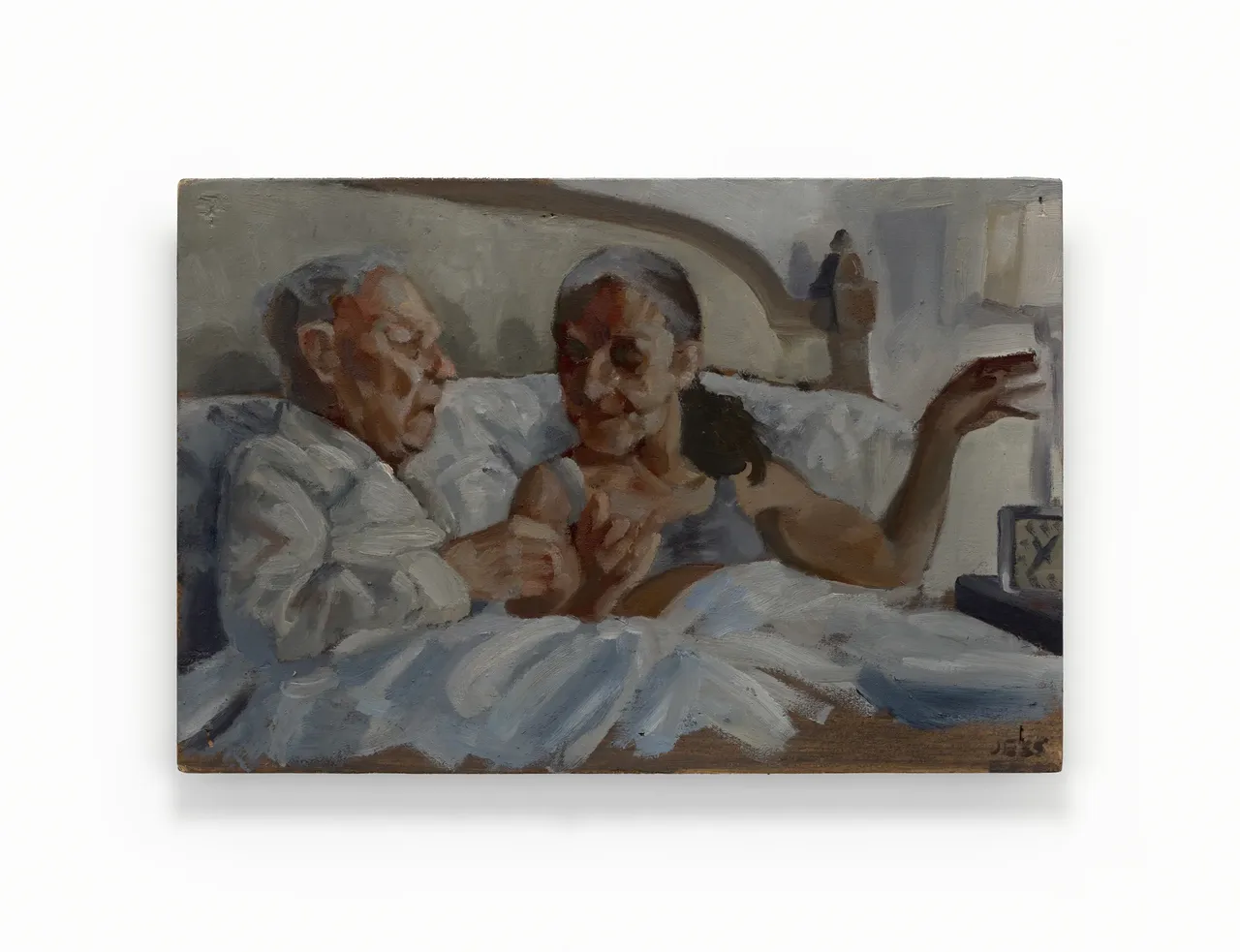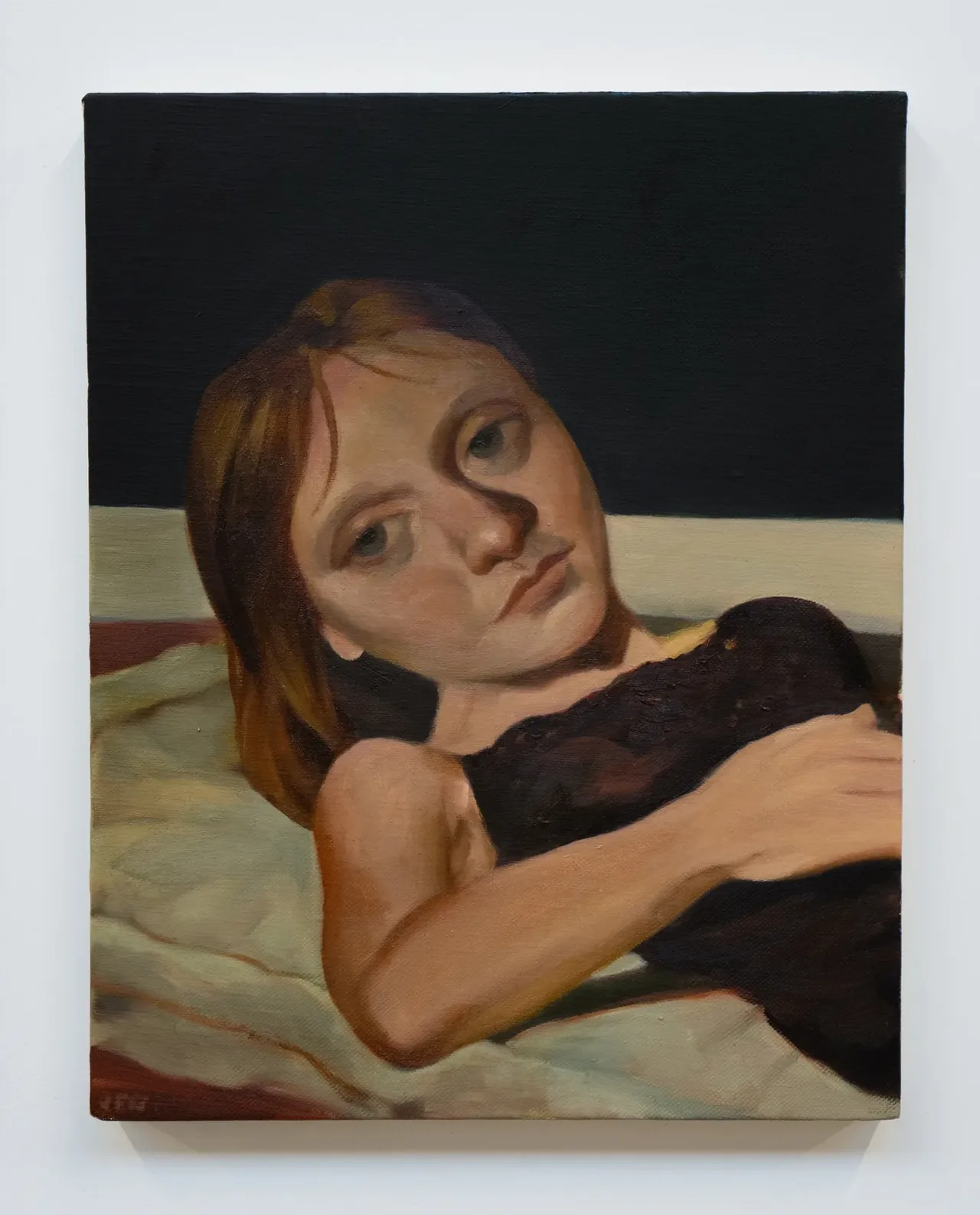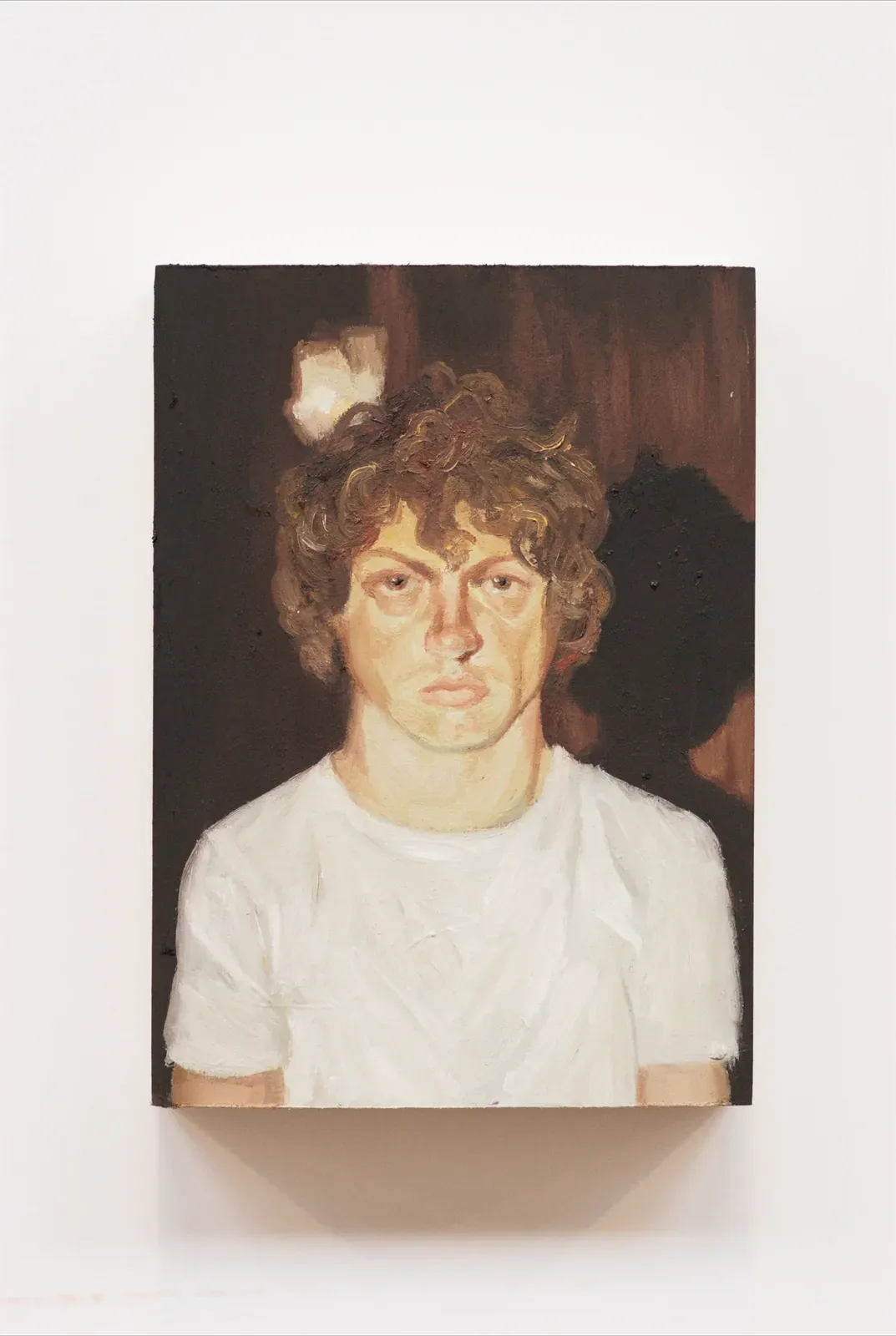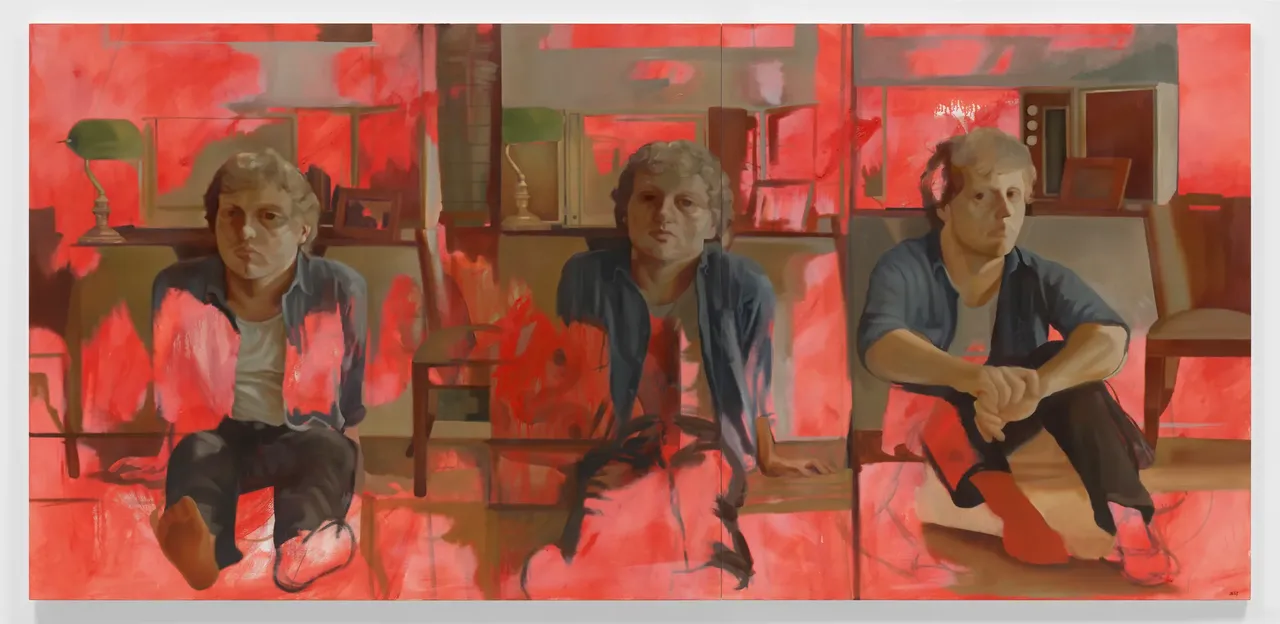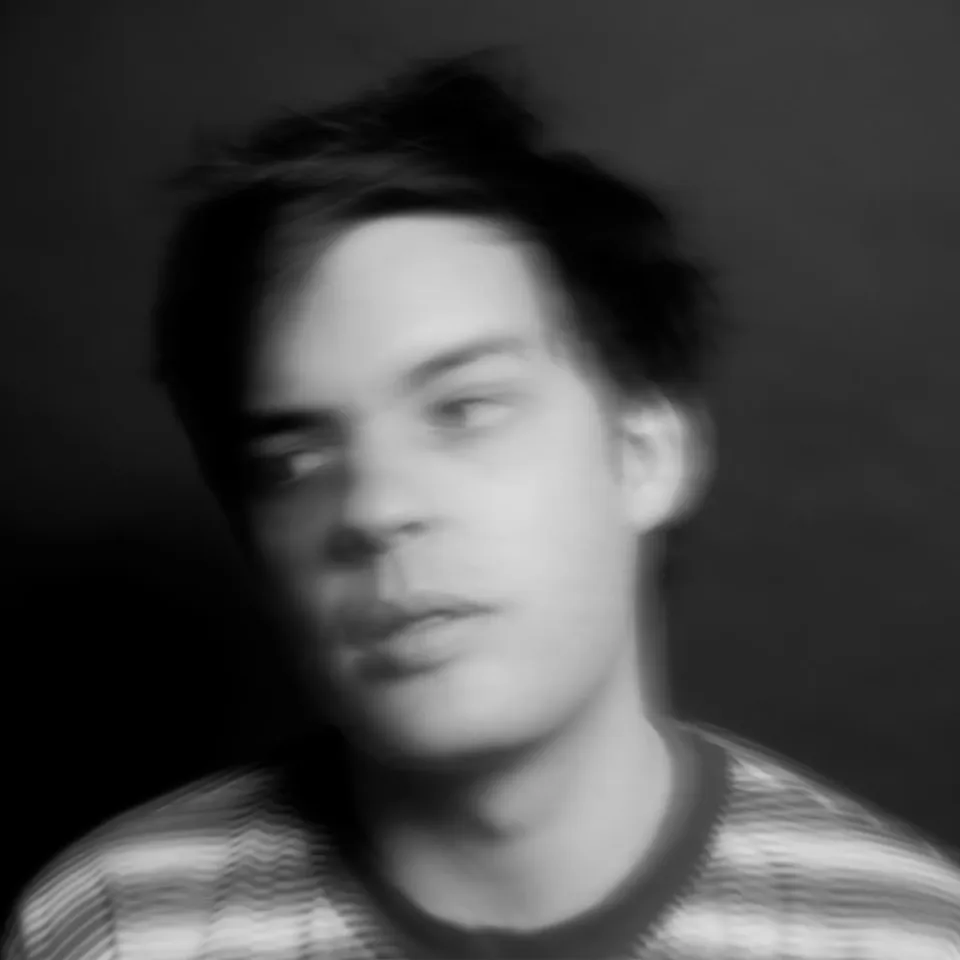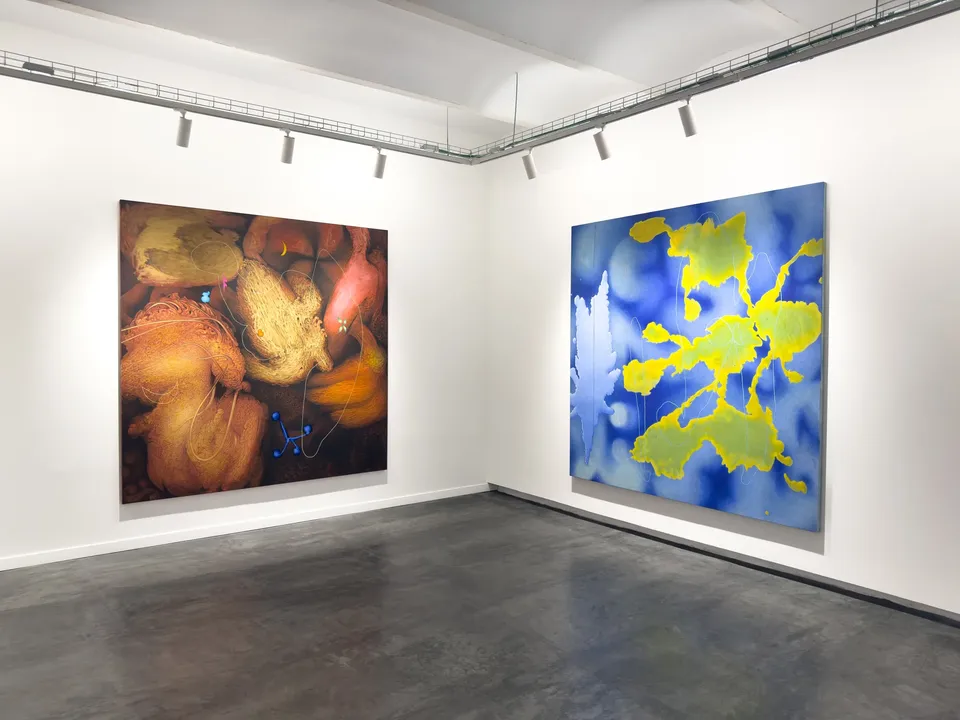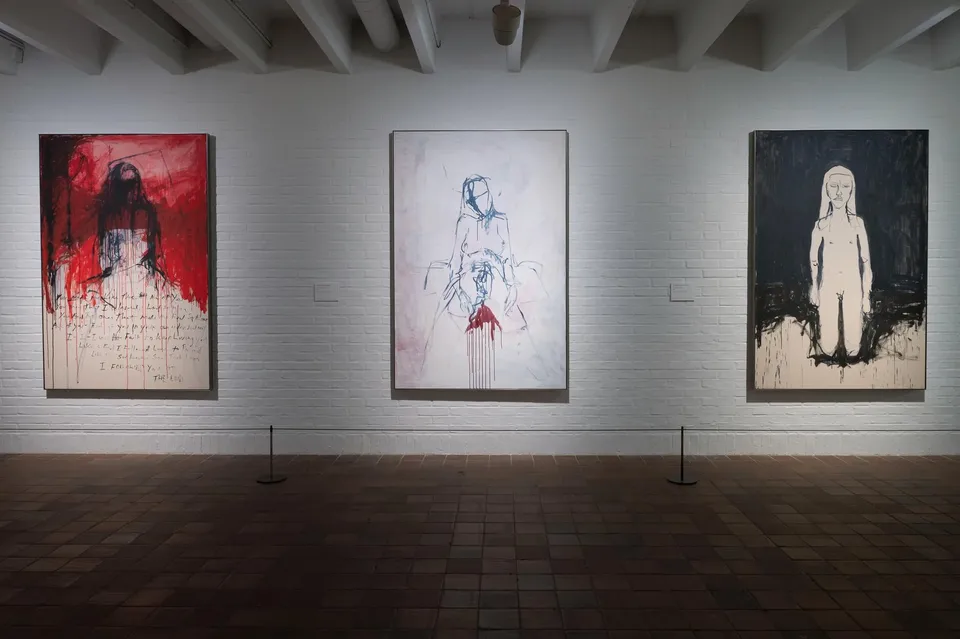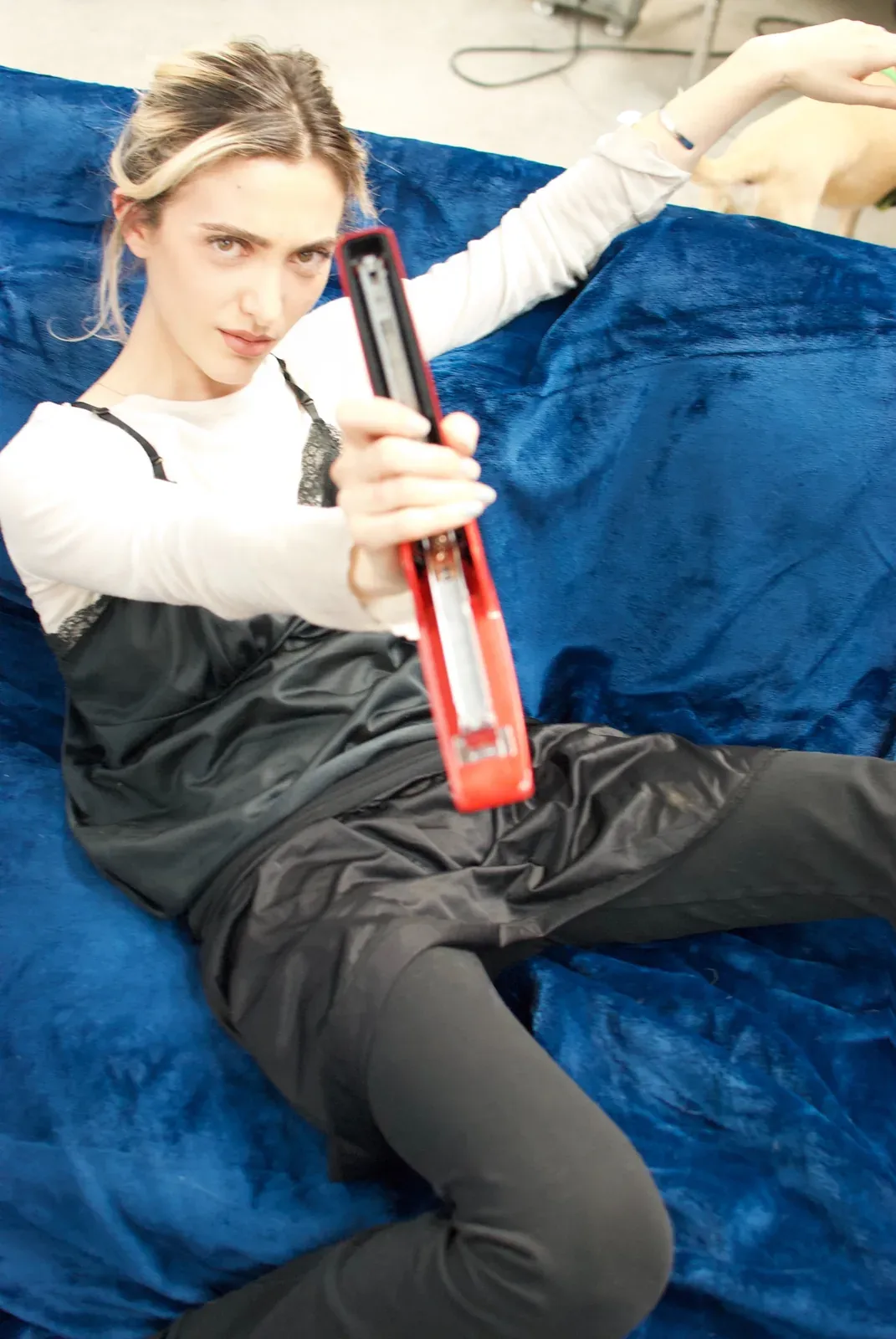
Jess Valice paints faces, but certainty is not what she is after. Her figures seem to emerge somewhere between memory and invention, recognition and projection, as if something about them is always just beyond reach. Coming from a background in neuroscience, Valice once looked closely for answers; now, she is more interested in what remains unresolved. Her paintings are less about revealing what lies beneath a face than about preserving the mystery of what cannot be quite known.
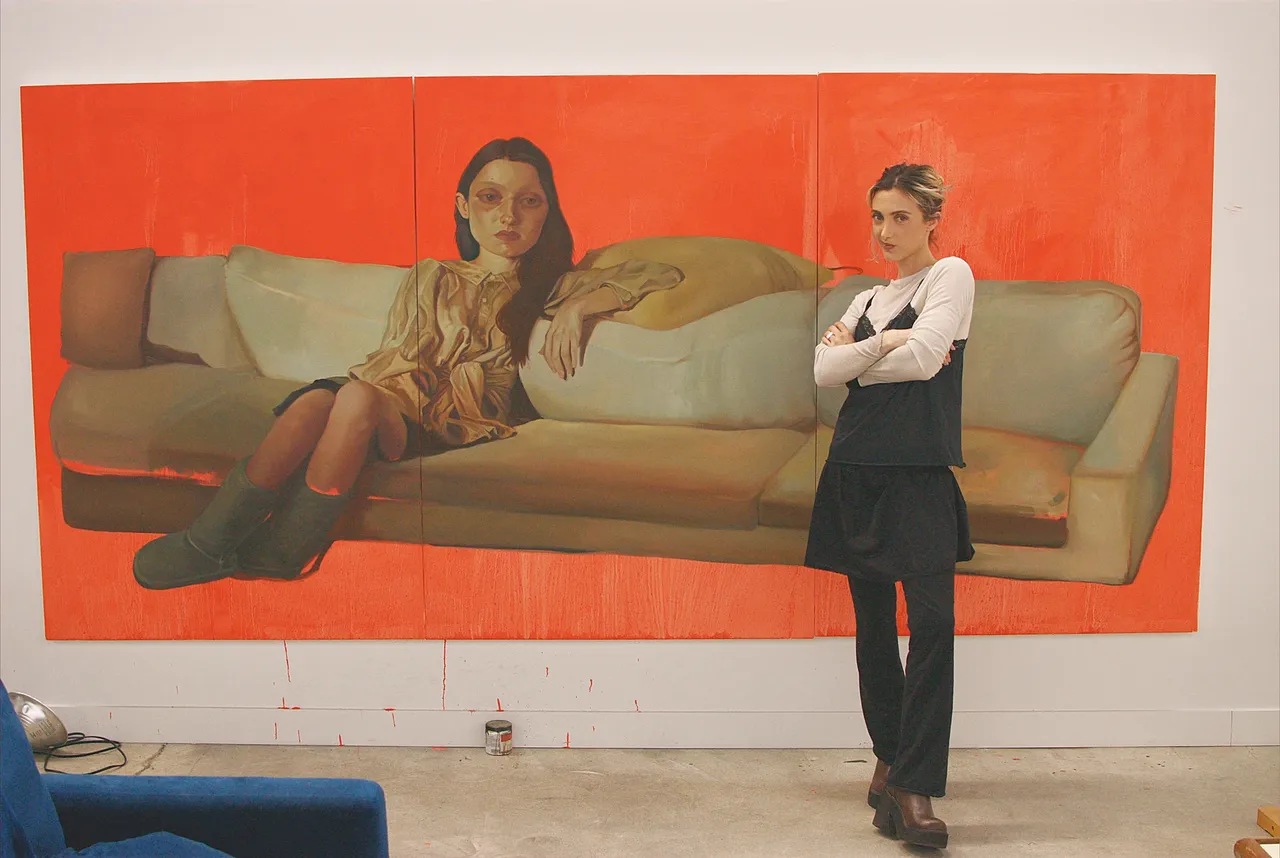
You come from a background in neuroscience, a field that seeks to explain and map what happens in the mind. Yet your paintings seem to insist that there is always something fundamentally unknowable about another person. Do you feel you left science because it couldn’t answer the questions you were asking, or because it taught you that some questions can never be answered?
That’s an interesting question. The truth is, my interest in neuroscience, or the sciences in general, blossomed from the idea that the right questions weren’t being asked in the first place. Not by myself, nor the people around me. It was an accelerated learning process in which the world, and anything that anybody could learn from it from that moment in history, was accessible beyond my teenage comprehension. I love science, and that experience in school only heightened my curiosity. I never felt that leaving science meant missing out on anything other than a life-long dedication to a study that didn’t necessarily suit me. I wanted to cure Parkinson’s and schizophrenia; a hard task to mature into as a mediocre academic. Science was never really my calling. It has always been art. I found after becoming an artist professionally, however, that most of the questions I’ve ever wanted answered, are, and probably always will be, under thorough investigation in the studio. One important lesson that I took with me from my education in science, is that one can never assume that what is currently considered fact will remain in that state. Nothing will ever be understood completely. The real question is, how will you surrender your ego to the unknown?
You’ve spoken about painting as a process of searching rather than illustrating an idea. When you’re working on a face, what tells you that you’ve finally arrived at something worth keeping?
I love to romanticise the studio process for any artist as they go searching for answers in their
own work. I think that’s really when amazing things happen for an artist’s work. The idea of filling
colour within the lines of some old feeling fills me with the same kind of nausea as doing my taxes. The decisions I make while I’m painting are more often inconsistent with previous work because I appreciate the emotional experience that arrives when I’m working. Personally, when I see an artwork that involves malleable goo like paint and clay, or even drawing materials, I hope to see emotional expression in the artist’s movement. A huge fucking chunk of paint mixed with sand or crap lying around aggressively tossed onto a canvas, or scribbles so tightly bound, that if unwound, slowly reveals the artist’s psychosis as it stretches for miles and miles. Whatever decisions I make in the moment are very telling and I invite them all in, with the hopes that something I’ve never seen before will happen. I mean, you can hope (laughs).
own work. I think that’s really when amazing things happen for an artist’s work. The idea of filling
colour within the lines of some old feeling fills me with the same kind of nausea as doing my taxes. The decisions I make while I’m painting are more often inconsistent with previous work because I appreciate the emotional experience that arrives when I’m working. Personally, when I see an artwork that involves malleable goo like paint and clay, or even drawing materials, I hope to see emotional expression in the artist’s movement. A huge fucking chunk of paint mixed with sand or crap lying around aggressively tossed onto a canvas, or scribbles so tightly bound, that if unwound, slowly reveals the artist’s psychosis as it stretches for miles and miles. Whatever decisions I make in the moment are very telling and I invite them all in, with the hopes that something I’ve never seen before will happen. I mean, you can hope (laughs).
Your figures rarely reveal exactly what they are feeling, yet viewers instinctively try to read them. Are you interested in that impulse to project ourselves onto another face?
Yes. If I am honoured enough to have an emotional reaction from a viewer, I’d encourage
introspection!
introspection!
“I notice my own delusion when I paint an existing person — personifying them as a character in my world.”
There is a remarkable sense of restraint in your paintings. In a culture that often rewards emotional exposure and immediacy, why does ambiguity feel more truthful to you than certainty?
It might be the culture, honestly. I find myself more drawn to biblical art and ancient petroglyphs for their ambiguous yet cryptic narrative. I hope to tell a story about a moment’s everything without telling you absolutely anything.
Your paintings often feel suspended in time, as though they exist just before or just after something has happened. Do you think of painting as a way of slowing down the act of looking?
Sure. A painting only has to exist for a moment. Until you look at it again, who knows what it’s
supposed to mean? One could only hope for the work to time travel.
supposed to mean? One could only hope for the work to time travel.
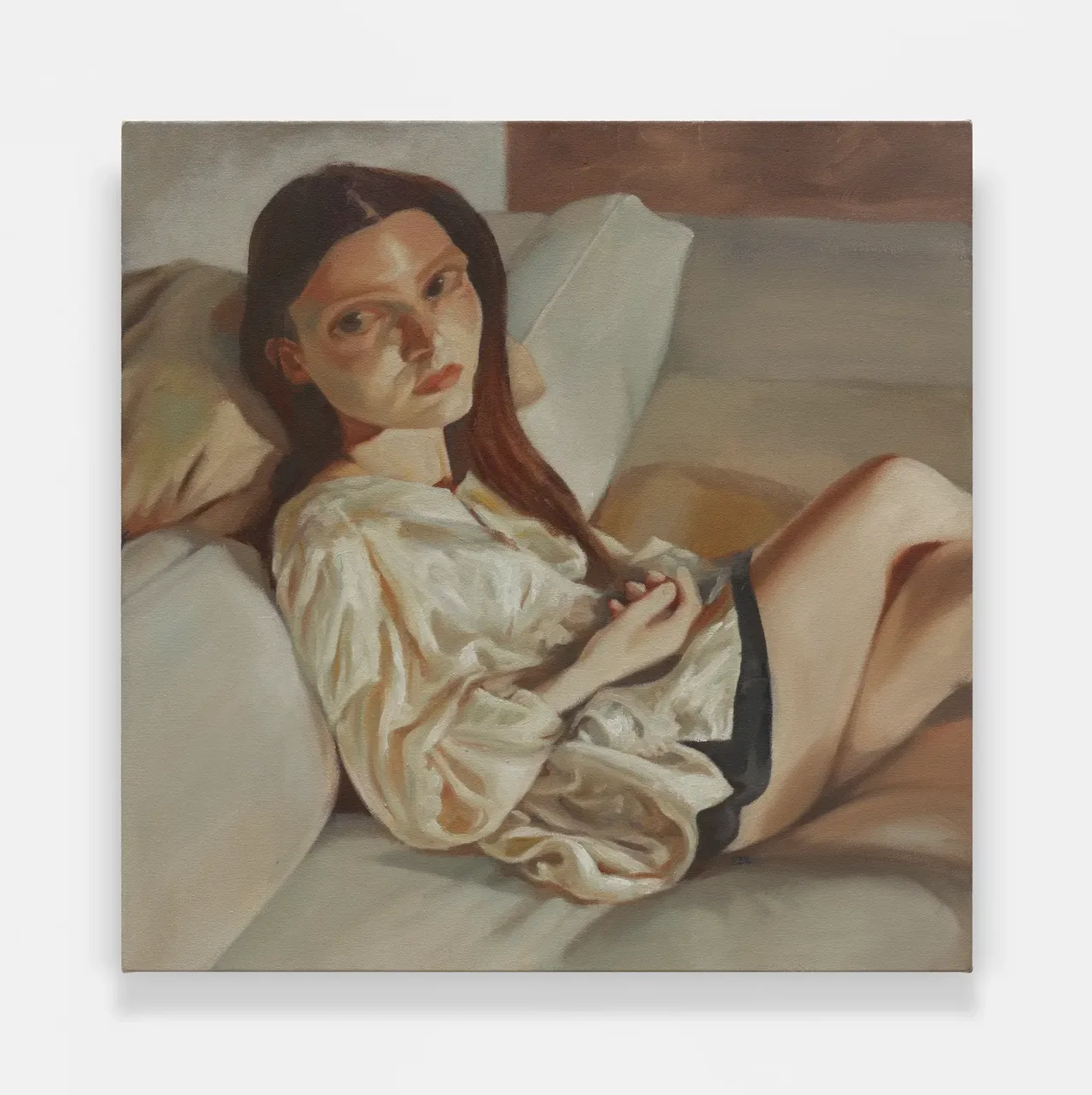
You’ve said that you rarely begin with a fixed concept, and that you often understand the work only after it has been made. Does that uncertainty still surprise you, or has it become an essential part of your practice?
The surprise is essential. I do not want to see a regurgitation of any work I’ve made in the past. It’s been done, but it’s not for me.
You describe each painting as a kind of diary, yet those deeply personal works eventually enter galleries, museums, collections, and other public spaces. How does your relationship with a painting change once it leaves the studio?
Over the years, I’ve become more comfortable with my sense of detachment. So, once they’re gone, it’s on to the next. However, much like grief, the reminder of those old works later on brings me back to the place I was when they were made. It is a melancholy feeling, but humbling and hopeful. So much of the work I made in the past seemed to me that they showed my lack of classical training, but seeing them now, I feel extremely proud. And sometimes, if enough time has gone by, I can almost feel the emotion from the painting that I had hoped others would experience.
“Nothing will ever be understood completely. The real question is, how will you surrender your ego to the unknown?”
You can spend an extraordinary amount of time looking at a single face while painting it. Does prolonged observation bring you closer to that person, or does the image become even more mysterious the longer you look?
That is a whole journey in itself. I notice my own delusion when I paint an existing person —personifying them as a character in my world, having them live vicariously through the emotions that I am bestowing on them. When it is someone I know, I do place their attitude in the work, or their deep fears that I imagine they have. It probably is unfair. Otherwise, I do get a kick out of knowing where all of the freckles are on someone’s face for the rest of my life.
Your paintings often feel deeply psychological without becoming descriptive. Do you think memory is more reliable as an image than as a story?
Yes. Or, in a synaesthesia way, the association with an image, colour, number, expression, combination of colour and direction or distance. I have somewhat of a poor memory, so the memories that do stick seem to be very telling. There’s an obviousness with how important it is to have an imprint of information, like a tattoo on your iris. Then, there’s nowhere to run.
As you prepare to participate in the upcoming group exhibition at the Grand Palais, does exhibiting in new contexts influence the way you think about your work, or do you prefer each painting to exist independently of where it will eventually be seen?
That’s interesting. I guess I never really thought about how that setting would influence the work.
The escape from the average white-walled exposition space does fluctuate the temperature quite a lot when viewing artwork. That is important. There is a hope that the work will adapt to its surroundings in any setting independently, however, there is no preference. Like mirrors, hang them where you like, but wherever you do, it risks highlighting a new perspective. So, I’m interested in seeing my work in the Grand Palais. I’m not sure what I’ll feel when I do, but in December, I’ll be ready for what comes up.
The escape from the average white-walled exposition space does fluctuate the temperature quite a lot when viewing artwork. That is important. There is a hope that the work will adapt to its surroundings in any setting independently, however, there is no preference. Like mirrors, hang them where you like, but wherever you do, it risks highlighting a new perspective. So, I’m interested in seeing my work in the Grand Palais. I’m not sure what I’ll feel when I do, but in December, I’ll be ready for what comes up.