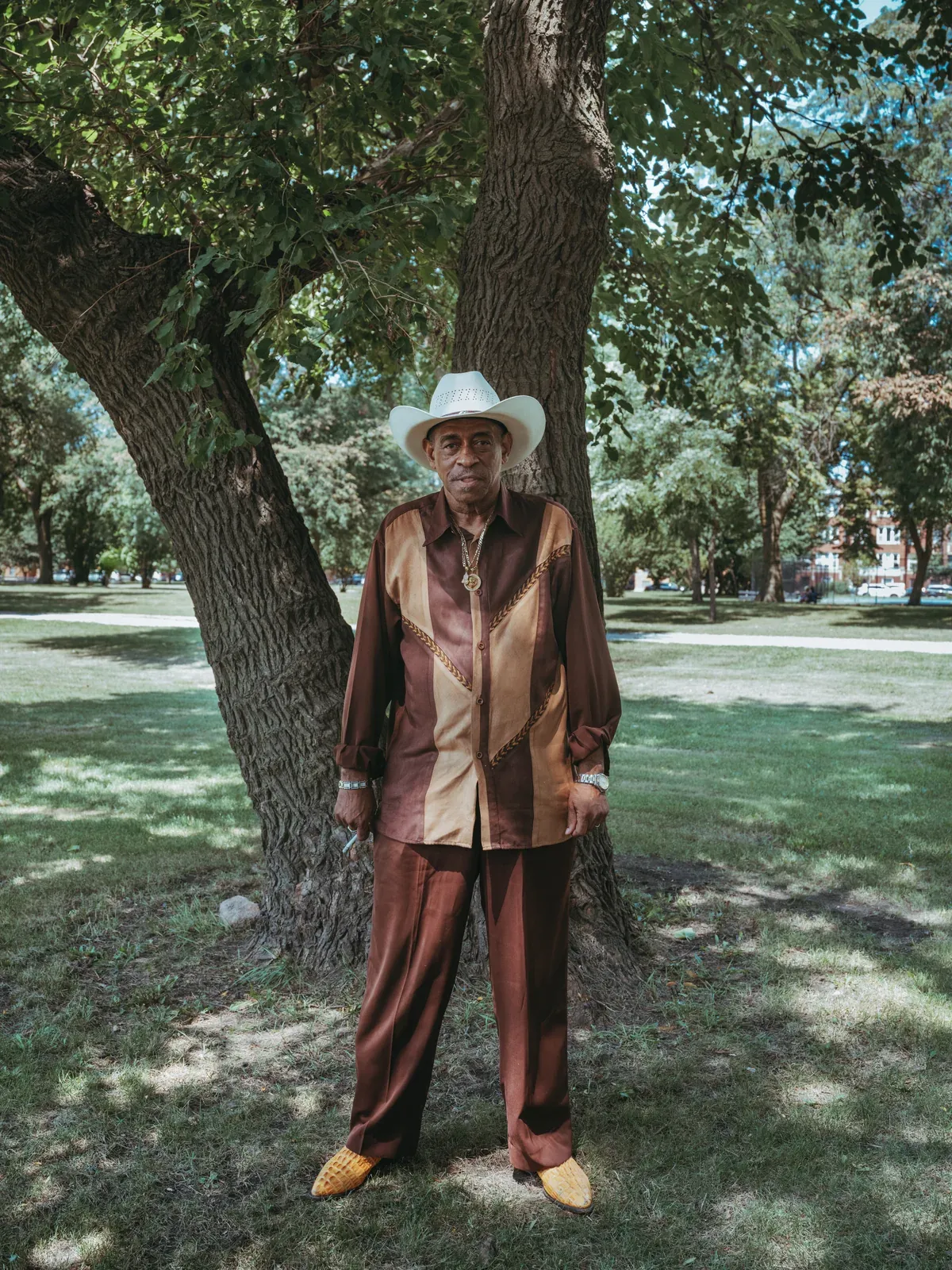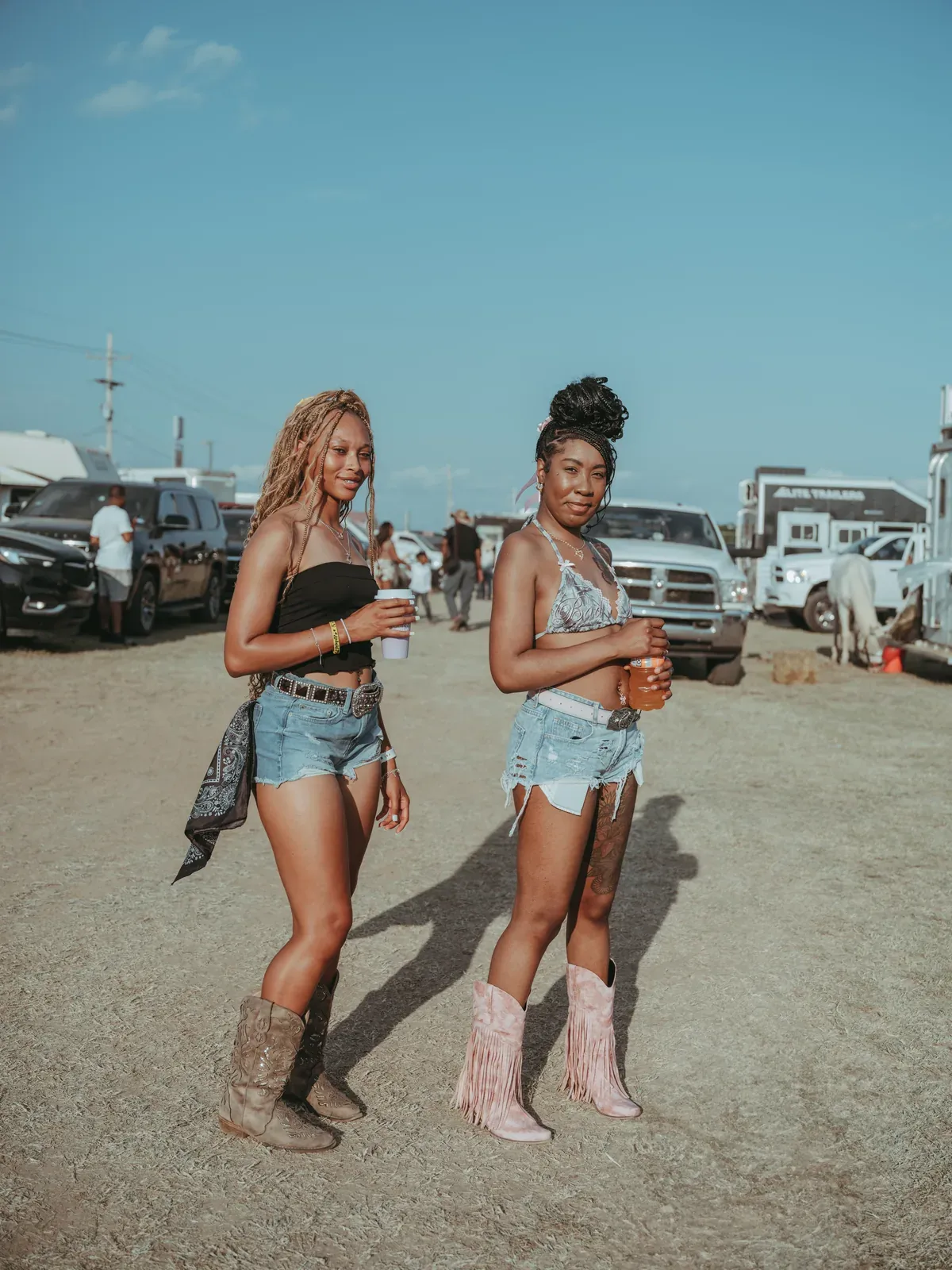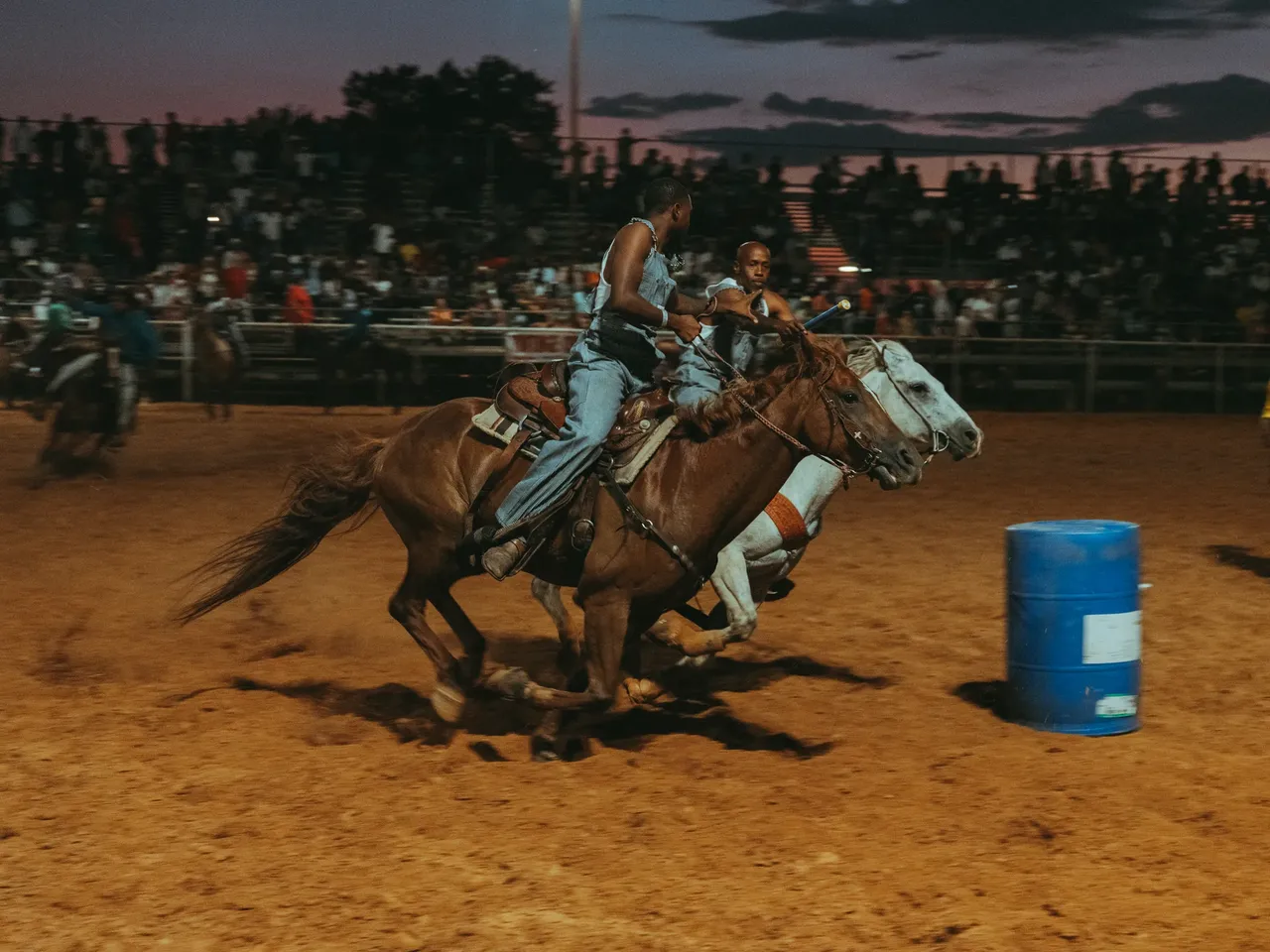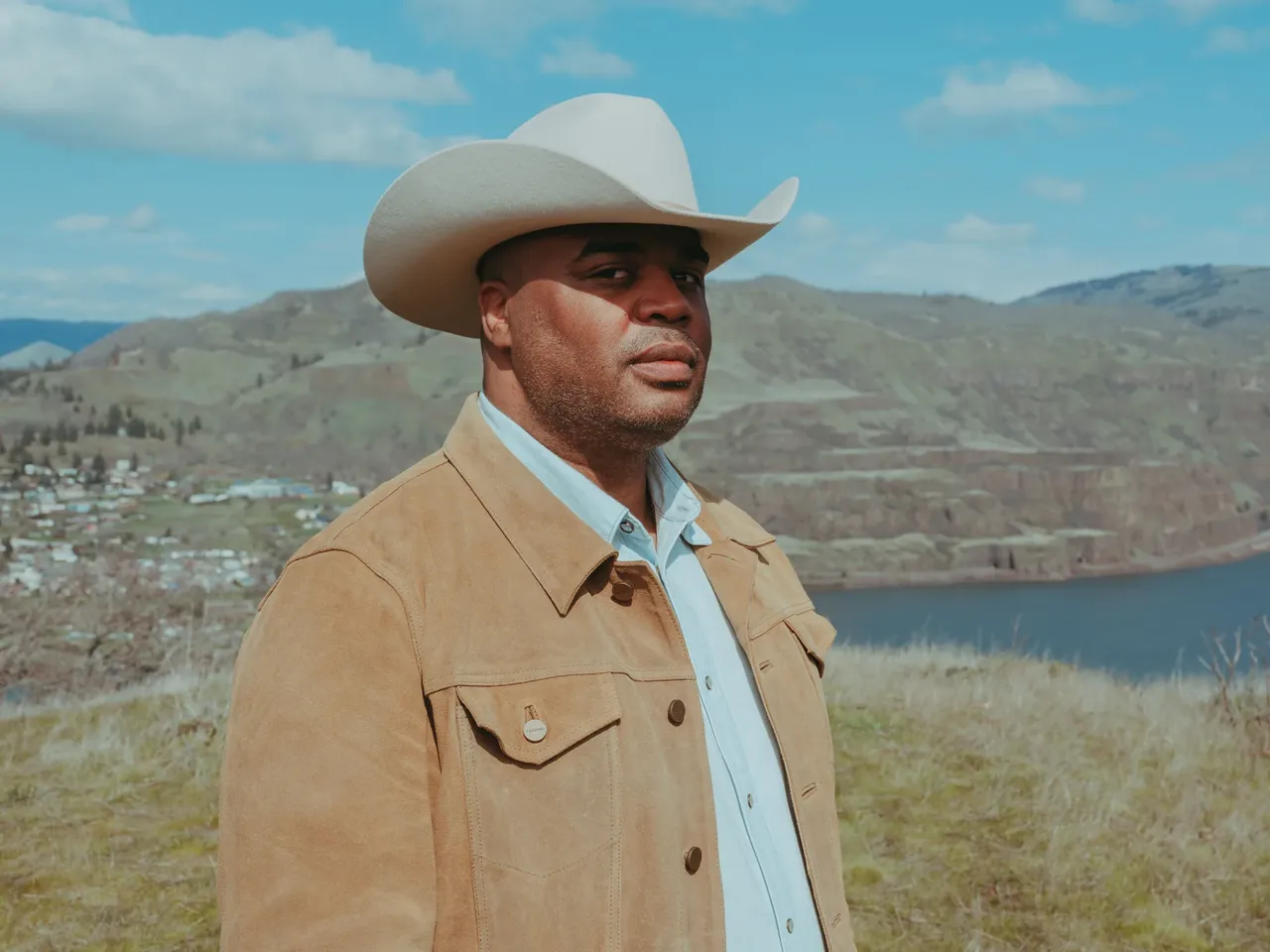
For more than a decade, photographer Ivan McClellan has been documenting a side of the American West that popular imagery has too often left outside the frame. His photographs centre Black cowboys and cowgirls not as a recent addition to Western culture, but as people whose families, traditions and relationships with rodeo stretch back generations.
McClellan first encountered Black rodeo culture in Oklahoma in 2015. What began as curiosity quickly became a long-term photographic practice, taking him from the spectacle of competition into the quieter spaces surrounding it: families travelling together, children watching from behind fences, athletes preparing to ride and communities supporting one another. Now, his project has expanded beyond photography. Eight Seconds: Legacy in Motion, published by Damiani Books, brings together over ninety previously unpublished photographs made across more than a decade, while the 8 Seconds Rodeo creates a physical platform where rodeo, music, fashion and community can exist together. For McClellan, documenting Black cowboy culture has become inseparable from creating space for it.
Here, McClellan speaks about the history behind the image of the American West, the relationship between individuality and community, the responsibility of photographing a culture, and what it means to allow the next generation to see themselves.
You first encountered Black rodeo culture in Oklahoma in 2015. What was it about that first experience that made you realise you had found a subject you wanted to keep returning to?
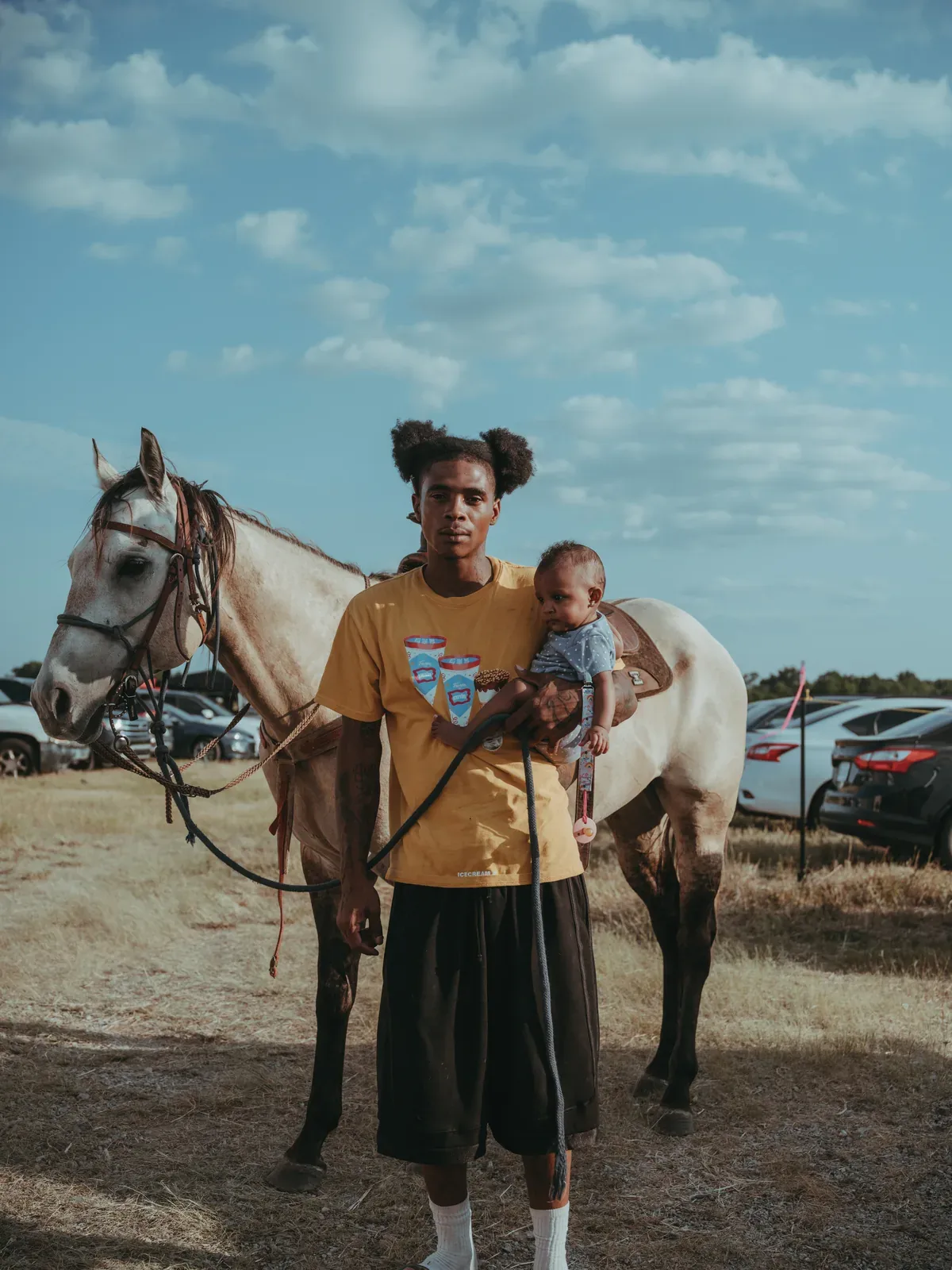
I grew up in Kansas City, Kansas, but I didn’t grow up around rodeo. Like a lot of people, when I thought about cowboys, I had a very specific image in my head, and it wasn’t Black people. When I went to Oklahoma in 2015 and experienced a Black rodeo for the first time, I was blown away. There were thousands of Black people there. Generations of families. Cowboys and cowgirls who had been doing this their entire lives. It felt incredibly familiar and completely new to me at the same time.
I started taking photographs, but pretty quickly I realised this wasn’t something I could understand in one weekend. I wanted to know these people. I wanted to understand their families, their history, why they rode, what this culture meant to them. That curiosity kept bringing me back.
I started taking photographs, but pretty quickly I realised this wasn’t something I could understand in one weekend. I wanted to know these people. I wanted to understand their families, their history, why they rode, what this culture meant to them. That curiosity kept bringing me back.
You’ve said that Black men and women have been cowboying “since the beginning”. Why do you think this history has remained so absent from the dominant image of the American West, and what changes when Black cowboys and cowgirls are placed at the centre of that image?
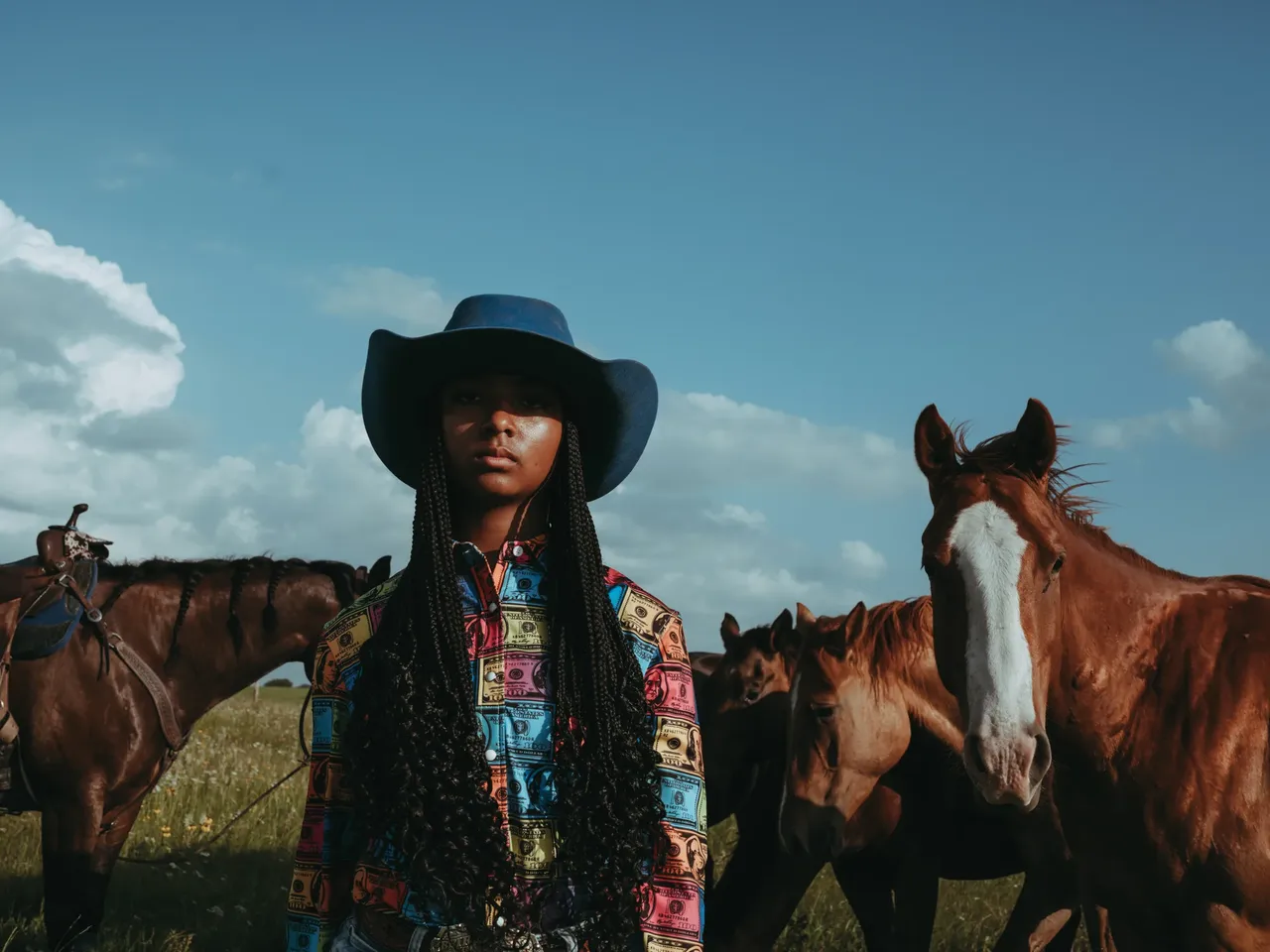
Black people have always been part of the West. They worked cattle, trained horses, competed in rodeos and built communities. But the version of the West most of us grew up seeing came through Hollywood, advertising and popular culture, and Black people were largely left out of that story. When you put Black cowboys and cowgirls back at the centre, you’re not rewriting history. You’re widening the frame so people can see something that was already there. That’s important to me because representation can become very superficial if we’re not careful. These aren’t people dressing up as cowboys because Western culture is having a moment. These are families with generations of history behind them.
Your photographs are as concerned with style, posture and self-presentation as they are with the action of the rodeo. What does personal style reveal about contemporary Black cowboy identity?
Style has always been part of Black culture, and cowboy culture is no different. People are very intentional about how they show up. You see traditional Western wear, but then somebody puts their own spin on it. The hat, the boots, the jewellery, the way they wear their jeans, the colour combinations. There are all these small decisions that tell you something about the person. I'm interested in those details because they push against the idea that there’s one way to look like a cowboy. You can honour the tradition and still make it completely your own.
There’s a striking tension in your work between individuality and community: your subjects have a strong sense of personal identity, while the photographs also communicate a deep sense of belonging. How do you understand that relationship?
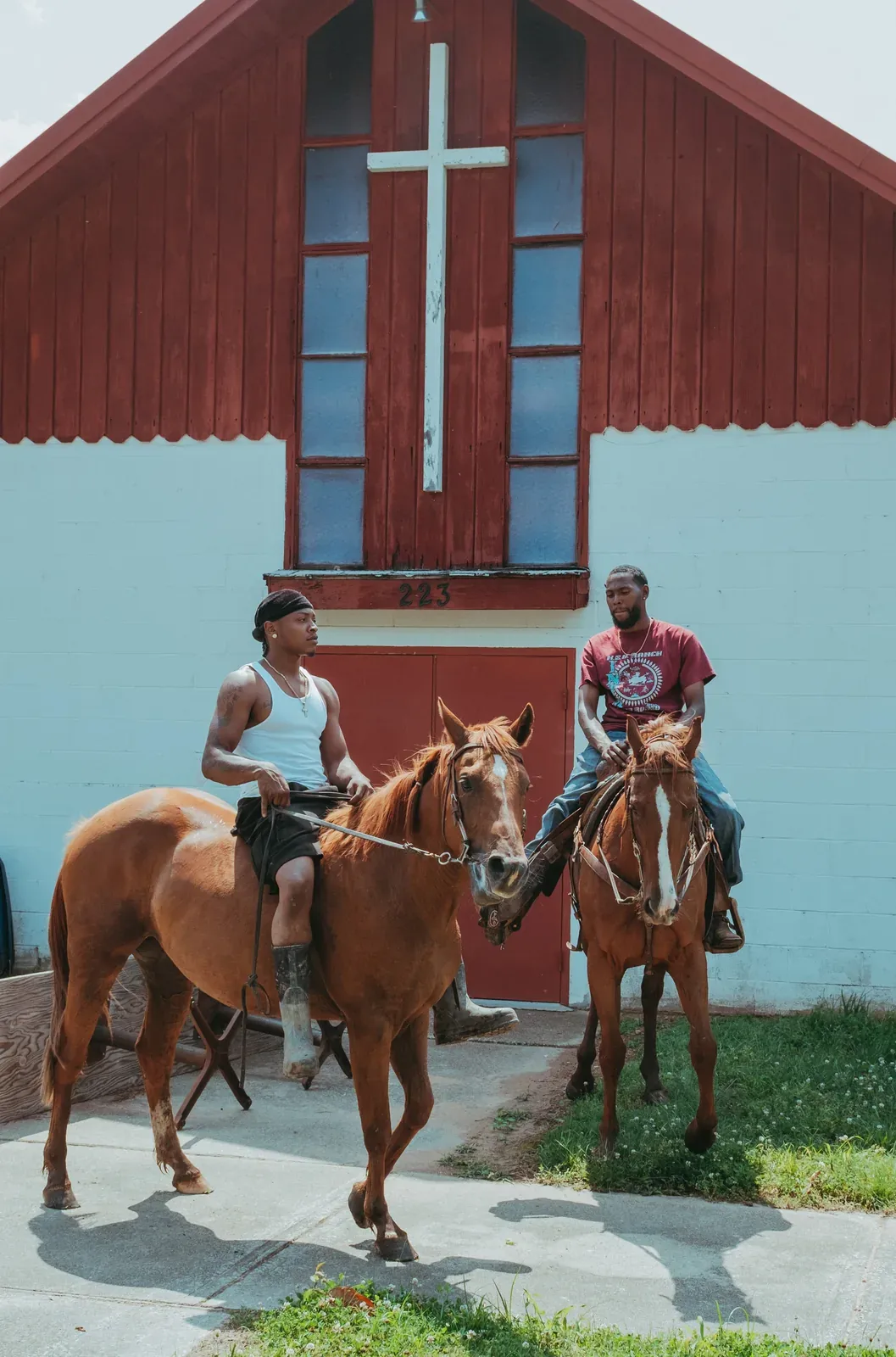
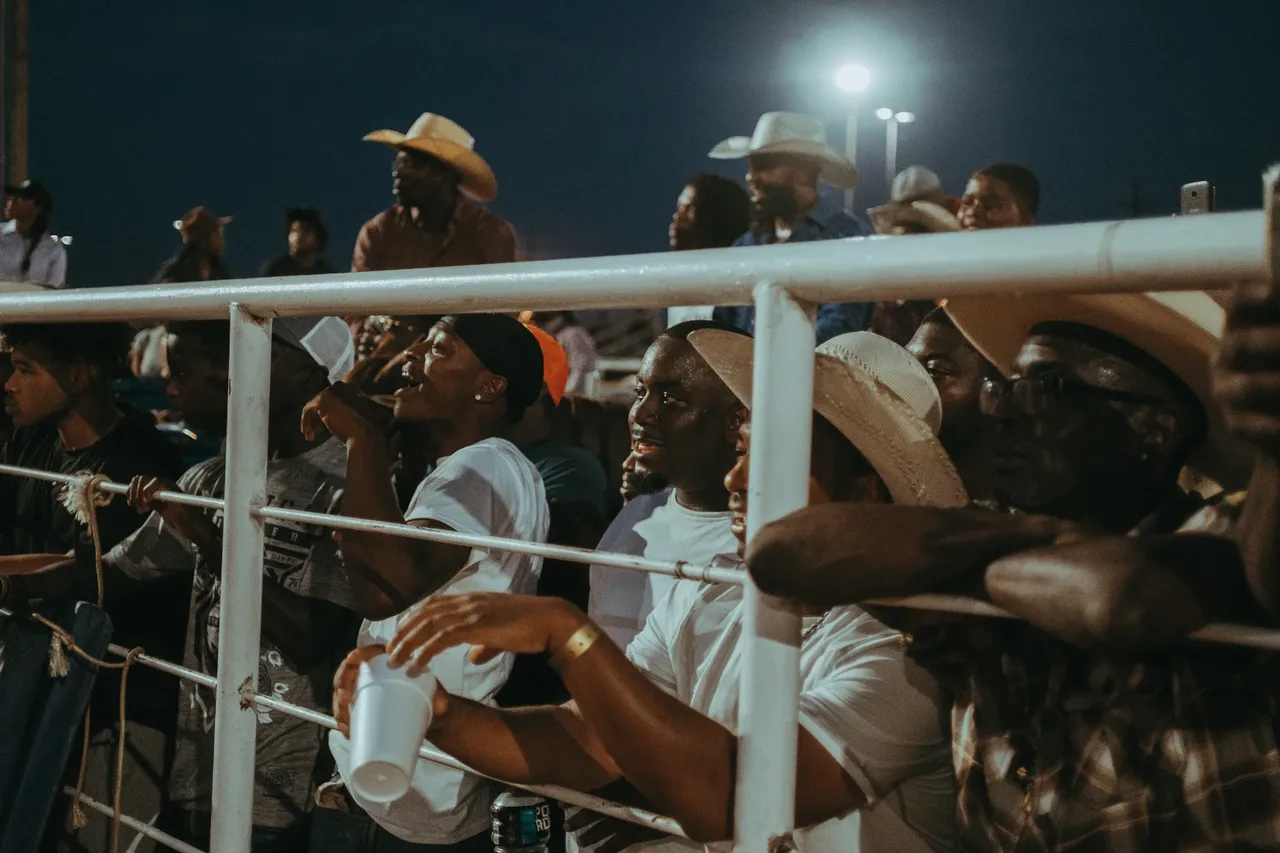
That’s actually one of my favourite things about this culture. There are some huge personalities in rodeo. Everybody has their own style, their own way of riding, their own story. But underneath that individuality is a really strong community. People compete against each other and then turn around and help each other. Families travel together. Kids grow up watching their parents and grandparents ride. Somebody gets hurt and everybody knows about it. The individuality doesn’t work against the community. The community gives people the space and confidence to be individuals.
“When you put Black cowboys and cowgirls back at the centre, you’re not rewriting history. You’re widening the frame so people can see something that was already there.”
After more than a decade of photographing the same communities, your relationship with your subjects has clearly evolved. How has moving from being an observer to becoming embedded in the culture changed the way you photograph it?
In the beginning, I was definitely an outsider. I was the guy showing up with a camera and asking questions. Ten years later, these are my friends. I’ve watched kids grow up. I’ve travelled with people, eaten with their families, been there when they won and when they got hurt. And now I'm producing rodeos with some of the same people I started photographing years ago.
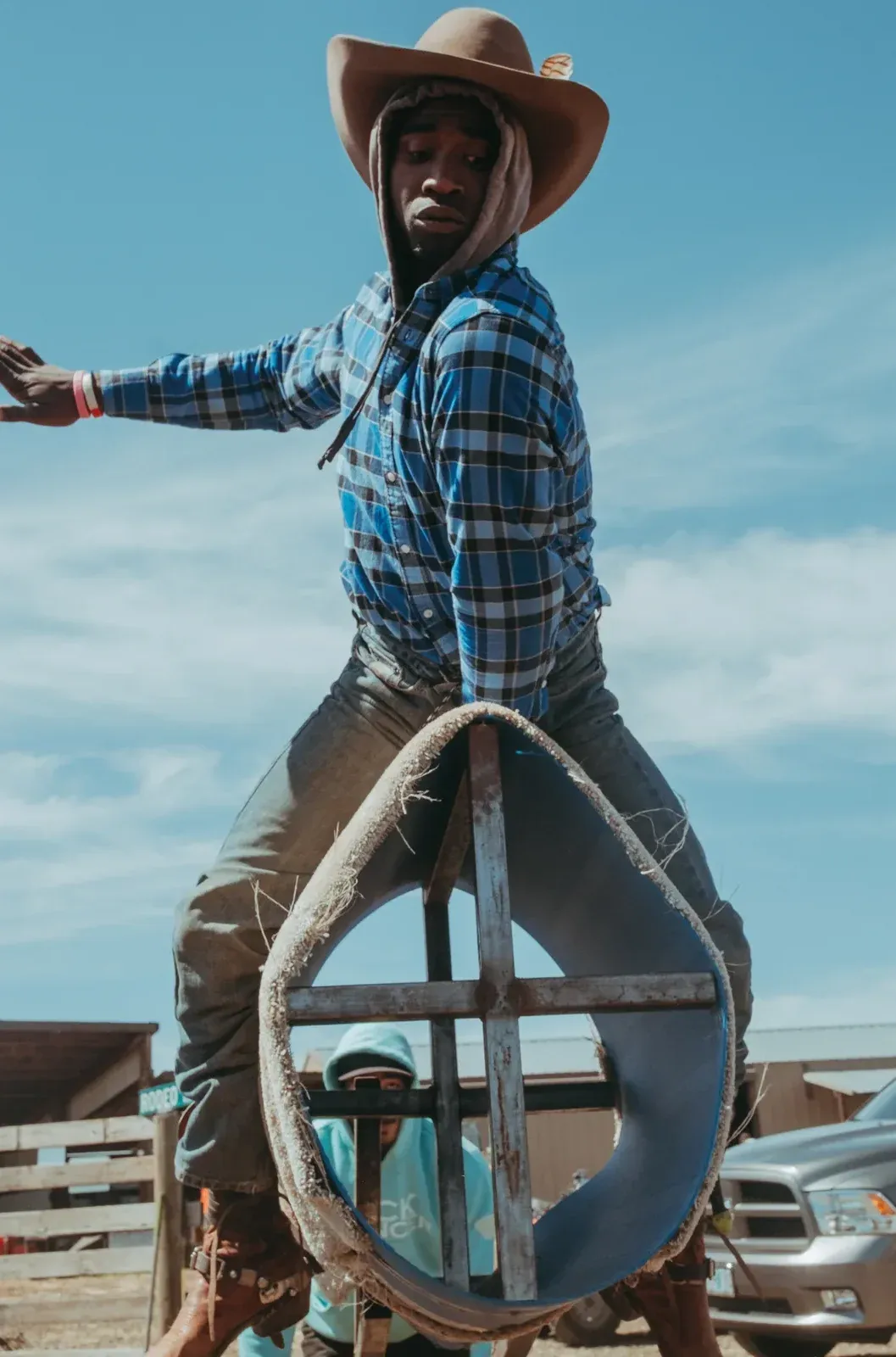
That changes the photographs because there is trust. I’m not just showing up for the spectacular moment anymore. Sometimes the photograph is somebody sitting quietly before they ride, a kid watching from behind a fence or a family hanging out after the rodeo. The more I understood the culture, the less I felt like I needed to prove what it was in every photograph.
That changes the photographs because there is trust. I’m not just showing up for the spectacular moment anymore. Sometimes the photograph is somebody sitting quietly before they ride, a kid watching from behind a fence or a family hanging out after the rodeo. The more I understood the culture, the less I felt like I needed to prove what it was in every photograph.
A photograph can document a culture, but it can also influence how that culture is imagined. How conscious are you of the fact that you are not simply recording Black cowboy culture, but participating in the way its contemporary image is being constructed?
I'm very conscious of it now. When I started, I was just following my curiosity. I don't think I understood how far the photographs would travel or how many people's first encounter with Black cowboy culture might happen through one of my images. That's a responsibility. I want the work to be beautiful, but I don't want beauty to flatten people into characters or turn the culture into an aesthetic. The people in these photographs existed before I showed up, and they'll exist after I put my camera down. My job is to make work that respects that.
The title Eight Seconds refers to the moment a bull rider has to remain on the animal, but you have also described it as an interval where life and death are at stake. What do those eight seconds represent to you beyond the sport itself?
Eight seconds is such a short amount of time, but when you're watching someone on a bull, it can feel incredibly long. Everything is happening at once—fear, preparation, instinct, confidence. You've spent years getting ready for something that might last eight seconds. I've always liked that as a metaphor for life. There are moments when all of your preparation comes down to whether you're willing to commit. You can't halfway ride a bull. Once that gate opens, you're in it. That's what ‘eight seconds’ has come to mean to me. Commitment. Risk. Being fully present in the moment you're given.
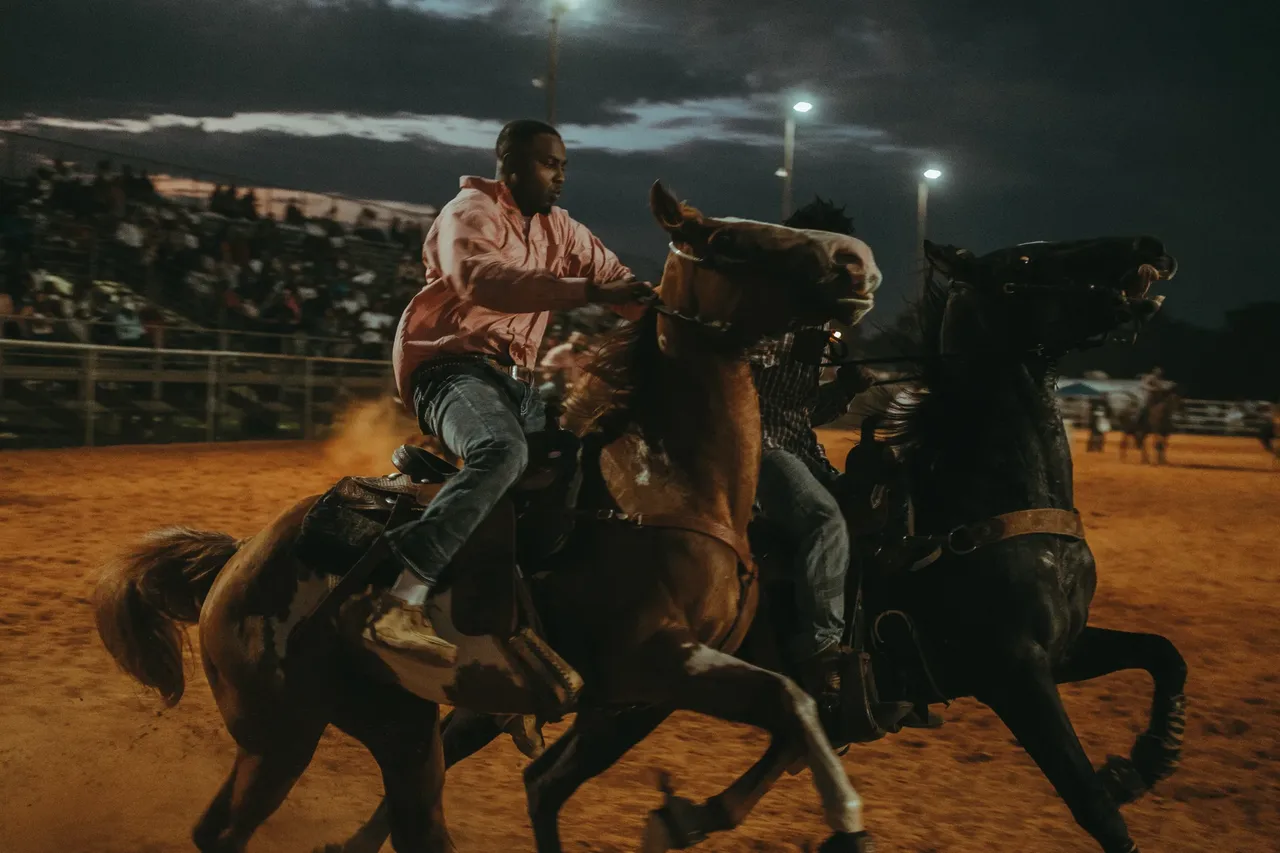
With Eight Seconds: Legacy in Motion, you returned to more than a decade of work and selected ninety-one previously unpublished photographs. What did you see differently when you looked back through the archive?
I saw how much I had changed. When you're constantly making new work, you're usually thinking about the next photograph. Going back through more than ten years forced me to slow down and look at what I had actually made. There were photographs I passed over years ago because they weren't the obvious rodeo pictures. Looking at them now, some of those quieter images are the ones I care about most. I also saw people ageing. Kids becoming adults. Relationships changing. People who aren't here anymore. Suddenly the archive wasn't just a collection of photographs. It was a record of time.
Your project has now moved beyond photography with the creation of the 8 Seconds Rodeo, bringing together rodeo, music, fashion and community. What made you want to move from documenting this culture to actively creating a platform for it?
Photography opened the door, but eventually I started asking what else was possible. I'd spent years watching these athletes compete and watching these communities support rodeo, while also seeing how limited the opportunities could be. I didn't just want to make photographs about the culture. I wanted to help create opportunities within it. Eight Seconds Rodeo grew out of that.
We wanted to build something that treated these athletes like professionals and put Black rodeo in major venues in major cities. And we wanted the entire experience to reflect the culture around it. The music, the fashion, the vendors, the families, the community. The rodeo isn't separate from the photography for me. It's another way of telling the same story, except now people can walk into it and experience it themselves.
We wanted to build something that treated these athletes like professionals and put Black rodeo in major venues in major cities. And we wanted the entire experience to reflect the culture around it. The music, the fashion, the vendors, the families, the community. The rodeo isn't separate from the photography for me. It's another way of telling the same story, except now people can walk into it and experience it themselves.
You are documenting a deeply rooted culture while watching a younger generation reshape its image. What do you hope your photographs make possible for the next generation of Black cowboys and cowgirls?
I want them to be able to see themselves. There are kids coming up now who have access to images that I didn't have when I was growing up. They can open a magazine, walk into a gallery, see a campaign or pick up a book and see Black cowboys presented with the same care and importance that we've historically given other images of the American West. But I also hope they don't feel obligated to preserve the culture exactly as they inherited it. Every generation should get to add something. That's how culture stays alive.
“There are some huge personalities in rodeo. But underneath that individuality is a really strong community. And that community gives people the space and confidence to be individuals.”
You have collaborated with brands such as Wrangler, Stetson and Ariat, while also producing work independently. How do you balance working within the commercial image of the American West with your own desire to complicate or challenge that image?
I'm interested in working with brands when there's an opportunity to make something authentic. The Western industry has its own visual language, and some of these companies have been part of that culture for generations. But the question for me is always who gets included in that image. I'm not interested in taking Black cowboys and dropping them into somebody else's idea of the West. I want the people I photograph to look like themselves. The best collaborations happen when a brand understands that they don't need me to manufacture something. The culture is already interesting. The people are already interesting. Give me the space to show that.
The cowboy has become an increasingly powerful presence in contemporary fashion and popular culture. What do you think happens when the aesthetics of the American West become fashionable, while the people and histories behind them remain overlooked?
That's the complicated part. I love seeing Western culture everywhere. It's exciting to see people interested in it. But there's a difference between appreciating an aesthetic and understanding where it came from. Cowboy culture isn't just hats and boots. There are people whose families have been living this way for generations. There are Black rodeos that have existed for decades without getting the attention that Western fashion is getting right now. My hope is that curiosity about the aesthetic eventually leads people to the people behind it. If you like the clothes, come to a rodeo. Meet the athletes. Learn the history. Support the communities that kept this culture alive long before it became fashionable.
Your photographs are often highly composed, with an attention to clothing, gesture and environment. Where do you see the boundary between documenting a person and helping them construct the image they want to present to the world?
The attention is definitely intentional, but I'm not dressing people or putting them into environments that aren't their own. I'm photographing people as they show up. What they're wearing, how they carry themselves, the way they stand, the spaces they're in, those things already tell you something about who they are and how they want to be seen. My role is to notice those details and decide how to frame them. I might move myself, change the angle or wait for the light or the moment to come together, but I'm not trying to construct a version of someone for the photograph. The composition is mine, but the identity you see in the image belongs to them.