Located in a huge former munition factory, Het Hem opens its doors to become a new landmark within the artistic and cultural landscape of Amsterdam. After undergoing a renovation that’s turned the ten thousand square metre-building into a dynamic cultural centre, Het Hem presents several spaces to welcome everyone – from the exhibition space to a restaurant, to a library and even an artist residence – and create an enriching environment for locals and visitors alike. Until September 1, you can visit Chapter 1NE, its first exhibition, curated by Het Hem’s Rieke Vos and Patta’s Edson Sabajo and Guillaume Schmidt, which focuses on hip hop culture, community, and identity.
“At Het Hem, we don’t give our programs a title, we like to give them a motto”, says the main curator, Rieke Vos. “We like the idea of a motto because it gives you a direction”, she continues. This direction, right now, is marked by the work, passion and interests of the guest curators, Guillaume and Edson from Patta, a project that started as a streetwear shop and has expanded to a clothing brand, a soundsystem, a running team, and a foundation. “Culture happens in communities. Edson and Guillaume leave a unique mark on the cultural life of Amsterdam, always seeking adventurous collaborations in a dynamic circle of known and lesser known creatives”, says Kim Tuin, Het Hem’s director.
We’re welcomed to the impressive building by Piet Parra’s huge black sculpture of an anthropomorphic animal covering its head. In front of us, a bright, clean and cosy space calls for exploration. Divided into various areas, it features a sort of ‘living room’ – a relaxing area to sit down and listen to music, and a space for reading and working –, a library with art and photo books and magazines, a bar, and a restaurant. “We wanted to place as little walls or barriers as possible”, explains Rieke. “Just keep it as open and plain as we can so visitors feel that they can move freely when they come here”, she continues.
We’re welcomed to the impressive building by Piet Parra’s huge black sculpture of an anthropomorphic animal covering its head. In front of us, a bright, clean and cosy space calls for exploration. Divided into various areas, it features a sort of ‘living room’ – a relaxing area to sit down and listen to music, and a space for reading and working –, a library with art and photo books and magazines, a bar, and a restaurant. “We wanted to place as little walls or barriers as possible”, explains Rieke. “Just keep it as open and plain as we can so visitors feel that they can move freely when they come here”, she continues.
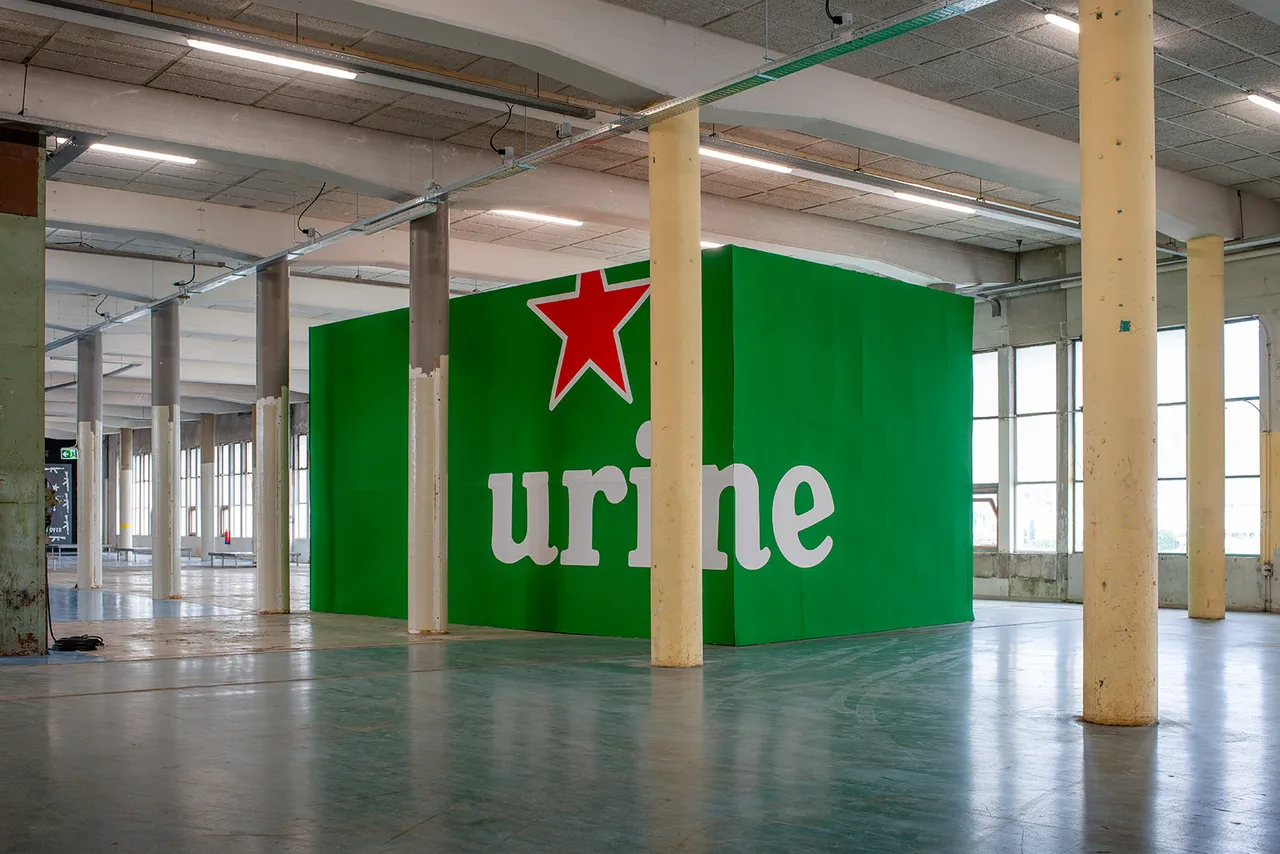
Erik van Lieshout, Beer.
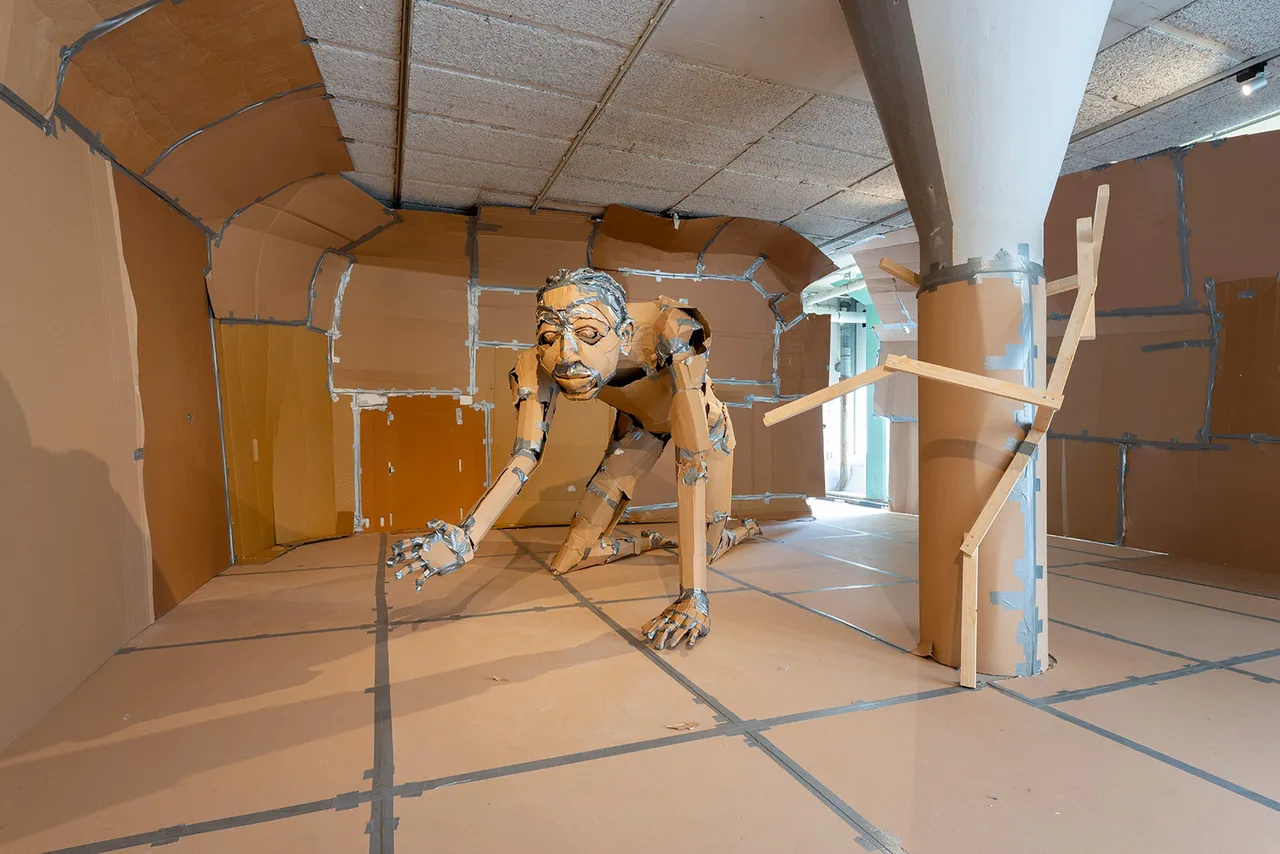
On an intimate guided visit through Chapter 1NE, Rieke guides us from piece to piece. We start by Los Angeles-based artist Aria Dean, who presents a ten-minute film piece compiling “American hip-hop music videos with a specific focus on the dancing masses of people”, which aims to highlight how being in group, in community, is perceived positively by African-Americans while it’s stigmatized by bigot Americans. We continue through the mezzanine floor, where we find a LED light sculpture beneath a stair by Navid Nuur, photographs by Sanlé Sory, the funny Funk Lessons video piece by Adrian Piper, and other artworks by Neo Matloga, Quentley Barbara, and Boris Tellegen & Rich Medina, which range from recycled cardboard to sound art.
When getting to the enormous first floor, several pieces catch our attention. One of them is a green structure like a box. It’s the piece Beer, by Dutch artist Erik van Lieshout. After winning the Dr A.H. Heineken Prize for Art, he used the money to create a video piece criticising that same company: first, in a more ‘innocent’ way, by adapting Heineken’s logo into the word ‘urine’ on the outside of the structure. Inside of it, there’s a video piece asking “pertinent questions about the current financial development of art and culture, and the way in which multinationals can leave their mark on it”, wondering what role do big companies play in shaping contemporary art and culture.
Another interesting piece is the Treasure Junk Museum by Roxette Capriles, a very young artist from Curaçao, a former Dutch colony. Following the philosophy of ‘doing something from nothing’ – which is shared by the guys at Patta and by the organization behind Het Hem –, the artist has created an installation where different pieces of junk coexist together in a mixture that is half-bizarre and half-kitsch. In another room, we find the emblematic portraits of rappers Tupac Shakur and Biggie by photographer Dana Lixenberg, who also worked on the 1990s iconic magazine Vibe – there are different facsimiles of the publication for the audience to check. Other installations, sound art pieces, collages, and mixed media artworks in the space are by Farida Sedoc, Sanford Biggers, the late Rammellzee, or Terence Nance.
When getting to the enormous first floor, several pieces catch our attention. One of them is a green structure like a box. It’s the piece Beer, by Dutch artist Erik van Lieshout. After winning the Dr A.H. Heineken Prize for Art, he used the money to create a video piece criticising that same company: first, in a more ‘innocent’ way, by adapting Heineken’s logo into the word ‘urine’ on the outside of the structure. Inside of it, there’s a video piece asking “pertinent questions about the current financial development of art and culture, and the way in which multinationals can leave their mark on it”, wondering what role do big companies play in shaping contemporary art and culture.
Another interesting piece is the Treasure Junk Museum by Roxette Capriles, a very young artist from Curaçao, a former Dutch colony. Following the philosophy of ‘doing something from nothing’ – which is shared by the guys at Patta and by the organization behind Het Hem –, the artist has created an installation where different pieces of junk coexist together in a mixture that is half-bizarre and half-kitsch. In another room, we find the emblematic portraits of rappers Tupac Shakur and Biggie by photographer Dana Lixenberg, who also worked on the 1990s iconic magazine Vibe – there are different facsimiles of the publication for the audience to check. Other installations, sound art pieces, collages, and mixed media artworks in the space are by Farida Sedoc, Sanford Biggers, the late Rammellzee, or Terence Nance.
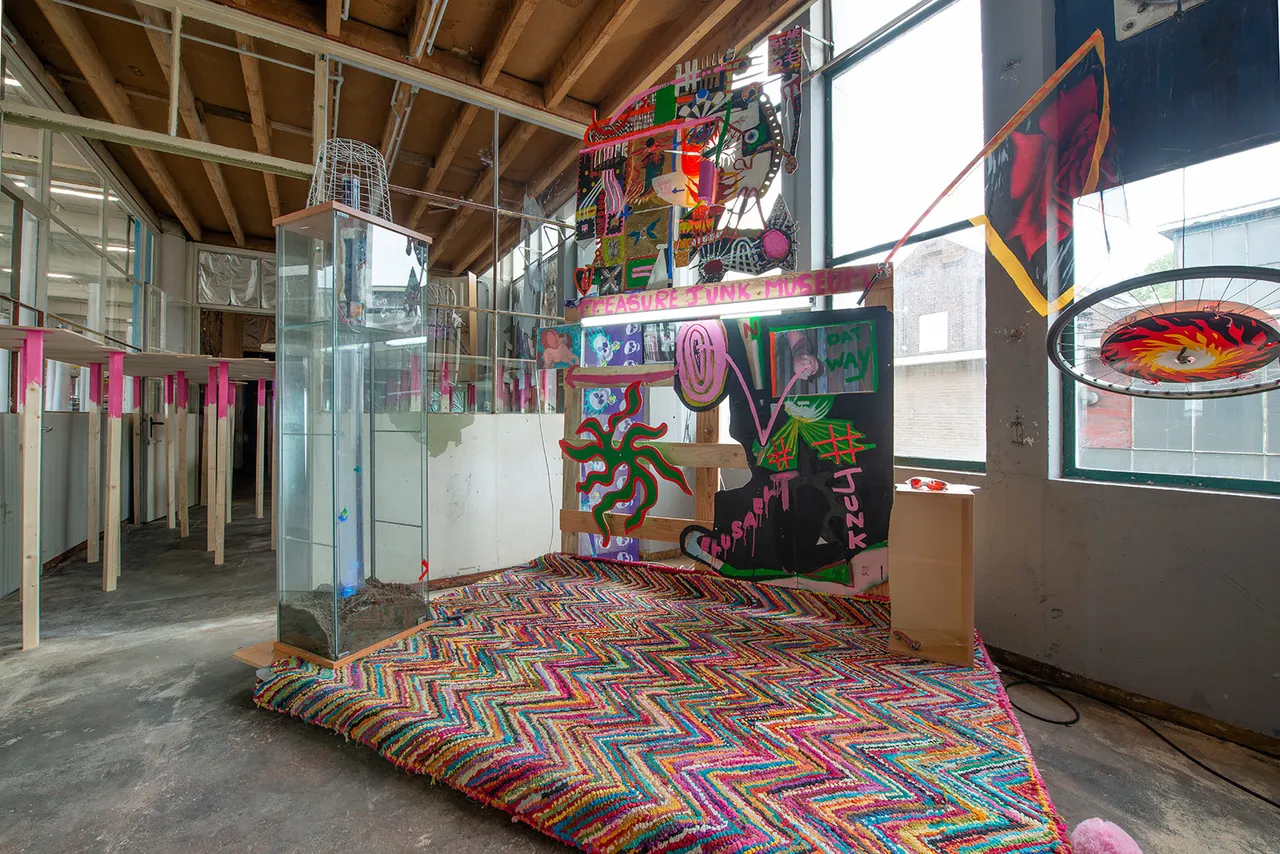
Roxette Capriles, Treasure Junk Museum, 2019.
But among all of them, one stands out the most. There’s a boxing ring by Gabriel Lester that serves as a training space for the participants of the Boxing Clinic. But what is this exactly? As the director and the curator explained to us a bit before, Het Hem’s programs don’t have a fixed structure and can go beyond the exhibition format. In fact, they can range from a series of concerts to researching. Guillaume and Edson as guest curators decided it’d be cool to invite Michèle Aboro, seven-time boxing world champion, to participate. The Boxing Clinic is “a ten-week-long intensive training programme” with her, where athletes from different levels and ages could participate and that will culminate on August 31 in a Boxing Gala – that will also include performances.
So how do all these pieces come together? “The entire show is quite associative”, explains Rieke. “There are a few central ideas that come back in many of the works”, she continues. These ideas stem from the multiple conversations between the team at Het Hem and the founders of Patta, who despite not having academic training in art or curation, have done a great job in conveying their philosophy and values – those of acceptance, community, solidarity, and in the times we’re living in, resistance and resilience. “If you’re backed up by your community, it can give you the confidence to do these things”, concludes Rieke.
The next chapter in Het Hem’s short but promising history will be guest curated by DJ and producer Nicolas Jaar, who’ll likely put a bigger emphasis on music and sound expression. Starting on September 21 – there are four chapters every year opening the first day of the new season (fall, winter, spring, summer) –, the Chilean artist together with his Shock Forest Group will “conduct research into Het Hem, from which the site’s historical, sociological, archaeological and geographical data will serve as the source material for a sound piece that is both about and from the location where it is played”.
So how do all these pieces come together? “The entire show is quite associative”, explains Rieke. “There are a few central ideas that come back in many of the works”, she continues. These ideas stem from the multiple conversations between the team at Het Hem and the founders of Patta, who despite not having academic training in art or curation, have done a great job in conveying their philosophy and values – those of acceptance, community, solidarity, and in the times we’re living in, resistance and resilience. “If you’re backed up by your community, it can give you the confidence to do these things”, concludes Rieke.
The next chapter in Het Hem’s short but promising history will be guest curated by DJ and producer Nicolas Jaar, who’ll likely put a bigger emphasis on music and sound expression. Starting on September 21 – there are four chapters every year opening the first day of the new season (fall, winter, spring, summer) –, the Chilean artist together with his Shock Forest Group will “conduct research into Het Hem, from which the site’s historical, sociological, archaeological and geographical data will serve as the source material for a sound piece that is both about and from the location where it is played”.
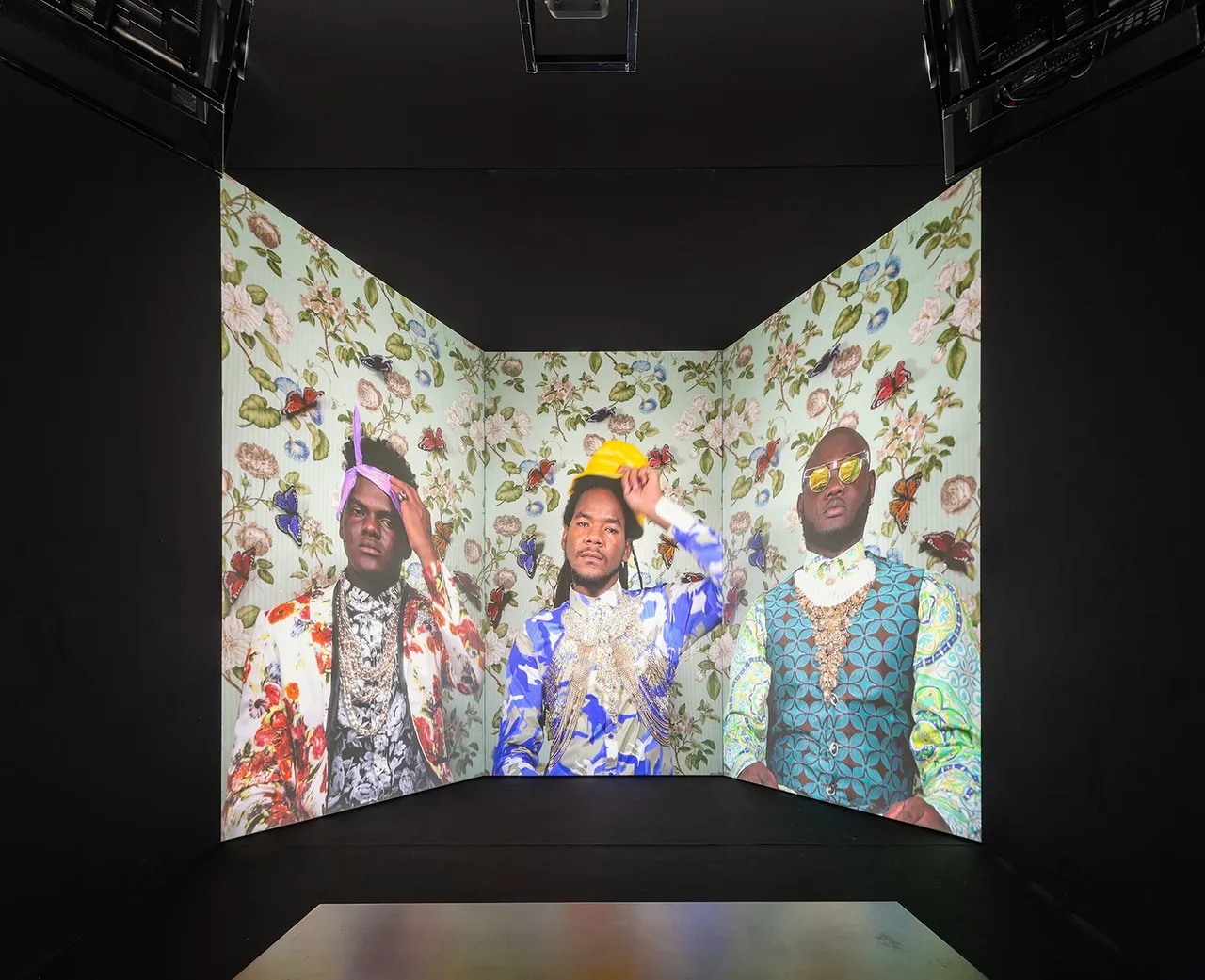
Ebony G. Patterson, …Three Kings Weep…, 2016–2018.
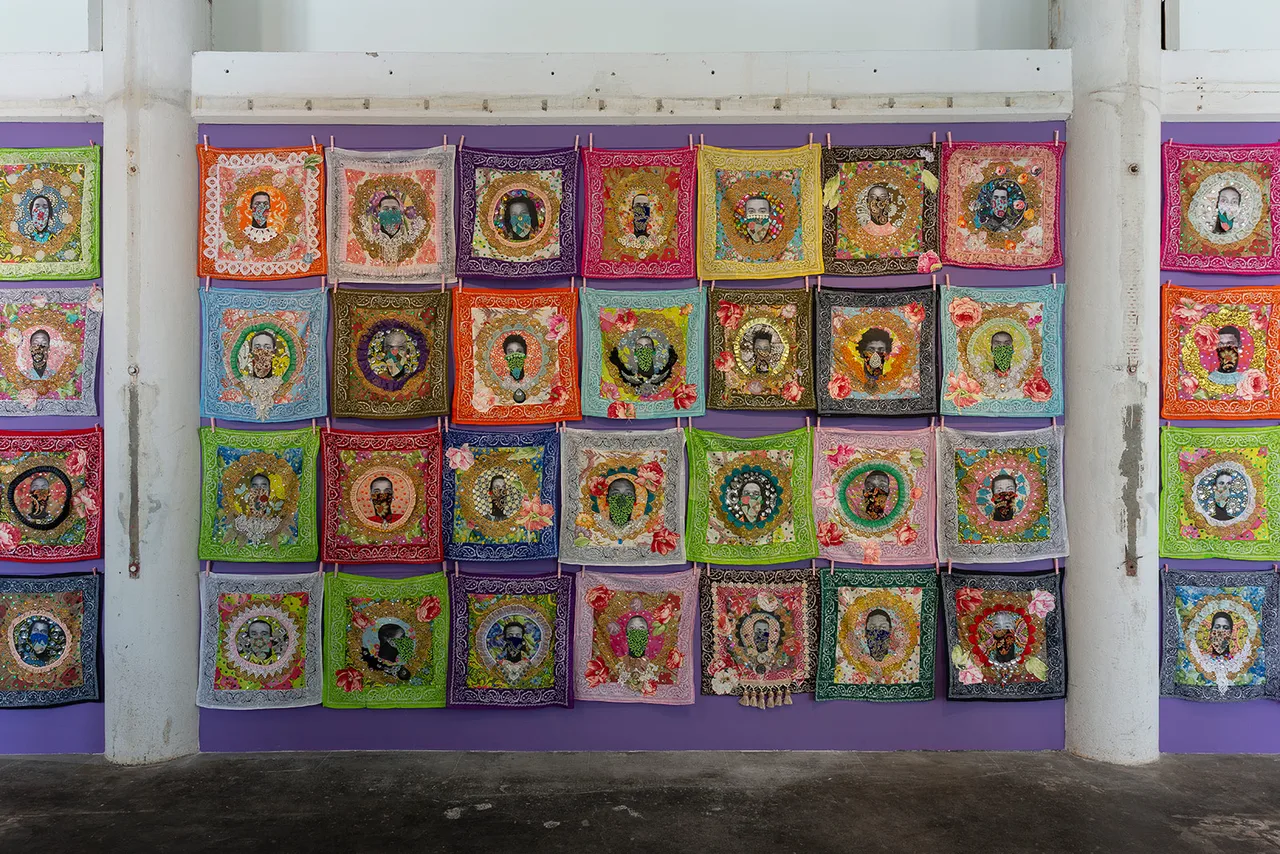
Ebony G. Patterson, Of 72, 2018.
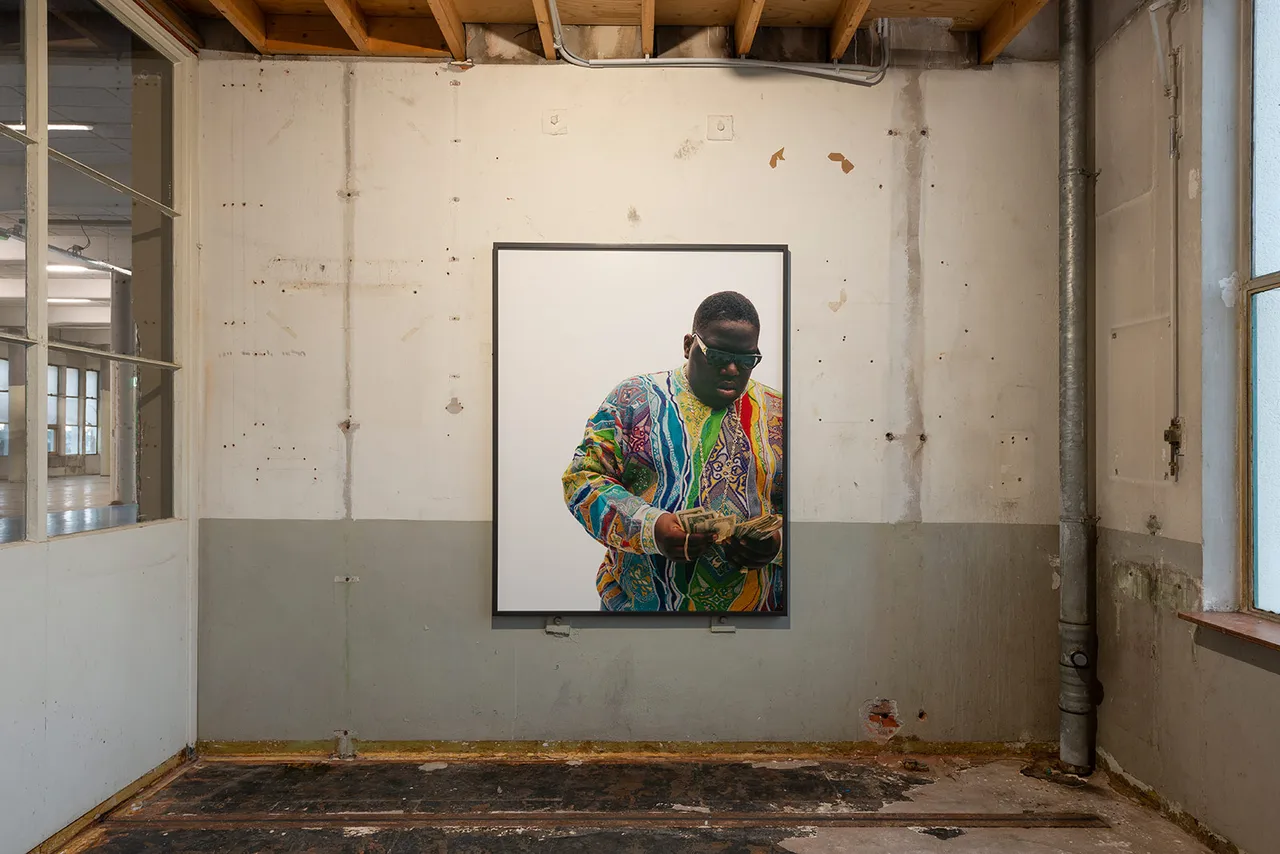
Dana Lixenberg, Christopher Wallace (Biggie), 1996, 2018.
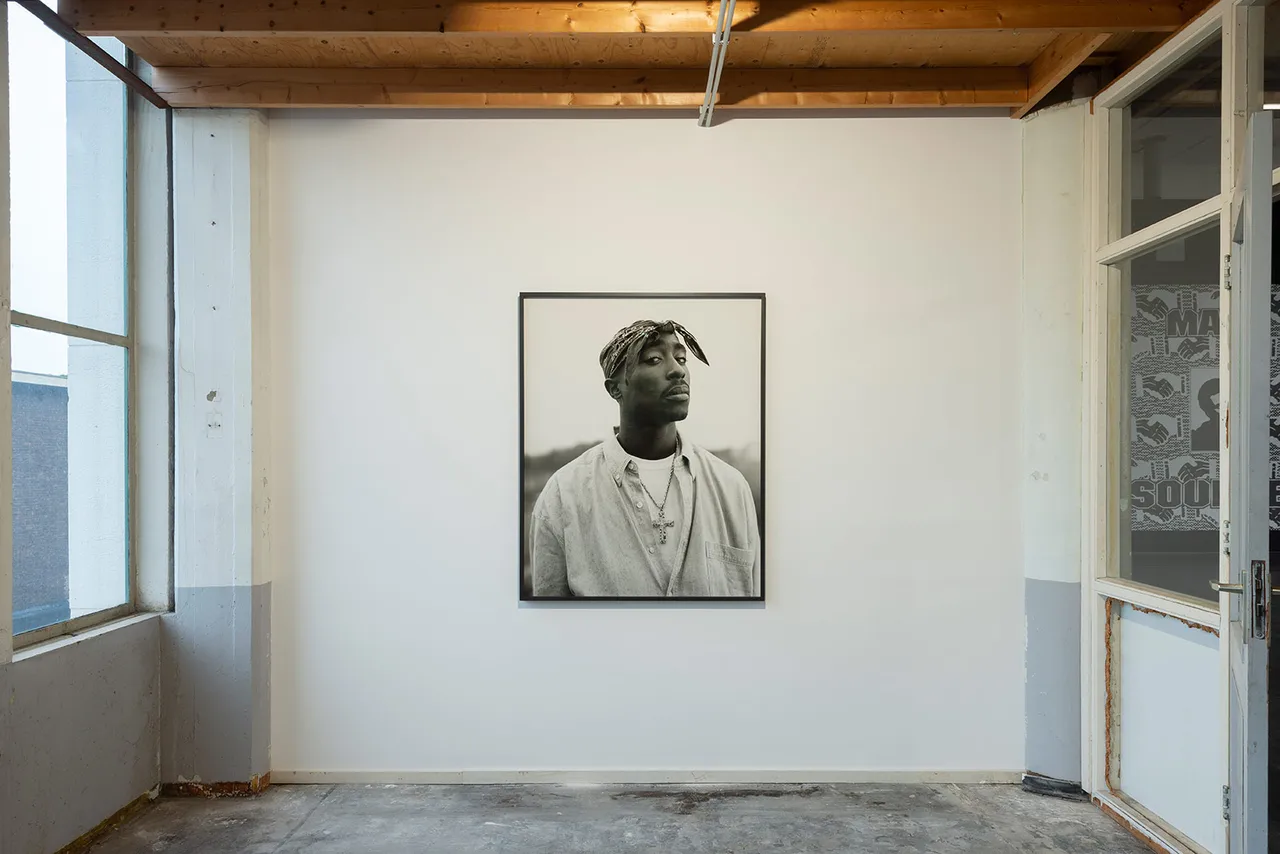
Dana Lixenberg, Tupac Shakur, 1993, 2018.
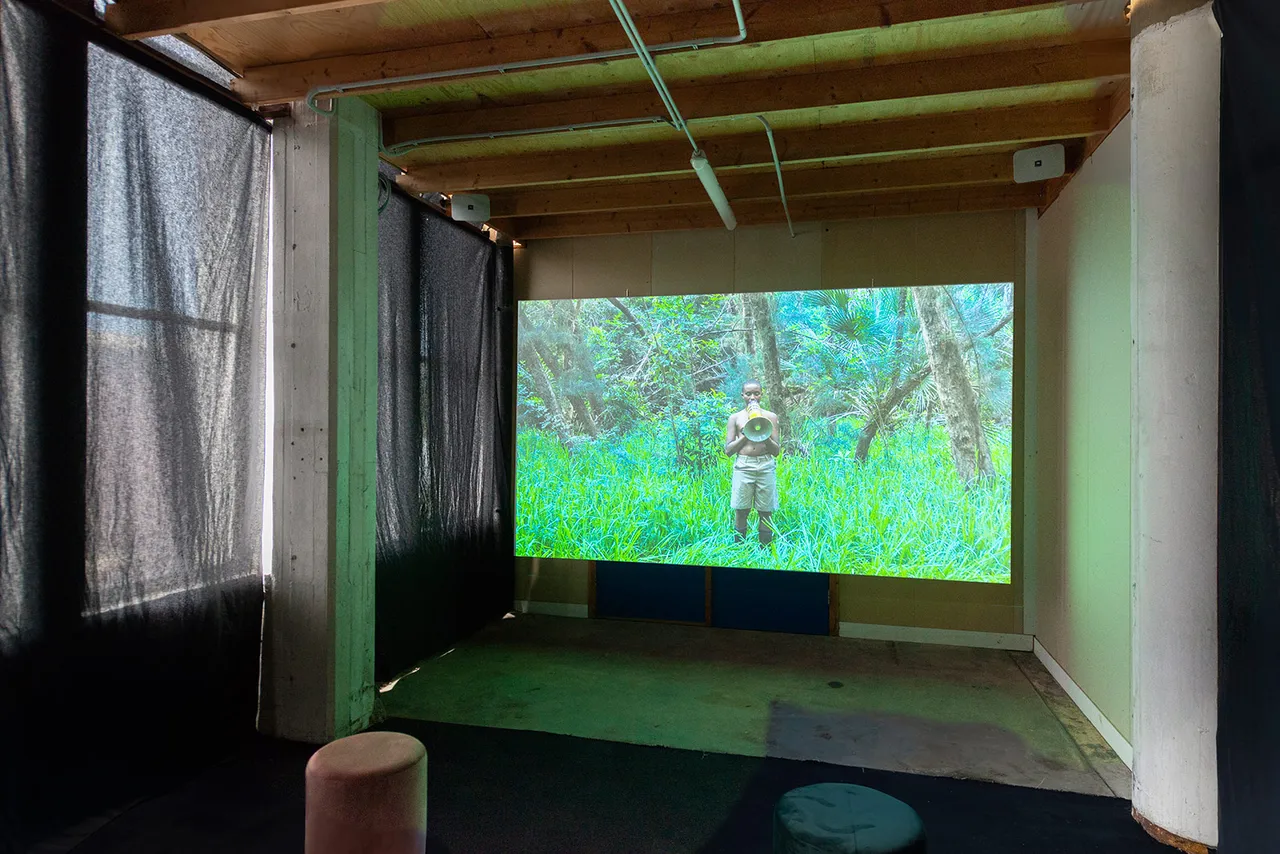
Terence Nance, Swimming in Your Skin Again, 2015.
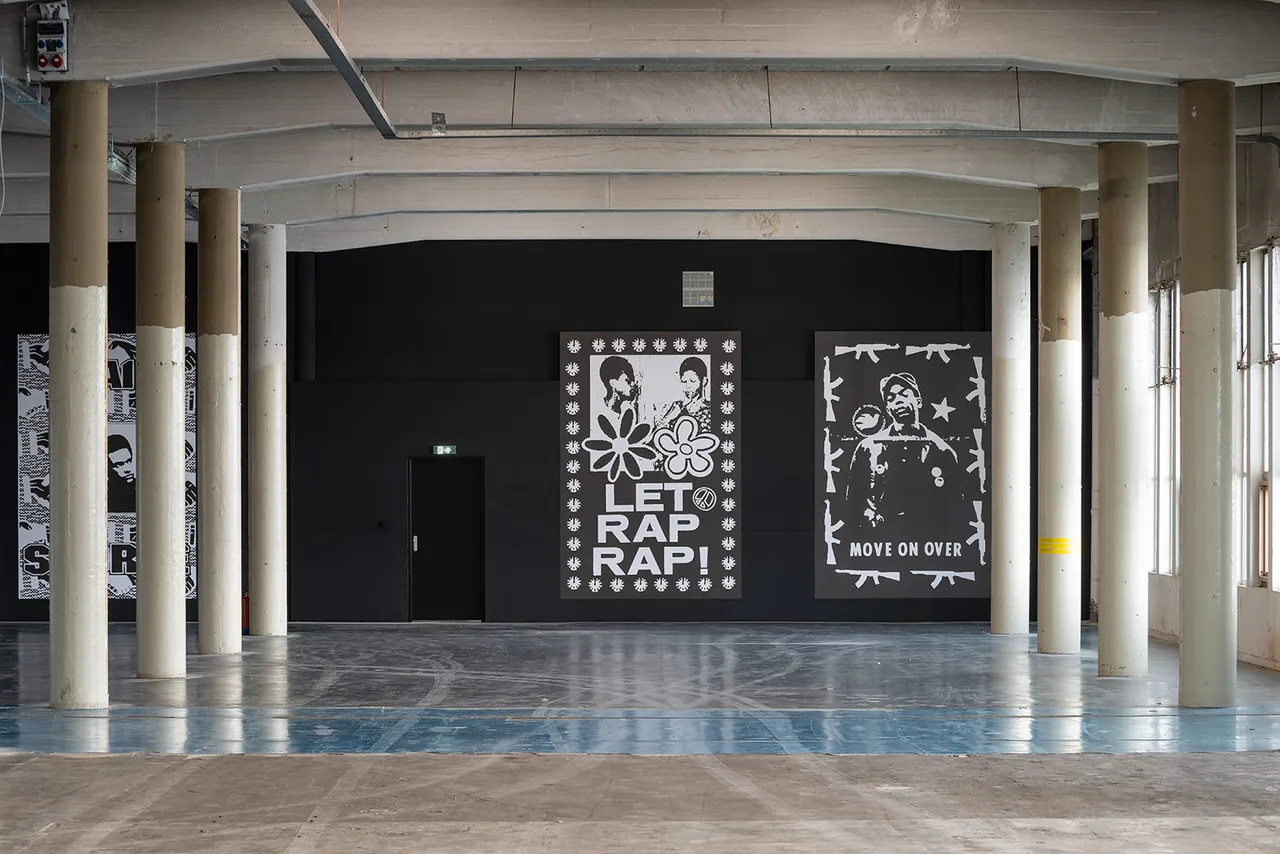
Farida Sedoc, The People’s Voice, 2019.
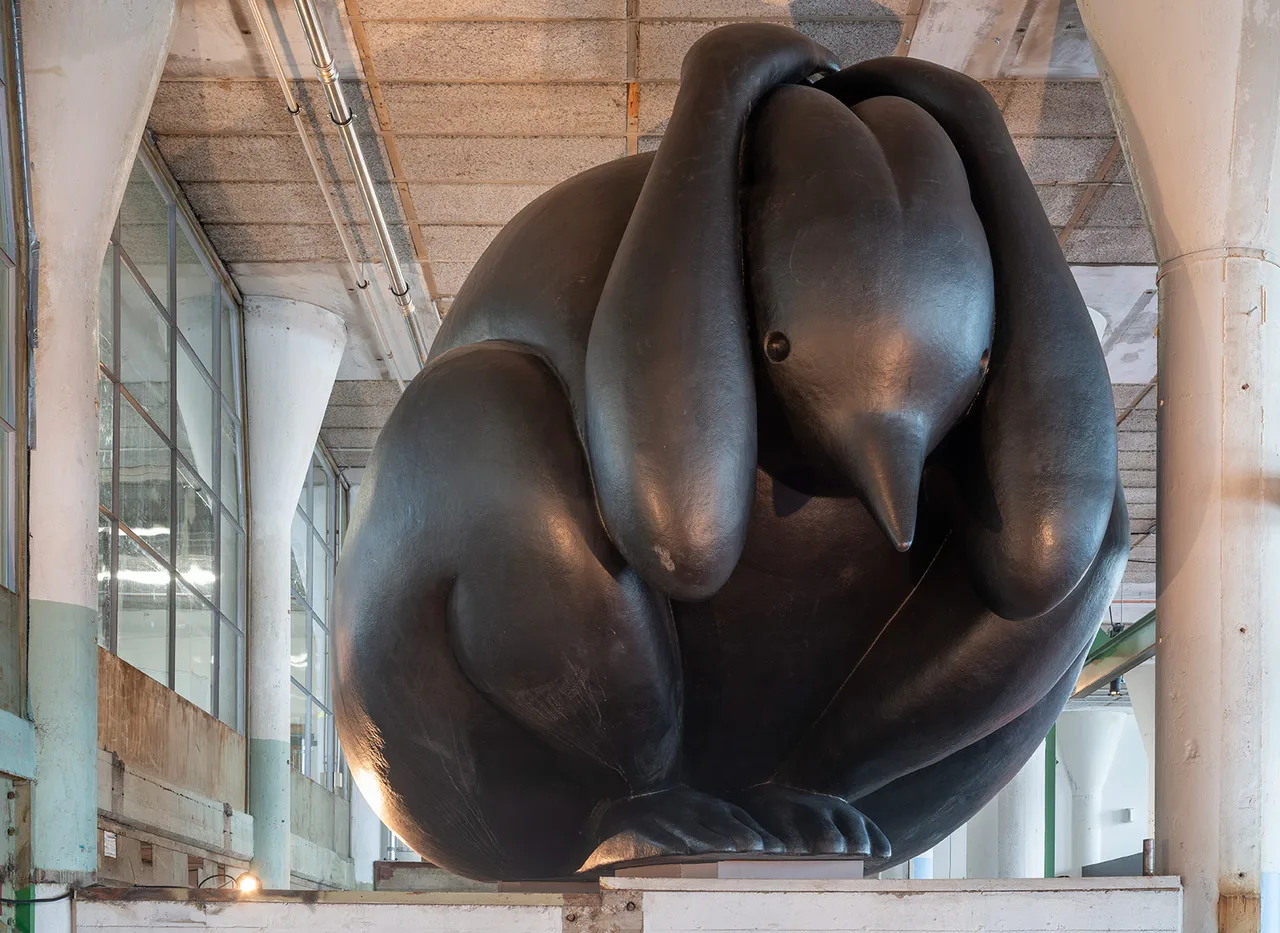
Piet Parra, Anxiety Rabbit Part Two, 2018.
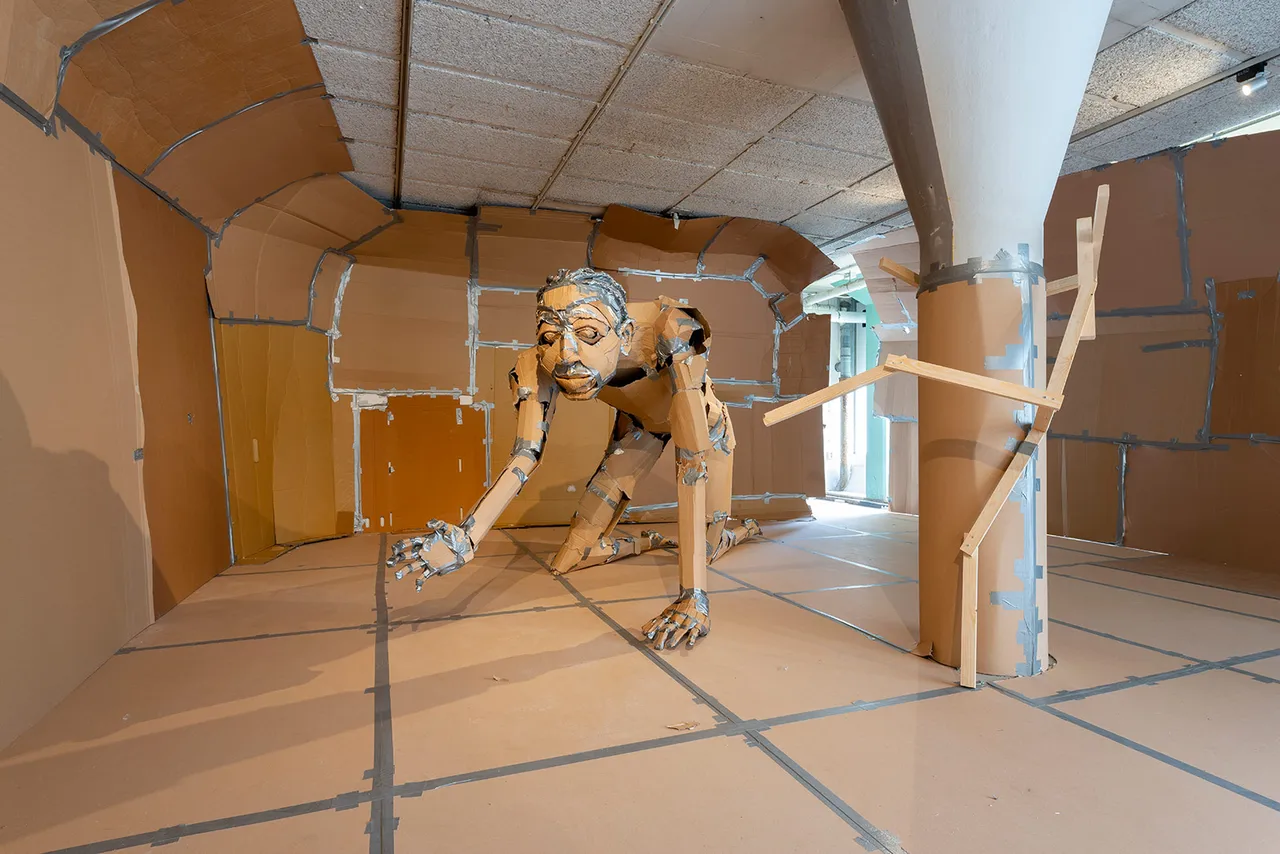
Quentley Barbara, Hesus, 2019.
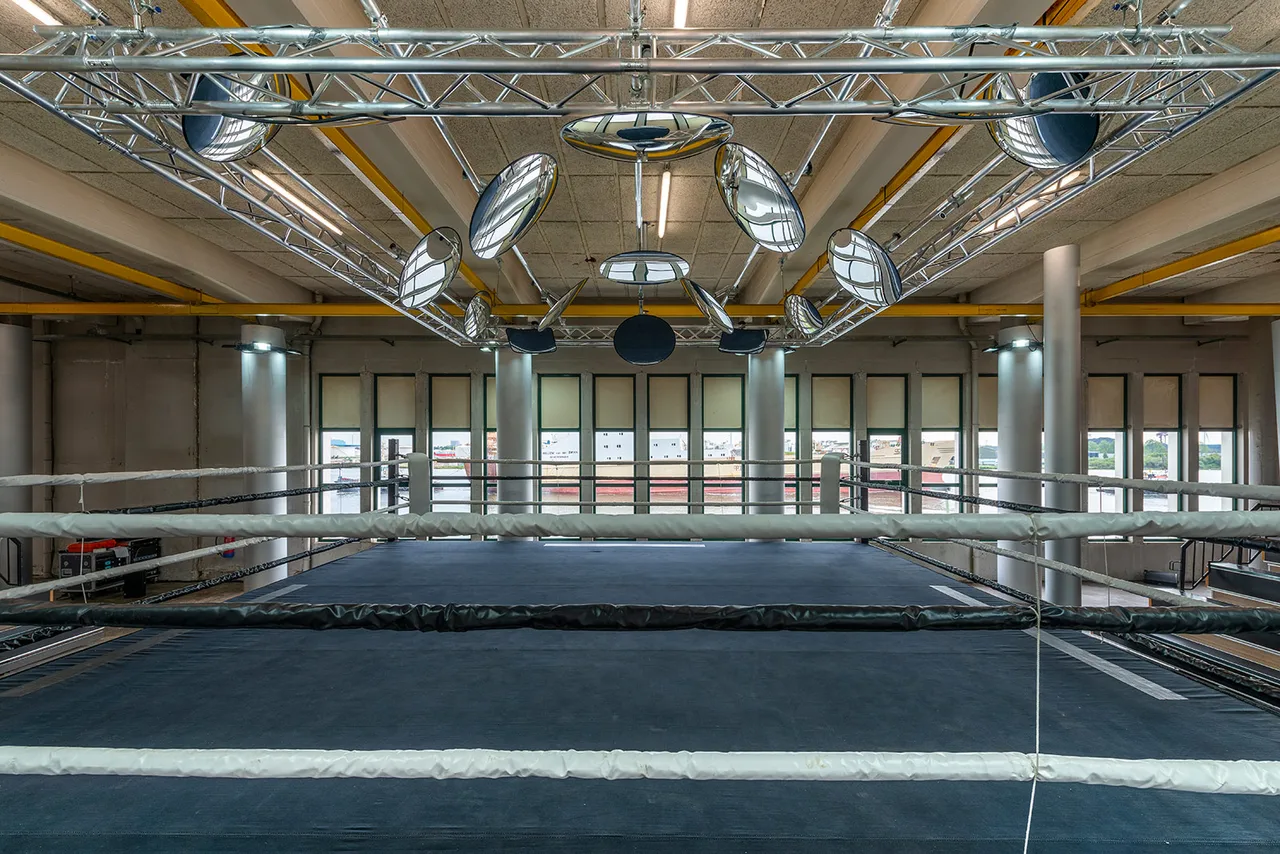
Gabriel Lester, Neck of the Woods, 2019 (Boxing Clinic).