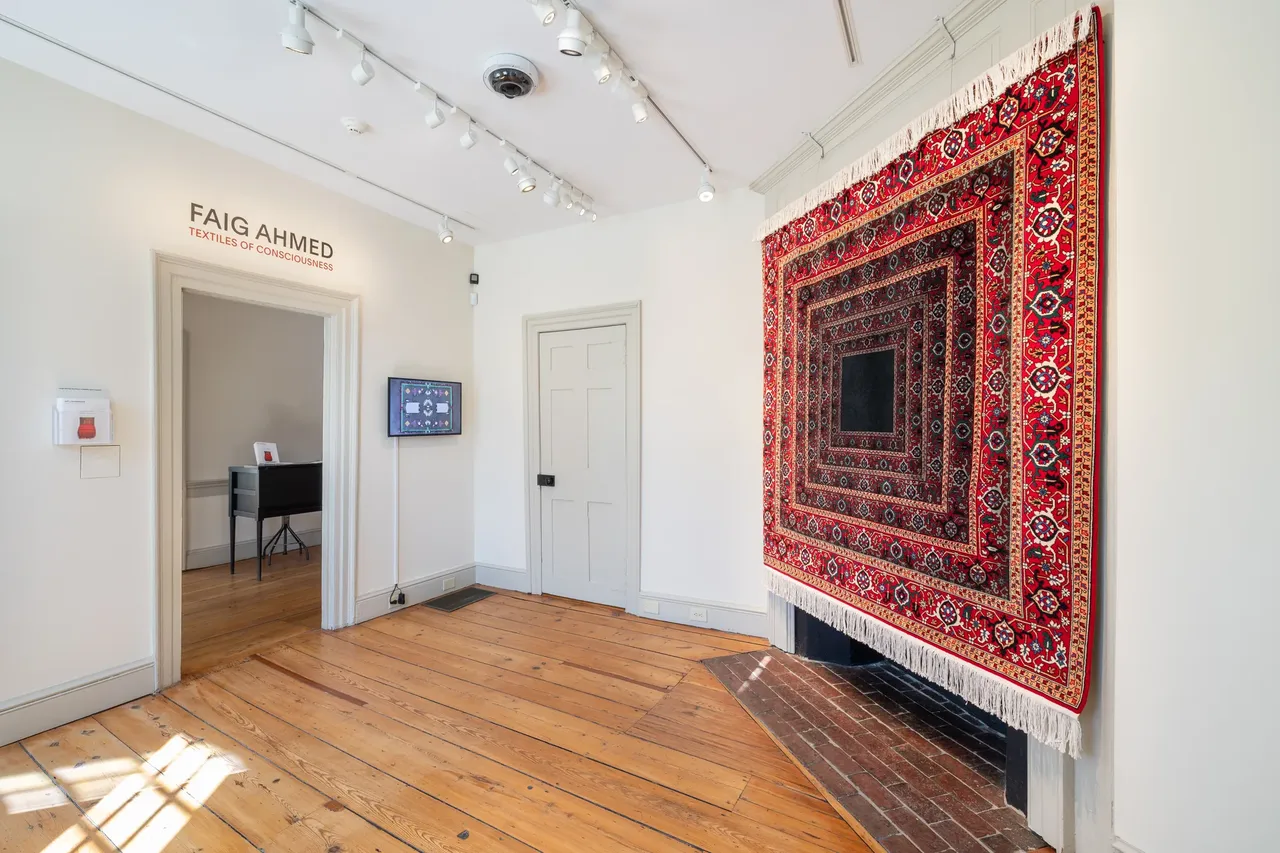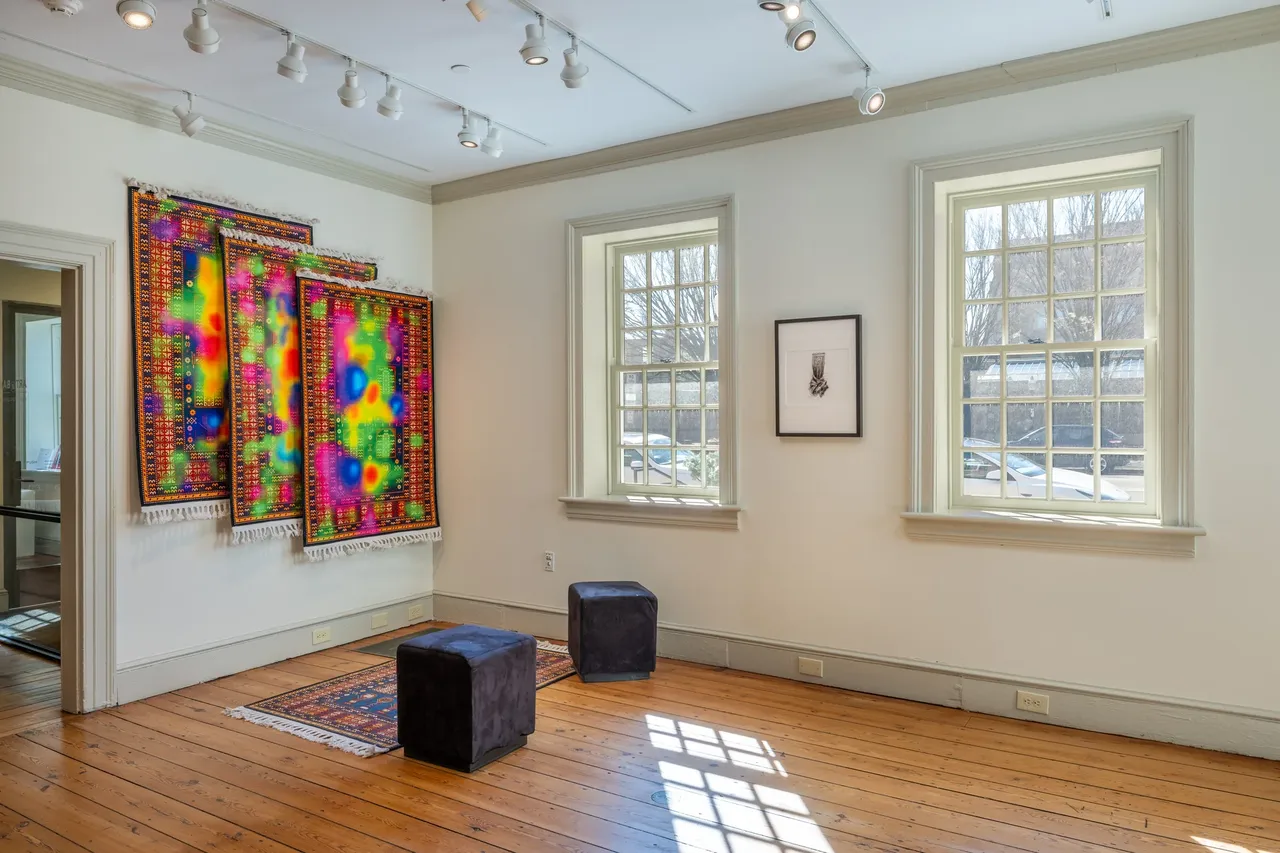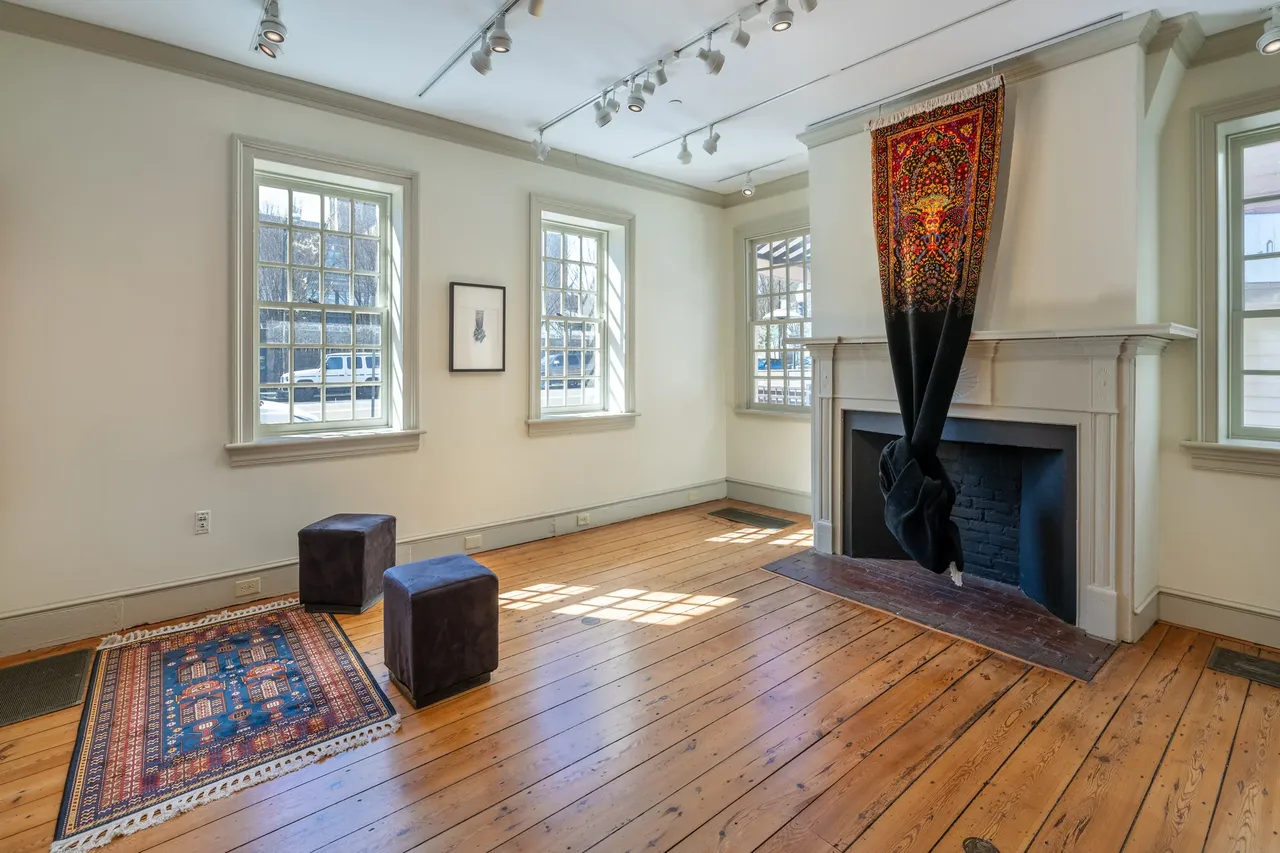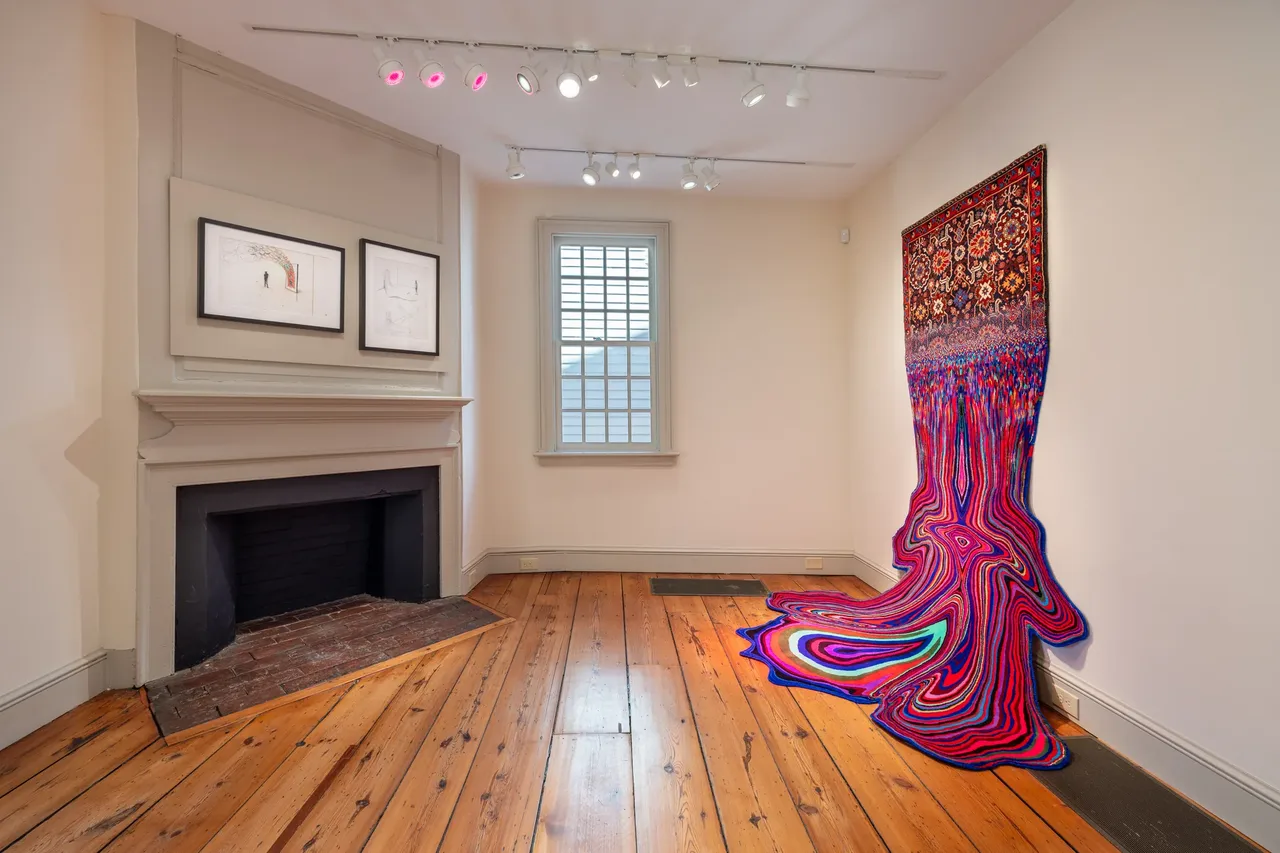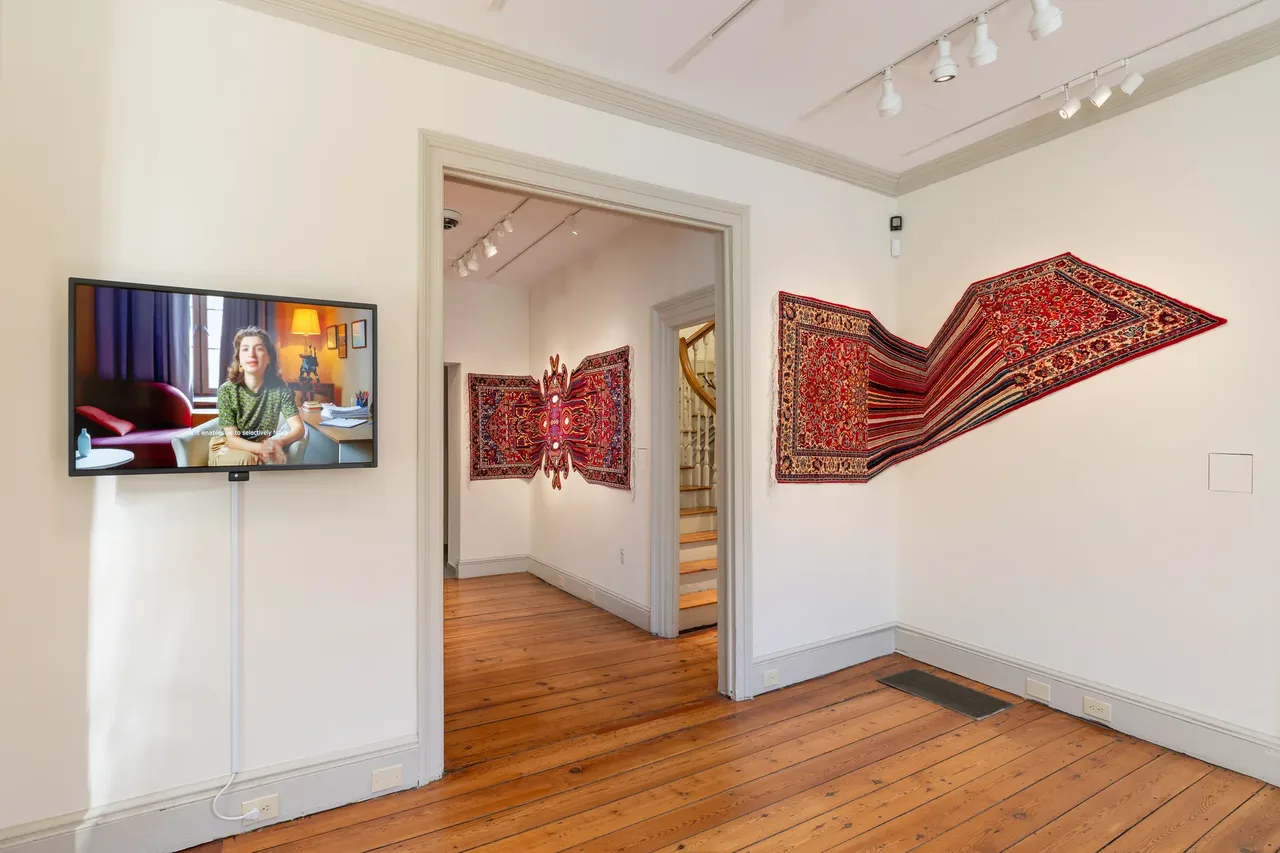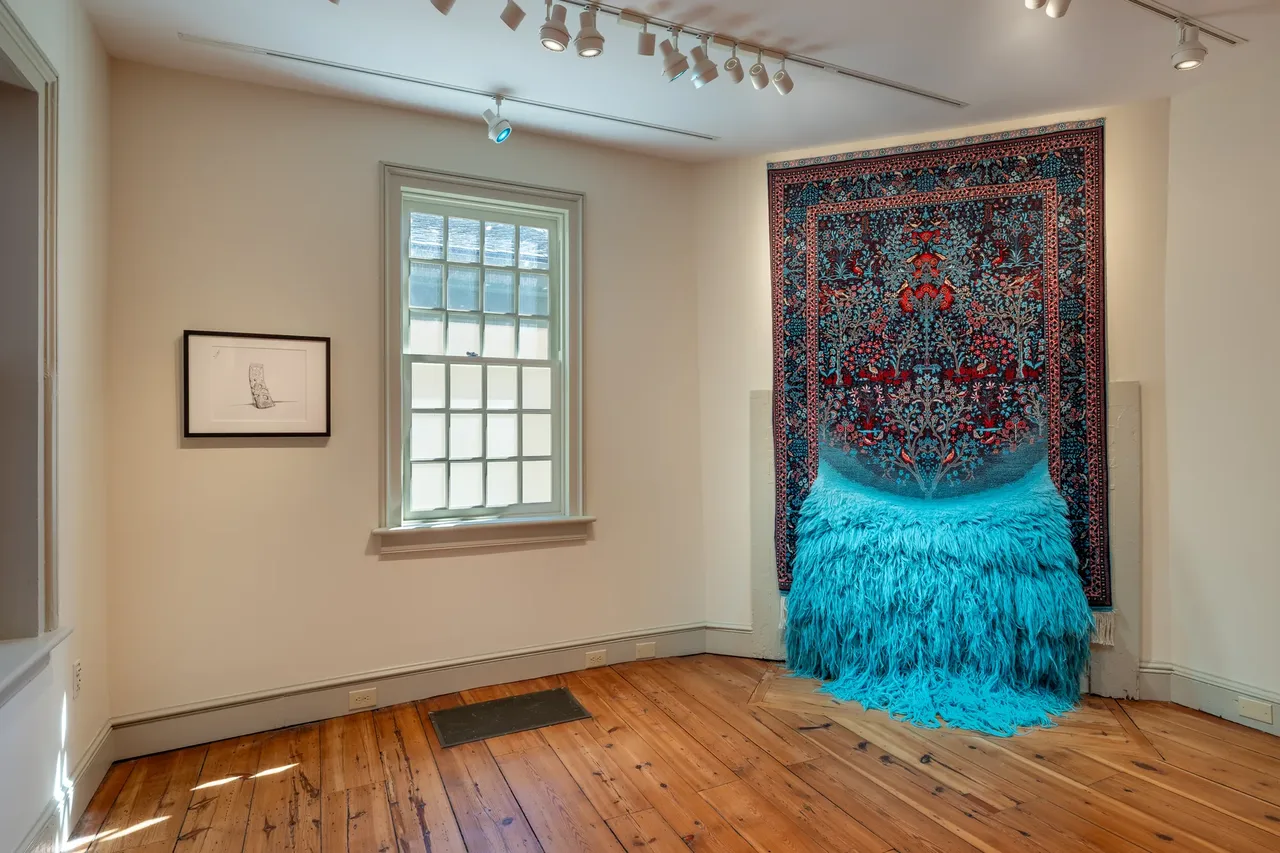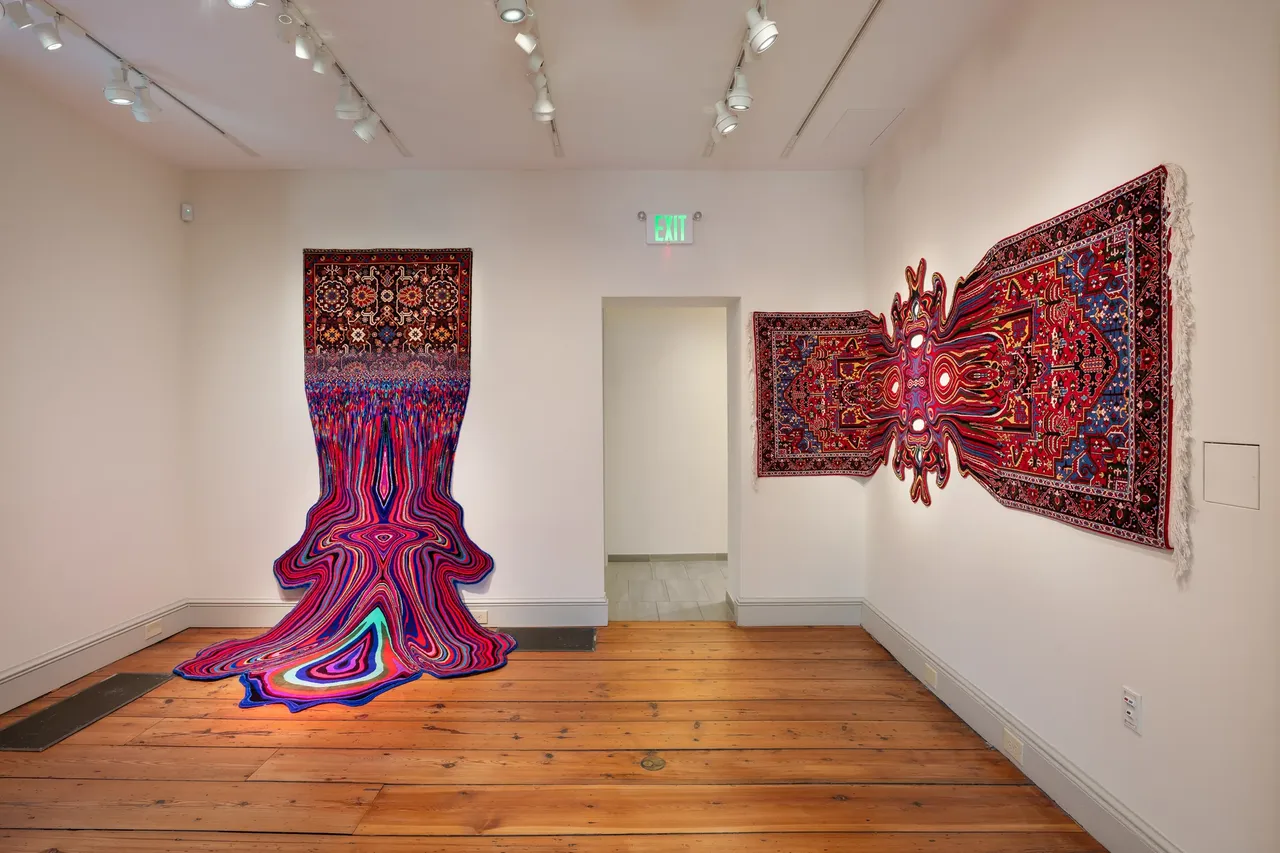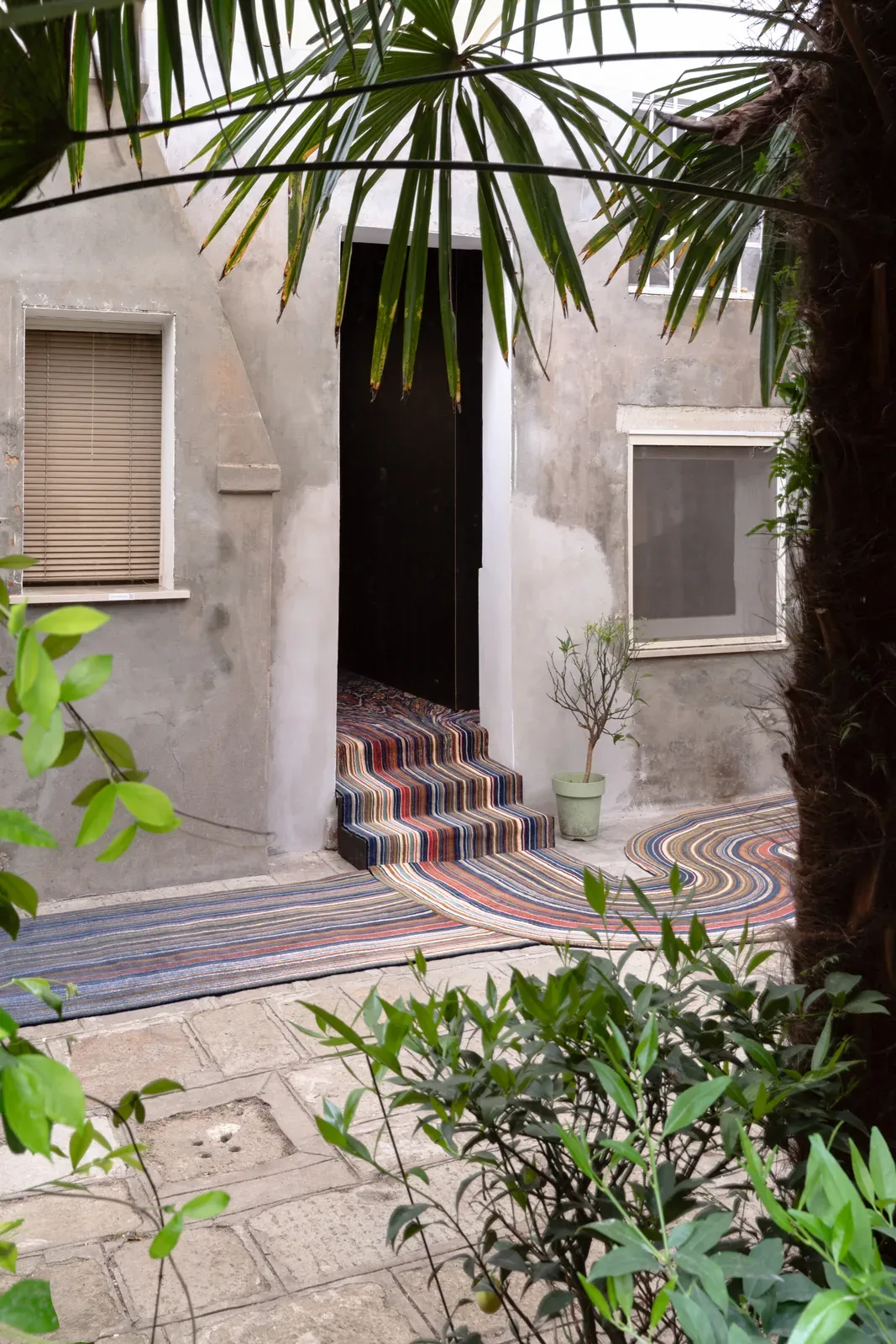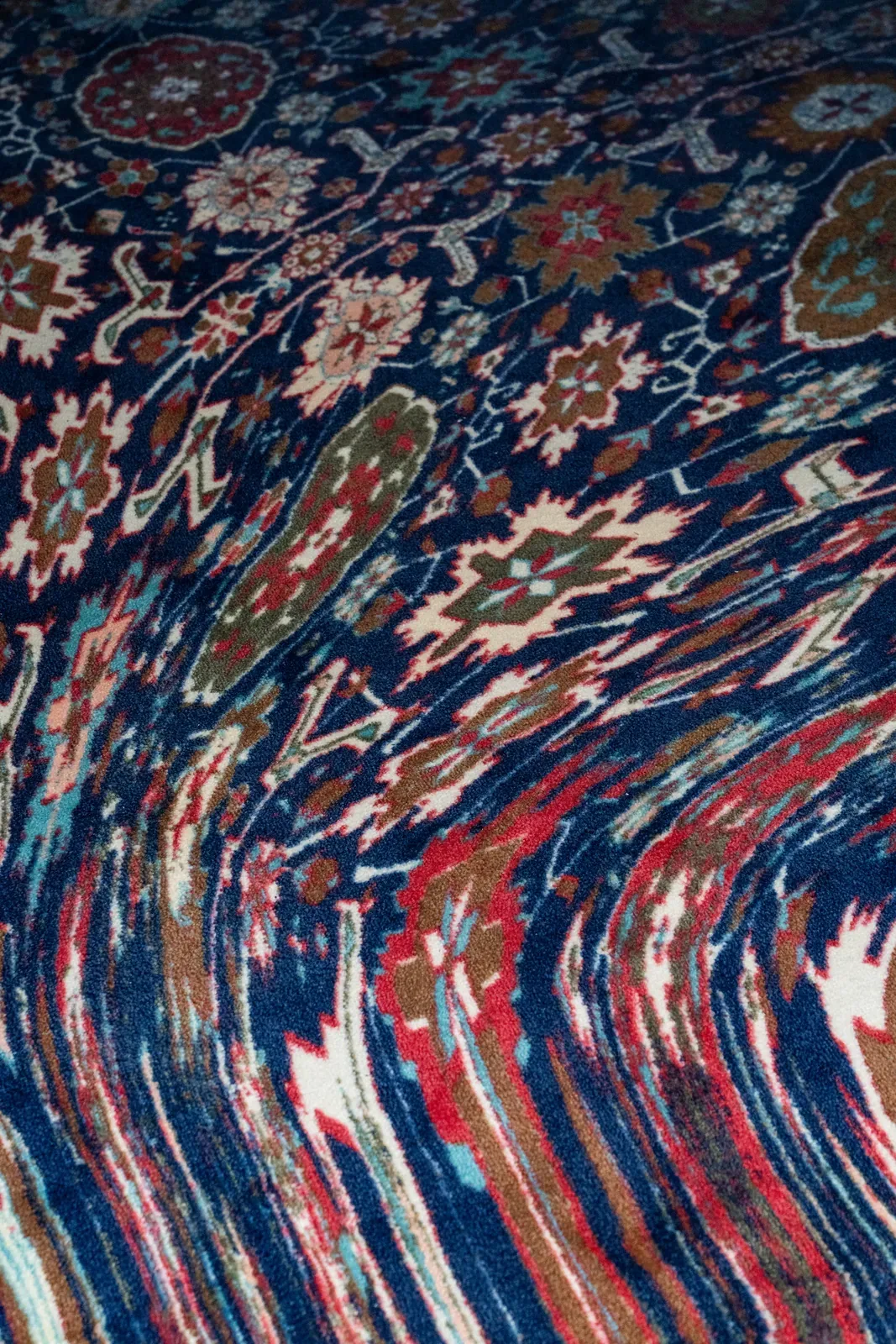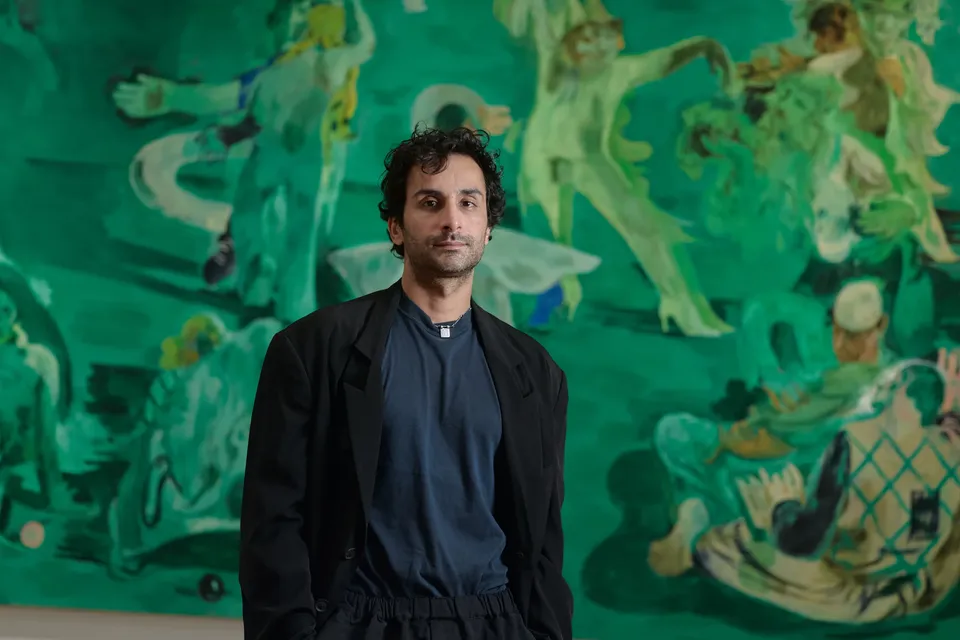
Did you notice a ‘melting’ rug at Acne Studios’s latest show? Well, the mind behind it is Faig Ahmed. The Azerbaijani artist has spent years pulling the carpet out from under tradition—sometimes almost literally—by turning woven patterns into glitches, spills and portals. Now, fashion has caught up with his incredible work. But hey, it’d be too simplistic to reduce his vast oeuvre to that; this year he’s representing Azerbaijan at the Venice Biennale, for example, which is no easy feat. So, with so many projects in motion, we decided it was a good time to sit down with him and talk about fashion, the pavilion he’s conceived for Venice, and even quantum physics.
When we spoke with you in 2021, you described attention as one of the most valuable resources an artist can offer. Five years later, attention has become the central subject of your pavilion in Venice. What made you feel that this idea needed to be explored on such a scale?
Human attention is a phenomenon that interests economists, sociologists, physicists, spiritual seekers and, of course, artists from different perspectives. Contemporary art allows us to understand that art is not an object, or even an idea, but the presence of the human being. I’m interested in the depth of art, the moment of its emergence and its absorption by the viewer. It took me a long time to fully realise this idea. Over the past five years, I have conducted several experiments, some successful and some less so. Achieving major goals requires working on a large scale. Venice in 2026 truly became the place where the idea found its complete embodiment.
Your work recently formed part of the setting for Acne Studios’ Spring/Summer 2027 show in Paris. How did that dialogue with Jonny Johansson and the fashion house begin?
The Acne Studios team approached my studio in June, and after a brief exchange, I understood that they were professionals who knew exactly what they needed. I trust people who are obsessed with what they do. That’s how it all began.
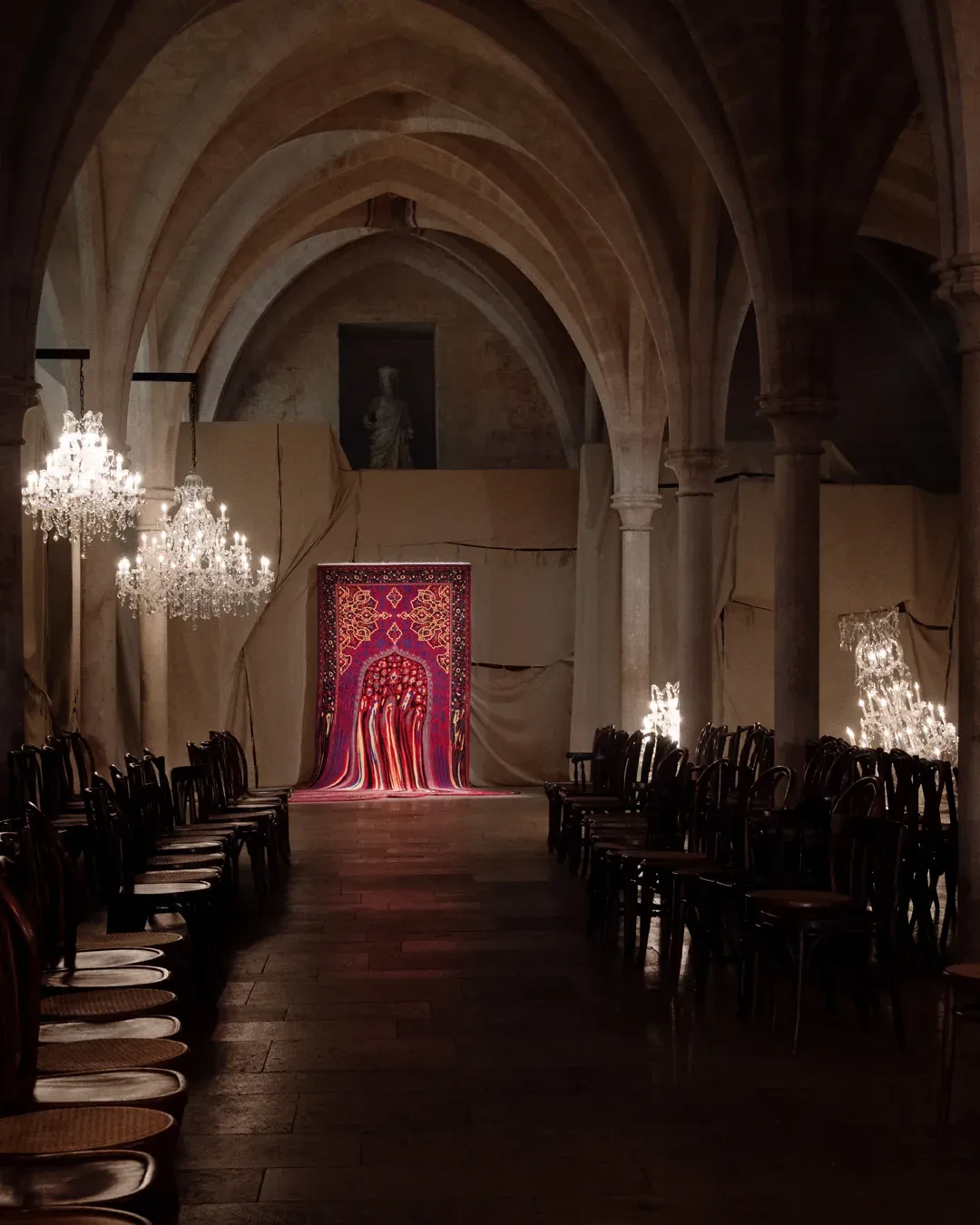
Faig Ahmed. Doubts, 2020. Acne Studios Women's Spring/Summer 2027. Photographer Alexandra Dautel.
Out of curiosity, what’s your personal relationship with fashion? Would you say your personal style reflects your artistic practice, for example, or do you approach them differently?
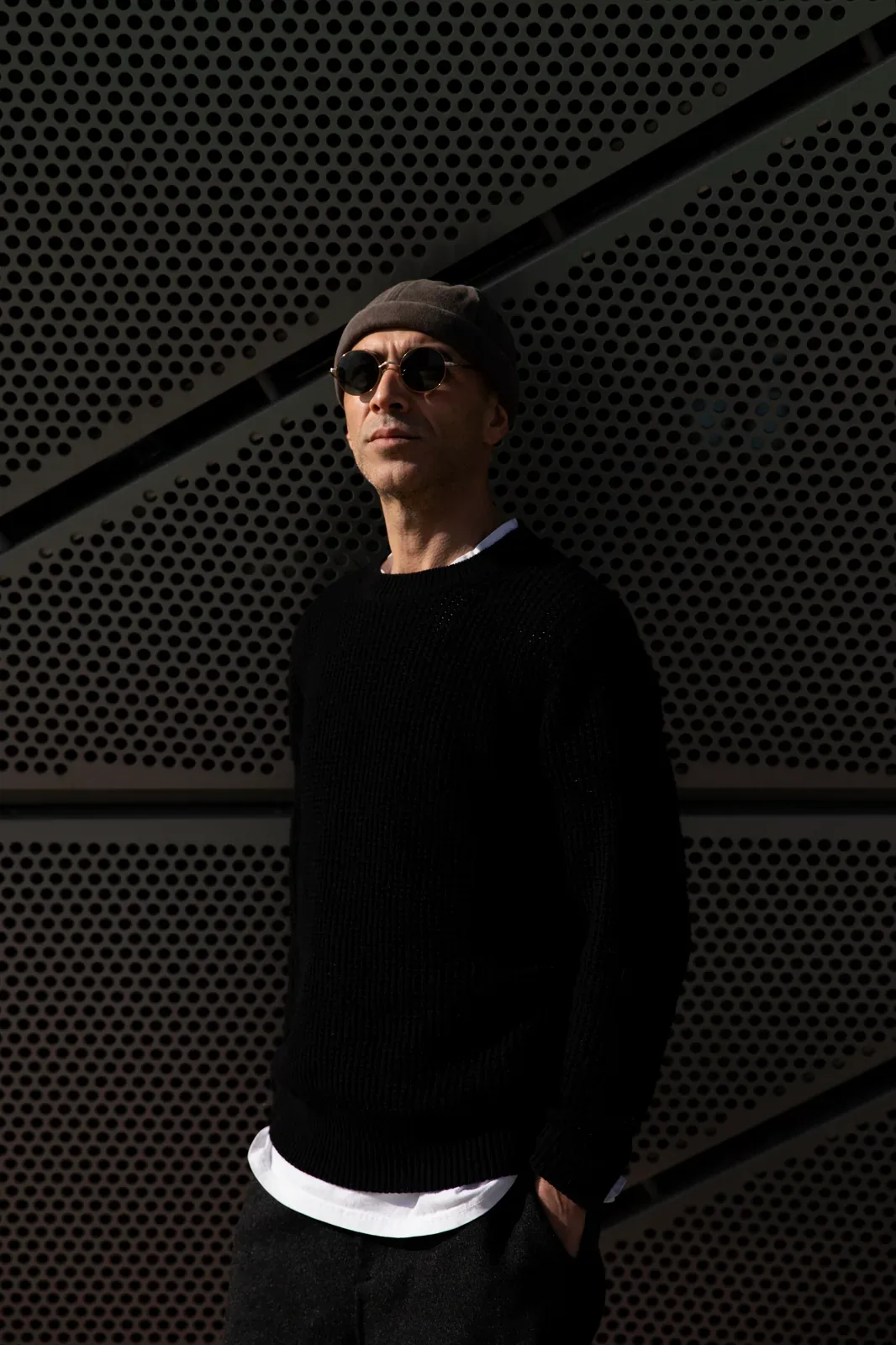
Clothing, both in ancient times and in the modern world, is a social language. I don’t follow trends but sometimes I enjoy playing with interesting garments and their combinations. But perhaps, like many creative people, I have a set of shapeless black clothes for those occasions when I don’t want to express anything, but instead want to observe and absorb.
The collection, titled Denim Hystoria, brought historical clothing into contact with contemporary, everyday garments. Did you recognise a connection between that approach and the way your own work disrupts inherited visual languages?
When I saw the collection on the runway and the overall atmosphere created by Jonny Johansson, I realised that his choice of my works had been absolutely precise. The harmonious combination of everyday items, such as jeans, and theatricality entered into an interesting dialogue with the design of the space, including my works.
Fashion can give art access to a very different and much broader audience, but it can also turn it into spectacle or scenery. How did you approach that tension in the Acne Studios presentation?
I’m not interested in a broad audience—only in particular people who can formulate questions within themselves through my works. Therefore, I don’t strive for excessive expansion. But you’re absolutely right: that is precisely why I avoided the world of fashion and design in general. However, this time I was simply interested in seeing my works against the backdrop of a fashion show, among models on the runway. There’s something sexual and exhibitionistic about it, since before that I had kept my works in the sterile conditions of the art world for a long time.
This year you’ve returned to the Venice Biennale as the sole artist representing Azerbaijan, having first participated in the country’s inaugural pavilion in 2007. How has your understanding of cultural representation changed over those nineteen years?
Everything has changed: myself, art and the country itself. In 2007, I was a boy who looked at the works of masters with admiring eyes, and nineteen years later I feel the weight of history, knowledge and responsibility. This was especially true because I represented the country on my own. In other words, it was not only a matter of art, but also an expression of a certain mood of an entire country. But, of course, this allowed me to realise ideas that I had been working on for so many years. I am very glad that the curators and the Ministry of Culture accepted my highly unusual idea for the national pavilion. I also became personally convinced that the institutions supporting art in the country operate on a completely different level than they did nineteen years ago.
“I trust people who are obsessed with what they do.”
The Attention responds to the difficulty of finding meaning amid information overload. What kind of attention does the exhibition ask from the visitor, and what are you hoping they might recover through that experience?
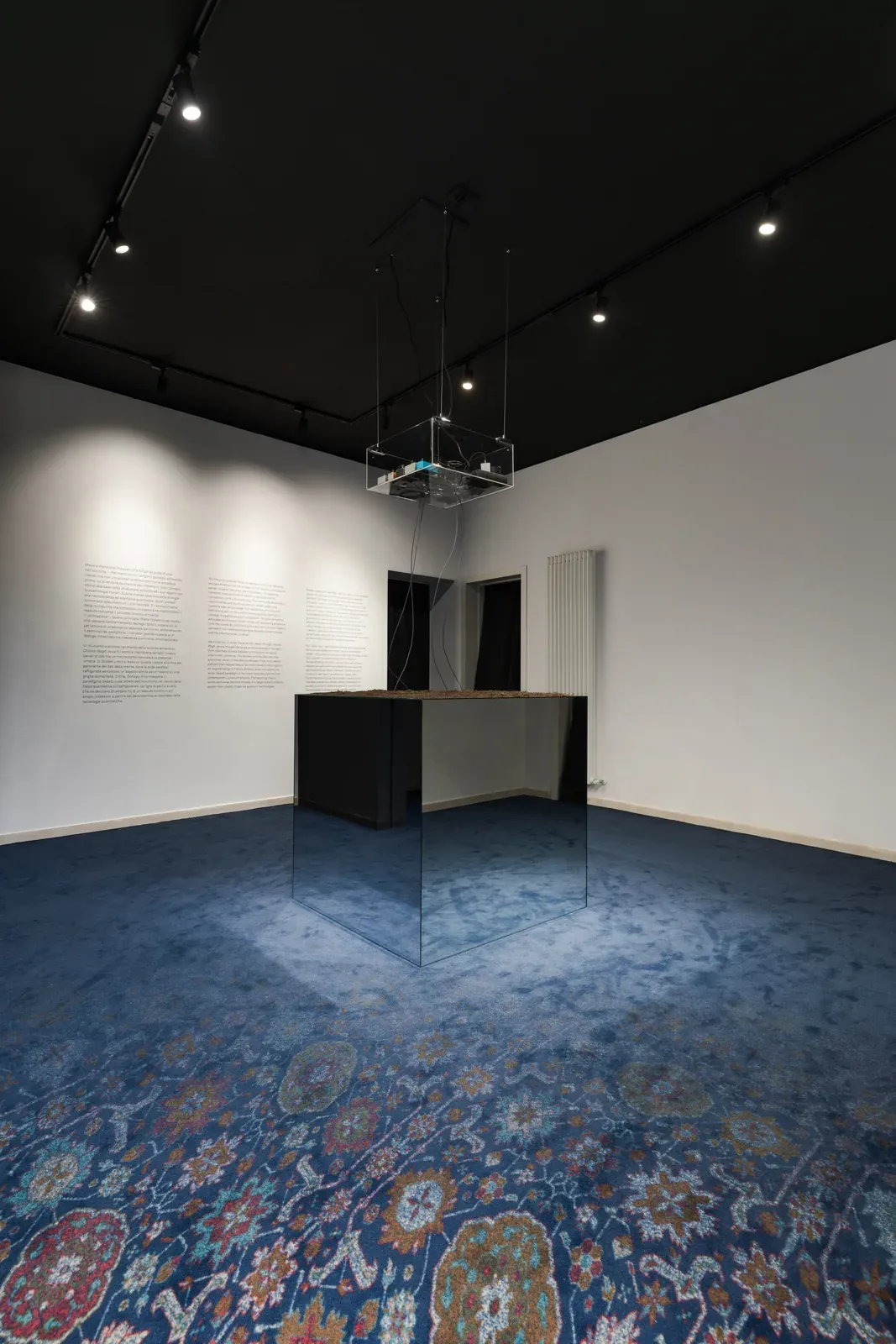
Everyone who has ever visited the Venice Biennale knows that, within a single minute, one can see an enormous number of works by artists and a wide variety of projects. This is a wonderful parallel to ordinary life in a city, where information overwhelms a person with more than they can process. For thousands of years, our evolution didn’t prepare us for such an amount of information at all. After all, for hundreds of centuries, people lived in small groups where everyone knew one another personally. It was important to me not to convey any messages, but to leave the person in peace, so that the only thing they could focus on would be themselves. First of all, I invite the viewer to take off their shoes, as the entire pavilion is carpeted. In this way, a person moves from the street environment into their natural state. In addition, tactile sensations are added to the familiar sensory stimuli. The feet are among the most sensitive parts of the body.
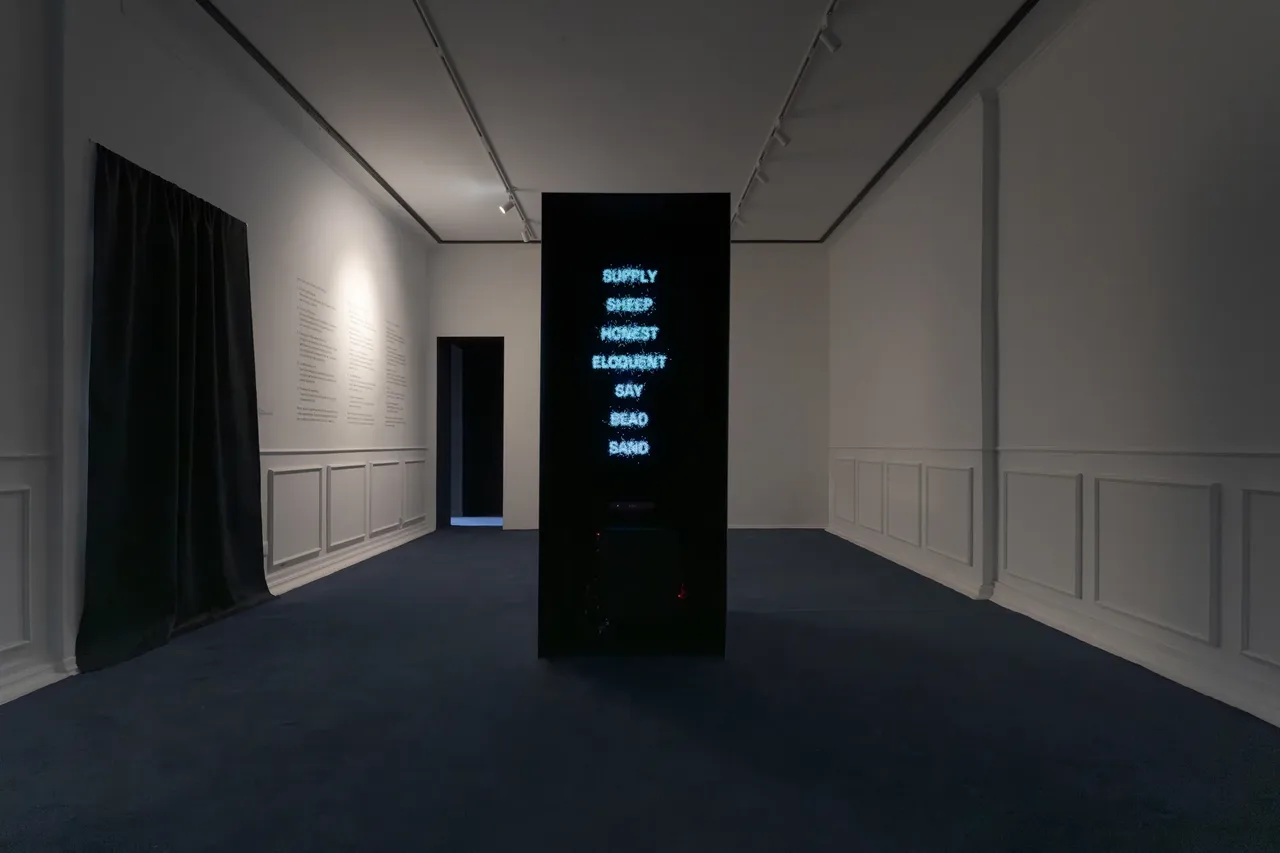
The entire pavilion is arranged so that, as the viewer moves through it, their attention very slowly shifts from the external to the internal—to themselves. In the final room, there’s a special work situated directly on the boundary between art and science. It’s the Entropy Altar.
The entire pavilion is arranged so that, as the viewer moves through it, their attention very slowly shifts from the external to the internal—to themselves. In the final room, there’s a special work situated directly on the boundary between art and science. It’s the Entropy Altar.
The exhibition draws on the work of the fifteenth-century poet and mystic Imadaddin Nasimi while also engaging with neuroscience and quantum physics. What allowed these apparently distant systems of knowledge to meet within the same project?
I have long been interested in two completely different subjects. The first is the various spiritual schools of the past, including Hurufism, one of whose representatives was the Azerbaijani poet Nasimi. The second is fundamental knowledge about our universe and the nature of reality, such as quantum physics and the biology of our bodies. At a certain point in my research, I saw an unusual parallel. A fifteenth-century poet speaks about ideas remarkably similar to those of contemporary theoretical physicists such as John Wheeler. The similarity between these ideas lies in the fact that our world consists of codes. In other words, at the foundation of reality there are none of the familiar things we know—water, fire, stones or even people.
There are codes and laws on which everything is based. I understand that this is a highly speculative subject, but art has no boundaries. Therefore, I decided to take this bold step and go beyond my own understanding to try to raise these questions with the viewer. Perhaps this will lead to even more questions, but no one promised us that understanding the world would be easy.
There are codes and laws on which everything is based. I understand that this is a highly speculative subject, but art has no boundaries. Therefore, I decided to take this bold step and go beyond my own understanding to try to raise these questions with the viewer. Perhaps this will lead to even more questions, but no one promised us that understanding the world would be easy.
The pavilion unfolds across seven rooms, with the carpet becoming a physical path through the exhibition. How did you choreograph the visitor’s movement from one space—and one state of perception—to the next?
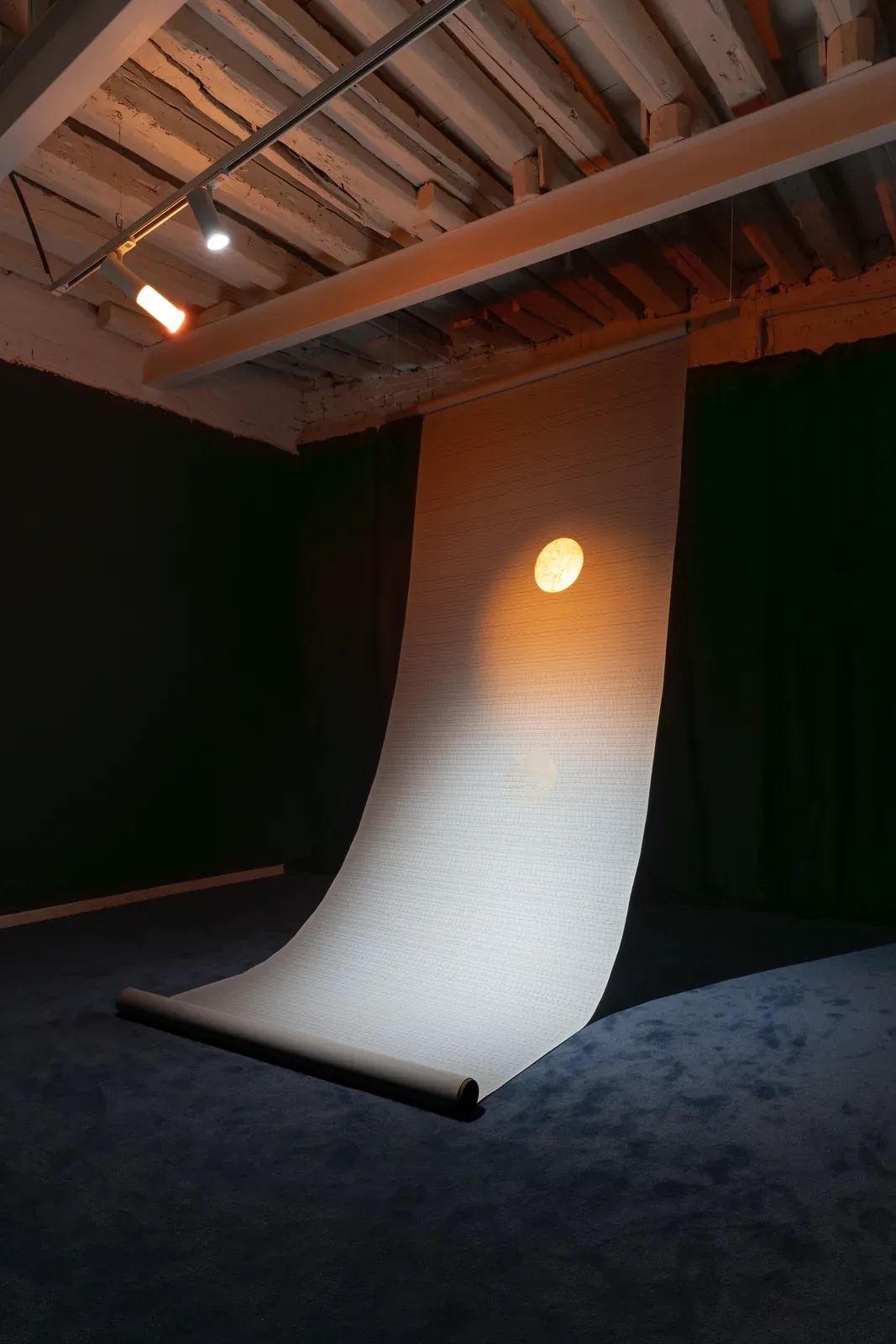
The central part of the entire pavilion was the human being. It so happened that the pavilion consisted of seven rooms, and in each of them the viewer immersed themselves more deeply within. So deeply that many people could simply sit for hours in the small courtyard of the pavilion—without a phone and even without conversation. This was one of the aims. The external world is already structured to completely capture our attention, especially in a place like the Venice Biennale. Precisely here, where information literally enters us without even asking permission, I wanted to give people the opportunity simply to rest and, at best, to arrive at a profound inner understanding.
At the beginning of the pavilion, the carpet looked like an ordinary carpet. As one moved inward, its patterns imperceptibly disappeared, gradually dissolving into the deep blue colour that served as the background for the ornaments. Usually, the viewer either didn’t notice this transition or only paid attention to it at the very end. It was also important, as I mentioned above, that the person remained without shoes throughout the entire route through the pavilion. They could not only walk on the carpet, but also sit or even lie on it. Many people did exactly that.
At the beginning of the pavilion, the carpet looked like an ordinary carpet. As one moved inward, its patterns imperceptibly disappeared, gradually dissolving into the deep blue colour that served as the background for the ornaments. Usually, the viewer either didn’t notice this transition or only paid attention to it at the very end. It was also important, as I mentioned above, that the person remained without shoes throughout the entire route through the pavilion. They could not only walk on the carpet, but also sit or even lie on it. Many people did exactly that.
The final installation, Entropy Altar, uses a quantum random number generator and data connected to the pavilion’s visitors. What interests you about introducing genuine unpredictability into a process that is otherwise carefully composed?
The fact is that there are many theories and perspectives suggesting that human consciousness may be connected to quantum fields. One of the scientists who considers this possibility is the Nobel Prize-winning mathematician and physicist Sir Roger Penrose, who not only supports this idea but also puts forward various hypotheses about the nature of such a connection. At the most fundamental level, our universe and reality itself possess properties of randomness and uncertainty. And the issue is not that we lack the knowledge or tools to measure them. On the contrary, quantum physics is one of the fields of science in which the most precise experimental data have been obtained.
A chip that literally uses quantum uncertainty at the physical level generates a random sequence of numbers. Based on this sequence, words are selected from a dictionary containing more than ten thousand words. In this way, a completely random combination of words is formed. The essence of the work lies in an experiment that investigates whether there is a connection between this randomness and a person. If there is no such connection, the words will always be random. If a connection does exist, the words will correspond precisely to the person’s inner state.
At the same time, there is no verbal or other interaction between the person and the system. There is only the person’s consciousness and the system itself. Standing before the Entropy Altar, the viewer enters a meditative state and directs their question, or simply a thought, towards the altar system. As a result, they receive seven words that are meant to reflect their thought. It’s remarkable that most viewers were astonished by the accuracy of the correspondences. We ourselves, as well as my entire team, were surprised, since we initially had no idea whether the experiment would work at all.
Already in the first days, after one thousand people had visited the altar, we noticed that there were more precise correspondences than cases that could be attributed to chance. People still write to us who don’t understand how it works, but who received messages whose content, according to them, no one else could have known.
We were assisted in this work by Stephon Alexander, a professor at Brown University in the United States and a theoretical physicist and cosmologist. He became interested in the idea of such an experiment and proved to be a very broad-minded thinker. In addition to physics, he’s also involved in music. Stephon supported the idea and contributed to the project by writing an essay for our catalog. To date, more than a hundred thousand people have interacted with the Entropy Altar in the pavilion. This is an enormous body of data that has yet to be processed. It’s a unique experience, since each person receives their own message from the altar, one that can never be repeated.
A chip that literally uses quantum uncertainty at the physical level generates a random sequence of numbers. Based on this sequence, words are selected from a dictionary containing more than ten thousand words. In this way, a completely random combination of words is formed. The essence of the work lies in an experiment that investigates whether there is a connection between this randomness and a person. If there is no such connection, the words will always be random. If a connection does exist, the words will correspond precisely to the person’s inner state.
At the same time, there is no verbal or other interaction between the person and the system. There is only the person’s consciousness and the system itself. Standing before the Entropy Altar, the viewer enters a meditative state and directs their question, or simply a thought, towards the altar system. As a result, they receive seven words that are meant to reflect their thought. It’s remarkable that most viewers were astonished by the accuracy of the correspondences. We ourselves, as well as my entire team, were surprised, since we initially had no idea whether the experiment would work at all.
Already in the first days, after one thousand people had visited the altar, we noticed that there were more precise correspondences than cases that could be attributed to chance. People still write to us who don’t understand how it works, but who received messages whose content, according to them, no one else could have known.
We were assisted in this work by Stephon Alexander, a professor at Brown University in the United States and a theoretical physicist and cosmologist. He became interested in the idea of such an experiment and proved to be a very broad-minded thinker. In addition to physics, he’s also involved in music. Stephon supported the idea and contributed to the project by writing an essay for our catalog. To date, more than a hundred thousand people have interacted with the Entropy Altar in the pavilion. This is an enormous body of data that has yet to be processed. It’s a unique experience, since each person receives their own message from the altar, one that can never be repeated.

You have another main exhibition. Epoch 2011–2024 brings together works that have travelled internationally but are being exhibited in Azerbaijan for the first time. How does it feel to encounter them again in Baku, within a museum devoted to the very carpet tradition your practice has spent years reinterpreting?
It seems to me that the curator Olga Seleznyova chose a good title for the exhibition, as well as for the works themselves, since the evolution of my artistic practice can be clearly traced through them. Indeed, an entire personal era has passed, and I myself was interested in looking at it as if from the outside, through the eyes of a viewer.
Looking across thirteen years of work in Epoch 2011–2024, can you identify a moment when your practice shifted from altering the visual language of the carpet towards constructing more immersive experiences around perception and consciousness?
Most likely, these were parallel processes: on the one hand, working with a particular medium, and on the other, my personal interests and research into consciousness and the scientific knowledge connected with this question. I did not want to, nor did I plan to, introduce this subject into art, since it is a complex issue that is not of interest to everyone. But that’s how it turned out, because the space of art provides opportunities for research that cannot be achieved in scientific laboratories. I conducted several experimental performances based on psychological staging, during which people were collectively brought into a particular state. In addition, I studied the impact of art on people’s biological indicators, including brain activity. The work used medical equipment such as EEG, ECG and EMG, as well as eye-tracking systems. My team collected data from more than one hundred people. The results of this research were presented at Princeton University in early 2026.
You have described The Attention in Venice as reflecting a state of transition rather than a conclusion. When viewed alongside the trajectory presented in Epoch 2011–2024, does the Venice pavilion feel like the beginning of a new epoch in your work—and, if so, what distinguishes it from the previous one?
I see neither a beginning nor an end—everything is happening in parallel. Yes, one could probably say, provisionally, that this is a transition to a new stage. But for me, such a definition has no particular meaning. I see lines extending from infinity to infinity…