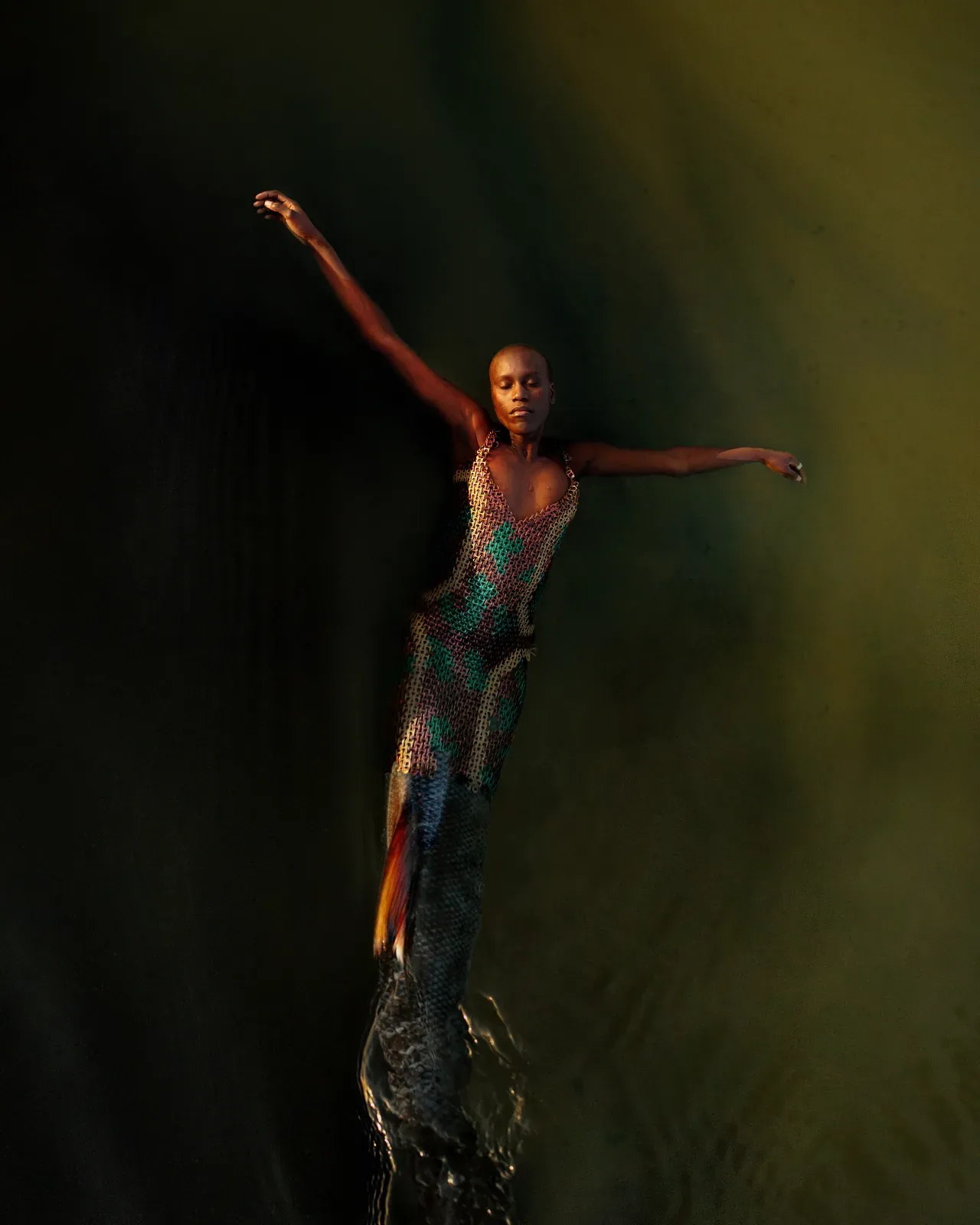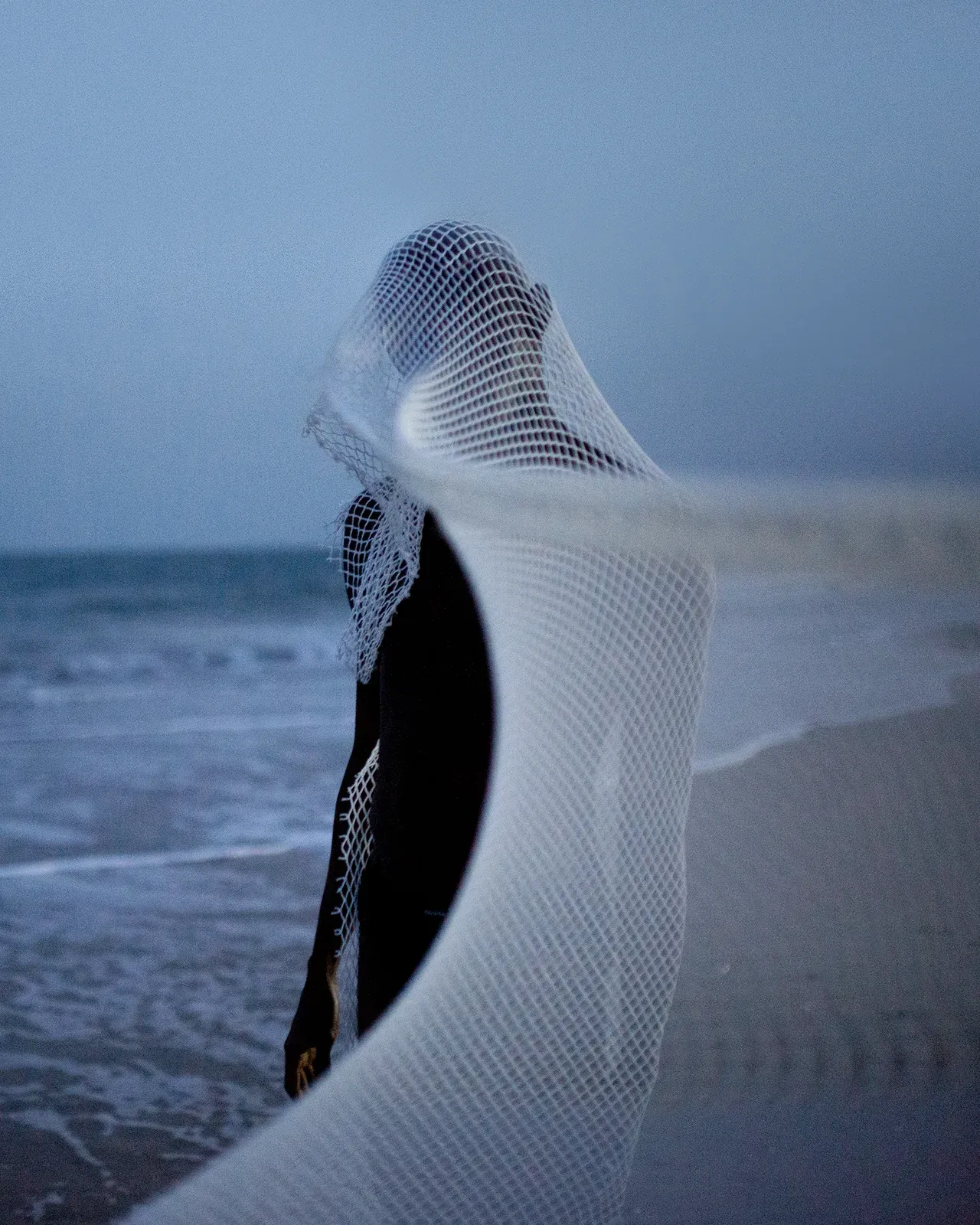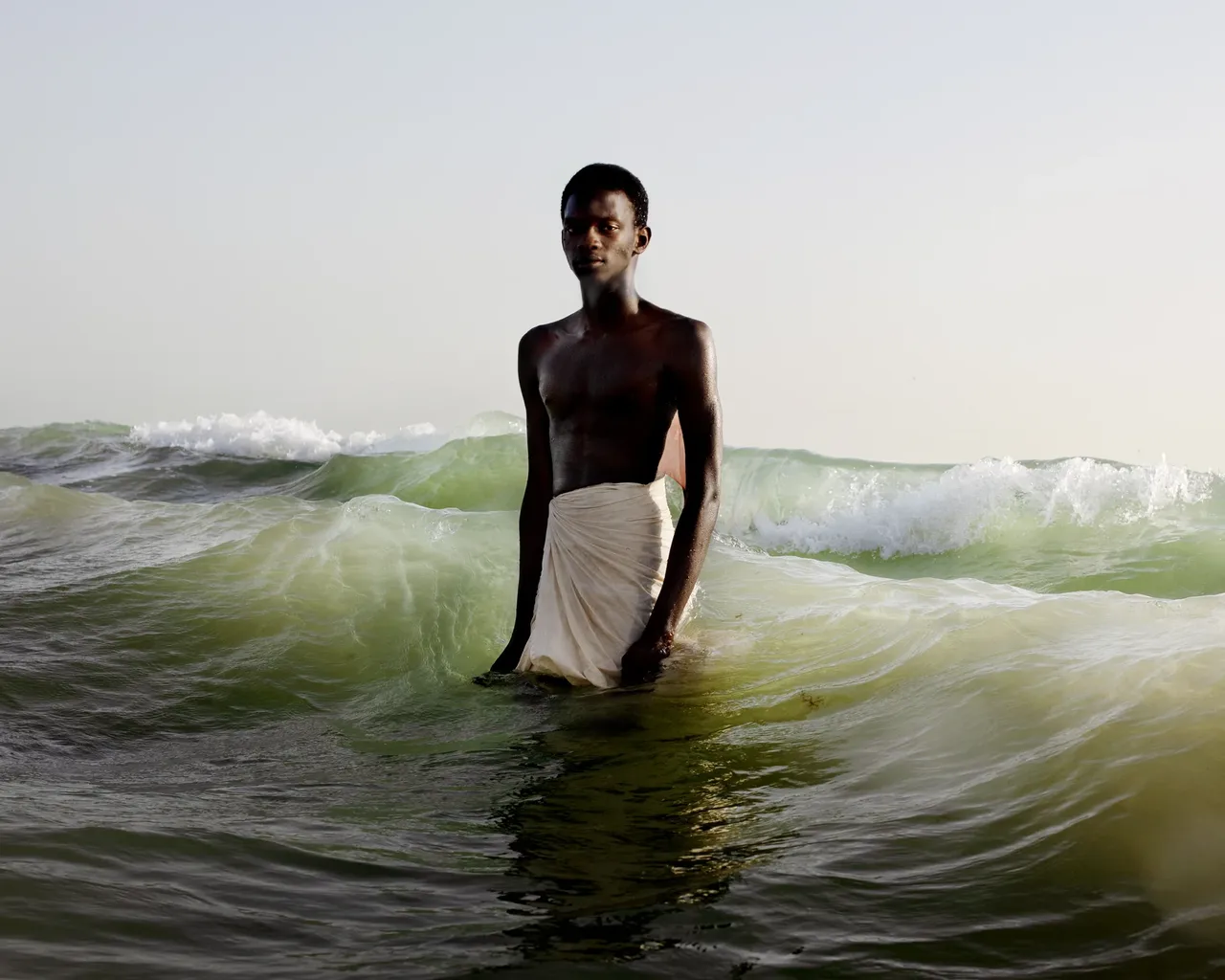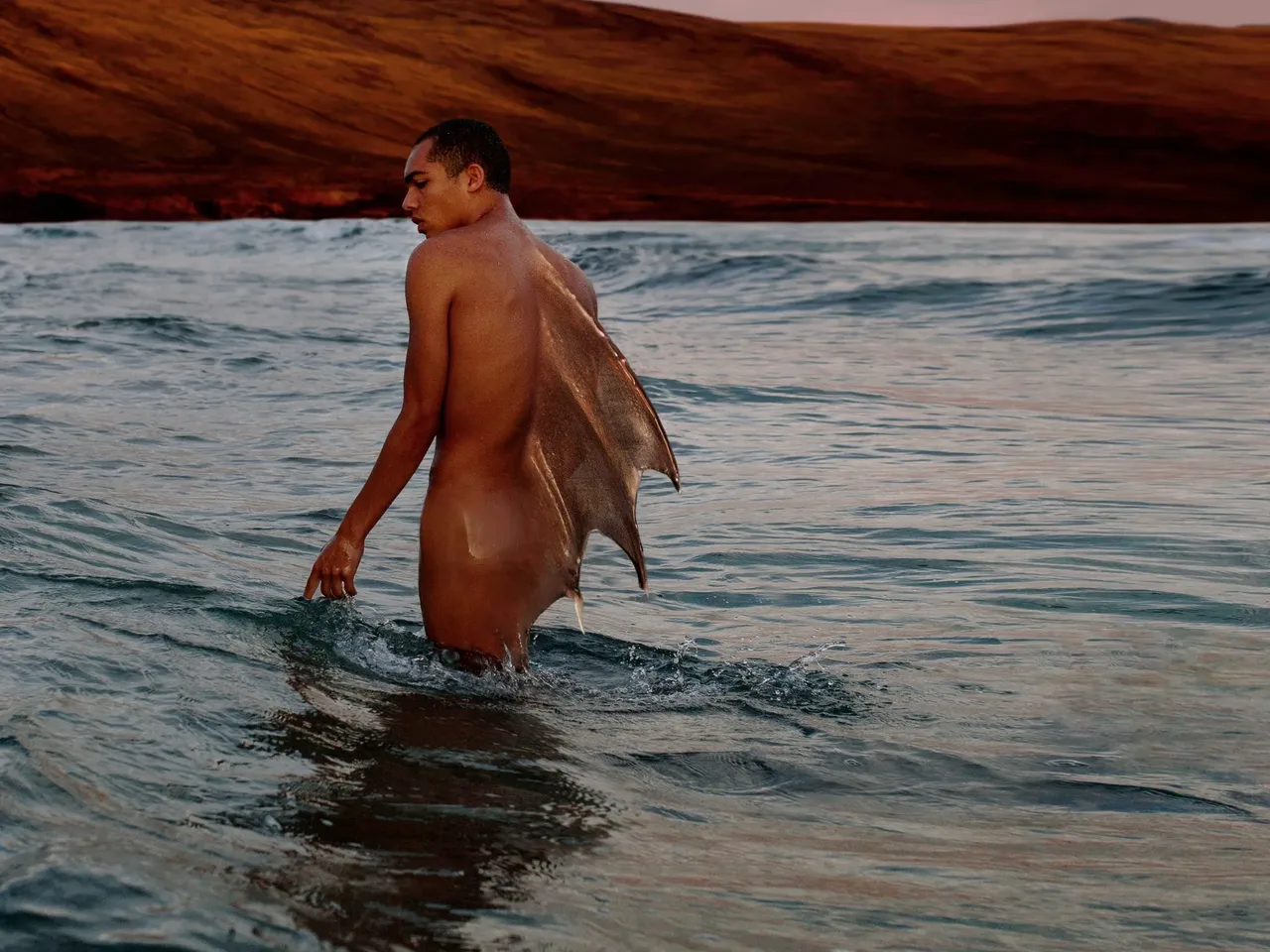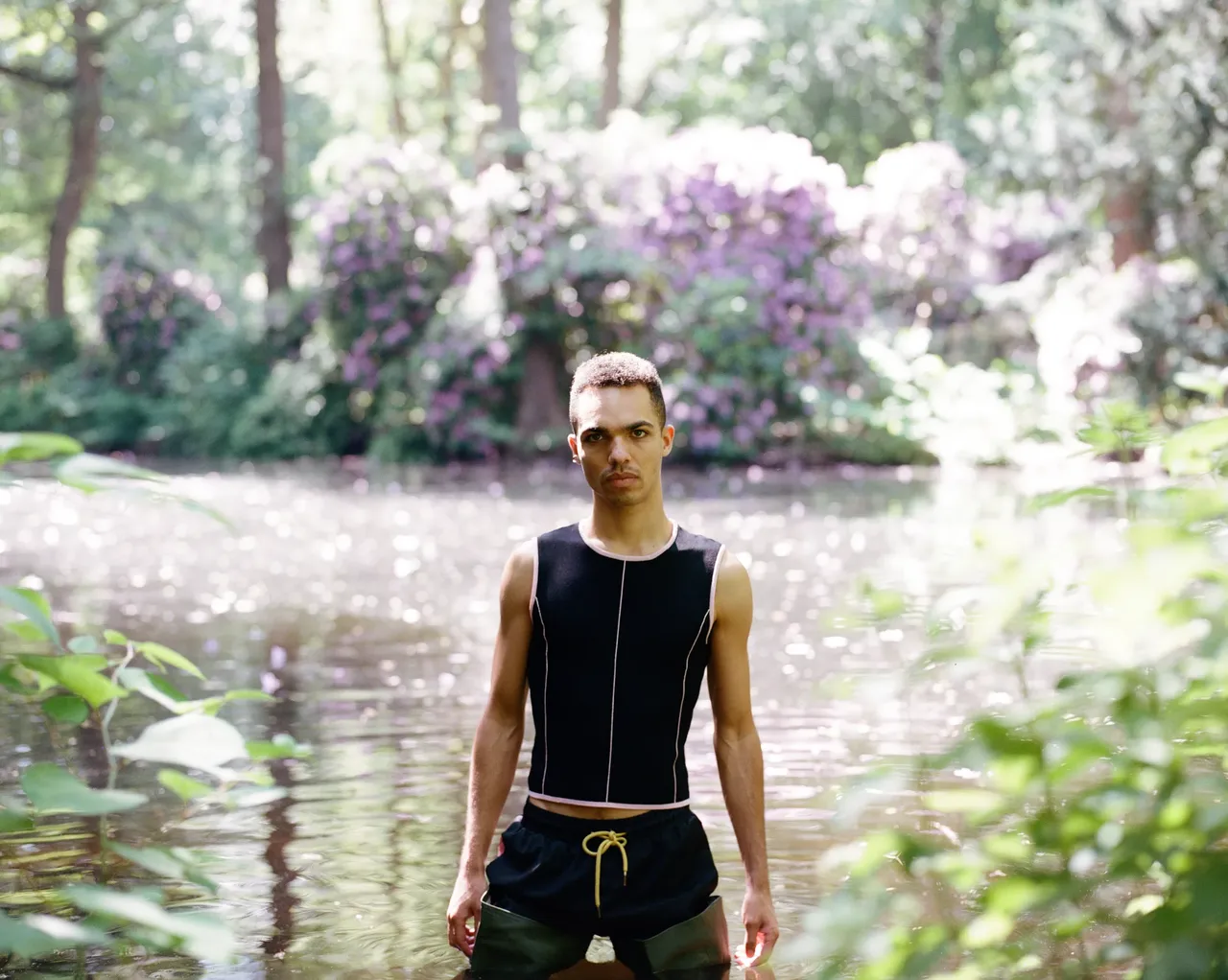
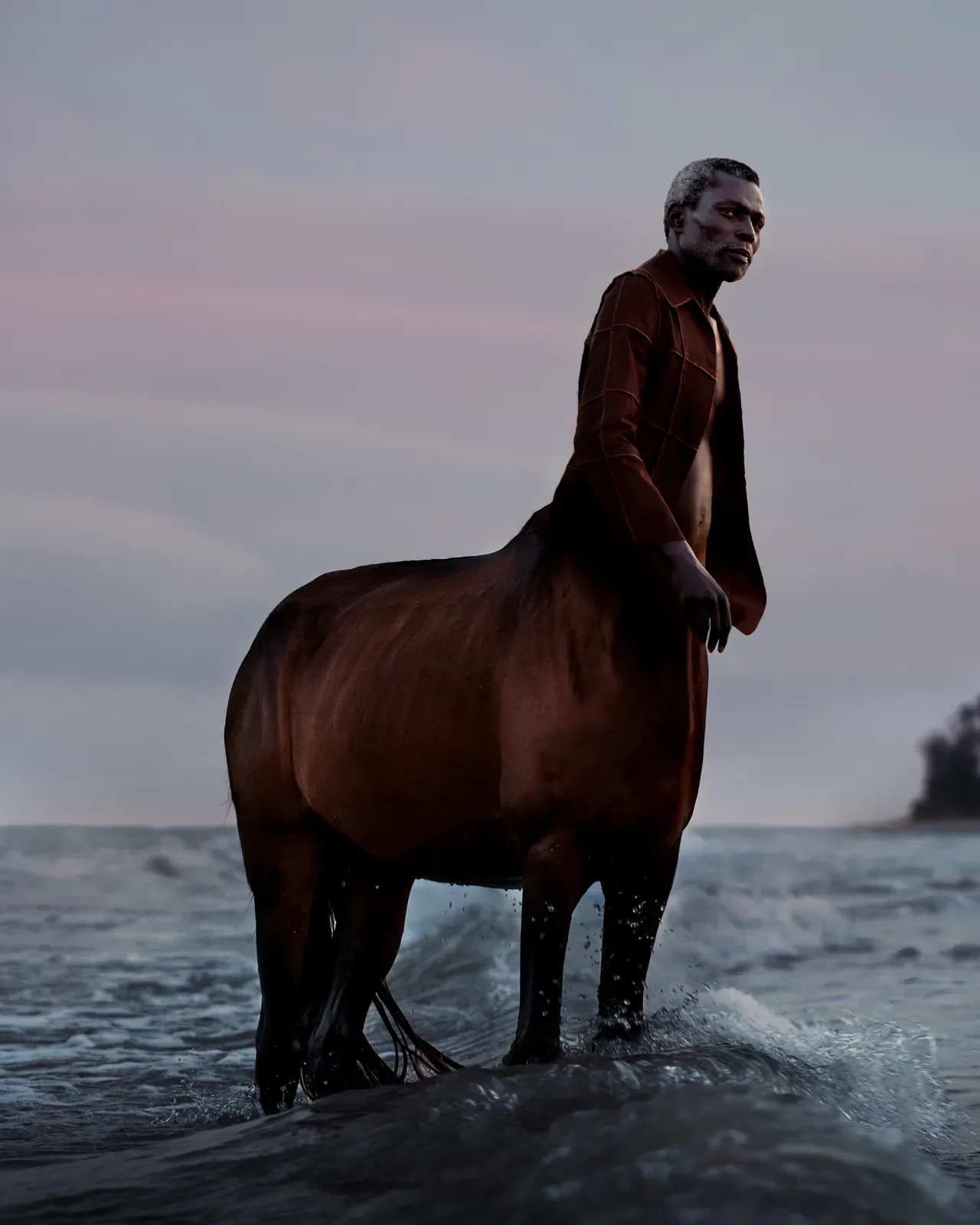
The human becomes animal, the body merges with the landscape, and borders dissolve in a world of perpetual transformation. On view at the Memphis Brooks Museum of Art until September 27, Bodies of Water by David Uzochukwu imagines sea creatures inhabiting a liminal realm where otherness is reclaimed as a space of becoming, vulnerability becomes a source of power, and fluid identities transcend the boundaries between continents, life and death, and the human and non-human.
For David Uzochukwu, fantasy is never an escape from reality, but another way of confronting it. His photographs act as counter-images to histories shaped by violence, transforming them into moments of stillness and serenity. Suspended between sea and sky, his sirens belong to a world where frontiers are not fixed or imposed, constantly shifting between body and memory, the monstrous and the beautiful.
In this conversation, the artist reflects on migration, Blackness, climate displacement and the political potential of imagination, while suggesting that photography can become not only a witness to the world, but also a way of healing it.
Congratulations on your first solo museum exhibition in the United States. How have you been since the exhibition?
I’m very good. It was a very beautiful experience. I have to say that, for it being another first solo museum exhibition, knowing that I’ll get to remember this forever, it’s very special. Having the opening in Memphis was a very good place for the work. It felt like the work could kinda come home. Because I live in Europe and I kind of made it in Europe, and then on the Senegalese coast, I was thinking a lot about the relationship between Africa and Europe. But then, it resonates so much in the American context, with African American people and Black people who can really see themselves in the work, so I think it makes a lot of sense because it works so much with these ideas of otherness, the monstrousness, but at the same time it has this power within that.
How have people responded to the work now that it’s been out in the world for a while?
First of all, it was so nice to see it myself. A lot of the time, I just see the images on my own website or on my phone, and to have some of them printed larger than life, it really invited a moment of connection and reflection. The responses have been super nice. At the opening, for example, there were different generations, and it was beautiful to see that kind of reception and to see that people relate. I guided a group of teenagers through it and got a lot of super interesting thoughts. It was interesting to move through it and unpick the references. People told me that they see themselves in them, that they miss their families. I think it’s beautiful, and it seems like people were able to take different things from it.
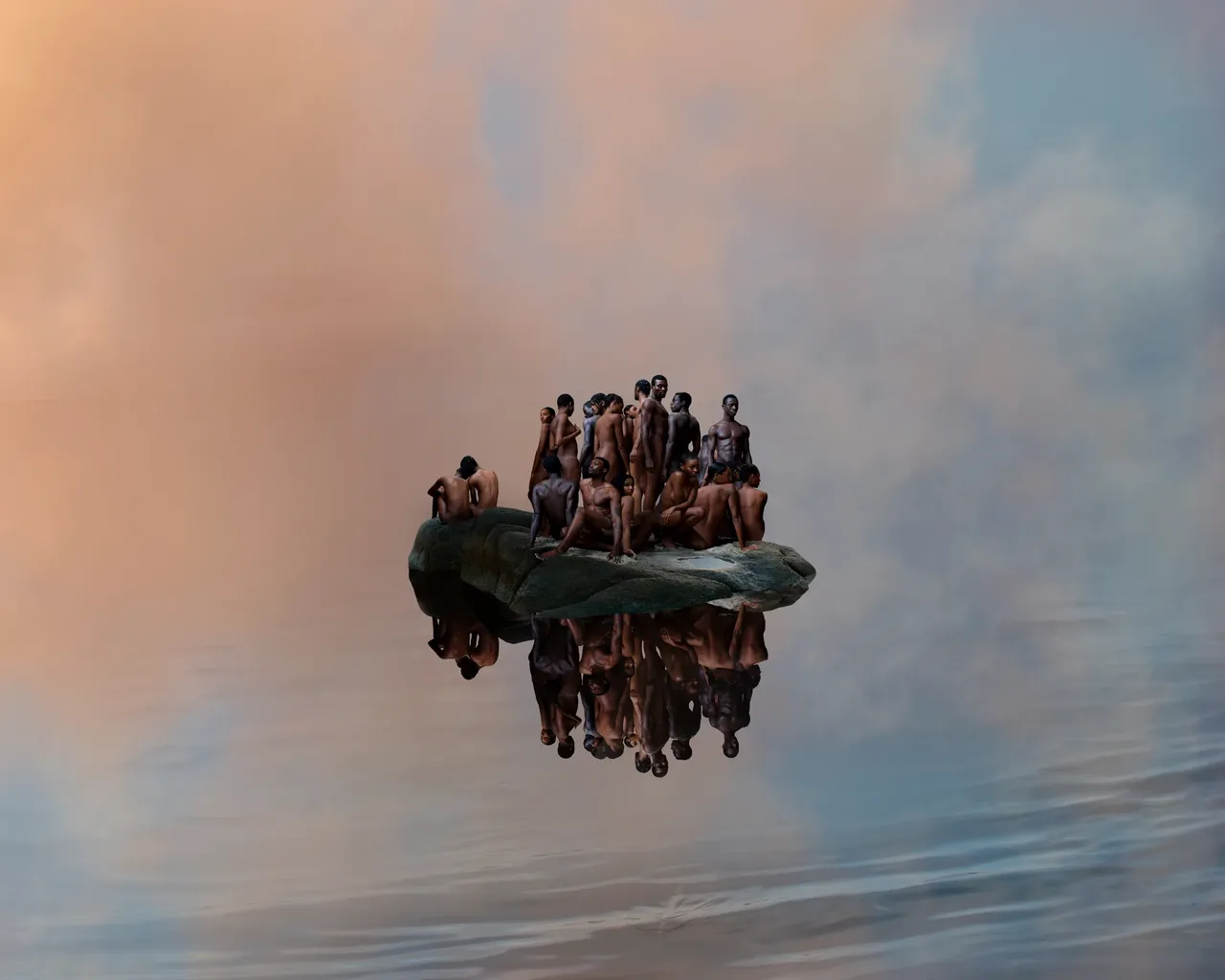
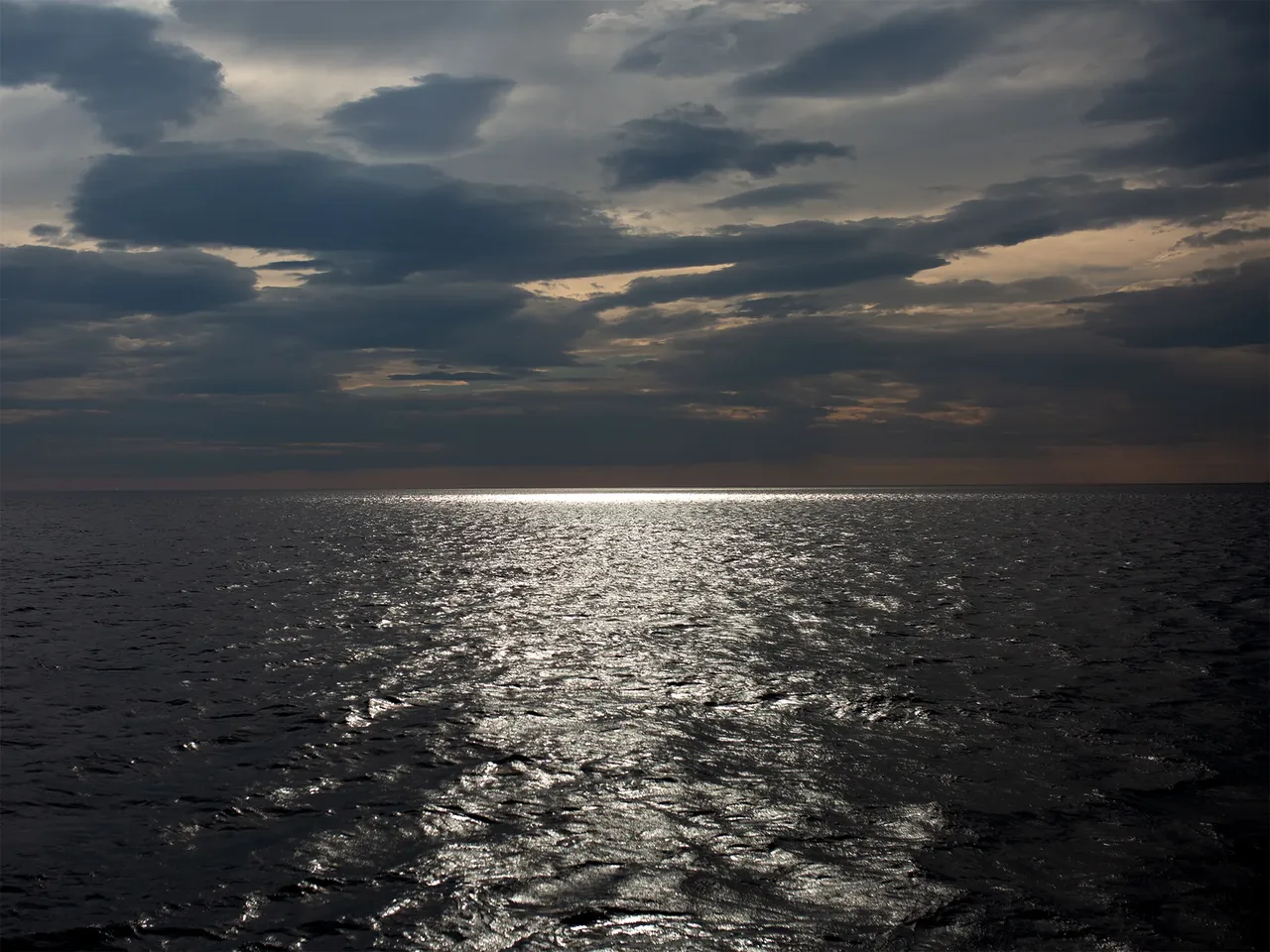
Styx is one of the works that stayed with me the longest. It feels almost prophetic, like an ark carrying the last survivors to another world. At the same time, it evokes the crossing between life and death. What was the starting point for this image? What did you want that journey across the water to represent?
The first thing in particular I thought of was a response to documentary photography of migrants in the Mediterranean Sea, crowded into very small boats. And there was something so frightening and so moving about these images. But also, about what they represent: the urgency with which people move, but then also the atmosphere they enter into through that, the waves of hate that also receive them. I wanted to almost create a counter-image to honour this moment in between, this community of people whose fate is uncertain. They are kind of lost between sea and sky, but also there’s this closeness between them and a sense of rest.
Water is not a border in your work, but a space of transformation. At a time when seas, oceans and rivers have become life-or-death frontiers, what political possibilities do you see in imagining water as a place of life rather than a boundary?
I think a lot of my work in general, in the series, but also overall, is about the relationship between the body and the environment, and about dissolving the frontiers and borders between them. Understanding ourselves as part of a larger cosmos, as dependent, as vulnerable, and not being afraid of our vulnerability. I think that can very much translate to the question of literal borders, and of water as a literal border. So, creating these beings that can cross the water and then be free and autonomous, to me, feels like one way of undoing these invisible but very strongly defended lines that we’ve drawn around our countries, but also around this idea of trying to cut ourselves off from vulnerability that, in part, we’ve created.
You’ve said that presenting your work in America feels very special, partly because of the current political climate. Europe often presents itself as liberal, yet it’s also experiencing a resurgence of anti-immigrant politics. How have those contradictions and your own experience shaped your perspective?
I grew up in Brussels, kind of like the heart of Europe, and seeing the contradictions between the European values that one claims to have and claims to defend, and then the actual politics that are enforced, the tension between that is something that I really felt when I was coming of age. And then, of course, there are moments when you feel it in your own body and you experience it as you’re moving through the world and across borders. I think there’s a lot there too.
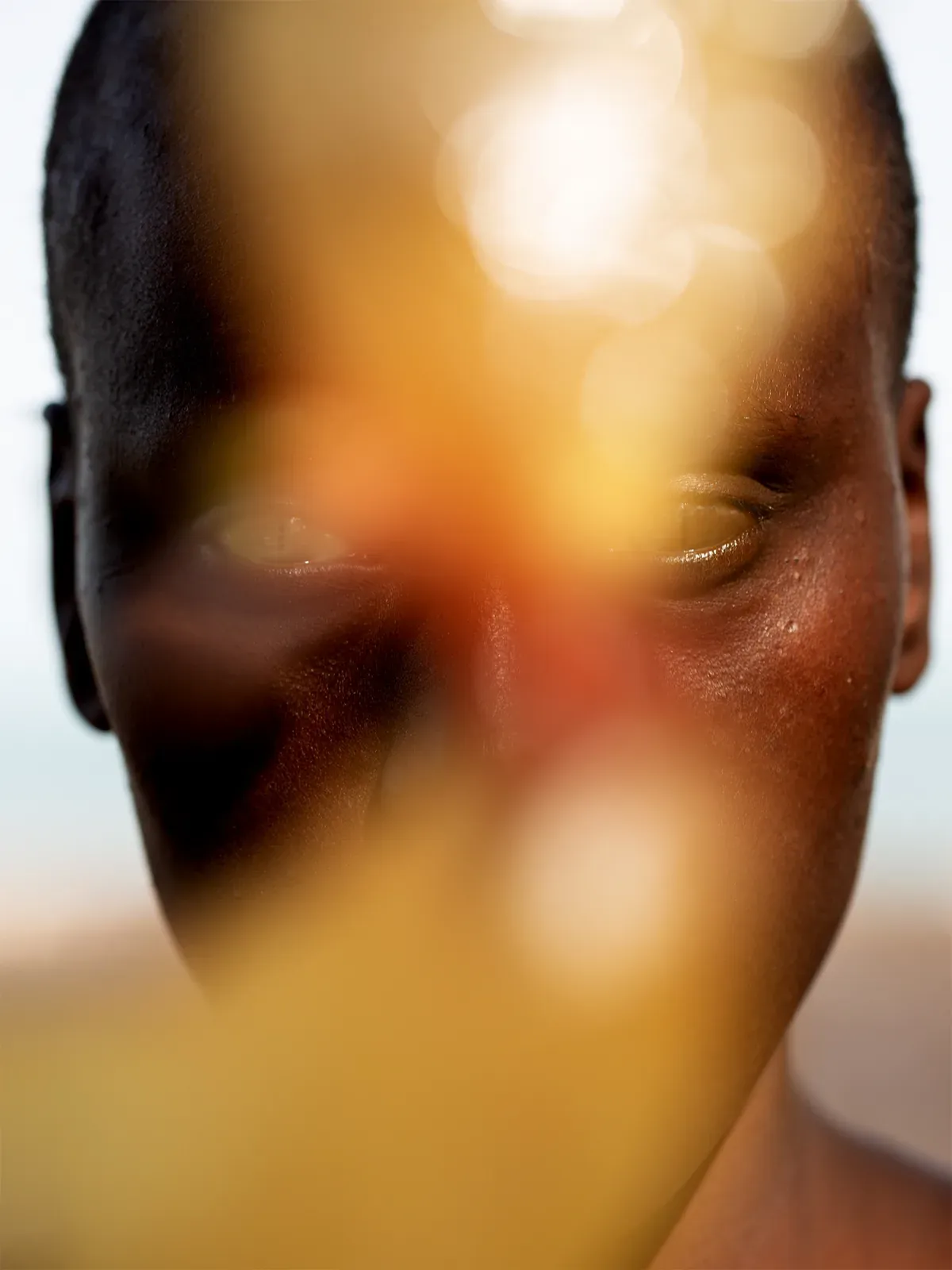
Your characters reclaim a history in which Blackness was dehumanised. What does it mean to transform that imposed otherness into a source of power?
What it means is kind of taking away the power to dehumanise. To embrace vulnerability, to see the power within it, to be able to continue to think about new forms and new shapes, and to really understand Blackness in particular as something that’s alive and that changes form depending on where it is or who lives in it. There are so many ways to experience it, almost like a skill set, a culture, that is very nurturing. It’s a way of expressing that.
Drexciya imagines an underwater civilisation descended from Africans thrown overboard. What drew you to that mythology, and what possibilities does it open that history alone cannot?
I encountered the mythology of Drexciya after I started making the work. When I first exhibited some of the images, I think in Paris, I was approached by someone who was very excited, telling me about Drexciya. And when I began looking into it, it felt like things clicked and shifted and aligned, and all of a sudden, I was part of the lineage of storytellers making work around Blackness and water and survival.
I think water allows us to do that. In one way, it is to reclaim these very violent histories that often have very few memorials, that are difficult to remember, and to reclaim them in a way that almost shifts the boundary between life and death as well. It gives the possibility to dissolve even that frontier. It allows us to do so with dignity and to imagine ways in which people, even within this violence, have moments of autonomy.
It’s interesting, as I’m thinking of it. Throughout the slave trade, and even before, there was the “Last Bath”, on the West African coast, where people drifted away in the river, or then people on slave ships jumped overboard, preferring death to a life in enslavement. There is a continuity to this history and these moments of choosing death as a last and final moment of liberation, the only possible one. Being able to imagine that gets more tangible through these mythologies, I think, that there’s life beyond the constraints that you’re facing every day.
I think water allows us to do that. In one way, it is to reclaim these very violent histories that often have very few memorials, that are difficult to remember, and to reclaim them in a way that almost shifts the boundary between life and death as well. It gives the possibility to dissolve even that frontier. It allows us to do so with dignity and to imagine ways in which people, even within this violence, have moments of autonomy.
It’s interesting, as I’m thinking of it. Throughout the slave trade, and even before, there was the “Last Bath”, on the West African coast, where people drifted away in the river, or then people on slave ships jumped overboard, preferring death to a life in enslavement. There is a continuity to this history and these moments of choosing death as a last and final moment of liberation, the only possible one. Being able to imagine that gets more tangible through these mythologies, I think, that there’s life beyond the constraints that you’re facing every day.
“It’s important to distinguish between art, activism, and actual structural organisation.”
How did learning about Drexciya change your perspective on the work you had already started?
I think I had the American and the transatlantic perspective. When I started out, I was very much thinking about the Mediterranean, and I was very much motivated by the so-called migration crisis. I think what Drexciya allowed me to do was introduce the Atlantic, and through that, also the idea of the Black Atlantic, the ways in which what I’m looking at, studying, or exploring in the series might be a bigger question that concerns Blackness as an identity that cuts across global diasporas.
Another way in which I keep thinking about it is through all these alarms about climate change, the tornado warnings and flash flood warnings, and the question of how to continue to adapt. It’s interesting to look at the past, to look at the ways in which people have adapted so far, but it’s also a very urgent question of looking at the present and the future and asking ourselves how we will continue to shift and to cross. There are all these entanglements between the climate crisis and migration, and the ways in which displacement will continue to happen and will continue to affect the most vulnerable. I think there’s almost like a new additional lens to the work.
Another way in which I keep thinking about it is through all these alarms about climate change, the tornado warnings and flash flood warnings, and the question of how to continue to adapt. It’s interesting to look at the past, to look at the ways in which people have adapted so far, but it’s also a very urgent question of looking at the present and the future and asking ourselves how we will continue to shift and to cross. There are all these entanglements between the climate crisis and migration, and the ways in which displacement will continue to happen and will continue to affect the most vulnerable. I think there’s almost like a new additional lens to the work.
Before that, what were the initial references or ideas that shaped the project?
It really continued to build over time. It has, in some ways, been a very long time coming. I’ve always been obsessed with fantasy as a way of escaping or crossing boundaries. I remember when I was four, I fought really hard to get a Mermaid Barbie. Applying that and realising the ways in which fantasy can be political, and how it can continue to charge that, has continued to be useful. The work grew from these personal affinities for mythology and lore: Greek mythology, sirens, but also European lore or Nigerian spirituality. The world, it all existed. I think it just piled up at the moment when the series began; it was pushed into action by the political situation.
How do you think the conversation will change when this displacement becomes something that affects more and more people, including Europeans?
Even within that, there will be questions about the circumstances under which you are displaced. I think there’s this layer in which certain disparities and vulnerabilities remain relevant. It will really require a collective rethinking of how resilient we are and how resilient we can be, and who we extend our empathy to.
I’m struck by the way you’ve transformed one of history’s greatest atrocities into images that feel so peaceful. How have you managed to channel that into something visually so serene?
I think what I need to do in the work is make space for acknowledgment. There’s a strength that resurges there. The work, to some degree, has already made a step toward healing. There’s always an appeal to figuring out a way, letting this be one step closer to mending this wound and addressing it. Even knowing where it is and naming it can be a step towards growth. When I think about photography and the way it circulates, and the way that it is out there so much, it can reach so many people so quickly, and often without context. It’s a real chance to use the medium to put images out that are moving in a way that feels productive and healing. I would want to see them. These are images that I would need, so I make them.
How do you avoid aestheticizing or romanticising historical pain?
Because there are so many layers to the work in itself, I think it is less about romanticising the pain and more about acknowledging the strength and the adaptation, the skills that are already there. It’s very much about honouring who people are, what they have gone through, what they are going through, and the ways that they’ve found to survive and carry on. So, that means making work in a context that is very violent, but then, in the images themselves, finding ways to address that violence but also making sure not to replicate its explicitness. I think the work has to partake in healing.
Bodies of Water refuses to define Blackness through victimhood. Instead, the exhibition imagines identity as fluid, adaptive, alive, and full of possibility. In a political moment increasingly shaped by borders, stigma, and hostility, do you think your work can become a form of resistance?
In a small way, they are in their own arena, and it can be resourceful to literally see yourself and to kind of replenish through art, to then hopefully be able to mobilise and organise to effect structural change. So, thinking about this body of work, I’ve always been so moved by the work of people who do civil sea rescue in the Mediterranean, filling gaps that the states are leaving and saving lives. I have a lot of respect for that. Hopefully it can contribute to some degree, but it’s important to distinguish between art, activism, and actual structural organisation.
It’s true that there’s an important distinction between art and activism, but art also plays a powerful role in shaping how people see the world. Your characters don’t simply endure hostile worlds, but thrive. Is that the kind of hope you want your work to offer today?
I hope so. What I’m really getting at, to some degree, is an encouragement to sit with the monstrousness and allow myself to continue to shift, and to appreciate the ways in which we do. Also, because the work was informed by these ideas of Black identity, but in some ways, it also speaks across. It’s almost like they shift gender, their literal physical form, the human shifts into the animal, the body shifts into the environment. I think there are all these different borders and boundaries that we can question, that we can continue to come across. To me, hopefully, I think it gives a sense of hope and beauty within that. It’s frightening and it’s scary, but at the same time it’s such a powerful and beautiful movement to engage in.