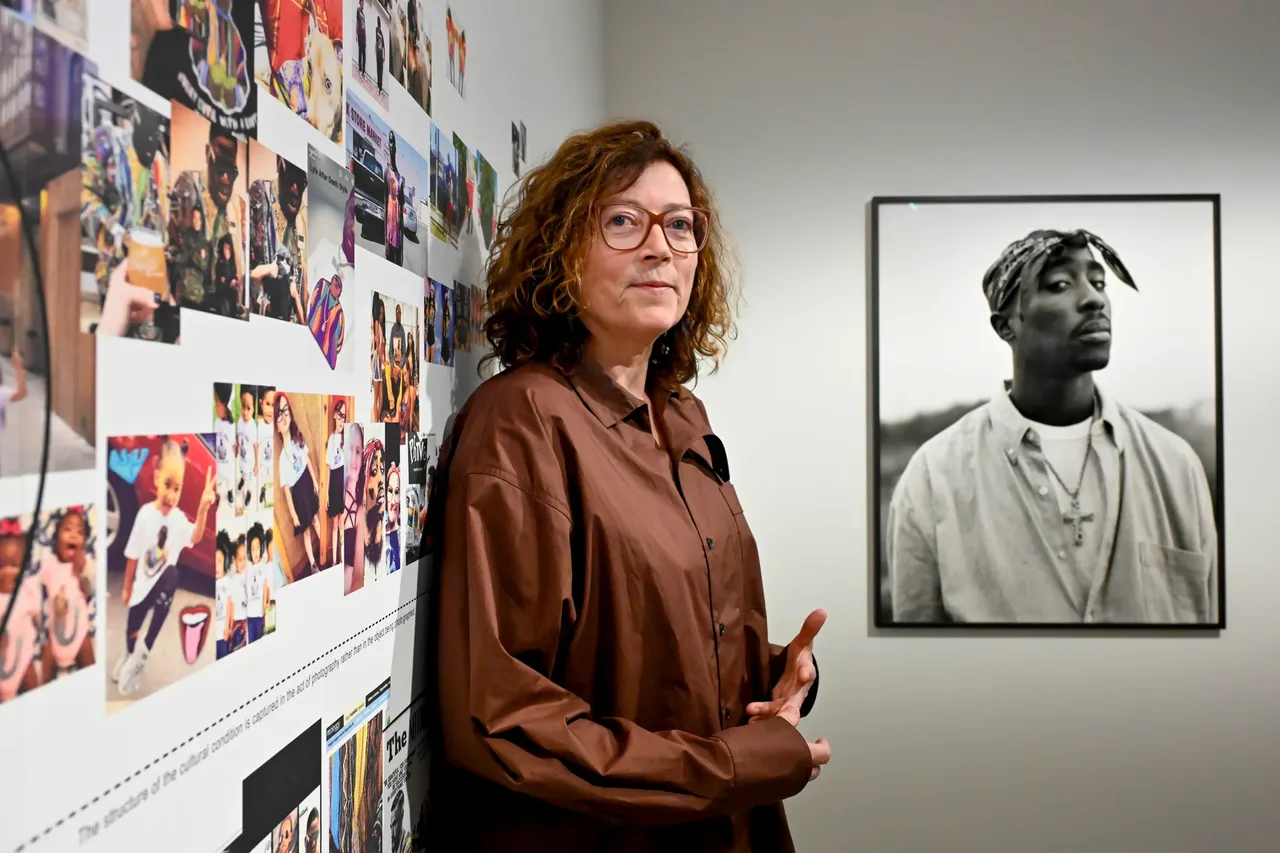
After its recent run at the MEP (Maison Européenne de la Photographie), Dana Lixenberg’s American Images has arrived in Barcelona. The exhibition at MAPFRE’s KBr, on view through 17 January 2027, challenges the stereotypes embedded in the way American culture is often portrayed. Through her photographs, she offers a different perspective on US society, revealing a side that is often overlooked.
Lixenberg’s images have a way of getting under your skin: when you look at her subjects, you feel as if you’ve known them for a long time. And that’s no coincidence. She describes her technique as a “slow dance”, a face-to-face encounter with her protagonists in which time and proximity shape the relationship between photographer and subject.
Dana Lixenberg has a distinctive way of portraying the United States, one that may only come from the gaze of a semi-outsider. Born and raised in Amsterdam, she moved to New York City in 1989 after studying photography in London and Amsterdam. To this day, her work remains shaped by her strong ties to both her Dutch roots and her North American influences. Throughout her career, she’s photographed for publications such as The New Yorker, The New York Times Magazine and Vibe, while consistently defending her personal and sensitive approach to her subjects. Her editorial work has never overshadowed her artistic practice; instead, she’s continued to develop personal projects alongside commissioned work, allowing her distinctive photographic voice to remain firmly her own.
In 1993, Lixenberg began her longest and most ambitious project at Imperial Courts, a public housing complex in Watts, Los Angeles. Over the following twenty-two years, she documented the people who lived there, portraying a community through a lens that transformed Imperial Courts into a deeply personal place within her work. In 2015, she presented these portraits together in an exhibition and a publication. She also gave a special edition of the work to each person portrayed, further strengthening the relationship of mutual trust between photographer and subject.
The exhibition that we now see in Barcelona brings together a vast selection of images produced across Lixenberg’s career, tracing the evolution of her photographic expression from the 1990s to the present. Together, they offer a different perspective on a culture that has often been reduced to stereotypes and stigmatising representations. Rather than presenting an idealised version of the American dream, Lixenberg offers something far more intimate: a portrait shaped by trust, equality and, above all, humanity.
The exhibition is divided into five sections and features over a hundred and twenty photographs, an installation comprising three hundred Polaroids, two film projects and various audiovisual materials. It’s the result of a collaboration between the MEP in Paris and Fundación MAPFRE in Barcelona. Following the exhibition’s press presentation, we had a quick chat with Lixenberg to discuss the show, her practice, and the ideas that shape the project.
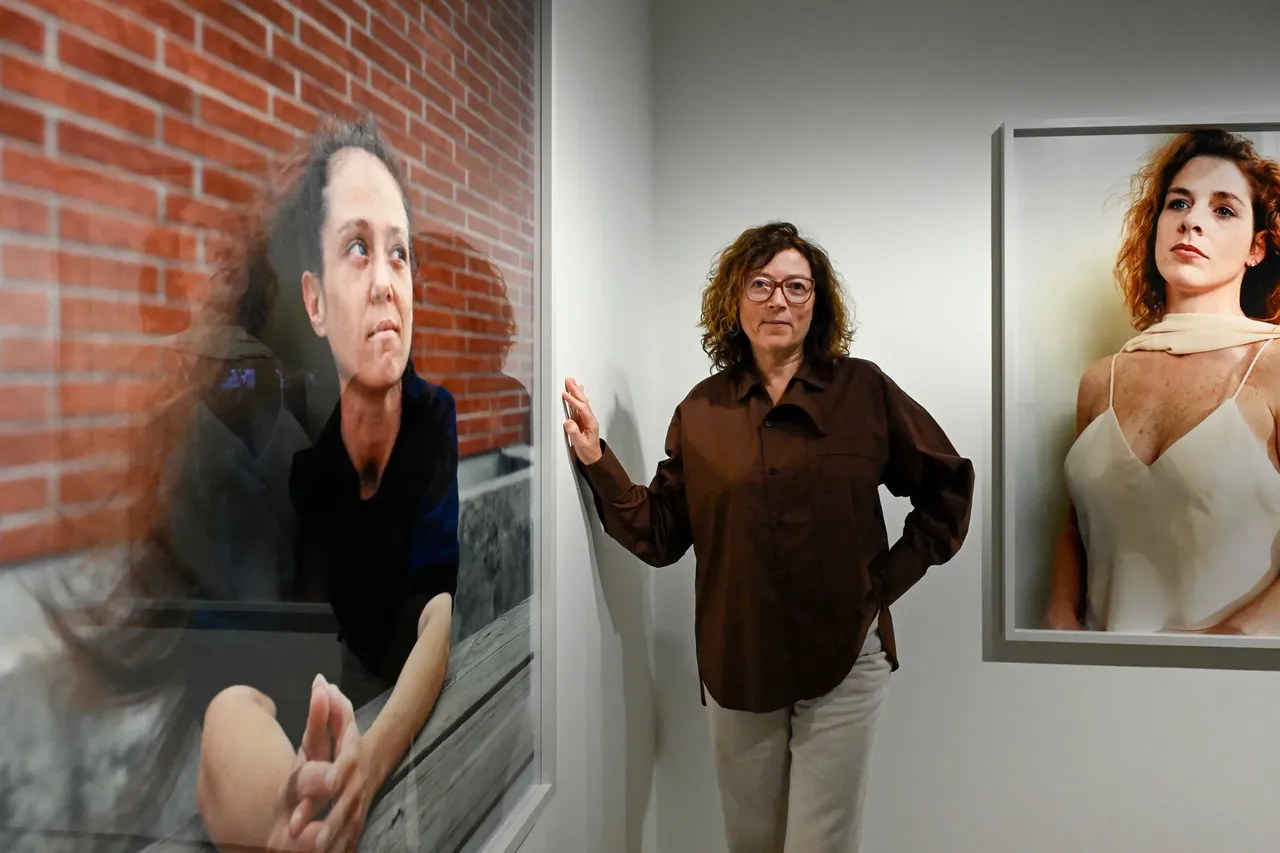
Hello, Dana. We feel very fortunate to talk to you. Your images seem to say so much to the audience. What kinds of stories do they tell? I imagine it’s difficult to bring together all the different narratives your photographs carry under a single framework. Is there a common thread that connects them?
Yeah, I think that, as a photographer — and more photographers would probably say the same — you’re trying to understand your place in the world or your connection to other people. So I’m always interested in human behaviour: how people connect with other people, the vulnerabilities that we all feel. And I think that’s something I’m looking for. I’m not trying to make an illustration of a topic.
For example, with the story of the homeless people I met in Jeffersonville, Indiana, over a period of seven years, I’m trying to make individual portraits that really resonate, so that you can feel something when you see them. Together, they may also address the issue of homelessness. It’s kind of an invisible problem in America, but it’s a very big one. With subjects like those, it’s very easy to fall through the cracks. But, of course, I never want to reduce a person to an illustration of something. With each portrait, I’m interested in the humanity, in something that moves me. I think I often feel very moved by my subjects.
For example, with the story of the homeless people I met in Jeffersonville, Indiana, over a period of seven years, I’m trying to make individual portraits that really resonate, so that you can feel something when you see them. Together, they may also address the issue of homelessness. It’s kind of an invisible problem in America, but it’s a very big one. With subjects like those, it’s very easy to fall through the cracks. But, of course, I never want to reduce a person to an illustration of something. With each portrait, I’m interested in the humanity, in something that moves me. I think I often feel very moved by my subjects.
Your photographs seem to imagine a world where divisions disappear. Social status, ethnicity and public recognition become irrelevant as you approach each subject with the same attention. What do you look for in the people you portray?
I think I look for something that I also recognise in myself. That also means I can make a portrait without having to talk too much to a person. I look for something that moves me, and there’s always a lot going on in the eyes. I think it’s as simple as that. I mean, there are issues that I want to explore, topics like homelessness or these different portraits in these rooms.
In my editorial practice, I’ve tried to treat it in the same way as my personal work, even though the circumstances are different because I’m sent to someone; I don’t pick my subjects. But it’s a way for me to explore different aspects of society — of American society. And it all connects: the understanding that I develop about the country, and all these different sociopolitical currents, problems and issues, informs the way I work.
In my editorial practice, I’ve tried to treat it in the same way as my personal work, even though the circumstances are different because I’m sent to someone; I don’t pick my subjects. But it’s a way for me to explore different aspects of society — of American society. And it all connects: the understanding that I develop about the country, and all these different sociopolitical currents, problems and issues, informs the way I work.
“I never want to reduce a person to an illustration of something. With each portrait, I’m interested in the humanity, in something that moves me.”
Could you give us an example?
One of the photographs is a portrait of a woman on death row. She was sentenced to death, and she still is. This was in the late 1990s, but she’s still on death row almost thirty years later, because I recently saw her picture in a magazine. She’s a lot older now. I was very moved because I’m against the death penalty. But I also like that she has this slightly classical pose. It reminds me of Botticelli’s Venus: a little feminine, just like any other woman being photographed. There are a lot of things that resonate. It doesn’t feel right to explain it too much, but I like all these different ideas that inform how I approach subjects.
But it’s not something you can simply explain; you have to experience the photograph and see. If people see it, I hope they recognise something or that it resonates with them, but it’s hard if I start spelling out why I photograph. It’s the same when people ask me, ‘Oh, what was Prince like when you photographed him?’ or ‘What was Tupac like?’ I enjoy sharing those stories, but they shouldn’t change the way you experience a photograph. You stand in front of the photo and maybe you feel something, or you can spend time with a portrait. Those stories are my personal stories, but I’m also happy to share them.
But it’s not something you can simply explain; you have to experience the photograph and see. If people see it, I hope they recognise something or that it resonates with them, but it’s hard if I start spelling out why I photograph. It’s the same when people ask me, ‘Oh, what was Prince like when you photographed him?’ or ‘What was Tupac like?’ I enjoy sharing those stories, but they shouldn’t change the way you experience a photograph. You stand in front of the photo and maybe you feel something, or you can spend time with a portrait. Those stories are my personal stories, but I’m also happy to share them.
Absolutely. I believe everyone should have their own narrative when it comes to the art we consume, and I also appreciate it when that experience remains as unfiltered as possible by other people’s interpretations, especially with work that carries as much feeling as yours. This is also something I wanted to ask you about: the atmosphere of your images. Once you have chosen your subject, how do you build the kind of trust that allows such an intimate and uninhibited space to emerge?
It’s really good that you mentioned that. I think the whole process is very intimate, and I find photographing people to be a very intimate process. I try to treat it with a lot of care. I feel that I have a responsibility to be really respectful towards the subject. Even when I photographed Donald Trump in the 1990s, perhaps he wasn’t the most pleasant person, but I don’t want to demonise anyone. I think it’s very intimate to really look at someone and be able to notice everything.
Lastly — and I hope I’m not being too direct, but I couldn’t help asking — some of your subjects have been associated, rightly or wrongly, with narratives of crime, violence or marginalisation. Do you ever find that these associations influence the way their portraits are created or received?
No. I hope it shows in the way I make the portraits that I don’t really think about it. The way I approached a project like Imperial Courts was partly in response to everybody who would say, ‘Oh, you can’t go down there to South Central LA.’ Especially when the riots happened, there were a lot of police and this idea that it was a neighbourhood nobody goes to. And I was like, ‘Why not? There is a whole life there.’ So I wanted to move beyond the narrative presented in the media, which was utterly sensationalist, rather than buying into it. That’s also why I like to have this really quiet, slow approach.
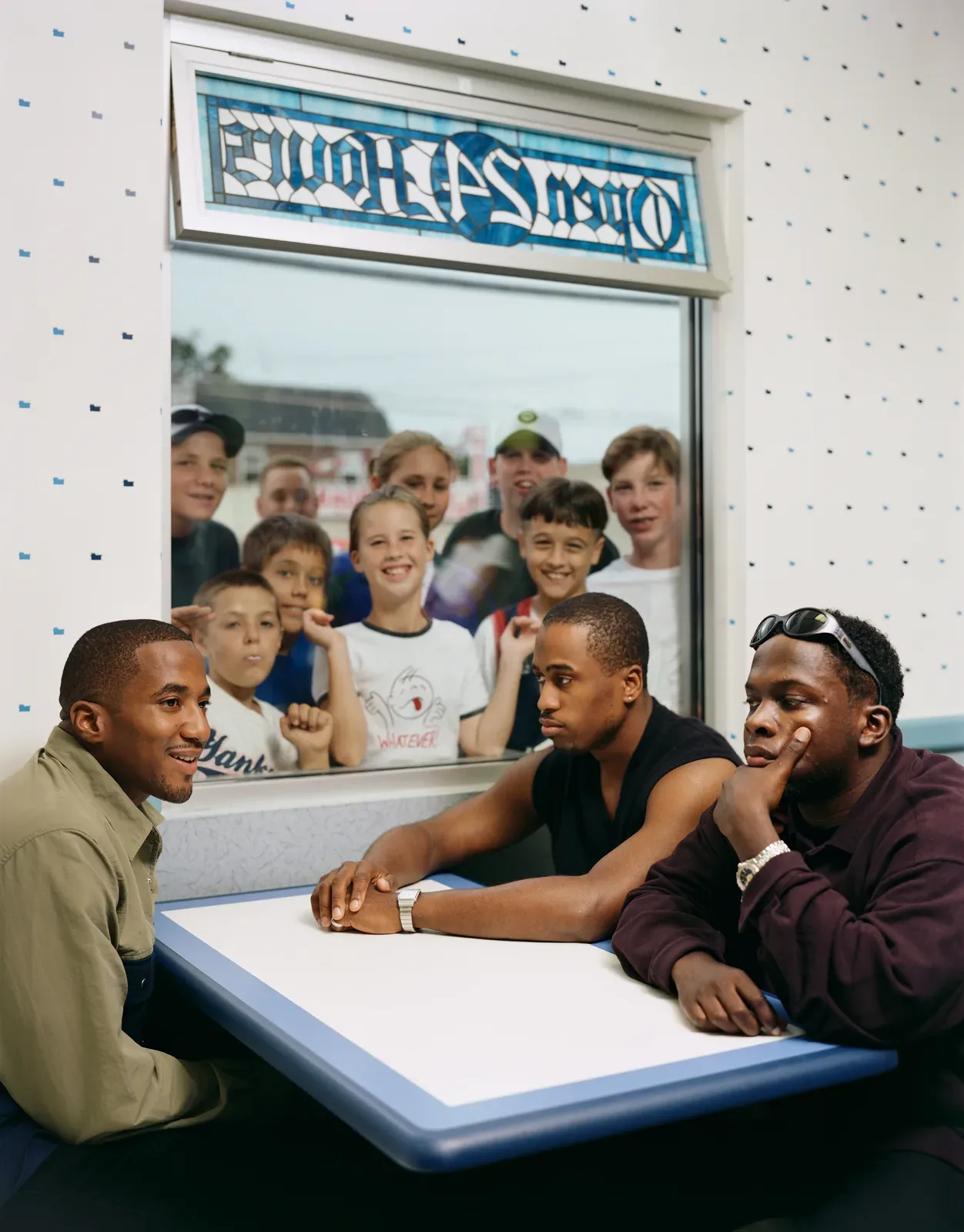
Kamaal “Q-Tip” Fareed, Ali Shaheed Muhammad and Malik “Phife” Taylor (A Tribe Called Quest), 1997. Courtesy of the artist and Grimm Amsterdam, London, New York. © Dana Lixenberg
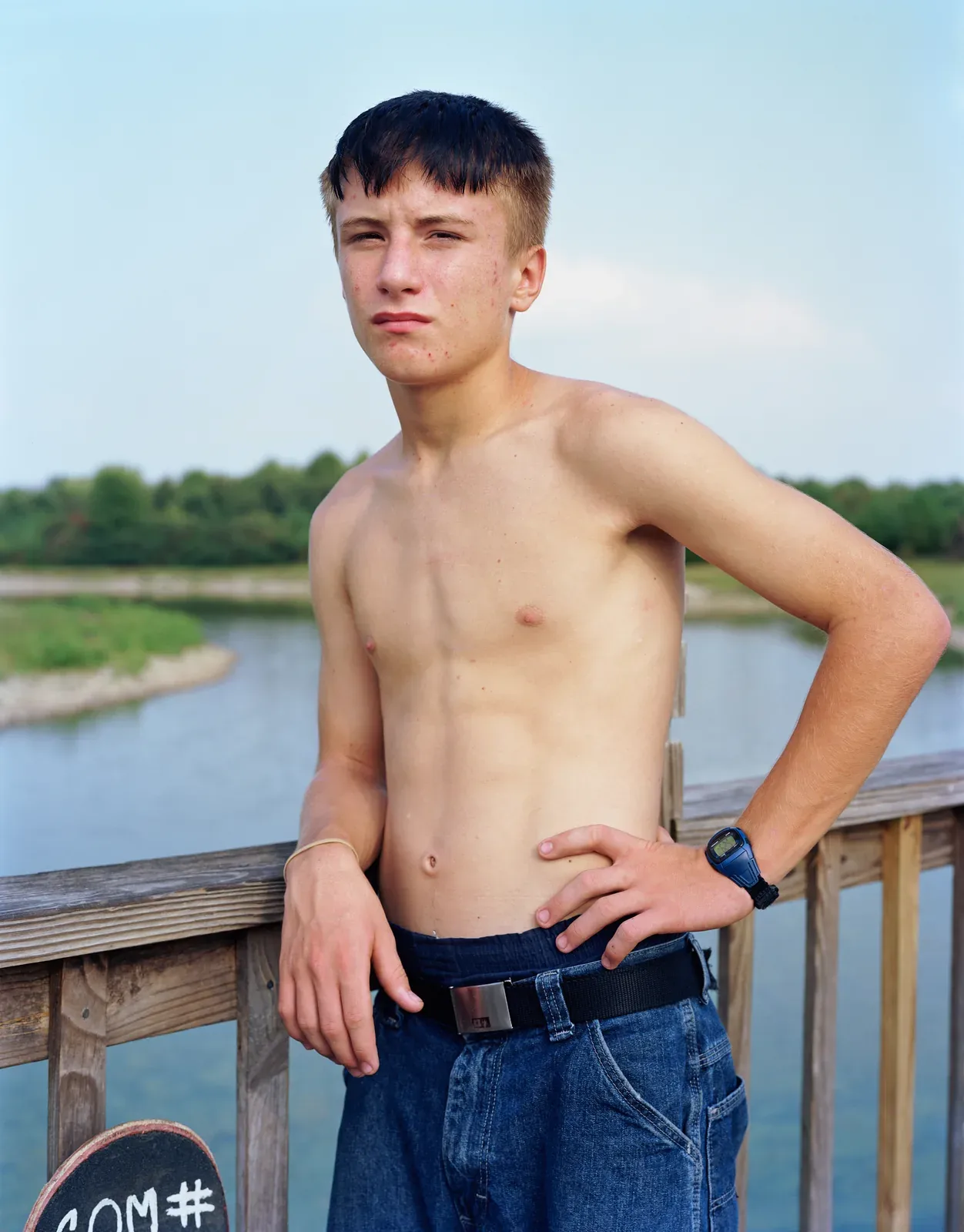
Ross Ritz Jr., 2002, from the series Jeffersonville, Indiana (1997—2004). Courtesy of the artist and Grimm Amsterdam, London, New York. © Dana Lixenberg
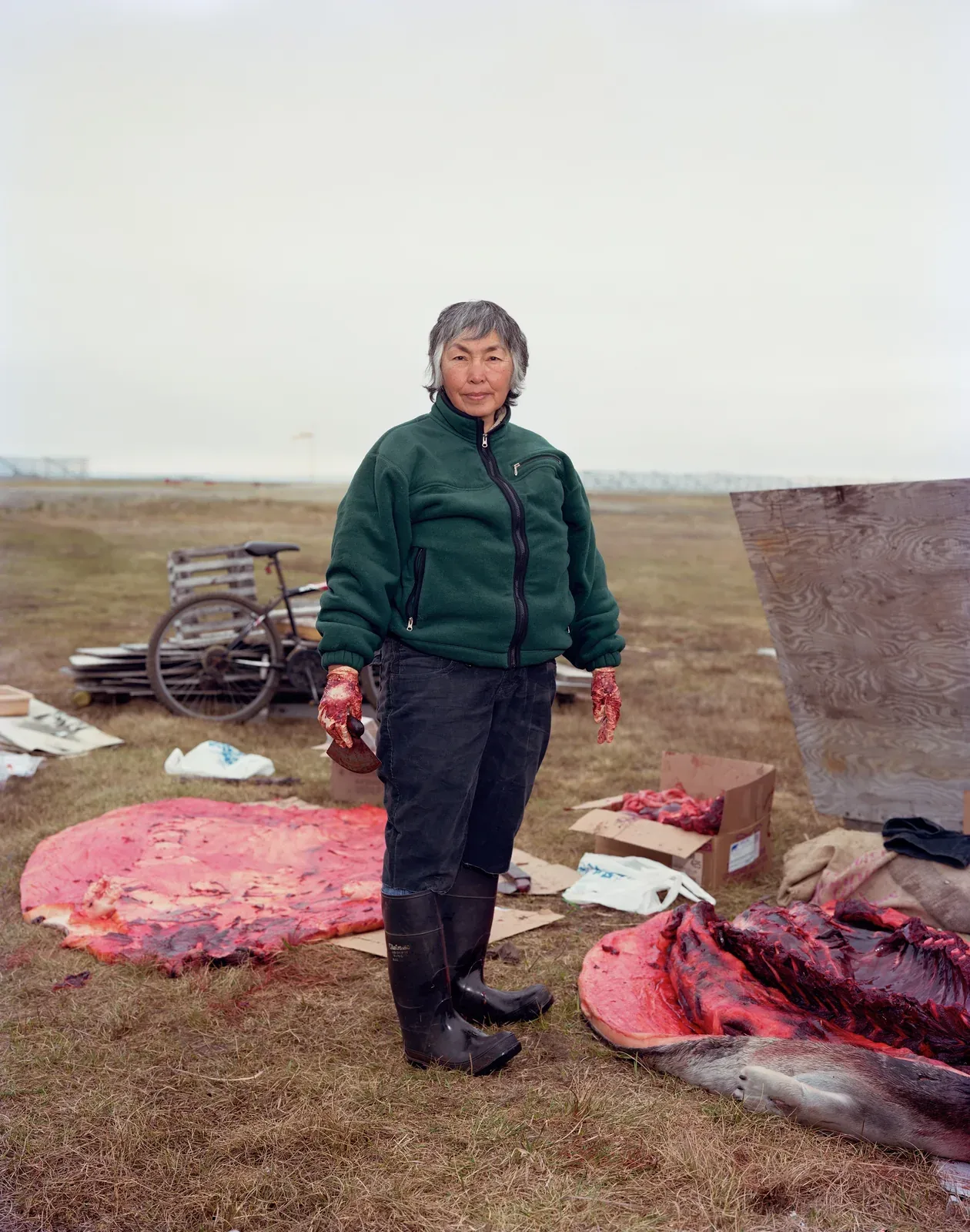
Ardith Weyiouanna, 2007, from the series The Last Days of Shishmaref (2007). Courtesy of the artist and Grimm Amsterdam, London, New York. © Dana Lixenberg
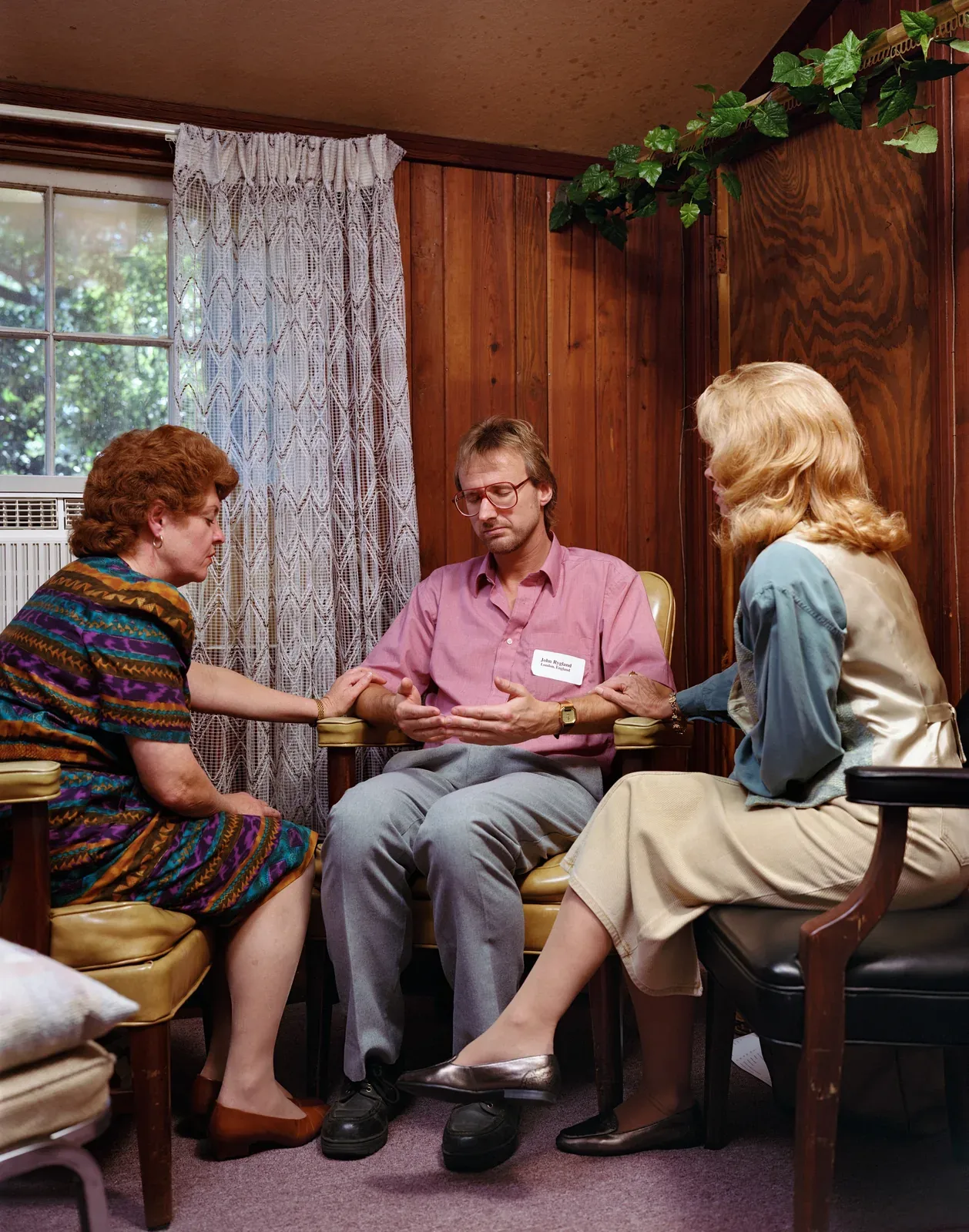
John Rygland with a Prayer Team, 1997. Courtesy of the artist and Grimm Amsterdam, London, New York. © Dana Lixenberg