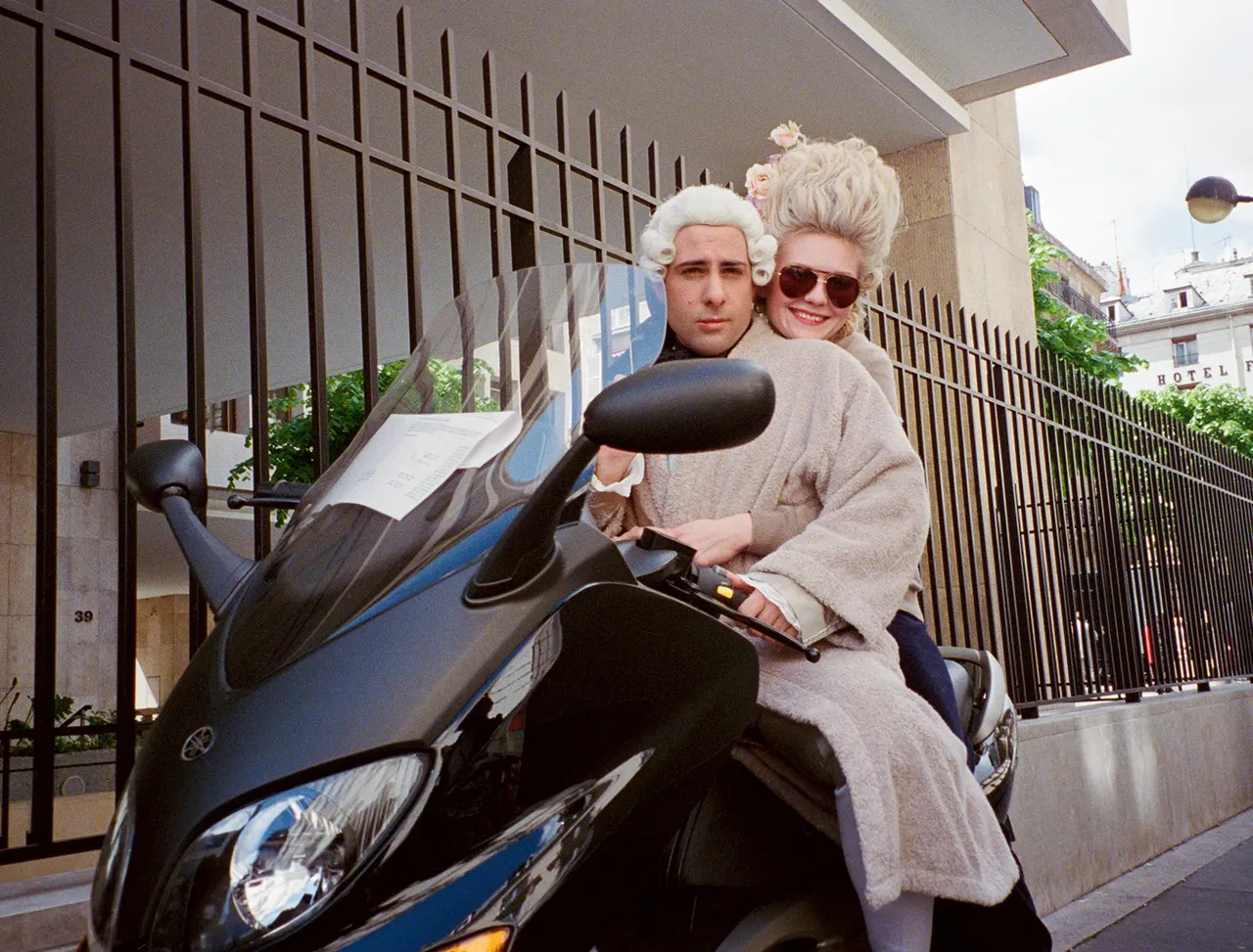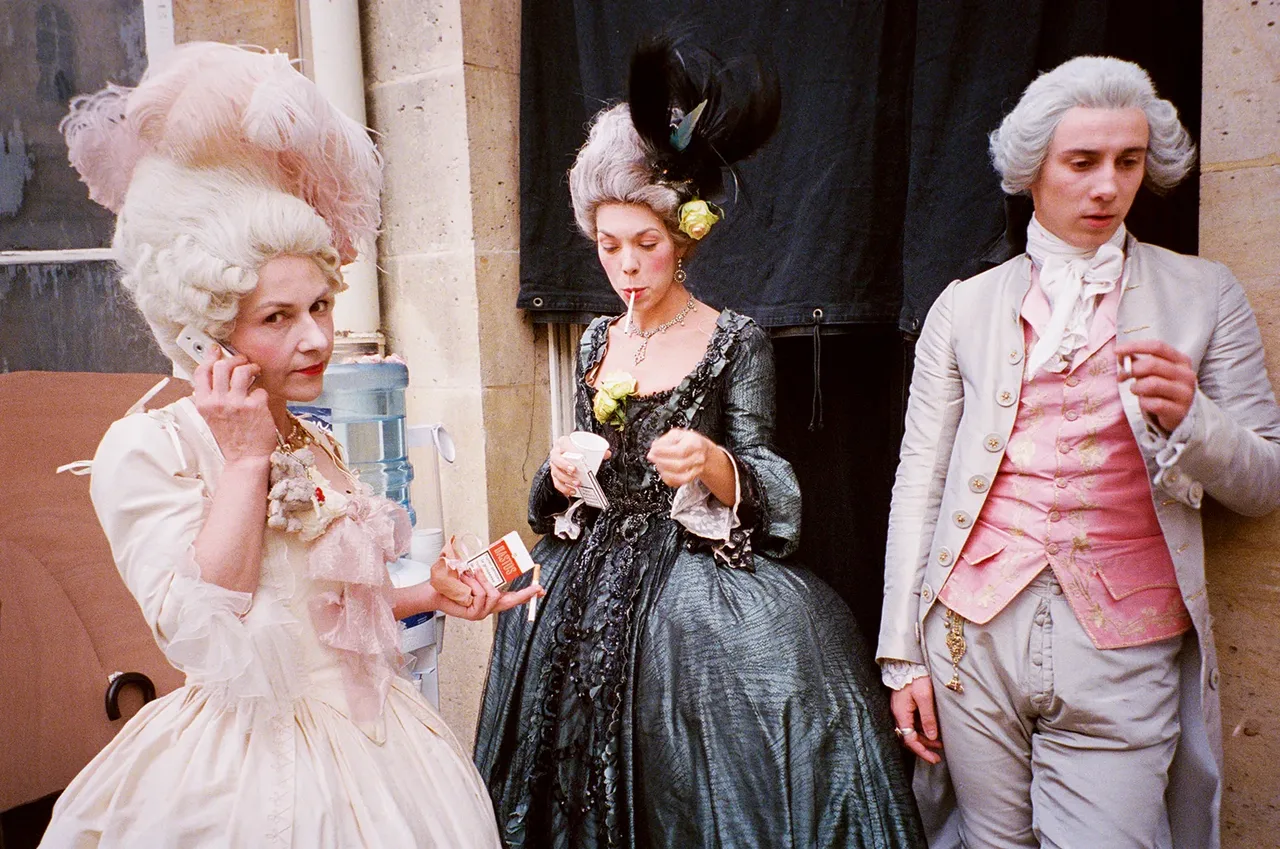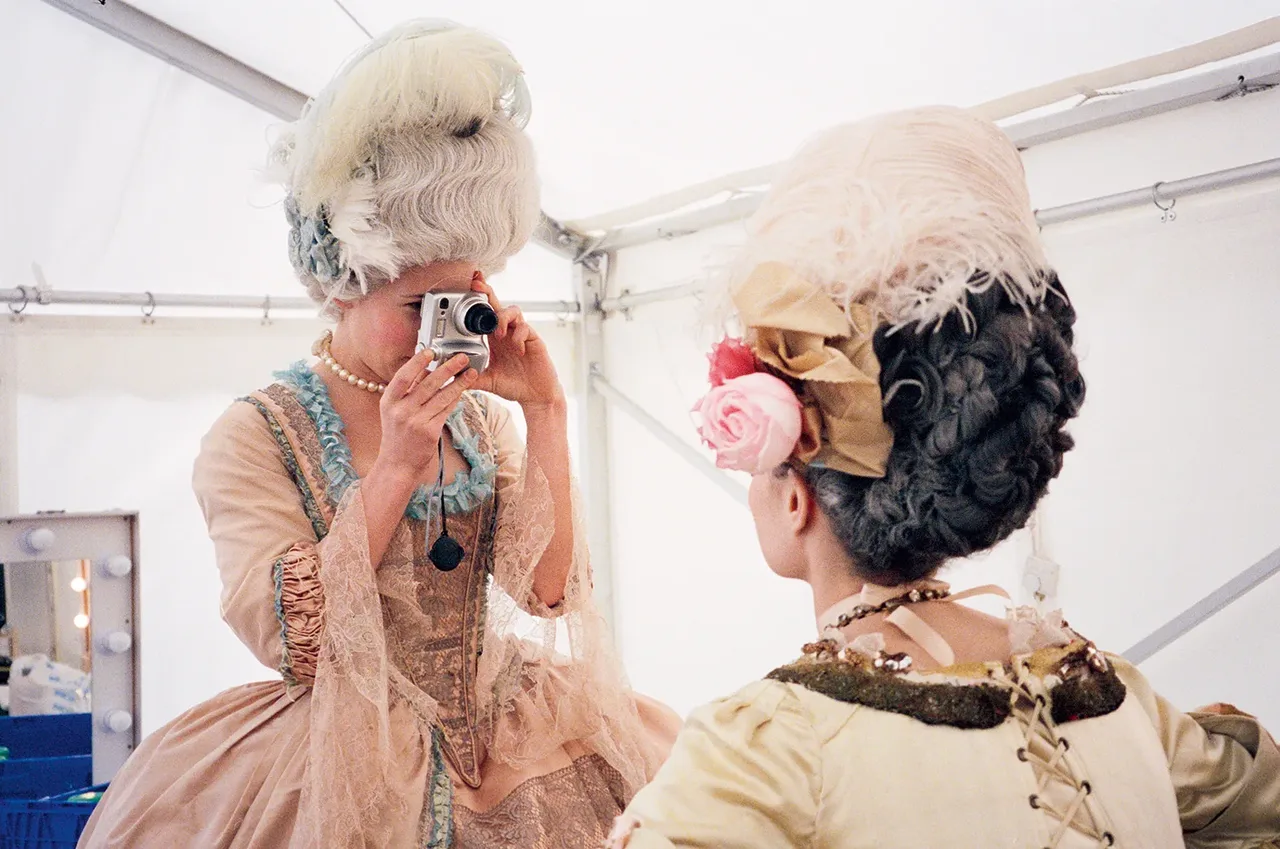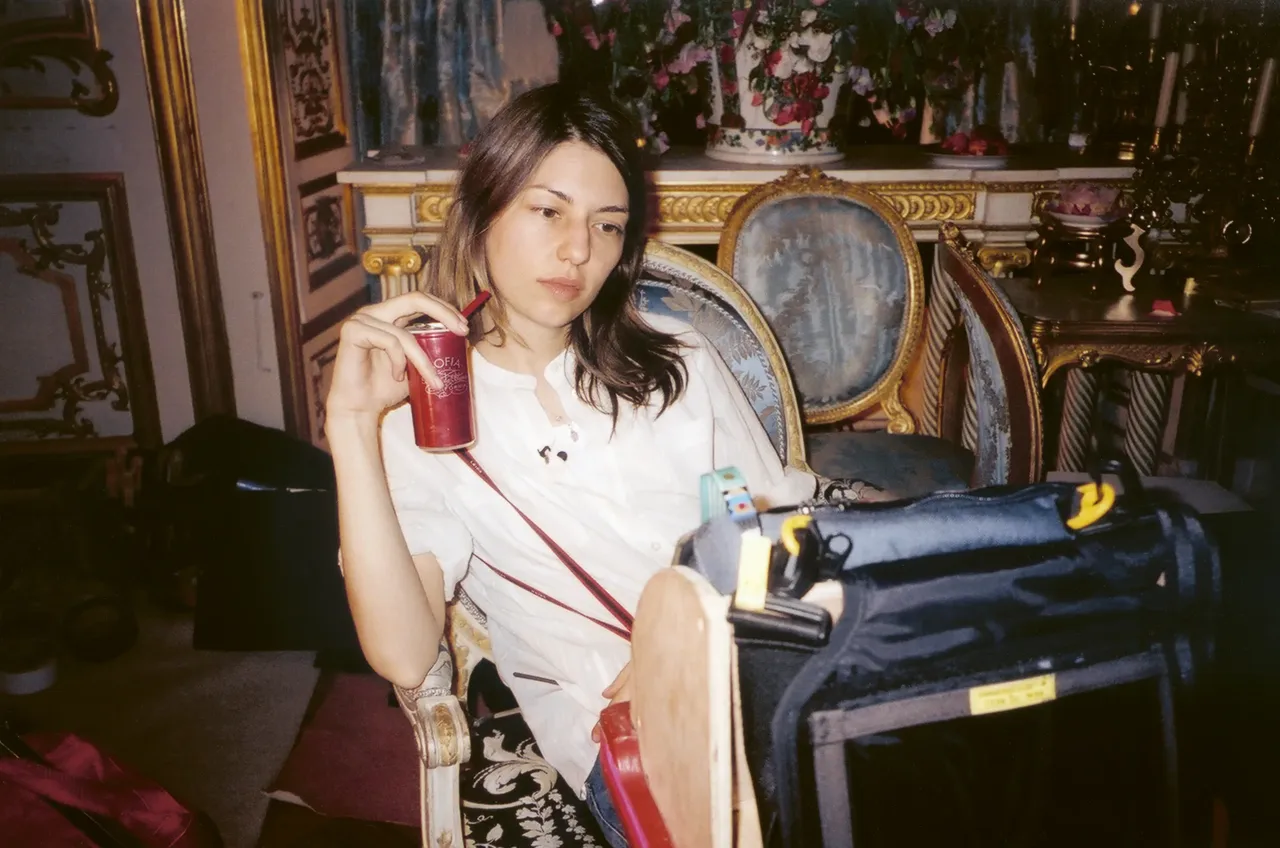
Marie Antoinette infamously said (allegedly) “let them eat cake,” an out-of-touch expression that goes on to show how detached from reality the French queen was. But her taste for all things opulent and flamboyant, her endless eccentricities, and her TikTok-approved #cottagecore era make her one of the most fascinating historical figures still today. In cinema, she’s been portrayed many times, but very few have managed to create a lasting impact as profound as Sofia Coppola’s. Her Oscar-winning film was a cultural touchstone for visual culture, and thankfully, Andrew Durham was there to photograph the world behind the scenes. Now, he reveals his vast archive in the book Making Marie Antoinette, published by MACK.
Twenty years after the film’s 2006 release, the book pairs Durham’s photographs with an oral history by Keaton Bell and a new conversation between the photographer and Coppola. The anniversary also returns the film to its most famous location: from 22 September 2026 to 24 January 2027, an exhibition at the Petit Trianon in Versailles will explore its making, aesthetic choices and cultural afterlife. Today, we have the royal honour to speak with Durham about the people behind the spectacle, the details that made it feel real and the strange pleasure of seeing a private archive become part of a shared visual memory.
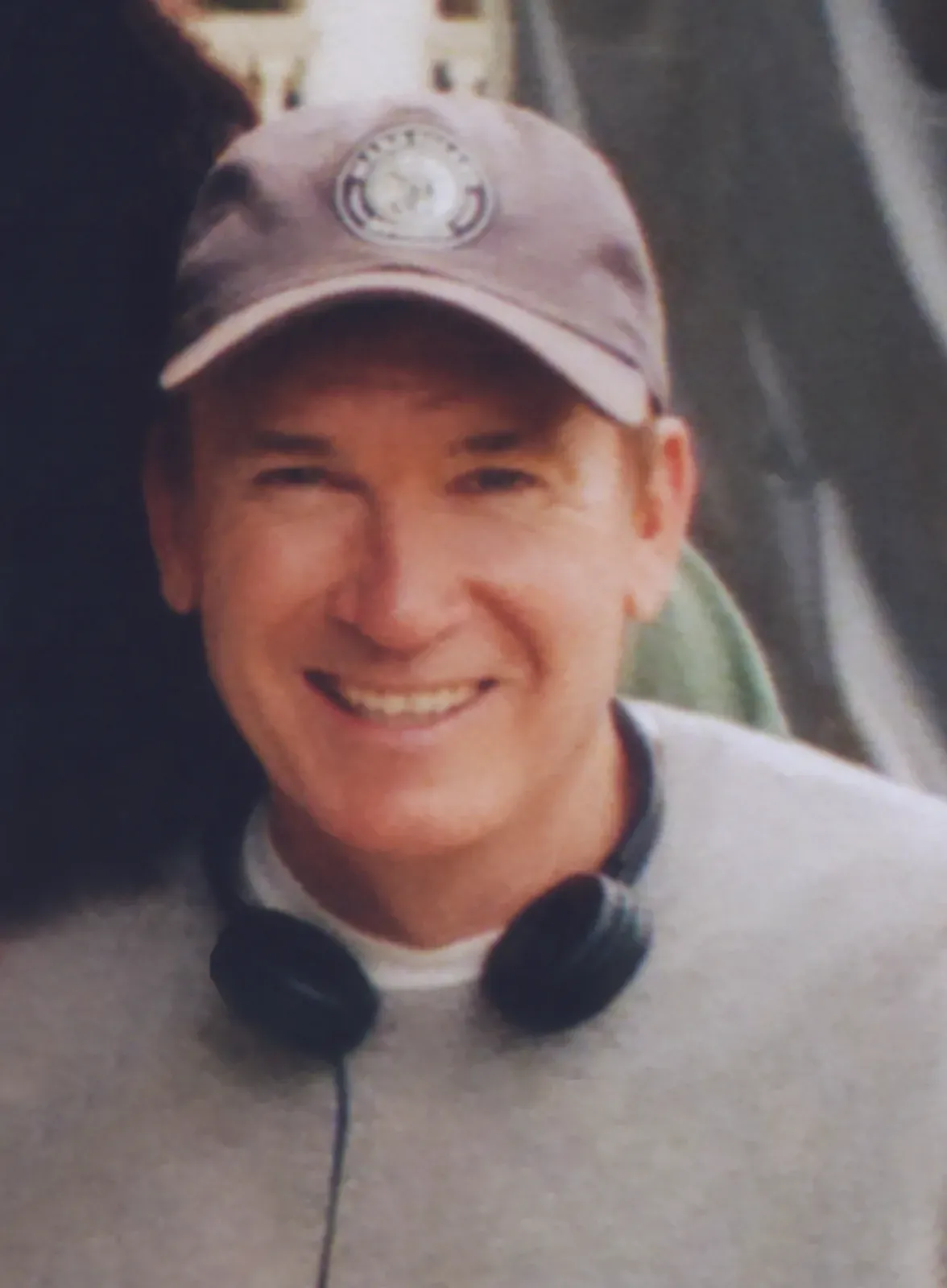
Hey Andrew, it’s a pleasure to interview you! To get to know you a little better, what television series are you currently binge-watching, what music is playing nonstop on your playlists, or what book can’t you put down?
Right now I’m listening to Flea’s new jazz album, Honora. I can’t get enough of it. I’m reading A. O. Scott’s book Better Living Through Criticism. And for binge-watching, I love the 1980s husband-and-wife detective show Hart to Hart. It’s pure escapism and fun to see LA in the ’80s.
It’s been twenty years since Marie Antoinette, and everyone seems determined to celebrate it: you have published a book with MACK, MUBI is releasing Eleanor Coppola’s documentary Making Marie Antoinette, and the Château de Versailles is dedicating a major exhibition to the film. How are you experiencing this rather fabulous revival?
My favourite part of this entire revival is finally seeing the movie appreciated. We all knew back then it was a perfect film, but to the old-school film critics of twenty years ago, it wasn’t what they were used to. I’m so happy that Sofia’s aesthetic and point of view resonate with this new generation.
Just out of curiosity, are you a nostalgic person? And did returning to these photographs make you miss that particular moment in your life, or did it feel more like meeting a younger version of yourself?
I can be nostalgic about my childhood sometimes, but these photos and this experience on the set were from when I was already an adult, so there is less nostalgia about it and more of a realisation that they don’t really make films like this anymore. Sofia put so much of the film’s budget on the screen. The set design, the costumes, the flowers, the food. All these details make every shot look so rich. The economics of filmmaking have changed a lot in the past twenty years. So much of what you see in movies now is computer-generated. Marie Antoinette is an example of a style of filmmaking that has become pretty rare. Maybe I’m nostalgic for that.
“My favourite part of this entire revival is finally seeing the movie appreciated. I’m so happy that Sofia’s aesthetic and point of view resonate with this new generation.”
You photographed daily life on and off the set, from hair and make-up to the film’s premiere at Cannes. At the time, did you already sense that you were creating an archive, or were you simply following your instincts and photographing whatever caught your eye?
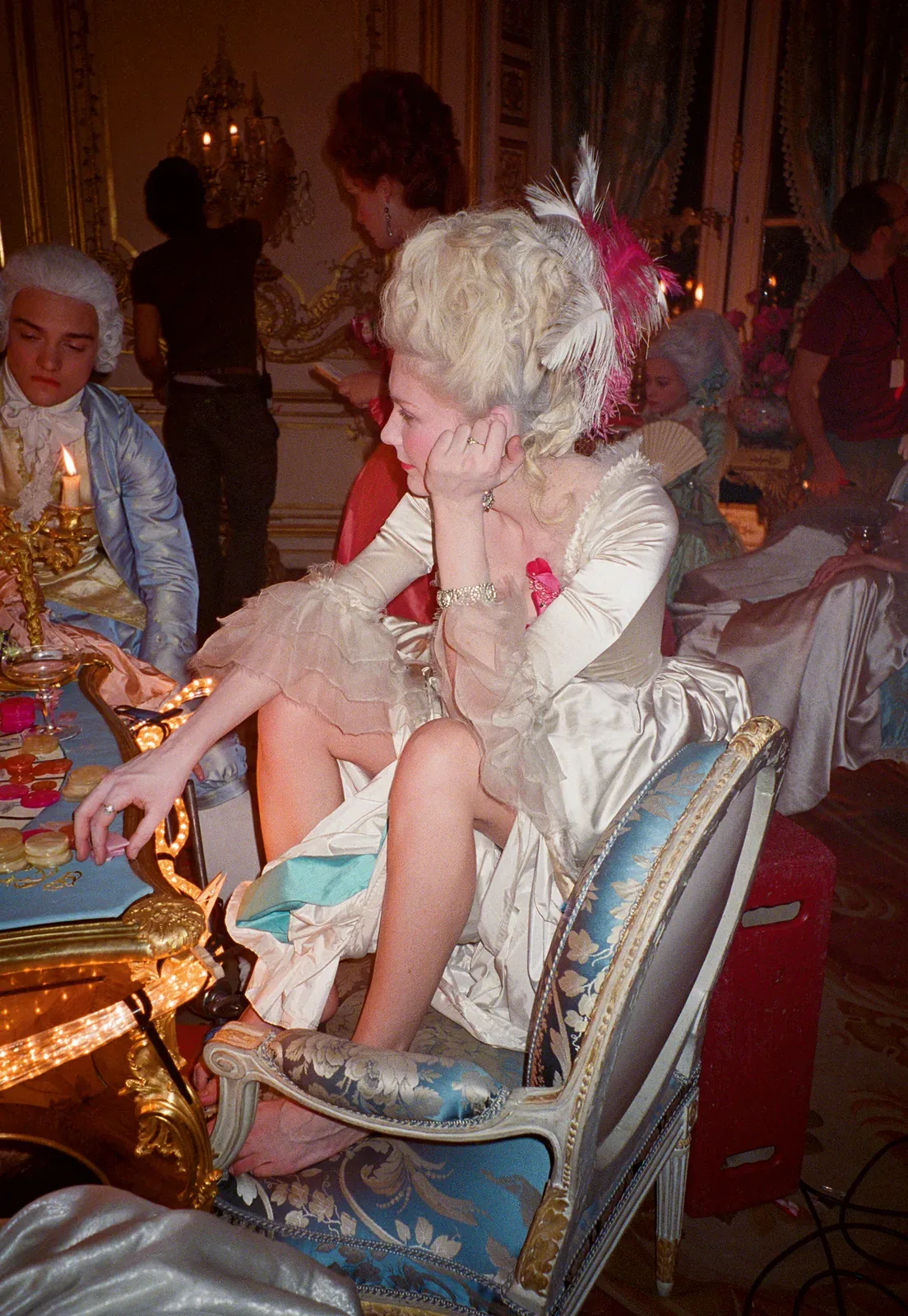
The set photographs were not an assignment. I went to Paris purely for personal purposes, to document Sofia making her movie. We were old friends, and I thought maybe I could make her a photo album as a gift when she wrapped. One day Carine Roitfeld, who was the editor of Vogue Paris at the time, came to visit the set. She asked if she could see some of my photos. I sent her a bunch, and she ended up running several of the images in the magazine to promote the movie. That’s how it all started.
Your pictures were everywhere on Tumblr. There’s a whole generation who grew up seeing Kirsten Dunst with her laptop while still in costume, or other actors having a ciggie with their wigs on. The contrast between old and new was so uncanny and fascinating! Are you aware of how influential these pictures have been? Are you still surprised to see them on moodboards today?
I was aware the images had been floating around online for a while, but it wasn’t until I saw someone in Los Angeles wearing a T-shirt with one of my Marie Antoinette photos that I knew it was time to make a book.
What makes a great behind-the-scenes photograph for you: revealing how the illusion is constructed, preserving the illusion, or catching that strange moment when reality and fiction become impossible to separate?
Ever since graduating from film school, I have worked on a lot of film sets. I’m interested in every aspect of production: lighting, camera, set design, etc., so I really love to capture all that in my photographs. Filmmaking is a very collaborative effort. Even the biggest stars are part of the team when you are making a film. I hope these behind-the-scenes photos show that.
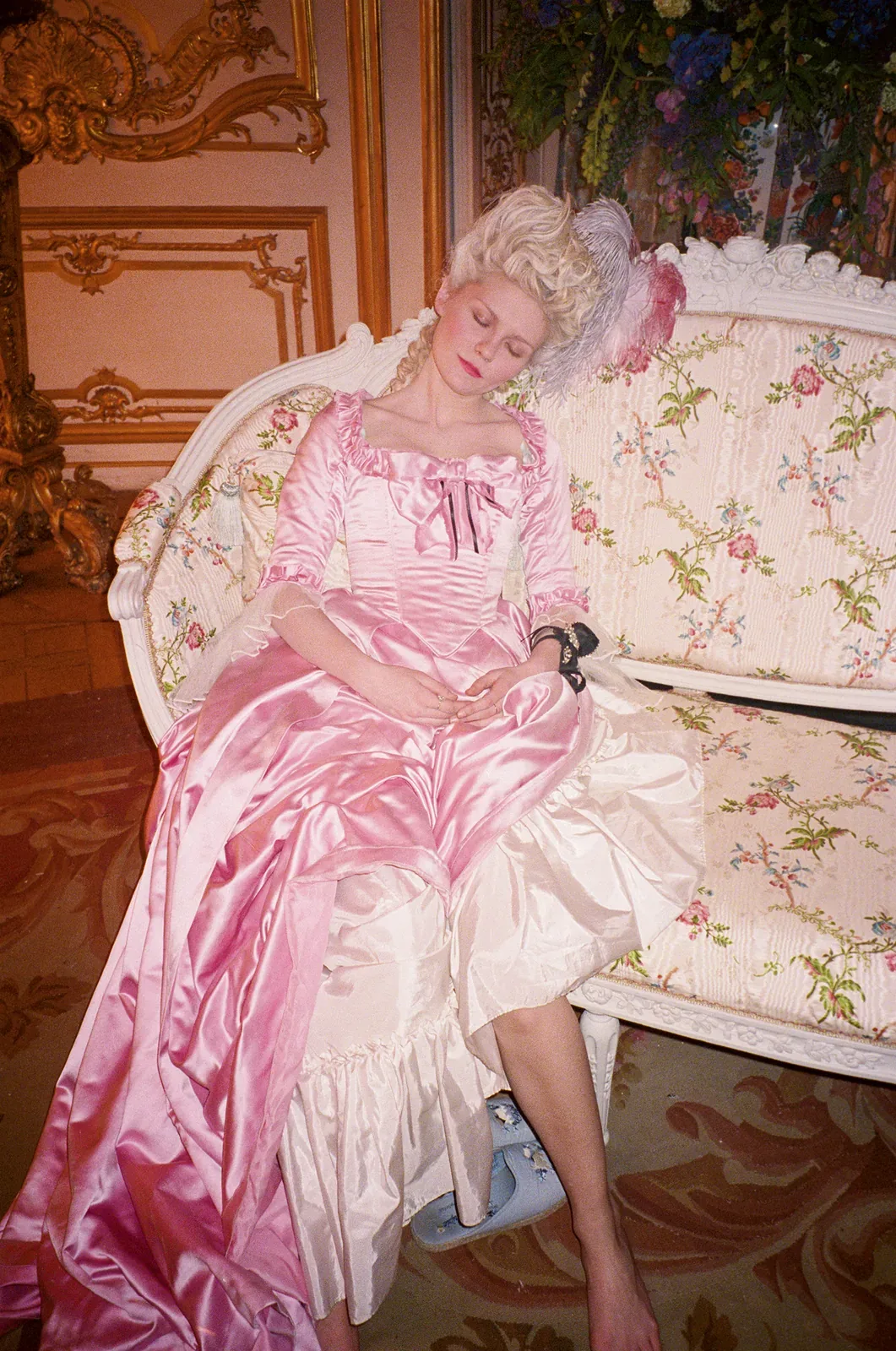
Actors are often at their most vulnerable between takes, when they are still partly inside a character but no longer performing for the camera. How did you create enough trust to photograph those unguarded moments without making anyone feel observed?
I was already friends with several people on set prior to the shoot. Sofia, obviously, also Lance Acord, the cinematographer, and Jason and Kirsten. This really helped. In addition, I shot everything on a small snapshot camera that fit in my back pocket. I think big cameras with large lenses can be intimidating to some people. I photographed this set the same way I would photograph my friends at a party or while we were on vacation. Keeping it very casual.
The film’s world was built from so many seductive details — Milena Canonero’s costumes, Manolo Blahnik’s shoes, flowers, cakes, chandeliers and, of course, that soundtrack. Which element was the most irresistible to photograph, and which proved unexpectedly difficult?
Fresh flowers were brought in almost every day from a florist in Brussels. Sofia could easily have had the prop department bring in boxes of plastic flowers, and I’m sure that would have cost a lot less, but Sofia can tell the difference, and she was worried the audience would be able to as well. I loved photographing all those.
We need at least one good piece of court gossip: what is the funniest, strangest or most chaotic moment from the shoot that still makes you laugh twenty years later?
If I ever want to be invited on another set, I need to keep my mouth shut!
“So much of what you see in movies now is computer-generated. Marie Antoinette is an example of a style of filmmaking that has become pretty rare. Maybe I’m nostalgic for that.”
Sofia’s film was famously met with a rather divided response at Cannes, yet it has since become a cult classic and an endless visual reference for fashion, photography and internet culture. Why do you think audiences needed time to understand what the film was doing?
The culture has changed a lot in the past twenty years. In the past, films were more often than not told from a man’s point of view. Even stories about women had a male perspective. Sofia’s film is different. She has always embraced stories from a woman’s POV. This is especially evident in Marie Antoinette. Women make up the majority of movie audiences, and her movies are very relatable to that audience. Why this took so long? That’s a bigger question about why we are still in the dark ages on so many things.
The book includes a new conversation between you and Sofia, as well as an oral history of the film by Keaton Bell. After knowing each other and discussing your work for so long, did this process reveal anything about the film — or about your friendship — that neither of you had fully recognised before?
When you reminisce with people about shared experiences, it’s always fun to hear what one person remembers and what the other might have forgotten. Different things stick with different people. Sofia’s memories were more about running behind schedule on a specific day and rushing to get a final shot, while mine (since I was just there to document and under a lot less pressure) were more about something like Jason Schwartzman bringing his dog to set every day.
Between photography, producing and directing Fairyland, your career has always moved between observing other people’s worlds and constructing your own. Looking at Marie Antoinette now, what did that experience quietly teach you about the kind of filmmaker you wanted to become?
I’ve spent a lot of time on film sets over the years and have witnessed how different directors manage their sets. Sofia is probably one of the most understated people I know, and she’s exactly the same on set. I’ve never seen her raise her voice or lose her temper. This type of behavior affects the entire crew and creates a very calm atmosphere. I hope one day to be half as relaxed as she is!