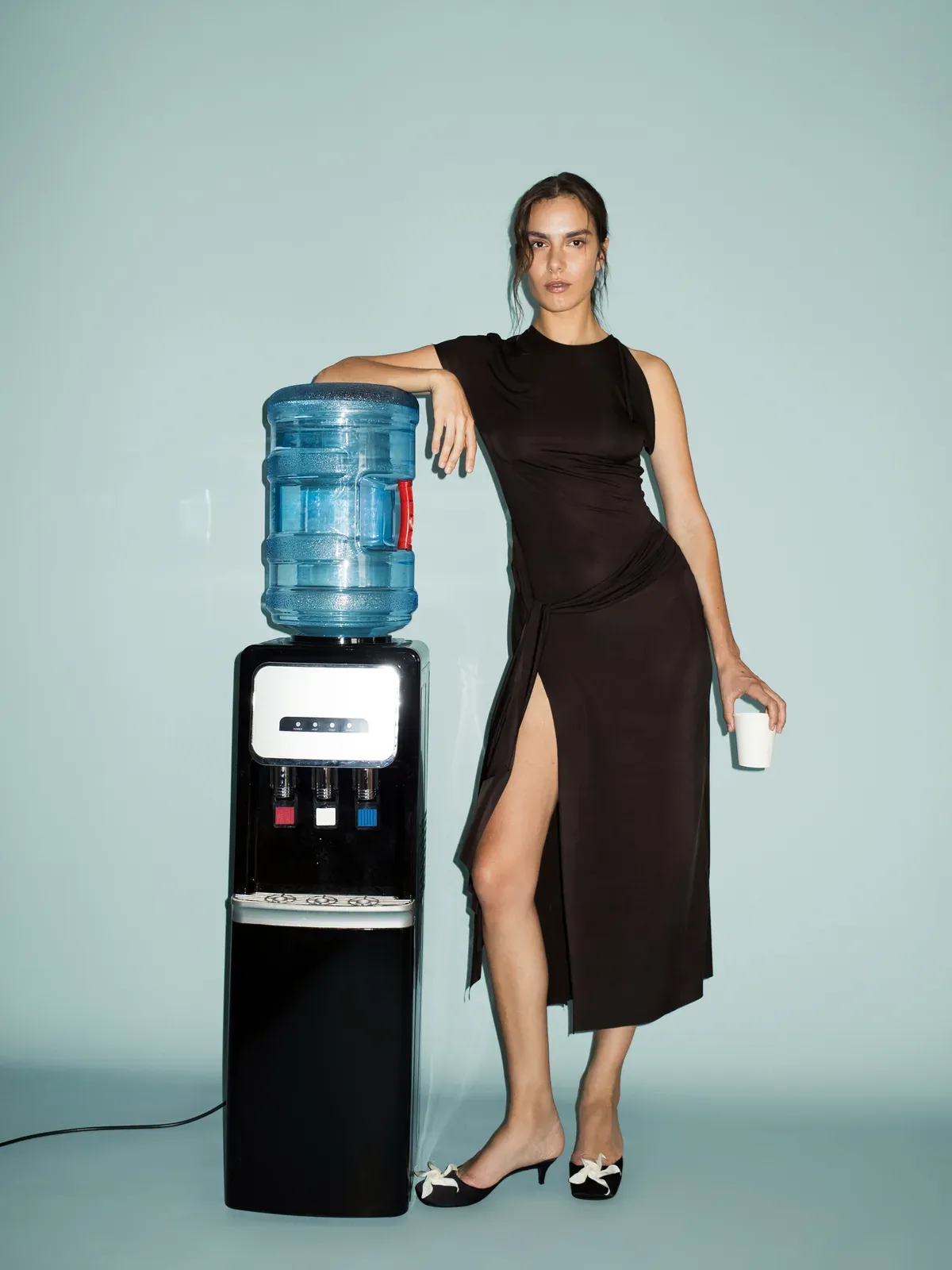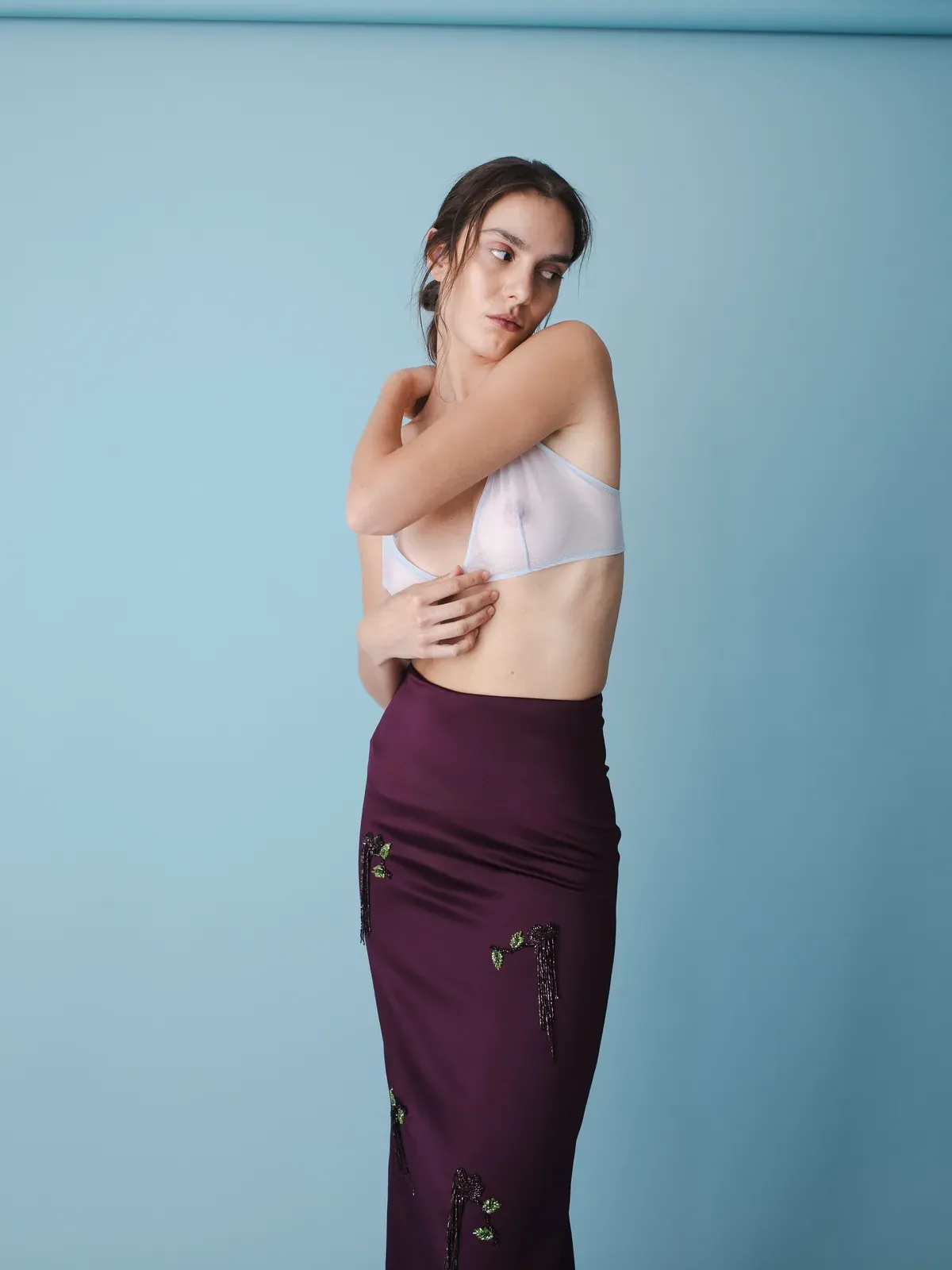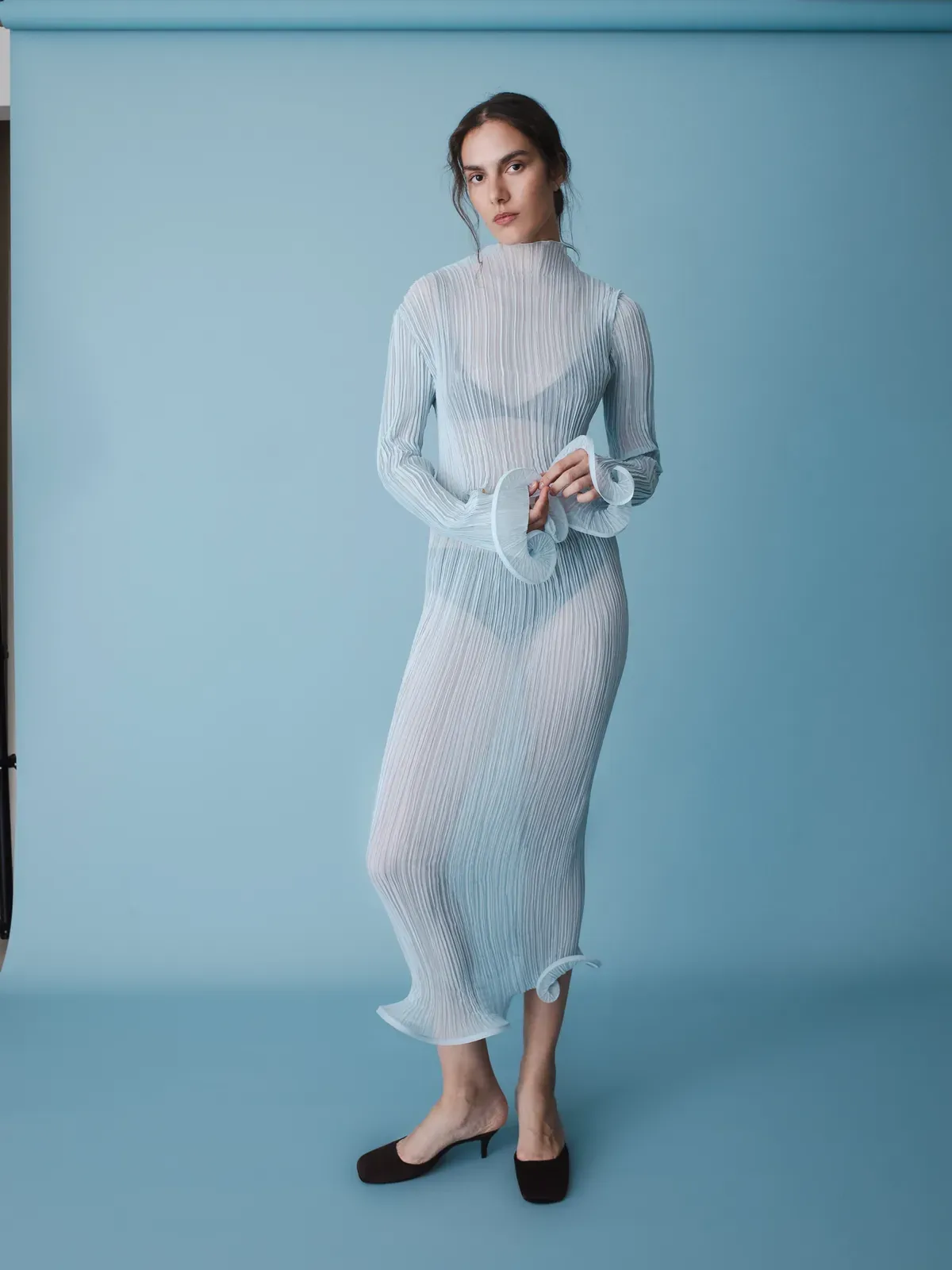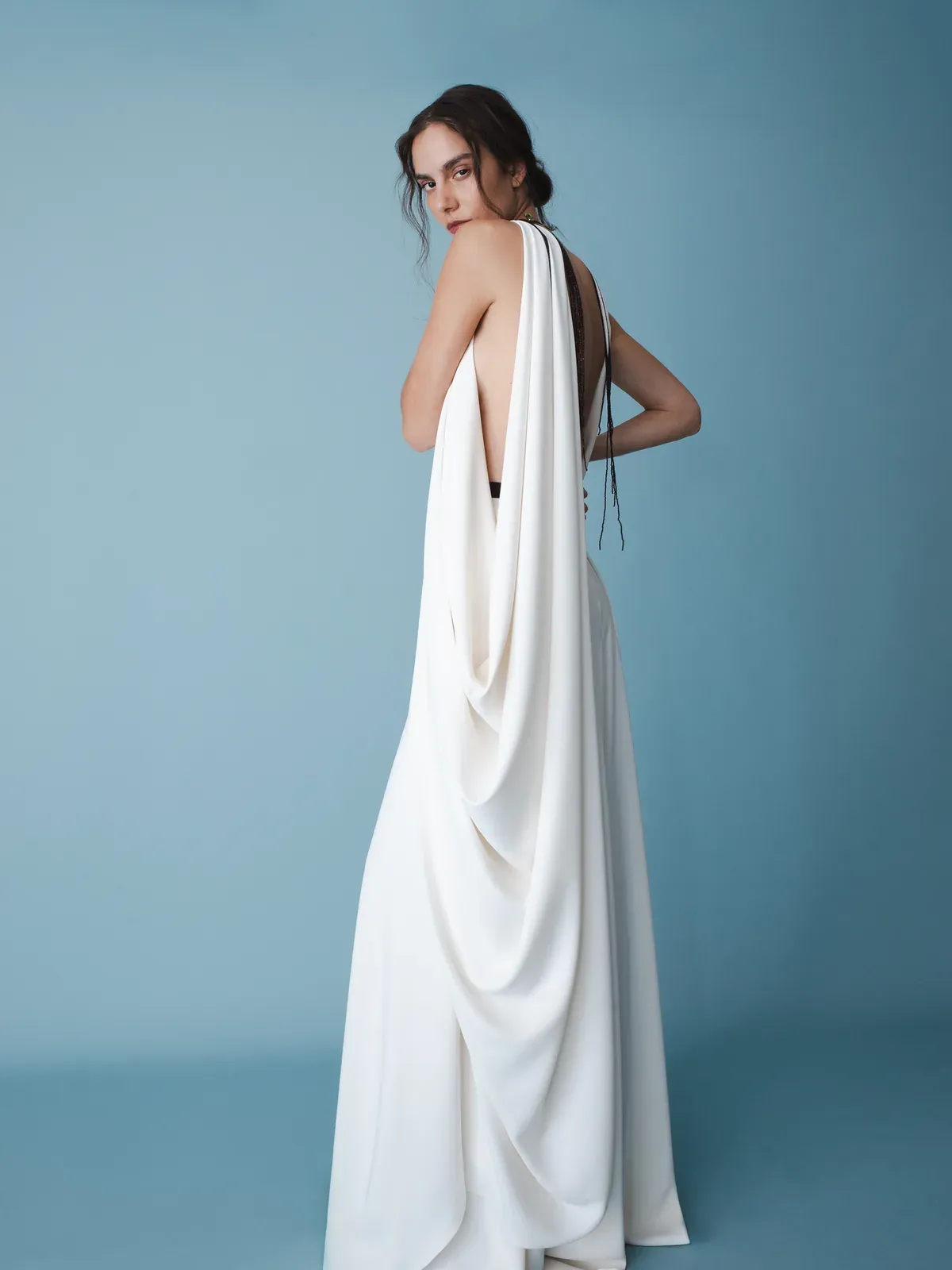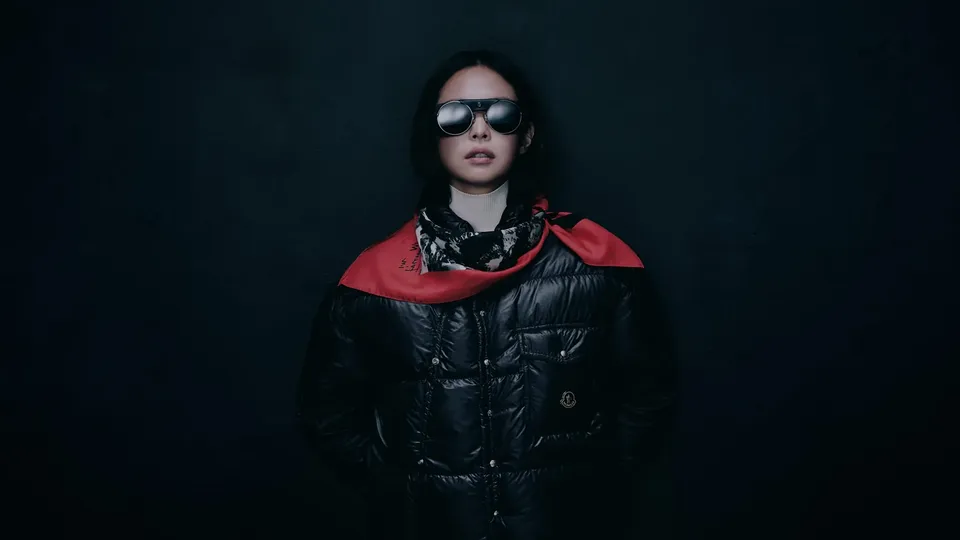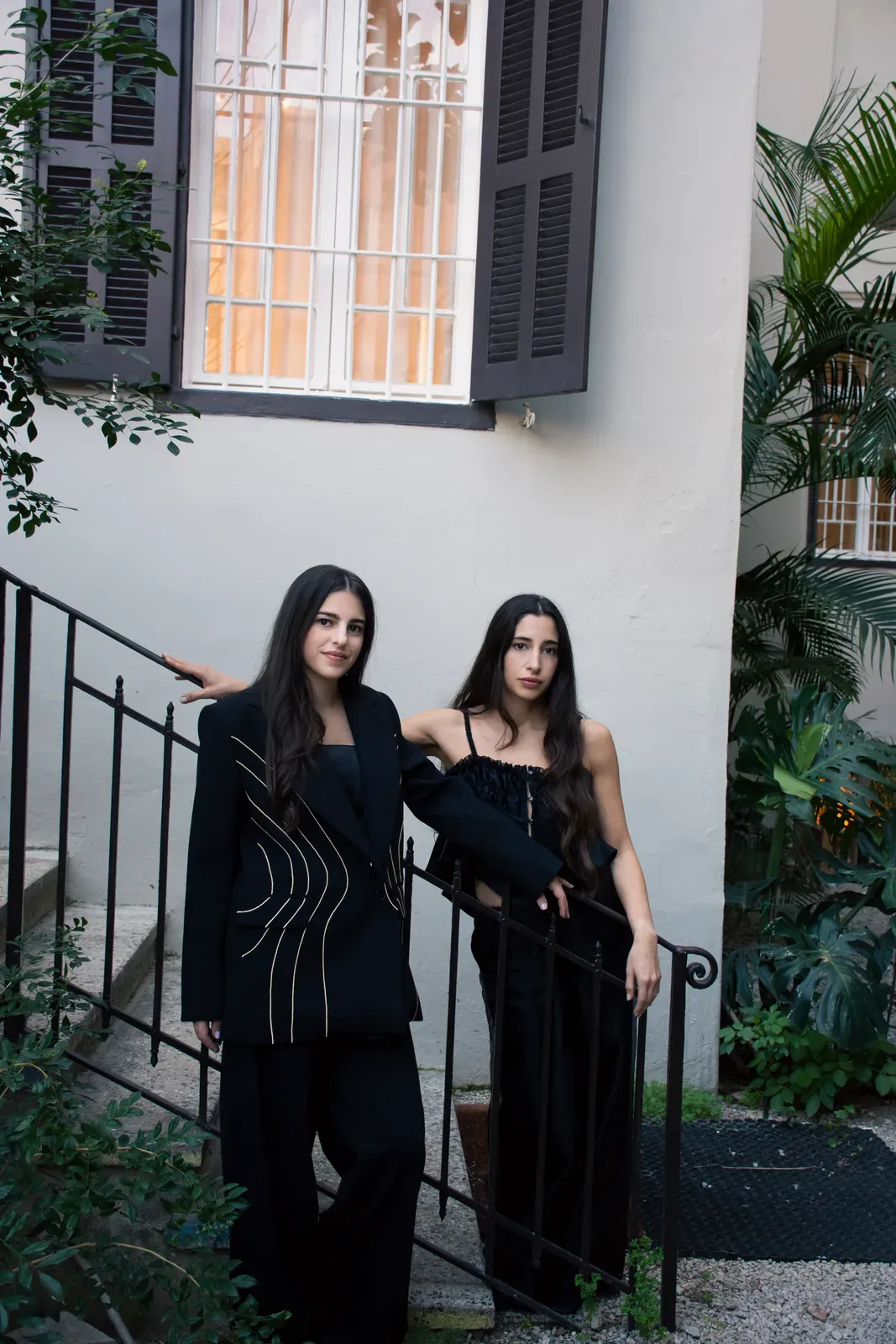
Two sisters. One brand. Working with family is not a choice many would make, but Farah and Yassmin are proof that it can work and can lead to something beautiful: a silent language between two women who know what the other needs. The female existence has been scrutinised and analysed since the dawn of time and held under a microscope. Everyday Forms, their latest collection for Yassmin Saleh, puts femininity at the forefront, focusing on what it means to be a woman living in the everyday. The emotions, thoughts, movement and dialogue passing through the lives of women unfold across the collection.
Hello, it’s a pleasure to speak with both of you. To get us started, take me back to the first memory you have that sparked your love for fashion.
Watching my mom getting ready is probably my earliest fashion memory. I remember sitting on the edge of the bed while she did her hair, put on her makeup, and carefully chose her outfits and jewellery for the day. The ritual of getting ready has always been a big part of Lebanese culture; it’s never really about the clothes but the language and the persona you’re trying to reflect. I guess this curiosity grew as I got older, asking myself questions about the complexity of a woman’s mind — the kind of knowledge that you get to unlock only as you get older.
For a long time, I questioned those rituals because I didn’t see myself in them. But then I realised what fascinated me wasn’t beauty itself, but the psychology behind it. Now, with every collection, I attempt to translate emotions, memories, and rituals into something tangible. In a way, it’s about preserving the knowledge that’s passed from one generation of women to the next.
For a long time, I questioned those rituals because I didn’t see myself in them. But then I realised what fascinated me wasn’t beauty itself, but the psychology behind it. Now, with every collection, I attempt to translate emotions, memories, and rituals into something tangible. In a way, it’s about preserving the knowledge that’s passed from one generation of women to the next.
Working with family is not for everyone. How do you nurture your relationship as sisters when you aren’t working? Has your dynamic changed since founding the brand?
We’ve always been complete opposites, but somehow we’ve always lived and worked in complete symbiosis. Growing up, I actually wanted to be her twin. It came naturally for us to work together. Farah leads everything on the business side, from finance and wholesale to PR and strategy, while I focus on the creative direction, design, and storytelling. Because our roles are so distinct, there's a lot of trust and very little friction.
What also makes it work is that we’re sisters, but we’re also women and mothers. We understand that not every day looks the same. Some days one of us has more to give, and the other has less, and that’s okay. Without even having to ask, we naturally make space for each other. I think that’s been one of the greatest strengths of our partnership. Outside of work, not much has changed. We're still just sisters.
What also makes it work is that we’re sisters, but we’re also women and mothers. We understand that not every day looks the same. Some days one of us has more to give, and the other has less, and that’s okay. Without even having to ask, we naturally make space for each other. I think that’s been one of the greatest strengths of our partnership. Outside of work, not much has changed. We're still just sisters.
Tell me about how Everyday Forms came about. Was there one specific thing that inspired this motif exploring the female experience as she moves through life?
Recently, I’ve found myself becoming more inspired by the woman than by the events she experiences. There wasn’t one defining moment, but rather a shift in the way I think as a designer. I’ve been reading books like The Beauty of Everyday Things and Sensations of the Ordinary, which encouraged me to look at my research through a more intuitive lens and to pay attention to the subtle rituals and gestures that shape everyday life.
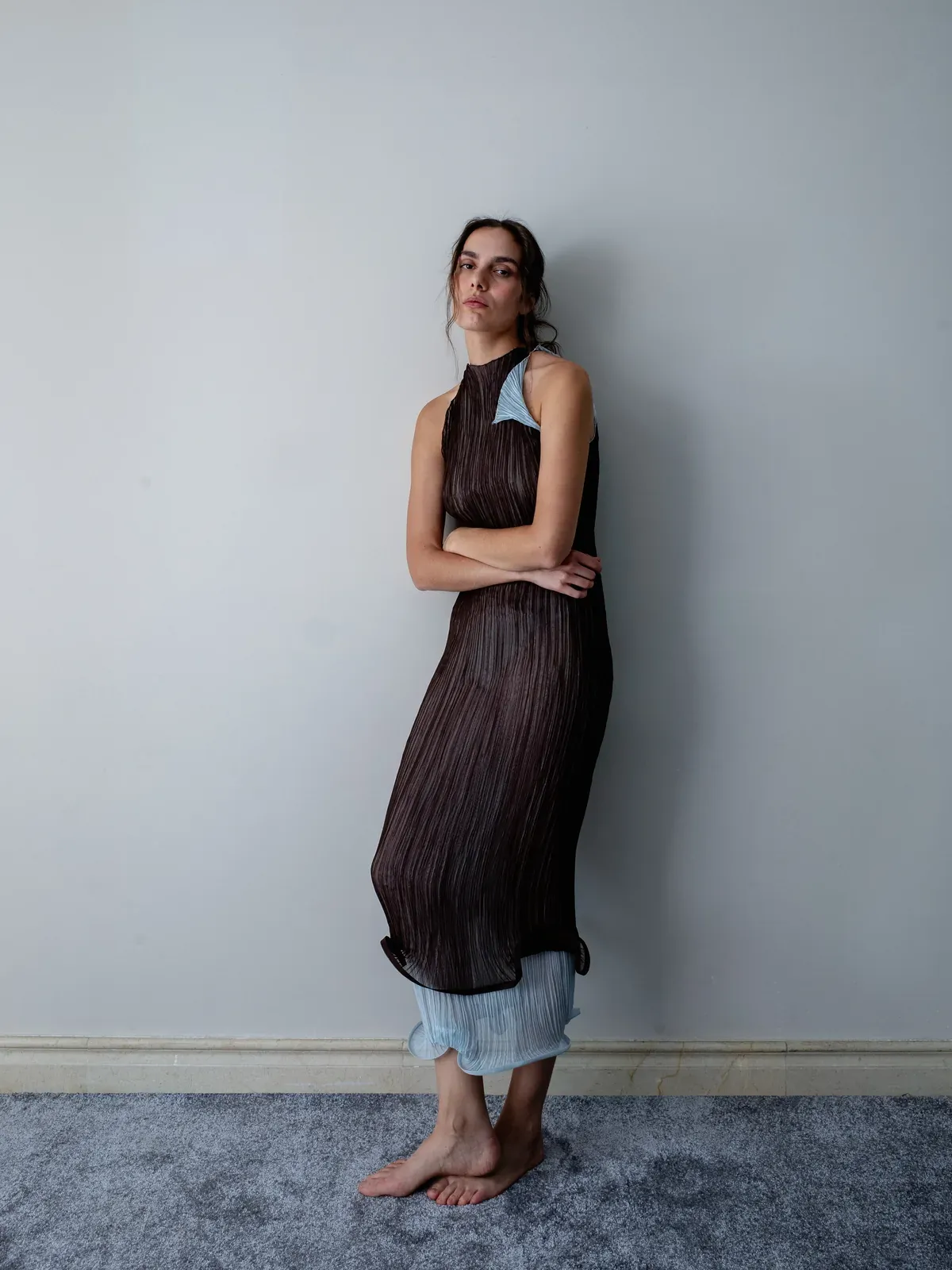
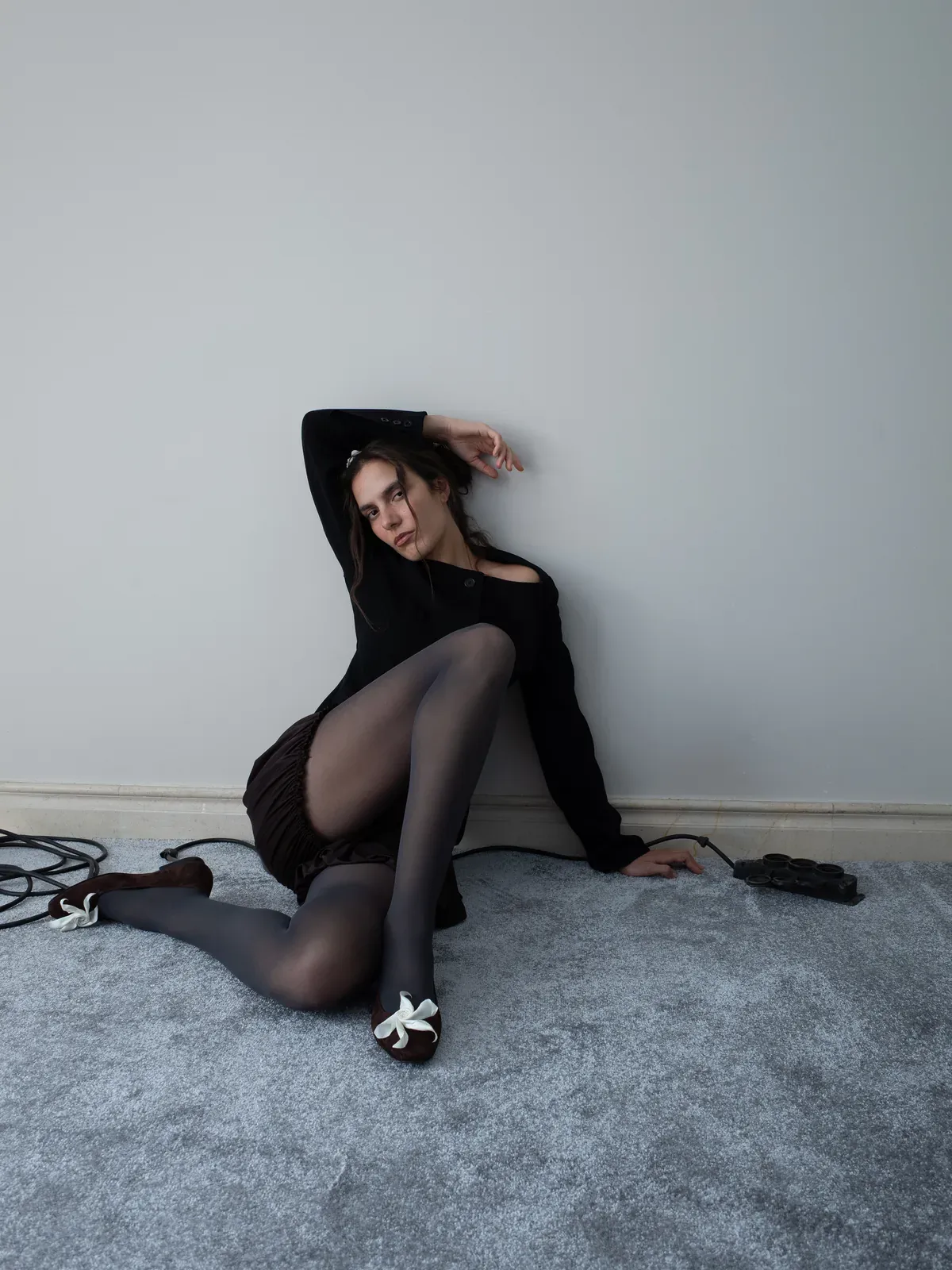
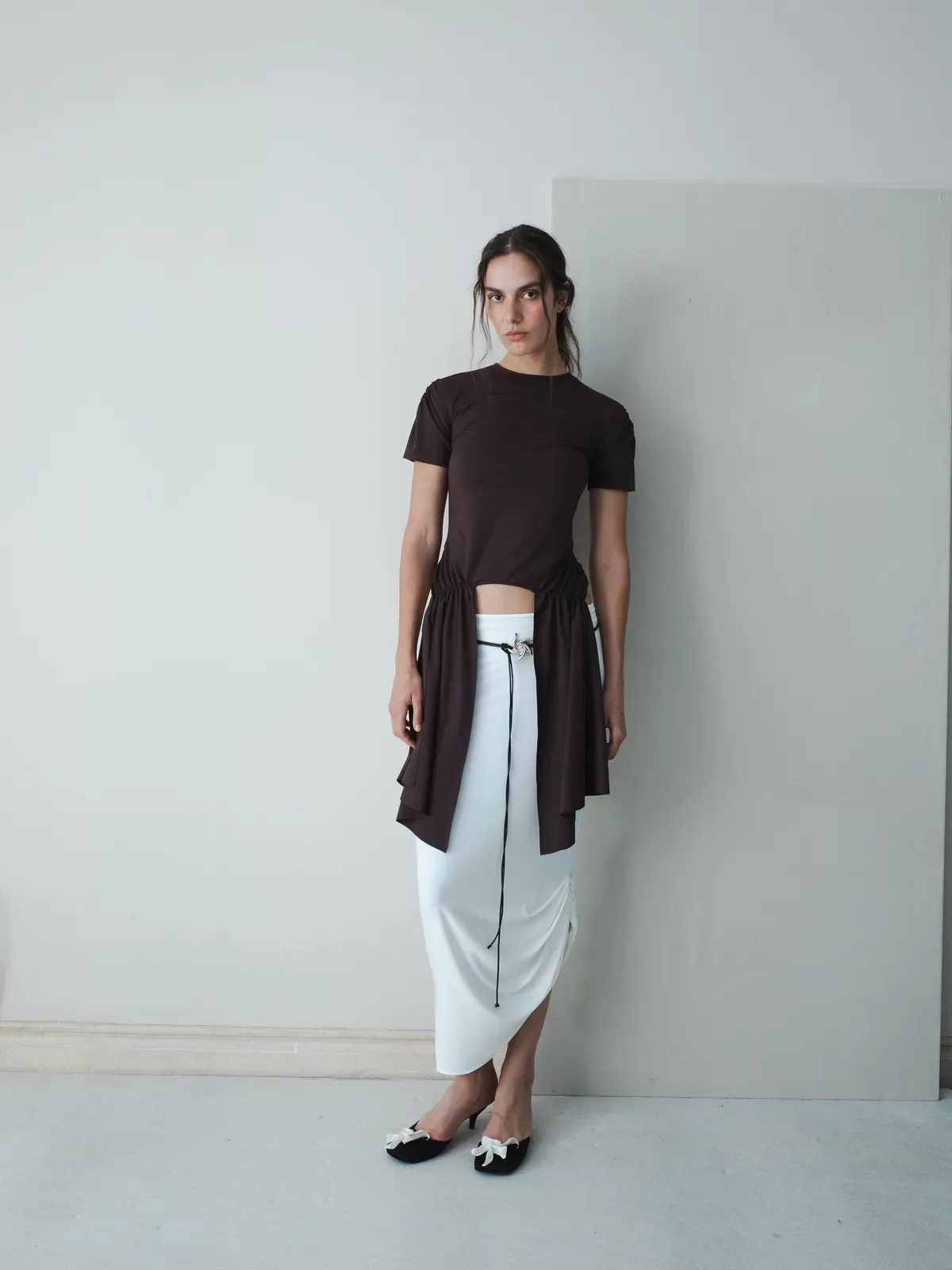
With Everyday Forms, I wanted to celebrate those unnoticed moments: the way we get dressed in the morning, the objects we carry, and the routines that quietly become part of who we are. I wanted the clothes to reflect the strength of our woman while remaining true to the Yassmin Saleh language of draping, sculptural forms and craftsmanship, expressed in a more restrained and understated way.
With Everyday Forms, I wanted to celebrate those unnoticed moments: the way we get dressed in the morning, the objects we carry, and the routines that quietly become part of who we are. I wanted the clothes to reflect the strength of our woman while remaining true to the Yassmin Saleh language of draping, sculptural forms and craftsmanship, expressed in a more restrained and understated way.
The lives of women in Lebanon inspire this collection. How has your upbringing informed your perception of your environment and how you exist in the world?
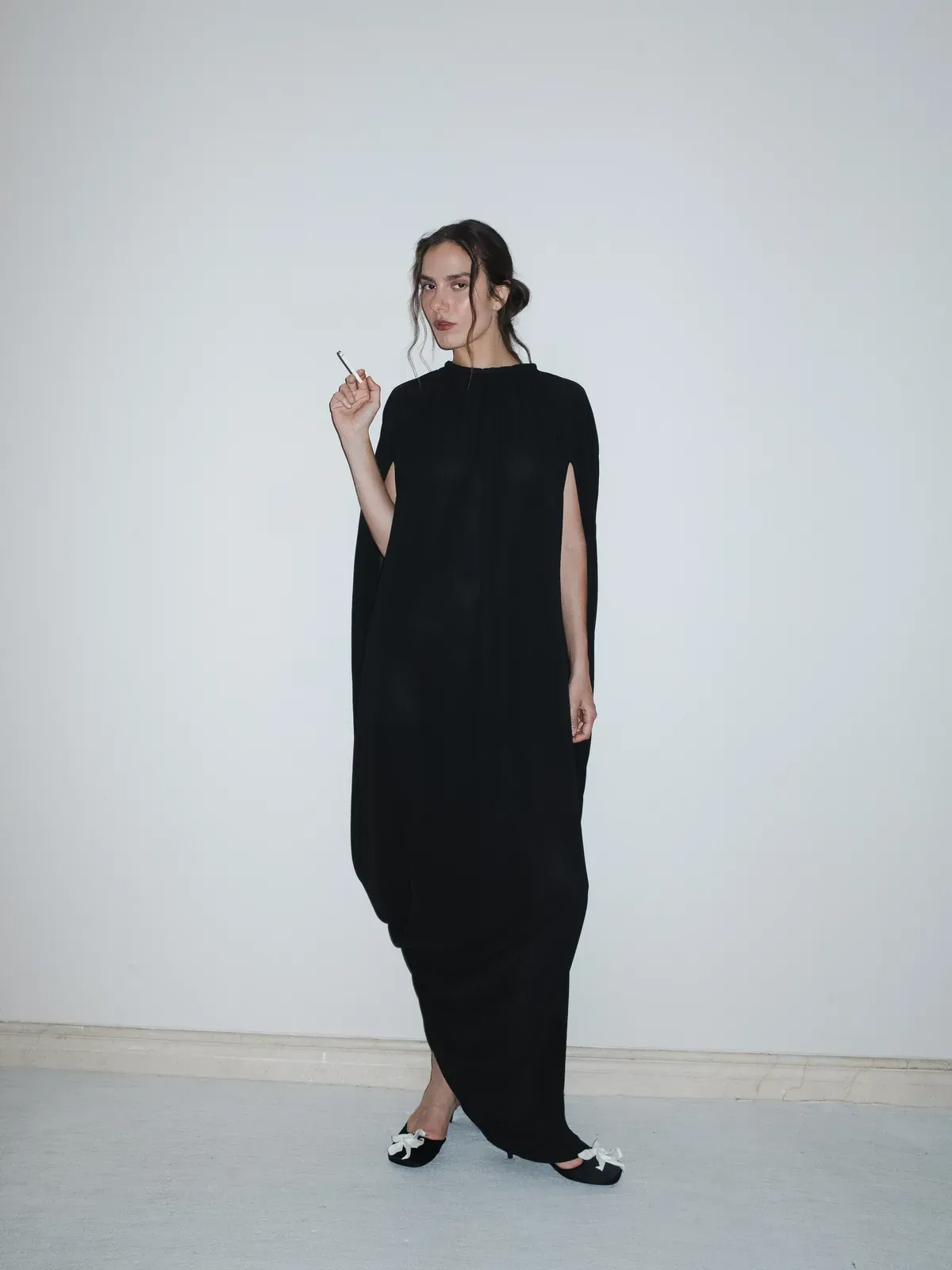
Some of my strongest memories are Sunday lunches at my grandmother’s house. By the afternoon, the women would gather for coffee. They would arrive impeccably dressed, their hair done, lipstick on, and jewellery carefully chosen. They would drink coffee, smoke cigarettes, laugh, debate and, of course, gossip.
I remember being completely fascinated by them. They were glamorous, but they were also running households, raising families, navigating life. I realised then that women have the incredible ability to carry so much while making it all seem effortless. Looking back, I think my curiosity about the mind of a woman began long before I knew it.
I remember being completely fascinated by them. They were glamorous, but they were also running households, raising families, navigating life. I realised then that women have the incredible ability to carry so much while making it all seem effortless. Looking back, I think my curiosity about the mind of a woman began long before I knew it.
You mention that the collection expresses itself ‘in three archetypes of the body and form’. Could you expand on what these archetypes are and why they were important to you?
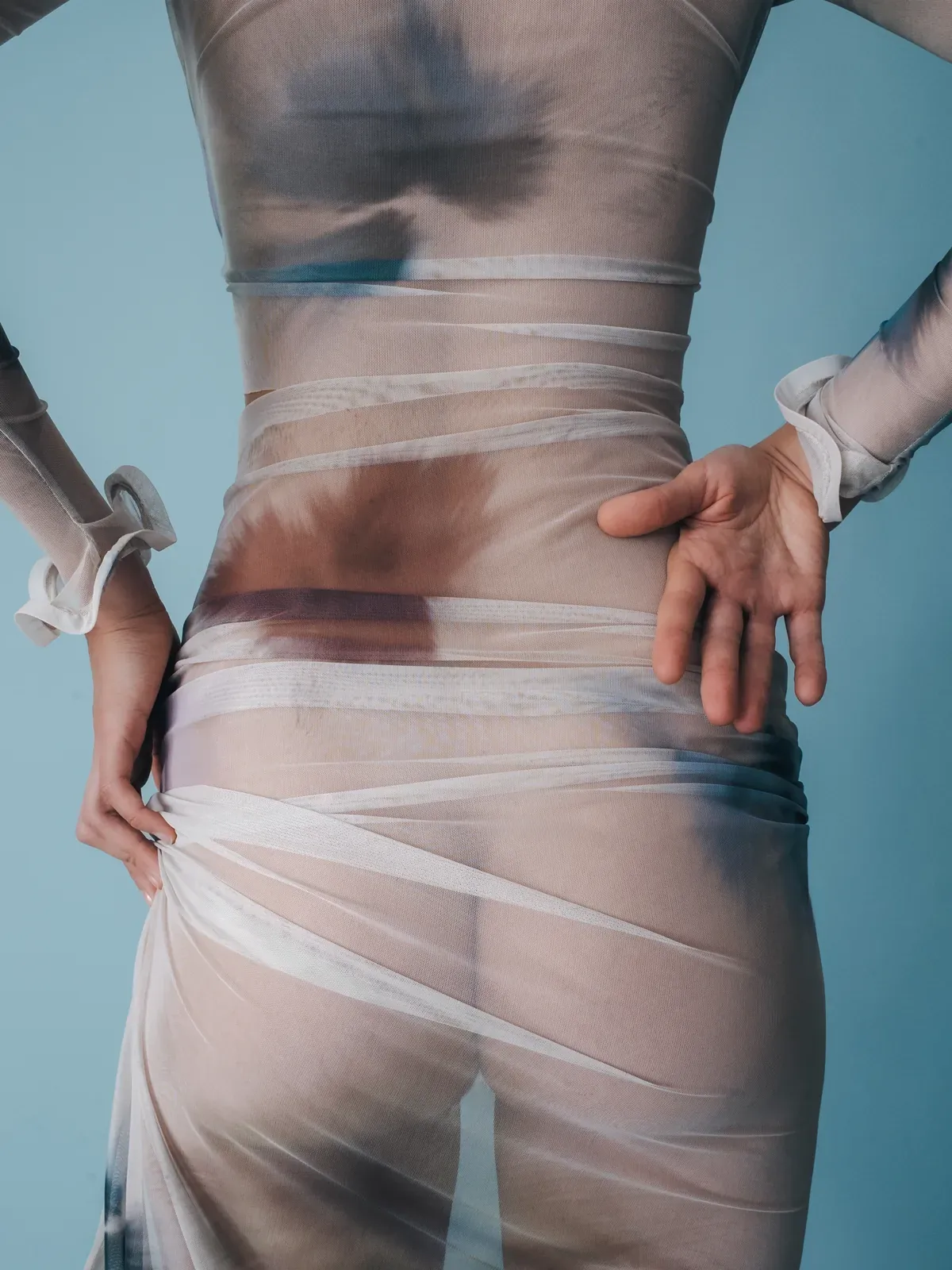
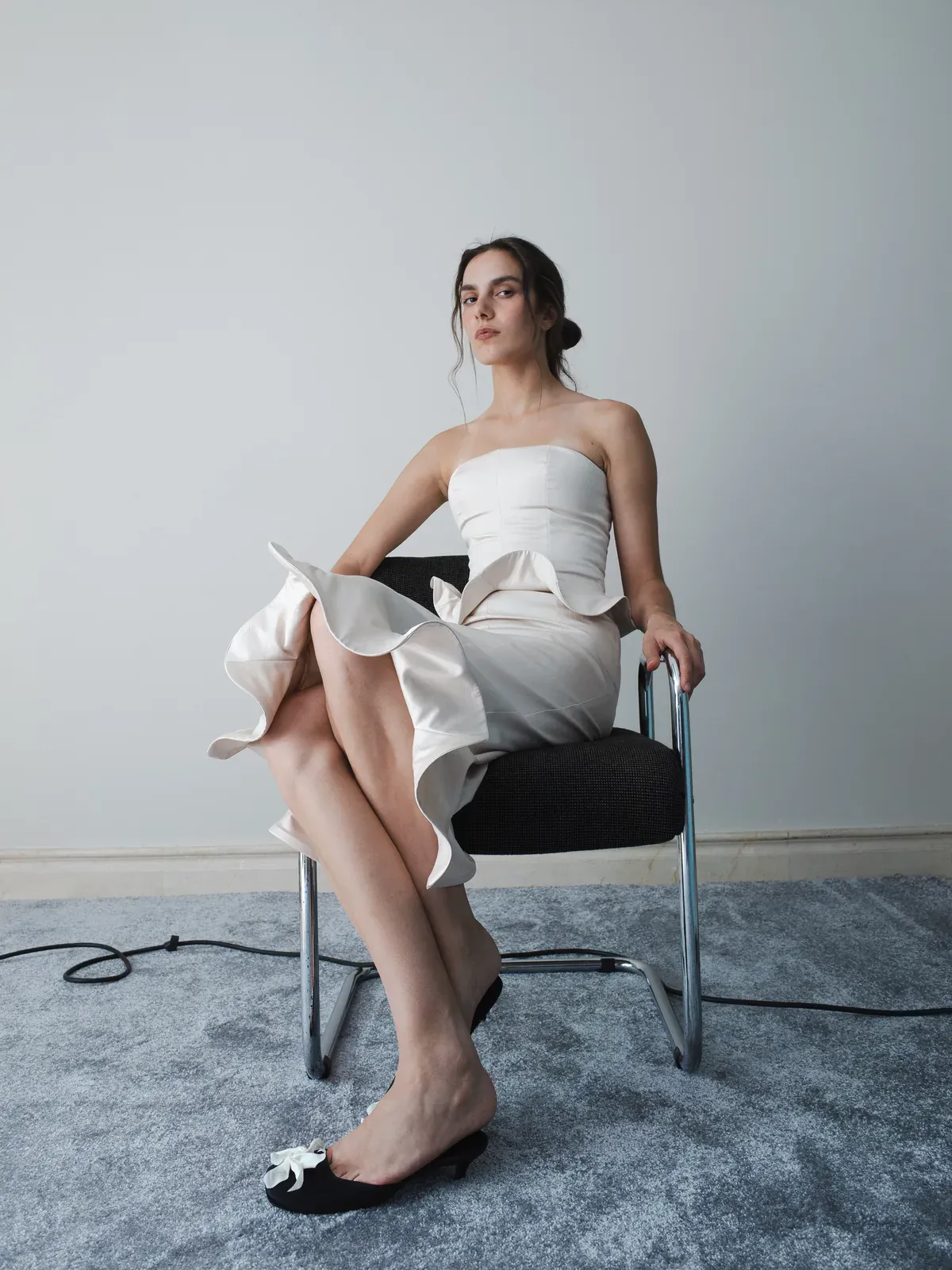
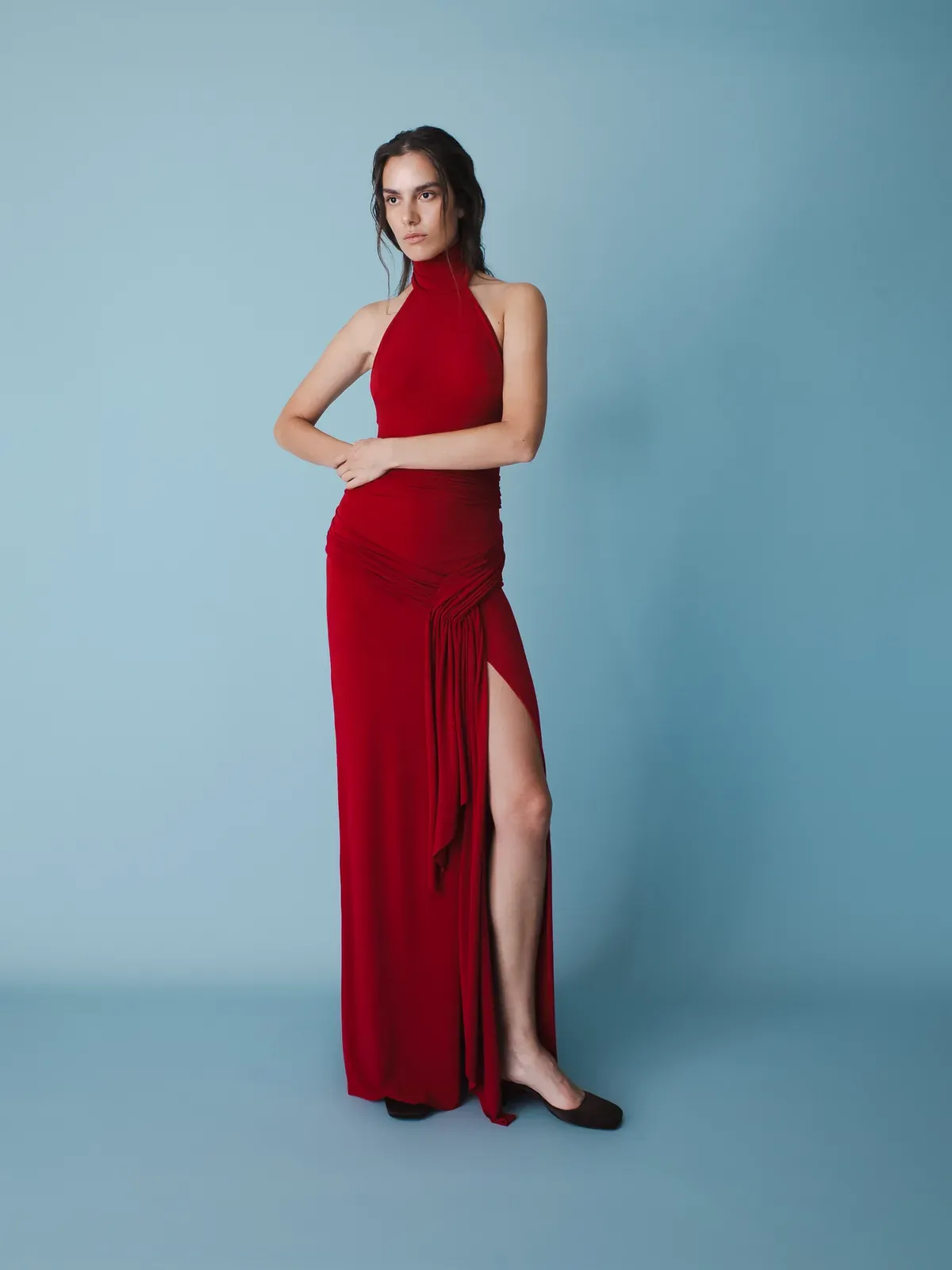
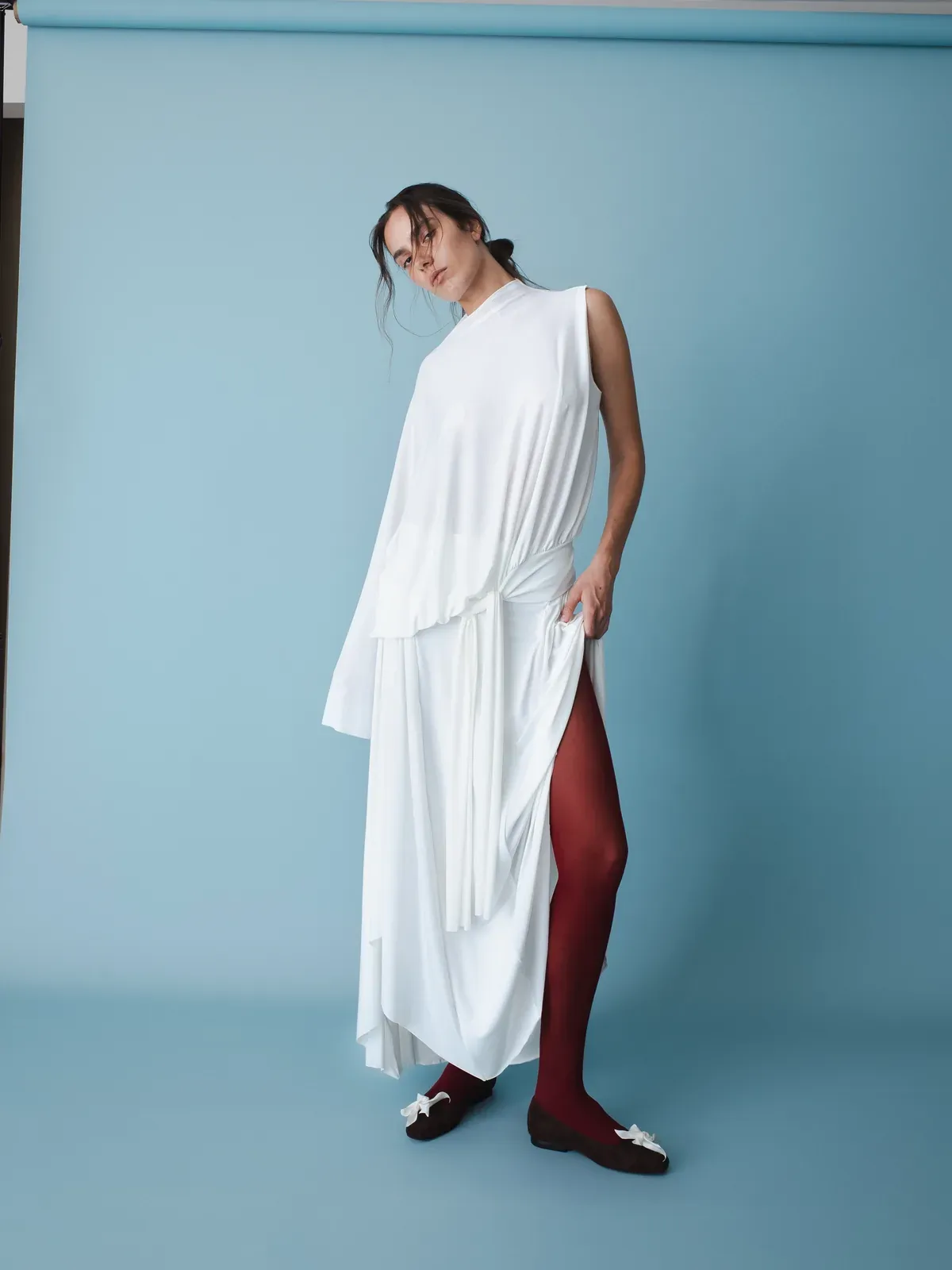
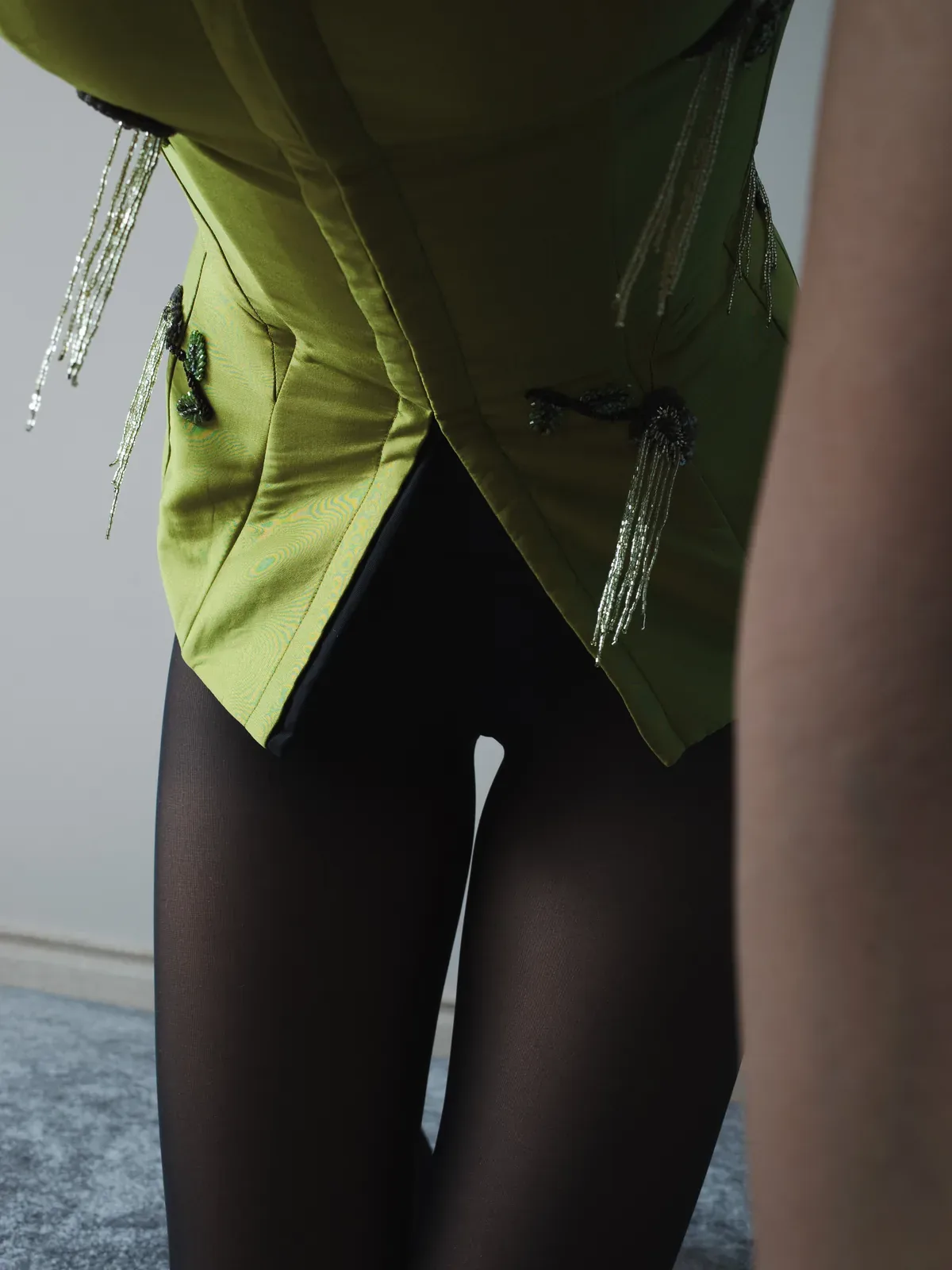
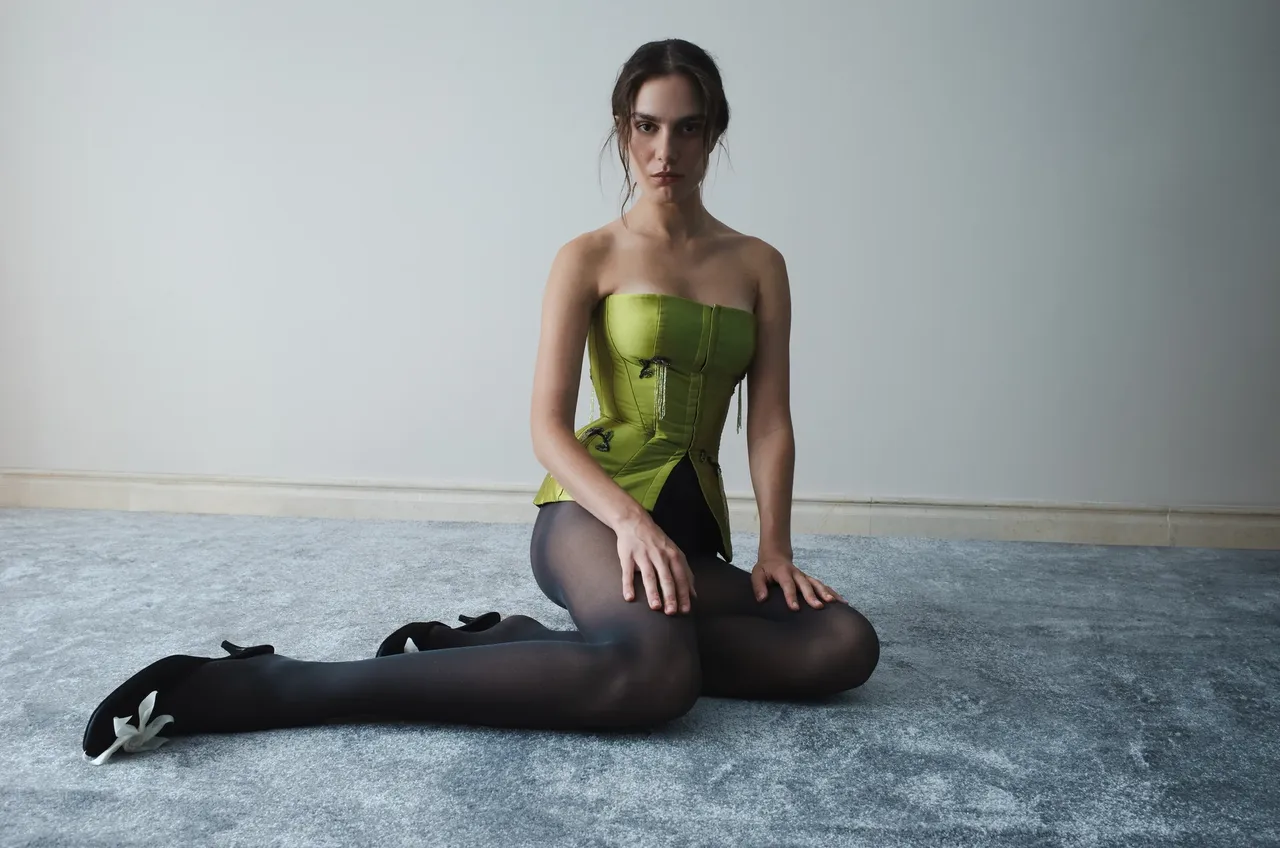
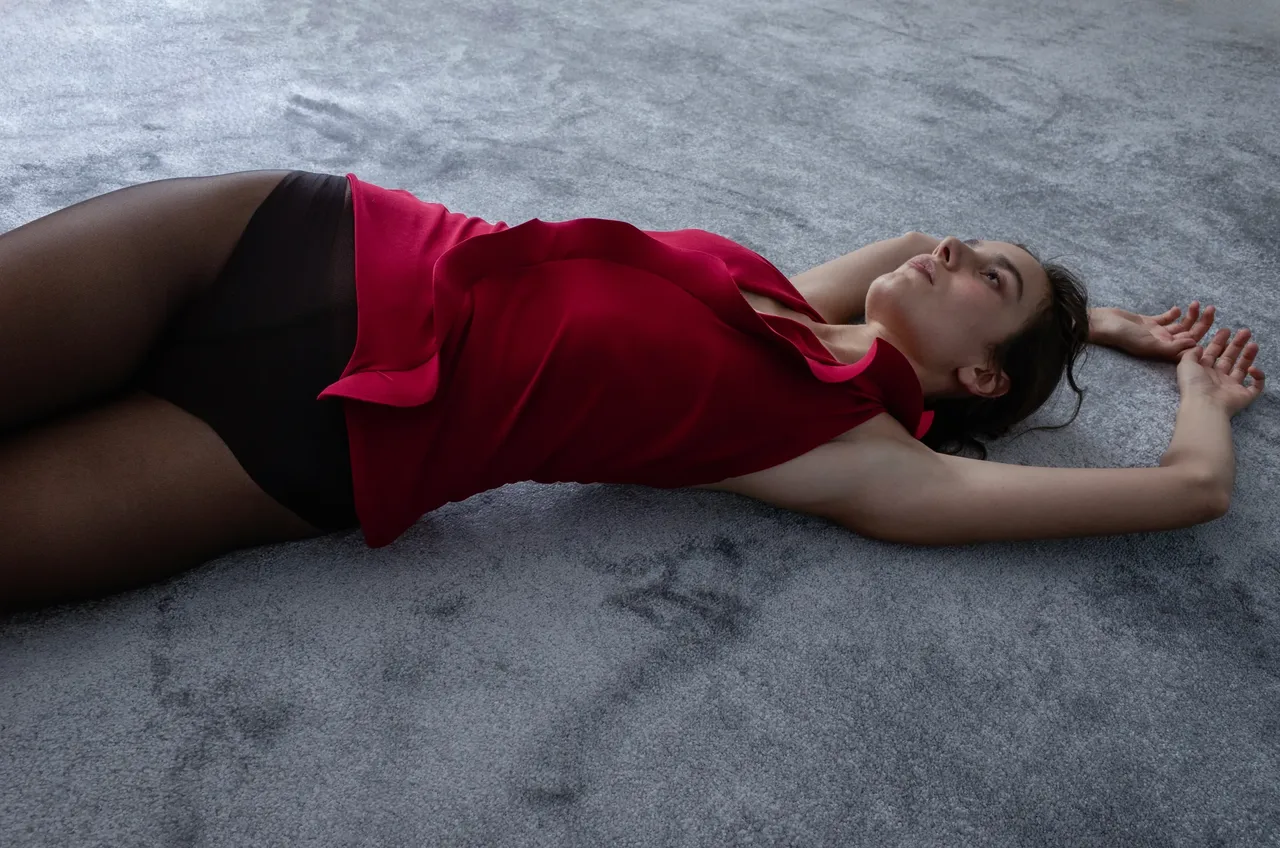
The first is fluidity, where garments follow the body with our signature draping, creating movement and softness. The second is structure, where corsetry comes in, giving the body a stronger architectural presence. The third is our signature stretch mesh material, so light it acts as a second skin, revealing and concealing the body. They’re important because they reflect the relationship we have with our bodies. Some days we seek movement; other days, structure and confidence; and sometimes she simply wants to feel bare.
This collection also marks your first venture into footwear. Why did you choose now as the right time to bring it into Yassmin Saleh?
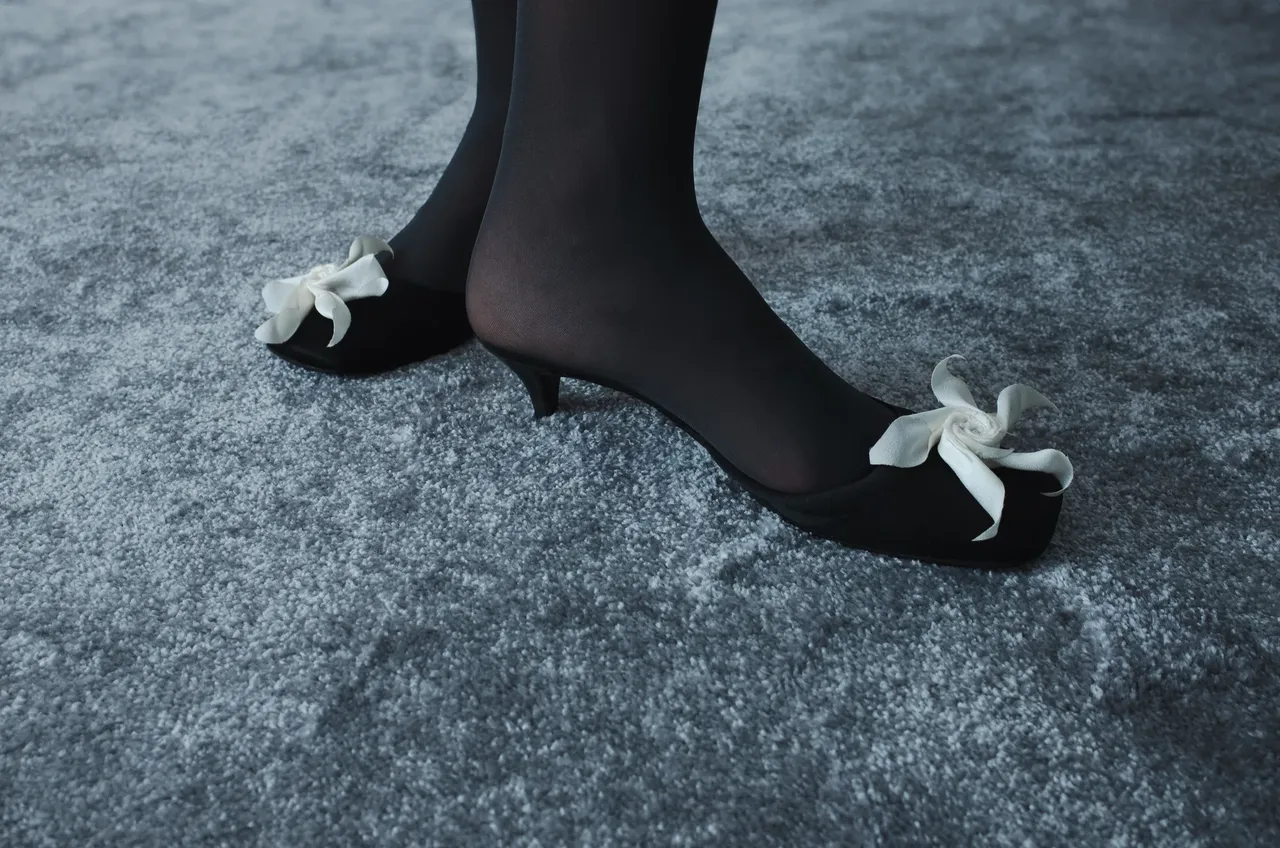
I’ve recently been thinking about design in a lighter way, with less pressure. As your brand grows, it’s easy to start thinking of it more as a business than as a creative practice. While that’s necessary, I realised it was beginning to limit my intuition. I wanted to go back to the way I designed when I first started: following my gut, before everything felt like it had to fit into a plan. Footwear fell exactly into that category. I’d always wanted to design shoes because they complete the idea of a look, so I simply decided to do it. And I loved it.
As this was your first time designing footwear, did you approach it with more freedom than you did with the clothes, perhaps allowing for more errors during the process?
Definitely. I approached footwear with much more freedom because I wasn’t thinking about wholesale or commerciality. I was trying to create the shoe I had in mind. I was persistent about developing the custom copper heel. I had no prior experience in shoemaking, but I was still the one telling the craftsmen what I thought was possible, while they reminded me that it was far more complicated than I imagined. There were definitely more mistakes because of that, but we kept refining until we found a solution. In that sense, it was liberating to explore a completely new discipline without feeling like I had to follow rules.
The moon flower is repeatedly seen across the collection. How does it correlate with the message you are conveying?
The moon flower became a metaphor for the woman I was thinking about while designing the collection. I am fascinated by the anatomy of flowers, but this time it was about the fact that the moon flower is never just one thing. It opens, folds back on itself, and completely changes. I found beauty in the process of becoming much more than in its final form.
As women, we are constantly evolving and redefining ourselves. There’s something beautiful about that in-between space, where nothing feels certain yet everything feels raw and authentic. I wanted the collection to convey this message: finding comfort in becoming rather than being.
As women, we are constantly evolving and redefining ourselves. There’s something beautiful about that in-between space, where nothing feels certain yet everything feels raw and authentic. I wanted the collection to convey this message: finding comfort in becoming rather than being.
What have you learnt about yourselves since starting Yassmin Saleh?
Yassmin: I’ve learnt that my curiosity is enough and that vulnerability is strength. I stopped searching for bigger stories and started trusting my own perspective.
Farah: That I have more grit than I gave myself credit for. There are so many moments (especially in Lebanon) that require difficult decisions, and I’ve surprised myself by how much I enjoy rising to the challenge.
Farah: That I have more grit than I gave myself credit for. There are so many moments (especially in Lebanon) that require difficult decisions, and I’ve surprised myself by how much I enjoy rising to the challenge.
What’s something that surprised you about getting into the industry, and that perhaps still shocks you to this day?
Farah: Honestly, how expensive it is. Building a fashion brand requires investing in so many things people never see. Also, that the most exciting idea isn’t the right one, and that’s a discipline you learn over time. It taught me to be much more intentional about every decision I make.
Yassmin: What surprised me most is that creativity is 1% of what it actually takes to build a fashion brand. The rest is production, logistics, sales, hiring, and solving problems you never imagined you’d have to solve.
Yassmin: What surprised me most is that creativity is 1% of what it actually takes to build a fashion brand. The rest is production, logistics, sales, hiring, and solving problems you never imagined you’d have to solve.
How do you approach each new collection? Do you work on everything together or rather work separately and then bring it all together? Has your process evolved over the years?
With a new collection, I begin with the concept, the story and design development. That’s the hardest and most instinctive part of the process, where I’m simply exploring ideas without thinking too much about limitations. Once it starts taking shape, Farah comes in. She looks at pricing, merchandising and categorisations and asks the questions I sometimes avoid. Our process has evolved in the sense that we’ve become much better at balancing creativity and commerciality. We know now at which point there should be an intervention, a shift of perspective or a collaboration of thoughts before the next step.
Have you felt a creative block at any point? How did you get yourself out of it to rediscover your creativity?
Whenever I feel creatively stuck, I go where the water is – anywhere that quiets the noise. I realised that I don’t find ideas by forcing them, especially when there’s a deadline. I find them by creating space for them to arrive. Creativity for me comes from paying attention rather than searching harder.
Which piece from the collection best embodies you as an individual?
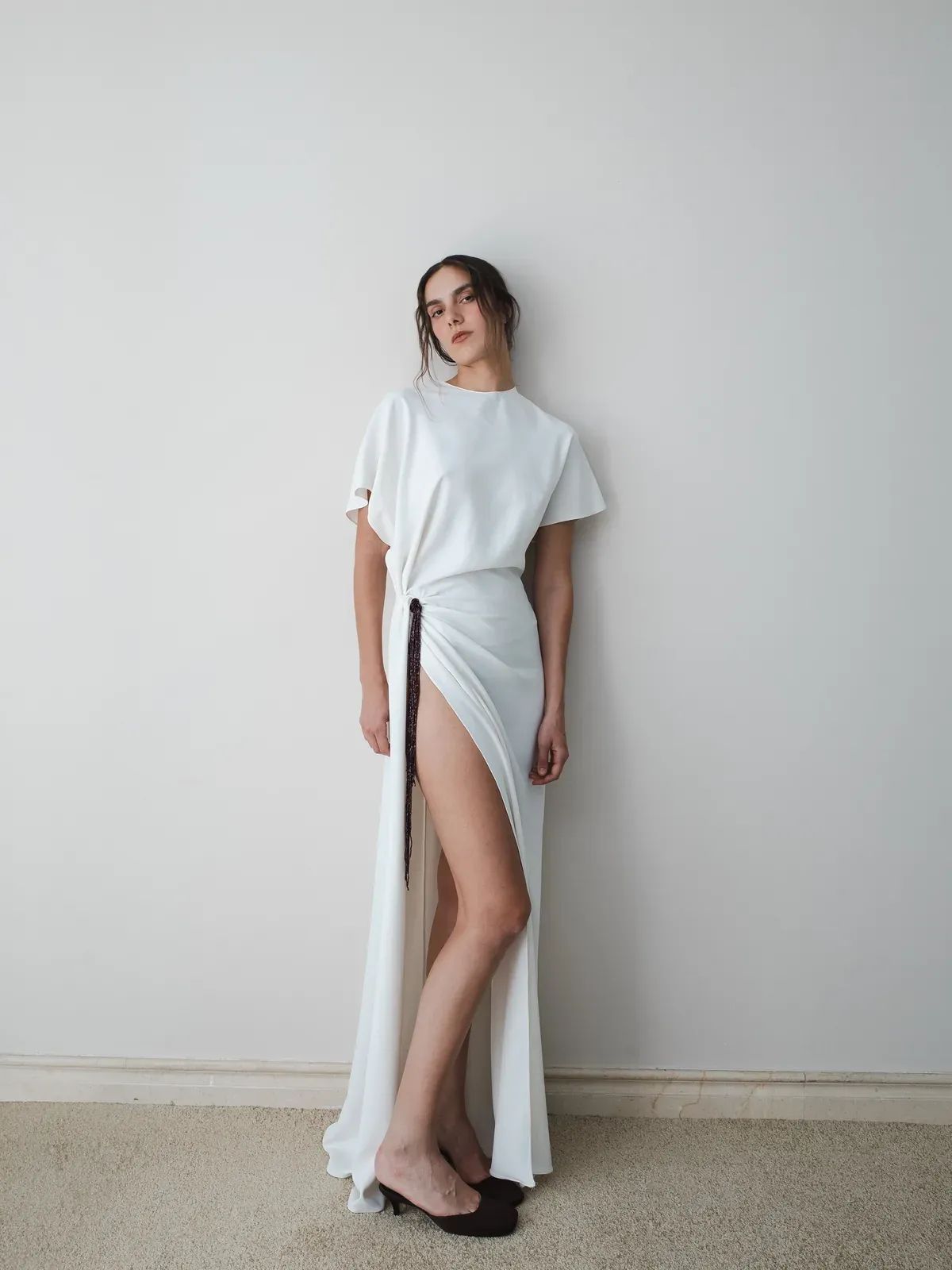
The Knot look. I like how simple it appears, but because it’s made from our signature stretch mesh, it reveals another layer the closer you look.