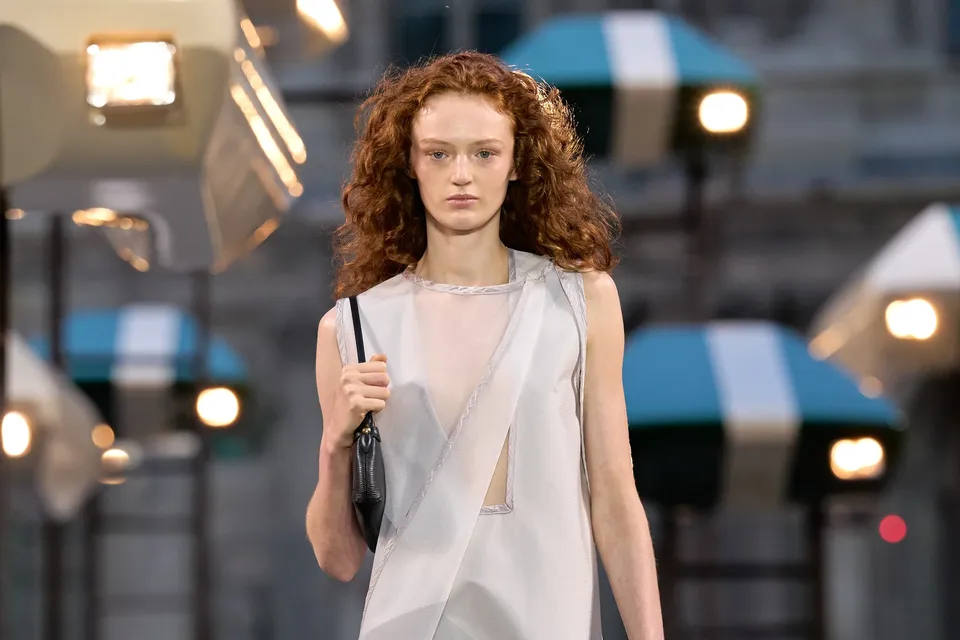
Almaty has something special. It's a place that, once you’ve been, you always want to come back to. We've been lucky enough to return multiple times, which has allowed us to not only start finding in its kind people, its snowy mountains and its exotic food a sense of comfort far away from home but also to witness firsthand the evolution of its cultural scene and how fashion is slowly but surely being taken more as a serious form of expression that can contain in itself the weight of the past while still being able to look towards the future and mark the path for the newer generations. With its most diverse and complete edition yet in terms of proposals and a scale that keeps getting bigger in size as it does in influence and impact, this is how the new and successful edition of Visa Fashion Week Almaty went by.
The change of location, from the trendy but a bit narrow space of the Ritz Carlton to the very wide and spacious Atakent Exhibition Center, already signified a new level of ambitions for the organisation, as well as the undeniable proof that the fashion-interested crowd of Kazakhstan can no longer be contained in medium-sized rooms. The curiosity from what happens during this week has now been widespread, and the increasingly growing size of the crowds is the physical representation of the importance fashion and everything it entails now hold within the local landscape. The comfortable lounge area where we waited between shows, the common space with multiple brand activations that kept us entertained and the massive and impressive size of the runway – it all felt very big at first, but it was all packed and busy in the end.
As we've described in previous editions, what happens before the runways is as important as what happens during them, and the street style was, as usual, one of the most interesting, fun and creative parts of the week. During the most well-known fashion weeks, what show attendees wear is usually in line with what's being presented on the runway: the latest trends, the key items and the colours and shades of the season. Here, as it often happens in fashion capitals outside the mainstream cycle, the culture and traditions of their nations are so rooted they end up noticeably permeating every aspect of society, including its fashion, where the street style talks about what's trendy right now, but it also showcases a unique eye, taste and mix of references impossible to find anywhere else.
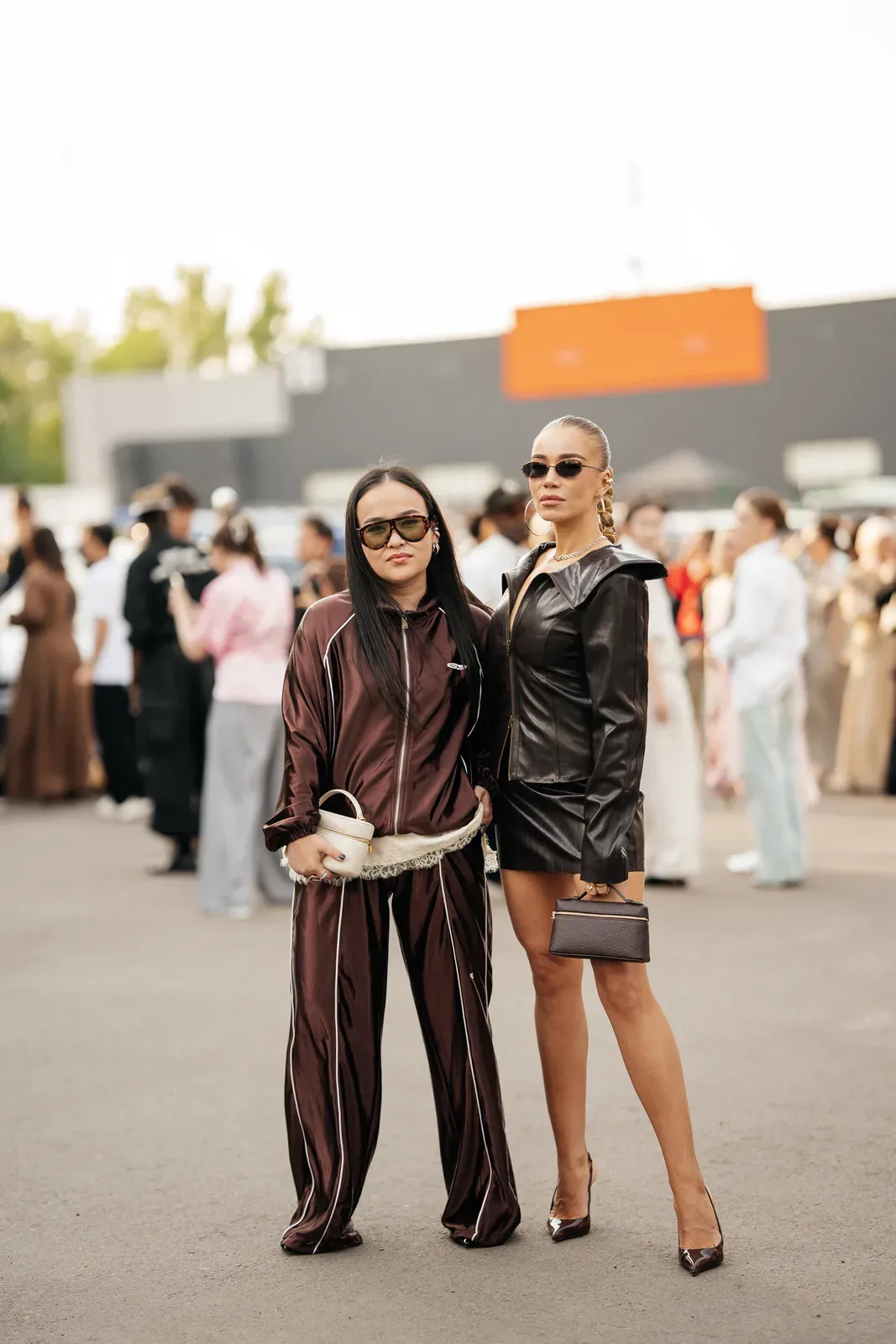
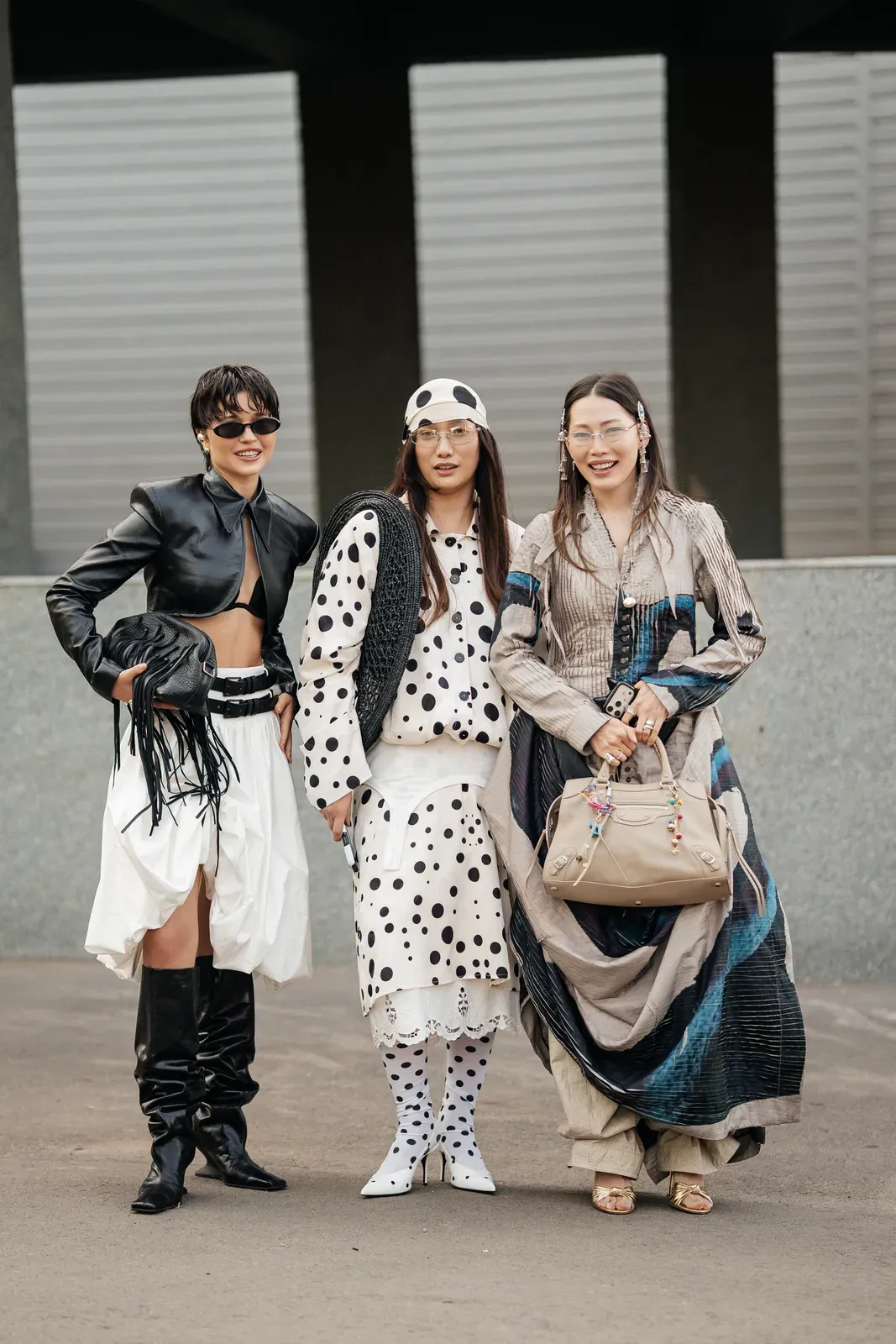
With no restraint or fear of mixing, matching, experimenting and creating new combinations, attendees find joy in dressing up, and this effort and attention to detail are synonyms of the love and passion they feel towards fashion. This is the right type of crowd to have at an event of this type: one that actually cares about what's being presented, that feels inspired, amazed and represented by what they see and that, in the same way, encourages, motivates and supports the designers. In this sense, creators here are no distant figures we can only see from afar. They often share space with the rest of us; they exhibit their own designs during the street style; they bond naturally with their clients in between shows, and they are happy to share their motivations and ideas with whoever wants to talk about them.
Within this context, the main concept of this edition, “Seen and being seen", acquires a different meaning than the most evident one. It is not about bragging; it is about giving and receiving. We see and we get inspired; we are seen and we inspire. This symbiotic relationship between creation and use is the most important part of fashion, where more than just making clothes for the sake of it, the undeniably generous and purposeful act of dressing the body and doing it with intention and inventiveness infuses the human spirit and warmth into the fabrics, the prints and the colours.
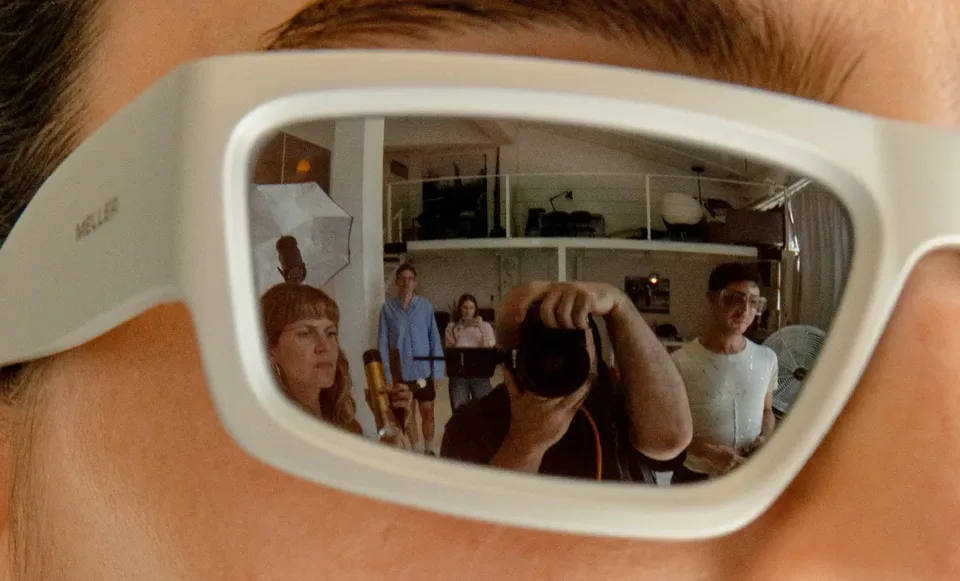
The recognition of ourselves in the other here in Almaty came in an intangible way with this idea in our head but also with its physical representation, with a long mirror placed as a sort of roof for the runway, reflecting from a brand-new perspective the models walking under it, covering all angles and leaving nothing hidden. Everything here is as honest, genuine and authentic as a mirror reflection, as seen in the proposals from the eighteen brands that presented their new collections during the three-day event, with an authentic balance between tradition and modernity, between local charm and foreign innovation.
The evolution mentioned in the first paragraph of this article lies here. During our first fashion week in Almaty a couple years ago, there was a strong sense of tradition, but there seemed to be an empty space awaiting more contemporary voices to start telling their own version of the story, and in this edition we finally felt this equilibrium between past and present was achieved smoothly, turning the runway into a dialogue where the addition of the pieces constitutes a cohesive complete whole.
On the same line, the inclusion of international proposals, a key element for the organisation, keeps reaching new highs and widening its spread through the world, inviting designers not only from around the area, like Armenia's Manuk Aleksanyan or Azerbaijan’s Uventa, but also diving into new territories with Hungary's Nanushka and Morocco's Maison ARTC, establishing bonds that go far beyond business and that become heartfelt and hopefully long-lasting connections.
"We are witnessing the birth of a new type of international dialogue through fashion," says Bauyrzhan Shadibekov, CEO of VFWA, and inside this conversation there is space for voices that speak different languages but also that have their individual opinions, tone and identities. Some are sensual and alluring, like Malli's with its lingerie-inspired collection; others seem to be a living folk tale, like Sakh's theatrical take on the Kazakhstani tribal spirit of the 18th and 19th centuries; and others, like Fuzzz, offer a twist on the conventional, presenting a full-length show that only showcased the same three styles of football t-shirts over and over again, making the crowd wonder about what was going on and starting a conversation that extended through the week, making it, for better or for worse, one of the most talked about and distinctive shows of this season.
All of this being said, here are the six collections that, for us, stood out in this dialogue.
YESYES!
A big part of the emergence of a newfound voice of contemporary fashion in Kazakhstan has to do with the Next Designer Award, an initiative that opens a space for a new generation of designers to present their proposals and compete for the chance of debuting on the VFWA runways after being encouraged and evaluated by a selected team of experts. Some of our favourite brands of previous seasons were winners of other editions of the NDA contests, like Kimmin and FourNest, and this year we add one more name of a winner to our top of mind, and that is Esmukhan Esbolat and his brand YESYES!.
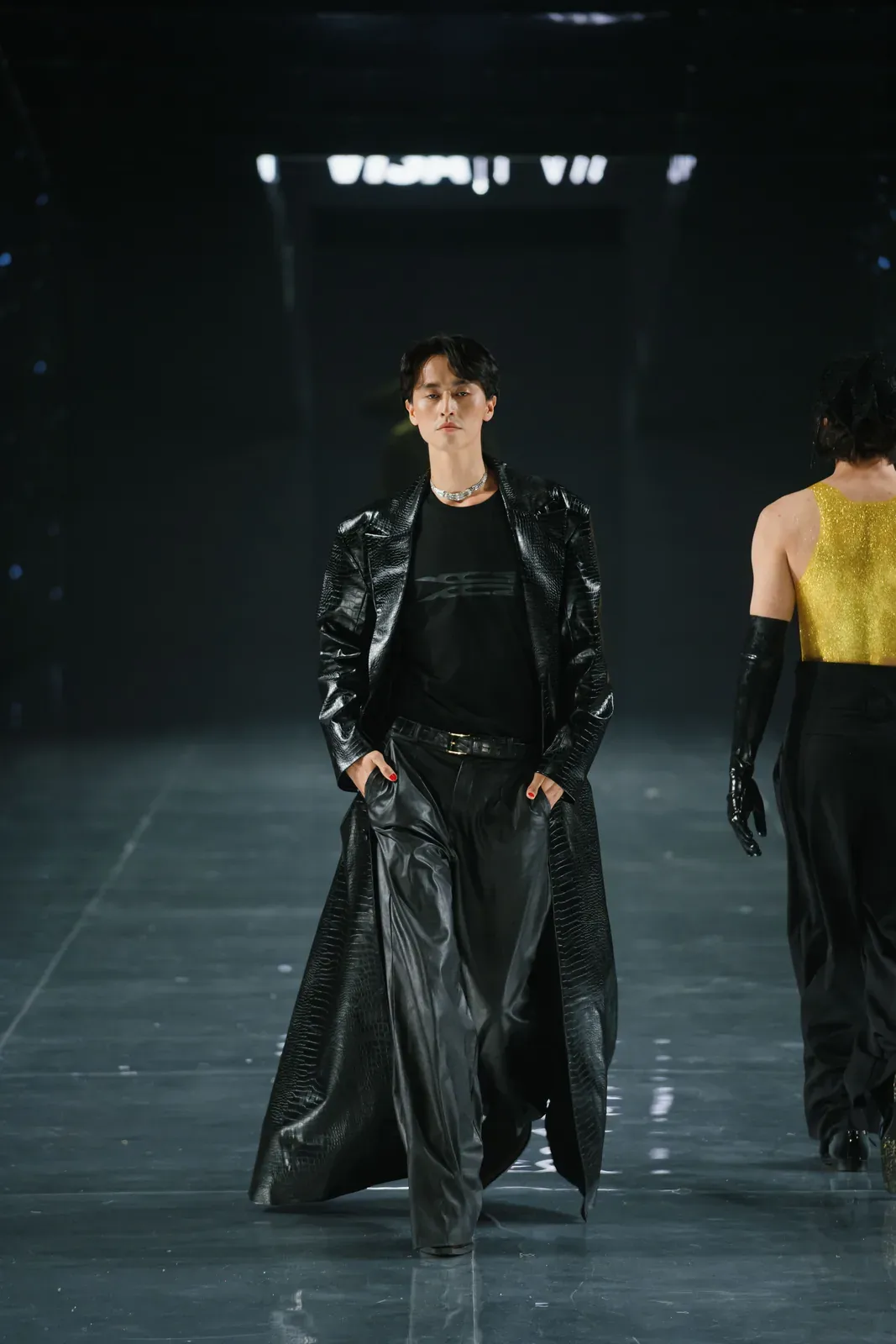
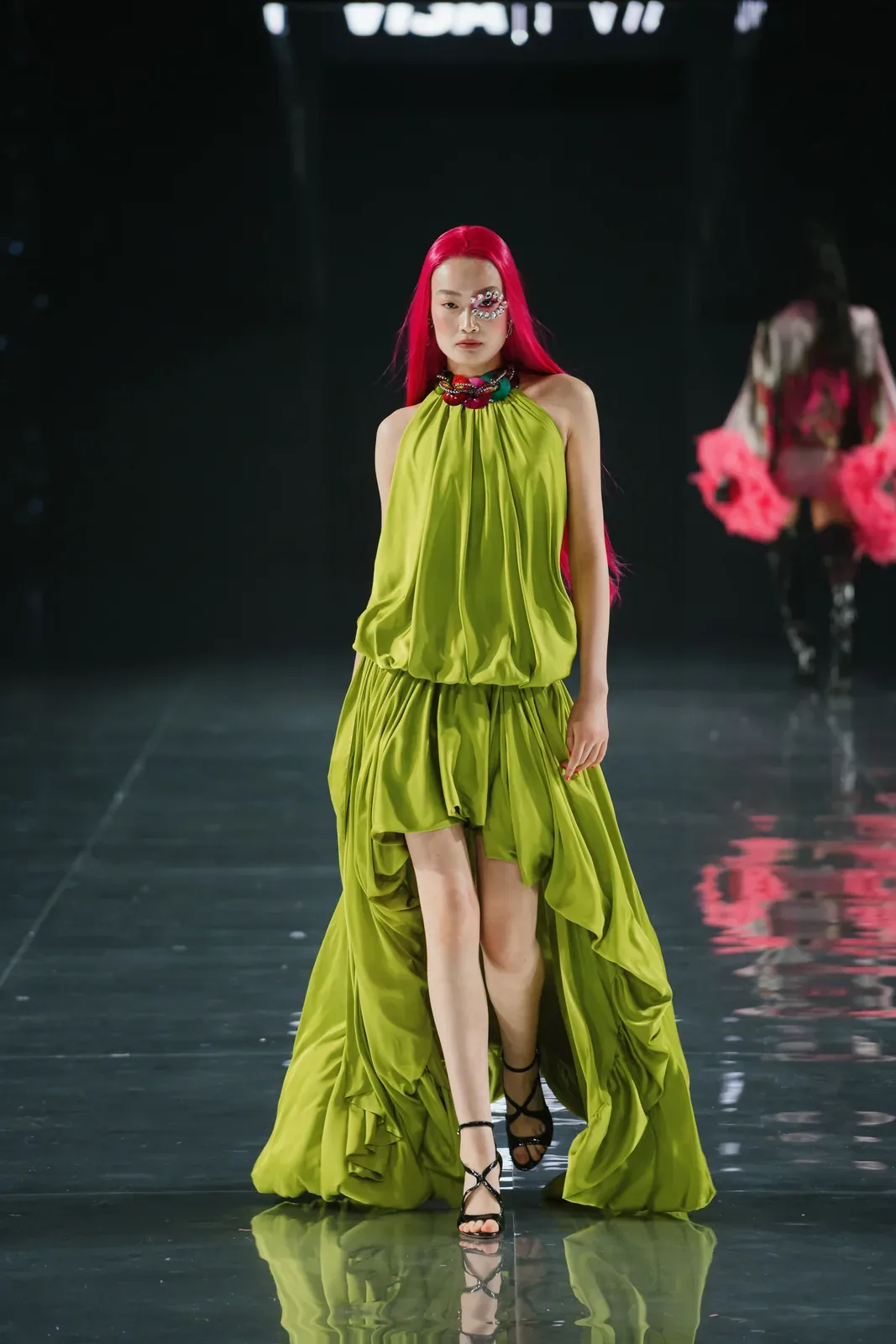
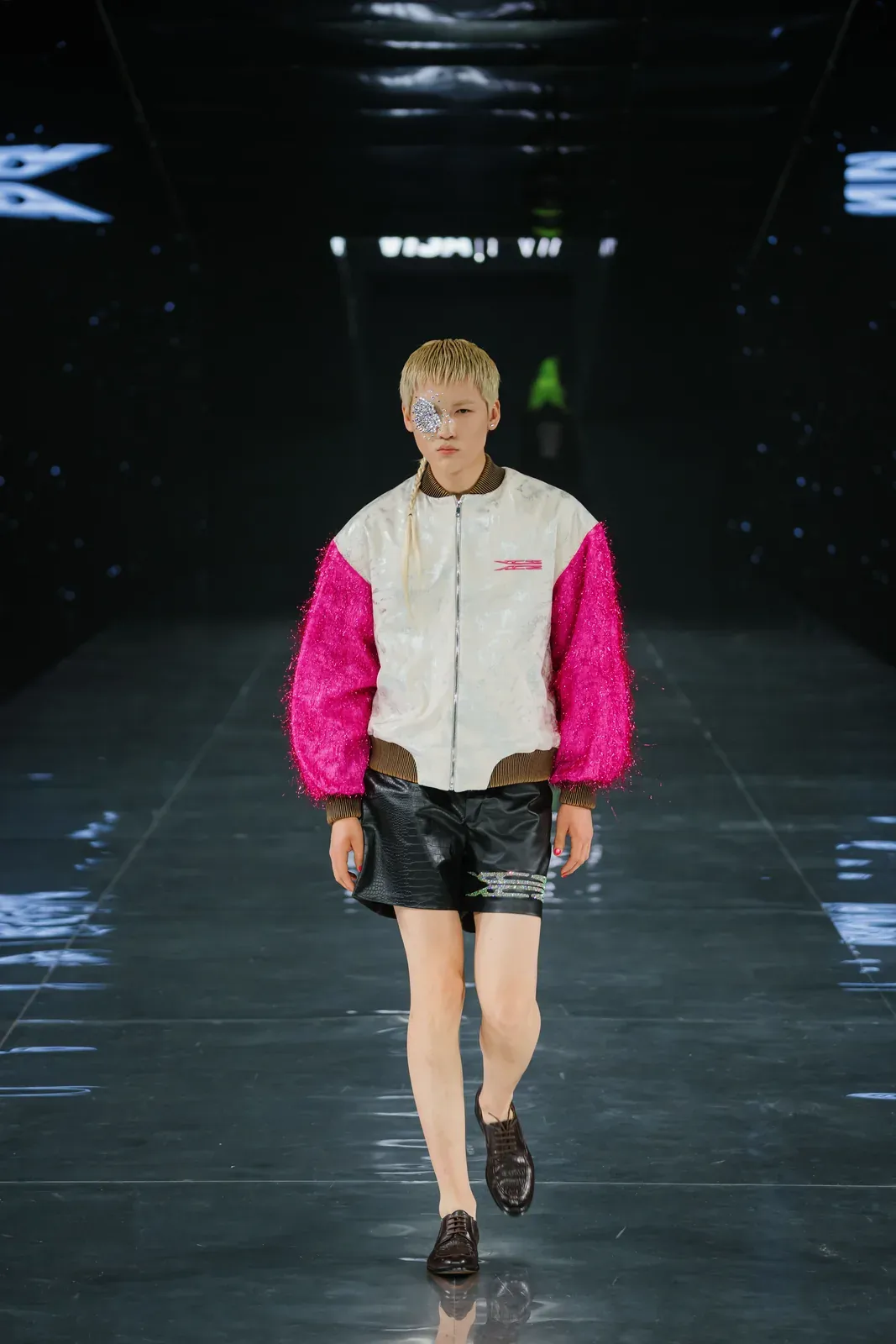
As optimistic and bold as the name suggests, the shot of energy and adrenaline during his runway presentation was undeniable, witnessing a wide amount of stimuli that went from the most extravagant and colourful hairstyles and glitter makeup to the well-made and very conceptual garments that had our eyes glued to the runway. It could be a total black leather look or a bright neon dress; all of the looks were busy in ornament and contrast but also in references and meaning, with an engraved sense of Y2K nostalgia in all its pop glory. Elements like the off-brand shopping bags given at local markets, the campy plastic dolls or the heavily textured plushies all translate ingeniously into fun and interesting pieces for all who long for the spark, joy and magic of the past.
Mariko
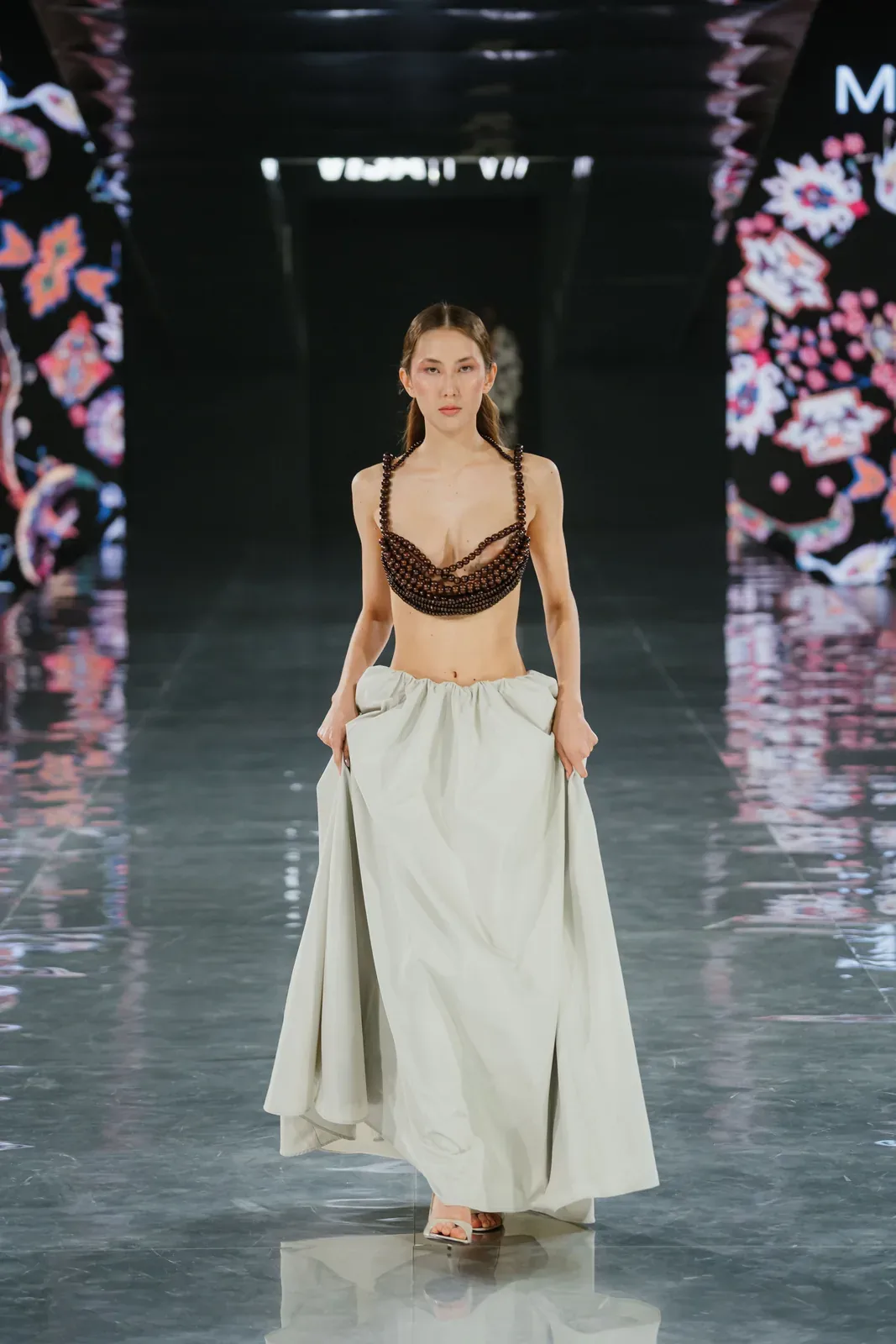
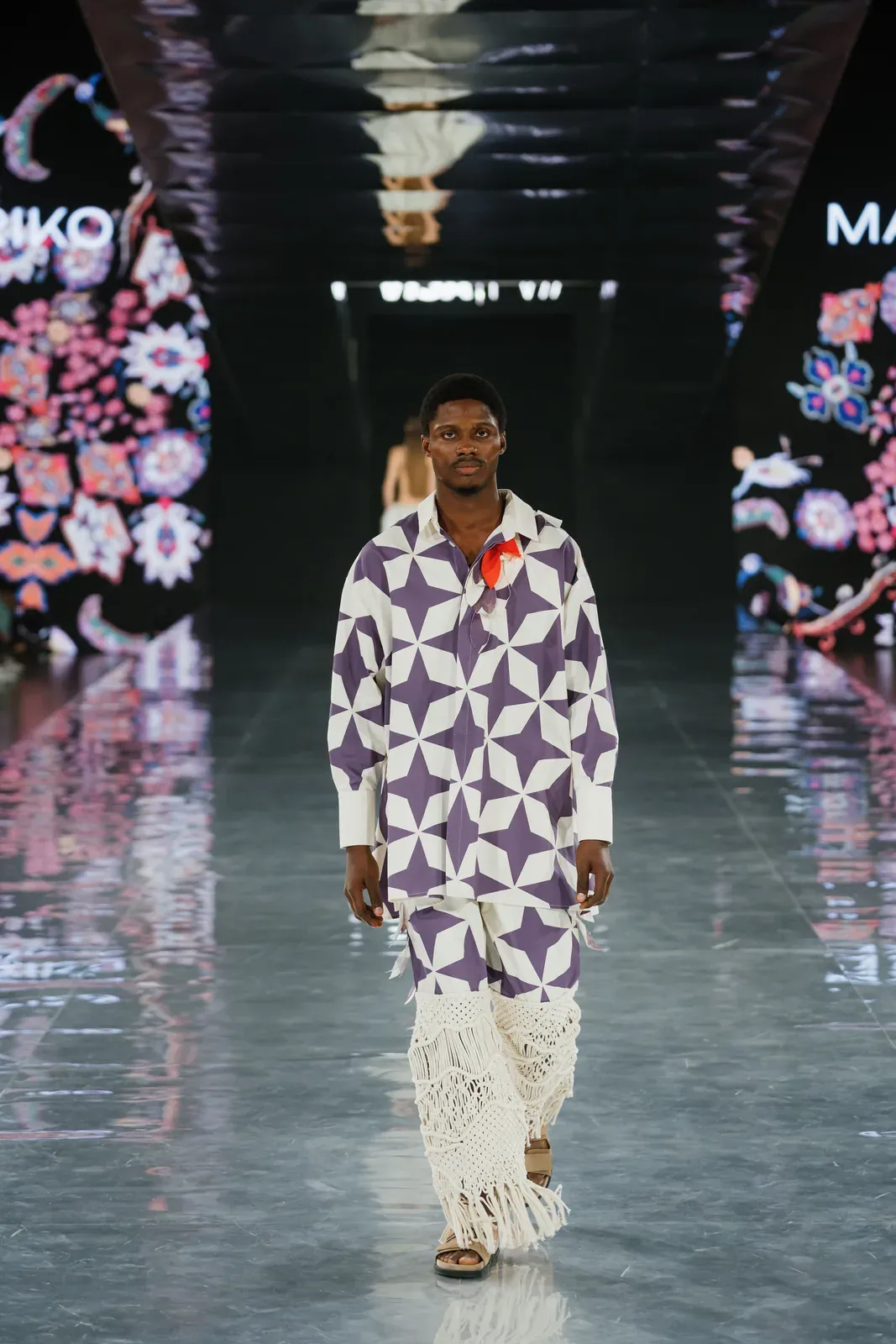
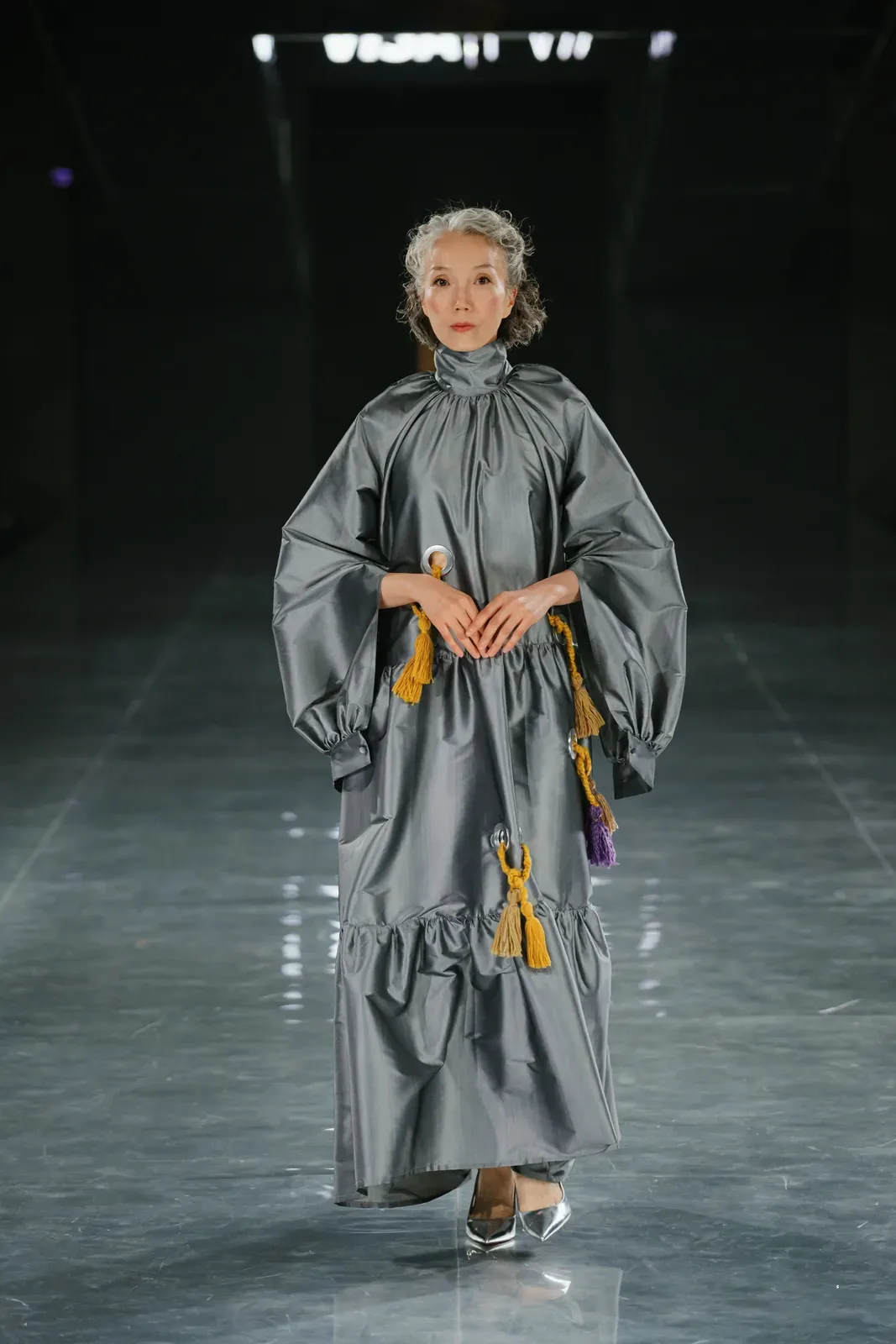
A usual name in our favourite collections from VFWA, this was her more personal and complex collection to date, according to Mari Hayrapetyan herself. Mariko is a brand known for incorporating the deep and rich cultural background of its creator into the garments, often blending references that speak about her origins. On this occasion a very symbolic and intricate element in itself, the Persian rug, was the first source of inspiration for different fabric manipulations, prints and embroidery, all symbolic and intricate as well. The second reference was born from the poem The Conference of the Birds by the Persian poet Attar of Nishapur.
From these two points a rich collection unfolds, from the pieces that speak about heritage by just looking at the elaborate knits or the fading Persian prints, to others with a more contemporary feeling thanks to the more vibrant colours or the feathers strategically placed to elevate the pieces. Both the carpets and the birds speak about evolution, about carrying within us the stories of our past into a new era, and similarly, Hayrapetyan is doing the same with her designs, taking her roots as the foundation of the new stories being told.
GAZHAIYIP
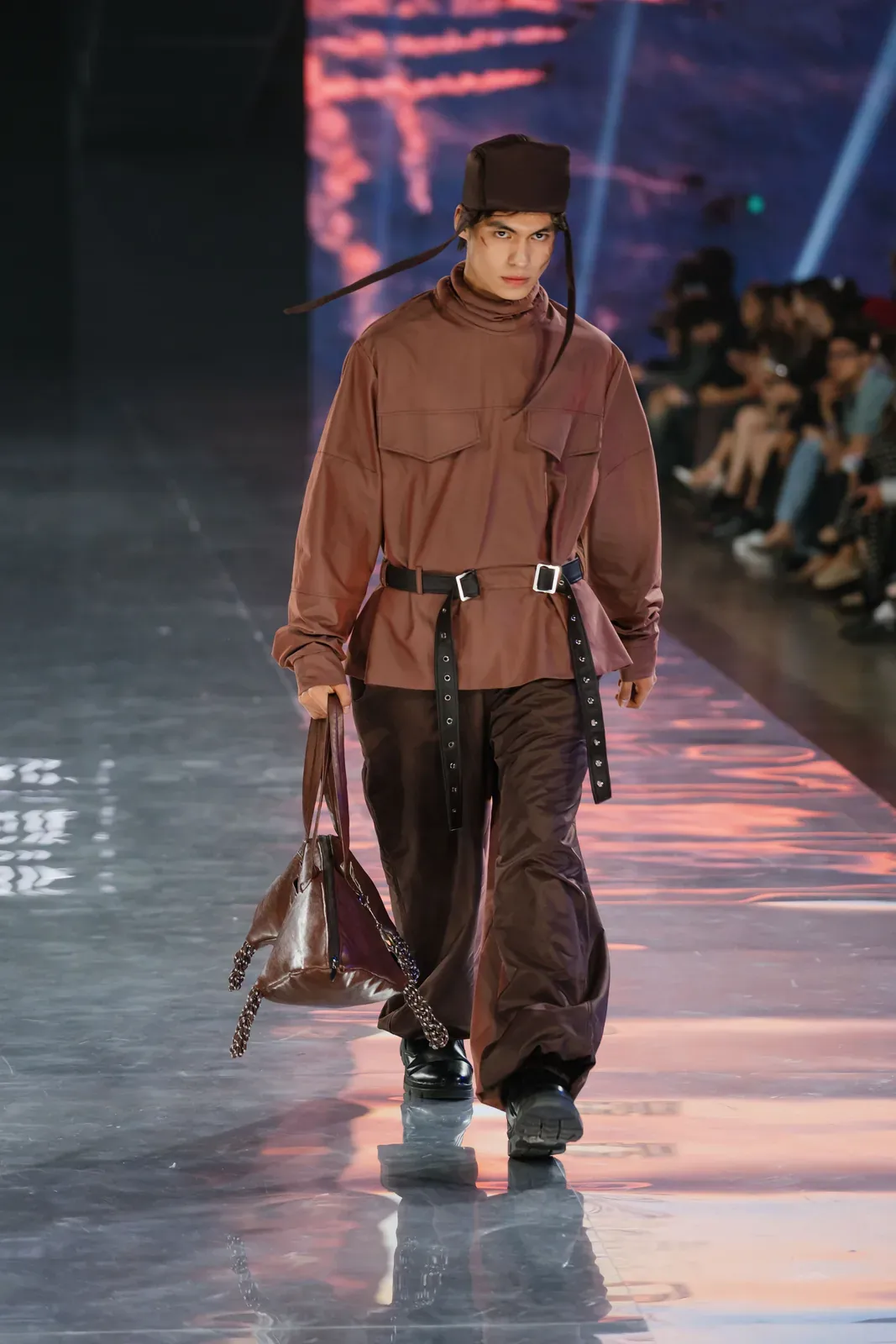
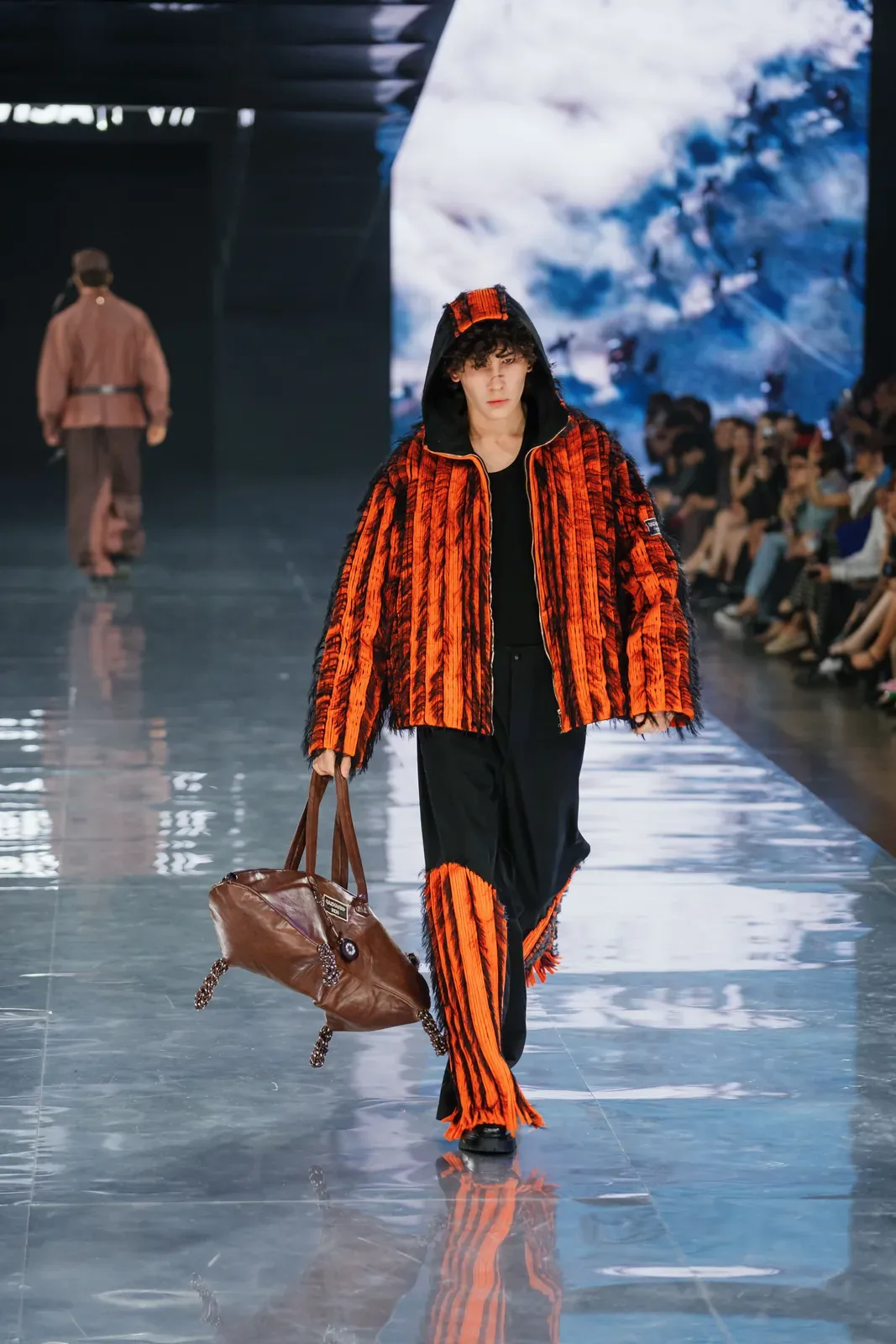
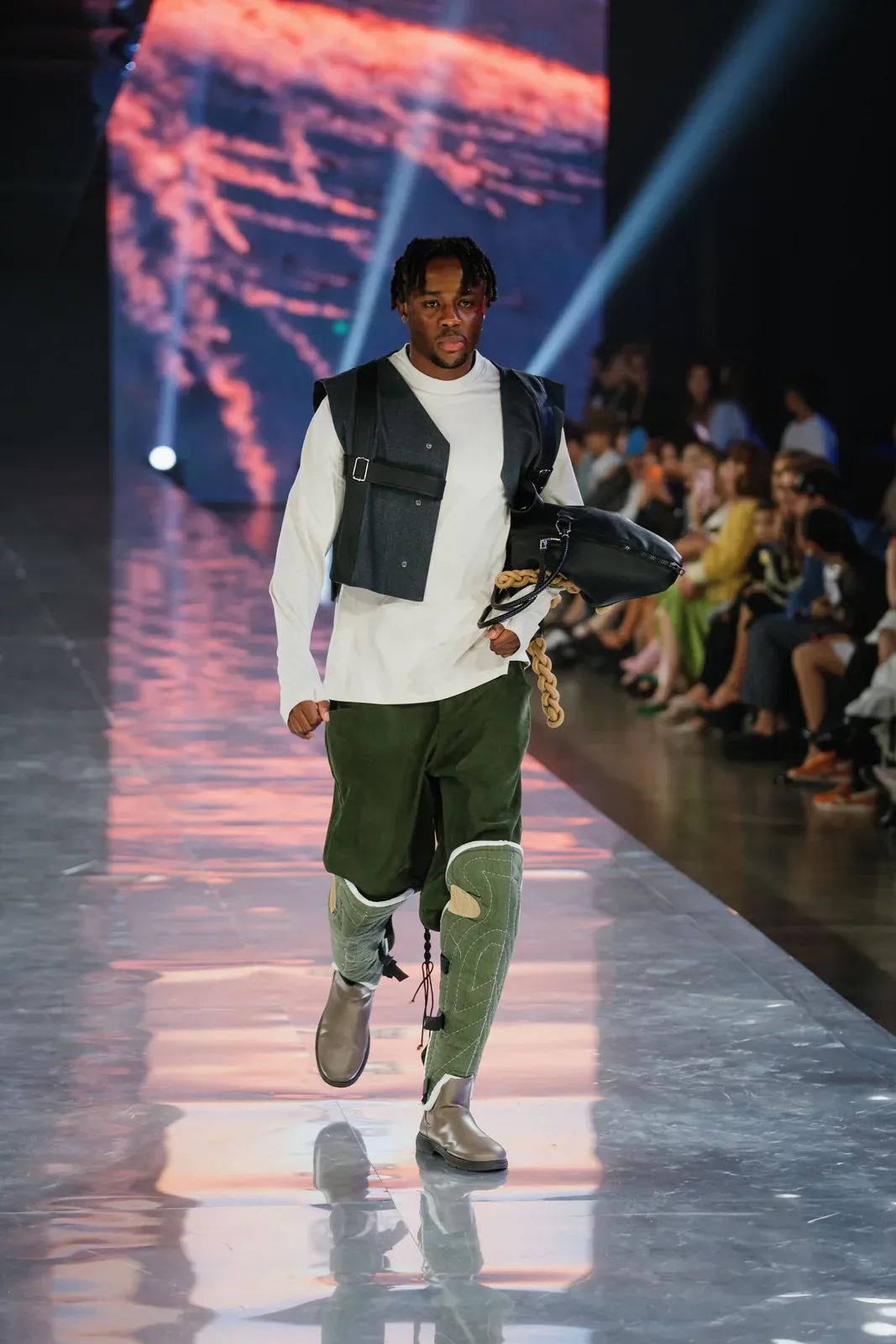
A finalist of the latest edition of the Next Designer Award, this contest seems to be the gift that keeps on giving. We discovered Gazhaiyip, the young brand founded by Akbota Kasymbek, who presented a deeply compelling staging that, more than a fashion show, felt like a theatre play. Named Kökpar after the traditional sport where horseback riders divided into two teams toss and fight for a goat carcass that they must take to the other end of the field, the models, or, better said, players on the show did their acting part in battling and trying to take from each other the goat-like bag that represented the final prize.
“Offering a contemporary interpretation of the national game beyond folkloric clichés", the brand designer took the competitive, strong and intimidating spirit, visuals, movements and actions involved in this practice and transformed them into codes that work well in the everyday environment, one where — in a less violent but still raw and sometimes cruel way — we fight for our lives. Keeping some recognisable and symbolic parts of the traditional attire, like the furs, the leather, the earthy tones and the worn-out appearance, but placing them in modern silhouettes that go from streetwear-inspired pieces to more formal coats, the pieces stood out as much as the powerful runway.
Maison ARTC
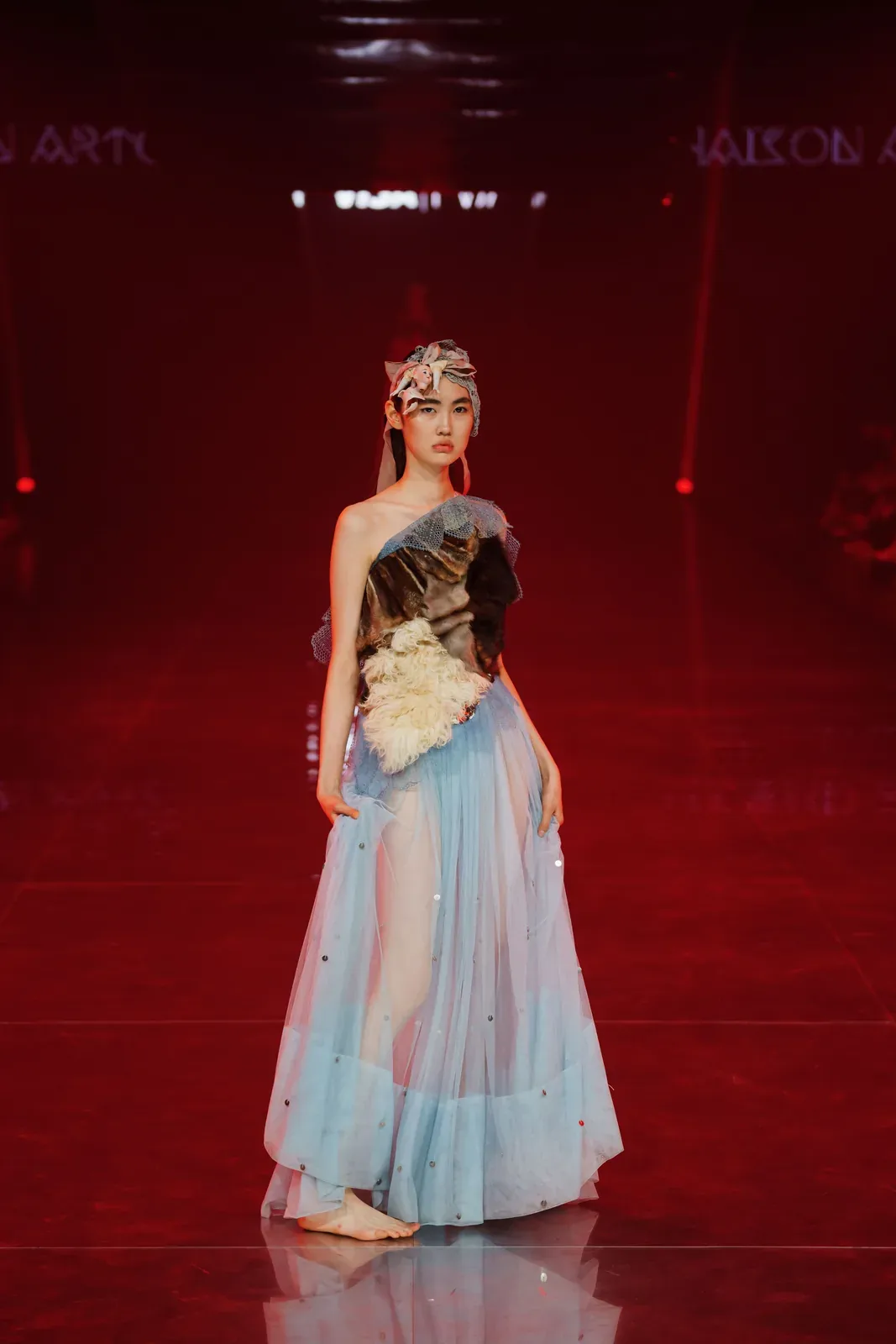
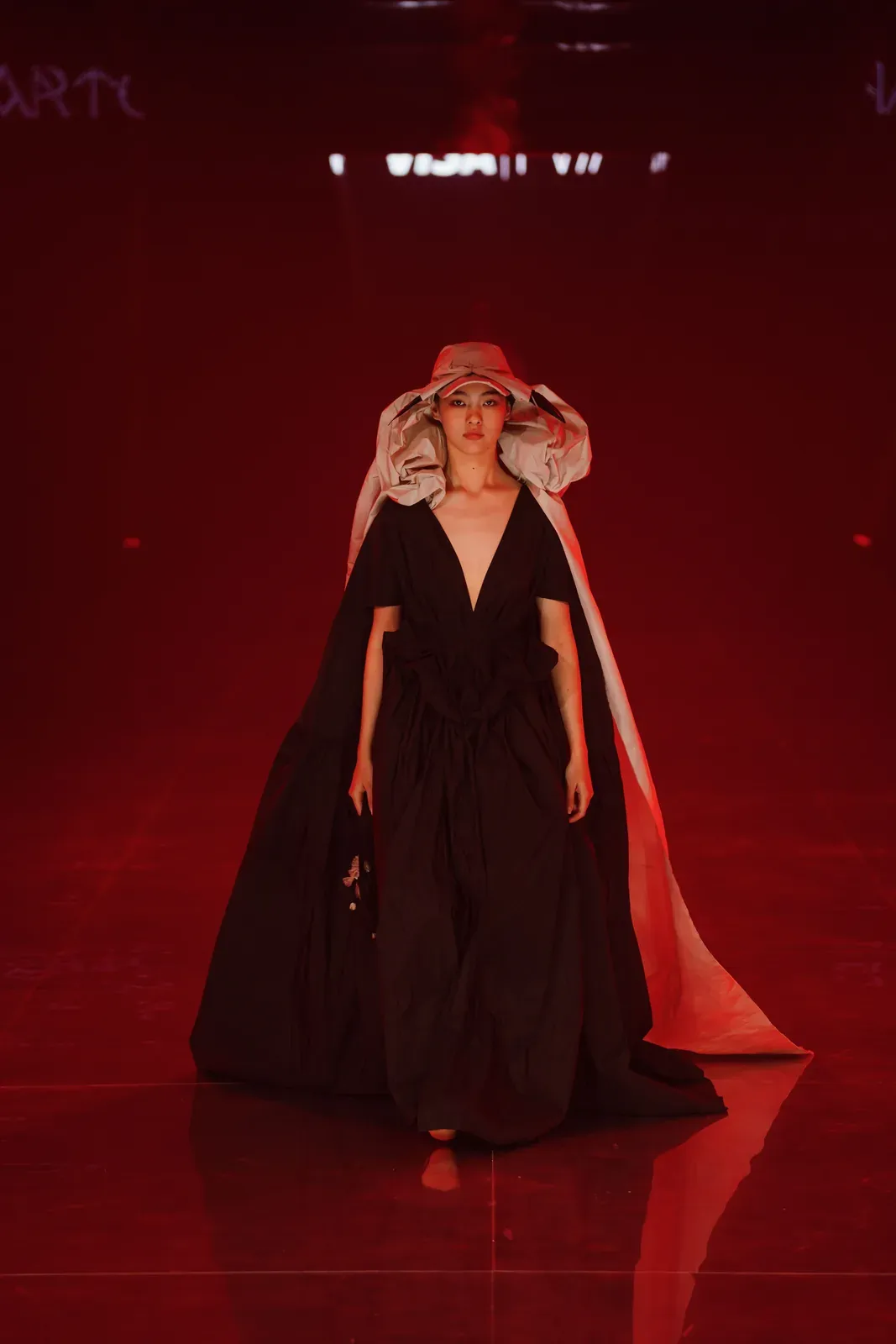
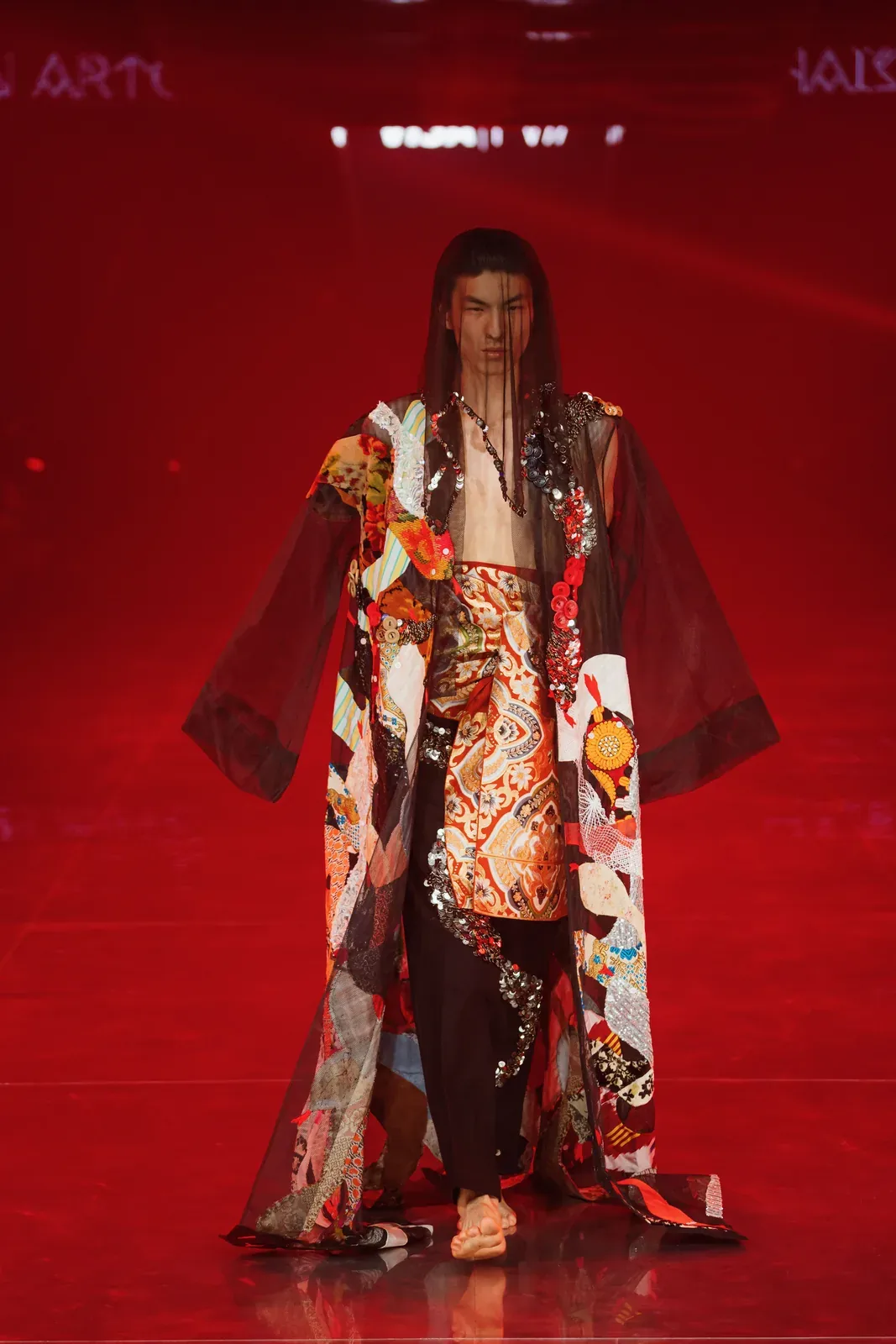
Proof of VFWA’s commitment to creating connections outside their borders and letting stories from all over the world be told on Kazakh runways, the Moroccan brand conceived by Artsi Ifrach presented a collection that fit the context and the place incredibly well. Being a brand deeply rooted in culture, where each one of the looks and garments contains the symbolism, the colours and the codes that reflect Ifrach’s heritage and influences in a way that resembles a one-of-a-kind art piece, it makes sense why a country and a fashion scene where tradition is also highly valued would want to have his creations on the runway.
In a public talk at Esentai Mall during the first day of the show, Artsi talked about how places like Morocco and Kazakhstan share more commonalities than one may think. Both countries that historically have been under some sort of external power that has represented a burden for the free expression of their own history, culture and stories and that, by cause and consequence, have resorted to artistic expression to preserve, highlight and celebrate their legacy have huge relevance in today's creative scene. The importance of never ceasing to carry their flag proudly was made evident in the talk by Arti's words and in the show with a complex and well-crafted blend of material, headpieces and general intricacy that protects the culture and keeps spreading it.
Manuk Aleksanyan
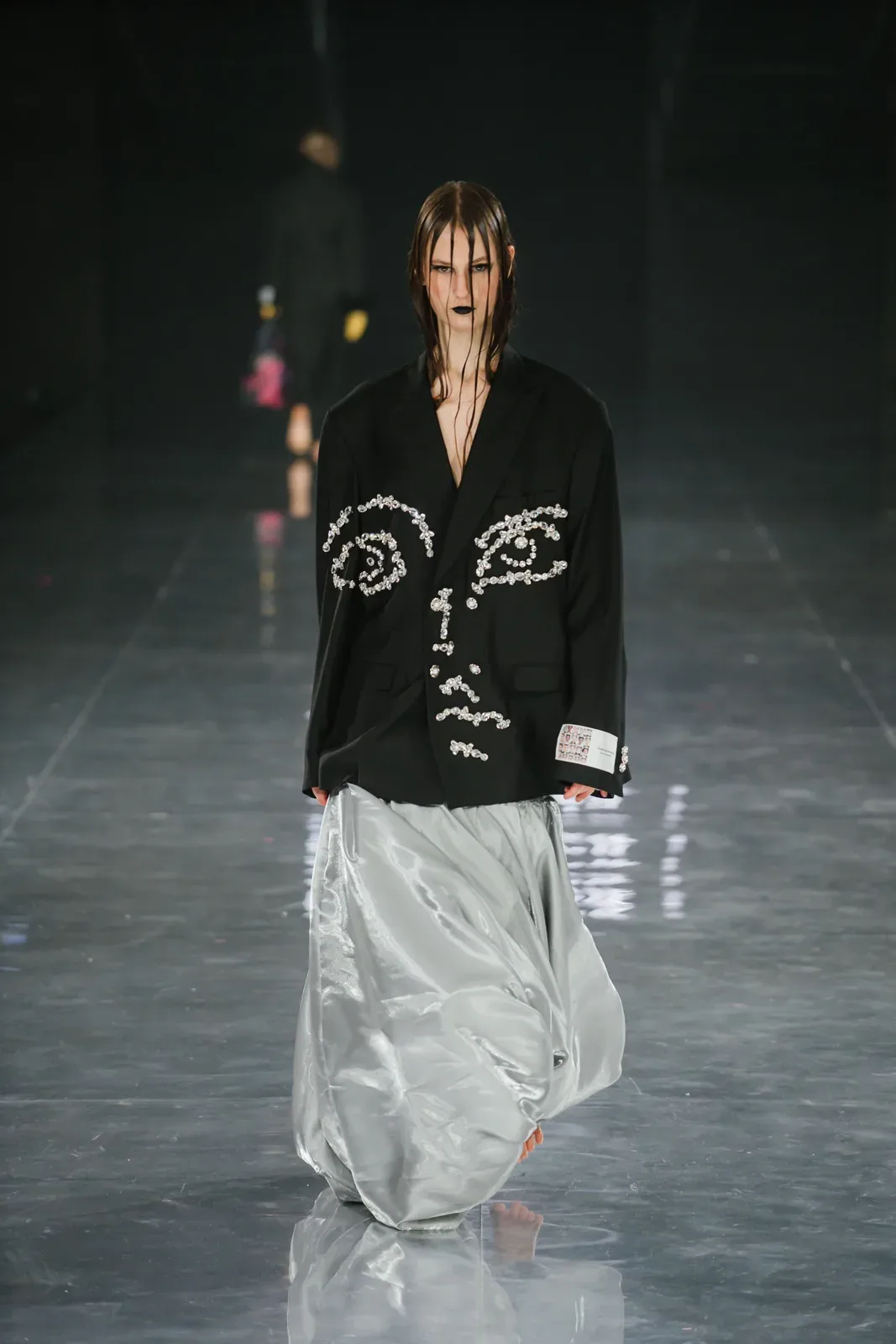
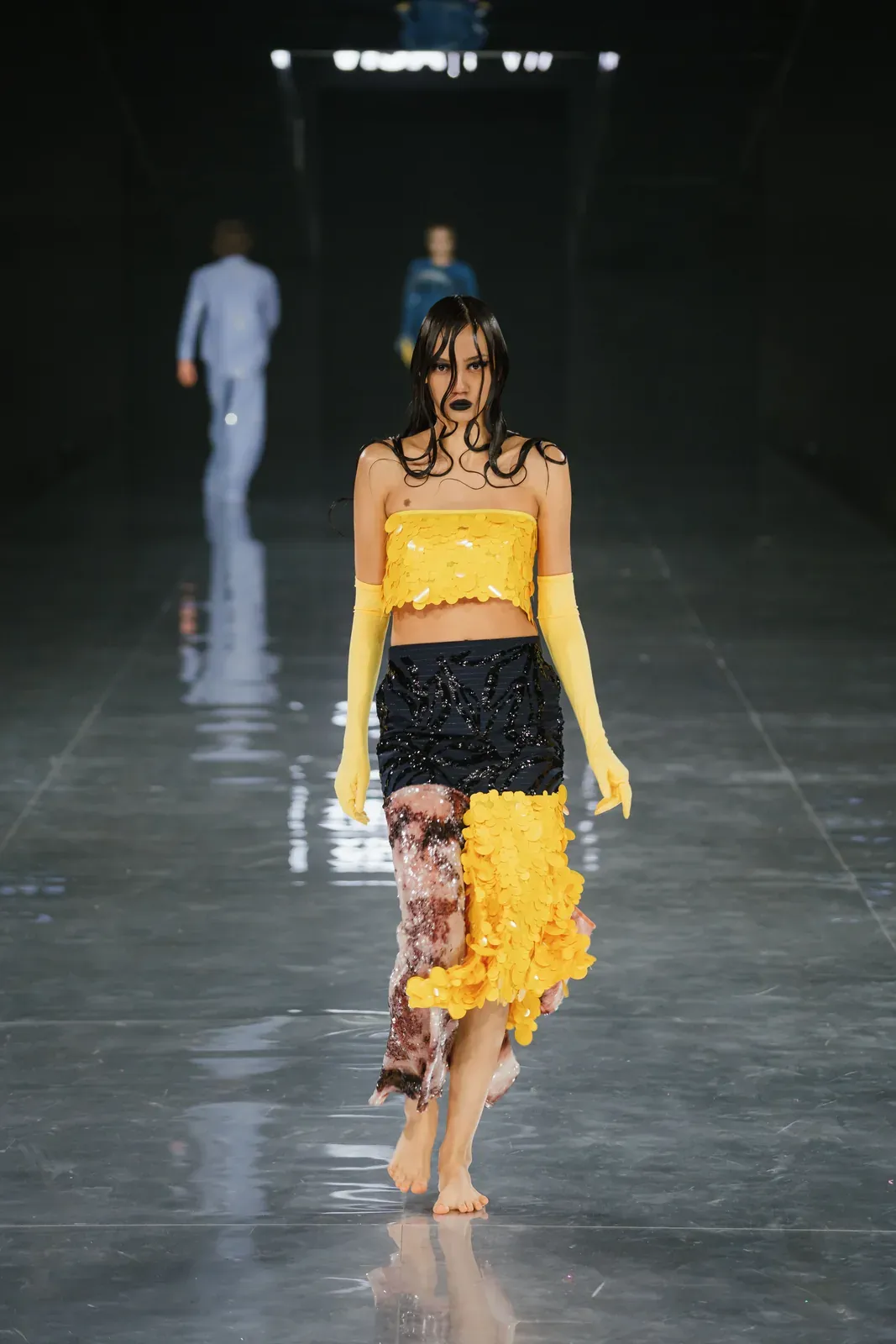
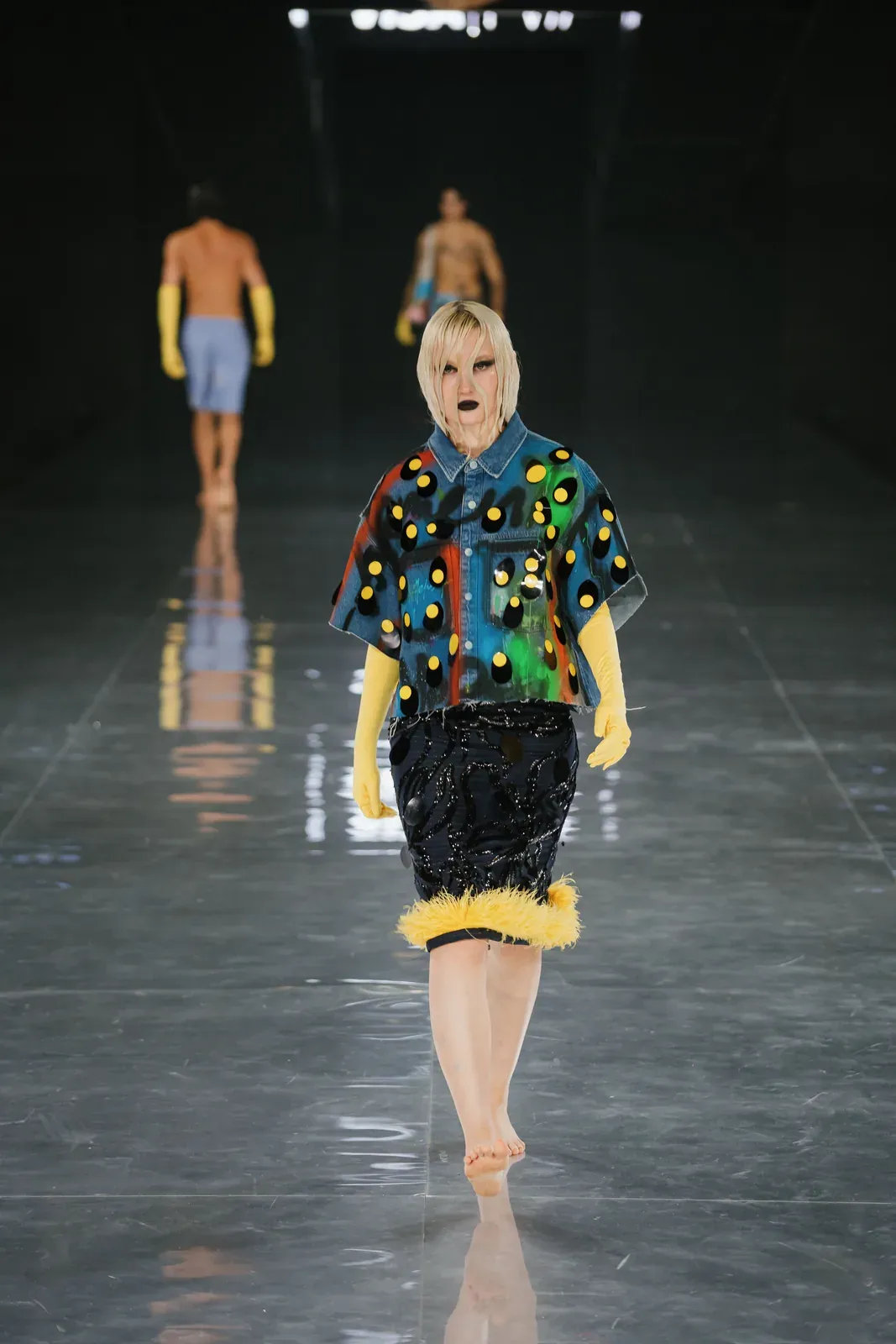
We are no strangers to Manuk's work. We witnessed the presentation of his latest collection during the last edition of Yerevan Fashion Week, and just a year ago in Almaty as well, we highlighted his collection as our favourite of the edition. His new proposal is once again worth the highlight. Deepening the fashion exchange between Armenia and Kazakhstan, Manuk's collection maintains the artistic and spontaneous feeling we have known him for and becomes even bolder with unexpected fabric combinations, manipulations that make the garments extend far beyond the body and hand-painted faces and motifs that turn the clothes into canvases of self-expression that are completely personal and unrepeatable.
The collection circles around the concept of the placebo effect, where we attribute to medicine or external factors the idea of us feeling better or changing our perception of things when, in reality, our head is responsible for doing the job. In the same way, fashion quietly and humbly alters the way we present ourselves, the way we behave and the way other people see and perceive us. Clothes become the physical representation of our inner world and a way to make our thoughts and unconscious tangible, and Manuk's use of colour, prints, sequins and drawings all talk about an inner freedom that has finally been able to come out.
ZhSaken
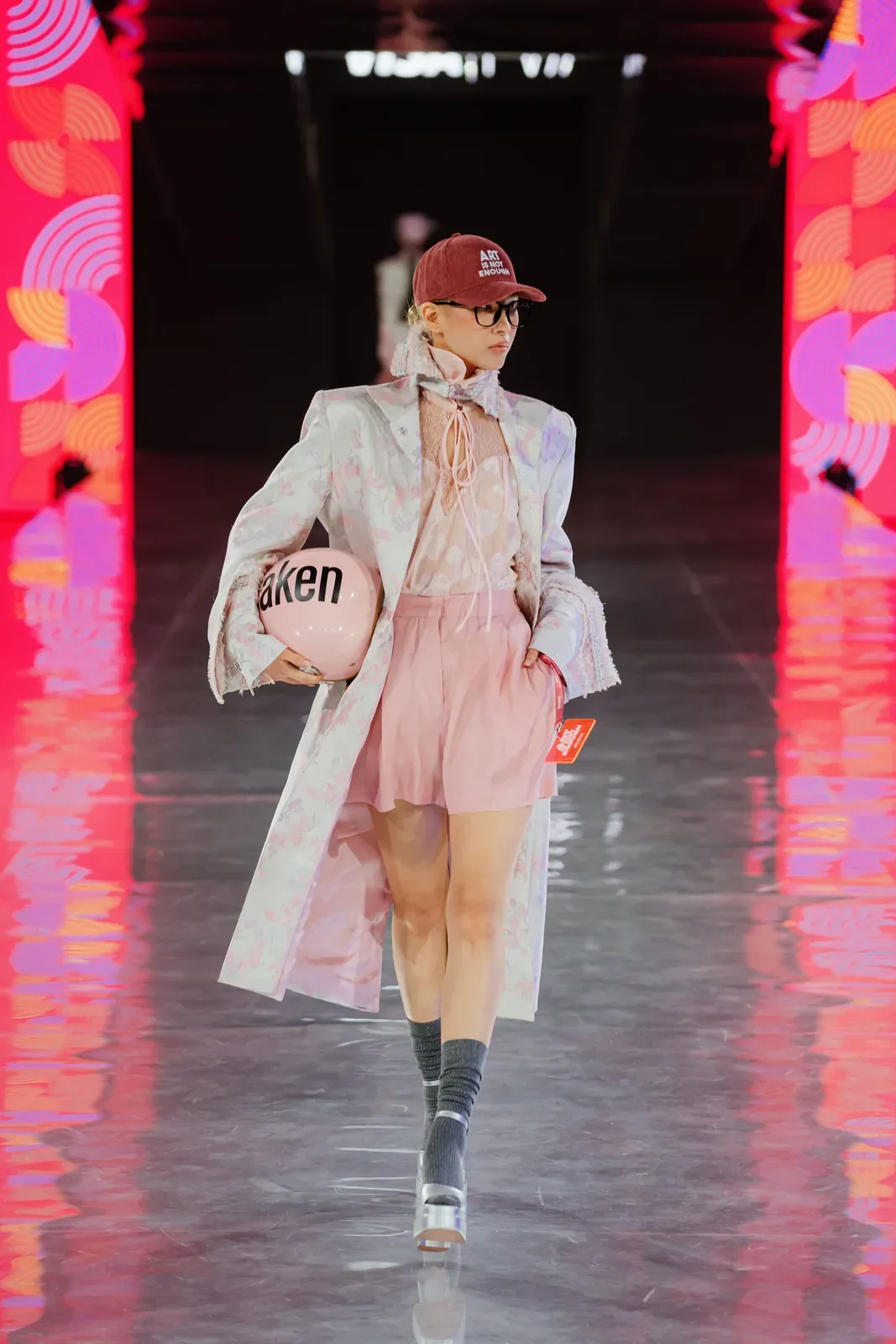
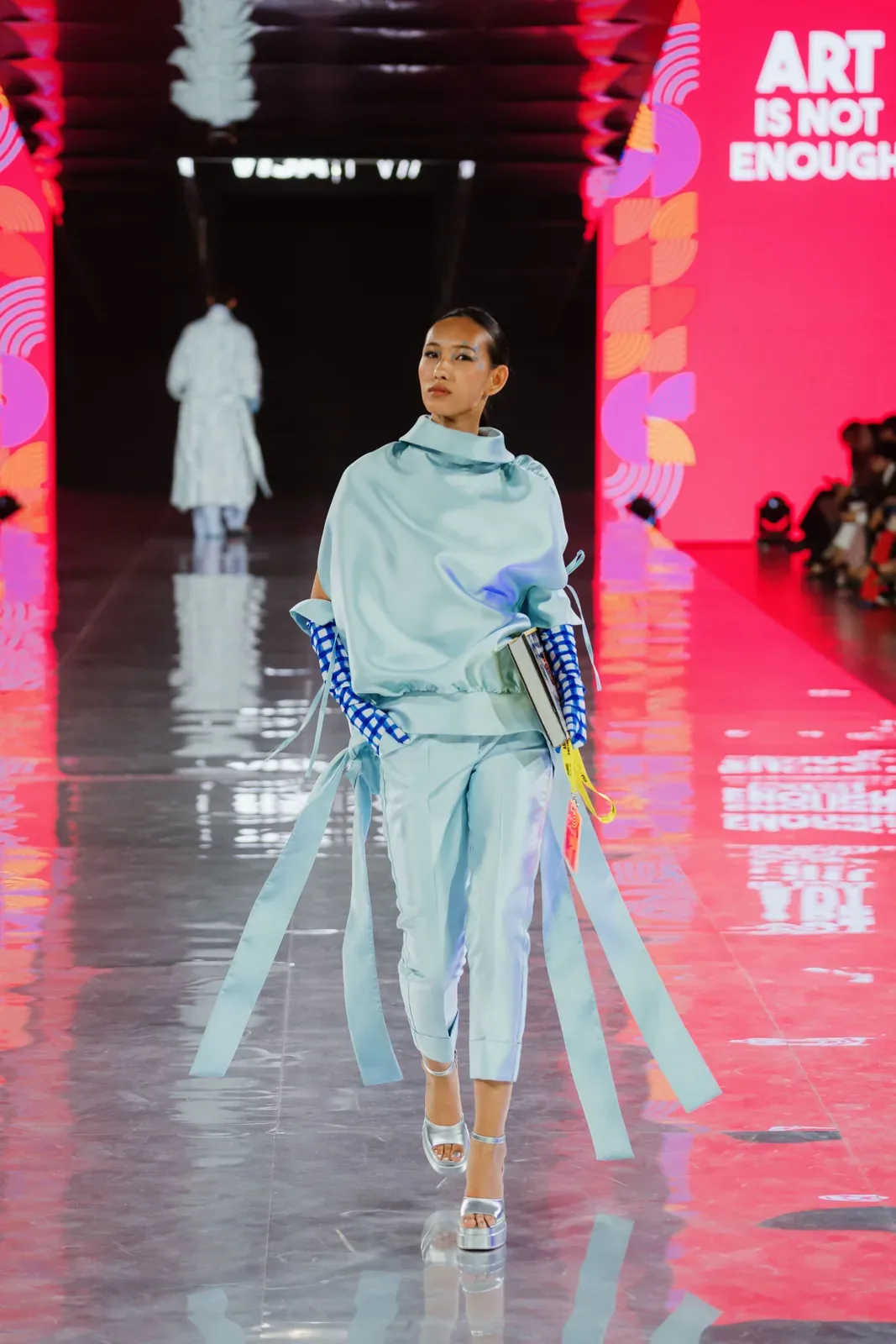
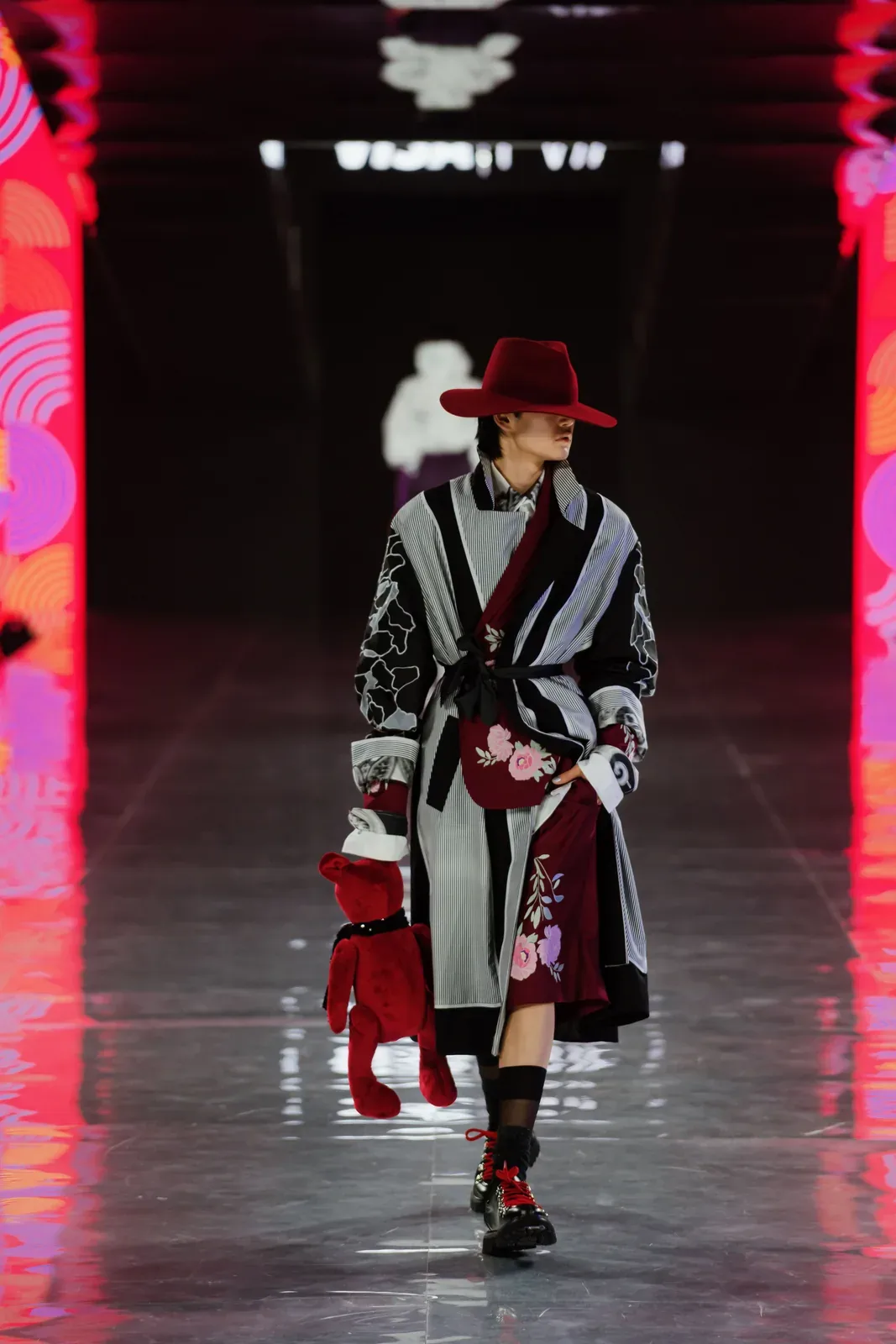
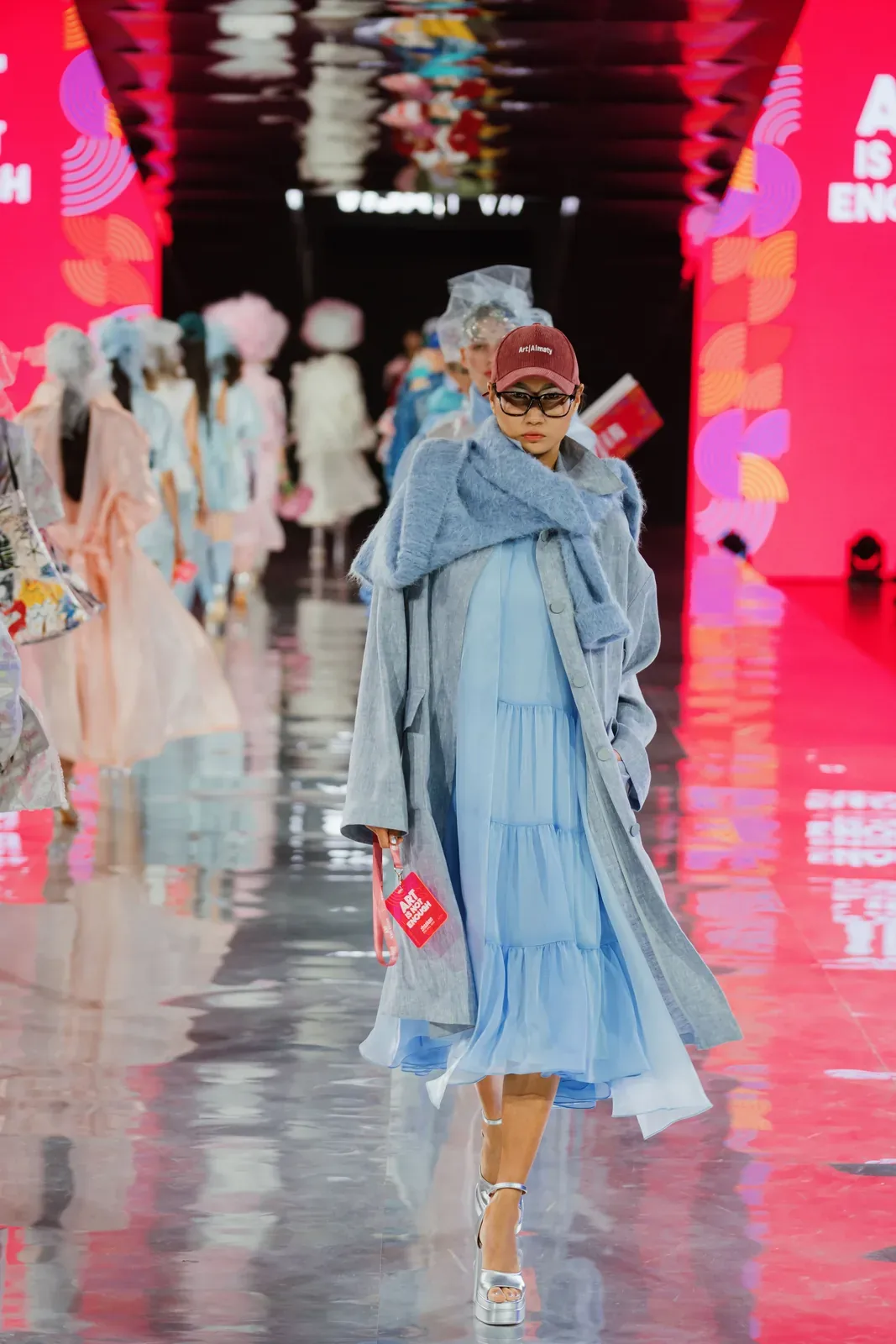
A synonym not only of the end of the fashion week but also of spectacle, party and high-quality pieces, Saken Zhaksybaev always knows how to close each edition of the event in the best way. This time, the designer is presenting a much brighter collection than usual, highlighting fun and casual pastel and bold colours instead of his usual and very elegant blacks, reds and whites. This represents a new mentality, a way of shaking off the past, the dark and the sombre and giving space to a much more relaxed way of seeing life, aligning to the desire of presenting a new side to himself, one that allows him to bring and share joy through his brand.
With Art Is Not Enough, we get immersed into a universe that seems to entail the wide spectrum of figures and archetypes involved in the artistic world. From the sleep-deprived creative director, the hipster museum visitors, the highbrow critics, the eccentric artist and the loud protestors, the common garments we attribute to each of these characters in our heads were presented in the brand's style. Always including elements that speak about Kazakh culture, from silhouettes to embroidery and in a wide variety of garment typologies that have in common the care and precision with which they are made, this collection allowed us to discover a new side of a brand that understands its identity and that has no issue giving it a twist. It will always be well received.