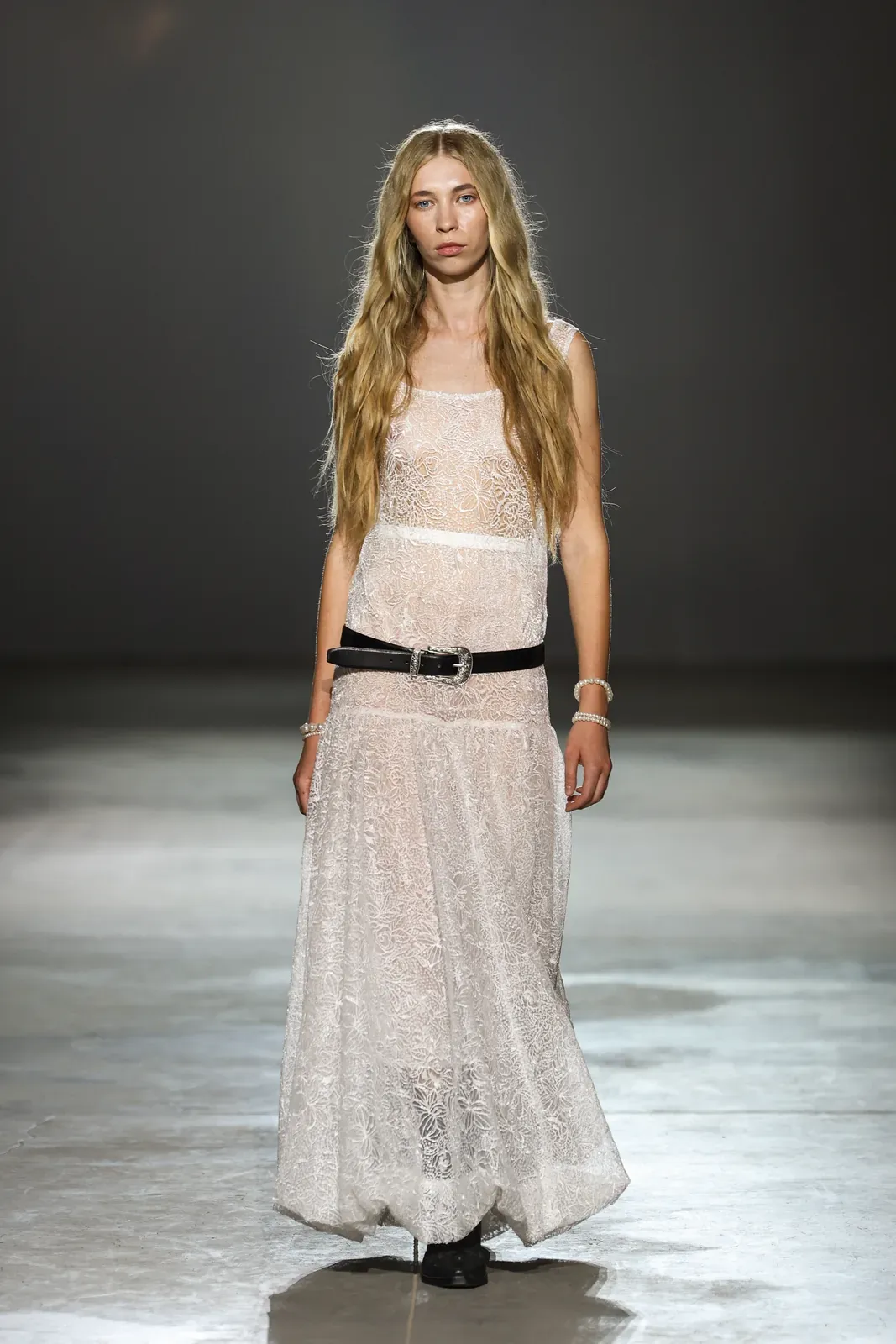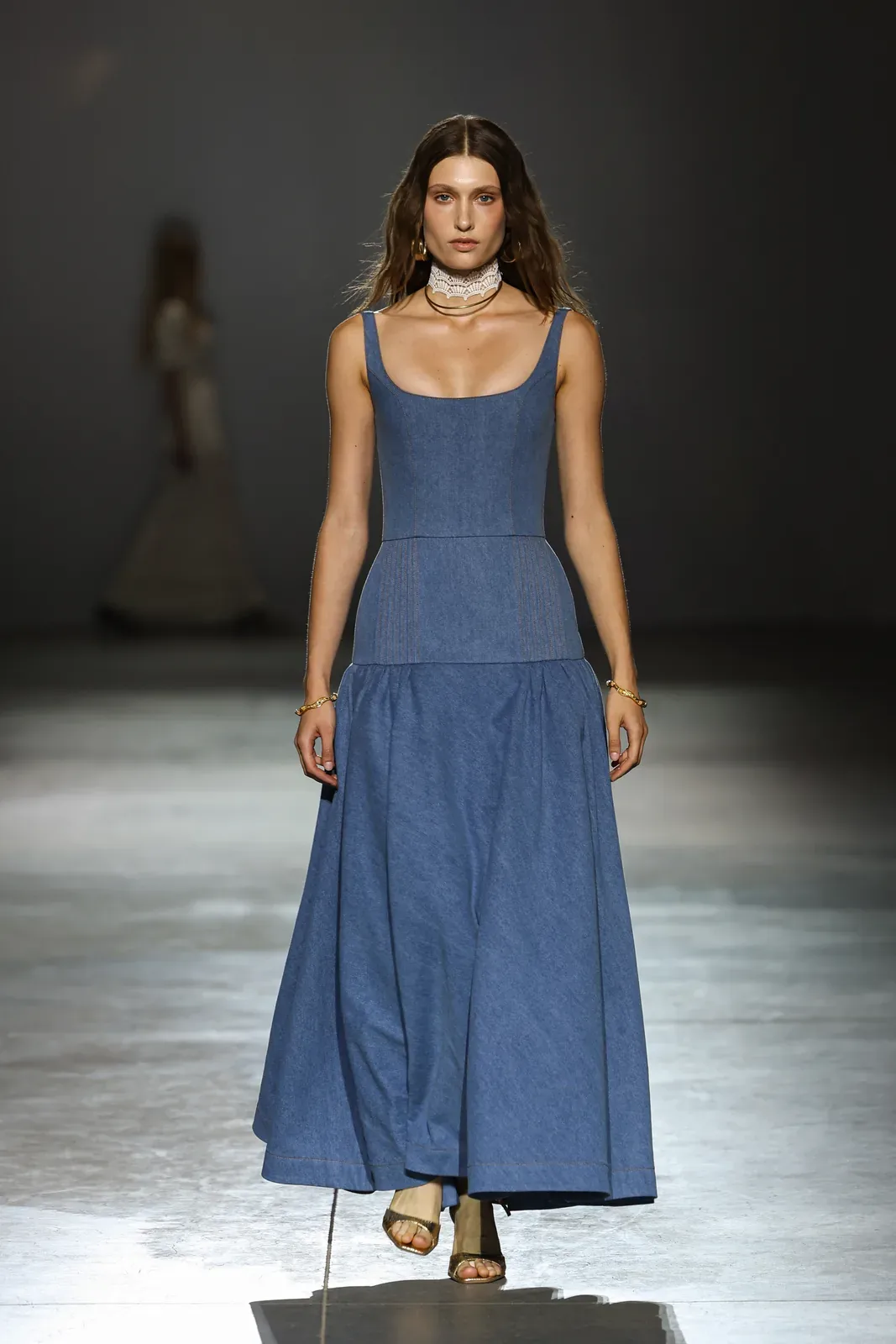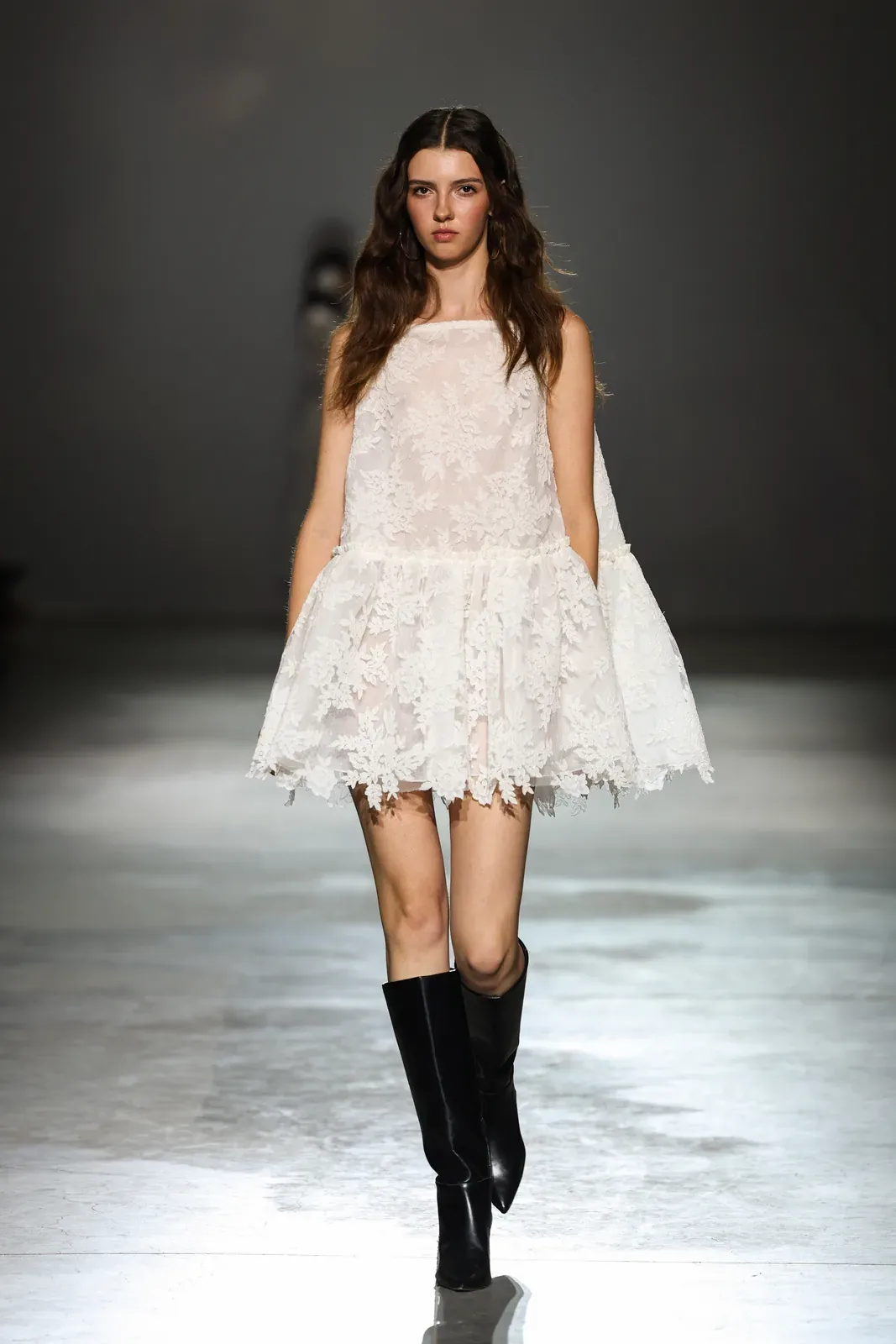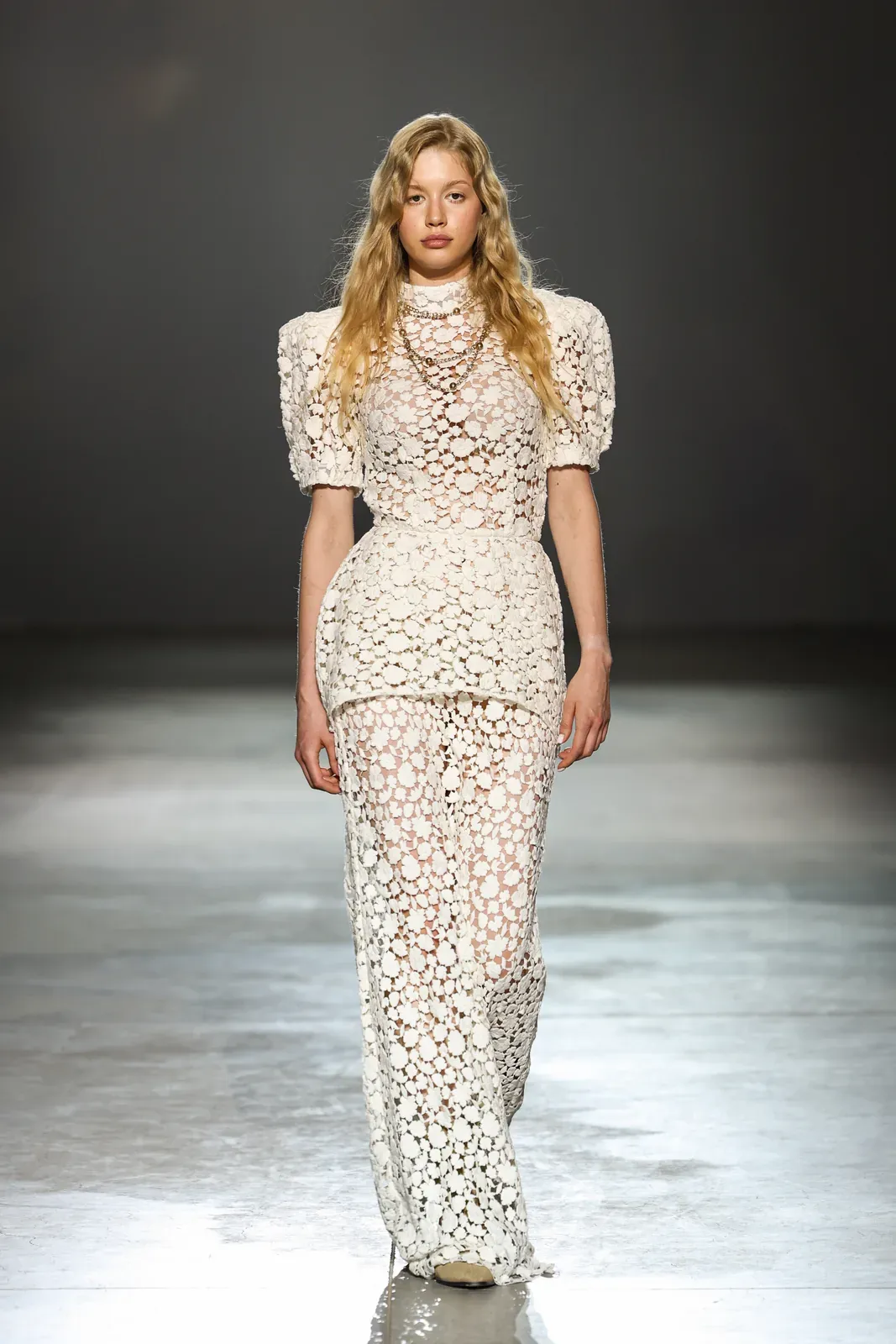
It’s most certain that fashion is a reflection of our times, but a lot of times, some designers feel too disconnected from reality. That doesn’t happen at Ukrainian Fashion Week. Its 59th season took place in Kyiv from 2 to 6 September, bringing together fifty brands after an exhausting winter and a summer of relentless Russian attacks. The fact that it happened is significant; the fact that the clothes refuse to be reduced to evidence of resilience is even more so.
This season’s programme focused on craft and its contemporary reinterpretation. That premise can sound reassuringly familiar until one considers what making by hand means when workshops, homes and routines remain vulnerable. Here, technique becomes a way of carrying knowledge forward, repairing what has been damaged and insisting on a future in which those skills still matter.
As always, we have selected our favourite collections. Together, they resist the idea that Ukrainian fashion must speak with one voice. Viktoranisimov confronts the war through the clothes civilians wear when they are forced into the street; Syndicate studies how memory changes before it disappears. Guranda turns to a Carpathian spirit who cannot be fully seen, while TONiA revisits the Belle Époque to trace women’s emancipation through tailoring. J’Amemme, meanwhile, finds freedom in contradiction, colour and the movement of fabric around the body.
Their subjects differ, but each collection asks what remains when familiar structures become unstable. Sometimes the answer is an archive, a myth or a historical silhouette. Sometimes it’s a pyjama jacket, a hand-worked ruffle or the coat one managed to grab. None offers escape in the simple sense. Instead, these designers show that fantasy, memory, beauty and utility can all be ways of staying present.
J’Amemme
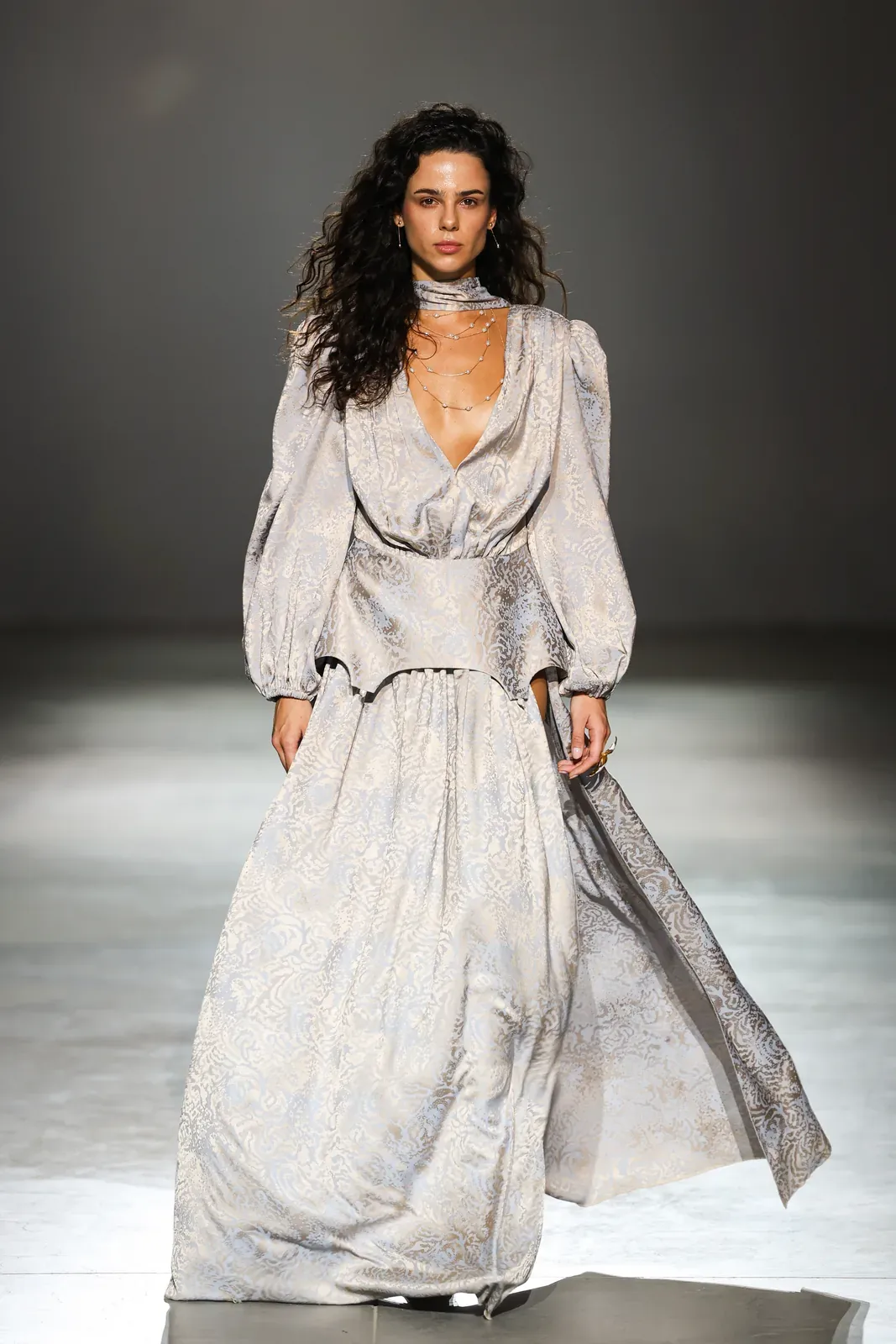
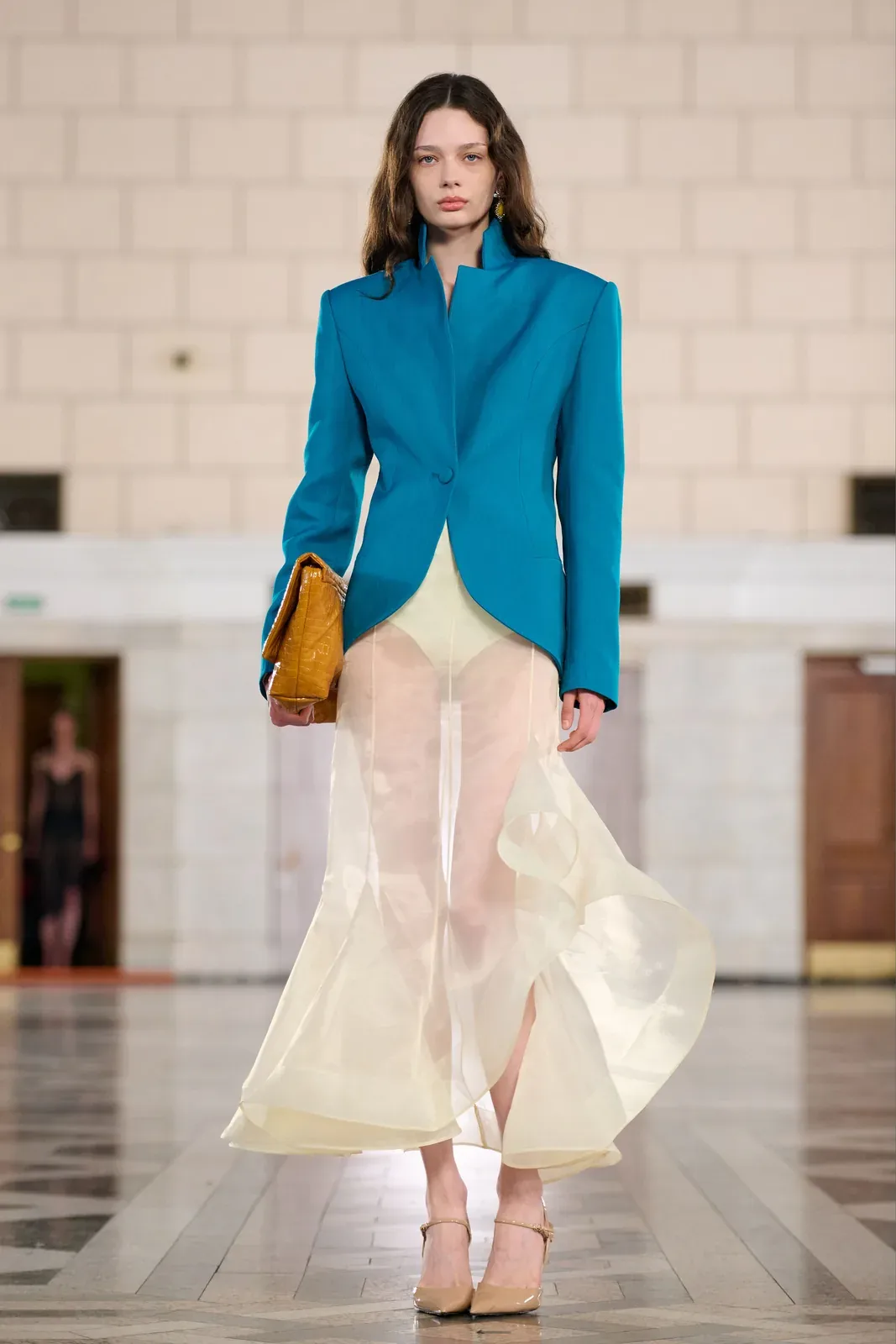
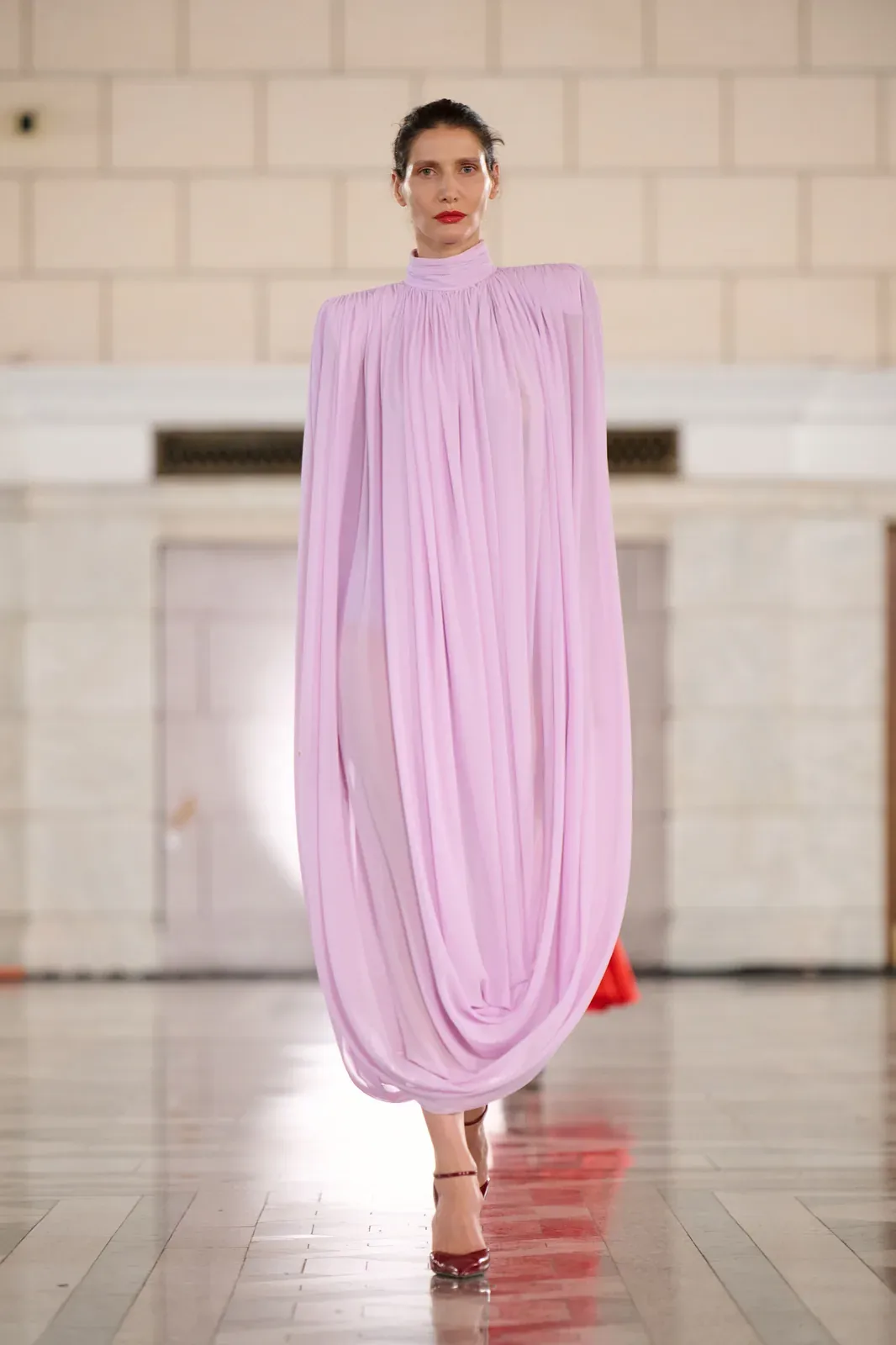
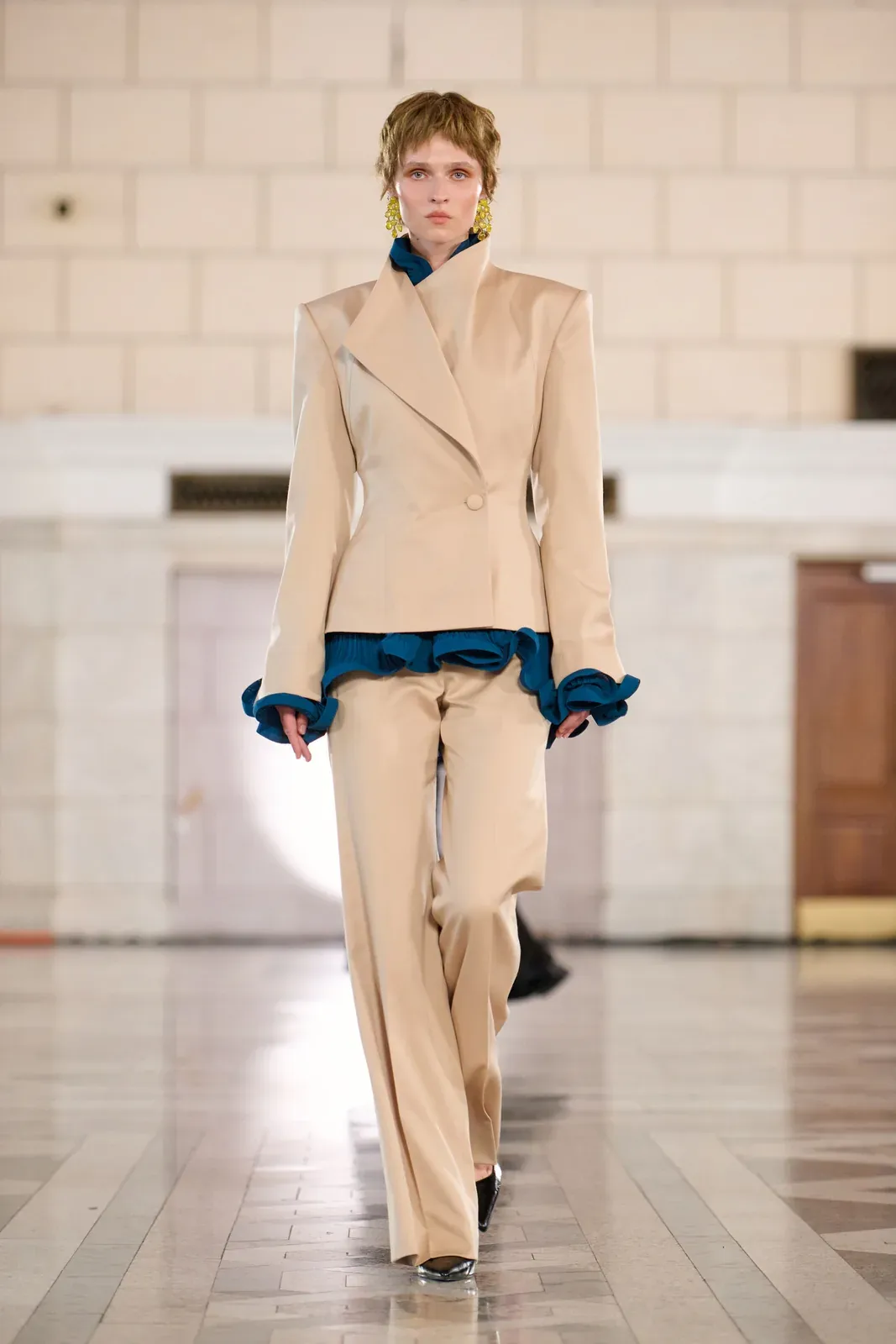
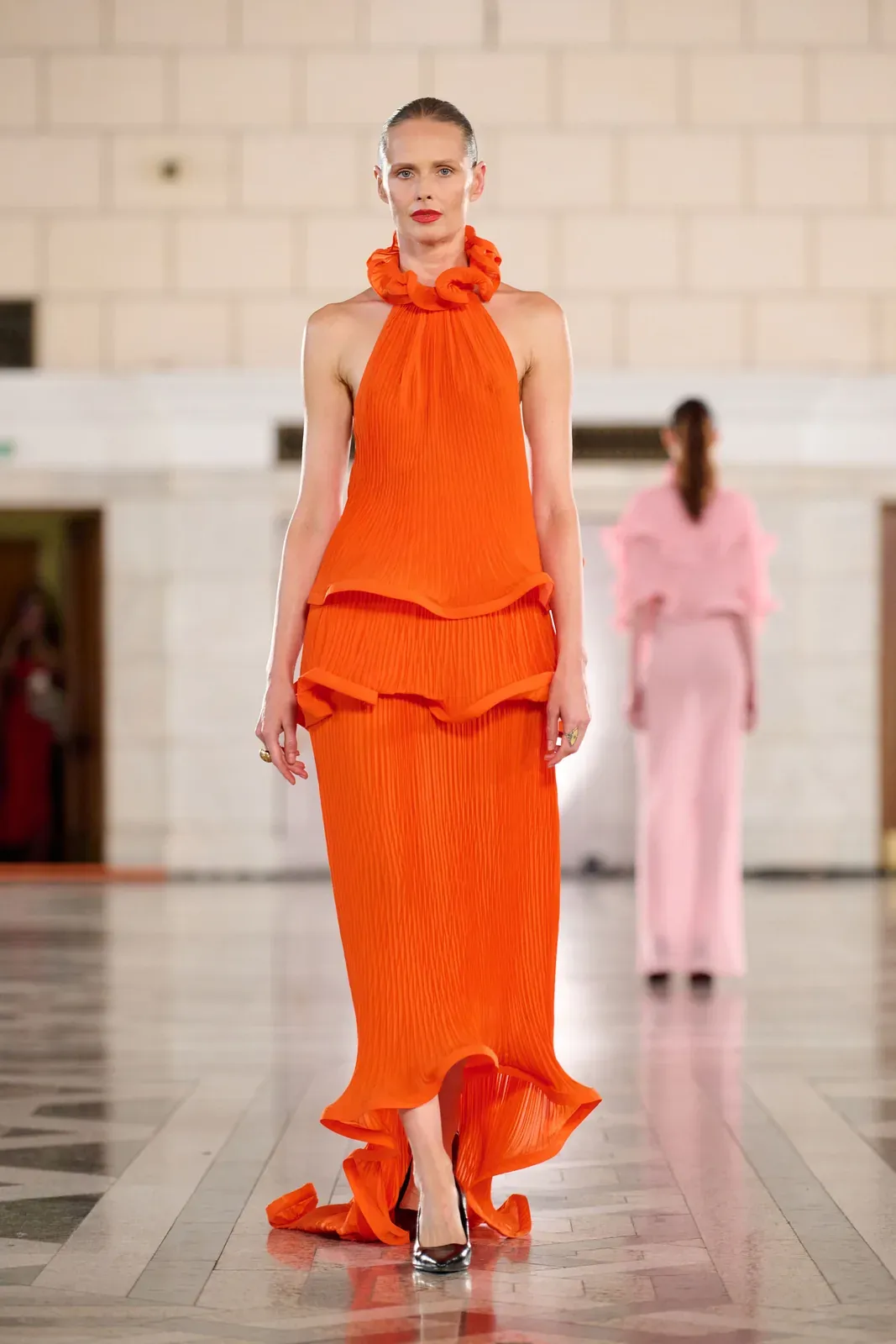
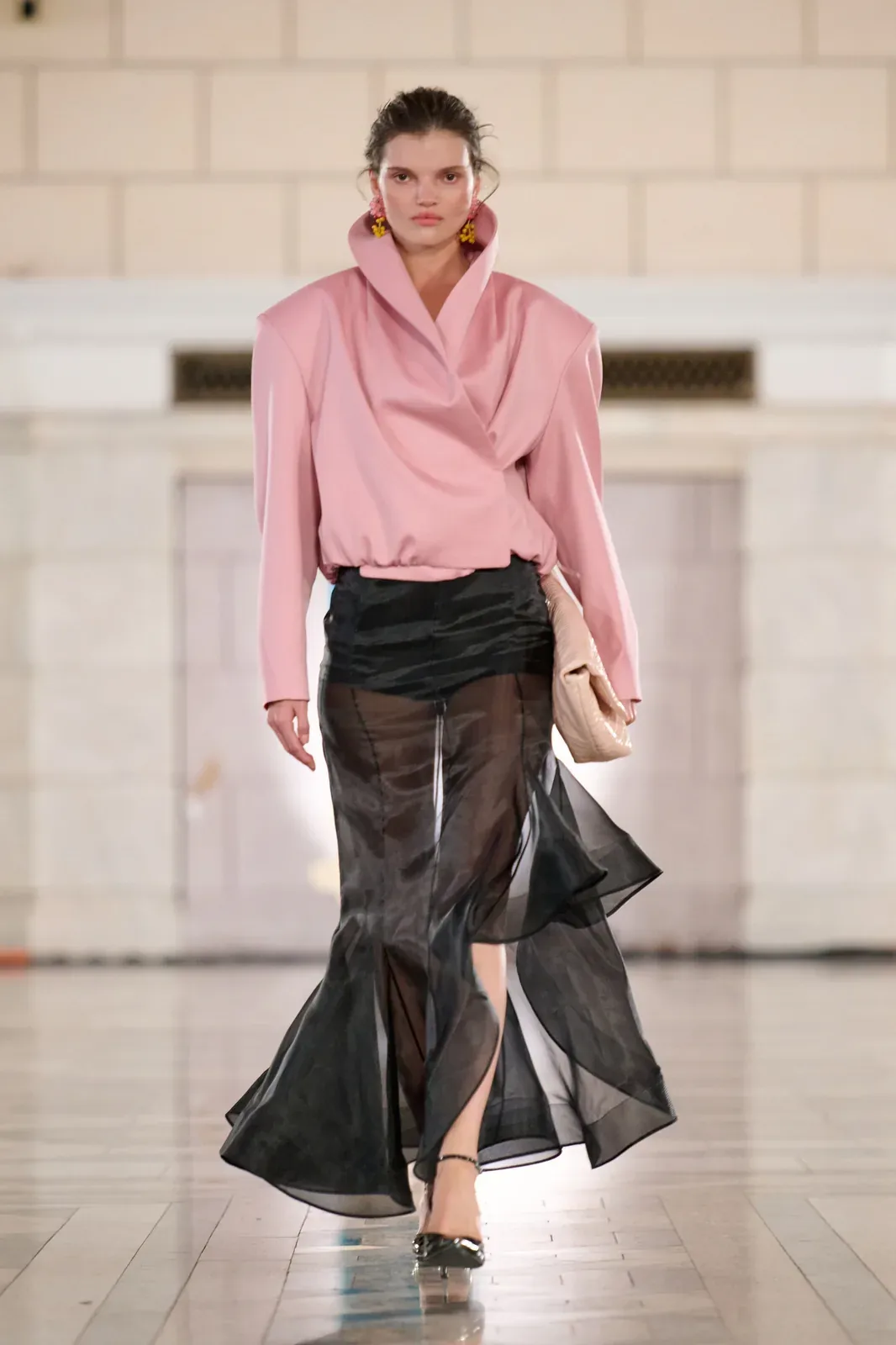
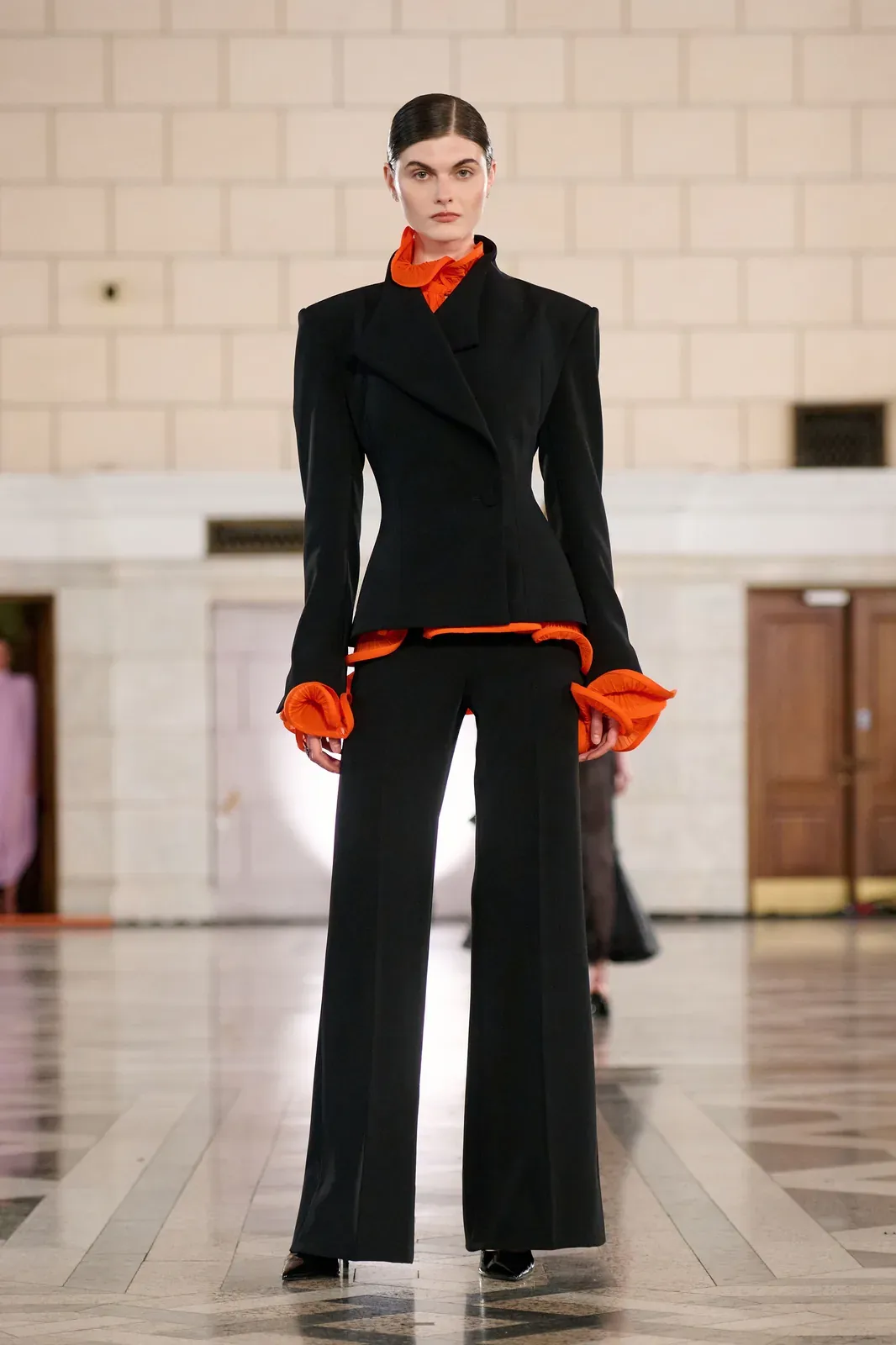
A railway station is built around departure, but J’Amemme used Kyiv Central Railway Station’s Red Hall to stage a collection about arriving at oneself. The Divine Feminine rejects femininity as a stable category or a single correct image. Yuliia Yarmoliuk’s woman can be tender and severe, covered and exposed, grounded and almost airborne. The point isn’t to resolve those contradictions but to dress them.
That idea lives most convincingly in the tension between control and release. Precisely cut blazers, fitted trousers and long column silhouettes establish a firm outline, then chiffon, satin and sheer layers loosen it. Cowl necklines fall away from the body; corseted gowns hold it close. The house’s wave-like ruffle appears across bralettes, tops and dresses, turning a decorative technique into a kind of kinetic architecture.
However, colour prevents the collection’s language of divinity from becoming overly solemn. Black and white sit beside petrol blue, aquamarine, lilac, butter yellow and soft lime, while flashes of red and dusty pink sharpen its sensuality. A turquoise satin bra worn with an asymmetric white skirt captures the proposition in miniature: lingerie, eveningwear and something far less classifiable at once.
The handmade pleating, draping and ruffles never read as craft displayed for its own sake. They make touch visible. In a season shaped by what can be preserved, J’Amemme’s answer is bodily and immediate: identity survives by retaining the freedom to move.
Syndicate
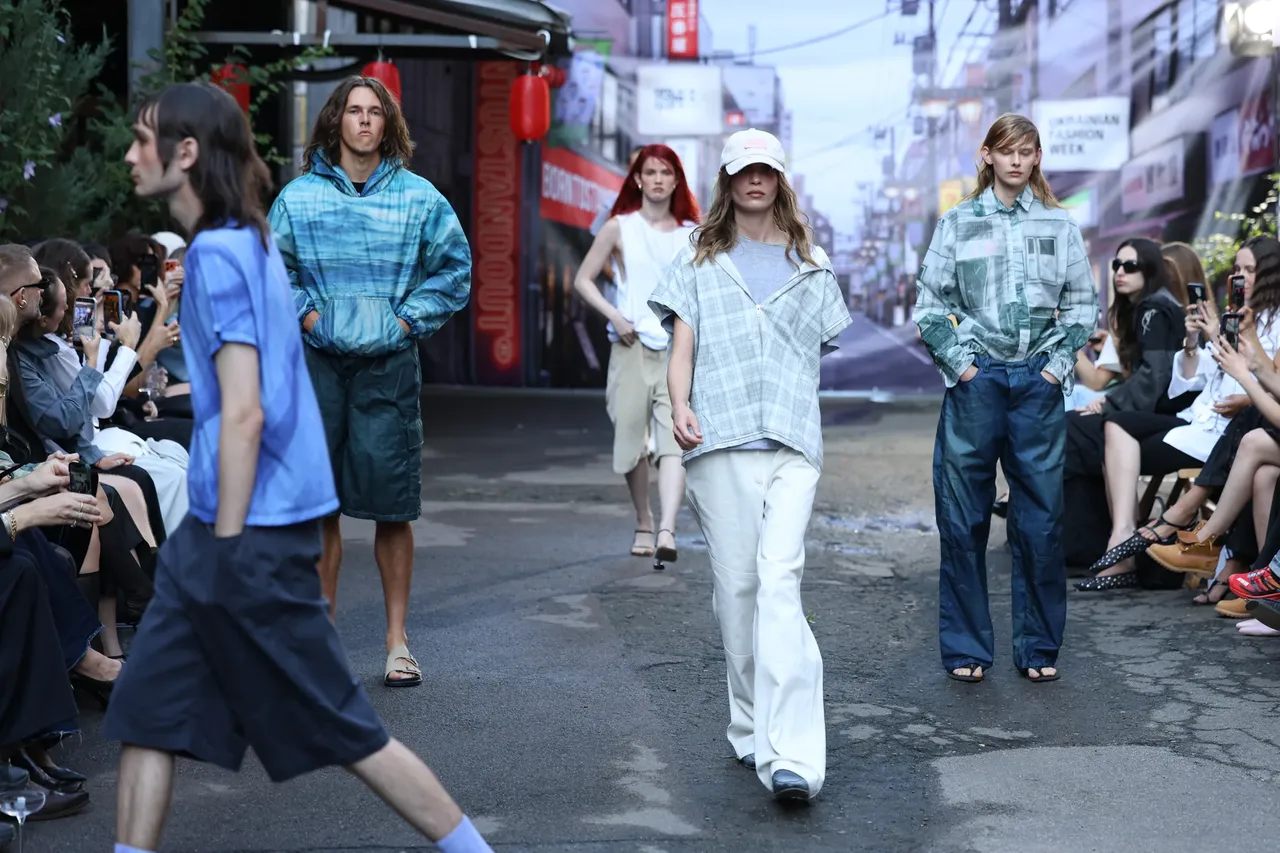
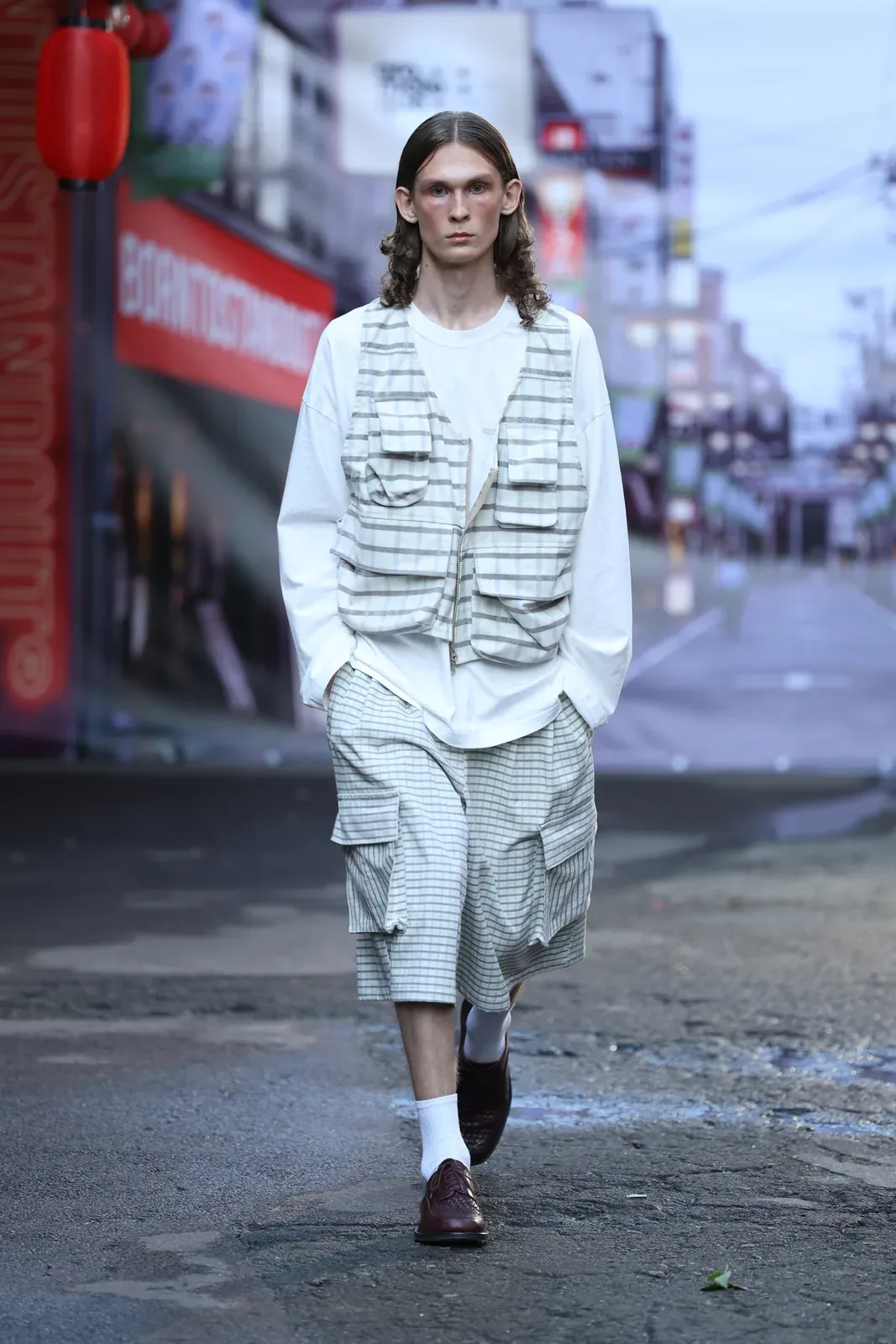
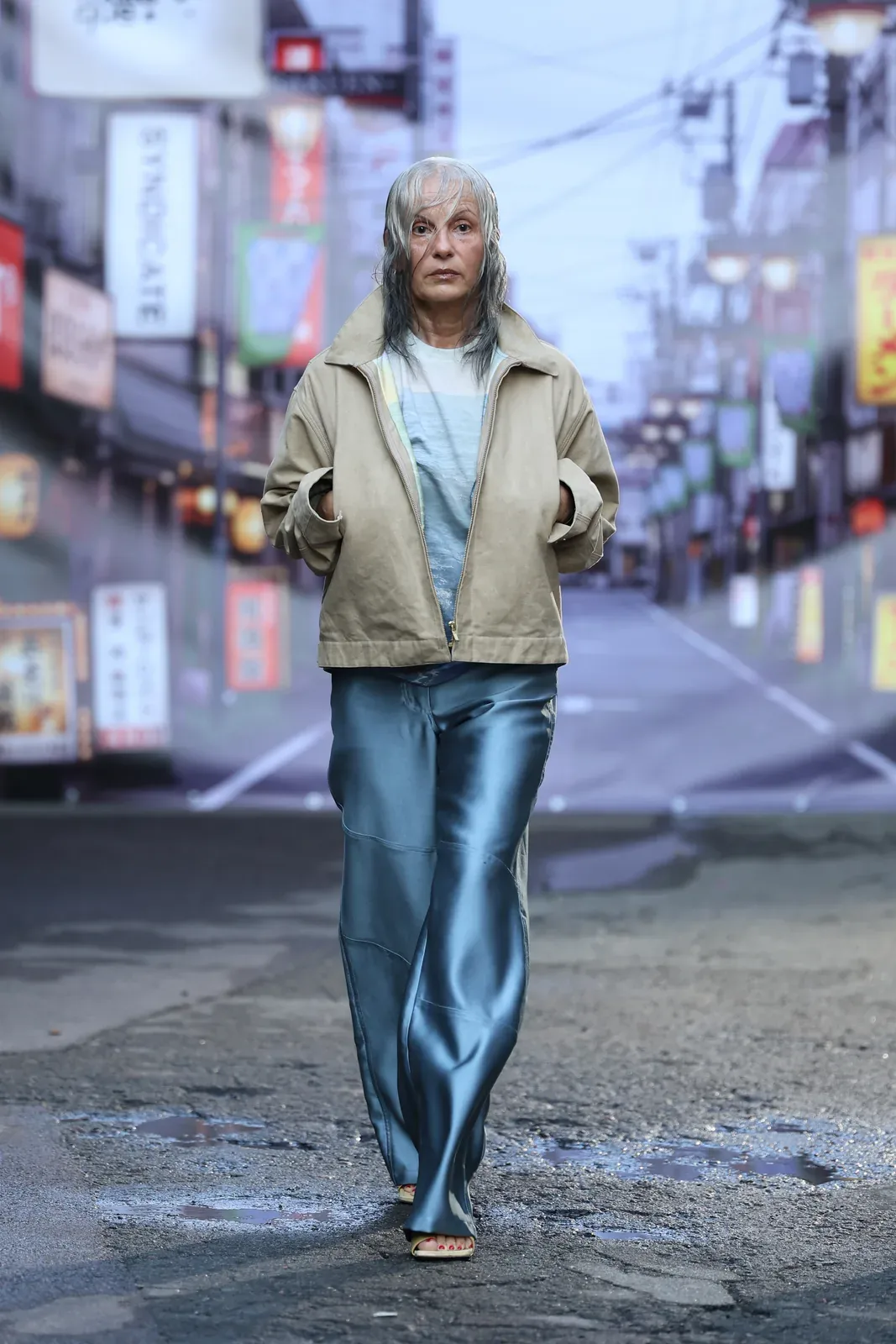
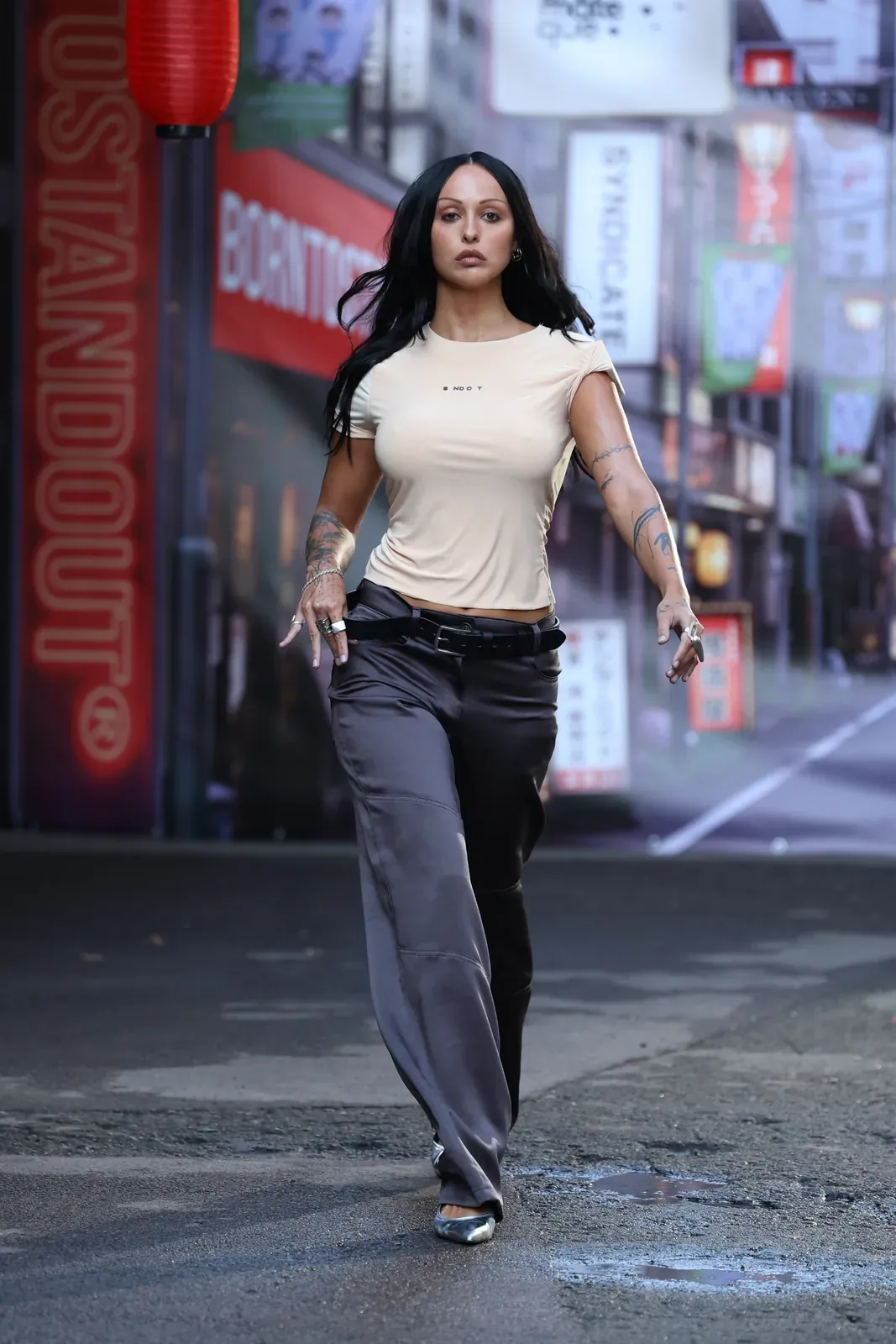
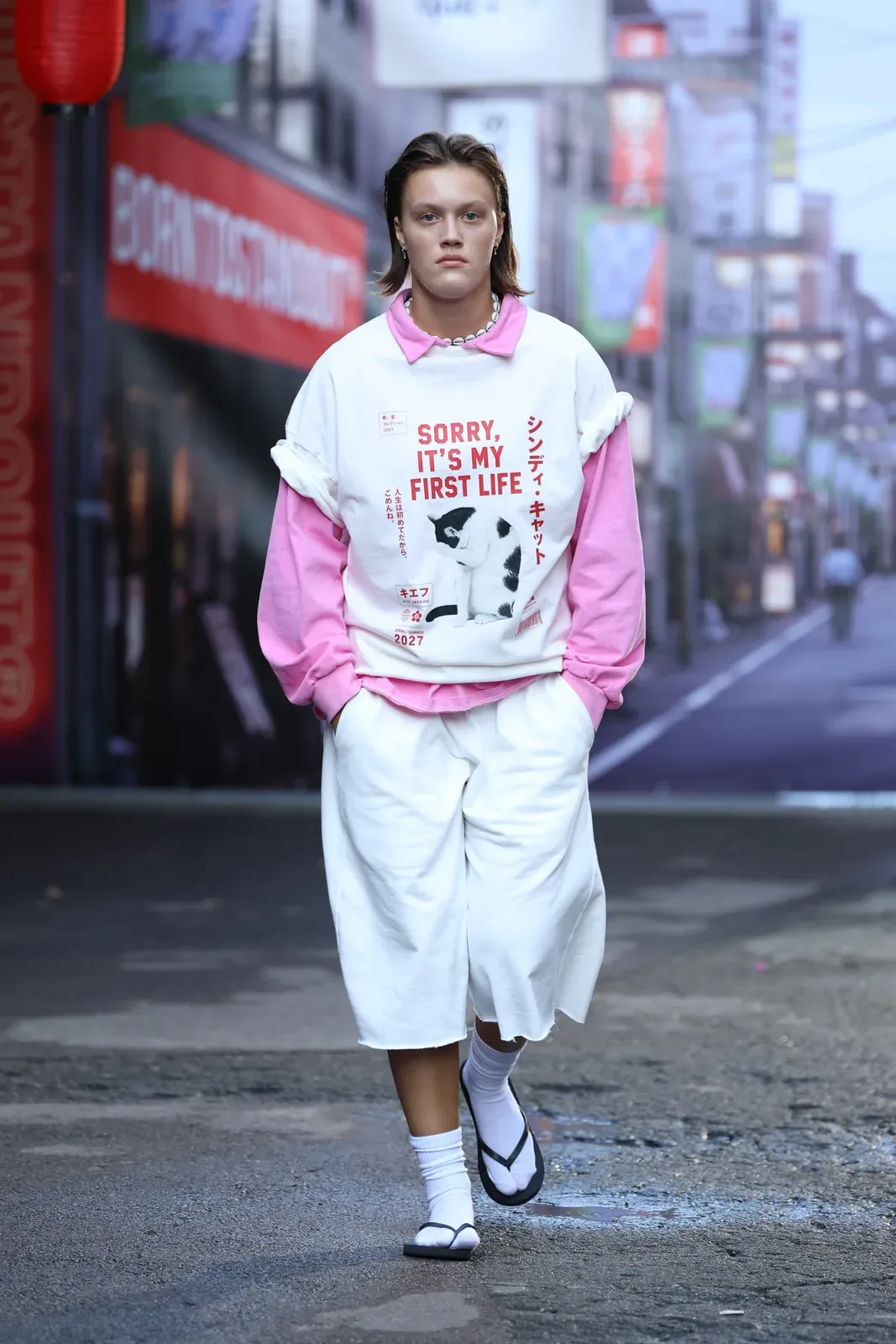
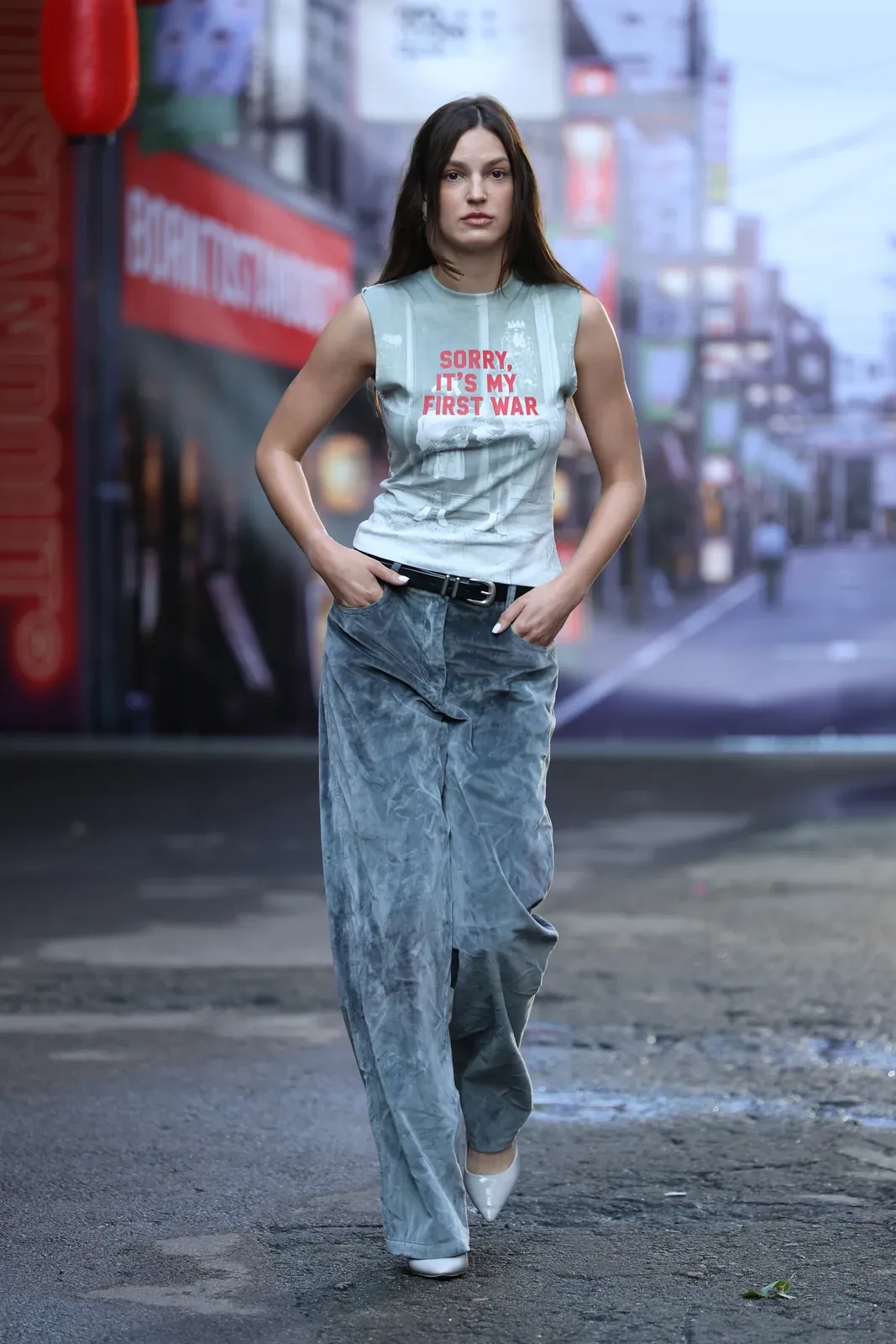
Memory is an unreliable archivist. It preserves a flower and loses a face; it sharpens one colour while allowing a room to fade. For Syndicate’s Ukrainian Fashion Week debut, designer Iryna Vasylevska began with photographs of her parents, childhood objects and the wardrobes of older men whose combinations developed outside fashion’s rules. The result is intimate without becoming sentimental.
Loose shirts, practical vests, cargo shorts and relaxed trousers carry the accidental logic of clothes assembled over years. Checks and washed surfaces make pieces appear already lived in, while layered pockets suggest an urge to keep objects close. Yet the collection doesn’t treat authenticity as something recoverable in perfect condition. Traditional fabric treatments meet heat transfer and experimental materials; real flowers are imprinted, digitised, altered and returned to cloth. The archive is translated instead of restored.
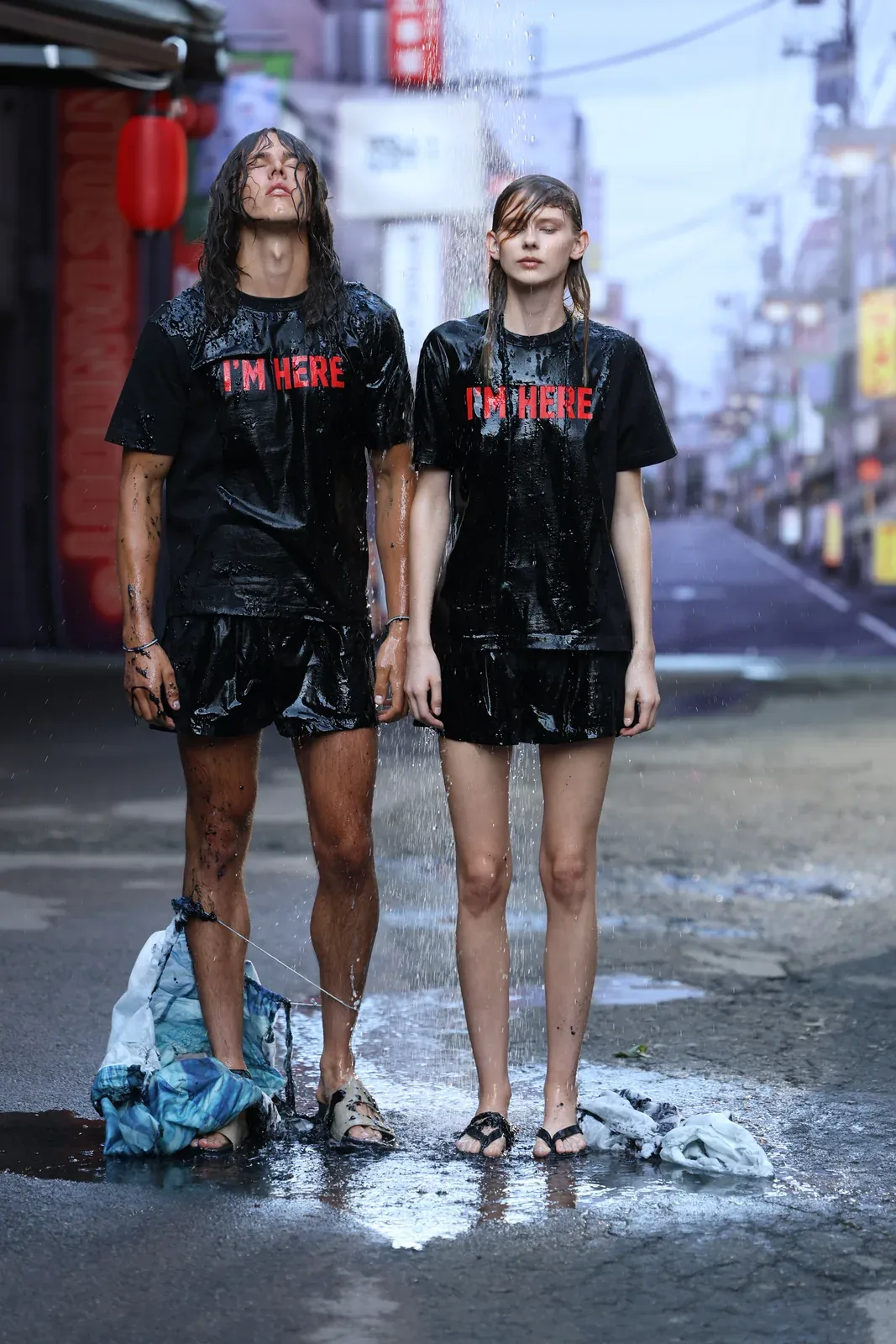
Water provides the collection’s most exact metaphor. It can hold a reflection, distort it or erase it completely. During the finale, garments interacted with water and a soluble material, so disappearance happened in front of the audience. The reconstructed Asian street of the set, informed by Vasylevska’s travels, extended the same question: when a place is rebuilt from memory elsewhere, where does the original end? In Ukraine, preserving people and events carries an urgency the collection never has to overstate. Syndicate understands that collective memory is made from subjective fragments. Its strength lies in accepting alteration as part of remembrance while refusing to confuse change with forgetting.
Viktoranisimov
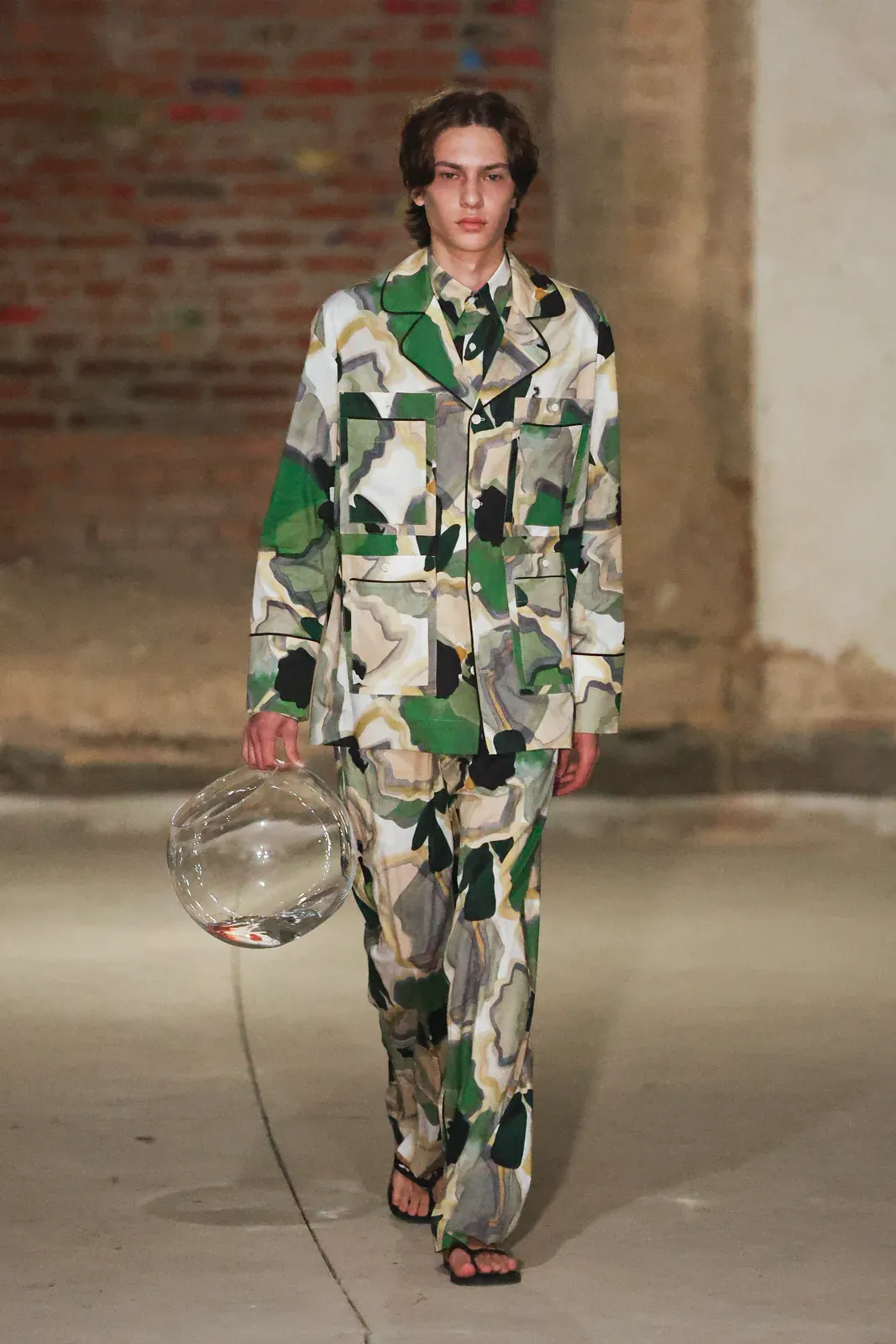
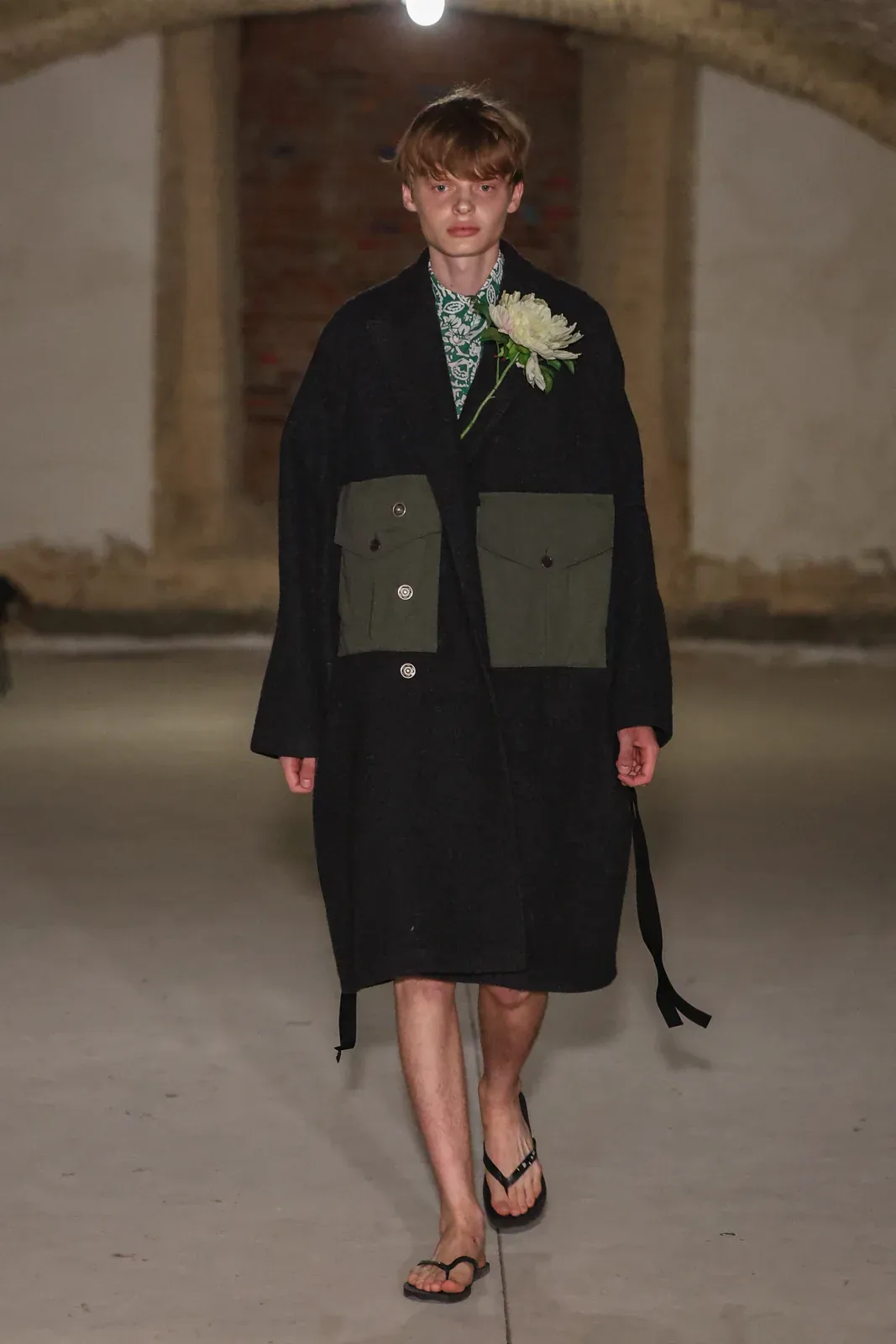
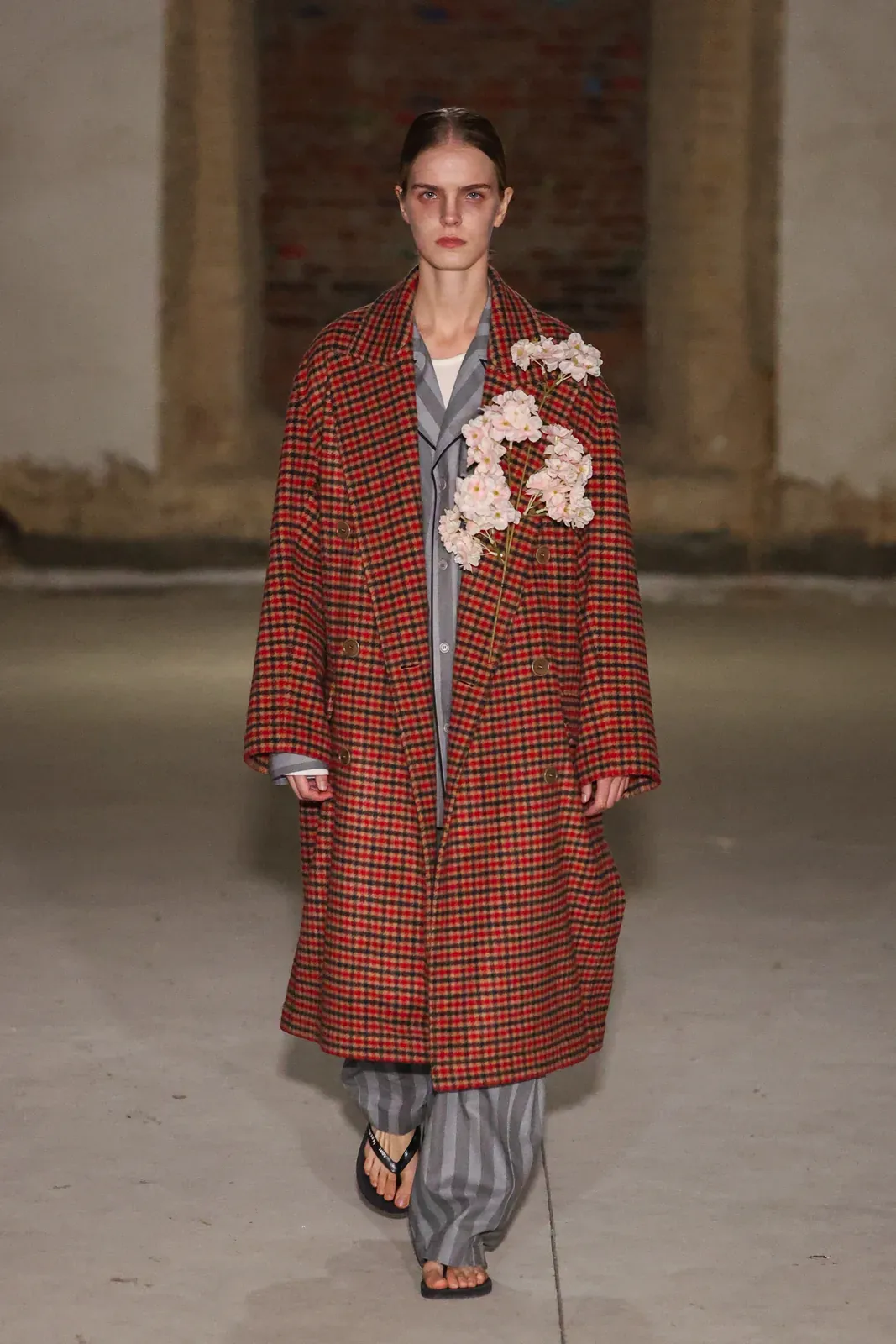
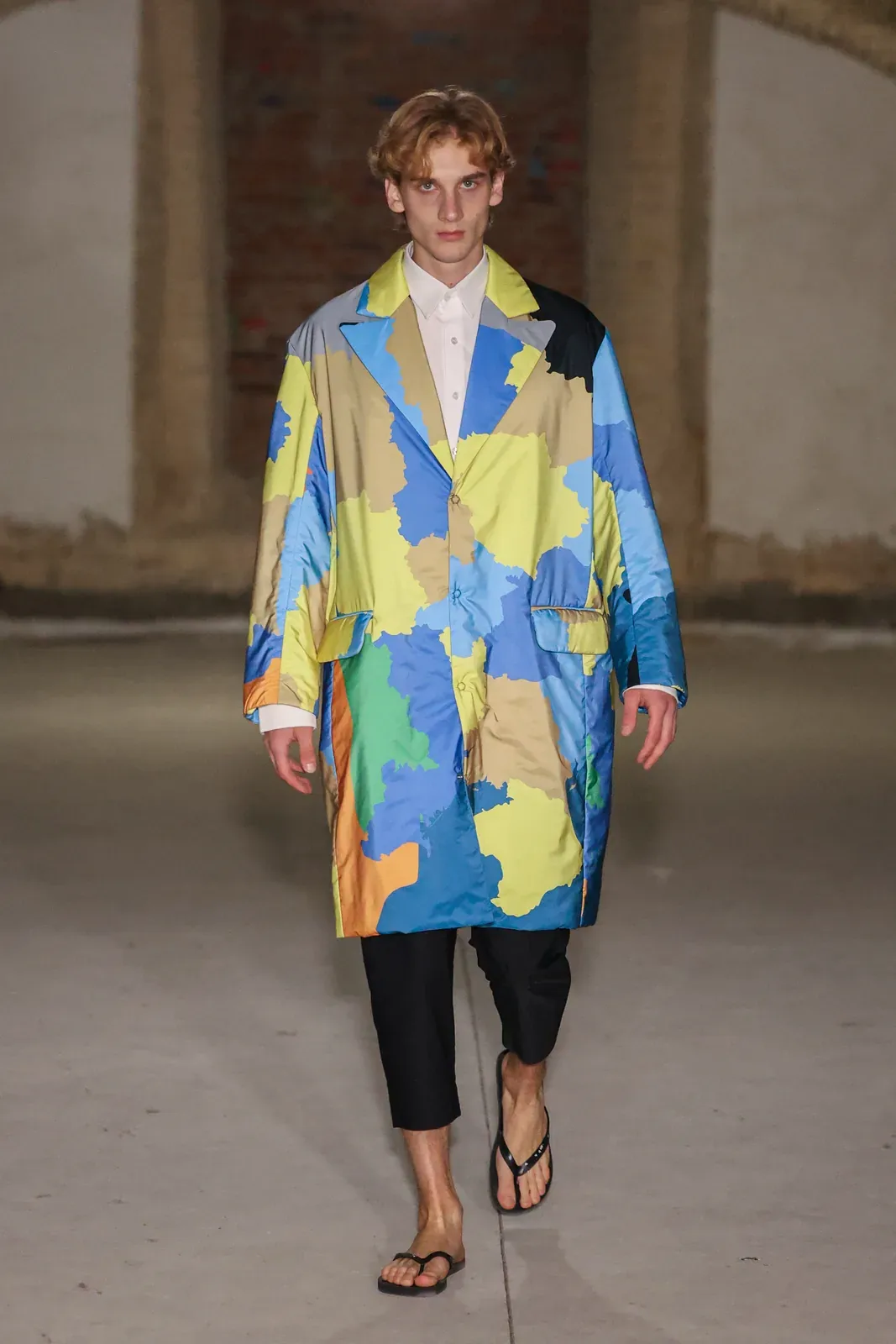
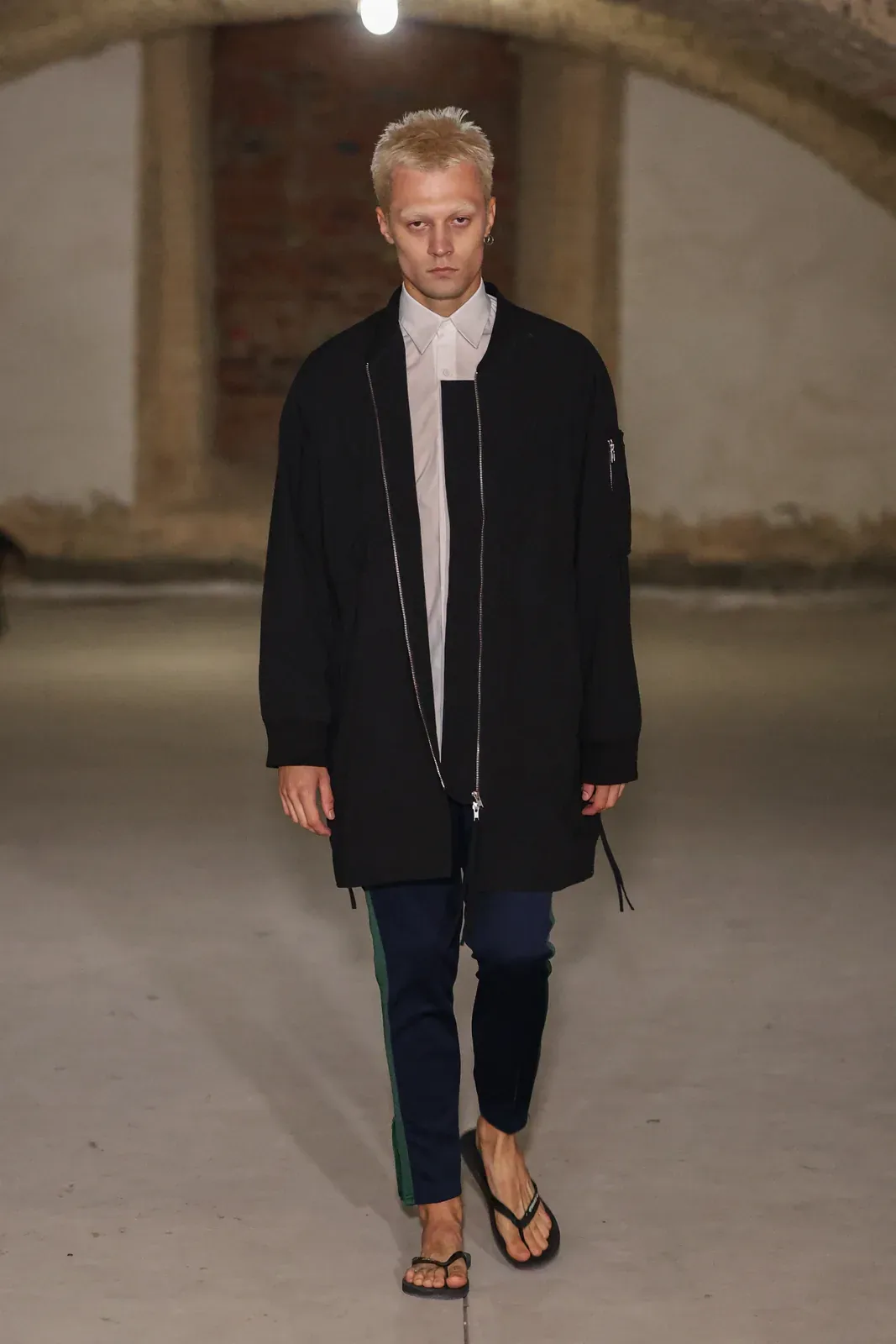
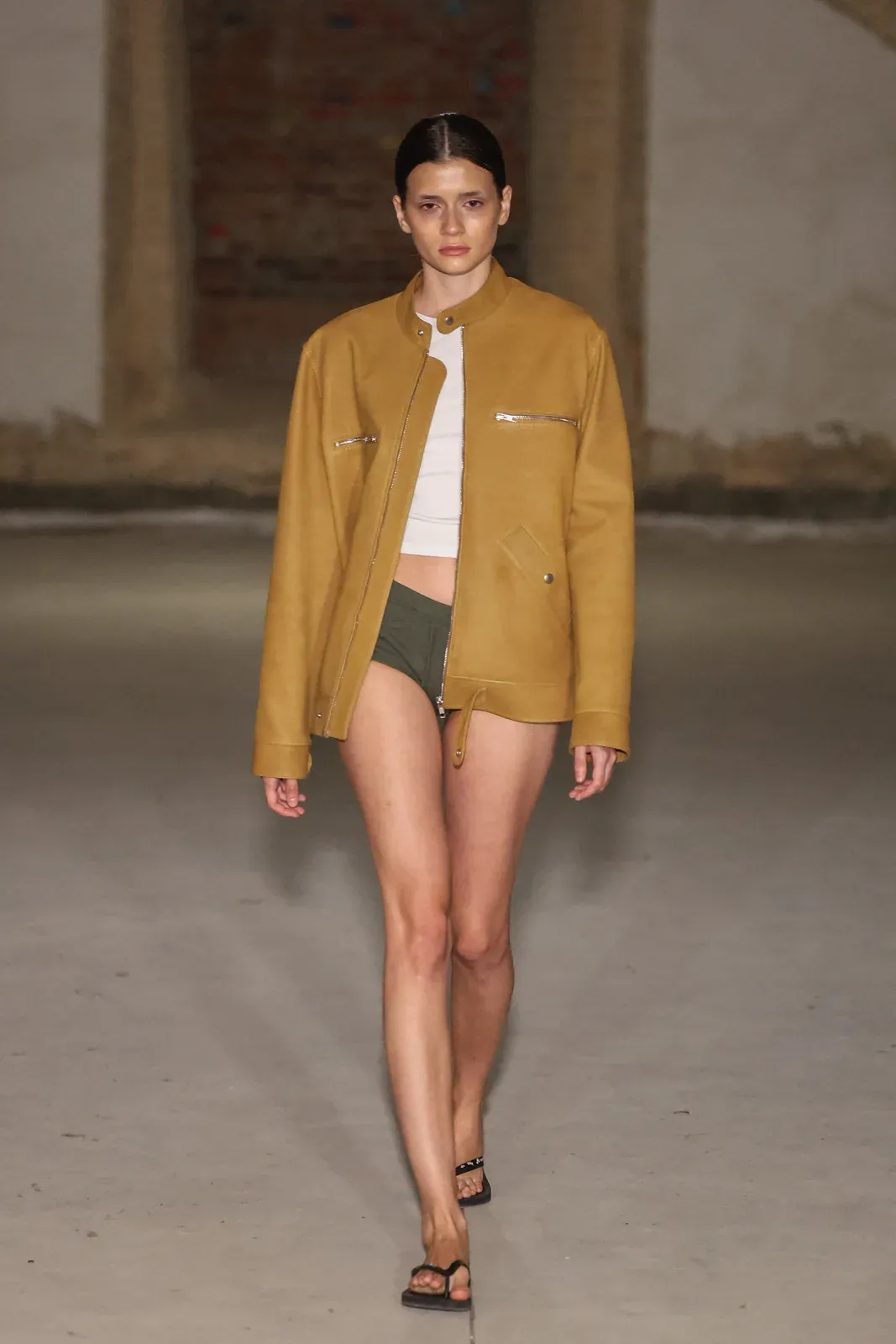
What do you wear when a missile hits your building at night? It’s an unbearable question, but one that the designer has asked himself. Viktor Anisimov begins with photographs of civilians outside homes damaged by Russian missile and drone attacks. His focus is the strange inventory of ordinary clothes visible in its aftermath. That involuntary styling becomes the collection’s structure. Pyjama silhouettes acquire military patch pockets; dressing gowns, shirts and shorts meet parkas, jumpsuits and technical outerwear. Black, grey and khaki dominate, interrupted by checks, mustard and vivid prints that register like scraps of earlier life. Military details have long belonged to the brand’s vocabulary, but here they lose any abstract toughness. A civilian in sleepwear has become, through circumstance, part of the war’s terrain.
The clothes themselves behave like damaged buildings. Patchwork, raw edges, abrasions and boiled treatments break surfaces apart and reassemble them. Leather developed with craftsman Kostya Kosynskyi looks as if it has already survived a history. Canvas, associated here with shelters and rescue sites, becomes light outerwear; leftover fabrics from previous collections return in altered form. Repair is visible, never disguised as perfection.
TONiA
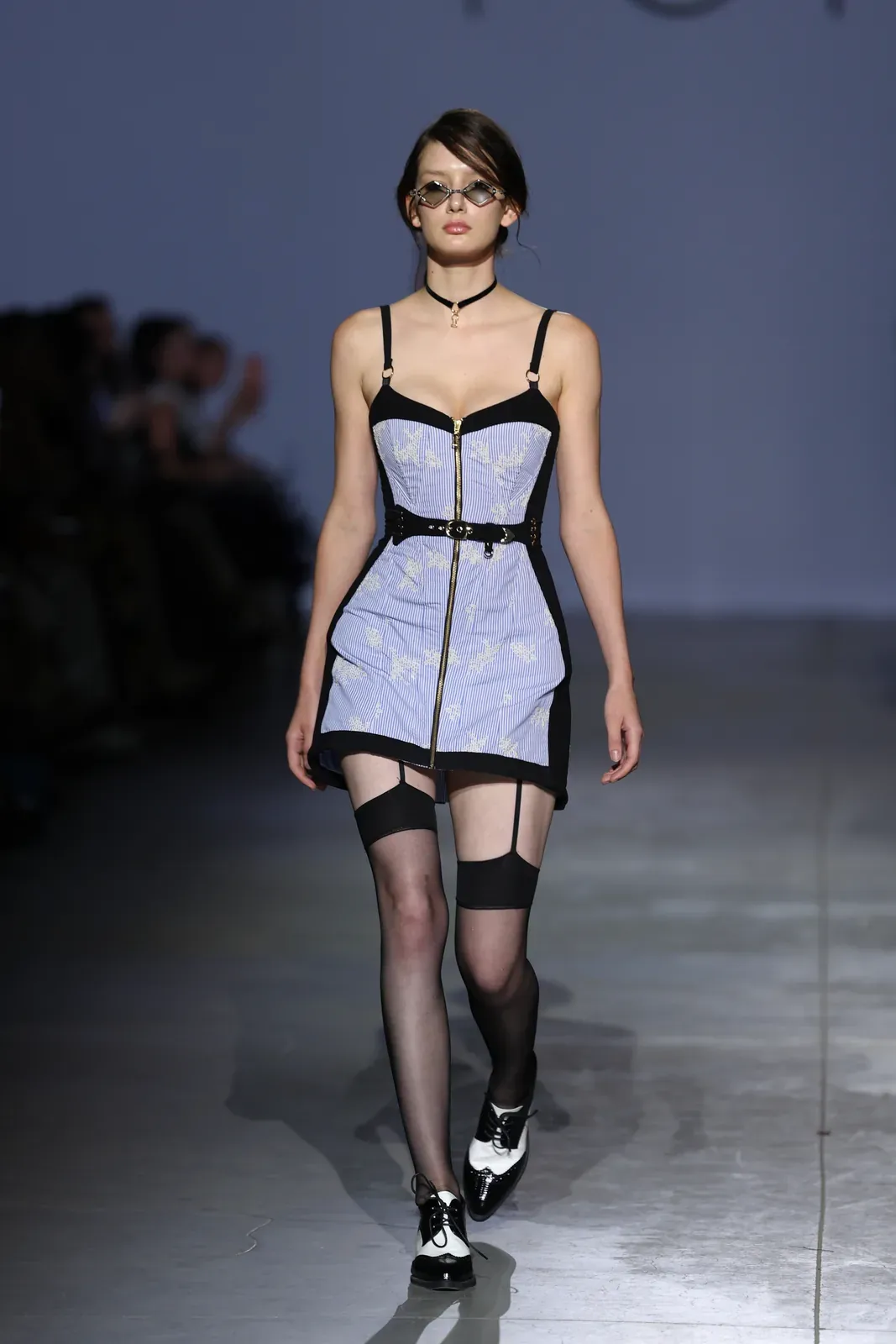
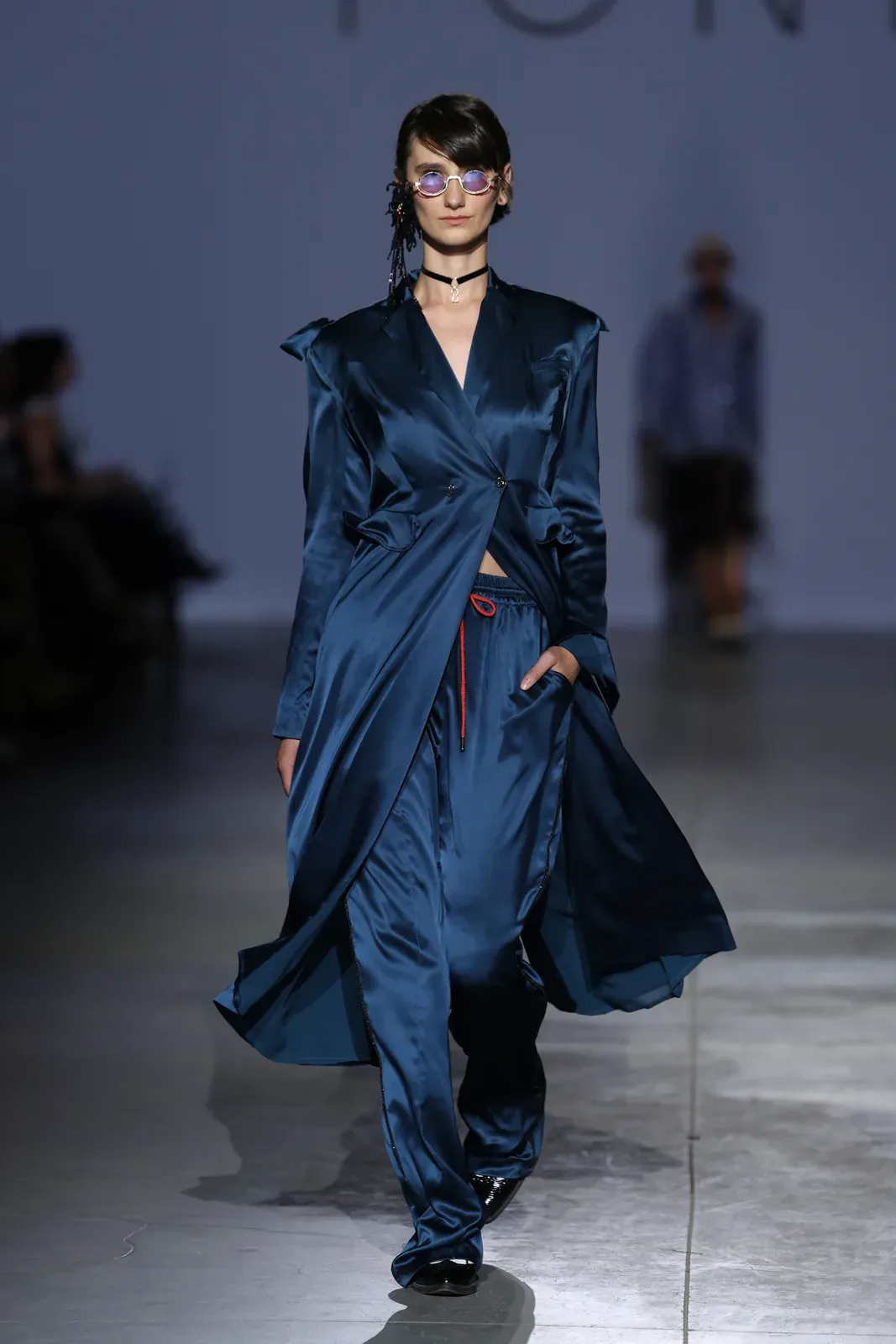
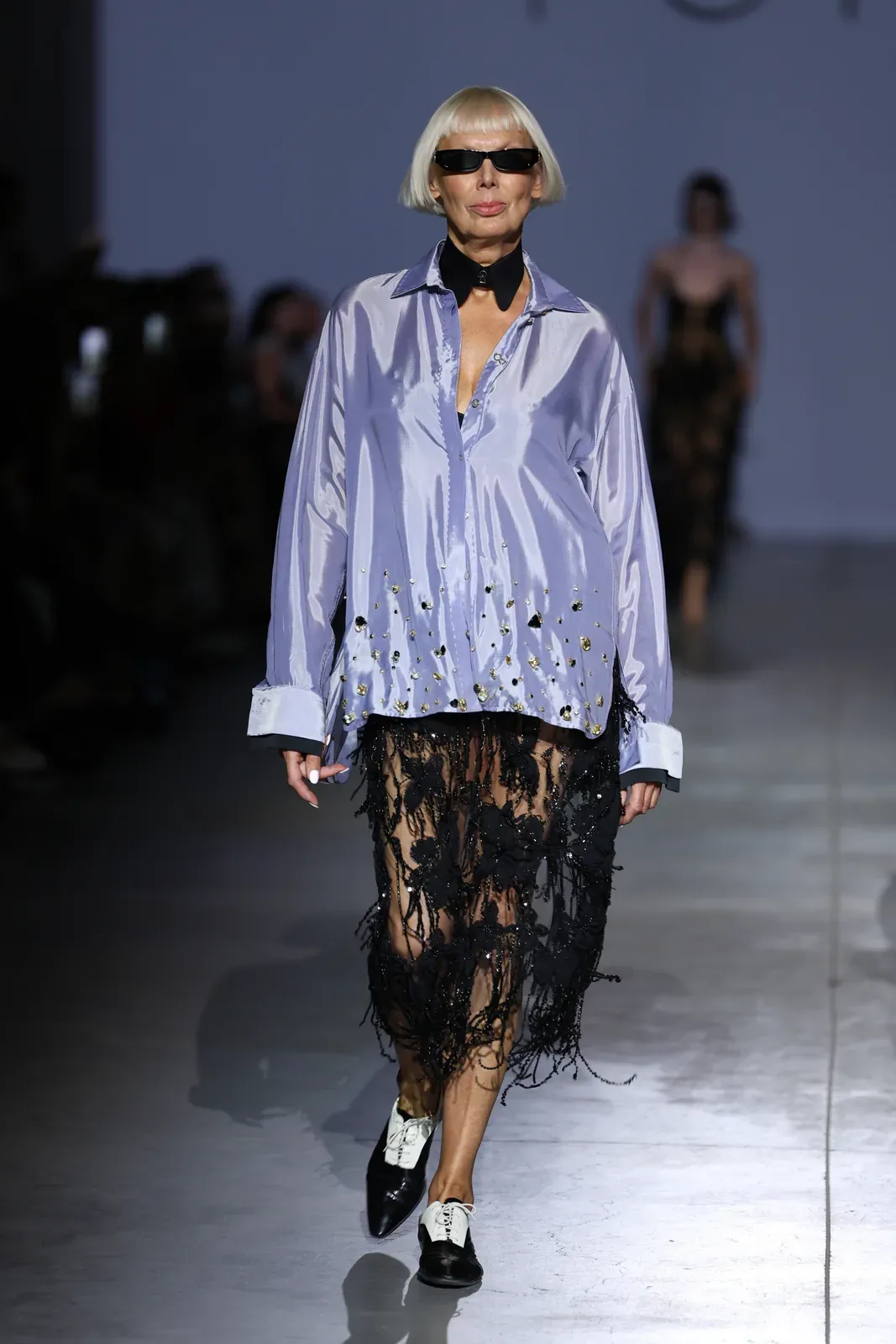
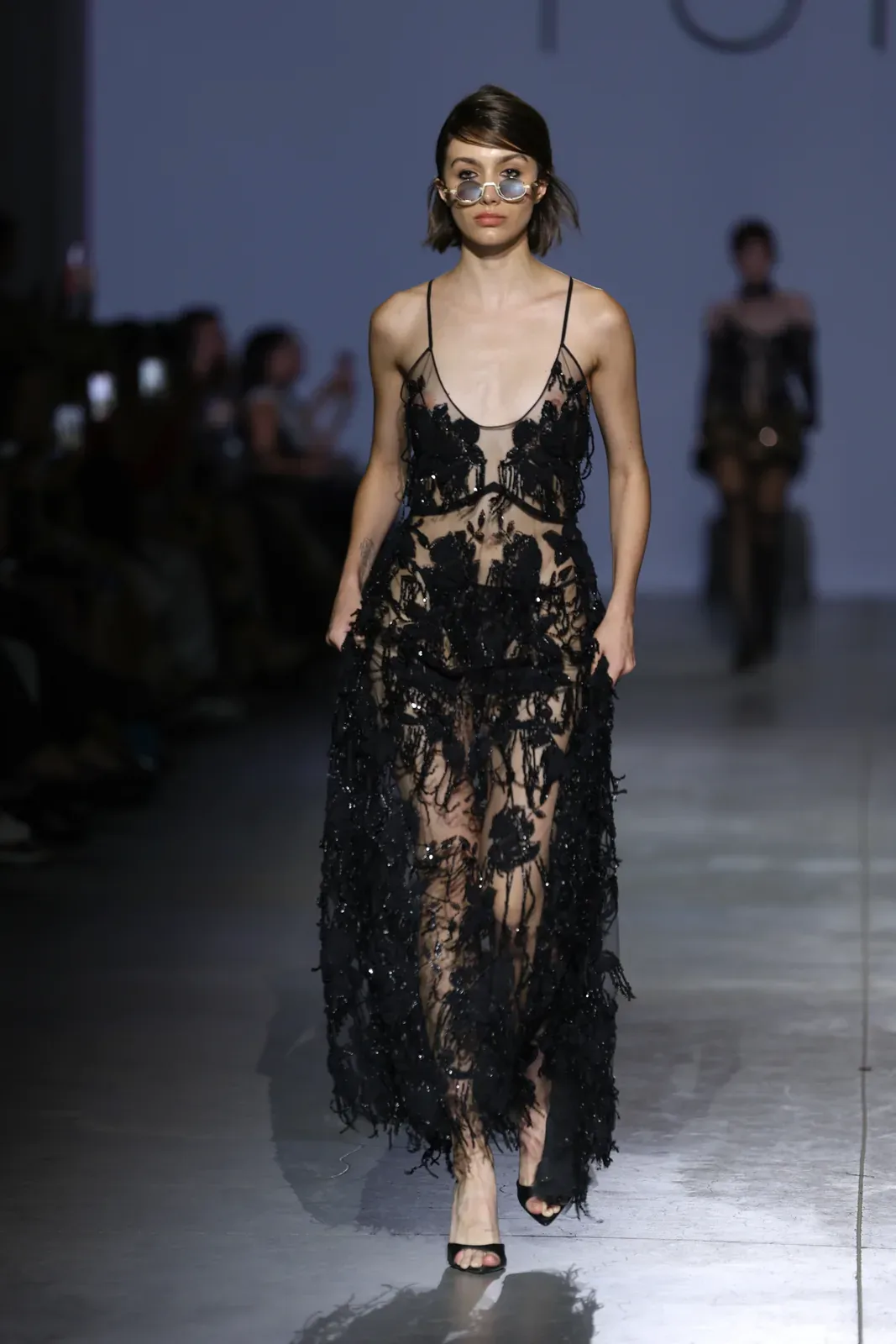
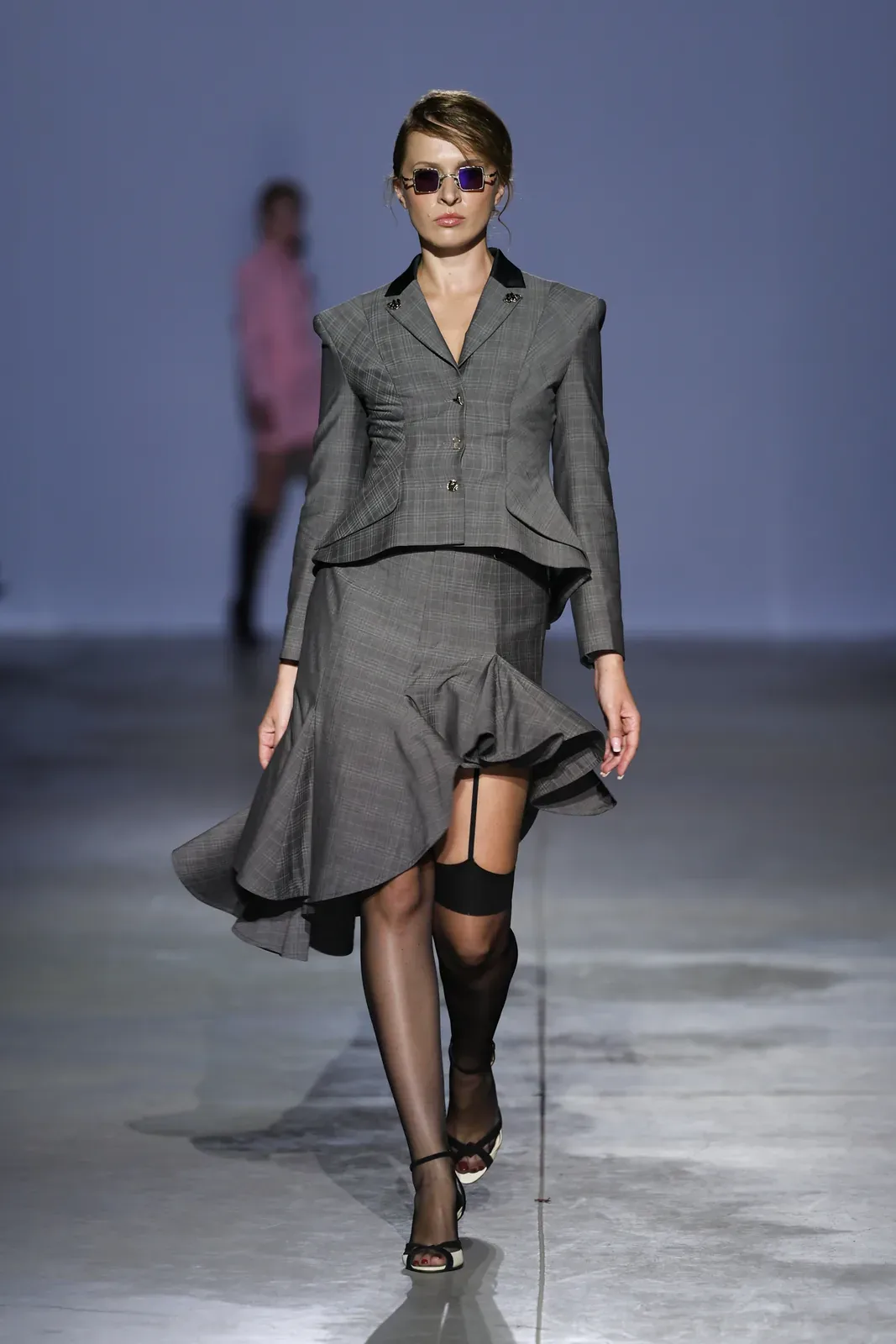
At the turn of the twentieth century, a blouse could become an argument. The shirtwaist, constructed like a man’s shirt and worn by women at work, while cycling and with new forms of dress, made social change visible at street level. TONiA’s La Belle Époque returns to that moment, when the campaign for suffrage, education and employment was rewriting the wardrobe.
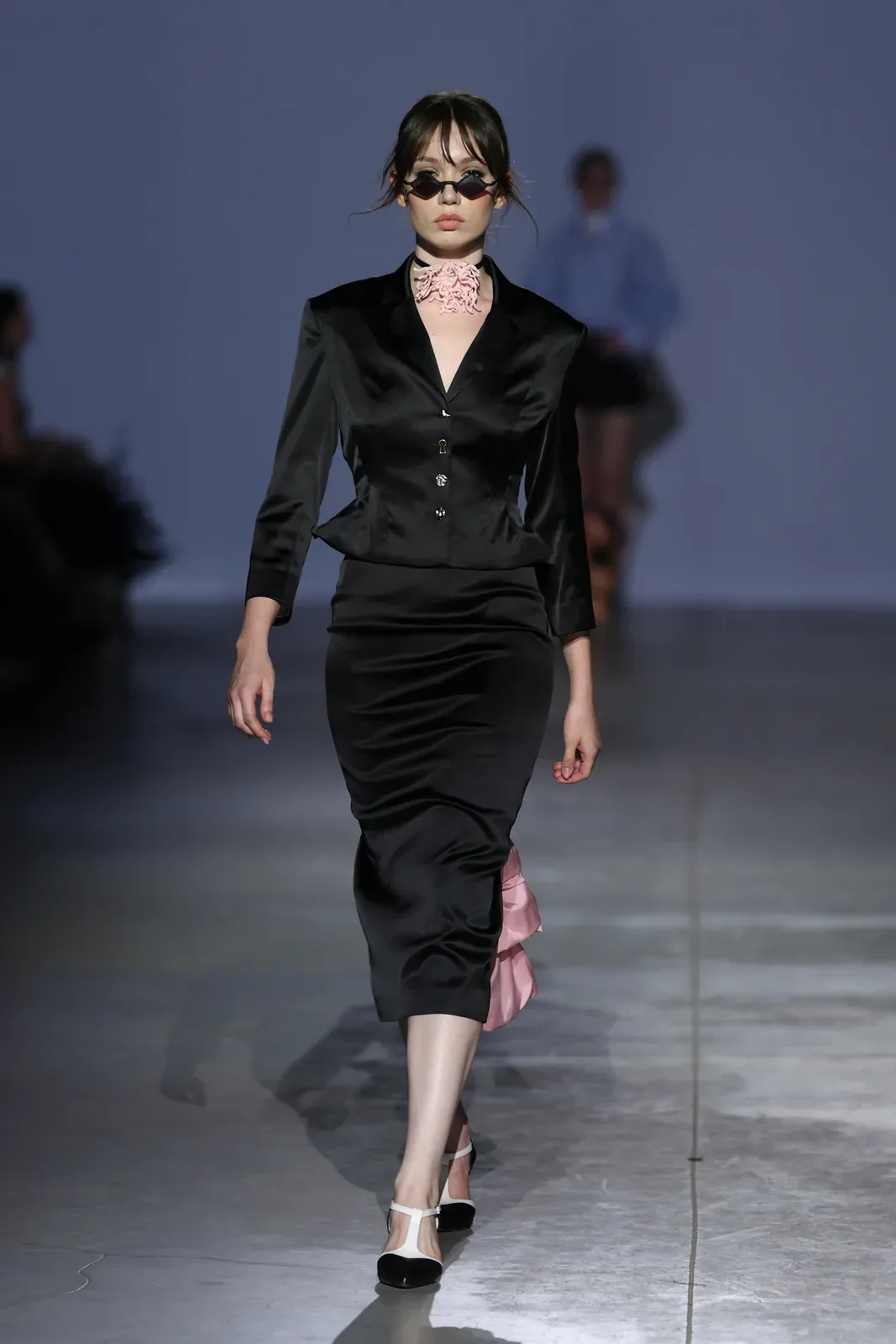
But don’t imagine a runway where people look like extras in Titanic. Designer Antonina Belinska avoids recreating period dress; instead, she pulls apart its negotiations with gender. Shirts appear throughout, while detachable collars become chokers. Trousers, shorts and waistcoats borrow menswear; jackets use canvas interlining and bespoke techniques, then curve towards the body. One waistcoat loses its back entirely. Another exposes the striped lining associated with London dandies, turning what convention kept hidden into the main event.
Historical silhouettes surface in fragments. Cropped jackets recall women’s outerwear of the 1900s, contrasting lapels echo silk-faced revers, and a multilayered petticoat escapes from beneath a skirt. Checks give the tailoring a practical rhythm, while semi-sheer black lace and embroidered evening dresses bring in the less respectable glamour of Parisian cabaret. Two-tone Oxfords, tied knee socks, velvet-ribbon pendants and hand-crocheted flower clips complete the picture without sealing it inside a costume drama.
The collection works best when emancipation appears as a process rather than victory. Masculine codes offered women access to public life, but TONiA refuses the idea that authority requires femininity to disappear. Exposed backs, transparent surfaces and handmade flowers reclaim sensuality on the wearer’s terms. The past matters because its freedoms remain unfinished.
Guranda
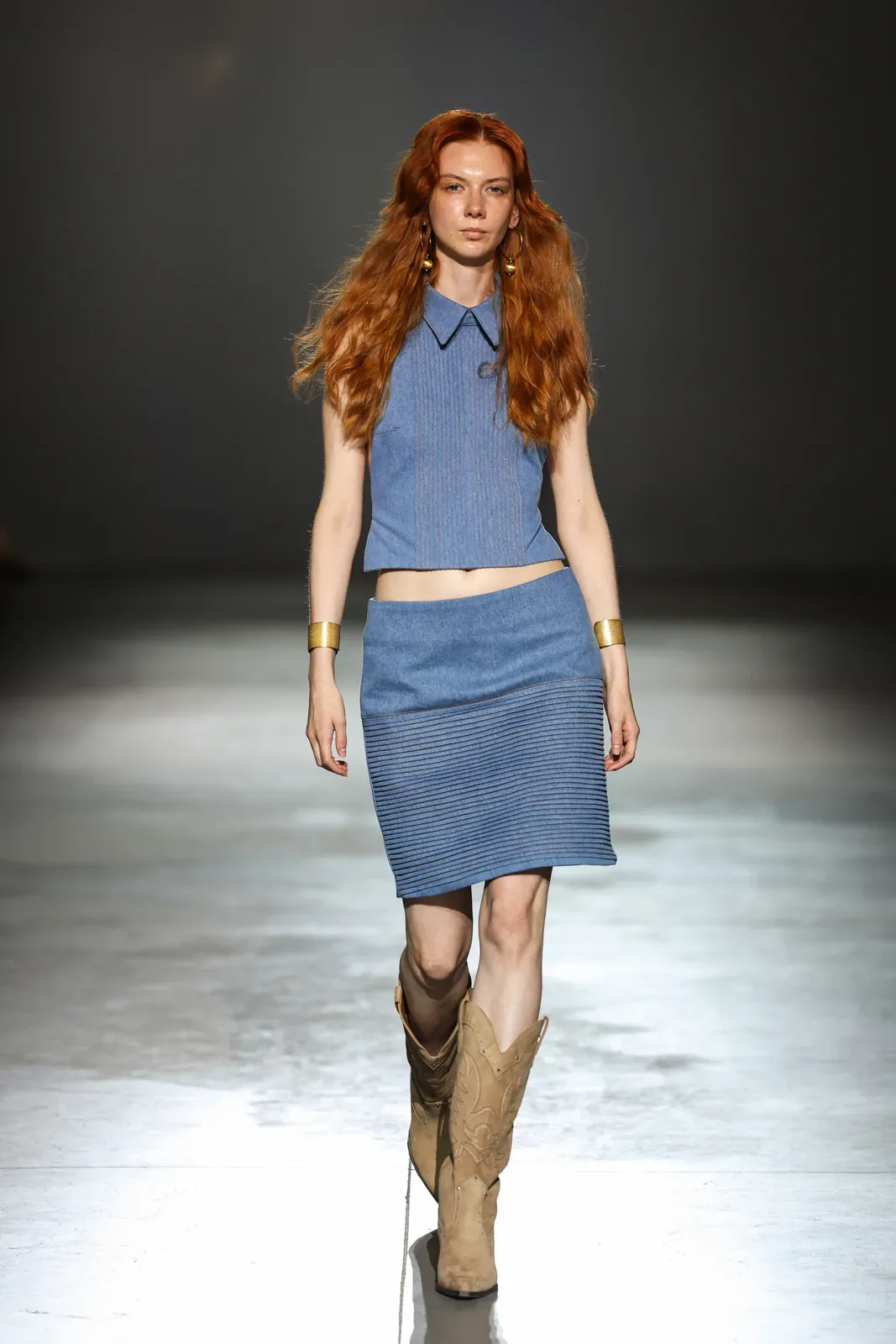
The niavka of Carpathian folklore belongs to the space between woman and spirit, attraction and danger, this world and another. For Unseen, Olena Guranda avoids dressing that figure literally. There are no costumes and no easy folklore. Instead, the collection borrows her defining condition: she can be sensed, but never entirely grasped. Silhouette does much of this work. Babydoll dresses float away from the body, concealing its familiar lines under volume. Elsewhere, Guranda’s signature basque draws the waist with almost architectural precision. Applied to lace dresses and relaxed suits with wide trousers and robe-like jackets, it creates a productive uncertainty. The same body appears soft, armoured, spectral and sharply constructed depending on where the eye lands.
The materials keep that uncertainty alive. Fine lace meets dense denim; icy stones and beadwork resembling frozen raindrops sit against metal studs. Milky white, pale blue and silver drain warmth from the palette, giving the clothes the cool sheen of something glimpsed near water. But the collection isn’t weightless throughout. Denim and tailoring interrupt the romance, anchoring the supernatural reference in garments with real physical presence.
Fashion often approaches mythology by extracting recognisable symbols, flattening a complex figure into decoration. Guranda chooses atmosphere over illustration. The niavka becomes a method for thinking about visibility: how femininity is revealed, withheld and constructed under other people’s gaze. In a season concerned with keeping cultural knowledge alive, Unseen demonstrates that preservation need not mean repetition. A myth can remain recognisably Ukrainian even after its image disappears.