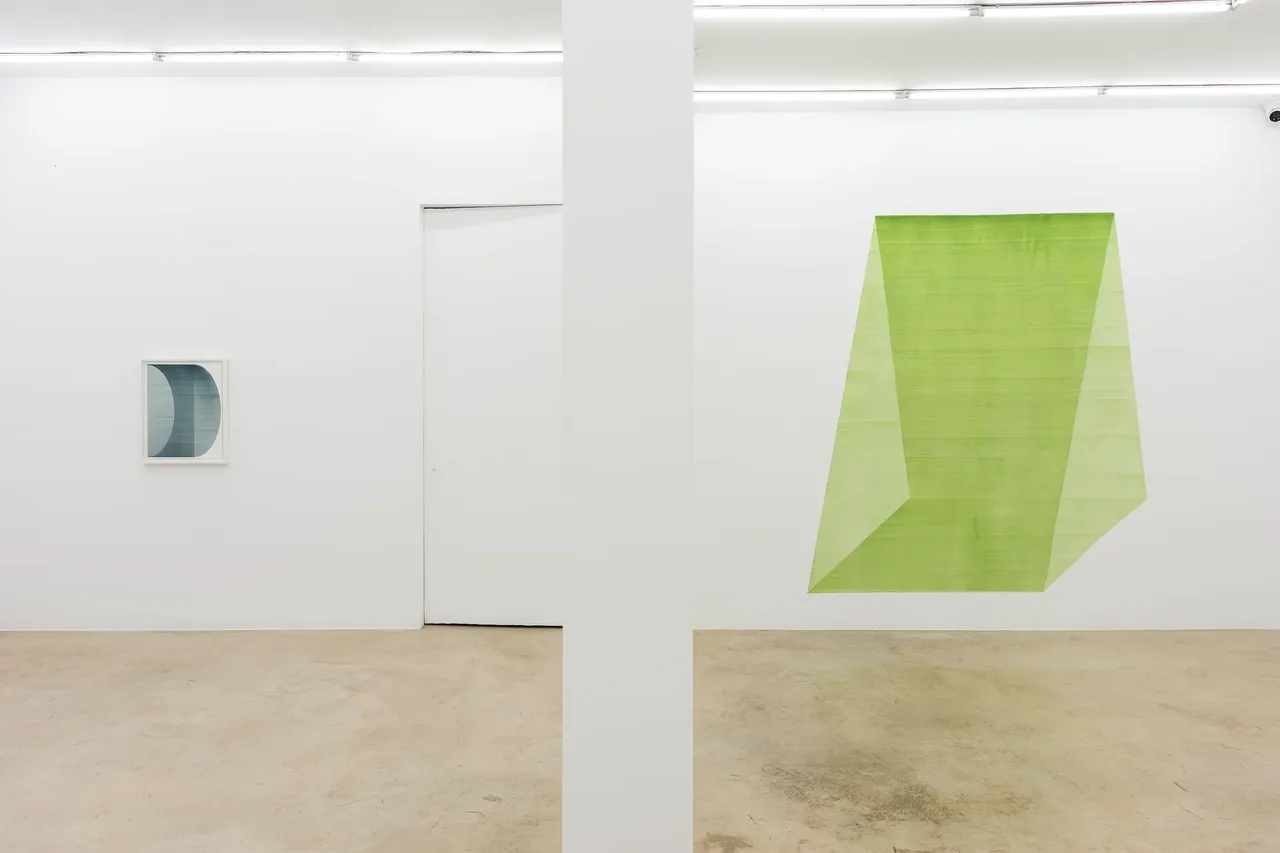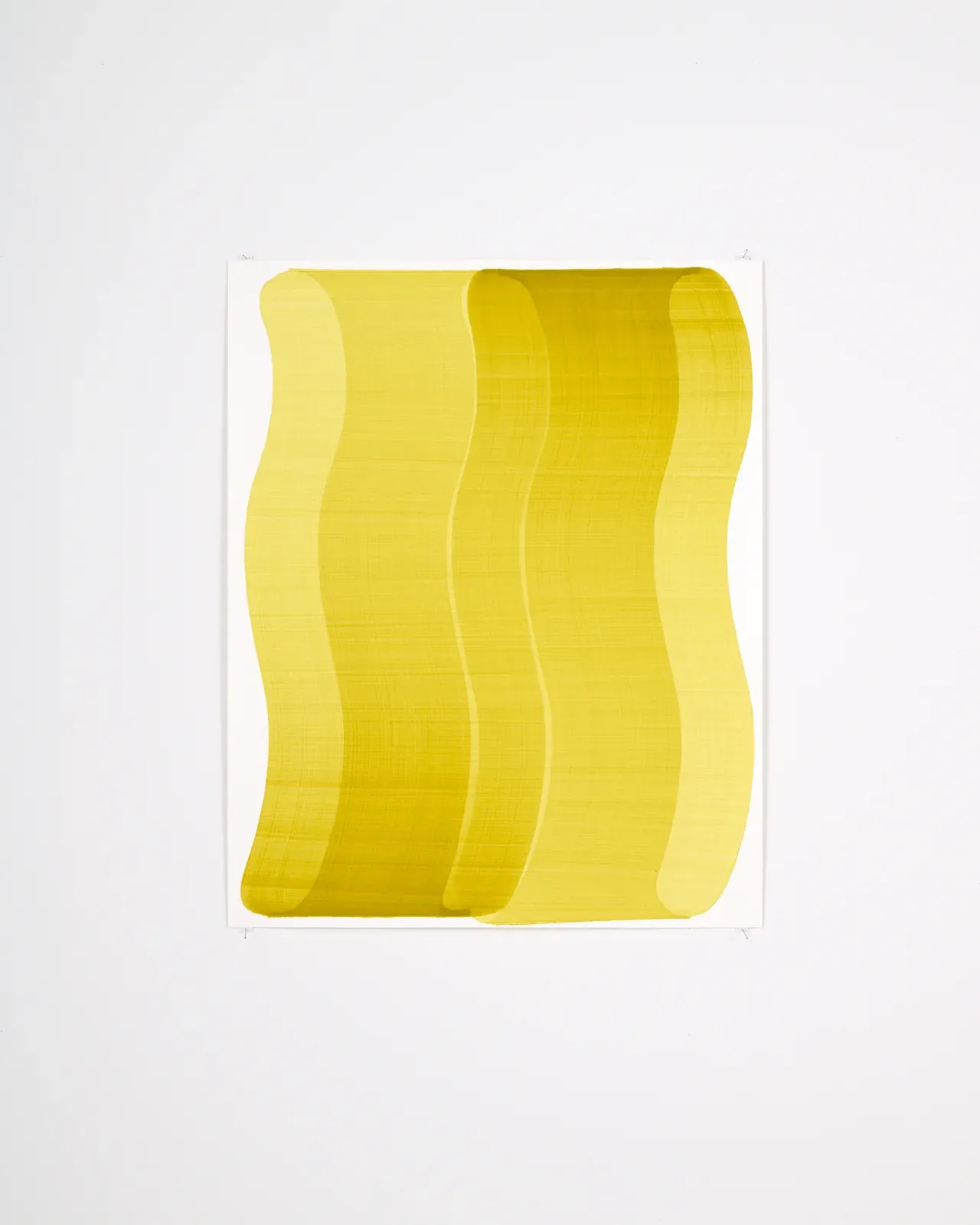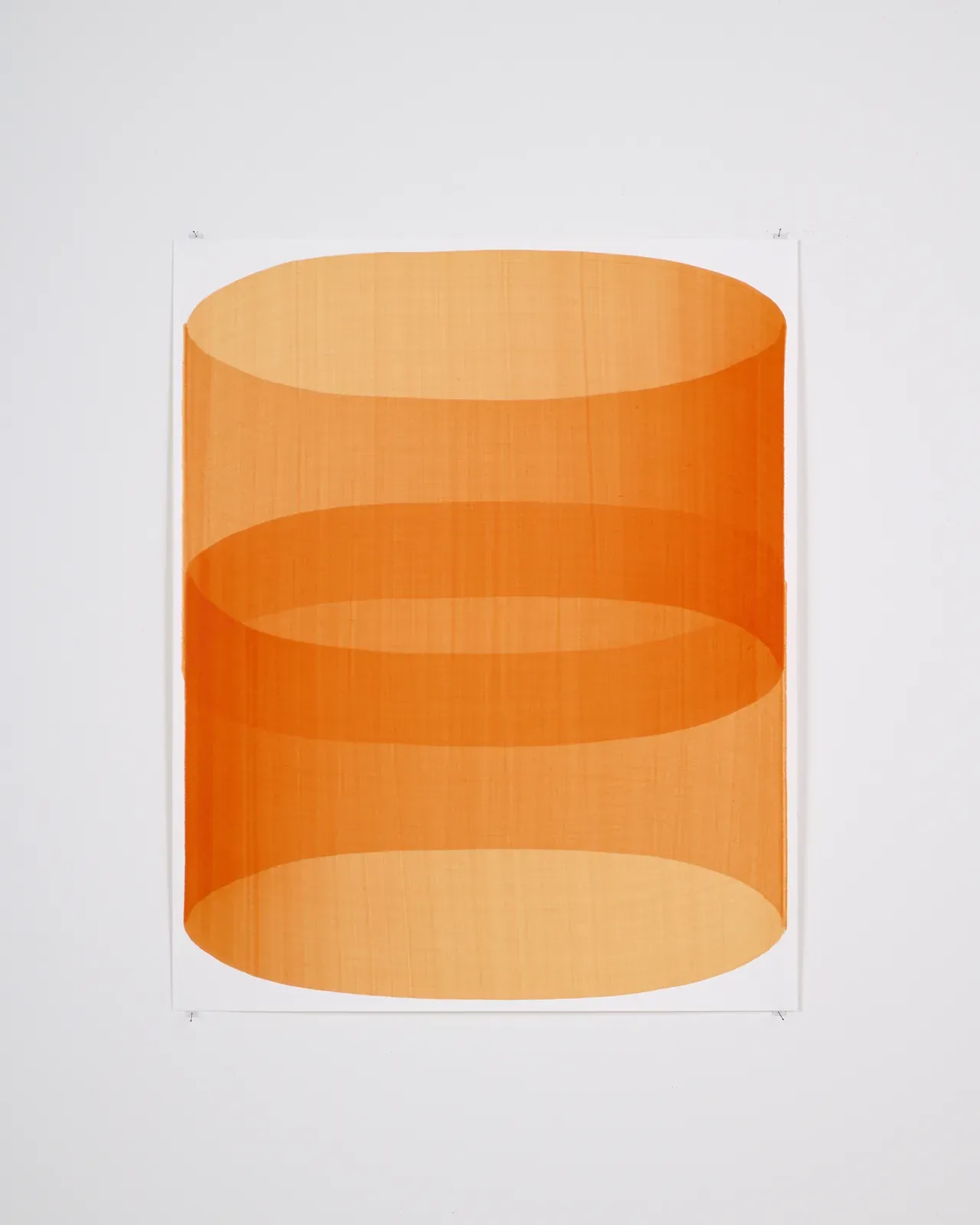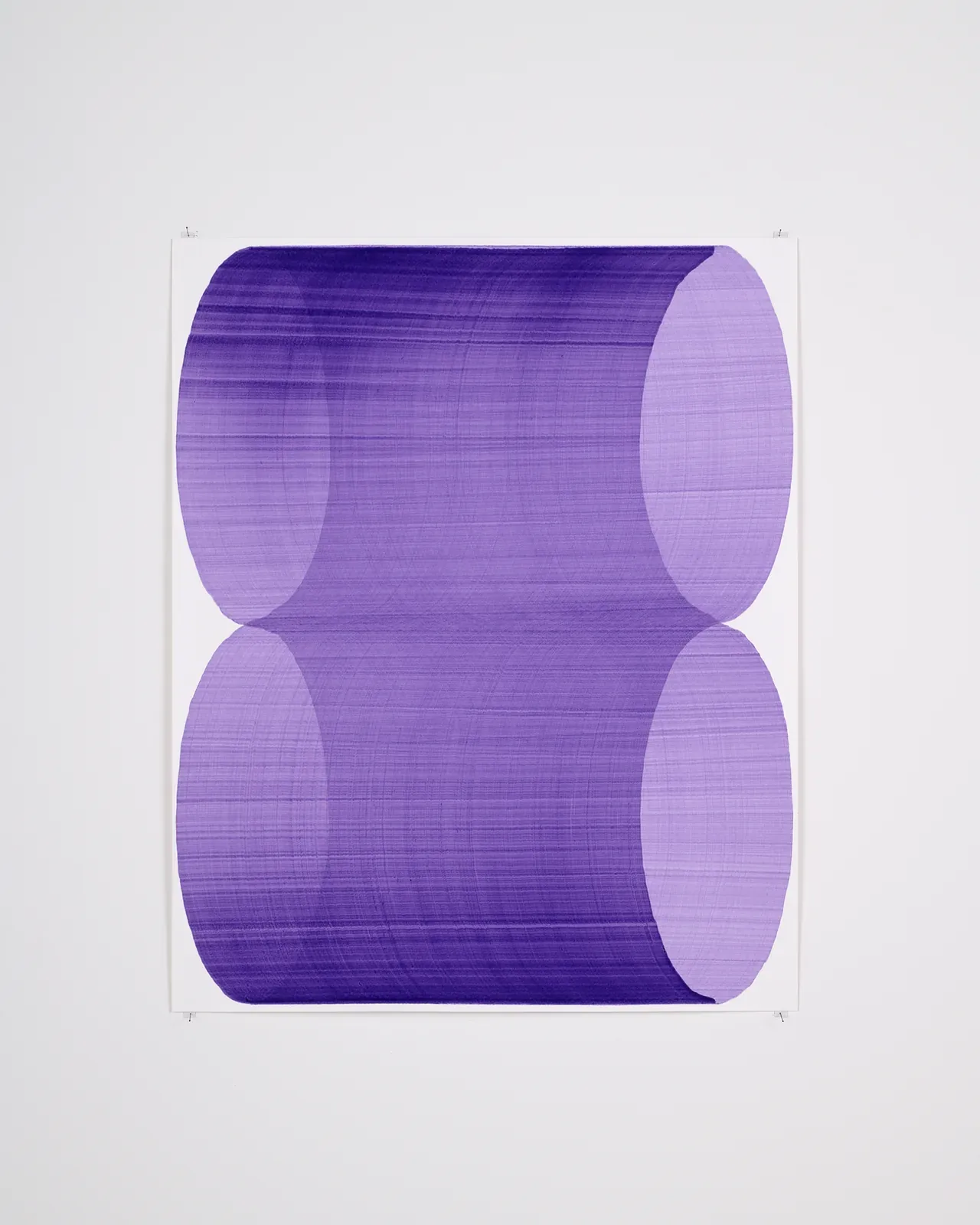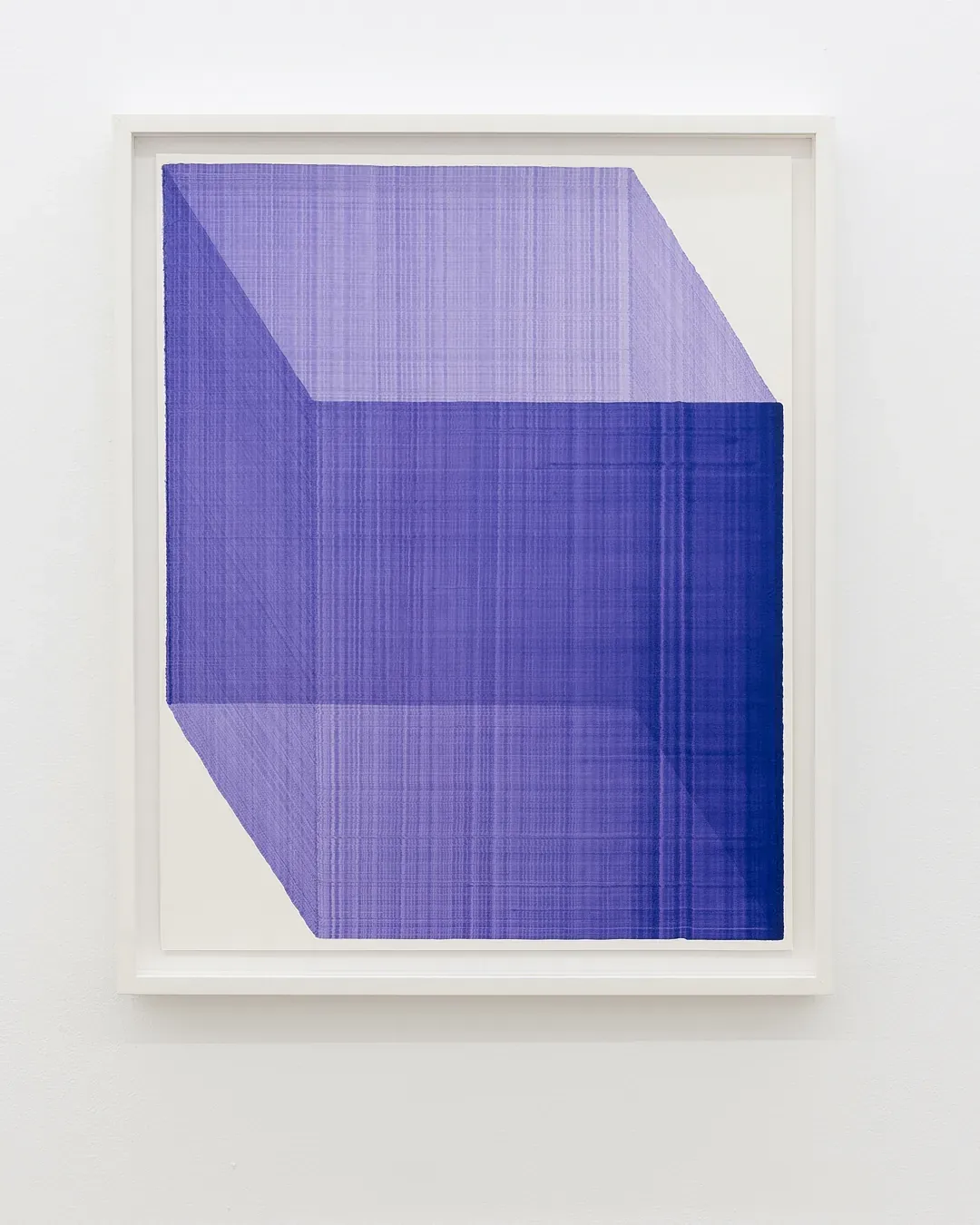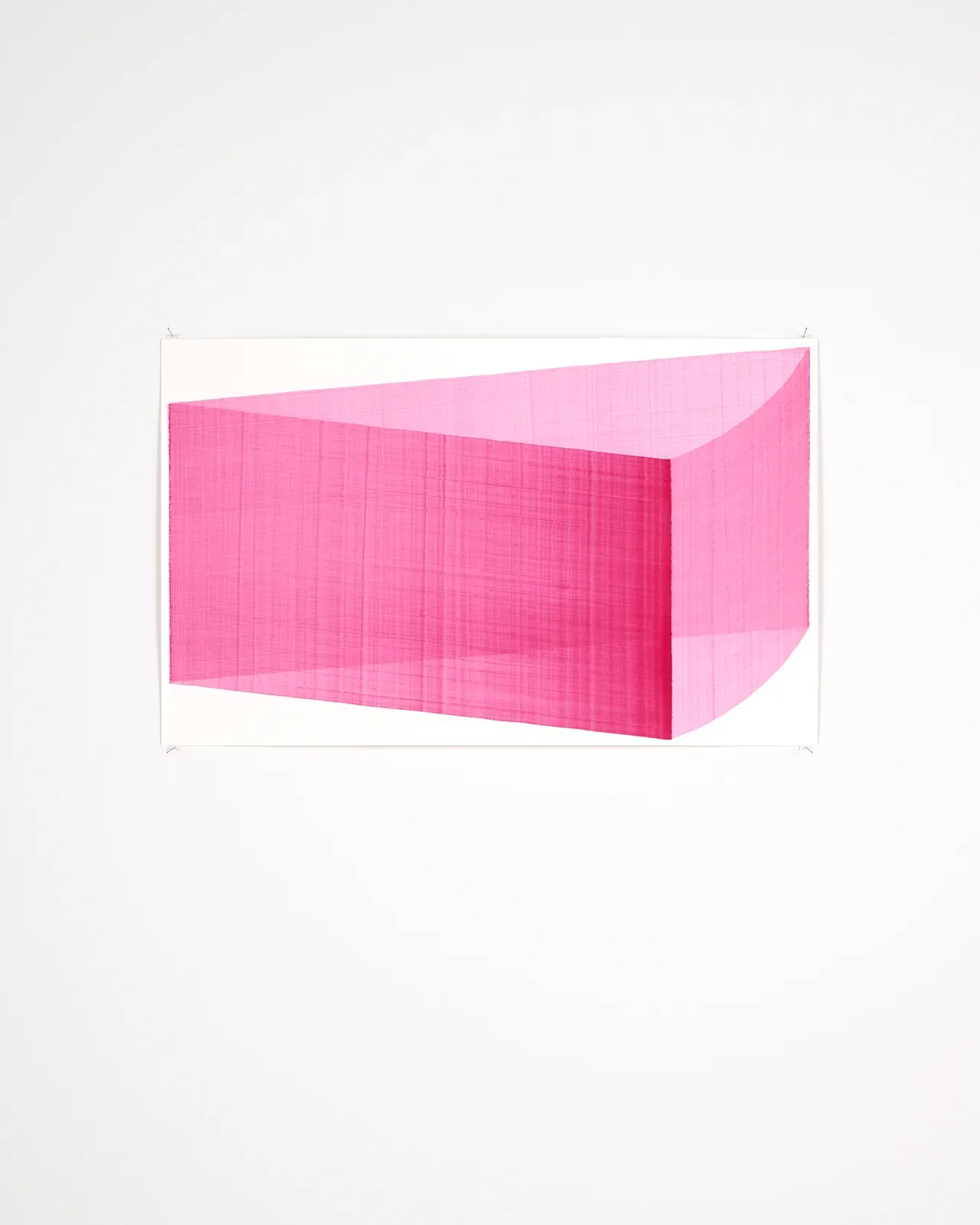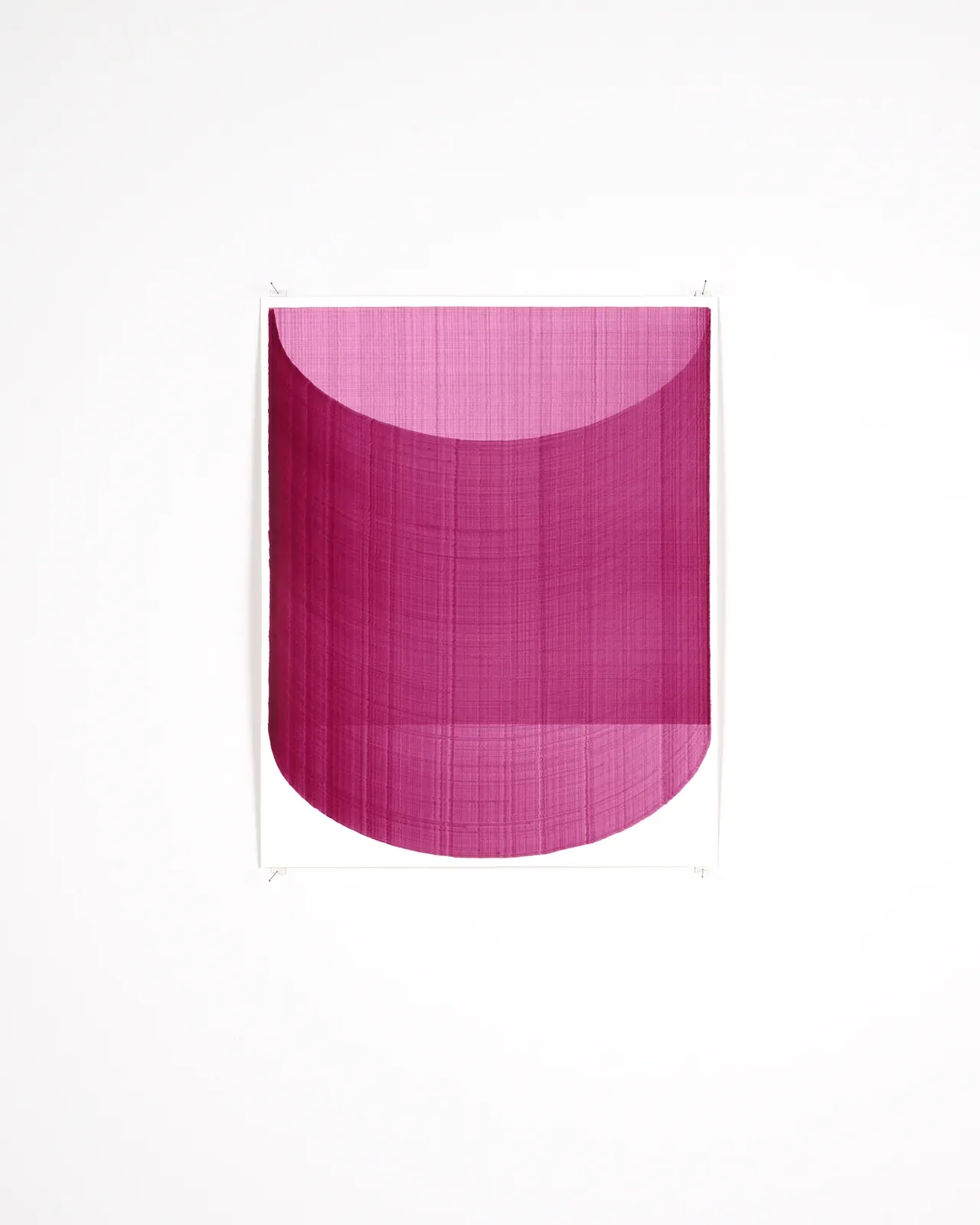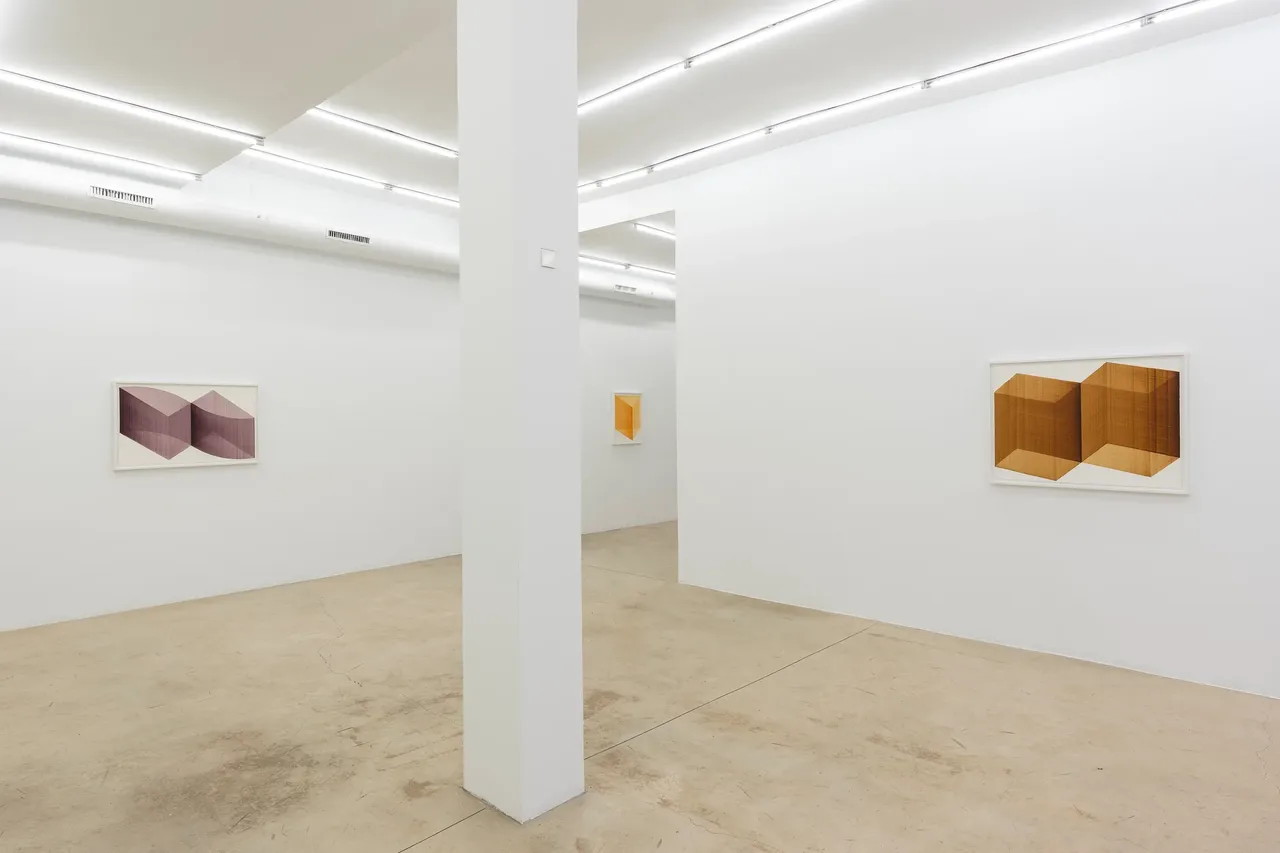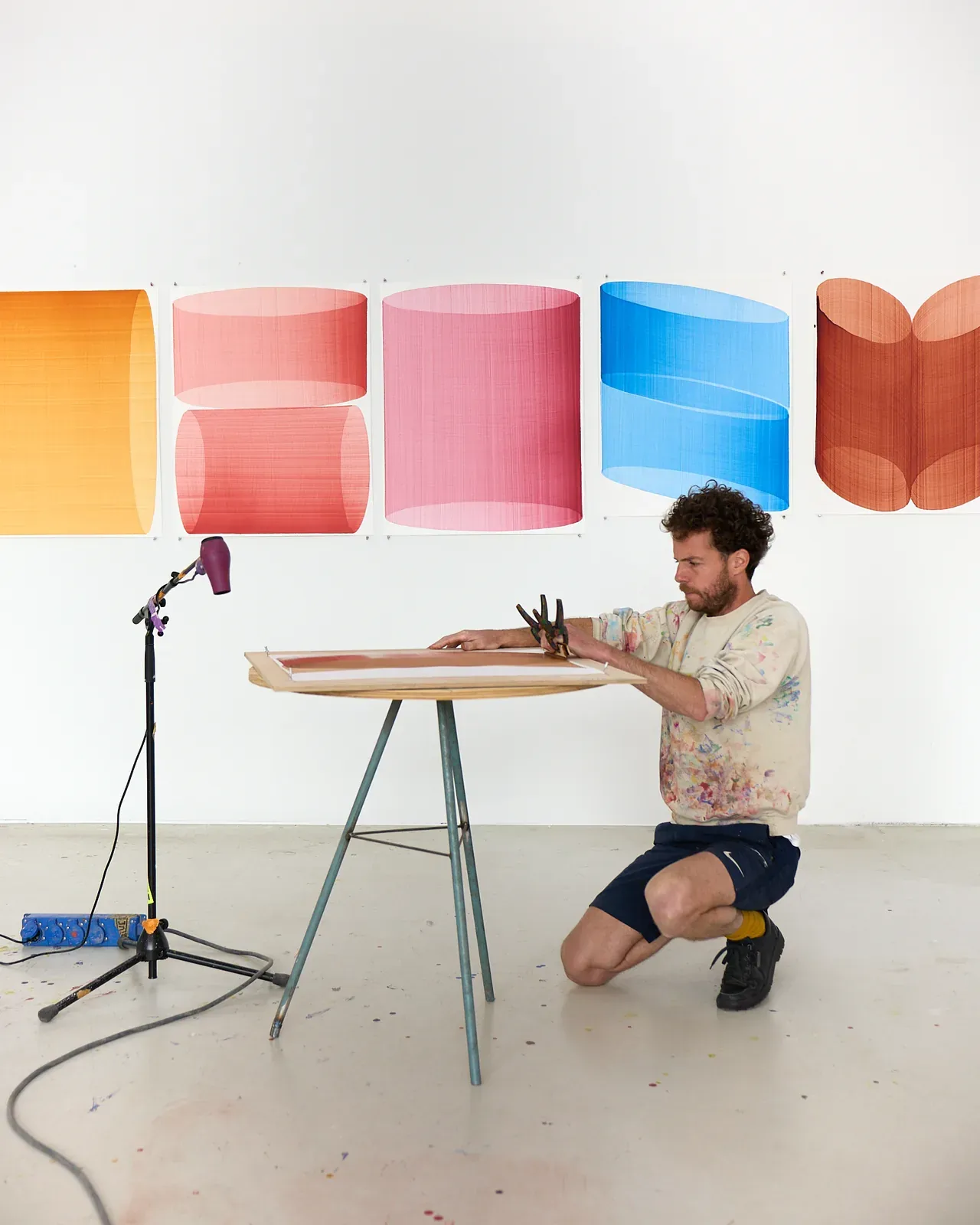
Thomas Trum’s work might appear restrained, even austere, at first glance. Yet the pieces in his latest exhibition, Parallel Figures, on view at Valencia’s (Spain) Tuesday to Friday gallery through 30 October, reveal a constant interplay between freedom and constraint, despite the apparent geometry of their forms. His work celebrates the balance between the rawness of human gesture and the precision demanded by the techniques he employs.
This tension between control and experimentation is rooted in Trum’s enduring curiosity about how the world is put together. This curiosity, as he explains, is deeply embedded in his way of working. His paintings aren’t simply the result of a preconceived vision, but emerge through a process of exploration in which materials, movements and tools all enter into an equal dialogue. Indeed, Trum has said that the tools shape the work, rather than the other way around: he doesn’t adapt the tools to his needs; he adapts himself to them. The visual impact of his paintings, in turn, depends on finding the right tools for the job, capable of translating his ideas and feelings into unpredictable forms.
Thomas, we’re catching you midway through your exhibition in Valencia. How has the Spanish audience responded to your work so far?
The response has been incredibly enthusiastic. At the opening it was great to see how people engage with the work and how it resonates with an audience here in Spain.
Your paintings tend to explore the abstract. For someone who hasn’t seen your work before, how would you describe your artistic practice in a few words?
My practice is centred around the act of making. Lines, materials, tools and techniques all come together in a single work.
Your work seems to require a great deal of technical skill and precision. Could you tell us a little about your process? How do you achieve such precise results, and what tools do you use most often in your practice?
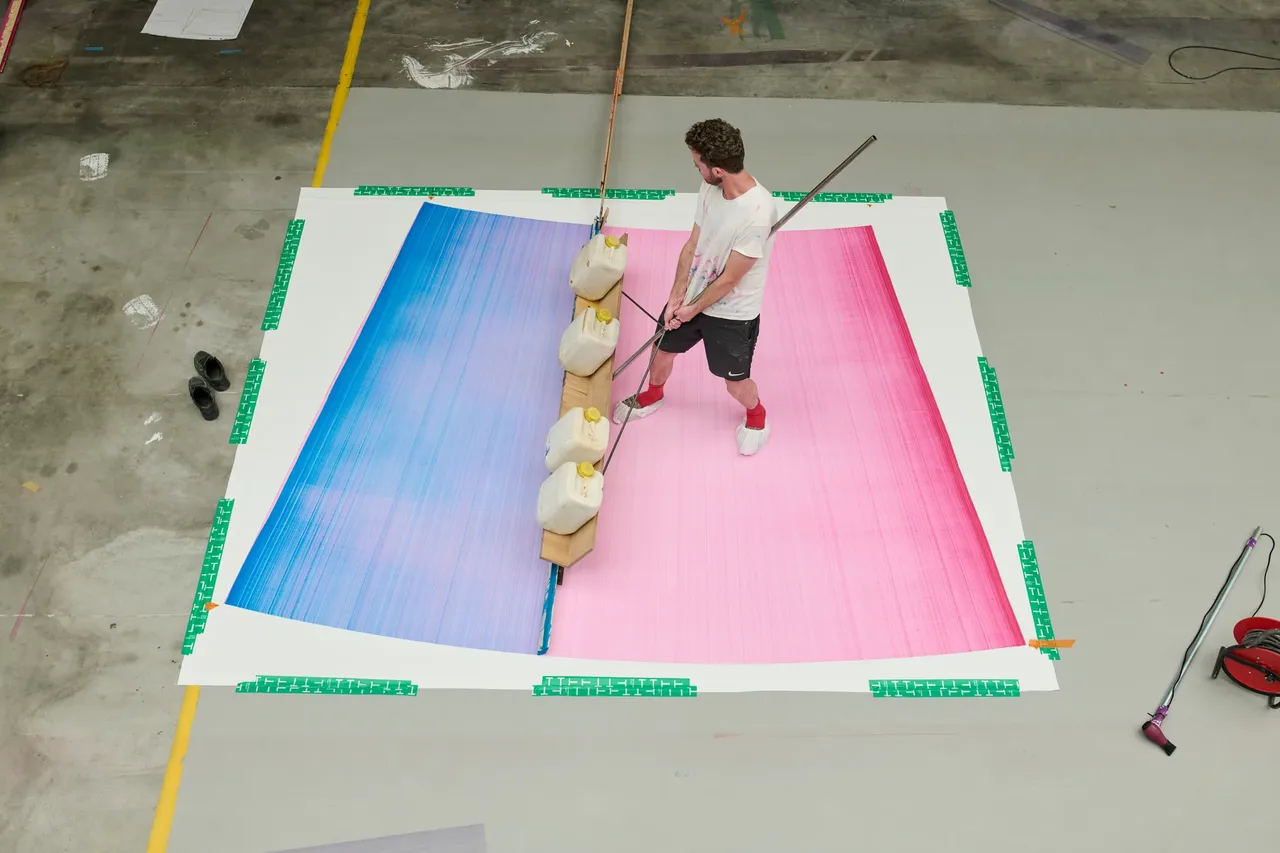
Practice, practice, and more practice: I’ve made more than a thousand works. Each work teaches me something about the tools, the materials, and the movements involved. One interesting aspect of the works shown in Valencia is that they were all made by two or three people. With this new Parallel Lines series, I can no longer execute the work entirely on my own. The movements have become too complex to coordinate individually, so working together requires a different kind of training. We have to develop a shared rhythm and learn to anticipate each other’s movements, a process of becoming attuned to one another.
I’ve read about your use of road-marking machines and your custom-built markers, which are quite unusual tools in conventional artistic practice. How do these unorthodox tools influence the final result of your work?
My work is a symbiosis between the human being and the tool. In a way, half of the work is determined by the possibilities of the machine itself. I spend a lot of time getting to know a tool, understanding what it can do and where its limitations lie. Rather than forcing it to do exactly what I want, I try to make it work for me. The first few years of my practice were focused only on tools and painting techniques. The tool isn’t simply an instrument for executing a preconceived idea; it actively shapes the work. Its physical properties, its mechanics and the way it responds to movement all become part of the final result.
Mathematical principles seem to play an important role in your work. How did this connection between art and mathematics develop in your practice?
Although the work may appear mathematical, I think my approach has more in common with physics, in the sense of trying to understand and explain how things work. I’ve always been curious about how the world is put together, and that curiosity is deeply embedded in my way of working. The Parallel Figures don’t originate from exact calculations; they emerge through experimentation and observation.
“My work is a symbiosis between the human being and the tool. In a way, half of the work is determined by the possibilities of the machine itself.”
Your work involves a high degree of coordination, meticulousness and self-control. What draws you to working within such strict systems, and do you ever feel the need to break away from them?
My work is always in dialogue with itself; each series grows out of the previous one. The exhibition Acrobatic Attempts featured works from the series Duotone Looping Lines. These movements were loose, fleeting and graceful, almost like dancing lines. I also showed my first attempts at drawing in the sky using a long ribbon attached to a model aeroplane.
Parallel Figures emerged as a response to that freedom, returning to a much stricter visual language. How close can I get to drawing a perfect circle or cylinder using an angular movement? For me, moving between freedom and constraint is an essential part of the process; one creates the conditions for the other.
Parallel Figures emerged as a response to that freedom, returning to a much stricter visual language. How close can I get to drawing a perfect circle or cylinder using an angular movement? For me, moving between freedom and constraint is an essential part of the process; one creates the conditions for the other.
I couldn’t help but wonder, when working with such a precise system, what happens when a line doesn’t turn out exactly as planned? Can these small deviations become part of your work?
My work actually began with an open-ended process of exploration and experimentation with tools. Even within a strict system, there is always a certain margin. It is a balance between the human element and the precision the work requires. For example, when you move more slowly, more paint is deposited, making the colour more visible. Small differences in speed, pressure or coordination influence the final image. Precision doesn’t mean eliminating every variation; it means understanding how those variations arise and allowing them to become part of the work.
For example, we once created a series of fifteen works for a hotel, one for each room. They all followed the same composition and choreography but were executed in fifteen different colours. They’re identical in their underlying structure, yet each is unique; no two are exactly alike, and I wouldn’t say that one is better than another. I like that idea: works can belong to the same system without losing their individuality.
For example, we once created a series of fifteen works for a hotel, one for each room. They all followed the same composition and choreography but were executed in fifteen different colours. They’re identical in their underlying structure, yet each is unique; no two are exactly alike, and I wouldn’t say that one is better than another. I like that idea: works can belong to the same system without losing their individuality.
More specifically, regarding the exhibition you have on view right now, what was the starting point? What led you to develop this new direction within your Parallel Figures series?
In Parallel Figures, parallel movements accumulate into geometric configurations that seem to shift between two and three dimensions. What interests me is that the geometry is never illustrated or imposed on the surface. It emerges through the physical act of making. The forms are the result of a movement repeated under specific conditions. By bringing these movements together, the line begins to behave like a structure, and the structure starts to suggest volume.
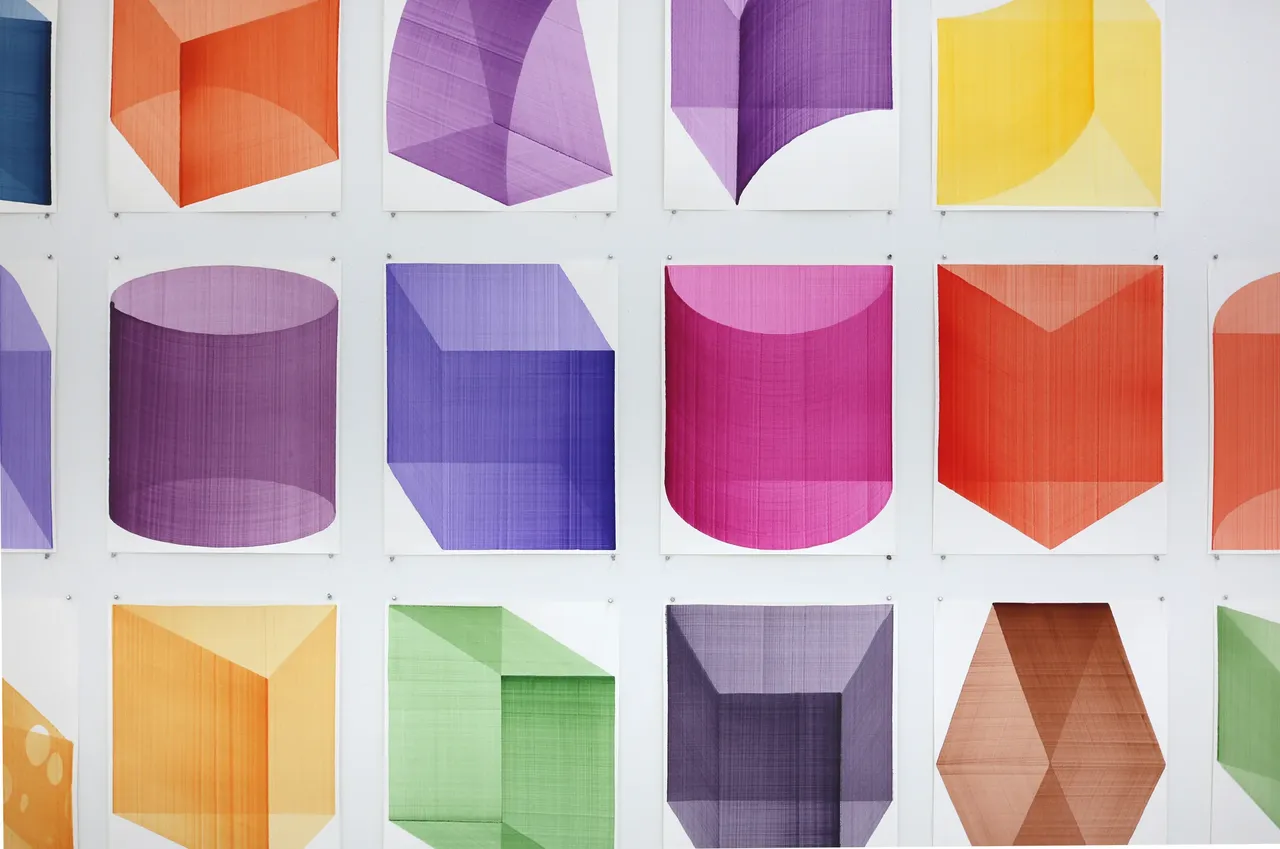
In Parallel Figures, the repeated movements seem to follow very strict rules. Do you see these restrictions as a creative challenge, or do they actually give you greater artistic freedom?
Both. On a technical level, the series introduces a new degree of difficulty. The parallel movement draws on both sides of the marker, which means I can no longer coordinate the process alone. I need additional hands and eyes, so these works are made by two people.
Artistically, it is opening up an unexpectedly rich new visual language.
Artistically, it is opening up an unexpectedly rich new visual language.
The geometric structures in these works appear almost perfectly constructed, creating a striking visual effect. Do you plan them in advance, or do some forms emerge unexpectedly as you work?
Each individual work is carefully planned and requires precise preparation. But the process as a whole develops through a sequence of discoveries. You need to make the first work to arrive at the last one. Every piece responds to the one before it. What happens if I change the angle of the line? What if we change the starting point of the line? It’s a continuous process of observation and curiosity. You see a possibility in the work you’ve just made, and that leads you towards the next one. So although each work is planned, the direction of the series is something that unfolds along the way.
I know this can be a very subjective question, and some artists prefer not to influence how the public interprets their work. But is there a particular idea or feeling you’d like visitors to take away from Parallel Figures?
The titles of the works offer some guidance and support what you see. Beyond that, I hope people can approach the work not only through their own personal references and associations, but also in a more rational, technical and analytical way. There’s something universal about these forms. They don’t necessarily need a personal narrative or a specific context to exist. I’m interested in the possibility that the work can stand on its own, inviting different ways of looking at it.
“Moving between freedom and constraint is an essential part of the process; one creates the conditions for the other.”
Your work is often defined by a vibrant colour palette. What draws you to these colours, and do they have a particular meaning in your artistic practice?
Because I cook with relatively few ingredients, colour becomes particularly important. It makes the movement visible and helps define how we can read the line. Working monochromatically, with a single colour, allows the form to become clearer and the movement to remain the focus.
There’s also a reference to my earlier job as a house painter in my work: you apply colour to a surface, creating a colour field. Too bad I could only paint with white, grey or taupe within Dutch interior culture. Luckily, now I’m in charge:)
My work does something similar, but the colour field emerges through movement rather than through conventional brushwork. Colour is highly subjective; it’s an important factor in our everyday lives. I’m interested in its directness and physical presence. Generally, I avoid using black or white as colours in the work itself. White is important primarily as the background, providing the contrast that allows the colours to stand out.
You often work on a larger scale, as in Repeating ramp, your sloping, twenty-metre-wide mural for Kunsthal Light #23 at Kunsthal Rotterdam in 2020. What possibilities does working on such a large scale offer that a smaller format might not?
It’s also very interesting to move beyond the canvas: a surface can serve a practical purpose as a floor, a wall or an architectural element. It makes the work accessible to a broader and more diverse audience. My techniques lend themselves to scaling up while retaining their original character and quality. Working on a smaller scale can actually be more difficult; some of the spray techniques I use only really work on surfaces of around ten square metres or more.
And finally, with the exhibition at Tuesday to Friday Gallery coming to an end later this month, where do you see Parallel Figures going from here?
The transition from line to form. Parallel Figures shows some of the basic geometric forms, but I can already imagine developing much more complex structures. As in architecture, you start with a cube, and from there you can build further, adding layers and ornaments. At the same time, I’m interested in translating these strict forms back into something fleeting. What if you could make a perfectly defined geometric shape fly through the air as a kind of one-second sculpture?
While I was in Spain, I discovered the chewing-gum brand Orbit. I thought that was a brilliant name when you consider this idea of movement and trajectories through space. It’s a small connection, but those are the kinds of things that make me happy. They can open up an entirely new line of thought.
While I was in Spain, I discovered the chewing-gum brand Orbit. I thought that was a brilliant name when you consider this idea of movement and trajectories through space. It’s a small connection, but those are the kinds of things that make me happy. They can open up an entirely new line of thought.