The ever-innovative Rewire Festival returns for its 12th edition in The Hague between 6 – 9 April. Ahead of their stint as the festival’s Young Artist in Residence, we chat to Amsterdam’s genre-queer electronic duo No Plexus about their debut album Gen_Y.
The Netherlands-based pair’s work is reflective of a festival that caters to more esoteric and experimental tastes. With Rewire's lineup continuing to titillate in 2023, this year’s action is not to be missed.
Amongst a field of festivals that look increasingly identikit, Rewire platforms a diverse array of artists closer to the margins than the mainstream.
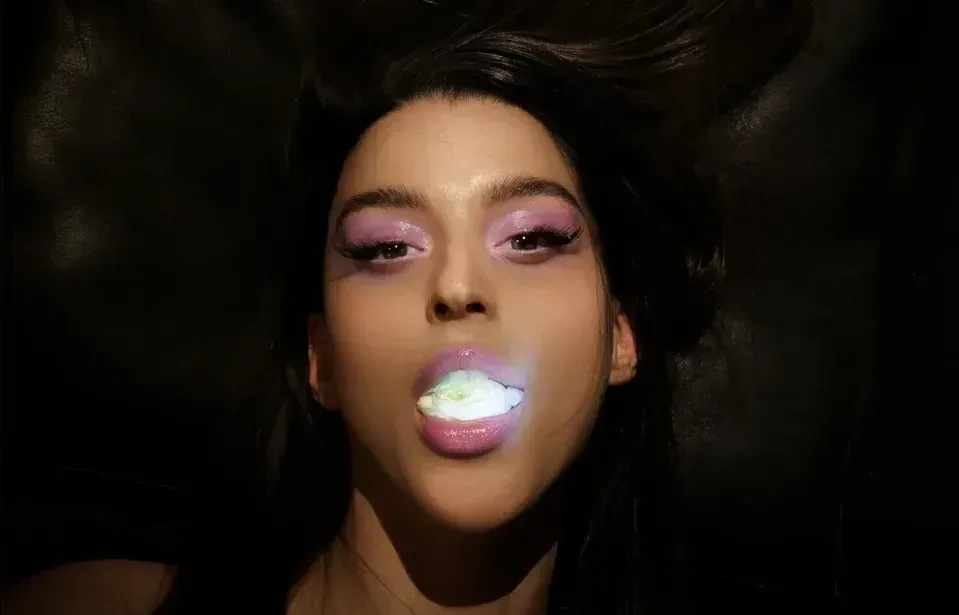
Pushing the boundaries of the electronic, jazz, and pop genres, to name a few, this year’s Rewire showcase lets the likes of Kelela and Fever Ray loose to perform their stunning, new LPs. At the same venues, collaborative performances by Tim Hecker and multidisciplinary artist Vincent de Belleval, amongst many others, and world premieres from eclectic newbies like Alto Arc (consisting of Deafheaven’s George Clarke, PC Music’s Danny L Harle, Hundred Waters’ Trayer Tryon and make-up artist Isamaya Ffrench) are set to fill The Hague with wide-ranging sound.
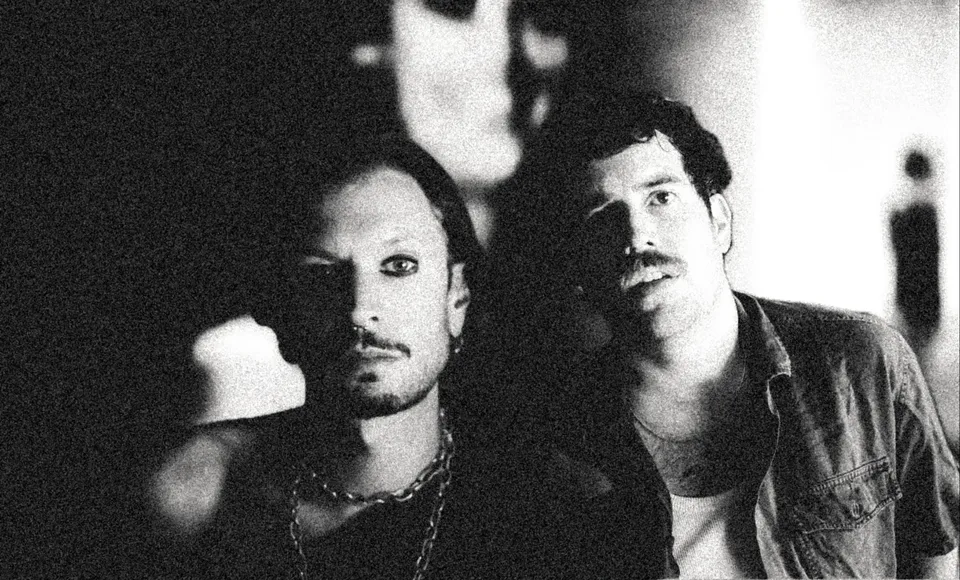
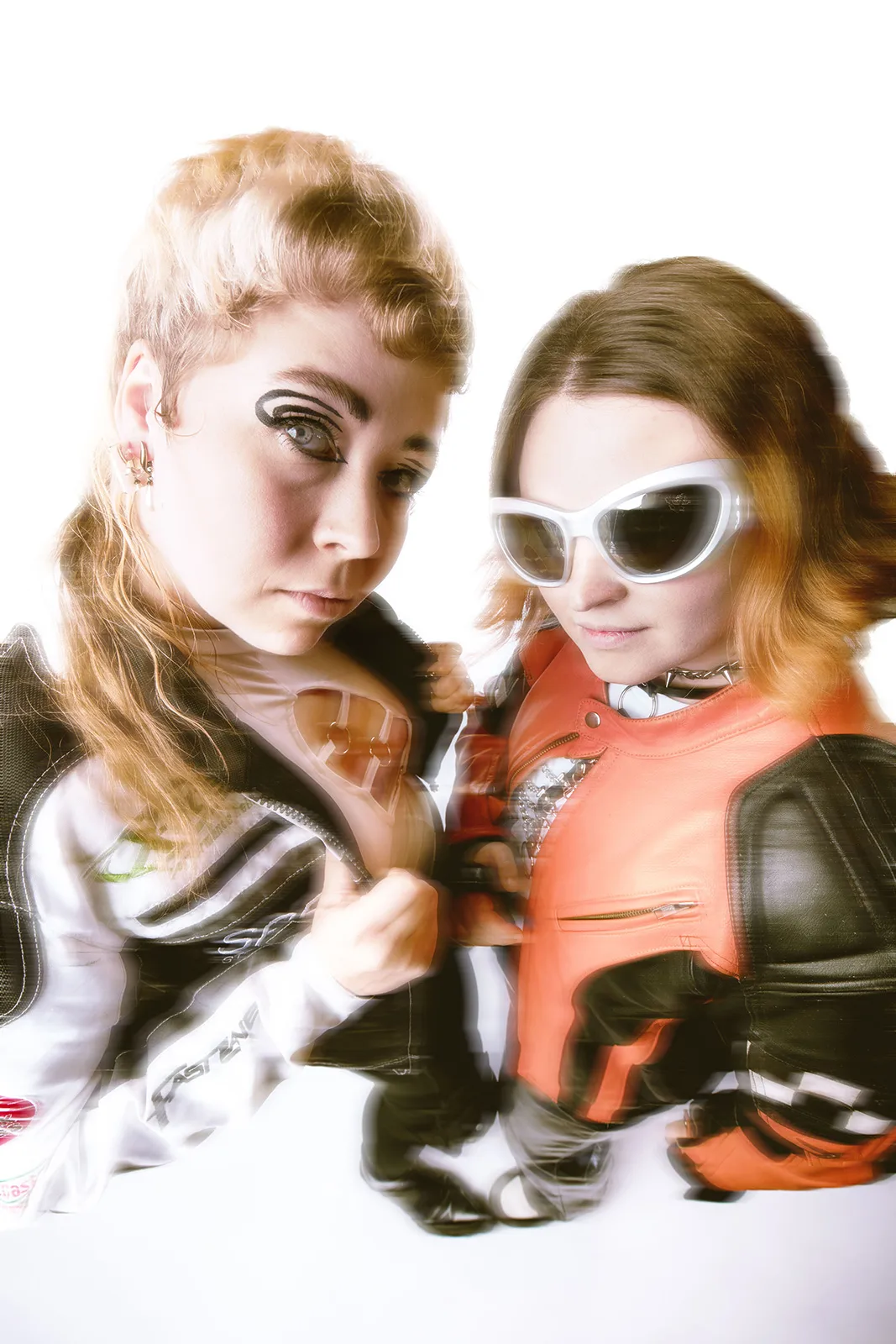
No Plexus – consisting of vocalist and composer Brechtje Plexus (Bec Plexus) and producer Allison Wright (No Compliments) – are another emerging duo given the opportunity to strut their stuff. For the 2023/24 season, they are Rewire’s Young Artist in Residence and as we speak, are all-set to release their debut LP Gen_Y.
The album has a variety of tastes and textures to devour. At one moment, vocals feel like a protest, commanding with a speech-style cadence, before moving to more operatic terrain as well as into regular pop structures. Production is equally changeable, while retaining a common penchant for the avant-garde. Sometimes it's abrasive, reminiscent of Amnesia Scanner’s brutal electronics, and others there’s a lighter touch, bringing a PC Music-style bubblegum flavour. All of the while, songs are interspersed with lengthy or manipulated samples you might find on a traditional hip-hop track.
In the age of the internet, such diversity is perhaps to be expected – but the sound itself still makes you stand up and take notice. We chatted to No Plexus about the story behind their album Gen_Y, the duo’s own working and private relationship, as well as what they have planned for Rewire 2023.
Amongst a field of festivals that look increasingly identikit, Rewire platforms a diverse array of artists closer to the margins than the mainstream.
Pushing the boundaries of the electronic, jazz, and pop genres, to name a few, this year’s Rewire showcase lets the likes of Kelela and Fever Ray loose to perform their stunning, new LPs. At the same venues, collaborative performances by Tim Hecker and multidisciplinary artist Vincent de Belleval, amongst many others, and world premieres from eclectic newbies like Alto Arc (consisting of Deafheaven’s George Clarke, PC Music’s Danny L Harle, Hundred Waters’ Trayer Tryon and make-up artist Isamaya Ffrench) are set to fill The Hague with wide-ranging sound.
No Plexus – consisting of vocalist and composer Brechtje Plexus (Bec Plexus) and producer Allison Wright (No Compliments) – are another emerging duo given the opportunity to strut their stuff. For the 2023/24 season, they are Rewire’s Young Artist in Residence and as we speak, are all-set to release their debut LP Gen_Y.
The album has a variety of tastes and textures to devour. At one moment, vocals feel like a protest, commanding with a speech-style cadence, before moving to more operatic terrain as well as into regular pop structures. Production is equally changeable, while retaining a common penchant for the avant-garde. Sometimes it's abrasive, reminiscent of Amnesia Scanner’s brutal electronics, and others there’s a lighter touch, bringing a PC Music-style bubblegum flavour. All of the while, songs are interspersed with lengthy or manipulated samples you might find on a traditional hip-hop track.
In the age of the internet, such diversity is perhaps to be expected – but the sound itself still makes you stand up and take notice. We chatted to No Plexus about the story behind their album Gen_Y, the duo’s own working and private relationship, as well as what they have planned for Rewire 2023.
So let’s start from the beginning. I understand you both attended the Conservatory of Amsterdam – did you meet there? What’s the history of No Plexus and how did the two of you come to work together, as I know you have both released music independently?
Allison: We actually met in rural Massachusetts while we were both attending the Bang on a Can Summer Festival, which is a kind of guided musicians artist residency. I flew from Melbourne, Australia to participate in the programme as a trumpet player, and Brechtje came from Amsterdam to be there as a composer. We had a summer romance, then didn’t meet again for another year or so. There’s a really good story about that time and it deserves its own film adaptation, but that’s the TL;DR.
Brechtje: In a nutshell, there has been a kind of fearlessness between us from the beginning. We spent that summer trespassing on private property to roll down grassy hills and getting kicked out of Sol LeWitt’s exhibition space at MASS MoCA for jamming in there together after hours. It felt logical for that to evolve into No Plexus, continuing to jump from adventure to adventure together.
Brechtje: In a nutshell, there has been a kind of fearlessness between us from the beginning. We spent that summer trespassing on private property to roll down grassy hills and getting kicked out of Sol LeWitt’s exhibition space at MASS MoCA for jamming in there together after hours. It felt logical for that to evolve into No Plexus, continuing to jump from adventure to adventure together.
And that next adventure is your upcoming debut LP Gen_Y, which you’ve described as a “comprehensive sonic perspective about the millennial experience”. What was the thinking behind making this the theme of your album at this moment in time?
Brechtje: It all started when I had tea with Dutch composer Louis Andriessen in 2016, and ended up crying in front of him. He was famous for his politically charged music that he made with his group Actie Notenkraker in the 1970s. I desperately wanted to make art that engaged with the world in a similarly bold and clear way, but I had no clue how I could make political art in a world that seemed to have become so much more complex.
It dawned on me that my generation, European millennials, had a pretty negative public image – at that time around 2017 anyway – and a complex variety of lived experiences. I asked one of my collaborators, poet Boris de Jong, to help me write a manifesto that would reflect that and give us a sense of direction and pride. We started interviewing millennials in several European countries. In the middle of that process, we discovered a massive European study that gave insights into socio-economic matters concerning millennials. Unsurprisingly, Boris came back to me with so many poems that there were enough lyrics to create an entire album. There was just an overwhelming number of perspectives and angles to shine a light on.
Allison: The theme of this album is really close to my heart. I often find myself cripplingly anxious when thinking about the way things are globally, and I’ve always wanted to make work that connects with people who feel the same way. At first though, the topic was so fucking dark that I couldn’t touch it. We were in lock-down in 2020 and I just wanted to make really stupid, happy music. I showed some sketches to Brechtje of versions of the songs where I had included sarcasm, irony and humour to balance out the pure dread that the initial demos had. I think this was where this album really started to feel like the two of us.
Brechtje: And that, sweet child, is when No Plexus was born.
It dawned on me that my generation, European millennials, had a pretty negative public image – at that time around 2017 anyway – and a complex variety of lived experiences. I asked one of my collaborators, poet Boris de Jong, to help me write a manifesto that would reflect that and give us a sense of direction and pride. We started interviewing millennials in several European countries. In the middle of that process, we discovered a massive European study that gave insights into socio-economic matters concerning millennials. Unsurprisingly, Boris came back to me with so many poems that there were enough lyrics to create an entire album. There was just an overwhelming number of perspectives and angles to shine a light on.
Allison: The theme of this album is really close to my heart. I often find myself cripplingly anxious when thinking about the way things are globally, and I’ve always wanted to make work that connects with people who feel the same way. At first though, the topic was so fucking dark that I couldn’t touch it. We were in lock-down in 2020 and I just wanted to make really stupid, happy music. I showed some sketches to Brechtje of versions of the songs where I had included sarcasm, irony and humour to balance out the pure dread that the initial demos had. I think this was where this album really started to feel like the two of us.
Brechtje: And that, sweet child, is when No Plexus was born.
As you say, you noted the Millennial experience as one of being “deeply anxious [...] and an overwhelming sense of dread”. Many would argue this is more akin to Gen-Z, like the writer Venkatesh Rao who describes Gen-Z and young millennials as ‘Domestic Cosy’ : people who have made “something of a pre-emptive retreat from worldly affairs”. Many problems frequently associated with these anxious feelings, like climate change, high cost of living and political injustices, are unevenly distributed and can affect any group at any time in different ways – What do you think of these constructed generational divisions? Is this album looking to rail against them? Are you instead reclaiming what it means to be millennial on your own terms? Or maybe something else entirely…
Brechtje: You can’t make hard boundaries between generations. We ourselves are young millennials, and definitely have a tendency to lean into “domestic cosy” like Gen-Z. But, while people of all ages can go through the same shit show now, their experience of it can be vastly different depending on which generation they’re from and which generation they were raised by.
Our existential dread isn’t, like Gen-Z, so much rooted in the fact that the world is fucked; it’s rooted in the grief for what the world was before it got fucked.
When we started making this album in 2017, the oldest members of Gen-Z were just finishing high school, while millennials were already in the middle of their grown-up lives. Domestic cosy as a coping strategy didn’t exist yet. Millennials have a very different existential dread to deal with than that of Gen-Z or boomers. One that, as Venkatesh Rao’s article notes, deals with years of self-exhaustion due to the lauded capitalist individualist culture of hustling, #girlboss’ing, and social media influencers.
Allison: For a lot of millennials living in reasonably wealthy countries, our 20s have been spent in truly volatile living and working situations - rental houses with unsafe living conditions, getting a masters degree (at minimum) all while enduring an unpaid internship, wage theft in the gig economy and no savings. Those who managed to endure all this in the 2010s pulled an effortless smile, took a selfie, added a filter and posted #girlboss to Instagram, exercising the little control that they had over their lives to create an idealised version of themselves. Those who didn’t use their platform to influence, shared memes and GIFs commiserating with others over the mental health issues their unstable living and work situations had created or intensified.
I think a lot of millennials remember a time in which the routes to success that our parents travelled, seemed also possible for us. But as we approached these goals - like owning our own home - the goalposts began to recede from view. It seems as if the Boomer generation really intended for the next generation (their children) to never leave adolescence.
The forced extension of our adolescence is generational theft, and I think millennials are becoming aware that the rules of the game have been changing the entire time we’ve been playing, deliberately stacking the odds against us. And it goes without saying that the odds for lower socio-economic groups and oppressed communities are being stacked even higher. Add this onto the enormous, very real threat of climate change, political tensions and the multitude of social injustices globally and you’ve got a lot of people in their late 20s and early 30s deciding not to have children, and joking-not-joking about where on earth would be the best place to build an underground bunker.
Brechtje: A lot of promises of a bright future were never made in the first place to Gen-Z. Which is tragic in its own way, but perhaps you can say they were forced into a particular kind of cynicism, while a large percentage of millennials were blindsided by it later on. It’s a different kind of grief. We made this album as a way to process these emotions ourselves, and hopefully to create a space for others to do the same.
Our existential dread isn’t, like Gen-Z, so much rooted in the fact that the world is fucked; it’s rooted in the grief for what the world was before it got fucked.
When we started making this album in 2017, the oldest members of Gen-Z were just finishing high school, while millennials were already in the middle of their grown-up lives. Domestic cosy as a coping strategy didn’t exist yet. Millennials have a very different existential dread to deal with than that of Gen-Z or boomers. One that, as Venkatesh Rao’s article notes, deals with years of self-exhaustion due to the lauded capitalist individualist culture of hustling, #girlboss’ing, and social media influencers.
Allison: For a lot of millennials living in reasonably wealthy countries, our 20s have been spent in truly volatile living and working situations - rental houses with unsafe living conditions, getting a masters degree (at minimum) all while enduring an unpaid internship, wage theft in the gig economy and no savings. Those who managed to endure all this in the 2010s pulled an effortless smile, took a selfie, added a filter and posted #girlboss to Instagram, exercising the little control that they had over their lives to create an idealised version of themselves. Those who didn’t use their platform to influence, shared memes and GIFs commiserating with others over the mental health issues their unstable living and work situations had created or intensified.
I think a lot of millennials remember a time in which the routes to success that our parents travelled, seemed also possible for us. But as we approached these goals - like owning our own home - the goalposts began to recede from view. It seems as if the Boomer generation really intended for the next generation (their children) to never leave adolescence.
The forced extension of our adolescence is generational theft, and I think millennials are becoming aware that the rules of the game have been changing the entire time we’ve been playing, deliberately stacking the odds against us. And it goes without saying that the odds for lower socio-economic groups and oppressed communities are being stacked even higher. Add this onto the enormous, very real threat of climate change, political tensions and the multitude of social injustices globally and you’ve got a lot of people in their late 20s and early 30s deciding not to have children, and joking-not-joking about where on earth would be the best place to build an underground bunker.
Brechtje: A lot of promises of a bright future were never made in the first place to Gen-Z. Which is tragic in its own way, but perhaps you can say they were forced into a particular kind of cynicism, while a large percentage of millennials were blindsided by it later on. It’s a different kind of grief. We made this album as a way to process these emotions ourselves, and hopefully to create a space for others to do the same.
That experience of a world that had greater potential and gave individuals greater possibility to achieve is definitely something that rings true with millennials I’ve spoken to – whereas for Gen-Z, you’re right: that hope hasn’t been there. Coming back to a ‘domestic cosy’ kind of sensibility though, I’m always interested in whether musicians like to shut themselves off and avoid external influences or conversely, whether they want to consume everything in their field to know what’s already been done. It’s especially interesting for music that brings forth a vast array of associations, such as your album Gen_Y. What camp do you both fall into and why? And, if it’s the latter, who of your contemporaries are you listening to at the moment?
Allison: This is a really interesting question for us because I think our duo has a perfect yin-yang of this exact phenomenon.
Brechtje: Yes, totally. Allison is like a walking music encyclopaedia. I can really see you (Allison) getting energy from listening to a particular artist or playing a new instrument, and then evolving that into a new track. You also seem to have photographic memory when it comes to sound and music. You can quote everything! I think I’m similar in the sense of wanting to listen to anything that makes sound, and not caring about genres and stuff. But the difference is that I have such bad memory recall, so all the impressions and references just go into a big cocktail and then when I create, it kind of bubbles up like from a magical witches brew.
Allison: Yeah, Brechtje just feels her way through when we make material while I’m more like “Let’s pull up the 1993 Chicago Symphony recording of Stravinsky's Firebird to get the perfect sample of an orchestra hit for this beat”. But as for who we’re listening to right now…
Brechtje: Still SOPHIE of course.
Allison: Always. And Lyra Pramuk, Arca, Björk, A.G. Cook, ML Buch, Oneohtrix Point Never, Oklou and Jon Hopkins.
Brechtje: Also people like Joni Mitchel and FKA Twigs between the lines, or actually creating the vocal lines in the first place. And Caroline Polachek - I adore her, such an artist! And I love to dive into Kamixlo, but we still have a way to go to get as incredibly dark and raw as they get. Although, our friend and collaborator Tilman Robinson got pretty close at a few points with his contributions to Gen_Y.
Allison: Yeah, Tilman really helped us bring the sound of pure existential dread into the record. His solo music is beautifully devastating and often goes over similar themes, so we felt it was essential we get him involved.
Brechtje: Yes, totally. Allison is like a walking music encyclopaedia. I can really see you (Allison) getting energy from listening to a particular artist or playing a new instrument, and then evolving that into a new track. You also seem to have photographic memory when it comes to sound and music. You can quote everything! I think I’m similar in the sense of wanting to listen to anything that makes sound, and not caring about genres and stuff. But the difference is that I have such bad memory recall, so all the impressions and references just go into a big cocktail and then when I create, it kind of bubbles up like from a magical witches brew.
Allison: Yeah, Brechtje just feels her way through when we make material while I’m more like “Let’s pull up the 1993 Chicago Symphony recording of Stravinsky's Firebird to get the perfect sample of an orchestra hit for this beat”. But as for who we’re listening to right now…
Brechtje: Still SOPHIE of course.
Allison: Always. And Lyra Pramuk, Arca, Björk, A.G. Cook, ML Buch, Oneohtrix Point Never, Oklou and Jon Hopkins.
Brechtje: Also people like Joni Mitchel and FKA Twigs between the lines, or actually creating the vocal lines in the first place. And Caroline Polachek - I adore her, such an artist! And I love to dive into Kamixlo, but we still have a way to go to get as incredibly dark and raw as they get. Although, our friend and collaborator Tilman Robinson got pretty close at a few points with his contributions to Gen_Y.
Allison: Yeah, Tilman really helped us bring the sound of pure existential dread into the record. His solo music is beautifully devastating and often goes over similar themes, so we felt it was essential we get him involved.
I can sense that diverse array of artists in the sound, most definitely. And having a natural split between you both, in terms of thinking about and working with music, must make for a satisfying division of labour too.On that, both your personal lives aren’t overtly part of this album, however it was interesting to find out that you are engaged to be married. It seems to be surprisingly rare to see romantic partners in music – how did you both find the experience? What was the process of making the album like? And was your relationship a natural evolution of that musical partnership you speak of, or was it the other way round?
Allison: Honestly, it’s been every shade of emotion. No exaggeration. Making this album together during the pandemic was a real challenge.
Brechtje: (Laughs) Yes, sometimes making this album seemed so impossible that it felt like we either had to choose between the project or our relationship. At some point we actually quit the project for that reason, but finally we managed to do it both.
Allison: Working with your partner on a creative project is kind of like opening up your relationship. You need excellent communication, the capacity to openly discuss your emotions in the moment and the wisdom to give each other space when it’s needed.
Brechtje: And so, so, so much trust.
Allison: For us the relationship came first, and it still does. The musical partnership is just a natural progression of the energy we have as a couple.
Brechtje: Beautifully said, babe.
Allison: Thanks babe.
Brechtje: It’s a relief to have signed with The Platform Records though. They’re a collective and label that organises interdisciplinary club nights in the most vibrant of nooks in Amsterdam. When you’re there, it seems like everyone around you is either a fashion designer, a CGI artist or a DJ. It’s great that this crew now has joined our team, helping us with all the practical things like bookings and distribution. That leaves us with energy to be creative and cuddly.
Brechtje: (Laughs) Yes, sometimes making this album seemed so impossible that it felt like we either had to choose between the project or our relationship. At some point we actually quit the project for that reason, but finally we managed to do it both.
Allison: Working with your partner on a creative project is kind of like opening up your relationship. You need excellent communication, the capacity to openly discuss your emotions in the moment and the wisdom to give each other space when it’s needed.
Brechtje: And so, so, so much trust.
Allison: For us the relationship came first, and it still does. The musical partnership is just a natural progression of the energy we have as a couple.
Brechtje: Beautifully said, babe.
Allison: Thanks babe.
Brechtje: It’s a relief to have signed with The Platform Records though. They’re a collective and label that organises interdisciplinary club nights in the most vibrant of nooks in Amsterdam. When you’re there, it seems like everyone around you is either a fashion designer, a CGI artist or a DJ. It’s great that this crew now has joined our team, helping us with all the practical things like bookings and distribution. That leaves us with energy to be creative and cuddly.
And, in relation to this, you describe your music as “genre-queer”. How do you see your queerness intersecting with your music? How does music allow you to express this side of you?
Allison: I like to think of my queerness as a permission slip to recontextualise all kinds of traditions and structures. This also extends to the way I approach music making. I think we both find ourselves curious about the languages of many different genres, but don’t see the need to remain fixed to any central point. We dip our fingers into many genres to get what we feel is the required conceptual result, and something about that feels very non-traditional and queer.
Brechtje: Totally. There is also something particularly nice about crowds where the majority is queer. The atmosphere amongst the people in the hall and towards the artist or DJ is different. I guess “queer” reflects a general openness that we want to associate ourselves with. Maybe by making music that can fit everywhere and nowhere, we keep reminding ourselves that also as people we can be whatever we want to be.
Brechtje: Totally. There is also something particularly nice about crowds where the majority is queer. The atmosphere amongst the people in the hall and towards the artist or DJ is different. I guess “queer” reflects a general openness that we want to associate ourselves with. Maybe by making music that can fit everywhere and nowhere, we keep reminding ourselves that also as people we can be whatever we want to be.
And that sense of being what you want to be leads nicely into the transfiguration found in your new music video for Butterfly by AuthessX and Mees Joachim, showing a human-butterfly hybrid entering a world in crisis. Having used 3D software and animation tools, the production process can be intricate but produce some unique results – why did you feel the style of video was best suited for this single? And what was it like to work with artists in this sphere of art?
Brechtje: Well, Mees is one of my oldest friends. When we met, he was making gigantic nude paintings of himself and recording entire albums in a day - he is always doing something intriguing. Mees has created most of my visuals, so when he got into CGI it was an obvious step for me to join him on that journey. With 3D software anything is possible, and I love the absurdity that it enables. It fits particularly well with the 90s and early 2000s vibes we wanted our album to have, like Spy Kids, y2k translucent tech and Playstation 1 era cut-scenes, whilst still having a really modern feel. The characters that Mees designed for this video - human-butterfly mutants, goblins and chrome chrysalides - make sense in that context.
Allison: The technology is also becoming more and more accessible and that’s allowing artists to create some really engaging stuff without needing a huge studio and a massive team. It was really down to earth actually; we recorded all of the motion capture in AuthessX’s roommates bedroom in Berlin with all the furniture pressed up against one wall and taped black X’s on the floor for the camera footage to integrate with the animation software. Brechtje got a video tutorial for some choreography from our friend Maggie Madfox in Australia that same morning. It’s kind of a y2k futurist fever dream that this was all enabled through the internet and tonnes of technology. Fifteen or twenty years ago, this would have been impossible, but it feels oddly grassroots.
Brechtje: But obviously, in the end it all comes down to AuthessX being the magical maker he is.
Allison: We had an instant connection with AuthessX. We offered him a few songs as options to work on but he fought for Butterfly. We bonded over the fact that we prefer to collaborate with fellow queer artists, as there’s something in the communication that’s just so intuitive and the artistic visions from both parties tend to align in a really organic way.
Brechtje: It’s strange how relaxed and exhilarating it’s been to see AuthessX animate the characters that Mees conceived, and to peek over his shoulder while he birthed an entire world and timeline around them.
Allison: The technology is also becoming more and more accessible and that’s allowing artists to create some really engaging stuff without needing a huge studio and a massive team. It was really down to earth actually; we recorded all of the motion capture in AuthessX’s roommates bedroom in Berlin with all the furniture pressed up against one wall and taped black X’s on the floor for the camera footage to integrate with the animation software. Brechtje got a video tutorial for some choreography from our friend Maggie Madfox in Australia that same morning. It’s kind of a y2k futurist fever dream that this was all enabled through the internet and tonnes of technology. Fifteen or twenty years ago, this would have been impossible, but it feels oddly grassroots.
Brechtje: But obviously, in the end it all comes down to AuthessX being the magical maker he is.
Allison: We had an instant connection with AuthessX. We offered him a few songs as options to work on but he fought for Butterfly. We bonded over the fact that we prefer to collaborate with fellow queer artists, as there’s something in the communication that’s just so intuitive and the artistic visions from both parties tend to align in a really organic way.
Brechtje: It’s strange how relaxed and exhilarating it’s been to see AuthessX animate the characters that Mees conceived, and to peek over his shoulder while he birthed an entire world and timeline around them.
So, you are Rewire’s Young Artist in Residence for 2023 and 2024; a festival known for its experimental lineups and for showcasing emerging talent. And Brechtje, I believe you were due to play the festival as a solo artist in 2020 before Covid-19 lockdowns hit. What does this opportunity mean to you both? And what does this collaboration with Rewire entail?
Brechtje: This is truly a dream come true. I think before the 2020 booking, I had already been pitching other projects to Rewire for like five years. Just trying to get through with their info@ address. But looking back, it makes sense that it’s only falling into place now. By becoming a duo with Allison, my experimental flavour met Allison’s beat-driven production style, and that combination is exactly what Rewire stands for. To me, it feels like Rewire, and particularly artistic director Bronne, has our backs. Doing art can be pretty terrifying, because there are no rights or wrongs. Having someone experienced to brainstorm with and to mirror us, is such a precious thing.
Allison: Practically speaking, we get to perform at this year’s edition as well as next year’s edition, and we get regular professional and artistic mentoring from the team. Bronne’s [Keesmaat, Rewire Director] also been opening a lot of doors for us by introducing us to artists to collaborate with.
Brechtje: Also, without this collaboration, I don’t think we would have found ourselves researching where we can rent a mechanical rodeo bull for a music video.
Allison: (laughs) Coming soon.
Allison: Practically speaking, we get to perform at this year’s edition as well as next year’s edition, and we get regular professional and artistic mentoring from the team. Bronne’s [Keesmaat, Rewire Director] also been opening a lot of doors for us by introducing us to artists to collaborate with.
Brechtje: Also, without this collaboration, I don’t think we would have found ourselves researching where we can rent a mechanical rodeo bull for a music video.
Allison: (laughs) Coming soon.
We all love a mechanical bull. But for your shows, you’ve developed two live-sets around Gen_Y, I believe. Can we have any hints as to the spectacle you’ve got in-store for Rewire 2023?
Allison: We’ve been working with stage and lighting designer Emmanuel Biard to bring Gen_Y to the stage in a way that really encapsulates the tone of the album and helps the audience follow the music’s twists and turns. While this album isn’t about either of us personally, on-stage we need to give a performance in which we represent a generation. We bonded with Emmanuel about early internet abstractions like avatars and display pics. That led to us including webcams in our stage design that use facial tracking software to follow us while we perform. The video of us is visible on holographic displays - which are fans that have LED strips on their blades, so when they spin fast enough it produces an image that looks like it’s hovering in space. We combine that with projections on layers of smoke and haze, so the whole venue feels immersed in a digital abstraction of the story.
Brechtje: Never a dull moment.
Brechtje: Never a dull moment.