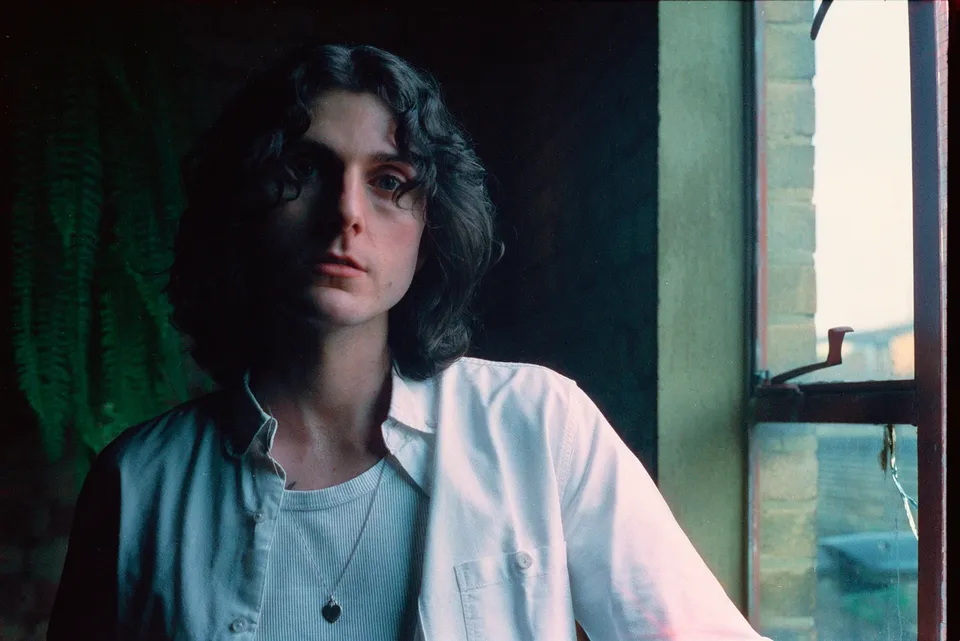
We have become remarkably good at consuming music without moving. We listen while scrolling, dance while filming ourselves, and experience the club through other people’s stories before we have even left the house. Bass Persuades pushes against that stillness. “If you ain't moving, baby, why are we here?” Miley Cyrus asks on the title track. It’s a simple question, but one that establishes the physicality of the record: turn it up, surrender to the rhythm, and let the body take over.
Following the cinematic world of Something Beautiful, Bass Persuades feels less concerned with spectacle than with intimacy. It’s an album about surrender to music, to love, to pleasure, to ageing without surrendering the self. For an artist whose career has been repeatedly defined by reinvention, Miley sounds unusually uninterested in introducing us to another version of herself. Instead, she seems comfortable inhabiting what is already there.
Bass Persuades sets the tone. “Walk into the party like the party is mine” arrives with the confidence that has always been recognisable in Miley, while the bass does exactly what its title promises. The song is catchy without feeling disposable, built around the pleasure of simply being in a room where people are moving together. There’s no elaborate mythology to decode. The invitation is straightforward: dance.
That sense of surrender becomes more complicated on Different Religion, featuring Model/Actriz. In her conversation with Zane Lowe, Miley describes the song as an expression of what love sounds like to her, and the lyrics immediately reveal a tension between intimacy and independence. “I crave to believe him” is a remarkably vulnerable admission, while “I have my own God” draws a boundary around that vulnerability. She can give herself to another person without making them the centre of her identity.
That choice of collaboration feels more significant than a conventional guest feature. Model/Actriz’s influence seems to reach beyond Cole Haden’s contribution: Different Religion is one of the clearest moments where Miley adopts the band’s darker, industrial vocabulary, with abrasive textures and a physicality that feels closer to their world than to her recent pop records. Rather than simply placing Model/Actriz inside a Miley song, she seems to step into theirs. It’s perhaps the album’s most convincing glimpse of where this sound could take her, making their relatively brief presence feel frustratingly short.
If Different Religion is about learning to trust another person without losing yourself, Let's Get Married is about allowing yourself to want something you may once have resisted. For an artist whose public image has so often been associated with freedom and independence, the directness of “let’s get married tonight” feels revealing. There’s something impulsive about proposing marriage inside a pop song, but also something unexpectedly tender. “Baby, what did I do to deserve you?” belongs to the honeymoon phase, the desire to make a moment of happiness last forever. Musically, the song is slower and more repetitive than some of the album’s more adventurous moments, but its simplicity suits its sentiment. Miley isn’t performing rebellion here. She’s simply enjoying being in love.
Orbit takes that intimacy further. “My feet are off the ground whenever you are around” and “I want to orbit you” describe desire without reducing it to physical possession. To orbit someone is to want their presence, their voice, their ideas, their personality. To be drawn towards them without necessarily needing to touch them. The song is largely carried by Miley’s voice, making it one of the album’s most exposed moments.
Then comes Aftermath, where she appears to reject the idea that love needs to be intellectually impressive to be meaningful. “Sick of poets being profound” could almost function as a manifesto for the album itself. After years of experimenting with genres, personas and aesthetics, there’s little interest here in saying something that has never been said before. The songs don’t need to reinvent the language of love. They need to inhabit it.
That simplicity is particularly striking given Miley’s history of performance. From the fictional construction of Hannah Montana, through the provocation of Bangerz, the rock mythology of Plastic Hearts and the cinematic maximalism of Something Beautiful, reinvention has become almost inseparable from her public identity. Bass Persuades is different. There’s comparatively little sense that Miley needs to perform a new character for us.
Redlights is perhaps the clearest example. “We share the bed now” is almost disarmingly ordinary, while “even enjoyed that last goodbye because I have something to believe in” turns separation into evidence of security rather than loss. “Surrender lovingly” feels particularly fitting. Miley has spent so much of her career writing about breaking free that surrender becomes more interesting when it’s chosen. Her voice is smooth and sweet, unmistakably hers, without reaching for the emotional devastation of Wrecking Ball or the self-recovery of Flowers. Its emotion is quieter.
Not every moment lands with the same force. Neon Signs, featuring Andrew Wyatt of Miike Snow, never quite finds the rhythm the album promises, while Snow leaves a comparatively faint impression. The record's more interesting experiments arrive elsewhere.
Innocent Ways shifts the atmosphere completely. Its opening feels closer to an underground rave than the polished pop world Miley has traditionally occupied, with electronic production giving the song a more nocturnal physicality. Yet “Grace comes with age” changes the perspective. She’s no longer simply celebrating the party. She’s looking back at it. The track becomes a small conversation with the Miley of previous eras: the woman who turned nightlife, rebellion and provocation into spectacle. But there’s no desperate attempt to return to that version of herself. The techno-leaning Bass Persuades remix pushes the record even further into unfamiliar territory, suggesting that growing older doesn’t mean becoming less curious about pleasure.
This is what makes the album feel most revealing. Miley isn’t rejecting her past, but neither is she trying to recreate it. She can remember the party while admitting that she has changed. She can fall in love without presenting it as a loss of independence. She can grow older without treating ageing as something to hide.