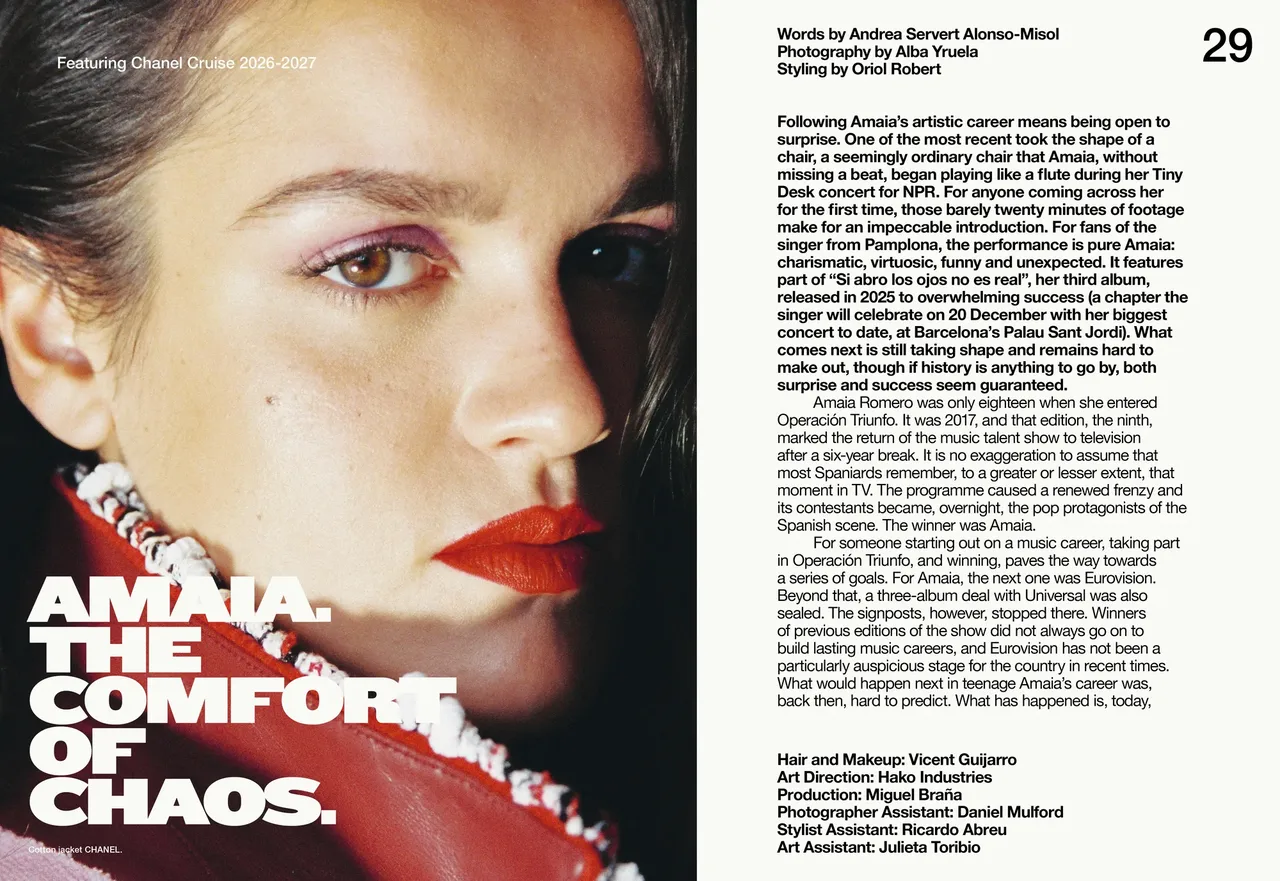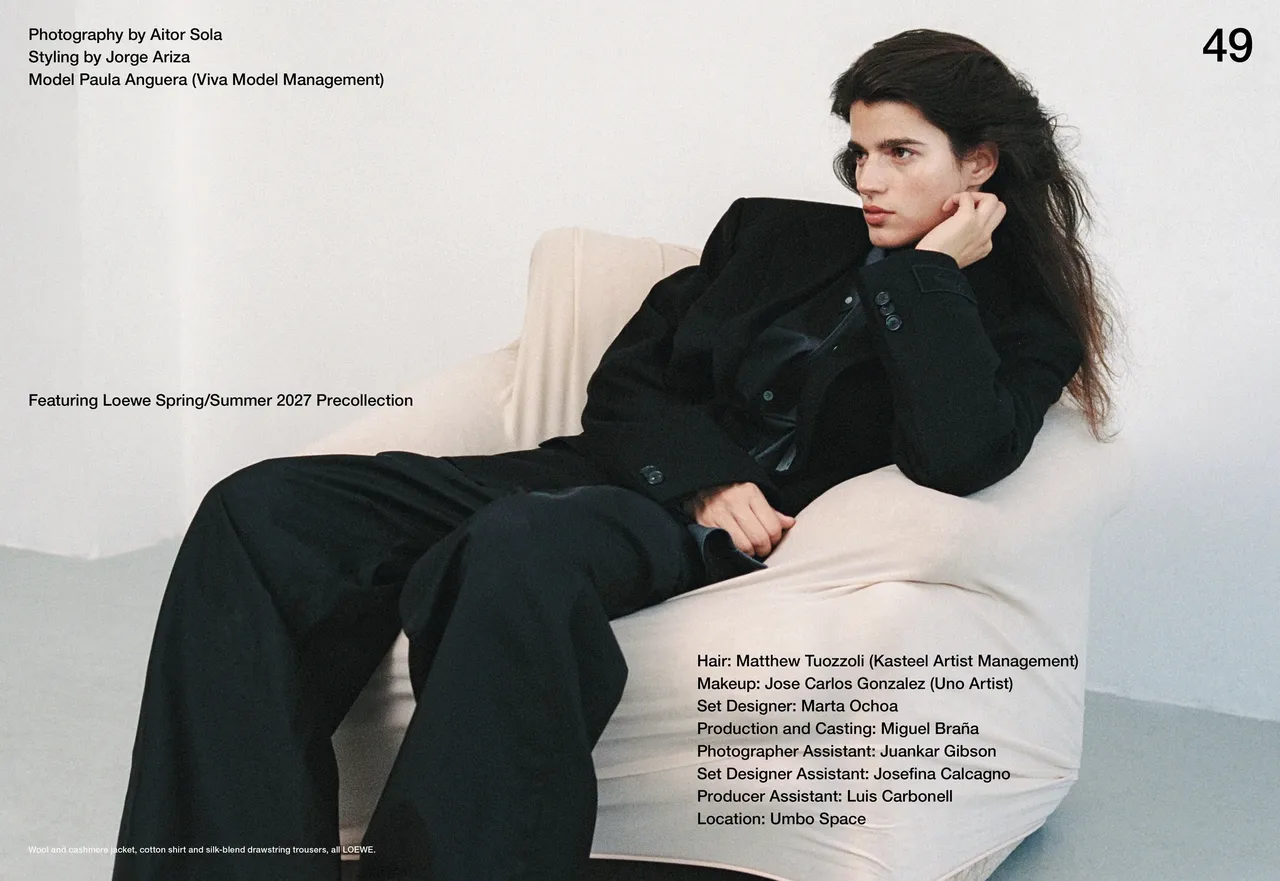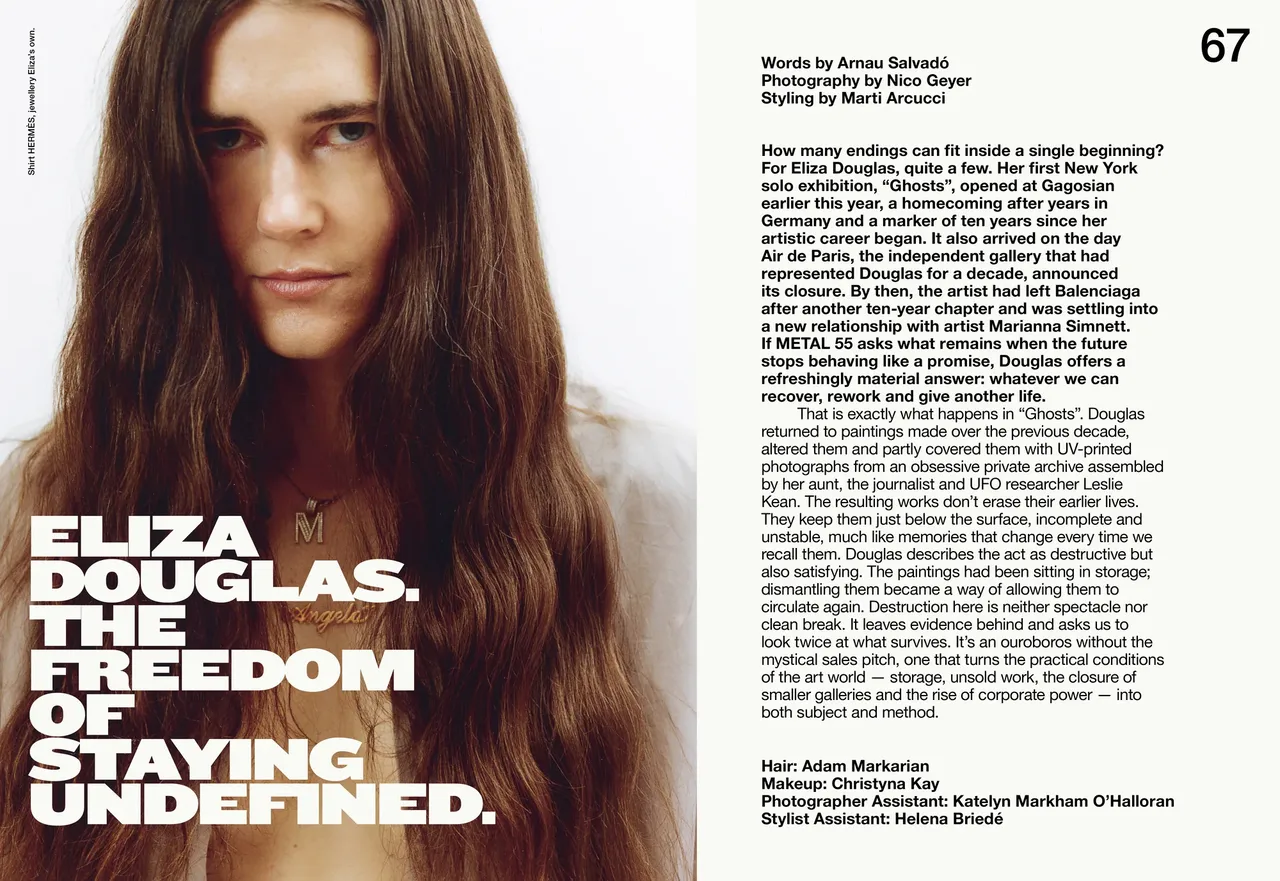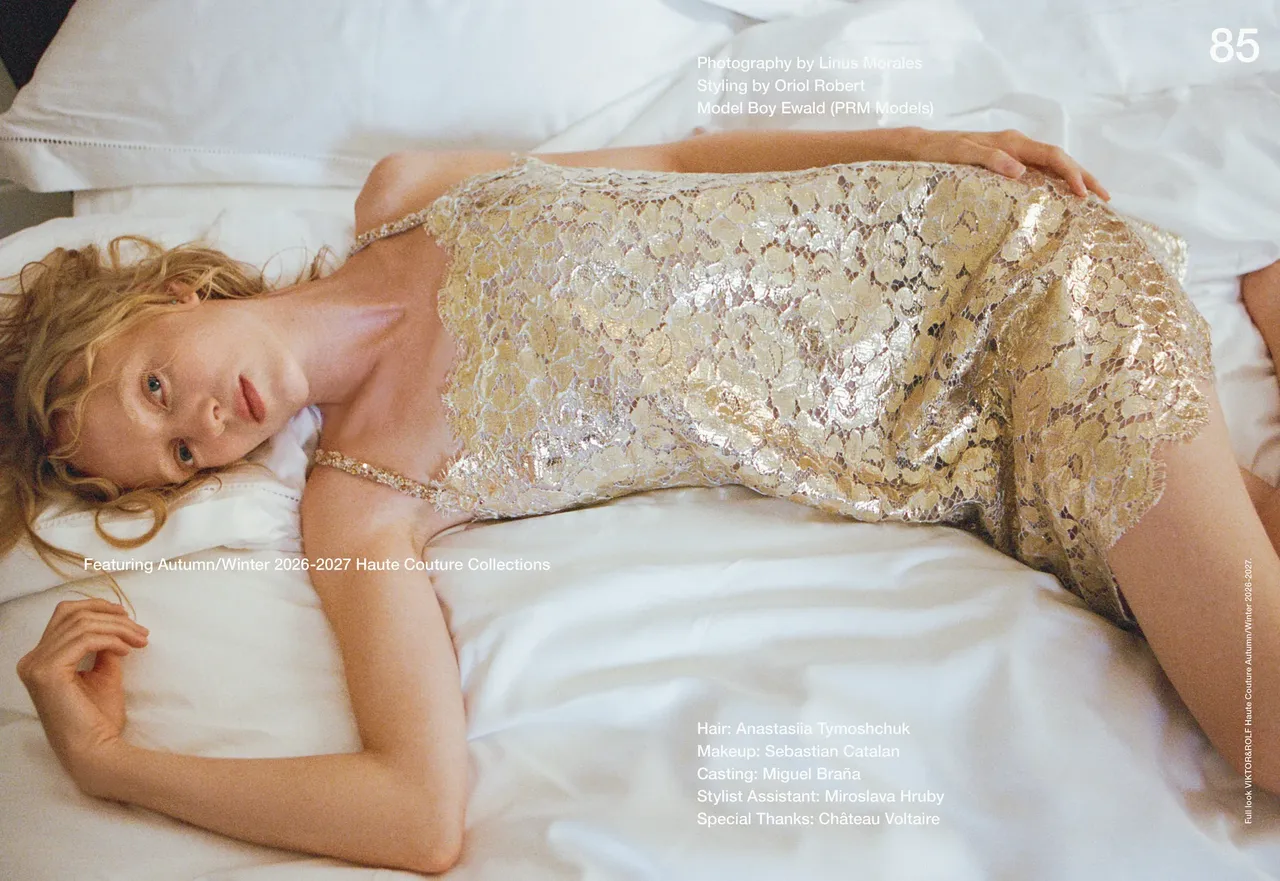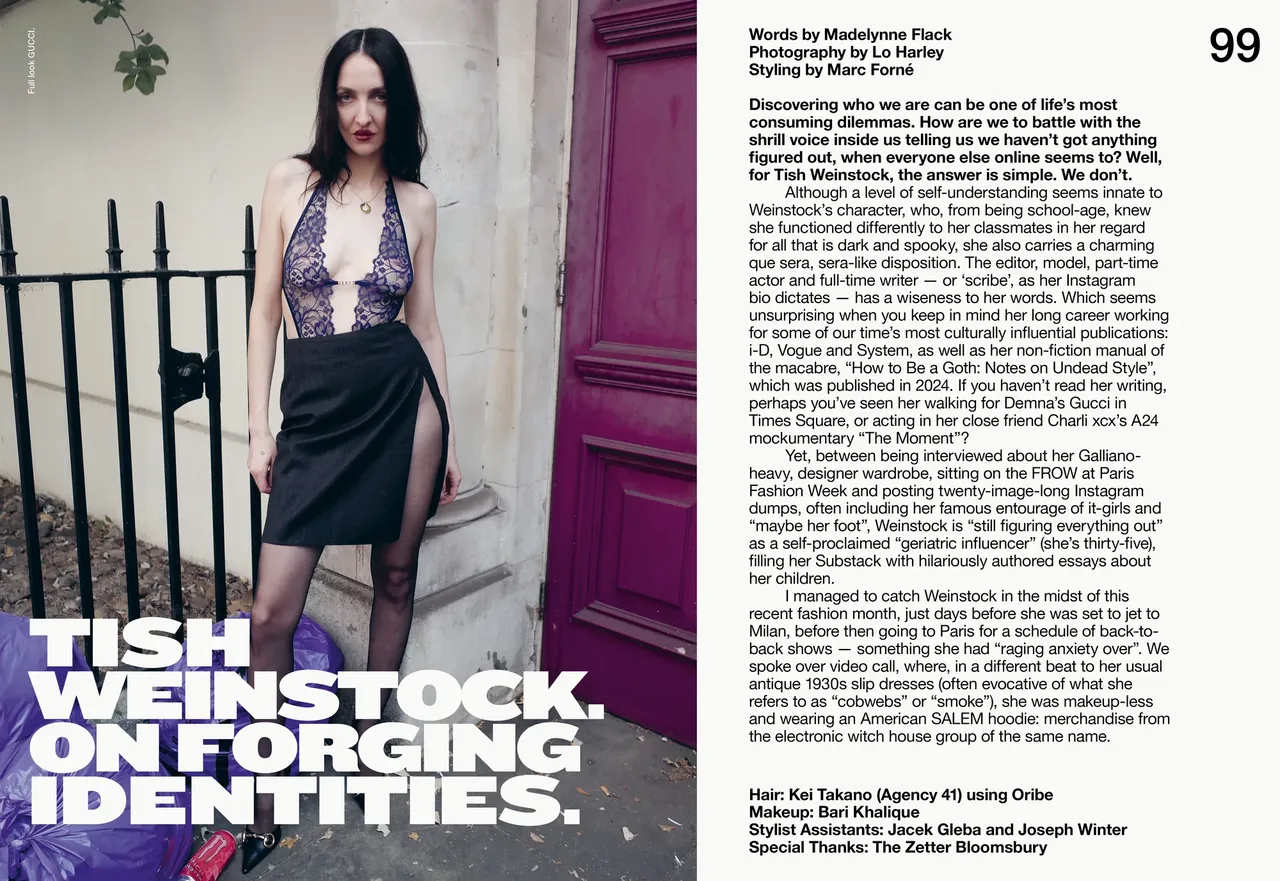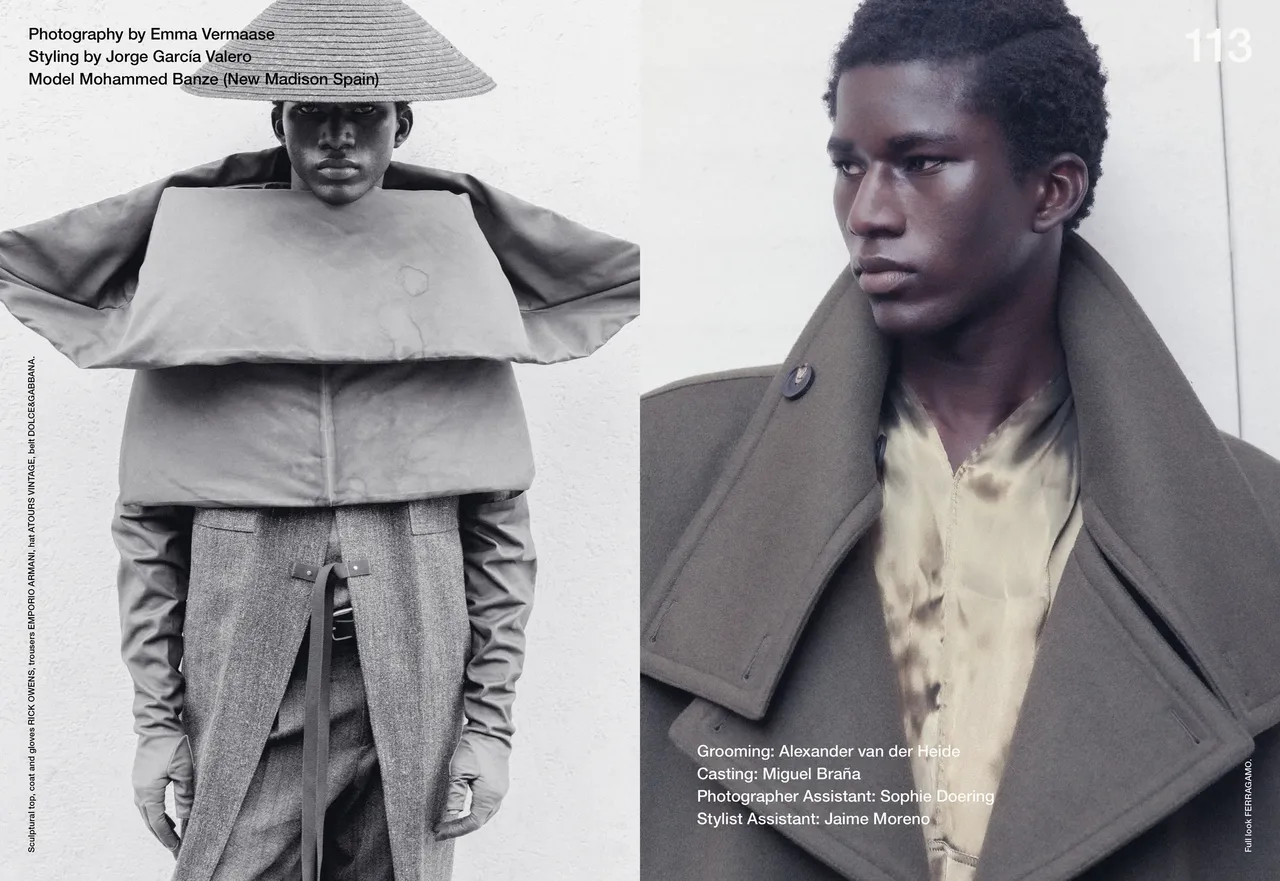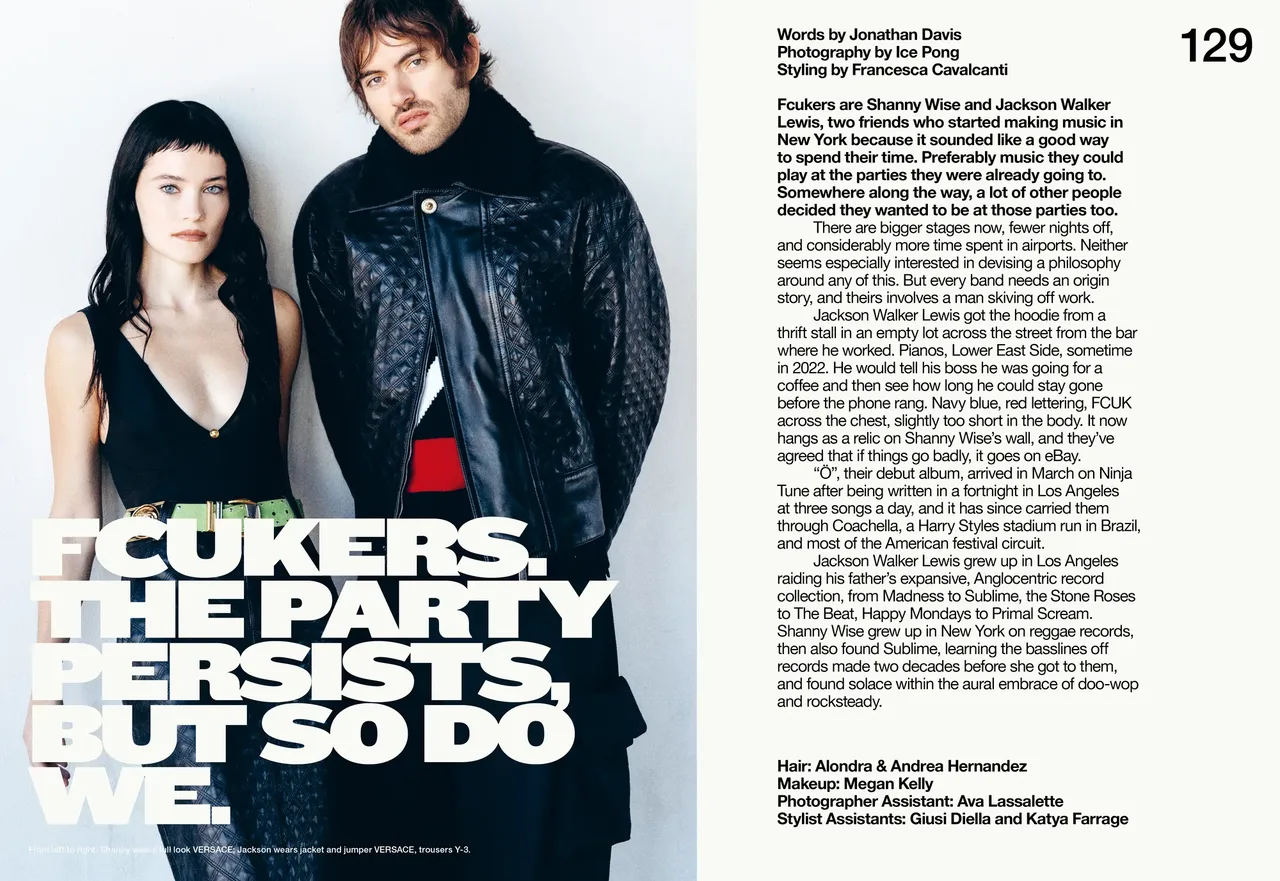
We are living through an uncertain present. Political tension has returned to levels unseen since the end of the Cold War. Today, more than ever, the words ‘world war’ no longer feel confined to the last century. But that is not the only front closing in on us. AI heralds the most profound change since the Industrial Revolution, and the climate crisis, with thermometers going off the charts, is hitting us harder than ever. Spoiler: it’s going to get worse.
According to research covered by NASA, over the next thirty to fifty years some regions could reach levels of heat and humidity too dangerous to live with without adaptation measures. But there is more: the American physicist David Gross, a Nobel laureate in Physics, recently warned, referring to the risk of nuclear war, that if humanity does not change course drastically and immediately, “the chances of you living fifty more years are very small”. Three fronts, all pushing us towards a danger we can no longer ignore. Back in the nineties, the French sociologist and philosopher Edgar Morin and co-author Anne Brigitte Kern introduced the term ‘polycrisis’, which the British historian Adam Tooze revived at the start of this decade to explain the turbulent times we are living through. We are not facing three crises that simply add up: they feed into one another.
And what do we do? It’s the end of the world, lol. The end of the world turned into a meme because not even the future belongs to us any more. For centuries, the promise of a better future moved more mountains than faith. But now we know that the brighter, better future we were sold is not the one we are going to live in. To borrow an idea from the philosopher Mark Fisher: we do not feel nostalgic for the past; we feel nostalgic for the futures we were promised and that never arrived (and never will). What remains when the idea of the future no longer works as a promise? The short answer is: us. If there is one thing that defines human beings, it is mutation, our ability to adapt no matter how many hardships come our way. But what do we do with that?
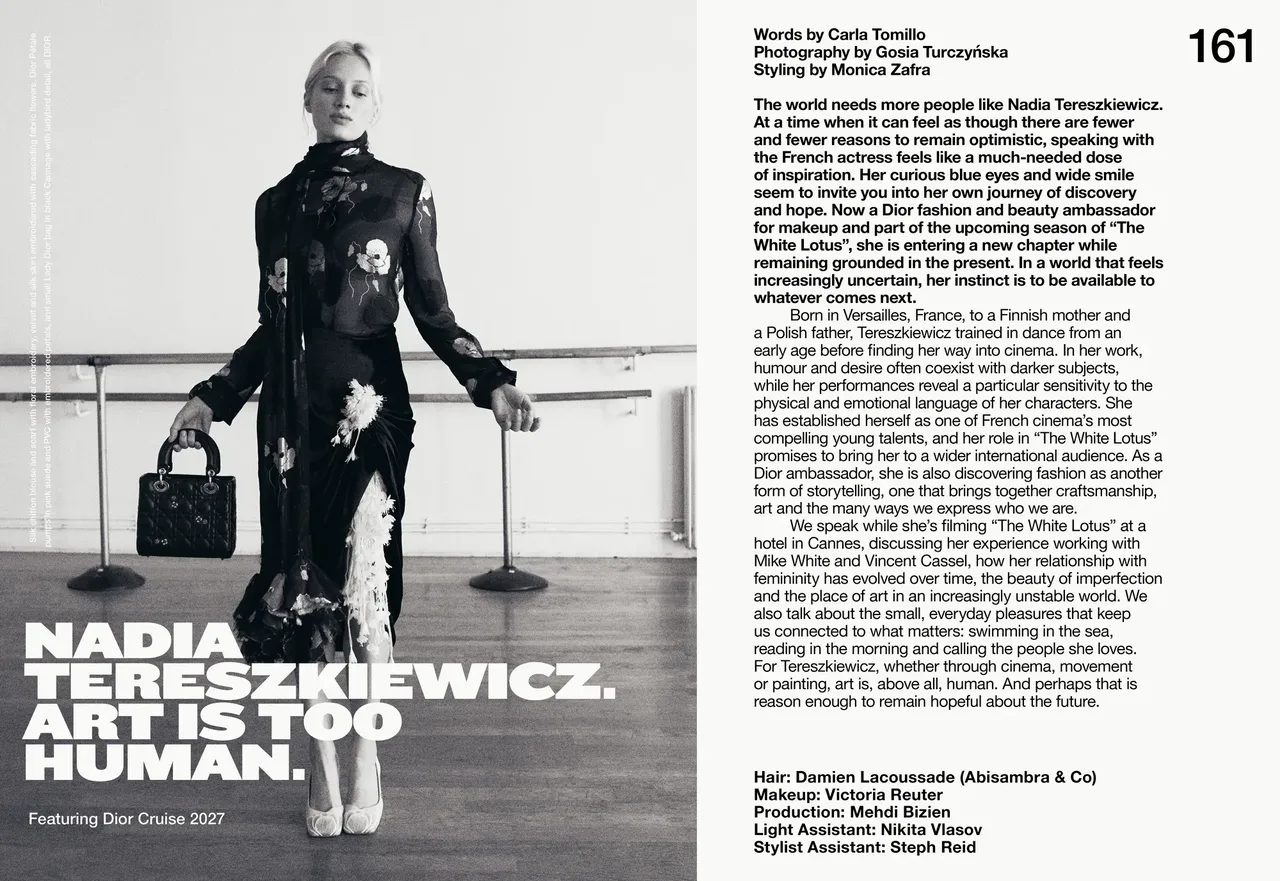
Art offers a way to explore that question. As Nadia Tereszkiewicz puts it: “I think our generation needs hope, even if it can be difficult to feel optimistic. Art is important because it helps us question the world, imagine other possibilities and find moments of relief.” Yet allowing ourselves that relief is not always easy.
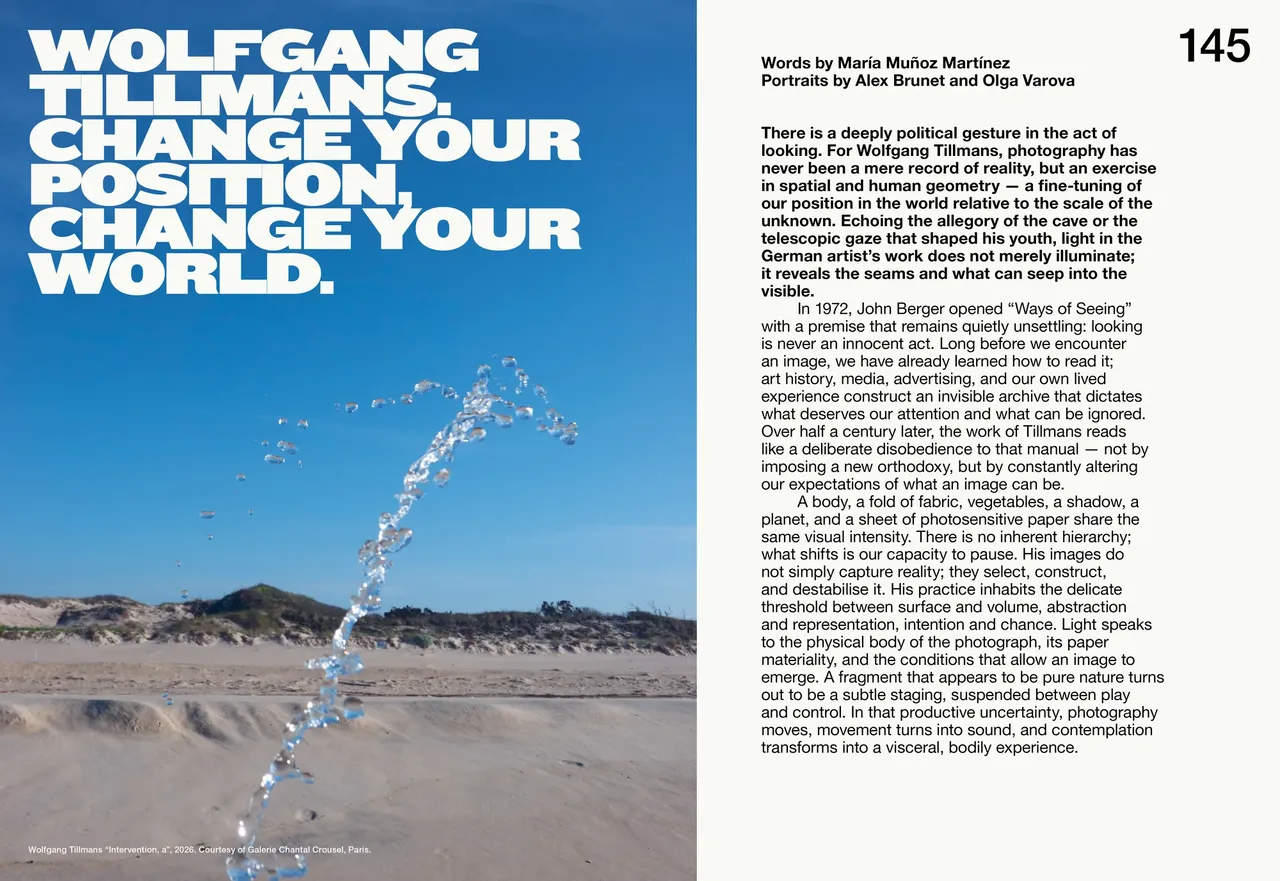
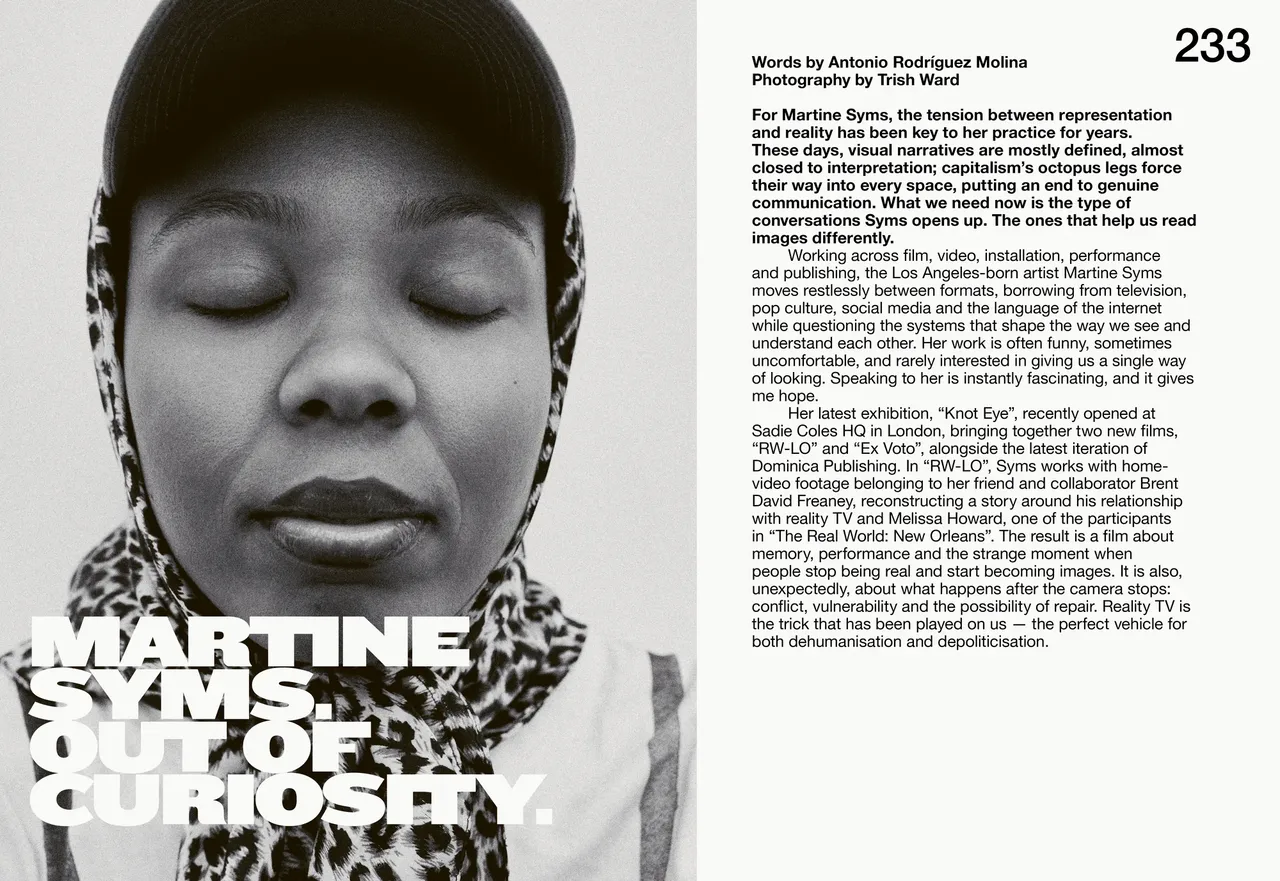
Sometimes I feel it myself: the guilt of enjoying something when so much is going wrong. But I’m also wary of the idea that everything has to fall apart before anything better can happen. In our conversation, Wolfgang Tillmans pushes back against that seductive fantasy of starting from zero. “If you break everything, you also break education, knowledge and healthcare systems”. The artist reminds us that change also means deciding what is worth keeping. And keeping something alive can mean learning how to repair it. Martine Syms speaks about a capacity we seem to be losing: “The repair that comes after the raw emotion or the expression, the ability to make amends, and to talk through how you were feeling and what happened without it being the end, which is really crucial to maturity and adulthood.” If we can learn to stay in a difficult conversation, perhaps we can also resist the temptation to write everything off.
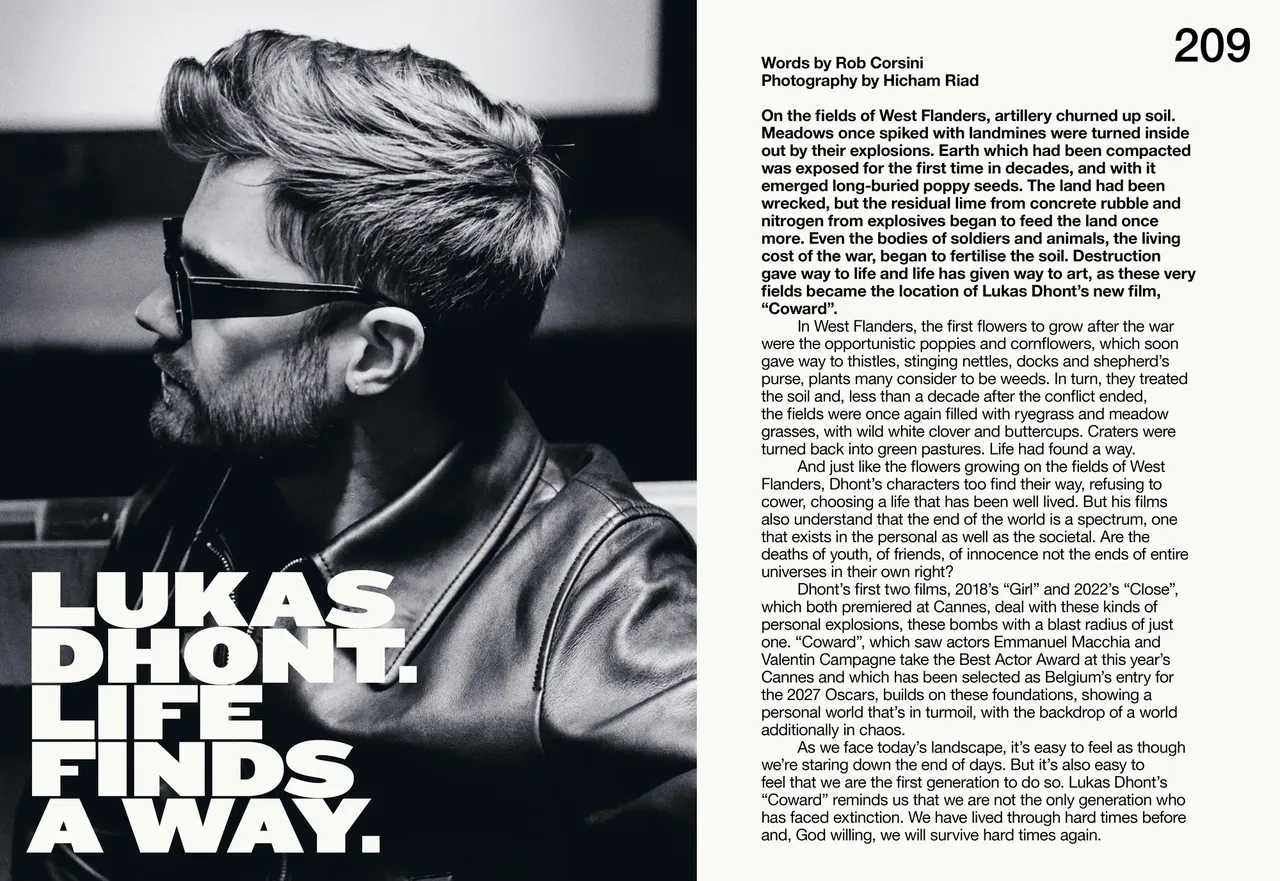
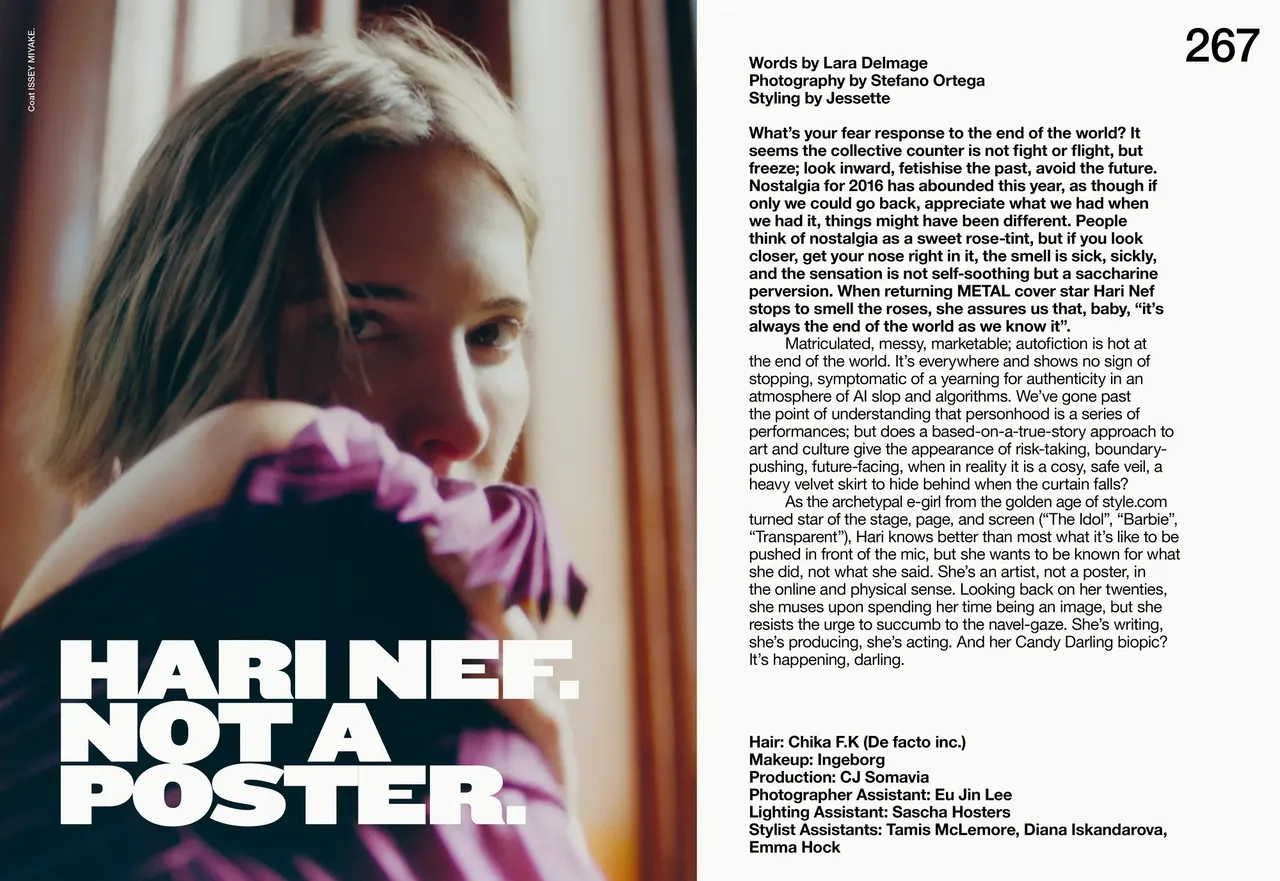
That work begins in our relationships with other people. For Hari Nef, that means focusing on what she can actually do. “It’s not my responsibility to fix the world. It’s my responsibility to make art”. She speaks about standing up for what she believes in, putting her body on the line, and looking at what is happening around her. There is something reassuring in that sense of scale when everything else feels too big to grasp. Lukas Dhont finds his way through the same unease in cinema. Talking about “Coward” and the possibility of creating within a world of violence, the filmmaker says: “We chose the light because, in a genre which is so much about destruction, we chose the only thing which is about creation”. That choice stays with me.
In this issue, we want to look not at collapse, but at the mutation that keeps us alive and in motion. We want to pay attention not only to endings, but also to the beginnings that open up from them. Because continuing to seek pleasure, humour or beauty amid disaster is not frivolous: it is a form of resistance.
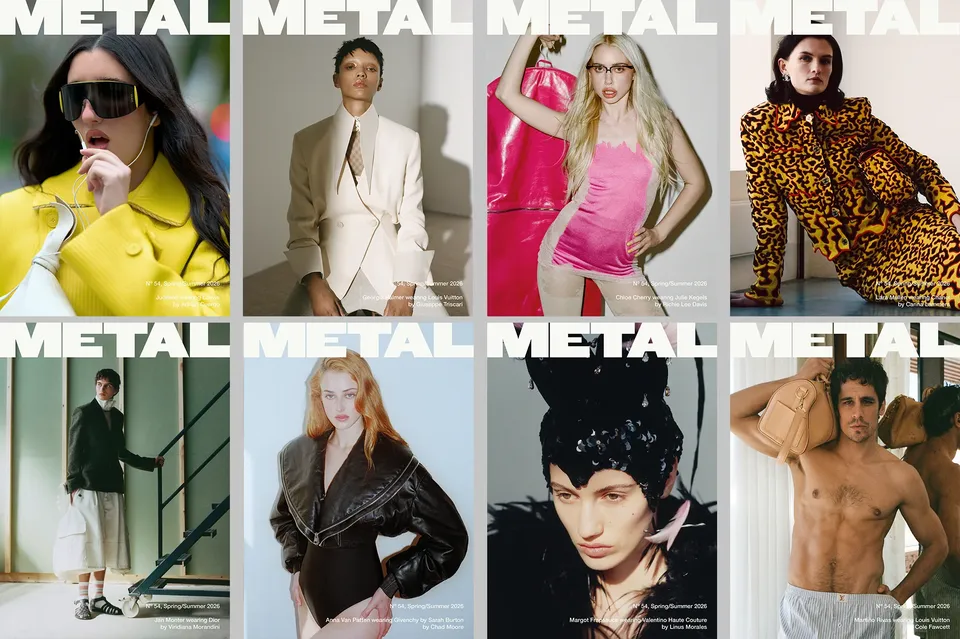
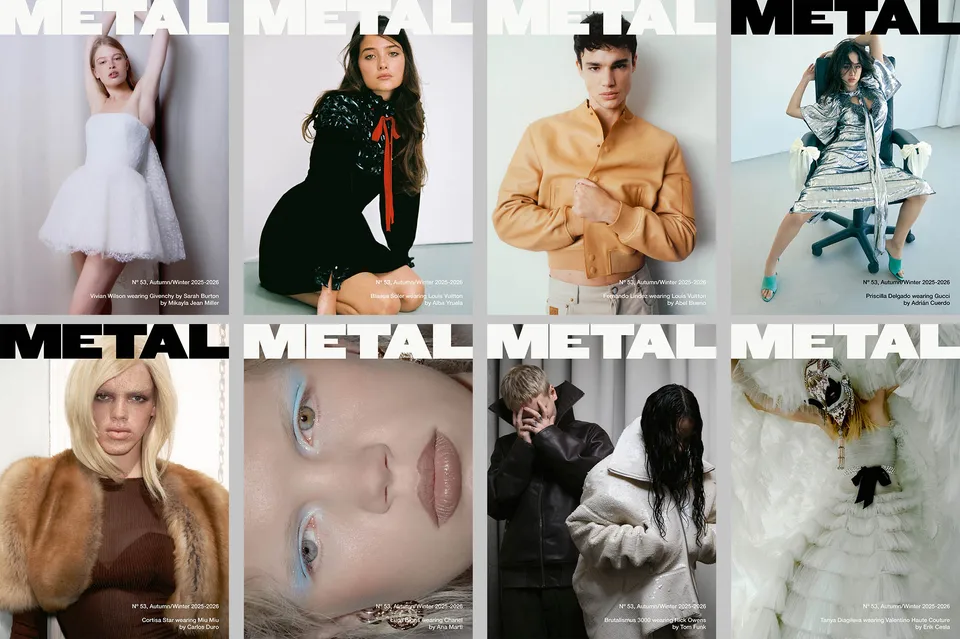
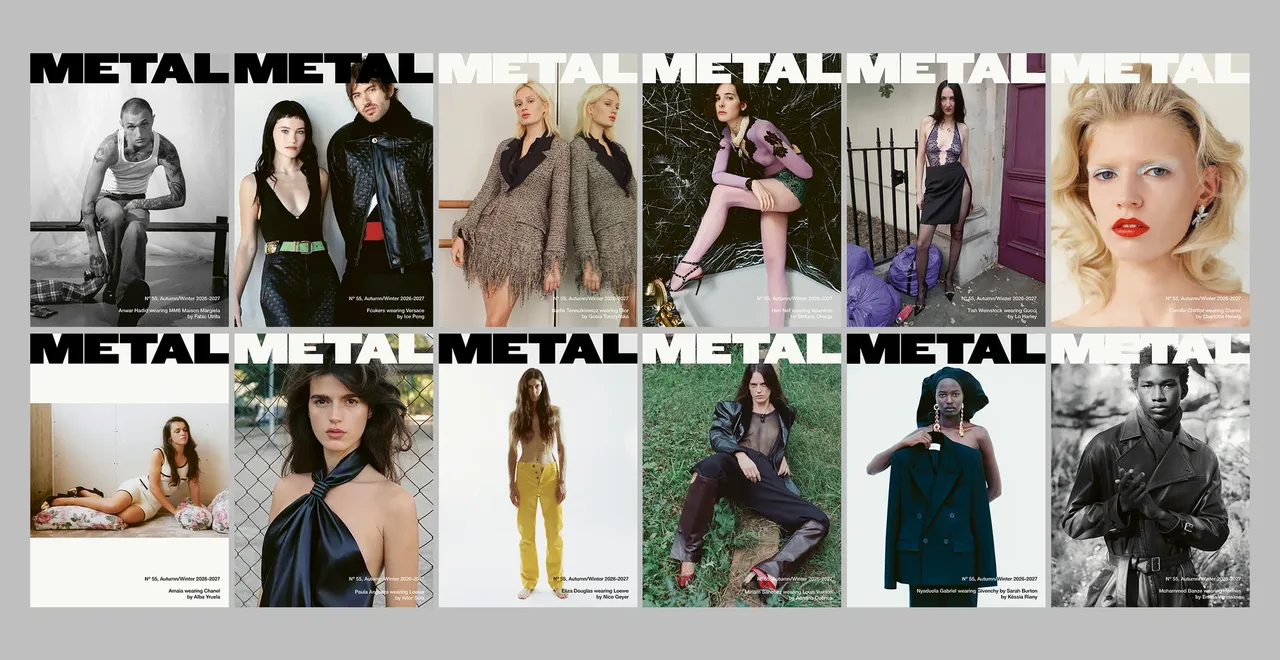
METAL Nº55 is now on sale online.