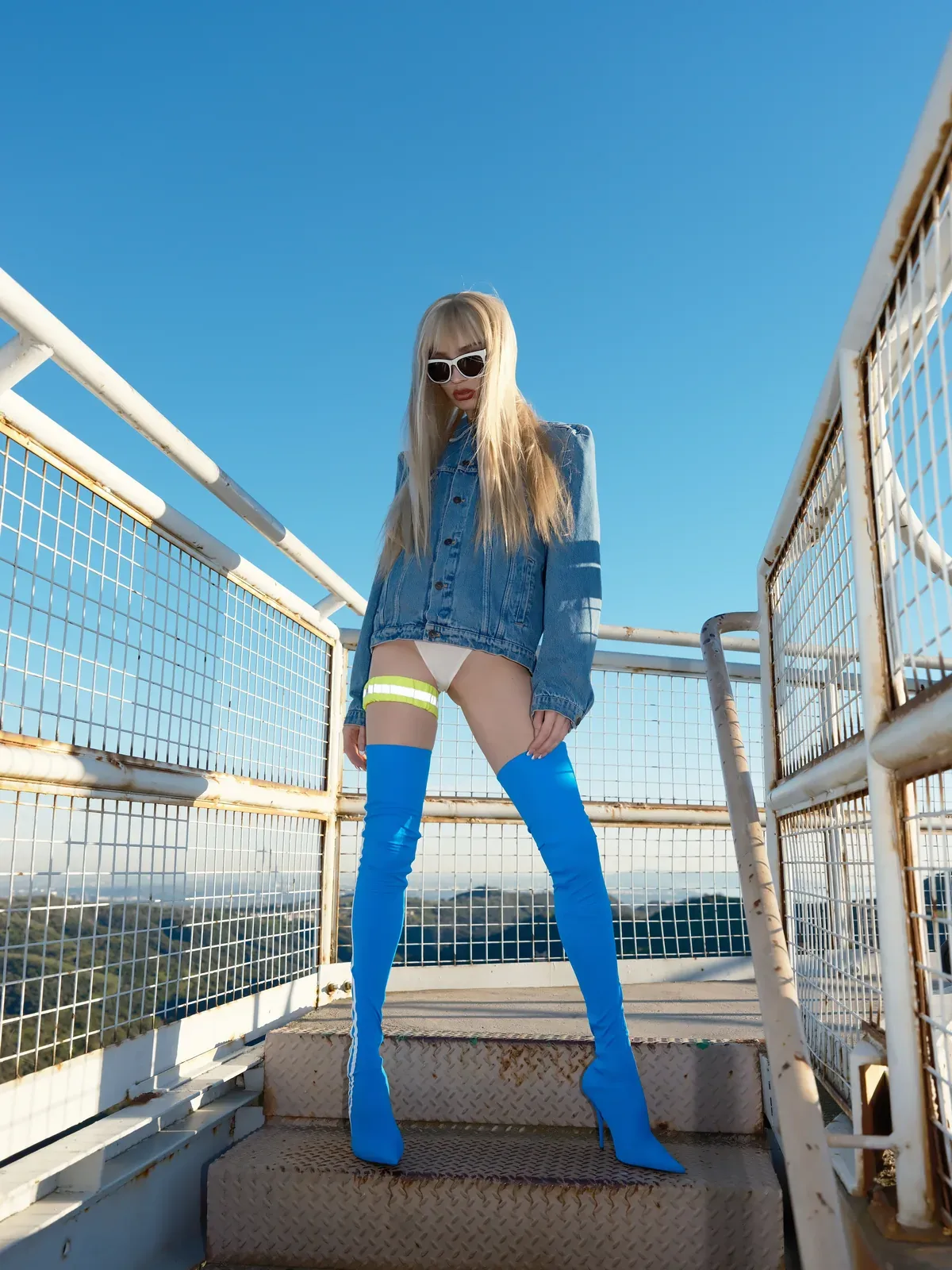
Shrouded in label difficulties, fan anticipation, pop nostalgia, and classic club sonics, Kim Petras has released her ‘debut’ album, Detour, independently. In a tonal shift from her other projects, the METAL cover star infuses vulnerability into the album in an intentionally jumpy, disjointed reflection on (and perhaps of) self-obsession.
Detour begins immediately without breath. “This is the beginning of the end / Everything before was just pretend,” Petras sings over a grungy, bassy beat. While the classic dance production (done by Petras and Margo XS) pounds, the lyrics are just as pungent; they loom existentially, confrontationally. Though committed to musical hedonism, the lyrics pivot emotionally towards existential self-reflection. Petras sings about partying hard, about intense feeling confined to specific space and time, but behind the feeling is a vast emptiness, thus urging listeners to “take a detour” through the album. The music picks up only to echo into silence. Listeners only just begin to reflect, to sit in silence, before Petras throws them back into a bubbly soundscape.
Like the album’s traffic-centered ethos, DTLA references the roads of Los Angeles, a city of dreams, a landscape of desire and loneliness. In her classic style, Petras sings about her sexual prowess, but diverts it with irony: “He gon’ lay that pipe down,” but only “While he play that Drake song.” She expands the irony about two-thirds of the way through the song. The music seems to float away and her voice takes on a breathy, emotional resonance. Petras reflects on the long way down from her lover’s penthouse, so far her “tears don’t touch the ground,” before the song fades into silence.
Polo, 101, and Check It are classically Kim Petras: sexy, bouncy, and repetitive — something you’d sweatily dance to on a night out. Check It in particular stands out as it takes on a deep ironic reflection. Petras begs listeners to check her gloss, jeans (and ass), as well as her undeniable ‘je ne sais quoi,’ but also, surprisingly, “the weight of the world.” The line shocks, seemingly discordant with the superficial sexiness of the rest of the song. The break from the individual reframes the lyrics from self-contained to expansive. The weight of the world is framed as equal to how we are viewed from outside of ourselves which seems evidently ridiculous. Petras cements this with reference to Jesus Christ who “died on the cross.” The symbol of self-sacrifice is placed in juxtaposition to the individual, modern self-obsession, evoking a quick split from self-love to self-reflection.
I Like Ur Look is a time capsule of sound. The music and production seem straight from the 2010s, which Petras furthers with a visually and lyrically weaponised femininity popularized in the 2000s. In fact, the self-styled, secondhand aesthetic of the music video looks like it exists in the world of pop culture classics like Legally Blonde and The Clique. This referentiality, however, is not just an aesthetic choice. In the video, Petras fails to become the imagined ideal of the boy she chases, eventually questioning how to form her own personality. The visual reference to the 2000s and singular bedroom setting emphasise how stuck she feels. Though she sings of boyfriend ‘stealing,’ she only does so as an avenue to explore how to reach self-actualisation without outside validation, an especially poignant question from a trans perspective.
Petras expands this new emotional arc in Brutalist, Jeep, and Korea. In Brutalist, Petras uses a 2010s-Barbie-soundtrack-esque sound to explore the complexities of transness. She details a brutalist building on the path to her psychiatry appointments which was destroyed. She mourns the loss of the building, her “favourite,” which she sometimes feels she can still see. While easy to read as an analogy for gender dysphoria given the mentions of failed manhood, the song takes a more sympathetic approach. Towards the song’s end, Petras softly sings, “I wanna take you there,” revealing that the younger self, like the brutalist building, was a beloved one. The song is a callback to childhood, the ability to dream and see beauty, despite the policing of the world done by adults. This young self may not ‘exist’ any longer, but is an intrinsic part of Petras. She reveals an intense desire to be fully known, but also exposes the impossibility of asking such. All the internal multitudes we contain are exactly that: internal. Though they work together to compose our sense of self and expression, others cannot intimately know them the way we can.
Petras expands this in the quasi-country Jeep, where she is both frustrated at and grateful for the history she shares with a lover. In the music video, Petras and her love interest are framed in a manner that obscures them from one another. The relationship’s emptiness is metaphorised through constant reference to “middle America shit.” In Korea, in fact, Petras seems caught in this dismal solitude, one that she “can’t let […] go.” Both songs slow down Petras’s regular upbeat sound, exposing a more vulnerable, ballady voice. Where the rest of the album feels like an interplay between music and witty lyricism, Jeep and Korea feel stripped back. The songs (as well as Brutalist) act as detours through the rest of the album, allowing Petras the liberty of vulnerability amidst the familiar world of campy, clubby music.
The album ends on Freak It, which, like Need For Speed, is evidently indie sleaze-inspired. It is a classic club song, a love letter to fans and the genre itself. After a bass drop, Petras’s voice becomes lighter and breathier, literally acting as a breath of fresh air in the heavy music. The sound is a mix of Dragonette and Kesha, but somehow entirely her own, remixed for 2026.
Kim Petras’s Detour is aptly named. It’s a celebration of musical independence as well as a reference to her musical inspirations. She delivers her classic sonic identity: dirty dance music full of repetition and self-referentiality. However, she does so precisely as a vehicle to reveal a more vulnerable side of herself. Petras plays with trends, but not in a way that feels inauthentic. While songs like Basketball and Bitch Ball Out slip through the cracks amidst the cleverly arranged album, no song stands out as bad. Overall, though the album does not feel subversive or unique for Petras, it certainly feels authentically her and intentionally disjointed, true to the concept of a detour.