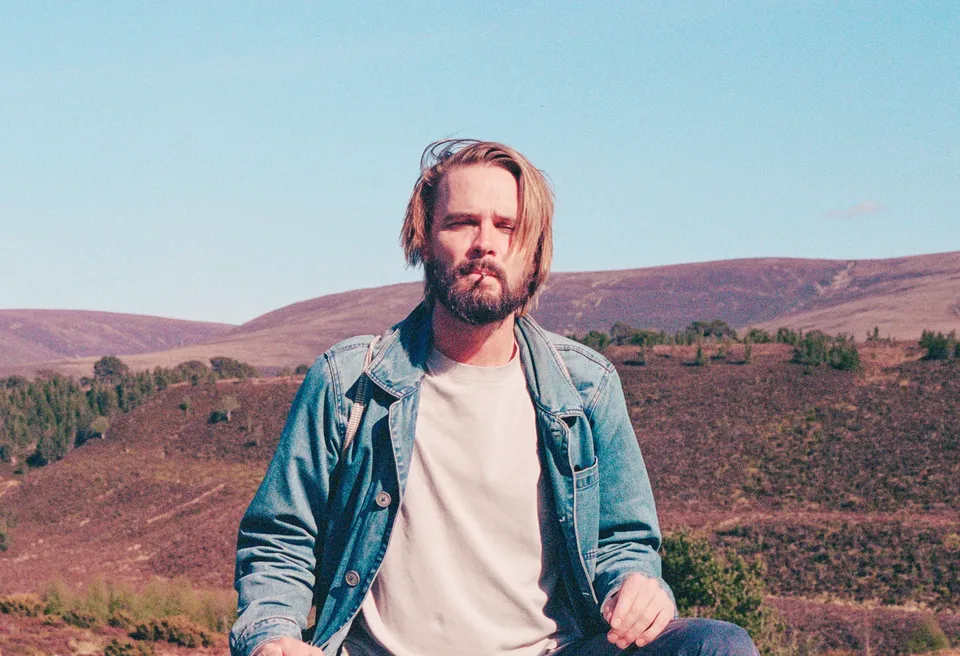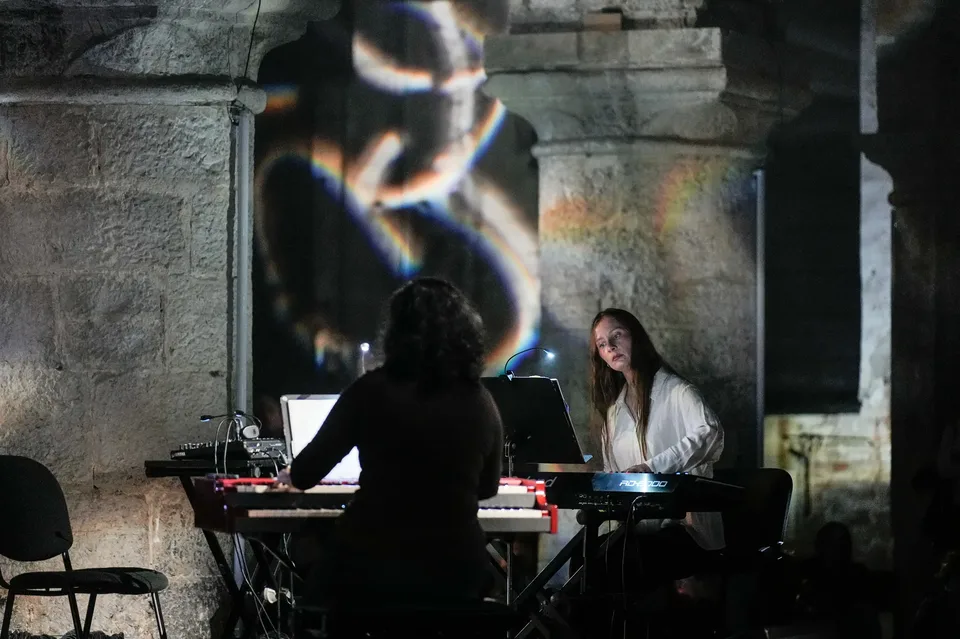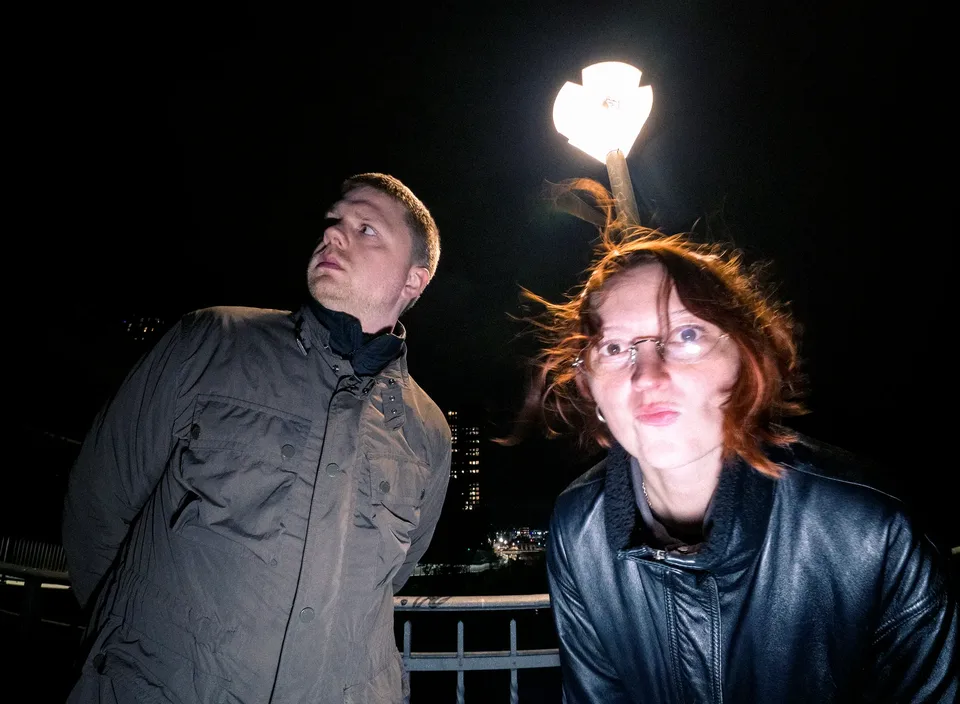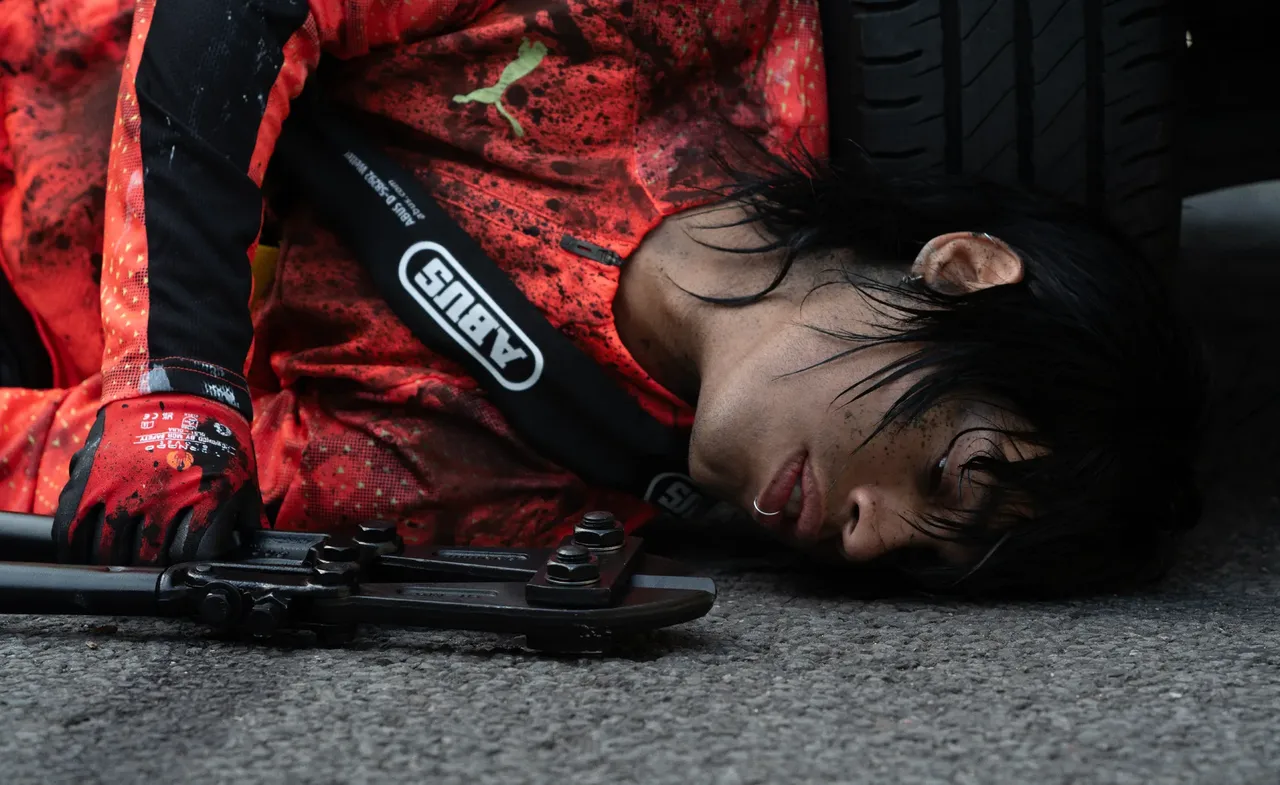
For decades, post-apocalyptic landscapes, industrial ruins and societies collapsing under their own systems have given artists a way to imagine life after capitalism. Yet, looking at the world today, some of those representations — increasingly popular in digital art — already feel strangely familiar, even outdated at times. Reality and fiction have perhaps never felt so close. This is the world that Ecco2K invites us to explore in Echo: a journey through a beautiful and hostile world in which the future seems to have arrived before we were prepared for it.
Born in London and raised in Stockholm, Zak Arogundade, better known as Ecco2K, has spent over a decade creating an artistic universe where music, fashion, filmmaking, and visual experimentation blend together. As a co-founder of the influential Swedish collective Drain Gang, alongside Bladee, Thaiboy Digital, and producer Whitearmor, he has helped shape a style that has impacted alternative rap and contemporary electronic music. His ethereal vocals, emotionally rich songwriting, and experimental production came together on his acclaimed debut album, E (2019), followed by the audiovisual EP Pxe (2021) and Crest (2022), his collaboration with Bladee. Seven years after his solo debut, he returns with Echo, a project that has consumed most of his creative life for the past six years.
The album follows Echo, a lone traveller carrying a broadcast antenna and a crown of flowers as he travels through mountains, deserts, cities and industrial landscapes, searching for signals in a world that seems as indifferent as it is extraordinary. But Echo is more than a fictional character. He represents a projection of the artist himself, an alternative identity that first appeared in Pxe, where Ecco was portrayed as insecure and withdrawn while Echo embodied the confidence and freedom he wished to achieve. The gap between who we are and who we want to become is central to this story, which now extends beyond the individual to question our connection with the outside world.
Filmed in various countries, the videos released with the album were developed alongside the music, with Arogundade often composing around footage captured during his travels. Although Ecco2K belongs to a generation of artists whose aesthetics have been closely associated with digital culture, Echo is remarkably physical. Its landscapes are real, its environments tangible, and technology becomes a means of documenting existence instead of escaping it. The antenna carried by Echo, following the wind turbines of E and the electrical lines of Pxe, is another symbol of communication, perhaps even a desperate attempt to establish contact with a world that refuses to listen: it only sends signals.
The result feels more literary than cinematic at times. Ecco2K’s writing is deeply poetic, especially when read separately from the music. Drawing on the philosophical idea of the sublime as described by Edmund Burke, he examines a beauty so vast that it becomes almost threatening. There are also hints of the Greek myth of Echo and Narcissus, with themes of longing, alienation, and unreturned connection. Nature doesn’t merely serve as a backdrop; it’s a powerful force that the protagonist fears, admires and wishes to become a part of.
Musically, Echo is equally fascinating. Unlike productions that rely on immediate impact, its beats are often condensed, almost shy, allowing the storytelling to occupy the foreground. The opening Aldehydes and ketones, with an instrumental by longtime collaborator Gud, introduces a cold, industrial atmosphere through immersive trip-hop rhythms and shimmering electronics. Its images of towers, wires, borders and flowers establish the contradictions that will define the record. The title track follows with submerged vocals and dense textures, creating an almost aquatic soundscape that evokes a world halfway between a dream and a video game.
There’s something particularly interesting about the way Ecco2K constructs these environments. Certain details recall the ethereal soundtracks of games such as Final Fantasy or The Legend of Zelda, where music accompanies the exploration of unknown territories. But while those fictional worlds once represented an escape from reality, here their aesthetics feel disturbingly close to our own. The mountains, abandoned infrastructures and artificial lights surrounding Echo could belong to a fantasy film or a post-apocalyptic adventure, yet they are simply places that already exist. “Can you still fight? Then fight / Hi from the towers and the wires / Held at the border, carrying flowers / Beautiful ones, liquids, and a knife” are the lines that introduced us to the album.
Industrial Strength brings an unexpected burst of electro-pop energy, combining urgent rhythms with one of the album's most revealing expressions of vulnerability. Ecco2K references his relationship with drugs (“crushing rocks / acid wash / Suica card”) but also uses chemicals such as glycerol to describe having “soft skin”, transforming sensitivity into something that seems almost incompatible with survival. It’s a recurring conflict throughout the album: the struggle to remain gentle in a world that constantly demands resistance (“Every day I cry over the smallest things”). Fæmous vagrant continues this dialogue between nature and technology, while Plume provides a brief atmospheric pause before the mysterious Cuban Heel. The latter is one of the album’s most compelling compositions. Spectral trip-hop and fractured electronics create a soundscape that could belong to an experimental video game. Its references to airports, surveillance, criminality and border controls introduce a more explicit political dimension. Echo becomes an outlaw, a character whose freedom of movement is constantly questioned by the structures surrounding him (“Teeth spilling out all over the floor / I want to talk to a lawyer / And don't try anything stupid / Customs fully staffed, K9's / That wasn't part of the deal”).
French exit follows with mysterious, lo-fi R&B textures and distorted guitars that occasionally recall Tobacco's abrasive production. Its repeated question about what took so long could even be interpreted as a self-referential comment on the seven-year wait for this album. In a recent interview with Pitchfork, Arogundade described Echo as the most difficult project of his career, acknowledging the extraordinary amount of time and energy invested in its creation. His perfectionism also rejects an industry focused on constant productivity, where artists are expected to keep releasing music to stay relevant.
Perhaps the album's philosophical centre arrives with Loveless animal, lawless criminal, one of its strongest tracks, referencing older tracks from E (2019): Helium and Security! Here, drums and electronic beats intertwine around a devastating reflection. “How could I turn out so gentle when this world is so very cruel? (Ah) / Still, it is no less beautiful / And one day, it'll kill me”, sings the artist in the verse. It's an impressive exercise in honesty, a mirror, a contradiction that defines Echo: the world can reject us, punish us or eventually destroy us, but that doesn't necessarily make it less worthy of love. Encore, meanwhile, introduces darker R&B influences, recalling the experimental productions of Darkchild, Aaliyah and Burial. Its fragmented electronics and romantic uncertainty reveal another dimension of Echo's internal struggle, while references to Drain Gang's past suggest that personal relationships and collective memory remain essential to his identity.
And then comes Held overnight, perhaps the most beautiful moment on the record. Its restrained, almost instrumental composition makes us question why similar pieces are so often relegated to the category of interludes. Nothing against interludes, of course, but this feels like a necessary moment to absorb everything we've experienced so far. We can almost picture Echo walking alone through an abandoned area filled with broken antennas (‘Echolinks’) on the floor, lost in his thoughts, while a distant voice (one that sounds exactly like the chants of a demonstration through a loudspeaker) reflects on humanity's insignificance and the possibility of loving a world that will never fully embrace us.
The contrast between emotional belonging and the ease with which institutions can physically detain someone makes this one of the album's most affecting political statements: “‘Cause in this world / We don't really matter much / Like, so what if it does or doesn't return our love? / When even falling for this world can be so beautiful / When we can never be held by this world / But easily held overnight in cuffs”. Recalling the dark Romantic sensibility of John Keats's Ode to a Nightingale (1819), Echo confronts humanity's insignificance and the impossibility of escaping the world's indifference. Nevertheless, he insists that the very experience of loving it can be beautiful.
This political awareness is closely connected to Arogundade's own life. Growing up Black and alternative in Stockholm, he has spoken about feelings of alienation, financial hardship, and the lengthy journey of accepting his identity. In that Pitchfork interview, he openly aligned himself with leftist politics, criticised the rise of European nationalism and hostility towards refugees, and expressed support for feminism and Palestine. His travels through Georgia, where he met young people resisting an increasingly hostile political climate, also shaped the record.
Swimming in fountains returns to the relationship between humanity and nature through another brief, abstract composition, before Sky burial brings the journey to a transcendental conclusion. Produced with Whitearmor, its warmer, euphoric sound contrasts with the cold industrial vastness of the opening track. Echo no longer seems interested in immortality: “Don't want to live forever I want to be free and become whole / Be this my final prayer”, he sings in the style of a swan song. Even the title, referring to a Tibetan funerary practice in which the body is returned to nature, suggests an acceptance of mortality rather than a fear of disappearance.
We live in societies supposedly founded on democratic principles, yet many of their promises increasingly resemble fiction. Inequality remains at the core of our problems, while the cultural frameworks through which we understand the world often seem incapable of keeping up with its transformations. Music is no exception. We continue to classify genres according to conventions established decades ago, as though the codes of the 1970s and 1980s were the only legitimate ways to understand contemporary sound. Even reggaetón, now a global pop standard, continues to face resistance from cultural hierarchies reluctant to recognise its major influence. How can genuinely innovative work influence its time when the systems through which it must circulate are almost designed to overlook it? Echo doesn't offer an answer, nor does it need to. Instead, Ecco2K creates a world of its own, one where antagonism and resistance coexist, where the struggle against external structures is as important as the battle within ourselves.
Ecco’s extraordinary talent for songwriting and sonic experimentation makes this album sound unlike anything else in contemporary music. Despite the dystopian landscapes, the loneliness and the cruelty surrounding its main character, Echo remains deeply stimulating, both artistically and emotionally. Its sound and poetry reflect the complexity of loving the world and the privilege of being alive, even when confronted with uncertainty about what's to come. Translating this contradiction into music is already a remarkable achievement in pop songwriting, but Ecco2K goes further, sustaining a story that exists somewhere between hope and despair. In the place where everything is happening right now, Echo never fails to be alive and significant, whether it is in or out of this world.