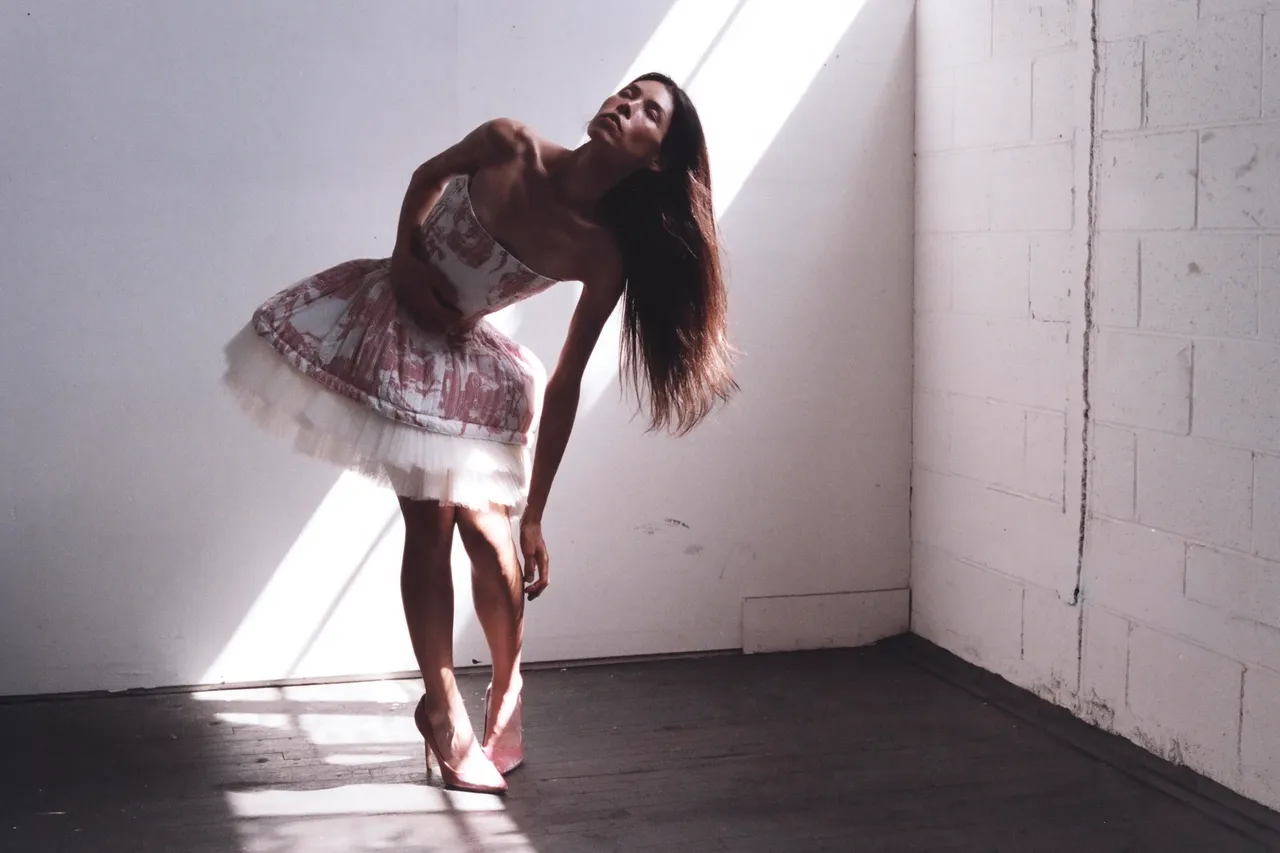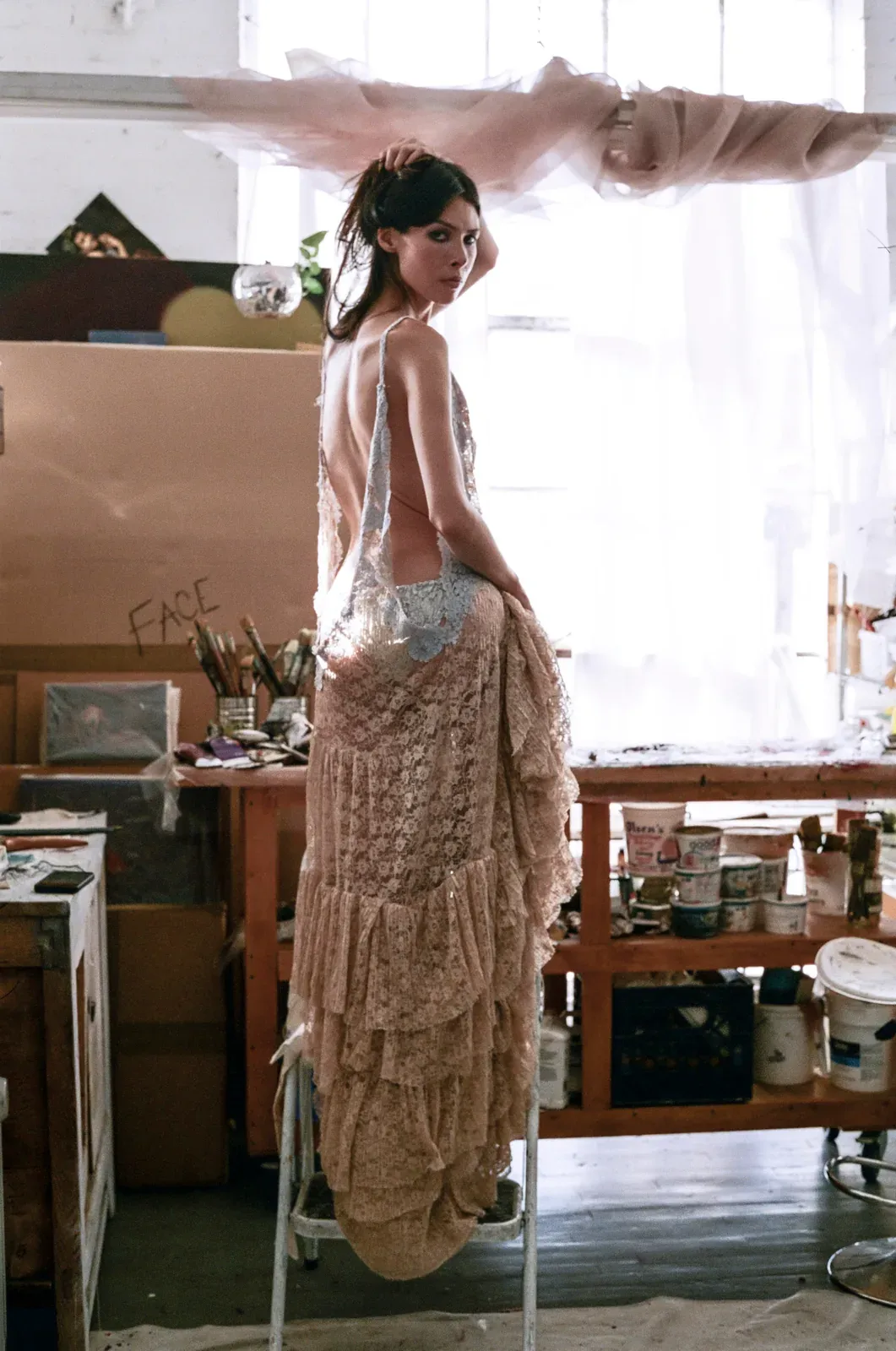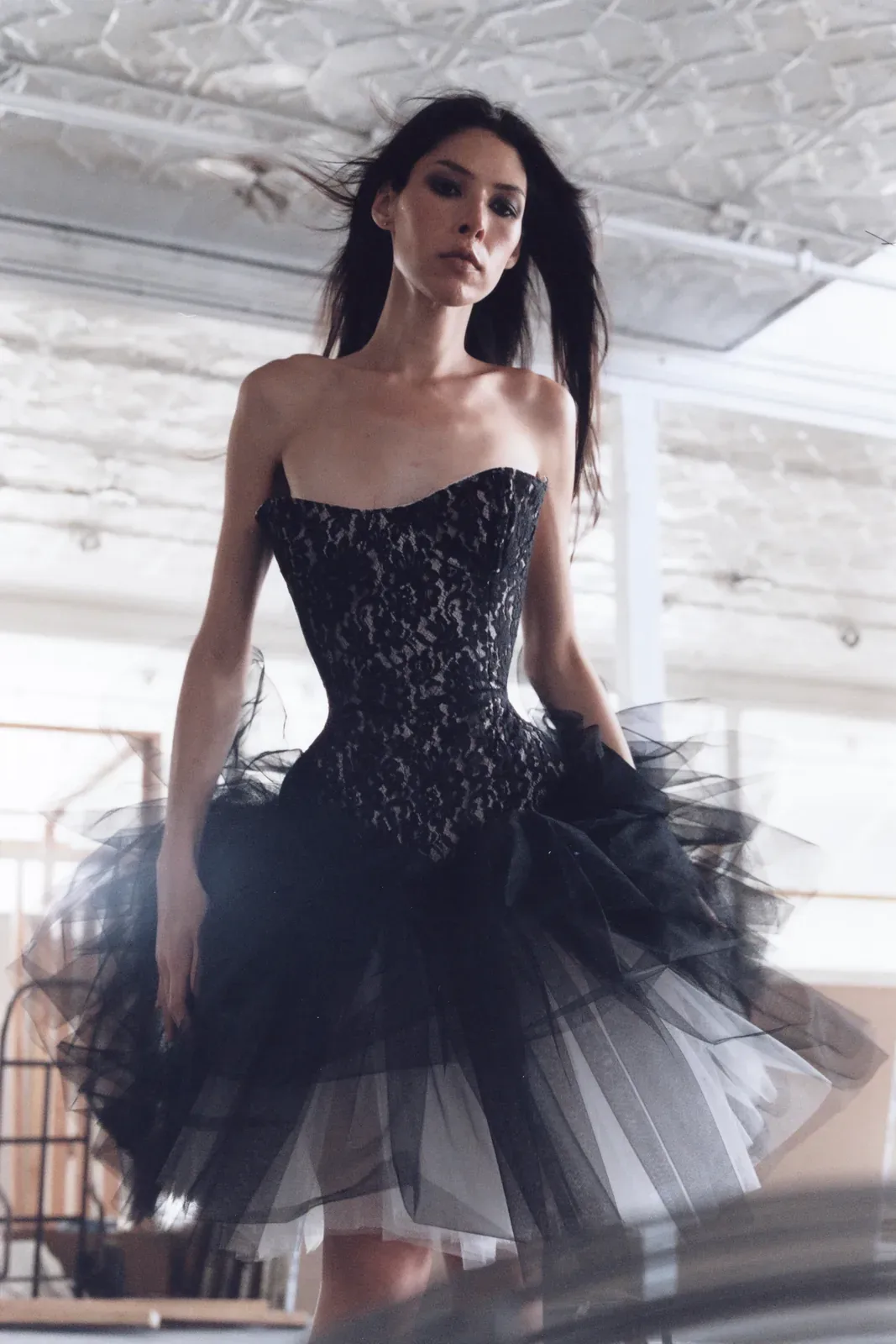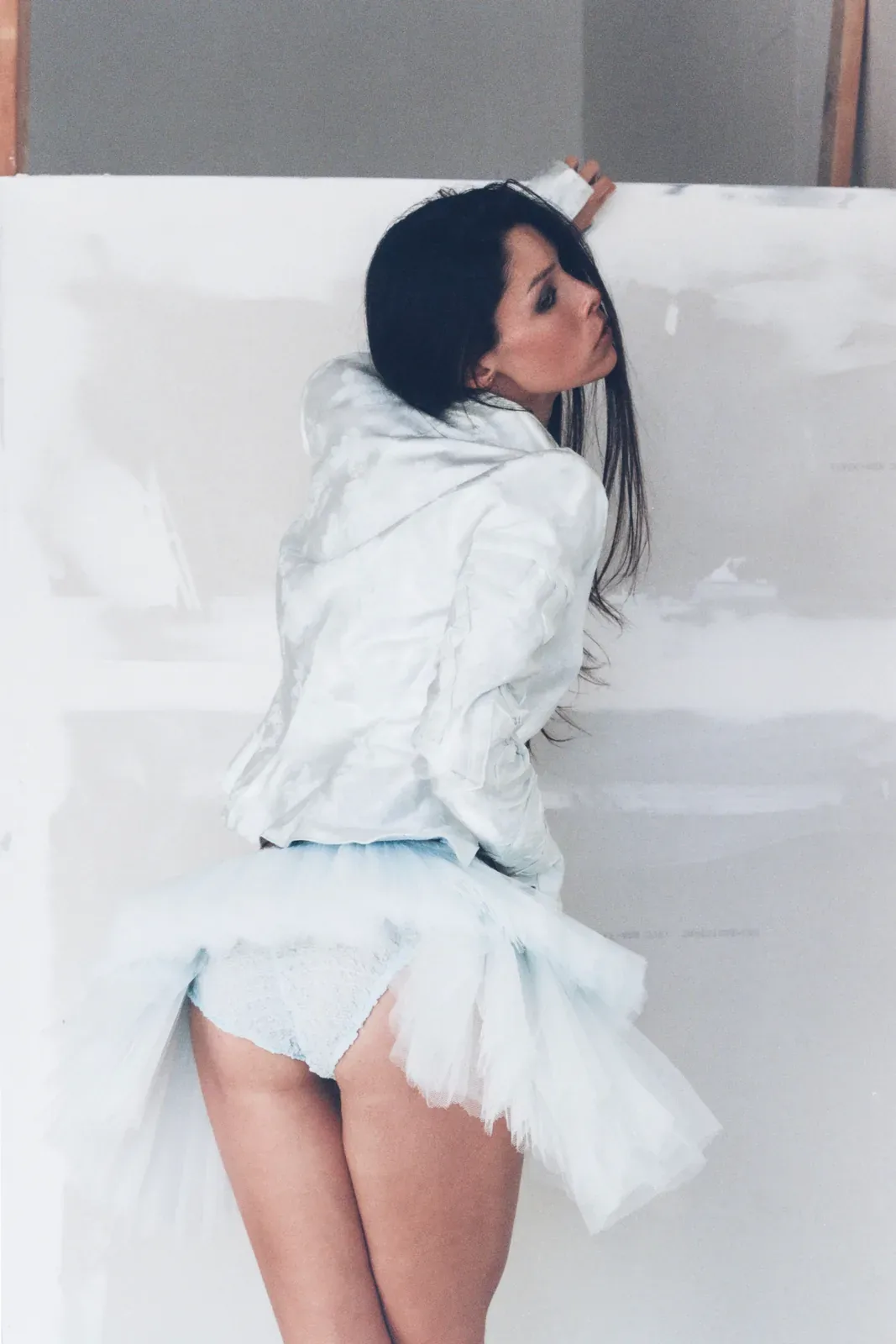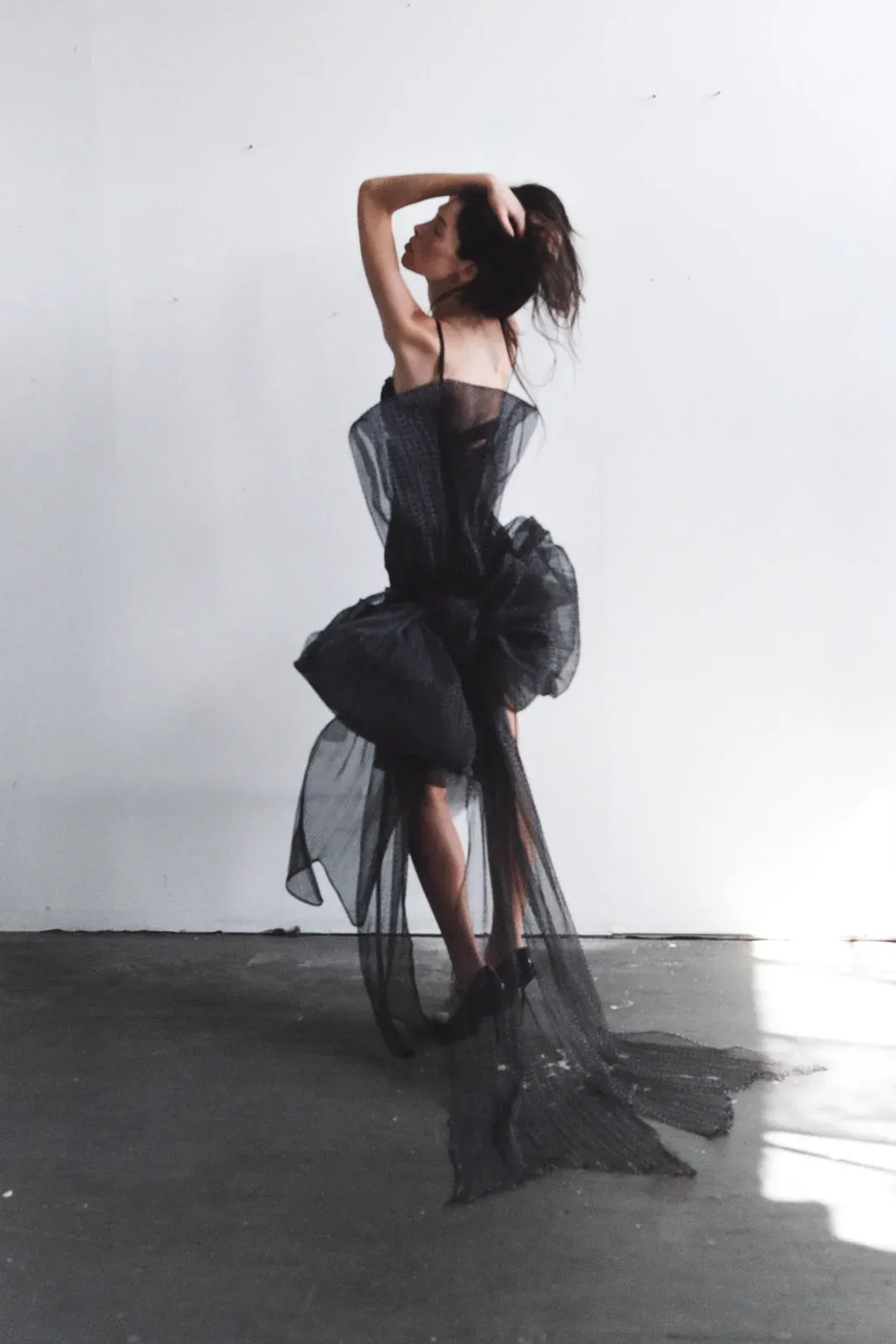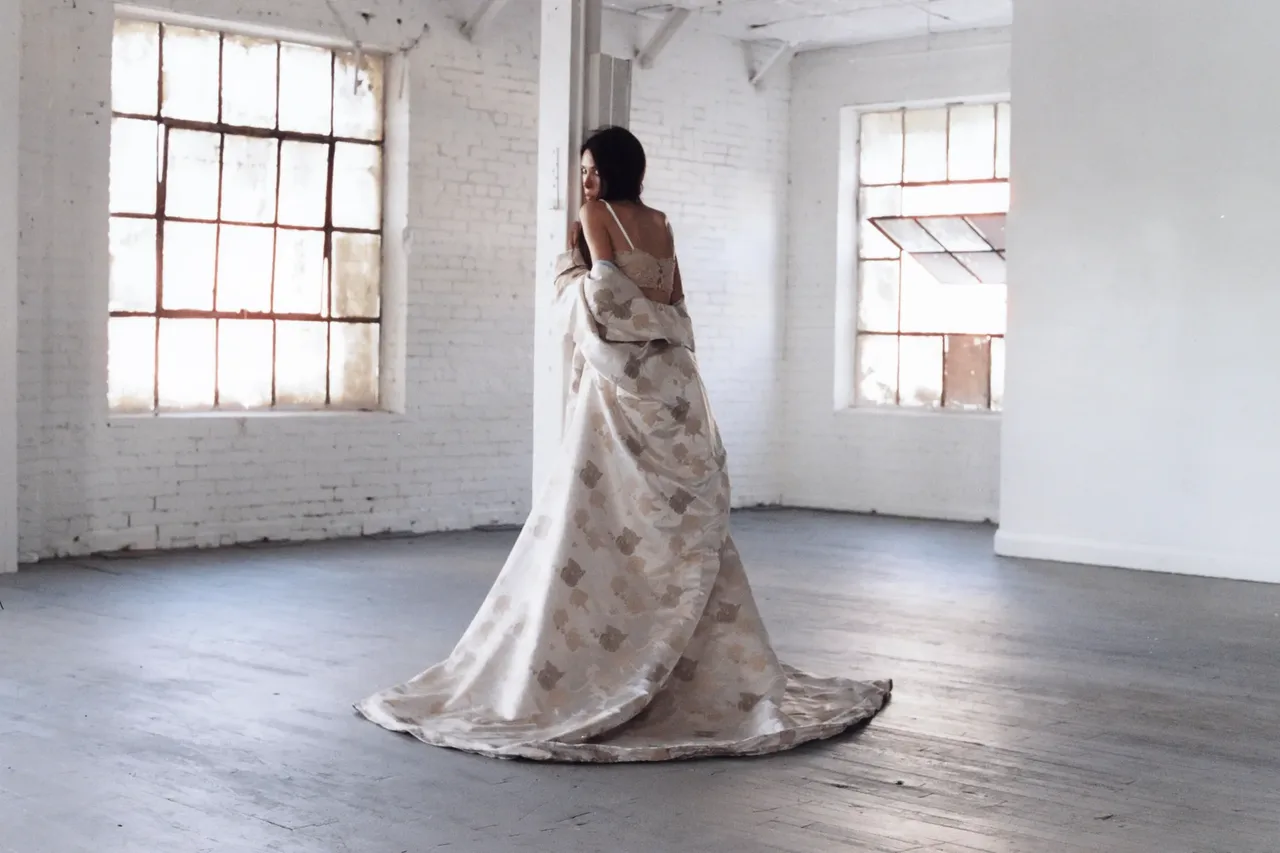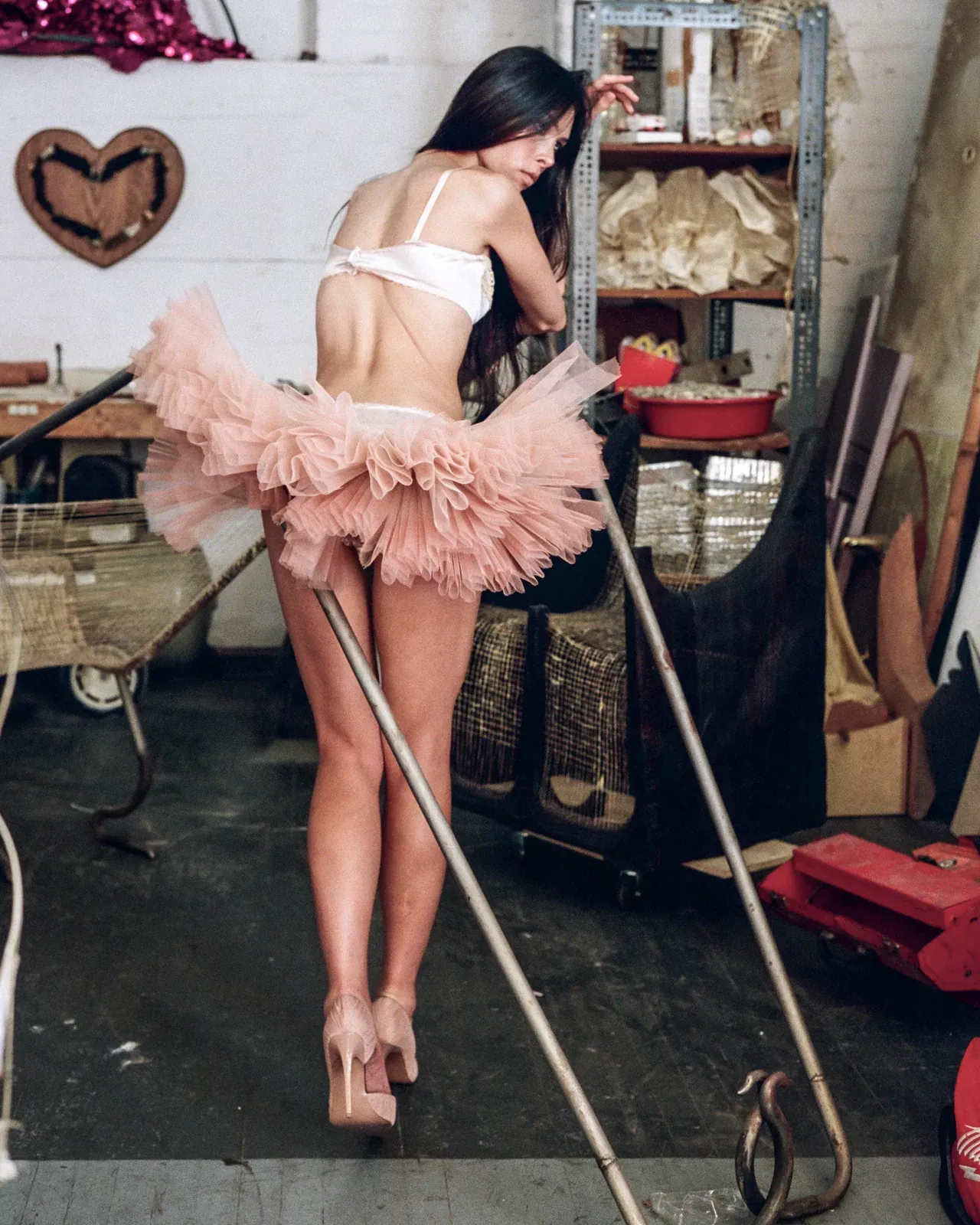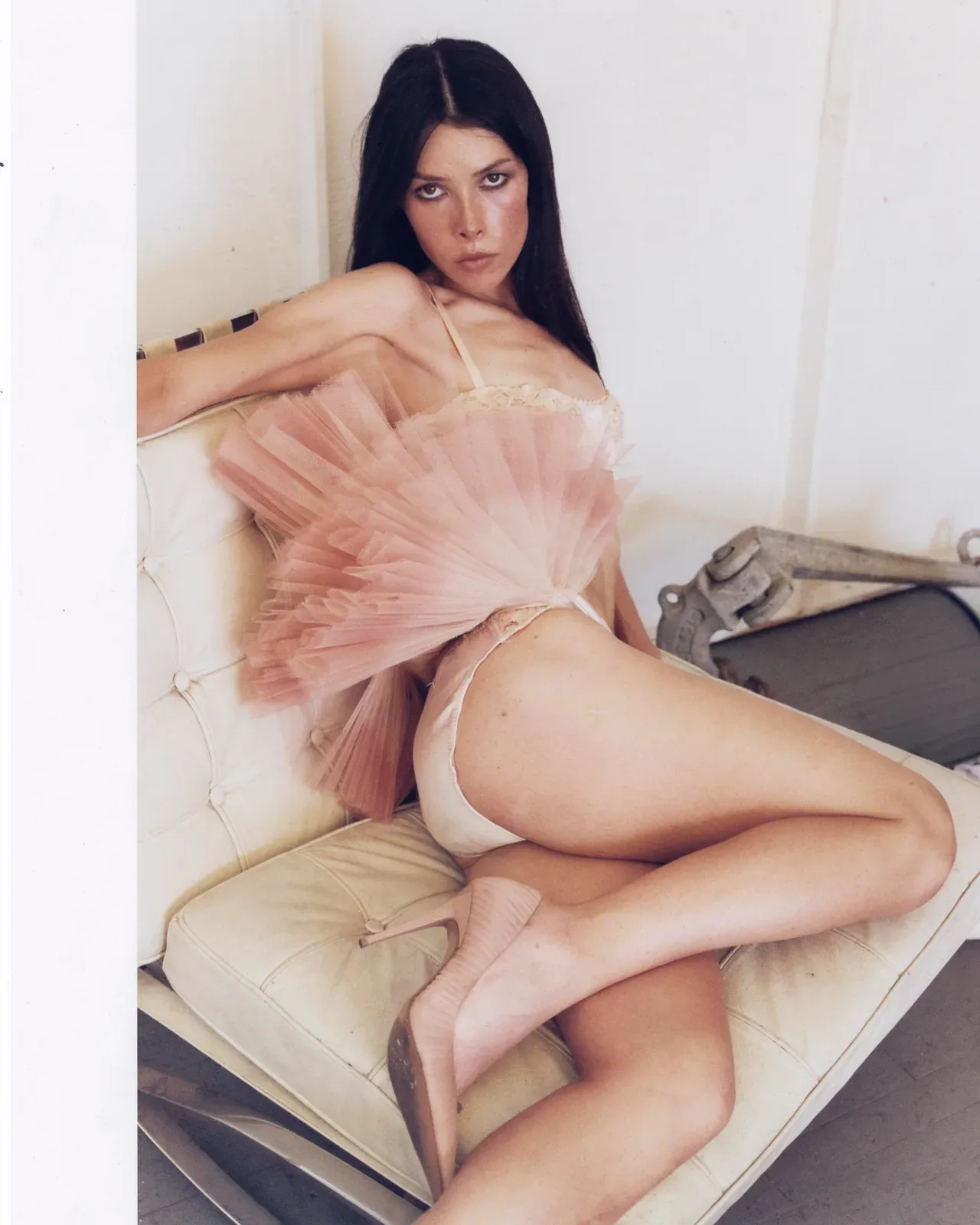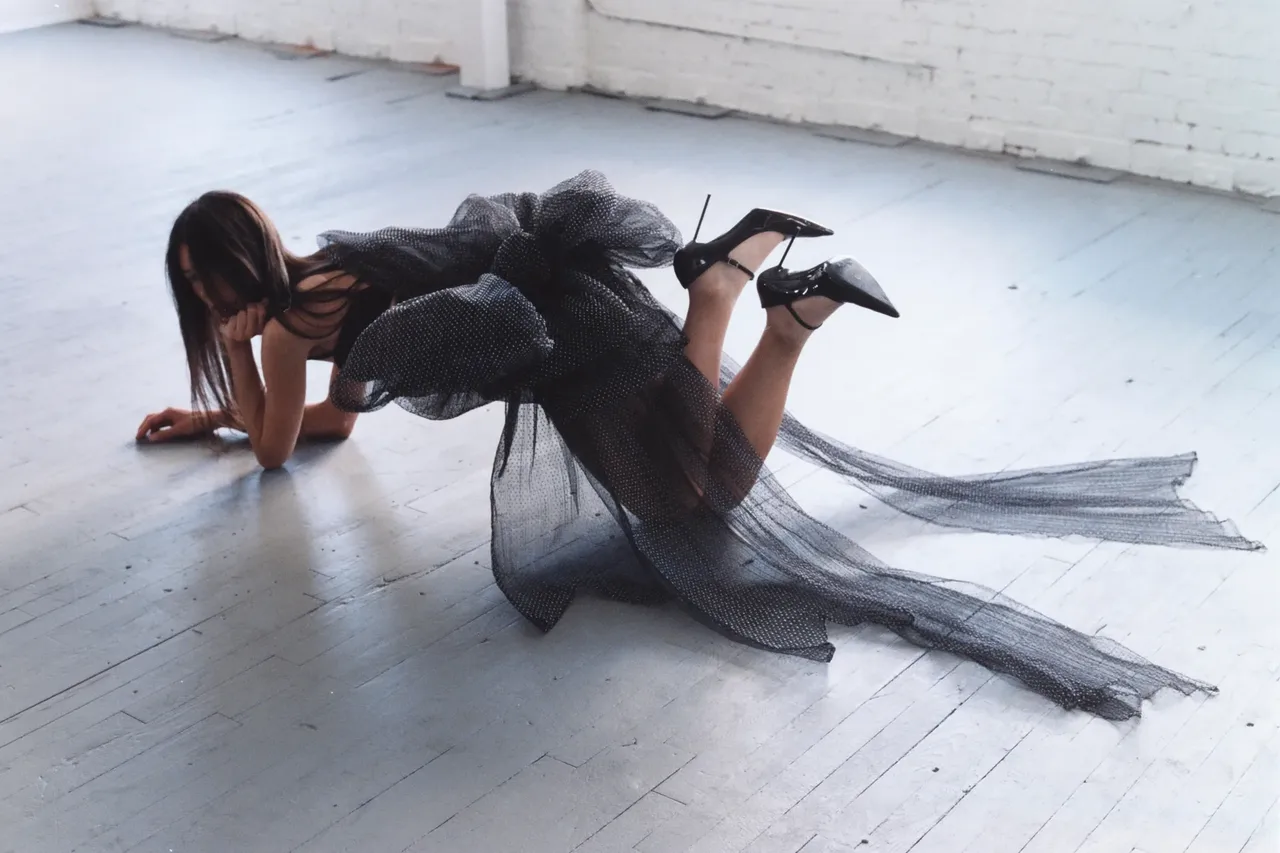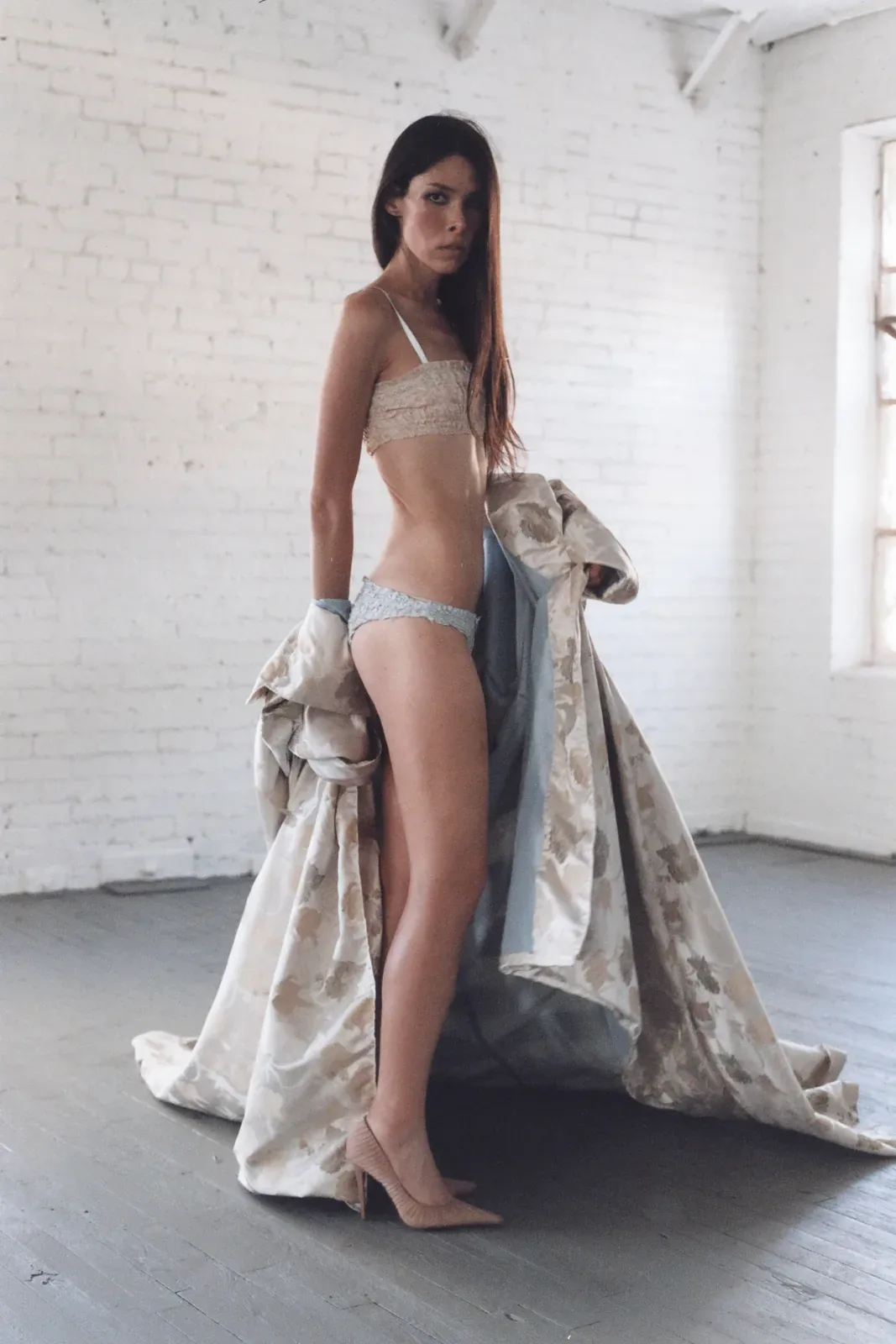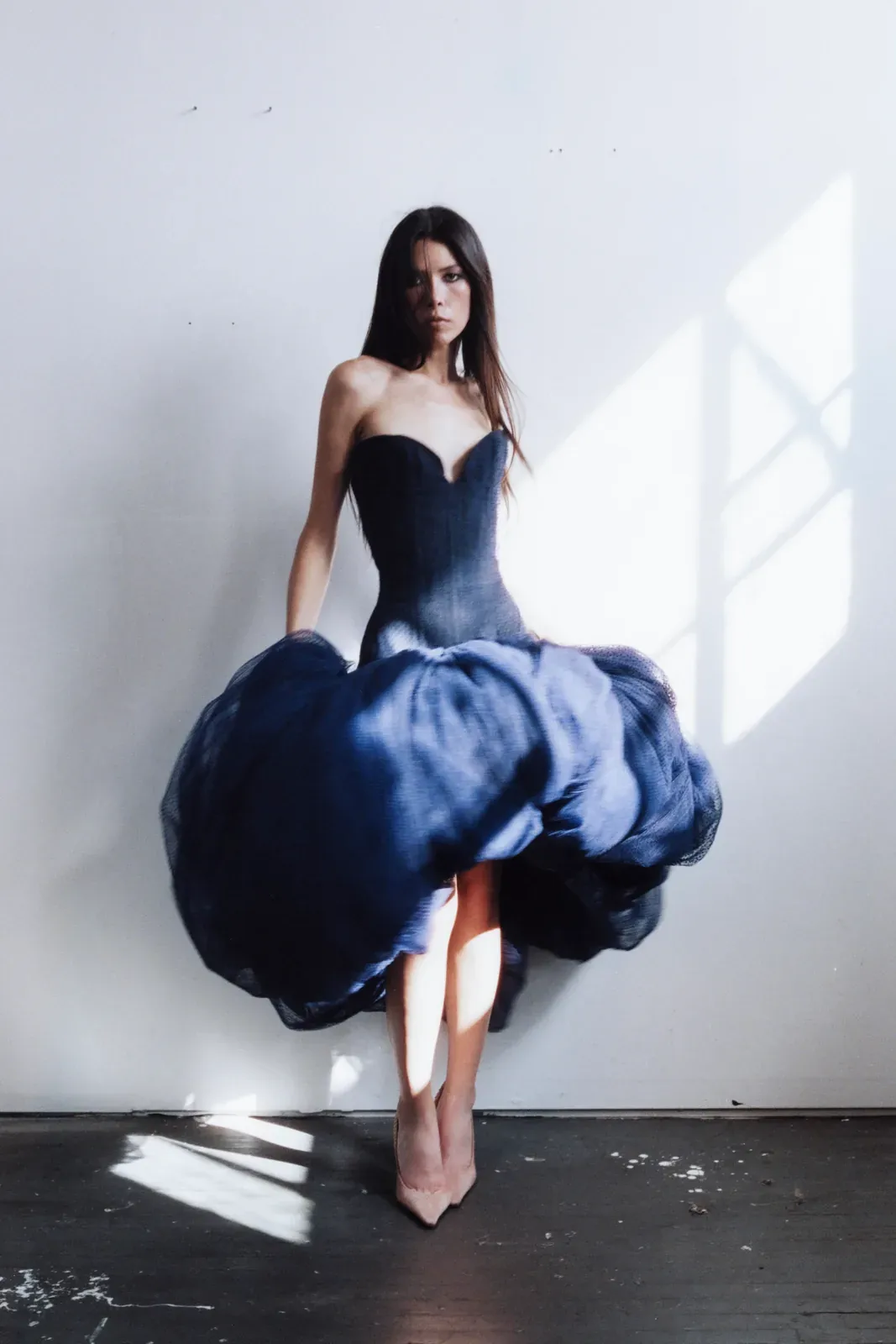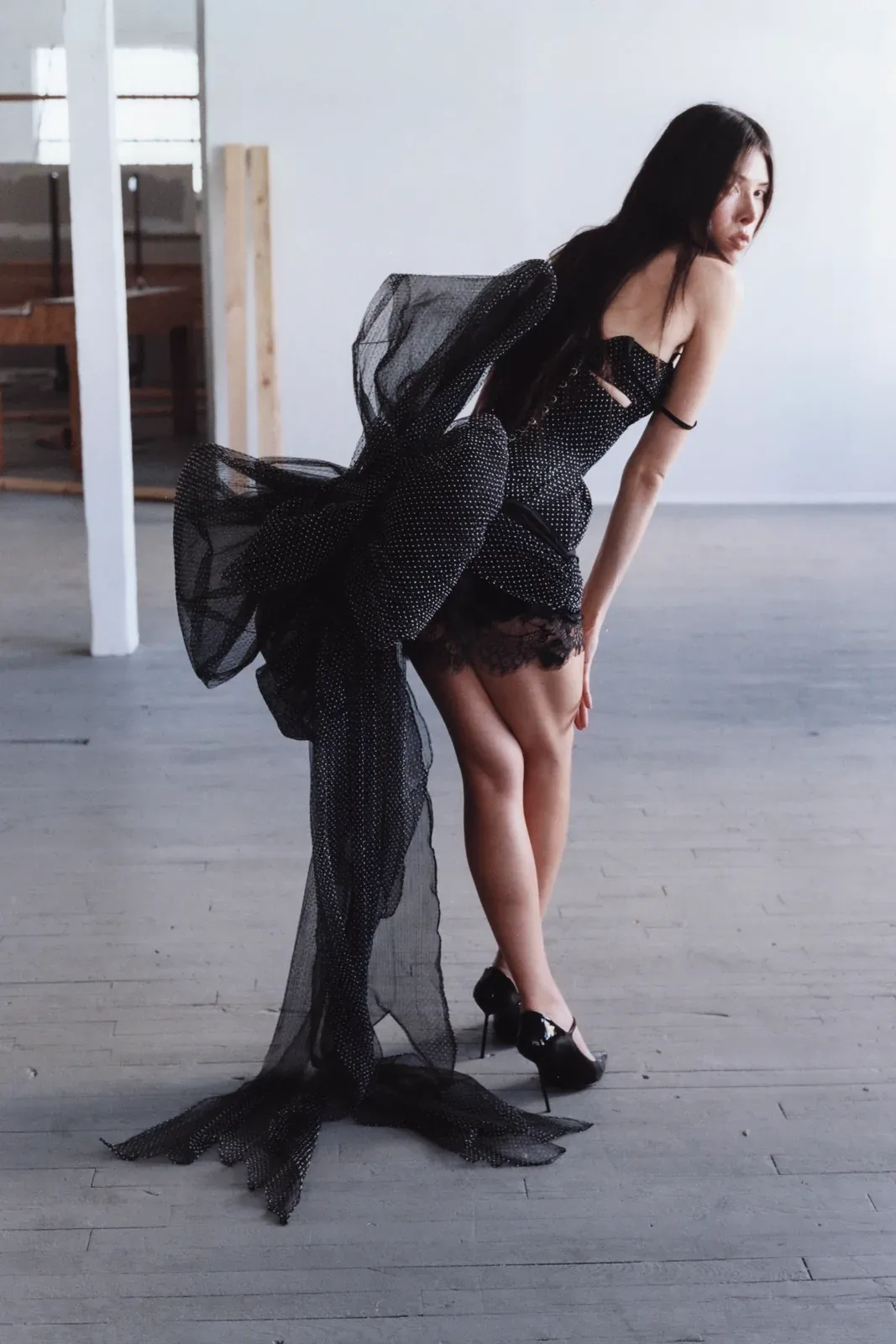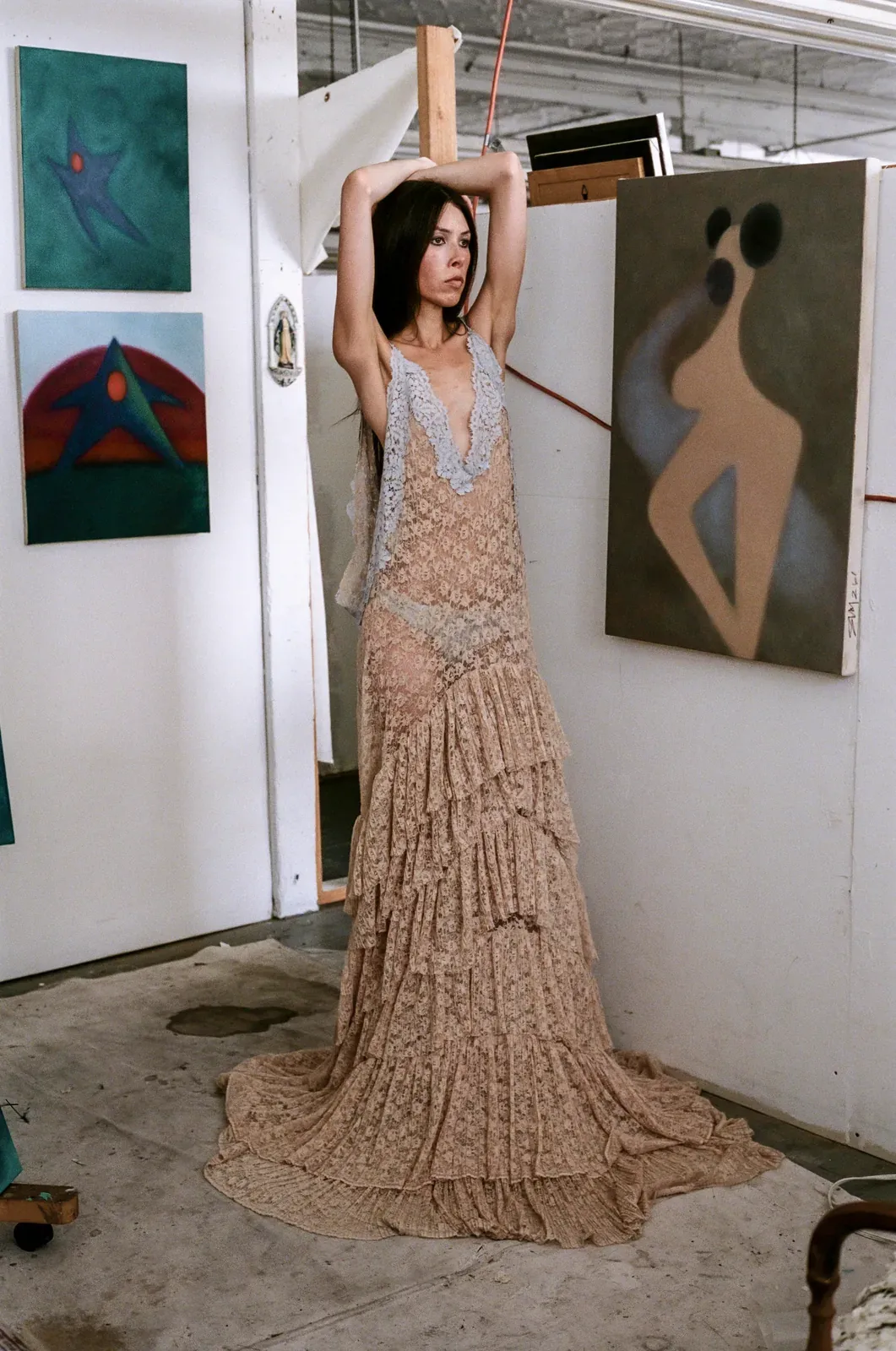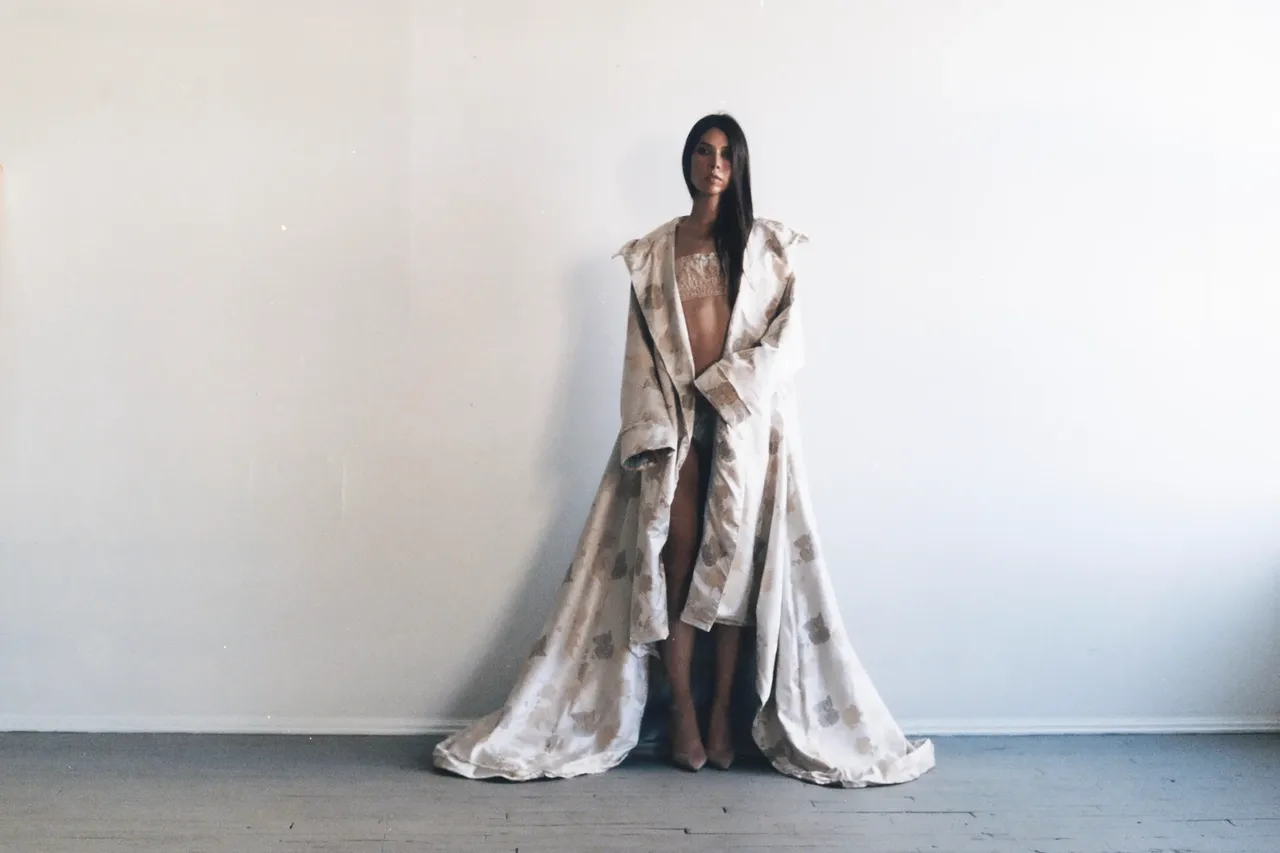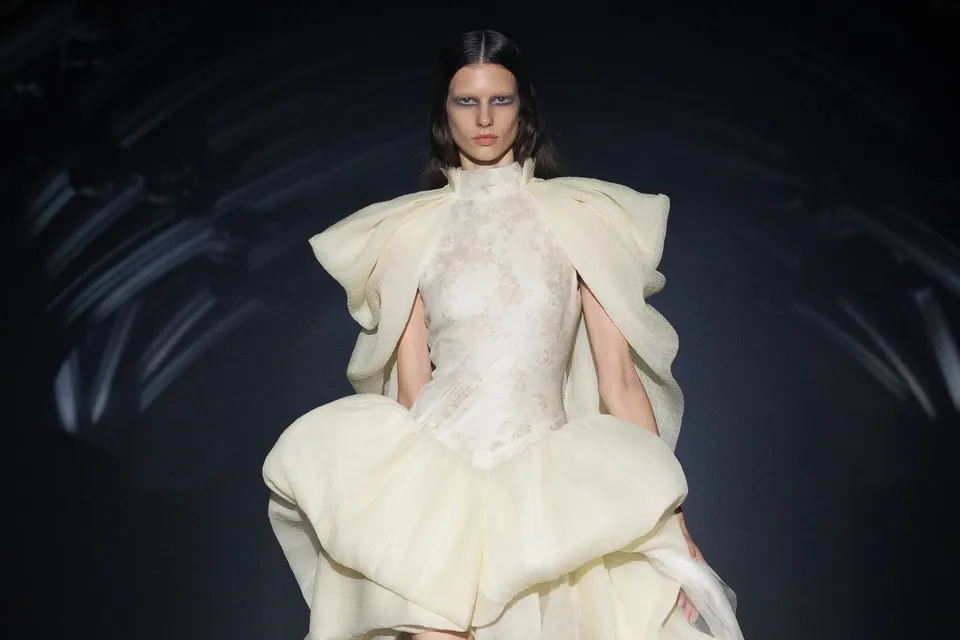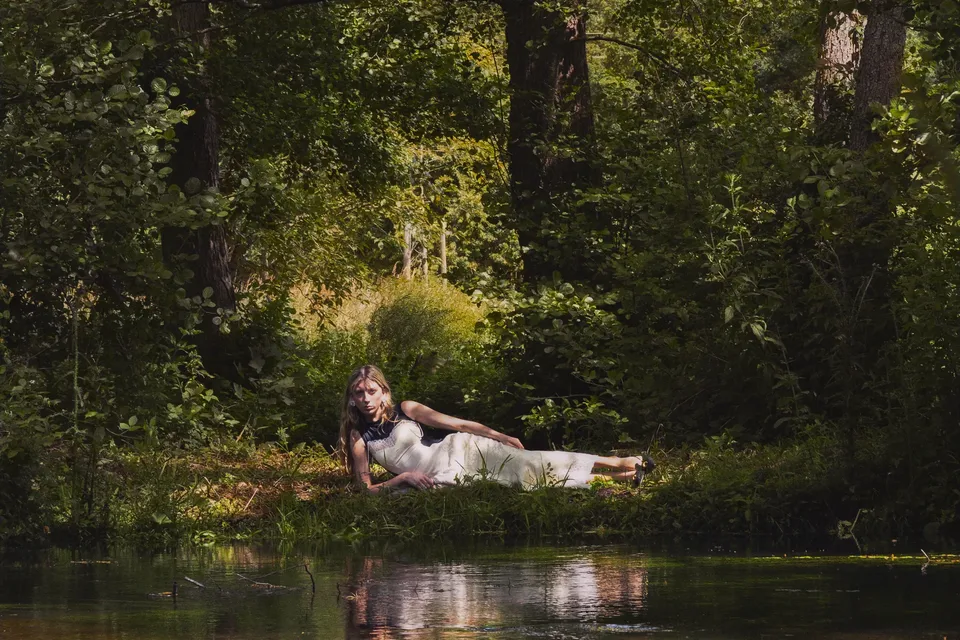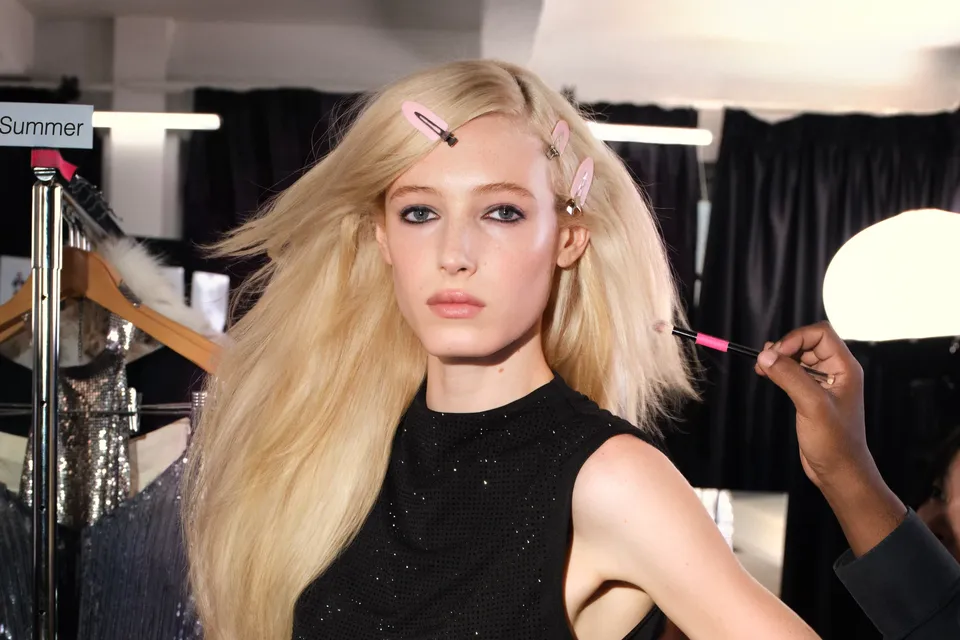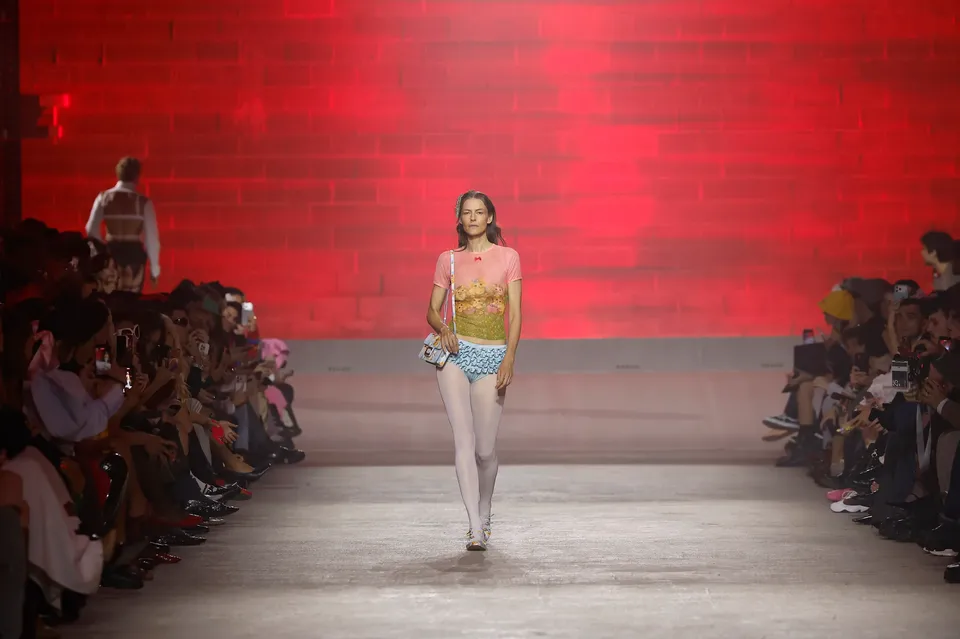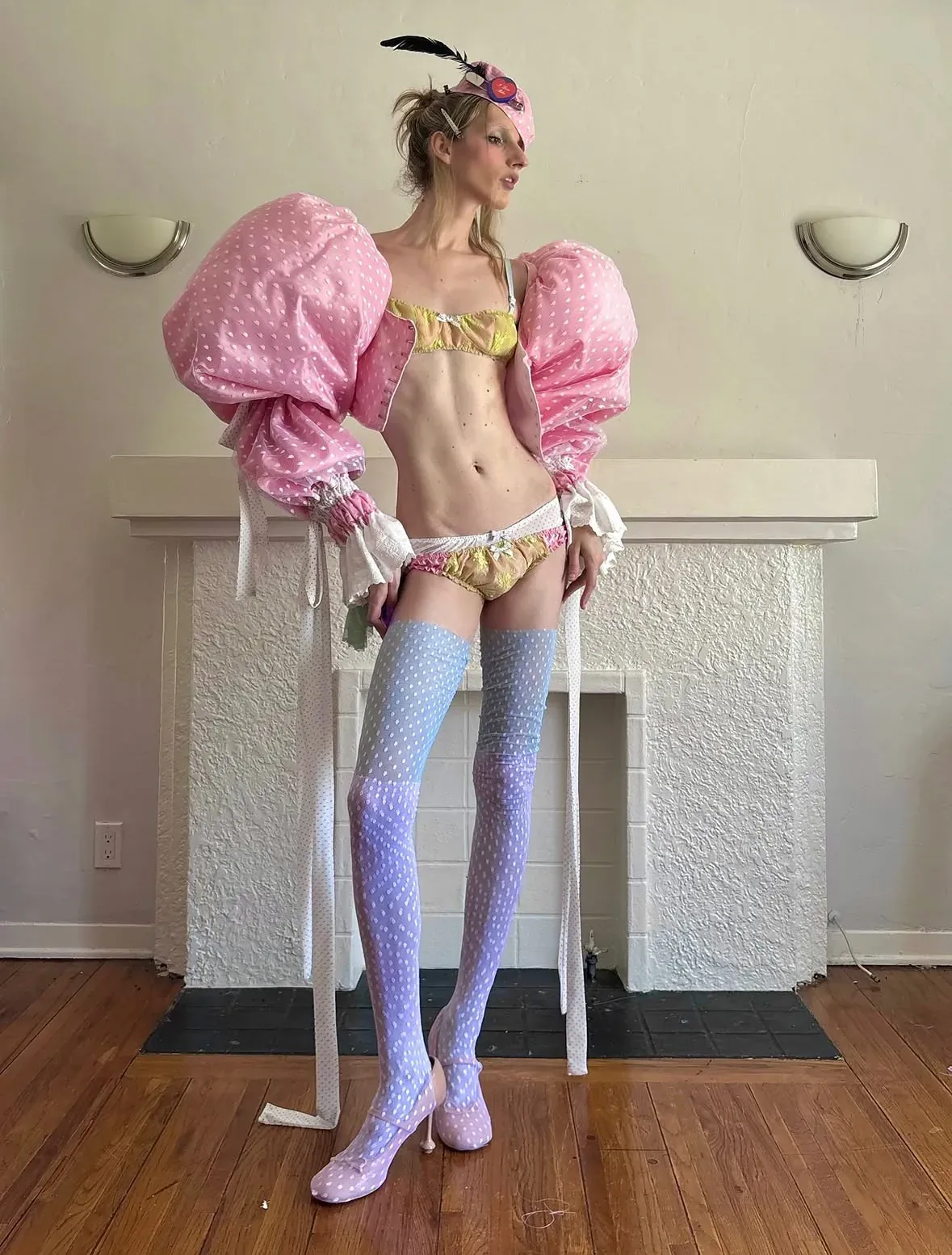
Erik Charlotte’s career highlights could be: being featured in the Dazed 100, a selection of some of the most exciting emerging creatives, and seeing her designs worn by Madison Beer, Julia Fox, Conan Gray, Rosalía, Emma Chamberlain, MARINA, and Odessa A’zion, among many other icons of our zeitgeist. One might assume these achievements represent the pinnacle of her trajectory so far. Yet, after a closer look at her life and approach to fashion, it is her singular commitment to her passion that speaks volumes about this young designer.
Just as a plant will always find its way through the smallest cracks in search of sunlight, a creative soul will overcome any obstacle in pursuit of the art that fulfils that person’s need to create. Ironically, in our time, the challenge is not so much a lack of opportunities as an excess of them. In a world where everything seems within reach, and anyone can do anything in the name of AI, social media, or “pay-to-win” culture, establishing credibility within an industry through connections or financial resources alone has complicated the very notion of success — and even the idea of having a platform of one’s own.
In an era dominated by mass-produced fashion corporations, with entire teams working behind a single garment and seemingly unlimited access to photographers, stylists, researchers, marketers, and headquarters in every major fashion capital, Erik’s story is an ode to independent creativity. An apartment in LA, a friendly team at a fabric store, and a supportive network are all she needs to capture the attention of top stylists around the world.
Erik’s proficiency is evident in her designs. Her remarkable stories and way with words equally draw you in. We had the pleasure of experiencing this firsthand through her thoughtful and insightful responses to our interview.
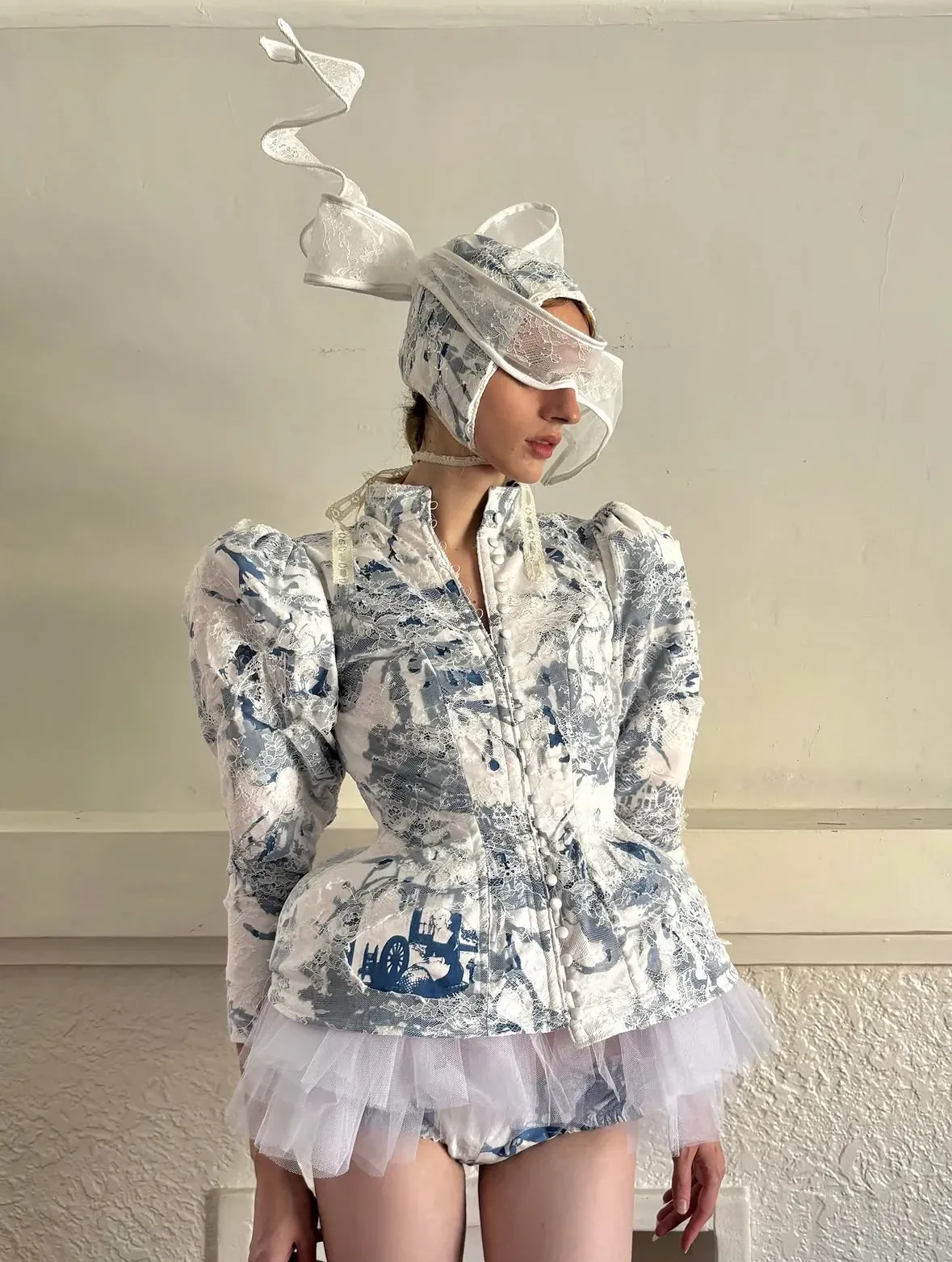
You’ve spoken quite openly about the irony of online recognition and successful projects when you still have to balance creativity with a full-time job. What are the silent questions, doubts, or sacrifices that come up for you when you’re trying to build a creative practice alongside the struggle of being a regular person?
I think it can give you a really unshakable feeling of imposter syndrome, having to switch between work and creative personalities in order to make ends meet and feeling like you’ll never make it to that point where you can be 100% a designer. It’s very hard to find a liveable balance, with a day job and a fashion career on top of seeing friends, keeping up with maintenance, taking care of yourself, and hopefully getting some sleep in between. You’re plagued by the questions: How much more could I be doing if I could do this full-time? How many more things could I say yes to? However, no matter how stressed and deprived I’ve felt, I feel so strong in my ambition and vision that I will always remember that this period will be worth it down the line.
There’s something very dreamy and almost elf-like about your work — clear hints of fantastical worlds. Some of the references you’ve mentioned, like video games, come from worlds of adventure, magic, and transformation. Do you ever imagine your clothes being worn by characters within those worlds rather than just by people in our own, amazing as they may be?
Thank you! I definitely do. Sometimes my sketches will skew a bit more fantastical, giving the croquis elf ears or unrealistically long hair that defies gravity. It really depends on the looks and the pieces, but I also love transporting them into old paintings or photographs in my mind. Like, what would Jan van Eyck’s The Arnolfini Portrait look like if they were both wearing taffeta stripes, tiny bras, and giant crinoline tutus with stilettos?
“My own work feels hyperfeminine and my daily appearance leans a little more androgynous.”
Have you ever thought about designing for digital worlds (video games, animation, or film) while still bringing the same hands-on sensibility you have in your physical work? I could imagine your designs existing somewhere between a Zelda world, a Studio Ghibli universe, and your own reality.
I would be so honoured to work on a project like that; it would be a major dream as a big video game player and a designer. My favourite game franchise is Fire Emblem, and playing Fire Emblem: Awakening in high school really gave me a lot of fuel for character design and illustration. All the female units are so beautiful and well-designed, with distinct faces, hair, and armour. I would love to design looks and armour for Fire Emblem characters, as their designs are always seemingly well-researched and intentional, with connections to history and designs that denote their use as a unit. Having that level of intention already built into their character design system feels like such an interesting challenge. And getting to create something in 2D for a sprite and 3D for a character model isn’t too far off from the idea of a sketch vs. a final garment. It would be crazy to see a mage or a Pegasus knight battling in designs I created.
Is there a fictional character (a superhero, heroine, villain, or otherwise) that you’ve always wished you could design for? And if you had complete freedom, what would you create for them?
Princess Zelda, for sure. She’s like the ultimate heroine to me, and I love the range of forms she’s taken on throughout the entire Legend of Zelda franchise. I always love seeing characters in bridal attire, so I’d love to create some sort of battle-ready wedding gown and veil for her. I think bronze metal against sheer white fabric is really striking.
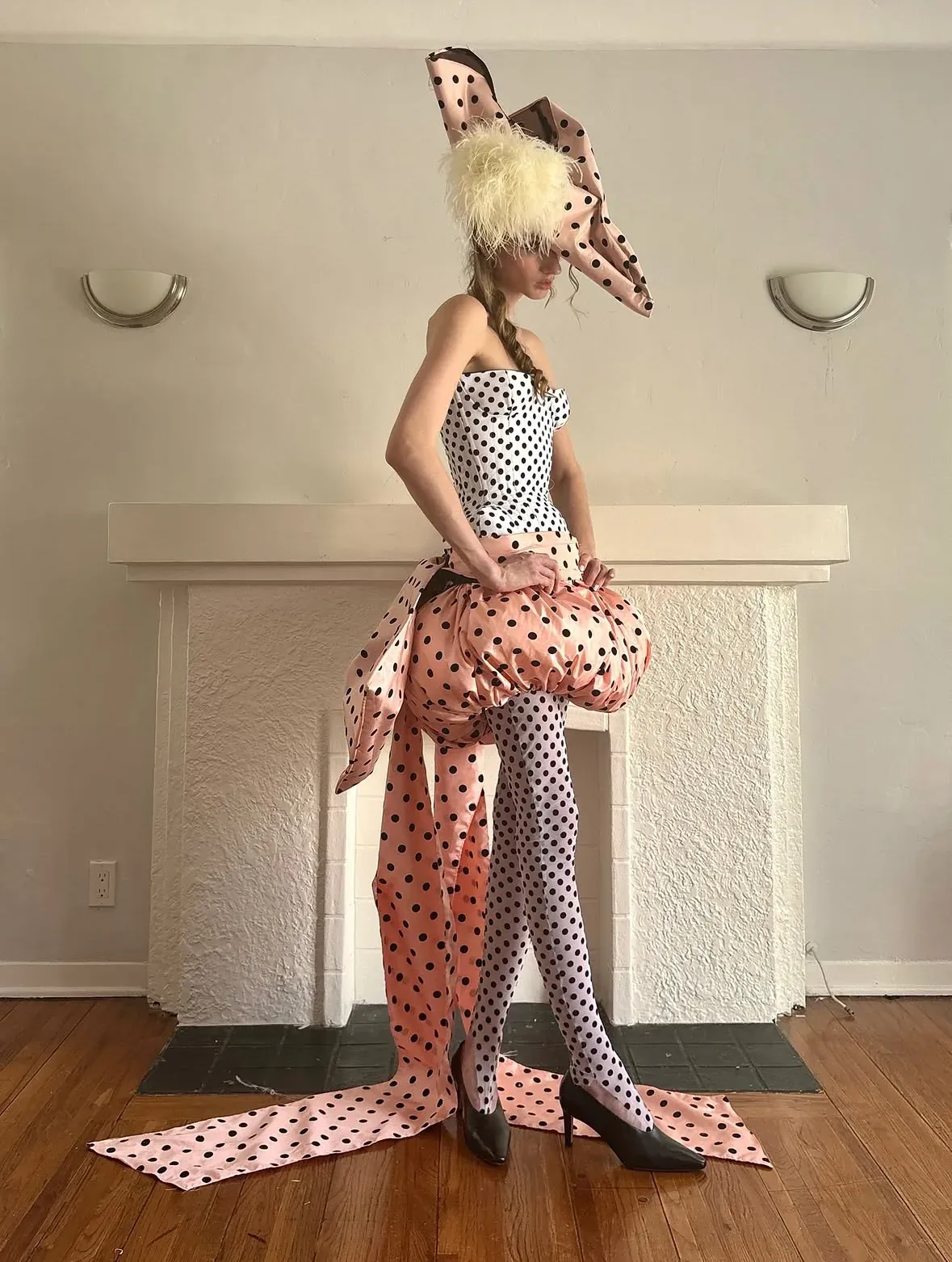
Who have been the secret key characters in your journey so far — the people who believed in you early on, whether that was a loyal fabric supplier, an emotional support friend, a collaborator, or even a day-one random user on social media?
So, so many people! For how solitary my actual work can be, there are so many people who have helped me really hone in on my vision and believe in myself. My best friends Mathilde and Toni have been there for me for years and still help me out by playing fashion assistant when I need it. My cousin (also named Erik) is a super-talented merchandiser, and we text daily to bounce around different ideas and talk about what’s happening in the industry. Crystalline Structures is an incredibly talented creative director and stylist but also a close friend, so whether it’s collaboration or advice, I’m so grateful to have them in my corner. I love everyone who works at International Silks and Woolens, my favourite fabric store over on Beverly. They all make fun of me for how often I go there and how long I take choosing my fabrics.
I’m super grateful to all the great stylists and assistants I’ve been able to work with and collaborate with as well. Chris Horan was the first stylist to pull some pieces from me and put one of my hats on Christina Aguilera. His team is super sweet and professional, and I’ve worked with them a ton between pulls and custom pieces for artists like ADÉLA. Briana Andalore also saw my vision super early, which meant so much to me. Katie Qian is another stylist I always love to work with, she really understands more of the colourful, fun pieces I love making. Anna Trevelyan, Kat Typaldos, Emma Oleck, Lindsey Hartman, Dot Bass — the list goes on! I love working with people who have a strong vision but also lead with kindness and patience, given how difficult it can be for me to handle so many emails and requests.
I’m super grateful to all the great stylists and assistants I’ve been able to work with and collaborate with as well. Chris Horan was the first stylist to pull some pieces from me and put one of my hats on Christina Aguilera. His team is super sweet and professional, and I’ve worked with them a ton between pulls and custom pieces for artists like ADÉLA. Briana Andalore also saw my vision super early, which meant so much to me. Katie Qian is another stylist I always love to work with, she really understands more of the colourful, fun pieces I love making. Anna Trevelyan, Kat Typaldos, Emma Oleck, Lindsey Hartman, Dot Bass — the list goes on! I love working with people who have a strong vision but also lead with kindness and patience, given how difficult it can be for me to handle so many emails and requests.
There can be a certain freedom in not being too closely tied to the fashion industry or the canonical fashion designer journey, in discovering things through your own eye and intuition rather than through what the industry tells you should matter. You’ve mentioned, for example, that you don’t use Pinterest, partly to avoid that kind of visual bias. Do you think there is power in deliberately protecting your own visual instinct from outside influence?
Because I didn’t have the opportunity to go to school specifically for fashion, thus sort of barring me from applying anywhere for a master’s degree, I already feel a certain level of alienation from a lot of other designers and the industry as a whole. However, I’ve tried my best to embrace it instead as a differentiator, allowing me to filter out a lot of industry junk that everyone has grown so weary of. My practice is so solitary that my ideas can either come from my own mind, from things I see around my city, or from things online.
And while the internet has been absolutely vital in creating this career I’m nurturing, it also peddles the exact same images and ideas to creative people, limiting them to a very narrow idea of what a successful design, shoot, or campaign is meant to look like. I see this firsthand in the many mood boards I receive, always noticing patterns of the same exact images repeated across completely different boards, likely the first images being promoted by these massive social media conglomerates. I think organic image creation is really important as a creative person, and it’s why, when these prolific designers describe what inspires them, they can rattle off fifteen totally different locations, objects, people, colours, etc. The way we view the world is very singular, and by relying on your own recollection of things, personal stories and anecdotes, or heritage and culture, you can at least create something that comes from your own point of view. Even if it is inevitably marred by the influence of the algorithm, it still feels true to you.
And while the internet has been absolutely vital in creating this career I’m nurturing, it also peddles the exact same images and ideas to creative people, limiting them to a very narrow idea of what a successful design, shoot, or campaign is meant to look like. I see this firsthand in the many mood boards I receive, always noticing patterns of the same exact images repeated across completely different boards, likely the first images being promoted by these massive social media conglomerates. I think organic image creation is really important as a creative person, and it’s why, when these prolific designers describe what inspires them, they can rattle off fifteen totally different locations, objects, people, colours, etc. The way we view the world is very singular, and by relying on your own recollection of things, personal stories and anecdotes, or heritage and culture, you can at least create something that comes from your own point of view. Even if it is inevitably marred by the influence of the algorithm, it still feels true to you.
We live in a fashion landscape dominated by mass-produced clothes, simplified silhouettes, and increasingly disposable materials, while your work seems to move in the opposite direction, towards elaborate sleeves, embellishment, volume, and an almost obsessive attention to detail. As both a creator and a consumer of fashion, how do you experience that tension?
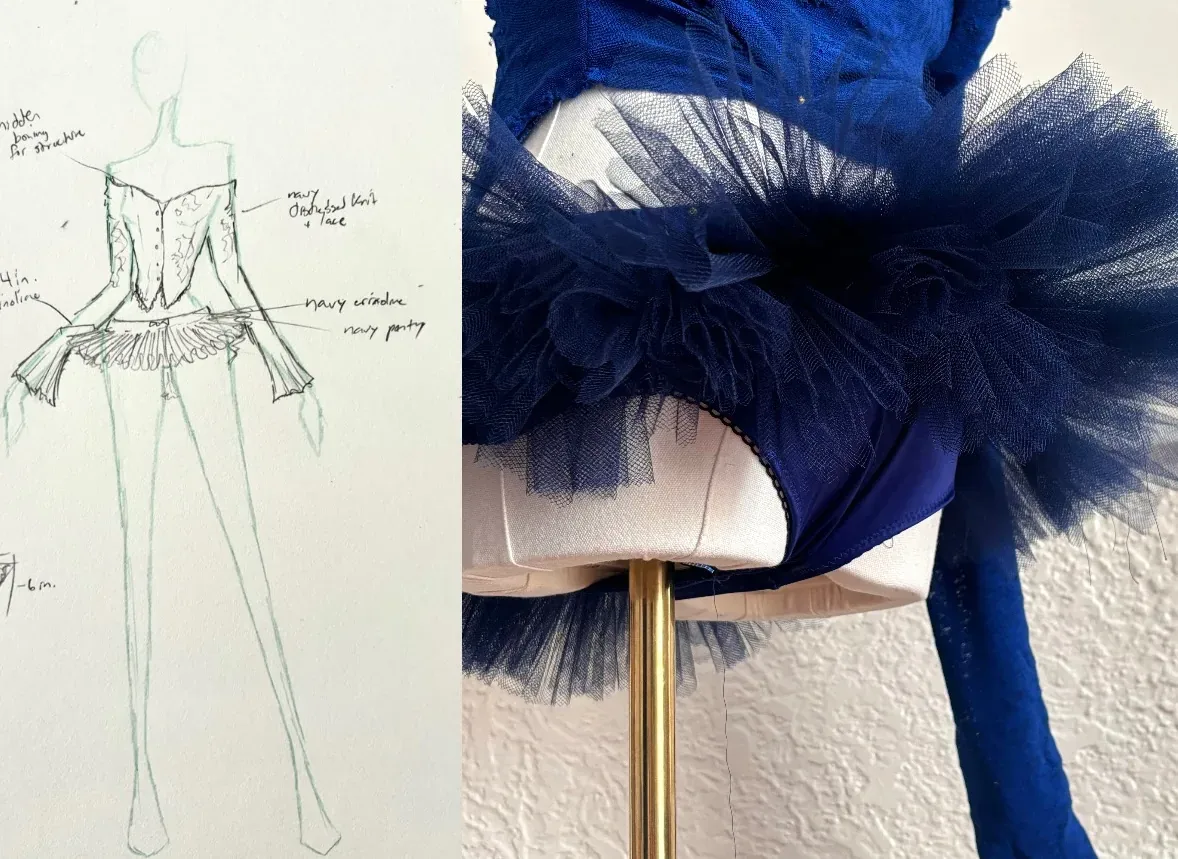
I think as fashion becomes more disposable and simplified, it only increases the demand for designers like myself and many others who create glamour, volume, and stories with their work. It’s not that I can’t do ready-to-wear silhouettes (I just created a bunch for my collection); it’s that I have a lot more fun making things the way they exist in my mind, usually far more fantastical. Even if it’s just an audience member who may never be a future consumer, they still want to see things that excite them or challenge their ideas of beauty. You see these big brands pouring millions into advertising, photography, and runway shows that pull out all the stops, but at the end of the day, it’s all a veneer for the actual clothes. People love the garments that get photographed and styled on these artists and actors just as much as the garments I put on and shoot in front of my fireplace on my phone.
In the same vein as the previous question, part of your digital footprint has involved showcasing yourself wearing your creations. As a consumer and wearer of fashion, what’s the biggest difference when you go from wearing your pieces to regular store-bought clothes, even if they are at the more elaborate end of the spectrum?
I really started making clothes because I couldn’t find what I wanted anywhere, and if I did, it never fit right, being 6’3” and always quite lanky. Oftentimes, store-bought clothes don’t fit the length of my legs or the distance between my shoulders, which can make me feel a bit insecure, especially compared to the adjustable corsetry and modular pieces I like to create. Wearing my own clothing gives me so much confidence, so I’ll often wear a dress I’ve made on a night out just to feel my best. Plus, it’s a fun way to break the ice with people. I think it’s so beautiful to be wrapped in something you put a lot of love and care into. However, I do love casual and comfortable clothing and usually wear my daily uniform: a Los Angeles Apparel cheesecloth camisole and a pair of vintage Dickies overalls I tailored to fit down and around my waist as pants. I often feel like I’m switching characters a bit, with my own work feeling hyperfeminine and my daily appearance leaning a little more androgynous.
You’ve also talked about the democratisation of fashion and the sense of how high the bar is for creators sharing their work on social media. After gaining a little more experience with this channel, have you been able to make a general diagnosis, community-wise? How do you think people have received your work, and what part of their feedback, whether support or criticism, do you appreciate most for your project?
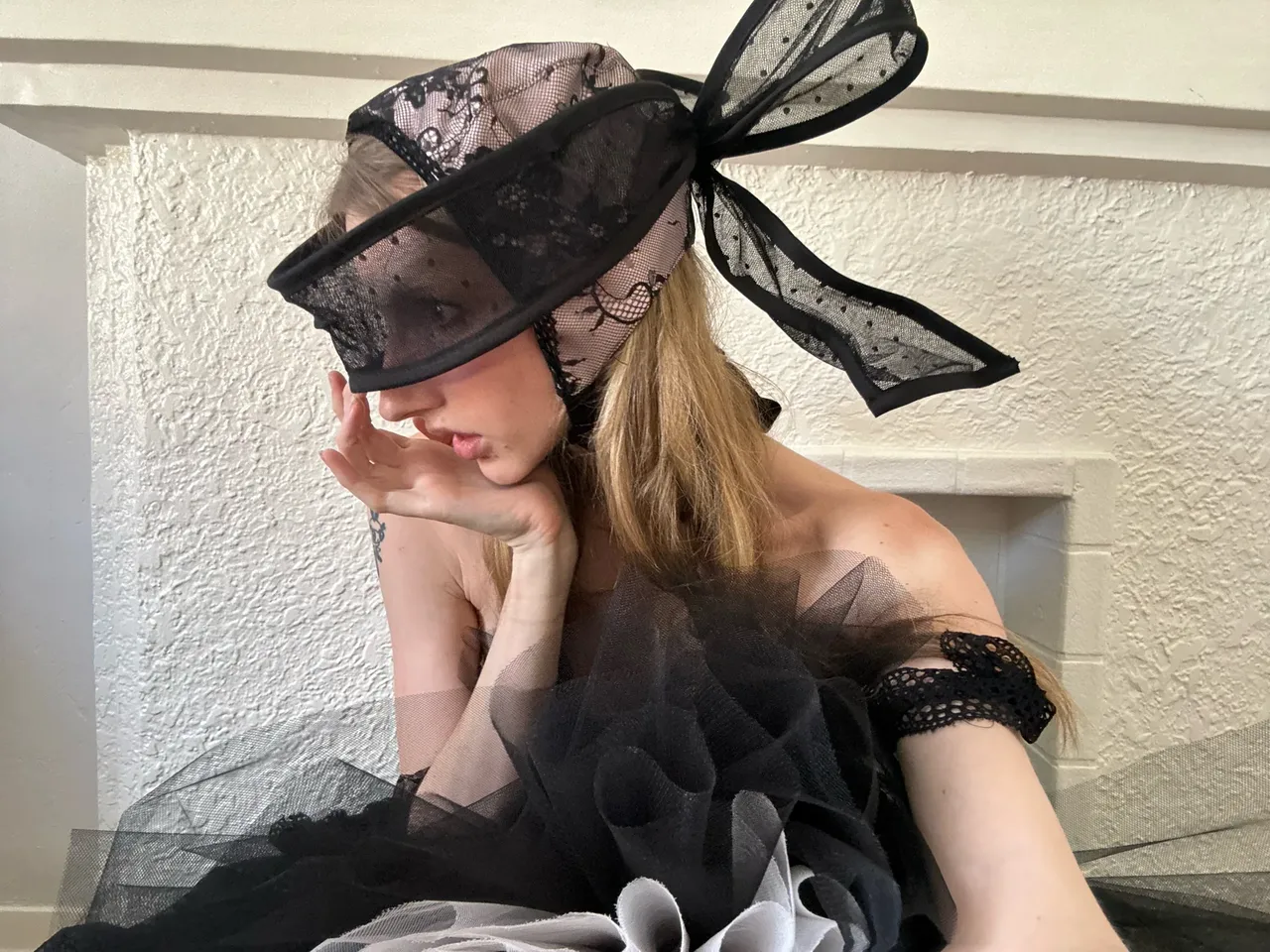
It’s been a lot of taming my inner critic, as I’m naturally quite brutal towards myself when it comes to keeping the bar high. However, I’m always happily surprised when people really react to more undone, less planned work, like projects I do purely for enjoyment, ideas in my notes, or progress images I share on my story. It helps me remember that the process is what people are really drawn to, and it helps frame the final images of the garment in a more nuanced way.
It is fair to point out that, in an era when everything feels doable and possible art-wise, social media has become, among many other things, a place where newer generations find and resonate with art that is still human-made and independent. Considering especially how reminiscent your designs are of the early days of fashion, do you see a fair number of young followers who share your vision?
Totally. I find that a lot of younger fashion students interact with my work and will ask me questions about how I created volume in a skirt or cut a sleeve. I’m always hesitant to answer, I feel like their teachers will show them a much more proper way of doing it! But I love that they see things I make and immediately want to know how it was done, because I think the same way. I love seeing drag queens all over the world take inspiration from and re-create looks because that’s the world I started in as a teenager in the Bay. I think people love drama and shapes that take risks or occupy a lot of space, as it challenges the algorithm’s love of selling easily manufactured clothing to mass audiences. I think it helps that I’m very honest about how I create and do everything myself right now out of my apartment. I don’t try to hide any of the earnestness of my goals or the struggle of the uphill battle of creating my own identity and brand from nothing.
“I love seeing drag queens all over the world take inspiration from looks because that’s the world I started in as a teenager in the Bay.”
One of your recent features illustrates an optimistic landscape: a creative ecosystem re-emerging around Los Angeles, with you as a local designer dressing an actor like Odessa A’zion and collaborating in worlds outside traditional fashion institutions. Even the way LA is portrayed in contemporary culture can feel more positive and open-ended than the conventional fashion narratives we associate with European capitals and prestigious fashion schools. Do you feel that you’re part of a new kind of fashion habitat in the city, and what do you think makes it different?
I think that, as a fashion destination, Los Angeles’ reputation has been really defined by Hypebeast bros or casual athleisure, so it’s not a place many people think of for couture and glamour. But I think there are so many incredibly talented artists and designers here in Los Angeles who deserve to take up more space in the zeitgeist globally. I think Los Angeles, and California as a whole, can imbue you with a sense of levity that can manifest in really beautiful ways creatively. I think other young designers have caught on to this and are taking advantage of a unique and historically rich city with an incredible hub for textiles, where telling someone you create ball gowns and millinery generates far more surprise and intrigue than in a city like Paris or New York. Having been born in and having spent almost my whole life in California, I really love Los Angeles and want to continue creating evocative and interesting work here and keep connecting with other people wanting to do the same.
A personal project that has been built and nurtured with so much love and passion can sometimes blur the lines between “Who is my brand?” and “Who am I?”, between the creator and the creation. Even more so when you coexist with your art in the way you do. Do you ever feel that your project has a little life of its own? And if so, what kind of personality does it have? Is it sometimes stubborn about going in a direction different from the one you had in mind? Do you feel that it tells you where to go, or are you still the one leading the way?
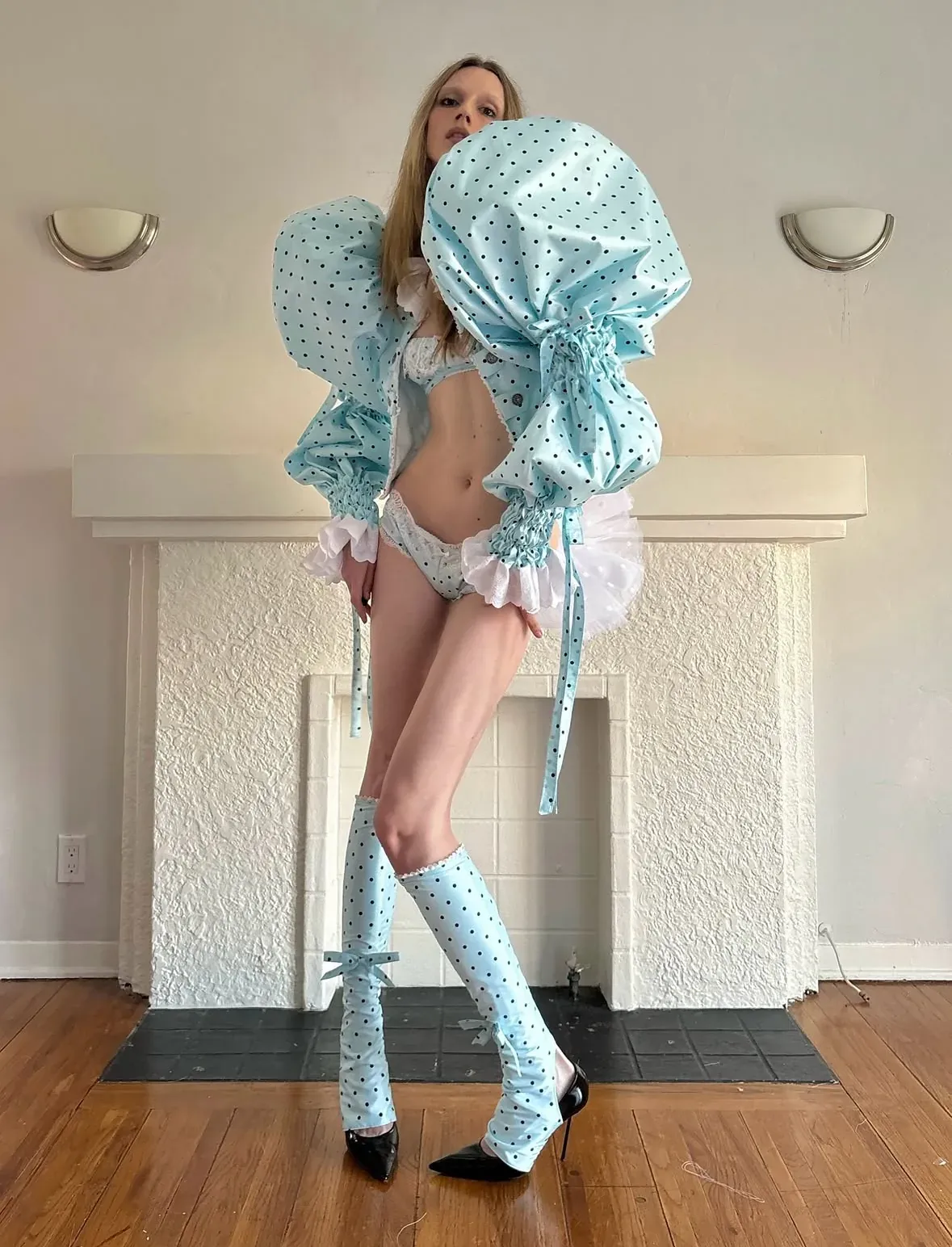
I feel like the Erik Charlotte label has a distinct personality that isn’t entirely accurate to who I am as a person, but in a good way. I think having that extension of myself has helped magnify certain traits, like creativity and confidence, in a way that eventually rubs off on me when I’m back in my casual clothes, when people don’t know I’m even a designer. I sometimes get lost in trying to figure out what exactly people want to see from me or what would create the biggest impression (Do I make the hats even more massive? More colourful? Brighter polka dots?), but I know it’s never enough pressure to actually drive the creative process without some passion and ideas of my own too. I never want to become a caricature of what people want me to be. I love the fun and fantasy of it all, but I think my work also needs that vulnerable touch to feel special and truly my own. Even if I feel a bit of stress at times due to the number of eyes on my work, I feel like I’m always in control. Especially after my last collection, I feel like I’ve put enough of my personal DNA into the machine to let me steer it into the next season. At the root of it all, I just really love creating beautiful clothes.