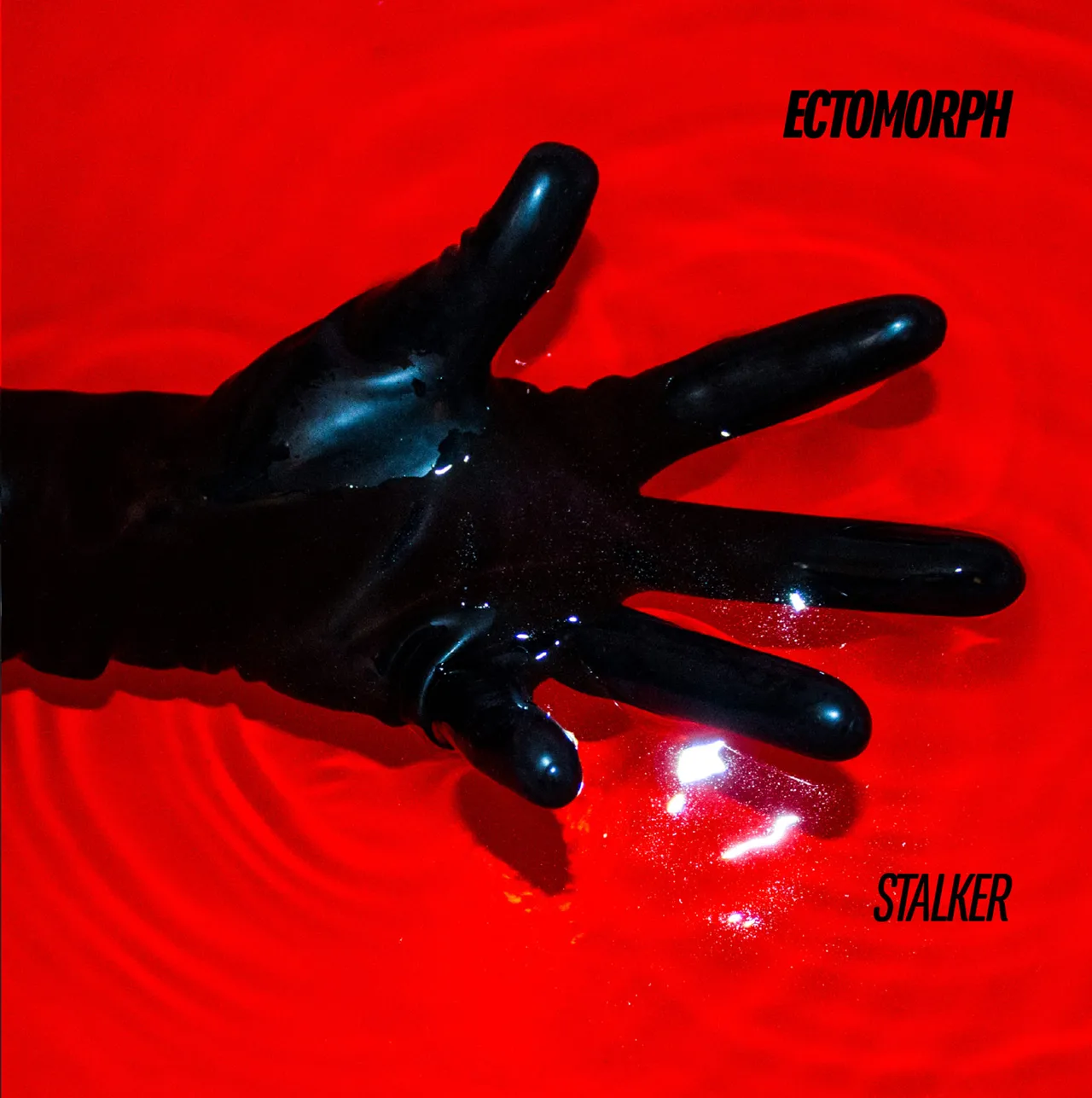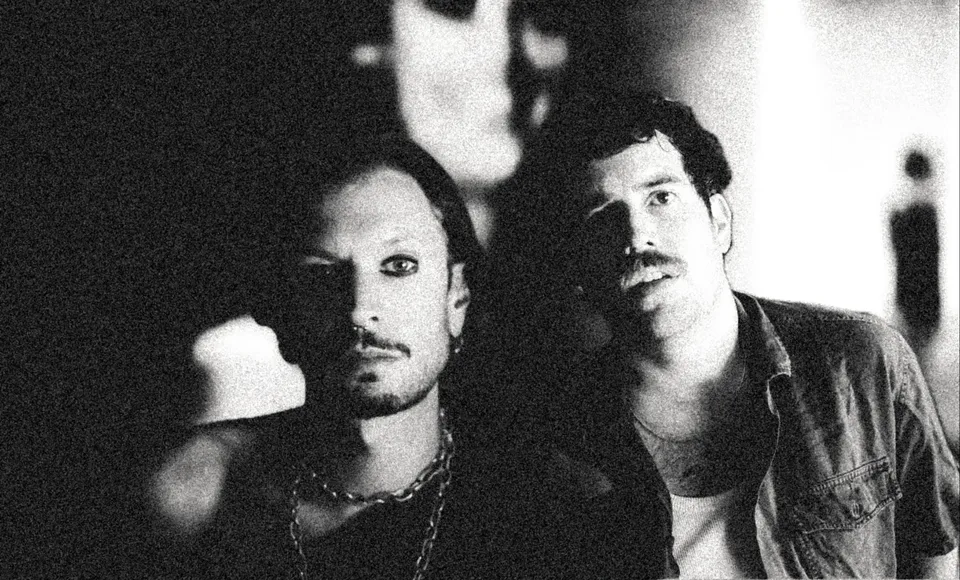
After a long absence, the seminal Detroit techno duo Ectomorph, formed by BMG and Erika, has returned with the sprawling and mesmerizing album Stalker. Inspired by ancestral voices from another dimension, their pulsating trance rhythms are organically developed through their analogue arsenal. As the genre inches more into the mainstream, we discuss counter-culture, the supernatural and the legacy of Detroit techno.
To begin, for those who are new to Ectomorph, how would you introduce yourselves?
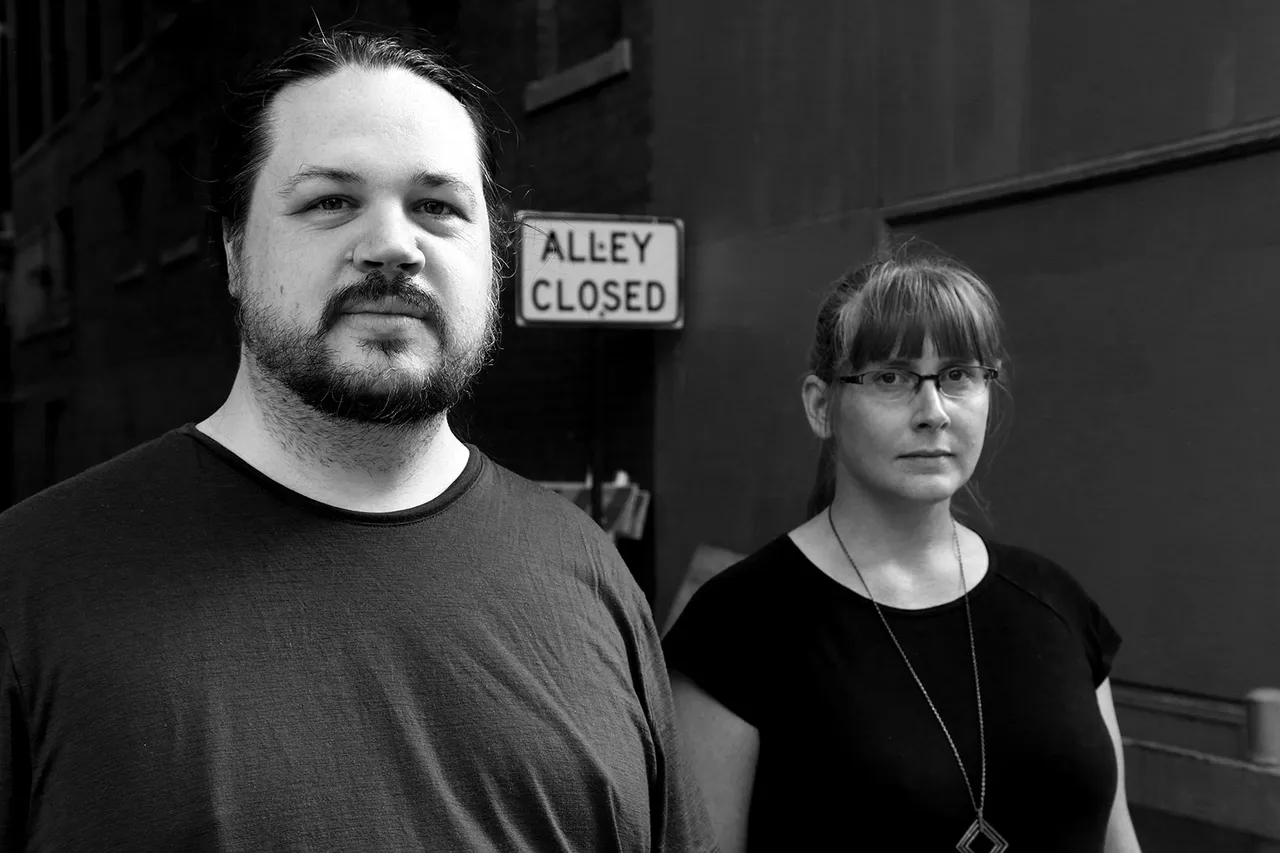
BMG: Ectomorph is comprised of BMG & Erika. Ectomorph’s first record in 1995 was also the label Interdimensional Transmissions’ very first offering and then Erika joined in 1997. The label has come to represent the left-hand path within Detroit techno, electro, post-disco, etc. Interdimensional Transmissions is collaborative in nature, and functions as a dialogue between label partners, Erika, Amber and myself.
Where did the name come from?
BMG: The name came from an ad in a fetish magazine called Skin Two for a British latex company. We liked the connotation, but also perceived Ectomorph as a project from the idea plane, and taking on the meaning of sleek, streamlined in design, due to the subtractive nature of the music.
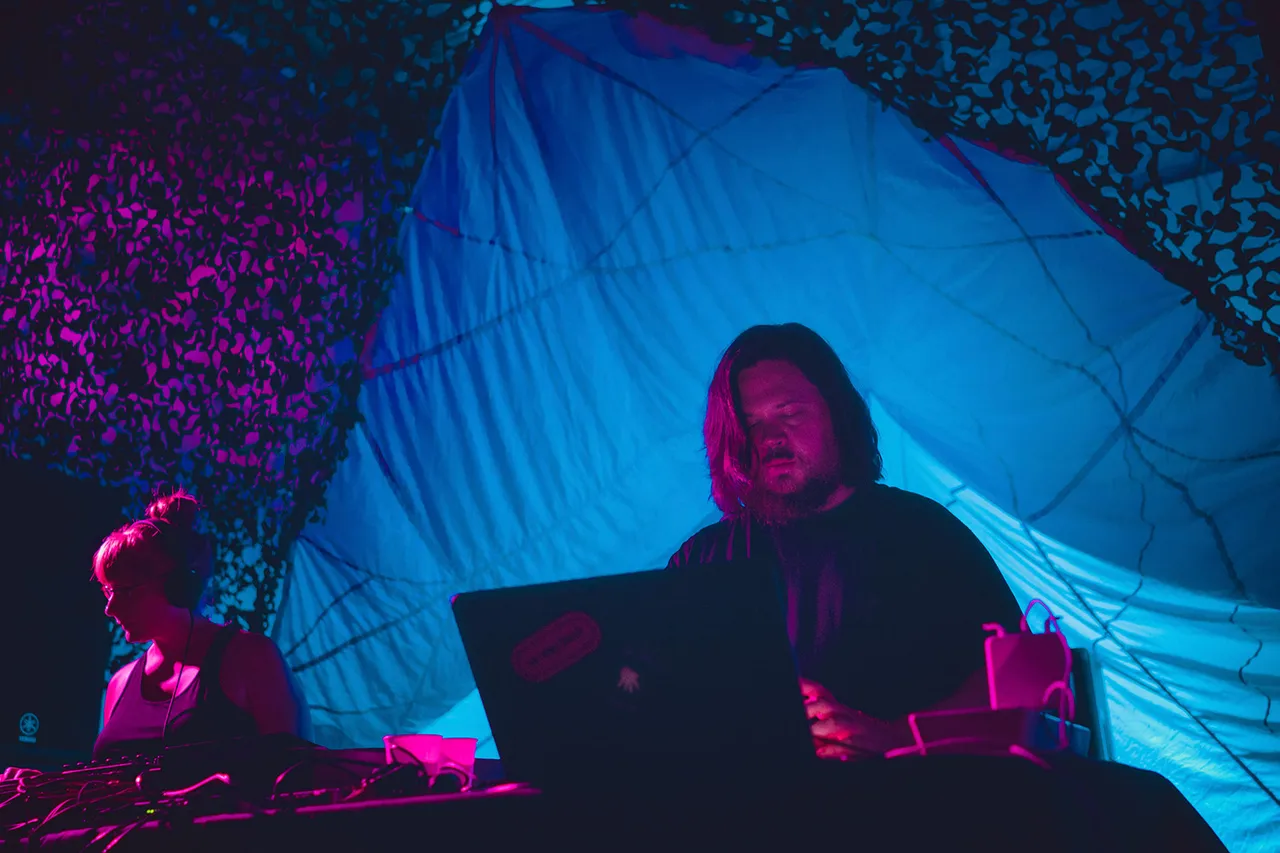
You recorded your latest album, Stalker, live with no editing. How hard was it to simply let a track be once you had finished playing it? Surely, there’s a temptation to go back, tweak this, accentuate that.
BMG: No temptation. It begins with knowing the song, learning what it is after writing it by performing it live for over a year all over the world, and taking that instantaneous bio-feedback into the creative process. The logic and feel of a tune that is perfectly created can be profound and powerful – many classic 12”s are –, but for Ectomorph, it would feel like the breathless announcer saying “before we go any further, be sure to like and subscribe”. Ultimately, it feels like pinning a butterfly to a board with two-hundred pins, overdone and over-anxious.
Music functions better when it is more removed from your day to day logic and works within its own flow of ideas, something that feels like an actual idea evolving in front of you, that you can follow and by being not perfect and so predetermined it has a greater resonance with your spirit and deeper parts of your brain. And this way, every song is arranged at the same time you are recording it, which is very rare in electronic music now. Every song was multi-tracked, so I could create the mix and sonically hone the idea we were presenting in a live fashion after the songs were recorded.
Erika: We developed the tracks over a year and a half period of playing live sets, and by the time we were ready to record them in the studio, we had well-defined relationships with the songs, with strong ideas about how to structure and balance them.
Music functions better when it is more removed from your day to day logic and works within its own flow of ideas, something that feels like an actual idea evolving in front of you, that you can follow and by being not perfect and so predetermined it has a greater resonance with your spirit and deeper parts of your brain. And this way, every song is arranged at the same time you are recording it, which is very rare in electronic music now. Every song was multi-tracked, so I could create the mix and sonically hone the idea we were presenting in a live fashion after the songs were recorded.
Erika: We developed the tracks over a year and a half period of playing live sets, and by the time we were ready to record them in the studio, we had well-defined relationships with the songs, with strong ideas about how to structure and balance them.
There seems to be a lot of links to fantasy/sci-fi on Stalker with song titles like Beyond the Six Realms and The Crawl of Cthulhu. How did Tarkovsky’s film and the supernatural influence your sound?
BMG: I started the label Interdimensional Transmissions when I went to an old temple site on an island off of Ireland called Dun Aengus. When I crawled on the cracked altar and water splashed my face from the 350ft sheer drop to the ocean, I started hearing voices in my head. Was it my ancestors? It felt like it, they always talked as a group, it was many voices saying the same thing. They told me that my life path was wrong, I was in mathematics at university and the NSA was trying to recruit me, probably to go live forty stories underground and never see light again as my math made satellite warfare closer to reality. The voices told me I needed to make music, that releasing music on my own label was my path. I heard the voices again during the weeks around Samhain every year until I was ready to release the first Ectomorph record.
Erika: We love tentacles.
Erika: We love tentacles.
You guys formed originally in 1995, inspired by the likes of Robert Hood and Drexciya. How has the Detroit techno landscape changed between then and now?
BMG: Even before James Stinson died, he had moved to Atlanta. Rob Hood is somewhere outside Birmingham, Alabama. It’s hard to get Jeff Mills to visit Detroit. So many people have left to engage with the larger world or their own lives. We have stayed in Detroit and have attempted to help it grow through the music we release, play and perform, and through our event production side, which has a strong vision. It is hard to explain how much has changed, Detroit is going through a major growth spurt, and the music evolves, the audience has changed but the spirit endures. There are many legal places to hear techno now in the city – that’s radically different from 1995.
Erika: It's gone through several completely different lifetimes since then. In that original time period, raves, warehouse and loft parties were still happening, and felt cutting edge and alive. The scene went through a transformation in the late-‘90s when police destroyed this renegade scene, and it was forced to move into bars and nightclubs with a 2am closing time. The scene is undergoing a revitalization now, with more and more young people interested in hearing techno.
Erika: It's gone through several completely different lifetimes since then. In that original time period, raves, warehouse and loft parties were still happening, and felt cutting edge and alive. The scene went through a transformation in the late-‘90s when police destroyed this renegade scene, and it was forced to move into bars and nightclubs with a 2am closing time. The scene is undergoing a revitalization now, with more and more young people interested in hearing techno.
“Since the very beginning, techno has been a resistance music at heart” Erika
You reformed in 2016. What inspired you to bring Ectomorph back to life and how has your sound evolved?
Erika: We began to be inspired again by the evolution in the global techno scene and we had developed some new ideas, and wanted to bring them out to contribute to this modern movement in music.
BMG: We found a new direction to go to and a way to go there. We had been working on new music, and I had developed my own personal algorithm for composition by combining certain sequencers with my modular. I made two boxes, one is the equivalent of about four synthesizers, the other is all the drums, mixing and effects. That way, all the tones coming from me are from my imagination and not from some engineer from any random place in the world at any time since we’ve been making electronic instruments. I found a way to make a symphony of powerful drum tones and textures in a portable way with all machines from this century.
In previous incarnations of Ectomorph, we would perform with some very ancient and sensitive equipment – some early synthesizers didn’t even have temperature stabilization in the oscillators, meaning a sweaty party, your goal could change the sound and feel of the sounds so far out of range that they are unusable. We had our 808 blow up on stage twice in the ‘90s, and it wasn’t either our fault or the machine’s, but the power. Smoke came out of it both times. You can only imagine our horror… To cure this problem, at first, I used samplers and then Ableton when it came out. But by the end of the 2000s, I felt these ideas had come to an end. I wanted to be able to trust the gear would work every time, anywhere in the world, and I wanted it to be more spontaneous and malleable depending on the situation we were in.
BMG: We found a new direction to go to and a way to go there. We had been working on new music, and I had developed my own personal algorithm for composition by combining certain sequencers with my modular. I made two boxes, one is the equivalent of about four synthesizers, the other is all the drums, mixing and effects. That way, all the tones coming from me are from my imagination and not from some engineer from any random place in the world at any time since we’ve been making electronic instruments. I found a way to make a symphony of powerful drum tones and textures in a portable way with all machines from this century.
In previous incarnations of Ectomorph, we would perform with some very ancient and sensitive equipment – some early synthesizers didn’t even have temperature stabilization in the oscillators, meaning a sweaty party, your goal could change the sound and feel of the sounds so far out of range that they are unusable. We had our 808 blow up on stage twice in the ‘90s, and it wasn’t either our fault or the machine’s, but the power. Smoke came out of it both times. You can only imagine our horror… To cure this problem, at first, I used samplers and then Ableton when it came out. But by the end of the 2000s, I felt these ideas had come to an end. I wanted to be able to trust the gear would work every time, anywhere in the world, and I wanted it to be more spontaneous and malleable depending on the situation we were in.
Your trance rhythms and ambient melodies fuel psychedelic escapism but they also seem rooted in a sense of counter-cultural resistance. Is there an innate connection between techno and anti-establishment defiance?
Erika: Since the very beginning, techno has been a resistance music at heart. Although it's been eaten by capitalism over the years and turned by a giant marketing machine, we still feel that this type of music, loud and without vocals, allows people to have a shared experience that is at the same time individualistic, providing a catalyst for exploring your own thoughts and brain patterns while sharing a dancefloor with others, without lyrics telling you what to think or guiding this meditation.
BMG: There has to be, I think that’s why techno connects with so many emergent cultures. I feel that spirit pulses through Detroit’s music. The anarchy, the highly independent intelligence of Detroiters is really enduring and inspiring. The musical roots within Detroit include bands like the MC5, who tried to spark a political and societal revolution, and who in turn were harassed by the FBI and CIA. And you can find the knowledge and understanding of black ops and covert manipulations within so much Detroit techno. Like Underground Resistance’s Electronic Warfare (Do Not Allow Yourself to Be Programmed) or Cybotron’s Alleys of Your Mind lyrics:
“Lies and truth side by side
glazed eyes crimson hide
Anti love is the word
No others ever heard
Alleys of your mind
Paranoia right behind”
One of my favorite forgotten revolutionary Detroit rock bands is Sonic’s Rendezvous Band, which included the MC5’s Fred Sonic Smith, who would go on to marry Patti Smith; The Stooges’ drummer Scott Asheton; Gary Rasmussen from the Up, and Scott Morgan of the Rationals, who covered Respect in 1966, which was a regional hit, and helped inspire Aretha Franklin to evolve the song into a classic. The high energy fusion of rock and soul can easily be abstracted to techno emotions.
BMG: There has to be, I think that’s why techno connects with so many emergent cultures. I feel that spirit pulses through Detroit’s music. The anarchy, the highly independent intelligence of Detroiters is really enduring and inspiring. The musical roots within Detroit include bands like the MC5, who tried to spark a political and societal revolution, and who in turn were harassed by the FBI and CIA. And you can find the knowledge and understanding of black ops and covert manipulations within so much Detroit techno. Like Underground Resistance’s Electronic Warfare (Do Not Allow Yourself to Be Programmed) or Cybotron’s Alleys of Your Mind lyrics:
“Lies and truth side by side
glazed eyes crimson hide
Anti love is the word
No others ever heard
Alleys of your mind
Paranoia right behind”
One of my favorite forgotten revolutionary Detroit rock bands is Sonic’s Rendezvous Band, which included the MC5’s Fred Sonic Smith, who would go on to marry Patti Smith; The Stooges’ drummer Scott Asheton; Gary Rasmussen from the Up, and Scott Morgan of the Rationals, who covered Respect in 1966, which was a regional hit, and helped inspire Aretha Franklin to evolve the song into a classic. The high energy fusion of rock and soul can easily be abstracted to techno emotions.
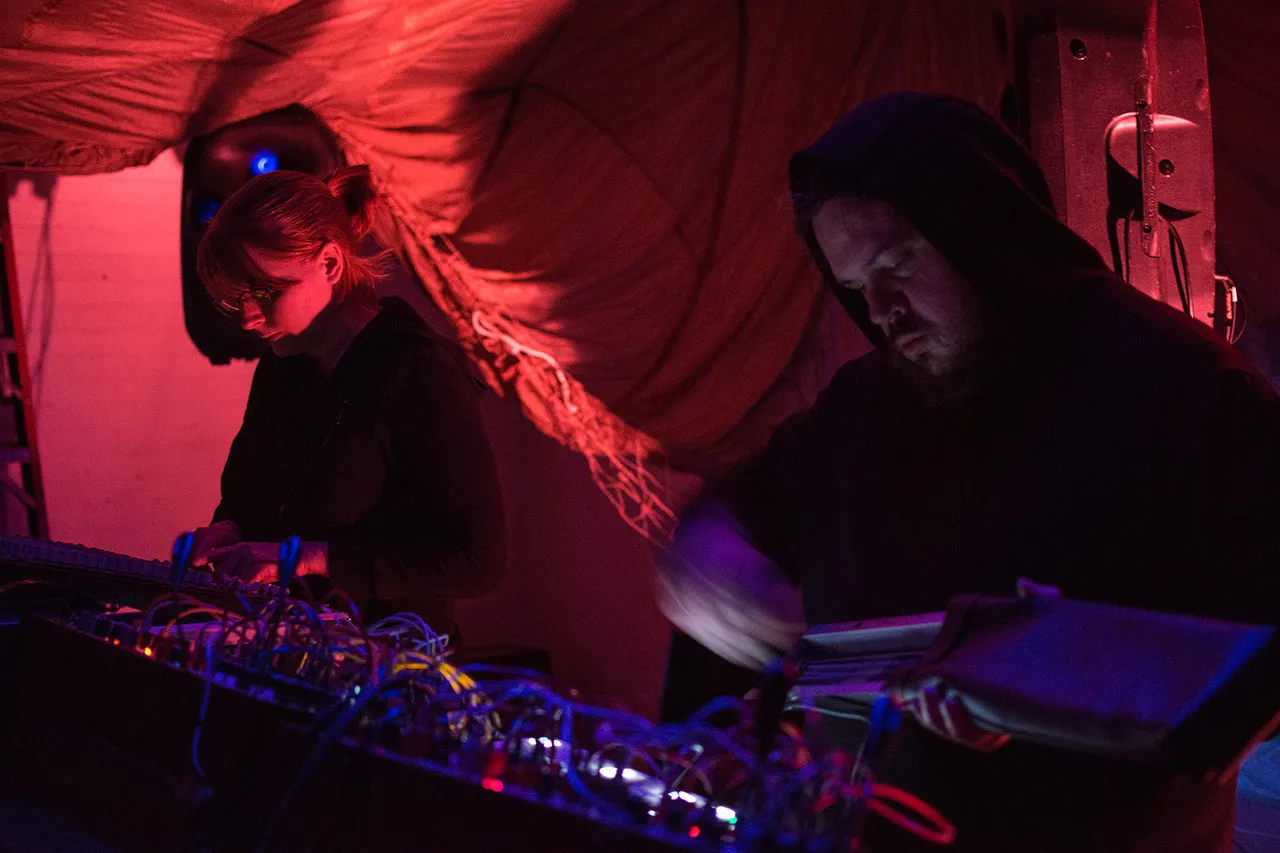
When you bring your music to the stage, everything is analogue, there’s not a computer in sight. What are some of the advantages and disadvantages of building a set through hardware and what is the secret weapon in your arsenal?
Erika: Well, I really do not like to look at a screen while performing, it's such a change of focus. And ew, they are so bright! Quite rough on the eyes, really. So in this regard, we prefer to look at and experience gear. And interfacing with ideas with a touchpad is much more awkward. Dedicated physical interfaces are easier to dial into quickly in the dark, you can really learn buttons and knobs. My secret weapon isn't really so secret: the Genoqs Octopus is the core of what I do, it’s the machine I have the most intimate and long-lasting relationship with, it is the brain of my sound generation.
BMG: Without a computer, we don’t need screens to perform. We spend more and more of our time looking at screens, whether it is a computer or scrolling with our thumbs on Instagram on our phones. We need time away from the screen to be able to feel and think. With the equipment being analog, there is a sonic power that reaches deep inside you without you knowing, and there is a very strong reaction to this. You feel it before you even think about it. There is another advantage to a hardware show in that you are actually hearing what you are seeing on stage, those are the instruments and they are making those sounds in real time.
The disadvantage to using a computer is that we actually have to do things, arrange everything in real time, and control the music in ways that are very different to the DAWs we work with at home. For instance, without these devices, we can’t have any form of recorded music or sounds to arrange and process as we could in Ableton or the Octatrack. I would say the secret weapon is the mind, but yeah, that’s everybody's secret weapon. Probably the 19” spring reverb, whose strings I play in many different ways during the show.
BMG: Without a computer, we don’t need screens to perform. We spend more and more of our time looking at screens, whether it is a computer or scrolling with our thumbs on Instagram on our phones. We need time away from the screen to be able to feel and think. With the equipment being analog, there is a sonic power that reaches deep inside you without you knowing, and there is a very strong reaction to this. You feel it before you even think about it. There is another advantage to a hardware show in that you are actually hearing what you are seeing on stage, those are the instruments and they are making those sounds in real time.
The disadvantage to using a computer is that we actually have to do things, arrange everything in real time, and control the music in ways that are very different to the DAWs we work with at home. For instance, without these devices, we can’t have any form of recorded music or sounds to arrange and process as we could in Ableton or the Octatrack. I would say the secret weapon is the mind, but yeah, that’s everybody's secret weapon. Probably the 19” spring reverb, whose strings I play in many different ways during the show.
Your label Interdimensional Transmissions and the affiliated parties No Way Back have gained a cult following over the years. What makes these spaces and events so special and how has it evolved since its inception?
Erika: The spaces are special because each time, we transform an empty gallery or warehouse into something new, bringing a sound system (or more recently, two!) and fully immersive room design, creating a truly unique experience. No two parties look or feel the same. The party has evolved organically over the past decade, from a very small one-room gathering of our friends, which expanded to friends of friends, into the larger event it has become, with two rooms (No Way Back and Outer Space) and three sound floors (we play the music from the dance floor outside, allowing for an entirely different thing to happen under the stars, and through the sunrise).
BMG: No Way Back throbs with atmosphere and vibe, it is a place where you can remove yourself from the daily world, from time, and go as far as you want into inner or outer space. I would say the key ingredients of these events are the renegade free feeling from the venue, the transformation of the venue (which really excites the senses with texture and the underwater of cave-like feelings you get from the parachutes and textiles), the perfectly dialed in sound (with a highly skilled sound team that is responding to everything in real time and really making the sound shine and envelop you), to the each and every performer who just bring their highest levels to these parties, challenging themselves to be better and really connecting. Also, the way the DJs flow from one another making a greater piece when viewed over a longer time, and the audience, who is so prepared to go so far and give so much energy back, which makes this all such an exciting and immersive music experience.
I believe the transformation of the space is crucial, it impacts people on an instinctual level. It lets people know on a visceral level that you really care, and they, in turn, feel more comfortable giving more back. It evolves organically every year – as we all grow and change, so does the party. Originally, it was just one room, but when we moved to the Tangent, the party gained the Outer Space room, where we play ambient experimental from opening till dawn. And at dawn, we put on Scott Zacharias, who somehow bridges these sounds into a deep fervor from disco to beyond.
BMG: No Way Back throbs with atmosphere and vibe, it is a place where you can remove yourself from the daily world, from time, and go as far as you want into inner or outer space. I would say the key ingredients of these events are the renegade free feeling from the venue, the transformation of the venue (which really excites the senses with texture and the underwater of cave-like feelings you get from the parachutes and textiles), the perfectly dialed in sound (with a highly skilled sound team that is responding to everything in real time and really making the sound shine and envelop you), to the each and every performer who just bring their highest levels to these parties, challenging themselves to be better and really connecting. Also, the way the DJs flow from one another making a greater piece when viewed over a longer time, and the audience, who is so prepared to go so far and give so much energy back, which makes this all such an exciting and immersive music experience.
I believe the transformation of the space is crucial, it impacts people on an instinctual level. It lets people know on a visceral level that you really care, and they, in turn, feel more comfortable giving more back. It evolves organically every year – as we all grow and change, so does the party. Originally, it was just one room, but when we moved to the Tangent, the party gained the Outer Space room, where we play ambient experimental from opening till dawn. And at dawn, we put on Scott Zacharias, who somehow bridges these sounds into a deep fervor from disco to beyond.
What are you listening to on repeat at the moment?
BMG: I’ve been obsessed with Cyrus’ Presence on Basic Channel, I can’t stop listening to it. This is one of their finest ambient tunes, such perfectly fuzzy and dirty tones that just sort of float around you in this really gritty cloud of textures. It merits spending the time to lose yourself inside of it. I also can’t stop listening to Lotus Eater’s Decanter, the project from Lucy and Rrose. It just really gets my head going and works on the floor.
Also, the recently issued Catherine Christer Hennix Selected Early Keyboard Works of her electronic music from 1976, which contains The Well-Tuned Marimba. I think I’ve listened to it for over three hours, but I get so lost in time – this music removes me from time, much like the music of her mentor, La Monte Young, that I have no idea how long I’ve actually listened to it.
Erika: The Mysteries of the Deep podcast (on Soundcloud).
Also, the recently issued Catherine Christer Hennix Selected Early Keyboard Works of her electronic music from 1976, which contains The Well-Tuned Marimba. I think I’ve listened to it for over three hours, but I get so lost in time – this music removes me from time, much like the music of her mentor, La Monte Young, that I have no idea how long I’ve actually listened to it.
Erika: The Mysteries of the Deep podcast (on Soundcloud).
“Techno should evolve and continue to evolve, and the next generation should not be just about new models of the founding generation.” BMG
Berlin and Detroit have been locked in a symbiotic relationship through techno over the years. What influence has Berlin had on you?
BMG: Berlin influenced me even before I went there in 1991, from the ‘80s avant-garde and cult music like Einsturzende Neubauten or groups like Liaisons Dangereuses, who still sound fresh to me. Beate Bartel from Liaisons Dangereuses is one of my heroes, and also a founding member of Neubauten. She is seriously one of the greatest synthesists ever. And also, Manuel Göttsching’s E2-E4 is still mind-blowing. Even with all that, the strongest impact on my development is the music that emanates from Hard Wax and the people who work there. The single greatest influence being Basic Channel and all their guises from Maurizio to Rhythm & Sound. The depth of tone, the hypnotic subtraction, the use of subtle textures to add such feeling. It is still so advanced, and the music continues to expand.
Erika: Although techno comes from Detroit, Berlin is where it really took hold and flourished. We are constantly inspired by the feelings in the clubs there, by the long duration of the parties, by the lack of curfews. It’s a truly special place.
Erika: Although techno comes from Detroit, Berlin is where it really took hold and flourished. We are constantly inspired by the feelings in the clubs there, by the long duration of the parties, by the lack of curfews. It’s a truly special place.
The legacy of Detroit techno lives on stronger than ever. If you were to name three heirs to carry the torch forward who would they be?
BMG: That’s so heavy, who are the heirs? There’s far too little mentorship in techno, and I never view people as a new ‘someone else’, like there was never a new Jeff Mills. It would not be accurate to call Carl Craig the new Derrick May. I feel like within Detroit techno, house and electro, people make their own universes full of their own philosophies – I don’t even see much philosophical overlay between Moodymann and Theo Parrish, but everyone outside this city would group them.
Techno should evolve and continue to evolve, and the next generation should not be just about new models of the founding generation; there shouldn’t be a Model 5000 or a Saunderson Brothers. The people who take up the mantle of Detroit techno (that we should eventually call the heirs) should want to innovate within the original spirit of the music, but to make it fresh, new and their own. It shouldn’t sound like what existed, but it should inspire you or really stand out like the previous generations have.
There is, of course, the terrible weight of history. How do you, as a young person in Detroit, top the greatest music of Mike Banks, the Suburban Knight or Drexciya? It should fit their generation’s views but still be incredible. The people that earn the title of heirs should achieve that through repeated excellence. Even the concept of Detroit techno is changing, and for some, it combines Marcellus Pittman and even Detroit’s jazz history to arrive at a new sound. I enjoy the uniquely Detroit fusions of artists like Uun, Shady P, and the Portage Garage Sounds crew. Are they heirs? Only time will tell. The unsung heroes are Scott Zacharias and David Shettler, people who really give their all to their craft and just keep outputting brilliant music, ideas and sets. They also the best record collections in the city of Detroit.
Techno should evolve and continue to evolve, and the next generation should not be just about new models of the founding generation; there shouldn’t be a Model 5000 or a Saunderson Brothers. The people who take up the mantle of Detroit techno (that we should eventually call the heirs) should want to innovate within the original spirit of the music, but to make it fresh, new and their own. It shouldn’t sound like what existed, but it should inspire you or really stand out like the previous generations have.
There is, of course, the terrible weight of history. How do you, as a young person in Detroit, top the greatest music of Mike Banks, the Suburban Knight or Drexciya? It should fit their generation’s views but still be incredible. The people that earn the title of heirs should achieve that through repeated excellence. Even the concept of Detroit techno is changing, and for some, it combines Marcellus Pittman and even Detroit’s jazz history to arrive at a new sound. I enjoy the uniquely Detroit fusions of artists like Uun, Shady P, and the Portage Garage Sounds crew. Are they heirs? Only time will tell. The unsung heroes are Scott Zacharias and David Shettler, people who really give their all to their craft and just keep outputting brilliant music, ideas and sets. They also the best record collections in the city of Detroit.