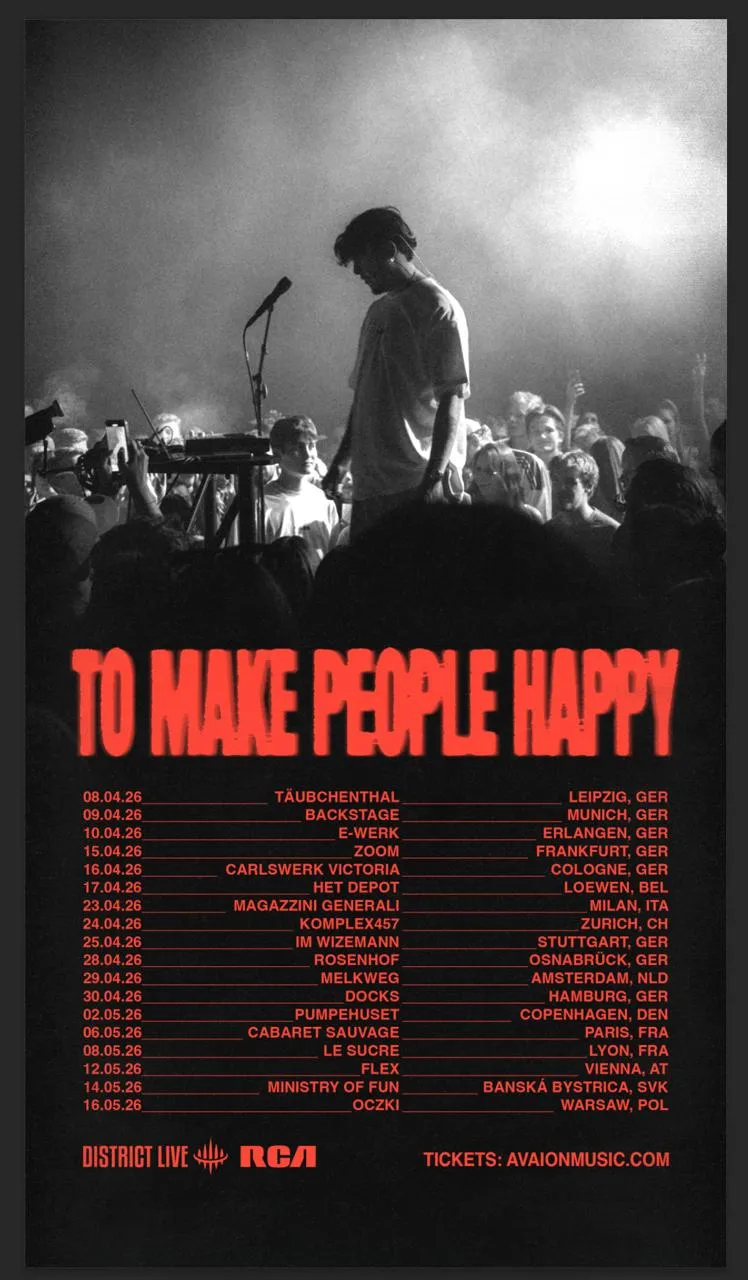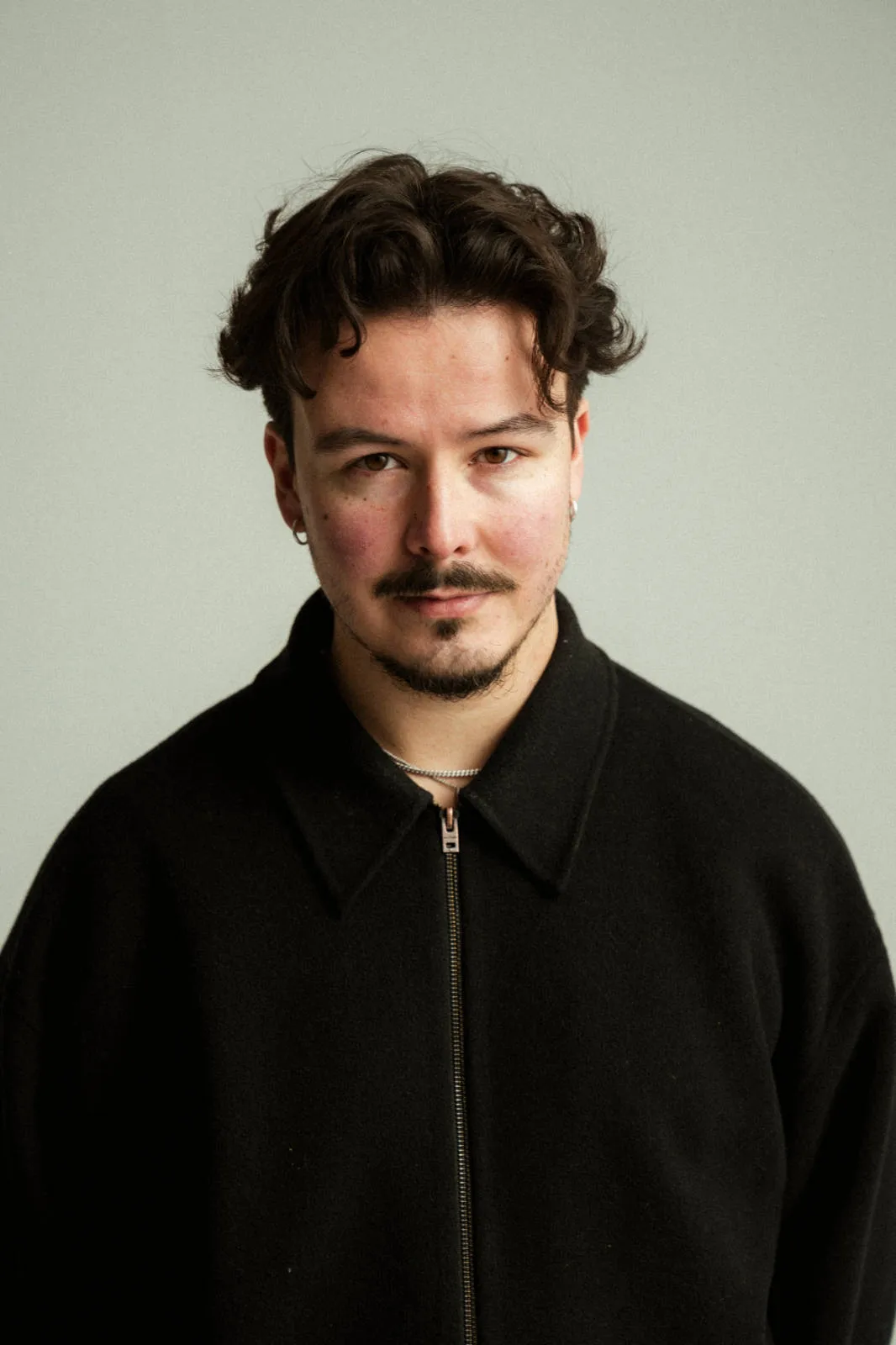
Across fifteen tracks, TO MAKE PEOPLE HAPPY, AVAION’s sophomore album, moves fluidly between moments designed for collective movement and others that unfold in quieter, more personal settings. Analogue warmth, melodic precision and a strong sense of flow give the album a cohesive feel, positioning it as a key project at the start of what already feels like a defining year.
At METAL, we previously touched on this chapter through Need Me, but now the focus turns to the album as a complete body of work. Alongside tracks like COLORS and BERLIN, collaborations such as WACUKA with Sofiya Nzau and SLOWLY with RANI expand the emotional range of the record without breaking its internal logic. Speaking about what drives the project, AVAION points to emotion as the core of his approach: “People enjoy, and need, to feel real emotions even more, and I wanna create that through my music.” A line that sits at the heart of the album and naturally extends into its live life as he prepares to tour throughout the year.
Built by an artist who writes, produces and performs his own material, TO MAKE PEOPLE HAPPY focuses on feeling first, whether that arrives through dancefloor momentum or reflective listening.
Chris, it is a very special time for you. TO MAKE PEOPLE HAPPY officially dropped on January 16, and later that day, you presented the album through an immersive listening experience at Berlin’s B-Dome. Can you talk us through that day, your thoughts and feelings from release morning to the performance?
I think every artist can relate to this feeling: when you work months or even years on an album, and then it finally drops, it’s a wild mix of feelings. On the one hand, you are really proud, happy and excited about showing the world all that new music you’ve poured your heart and energy into. But, at the same time, it’s a kind of weird feeling; it’s vulnerable. Celebrating with the immersive B-Dome experience is something I want to do even more of. Creating special moments between me and my fans that feel completely intimate and personal to us. I think that in the fast, rushing, overwhelming times that we are in, people enjoy and need to feel real emotions even more, and I wanna create that through my music.
You’ve gone from making music in your bedroom to celebrating your second album in such a singular way. Does a day like Friday make you stop and reflect on that journey?
I think days like this motivate me even more. Thinking outside of the box and finding new ways to connect with people through music is everything to me. I like to think that my younger self would be pretty happy with the journey we’ve been on.
The exclusive listening event was intentionally immersive, with audio and visuals playing a key role in heightening the senses. Why did it feel important to introduce TO MAKE PEOPLE HAPPY in this format?
At first, it was a bit weird for me to play a show for people who lay on bean bags in front of me (laughs)! But, I have to say, this was a really deep experience. I connected to the people and felt what they felt. I enjoyed that the whole room became one. Some people had their eyes closed just listening to the music; some people had tears in their eyes and looked at the ceiling. Some people looked at me while I performed the songs. Everybody enjoyed it in their way, but one thing was the same. Everybody had a smile on their face, and I hope it made them happy.
When someone presses play on the album, what do you hope they feel first?
This special feeling that I chase every day. This feeling of full joy when you understand everything, everything fits perfectly and everything is perfect in the exact moment you’re in. Happiness? Contentment? Peace? Maybe all three. Music can do that to people, and I hope this album shares that feeling.
The title TO MAKE PEOPLE HAPPY comes from a moment you overheard in Berlin. Why did that sentence stay with you?
I did some Dolby Atmos recordings while walking through the city, and it was simply a chance that I was passing by and managed to catch the conversation between those two strangers talking about what they enjoy doing.
One of them said the quote that you hear in the album, that it’s all about love, to make people happy. And yeah, that hit deep because that’s what I crave: making people happy with my music because music makes me happy, and I wanna make people feel the same. It’s simple, I guess, but it feels even more important in the current world we’re living through to find fleeting moments of happiness in everyday life.
One of them said the quote that you hear in the album, that it’s all about love, to make people happy. And yeah, that hit deep because that’s what I crave: making people happy with my music because music makes me happy, and I wanna make people feel the same. It’s simple, I guess, but it feels even more important in the current world we’re living through to find fleeting moments of happiness in everyday life.
Happiness is a simple word but not always an easy one. What did it mean to you while making this album?
I just made music that I really enjoy, and I hope as many people as possible connect with that and feel the same. I didn’t overthink too much about how people would like it. I chased that special feeling that I was talking about, a feeling I feel most on tour, performing and being amongst the crowd’s energy, and when I felt like that with a song, it became part of the album.
You shared a message online saying, “One year of working on this album on my desk in my living room, trying to capture what happiness really means to me.” What did that year of living TO MAKE PEOPLE HAPPY teach you about yourself?
It taught me to do whatever I want while making a song. Don't overthink too much and enjoy the process.
You often describe your music as something you can dance or dream to. Does that duality come naturally to you now, or is it something you still consciously look for?
I think it just comes naturally; that’s my style and how I like to approach songwriting.
WAY YOU SMILE opens the album with a lot of emotional movement. Why did it feel right as the opening statement?
I think this song describes this special feeling really well. The constant meditative rhythmic pattern in the beginning, followed by this uplifting dreamy vocal take and then this warm analogue bass hugging everything tightly together and lifting all the emotions into something special.
There’s a lot of range across the album, from COLORS to BERLIN. How much did you trust instinct versus structure when shaping the final flow?
As I said, when the song gave me this feeling, it became part of the album. I didn’t want to overthink too much which style of song would fit. This approach means you’ll hear a lot of different styles of music throughout. BERLIN is a lot darker and moodier, leaning into techno influences, for example, completely different from WACUKA, but each still evokes feelings of happiness in their own way. I like this; I think it tells a whole story when you listen to the album right through.
Some tracks feel outward and euphoric, others more introspective. Did this album surprise you emotionally at any point?
All of these songs came to life in different moods and timings; that’s why some of them are so different in their feeling. But still with this red line of my touch, so you still know it’s one of my productions.
You’ve talked about using specific frequencies to stimulate happiness. Where does intention end and instinct take over in your studio process?
This was also a natural process. It happened that the frequencies I really connect with and work with are also the ones that are proven to evoke happiness, and once I became aware of this, it made a natural fit to use these chords throughout.
WACUKA with Sofiya Nzau was released exactly one year ago and has now surpassed 100 million streams on Spotify. Looking back, how do you process the impact of that track on your career and on the way people connect with your music today?
The energy in the room or on the festival stage where I play this song is just something you can’t describe. You see people of all ages and all backgrounds getting together and being one. It lifts the whole energy of the crowd, and I’m beyond proud that people enjoy that song so much, and of course, huge thanks to Sofiya for her writing and vocals.
Collaboration has played a crucial role in your career, from WACUKA to your work with RANI. What makes a collaboration feel meaningful to you?
I love when a collab tells a story. When we combine both styles into something beautiful and create something in a new way.
Looking back at Selfreflection, what did that first album teach you that directly shaped TO MAKE PEOPLE HAPPY?
Between those albums, I hosted two incredibly special tours of my live show concept across Europe, and this had a major influence on how I approached the second album. Knowing how people understand my music and feel it in real-time, seeing the expressions on their faces when certain drops hit or lyrics resonated, I directly wanted to channel this into TO MAKE PEOPLE HAPPY.
Since you announced the TO MAKE PEOPLE HAPPY tour for 2026 at the end of last October, how has the response from your audience been?
Really good! We added new countries to the tour, and people love it. I can’t wait to see all those faces and make people happy with my music.
When you shared the tour, you said, “This will be a whole new level, and I can’t wait to experience this with you.” What feels different about this next chapter?
Bigger production, more vibes, more love.
April and May will be intense months for you. How do you prepare yourself, mentally and physically, for such a demanding run of live dates?
I think I should start doing more sports, especially running. I did this some time ago, and it helped me so much with mental health, so that’s something that’s on the list of preparations for the tour.
Outside of music, when everything moves fast, what helps you stay grounded?
Absolutely, it’s my family and friends.
Now that TO MAKE PEOPLE HAPPY is finally out, do you feel more drawn to what comes next or to staying with this moment for a while?
I’m ready for the next steps. More music, more shows, more love. TMPH!