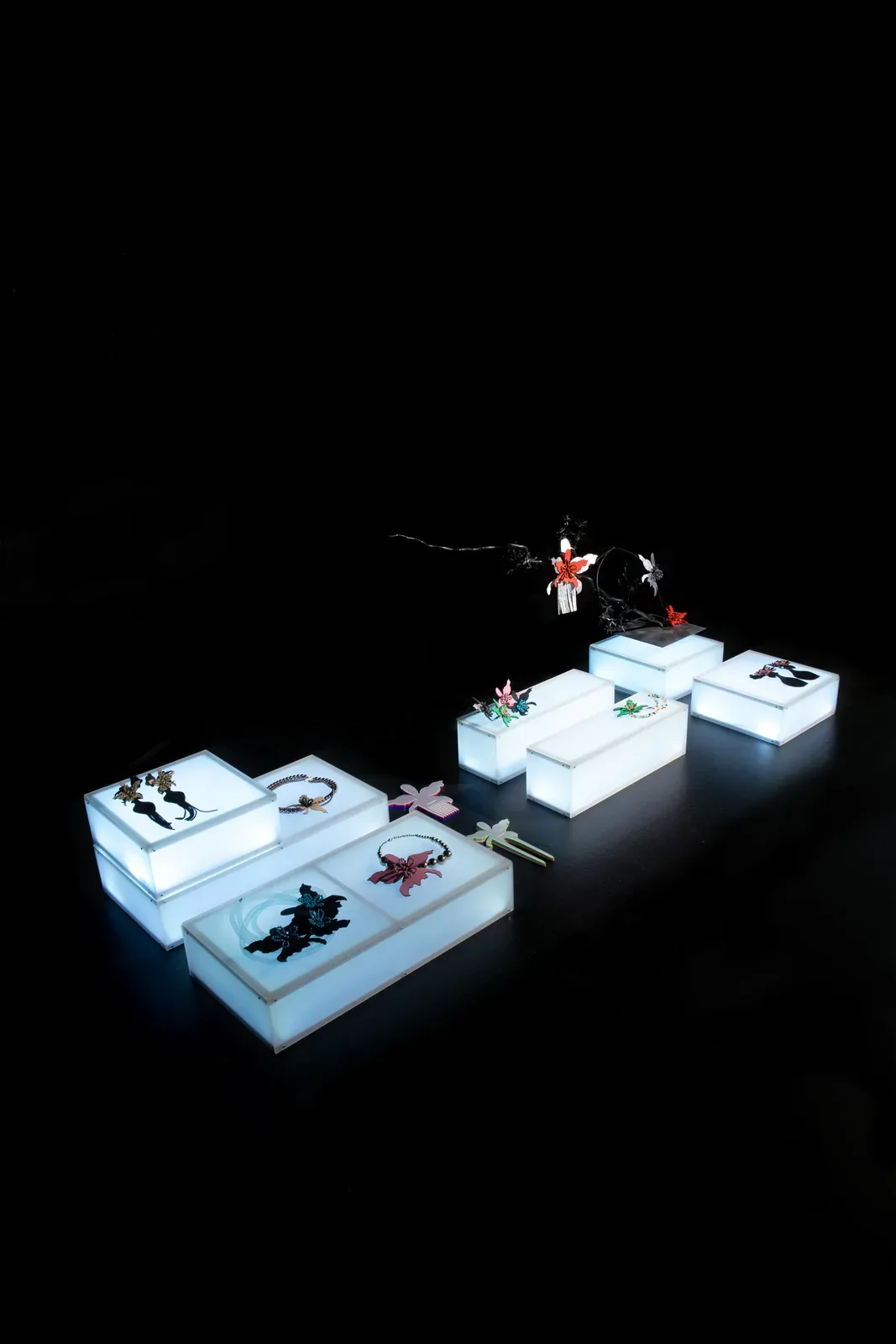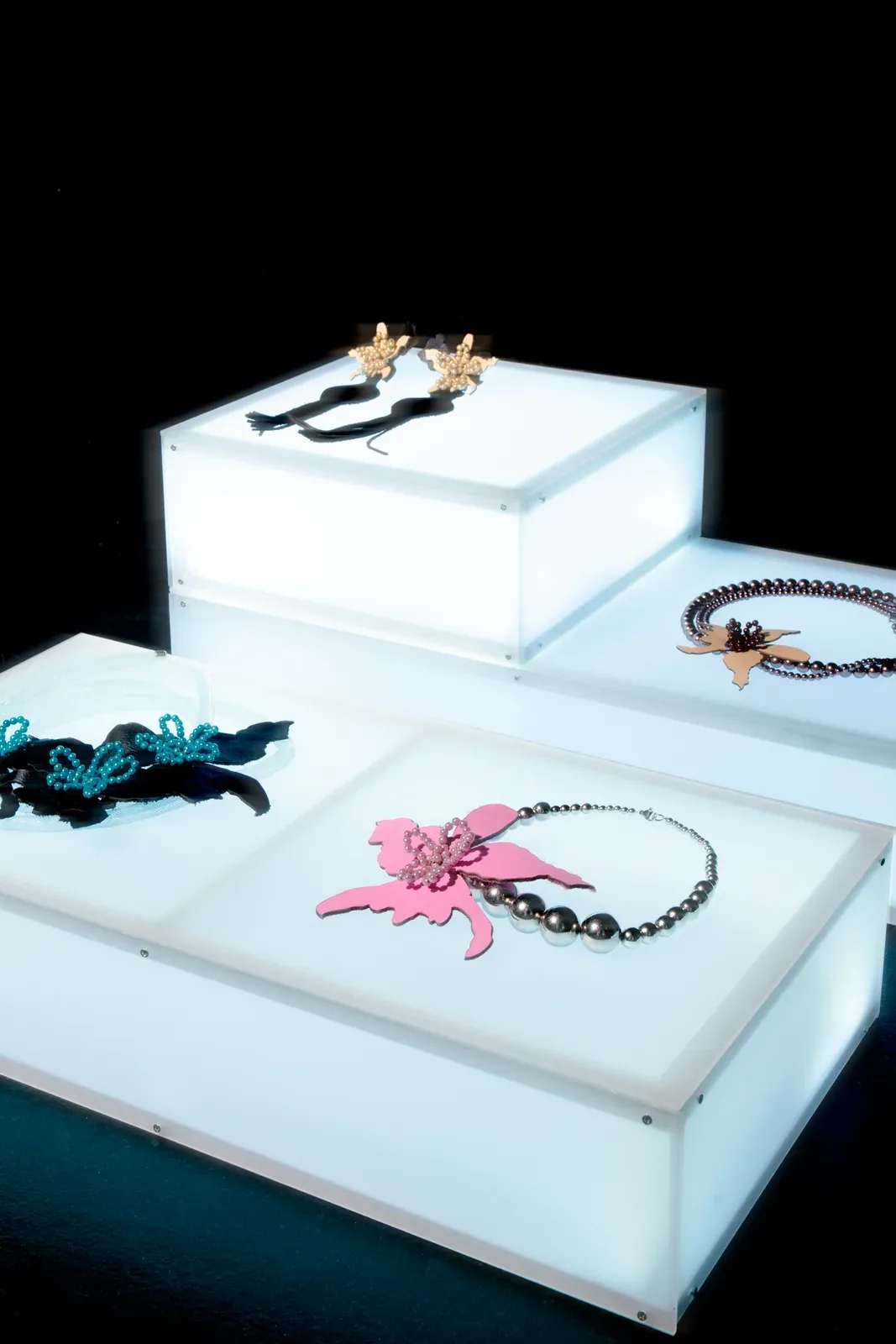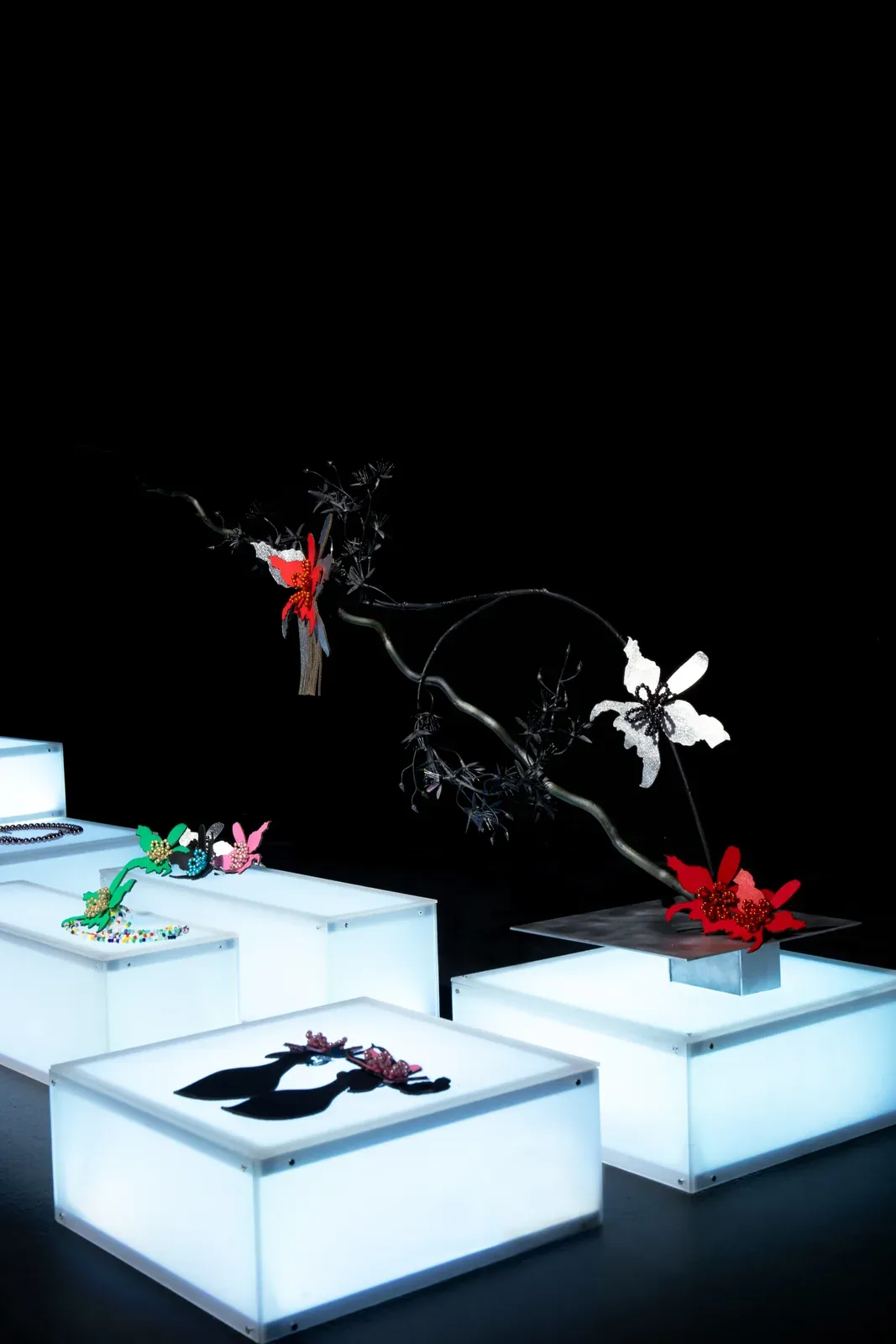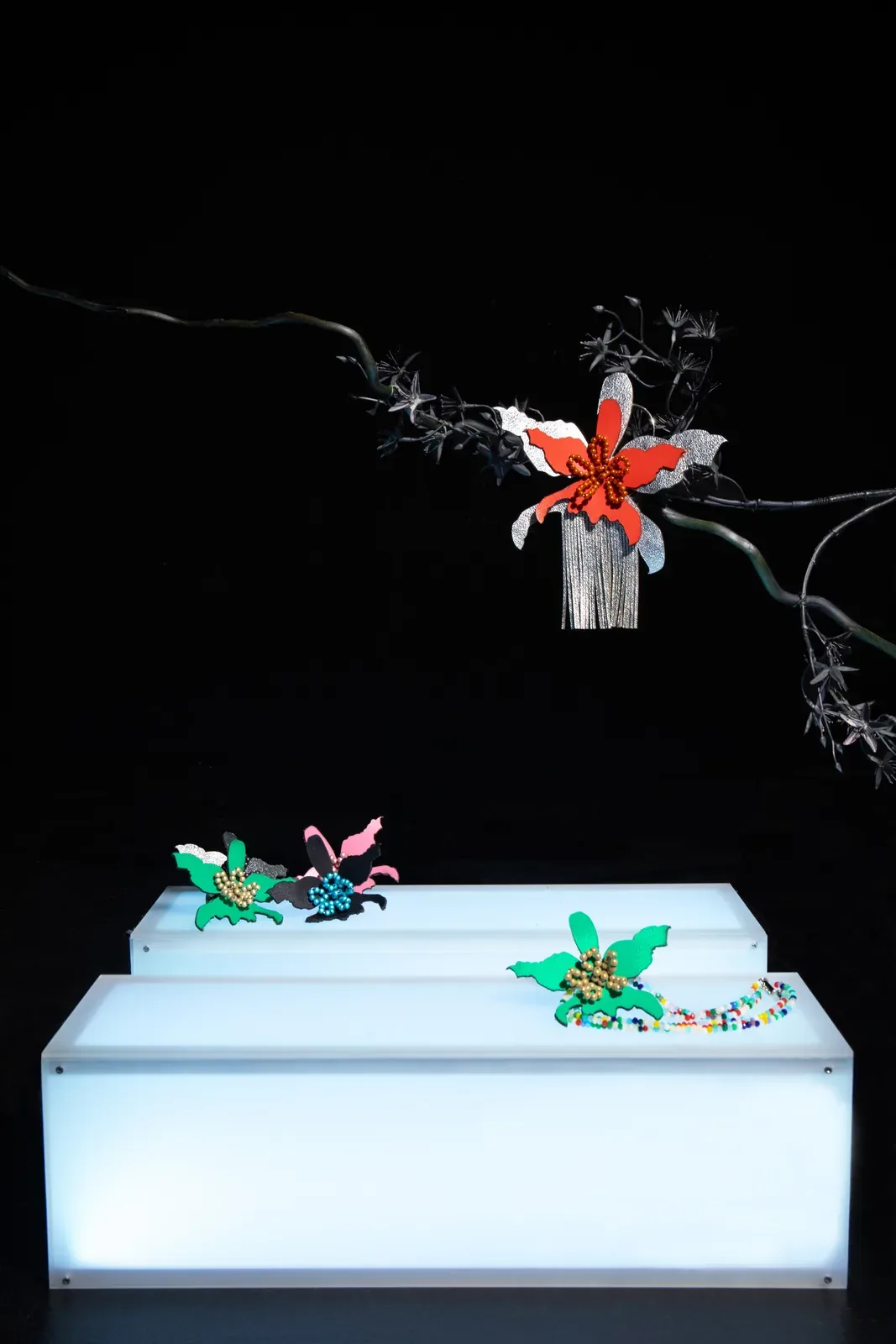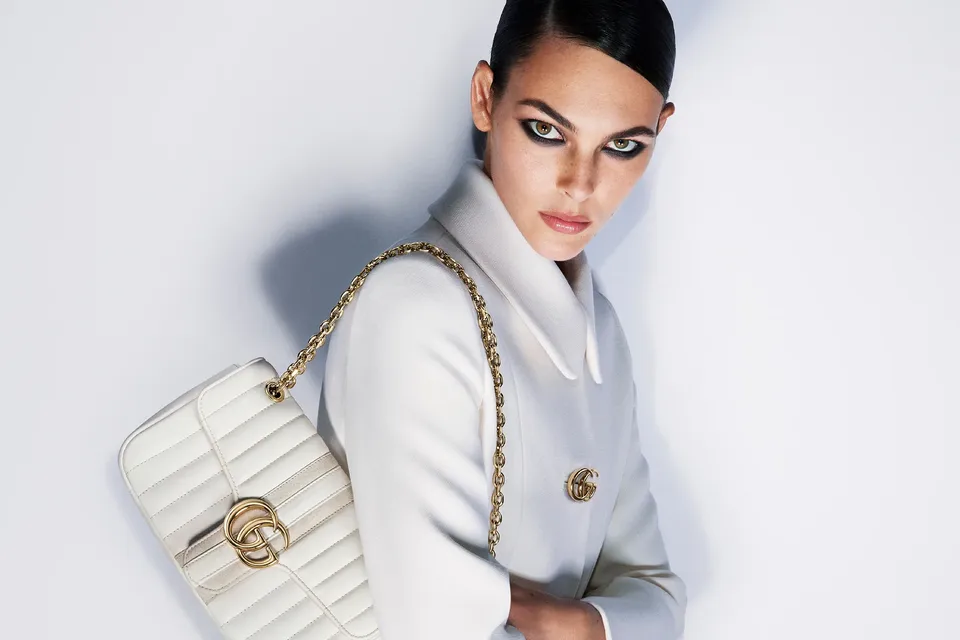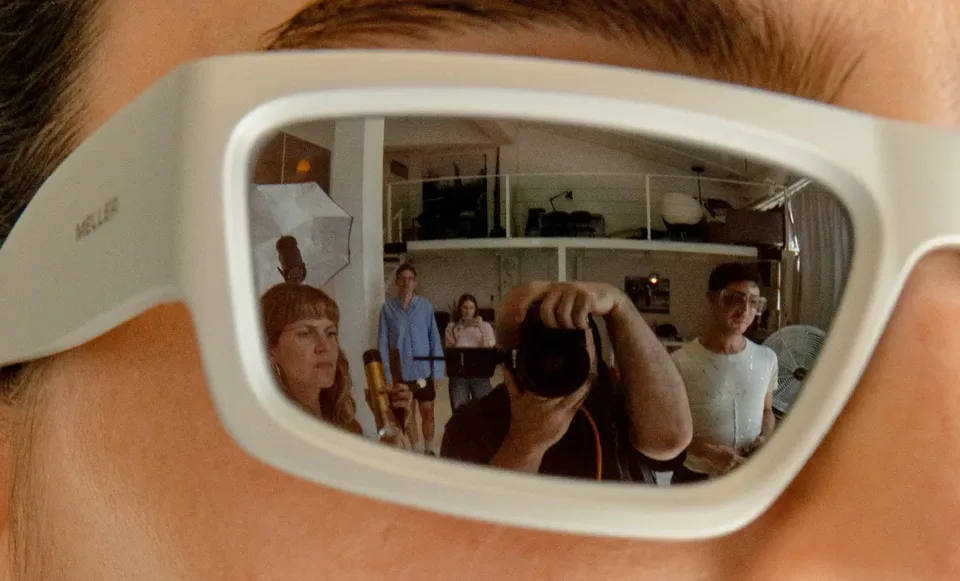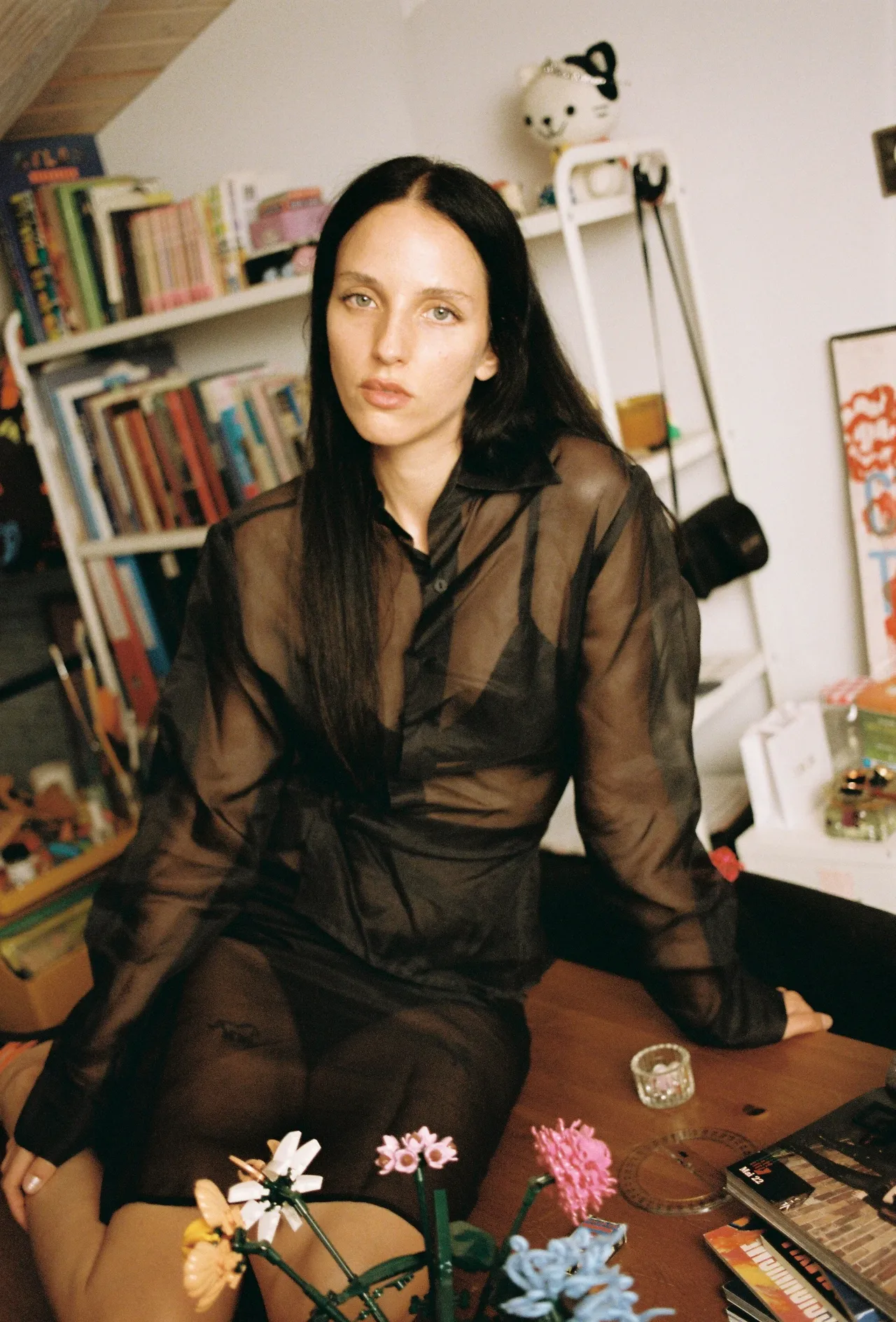
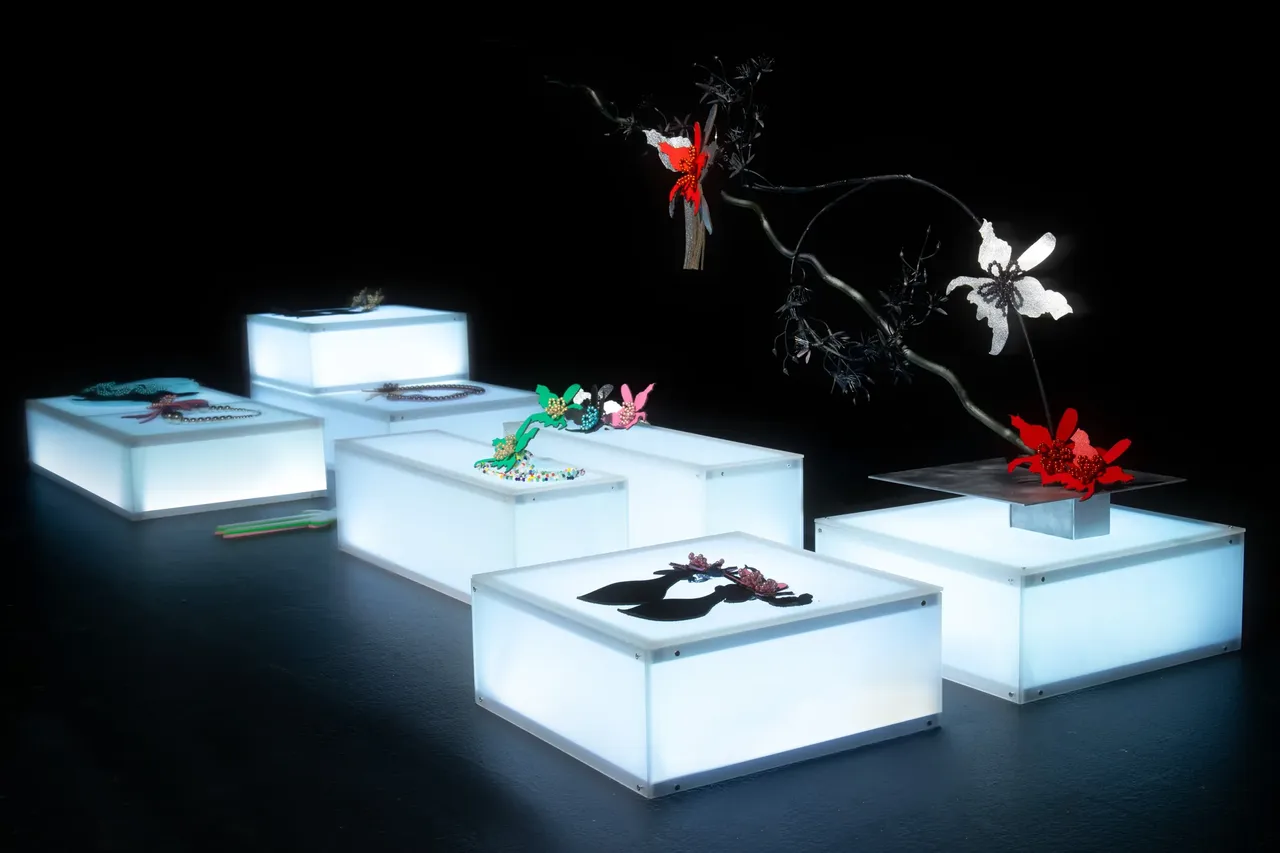
After building a community in New York from Valencia, Spain, 1Concept is making its first physical appearance in the city from September 9 to 11 at Tumbao, on the Lower East Side, with On Presence and Absence, a collection presented through an installation created with artist Blanca Santos. Rather than treating the jewellery as product alone, the installation places each piece within a composition of light boxes, shadows, distances and varying heights, extending the collection’s ideas into space. For Marina del Mar, founder and creative director of 1Concept, the presentation offers a way to encounter the brand slowly: first through form, atmosphere and curiosity, and only afterwards through the objects’ relationship with the body.
Founded as her final degree project and launched onto the market in 2022, 1Concept has grown organically alongside her development as a designer. Marina’s work considers how accessories can alter the way a body or person is perceived, while craftsmanship and material experimentation remain central to the process. In this conversation, she discusses presence and absence, her collaboration with Blanca, the introduction of ‘peinetas’, and the freedom she finds in Spain’s emerging independent fashion scene.
Hi, Marina, it’s a pleasure to speak with you. For readers who don’t know you yet, how would you introduce yourself and 1Concept?
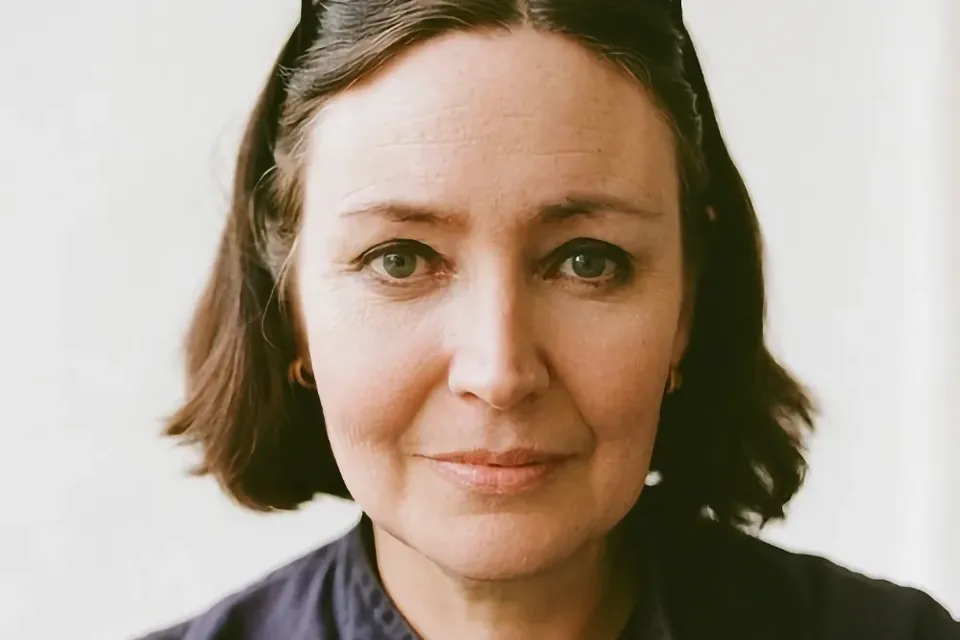
Hi, Arnau, it’s a pleasure to speak with you too :) I’m Marina, the founder and creative director of 1Concept. I created the brand as my final degree project, and since 2022, when I launched it onto the market, it has grown quite organically, very much in step with my own development as a designer. I’m particularly interested in accessories’ ability to transform how we perceive a body or a person. I think 1Concept has grown around that idea.
The collection On Presence and Absence explores what is revealed and what remains partially hidden. Where did that investigation begin?
The collection began from a very visual starting point. For some time, I’d been obsessing over photographs of flowers found at flea markets: out of focus, blurred by movement, altered, seen through reflections or mirrors, and over the shadows they cast. What interested me was that, in all those images I was saving, you knew there was a flower or a small bouquet, even though it was never entirely clear.
From there, I began thinking about that relationship between presence and absence, not only in the flowers, but also as a personal state and, above all, as quite a common way of being in the world today: being present while at the same time dissociating, being somewhere else. It’s something that describes me quite well.
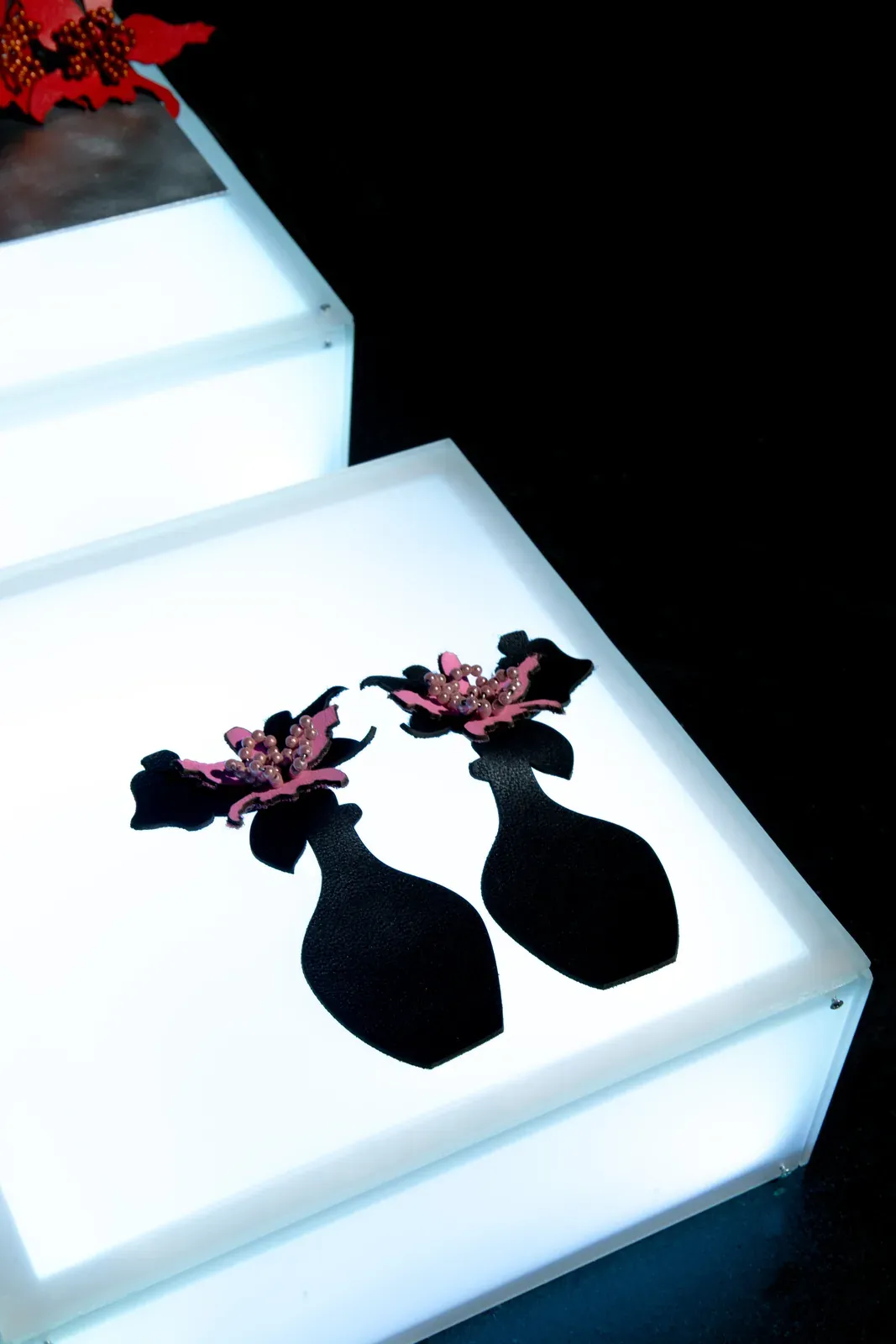
I wanted to translate that feeling onto a body that could be physically present and yet appear only as a silhouette, a reflection or a trace. This also led me to materialise the pieces differently from how I had until now. The flowers in previous collections were much more three-dimensional, whereas this time they are reduced to a single layer of skin, much flatter and more graphic.
From there, I began thinking about that relationship between presence and absence, not only in the flowers, but also as a personal state and, above all, as quite a common way of being in the world today: being present while at the same time dissociating, being somewhere else. It’s something that describes me quite well.
I wanted to translate that feeling onto a body that could be physically present and yet appear only as a silhouette, a reflection or a trace. This also led me to materialise the pieces differently from how I had until now. The flowers in previous collections were much more three-dimensional, whereas this time they are reduced to a single layer of skin, much flatter and more graphic.
1Concept is coming to New York physically for the first time, after building a community there from afar. What does taking that step now mean to you?
New York has been one of the places where we have the largest audience for quite some time, and I’ve always found that interesting because the whole relationship has been built from Valencia, through the internet: people who have bought the pieces, people who follow the brand or who have discovered it in many different ways and, above all, thanks to stylists who ask to borrow our pieces for international editorials.
Until now, that relationship had taken place entirely at a distance. So I’m especially excited that the collection is finally making it there in physical form and that the pieces can be seen together, within the context of the installation. I also like that our first presentation in New York isn’t simply about showing product. We’re arriving with an installation created specifically for the collection with Blanca. It’s much closer to how I understand 1Concept and how I want someone to discover the brand for the first time.
Until now, that relationship had taken place entirely at a distance. So I’m especially excited that the collection is finally making it there in physical form and that the pieces can be seen together, within the context of the installation. I also like that our first presentation in New York isn’t simply about showing product. We’re arriving with an installation created specifically for the collection with Blanca. It’s much closer to how I understand 1Concept and how I want someone to discover the brand for the first time.
“I’m particularly interested in accessories’ ability to transform how we perceive a body or a person. I think 1Concept has grown around that idea.”
You collaborated with the artist Blanca Santos to transform the collection into an installation. What did you recognise in her work that made you feel she was the right person?
I met Blanca within Valencia’s art scene through Pluto, and from the beginning I recognised things in her way of working that I strongly identified with. Not necessarily because our work looks similar, but because of the importance we both give to process, materials, making things by hand and experimenting until we find something.
When I started thinking about how to present the collection in New York, I knew I didn’t want to design the set around my own pieces myself. I wanted to do something collectively with my friends, and I found it much more interesting to hand the collection’s universe over to someone else and see what they did with it. I showed Blanca the pieces and some of the references that had accompanied the process, but I tried not to give her a fixed idea of what the installation should be. When she came back with the proposal for the light boxes, I immediately understood that she had found another way of talking about the same thing.
When I started thinking about how to present the collection in New York, I knew I didn’t want to design the set around my own pieces myself. I wanted to do something collectively with my friends, and I found it much more interesting to hand the collection’s universe over to someone else and see what they did with it. I showed Blanca the pieces and some of the references that had accompanied the process, but I tried not to give her a fixed idea of what the installation should be. When she came back with the proposal for the light boxes, I immediately understood that she had found another way of talking about the same thing.
How did the dialogue unfold between your shared references — 1990s Zen architecture, ikebana, light and emptiness — and your own individual languages?
What’s interesting is that some references appeared almost without us having agreed on them beforehand. I came with all these images related to out-of-focus flowers, shadows, reflections and backlighting, while Blanca had been collecting images of minimalist 1990s Zen architecture and ikebana for some time. They were different worlds, but there was something shared in the way we looked: the importance of empty space, of what is suggested and of not having to show everything. We also share a strong interest in light, in how it falls on objects and in the shadows they cast. Many of our conversations revolve around that.
I think that’s where the dialogue really happened. I had arrived at those ideas through image-making and the design of the pieces, while Blanca brought them into the space. The light boxes, the distances between objects, the different heights and the shadows allow concepts that were contained within the collection to be experienced physically.
I think that’s where the dialogue really happened. I had arrived at those ideas through image-making and the design of the pieces, while Blanca brought them into the space. The light boxes, the distances between objects, the different heights and the shadows allow concepts that were contained within the collection to be experienced physically.
The installation avoids presenting the pieces as mere objects on display. What changes when a piece of jewellery becomes part of a spatial composition?
What changes most is the way you look at it. A piece of jewellery is normally understood immediately through its function: you know where it sits, how it is worn and how it relates to the body. But within the installation, we tried to remove that function for a moment. The pieces were selected for their colour, weight and shape, and Blanca used them as elements within a composition. A piece might interest us not because it was an earring or a necklace, but because of the shadow it cast, the way it reacted to the light or the relationship it formed with another piece. I like it because it makes you stop for a little longer. At first, you can see it almost as a shape or an image, and then discover that it is also an object you can wear on the body.
Was there a piece from the collection that took on an unexpected meaning when you saw it within Blanca’s installation?
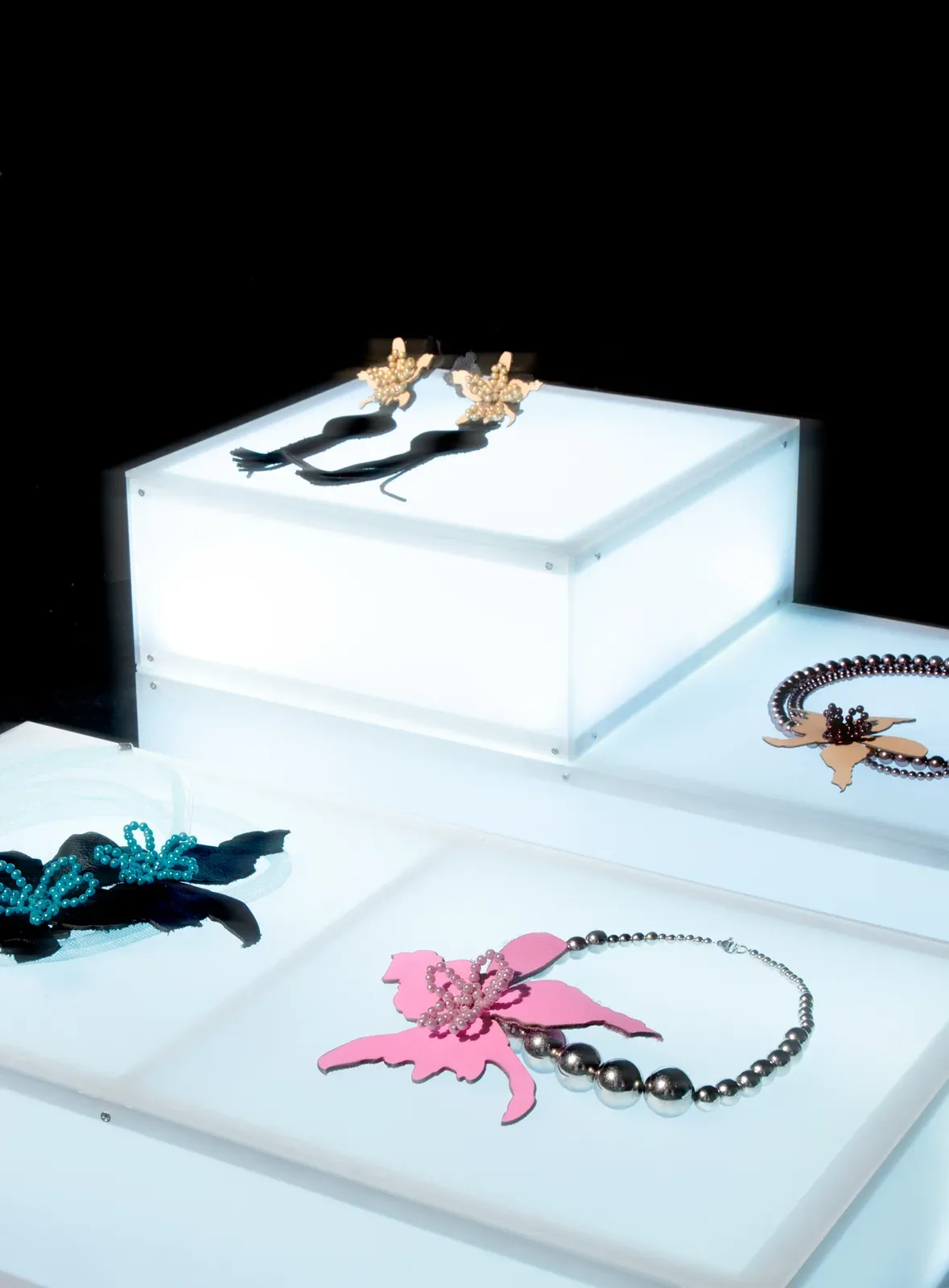
There’s a necklace in the collection, the Shade Bloom Garland Necklace, displayed on one of the light tables. When I saw the shadow it created, with that multiform, monochromatic shape, the different-sized beads and the flower at its centre, it reminded me of a necklace floating in a swamp, as though someone had lost it there. I liked that because, for a moment, it no longer seemed like a commercial object and became the trace of something that had happened. Obviously, all the pieces are designed to be worn, but seeing it away from the body and within the installation opened up a reading I hadn’t foreseen when I designed it.
You’re presenting ‘peinetas’ (traditional Spanish hair accessories) for the first time. What attracts you to this object, and what possibilities does it open up for 1Concept?
They came from something much simpler than it might seem. I’ve always really liked antique objects, and I wanted to make a piece for the hair that was beautiful and simple, without needing to construct a grand story around it. I particularly like the peineta because it’s an object that already carries historical weight and has a very direct relationship with ornamentation, but you can take it somewhere completely contemporary by changing the scale, the material or the way it’s worn.
I’m also interested in gradually expanding the areas of the body that 1Concept can work with. Hair was a territory I hadn’t yet explored, and I wanted to enter it through a fairly everyday, traditional object.
I’m also interested in gradually expanding the areas of the body that 1Concept can work with. Hair was a territory I hadn’t yet explored, and I wanted to enter it through a fairly everyday, traditional object.
Craftsmanship and material experimentation occupy a central place in the brand. How do you protect that time for exploration amid the pace of fashion and the demands of a small business?
I try not to be bound by the demands you’re seemingly expected to meet in order to belong to the ‘fashion world’: producing a certain type of content, following particular rhythms or designing solely around what might sell. I know that might sound a little naïve, especially when at the same time you have to make a business work, but I try to protect the project from those demands. I’m not interested in building a brand to fit within fashion.
“A piece might interest us not because it was an earring or a necklace, but because of the shadow it cast, the way it reacted to the light or the relationship it formed with another piece.”
From your experience, what do you think Spanish fashion is bringing to the international scene today that sometimes doesn’t receive enough attention?
I think there are projects in Spain right now with very distinct identities, probably because many of them are growing outside overly large structures. Big brands are inevitably beholden to calendars, commercial targets, huge teams and an entire marketing machine behind them. And, personally, I often find them quite boring.
By contrast, there are much smaller projects doing incredible things here. I’m thinking, for example, of Bonet, Reparto, Emeerre, Boltad and many others. They’re very different from one another, but I think they share a certain freedom and a very personal way of understanding fashion. There is a story behind these brands, but above all, you sense that there is still room to make mistakes. And I think that lack of fear of failure produces much more interesting things.
By contrast, there are much smaller projects doing incredible things here. I’m thinking, for example, of Bonet, Reparto, Emeerre, Boltad and many others. They’re very different from one another, but I think they share a certain freedom and a very personal way of understanding fashion. There is a story behind these brands, but above all, you sense that there is still room to make mistakes. And I think that lack of fear of failure produces much more interesting things.
What would you like someone encountering 1Concept for the first time to discover when they visit the New York pop-up?
Curiosity. The installation is designed to be looked at slowly. I’d like someone to be able to approach it knowing absolutely nothing about the brand and gradually discover that behind the installation are objects that have also been designed to live on a body. And then, if that person feels like coming closer, touching a piece, trying it on or finding out how it’s made, I think we’ve already achieved something.
To end on a lighter note: if On Presence and Absence had a soundtrack, what song or artist would be playing in the room?
It’s between Toes Down by Loukeman and L’Ile neu by Hikaru Hayashi.