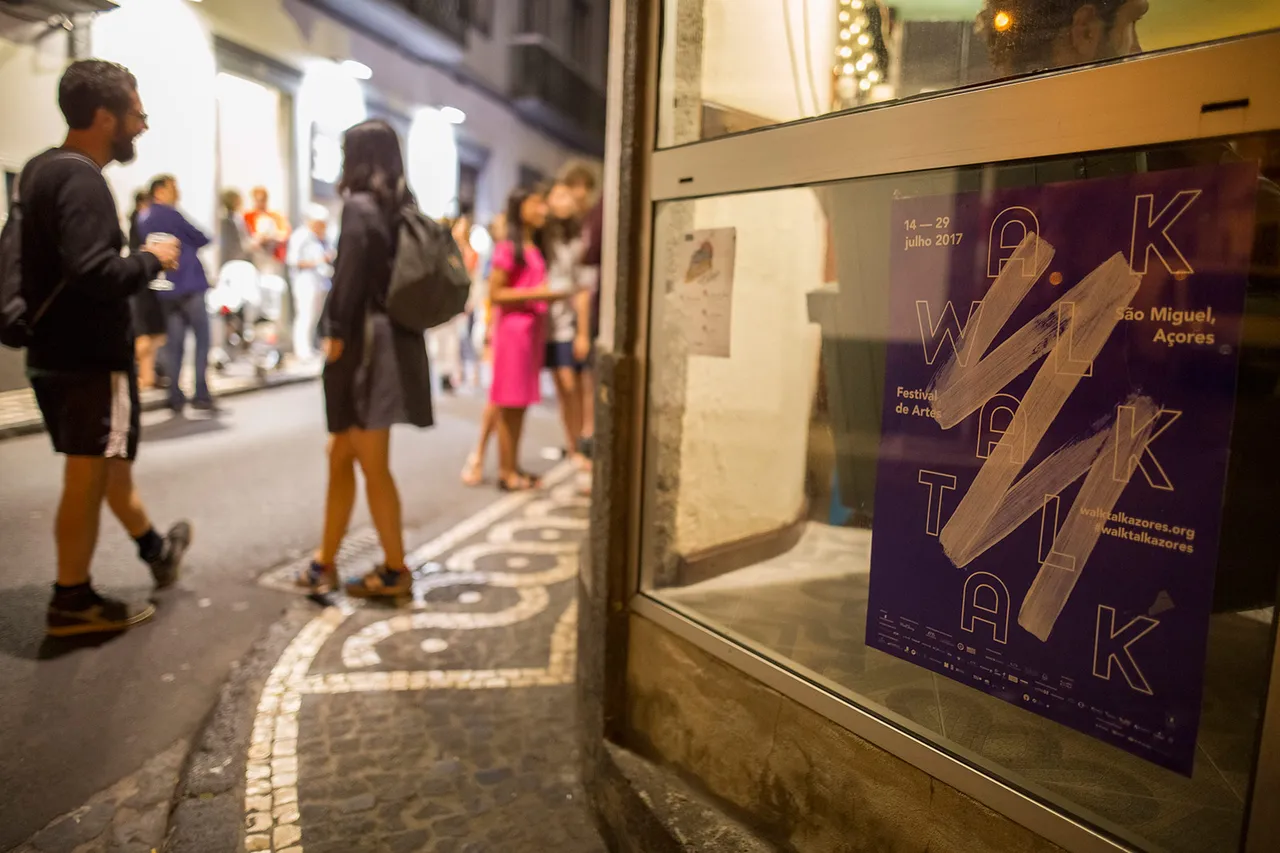
When mentioning the Azores, a Portuguese archipelago located in the Atlantic known for it’s green, wild and volcanic nature as well as its strong Catholic tradition, very few would say that it’s an emerging spot for art and creativity. And they would be totally wrong. On its seventh edition, the multidisciplinary festival Walk & Talk Azores has gathered several designers, artists, performers, musicians, architects, filmmakers, curators and other creative figures to produce site-specific pieces born from the interaction and networking between themselves and the environment. We spent some days at Ponta Delgada to discover more about it, and we must say, it’s been one of the top highlights of summer so far.
Portugal is increasingly becoming a hub for creativity, and it is fighting to gain more space and recognition on the overcrowded art world. And, at the moment, it seems that the hard work is paying off. With a successful second edition of ARCOlisboa, the opening of wonderful spaces like Francisco Fino Gallery, and the decentralization from its two main cities (Lisbon and Porto) with initiatives like Jardins Efémeros, it seems that the country is living a kind of renaissance and wants to share it with the world. Walk & Talk Azores is a great example of that: inviting creative agents from around the globe for the last seven years, the festival is contributing to position the volcanic archipelago as a must-visit place for art lovers.
The festival was founded by Jesse James and Diana Sousa in 2011 and, since then, they’ve achieved to host more than two hundred artists and have been reshaping the cultural fabric of the Azores. Although it started with just one street artist, currently Walk & Talk acts more like a platform than a festival, since the pieces presented are specially thought and created for the fifteen-day-long event. It covers a wide range of art disciplines and programs several activities that include performances, theatre plays, concerts, guided talks, workshops, exhibitions and more.
The festival was founded by Jesse James and Diana Sousa in 2011 and, since then, they’ve achieved to host more than two hundred artists and have been reshaping the cultural fabric of the Azores. Although it started with just one street artist, currently Walk & Talk acts more like a platform than a festival, since the pieces presented are specially thought and created for the fifteen-day-long event. It covers a wide range of art disciplines and programs several activities that include performances, theatre plays, concerts, guided talks, workshops, exhibitions and more.
Sound performances
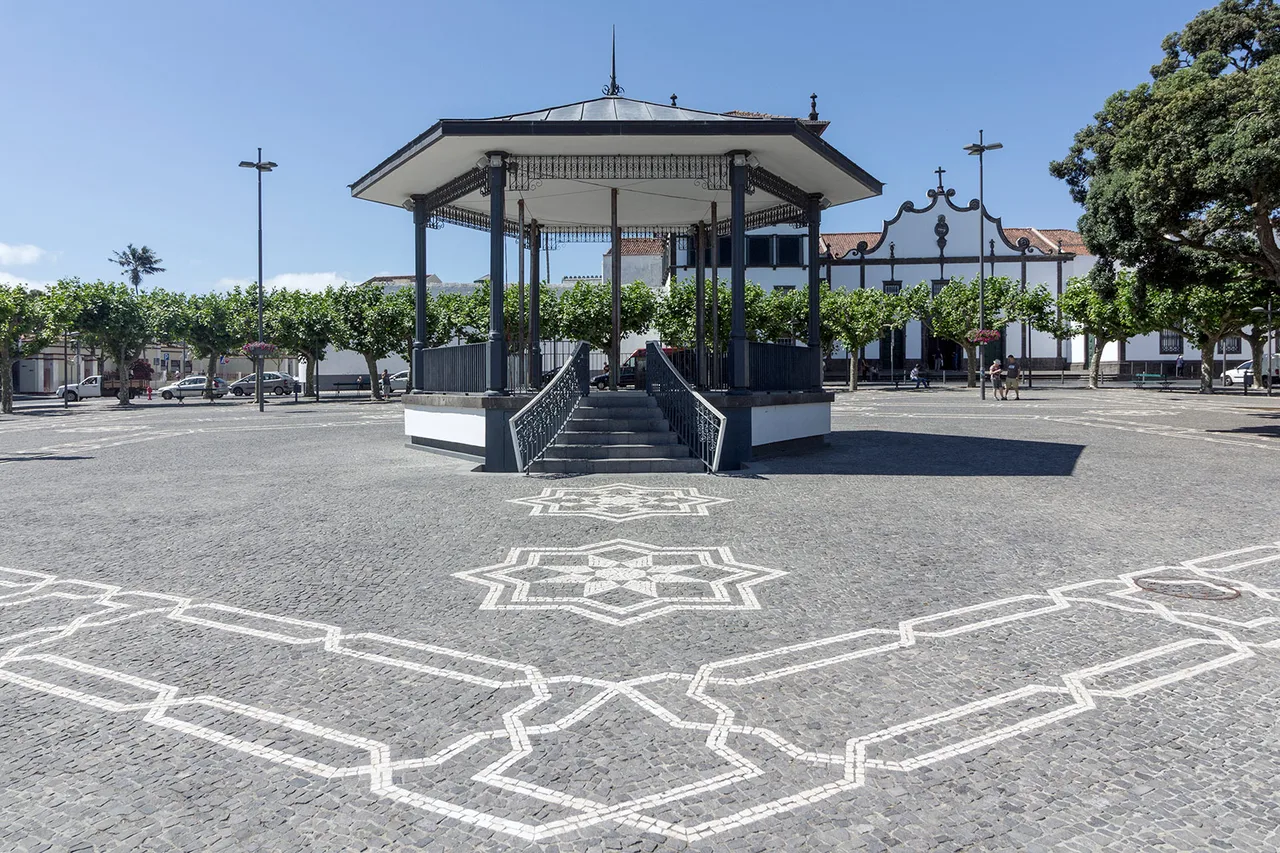
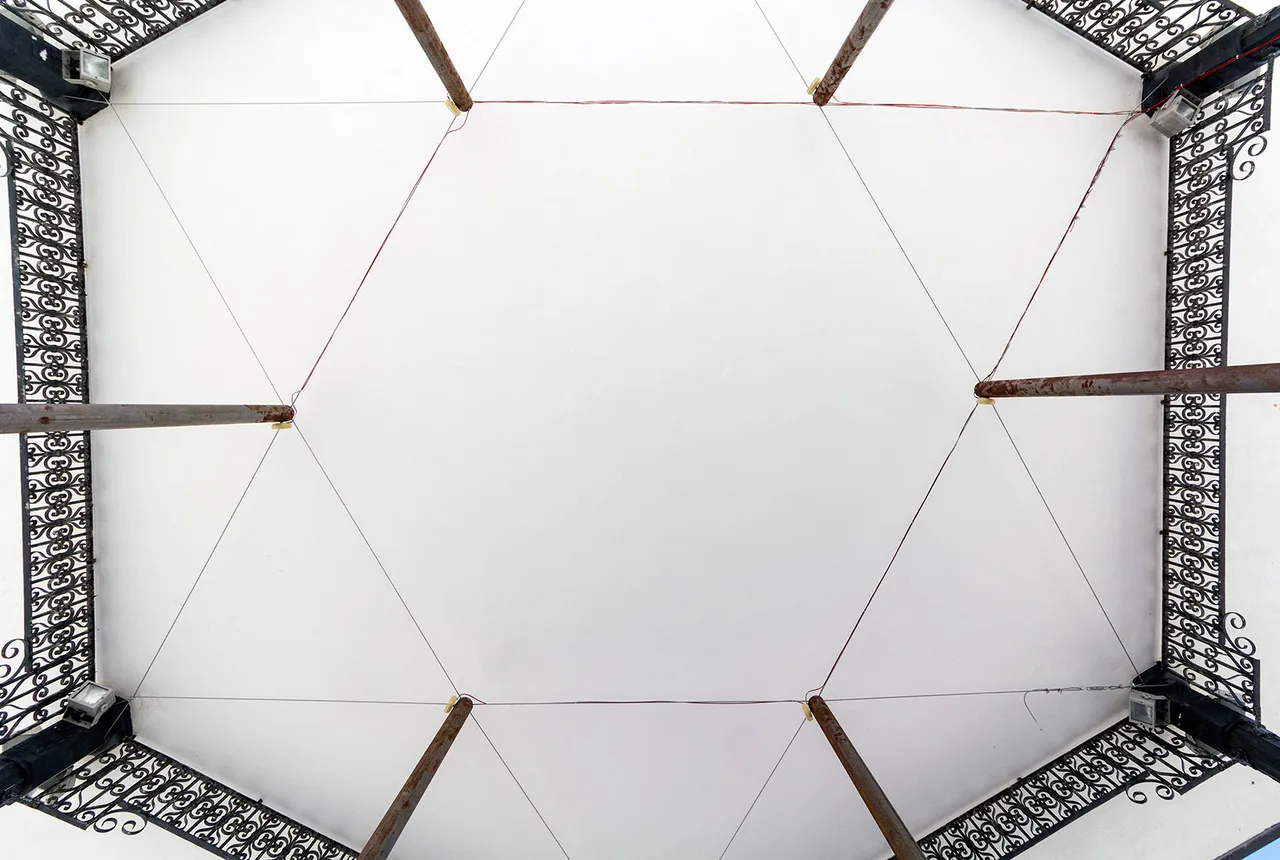
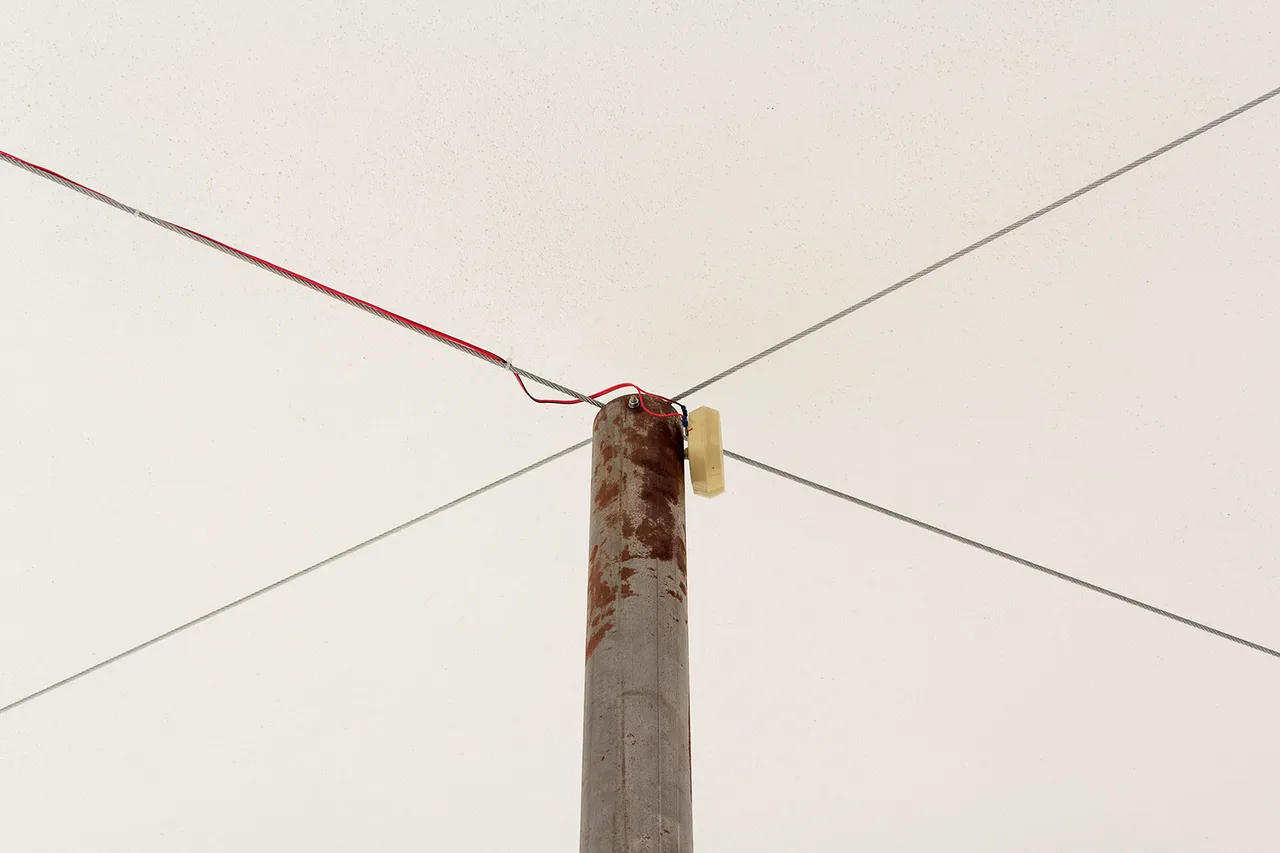
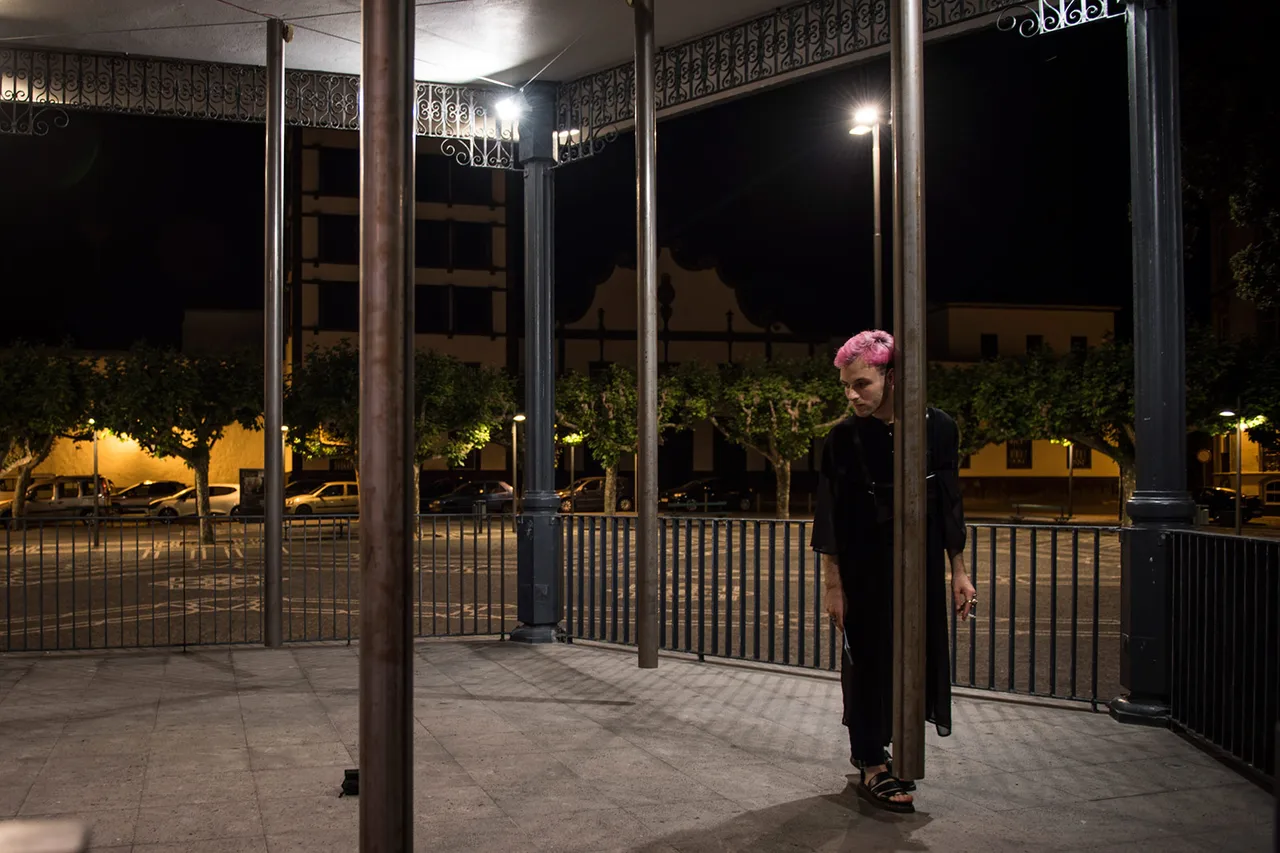
After the inaugurations of the exhibitions between the 13th and the 15th of July, the first two performances took place on Saturday night. The first one – part of the Public Art Circuit – was called Medusa, and it was magical and experimental. Ricardo Jacinto, the author, mixed electronic sounds with a device that he himself developed over the course of three years, and with which he “Explores the body of the cello with several pick-ups”. Blurring the limits between music, sound, architecture and space in a “Hybrid situation between a concert and an installation”, as he defined, Medusa was an unforgettable piece. He played beneath a square, a space that is usually closed to the public, and above him the sounds rippled through hanging metal cylinders. After the performance that night, the installation was still set so local people and visitors alike could experience the enigmatic sounds.
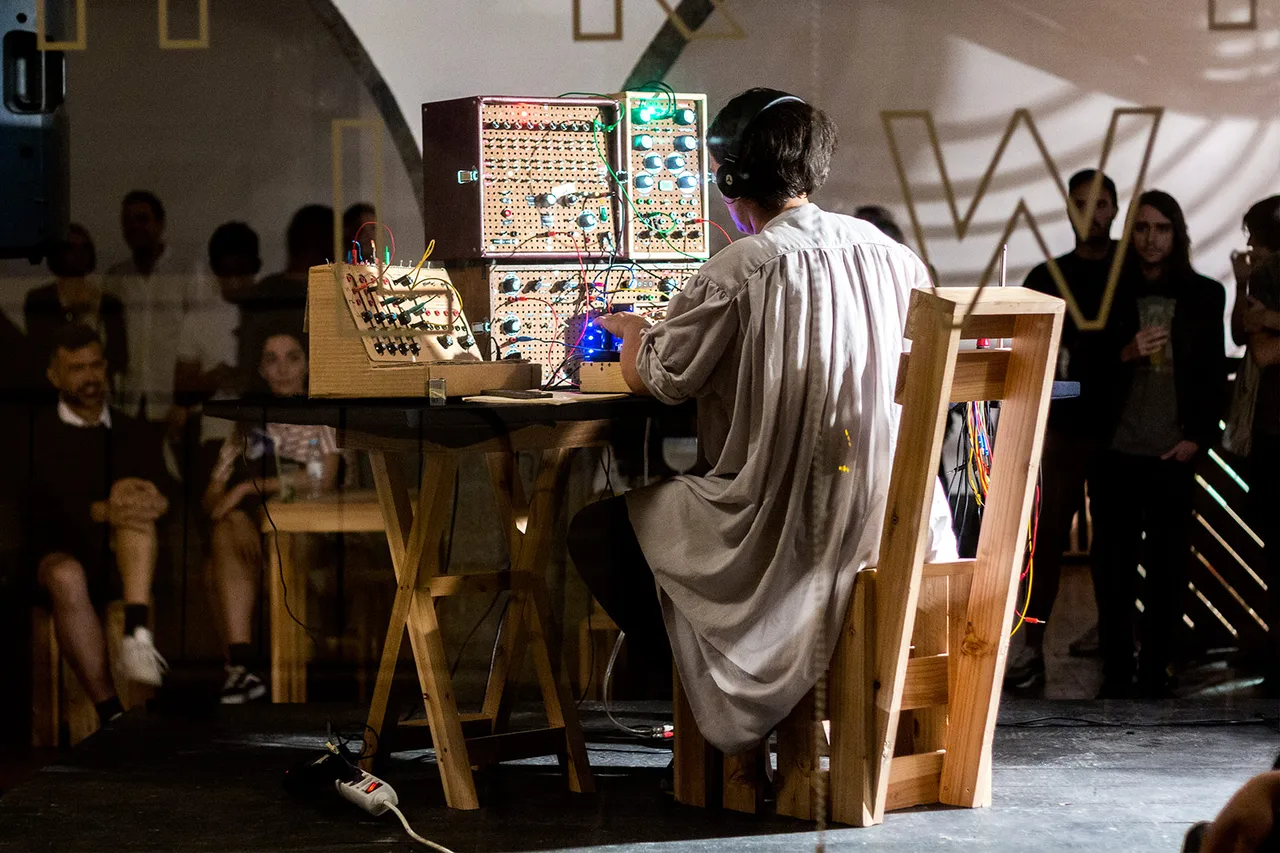
The second performance of the night – part of the music program curated by Sonja – took place at the Galleria, the central space used as the meeting point and where the main exhibition – titled Message in a bottle – as well as workshops, talks and conferences with Walk & Talk participants and Azorean students were held. Clothilde’s performance was about sound and electronic exploration (like Ricardo Jacinto’s one), and the artist also used DIY devices – some of them made in cardboard – to create sounds that both relaxed and (kind of) perturbed us. The performance was evolving, intimate, and at some points a bit dark, but that’s how we like it: surprising and full of contrasts.
Fonseca Macedo Arte Contemporânea
On the next days, we walked around Sao Miguel’s main artistic venues where the exhibitions were held. We started by visiting Sandra Rocha’s Calor do Corpo at Fonseca Macedo Arte Contemporânea, the only contemporary art gallery in the island. Run by Fátima Mota, a former teacher who’s been running the space since 2000 with obstinacy and a very good eye, Fonseca Macedo held the exhibition of one of last year’s residency artists, photographer Sandra Rocha, who focuses her body of work on time (not the one that passes by, but the one that stays on people and things). The exhibition featured pictures of nature, local kids, and two videos that showcased the importance of water, as she’s done previously in other works like Le Silènce des Sirènes.
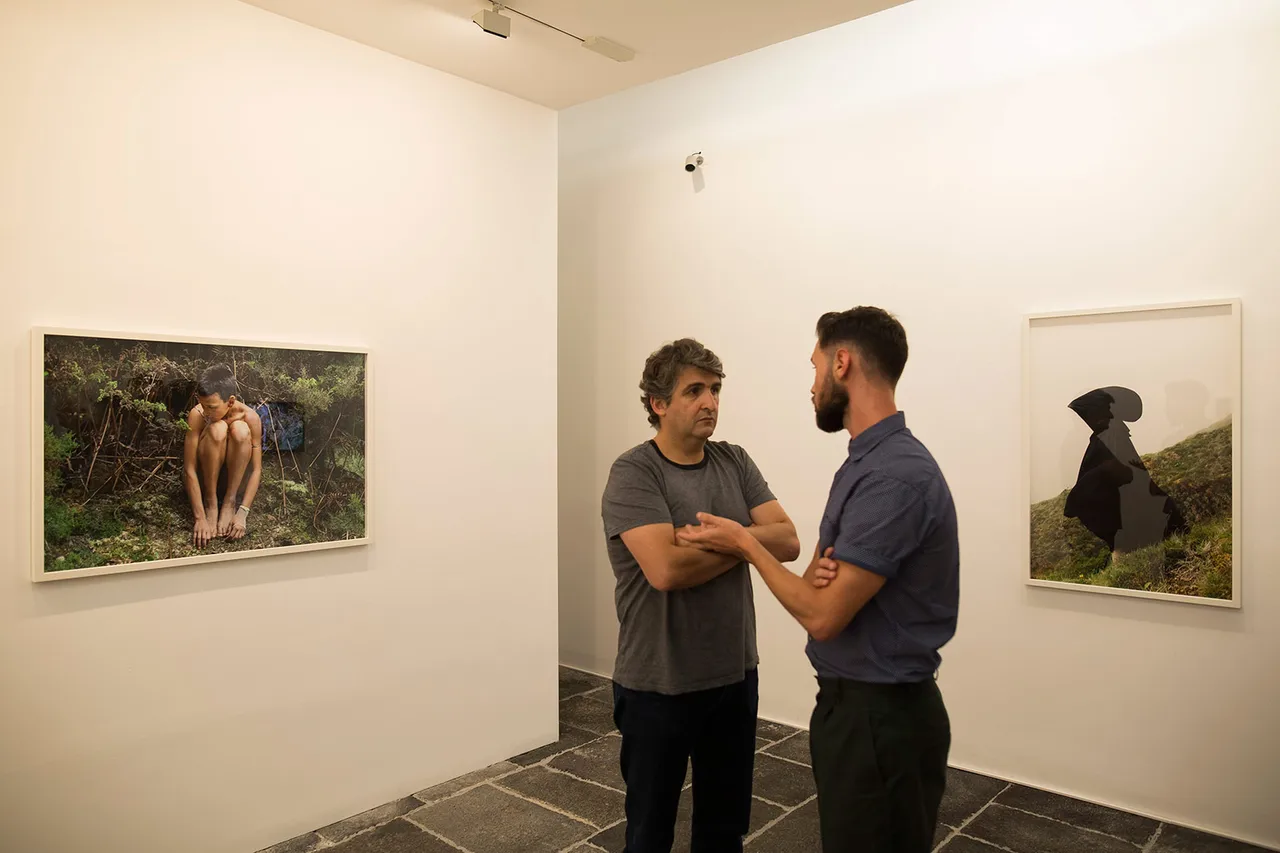
At that exhibition we met Pauliana Valente Pimentel, the current artist in residence who will be showcasing her work at the same gallery next year. She’s also a photographer, but her work “Is about society”, as she puts it. For the current on-going project, she will capture the young generation inside the island – guys and girls aged between fifteen and twenty-something – and the existing differences between them. As she explains, “Rabo de Peixe is a very poor fishermen place, and women there have seven or eight children, they speak different and they’re very closed. […] There are also transsexuals in Cape Verde. […] In Ponte Delgada I’m starting to work with people from high society […] and I’m going with them to golf, horse riding and their houses.” The result is still unknown, but celebrating and displaying the great existing diversity in the small archipelago is already an idea that we love.
Instituto Cultural de Ponta Delgada
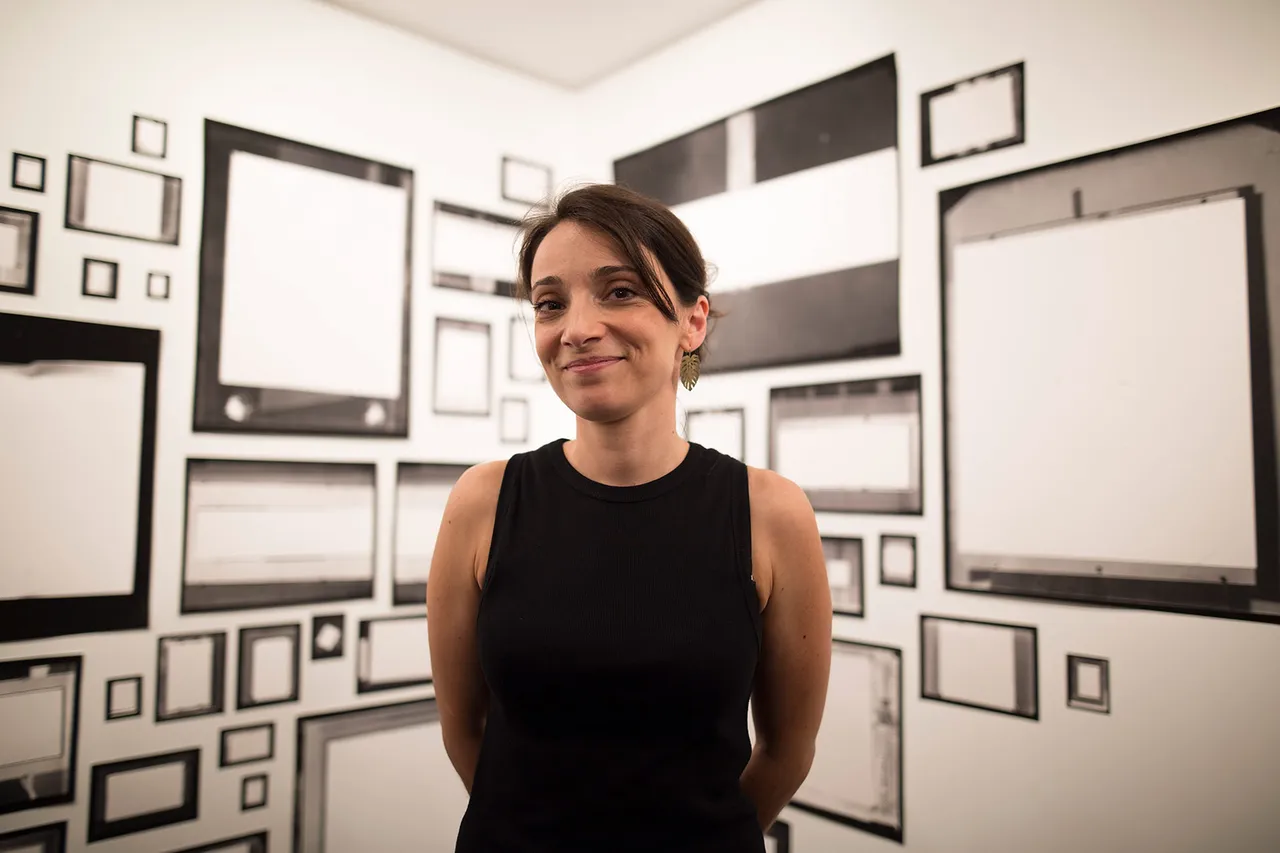
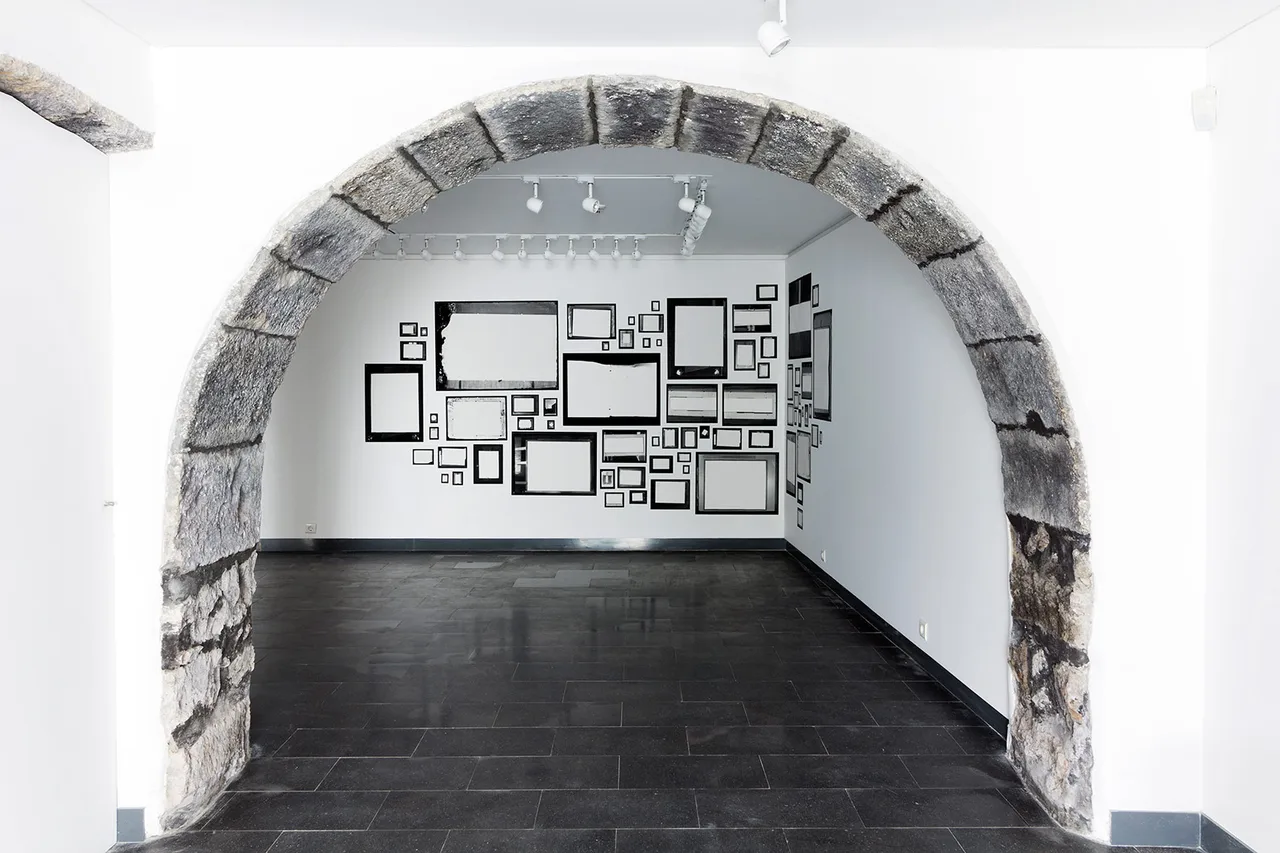
Another resident artist from last year’s edition, Carla Cabanas, was showing her work at the Instituto Cultural de Ponta Delgada, a magnificent space dedicated to literary, scientific and artistic purposes. A Matriz e o Intervalo (The Matrix and the Interval) was an exhibition where the vacuum was protagonist, although it was full of meaning. After going through the five thousand digitalised images of the institute’s archive, she noticed a practice in which photographers would take pictures of prints when the original matrix was lost. She was interested in “The effort to perpetuate something”, and turned it around by creating “A bit of a fiction [in which a photographer] would photograph white paper to try to perpetuate ‘the nothing’”. This topic is recurrent in her body of work, since “it has to do with memory, time passing and history”.
Another resident artist from last year’s edition, Carla Cabanas, was showing her work at the Instituto Cultural de Ponta Delgada, a magnificent space dedicated to literary, scientific and artistic purposes. A Matriz e o Intervalo (The Matrix and the Interval) was an exhibition where the vacuum was protagonist, although it was full of meaning. After going through the five thousand digitalised images of the institute’s archive, she noticed a practice in which photographers would take pictures of prints when the original matrix was lost. She was interested in “The effort to perpetuate something”, and turned it around by creating “A bit of a fiction [in which a photographer] would photograph white paper to try to perpetuate ‘the nothing’”. This topic is recurrent in her body of work, since “it has to do with memory, time passing and history”.
Galeria Miolo
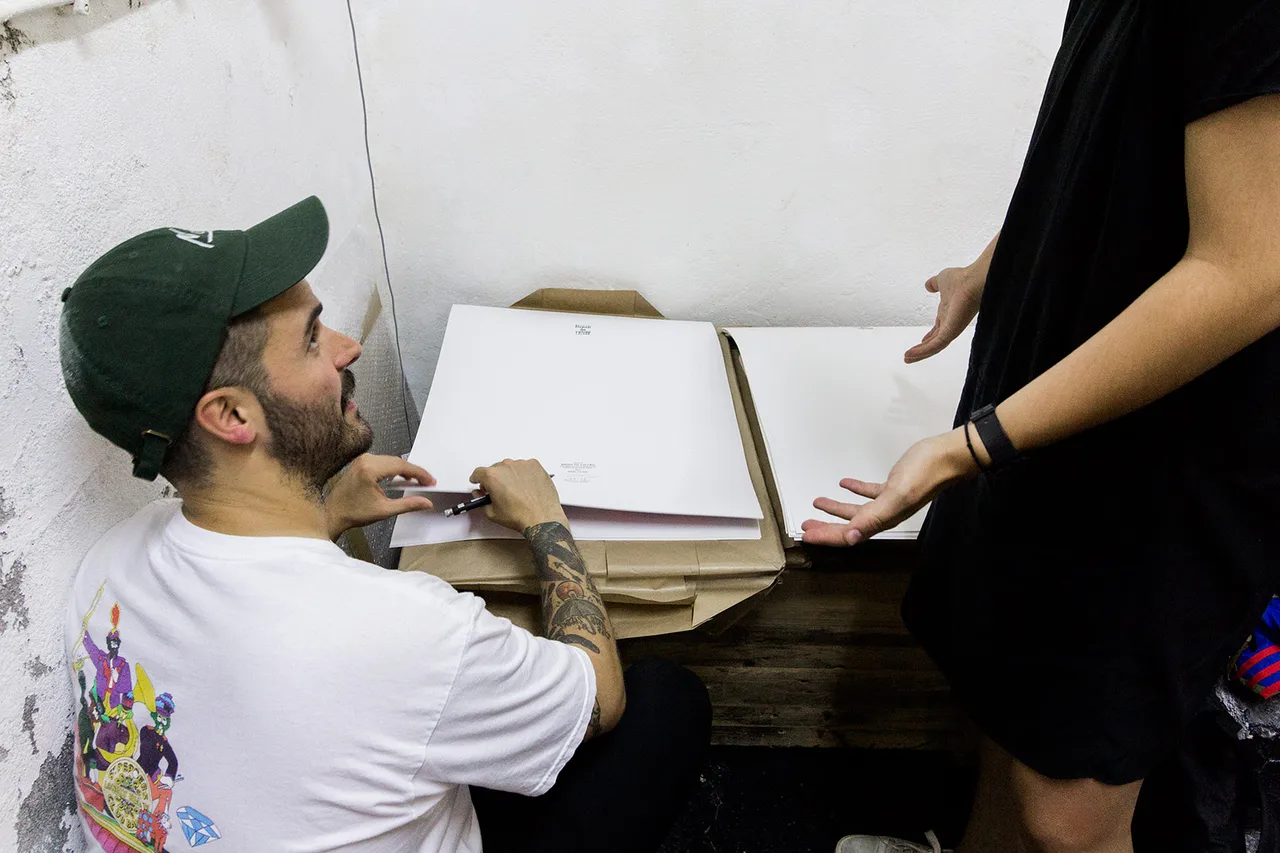
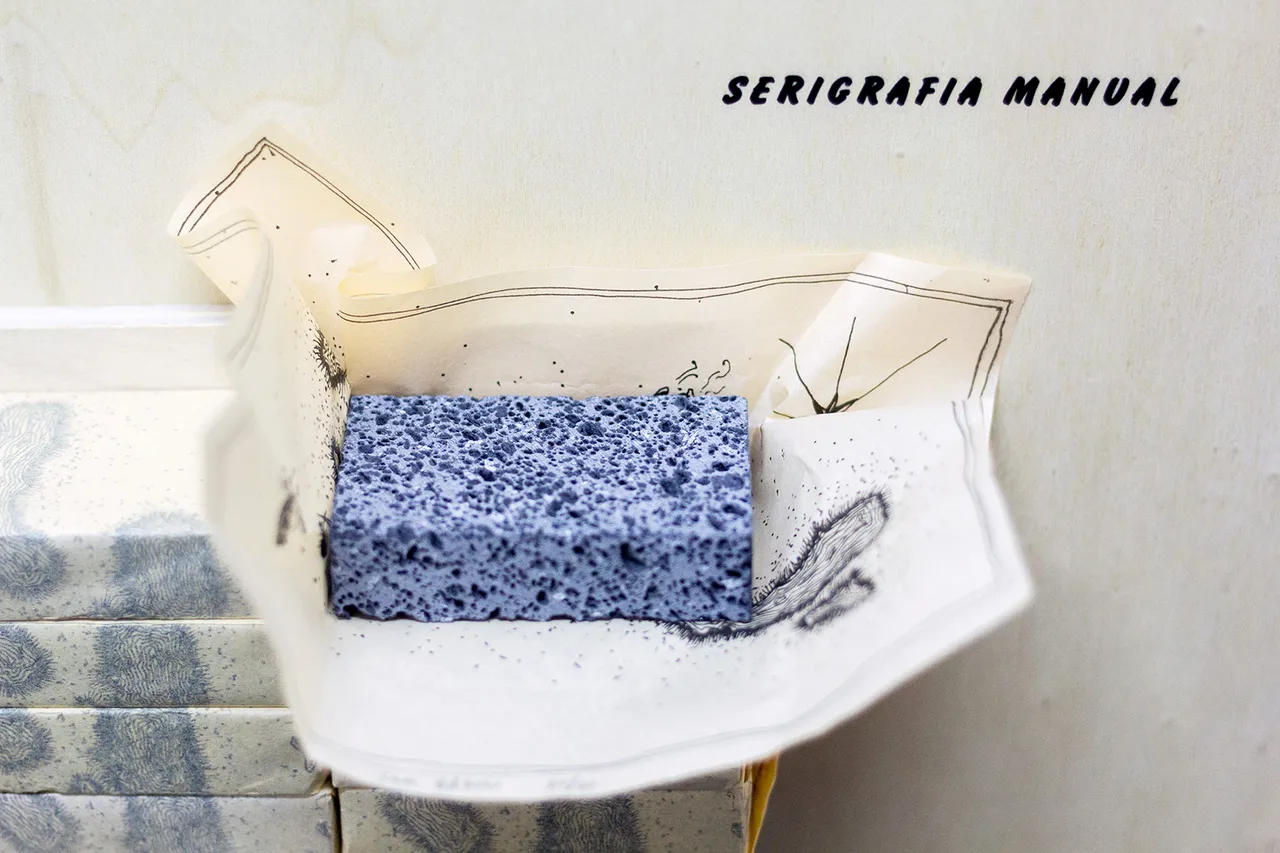
A very different space is Galeria Miolo, a small gallery that held the exhibition Depois de Vulcão, curated by Lavandaria. It had a strong bond with the island’s geographic characteristics and origins, being some of the artworks pieces of volcanic stones or depicting its flora, fauna and soil. The outcome was nice, well arranged and had a feeling of easiness to it, although it traced back the roots of the Earth’s formation, a topic not so easy to understand. One of the highlights were the double-faced notebooks stating ‘Se está em papel é real / Se está na internet é verdade’ (If it’s on paper it’s real / If it’s online it’s true), something we feel personally linked to and that arises questions of the ‘post-truth’ society we’re living in.
Galeria Walk & Talk
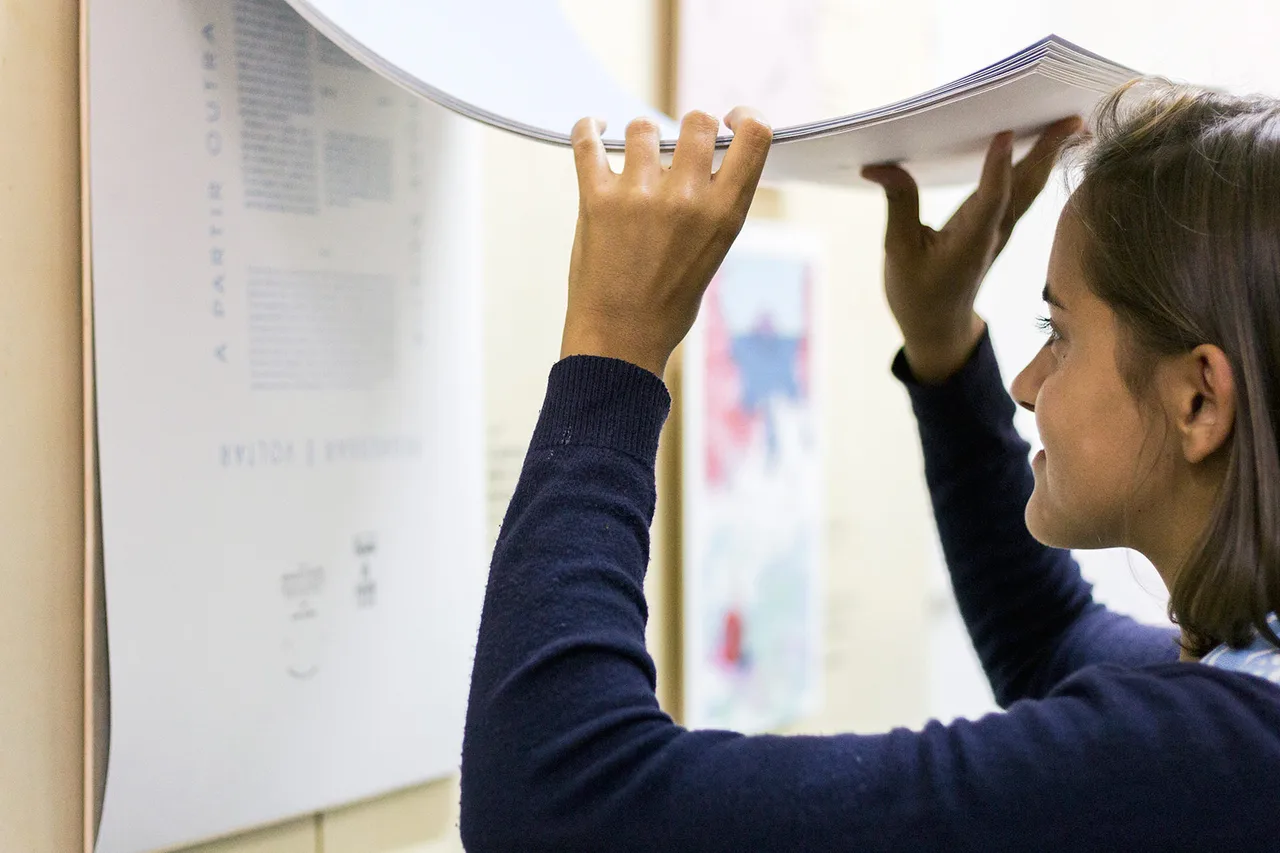
The main exhibition, titled Message in a Bottle, was curated by Diana Marincu and featured the works of seven artists/duos from different countries. Each one started under the premise of “What an artist’s message to the world would sound like”, and the results achieved ranged from videos to installations, collages and photos. The pieces moved between fiction and reality – as we previously saw with Carla Cabana, that was a common practice –, and we were struck by two in particular. The first one was by Belu-Simion Fainaru, and it consisted of three holes on a wall in which participants had to insert a piece of paper containing their “Wishes and dreams”, as the hand-written instructions indicated. The second one was a video by Diana Vidrascu that combined footage that she recorded in an island in France – highlighting the importance of the sea, rocks and nature – with real sonic found footage that her family gave her, in which we could hear the artist’s grandfather trying to teach her how to talk and pronounce her own name.
Museu Carlos Machado
The recently renewed museum – the building had been closed for several years – held João Paulo Serafim’s exhibition, Naturalis Historiaæ: Quando é que se viu pela primeira vez um crocodilo nos Açores? (Natural History: when was it the first time that a crocodile was seen at the Azores?). After his residency on the previous edition of Walk & Talk, he “Started to do some research about the question of natural history, many times related to the ideas of science and colonialism”.
The result was a slideshow installation that, as he explains, explores the idea of the cabinet of curiosities and in which he “mixed animals from the collection with objects and stuff from my studio”. And he had lots of materials to start choose among: from three specimens of two-headed cows to taxidermy bats and monkeys, the selection of animals was more than vast. In addition to the slideshow, he also took some photographs displaying a hanging crocodile – after which the exhibition was titled –, a peacock over a pile of books, and some still lives. The result was disturbing, fascinating, and definitely not vegetarian-friendly.
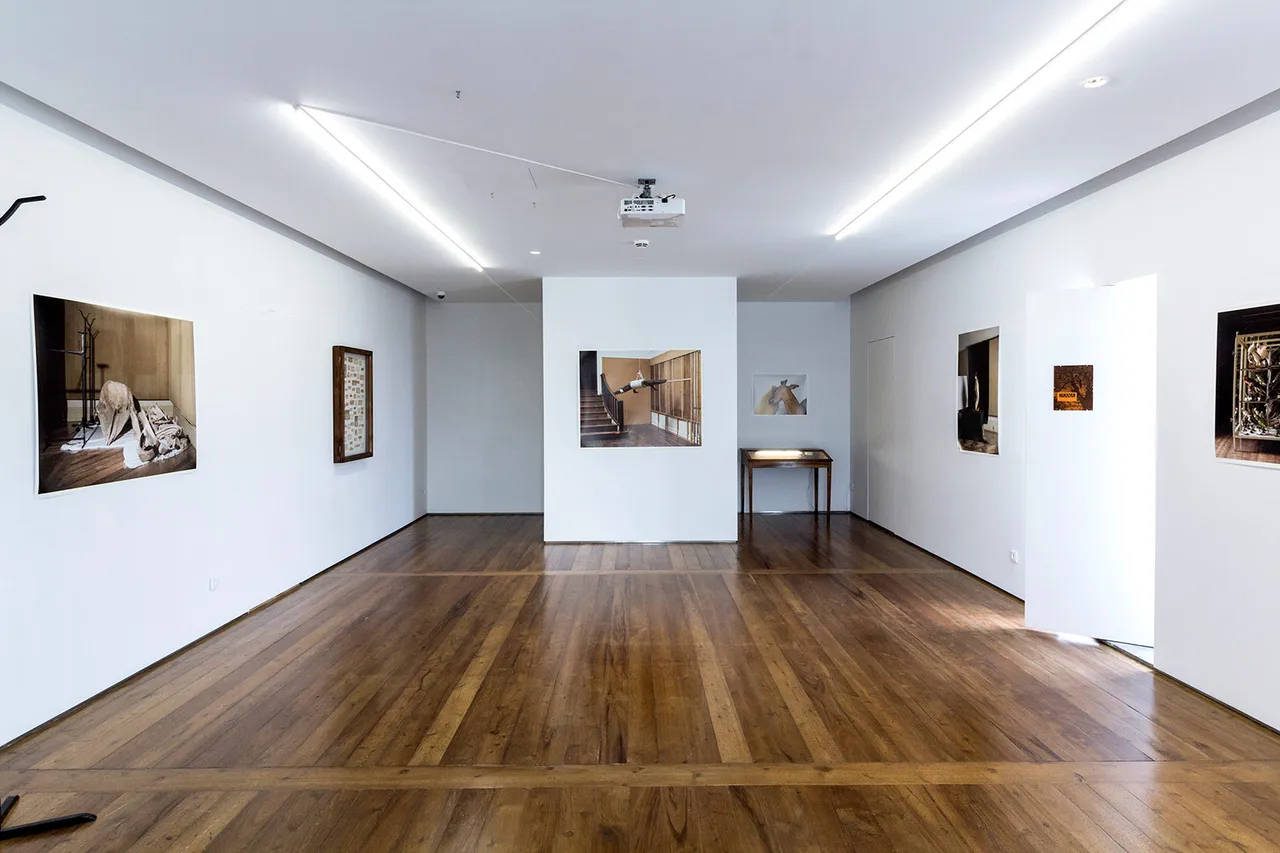
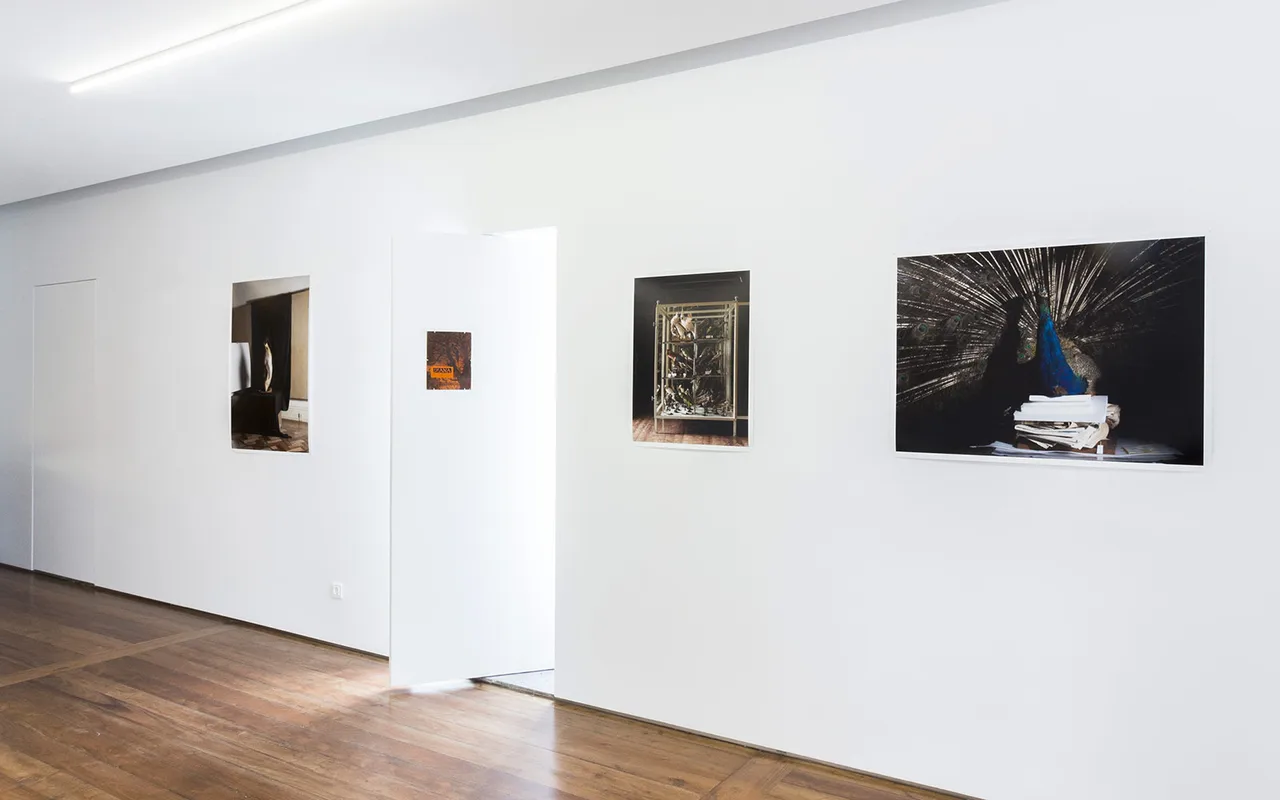
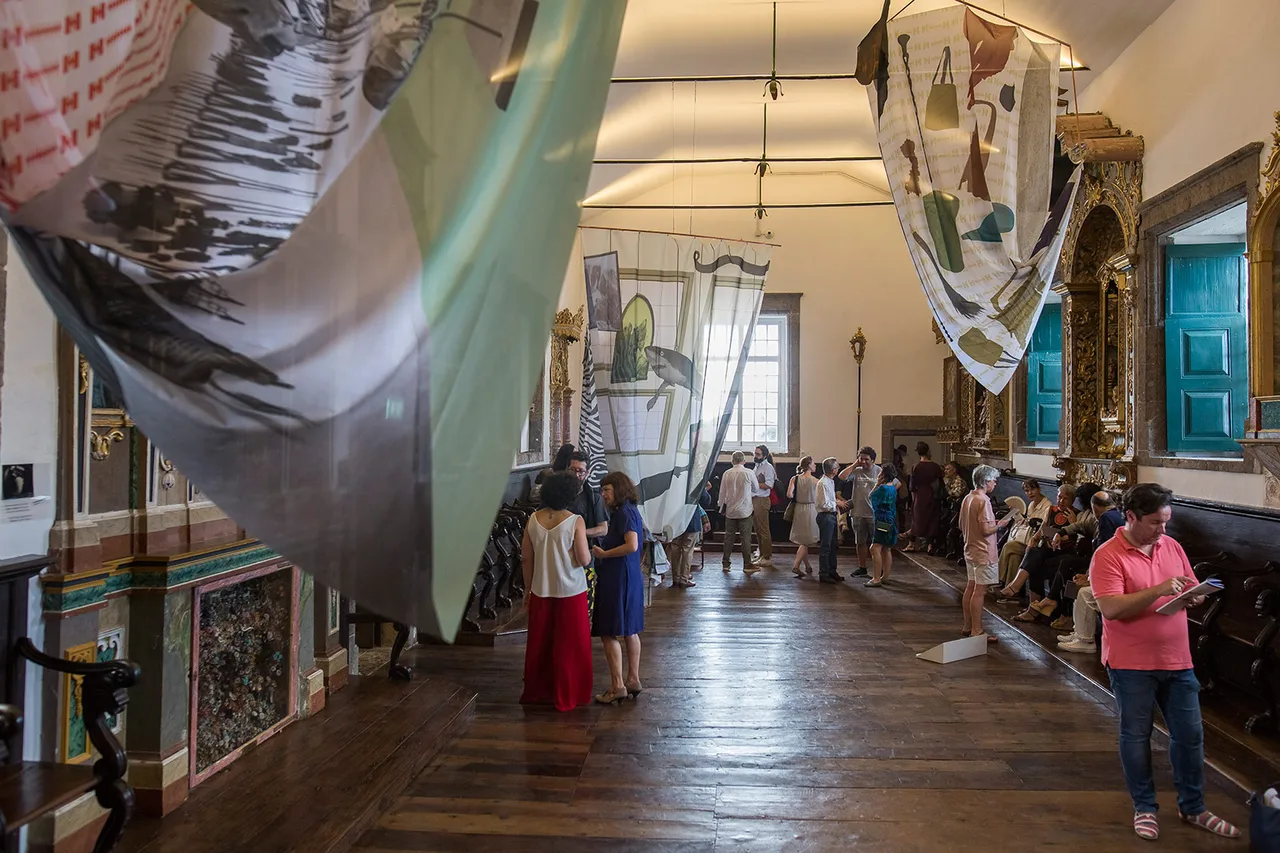
On the same museum there was another exhibition, titled Exodus Stations and curated by Marta Jecu. It was located on the former Saint Andrew convent, which was bought by Carlos Machado in 1930, and attached as an adjacent part of the building. In this environment, the objective of the exhibition proposed “An incursion into the history of the founding of the Museum Carlos Machado, specifically into strategies of self-representation”. Through printed fabrics, photos and space interventions, the artists David Casini and Marcos Pires rethought the meaning and purpose of the secular building by adding new layers to it.
Other projects and installations
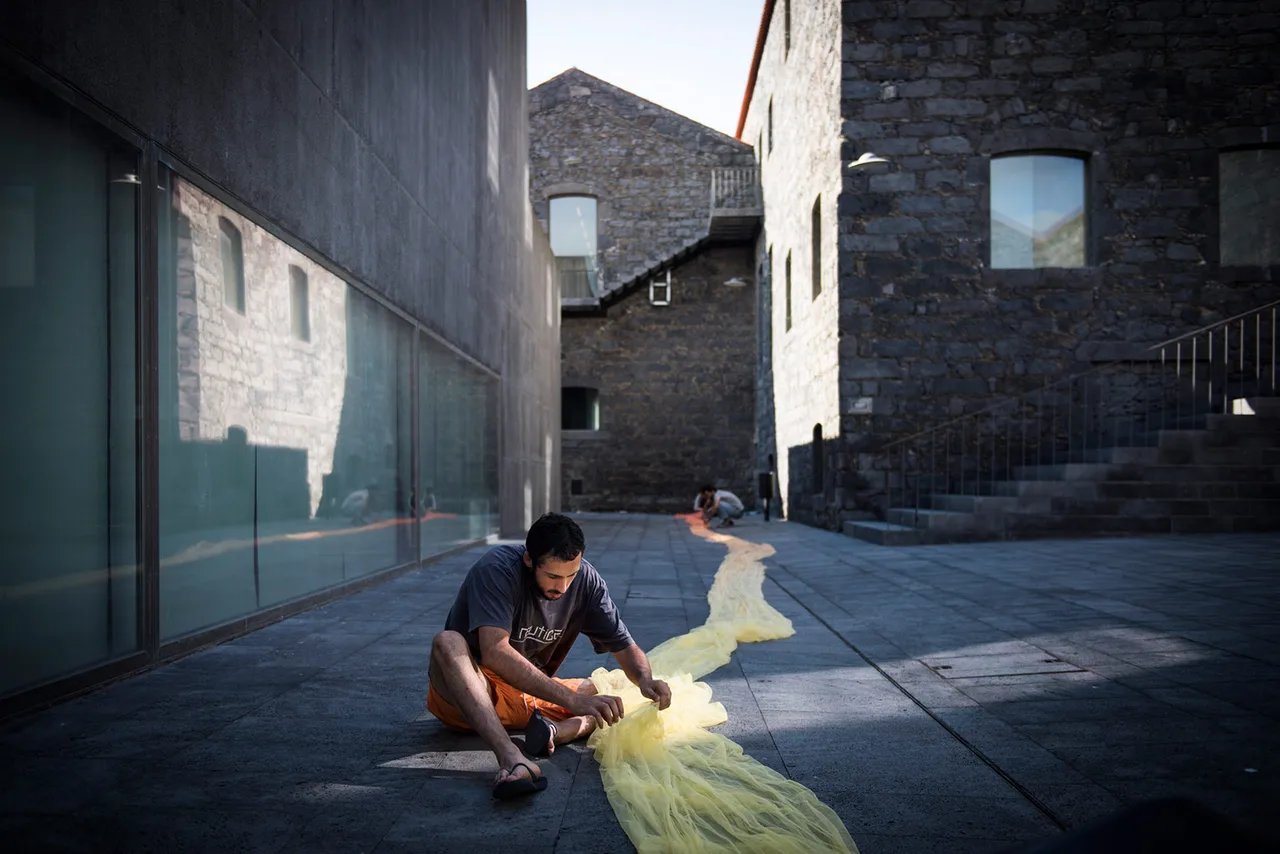
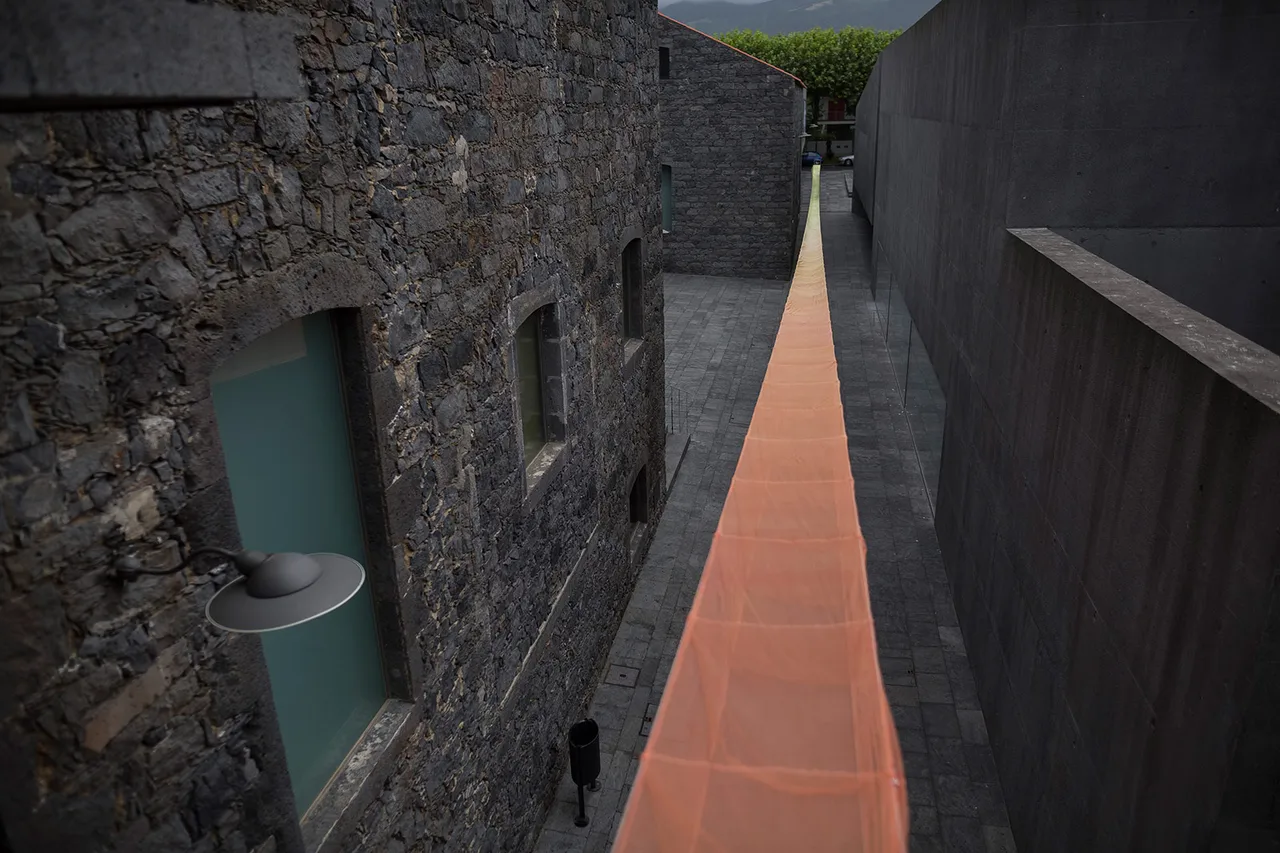
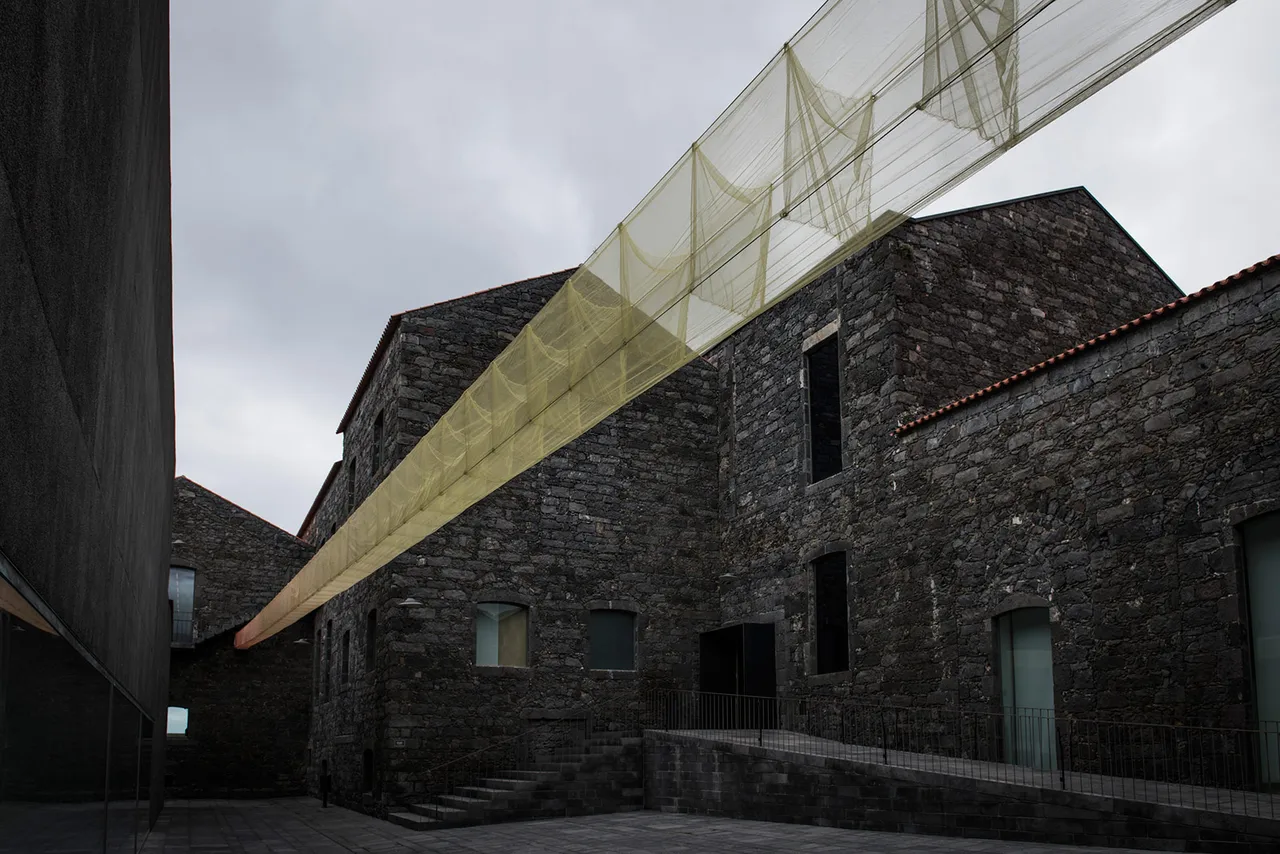
During the rest of the festival, we also got to see some finished projects, like Akane Moriyama’s. The Japan-born, Stockholm-based textile artist created one of the most beautiful and poetic art installations we saw. Hand-sewn over the course of some days and dyed in a degradé from orange to light yellow, her seventy-meter piece was like a ray of light crossing in the middle of the majestic Arquipélago Centro des Arts Contemporânea. Nevertheless, she wasn’t completely satisfied, as she missed “Something to connect it to the street” so more people could find it and feel curious and surprised by it. “I’m putting this outside and somehow try to have a conversation to the region, the street, the people passing by.” But, despite that, the piece is an installation hard to miss.
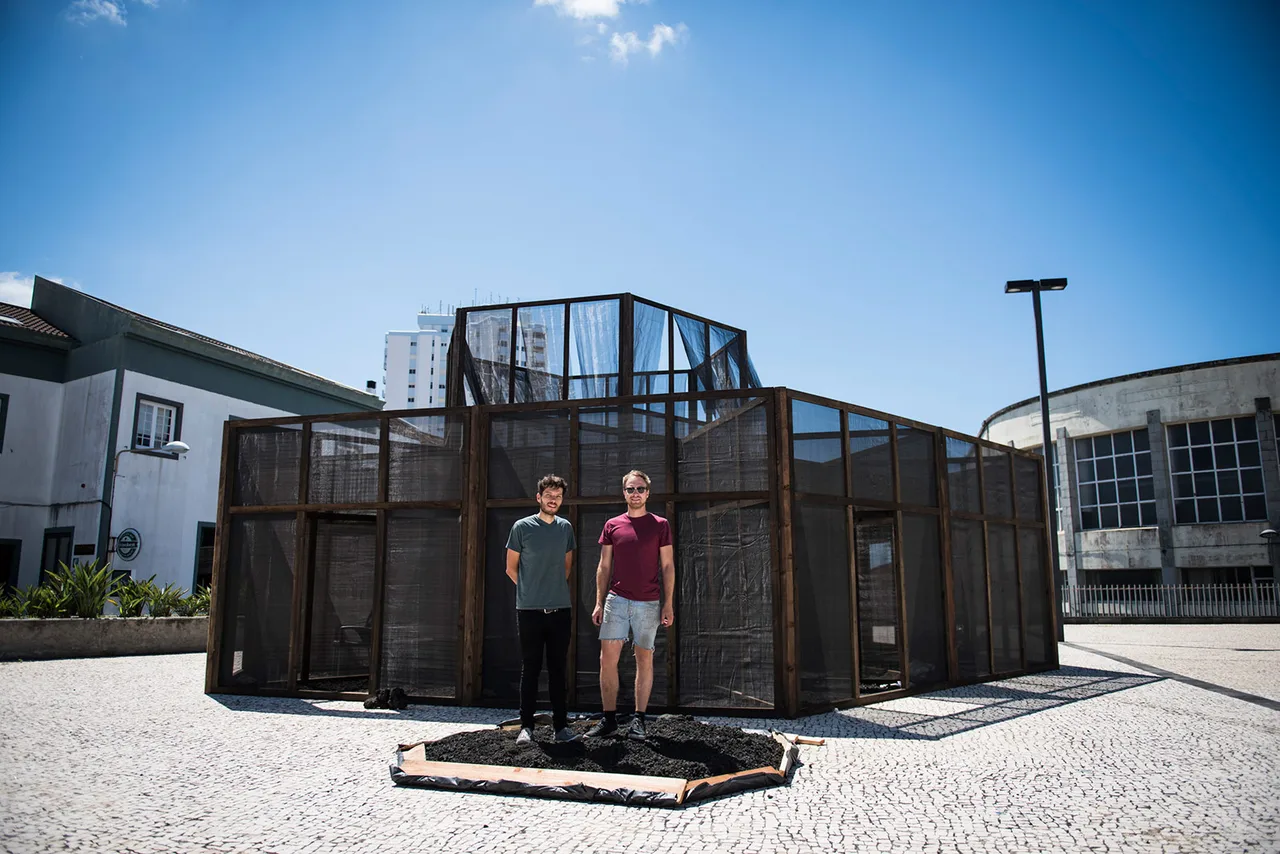
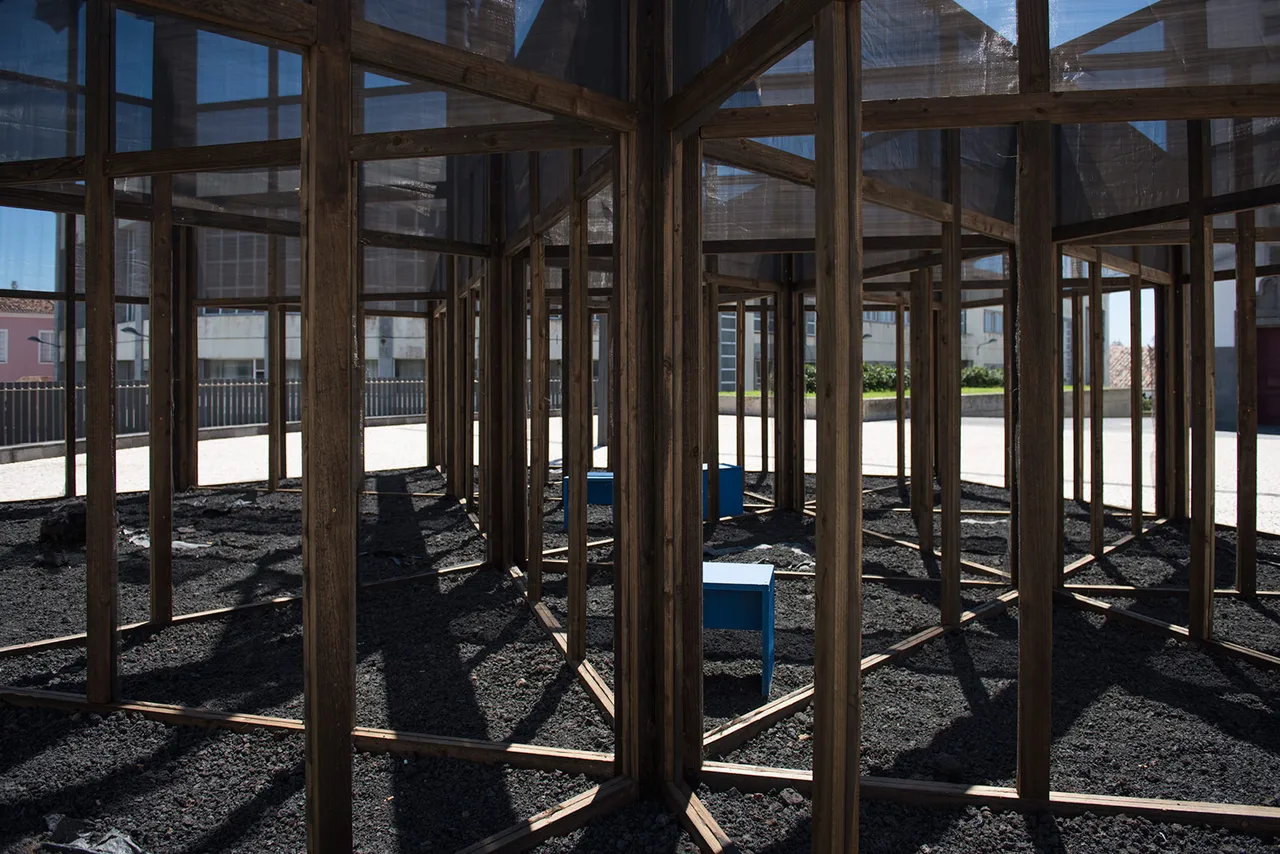
Also made of sheer textile that allowed the interaction between what is visible and what is not, was JQTS’ installation in front of the former space used as Galeria Walk & Talk – a huge building that the team of the festival helped to renovate over the course of six years. The duo, comprised of João Quintela and Tim Simons, started building the structure that “Was supposed to be a landmark to the old gallery” and ended up becoming “more of an homage”. The half-sheer, half-opaque installation is, as described by the artists, “A reaction to the urban context” that explores the idea of living an experience with all senses – the floor is covered in volcanic stones so “The sound is very present; it’s a way to stimulate the sonic part of it”. Inside the structure, some surprising elements can be found: from electric blue stools to a big volcanic stone where one can sit, the labyrinth proved to be a multifunctional space of discovery and experimentation.
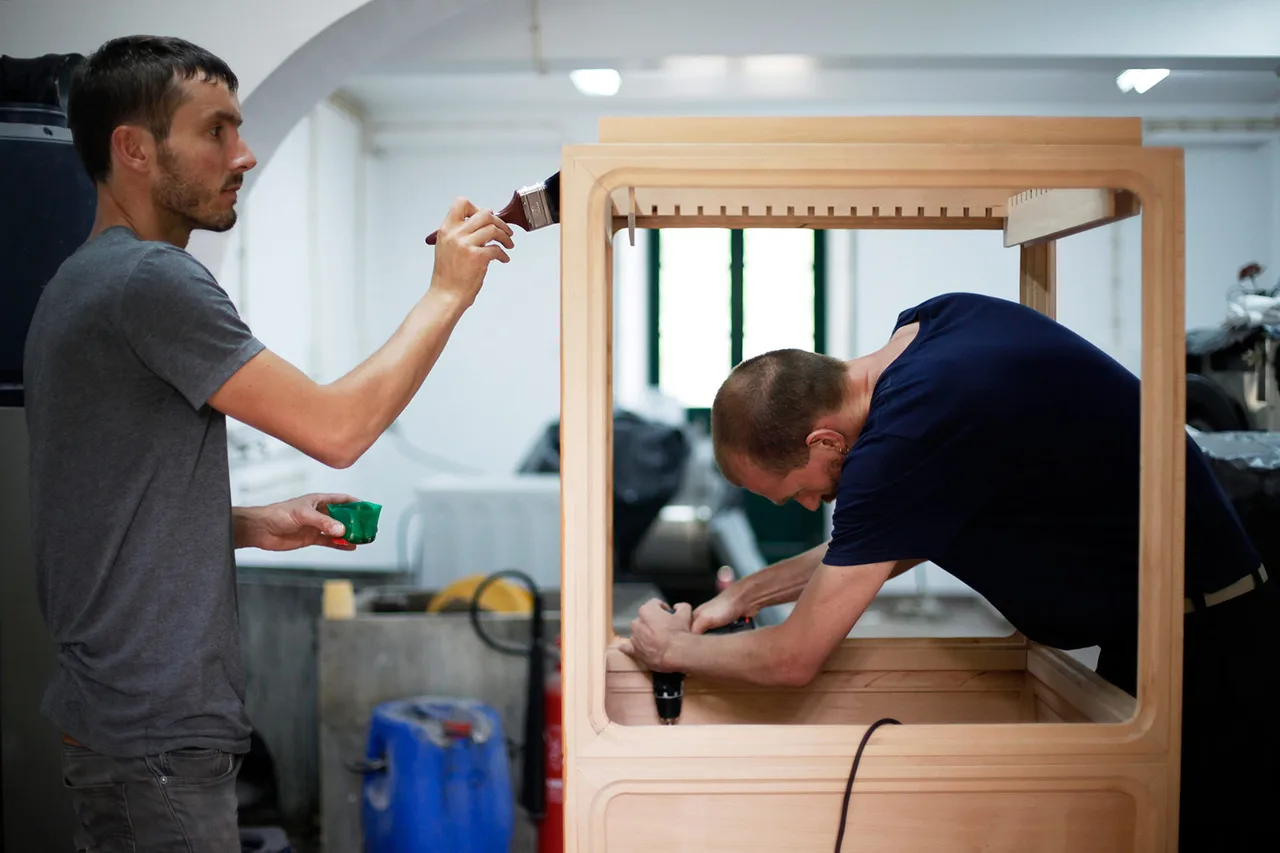
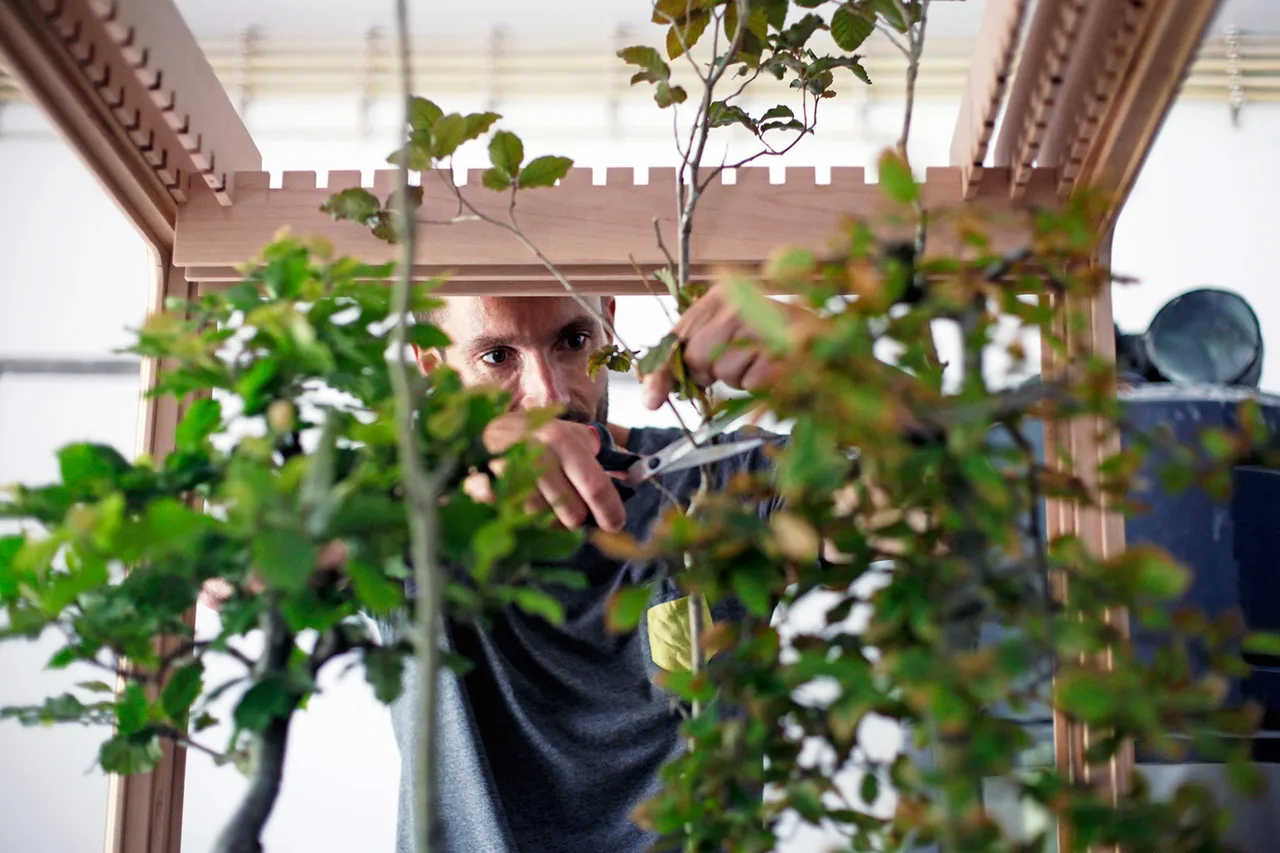
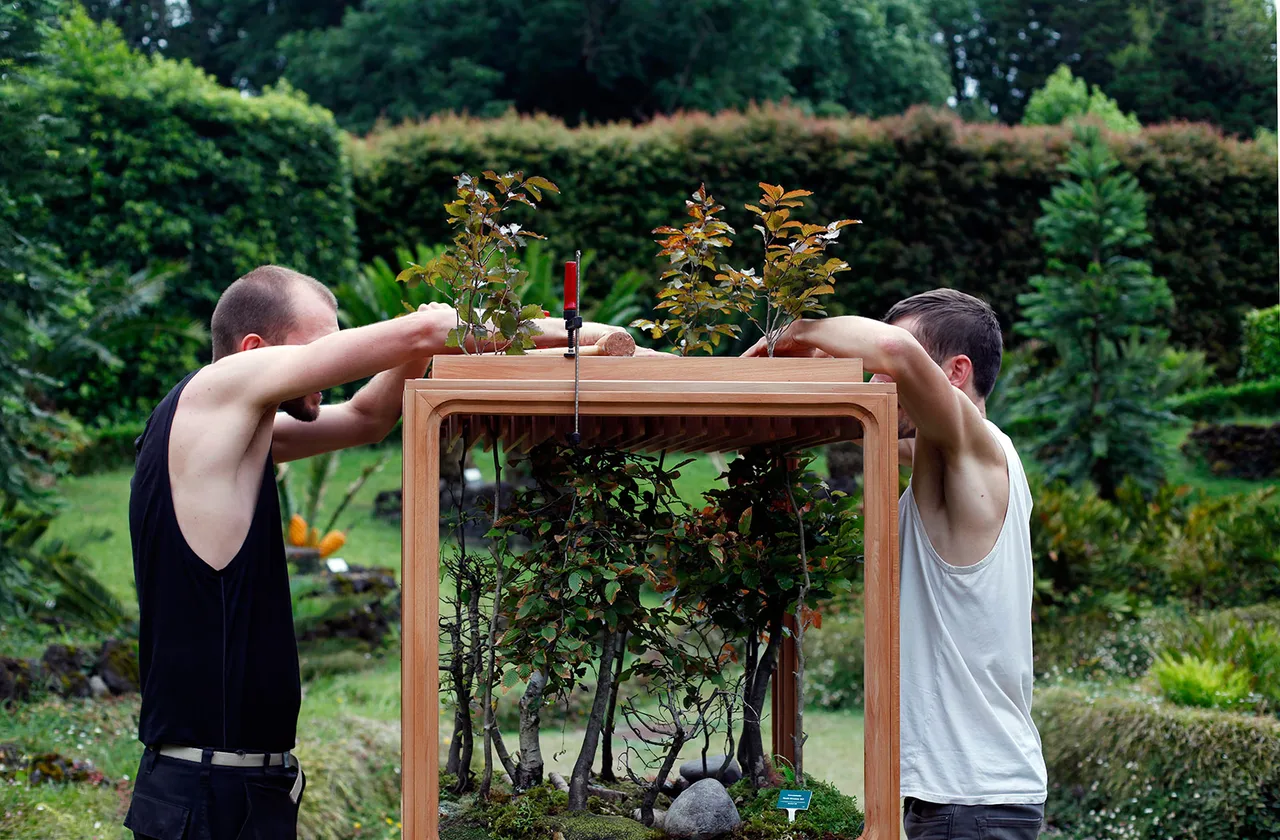
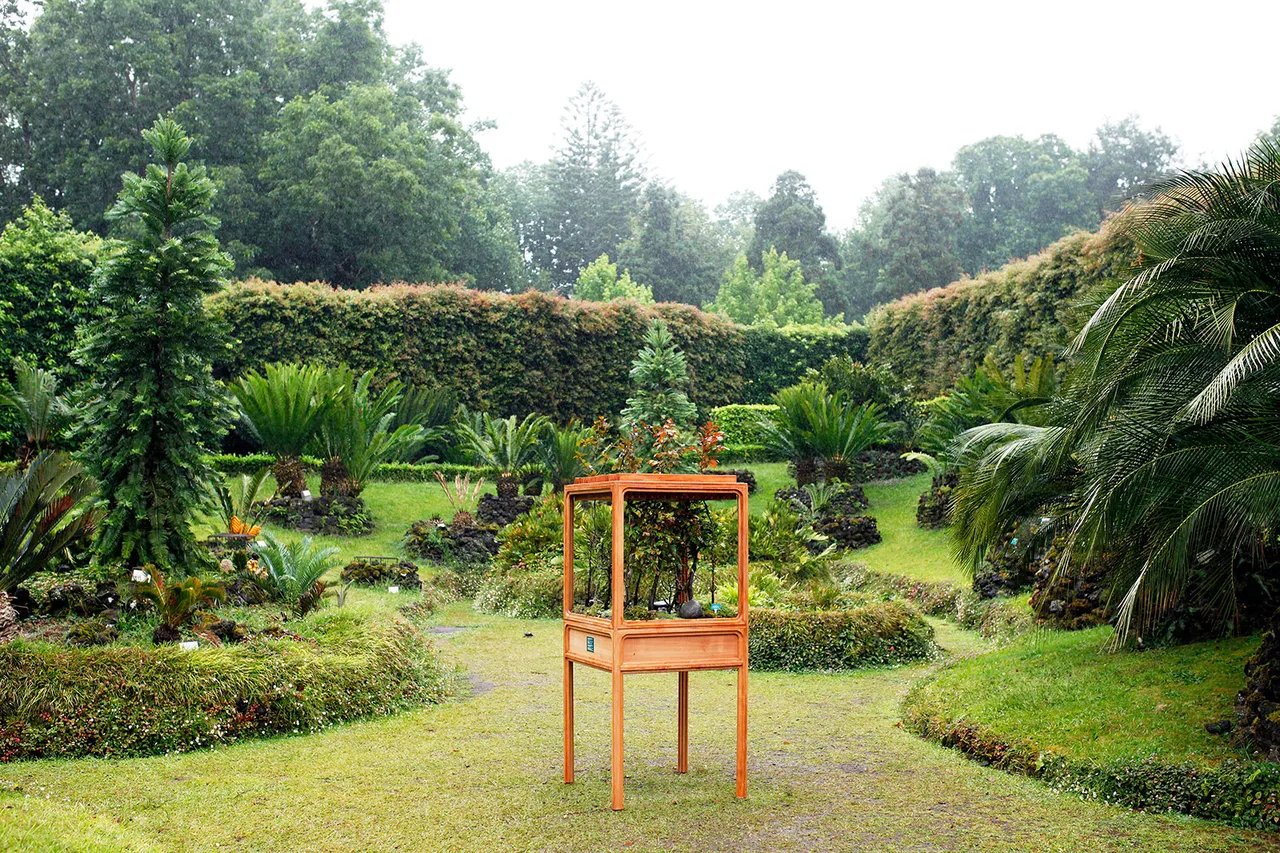
Another interesting installation was the one created by Berlin-based duo Benandsebastian. The two members – Ben, from London, and Sebastian, from Denmark – set their finished piece, a miniature forest called Nordic Miniature, at the Terra Nostra natural reserve in Furnas. Being surrounded by an amalgamation of flora from all over the world, Benandsebastian’s vitrine gives the environment a feeling of human presence and interaction without altering nature’s balance. A subtle, conceptual piece that we hope will remain intact for long.
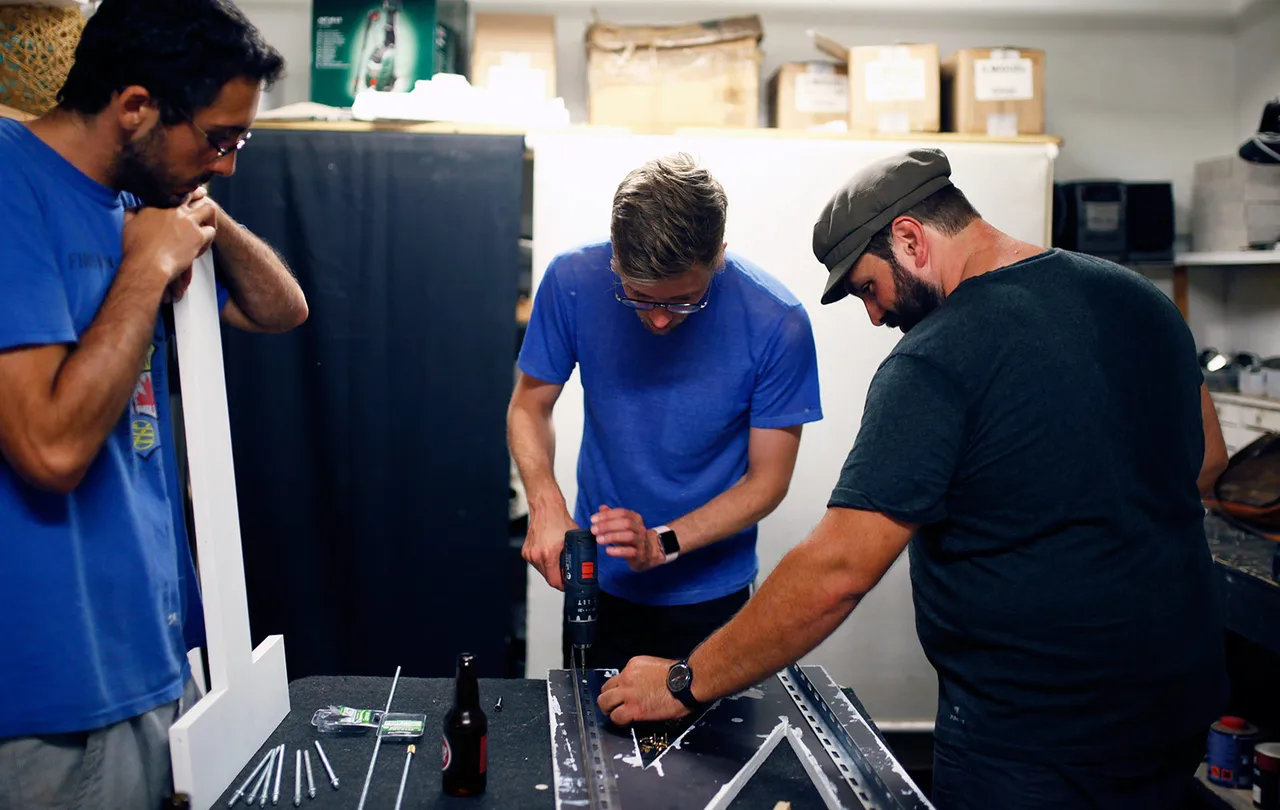
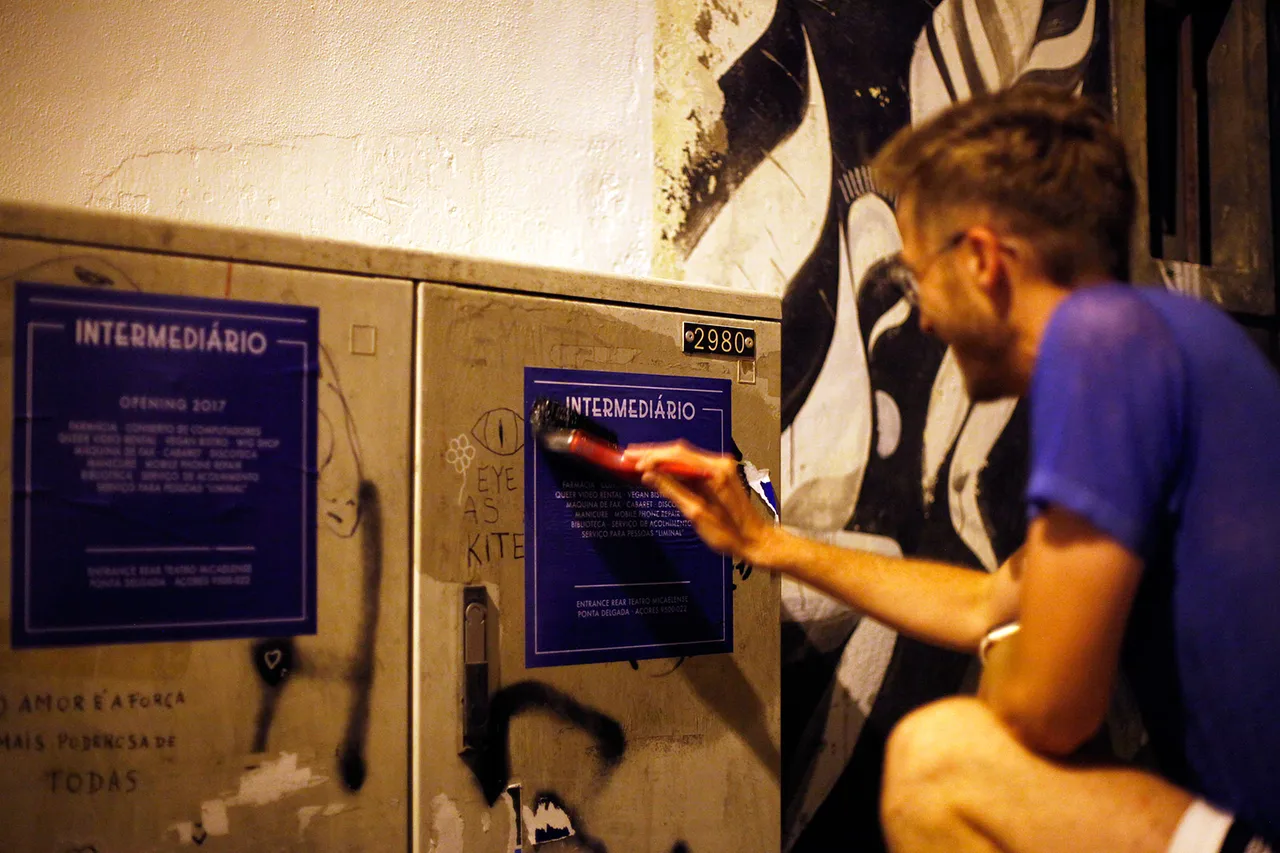
Creating in a more abstract way, we found the work of Canadian artist Mark Clintberg. He took a theatre, the typography used for its signboards, and created a whole fictional (but as real-looking as possible) plan to turn it into a queer space. His piece consisted in the conceptual thinking of the project, the PR promotion, etc. When talking to him, we discovered that the space would include a wig shop, a manicure salon and, of course, several parties were only open-minded people would go and enjoy. If it finally became real (shall we start a crowdfunding campaign?), it would be yet another reason to make us want to go back there again.
After the days spent at São Miguel, we met a lot of people, learnt many names, enjoyed nature, art, networking and everything that the festival offered. In a nutshell, we discovered that the title Walk & Talk couldn’t be more appropriate, and that’s one of the reasons why this festival is so unique: no need for stress, rigid scheduled timetables, or panicking at the fact that two or three activities happen at the same time. Even though there are many things going on, you can always find the time to, well, walk and talk around Ponta Delgada and enjoy the multiple possibilities that the festival has to offer.