The logic of the pavilions still operates as a theatre of national representation, yet in this edition of the Venice Biennale, many proposals seem to have exceeded that framework. Rather than stable identities, what emerges are bodies in crisis, systems in flux, and a persistent sense of structural collapse. This dissonance is not only internal: during the opening days, protests under the slogan “Boycott the genocide pavilion” and the temporary closure of several pavilions exposed the fragility of the dispositif itself, shaped by geopolitical tensions that can no longer be contained within the fiction of institutional neutrality.
What follows is not a comprehensive selection but a situated one, shaped by aesthetic, experiential and conceptual criteria, and inevitably informed by the tensions of its context.
Holy See – The Ear is the Eye of the Soul
The Holy See Pavilion presents The Ear is the Eye of the Soul as a two-part composition that gently reroutes the exhibition experience from looking to listening. Curated by Hans Ulrich Obrist and Ben Vickers, and developed in collaboration with Soundwalk Collective, the project takes shape in Cannaregio’s Giardino Mistico, a secluded monastic garden where more than twenty artists, including Brian Eno, Patti Smith, FKA twigs, and Meredith Monk, respond to Hildegard of Bingen’s chants, writings, and visions through a layered sonic environment.
The result feels like an expanded, slightly uncanny form of prayer: voices drifting in and out, fragments of sound brushing against silence, all mediated through headphones while a custom-built instrument quietly ‘listens’ to the garden itself, translating plants, wind, insects, and soil into a living, unstable score.
Across the city, the Santa Maria Ausiliatrice complex shifts the tone without breaking the spell. Part archive, part construction site, part contemplative chamber, it functions as a contemporary scriptorium where Hildegard’s legacy is refracted through books, architecture, and Alexander Kluge’s final film installation. There is something compelling about this insistence on slowing down, on tuning into quieter registers of experience. Yet, in its careful orchestration of stillness and reverence, the pavilion occasionally drifts into a kind of polished spirituality: so composed, so attuned that it risks smoothing out the friction it quietly gestures towards.
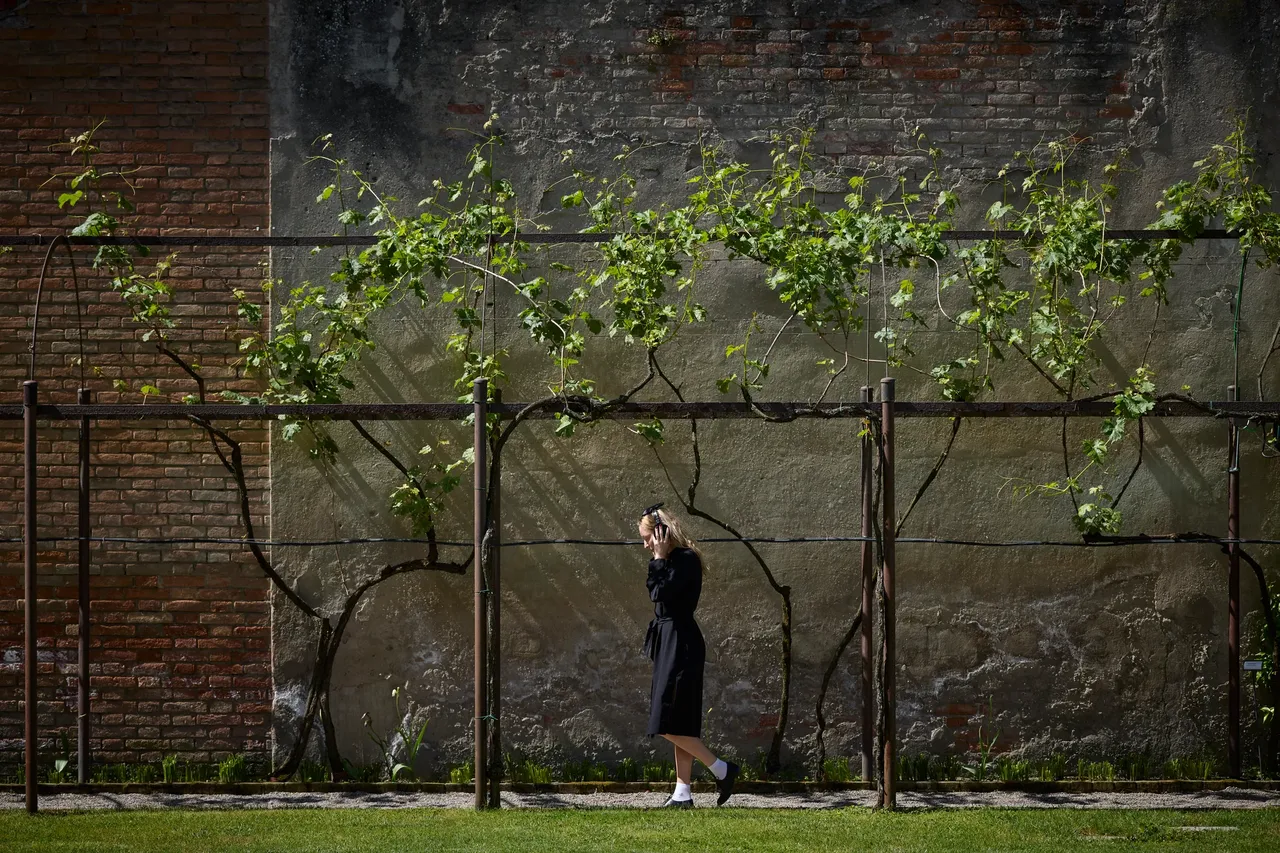
The Pavilion of the Holy See, The Ear is the Eye of the Soul. Giardino Mistico, Venice. Photo: David Levene
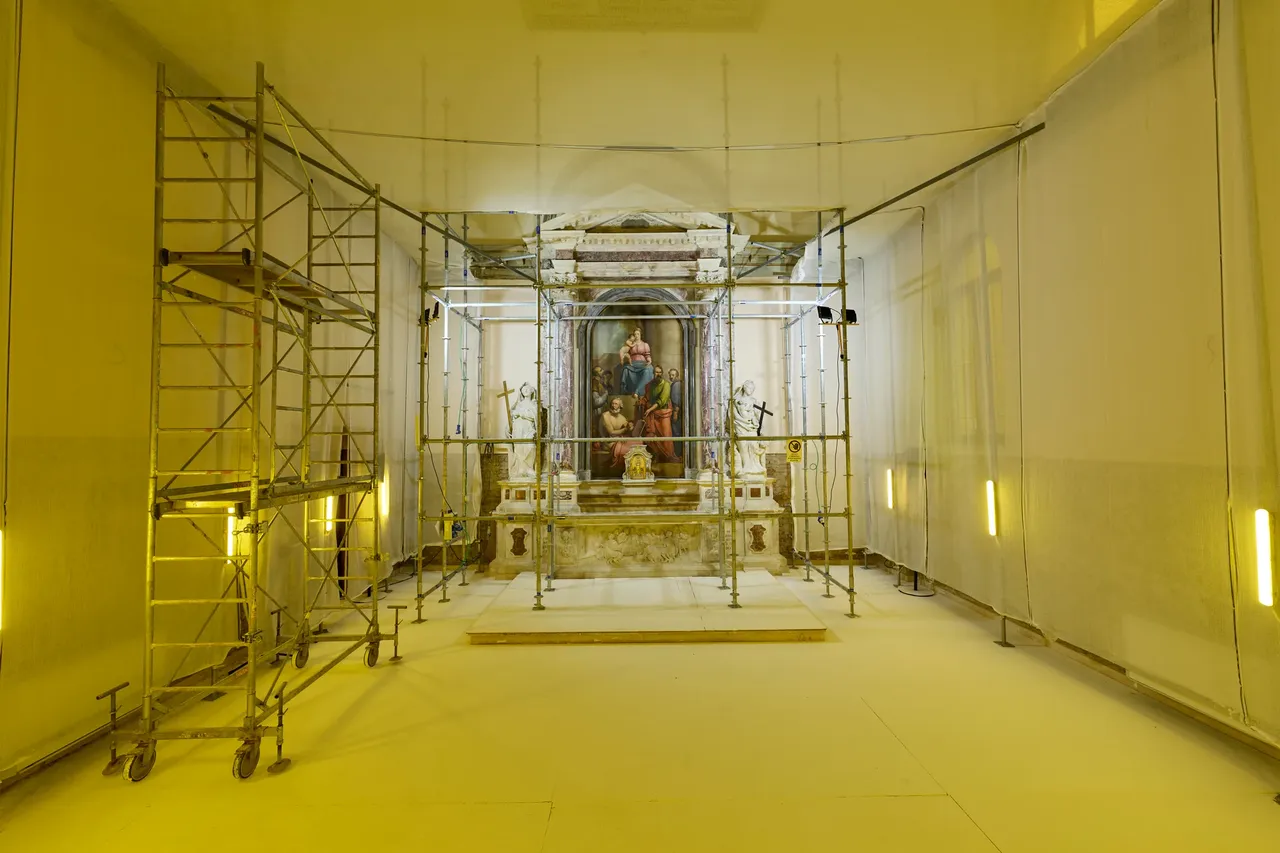
The Pavilion of the Holy See, The Ear is the Eye of the Soul. Giardino Mistico, Venice. Photo: David Levene
Austria – Seaworld Venice
Arguably the most radical proposal in the Giardini, Florentina Holzinger transforms the pavilion into a closed system in which body, waste, and spectacle collapse into one another. Amid recycled fluids, overflowing machines, and performers pushed to their limits, the work becomes a visceral reflection of a global order in decomposition. It reads less as a performance than a sustained condition of excess, in which choreography slips into endurance, and control begins to falter. Liquids circulate, bodies accumulate, and the space itself feels on the verge of rupture. There is a precise intelligence behind the intensity: a world where infrastructures leak, boundaries dissolve, and the naked female body becomes the ground on which these tensions are fully inhabited.
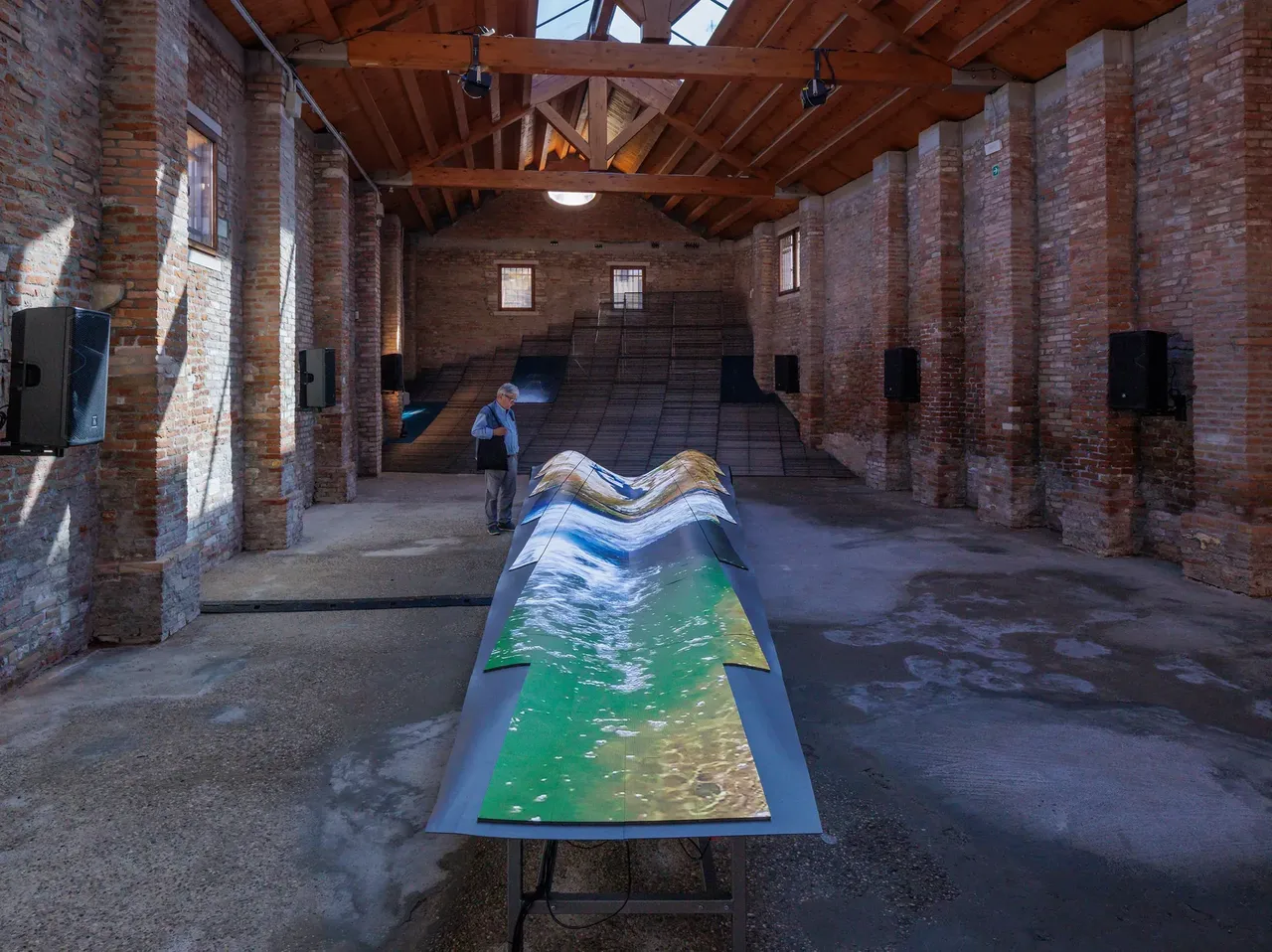
In Venice, this logic of overflow resonates differently. Water, already the city’s underlying condition, appears displaced and intensified, no longer a backdrop but a substance in circulation, unstable and difficult to contain. The pavilion seems to echo the lagoon’s precarious balance, where containment is always temporary, and collapse remains a latent possibility.
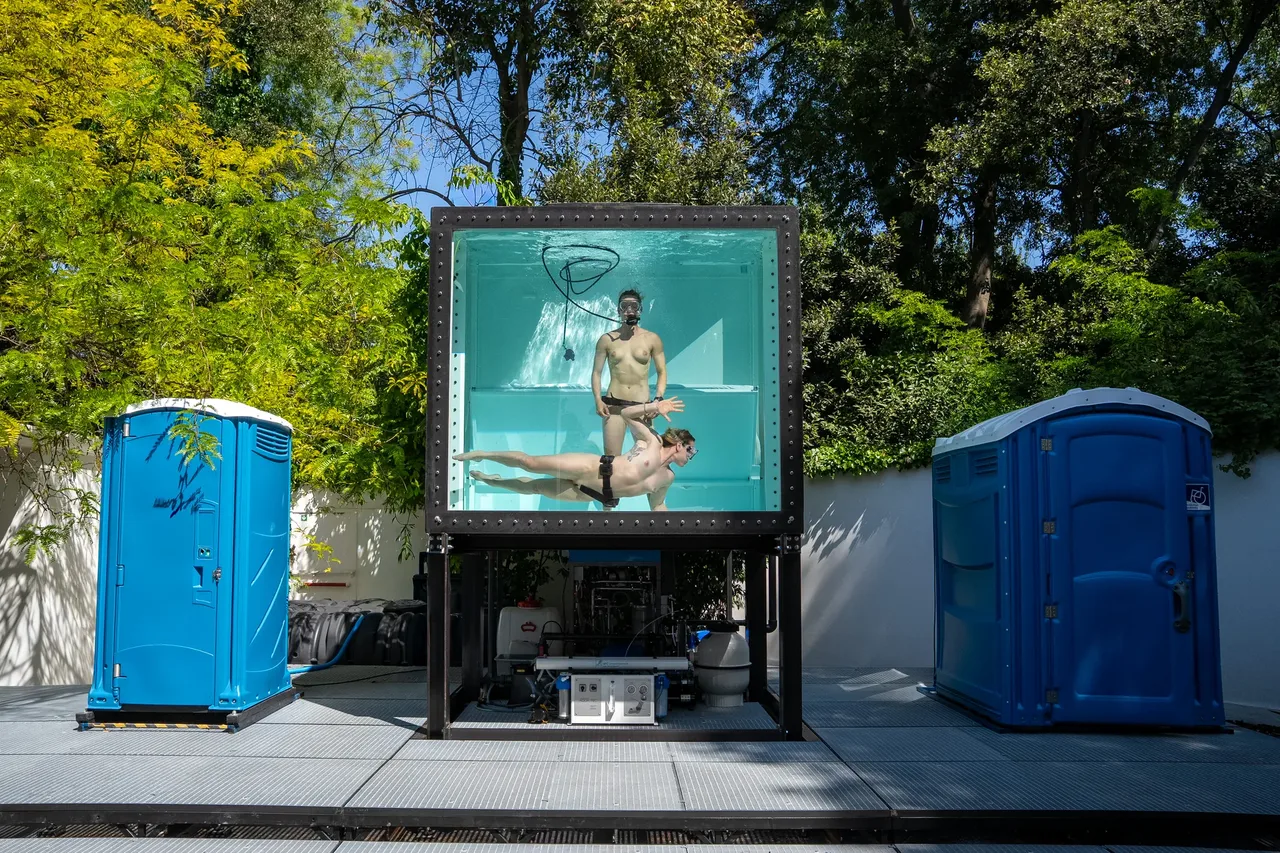
Seaworld Venice, 2026 © Nicole Marianna Wytyczak
Ukraine – Security Guarantees
Ukraine’s pavilion, Security Guarantees, is anchored by a single suspended gesture that bears the weight of a broader historical failure. Zhanna Kadyrova’s Origami Deer, originally installed in a public park in eastern Ukraine and later evacuated as the front line approached, hangs from a crane in the Giardini, held in precarious suspension. Fragile in appearance yet materially solid, the sculpture functions as a compressed image of a broken promise: a reference to the Budapest Memorandum, under which Ukraine relinquished its nuclear arsenal in exchange for assurances that ultimately proved void.
Inside the pavilion, archival materials and video documentation trace the work’s displacement, mapping its trajectory from a site-specific sculpture to a mobile witness. The piece’s journey becomes inseparable from the conditions it now inhabits: war, evacuation, uncertainty, where stability is no longer a given but a constantly negotiated state. Suspended between past and present, between protection and exposure, the work resists closure. This is not a representation of conflict but a structure of unresolved conflict, in which the language of security reveals its own emptiness.
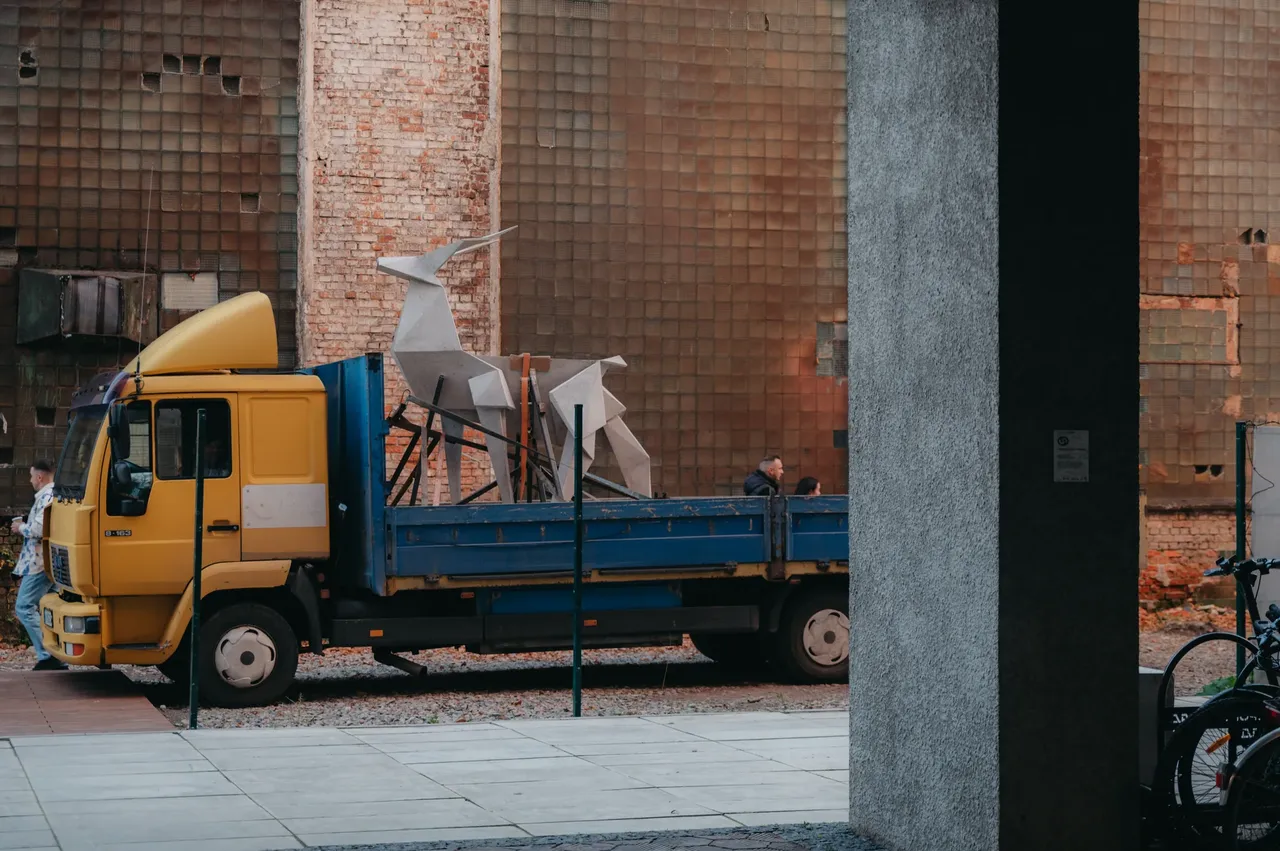
Presentation of the sculpture in Ivano Frankivsk. 2025. Photo: Anton Sorochak
Denmark – Things to Come
Denmark’s pavilion engages with the image as a force that actively shapes the body, desire, and future imaginaries. By bringing together scientific, fictional, and pornographic visual regimes, Maja Malou Lyse constructs a space in which fertility technologies and erotic imagery become entangled, exposing how systems of knowledge and representation collaborate to produce normative visions of life. Rather than separating these domains, the project insists on their proximity, revealing a shared infrastructure where intimacy, data, and speculation converge.
Developed in dialogue with curator Chus Martínez, the pavilion extends Lyse’s ongoing inquiry into the life of images and their capacity to affect reality at a material level. At thirty-three, she is the youngest artist to represent Denmark in Venice, a position that sharpens the project’s urgency as it addresses how sexuality, power, and mediation are negotiated in the present. Questions of visibility and control unfold through a media-conscious practice attentive to how bodies are coded, circulated, and governed. At its core lies a disquieting proposition: that the images we produce and consume may already be reshaping us as a species. In line with the broader framework of In Minor Keys, the work resists moralising positions, cultivating instead a space where conflicting value systems coexist, less in opposition than as a charged field of negotiation.
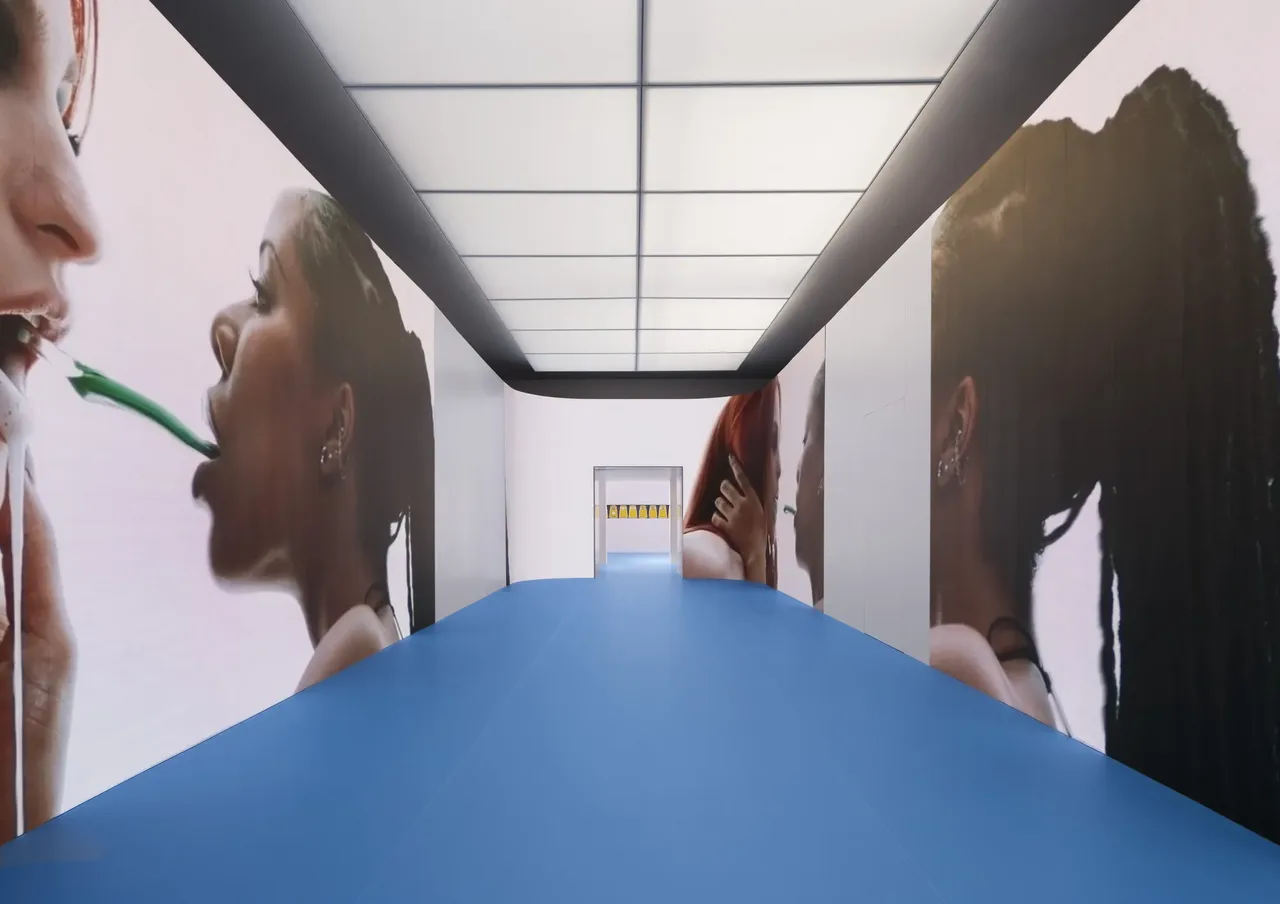
Installation view, Maja Malou Lyse, DIS, Things to Come, 2026 Photo: Ugo Carmeni
Catalonia – Paper Tears
Catalonia’s pavilion presents an installation by Clàudia Pagès Rabal, a quiet yet intricately layered investigation into language, body, and memory. Working across voice, text, and spatial installation, Pagès constructs an environment in which words are not merely carriers of meaning but material entities, spoken, inscribed, and dispersed throughout the space. Language here becomes something to be inhabited rather than decoded, appearing in fragments that resist linear narration.
The work operates through proximity and delay. Voices overlap, texts appear partially, gestures emerge and withdraw, creating a rhythm that feels both intimate and elusive. There is a particular attention to cadence, to breath, to the subtle ways in which language passes through the body. Rather than asserting itself, the pavilion invites a slower form of engagement, in which meaning accumulates gradually, through repetition and resonance.
In contrast to more declarative proposals, Pagès sustains a space of suspension, one where memory does not settle into fixed narratives but remains in circulation. What emerges is a delicate friction between presence and absence, where the act of speaking becomes inseparable from the act of listening, and where the body registers what language cannot fully hold.
Spain – Los restos
Spain’s pavilion takes shape as a large-scale installation built on accumulation, repetition, and memory. Under the title Los restos, curated by Carles Guerra, artist Oriol Vilanova transforms the space into a pseudo-museum, structured around an ever-expanding archive of postcards collected over more than two decades from flea markets and second-hand shops. What might initially appear as a simple act of gathering reveals itself as a sustained practice that draws in peripheral economies and everyday gestures, quietly unsettling the traditional mechanisms of cultural legitimacy associated with the museum.
The postcards, remnants of a once vast global exchange system tied to tourism, carry traces of individual experience: images that were written, sent, and eventually forgotten. Reassembled here, they form a seemingly endless mural without hierarchy or linear narrative, where repetition replaces monumentality. In this dense field, collecting becomes a way of thinking, a gesture that oscillates between preservation and loss. The archive is never stable; it mutates, absorbs, and displaces, at times resembling a closed circuit of images, where meaning circulates through repetition rather than progression.
Extending beyond the pavilion, the project continues through an unannounced performative action, El fantasma de la libertad, taking place across the Giardini and the Arsenale. Through fleeting, wordless encounters, the work shifts from object to presence, suggesting that what persists is not only the image but the act of transmission itself: fragile, contingent, and always on the verge of disappearance.
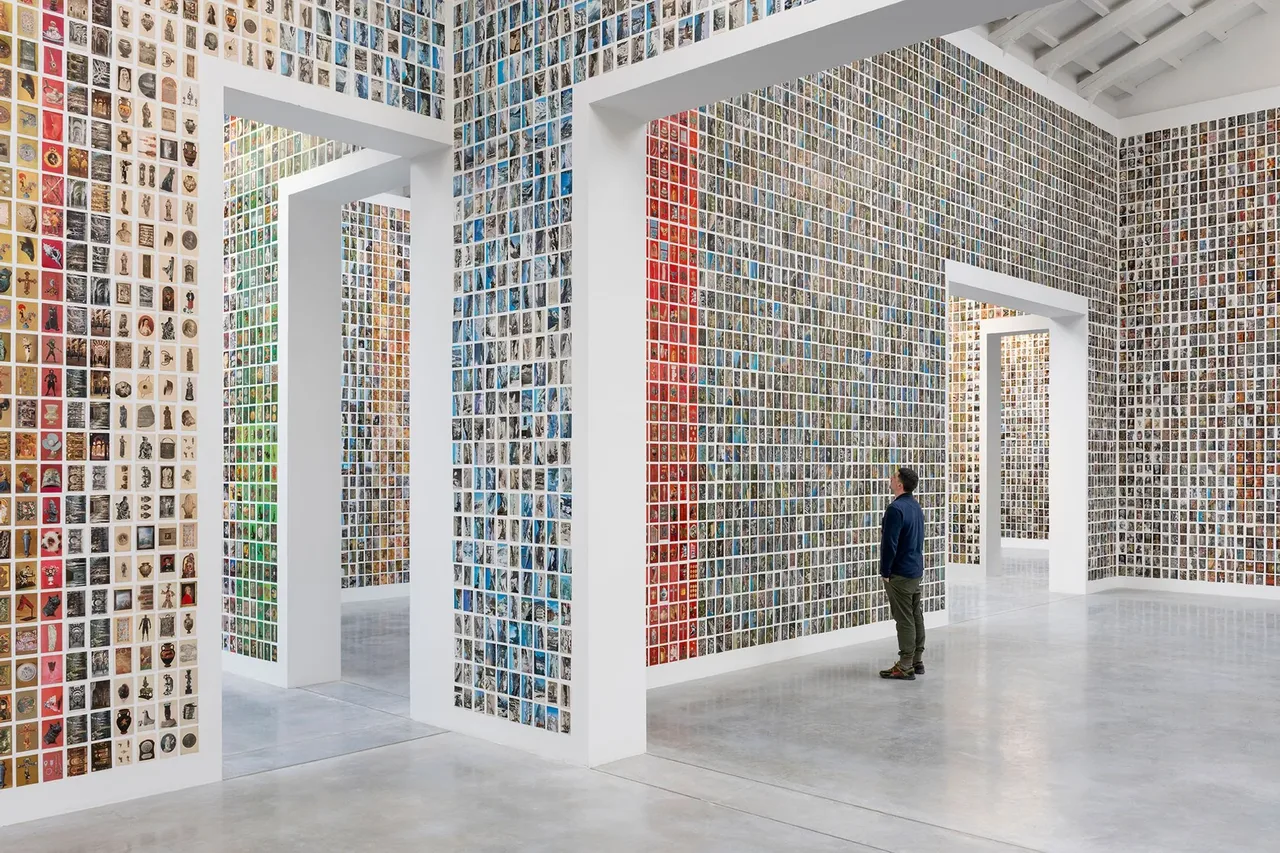
View of Oriol Vilanova: Los restos, Spanish Pavilion at the Venice Biennale, 2026. Courtesy of the artist. Photo: Roberto Ruiz
Türkiye – A Kiss on the Eyes
Türkiye’s pavilion, centred on the work of Nilbar Güreş, frames a spatial installation as a series of gestures that move between intimacy and resistance. Working across textiles, photography, video and drawing, Güreş constructs a space where bodies, often marginalised or rendered invisible, reclaim visibility on their own terms. The work draws on personal and collective narratives shaped by migration, gender, and cultural displacement, yet avoids settling into fixed identities.
Rather than presenting these experiences as stable categories, the pavilion allows them to remain fluid, shifting among humour, tenderness, and defiance. Particular attention is paid to fabric and gesture: veils, coverings, and domestic materials appear not as symbols of constraint but as tools of transformation, capable of concealing, revealing, and reconfiguring the body at once. This play between exposure and opacity generates a subtle but persistent tension throughout the space.
In this oscillation, Güreş resists both victimisation and simplification. The work operates through proximity, inviting the viewer into a space that feels at once personal and politically charged, where acts of everyday life become sites of negotiation. What emerges is a form of quiet insistence: a reworking of visibility that refuses to stabilise and continues to shift across contexts, bodies, and gazes.
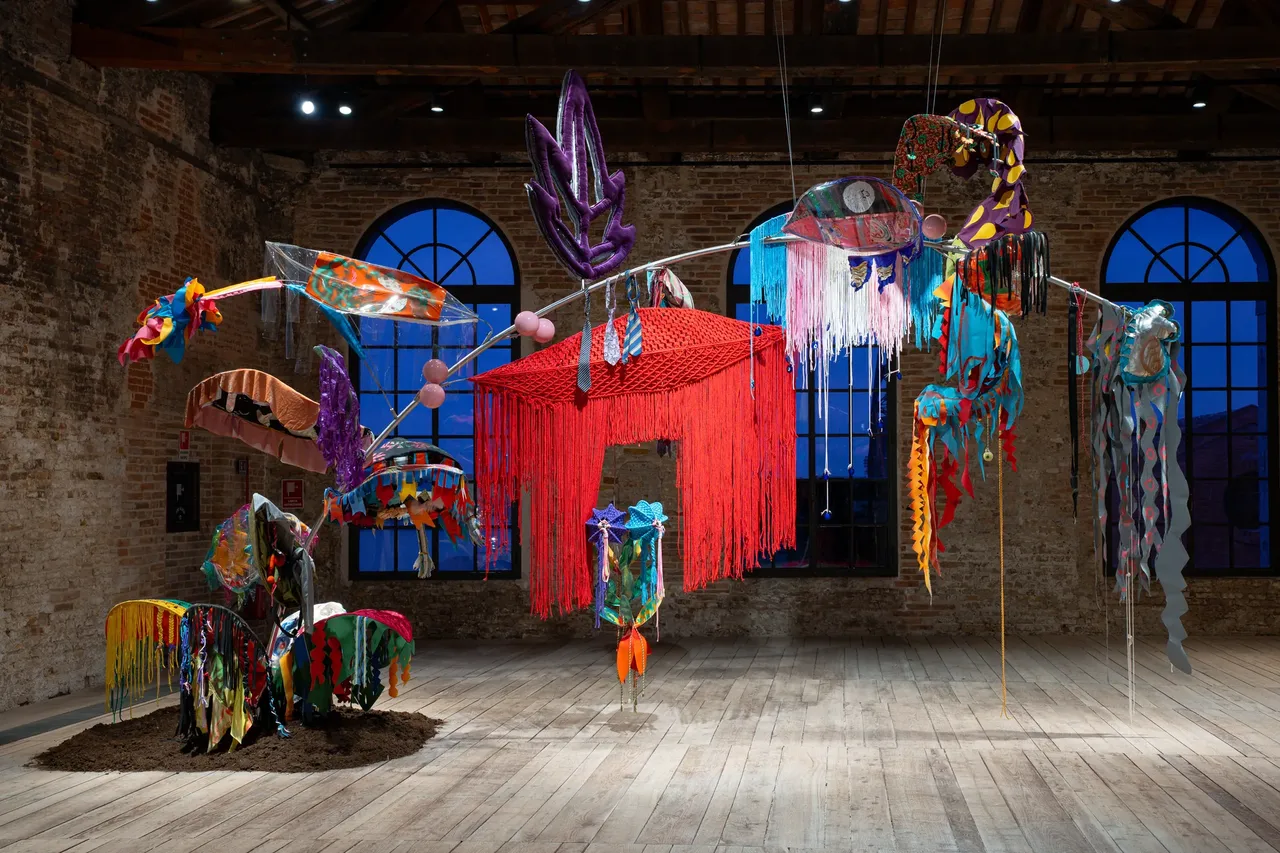
Installation view, A Kiss on the Eyes by Nilbar Gures, 2026. Photo: Fatih Yılmaz
Germany – Ruin
Germany’s pavilion, curated by Dr Kathleen Reinhardt, frames the space as a place where physical structures, political ideologies, and lived histories persist across overlapping temporalities. The artists Henrike Naumann and Sung Tieu engage directly with the pavilion’s architecture, treating it as an unstable surface where minimalist clarity and moments of excess coexist. Drawing on spatial references from East German history, from the vanished GDR Pavilion to sites marked by violence and erasure, the project approaches ruin not only as physical decay but as a condition of political, financial, and moral exhaustion.
This sense of dissonance materialises through a dialogue between the two practices. Sung Tieu’s intervention begins at the façade, enveloping the building in a trompe-l’œil mosaic that renders the skeletal remains of a prefabricated housing block in East Berlin, once her childhood home and later a site associated with migrant labour, speculation, and displacement. Inside, Naumann’s contribution is articulated through a precise orchestration of interior space, where furniture, objects, and design vocabularies evoke domestic and institutional environments shaped by ideology.
Together, their works trace how systems of administration, surveillance, and everyday life imprint themselves on the body and the built environment. The result is a pavilion that does not reconstruct the past but holds it in suspension, where historical absences generate unstable zones and where dignity, invoked but never secured, remains under constant negotiation.
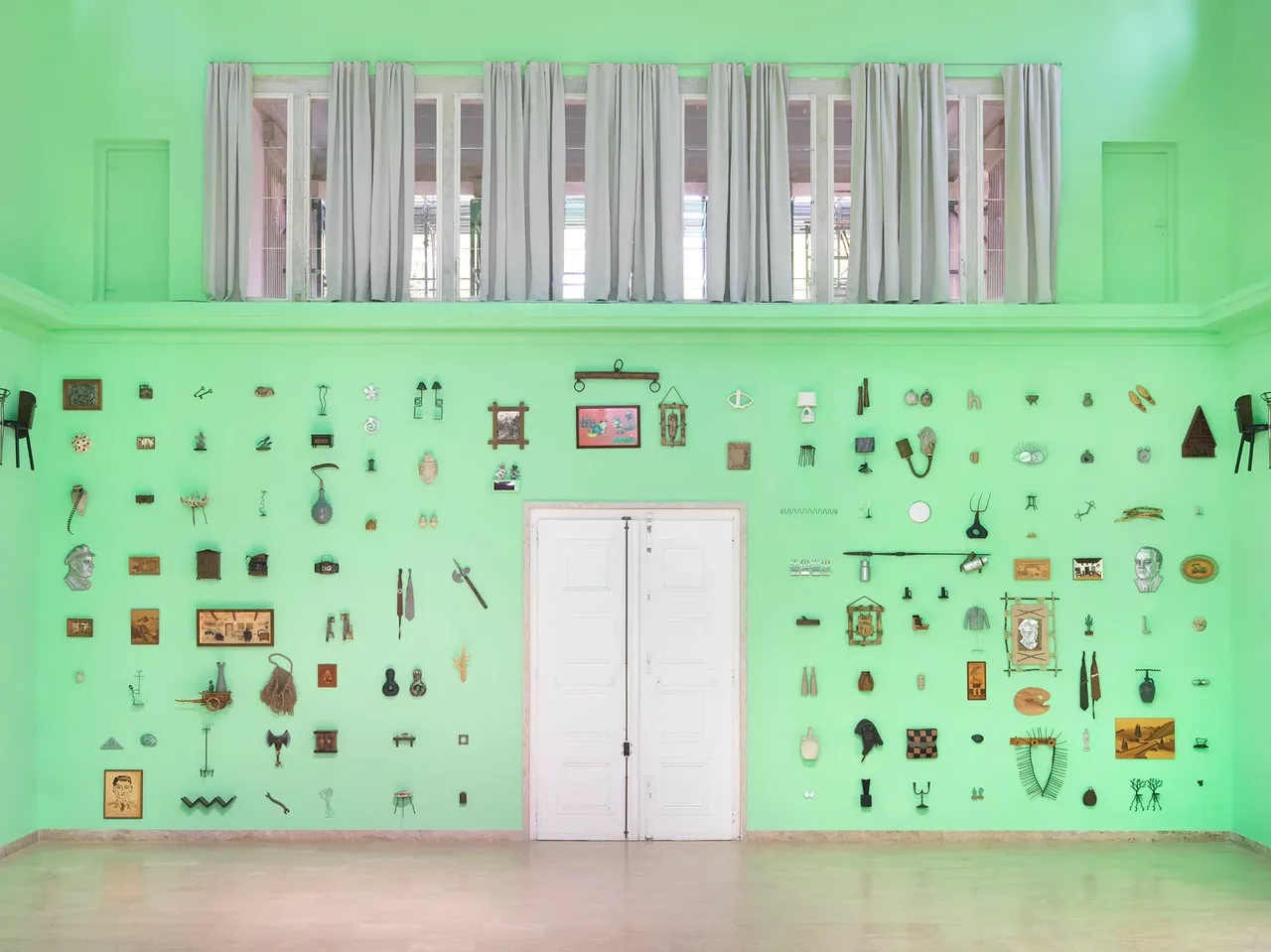
German Pavilion, Henrike Naumann, The Home Front, 2026. Photo: Jens Ziehe
Switzerland – The Unfinished Business of Living Together
Switzerland’s pavilion, The Unfinished Business of Living Together, explores coexistence not as a fixed state but as a continuous negotiation driven by visibility, voice, and exclusion. Curated by Gianmaria Andreetta, Luca Beeler and Nina Wakeford, and developed with a broader group of collaborators, the project transforms the archive into a contested space, where past debates are not settled but reopened from today’s perspective.
It centres on two televised moments from the late 1970s and early 1980s, when homosexuality appeared in Swiss mainstream media through formats that featured public confrontation. These broadcasts, part debate and part performance, serve as both source and method. Through a spatial video installation combining archival and new footage, the pavilion examines how voices are created, framed, and authorised. Instead of nostalgia, it offers a nuanced critique of the media machinery, revealing how intimacy, conflict, and public discourse are choreographed.
Moving into the garden, the project emphasises the risks of being seen together: how bodies occupy space, how memory links to place, and how collectivity is continuously rehearsed and challenged. The archive functions as a living resource, unstable, partial, and open to reinterpretation, rather than as fixed evidence. Thus, the pavilion presents “living together” as an unfinished state, where different times, identities, and positions coexist without reaching consensus, maintained instead through ongoing negotiation.
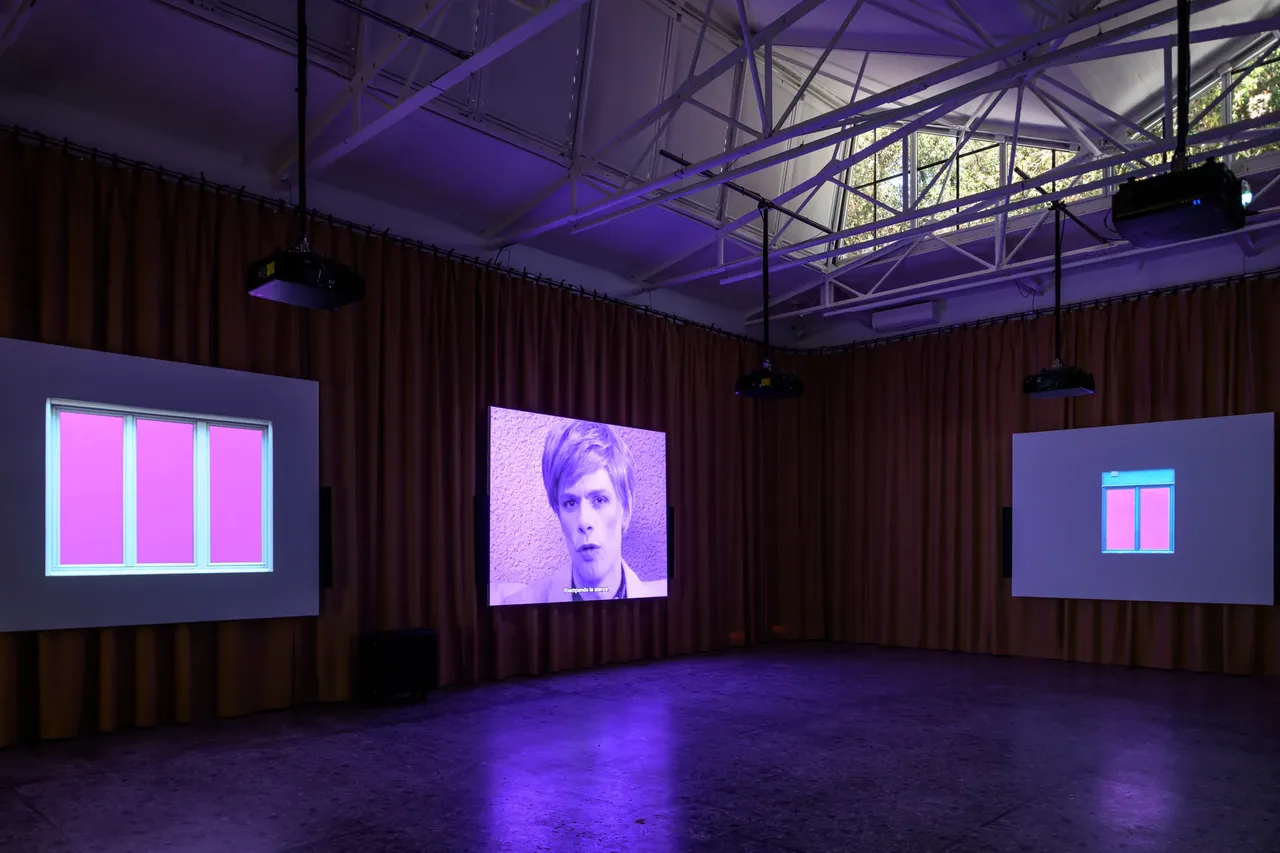
Pavilion of Switzerland at the Biennale Arte 2026, ‘The Unfinished Business of Living Together’. Photo: Christian Beutler - Keystone
Latvia – Untamed Assembly: Backstage of Utopia / Death in Venice
Latvia’s pavilion, Untamed Assembly: Backstage of Utopia, takes shape as a hybrid environment where fashion, performance, and archival material converge. Developed by Mareunrol’s in dialogue with Bruno Birmanis and the legacy of the Untamed Fashion Assemblies of the 1990s, the installation reimagines the backstage as a space of rehearsal, improvisation, and collective becoming. Garments, textile sculptures, and archival footage coexist within a scenography that foregrounds process over display, where identity is continuously tried on, exaggerated, and reconfigured through gesture, costume, and play.
Rather than presenting fashion as a finished product, the pavilion returns to a moment of political and cultural transition in post-Soviet Latvia, when bodies and images became tools for negotiating new forms of visibility. Drag, role-play, and stylisation emerge here as strategies of survival and invention, producing a space that feels both fragile and charged with possibility. What persists is a sense of openness, an unfinished choreography in which past utopias are neither nostalgically preserved nor entirely abandoned, but held in suspension.
This openness extends beyond the pavilion itself through the campaign Death in Venice, an open-access protest tool initiated by the Latvian team in response to the Biennale’s geopolitical contradictions. Reworking the Biennale’s visual identity into a stark political message, the campaign invites visitors to circulate and embody dissent across the city, transforming viewers into participants. In this expanded gesture, the pavilion exceeds its physical boundaries, aligning aesthetic experimentation with a direct, collective form of political address.
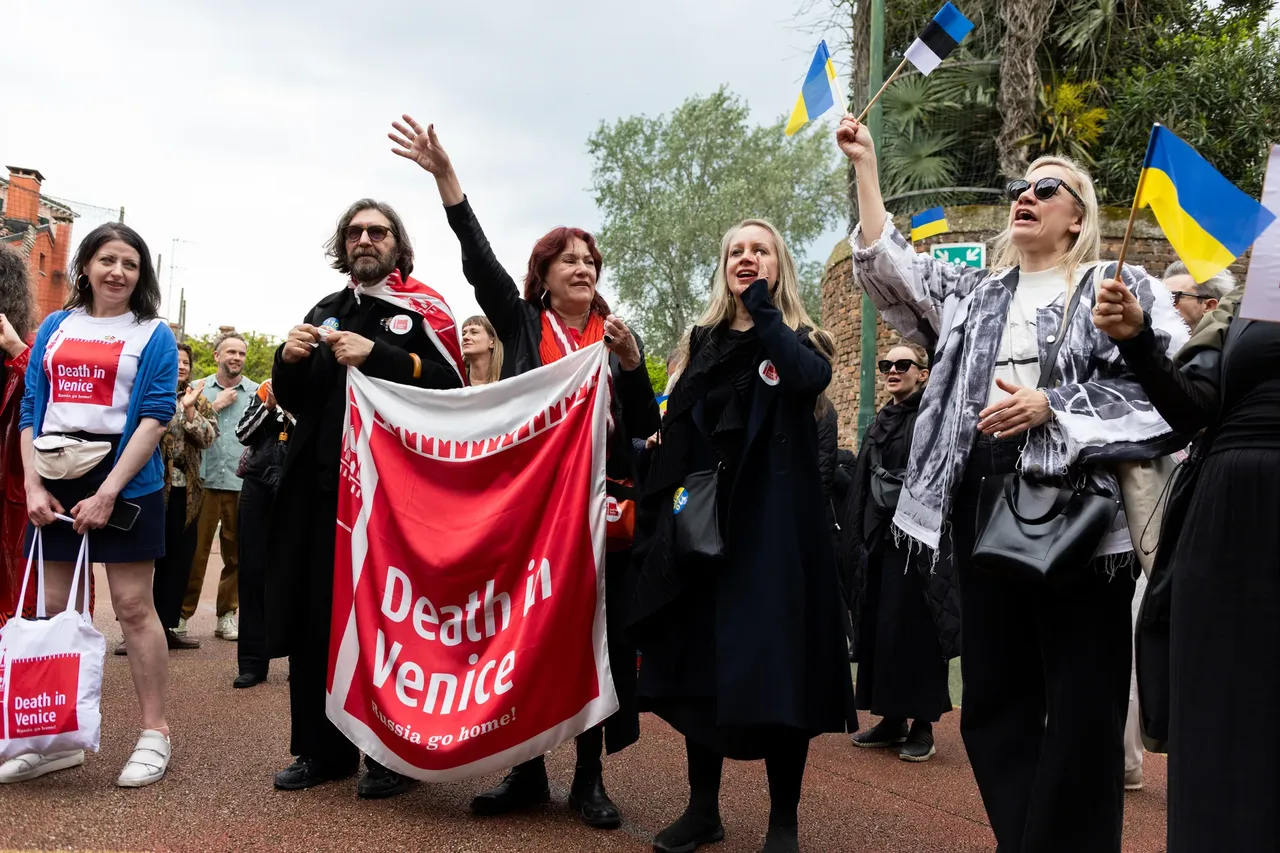
Death in Venice. Baltic Pavilion protest on May 6. Photo: Kristīne Madjāre