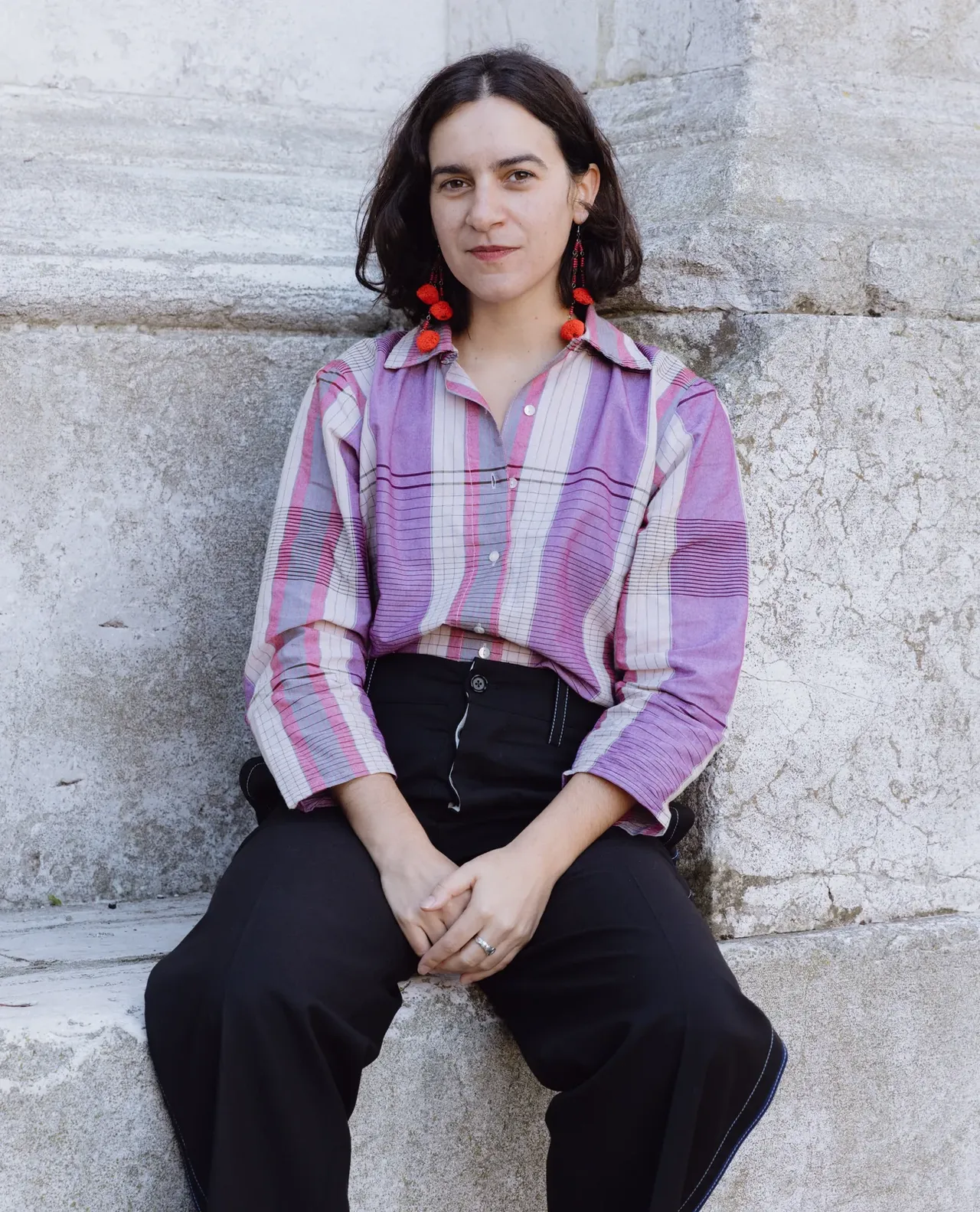
Claudia Pagès Rabal is a visual artist, performer, and writer based in Barcelona. Both creative and intellectual, working across a variety of mediums and traditions, her research-driven practice pulls from theoretical and historical source materials, handling them in tandem to produce dense works that investigate systems of knowledge, governance, and power.
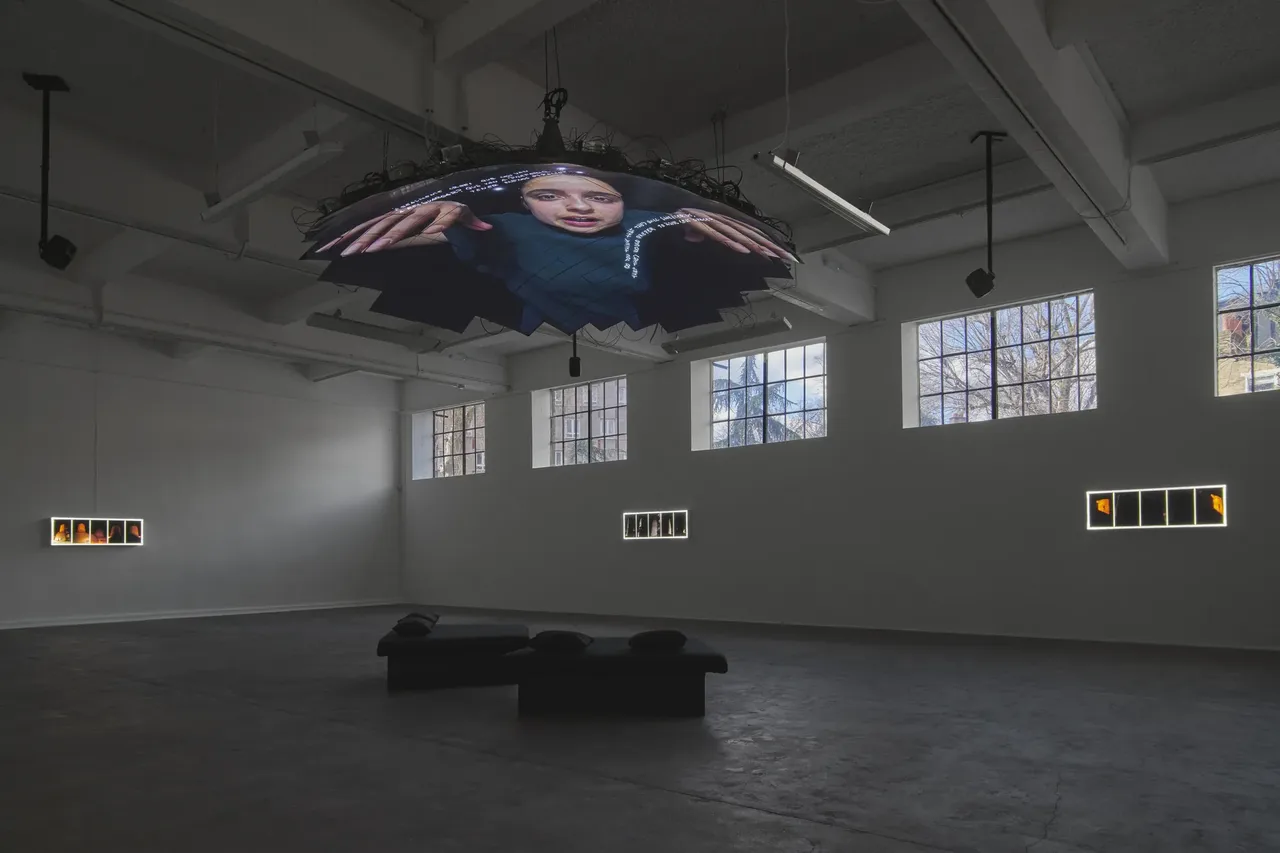
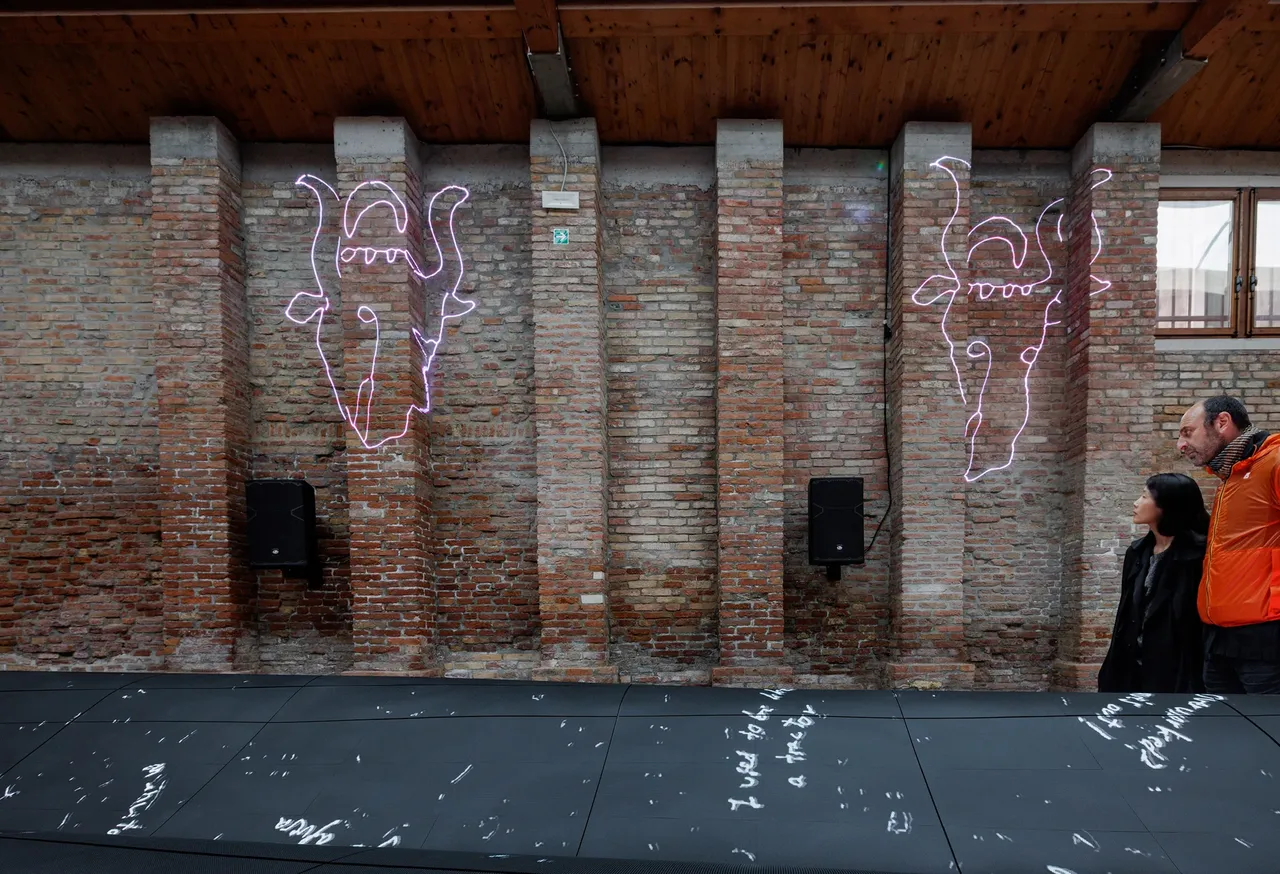
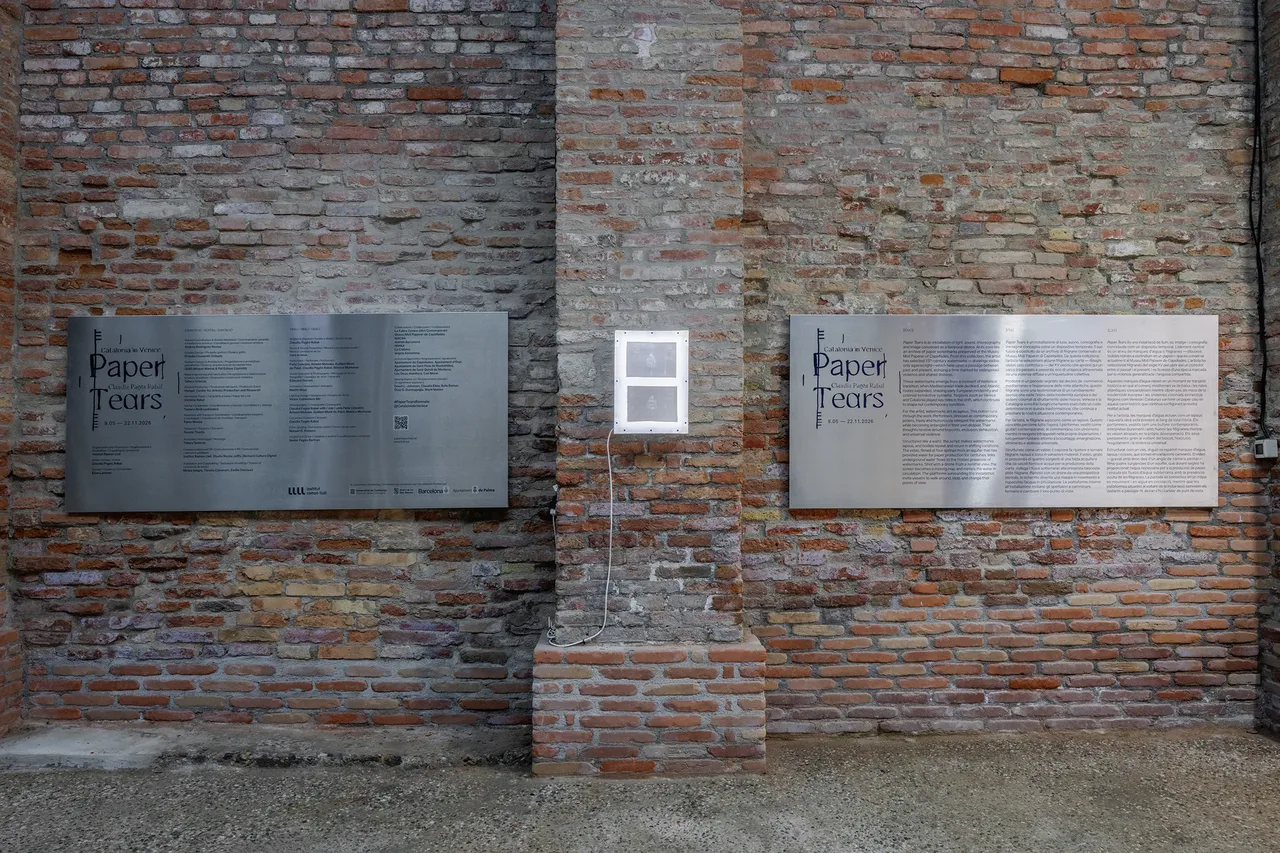
In Paper Tears, Pagès Rabal’s sprawling installation for the Institut Ramon Llull at the Venice Biennale, fifteenth-century paper watermarks become a site of inquiry and encounter. Projected at scale across the walls of the Catalonia in Venice space, these near-invisible markings emerge as both documents and apparitions. Their dormant histories are re-activated in the present through laser projection, performance, and sound, prompting reflections on our contemporary political realities. Ahead of its opening in Venice, we spoke with the artist about the installation and its conception.
Growing up in the Catalonian town of Capellades, you used to watch your mother, a papermaker, make her own paper by hand. It is a material that you have maintained a close connection to over the years, and it now forms the backdrop of your installation, Paper Tears, which opened this May at the Venice Biennale. Can you say more about the particular allure of paper and papermaking as a site of inquiry?
The thing that draws me isn’t so much the paper itself or the process of making it, but rather understanding this material in terms of its circulation and historical context. The paper route is the same as the Silk Road, which is why I began working with it. In Paper Tears, I focus on watermarks because they are the signifiers that inhabit the paper; they are not on the surface. It was their almost invisible circulation that drew me in, and that opened up a field of possibilities for me to discuss, project, and speculate about them and inscribe them in the present.
You have spoken in the past about how you enjoy working somewhere between “something very situated and something universal”. We can see this approach come to life in Paper Tears, in your investigation of fifteenth-century paper watermarks preserved at the Museu Molí Paperer de Capellades. These marks came out of a highly politicised historical moment – one shaped by the decline of Mediterranean trade routes, the expansion of Atlantic circulation, the colonisation of the Americas, and the mass expulsion and forced conversions of Muslims and Jews across the Iberian Peninsula. Casting our attention back to the present day, it is difficult not to recognise similar patterns of power and displacement rippling through our institutions and systems of governance today. I wonder if you can expand on what it is about this historical period that feels resonant to you right now?
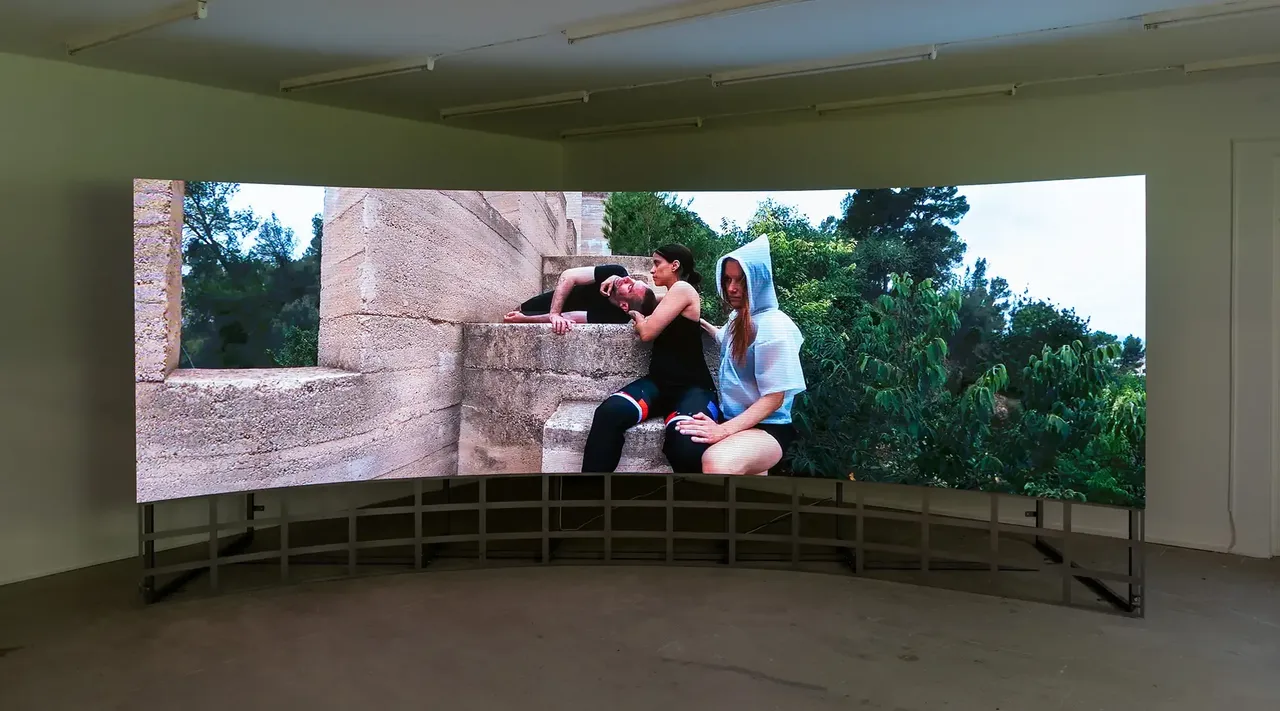
In recent years, I have been working with forms of addressing time: a time in the gerund, a time in superposition, a discontinuous time. Paper Tears is centred on 15th-century watermarks with motifs from another time: dogs, ships, oxen, carts. These elements, which are only visible on the paper when backlit, have no power or control of their own, but they have served as a support for me to take a journey through time. The watermarks I’ve chosen date back to the 15th century, a century marked by the expulsion of Jews and Arabs from the Iberian Peninsula and the colonisation of the Americas. I probably chose this period to help me cope with the violence we see every day in today’s world. But, as one of the “jesters” in the video says: "May the horrors of the past not dull the present." I didn’t want to address these issues in a moralistic or reactionary way, which is why I chose the watermark as a medium: a margin on the page, a space open enough to play, struggle, and even bring joy. Language and structure are found on the surface of the paper: the written word; the watermark inhabits the paper, (as I said) circulating almost invisibly, like a signifier without structure. The structure of Paper Tears is written like a waltz: first, we engage in free association with the watermarks and also read about events that took place on those dates; these associations break into different monologues. In one of them, the jester explains how to boycott a supermarket that supposedly sells Israeli pomegranates by smashing its windows, and how the people around him worry about whether he’ll be okay, but as he says, “Everyone at home is anxious that it would turn out badly, I’d be depressed, but I’m not. What made me anxious was watching everything from the outside. Now I’m inside the problem.” The other soliloquies deal with the uses of the universal, the particular, and the singular in liberal politics; an analogy about purebred dogs and street dogs and their persecution; or the weary body and euphemisms in language.
Watermarks cannot be seen unless they are held up against light. What happens to our reading of them – or our understanding of them – when they are blown up and projected at scale? By making these invisible marks visible, it almost feels as if you are negating their internal logic.
Watermarks are negative images (visible only when held up to the light) and have this naive appearance because they are made with a wire line. In Paper Tears, I wanted to use the laser pointer to project these images onto the walls and transform these files into mobile graffiti on the walls. The laser light is just a pointer that draws a line, so it maintained the linear design of the watermarks while also introducing a sense of violence to the materiality, since if the pointer were to hit a piece of paper for too long, it would burn it.
Throughout history, Venice has operated as a nexus of trade and power. Developing Paper Tears within the context of the Biennale, and within Venice itself, feels particularly resonant given the project’s engagement with infrastructures of exchange and governance. How did working within this context shape your understanding of the very histories and systems the project investigates?
A few years ago, I was nominated for a project in Venice that ultimately didn't materialise, but it was already exploring the themes I present in Paper Tears. That’s why Venice had been on my mind for quite some time, and this project came together smoothly. My work has long revolved around circulation, water, and time, so it had a strong context in which to be exhibited. The great book on Venice is Joseph Brodsky’s Watermark, so everything fell into place.
As in previous works like Defence Towers (2025) and Aljubs i Grups (Cisterns and Groups) (2024), Paper Tears invokes multiple points of view. Here, these medieval markings are reactivated in the present through the lens of projection and performance. Various characters comment on these watermarks, interpreting them freely and comically. I’m interested in what performance allows you to do with historical material that a more fixed mode of presentation – for instance, painting – cannot?
I work in a transdisciplinary manner, combining writing, sculpture, and choreography. These video sculptures — which I sometimes call time machines — allow me to use language and writing to create a narrative or a text, which is important in this case because we play with simple signifiers that let us speculate about time. Choreography and movement have always been present in my work, both in the choreography of the performers and in my approach to the moving image — which involves a highly choreographed use of the camera, where I use bodycams or drones that allow me to dance with the scenes — and in the way the audience interacts with my video sculptures. I make my own screens and conceive of them as sculptures upon which the image rests, and which must be experienced with the body.
In a 2025 interview with the curator Olivia Aherne, you said, “I like to think of my exhibitions choreographically.” In Paper Tears, there is an interesting triangulation between the viewer, the works, and the exhibition space. How do you see the works or the space implicating its audiences, if at all?
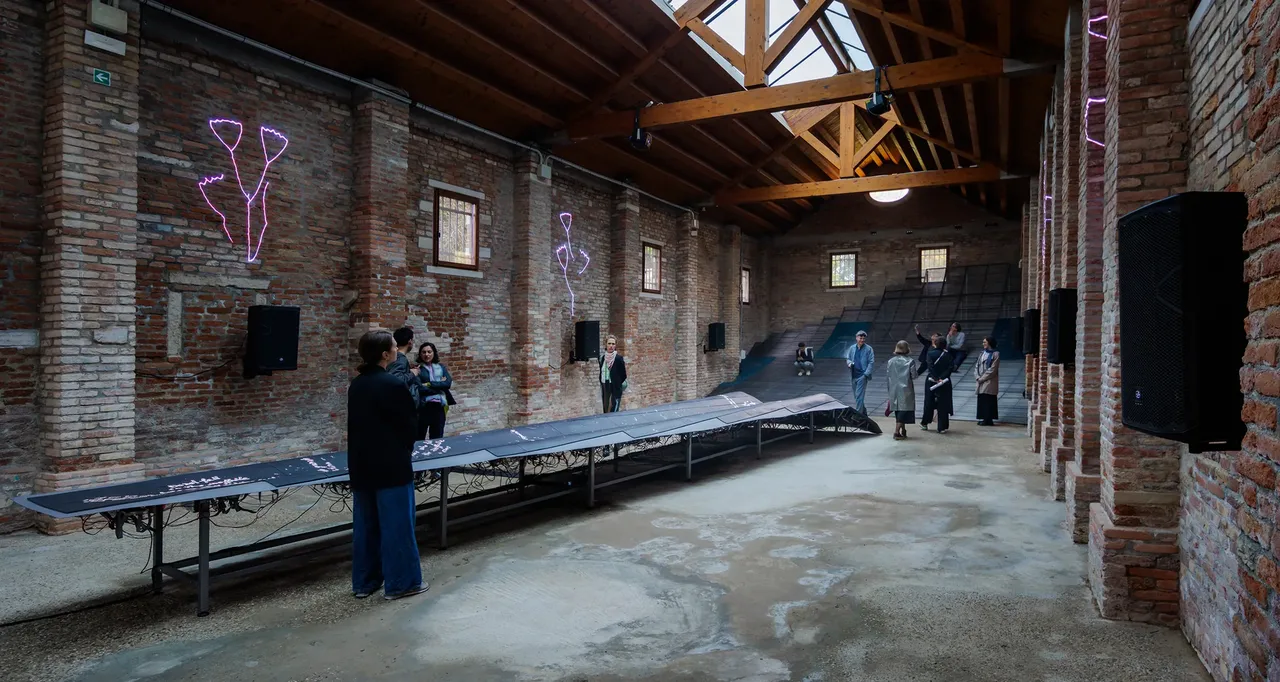
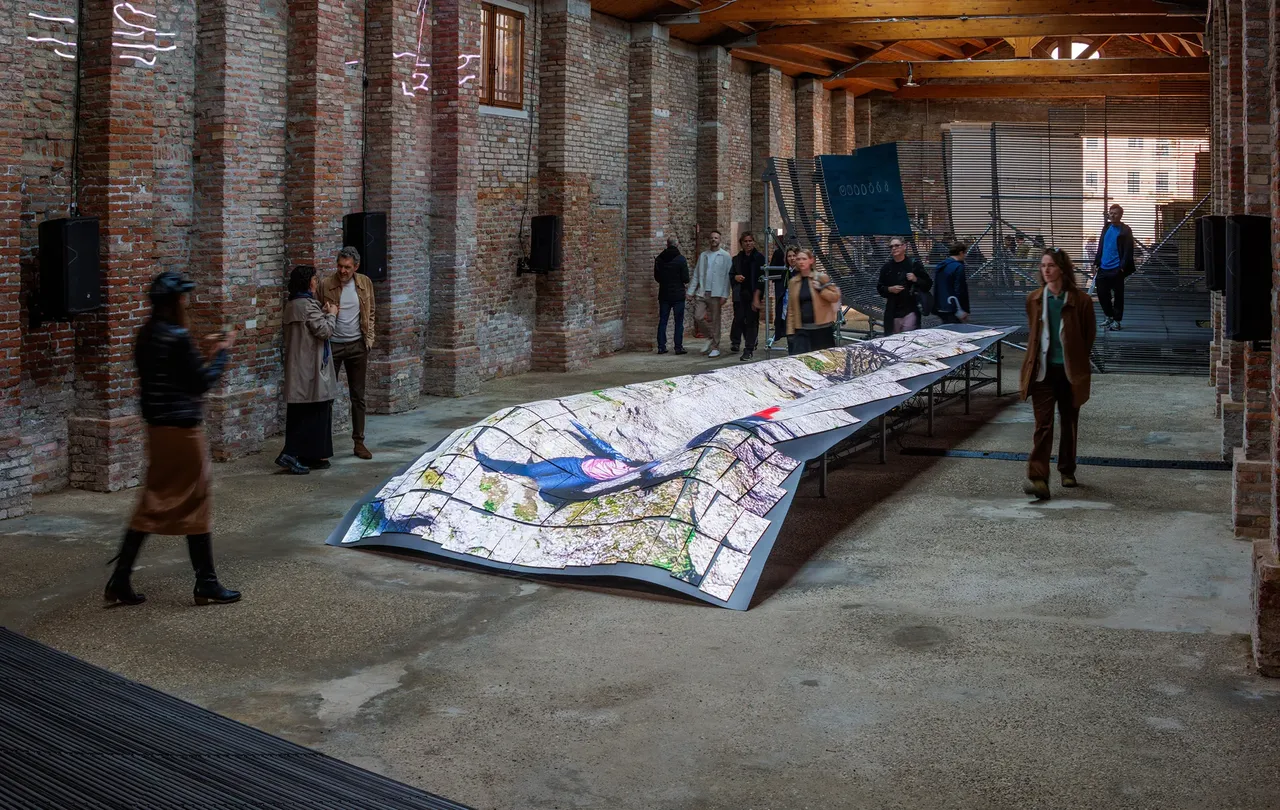
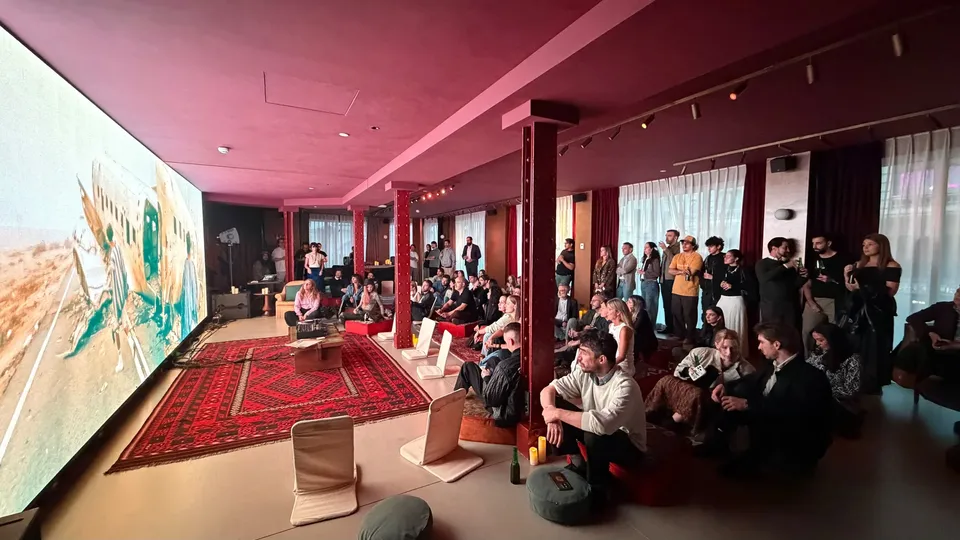
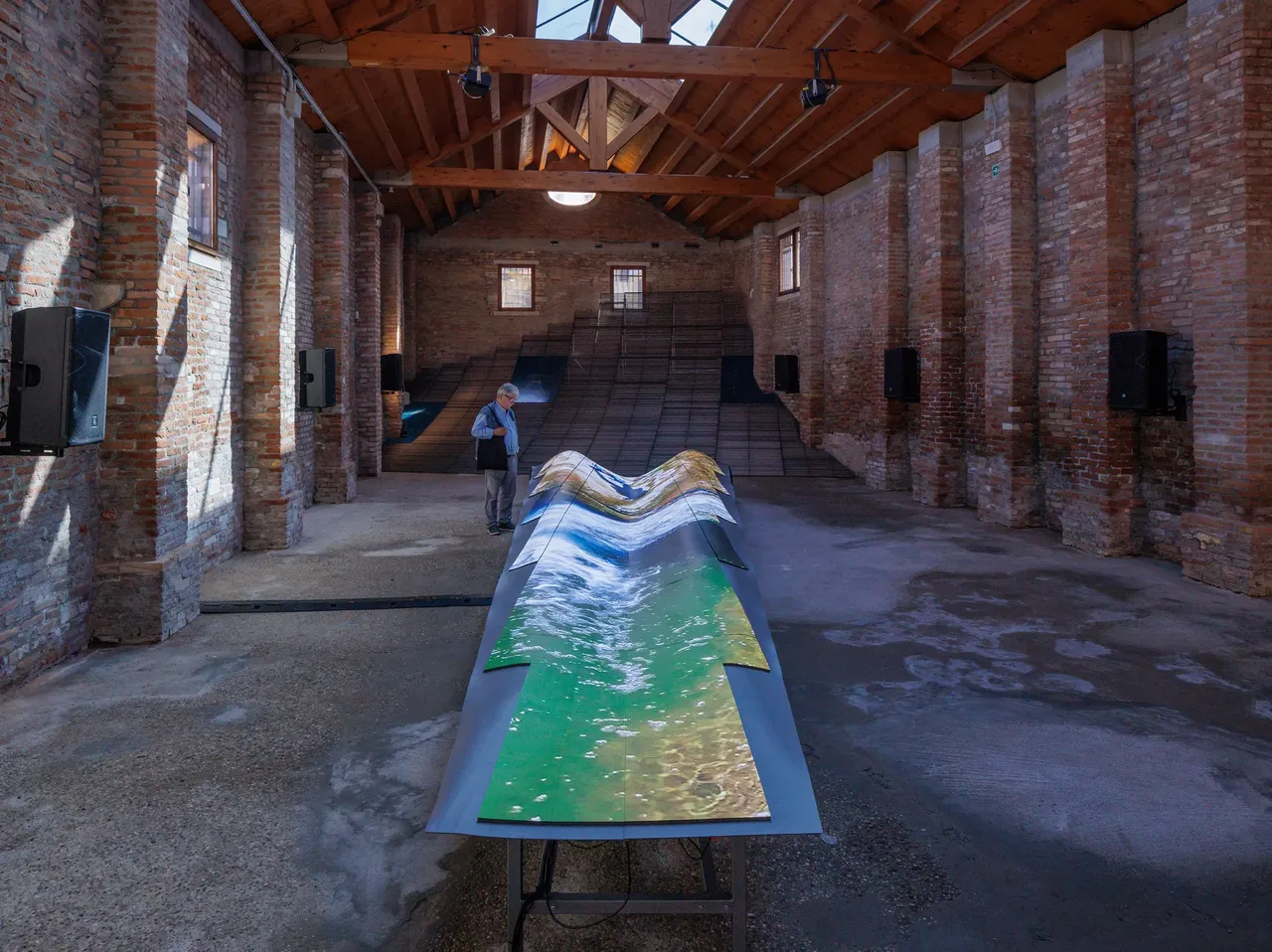
For this piece, I wanted to create a quantum exhibition, one that could be navigated like a giant sculpture that you step inside. It’s impossible to view the screen in its entirety, just as it is with the lasers. You have to walk around the installation, climb onto the platforms, and with every movement, you’ll discover a new layer of the project.
Many of your works play with perspective and dimensionality. In your 2025 exhibition, Feudal Holes, for instance, you transformed flat topographies produced by drones into immersive vortexes that collapsed inwards. Similarly, in your 2025 exhibition Five Defence Towers at Chisenhale Gallery, the central video work – which was shot on a 360-camera – was visible from all corners of the gallery, exerting an almost panoptic control over the space. In Paper Tears, there is a similar sense of spatial inversion and bodily disorientation. For instance, the central video piece forms a concave field, while some of the watermarks are projected onto a large, slanted structure. Can you say more about the exhibition design you and curator Elise Lammer conceived for the project, and how it builds upon your broader interest in “choreographing” perception?
I wanted to approach this exhibition in layers, in spatial planes. At the centre is the screen-sculpture, which functions as a surface where translations and language float, as a topological surface where the territory is inscribed, and as a black screen mass where bodies appear within it, submerged. At the same time, the screen reflects the shape of the space’s skylight. I thought of it as a play of blues that mirror each other. Watermarks are projected onto the walls above. I knew I was going to work with aerial images, and that I needed to raise the audience’s perspective. At first, I took the bridges in Venice as a reference — the accessibility platforms built like scaffolding — and that’s when I invited the architecture group GOIG (Pol Esteve and Miquel Mariné) to see what these platforms might look like, and they were conceived as a space resembling a skateboarder’s half-pipe, embedded within the architecture of the space.
You have commented in the past that a good artwork is one that “triggers conversation”. With the Biennale now open and the city set to host hundreds of thousands of visitors over the next several months, what sorts of dialogues do you want to arise from Paper Tears?
The play’s text revolves around a century of violence, ethnic cleansing, and Islamophobic and racist expulsions, weaving these themes into the ghosts that haunt us today. It also addresses euphemisms and boycotts. I believe all these topics are relevant to discuss today.
Paper Tears is currently on view until 22nd November 2026.