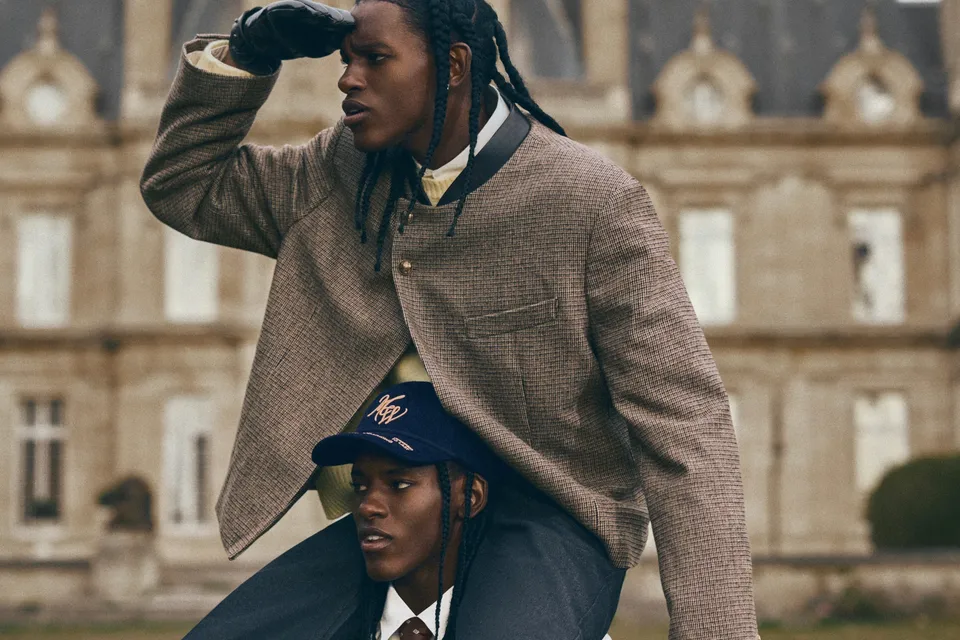
After the latest fashion month, we’ve seen many of the most noticeable trends the season has left us with everywhere: bras being out, skirts becoming the main characters and the takeover of unexpected, vibrant colour combinations. However, there are some key elements that, even though we’re somehow used to seeing them, have been remarkably prevalent across brands, collections and styles this season. Here, we take a look at how some of fashion design’s most widely known techniques, ornaments and silhouettes are taking shape and shaping Spring/Summer 2027.
Fringes
As seen on: Yohji Yamamoto, Bottega Veneta, Conner Ives
The slim pieces of fabric and thread that hang from garments are often used solely as an ornamental element in designs, but the interest they add to clothes is evident in how widely and commonly they are used across seasons and collections. In S/S 2027, we could see brands exploring their versatility through different lengths and ways of integrating it into garments.
Whether the strips were long and flowy or thick and short, the runways showcased the resulting differences in movement and volume, from Yohji Yamamoto’s version, where the strings of fabric are born from the strip-woven top and reach all the way to the floor, to Bottega Veneta’s coat, where the fringe follows a more familiar shape, similar to the ones we find in Western attire, but taken to the extreme, with around ten diagonal panels of dark fabric, all finished with a stripe of white fringe. The middle point is found at Conner Ives, where a fringe made of threads does both: it becomes an artistic extension of the floral embroidery at the centre of the piece and plays the role of an overskirt that adds character to an otherwise plain bottom half of the dress.
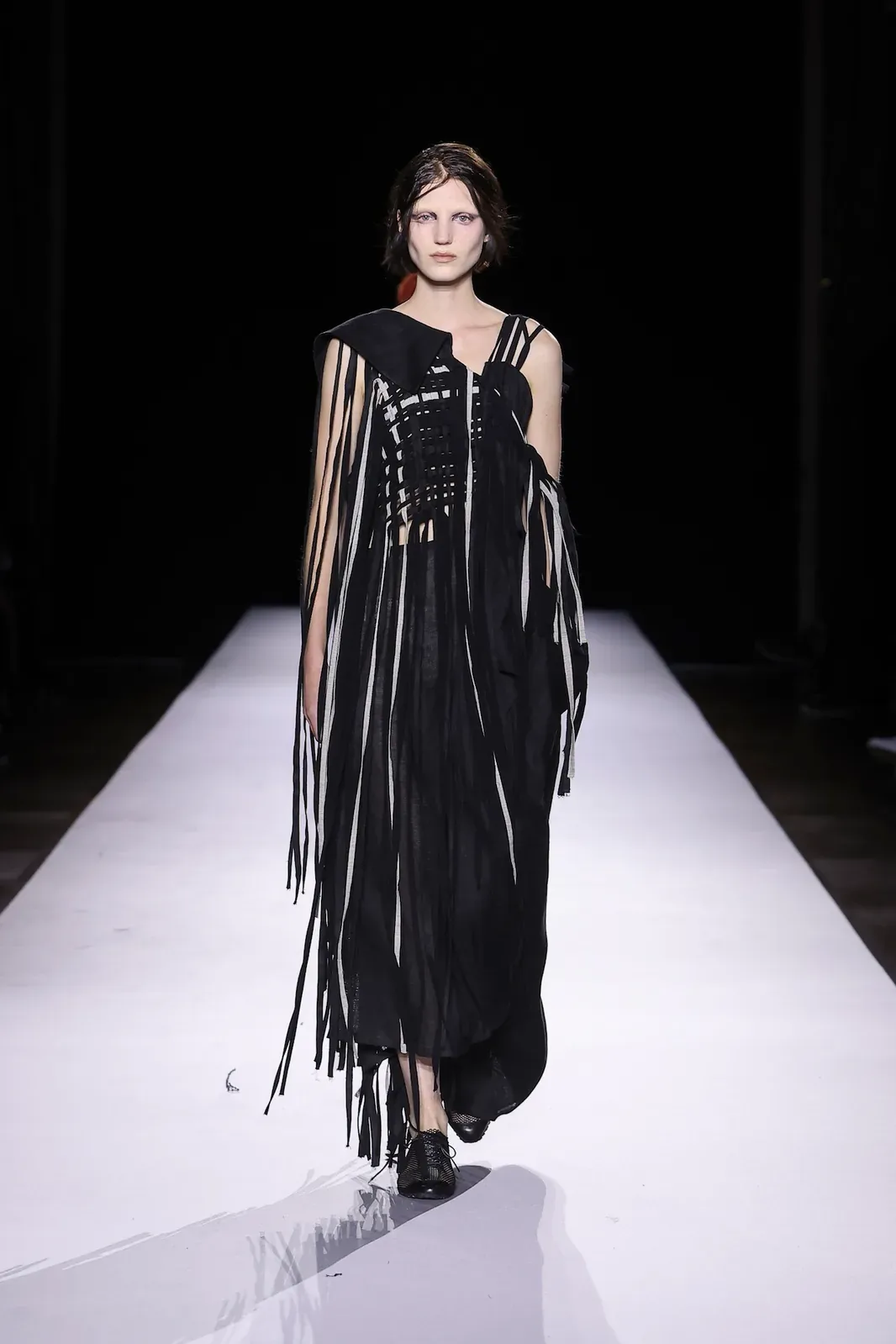
Yohji Yamamoto
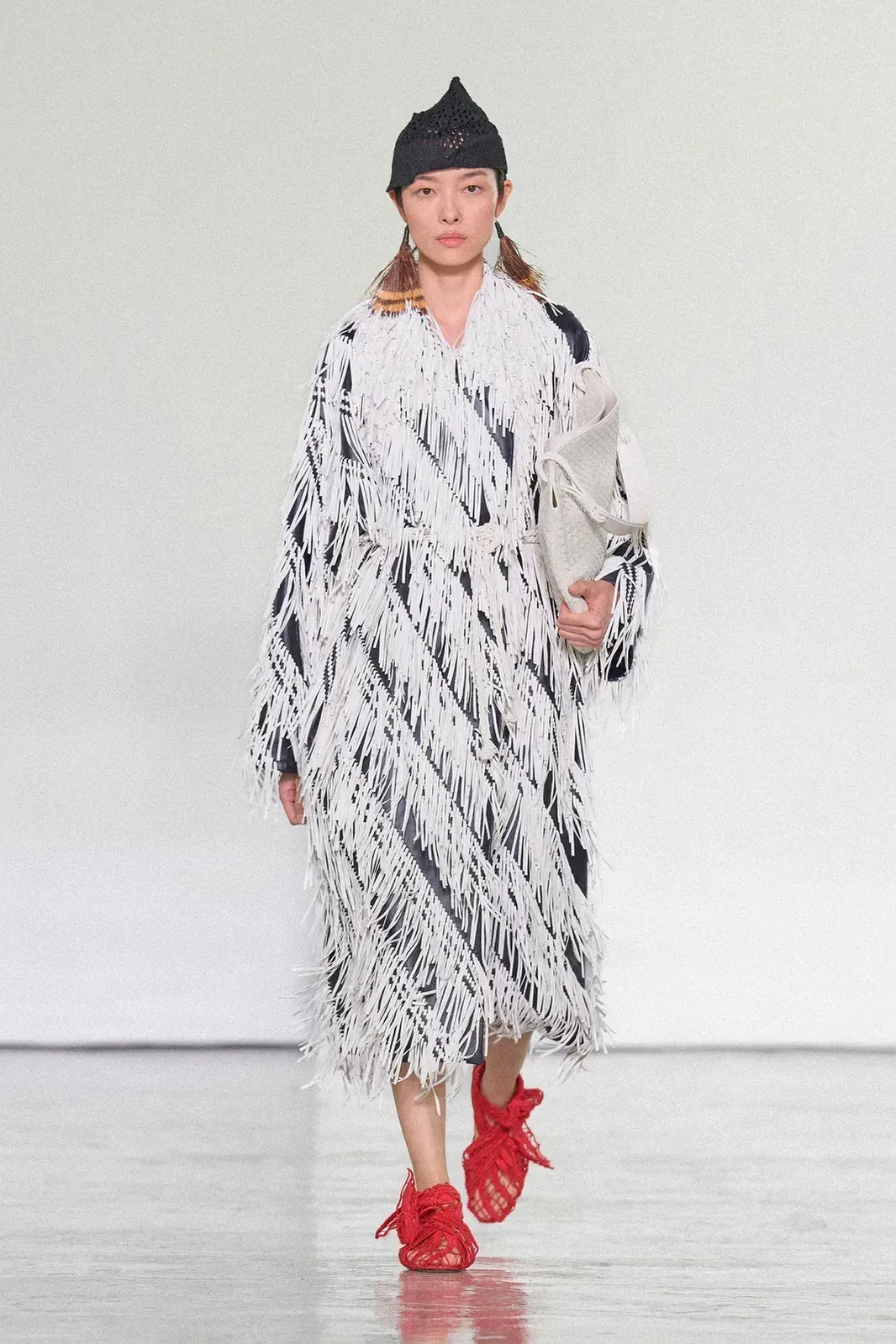
Bottega Veneta
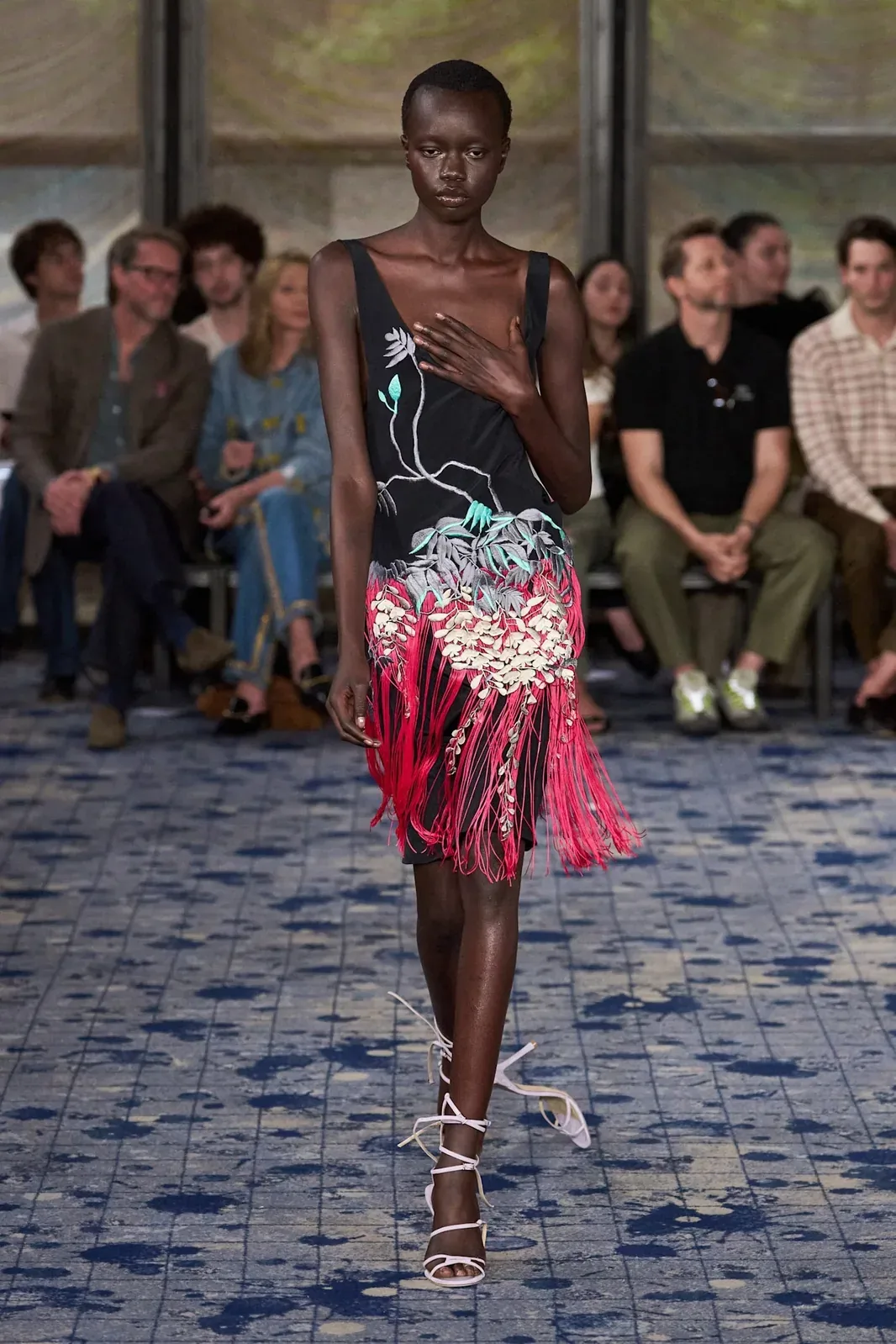
Conner Ives
Drapes
As seen on: Loewe, Kiko Kostadinov, Maison Margiela
The process of draping is one of the most important and prevalent in fashion creation. As opposed to traditional pattern-making, where two-dimensional shapes drawn on paper are made to become three-dimensional once assembled, draping starts as a volume, with the designer giving shape to the fabric directly on the mannequin, creating natural gathers that are always conditioned by the body. This is why the technique is so versatile and widely explored: it can be used in infinite ways. Every body is different and every fabric is different, which is why the interaction between the two can give rise to such different outcomes.
Sometimes draping takes over the entirety of a garment, as at Kiko Kostadinov, where the upper piece navigates between being a blouse, a cape and a dress, thanks to the ambiguity created by the twists and turns of the shiny fabric. In other cases, as at Maison Margiela, it is mostly used to accentuate the shoulders and hips, while keeping the core well-fitted and minimal. The material can also make a difference: the drapes created in Loewe’s leather jacket become the protagonist of the piece, with the leather being sturdy enough to hold its creases while also proving its softness and malleability.
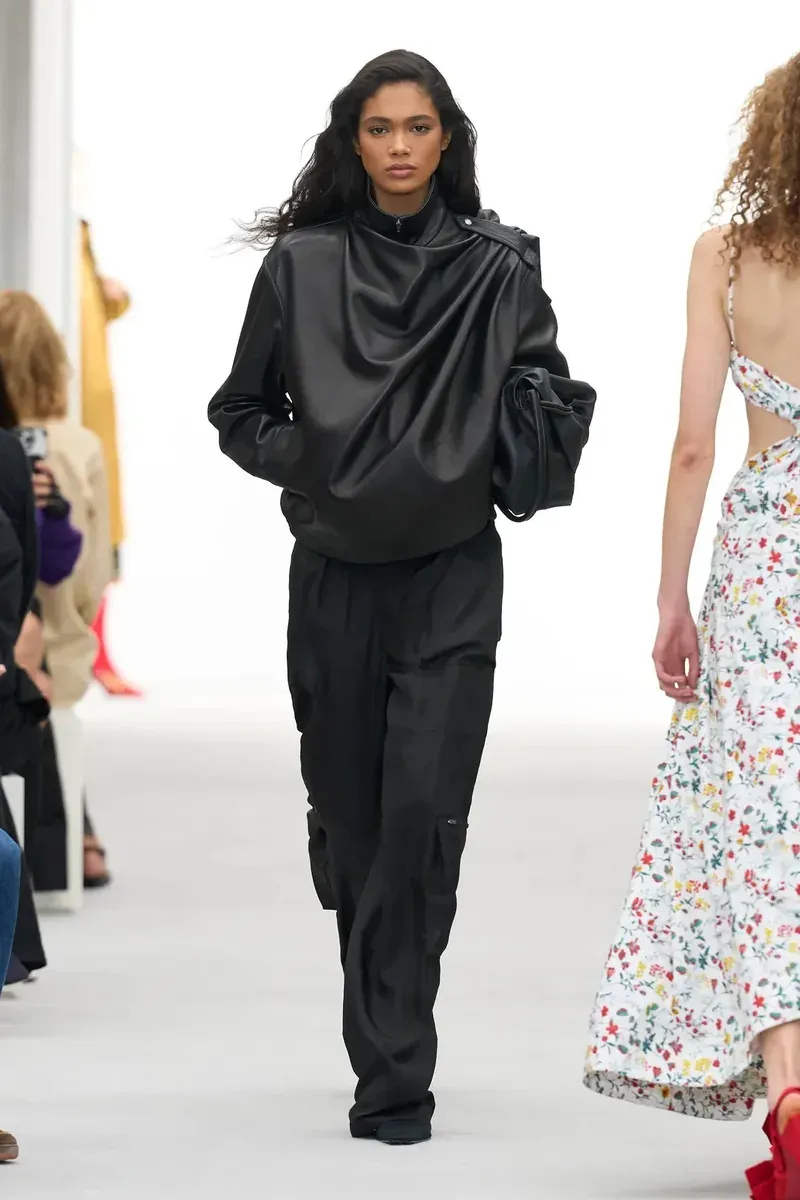
Loewe
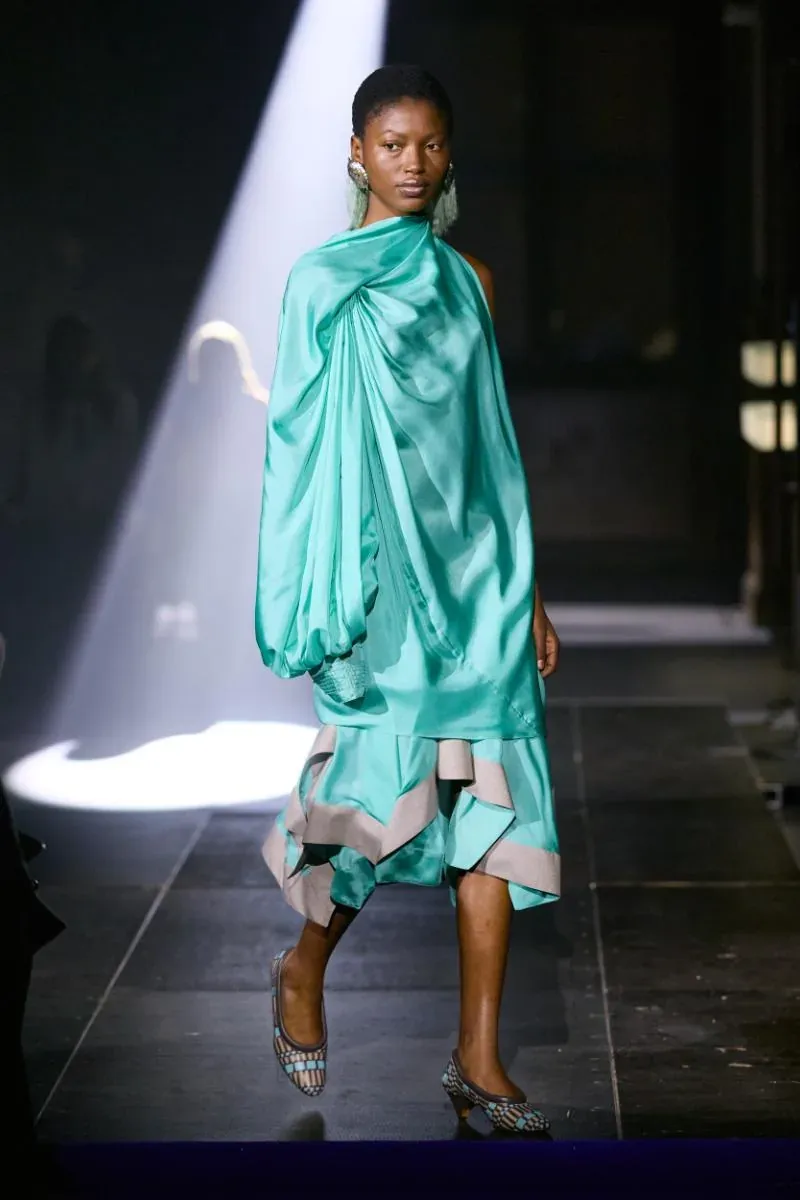
Kiko Kostadinov
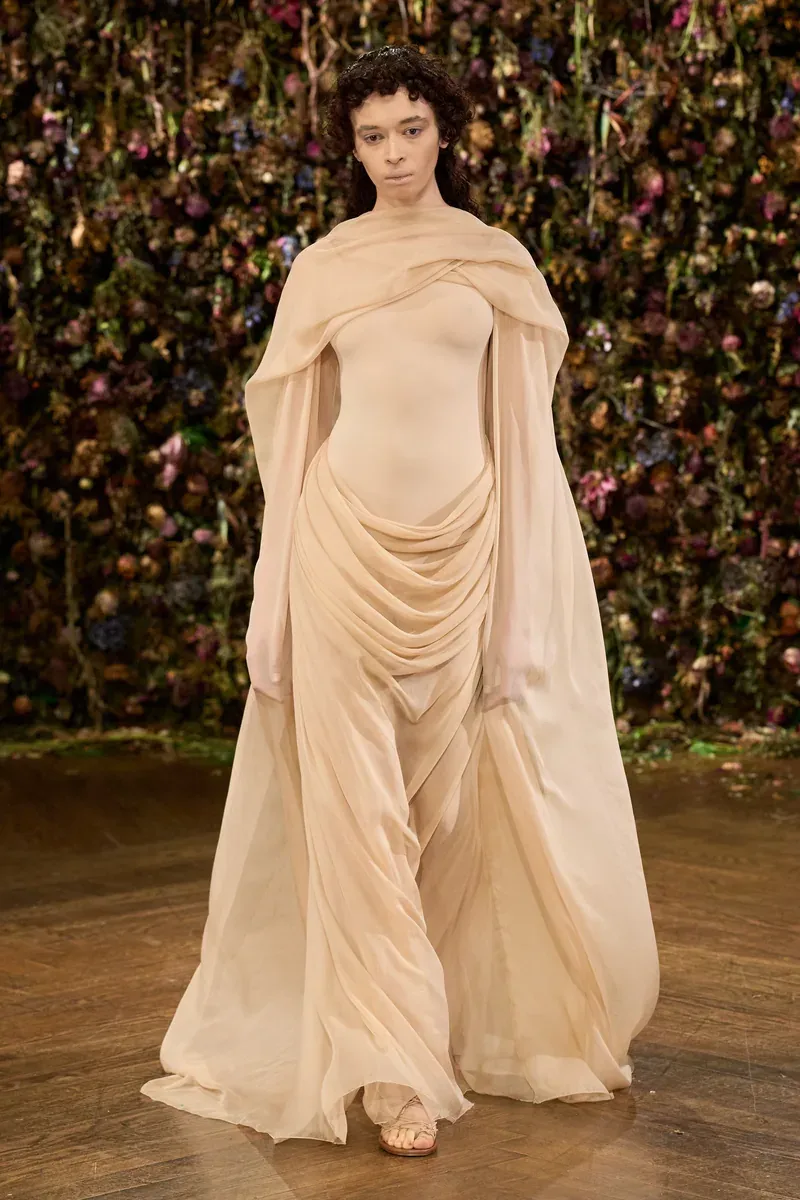
Maison Margiela
Ruffles
As seen on: Ann Demeulemeester, Jean Paul Gaultier, Dior
The pieces that make up a garment are usually sewn together with the fabric completely flat and taut to avoid any wrinkles or asymmetry, but the intentional and strategic gathering of fabric creates the ruffles that adorn and add volume to all types of garments. Depending on how close together and how neat these gathers are, as well as how long the piece of fabric being used is, they can create a very puffy, fluffy look or simply add flowing waves to it.
At Ann Demeulemeester, the belt/microskirt is made up of multiple ruffles in different delicate fabrics, layered on top of each other to give it a downy look that the arm accessories echo. At Jean Paul Gaultier, Duran Lantink opted to use this technique less through gathering and more through pleating the fabric, where the difference in the result between a very short piece and a longer one is particularly evident thanks to the layered character of the skirt. At Dior, the layers and ruffles are more subtle, added to the slightly pleated texture of the fabric, resulting in a much lighter and more ethereal effect.
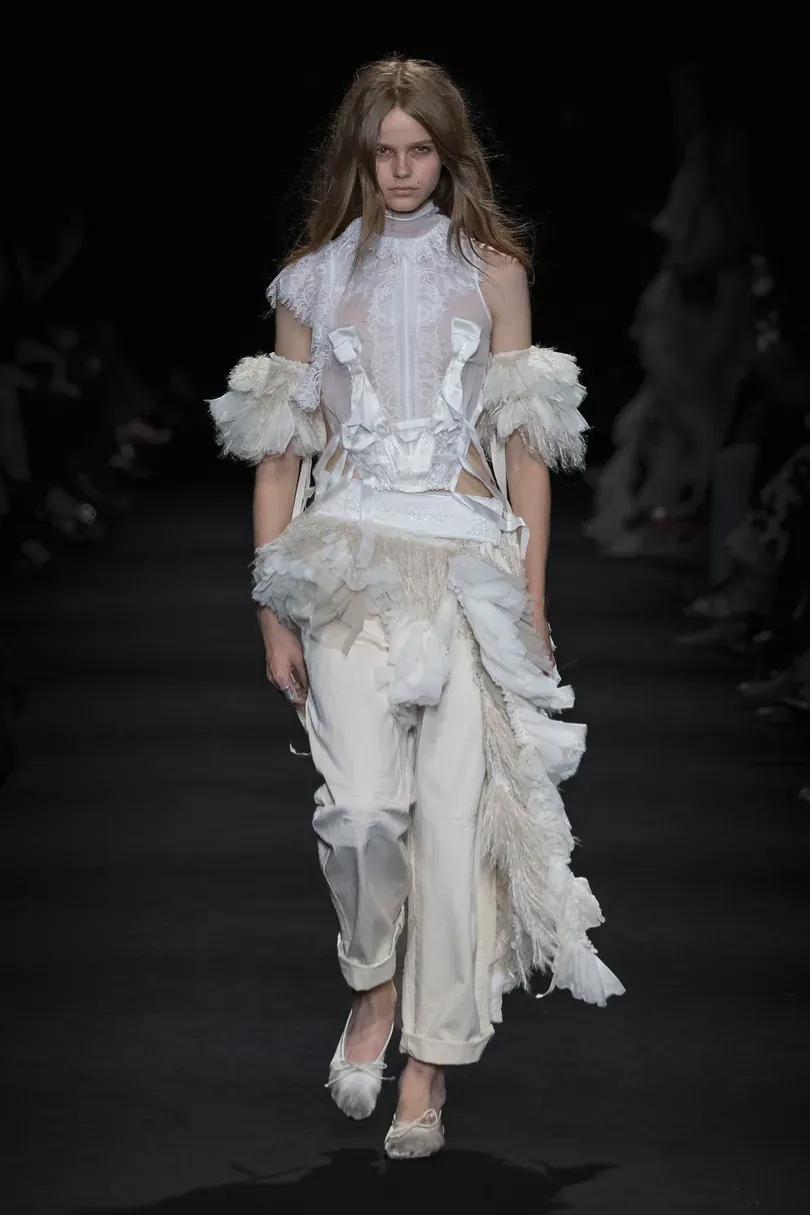
Ann Demeulemeester
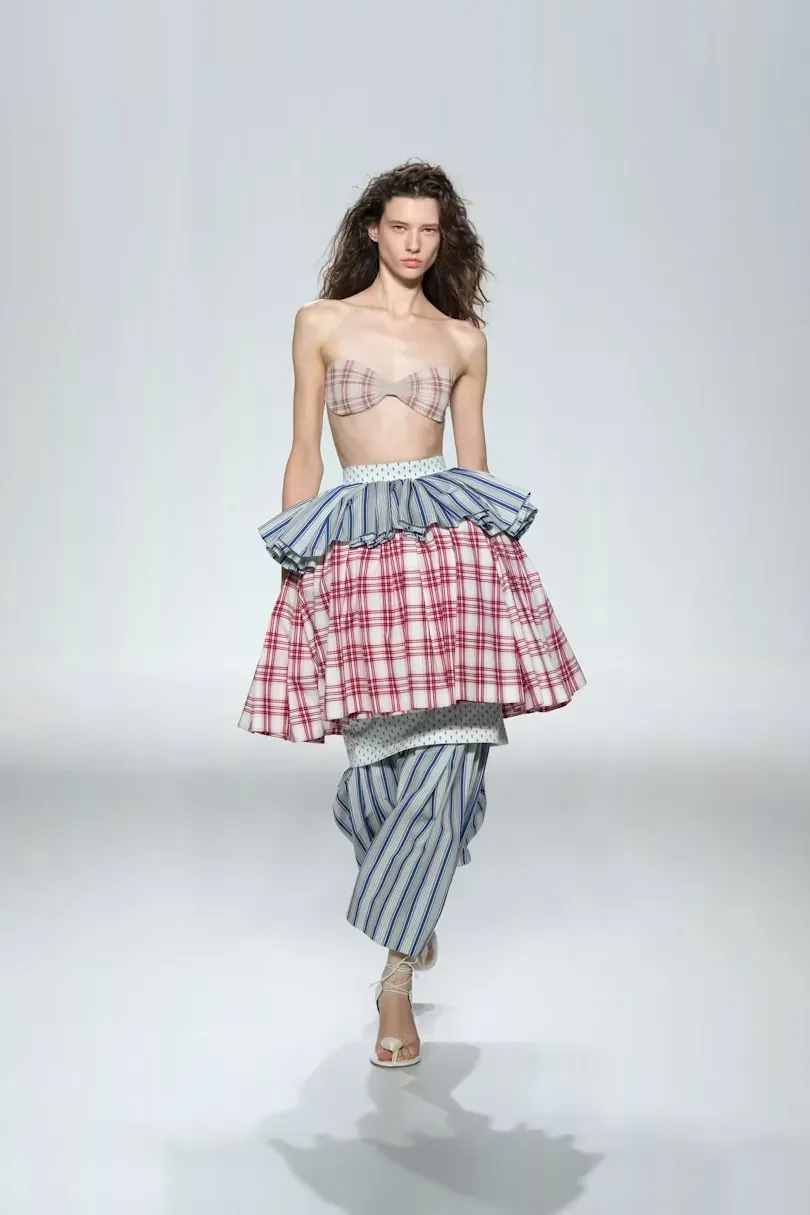
Jean Paul Gaultier
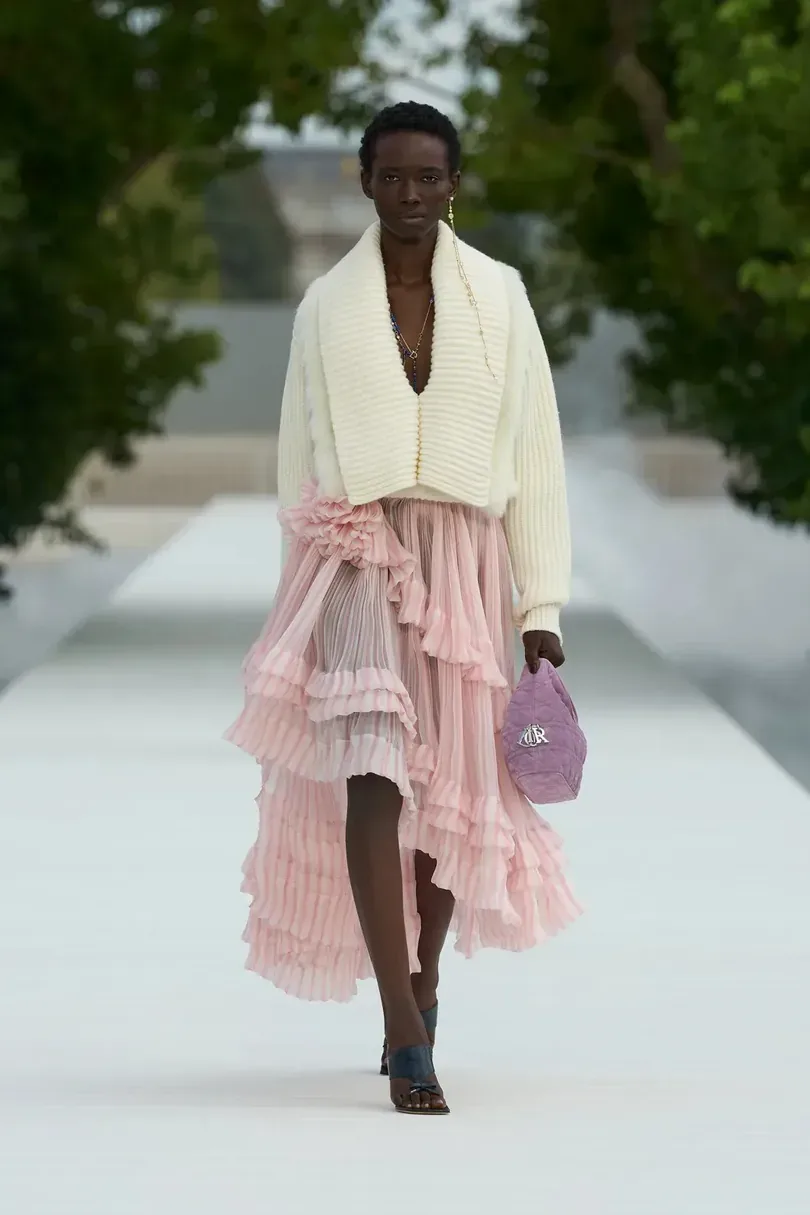
Dior
Balloon Silhouettes
As seen on: Dries Van Noten, Acne Studios, Jil Sander
In fashion design, the interior of a garment is as relevant to the piece as the exterior, and in some cases, what's inside can even alter how something looks, even though it is not actively shown. This is the case with the construction of balloon silhouettes, where the outer fabric and the inner lining must be of different lengths, the latter being shorter than the former, so when they are sewn together, the outer fabric has no other choice but to curve inwards, creating this puffy effect we associate with a balloon or a bubble. The bigger this difference in length is, meaning the shorter the lining is compared to the outer fabric, the puffier and more rounded the piece will be.
This season, we saw a variety of versions of this type of construction, which is usually mostly seen in skirts, like the one we see at Dries Van Noten, where the small but noticeable difference in length gives it a slight balloon effect that adds just enough volume to prevent it from falling flat, without making it as round as the version at Acne Studios, where a large amount of fabric in a very small skirt creates this extra-puffy look. Simone Bellotti at Jil Sander proves how well this silhouette works across different garment types, like in this elegant, minimalist but extremely interesting coat, where the subtle rounded shape, added to the cloudy look of its print, makes it look as if it were a piece of sky that has fallen to earth.
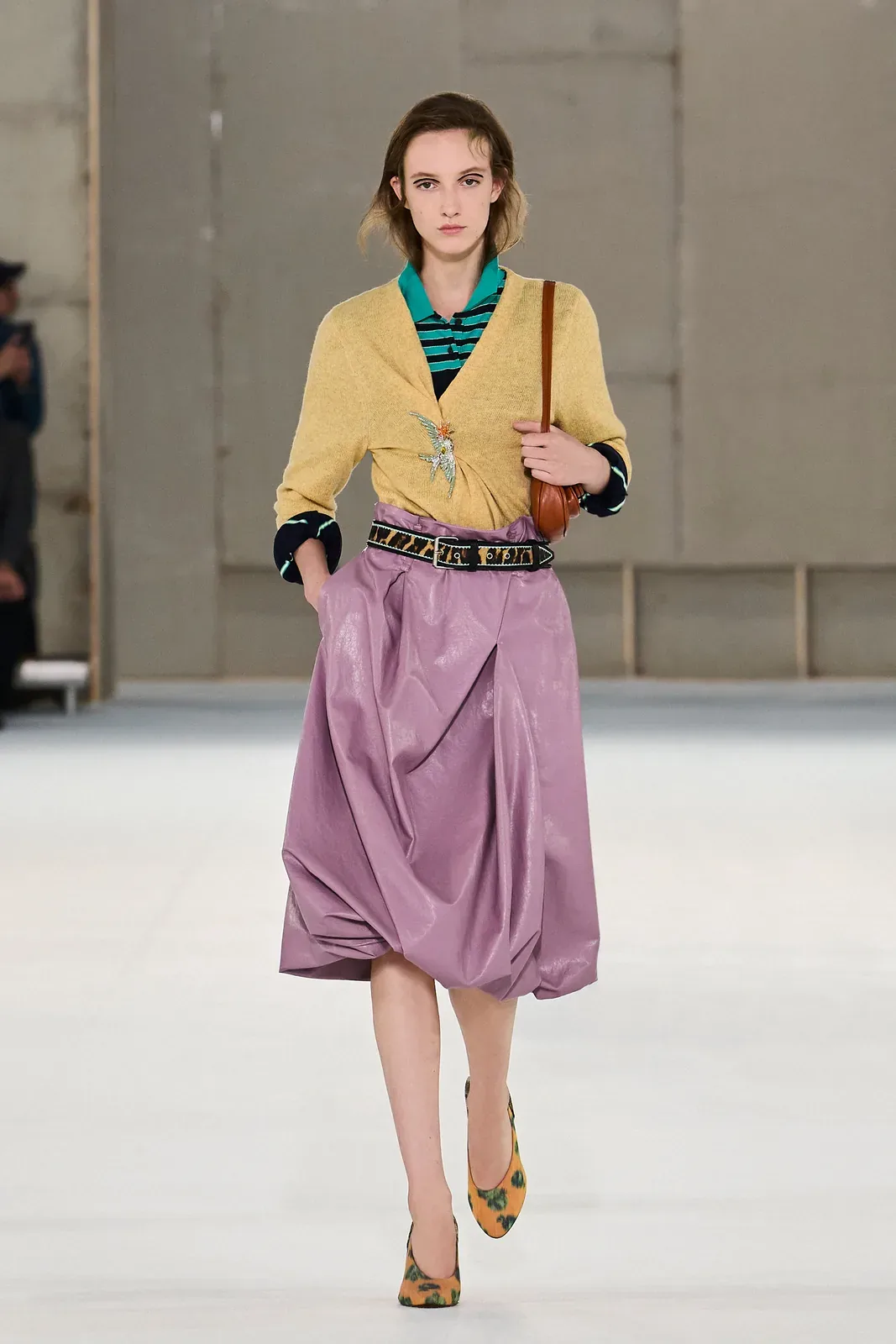
Dries Van Noten
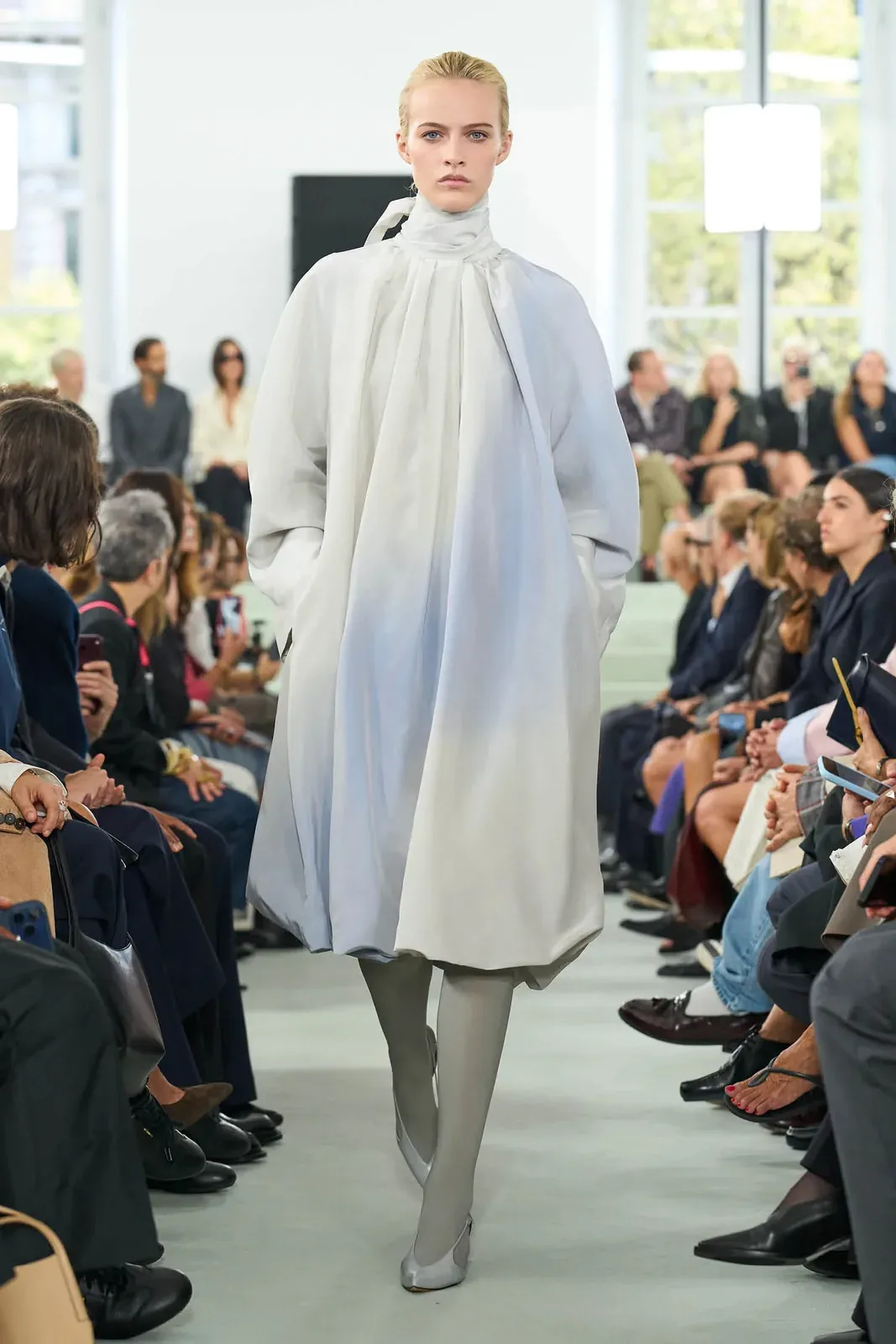
Acne Studios
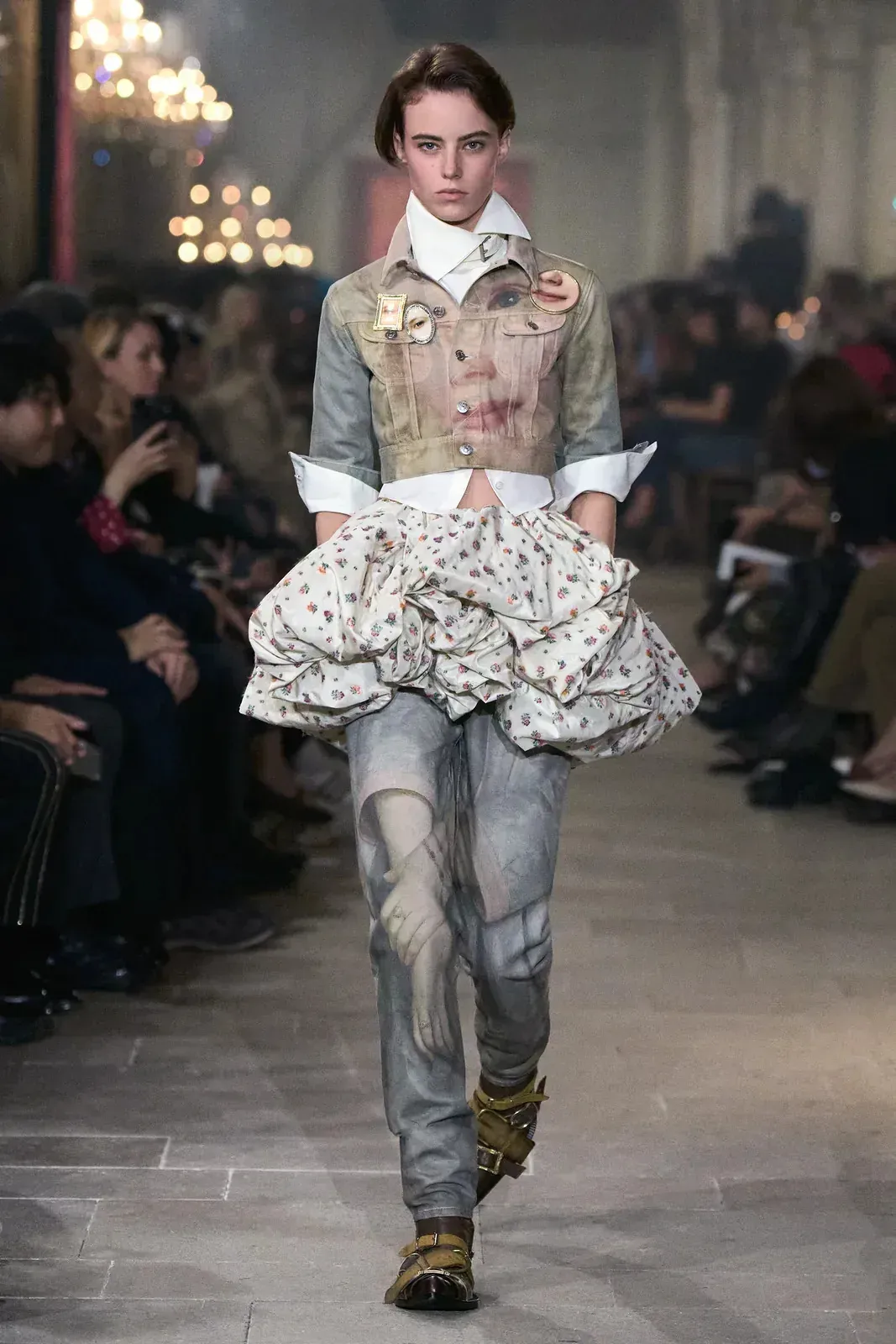
Jil Sander
Feathers
As seen on: Erdem, Luar, Matières Fécales
Depending on how they are used, feathers can be a delicate finishing touch given to a piece or an outfit, or they can single-handedly make up the entire outfit. With their variety of colours, shapes, types and lengths, there's no limit to how or when they can be used, and it's clear that, for this season, designers wanted to give them the space and prominence they deserve.
At Erdem, we find a very ingenious way of using them differently from what we are used to seeing: rather than appearing on the outermost part of the piece, in this case a skirt, they actually come from the inside, with big white feathers almost playing the part of a crinoline beneath the draped black fabric that falls on top of them. At Luar, we find a more traditional but still extra and exciting use of feathers: a boa, enhanced by its size and lushness; what's underneath it doesn't matter anymore. The ultimate use of this element was seen at Matières Fécales, where this spectacular dress, which seemed straight out of The Hunger Games, with fiery feathers making up its entirety, proved everything that can be done with them.
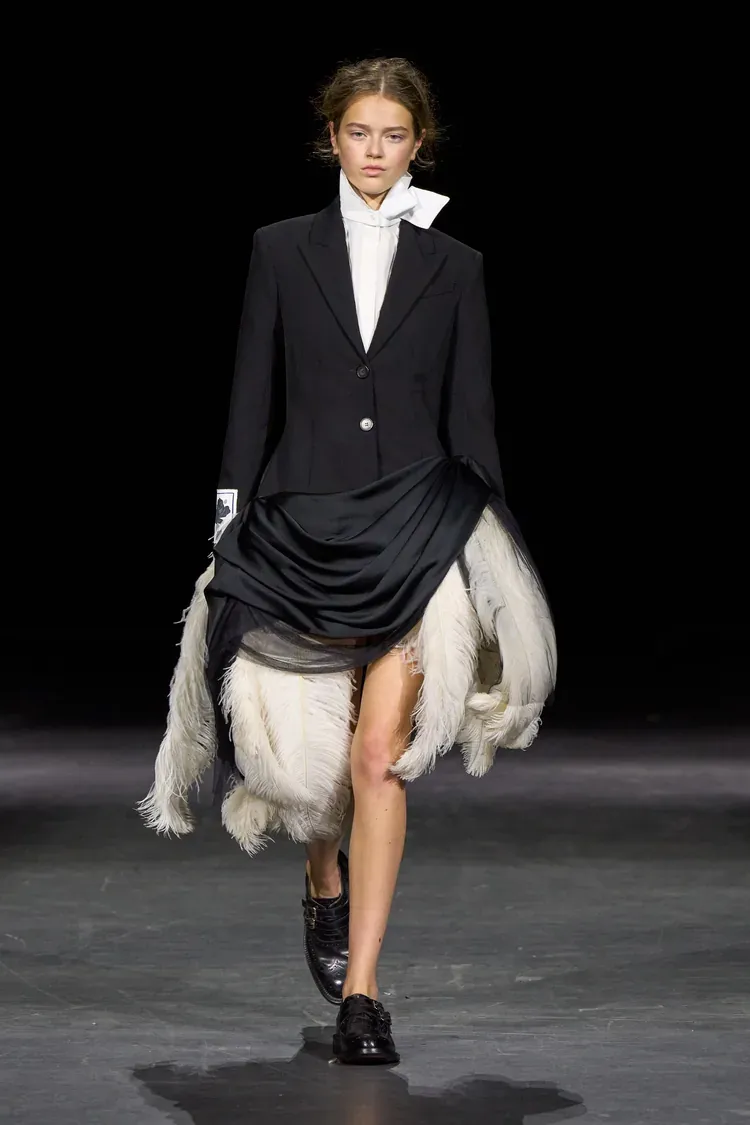
Erdem
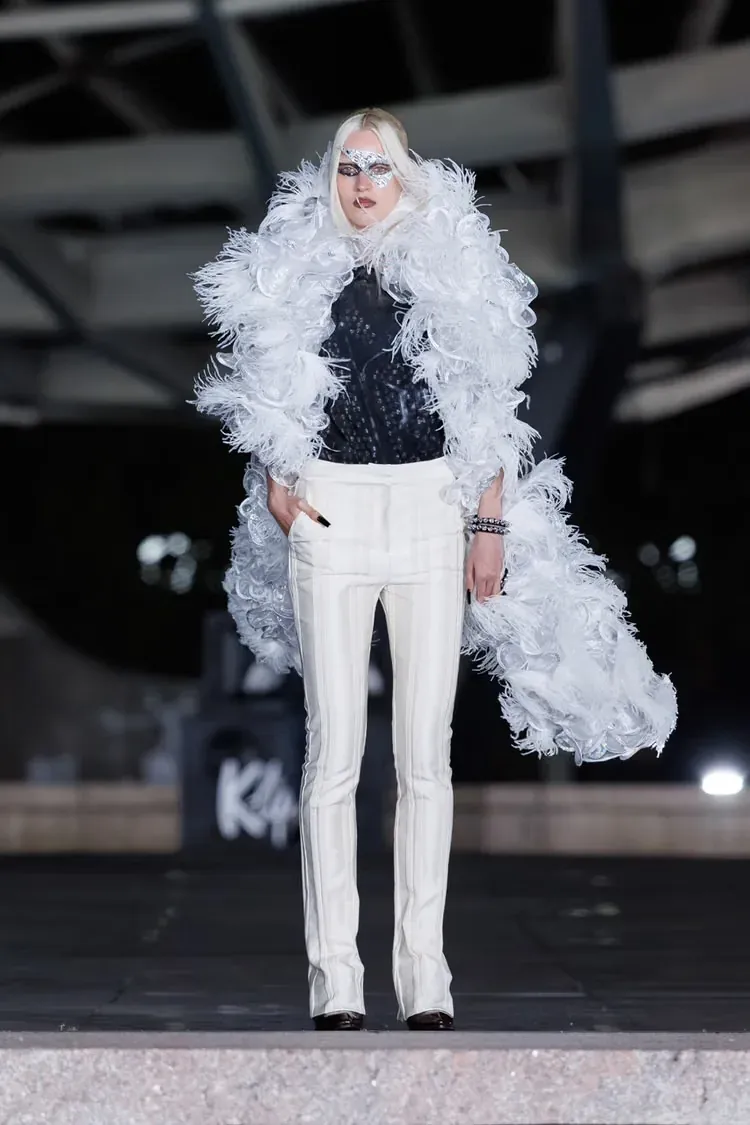
Luar
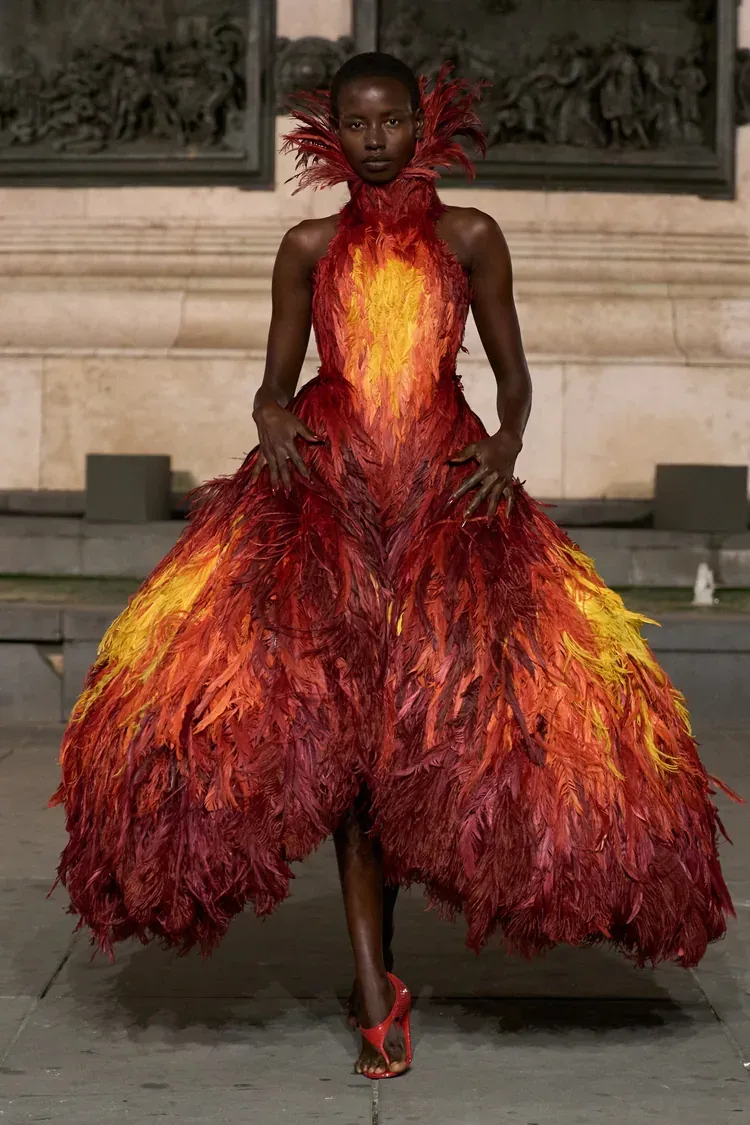
Matières Fécales
Transparencies
As seen on: Tom Ford, Chloé, Balenciaga
If the objective is to let the body be seen, there are countless ways to do so. This season, one of the approaches we saw designers choose most often was covering the body with fabric while still leaving it exposed. Transparencies can work as a way of hinting at what's underneath, or as an adornment to decorate what is no longer hidden, and we saw many of them used in different ways, from the most minimalist to the most ethereal.
Starting at Tom Ford, a sheer long-sleeved bodysuit becomes the second skin of a body that can be seen through its brown transparent fabric. The comfortable fabric it is made from gives it the feel of an underwear piece, but the styling and the way it is worn reveal that it is intended to be worn outside the house. At Chloé, we see how transparencies can also work as outerwear, with a completely see-through raincoat that protects while allowing whatever is worn underneath it to shine. Lastly, at Balenciaga, the softest and most delicate version of this idea takes shape as an airy cape and skirt, made from a transparent but not completely see-through baby-pink fabric that doesn't hide or reveal. It simply floats.
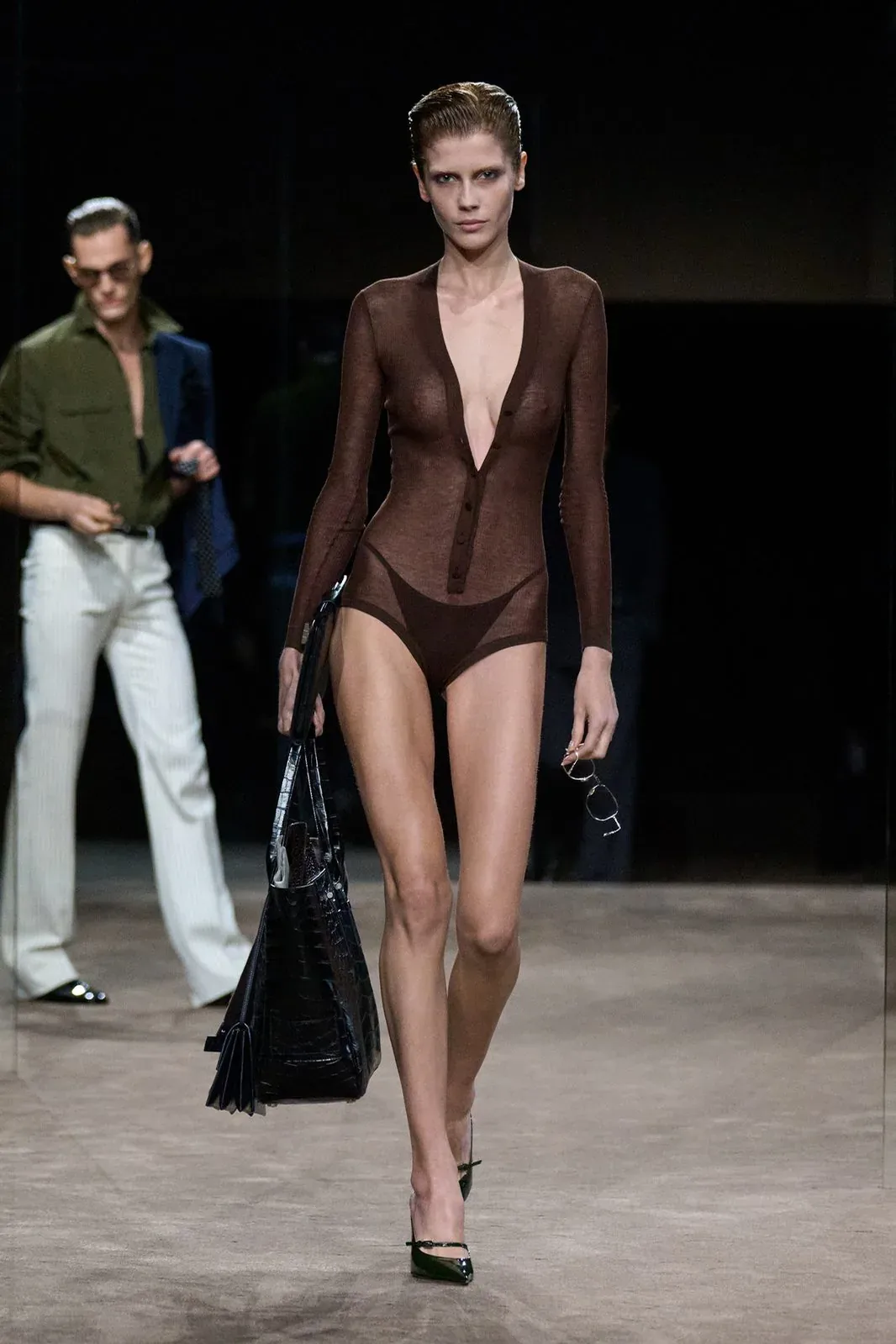
Tom Ford
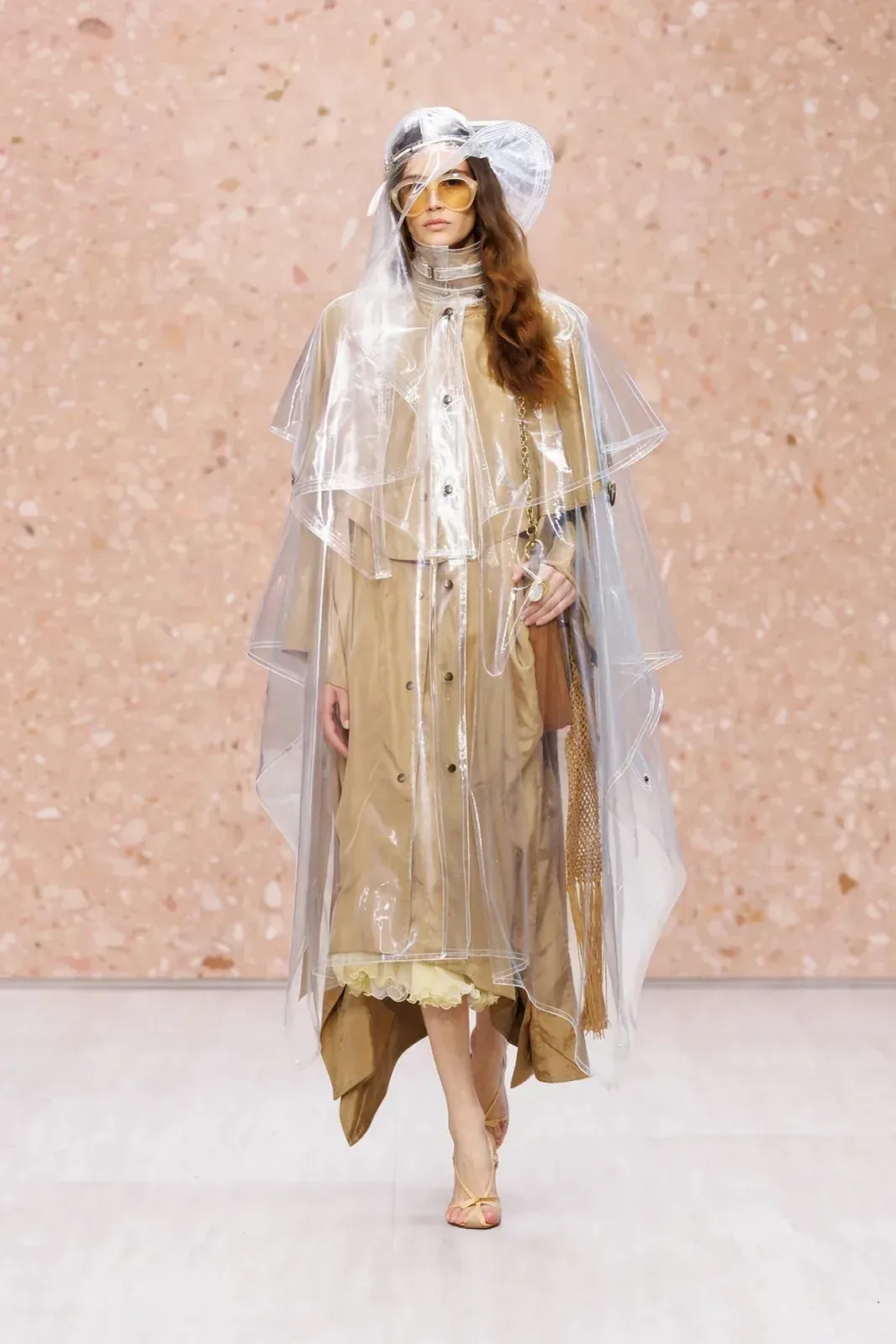
Chloé
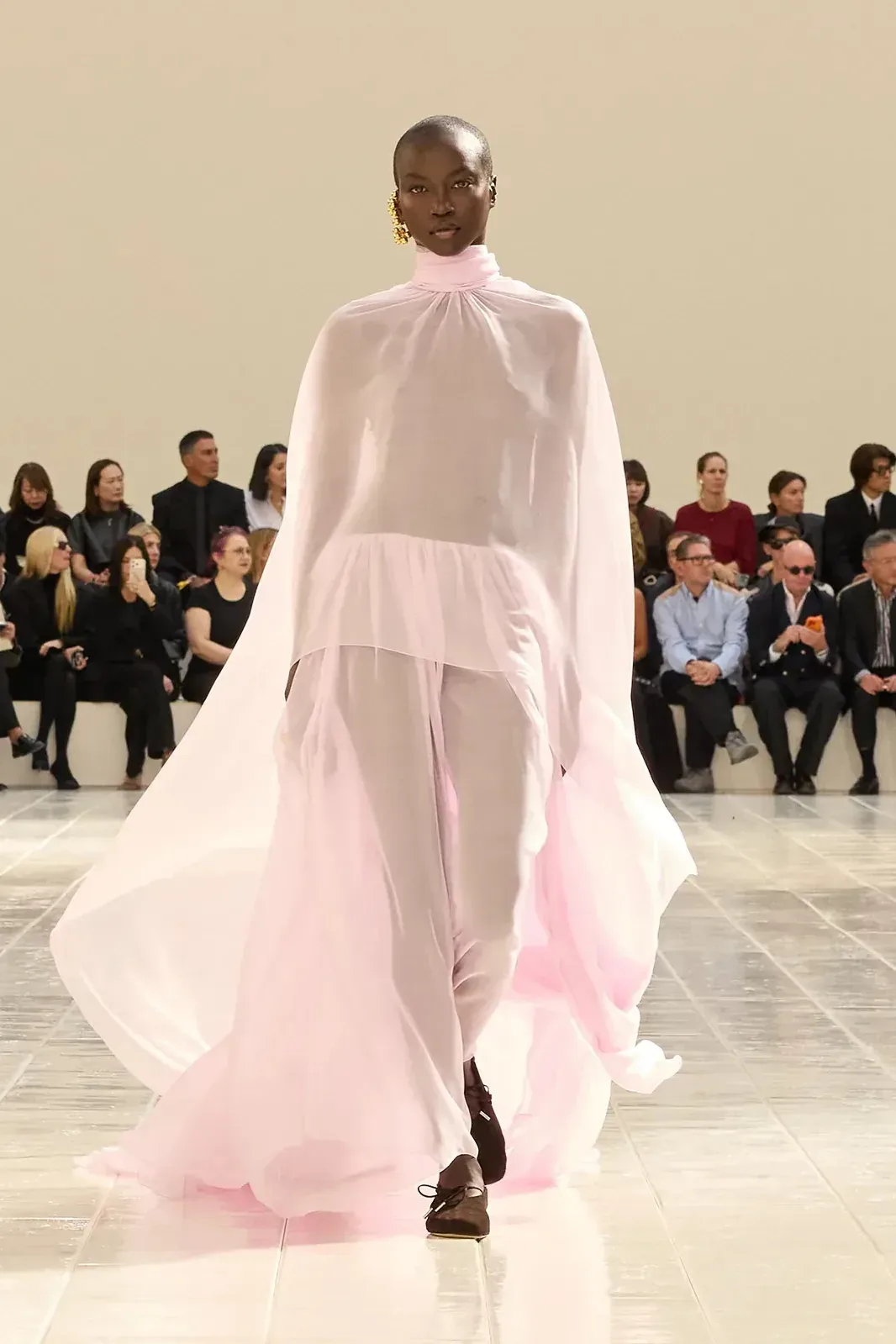
Balenciaga