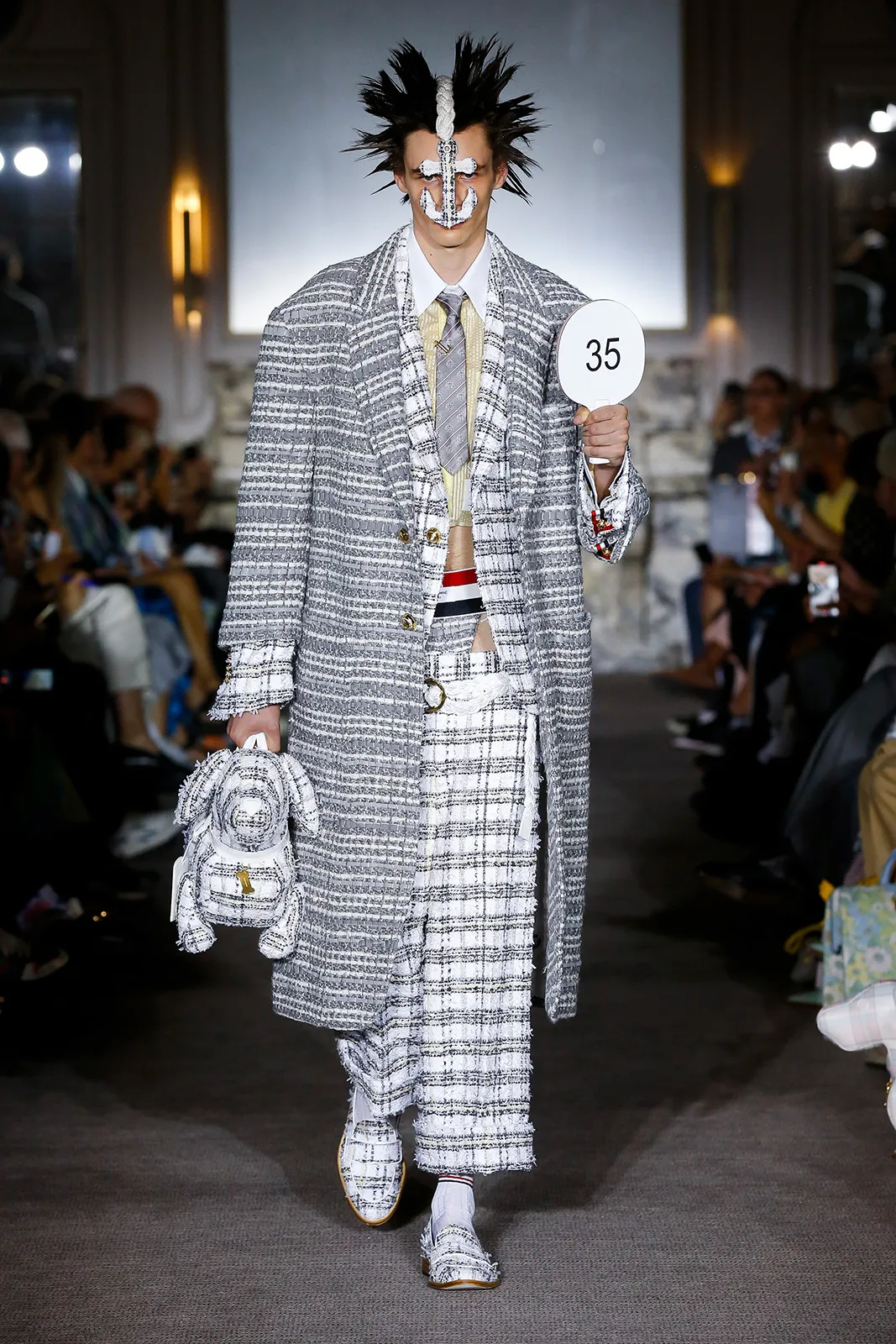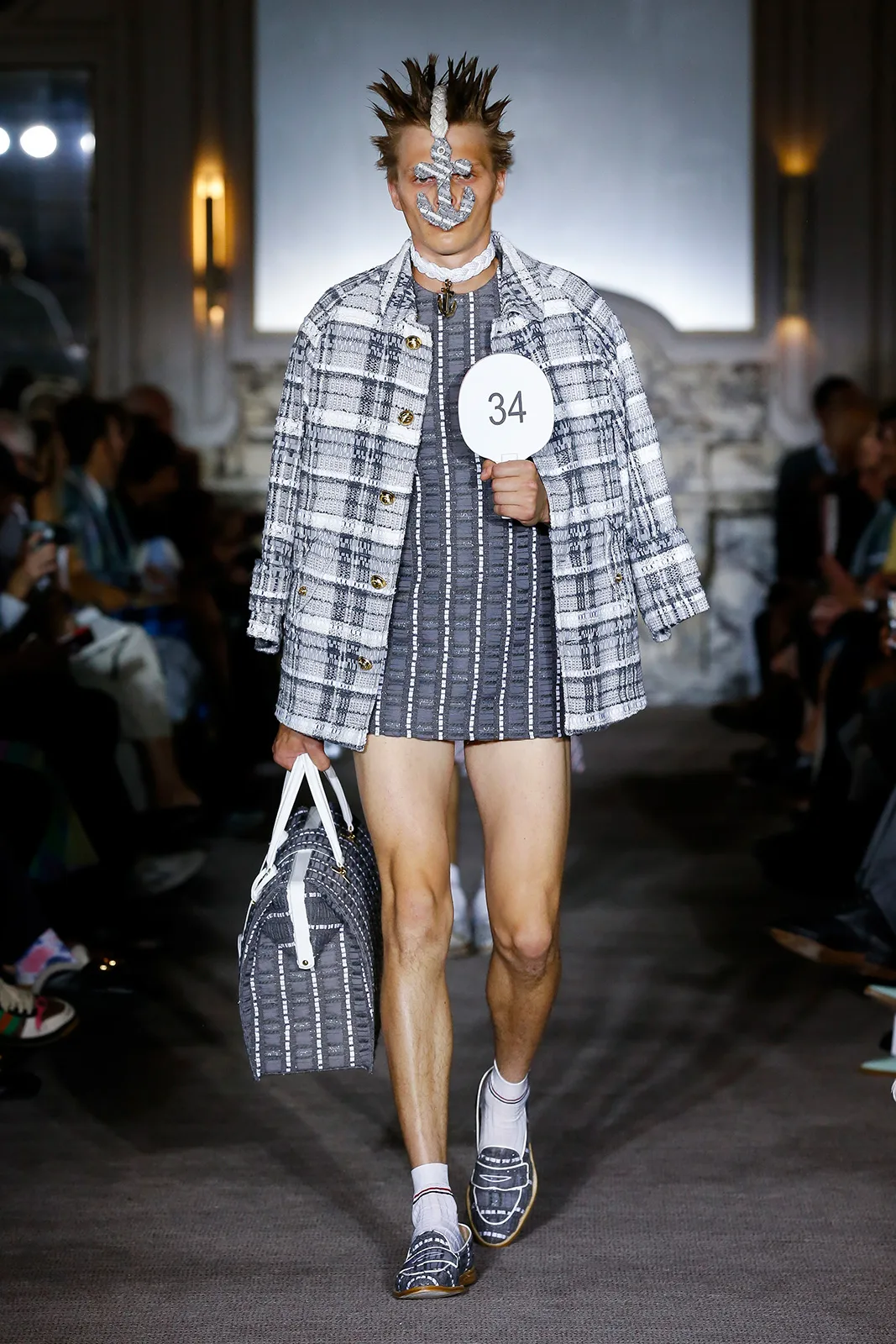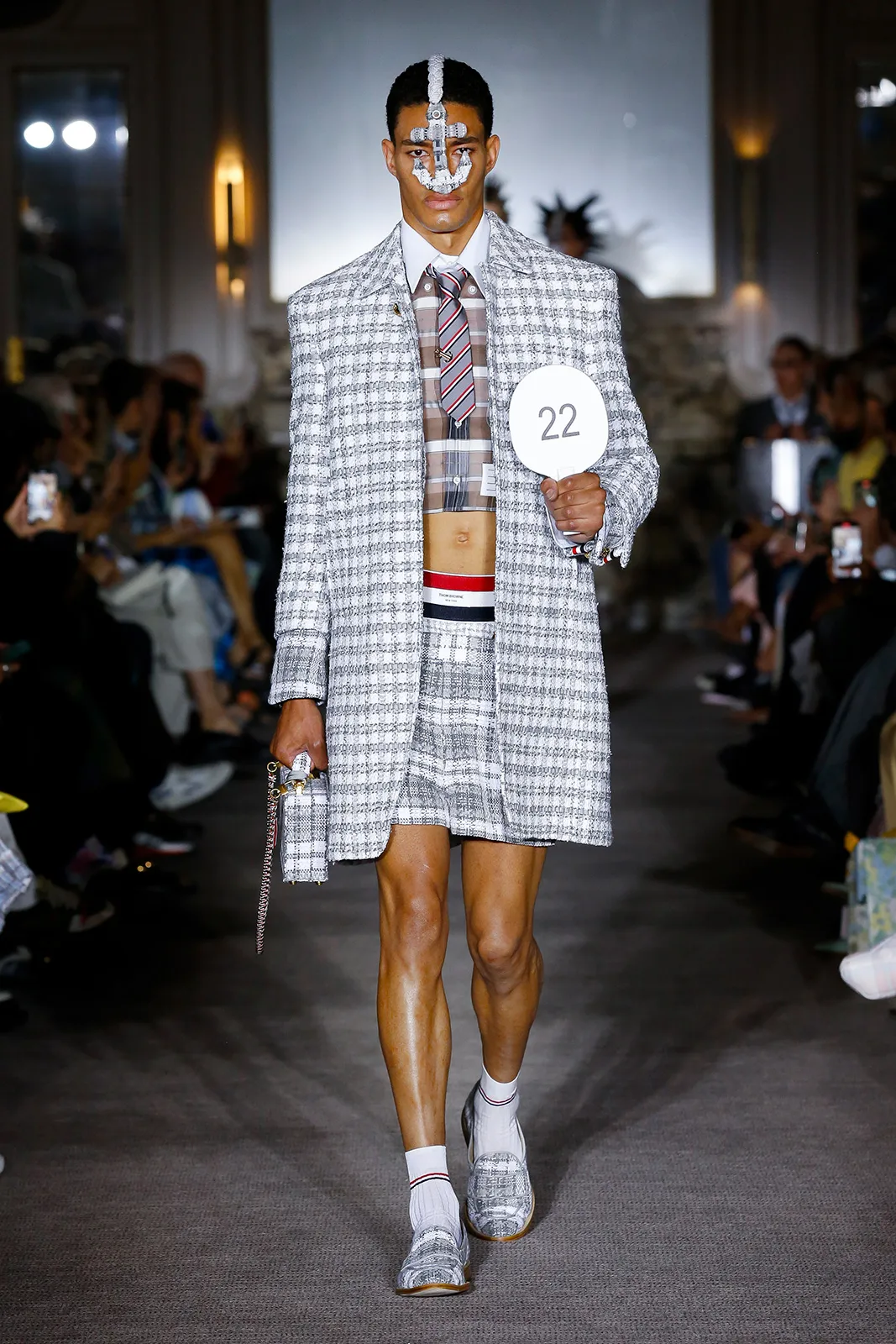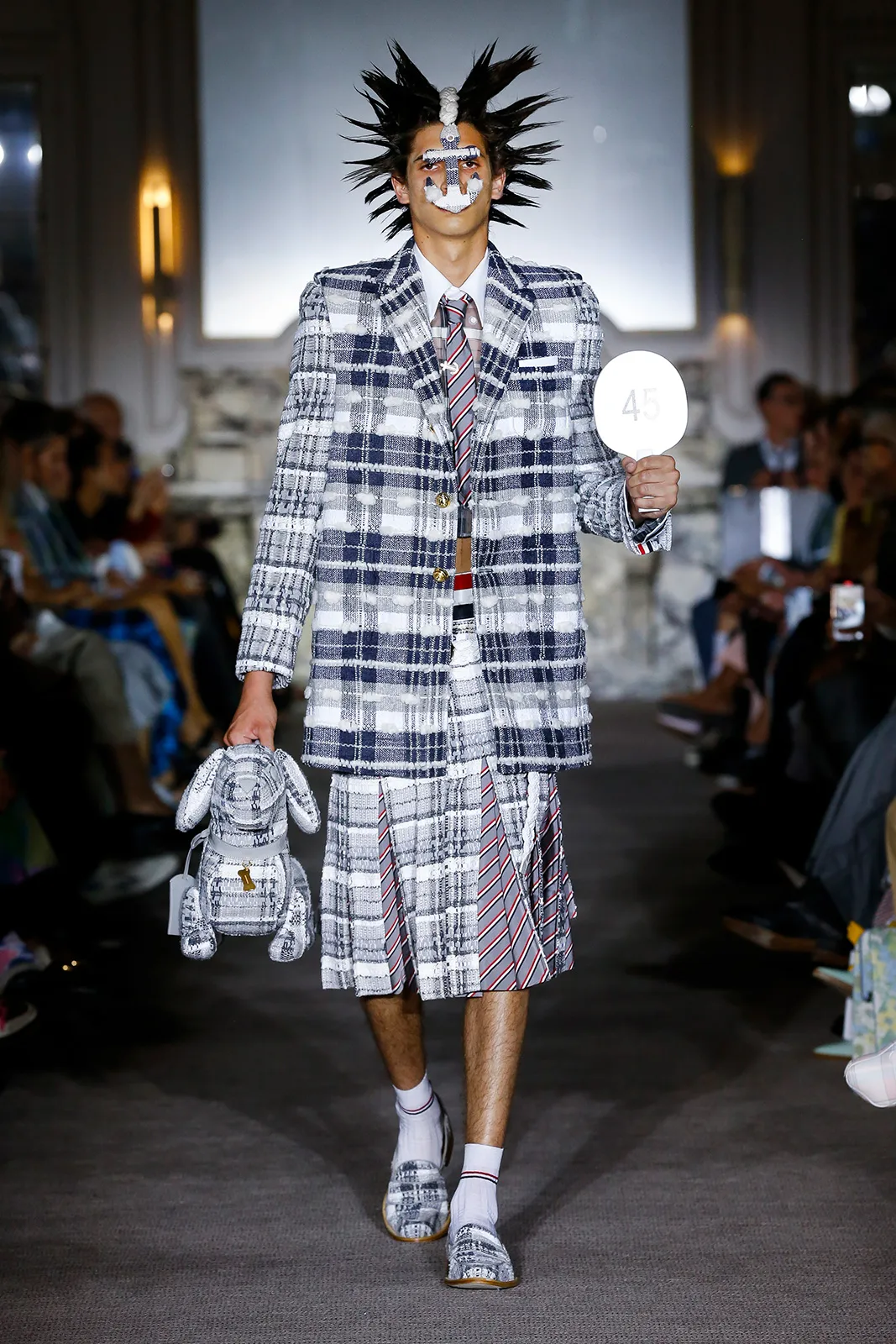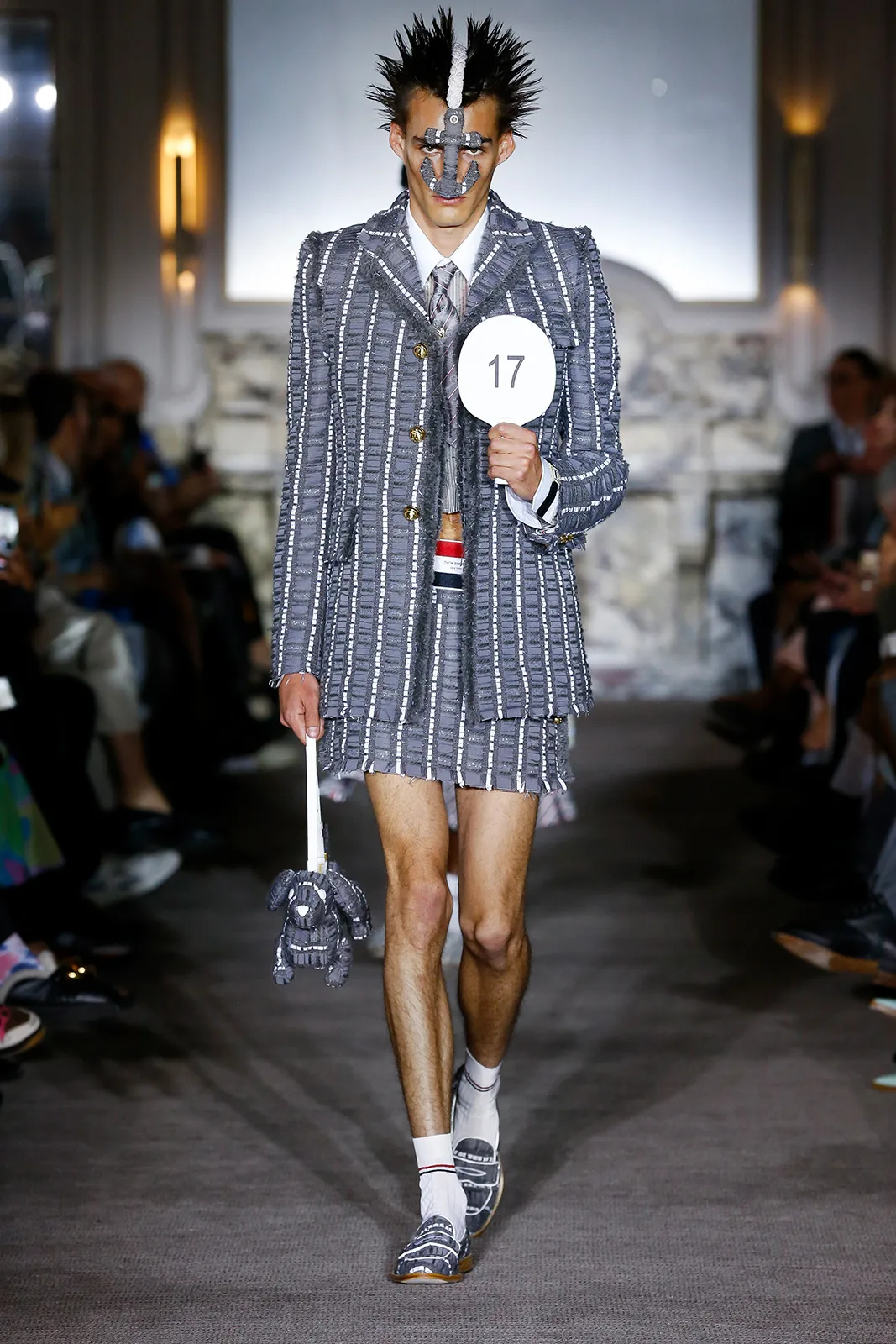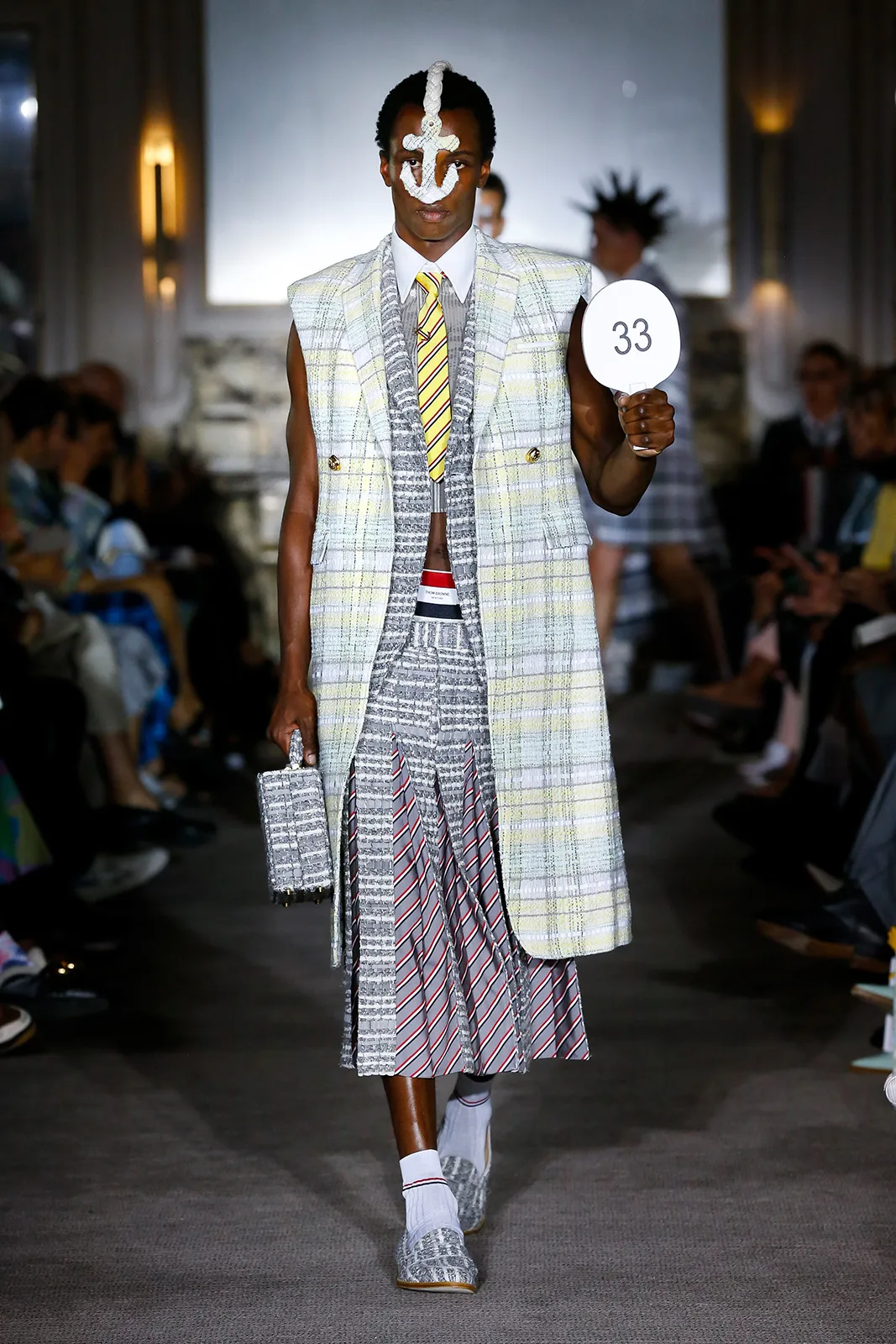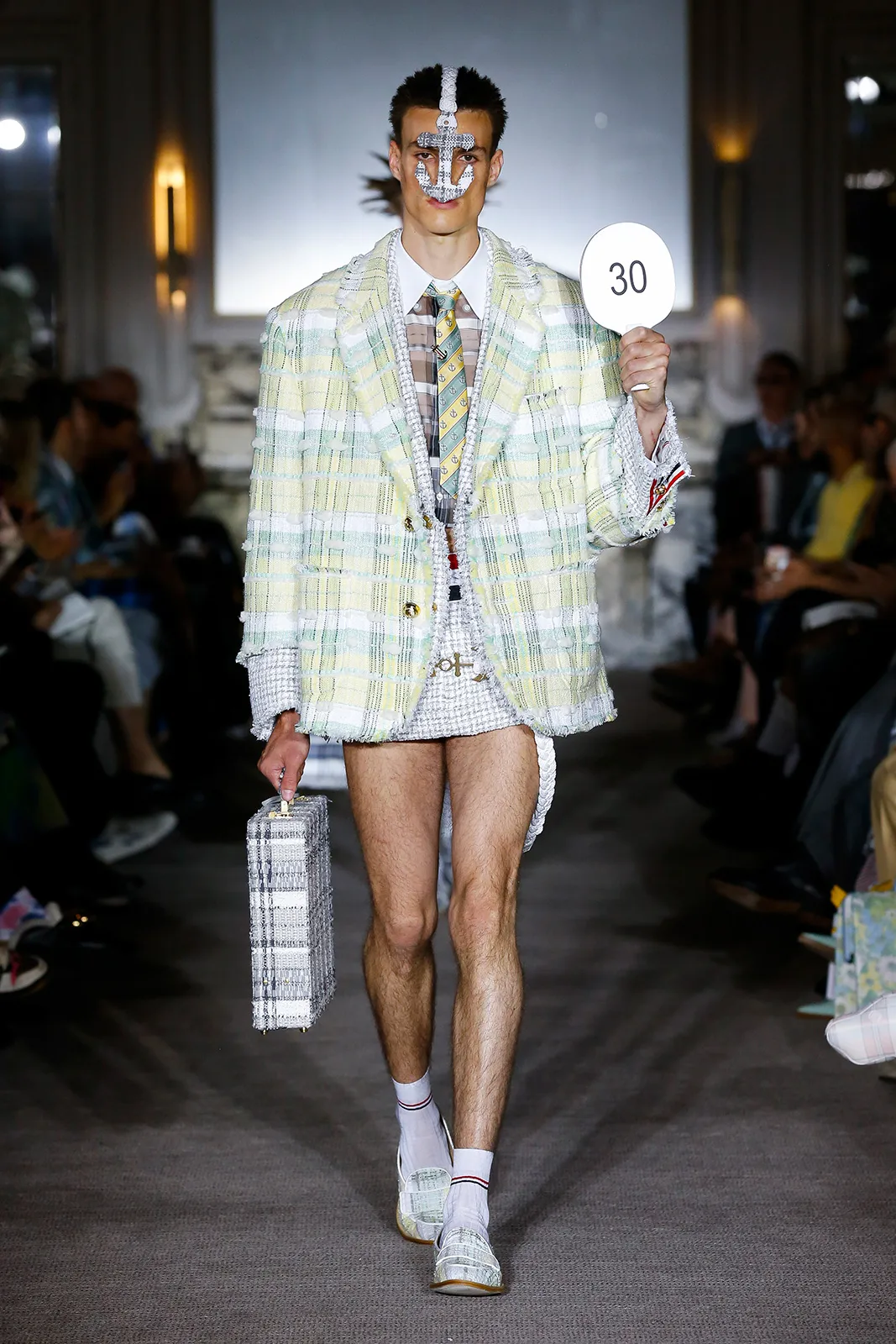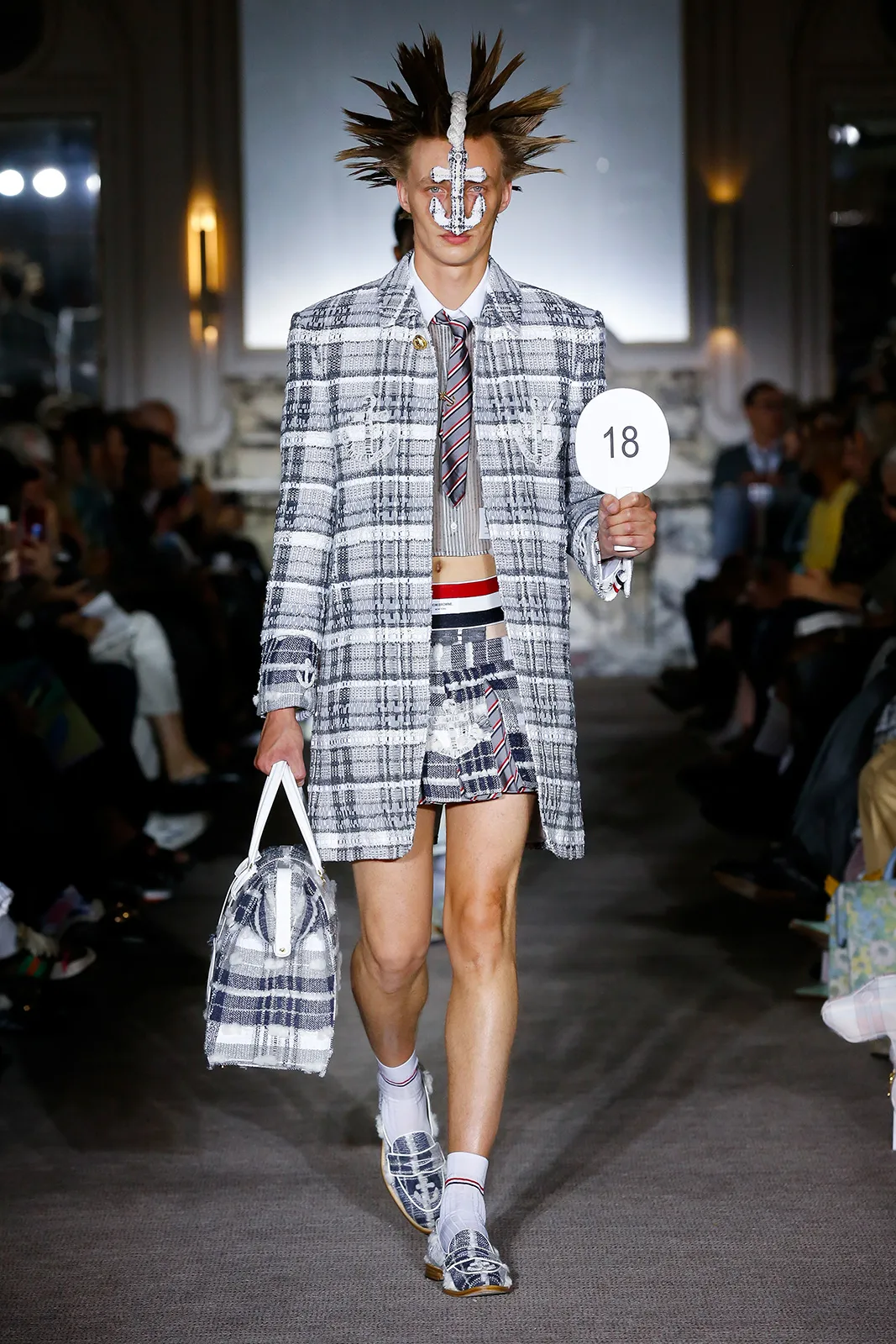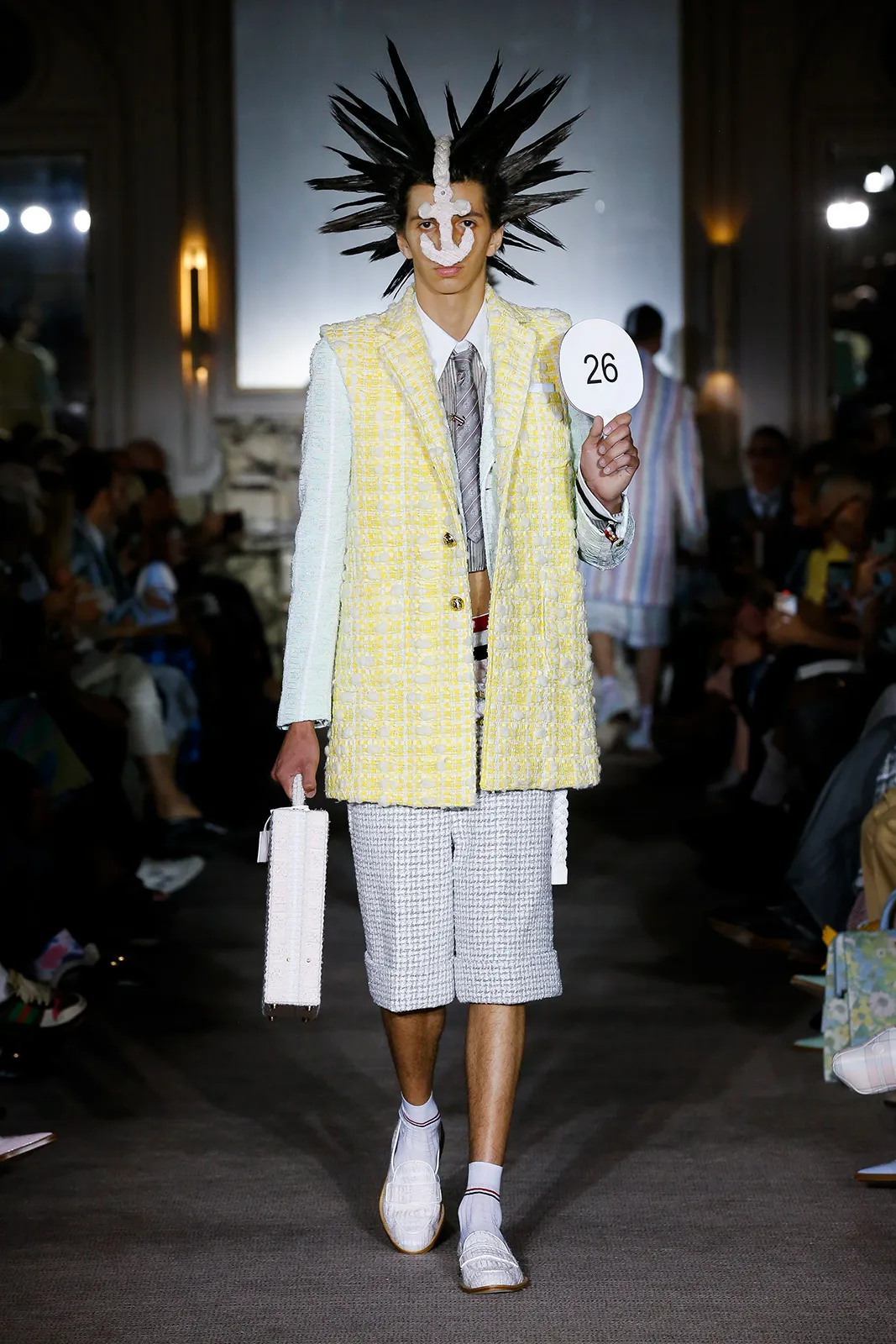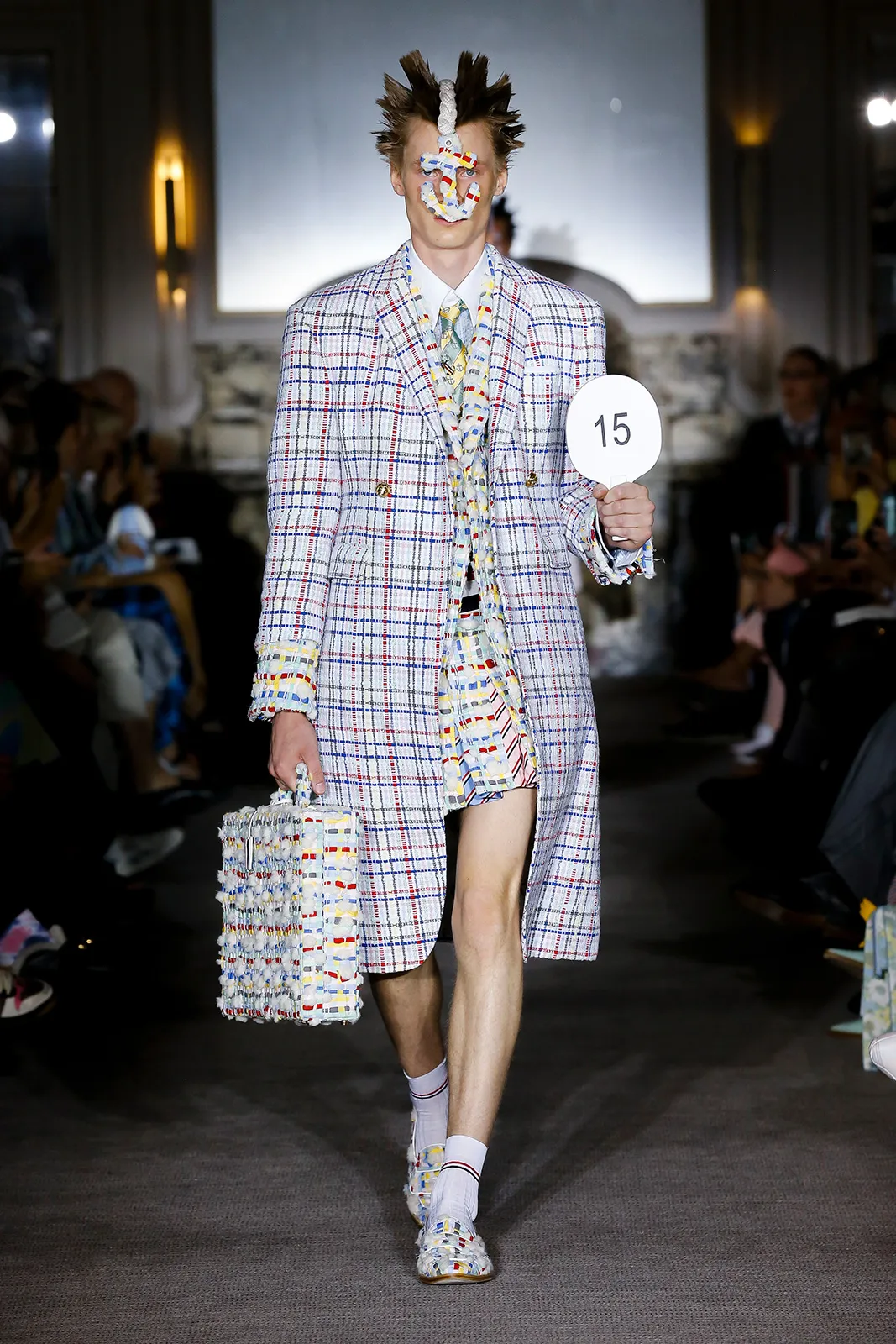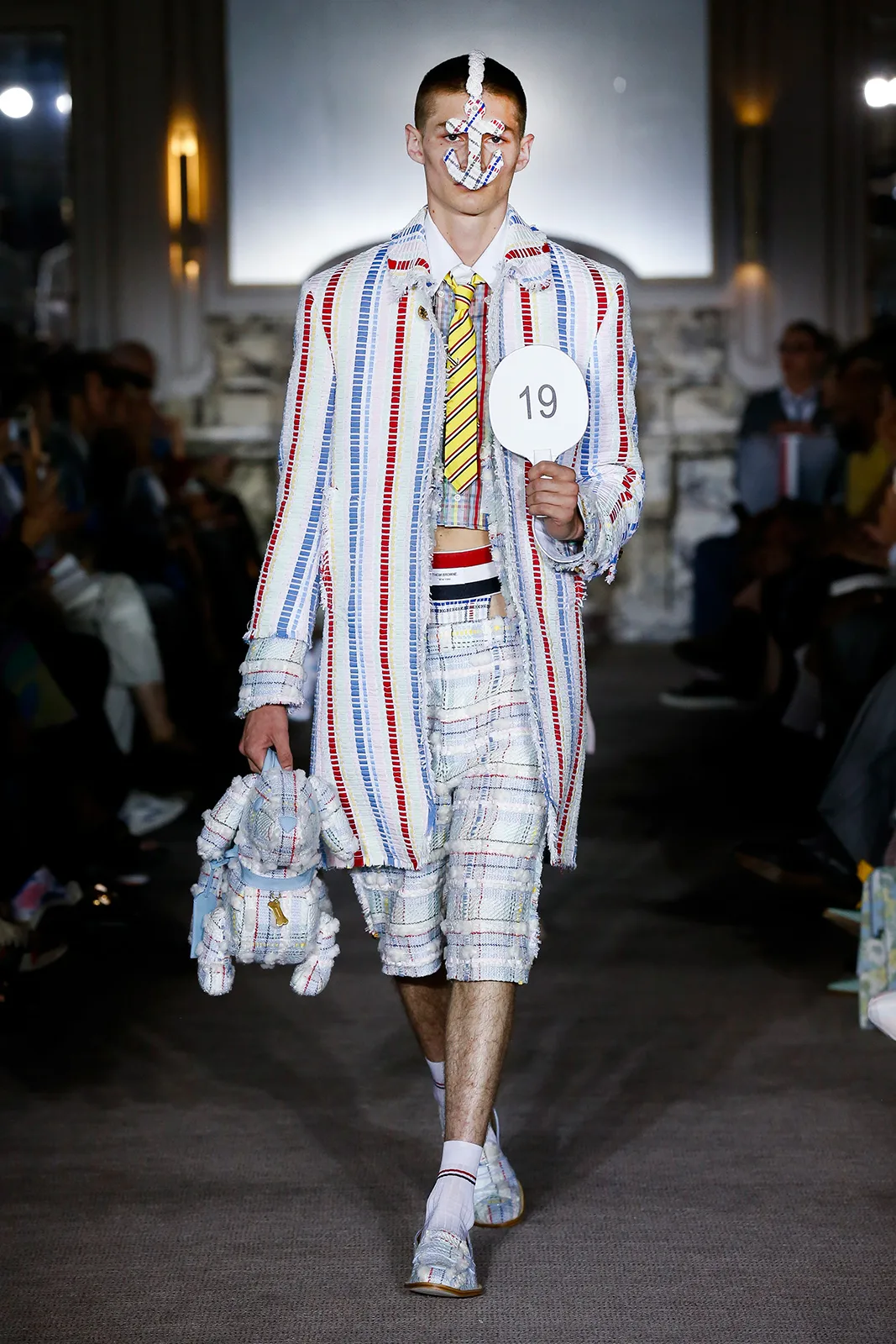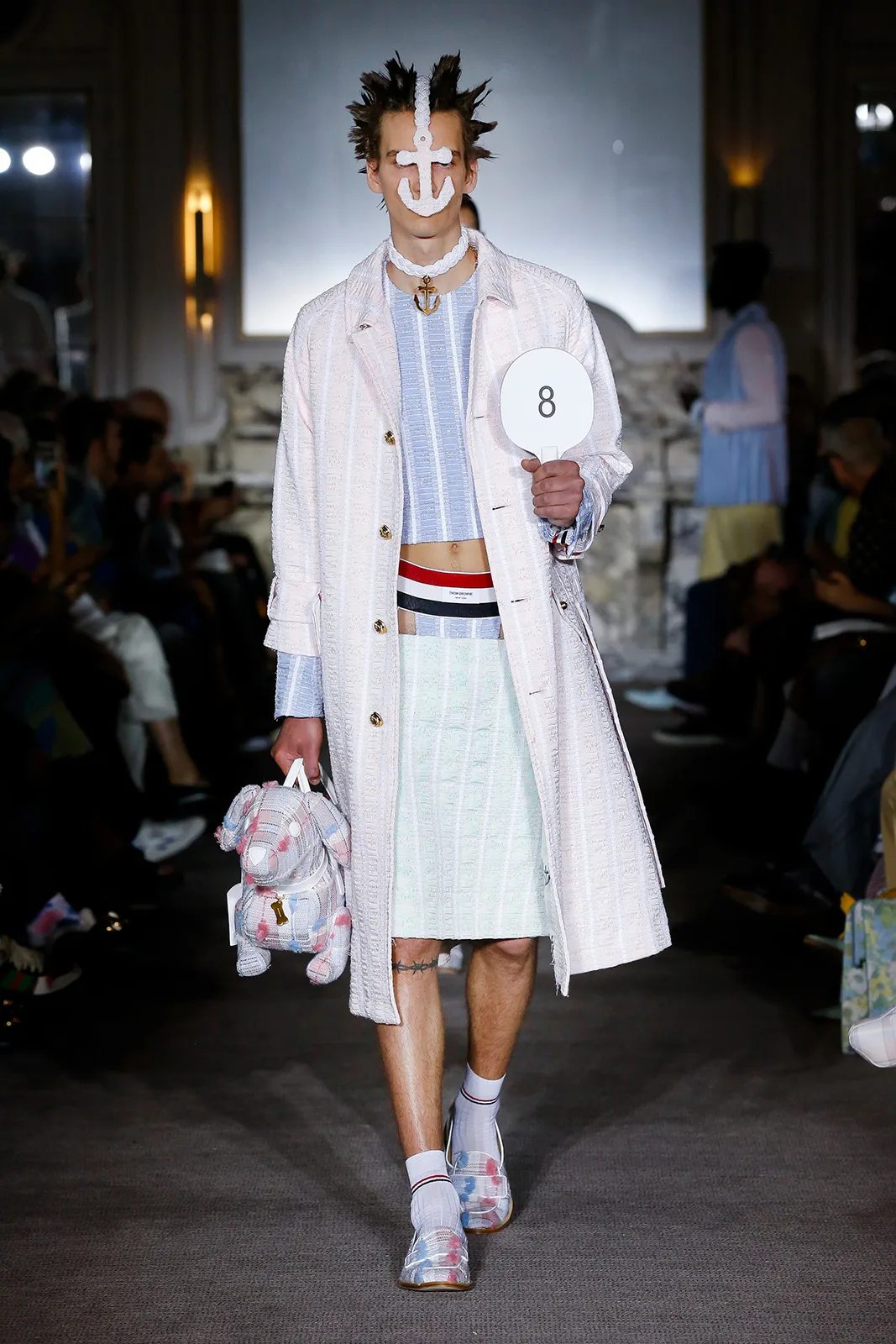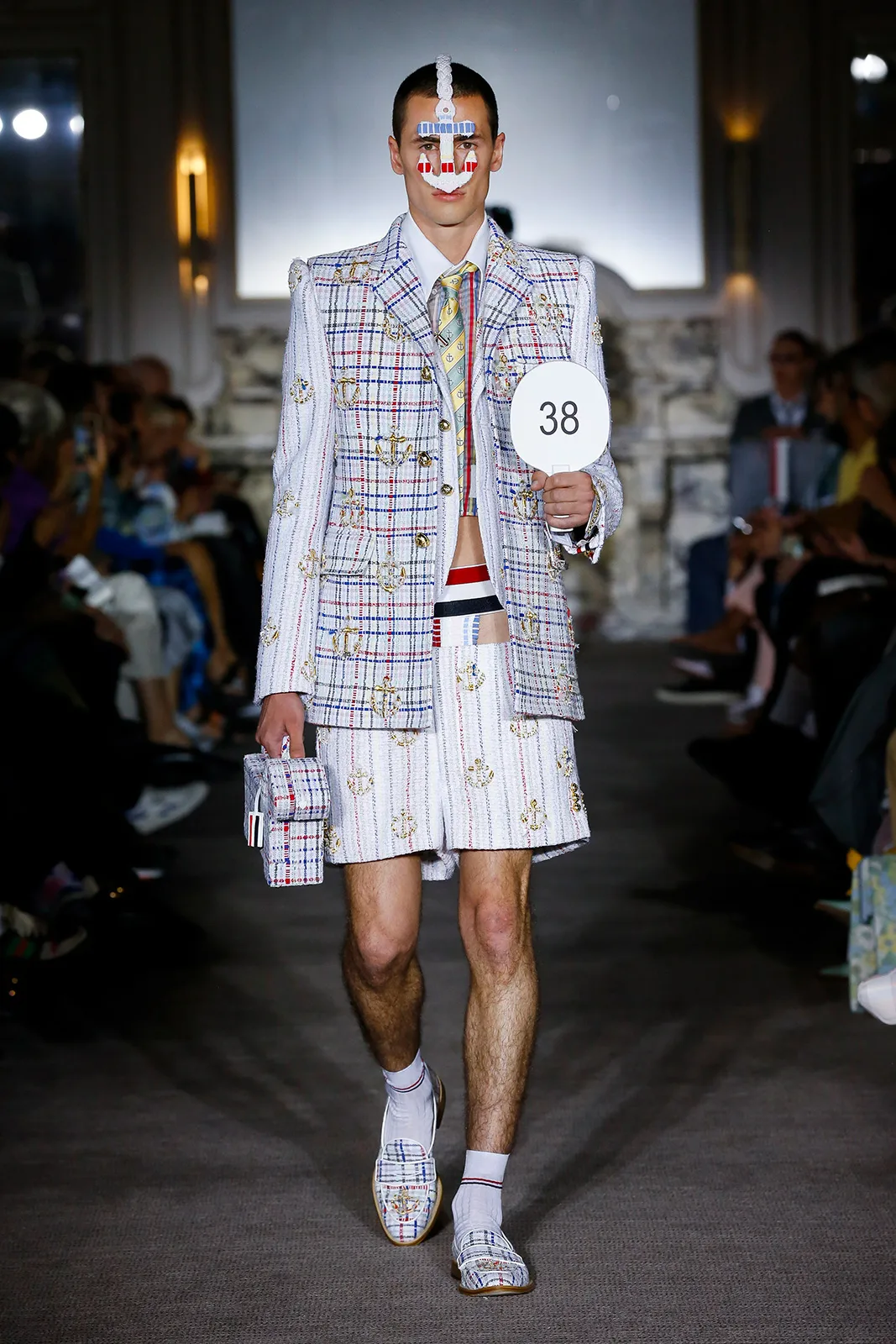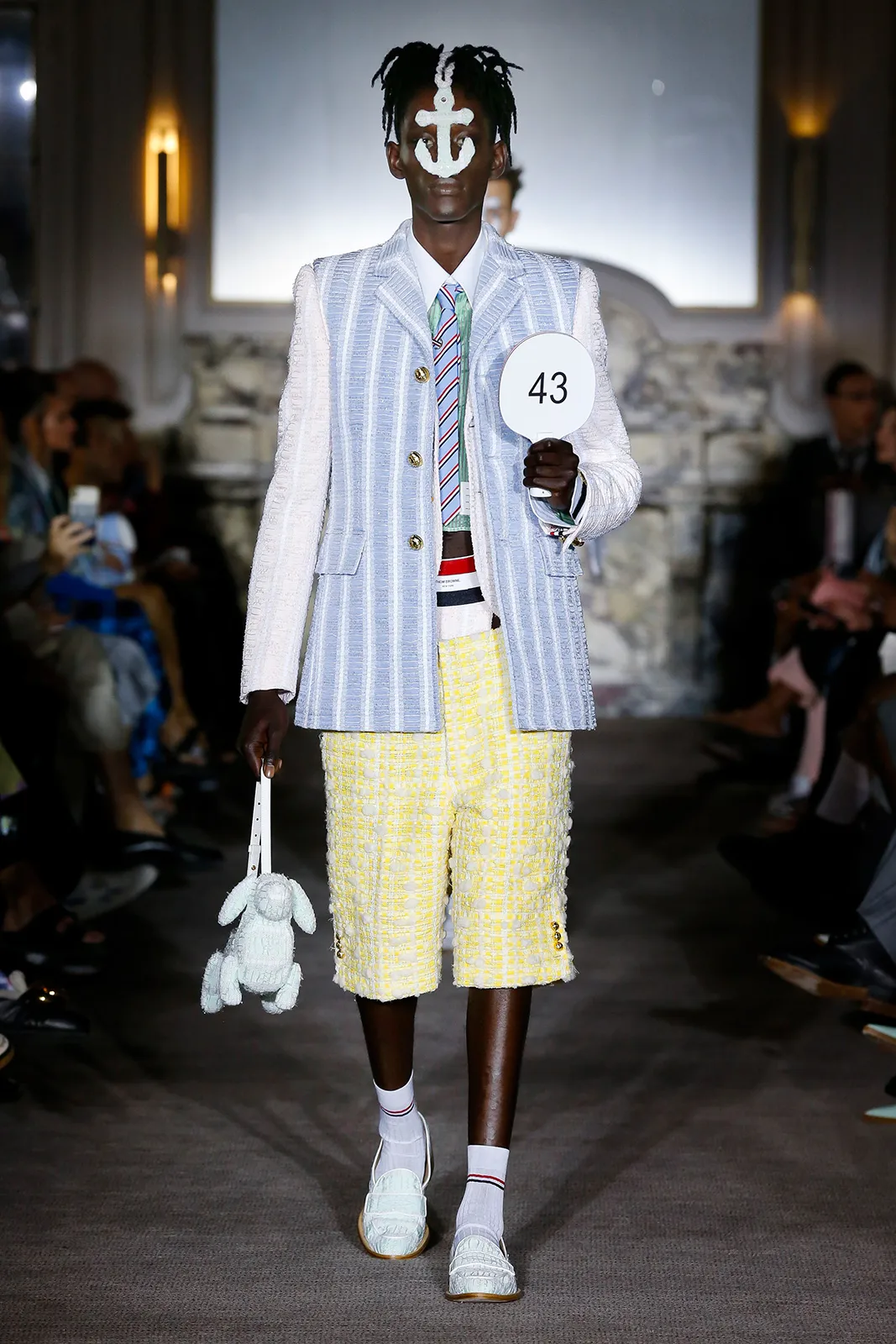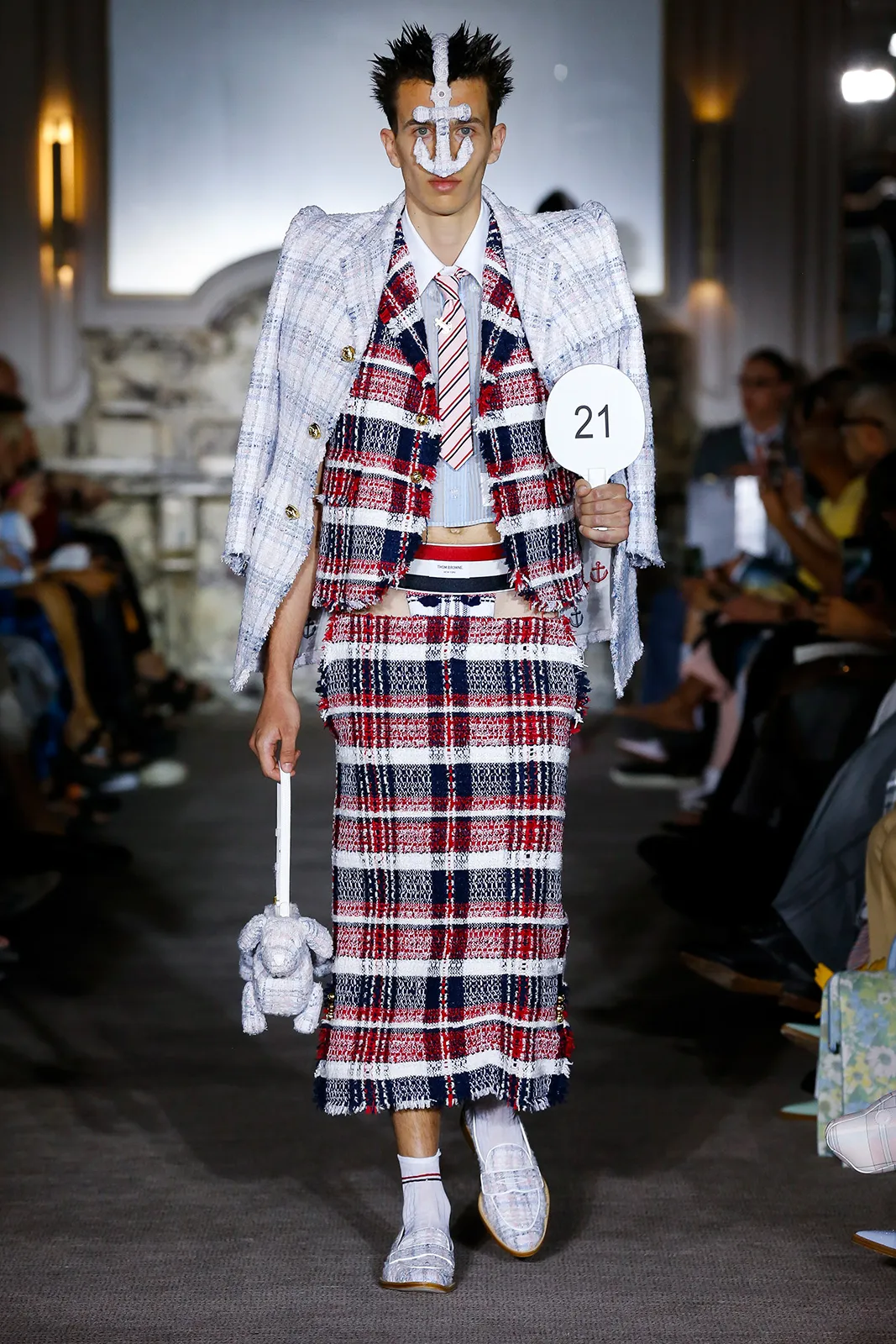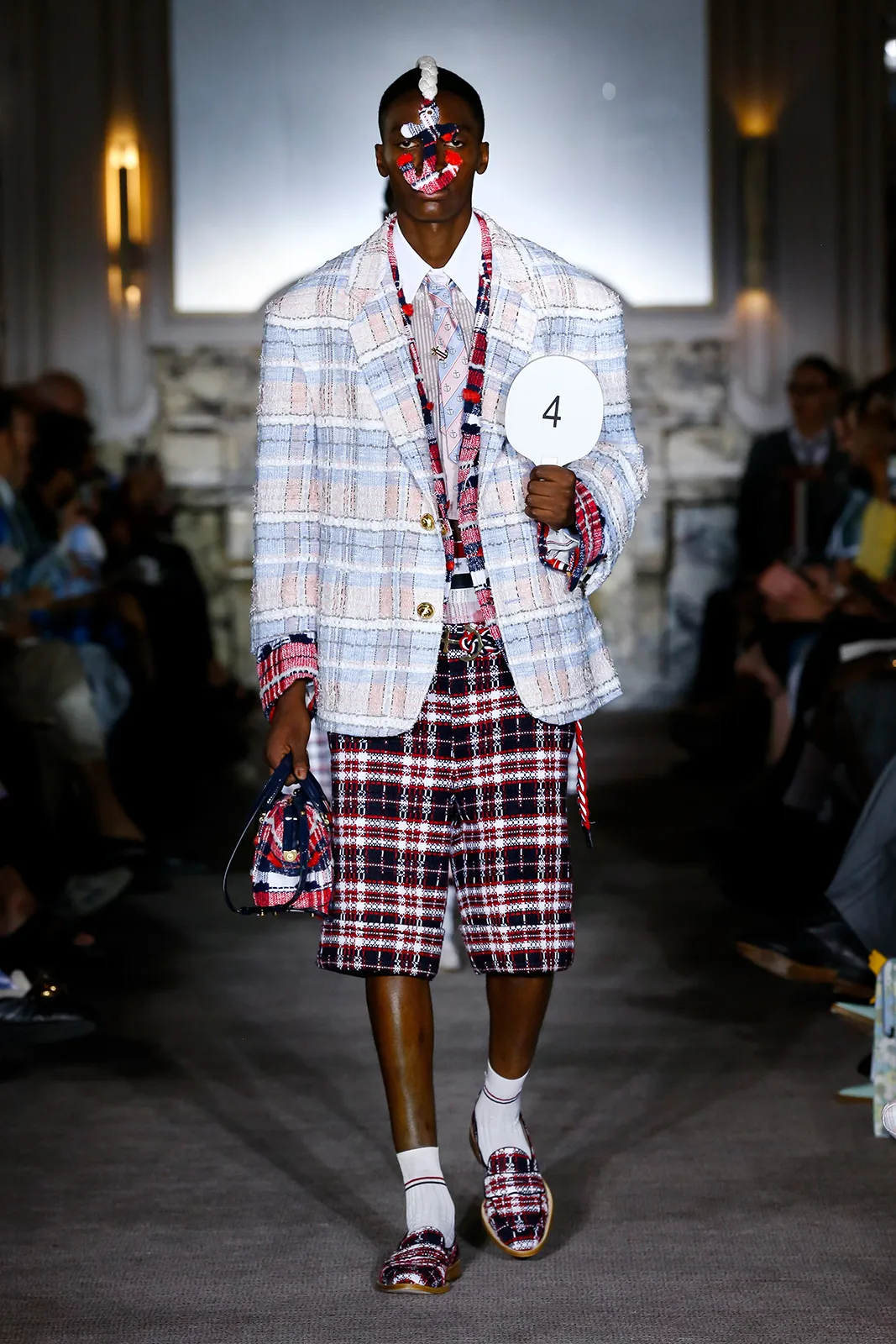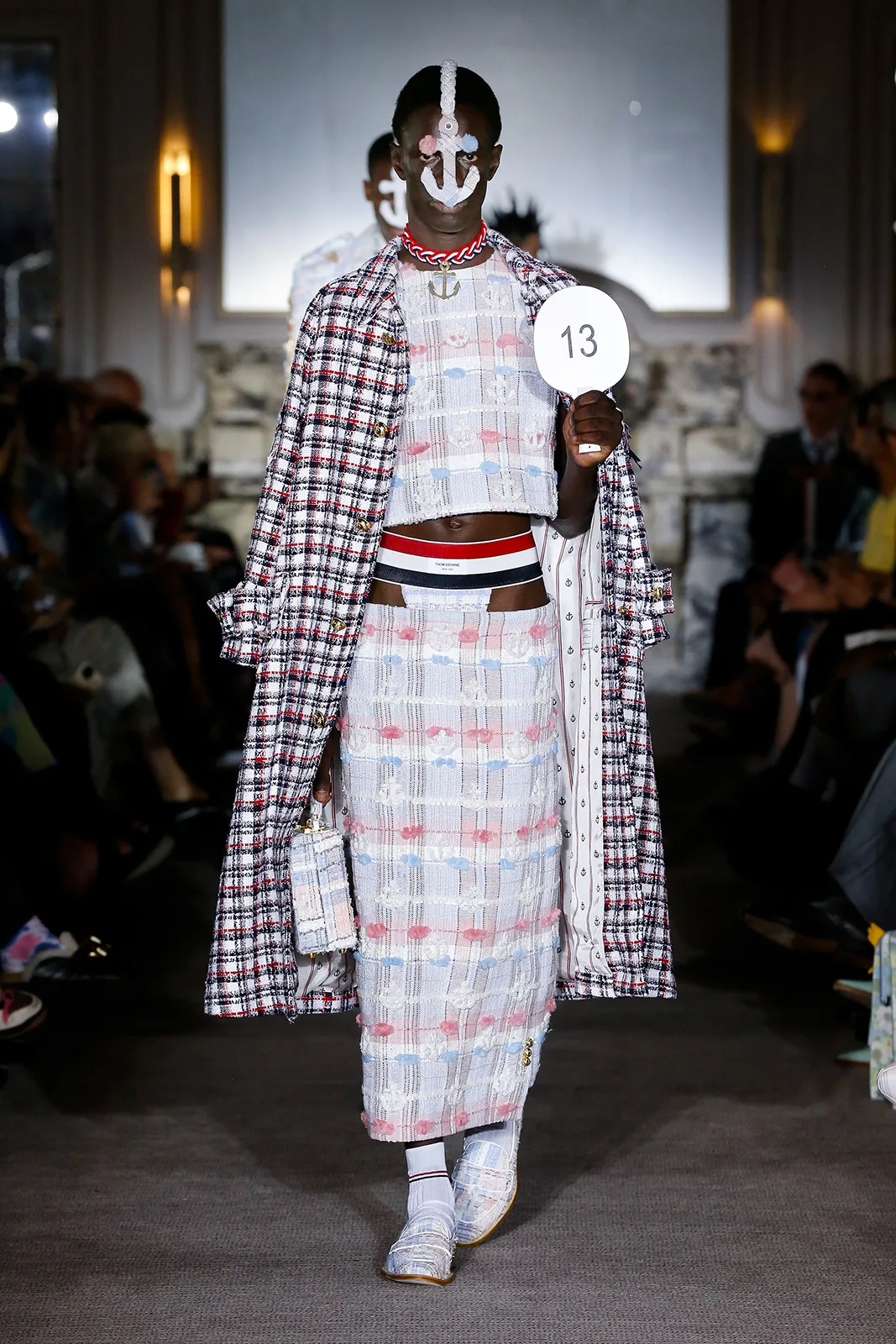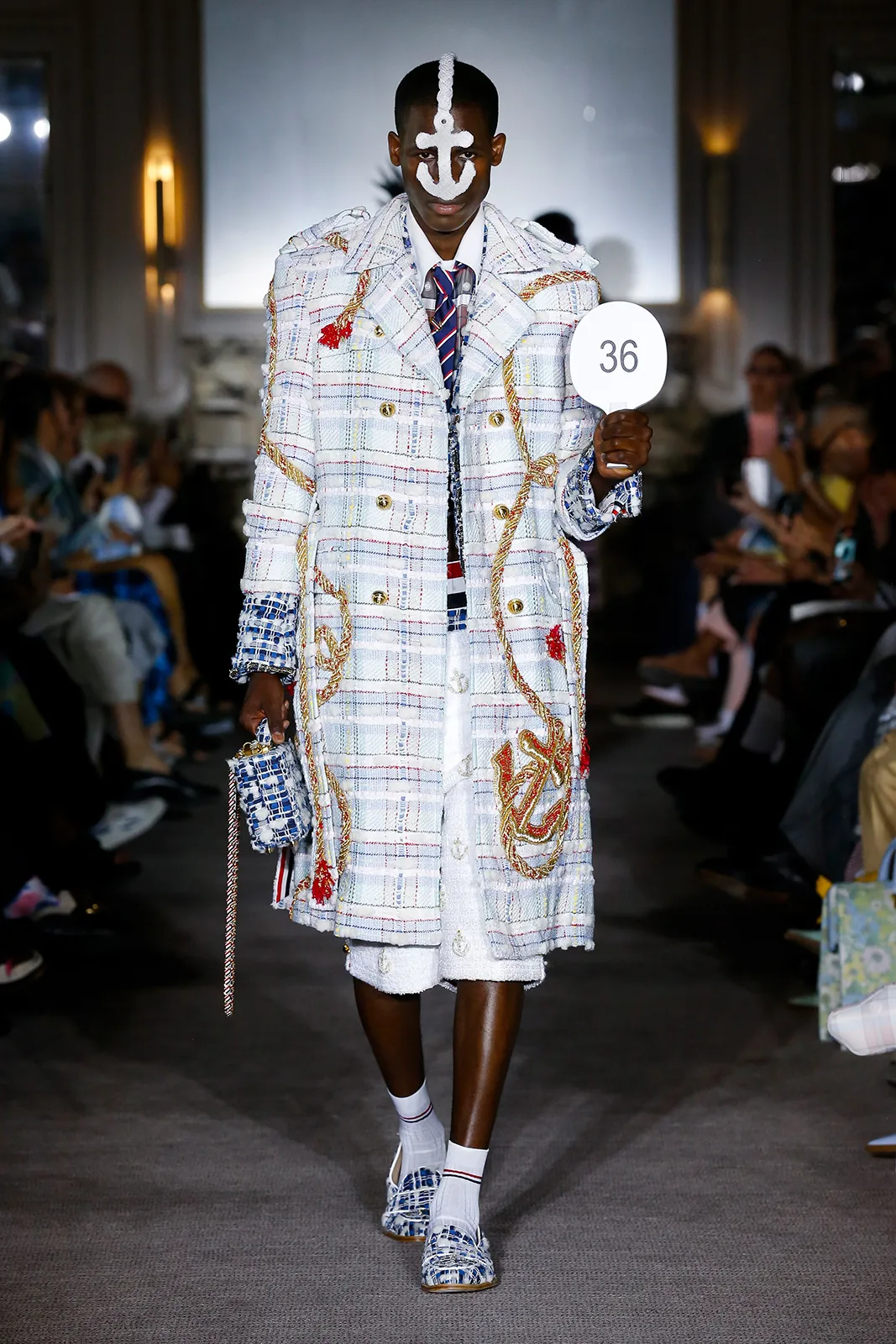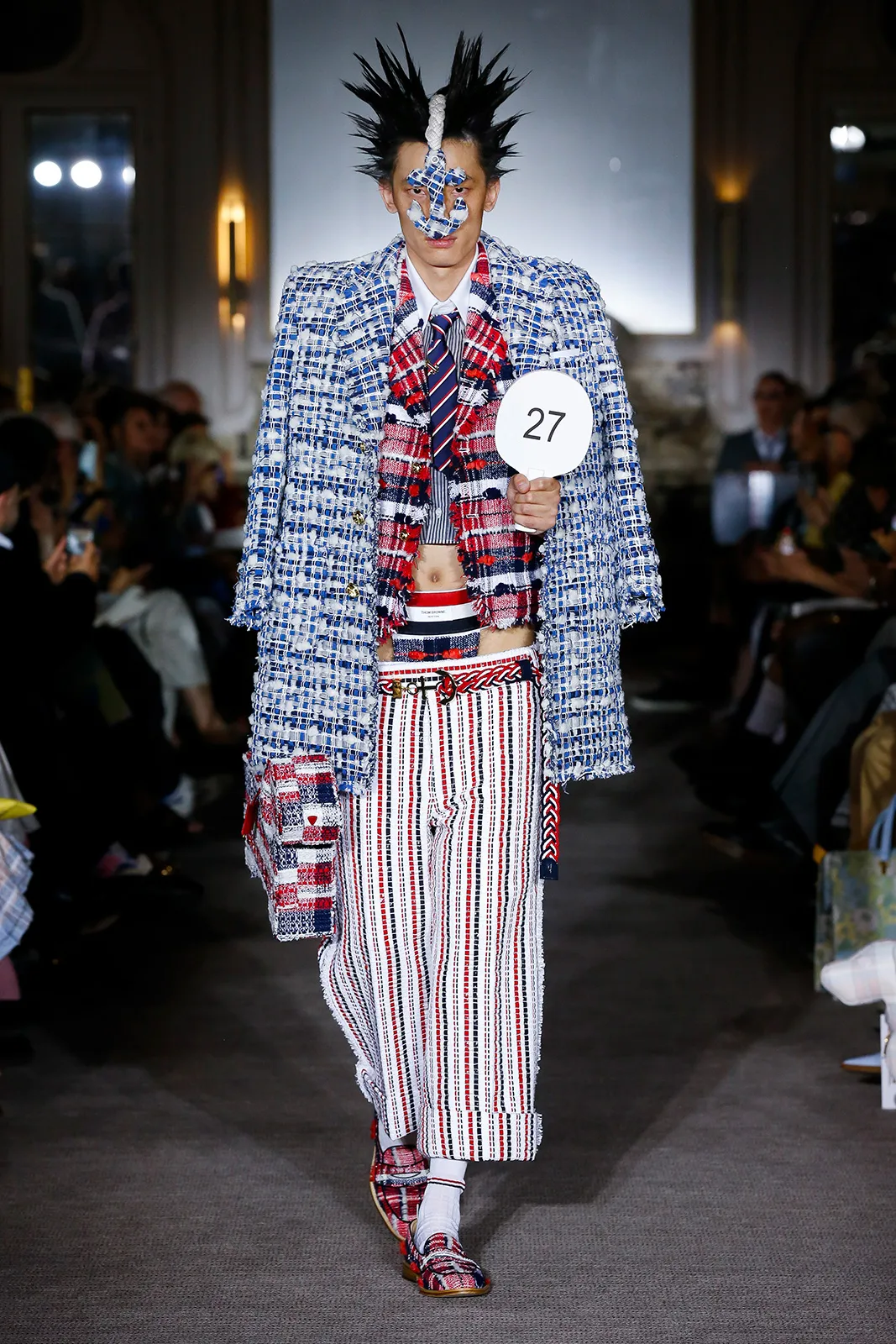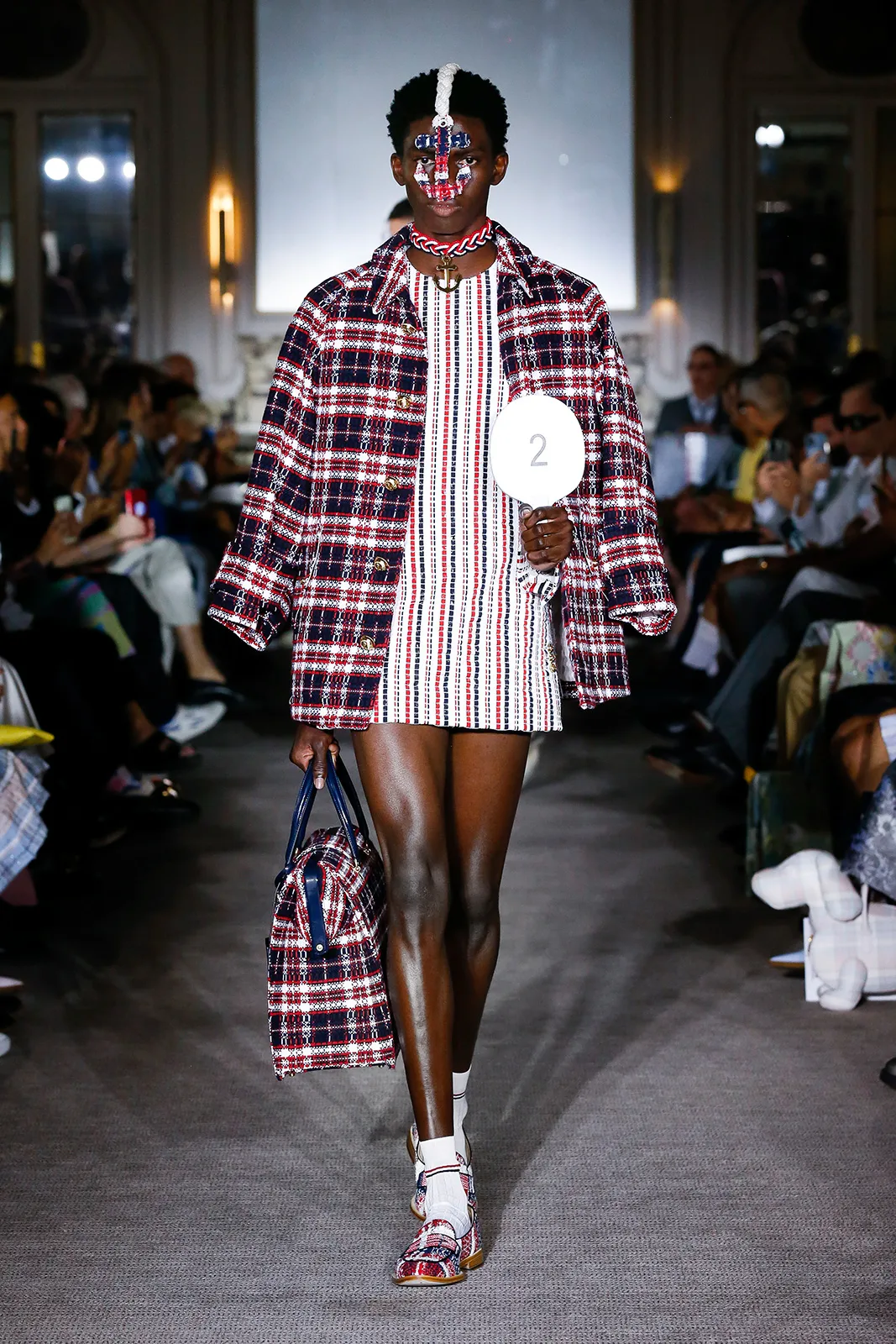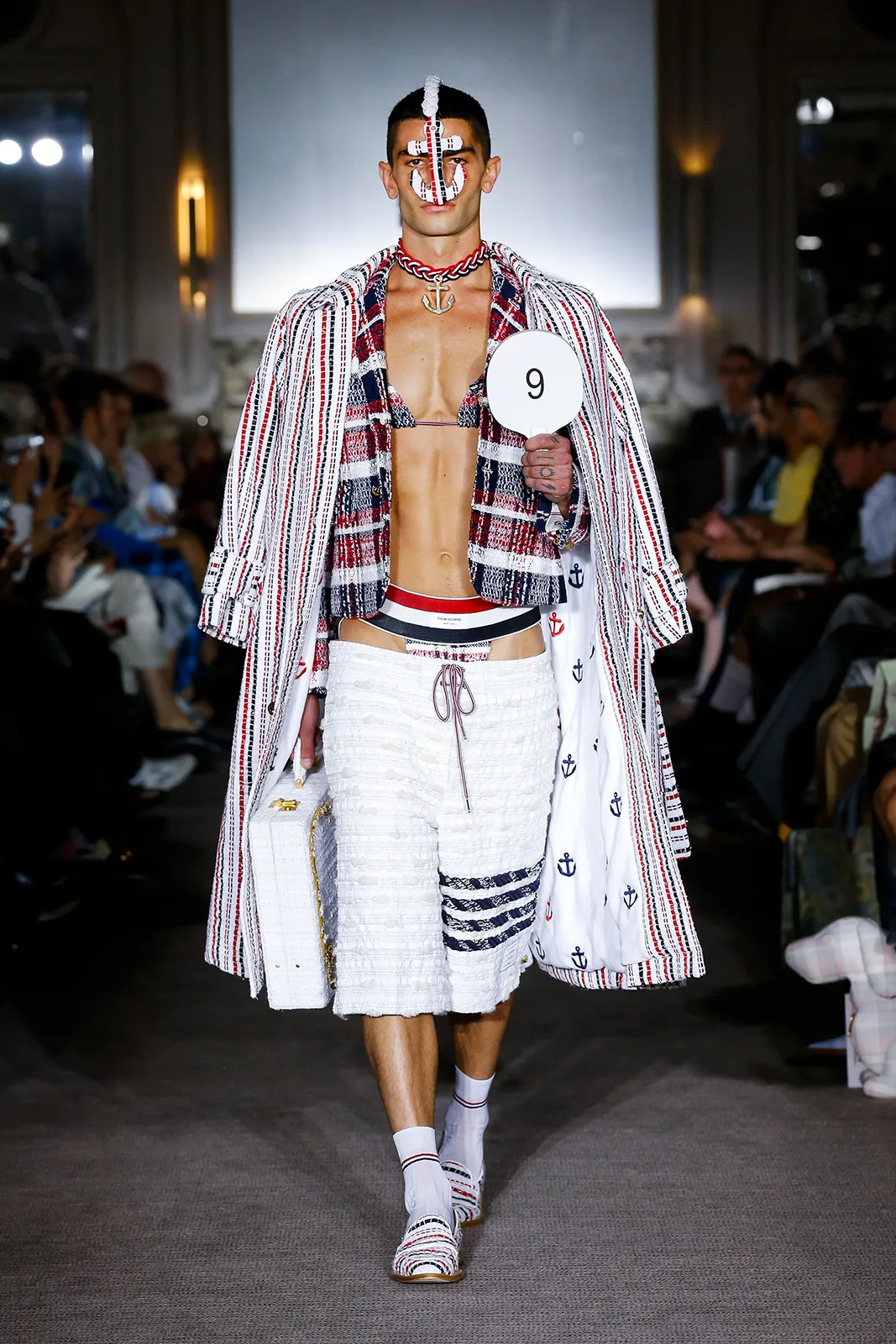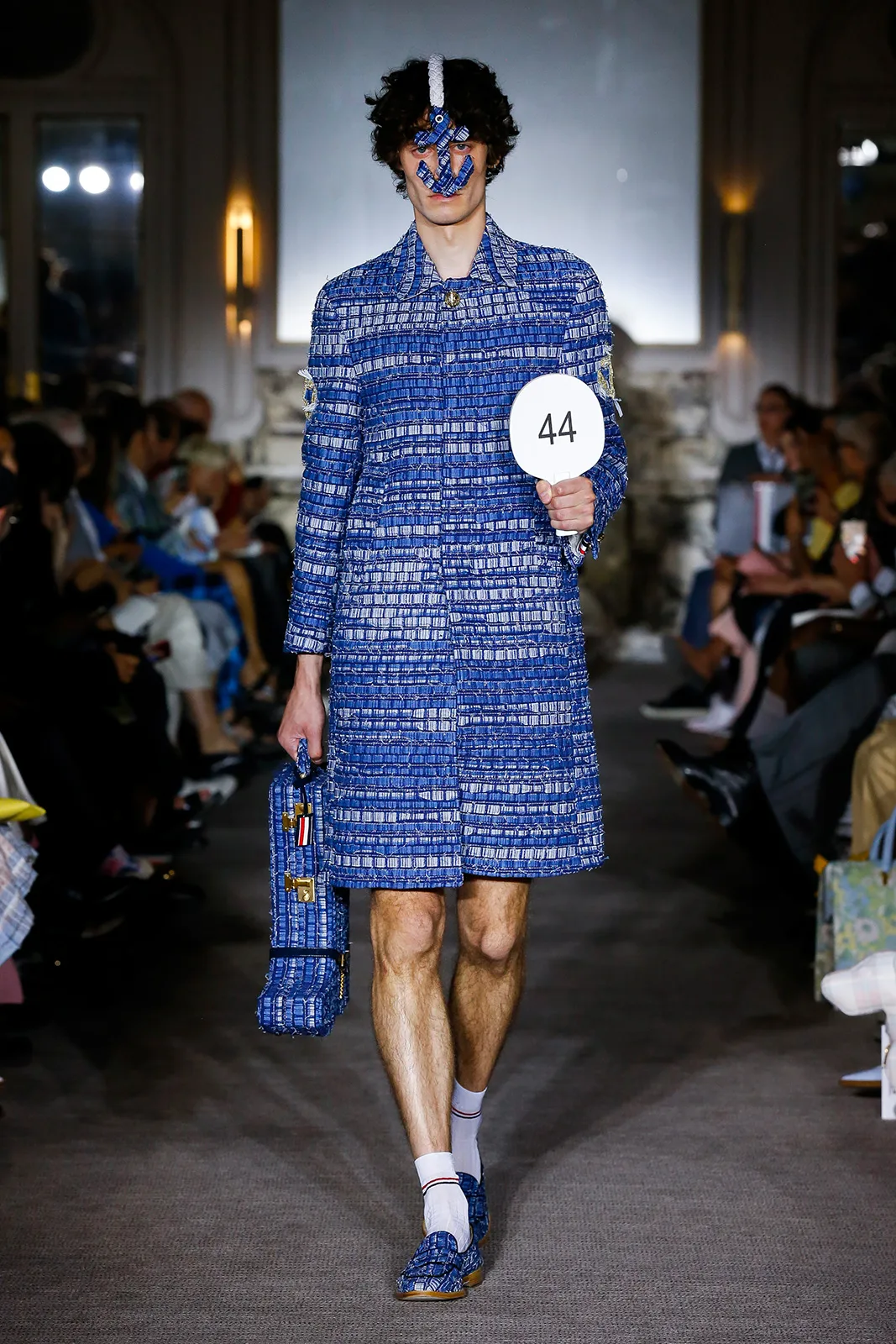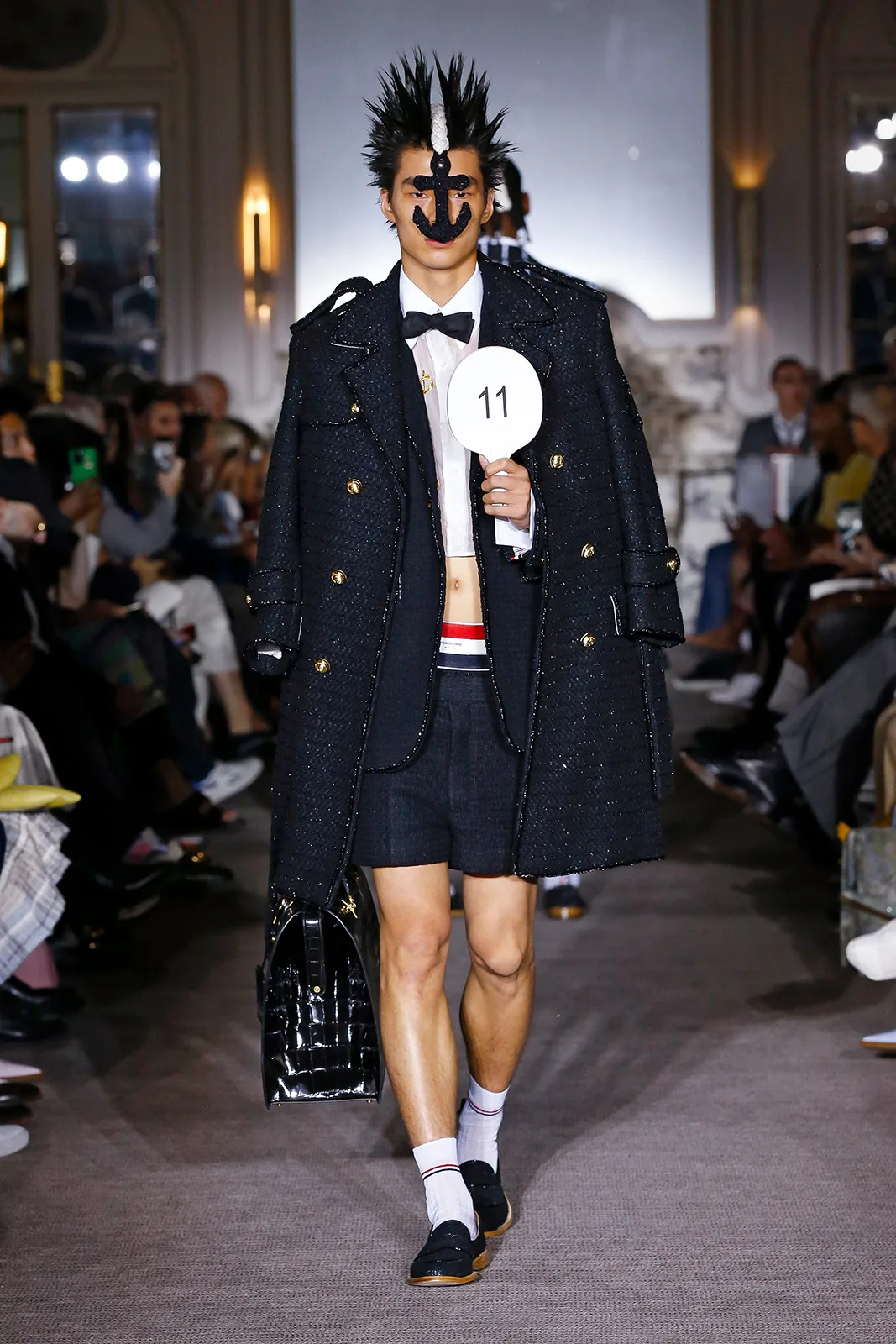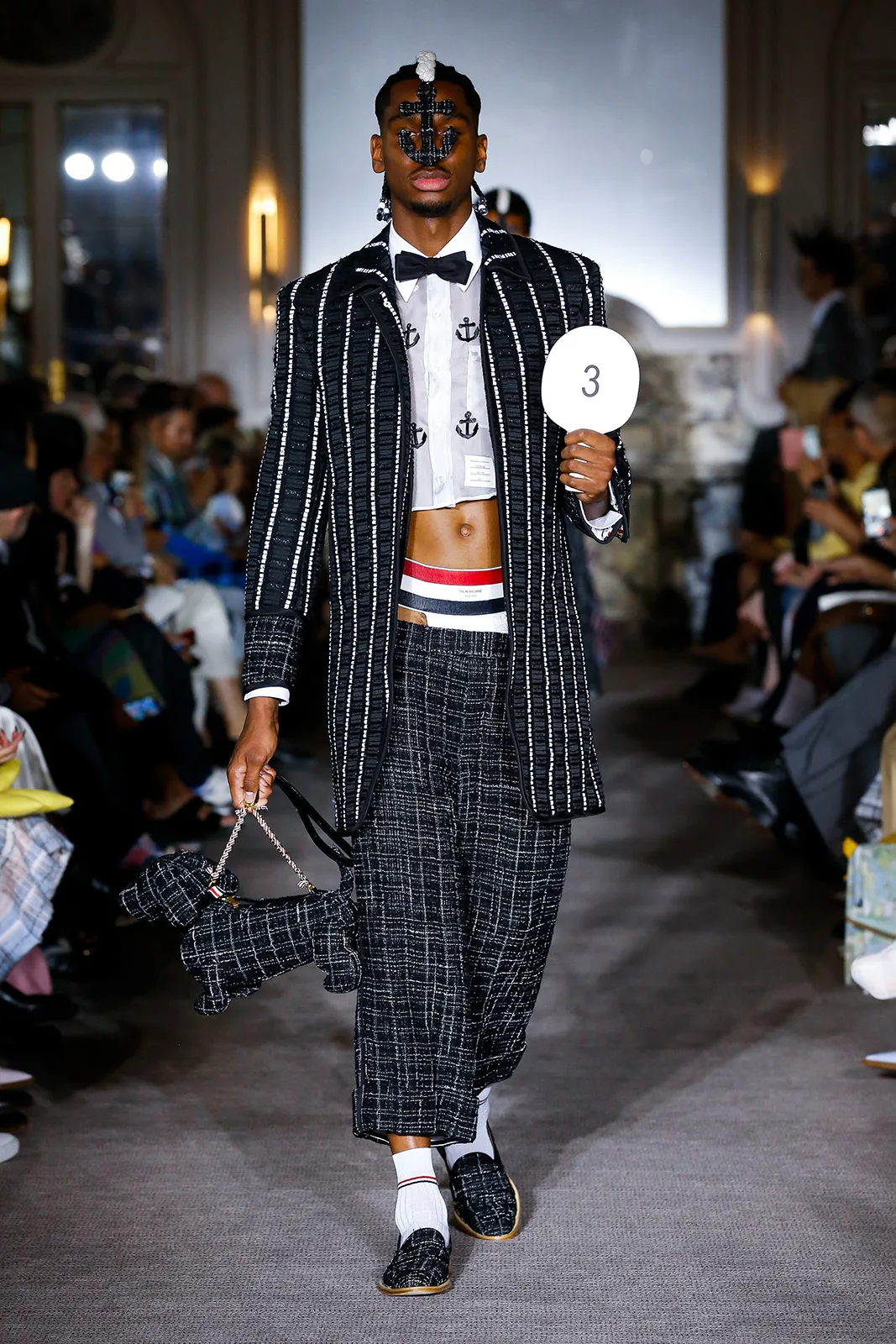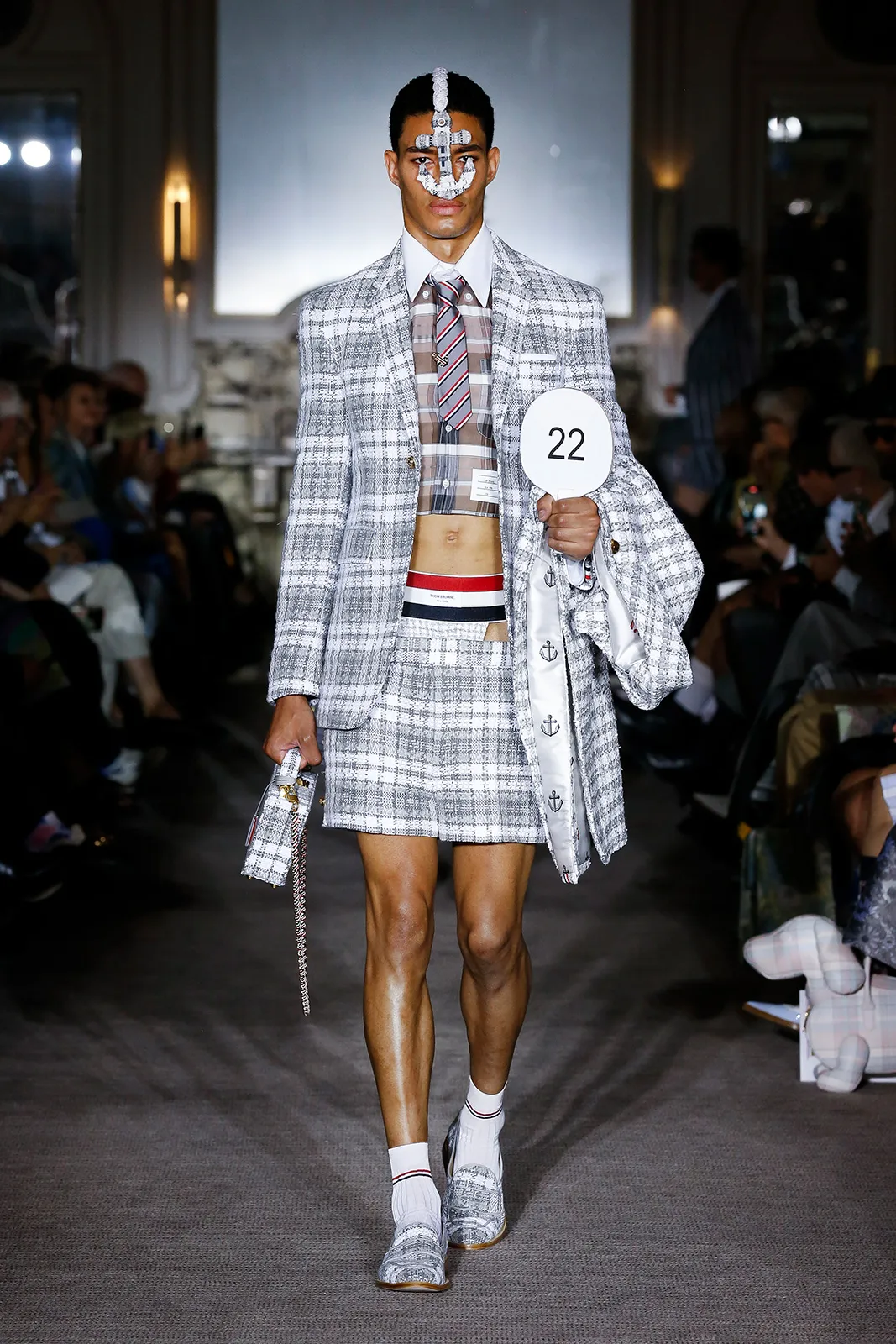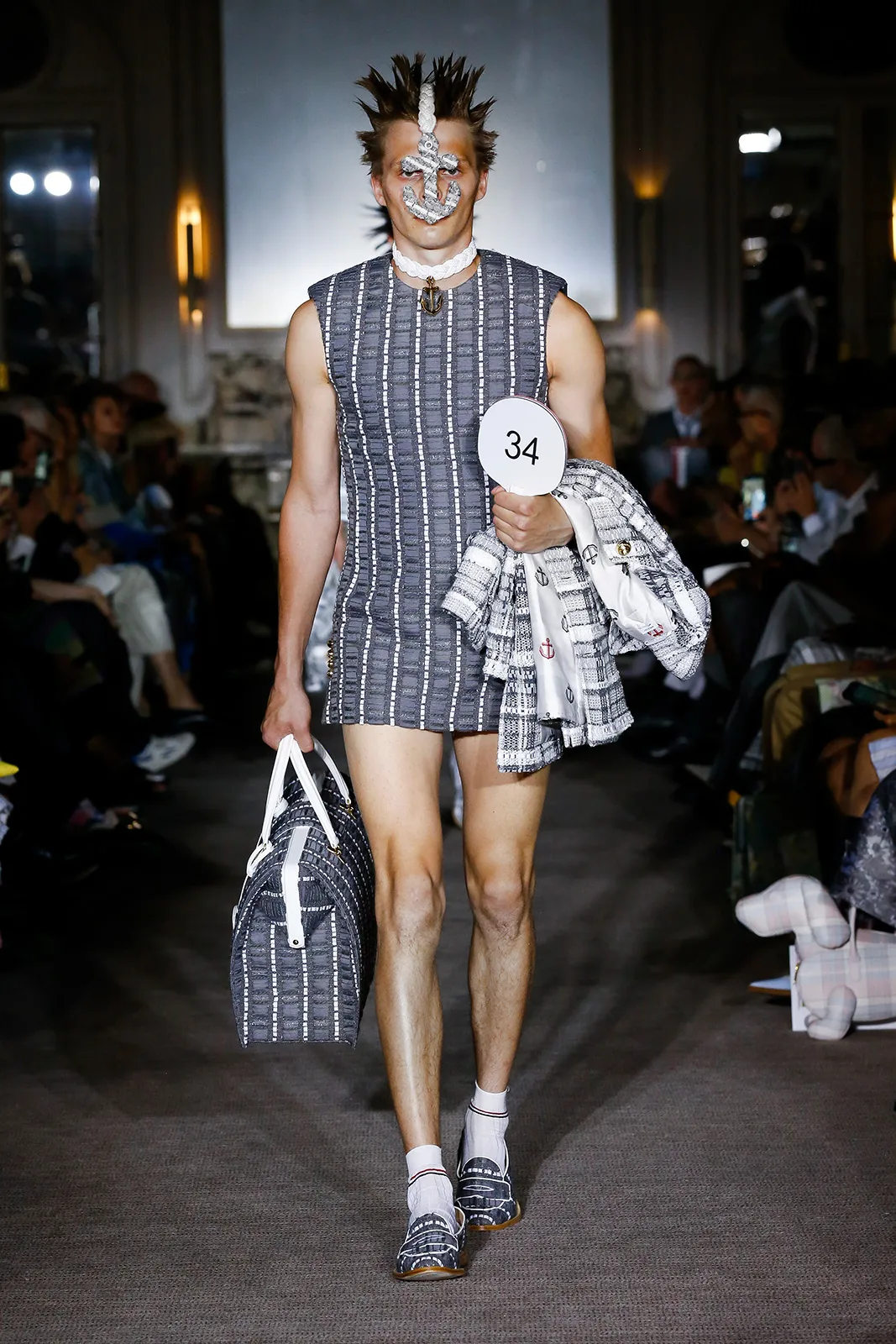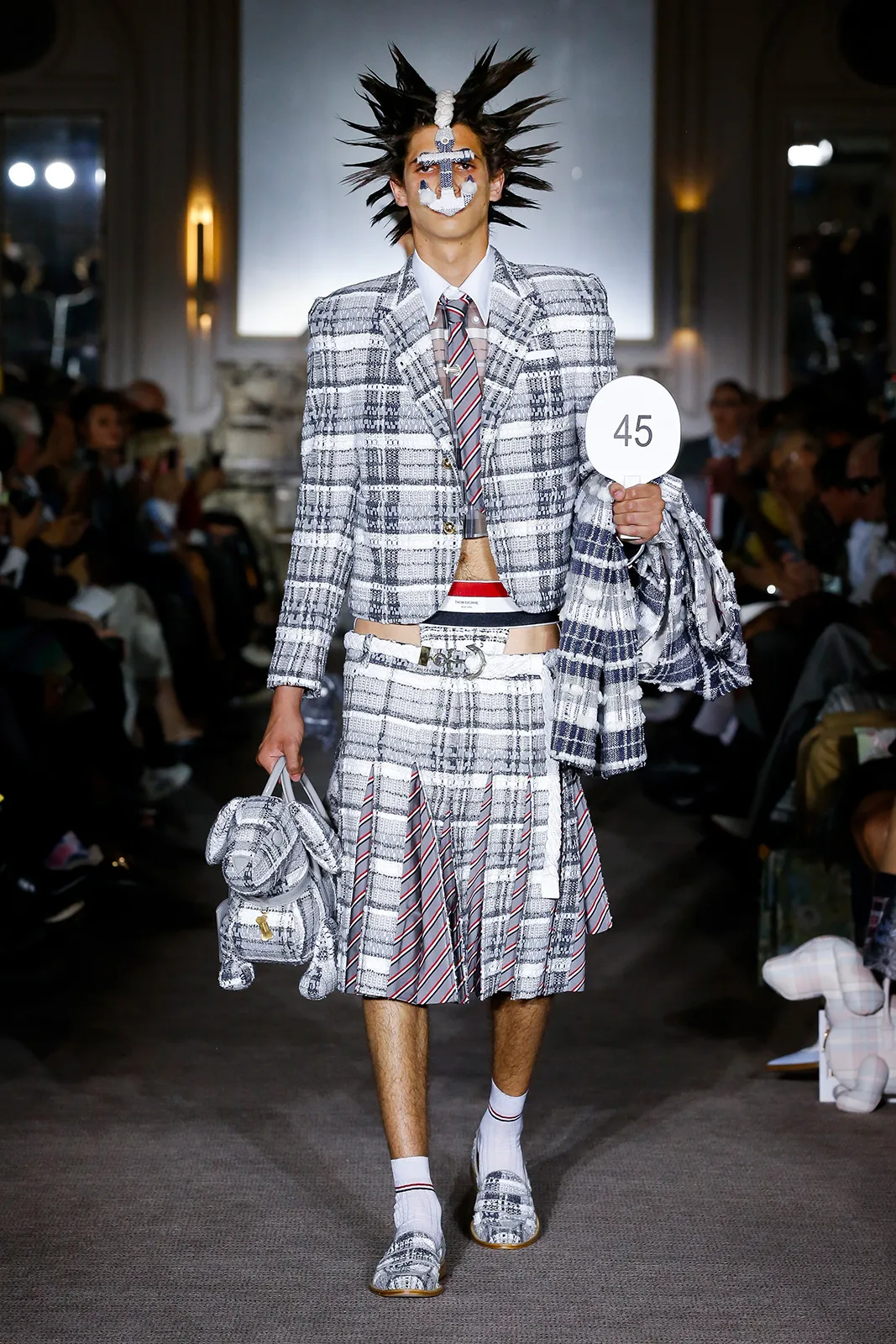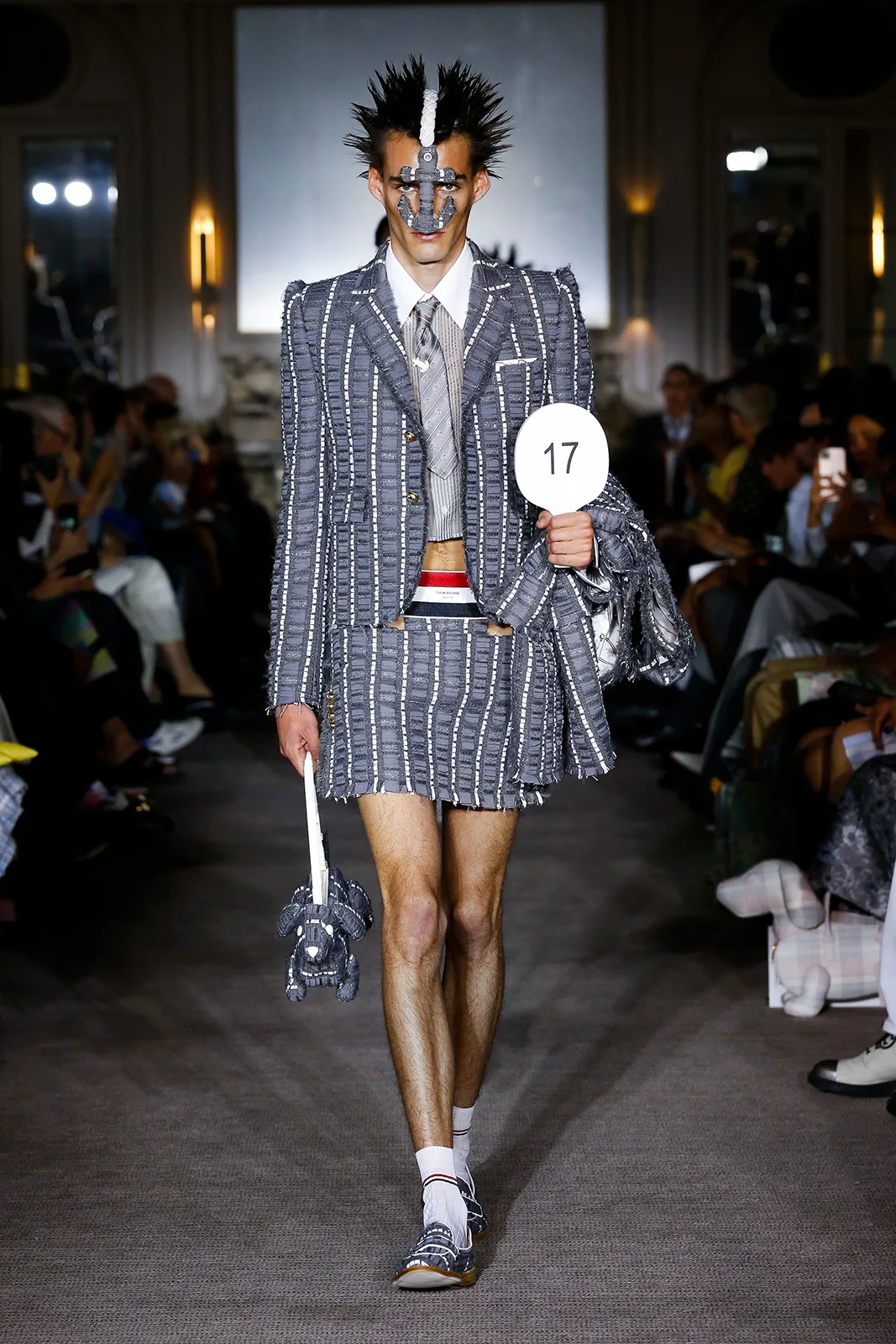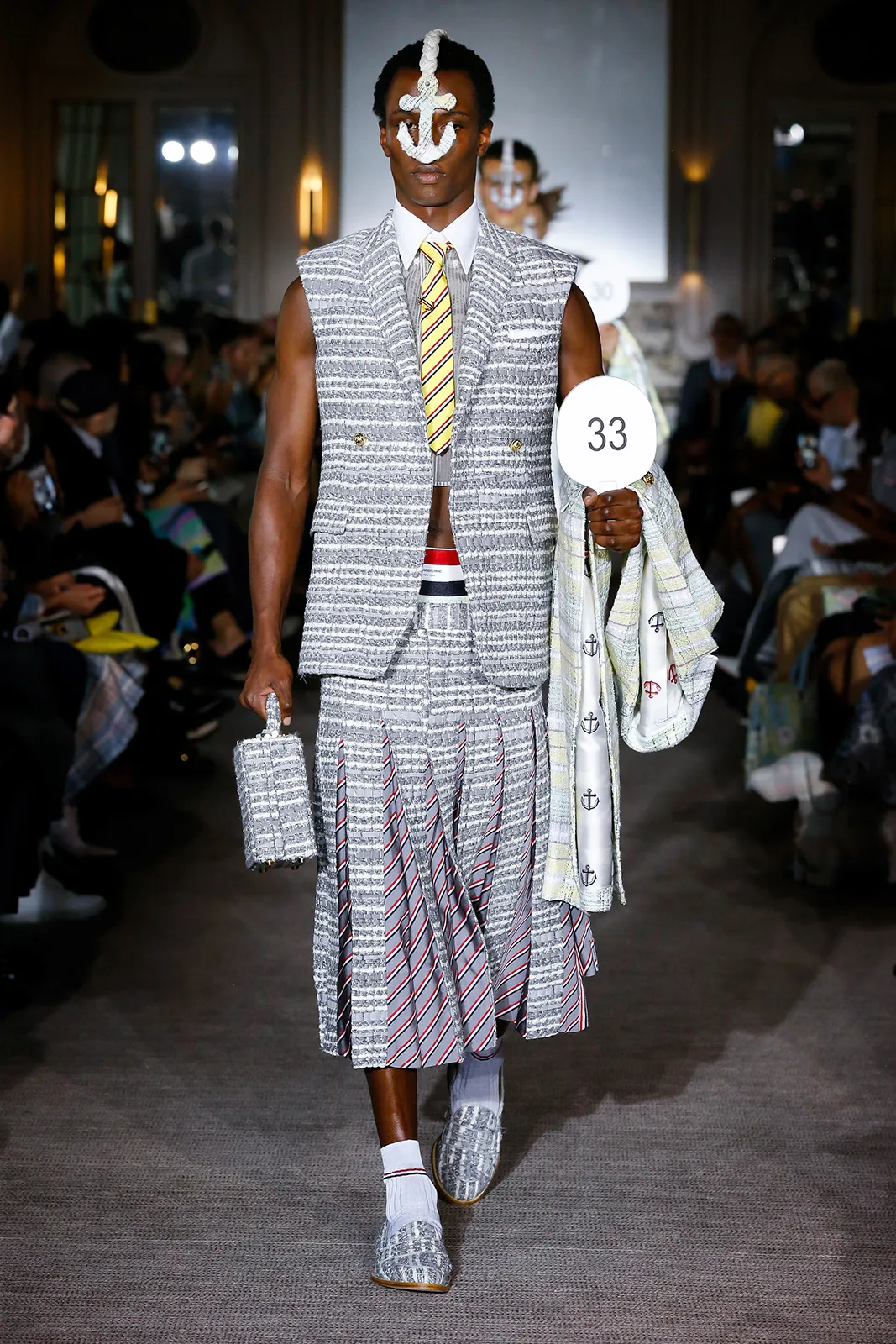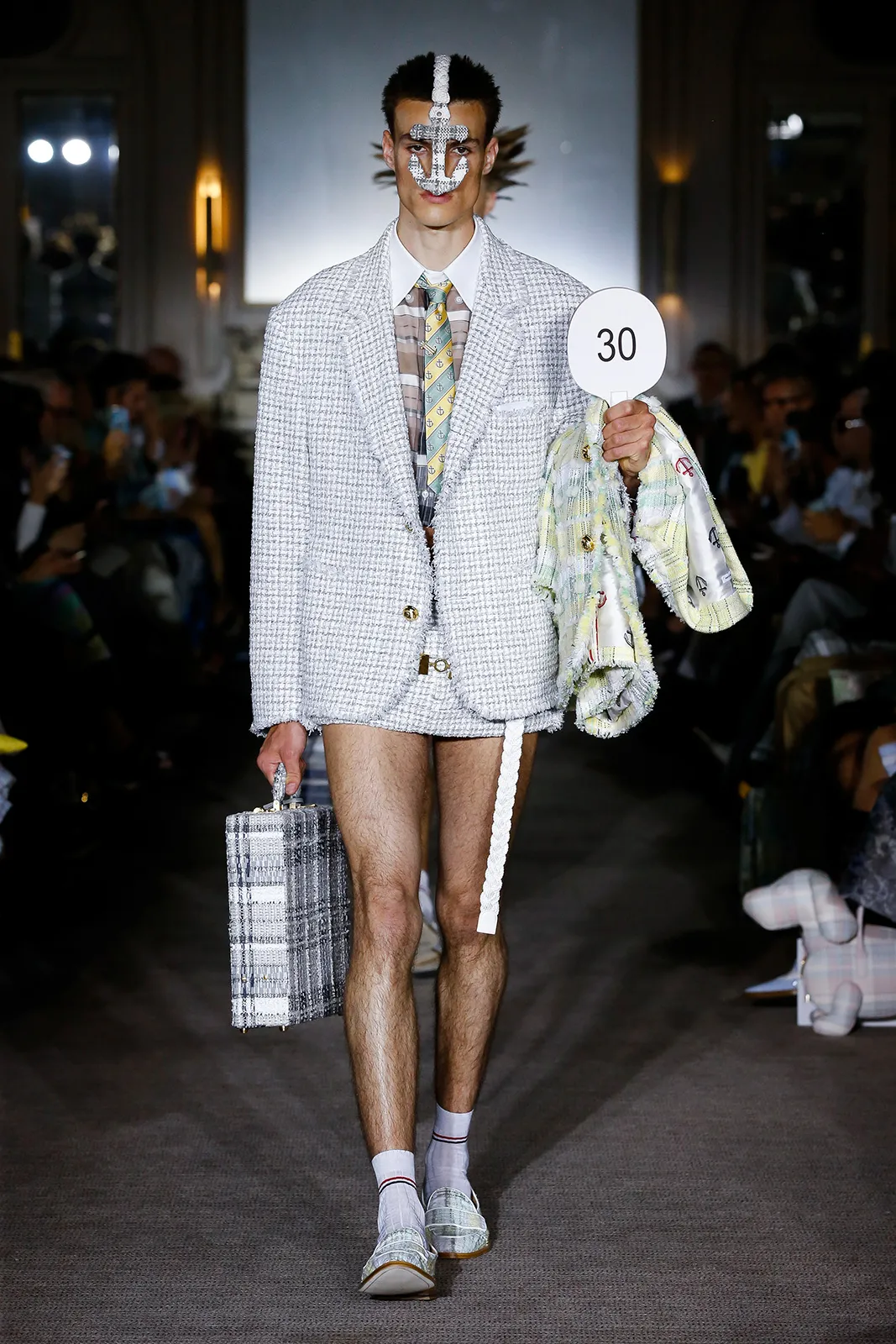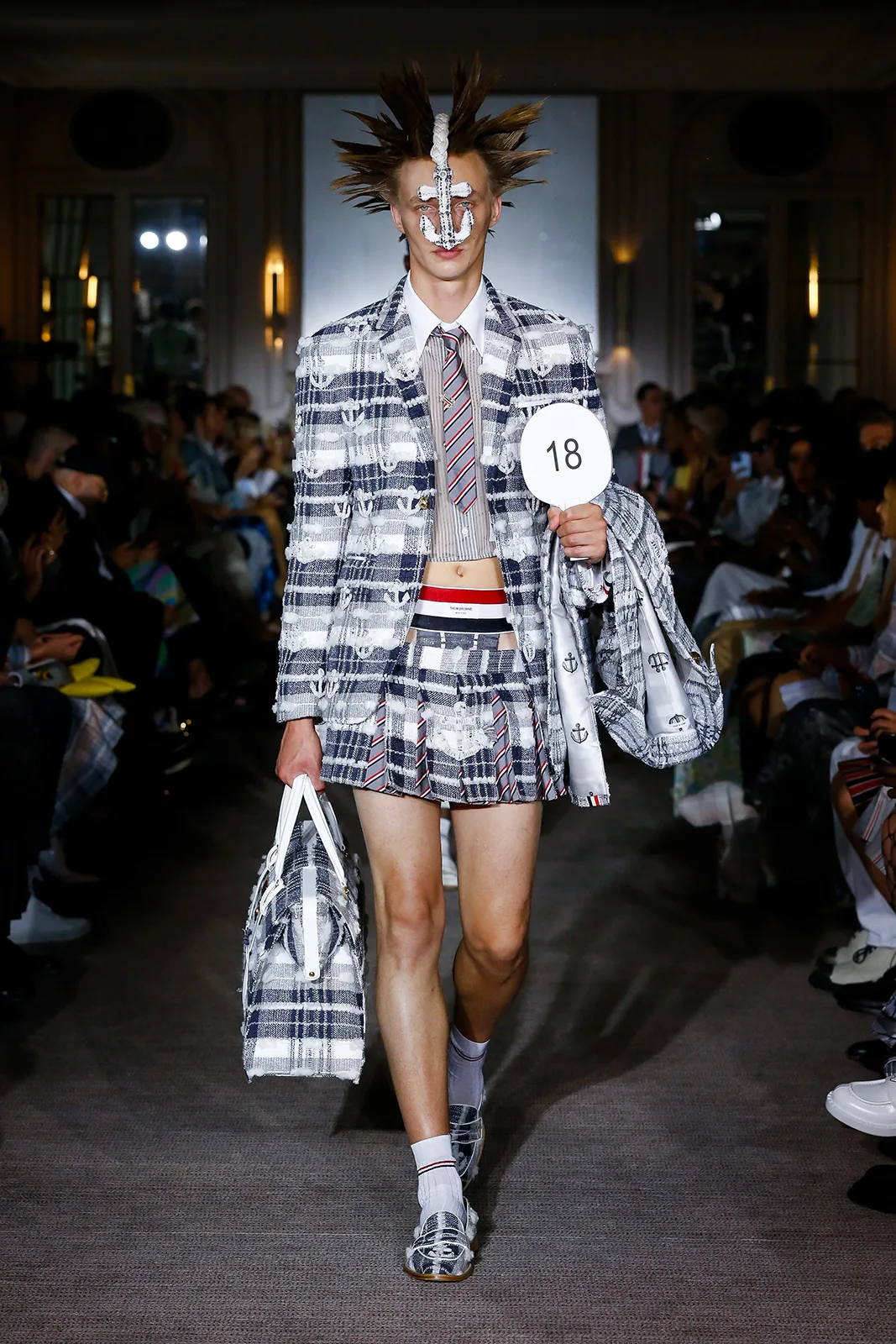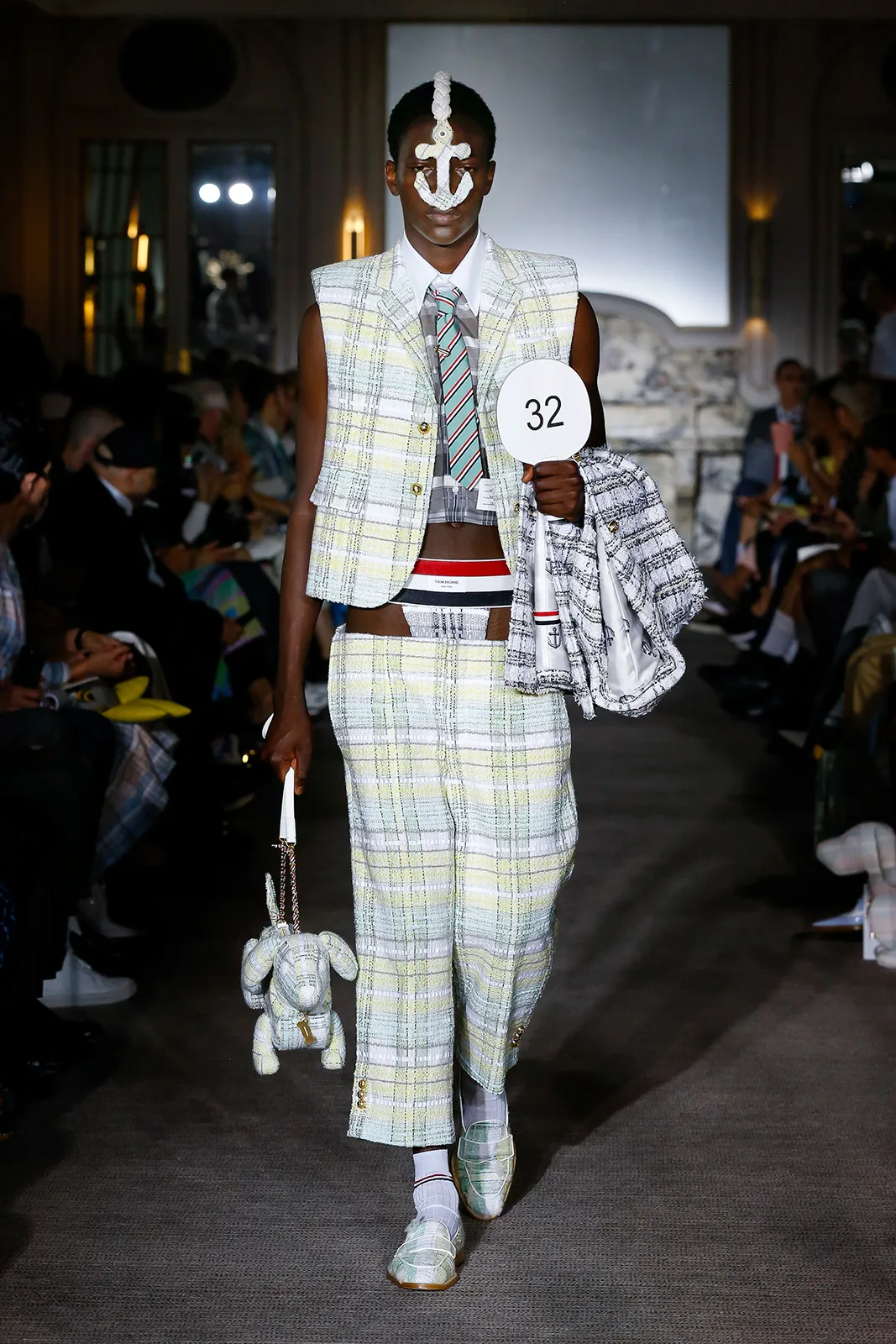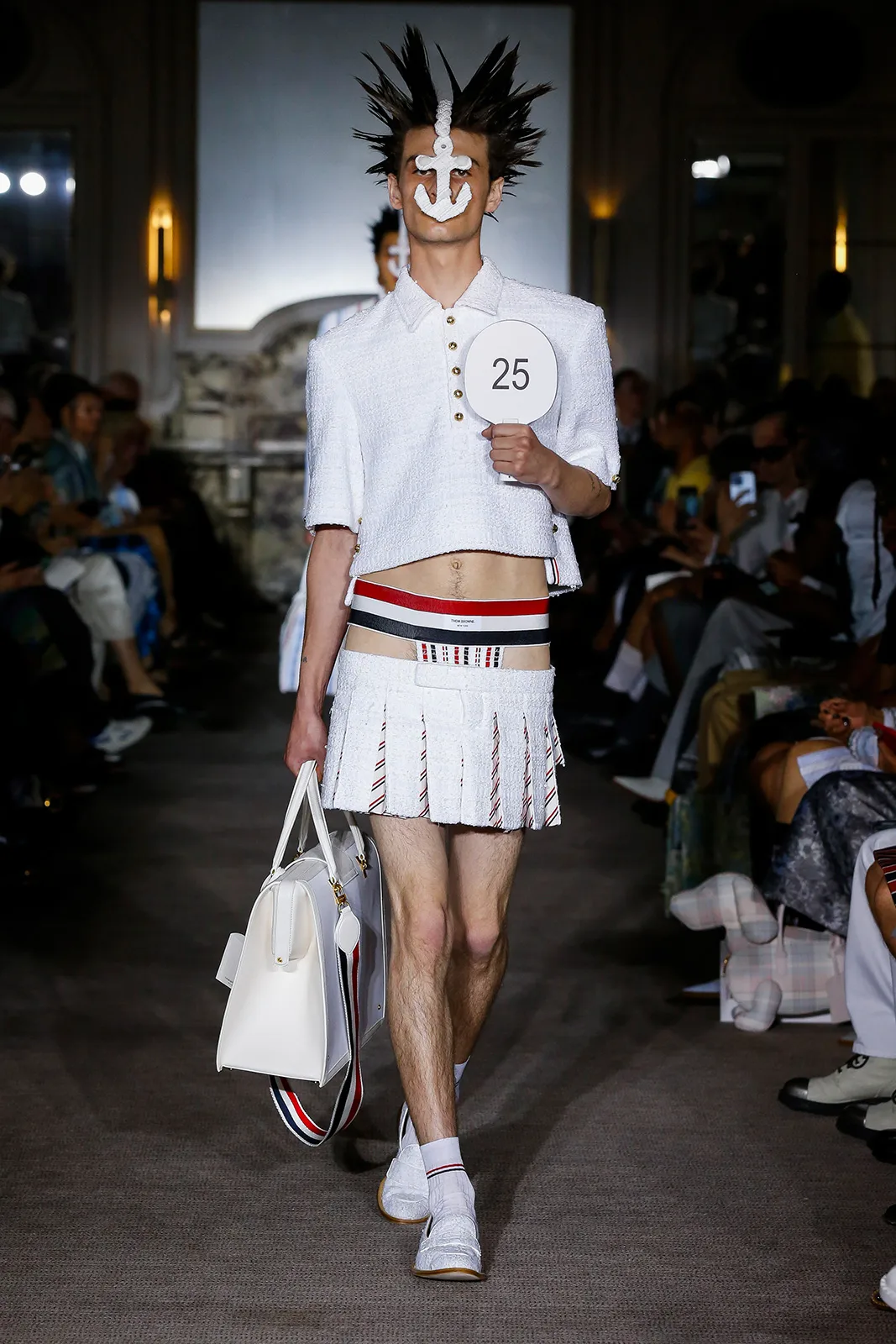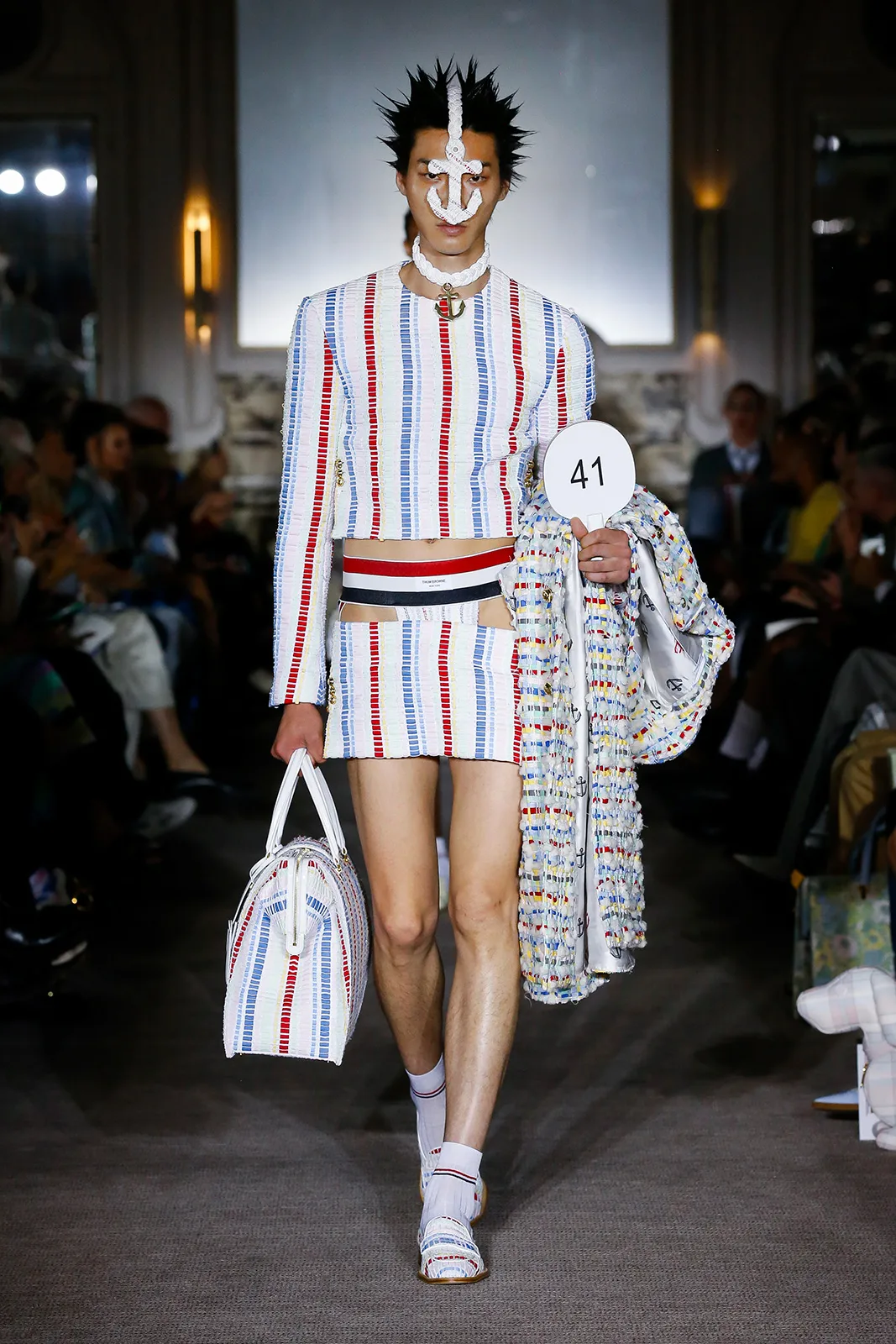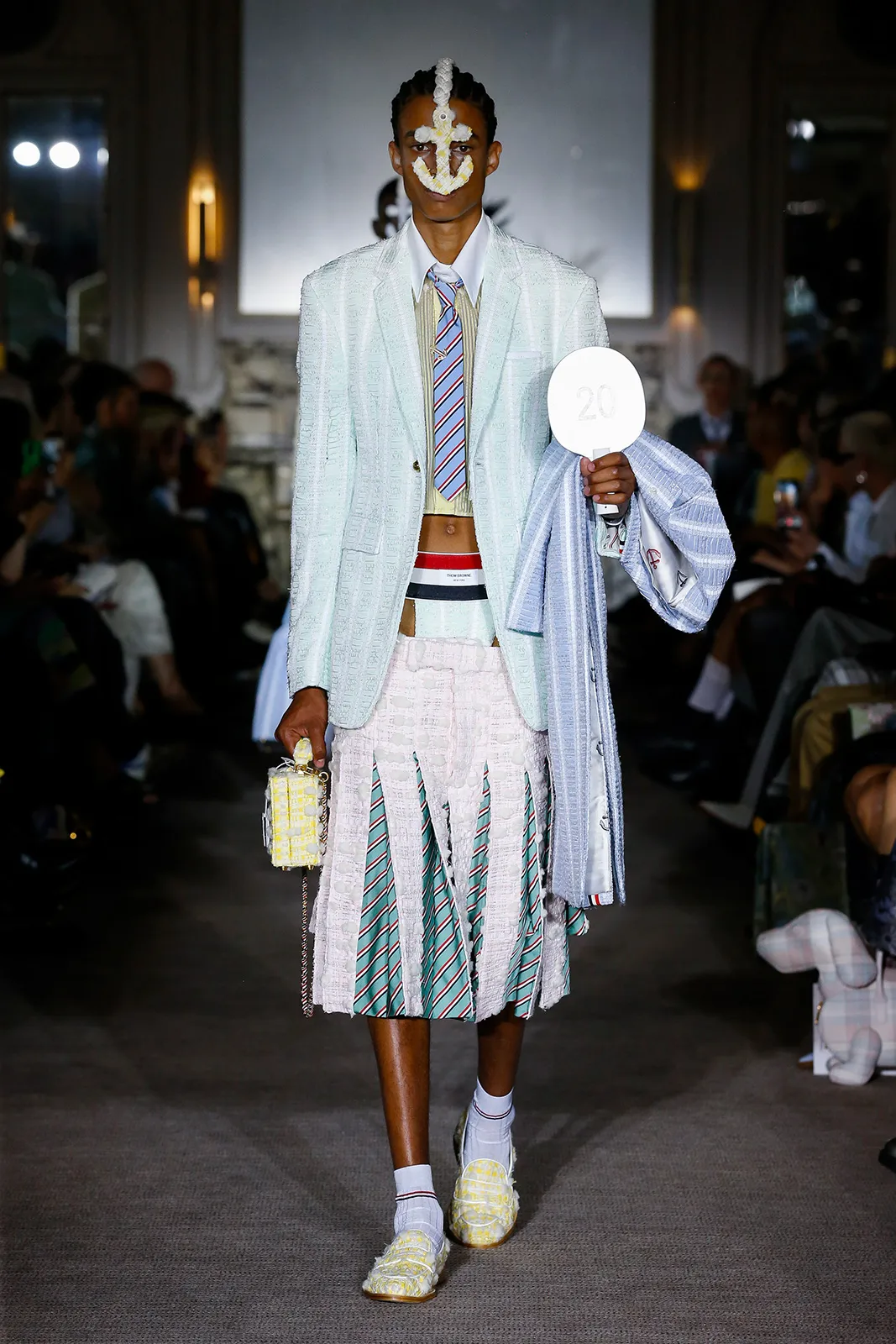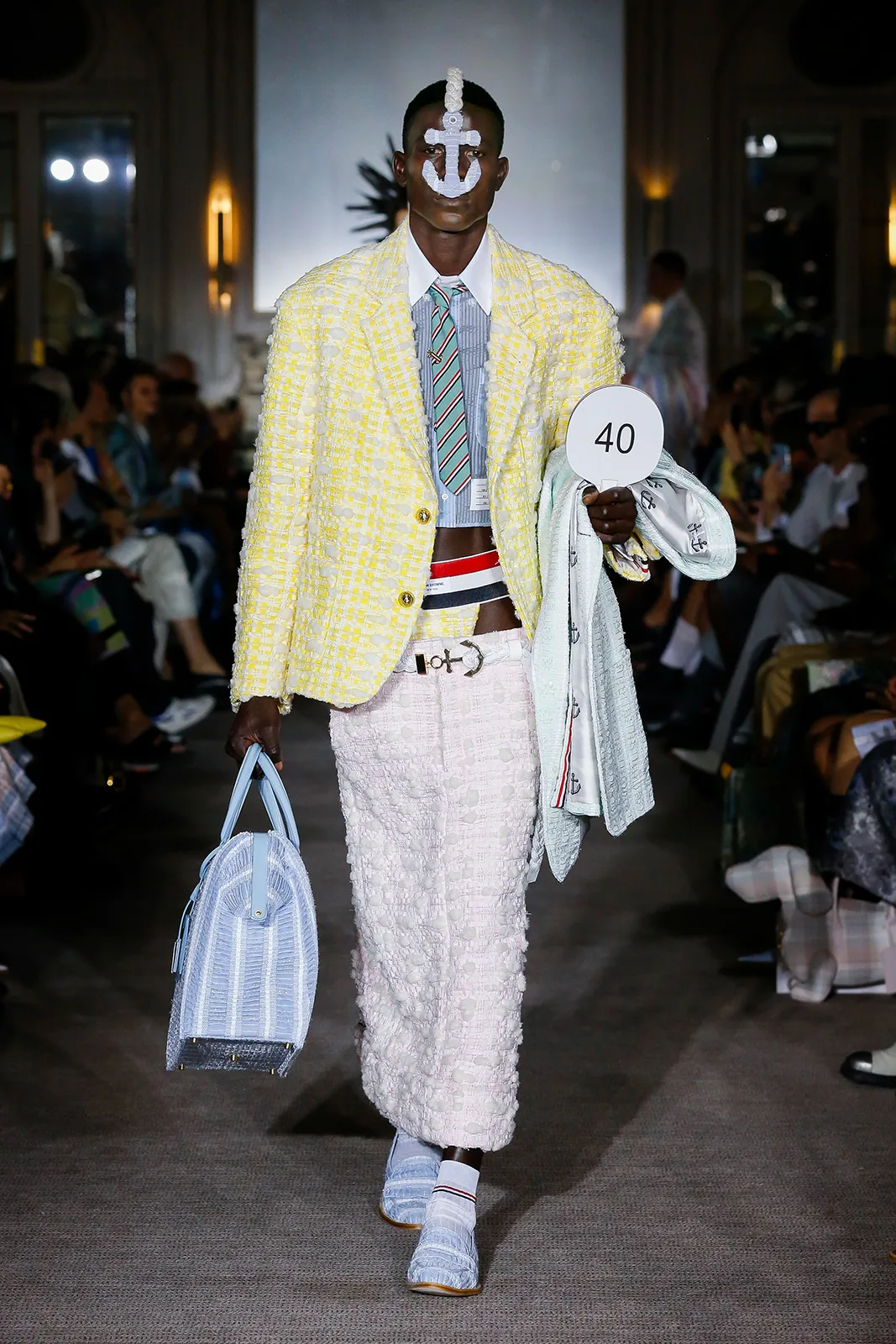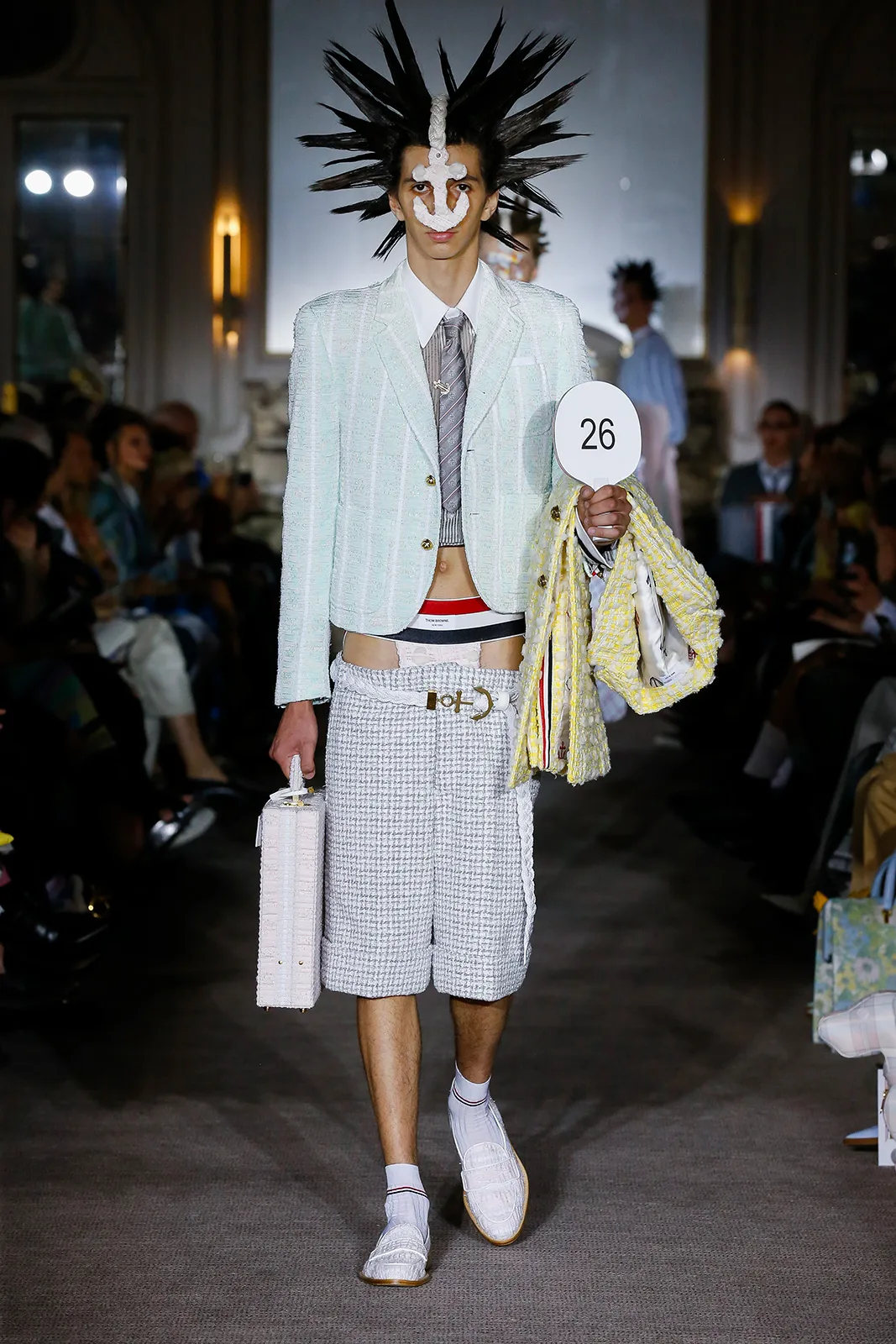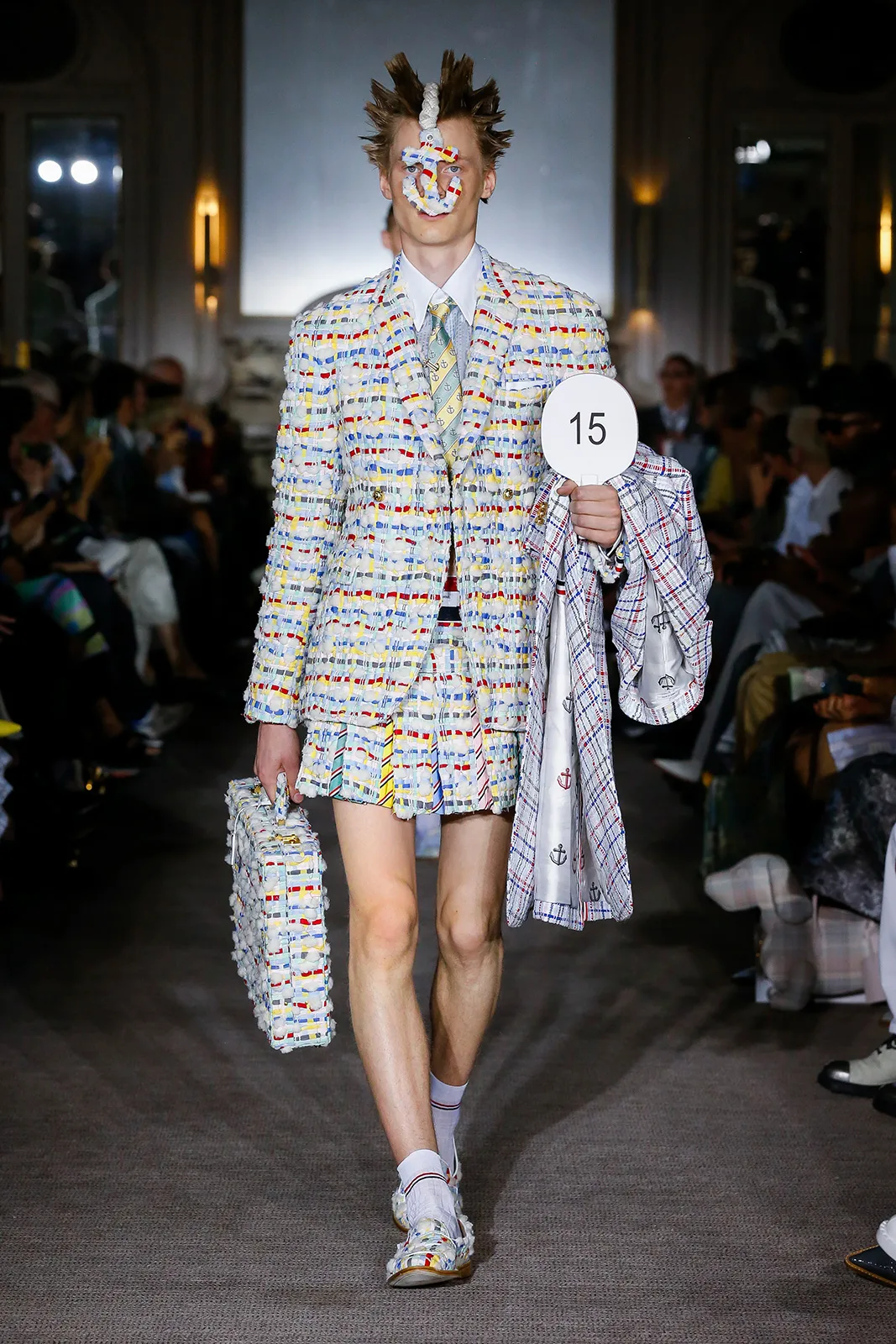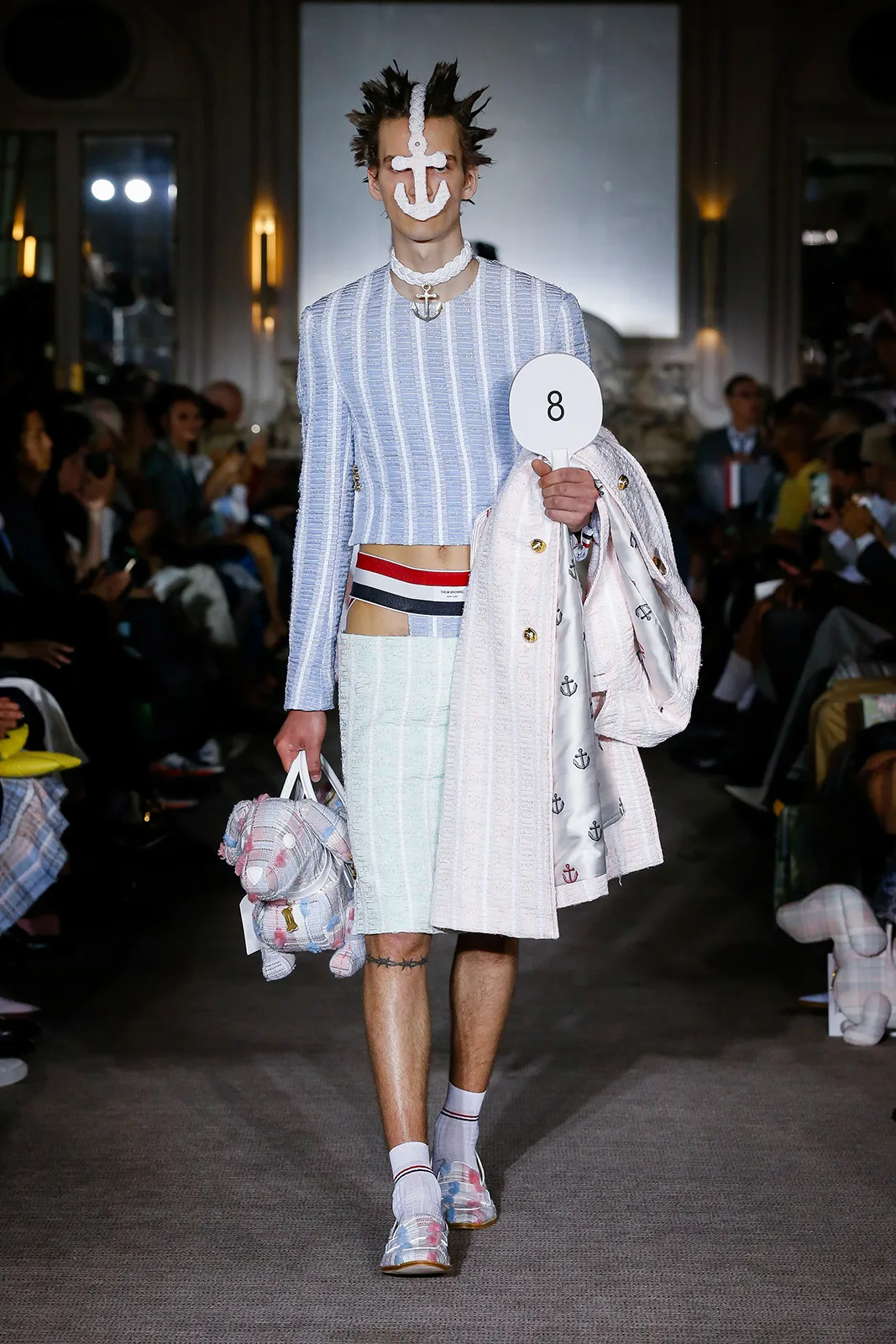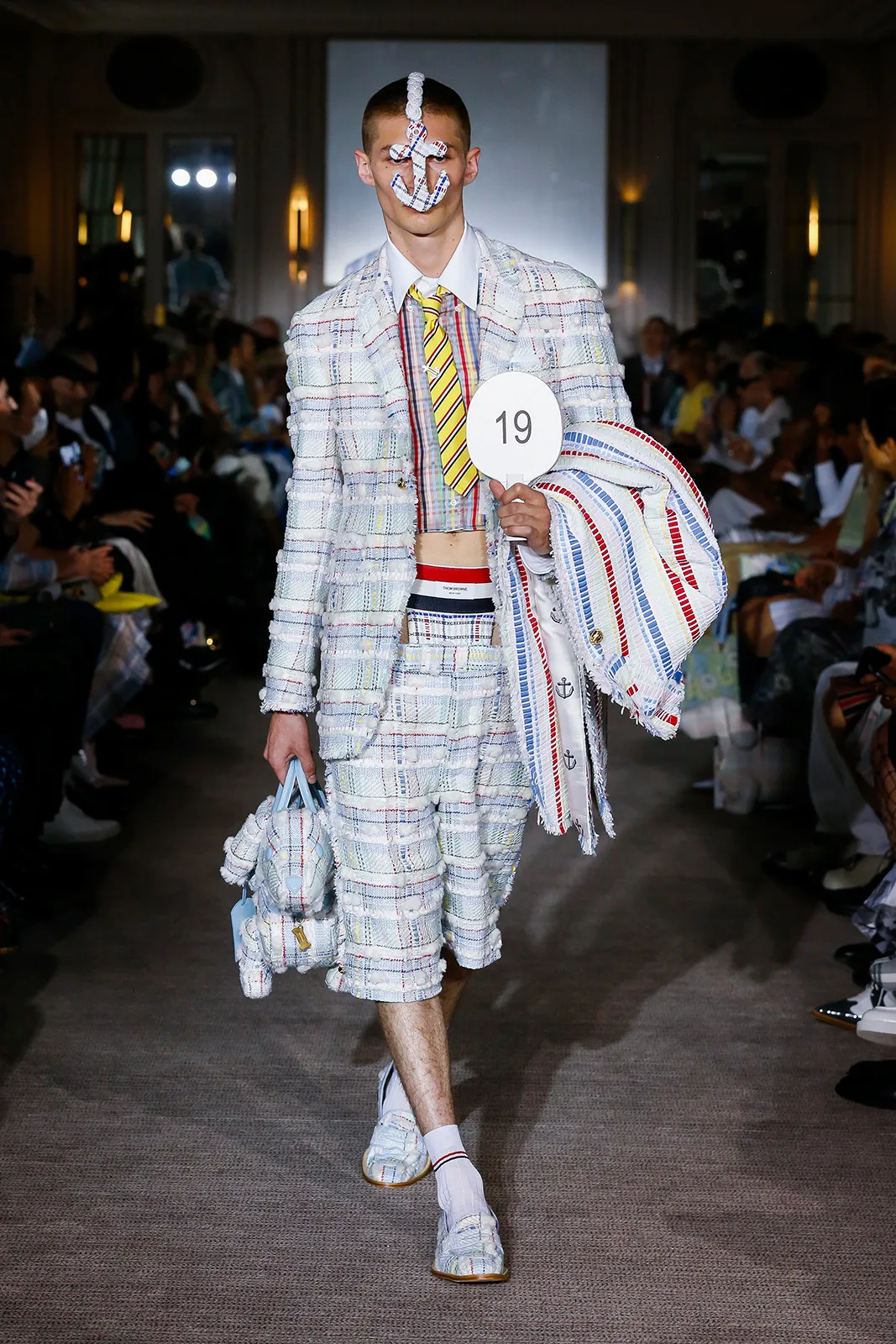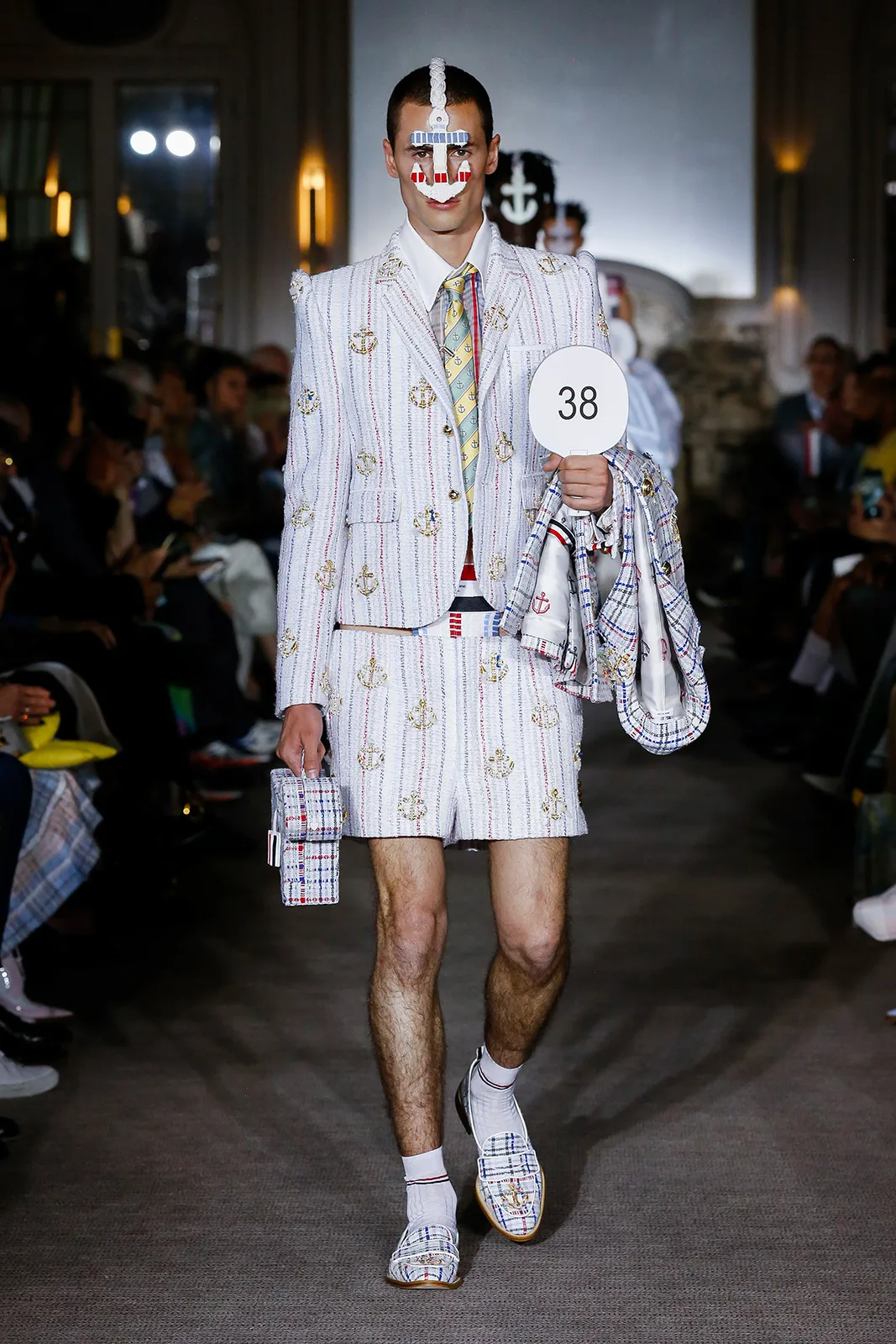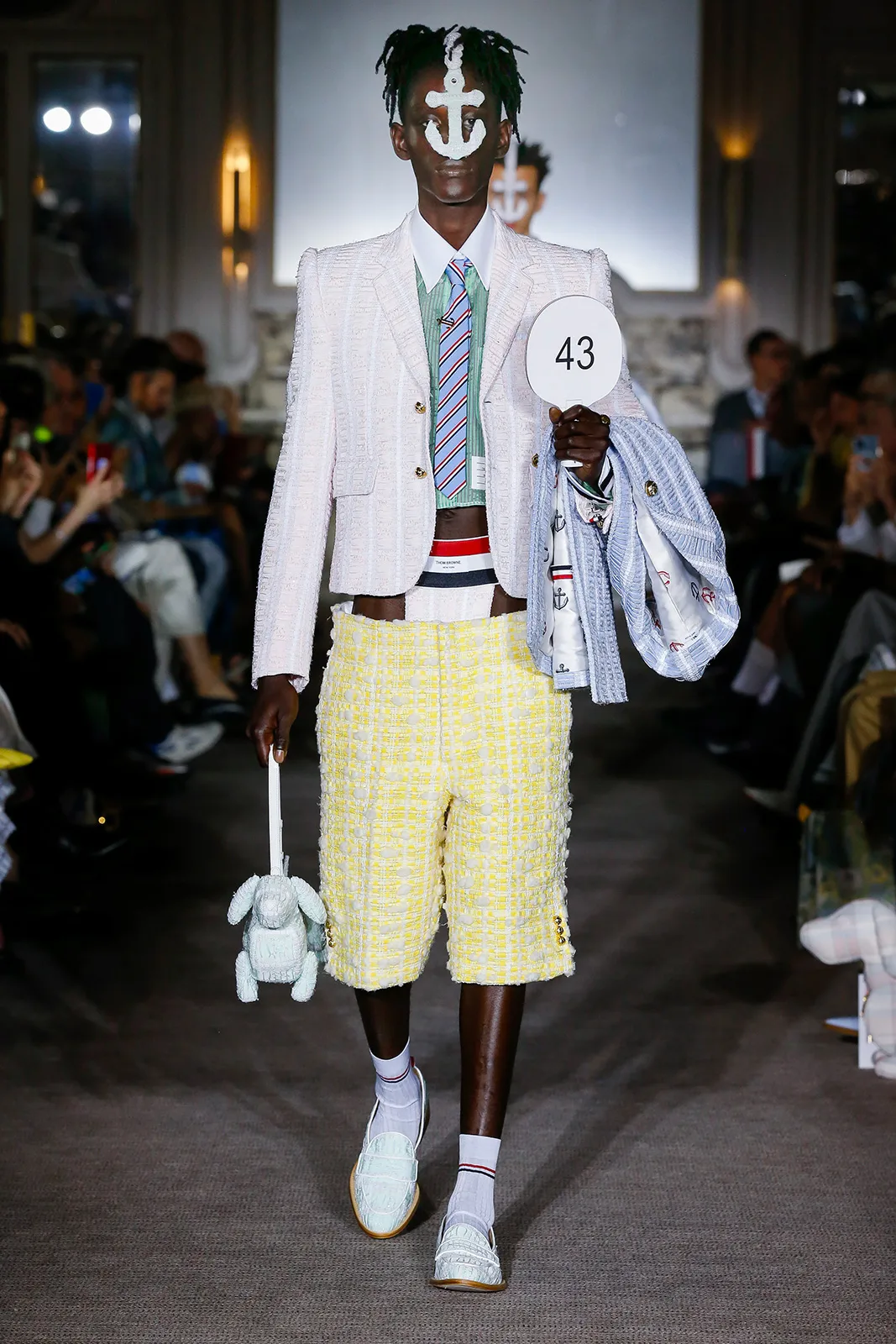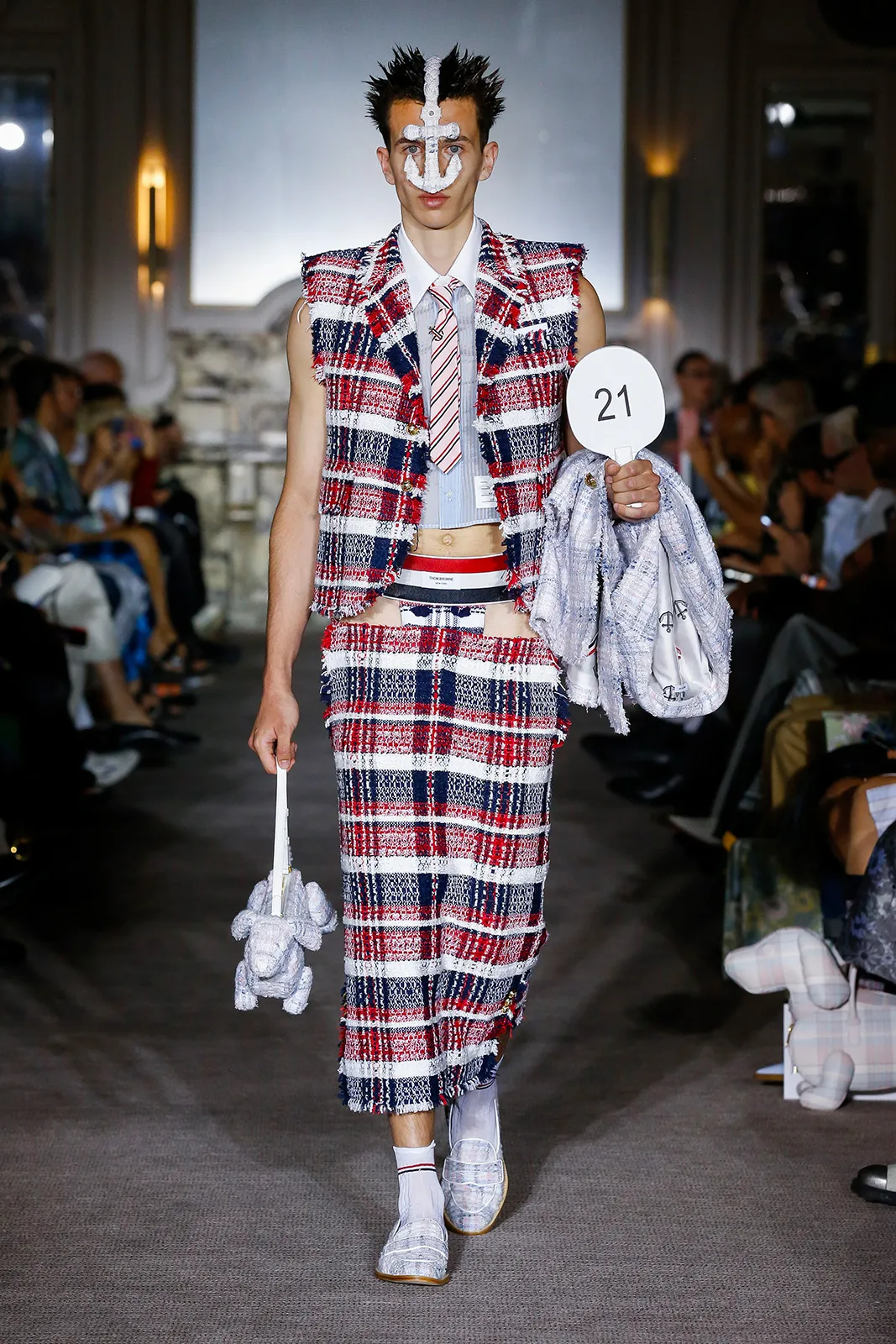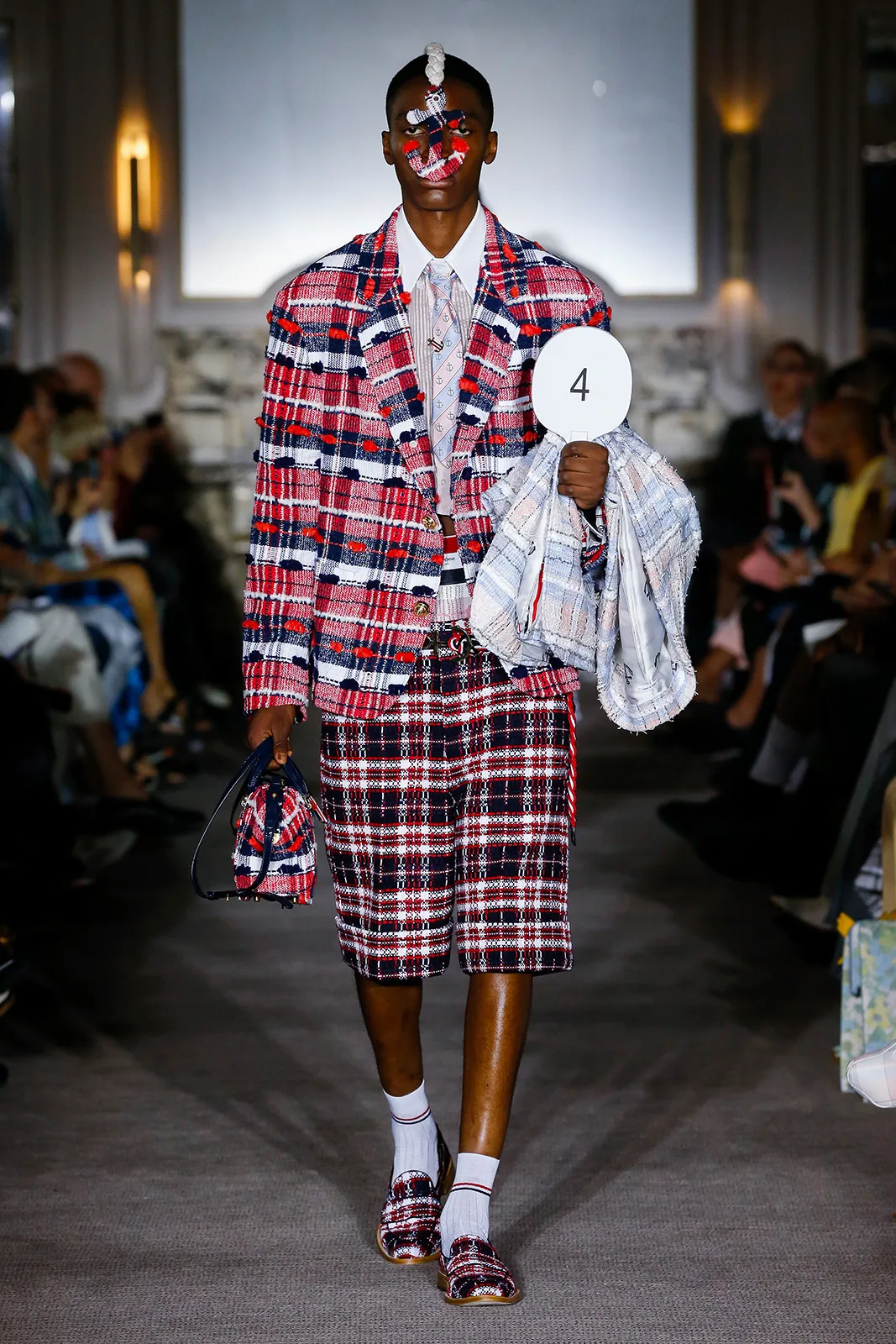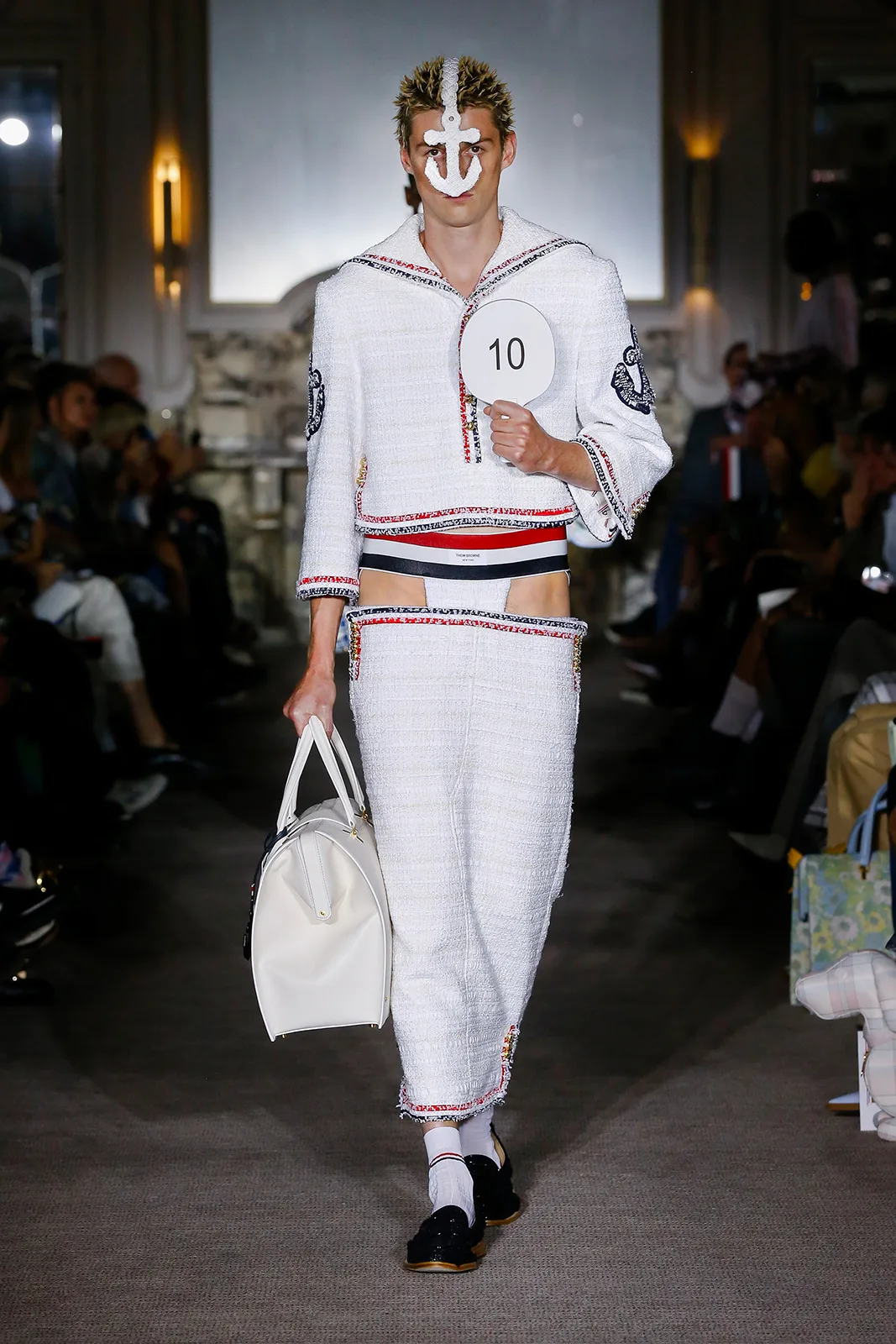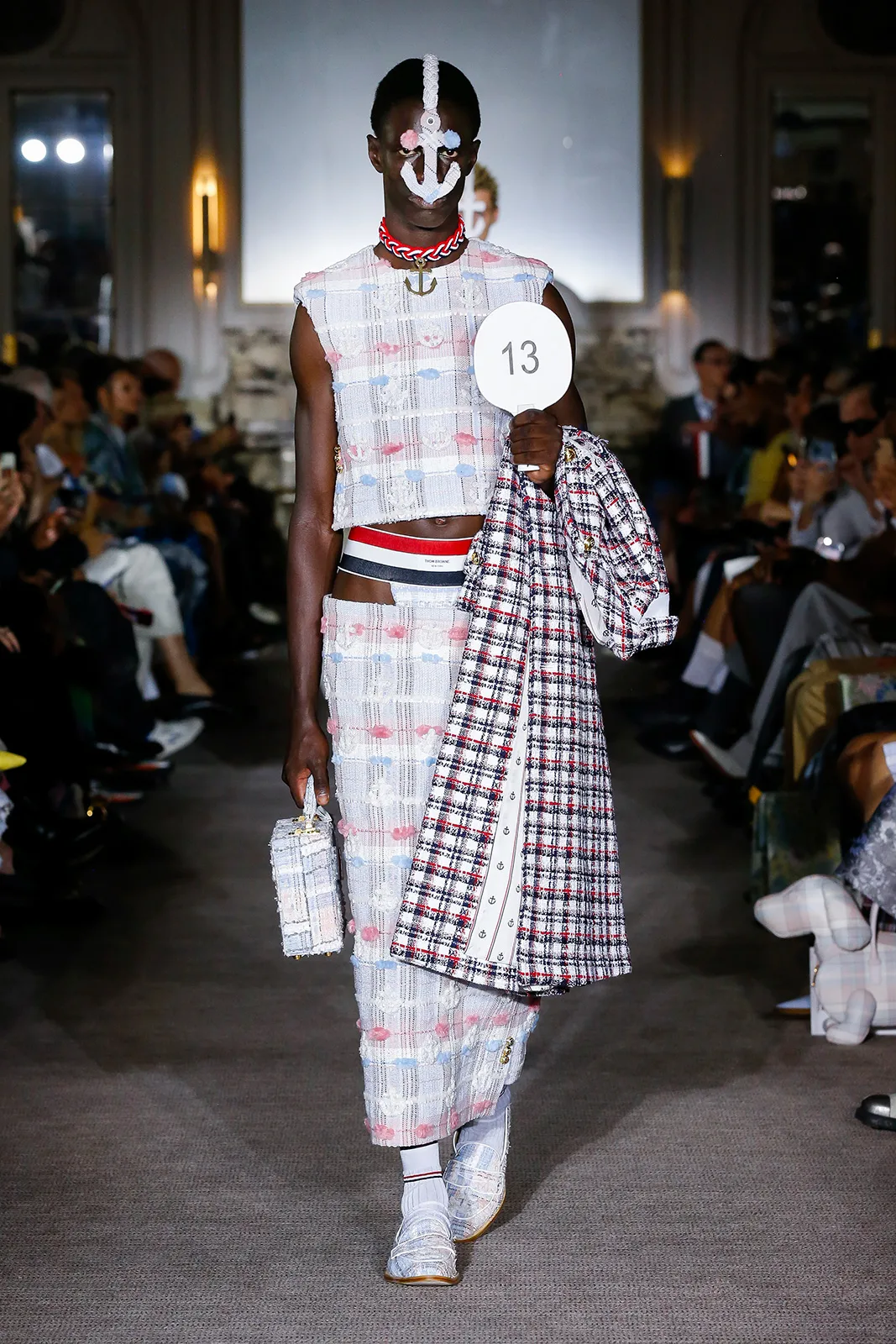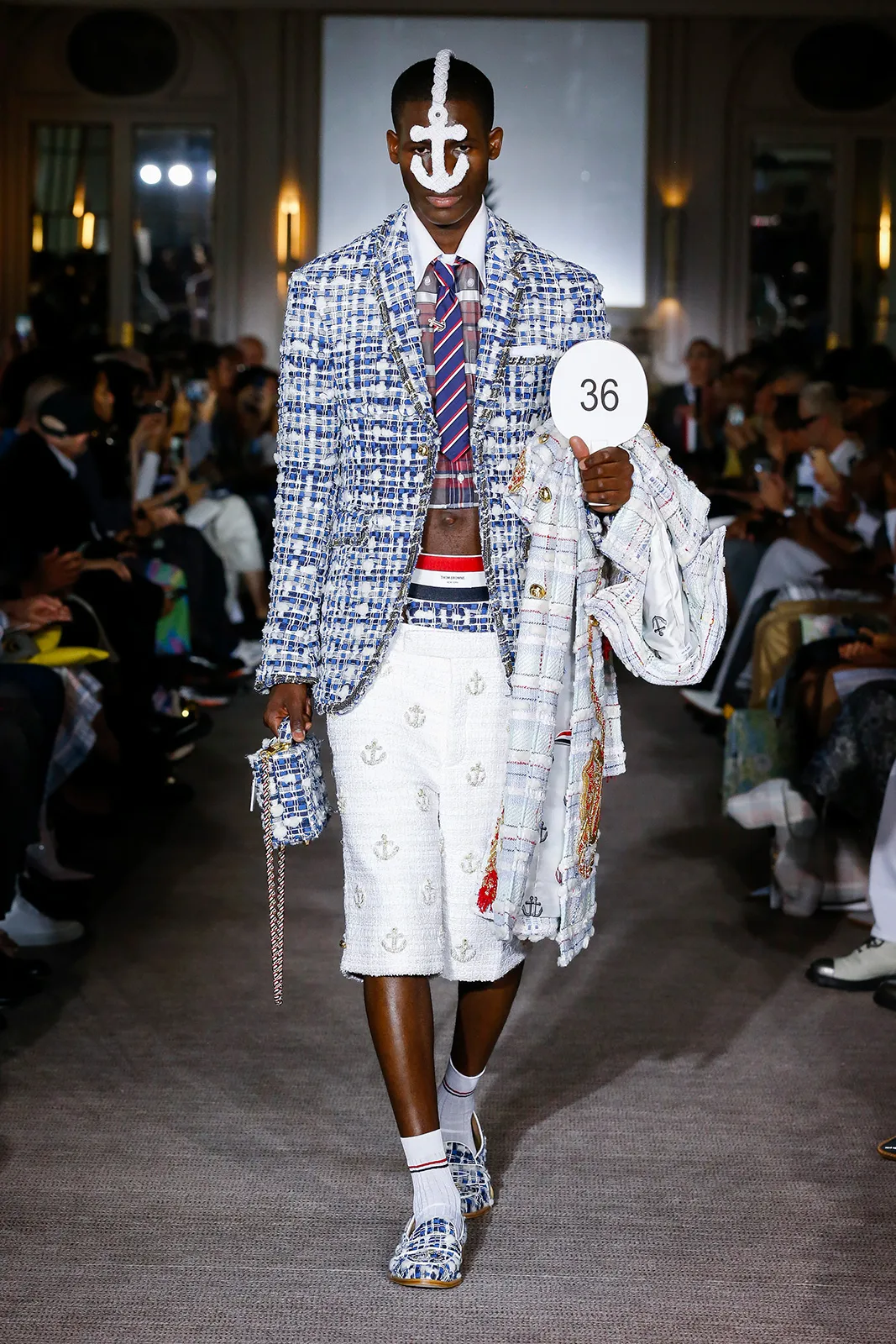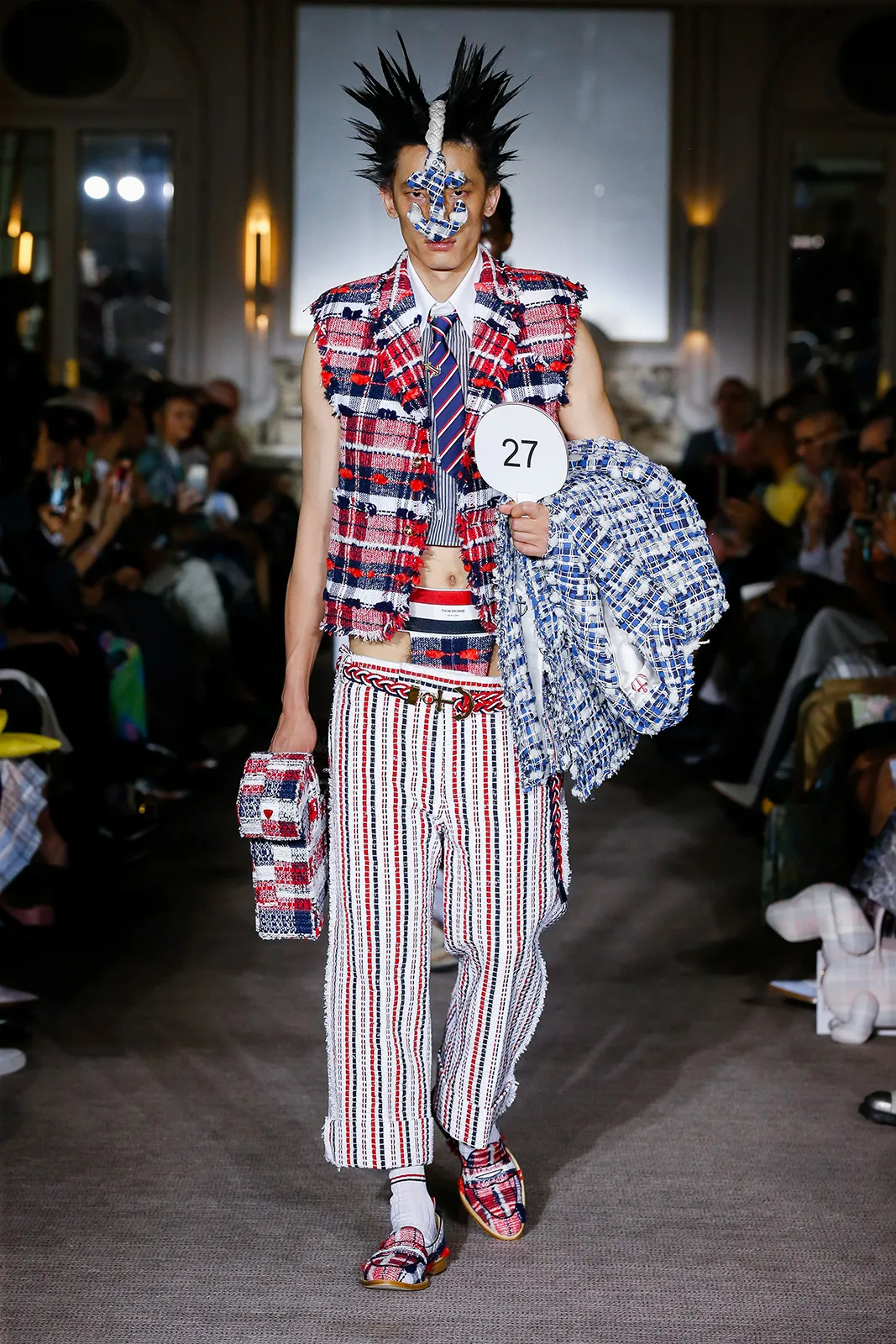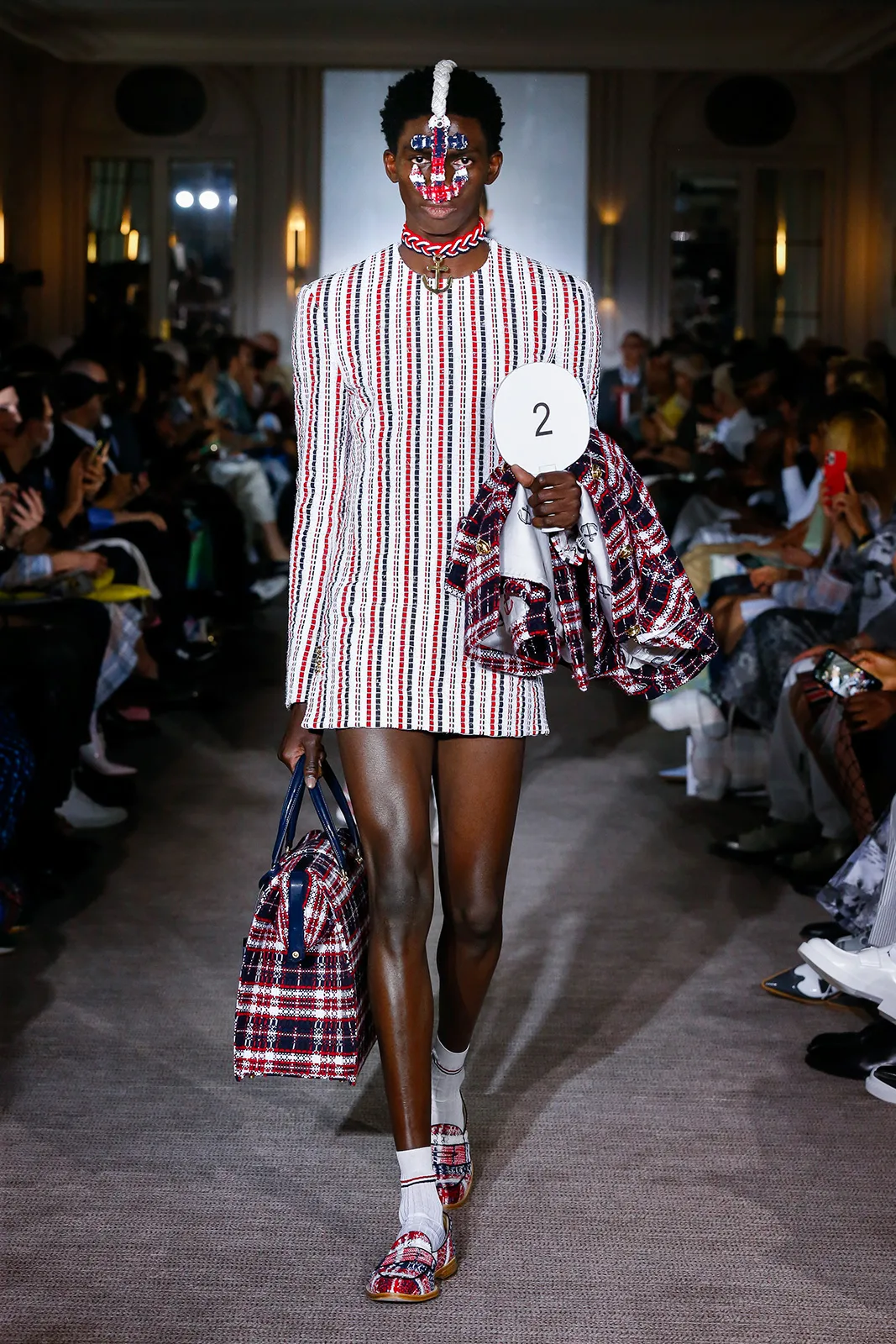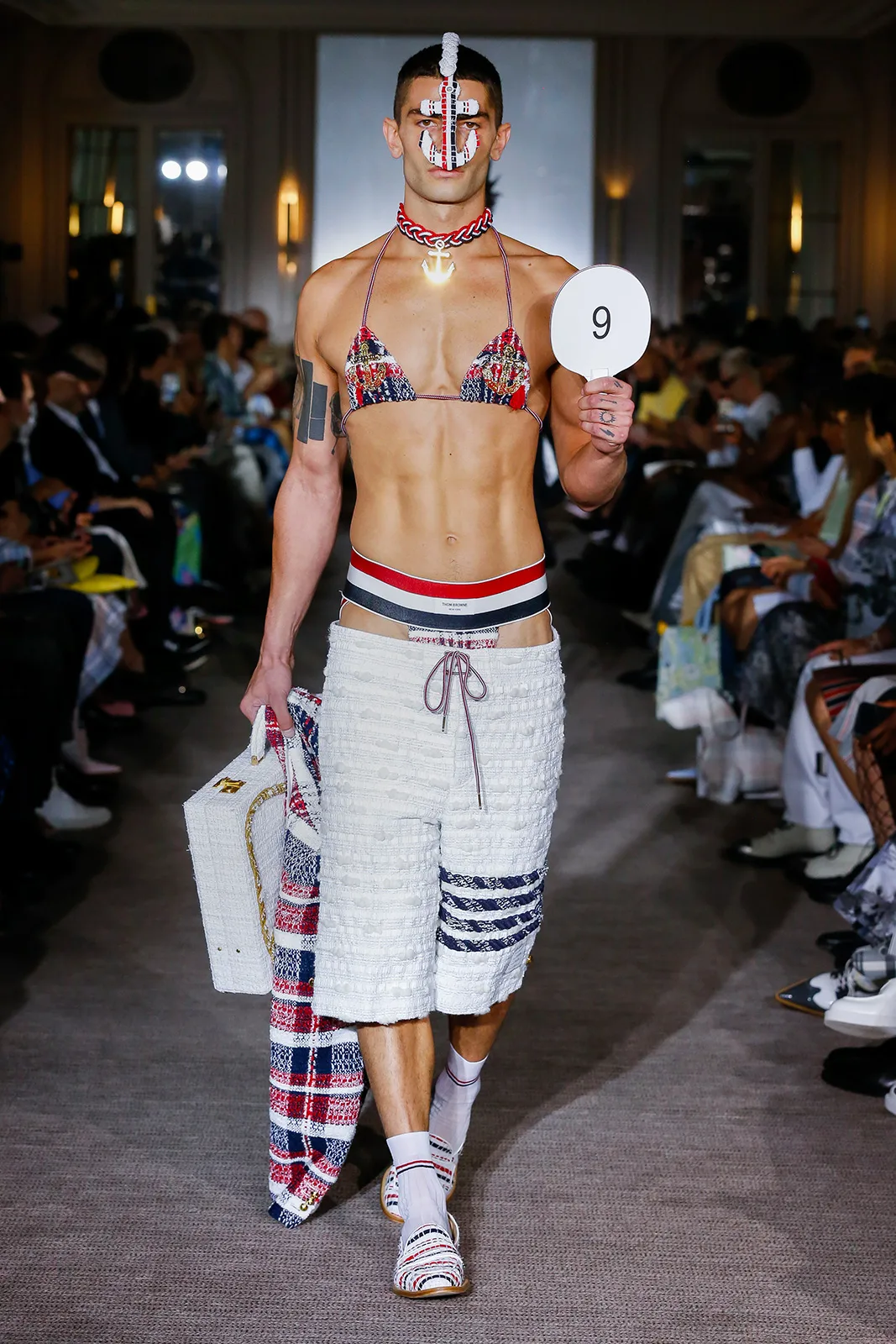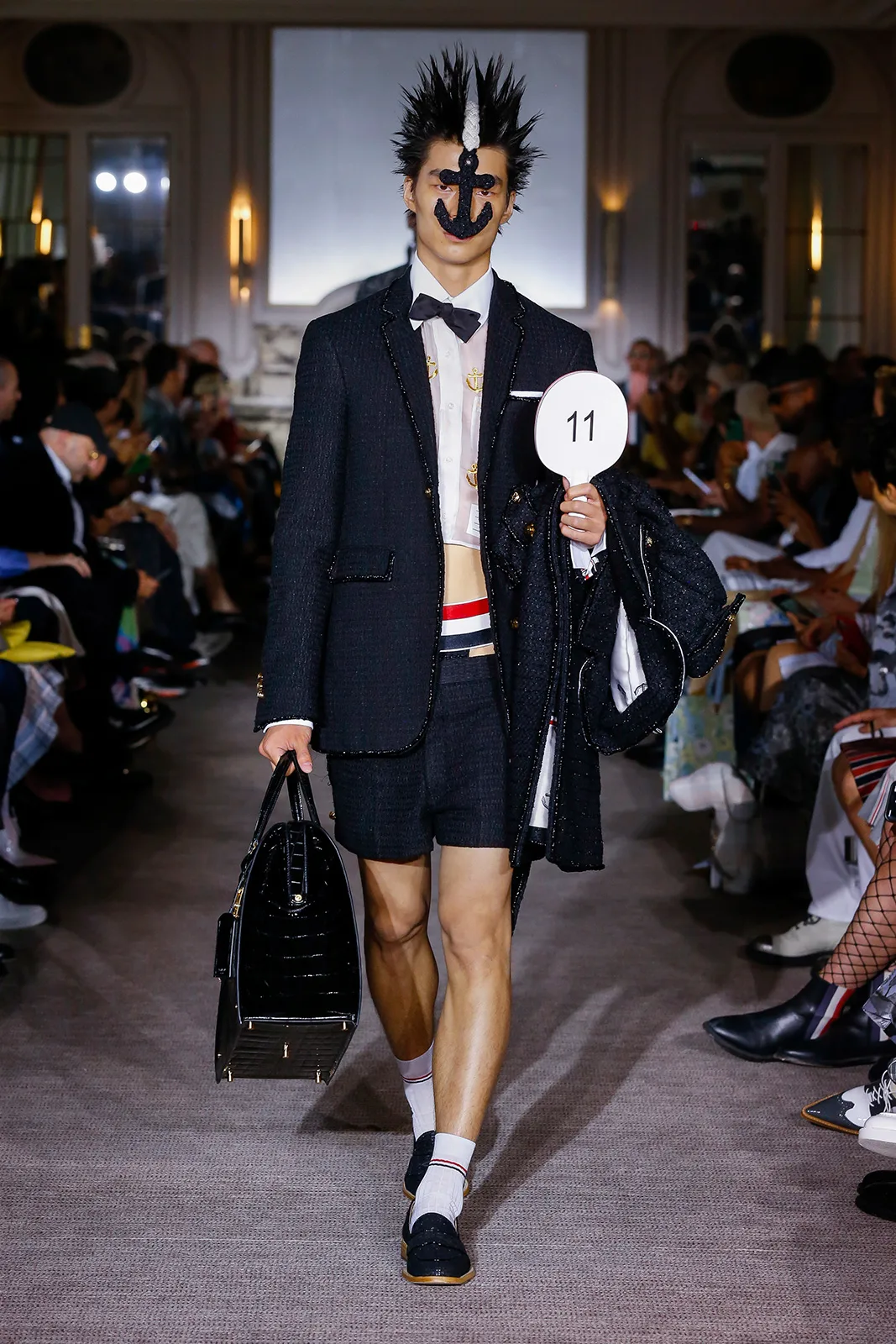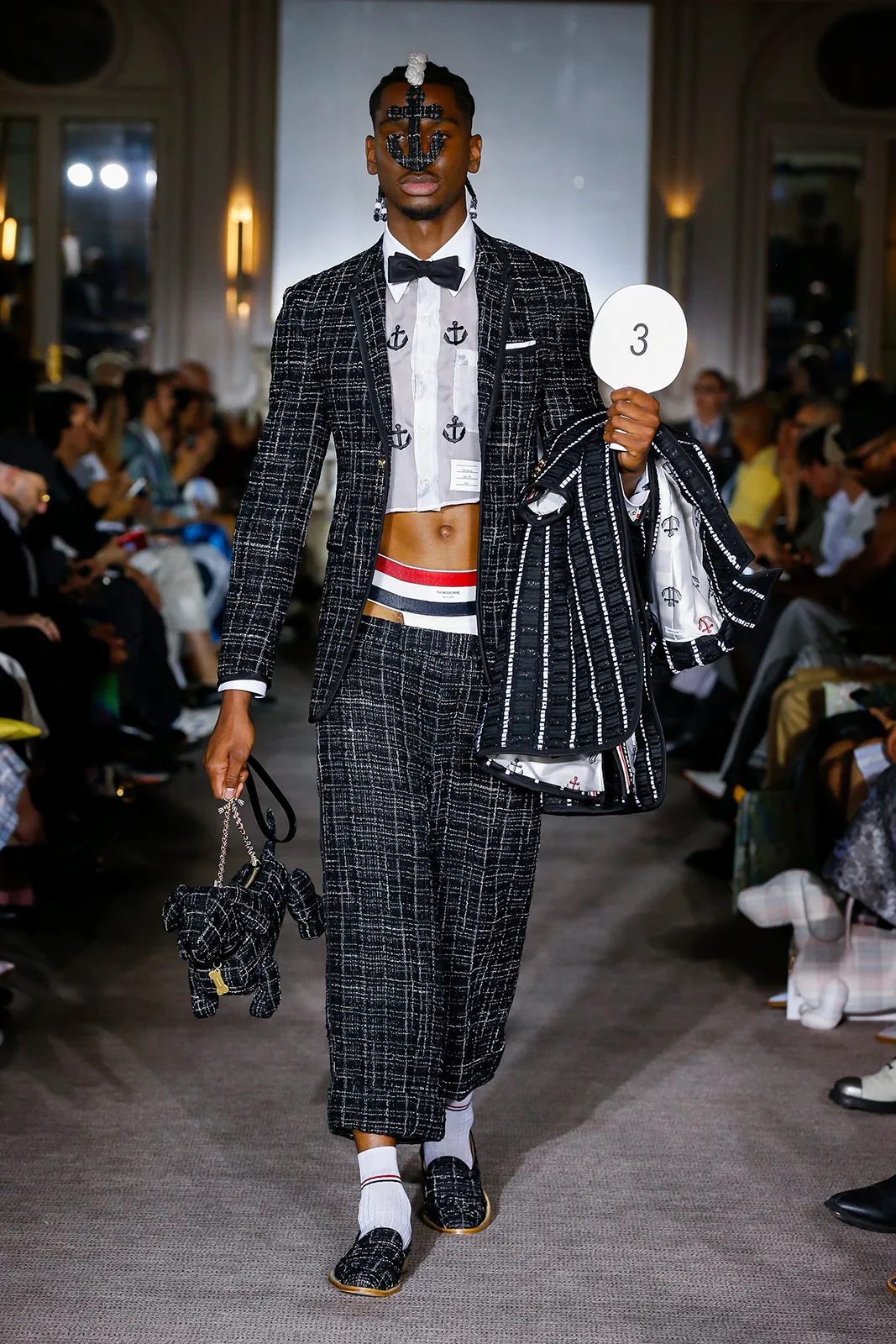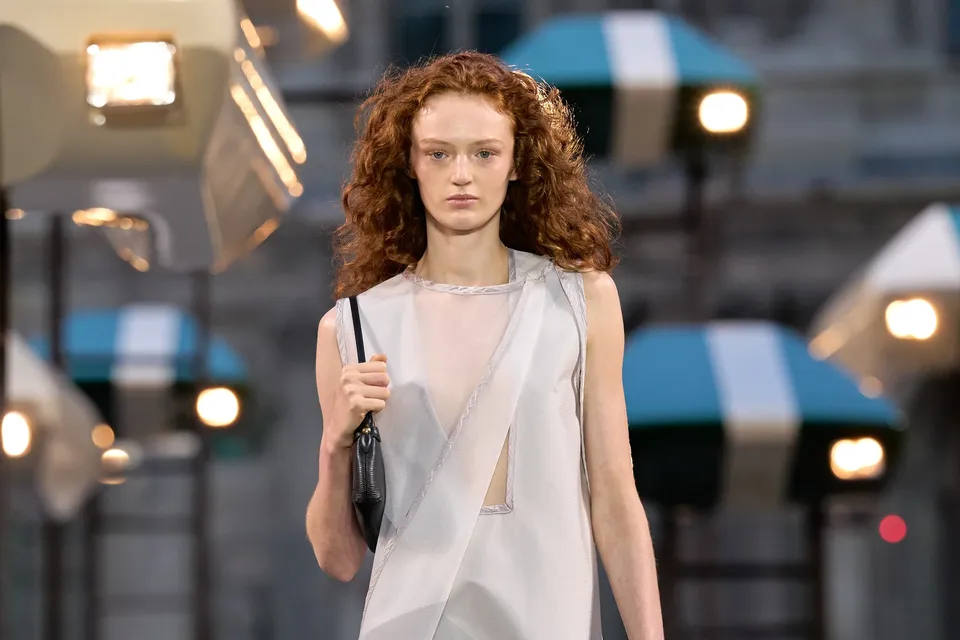
After 2 years away from the Paris runways, New York City designer Thom Browne returns with his uniformed but increasingly disruptive universe. In a staging where the theatricality and camp spirit already iconic of the brand were not missing, the male closet is invaded by traditionally feminine colors, fabrics, and shapes, fading more and more the gender barriers in the garments, one of the main raisons d'être of the brand.
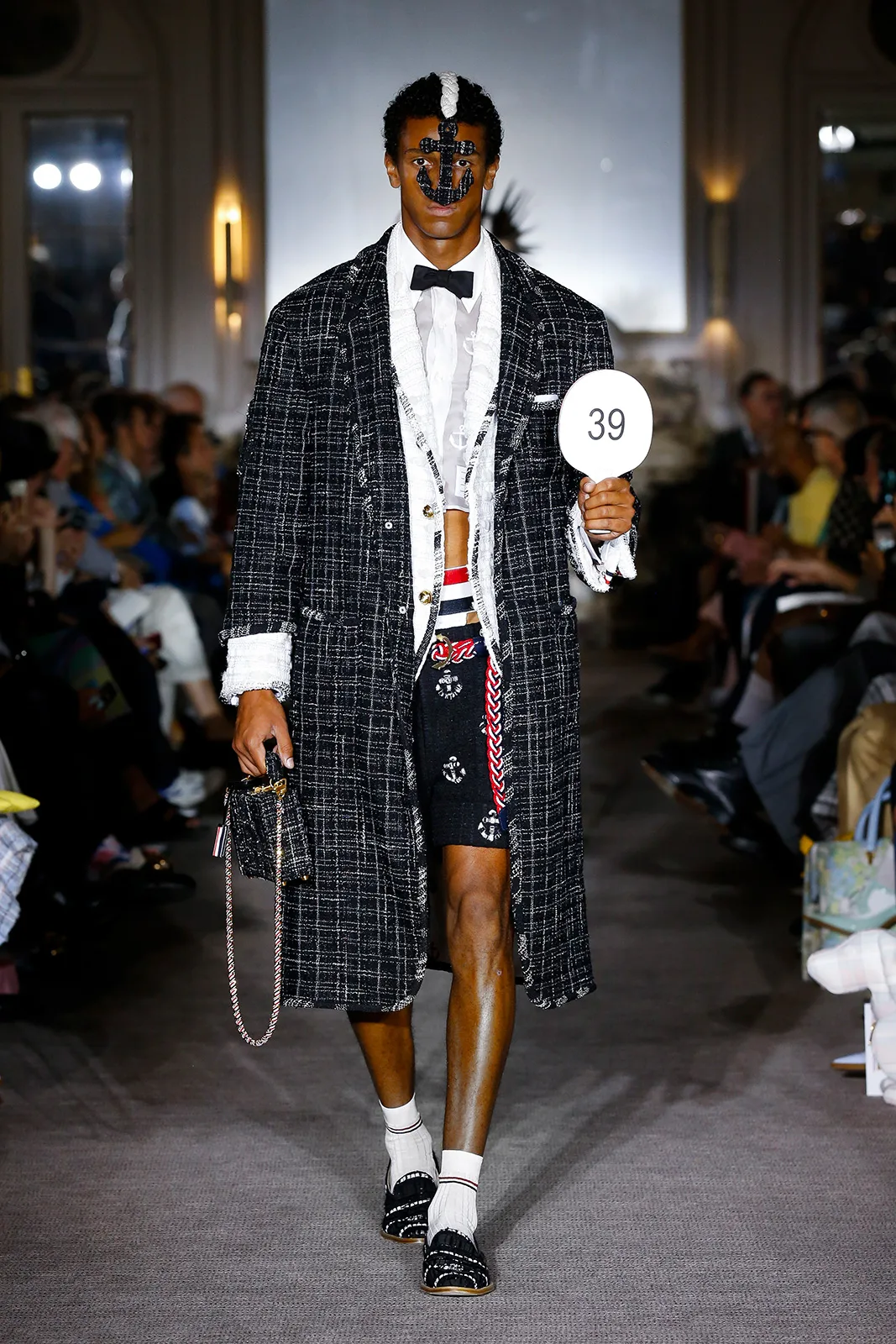
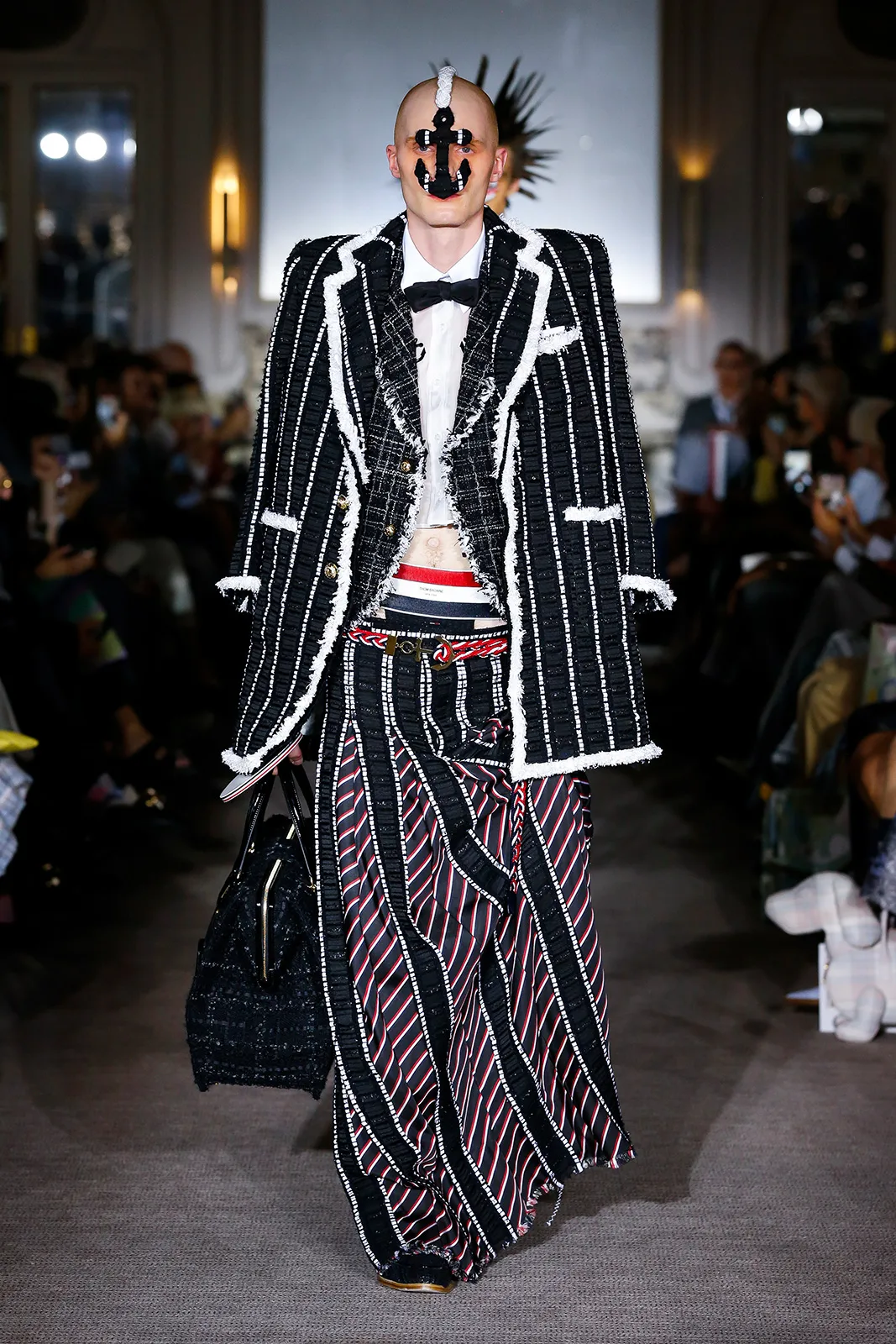
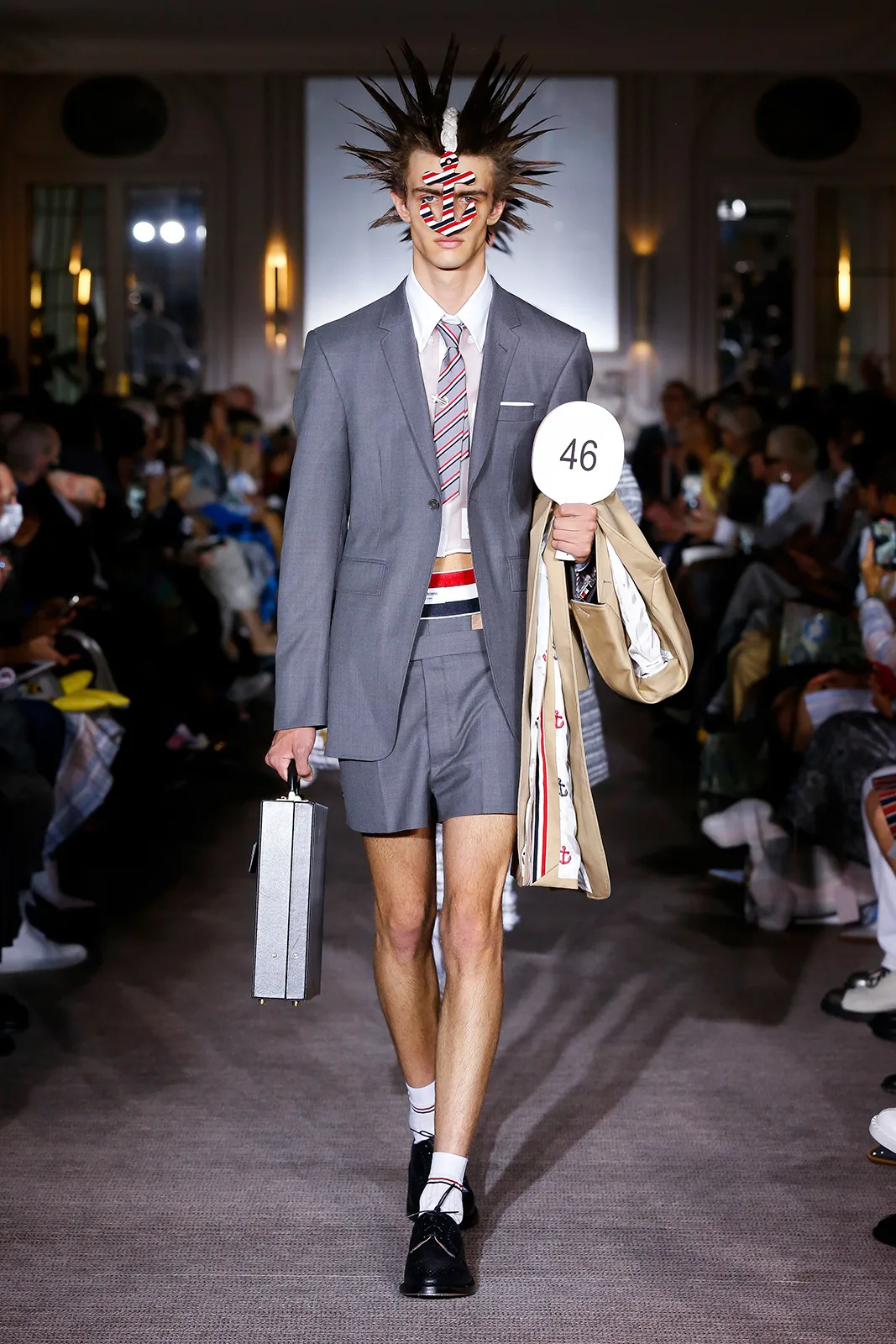
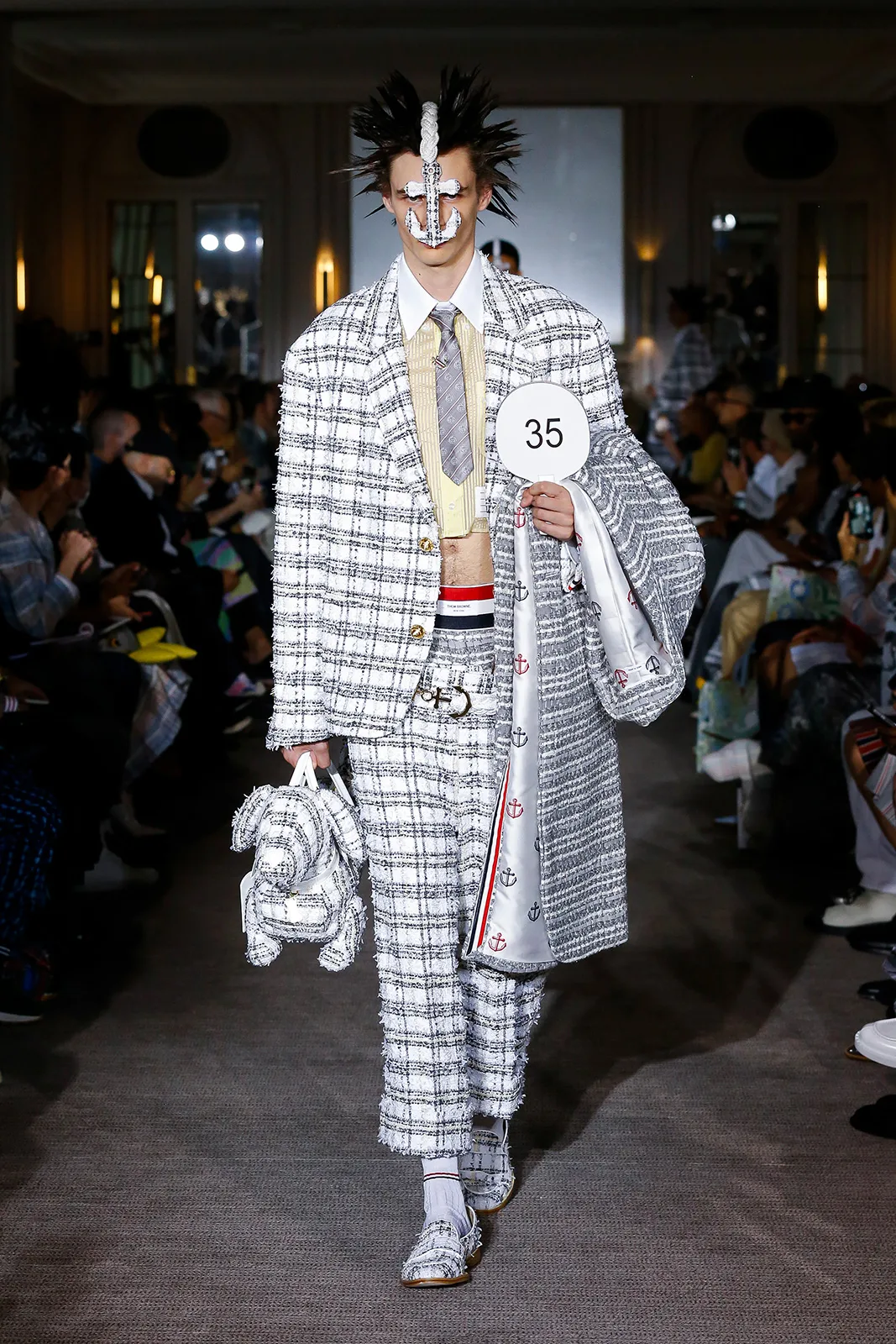
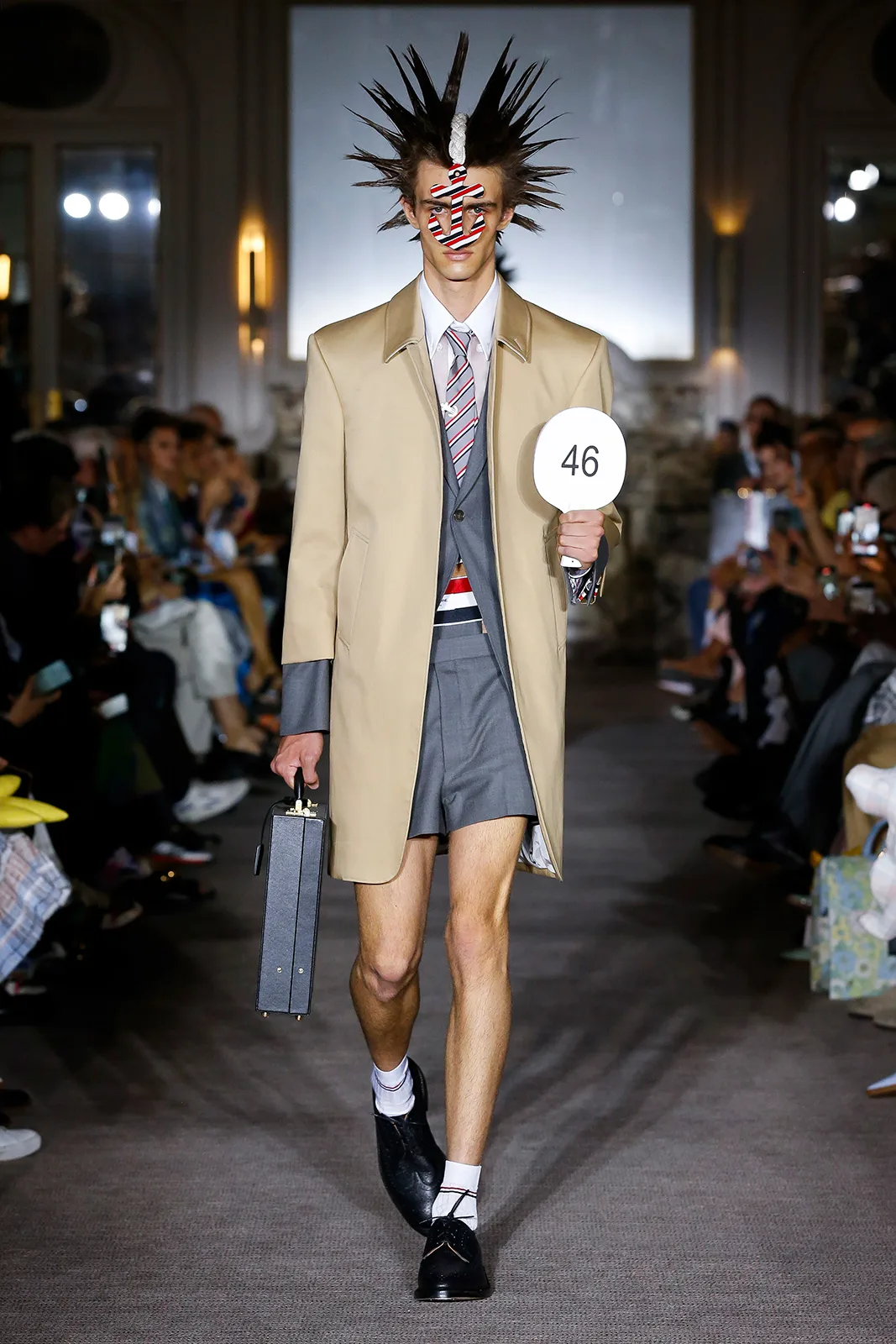
Being fashionably late is good sometimes, or if not, just tell that to the six models who kicked off the performance that was the runway show. Dressed in pieces from the womenswear Spring/Summer 2023 collection, the funny interaction with the attendees, acting as guests looking for their place in the front row, already set them in the mood for what was yet to come. Sixty-five looks followed one after the other on a catwalk made up of six classic architecture salons, which served as the backdrop for a collection that, although not obvious, wanted to pay homage to period haute couture. The cards with numbers carried by the models are reminiscent of those used by brands like Balenciaga in the last century to identify each look in their haute couture shows, and the fabrics developed in France exclusively for this show contribute to this high fashion vibe.
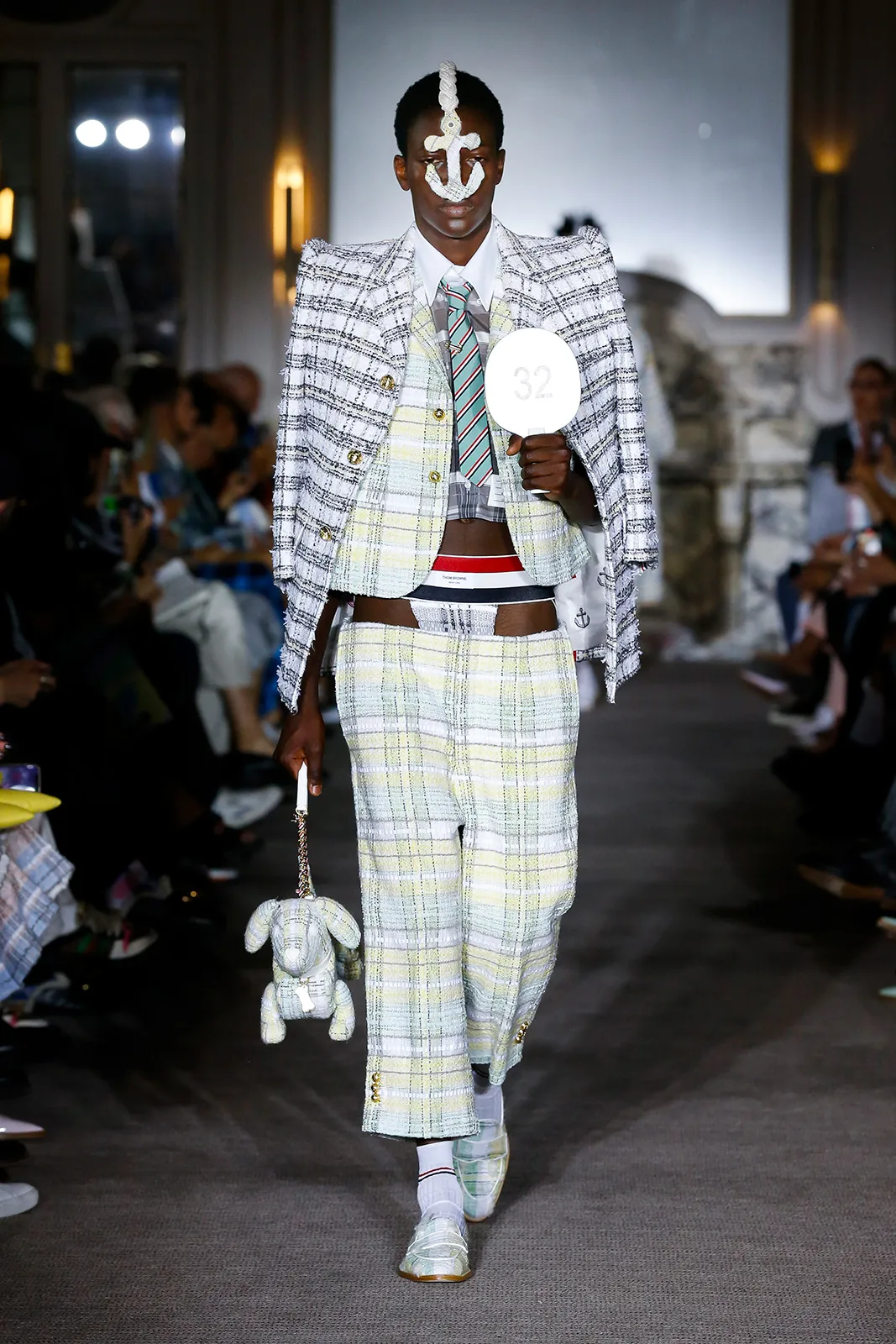
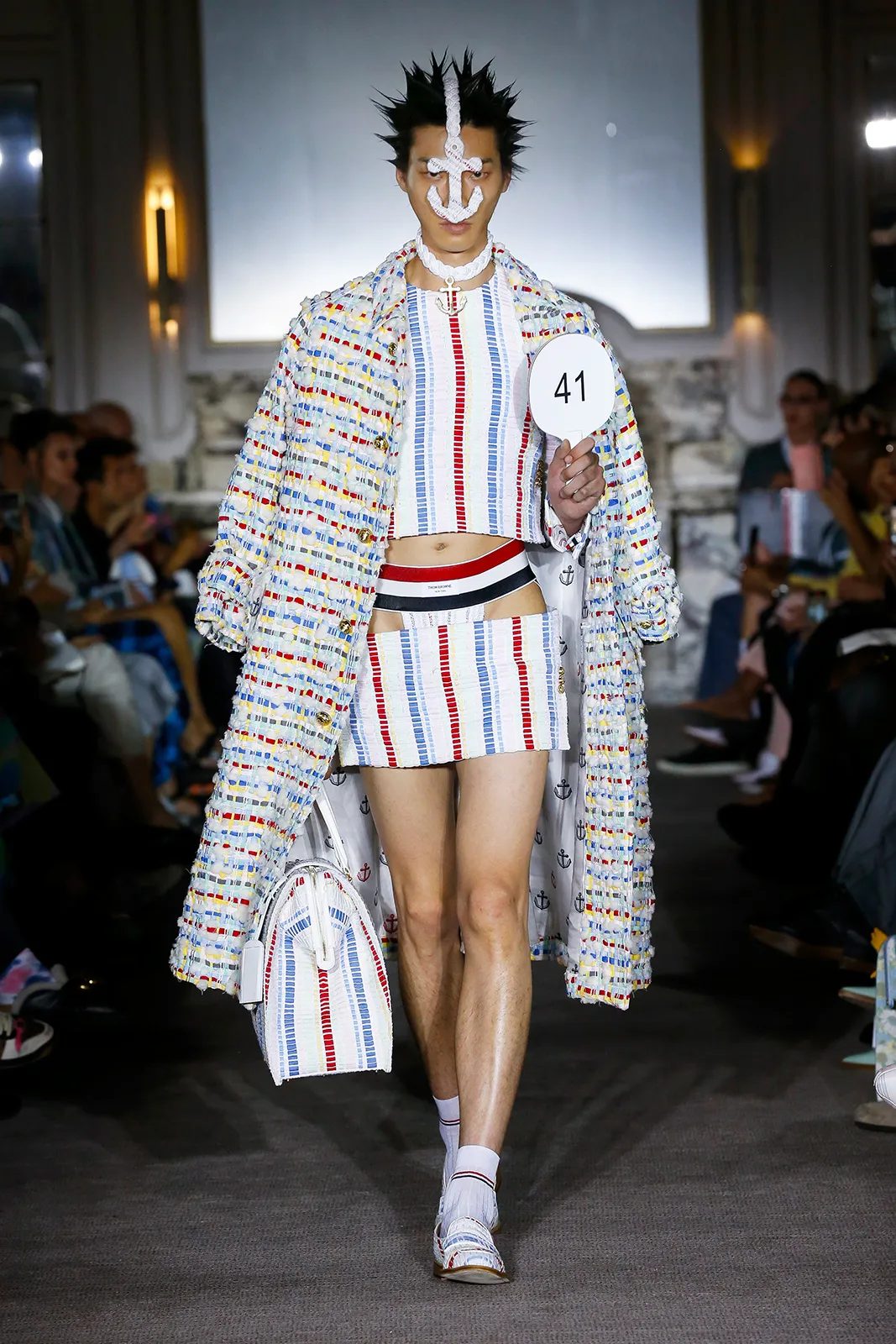
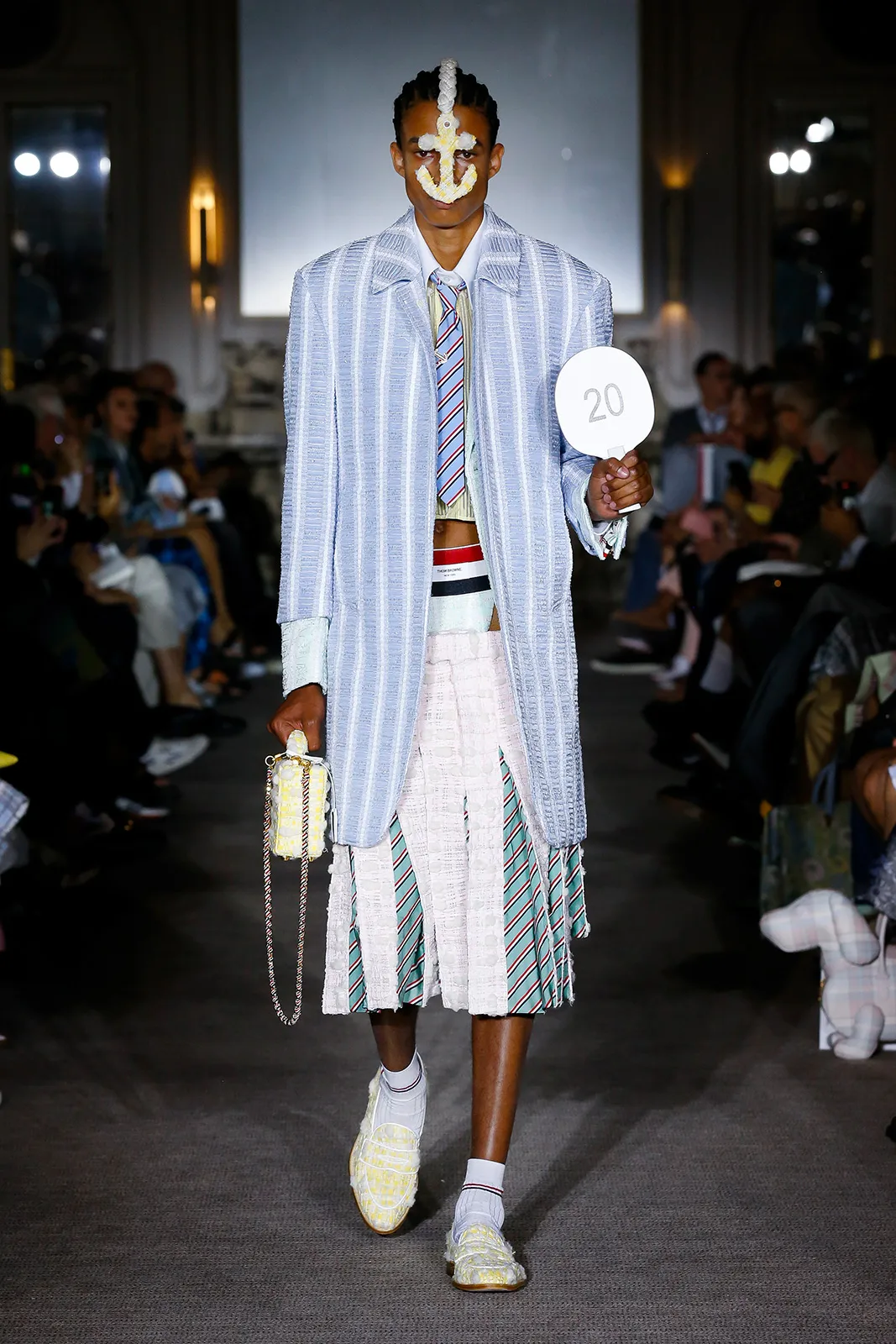
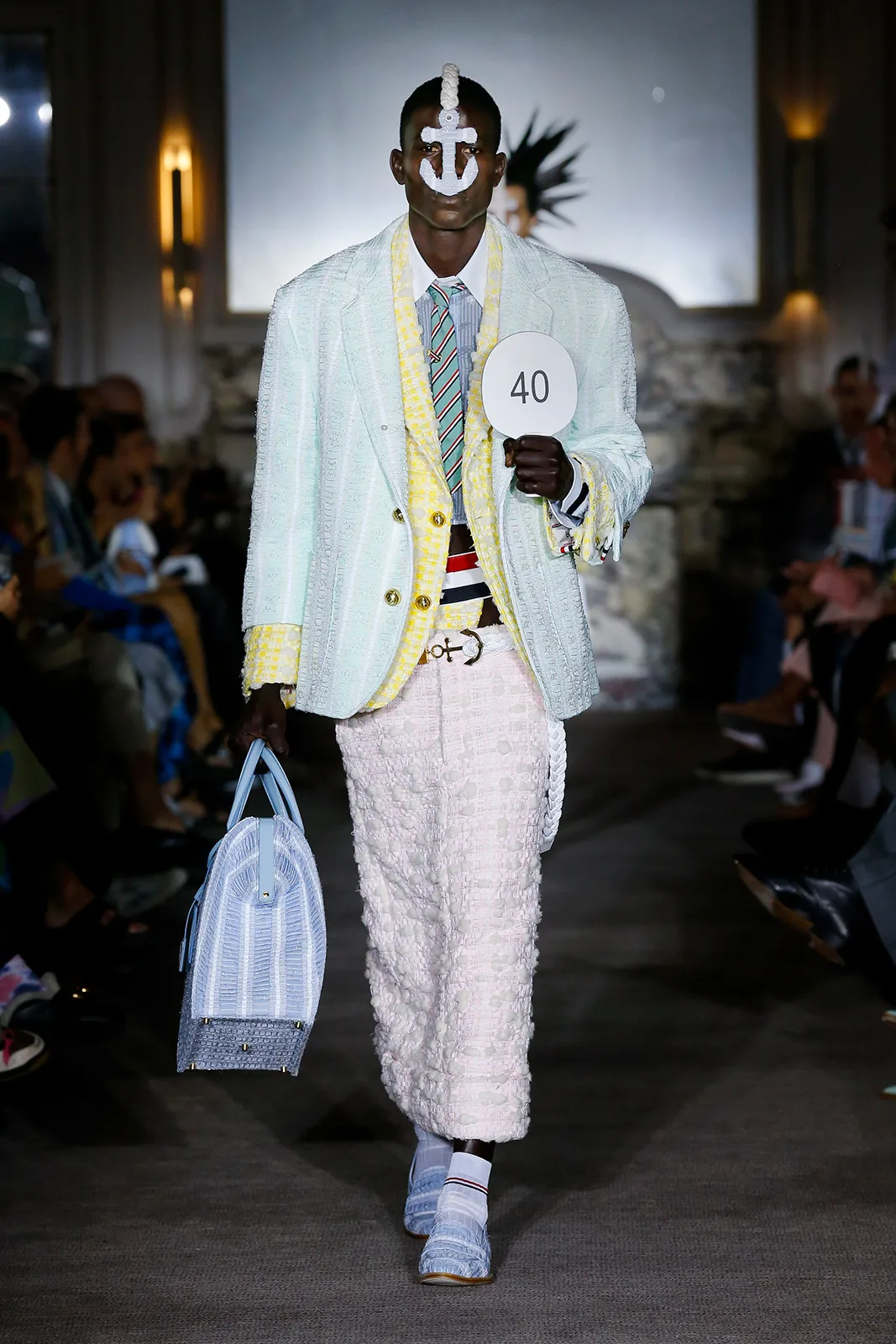
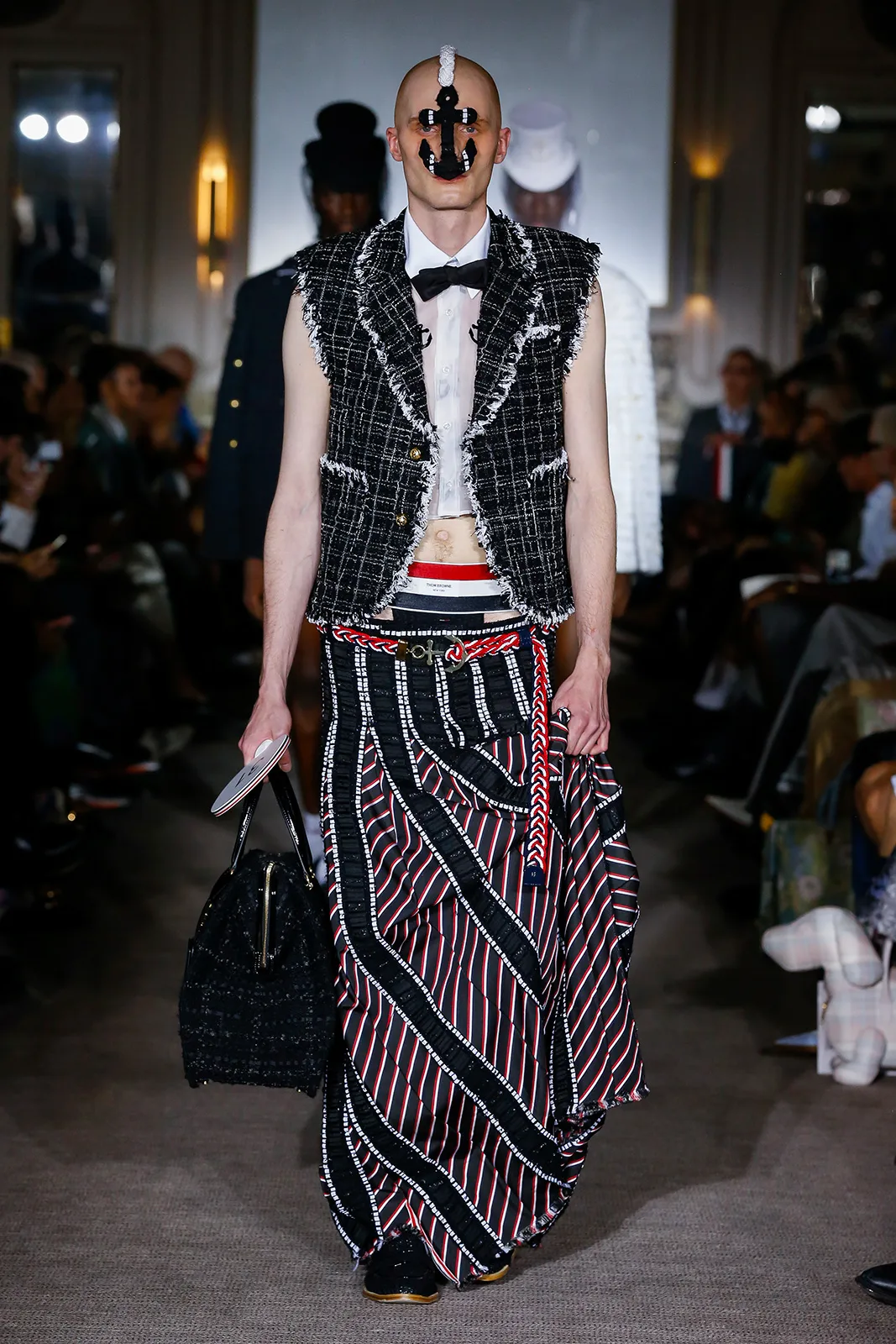
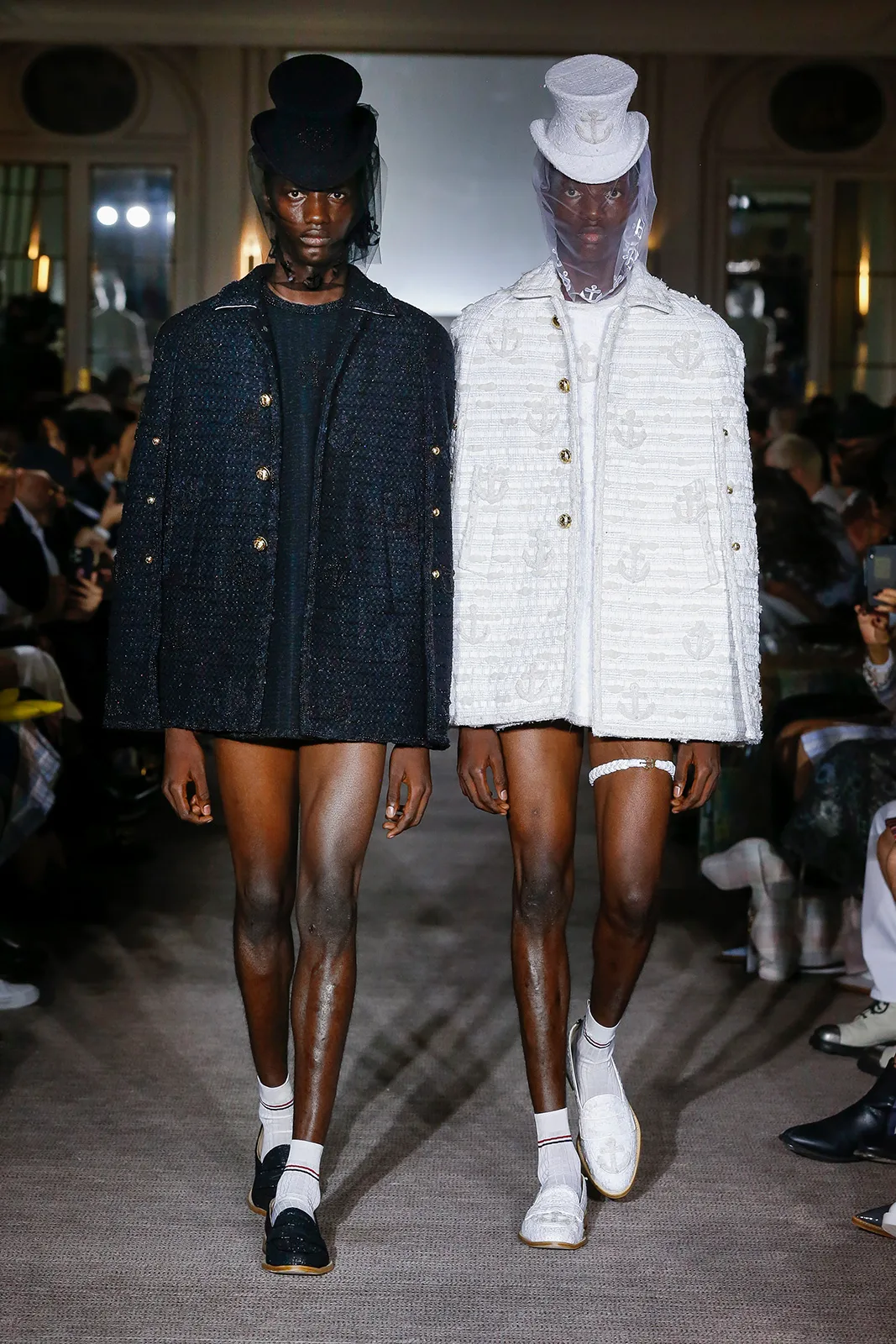
With a key material, tweed, which is a symbol of elegance and feminine class thanks to its use in Chanel, Browne wants to link a new meaning to this fabric, one adapted to the masculinity of our time, where there is no fear of revealing silhouettes, pastel colours or different materials. This is how we find all kinds of tweed garments, from the traditional pieces of deconstructed tailoring, the brand's flagship, to new proposals, which were the focal point of the collection.
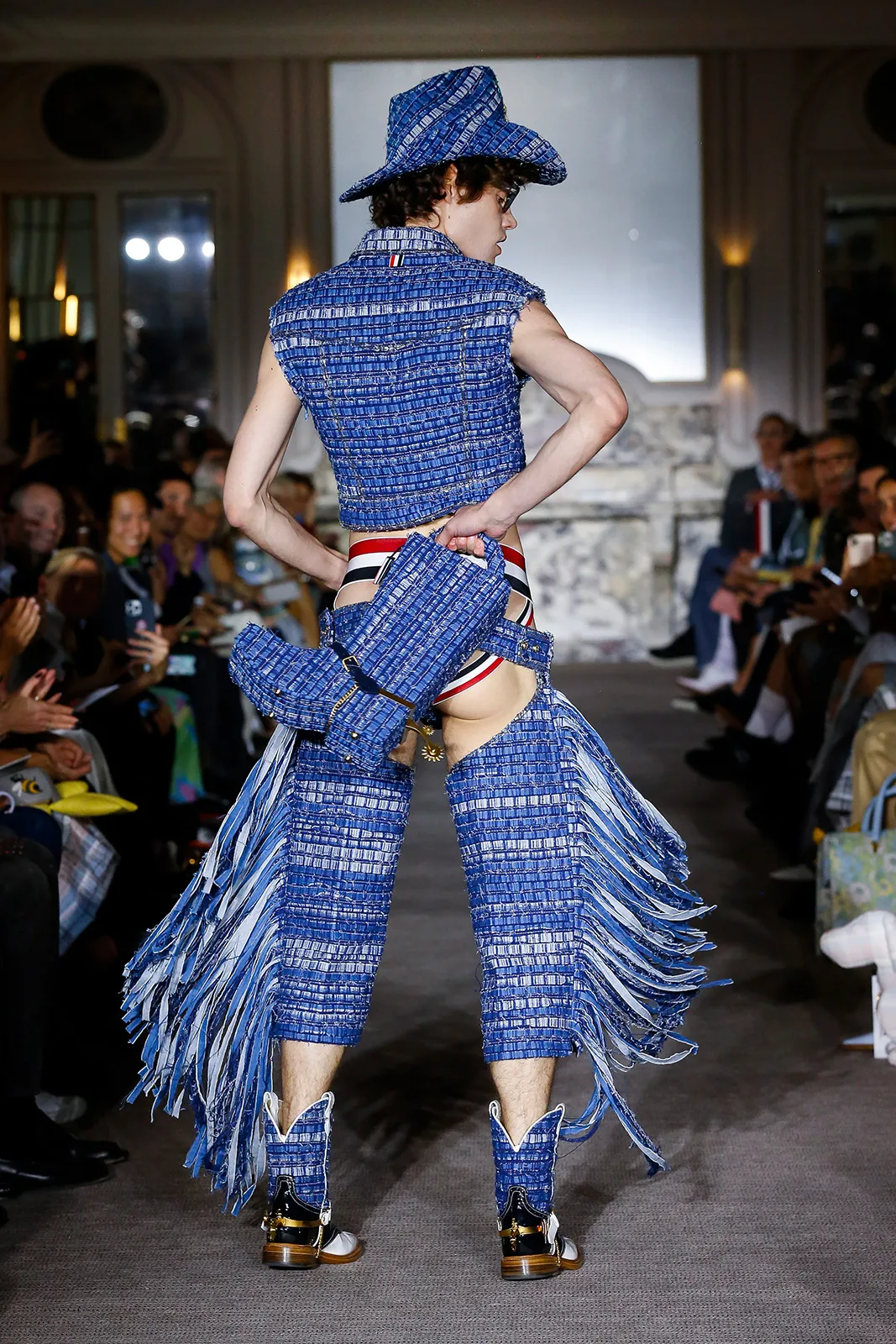
Among these new proposals, the most striking is the predominant use of the “ultimate masculine garment,” as he calls it, the jockstrap. At a time when we are experiencing the resurgence of Y2K trends mainly in women's clothing, with the return of low-rise pants and skirts with underwear protruding above them, Browne seems to consider how this style can be adapted to men. And he achieves it successfully by proposing a type of silhouette already explored at the time by figures such as Alexander McQueen with the invention of low-rise pants plus the addition of the jockstrap with the red, white and blue flag of the brand holding the garments in place. The result is rather interesting, disruptive, and fun.
An anchor covers the faces of all the models, a traditional symbol of masculinity. As we look down, we find skirts, crop tops, dresses, and even a bikini. The final look gives us the final kicker, in case it wasn't clear. A denim tweed cowboy (with hat, chaps, vest and boots included) with an ‘exciting’ denim tweed jockstrap with an anchor on the top. Menswear redefined and modern tailoring at its finest.
With a key material, tweed, which is a symbol of elegance and feminine class thanks to its use in Chanel, Browne wants to link a new meaning to this fabric, one adapted to the masculinity of our time, where there is no fear of revealing silhouettes, pastel colours or different materials. This is how we find all kinds of tweed garments, from the traditional pieces of deconstructed tailoring, the brand's flagship, to new proposals, which were the focal point of the collection.
Among these new proposals, the most striking is the predominant use of the “ultimate masculine garment,” as he calls it, the jockstrap. At a time when we are experiencing the resurgence of Y2K trends mainly in women's clothing, with the return of low-rise pants and skirts with underwear protruding above them, Browne seems to consider how this style can be adapted to men. And he achieves it successfully by proposing a type of silhouette already explored at the time by figures such as Alexander McQueen with the invention of low-rise pants plus the addition of the jockstrap with the red, white and blue flag of the brand holding the garments in place. The result is rather interesting, disruptive, and fun.
An anchor covers the faces of all the models, a traditional symbol of masculinity. As we look down, we find skirts, crop tops, dresses, and even a bikini. The final look gives us the final kicker, in case it wasn't clear. A denim tweed cowboy (with hat, chaps, vest and boots included) with an ‘exciting’ denim tweed jockstrap with an anchor on the top. Menswear redefined and modern tailoring at its finest.