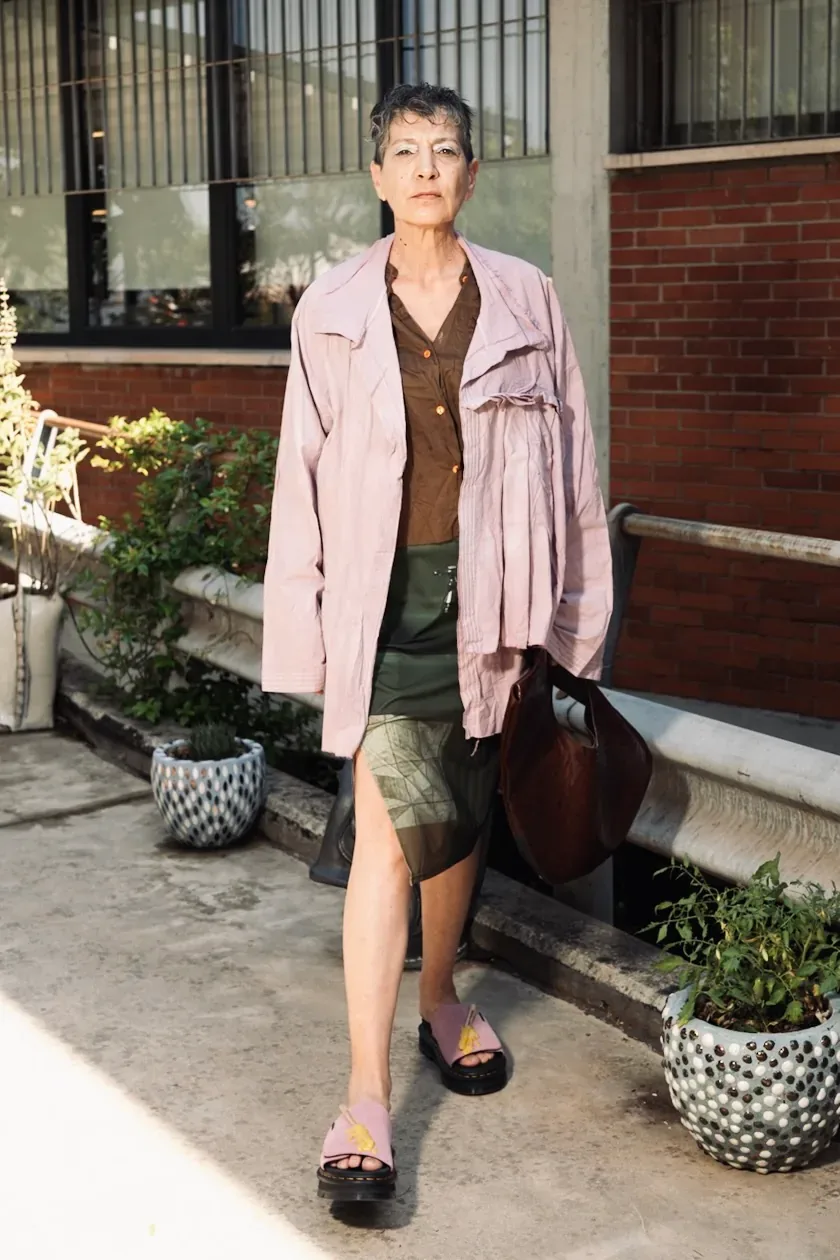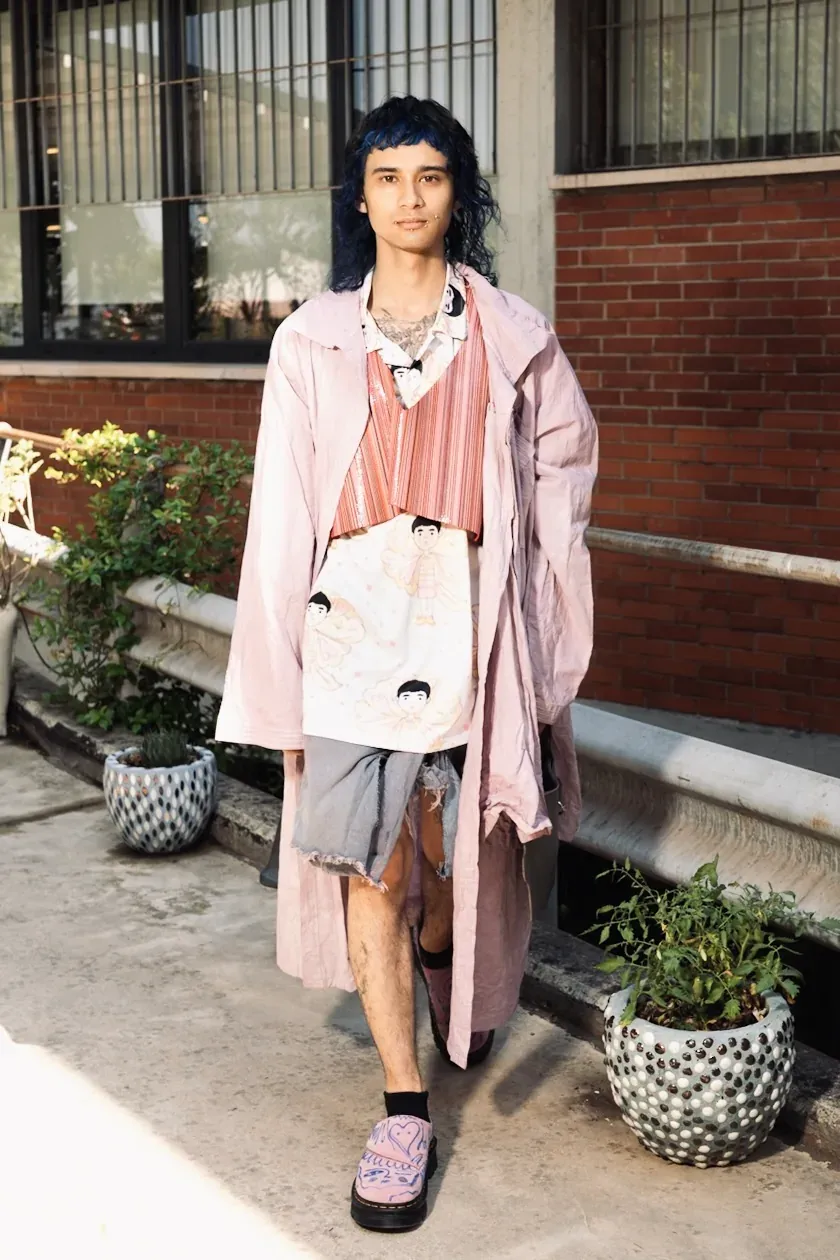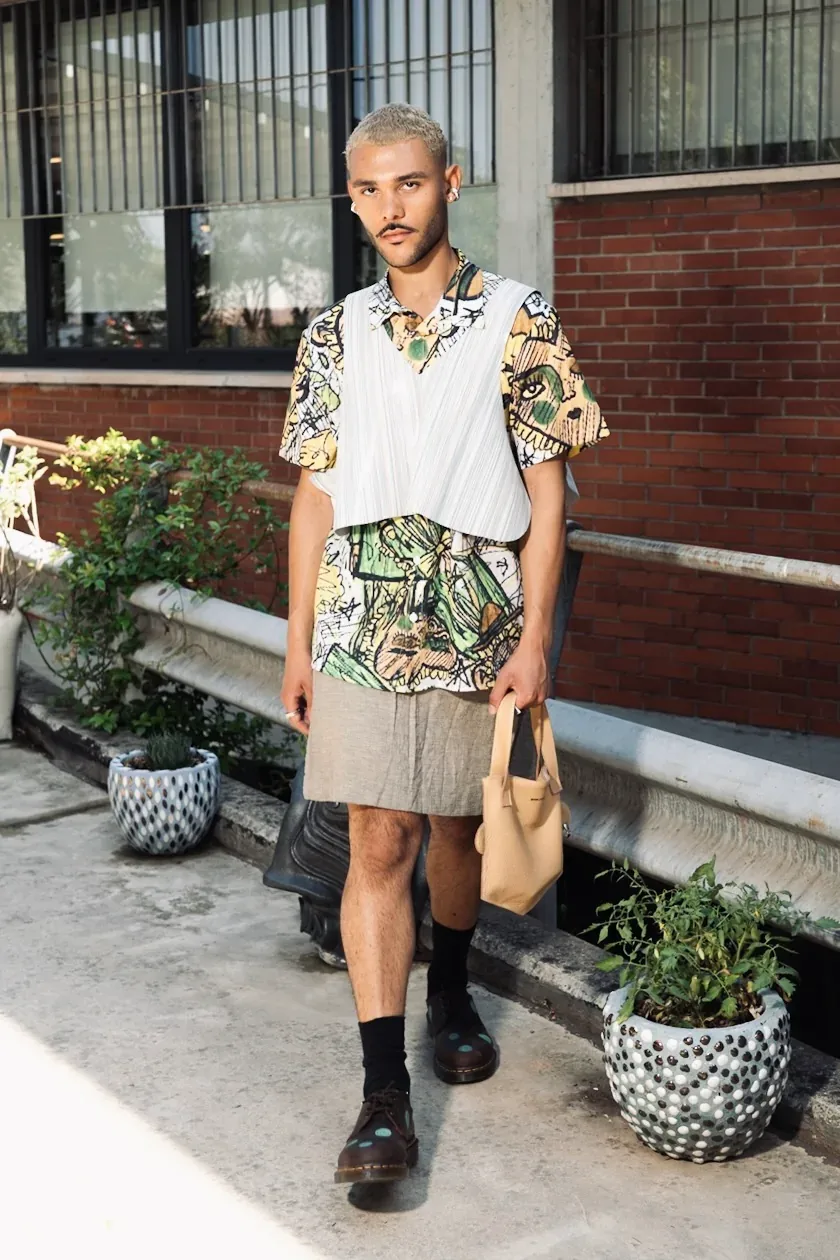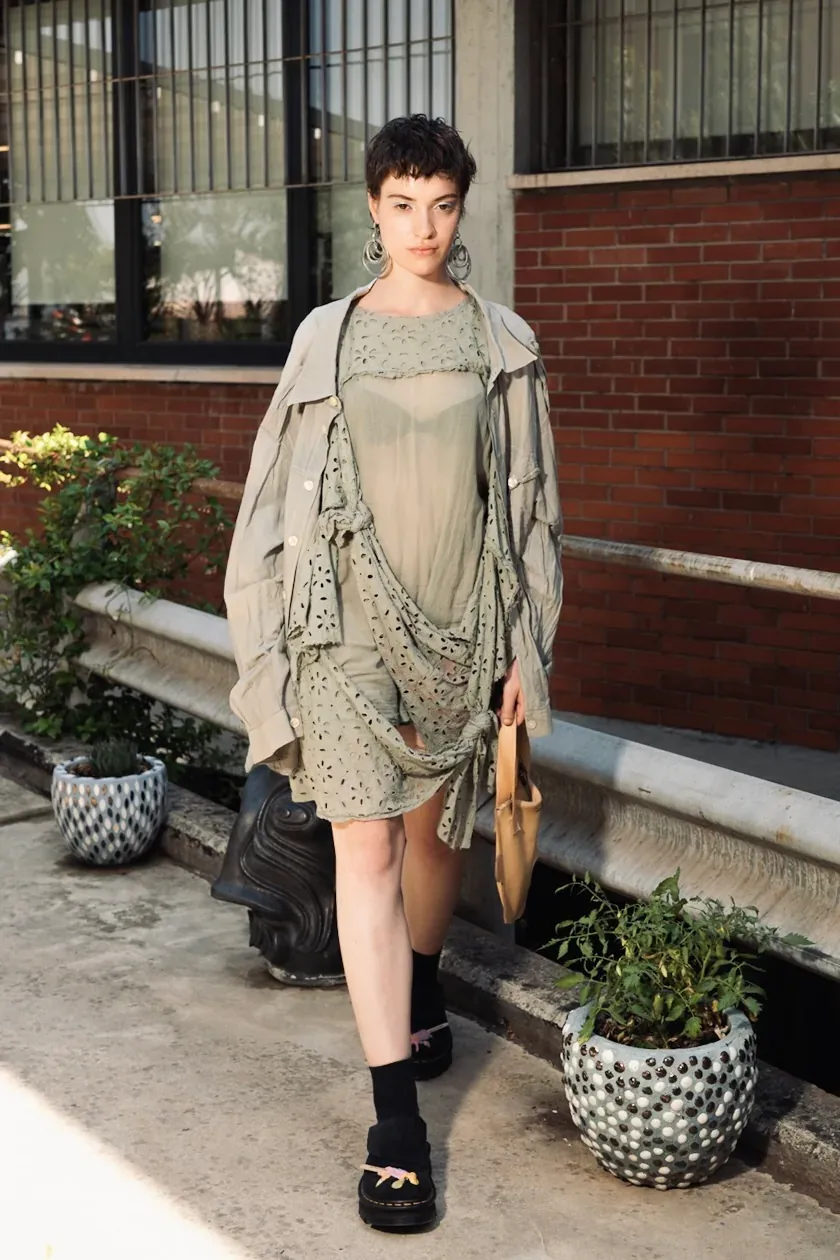
We know the world is in motion. We know technology, society and people are changing, and so is the place where fashion inspiration comes from and what it means to us. For Simone Botte, founder of his nearly eponymous brand Simon Cracker, childhood nostalgia, environmental awareness, his community and a rebellious spirit are some of the key pillars shaping his creative process, and here, he walks us through it.
“Simon” corresponds to Simone, and “Cracker” to a simple yet meaningful idea, an onomatopoeia: crack, “the sound of something breaking, and it marks the beginning of everything: the act of breaking what already exists in order to give it a new life,” as he himself describes it.
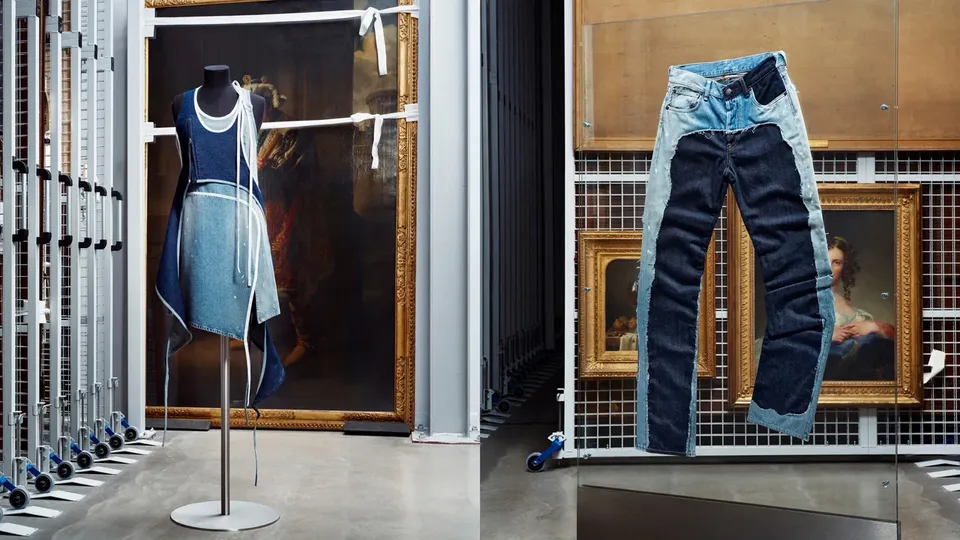
Founded in 2010, the creative house's design and fashion approach stems from upcycling, deadstock, a second chance for forgotten garments, discarded materials, self-expression and individuality. There are no seasonal or gender boundaries, as more than a brand, Simon Cracker is “a shared way of thinking” where Simone’s community, crew and, ultimately, friends reinforce an open-minded concept of art.
One of your core principles is that the value of clothing lies in the stories it has lived through rather than its monetary value alone. Is there any piece of clothing from your childhood that you've lost but wish you still had, either to create something from it or simply to inspire you? It could be something that belonged to your parents, your grandparents, or yourself.
Everything I’ve lost without choosing to lose it is something I still miss. Strangely enough, I often think about a Disney Aladdin T-shirt my mum bought me to wear at summer camp by the sea. As soon as I arrived, someone stole it. That’s the kind of nostalgia I carry with me: the sadness of losing something I loved for its emotional value and having to say goodbye to it unfairly. I was only six years old, but I can still remember how much it hurt. The same goes for toys I’ve lost during the many times I’ve moved throughout my life. Maybe that’s why today I feel the need to take care of the things other people leave behind or throw away. Perhaps I’m doing it for them, but maybe I’m also doing it to heal something in myself.
How does the process of creative direction change when upcycling, as the main driving force, is conceived as an ethical choice rather than an aesthetic one? And, as a result, how does the concept of clothing and fashion evolve when environmental awareness becomes more important than making visual statements?
The way I make clothes started from discomfort. I always say that in 2010 I discovered a frustration I didn’t even know I had. When I was young, I had no money, so I used to ask factories to give me whatever they considered defective. They would give it to me for free. Back then I was even embarrassed to admit that everything I made came from recycled clothing. Today I could produce collections like any other fashion designer, but I keep working this way because it’s what I believe in. And somehow, against all expectations, it even made people take me seriously. Most people with even a little power in fashion still think upcycling is just another passing trend, like Brat green. They’re wrong. At this point, my design process has reached a stage where I deliberately give up control. I let the materials I’ve chosen to rescue take the lead. It’s a dialogue. A game we play as equals. That challenge has become something I can’t live without in Simon Cracker’s creative process.
"Crack' is the sound of something breaking, and it marks the beginning of everything: breaking what already exists in order to give it a new life"__. What everyday objects produce the most satisfying cracking sound? Which one is your favourite?
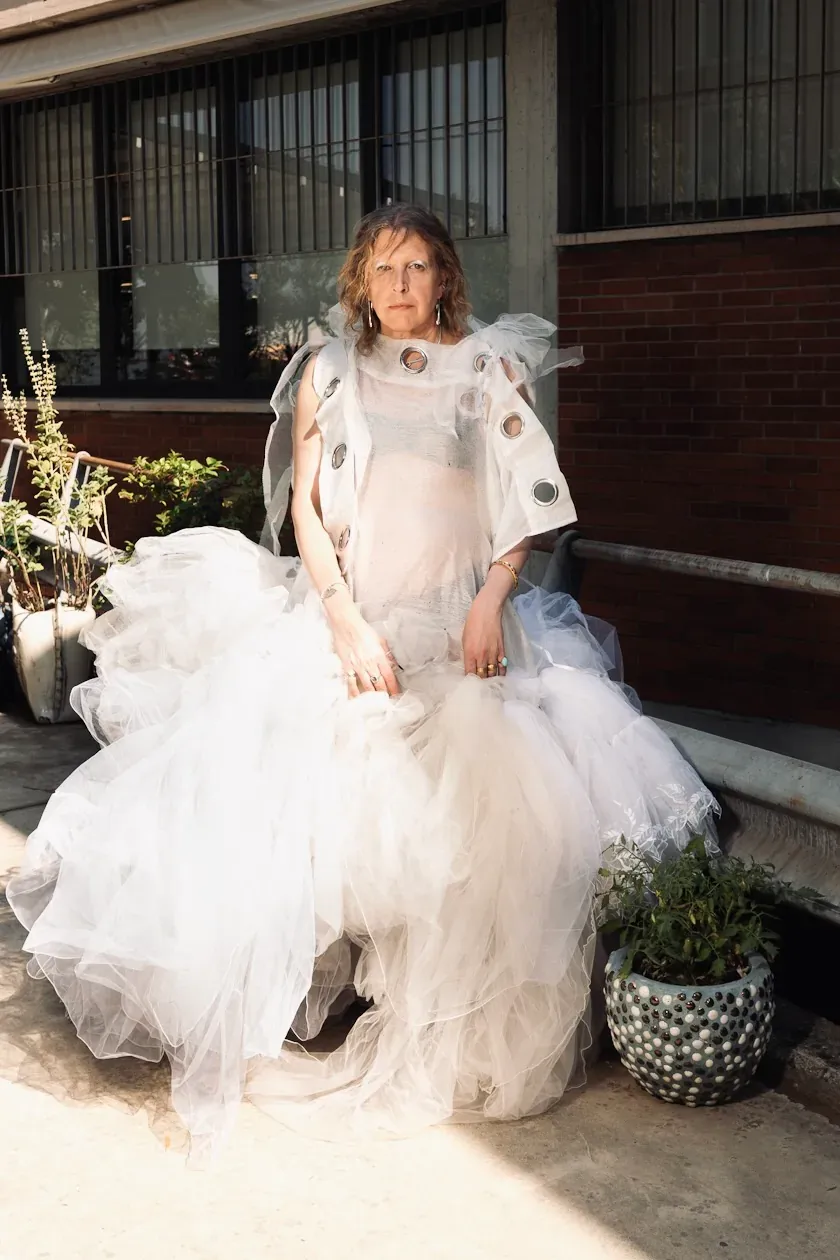
It depends on what I’m working on. Right now, the sound that’s still stuck in my head is the crack of vintage wedding dresses. The fabric is incredibly crisp when it breaks apart, almost like a cracker. That’s still one of the most powerful “cracks” for me. Destroying what was once the most precious garment from the happiest day of someone’s life… It carries enormous responsibility. My mind immediately starts imagining who that dress belonged to. Was it a happy marriage? A divorce? Was it someone’s second wedding? I invent stories about every single one. It’s fascinating. Sometimes what I do feels almost mystical, and I don’t even know how to explain it.
Speaking of cracks, what would you say have been the three most memorable and inspiring “cracking” moments in your career so far?
One of them is definitely wedding dresses, as I just mentioned. Another is men’s tailored suits. Since 2010 I’ve been rescuing them from dry cleaners that went bankrupt, leaving behind incredible garments of extraordinary quality. Taking them apart is always a huge emotional moment. The third “crack” is something I’m working on right now. It’s still very new. I’m melting down plastic detergent bottles and turning them into plaques and charms for our new Cracker bags.
And what about in the fashion industry?
I don’t think we’ve seen a real moment of rupture in fashion for quite a while. But maybe this is exactly one. Everything seems to be crumbling beneath our feet, and perhaps the people who will survive are the ones who choose to stay instead of running away from the rubble. The biggest brands have become giants. They often create more harm than good, and we’re all living with the consequences.
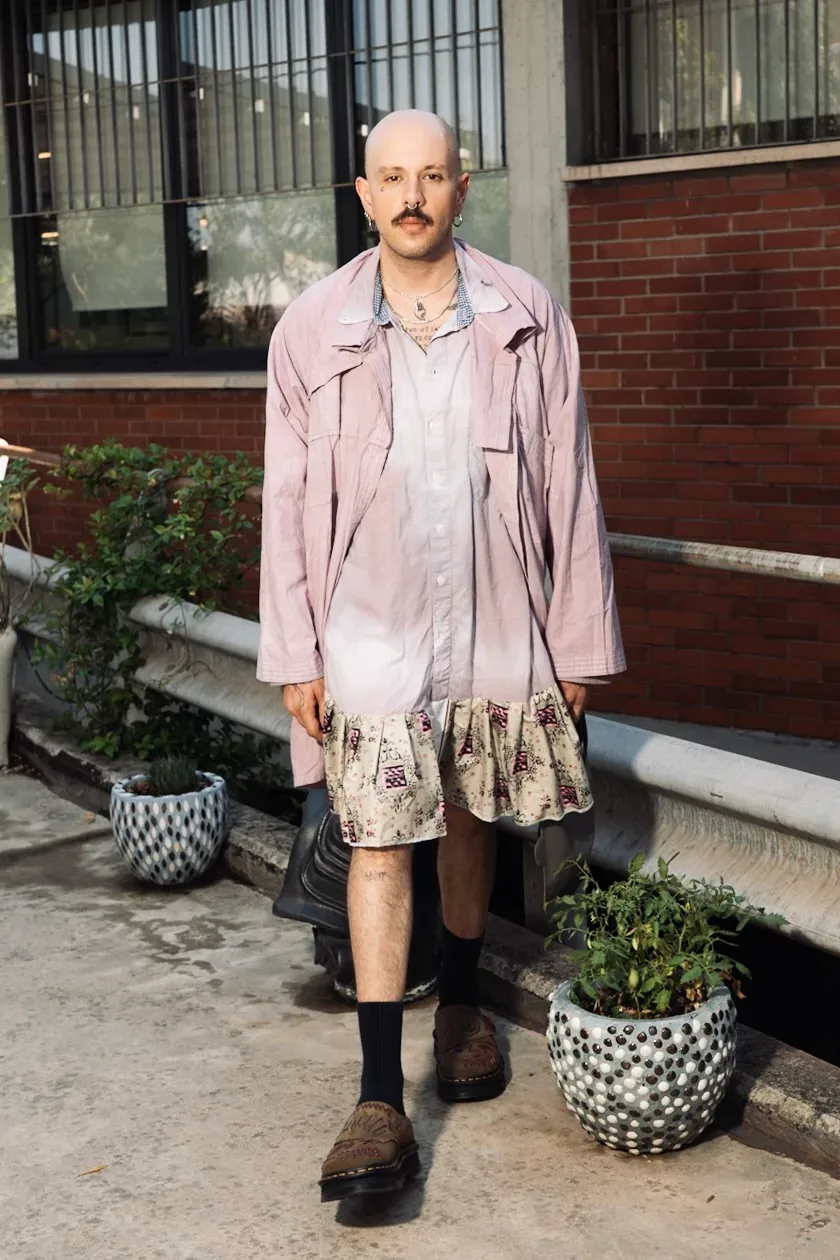
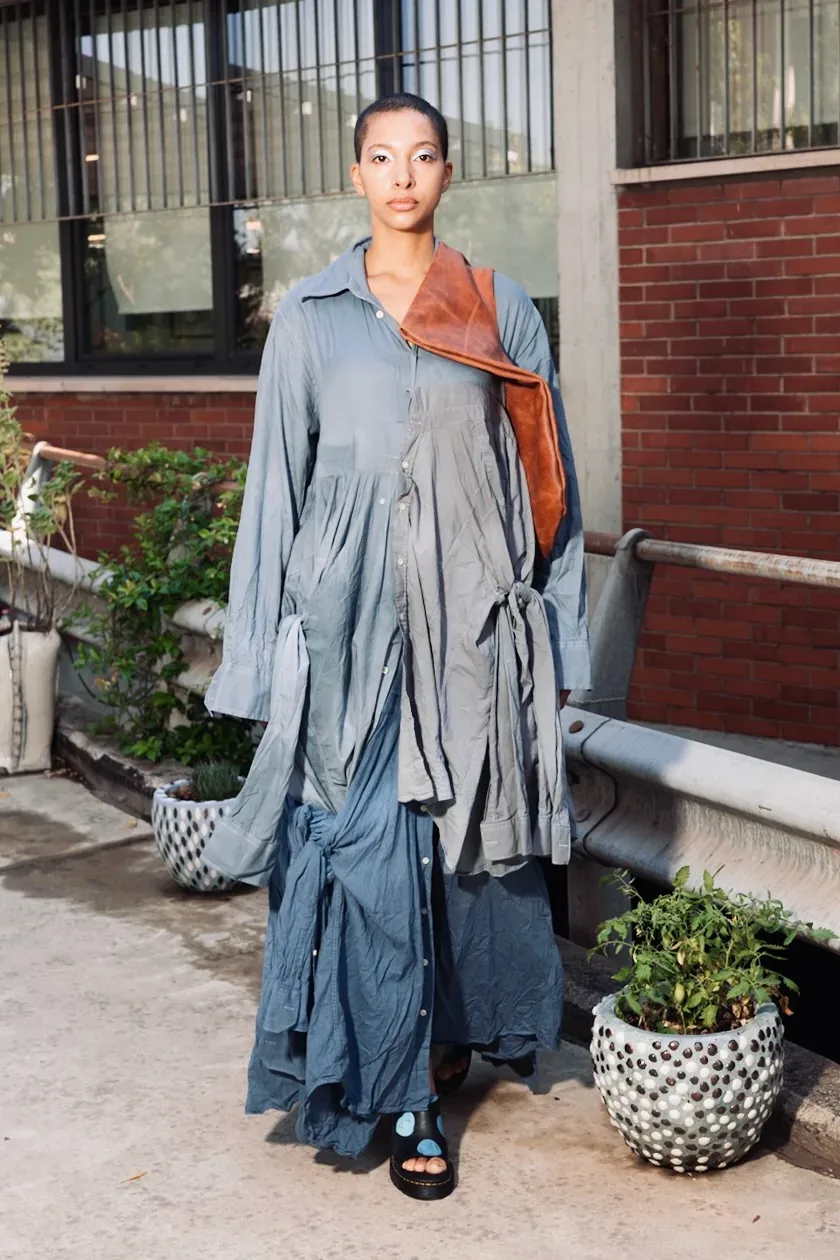
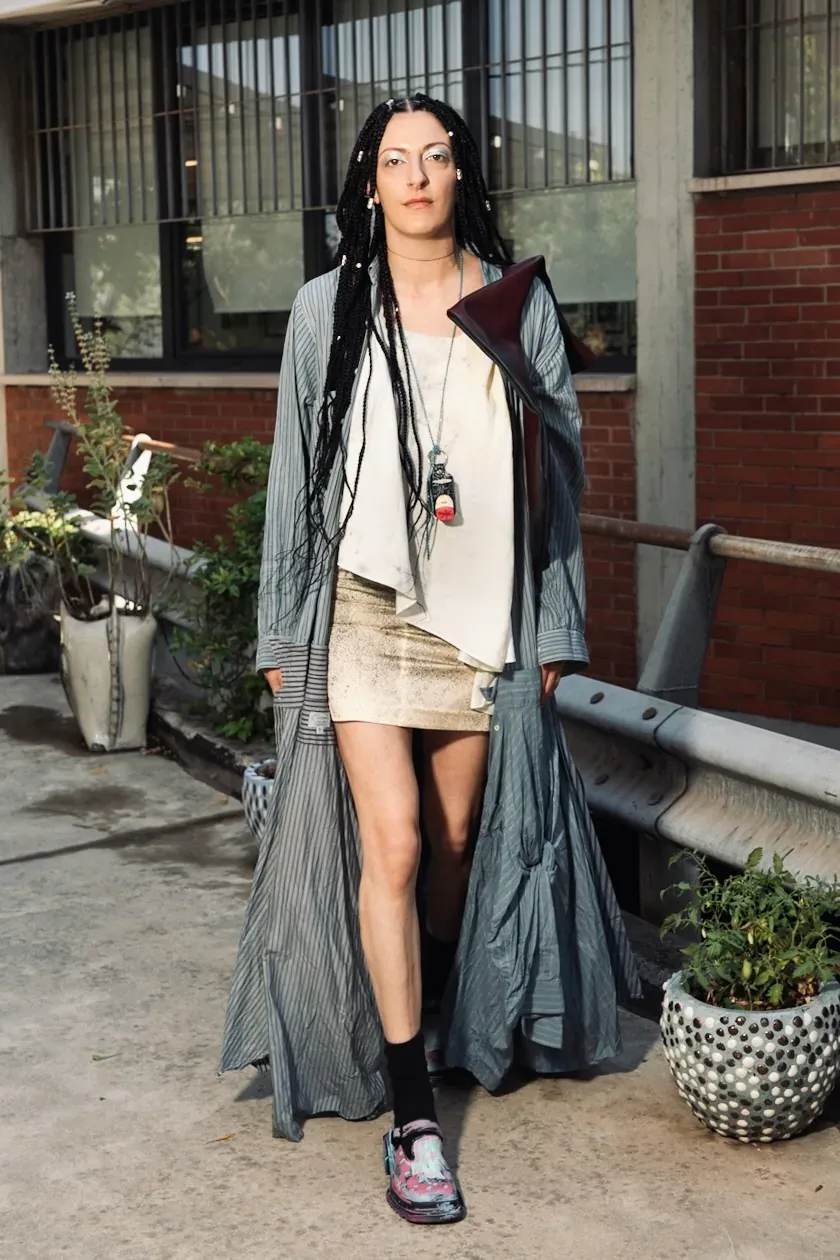
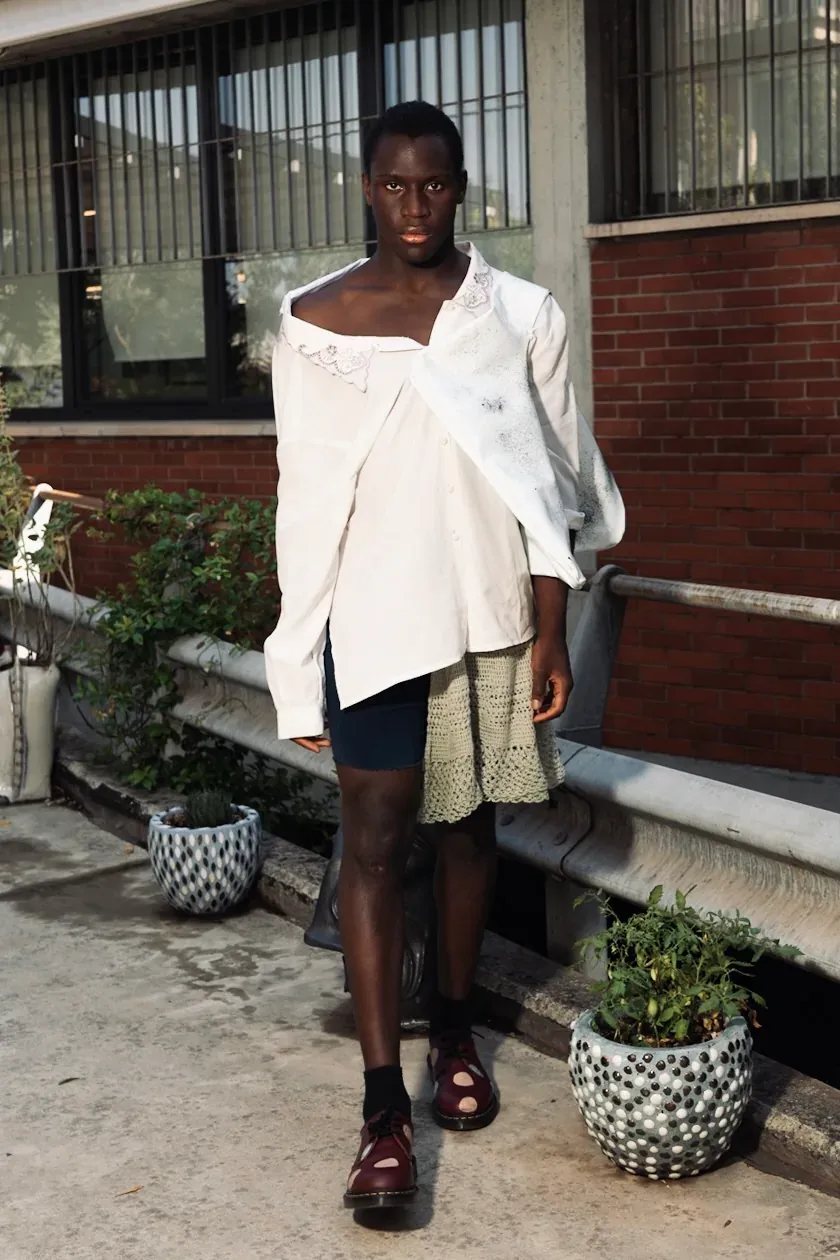
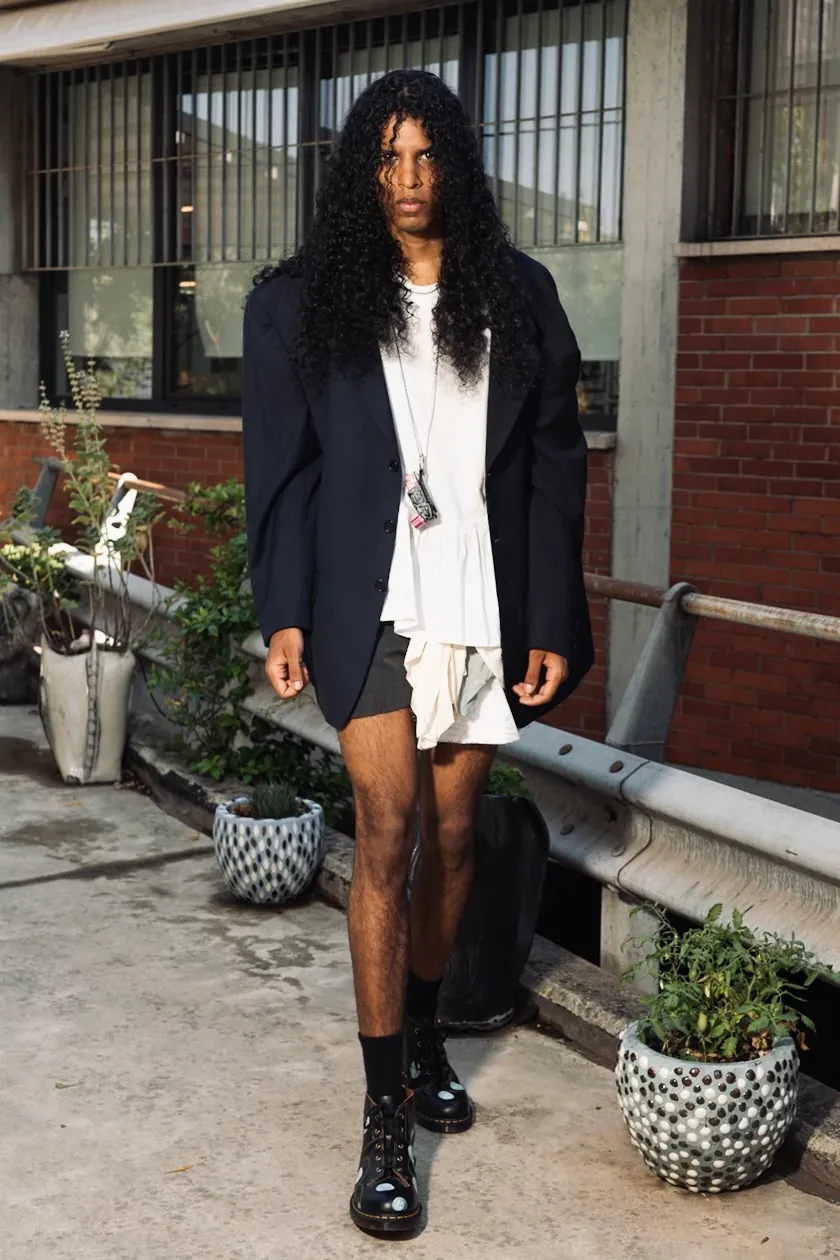
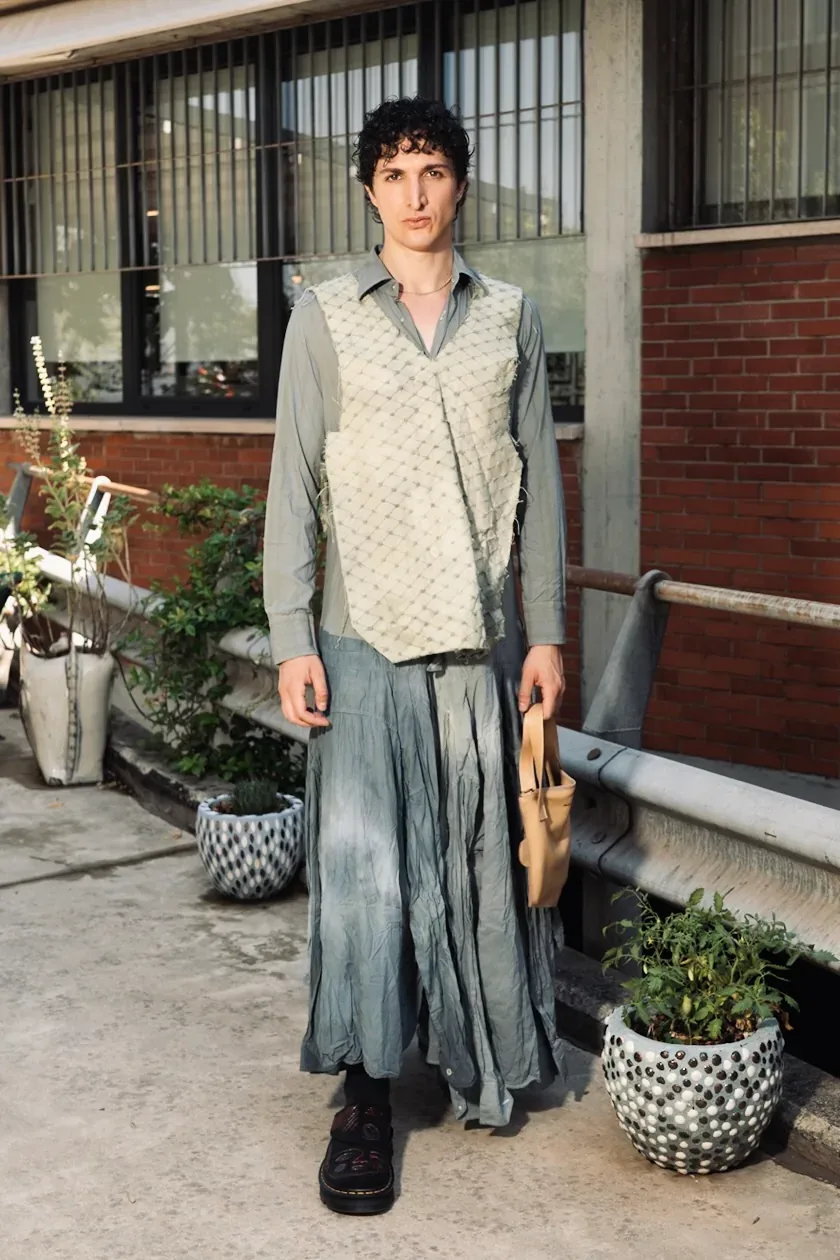
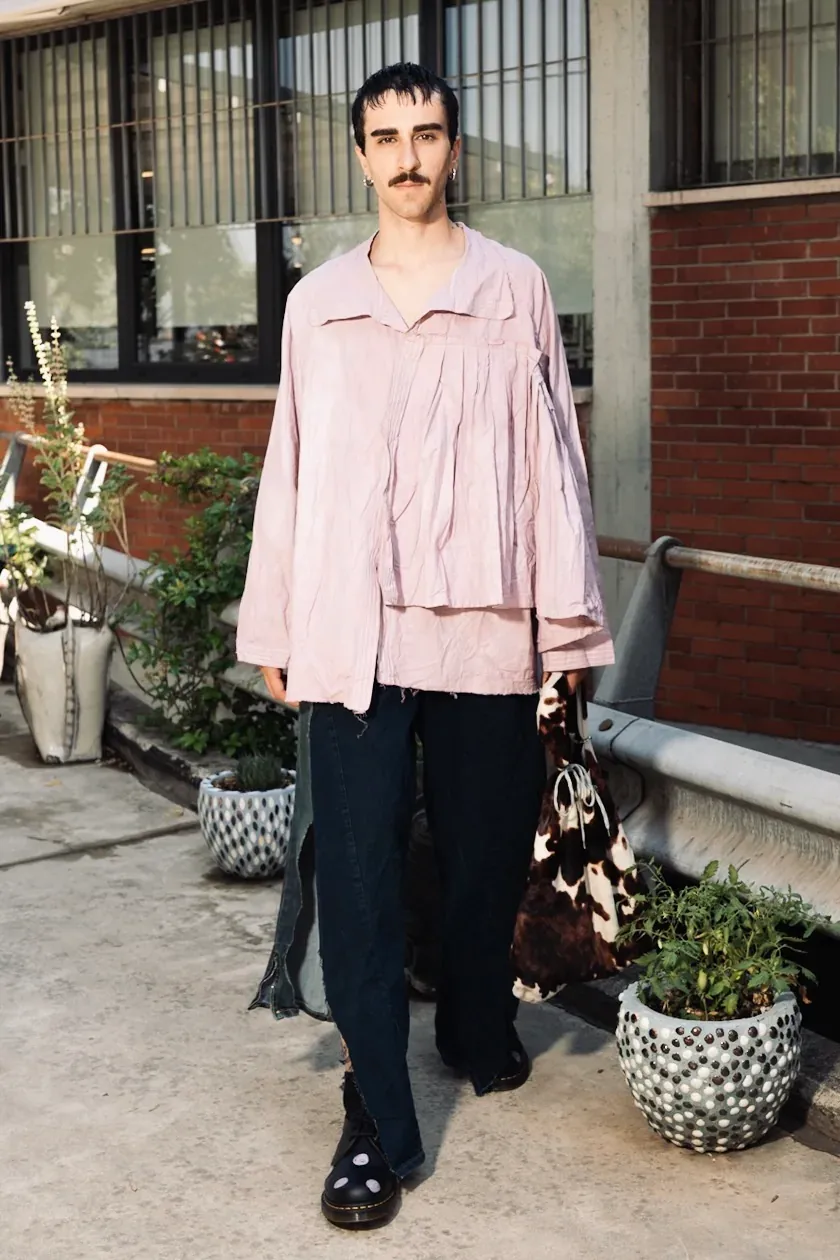
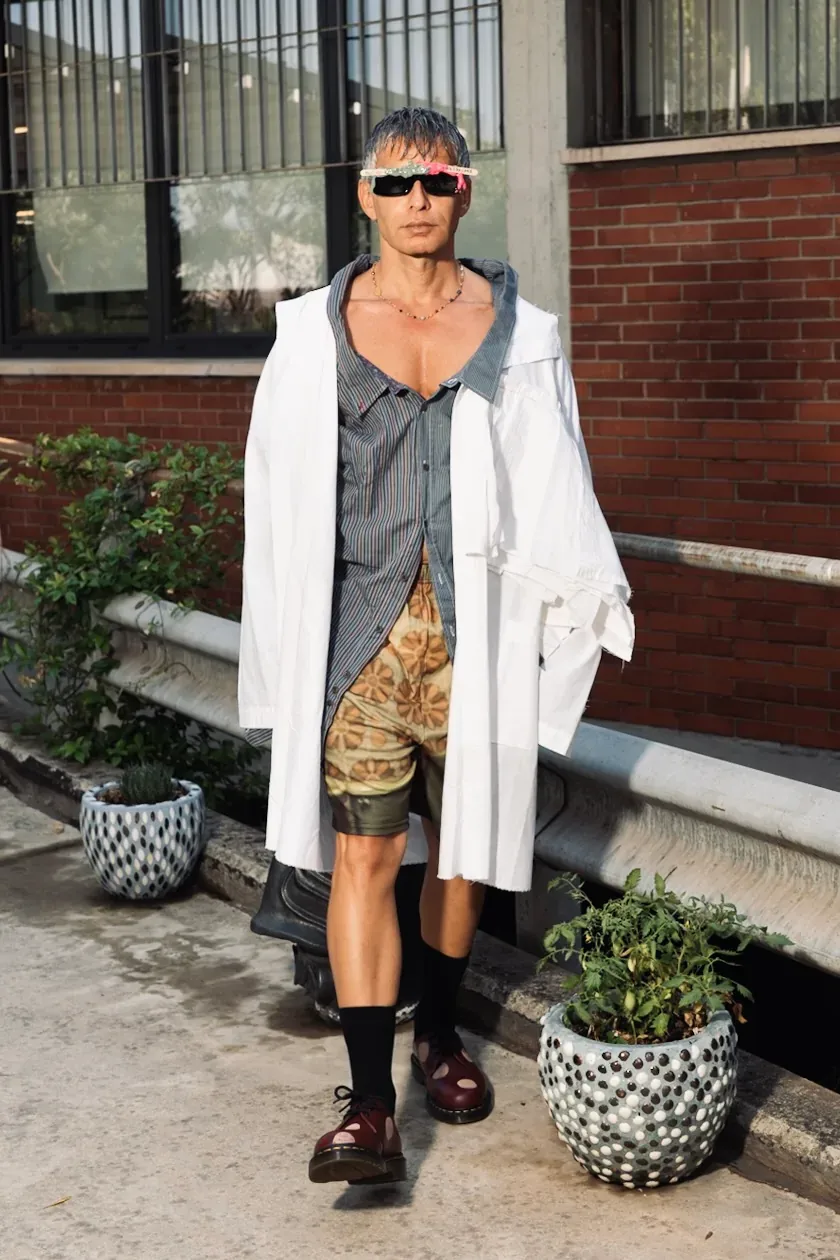
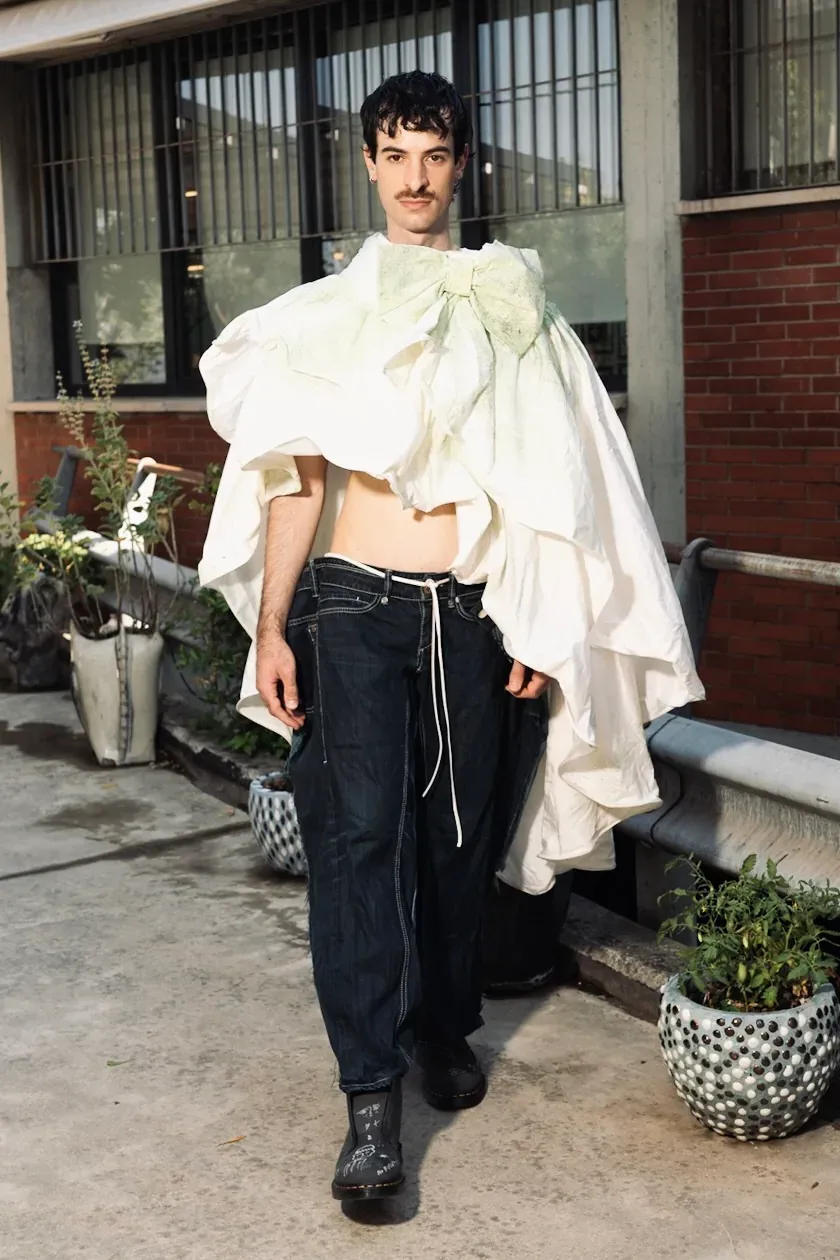
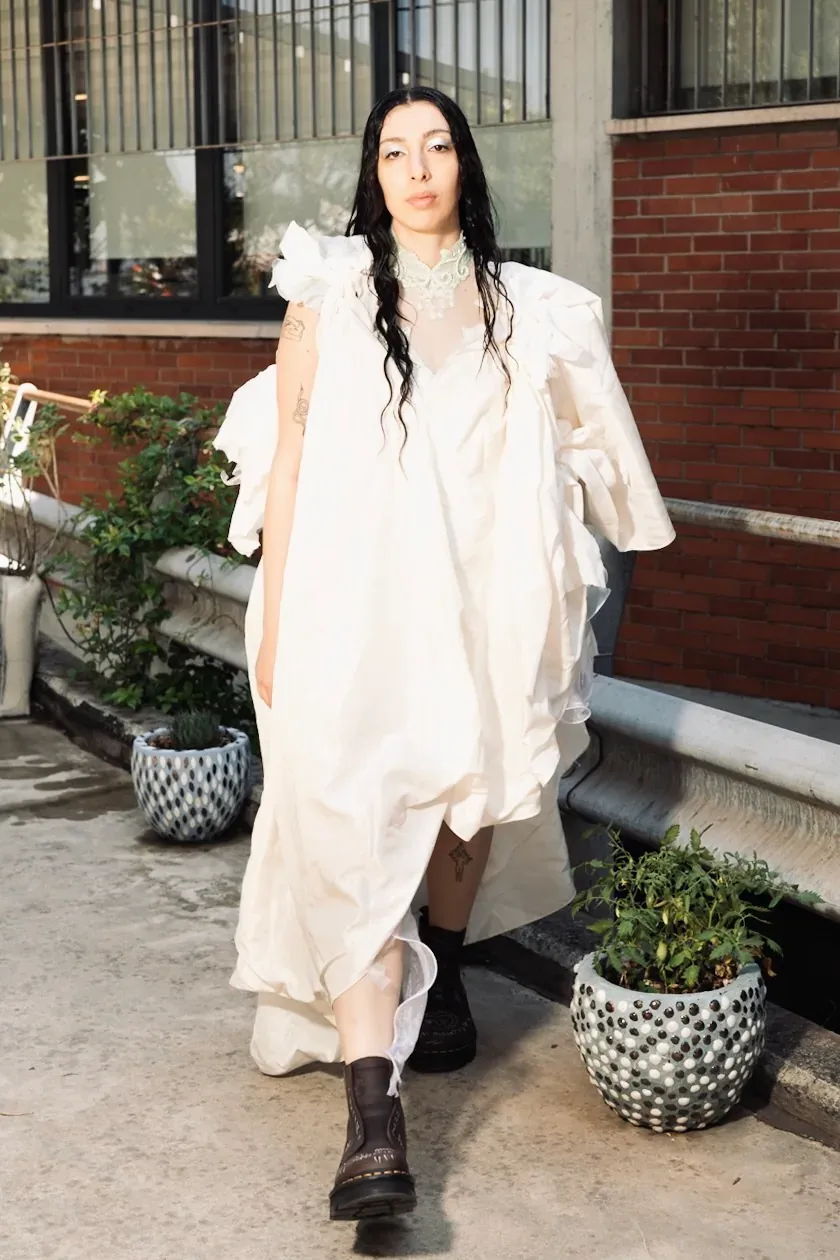
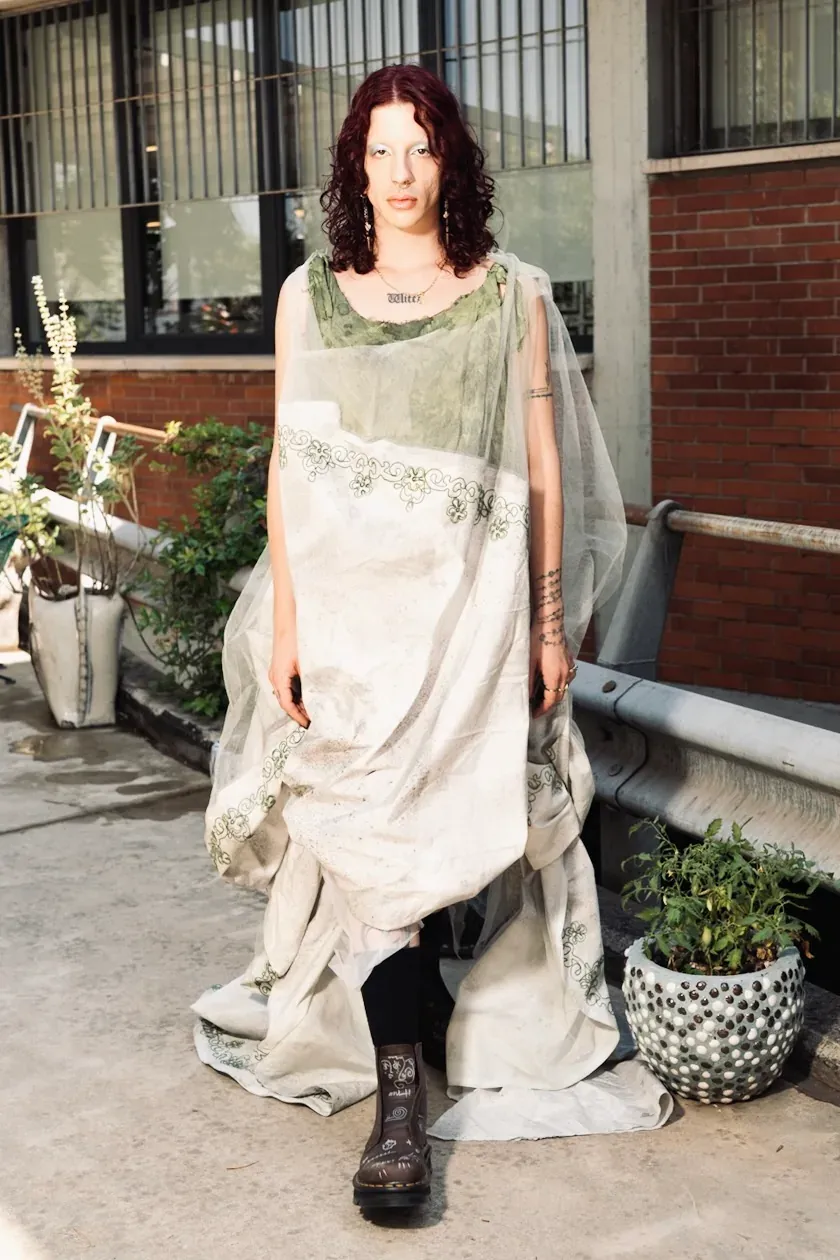
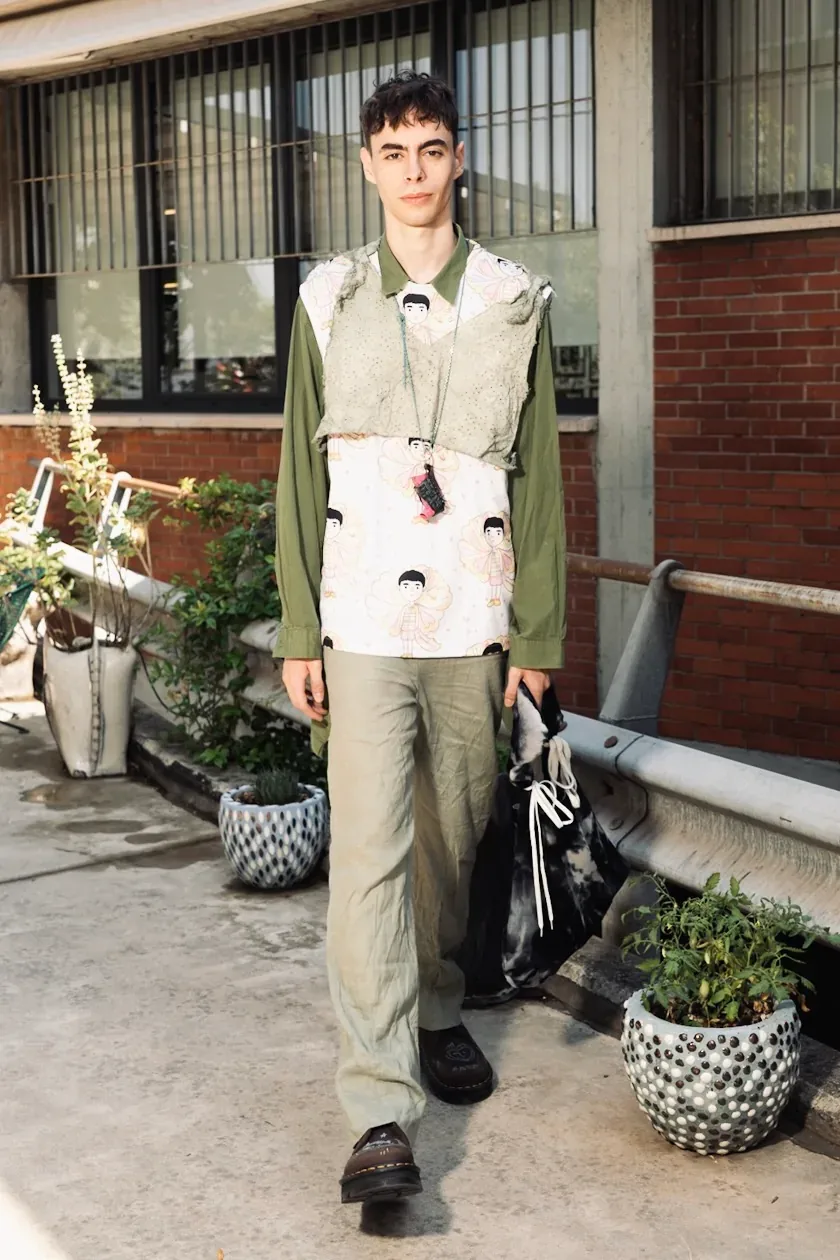
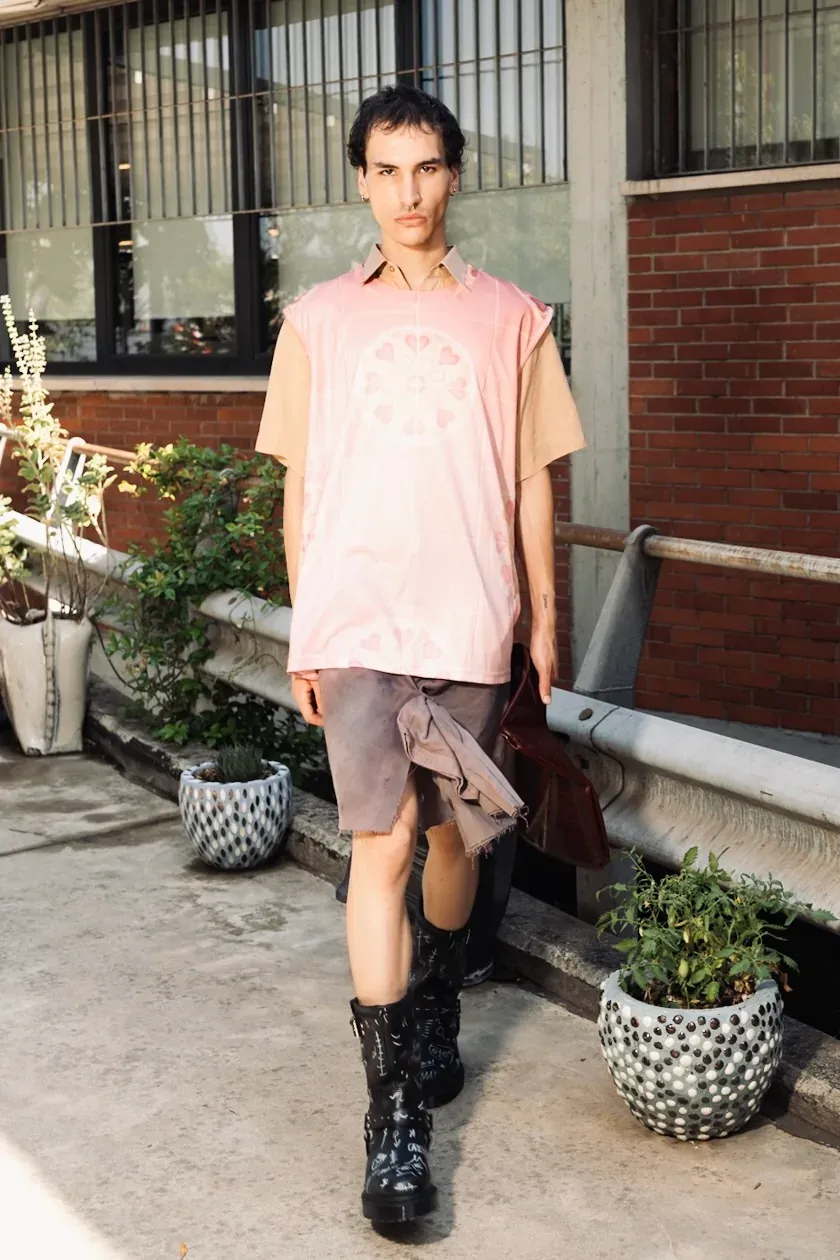
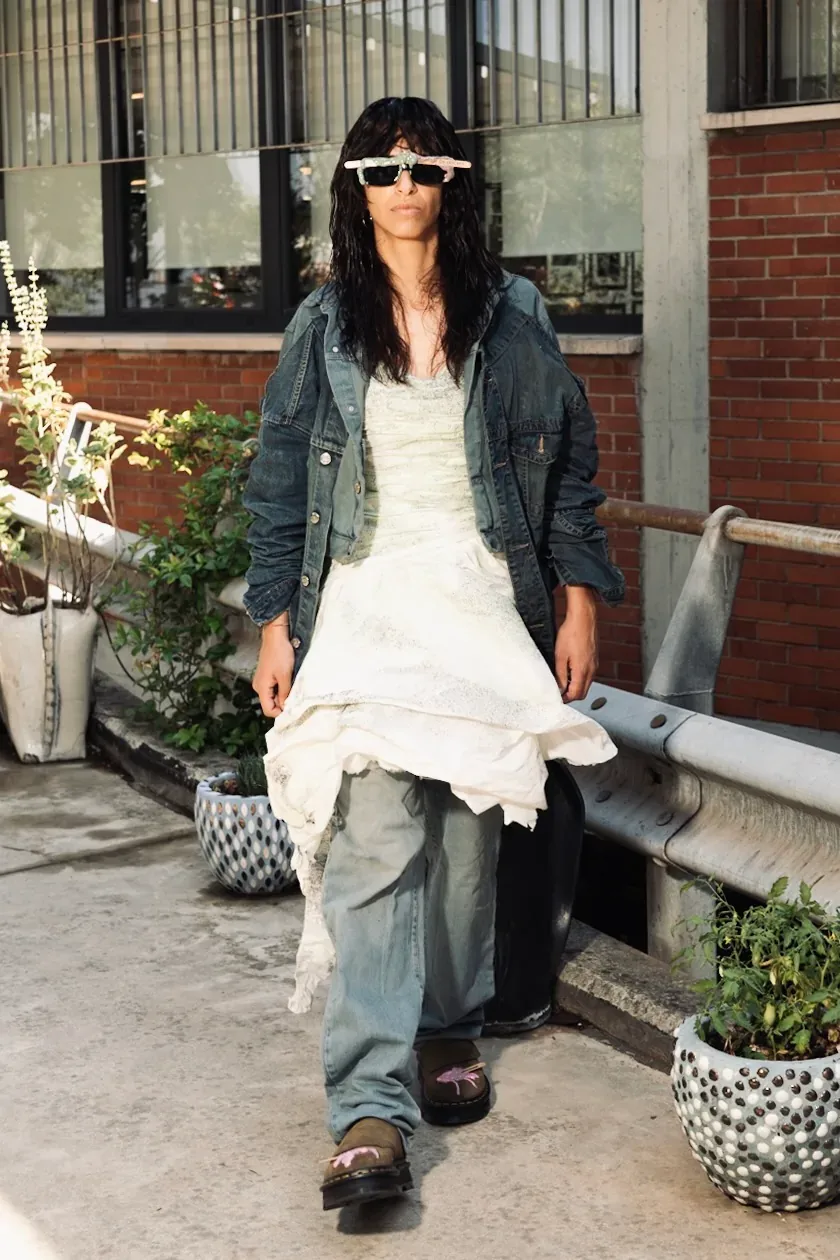
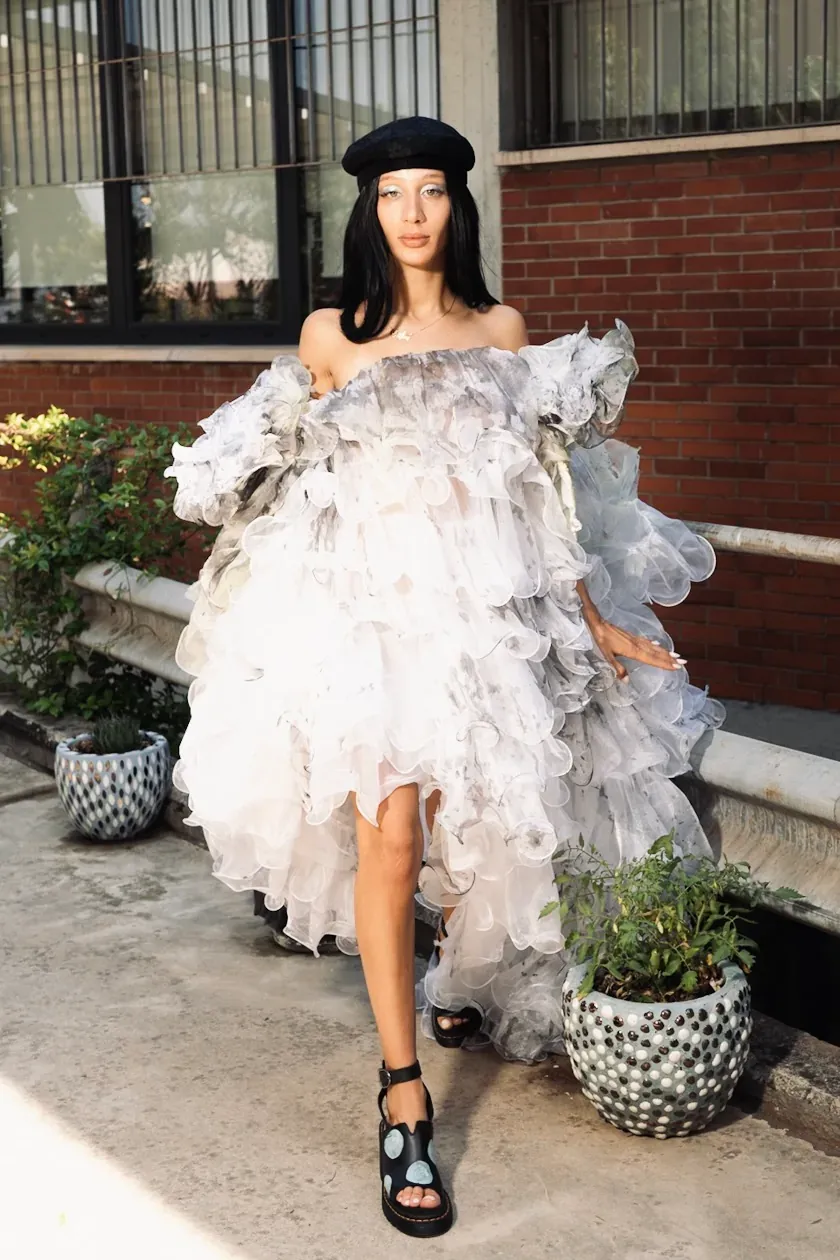
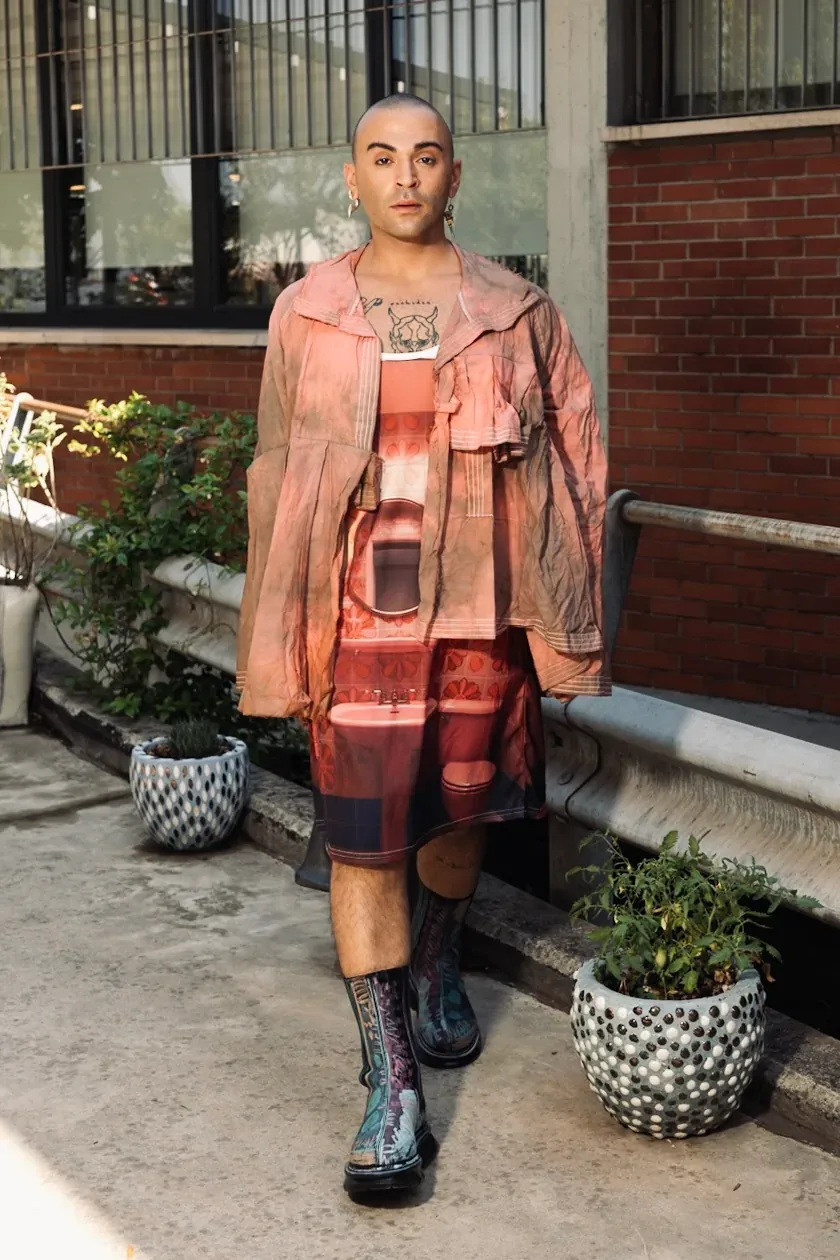
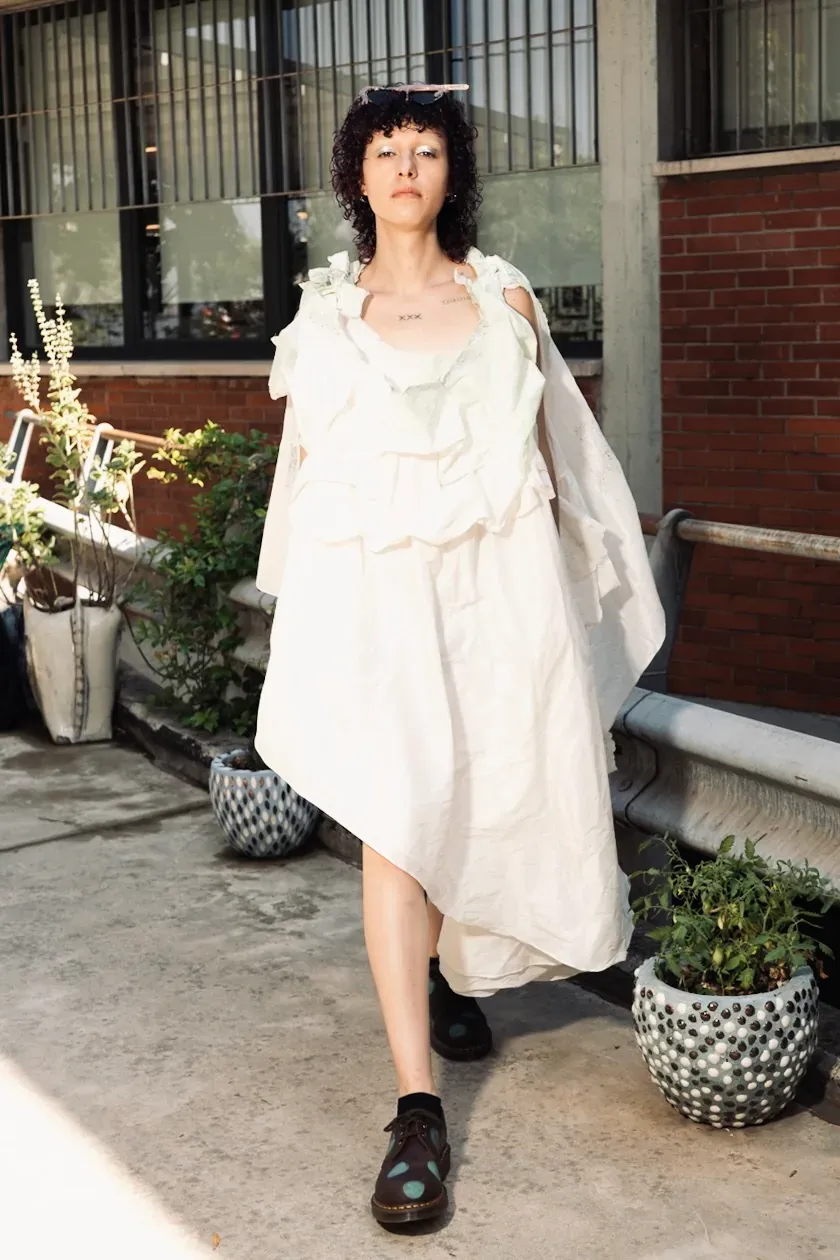
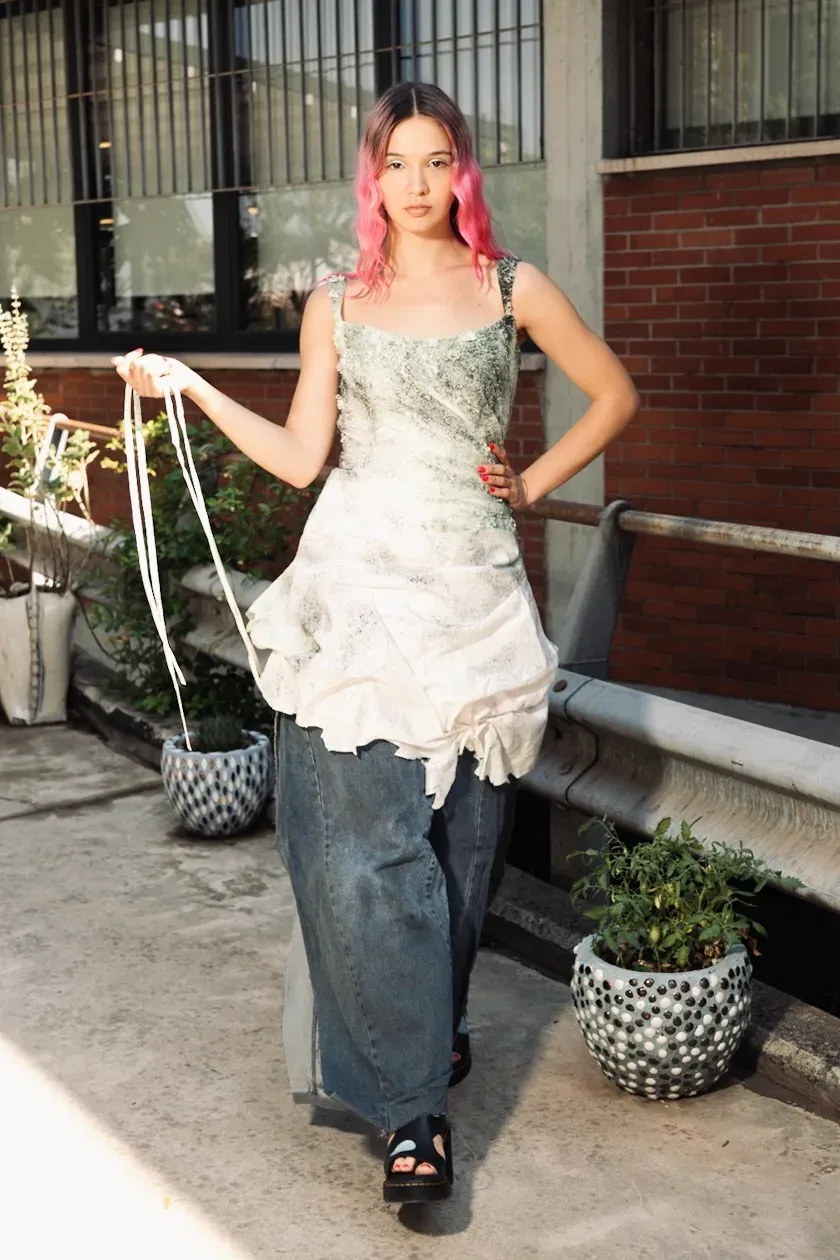
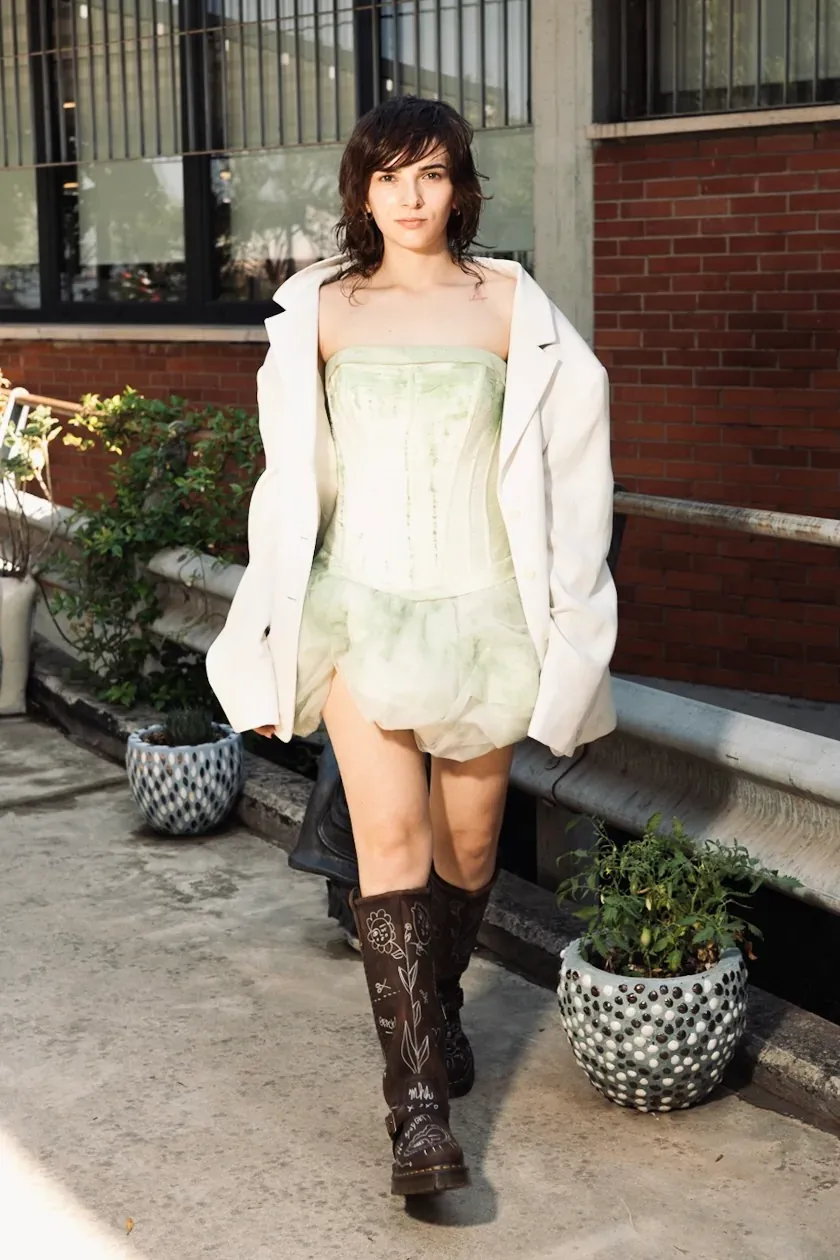
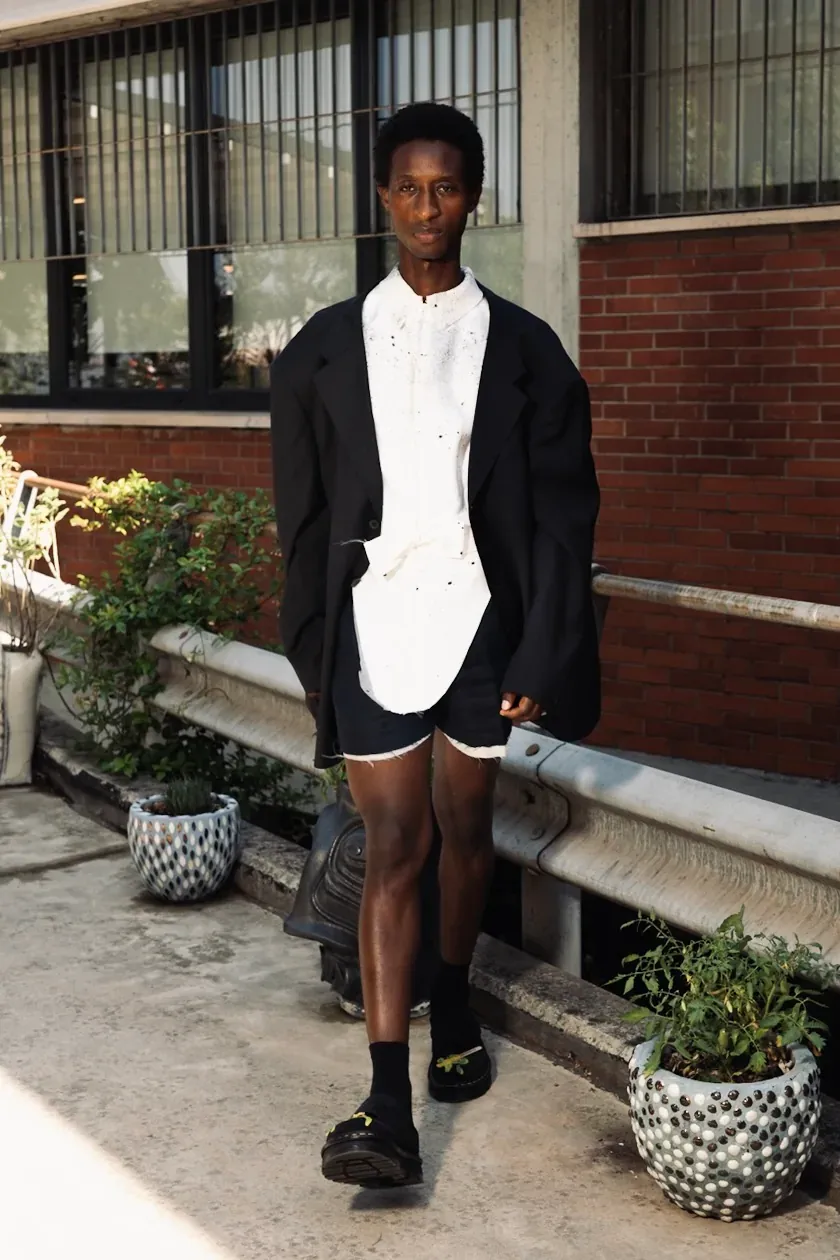
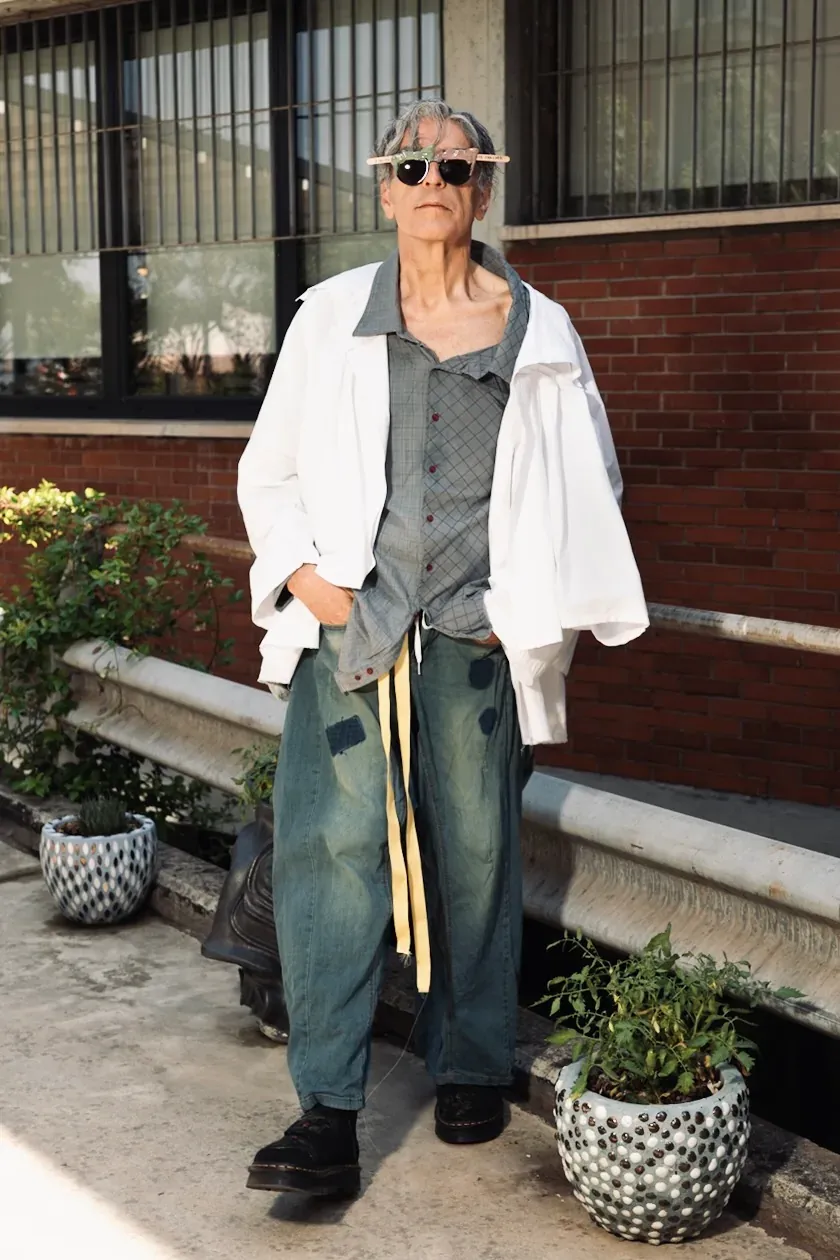
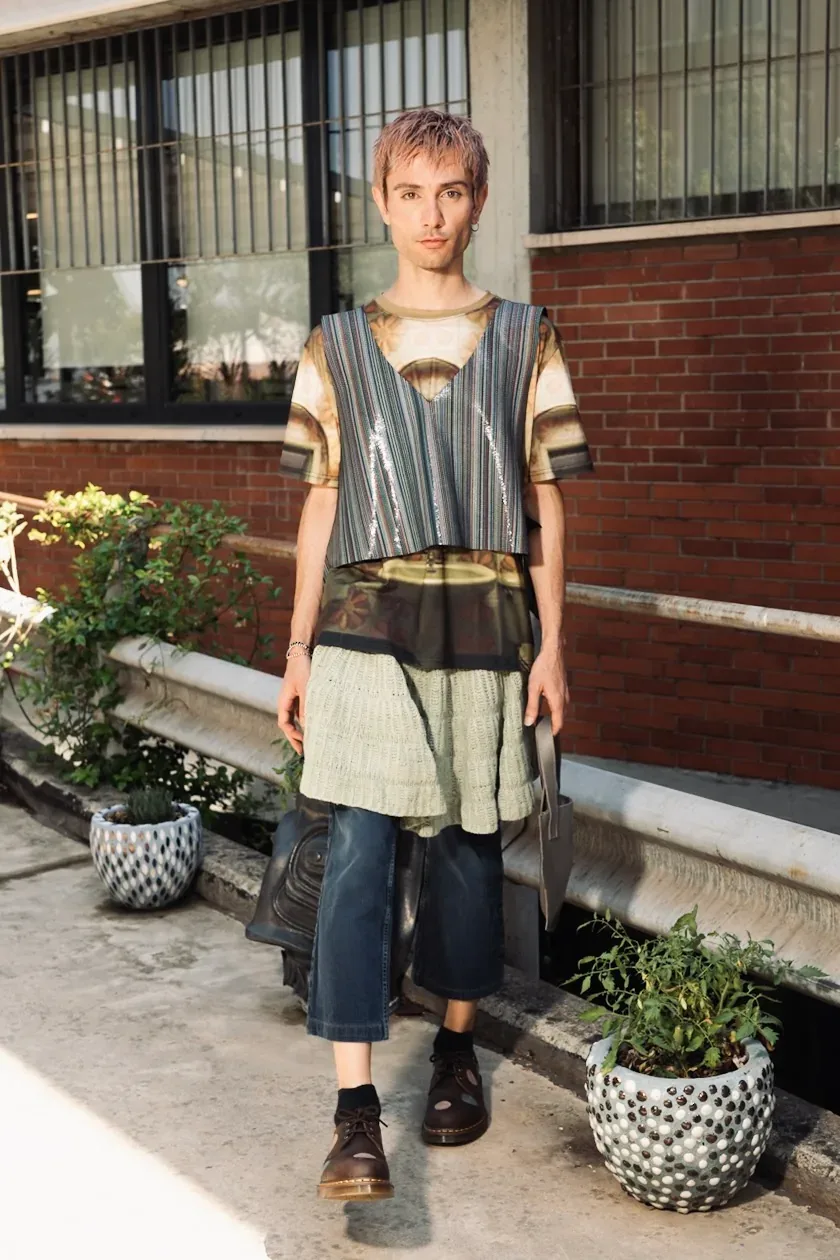
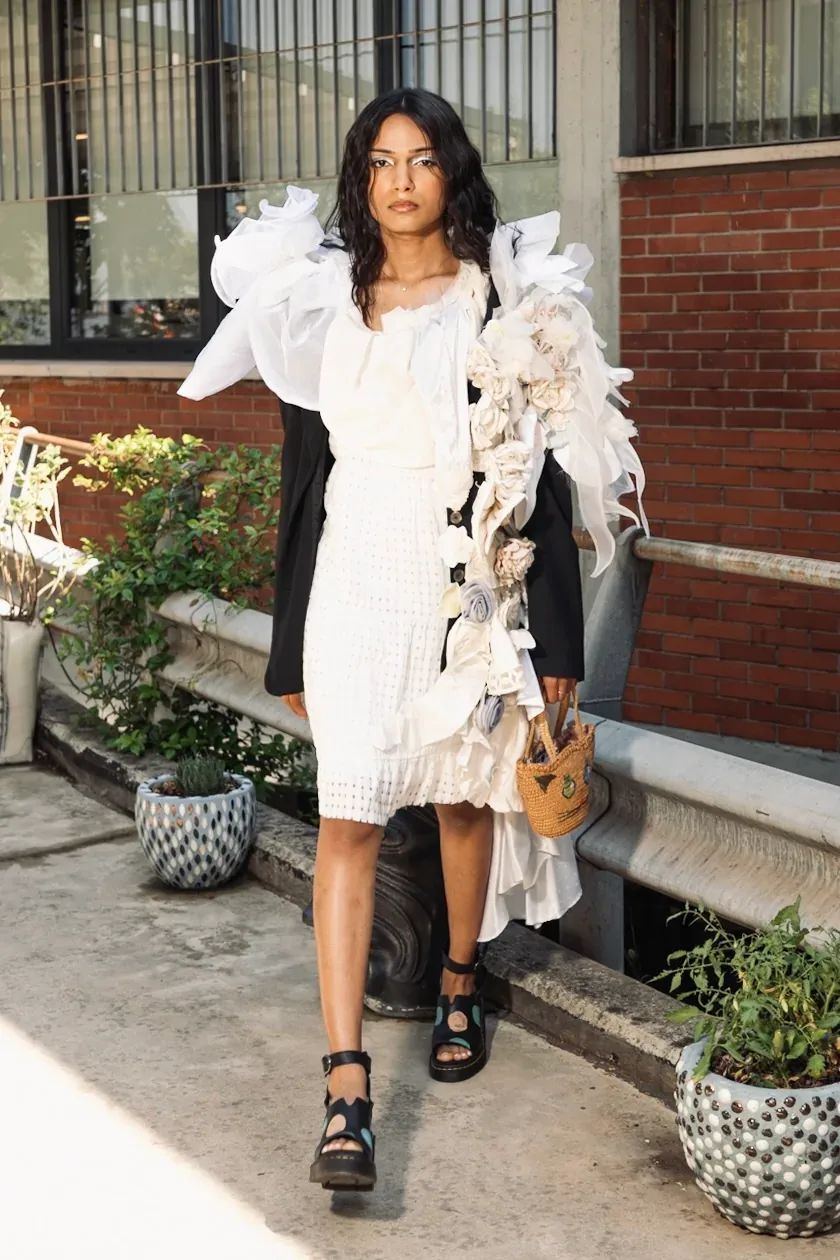
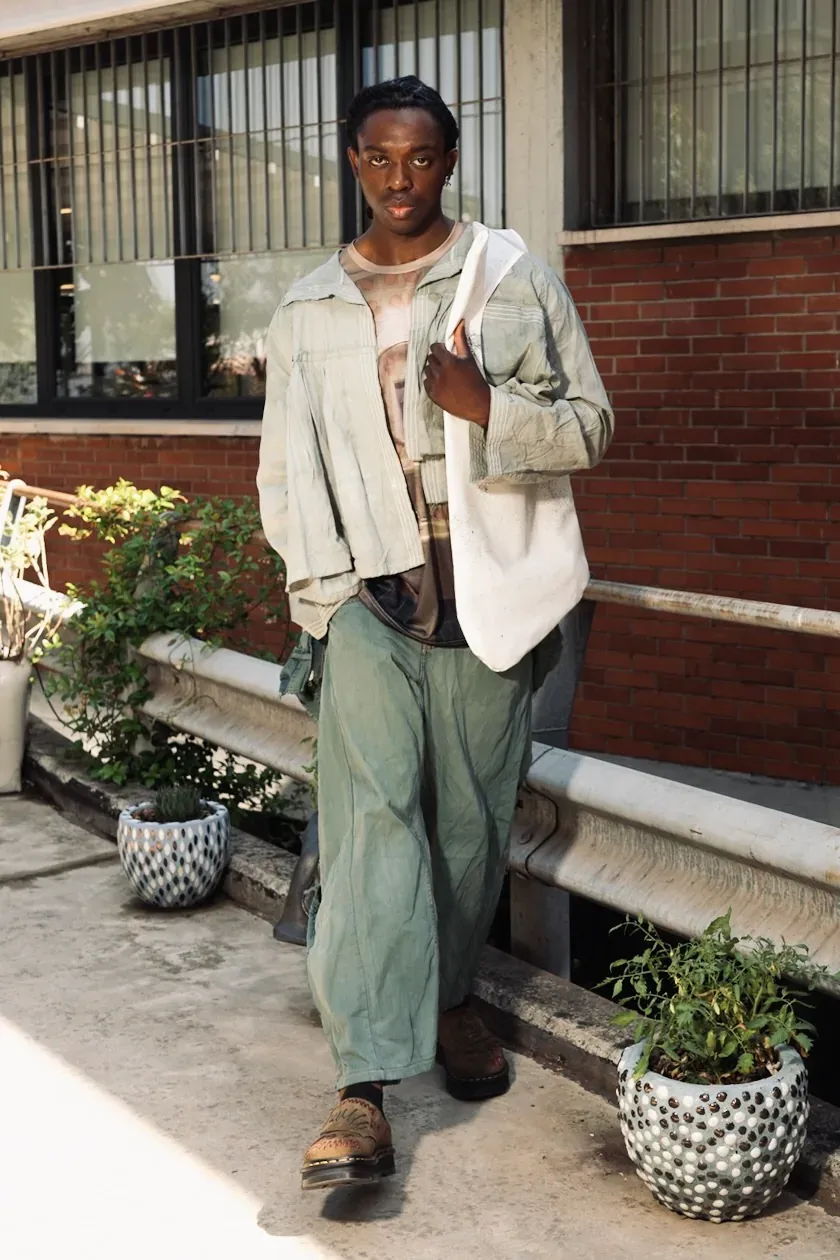
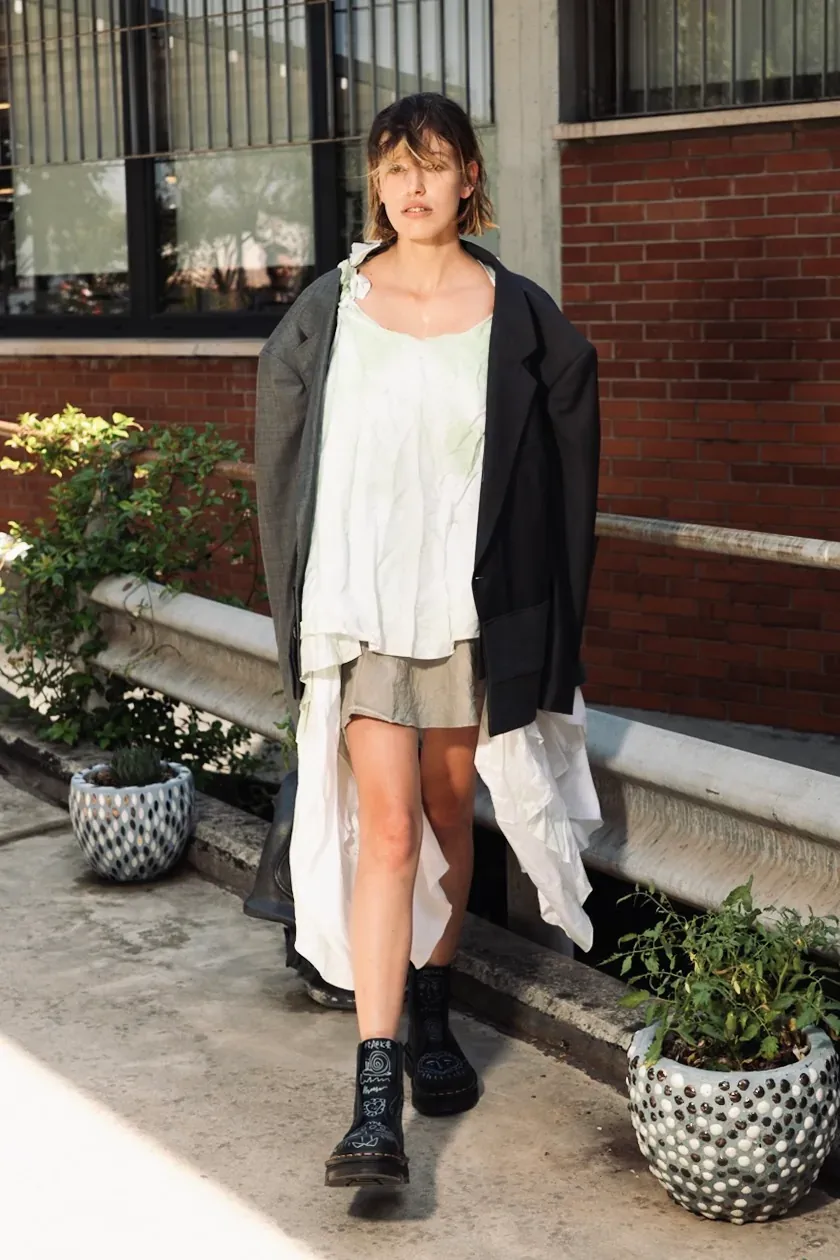
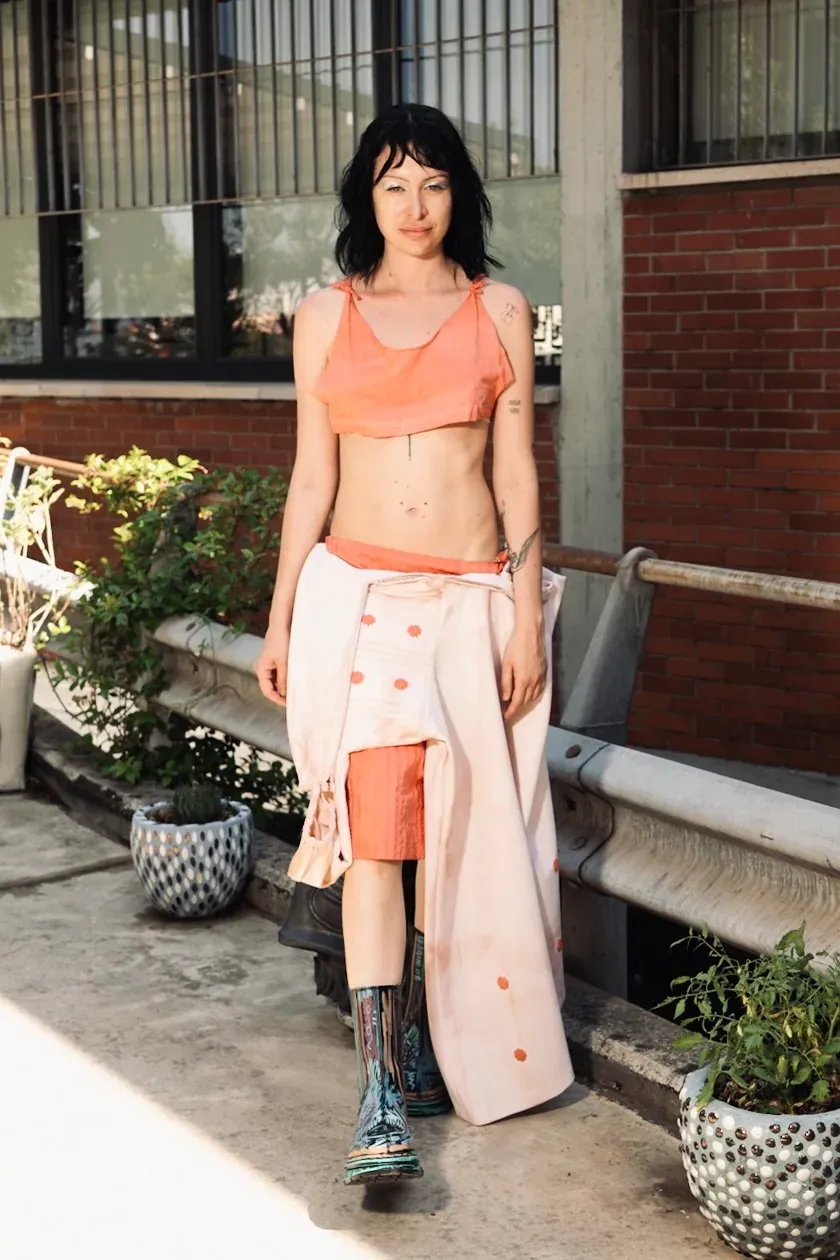
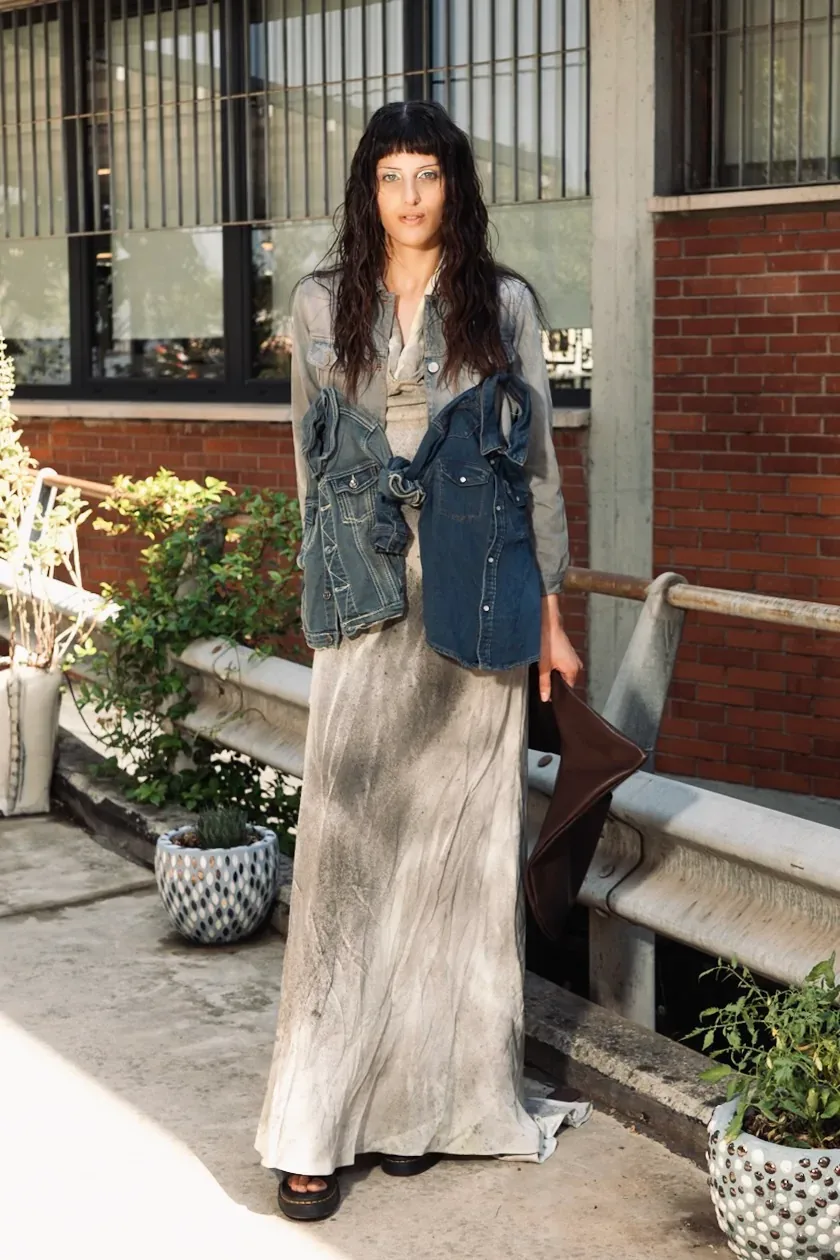
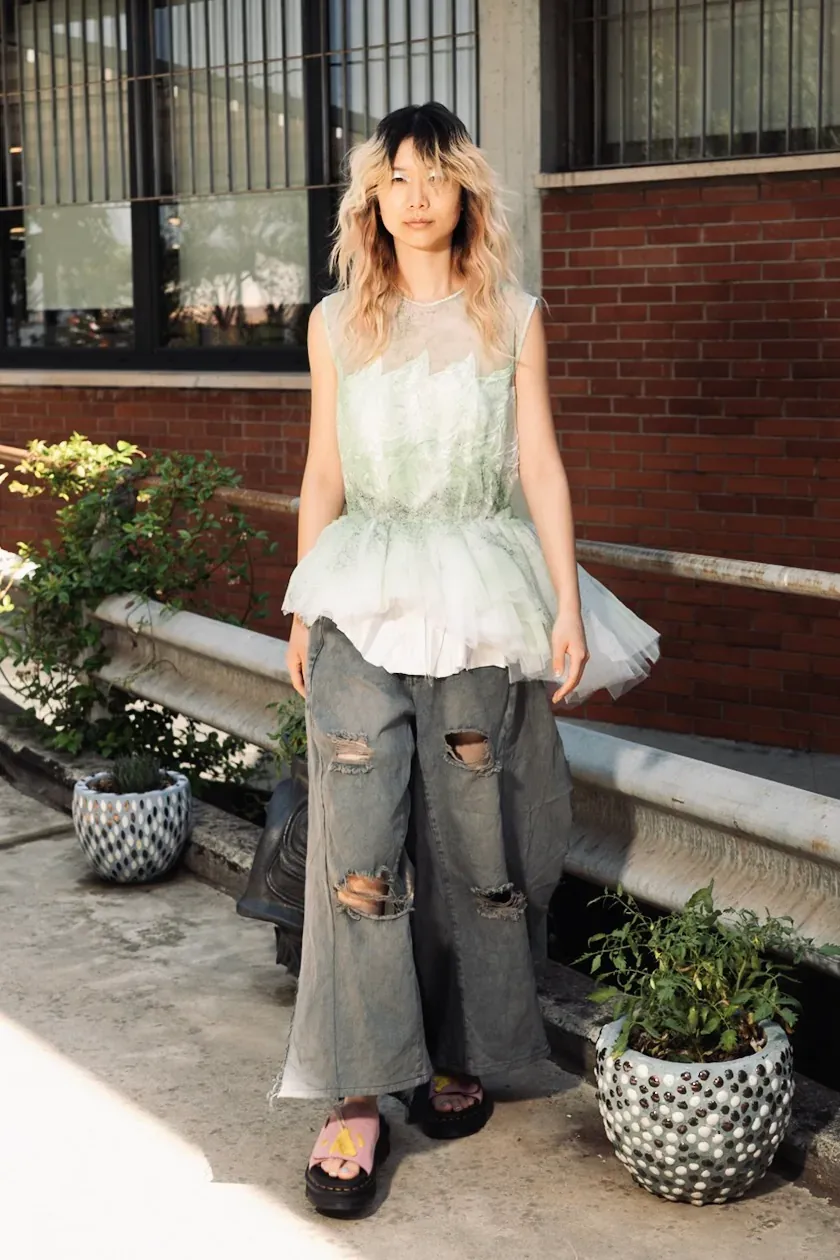
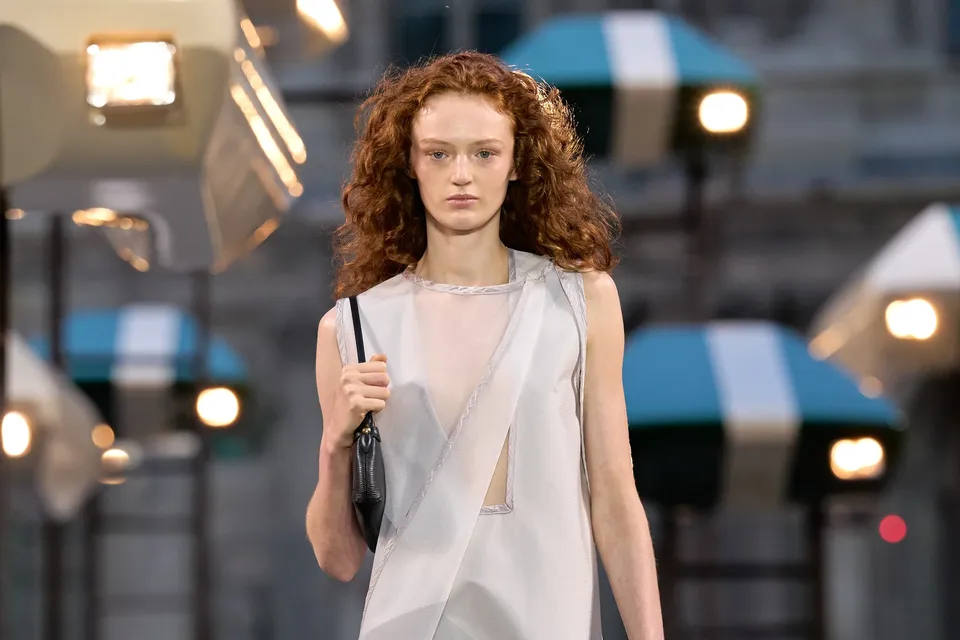
For the S/S 2027 collection, members of the Simon Cracker crew are said to have been key figures — both physically and creatively — as they served as inspirations as well as models. Did all of them feel in sync with the final outcome of their looks once they were completed?
I never really know until the fitting. But to my surprise, everyone genuinely felt comfortable in their look. There was one member of the Crew who hadn’t admitted he wasn’t completely comfortable wearing a tulle dress. That evening I kept thinking about it, so I asked someone to tell him I wanted to change his outfit. He immediately said he preferred the new look. I know my Cracker army very well. When they step onto the runway, it’s almost like they’re stepping into a protest. I want every single one of them to feel strong, fearless and invincible — not weakened by clothes that don’t feel like their own.
In the official press release for the collection, you mention Cinderella's mice as upcycling and creative icons, which, besides being clever, also resonates with your collaboration with the Teenage Mutant Ninja Turtles a few years ago. How do you think the idea of having fun and not taking yourself too seriously sits within the world of institutional fashion? Do you think it's easy to reach the right audience and build a community around that approach?
Every season, when I start designing, I end up thinking about my childhood. This time I asked myself what fascinated me about clothes when I was little. It was the mice in Cinderella. They would dig through the stepsisters’ rubbish, collect the things they had thrown away, and transform them into a completely new dress. Looking back, it was probably the first time I’d ever seen something that looked like upcycling, even though, of course, I didn’t know the word back then. Who would have imagined that one single scene in a Disney VHS would end up becoming my future? And yes, I think we have to remember who we were as children if we don’t want to take ourselves too seriously. At the end of the day, I just make clothes. I’m not saving the world. The people who come to my shows already know what to expect from me. I simply want to tell honest stories. Stories that are as simple as I am, but that I know how to tell because they’re real. They come from my family, from the people around me, and they’re the foundation of Simon Cracker.
Aside from prioritising fun and environmental responsibility, you also seem to place great importance on offering messages of hope to younger generations. Do you ever wish, just for once, that someone else would be the one giving you words of hope?
I teach in many schools, and I can’t ignore the eyes of the people who will eventually take our place. Seeing students already scared before they’ve even graduated breaks my heart. I want to do everything I can to convince them that they are the solution. They’re the key to fixing what isn’t working. I don’t like saying fashion is dead, because fashion has simply changed. It’s no longer the industry people experienced in the ’80s and ’90s, when the last great revolutions happened. The fact that Simon Cracker is now showing on the official fashion calendar already feels like a small revolution to me. I don’t have what everyone else has. I’m here because I believe in my own way of protesting: with kindness, and today, kindness feels almost revolutionary in a world that seems to reward aggression.
How different is the process of creating a collection when upcycling is involved? Could you walk us through it step by step?
Working with upcycling means accepting that you’ll lose control even if, like me, you’re obsessed with being in control. I’ve learned to let go, and I’m happy I did. I’ve also learned to create disorder inside my own order so that everything eventually finds its place. I’m not ashamed of my ADHD. Sometimes it stops me from sounding brilliant or giving interviews the way people expect a professional designer to. But that’s who I am. I have no interest in writing cool press releases full of carefully researched references if they don’t honestly reflect what I want to say at that exact moment. Maybe one day I’ll make films instead, if fashion is no longer enough for the way I want to express myself. I don’t think creativity should ever have a single label. Authenticity probably comes from leaving the door open to different possibilities, different forms, and different versions of yourself.
How did your relationship with The Crew evolve throughout the process of developing the collection? They are ultimately your muses, but also your collaborators, friends, models, and much more.
Right now, the Crew has become part of my mind. It’s like having a third arm. They lift me up whenever something isn’t working, and I trust the people around me completely: Simone, Sofia, my boyfriend Nicholas, and everyone else. The Crew keeps growing into this huge blob of creativity and beautiful people. We spend time making graffiti, eating together, drinking together, and meeting in our favourite spots. It’s exactly what I’d always dreamed of. Until recently, it was still evolving. Seeing it become real has been the greatest achievement of this year.
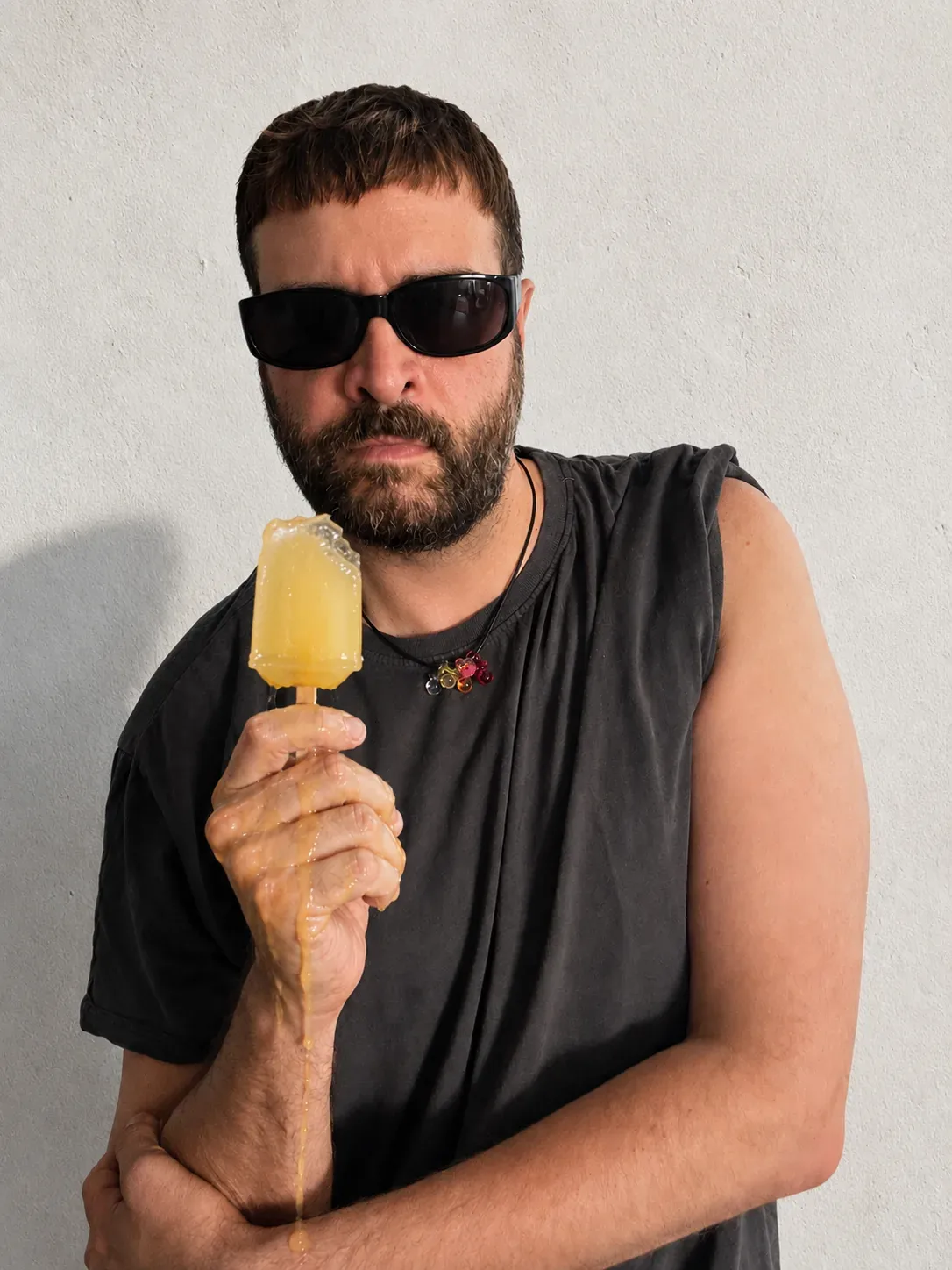
Can't Deal with Summer feels like an idea that carries much more than simply a physical dislike of heat and sweat. You've mentioned the current economic crisis and the dilemma of perpetual emergency. Do you think these ideas are somehow contained within the metaphor of melting ice creams and ice lollies — the unavoidable, uncomfortable chaos of everything dripping onto our clothes?
Exactly. The title almost sounds silly, maybe even a little snobbish, if you hear it without any context. The truth is that I’ve never liked summer, and anyone who’s followed my work has probably noticed that my summer collections never really feel like summer. What bothers me most is that summer exposes social class. Even if I could afford something different, I’d still choose the public beach, eating pizza sitting on the grass in a park, or watching free concerts in little bars in Cesenatico, the seaside town in Romagna where I grew up. The memories I have there are worth more to me than any five-star hotel anywhere in the Caribbean. For me, the discomfort of summer is like an ice lolly. One moment it refreshes you and almost gives you life. Then you get distracted for a second, it melts, and suddenly it stains everything. That’s exactly how life feels sometimes.