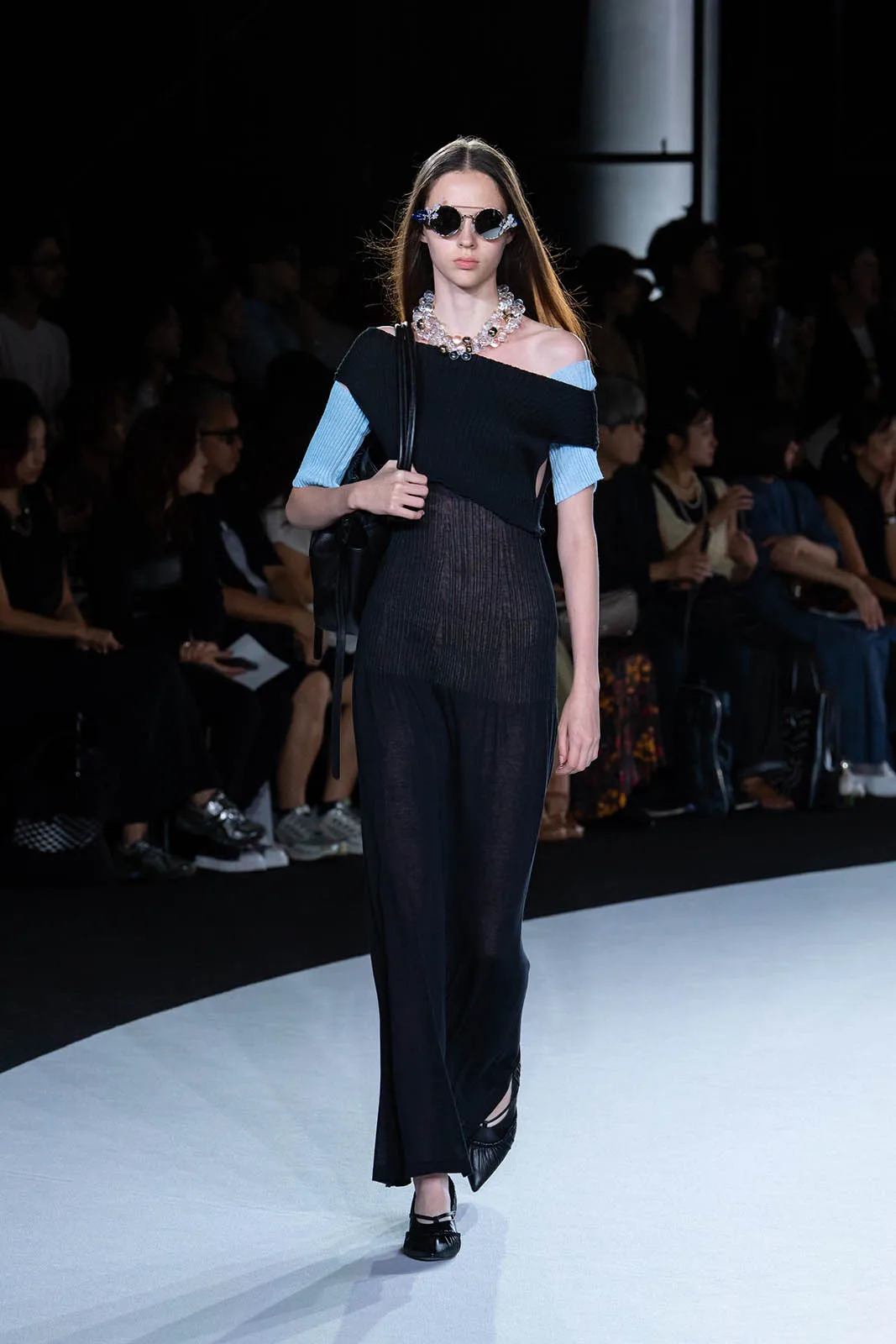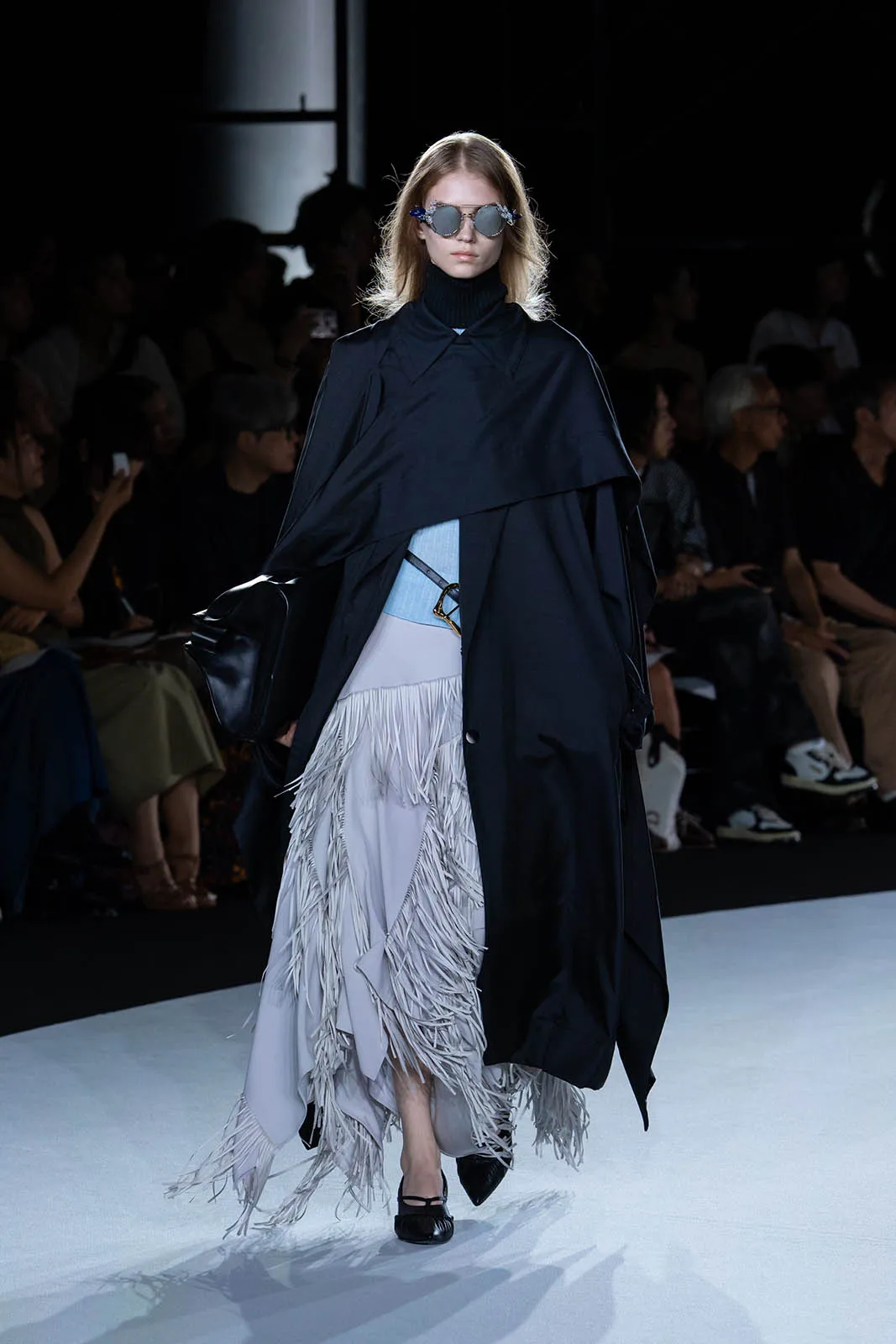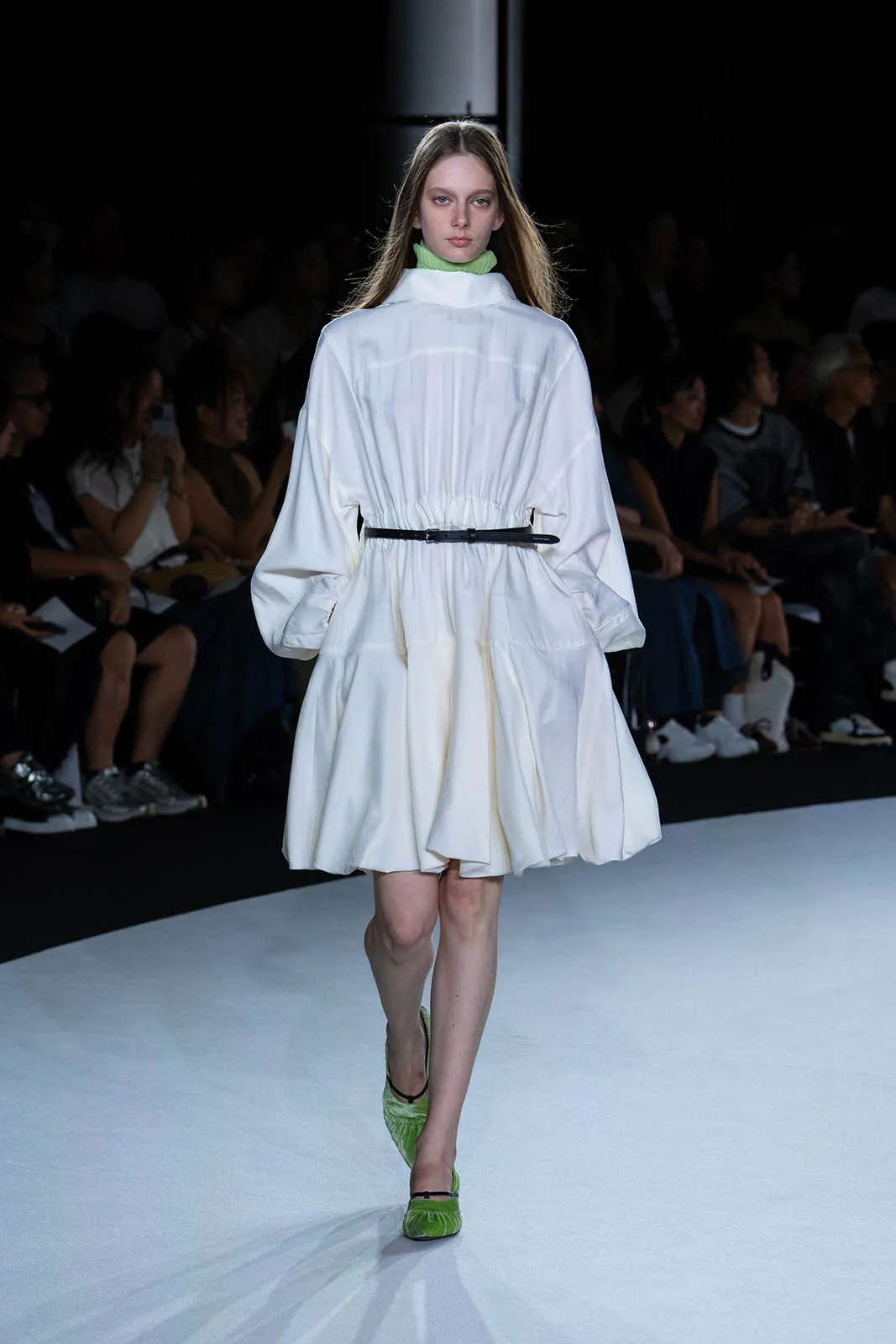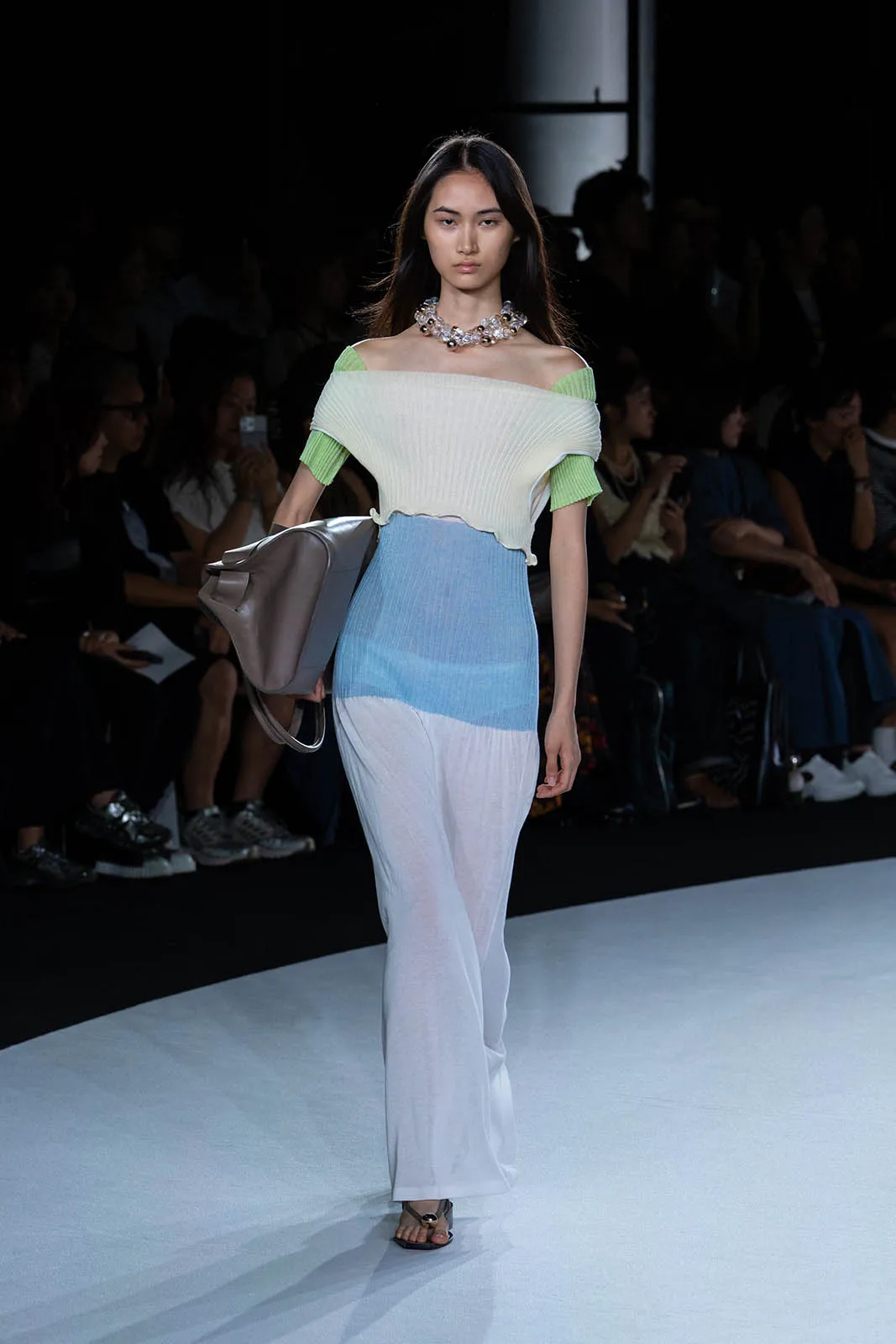
We are still thinking about our days in Tokyo. With more time to process and to sit with our thoughts, the idea of the capital of Japan being the real capital of fashion makes more and more sense in our heads. You could see it for yourself in the visual diary we recently shared, capturing some of the best looks of the attendees of this season's Rakuten Fashion Week, and you could also read it in our event report, where we highlighted the multiple initiatives and events that make this the most important week for the industry in the country. Now here we present to you our top shows; among the great, these were the greatest. Not one looks like the other; each brand is its own world, and differently, but similarly, they all embody, reflect and portray the taste of the Japanese mind.
Orimi
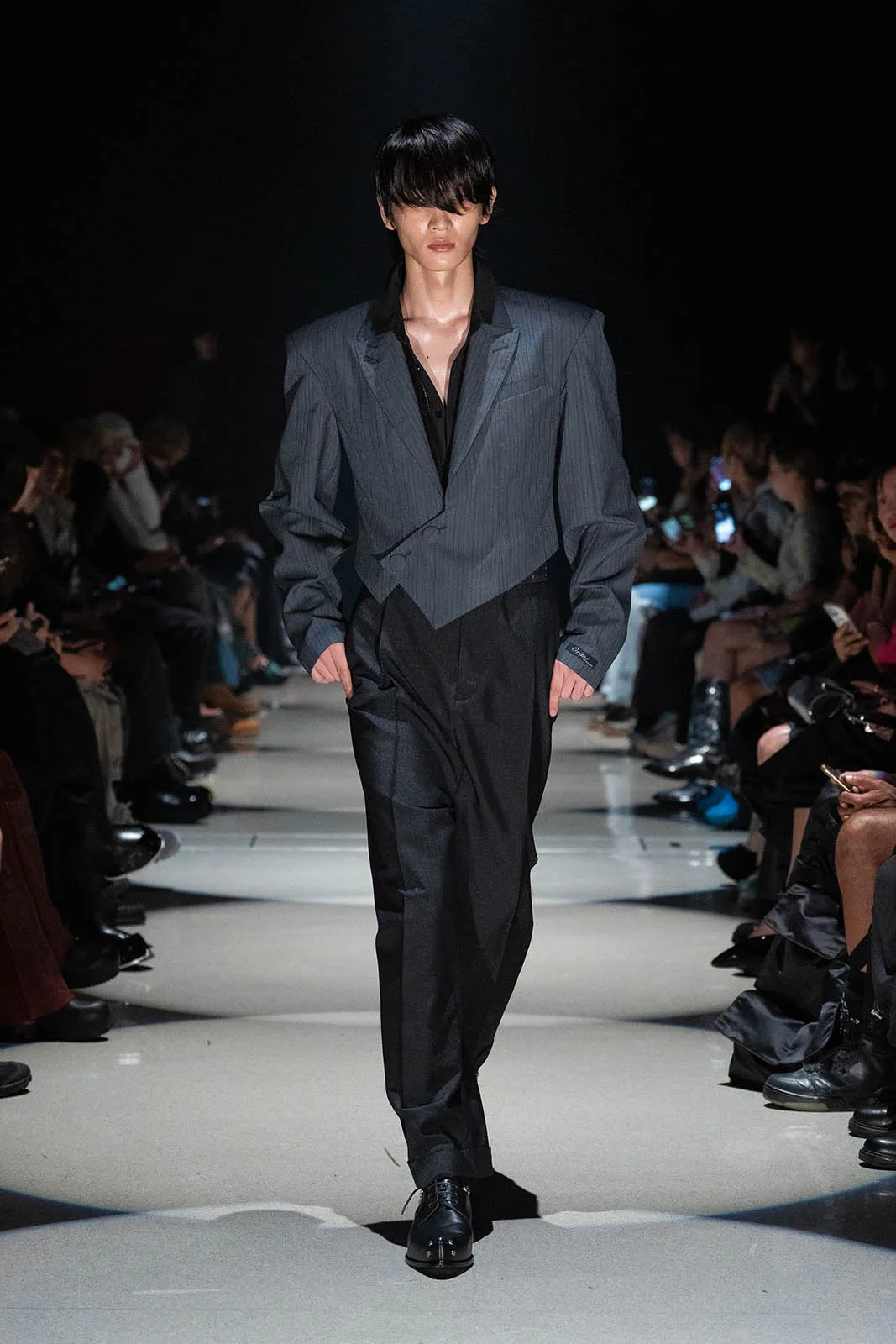
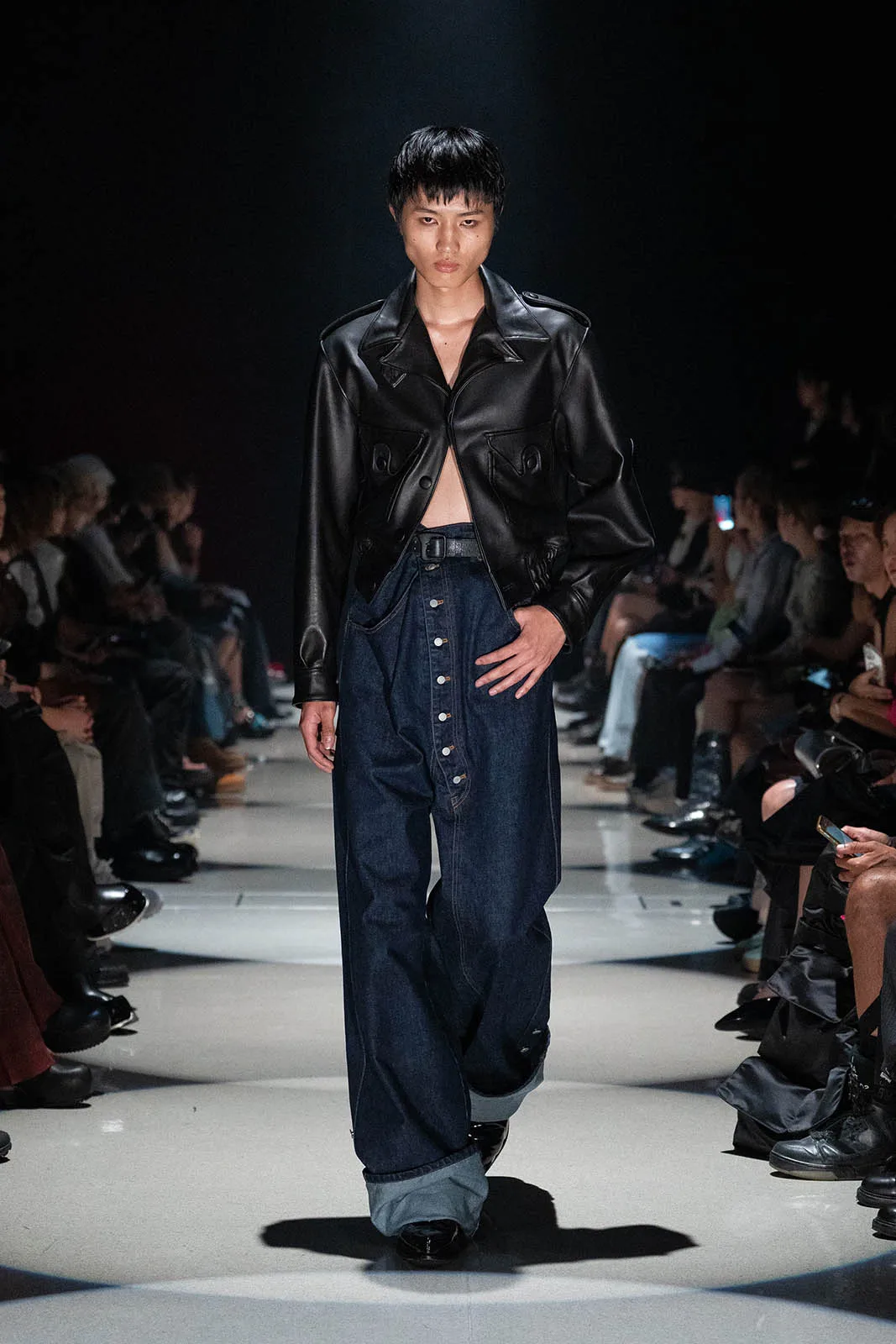
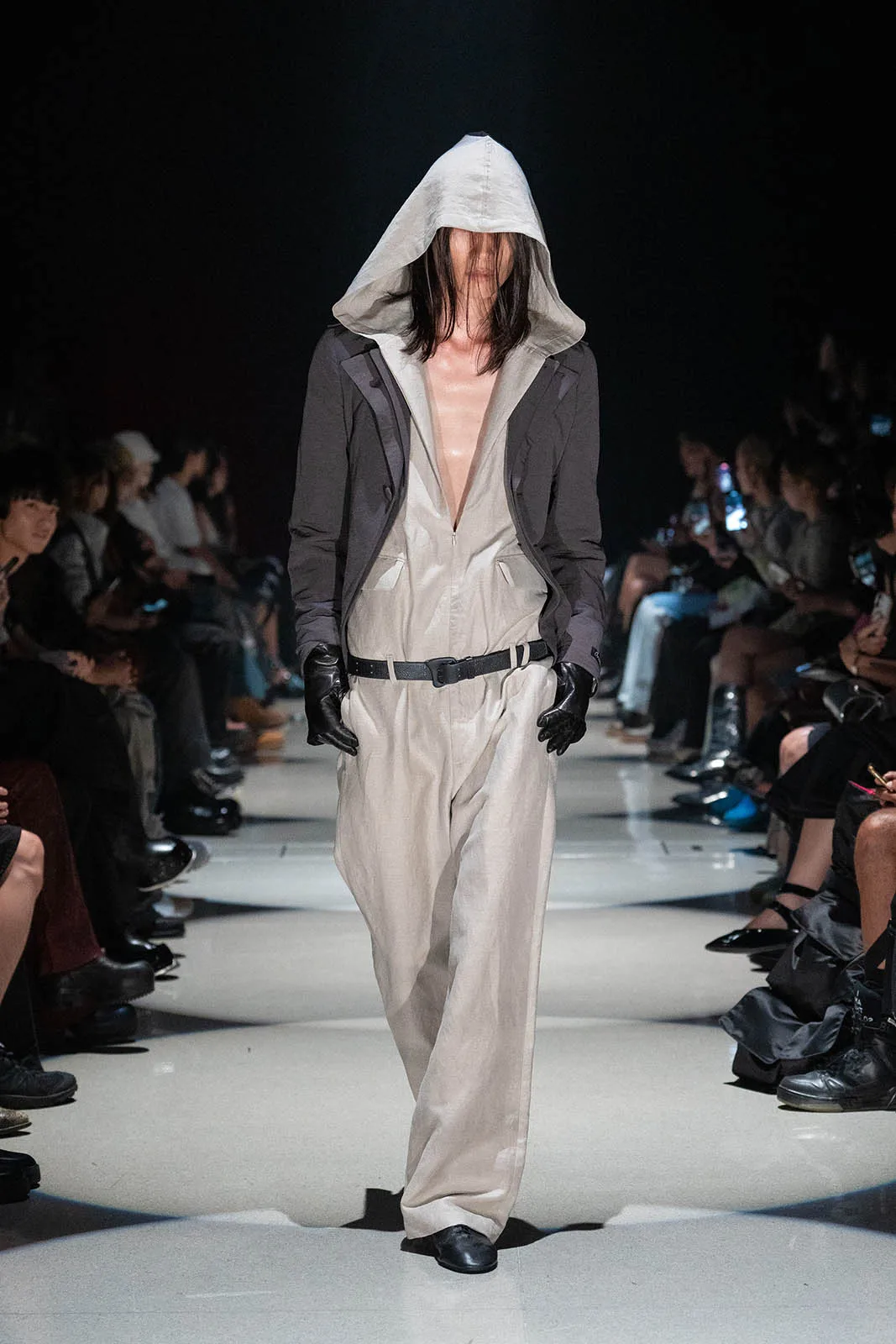
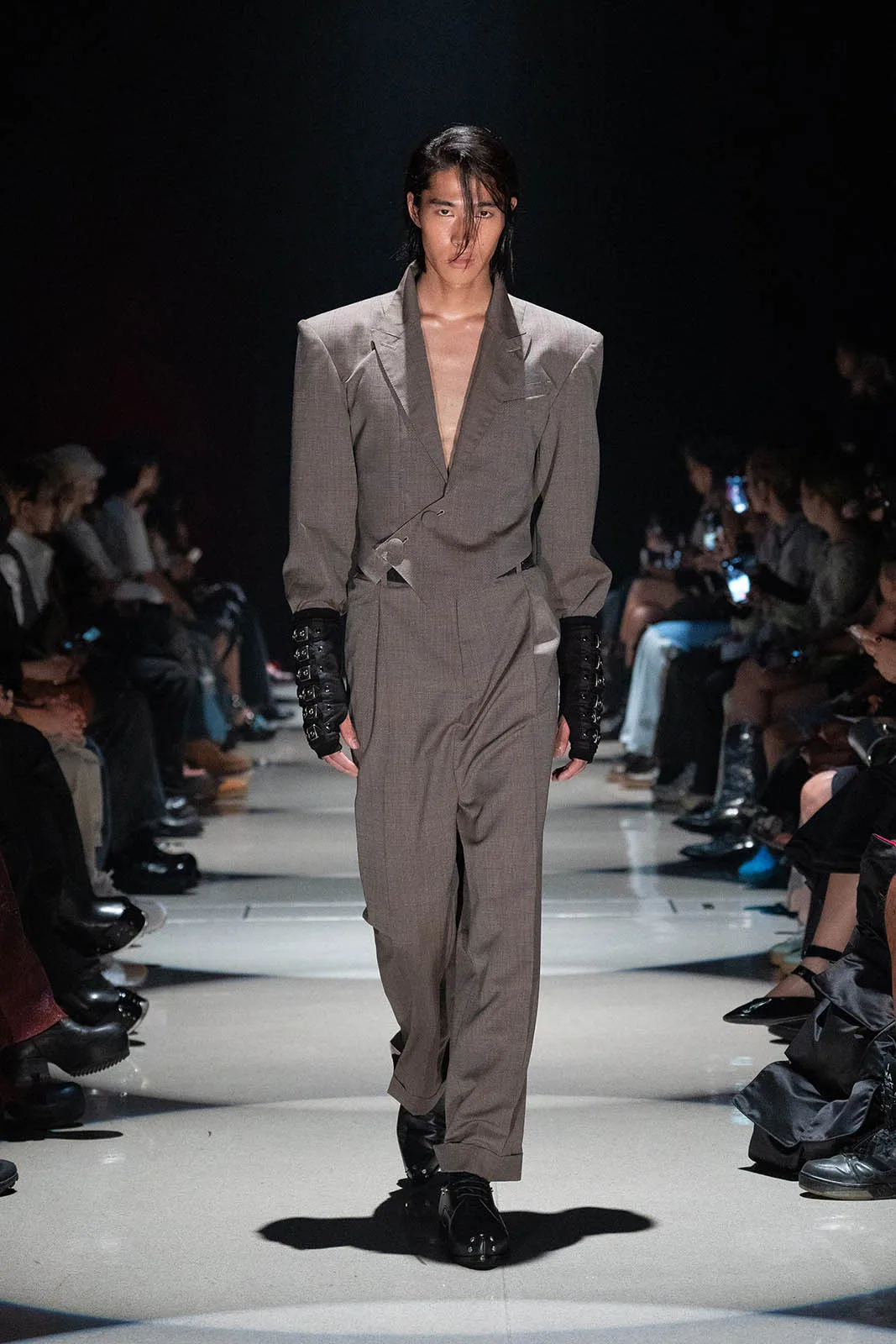
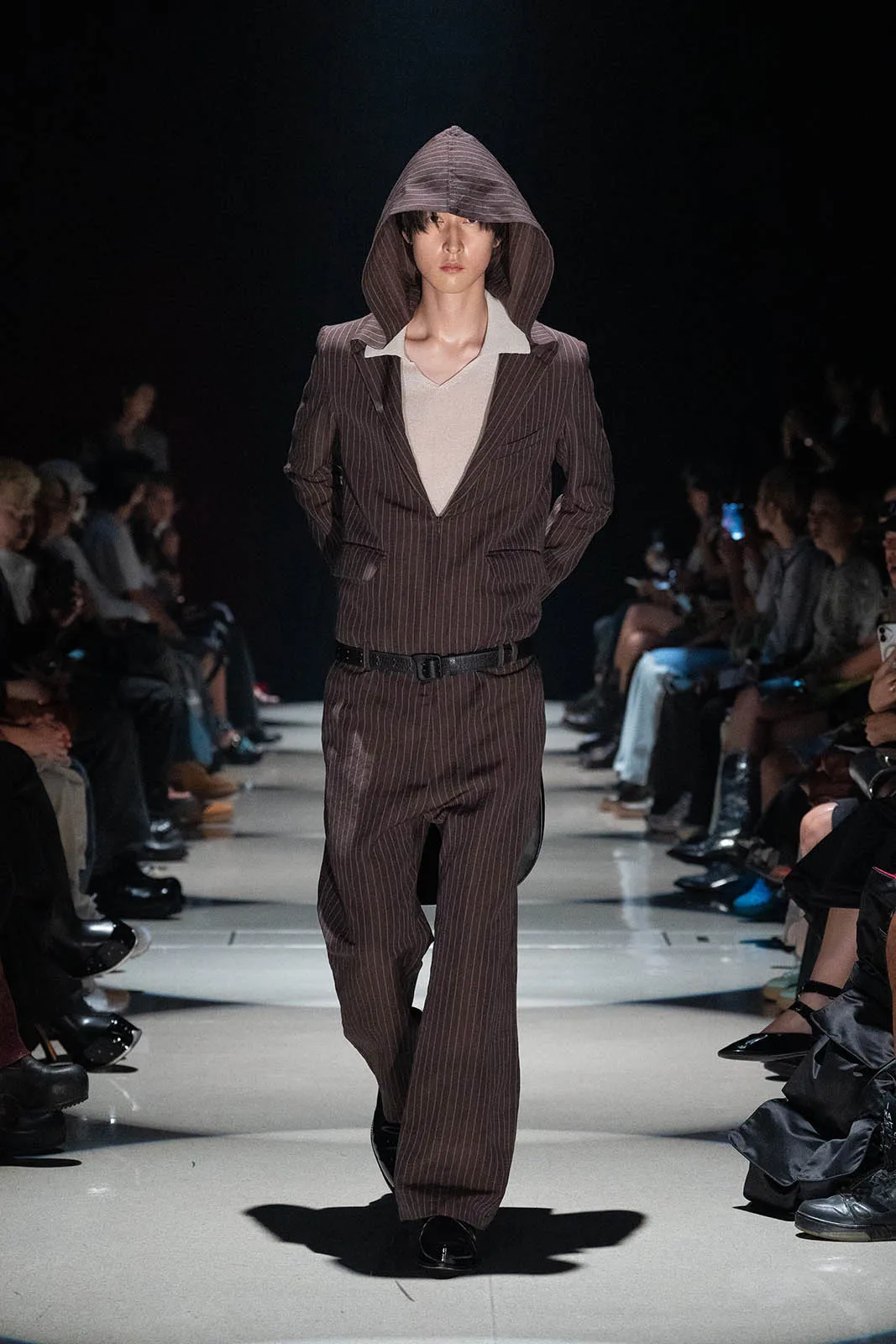
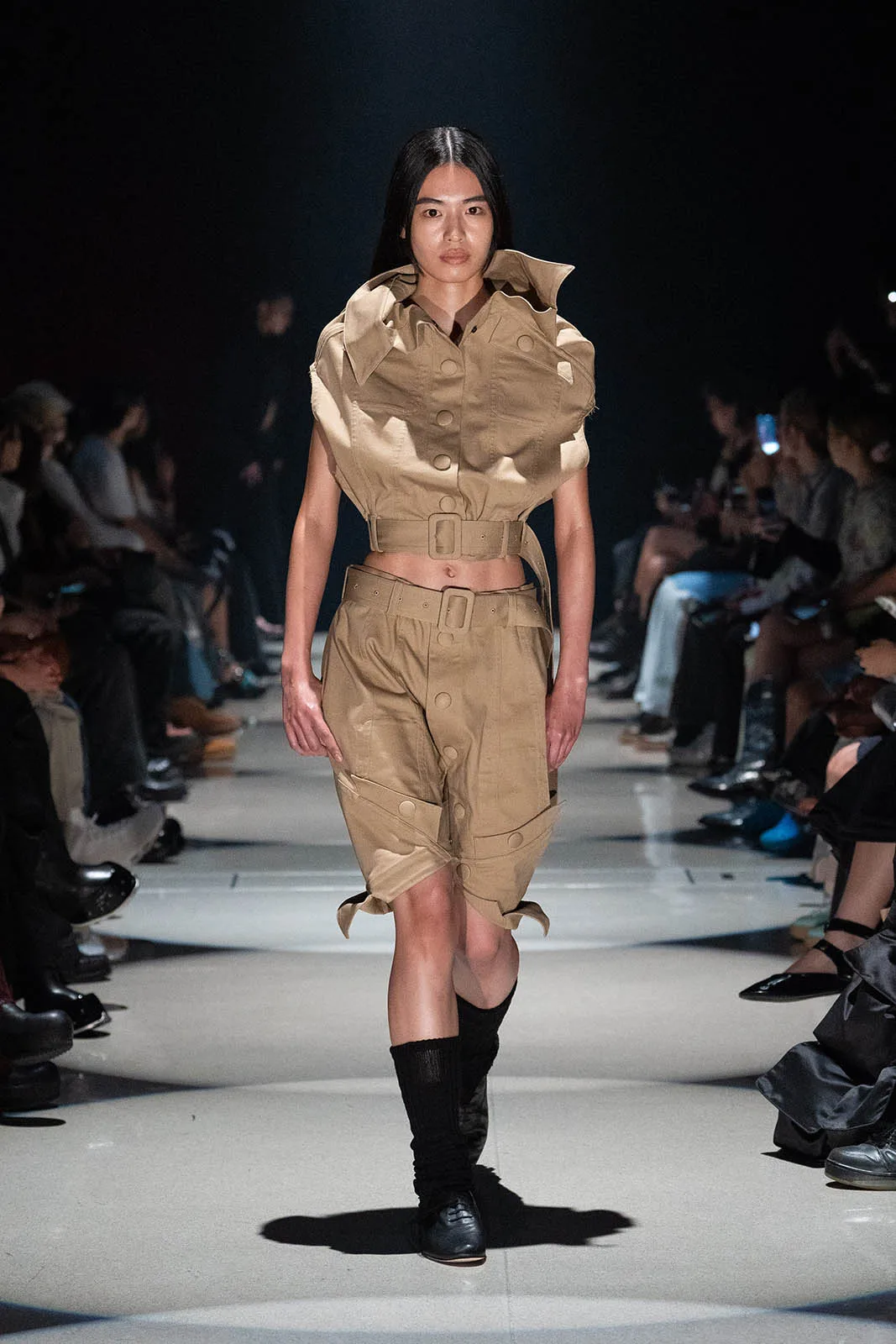
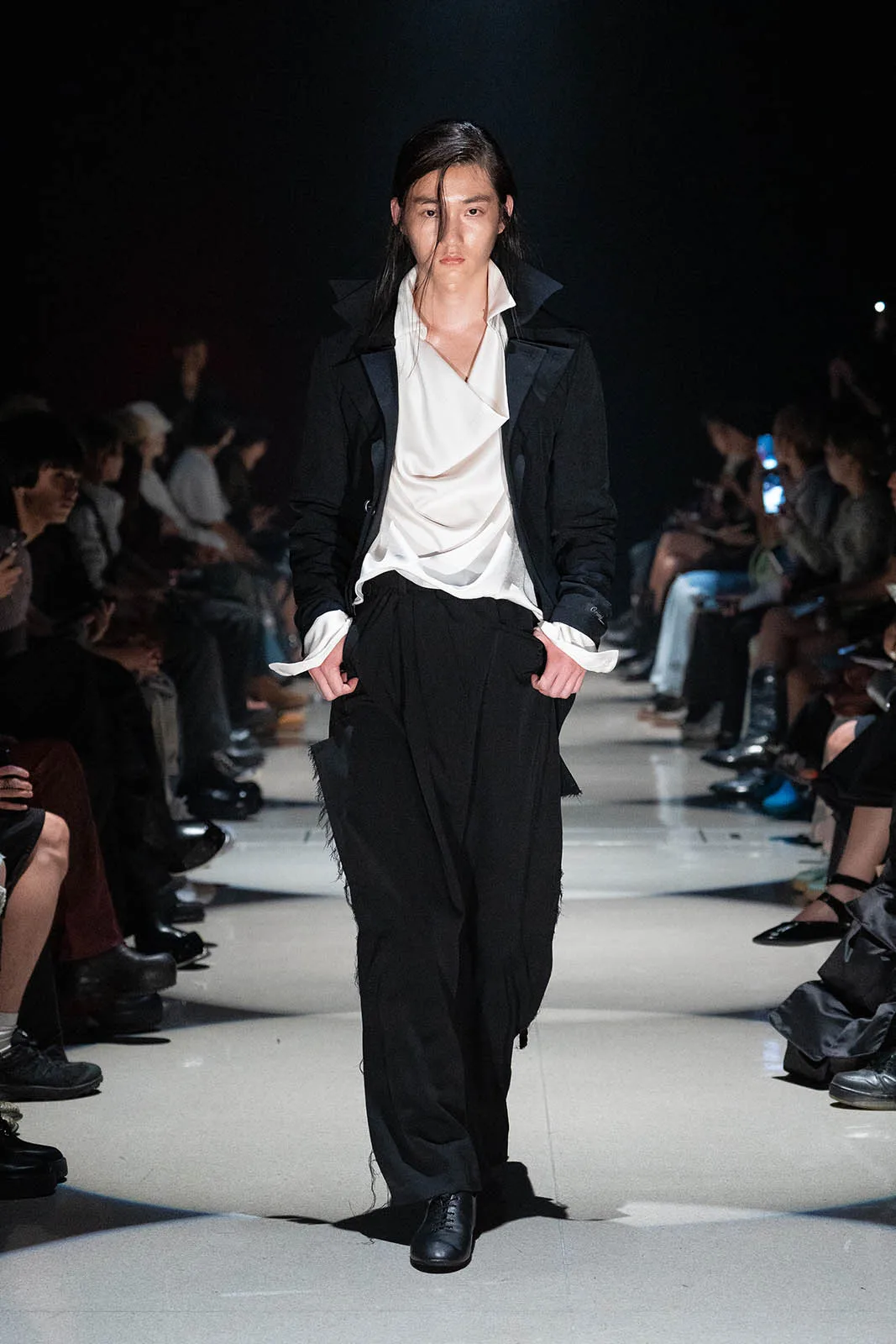
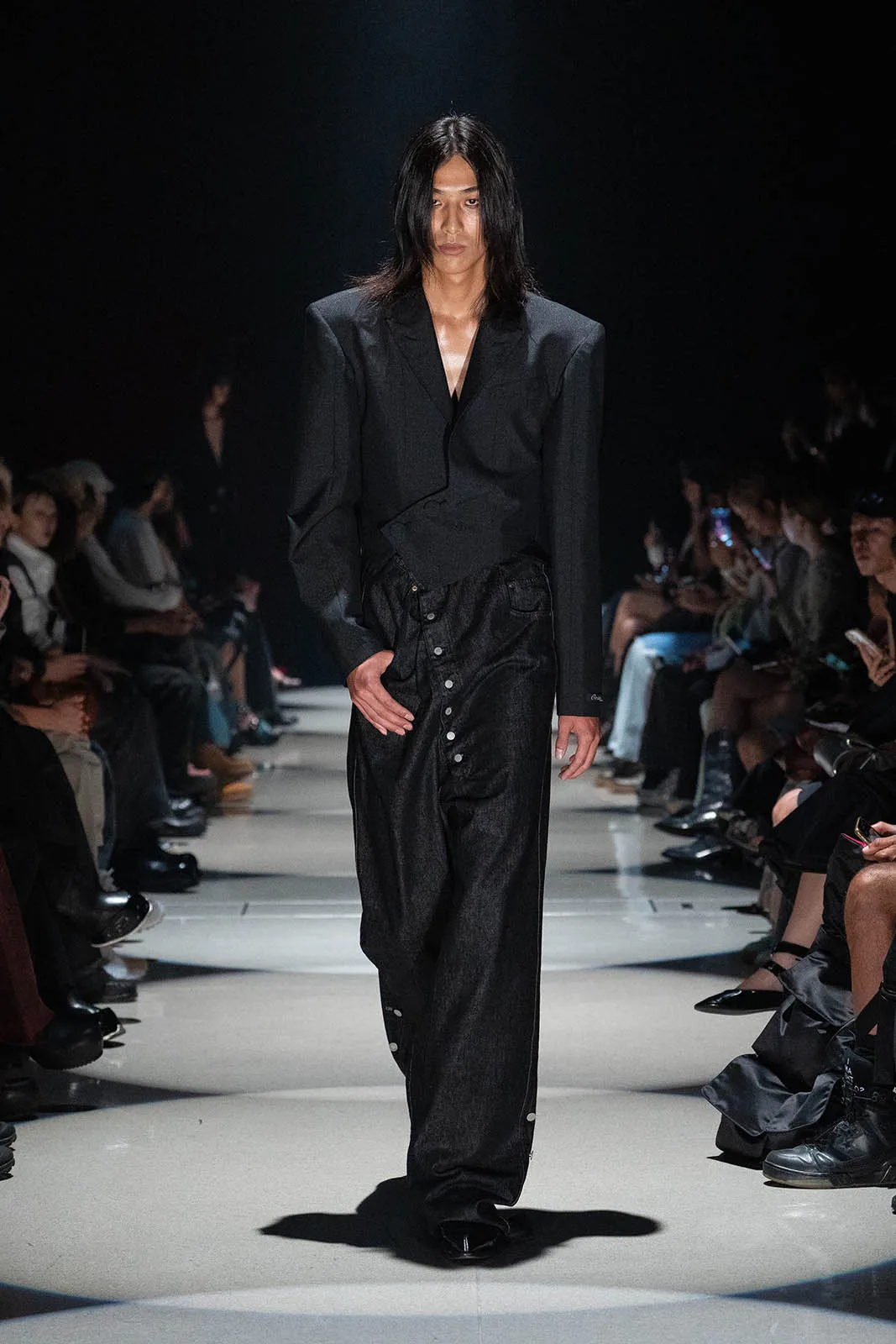
The brand, the brainchild of Kenta Orimi, vintage buyer and owner of the well-curated The Elephant store in Harajuku, presented its first show on Rakuten Fashion Week’s runways, his second show as a brand. Being the last in the six-day schedule, the 'saving the best for the last' saying was kind of fitting here. With a vibe that was intense even from the outside of the show venue, with a horde of loyal followers lining up in the entrance, this moment of finding the seats under the dim lights, posing in the middle of the runway or greeting friends and colleagues found by chance became a runway on its own, with most of the attendees wearing pieces from previous drops and collections. This is very telling of the brand status; when the audience could perfectly blend with the models, not only by wearing but also by embodying perfectly the style and ethos of the name they are representing, it can be said that a brand is successful. In fashion, loyalty and community are two of the most important elements.
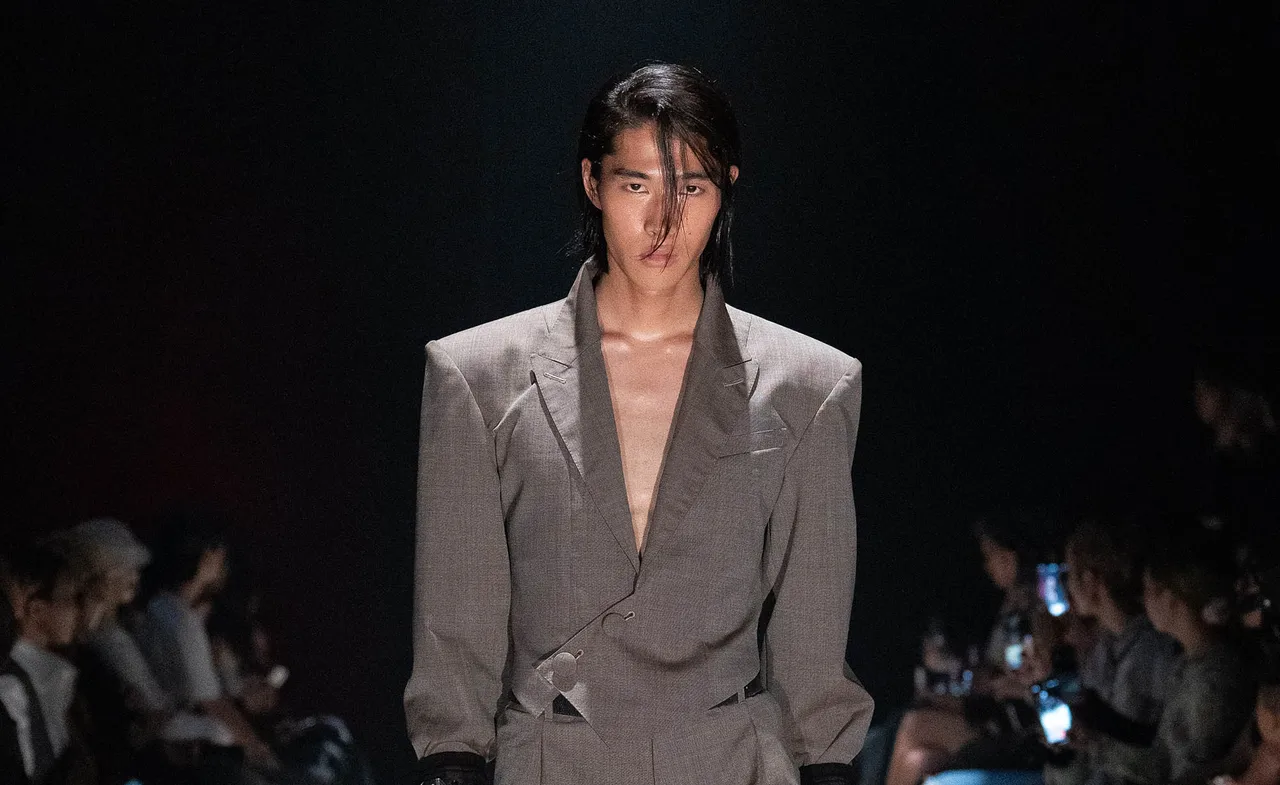
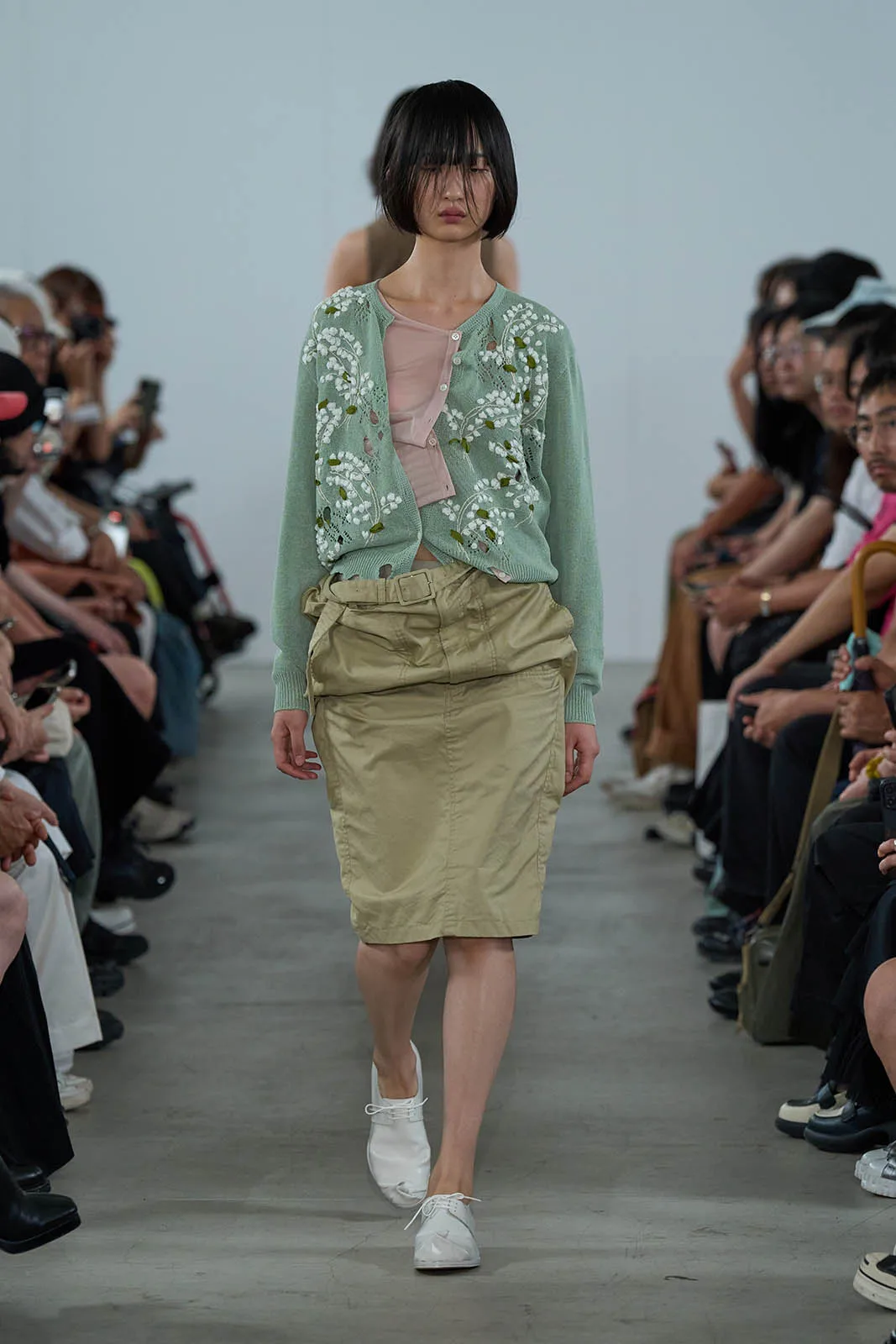
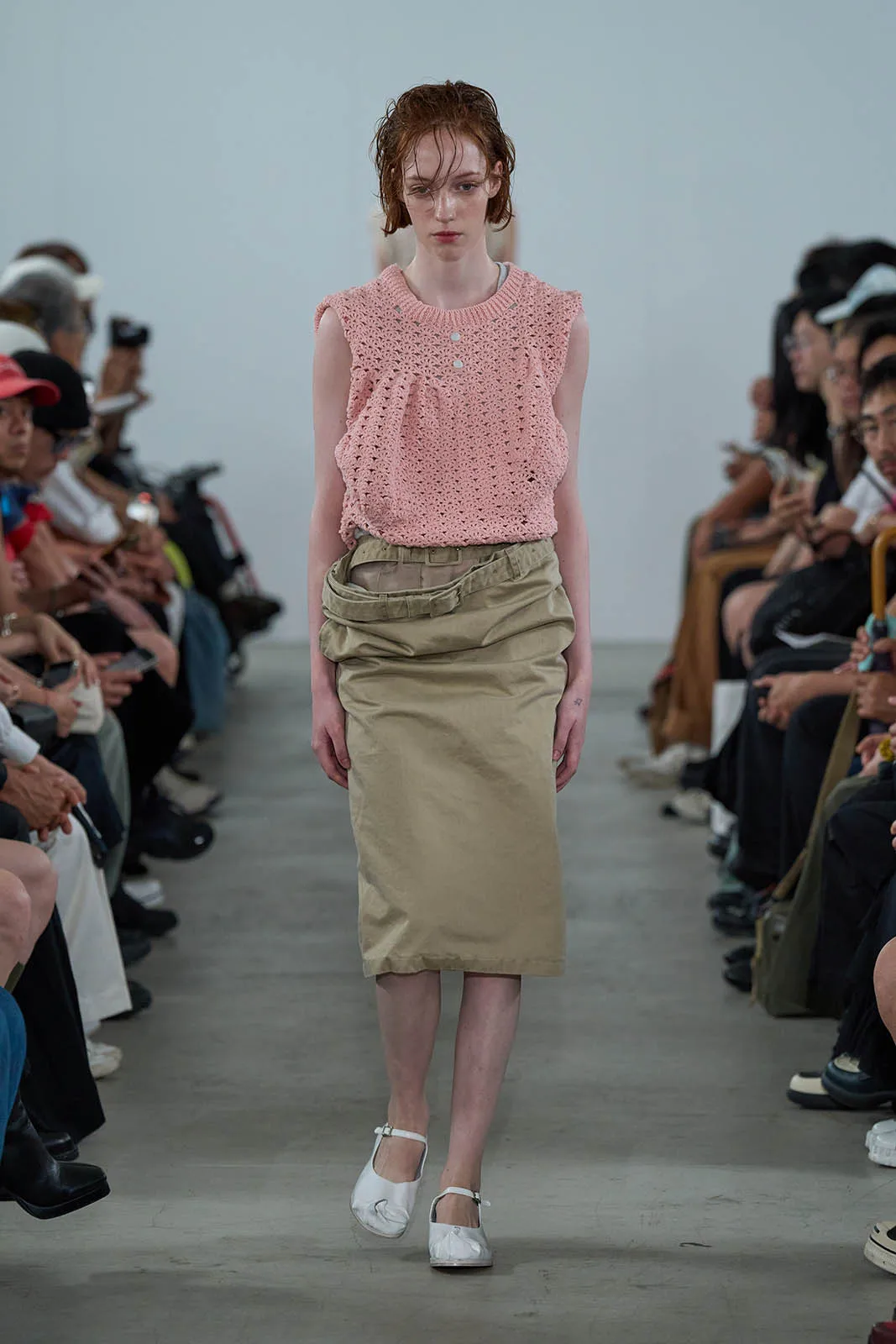
The style and aesthetics that Orimi presents seem to blend perfectly with the side of Tokyo and of Japan that makes an effort to blend less with the city. The name of the collection, Elsewhere, reflects that. It represents something that is there but also not there, maybe alienated, standing on the borders or looking from the outside. Since the personal style of Japanese people is so telling, you can easily distinguish when someone wants to be different, express their own personal feeling or story, not bend the knee or fall under the norm. Orimi is the brand for this kind of person, where the disorientation and alienation jump from being a state of mind to a reunion of fashion codes that result in the deconstruction born from questioning everything, even the steps or rules for building a garment.
Here the usual becomes unusual. The patterns used to create pants are completely dismissed and used to create skirts instead, but keeping their original form that is made to adapt to the crotch area, losing functionality and becoming a detail on the side of the skirts. Said detail could be suppressed if we were to follow the usual way and silhouette of a skirt, but leaving it in there for everyone to see is the sign of thinking, “I know how things are done; I just don’t want to make them the right way.” It's a subtle rebellion that is loud enough to be worn and understood by the ones who should. Like this, many pieces have a wire at the hem for you to make and give them the shape you desire; super oversized jeans are wrapped around the waist like a towel would, and collars of jackets and shirts are reimagined. This is the Orimi universe, neither here nor there, but rather elsewhere.
pillings
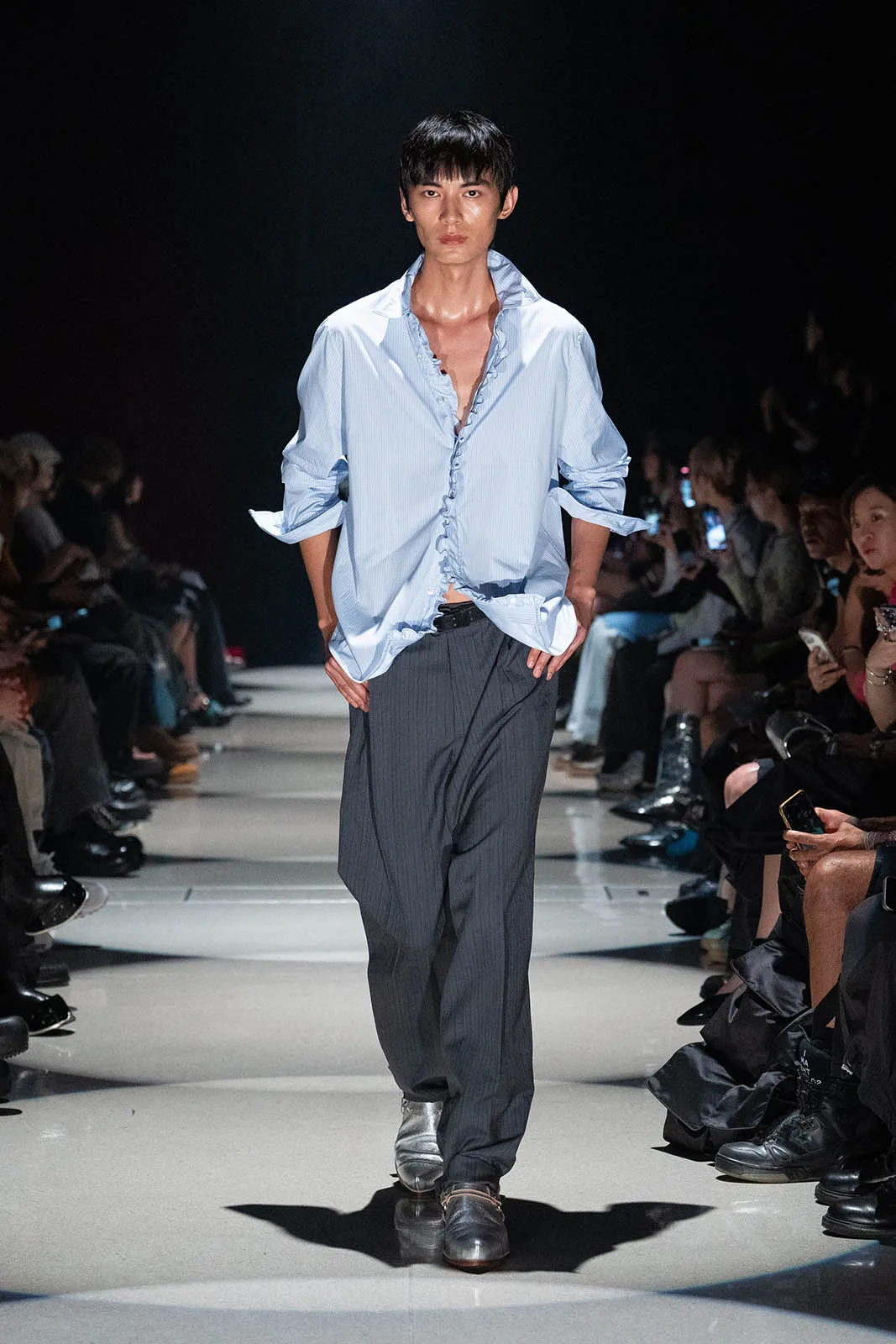
This was clearly the people's favourite. During those small talks in between shows, the usual first question, among the mandatory conversations about the weather, is “What have you liked so far?” Most, if not all, of the answers were “pillings”, without hesitation. And they were not wrong. The new collection of the brand founded by Ryota Murakami in 2020 was presented in a very tight space, with all the assistants cramped next to each other, the photographers piled up in a very funny way, and a runway width that had us wondering how two people were going to walk at the same time, one back and one forth. In the end, it all worked out well, and even better, because such closeness to the models, combined with the peaceful pace of their walk, allowed us to have a closer and more detailed look at the garments shown, aside from giving us a sense of intimacy with the pieces that perfectly aligned not only with the brand ethos but also with the intention of these collections.
The year of foundation of pillings has deeply determined the path it's been following in its history. It's an introspective brand that is used to reflect such quiet sensibility in its designs; it's like an extension of the peaceful but rare comfort we felt during that life-changing year, confined in our cocoons, isolated from the outside world. Now, maybe by necessity, or because there's finally a courage gathered during these five years, we take the first step into exploring the outside, and the chosen destination is one no one could ever skip, no matter what: the supermarket. A place where we are all basically the same; we all need to eat, and we all need to buy the basic products. You can be dressed for a night out, or you can be in your pyjamas; it doesn't matter in between the aisles of food. My Basket, the collection, was crafted and imagined to intentionally recreate the beauty of the unintentional.
Garments that seem to be thrown together without much thought behind them, with textures, silhouettes and colours that belong to the lingerie, leisurewear and sports universe, acquire a certain elegance and chicness when being paired together in combinations and ways that shouldn't work but that do. There are wrinkles, there are asymmetries, there is “random” layering, and there are pieces that seem to not fit the body, but after all, when you get dressed to go to the supermarket on the corner of your street, you are not thinking of perfectly matching the socks with the top or properly buttoning up your shirt. You just wear whatever, because looking good is not the goal; the goal is not starving to death in the solitude of your home. And that is the human experience, which, when thought about thoroughly by a mind that could easily romanticise any part of it, becomes something as subtle, beautiful and real as what we saw here.
yoshiokubo
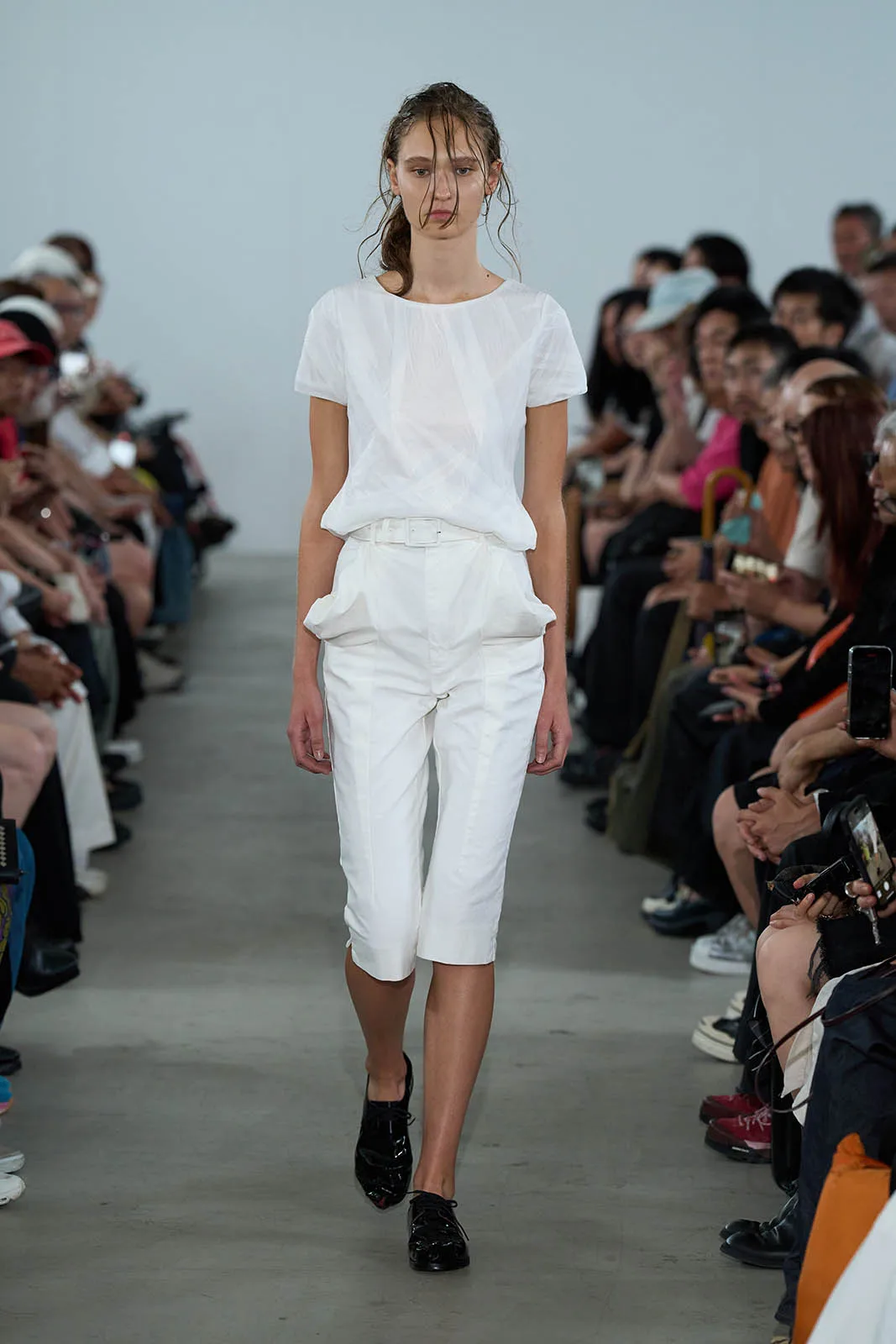
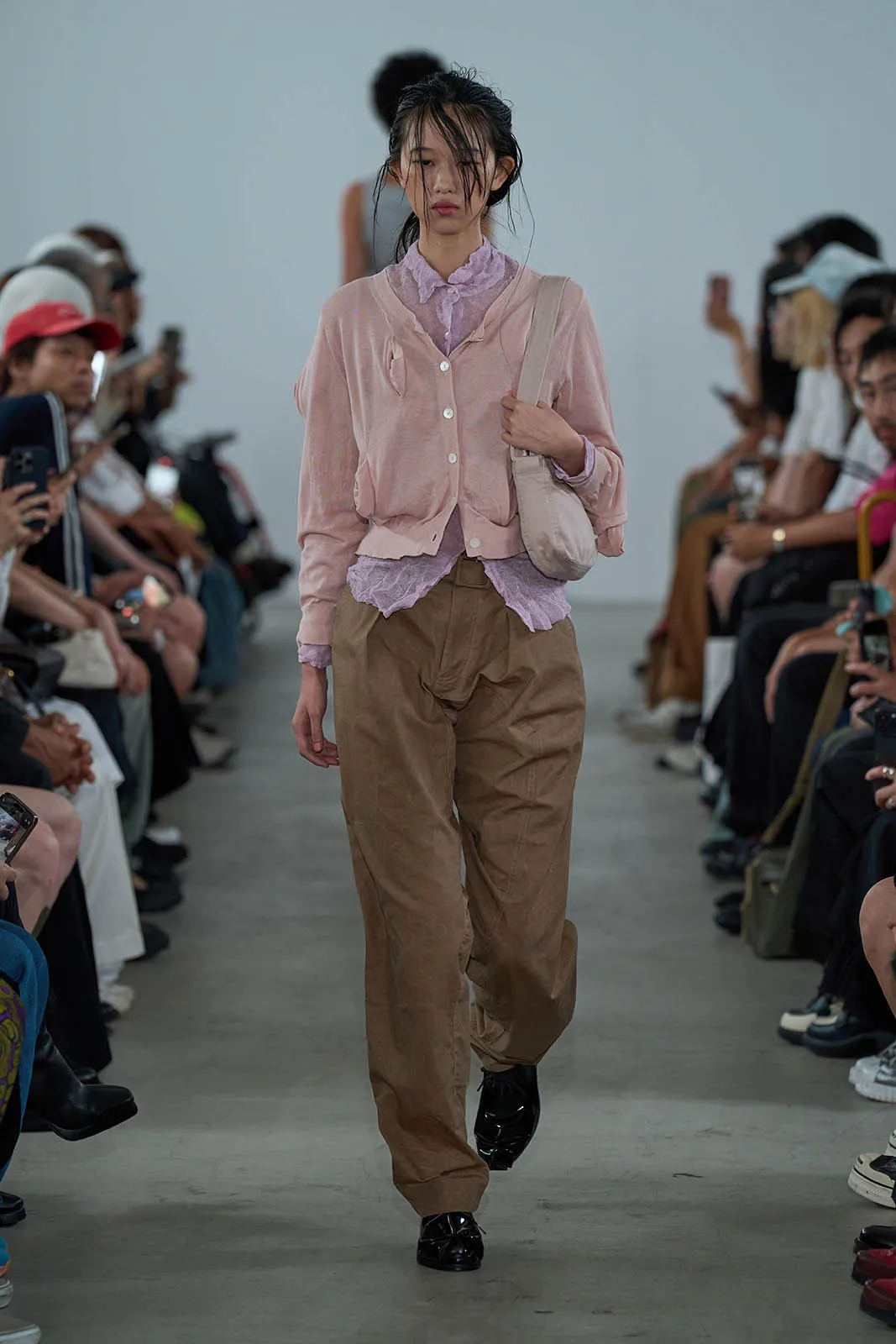
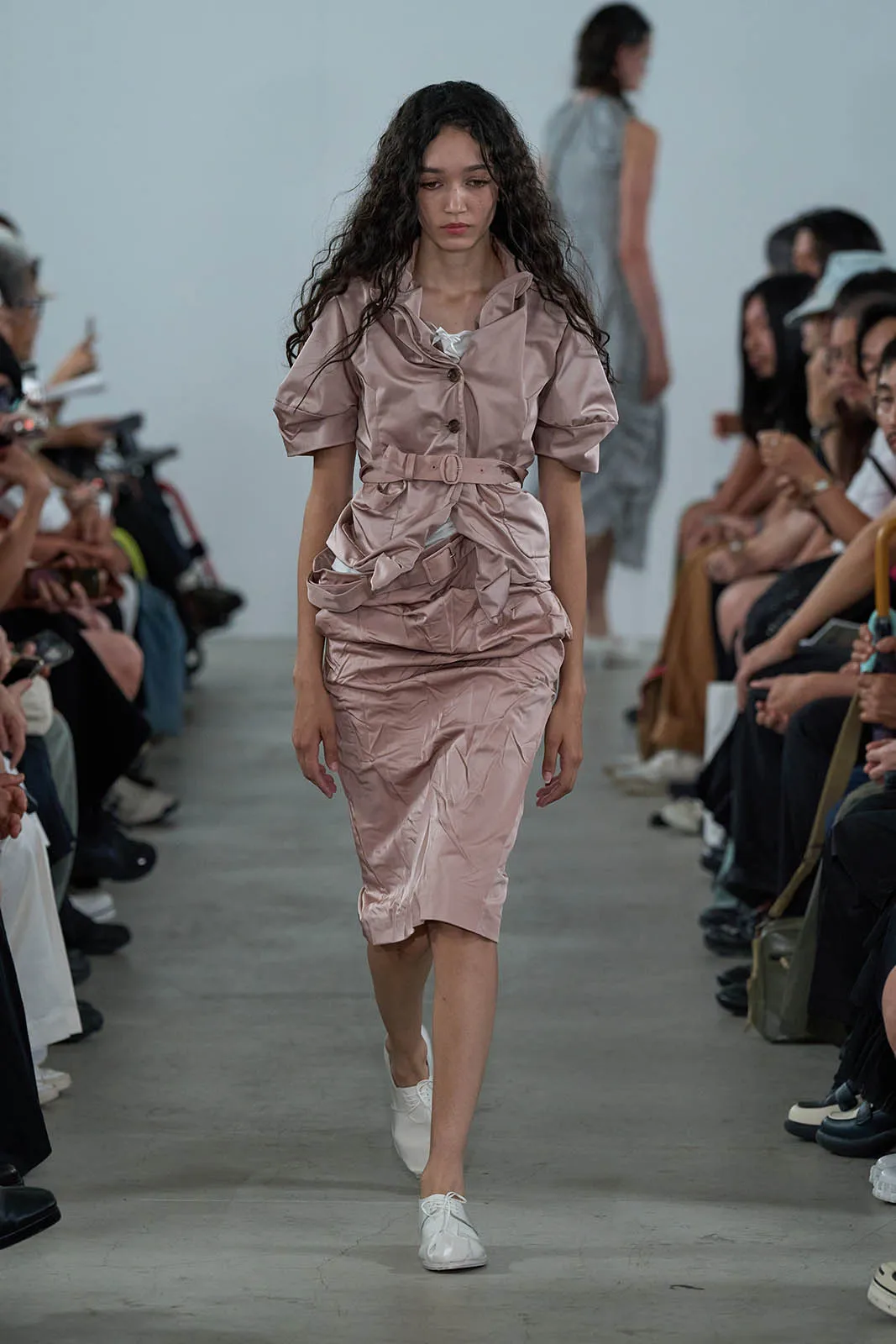
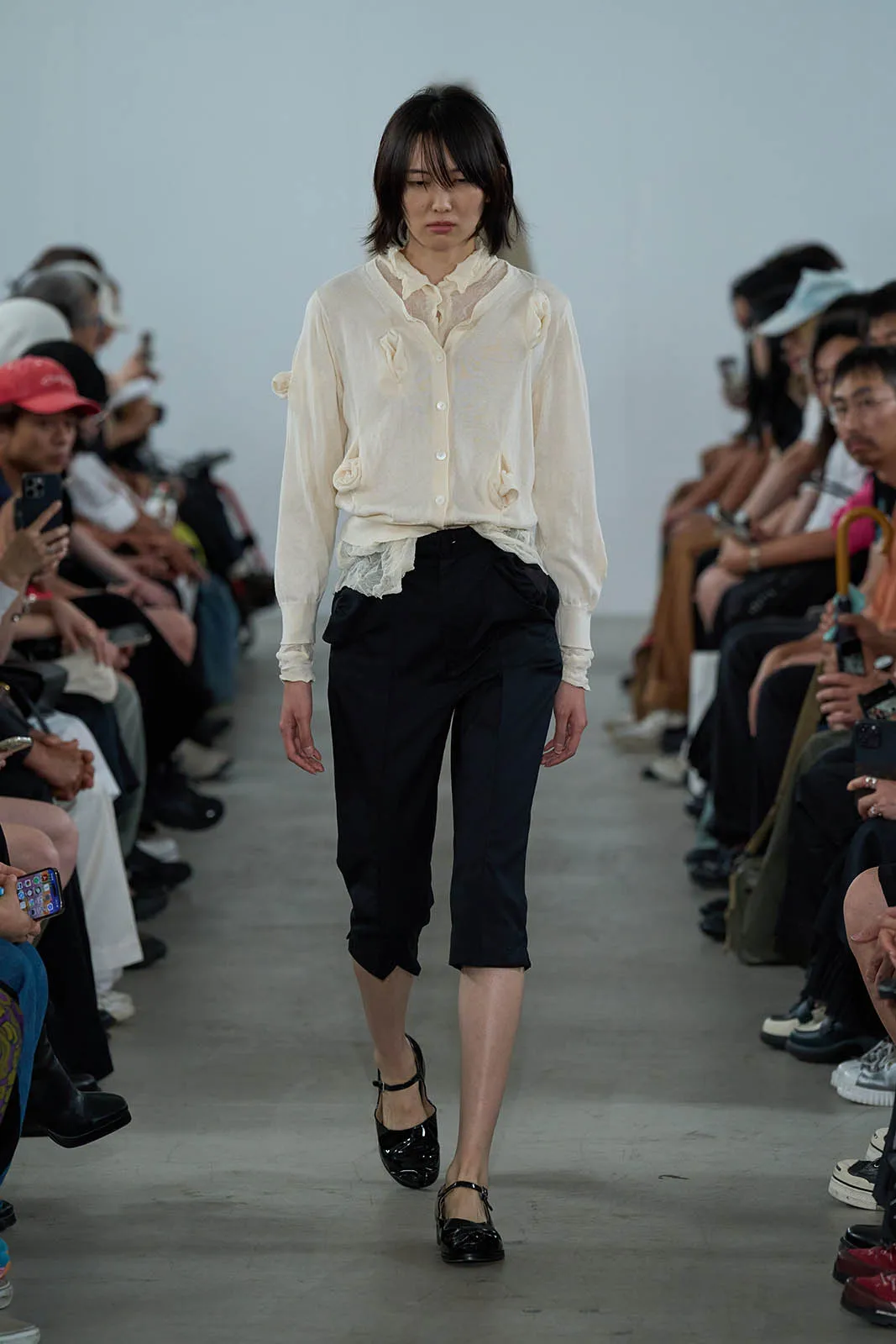
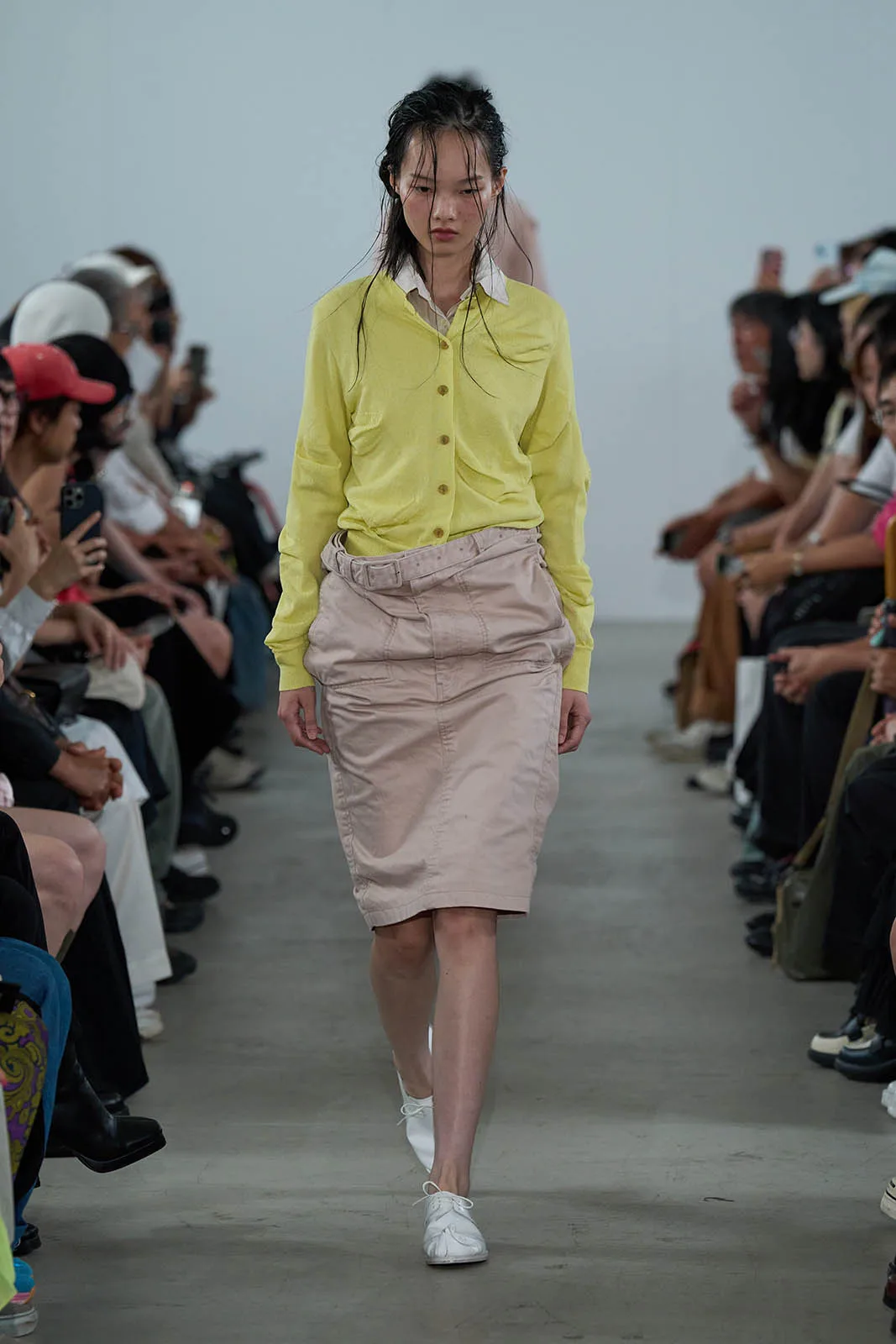
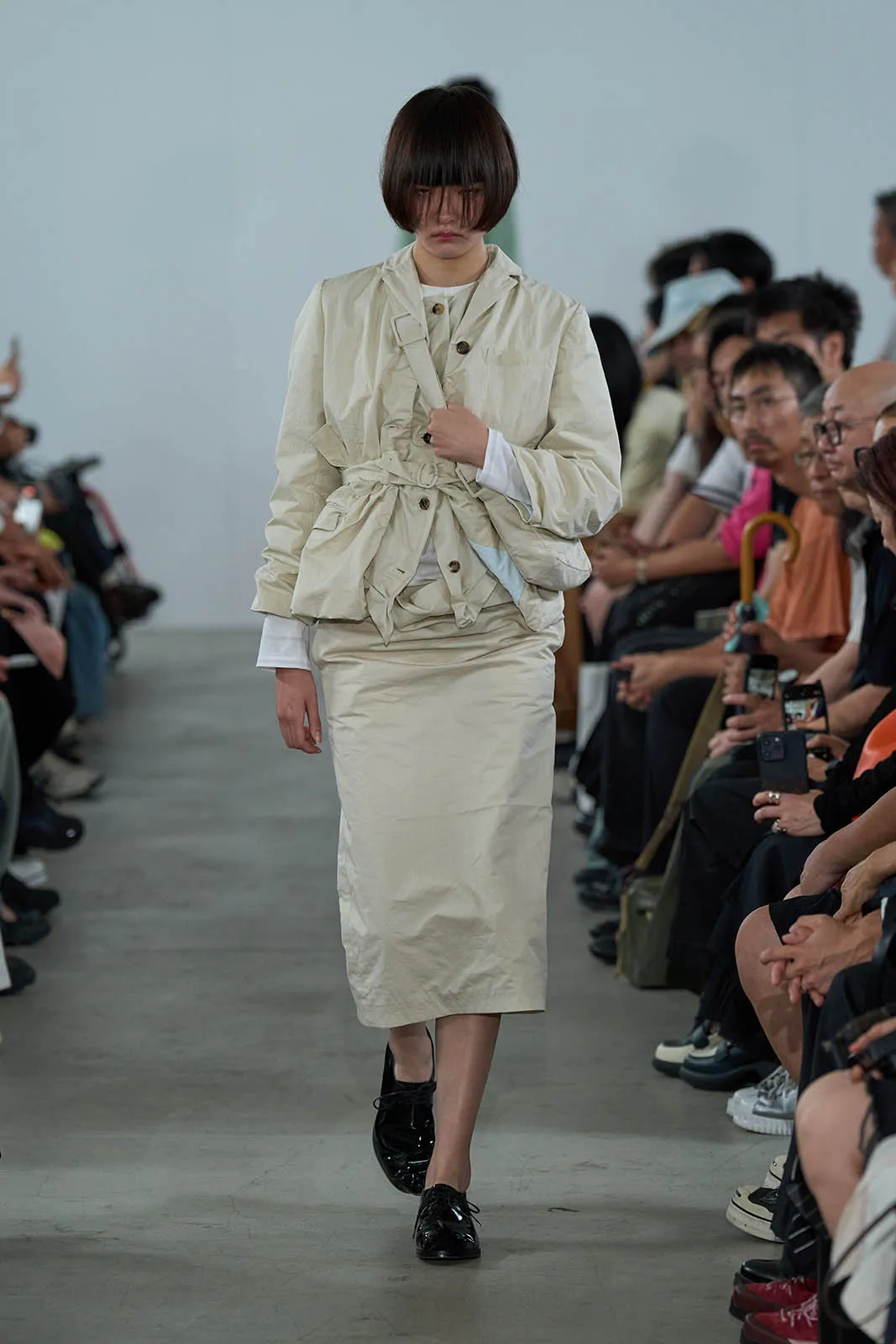
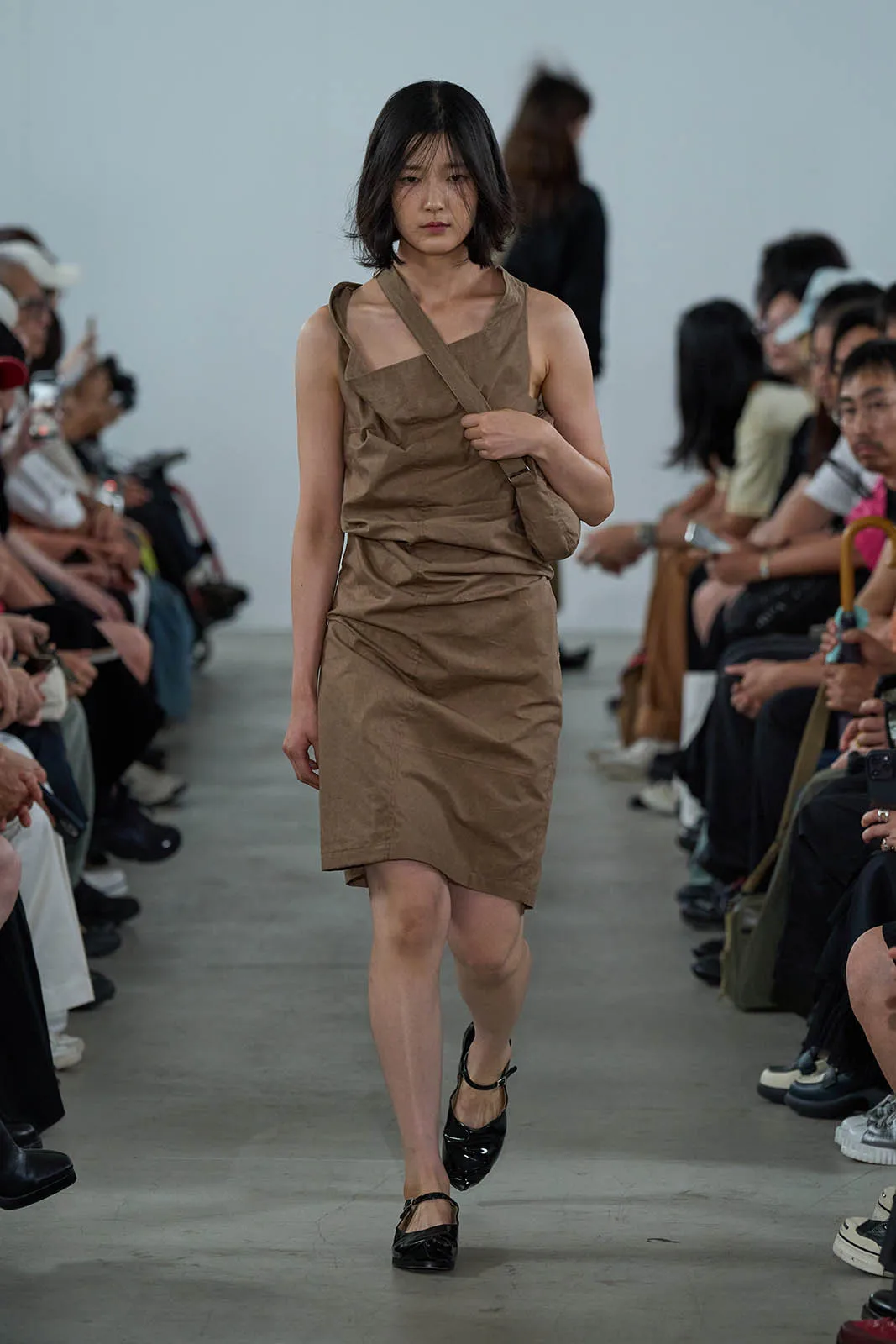
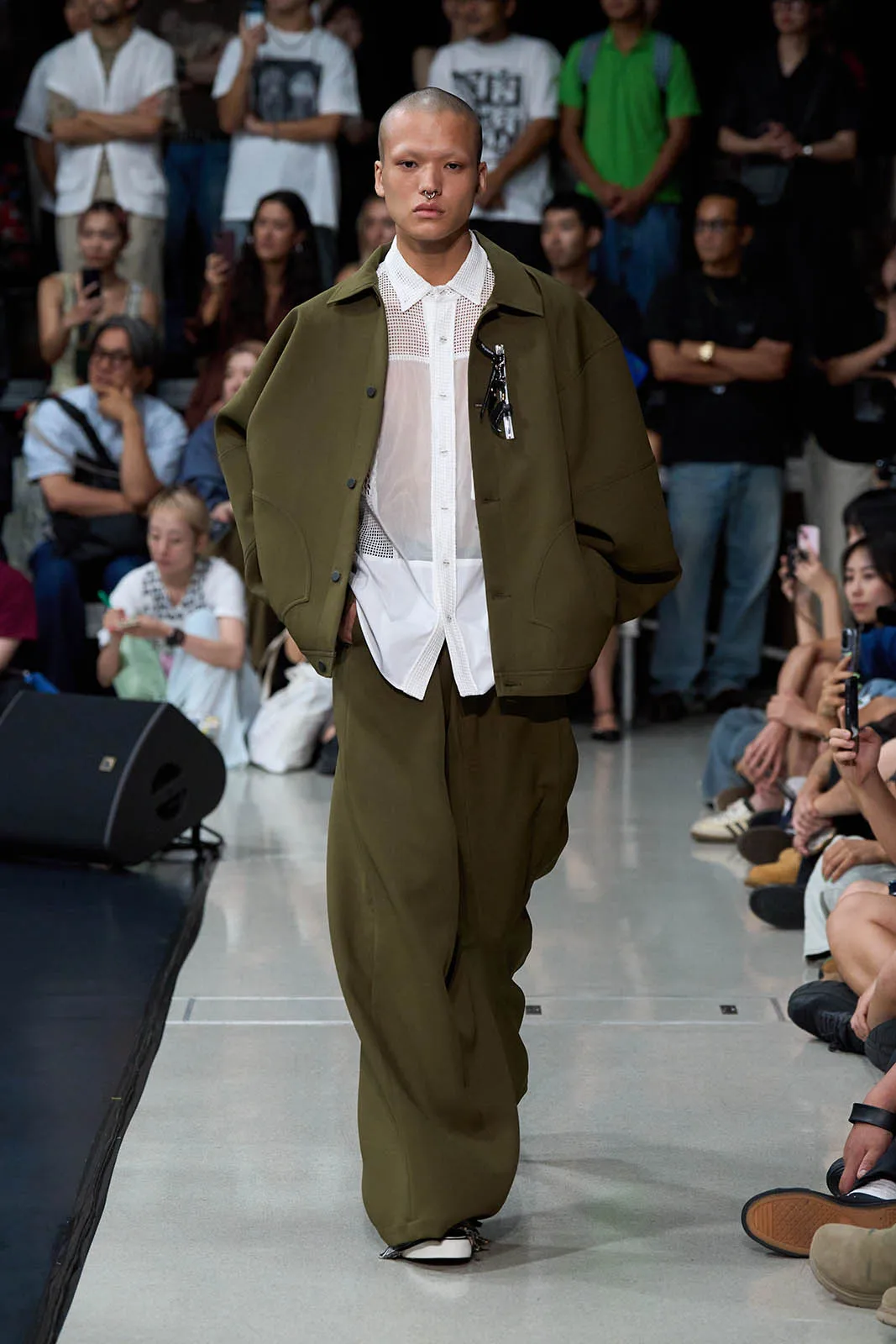
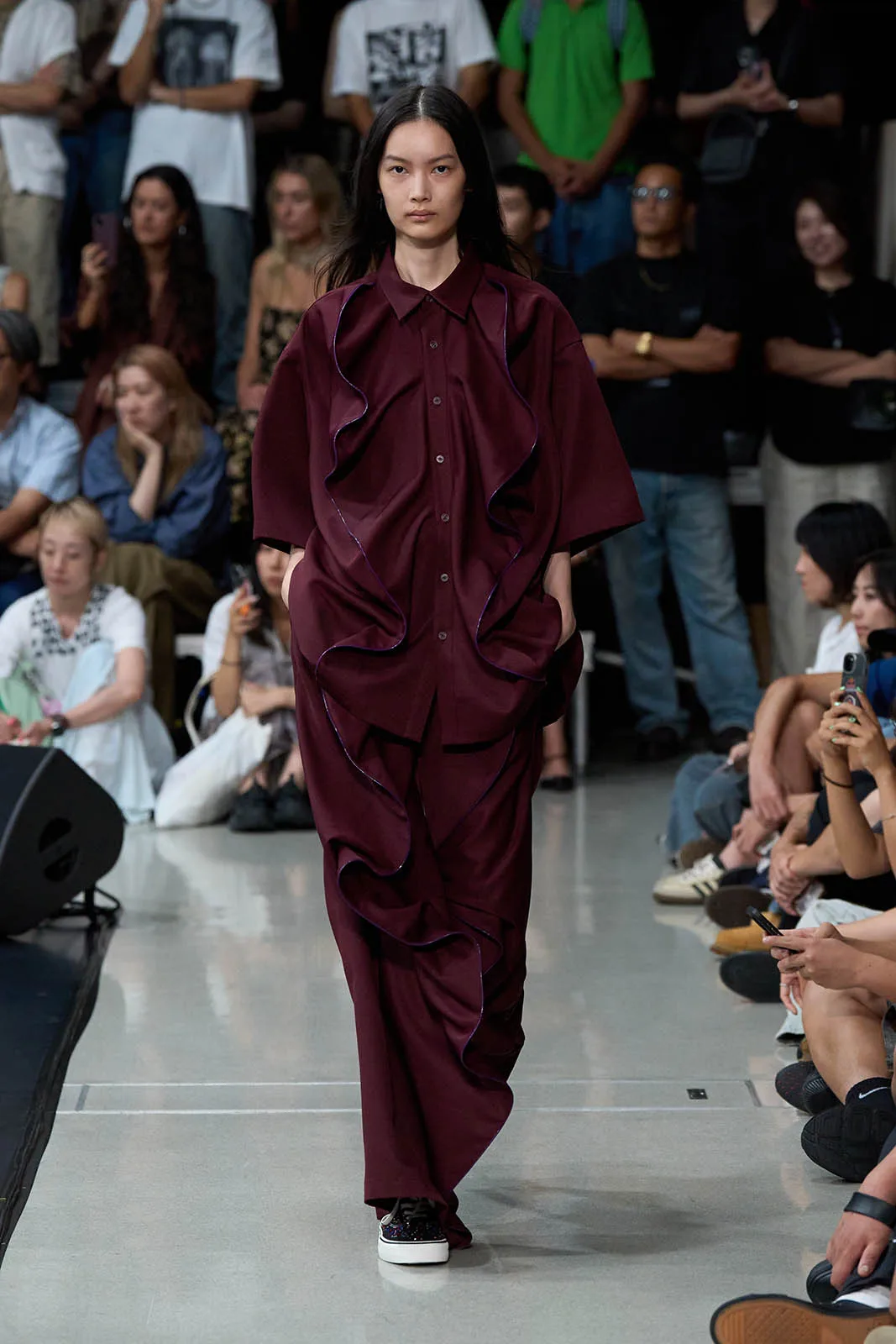
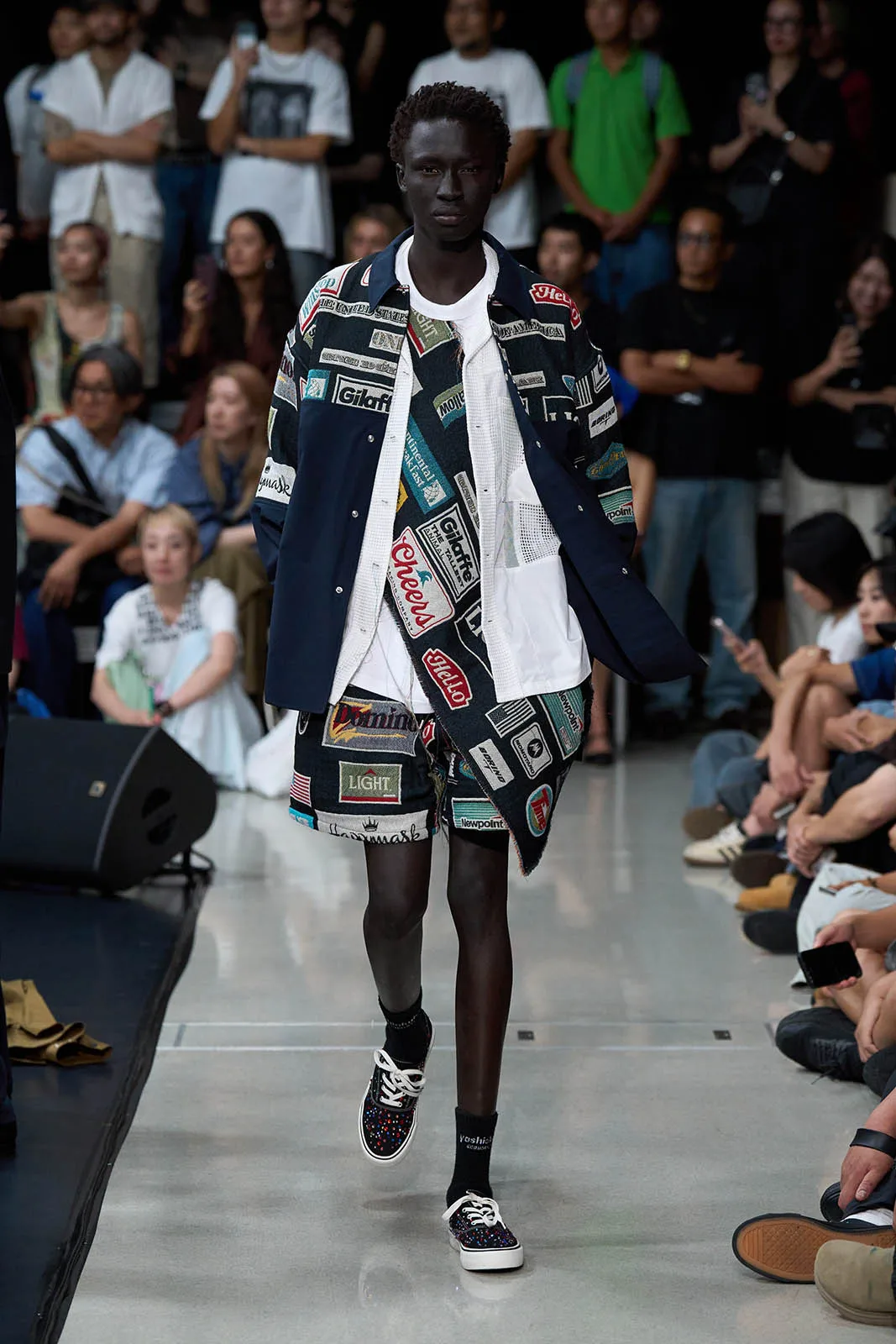
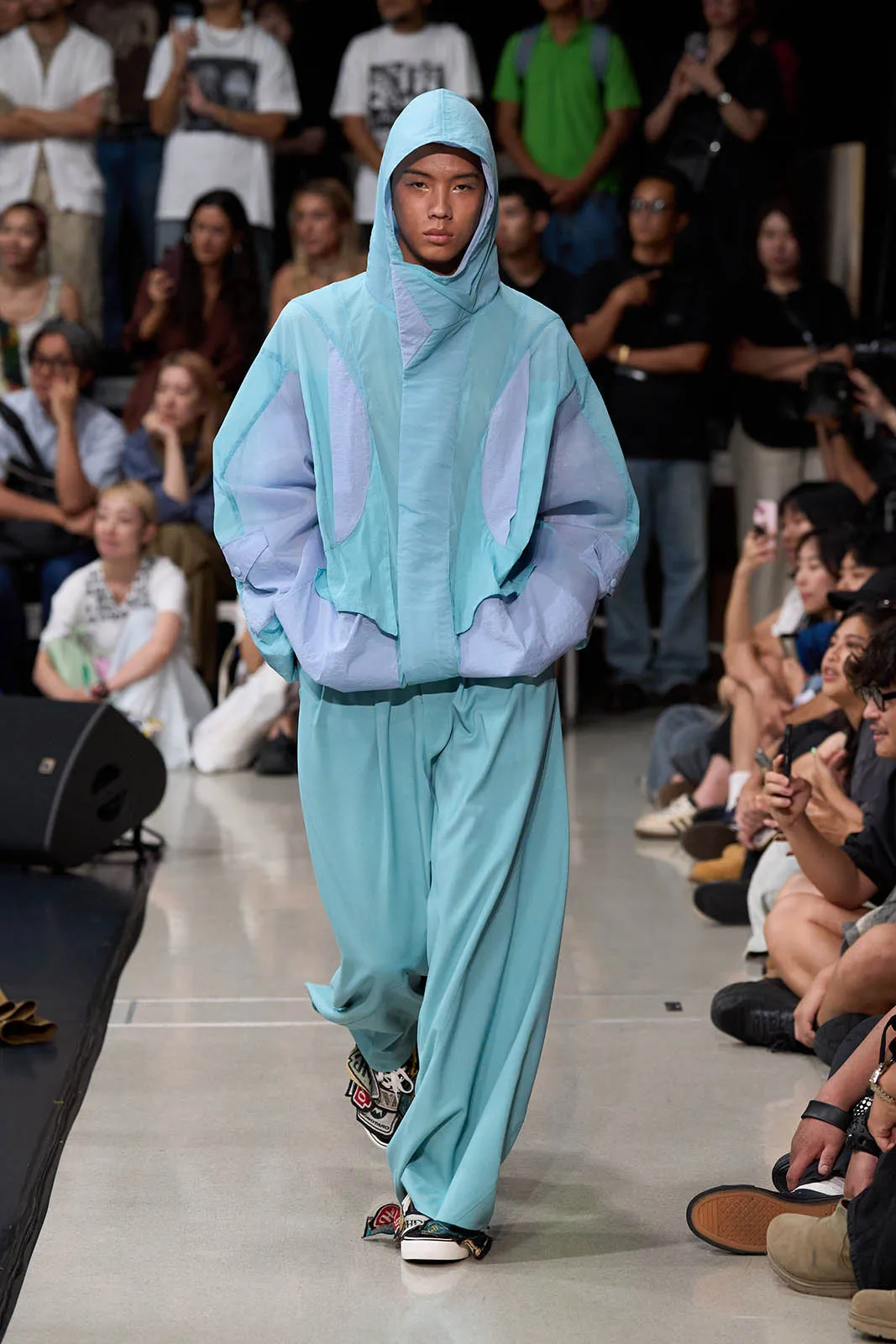
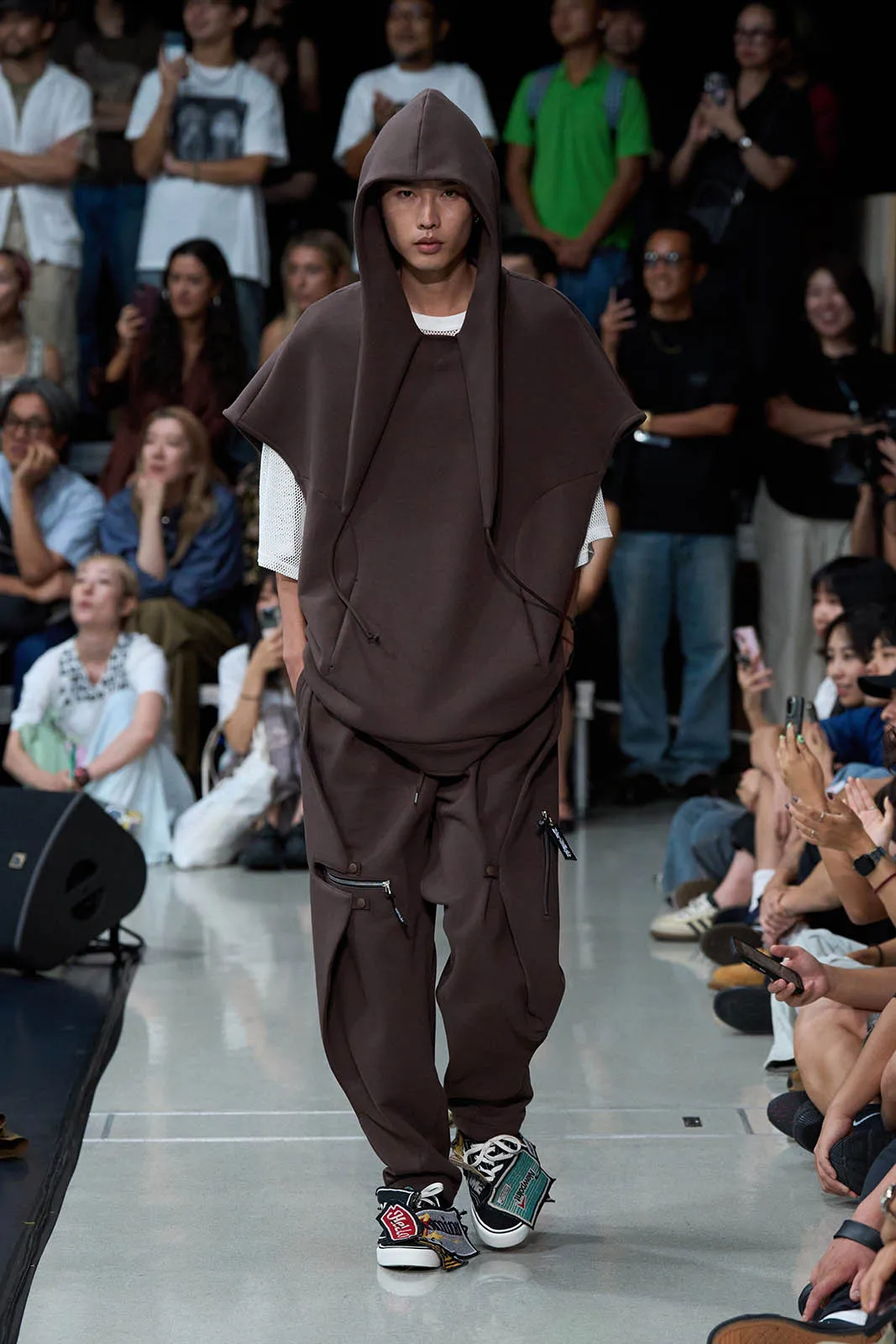
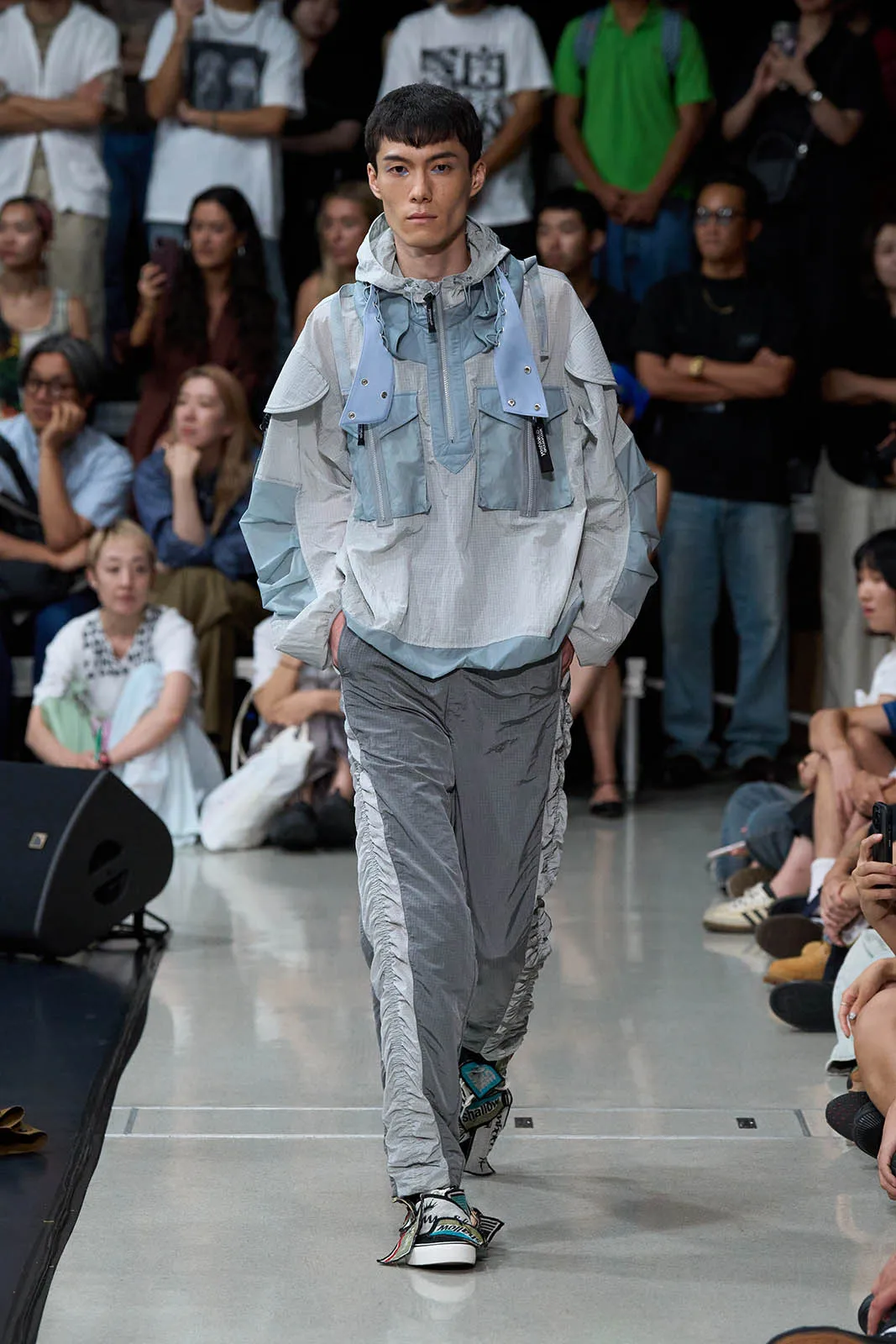
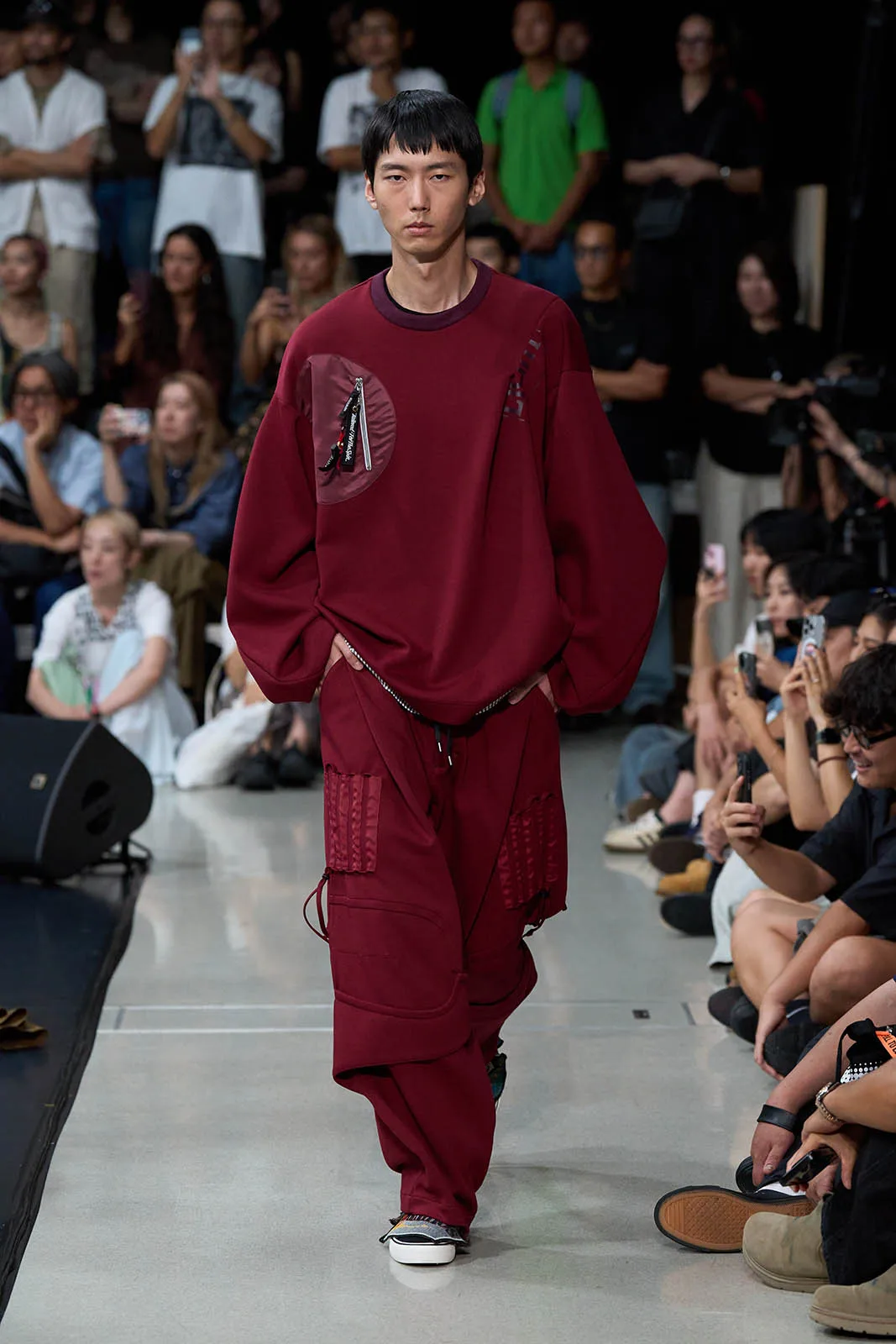
Yoshiokubo understands what fashion is. It is not the reunion of unattainable pieces shown in an even more unattainable way, where we can't even imagine how these garments would actually look being worn by real people—because in real life, people do not strut at the pace of a fashionable tune with their backs straight from one point to another. The runway transformed itself into one of those venues always used by Red Bull to display the talent of the crews they give space to, whether it is freestyling, street dancing or breaking. On this occasion it was the latter, gathering all the audience in benches that made us feel relaxed enough to enjoy the unmatched atmosphere, with unique mixes by DJ Mar Ski and the energetic comments of the host and Olympic breaking commentator KENTARAW.
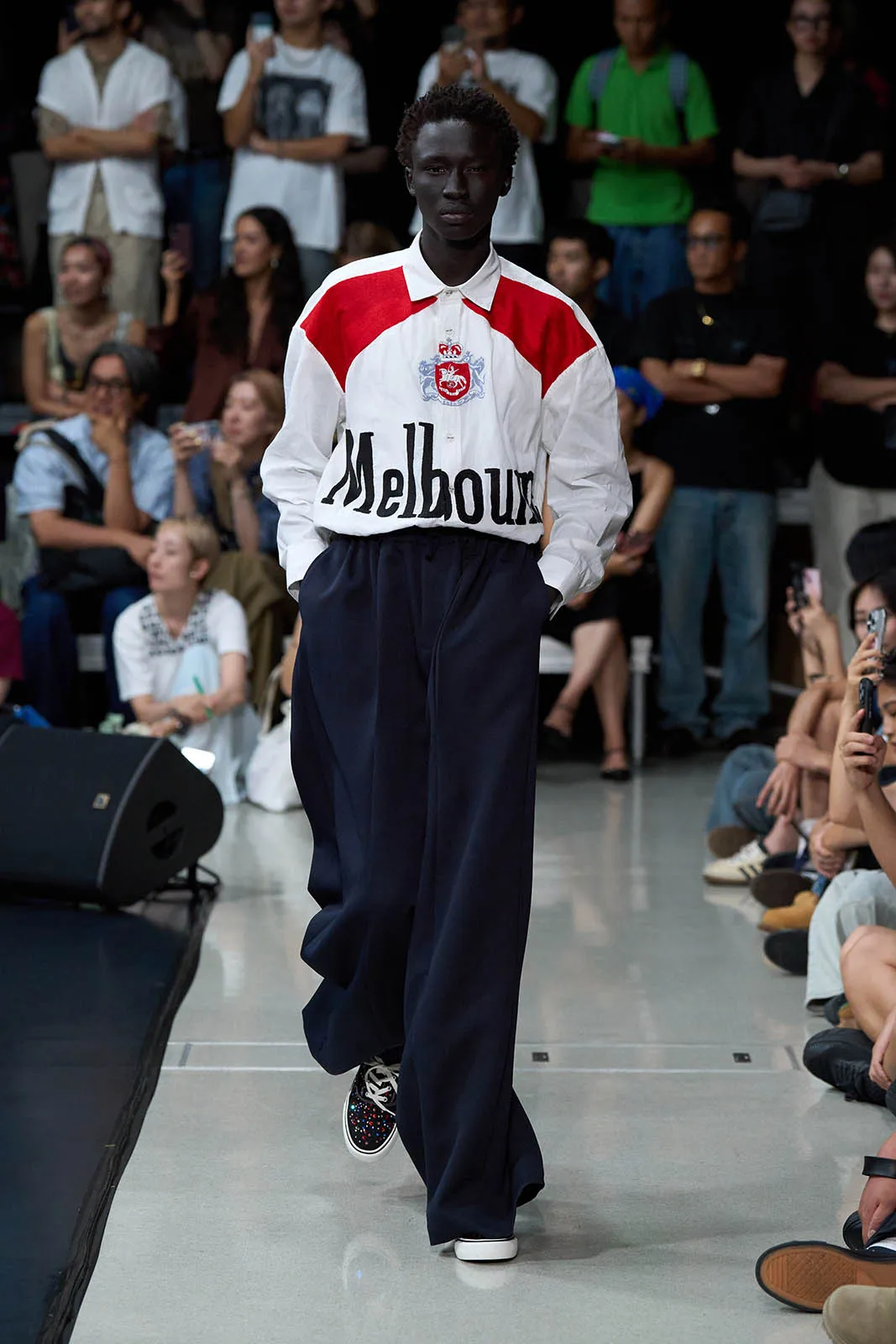
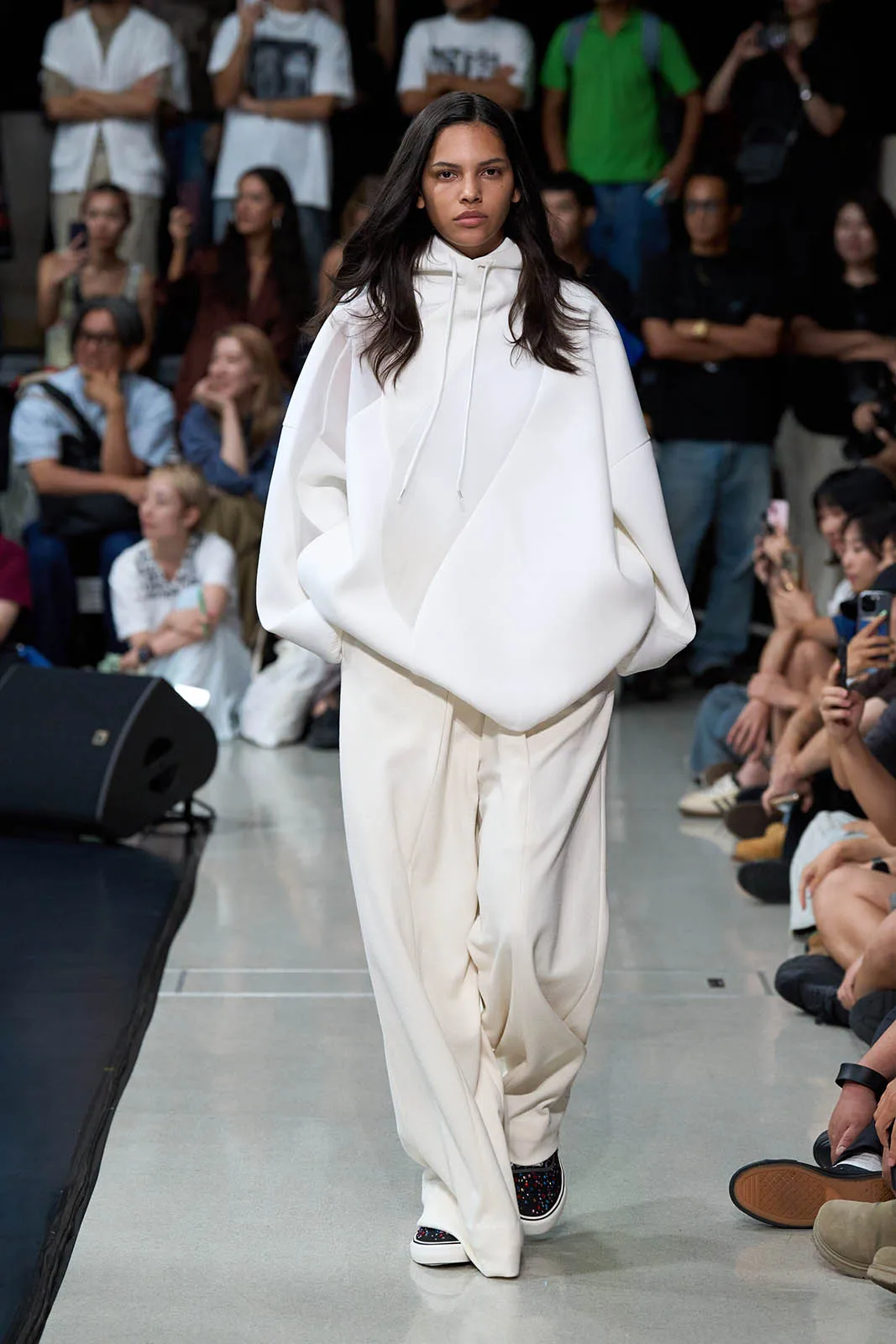
The pieces of the collection Groundfloor were shown in two ways. The usual models walked around the center area of the stage, where two teams made up of some of the best Japanese breakdancers faced in a battle of movement, rhythm and freestyle. In this way, the garments, all leaning into the streetwear category where comfort meets design and aesthetics, were shown in movement: jumping, bending, twisting and turning at the same time their wearer did. As the main theme reflects “tailored for the spin”, the two parts of this concept were equally important. The freedom of movement they allowed, but also how well thought out they were, with subtle but significant details in their construction that had both ergonomic and aesthetic reasons.
Whether it was in the choice of fabric with unique textures, in the ruffles or folds, or the strategically placed zippers that allow constructing and deconstructing the pieces with ease, that effortlessly cool element dancers always exude was ever-present. You know how whenever you see a dance practice, the dancers wear their clothes in the most random ways? One arm out of the hoodie, the T-shirts tucked in crazy ways or the pants with one leg up, one leg down, yet they manage to look like the most fashionable persons ever? That's the vibe Yoshio Kubo managed to convey here. Bodies and fabrics in motion; this is why fashion is not art, its design; it serves a functional purpose, and the most basic one of them all, moving, was displayed here in the best way possible.
FDMTL
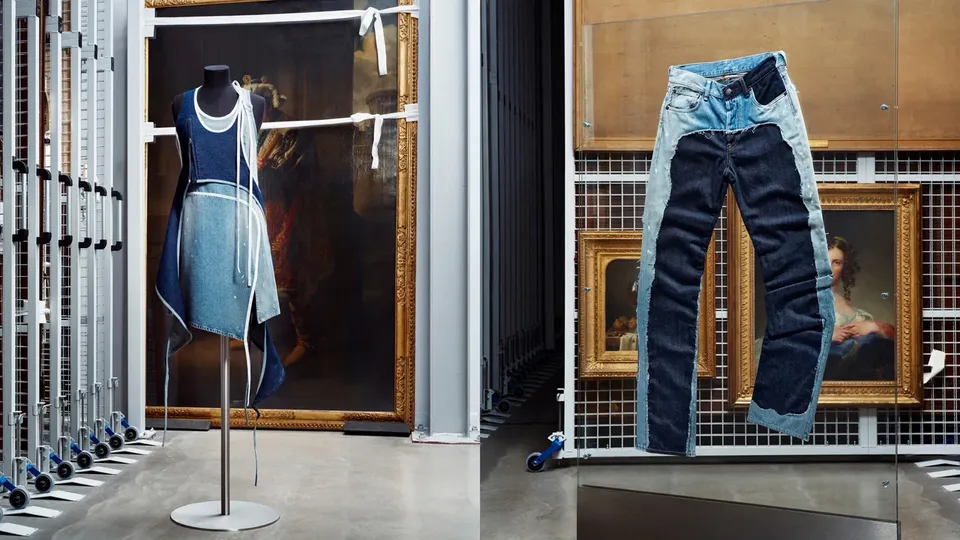
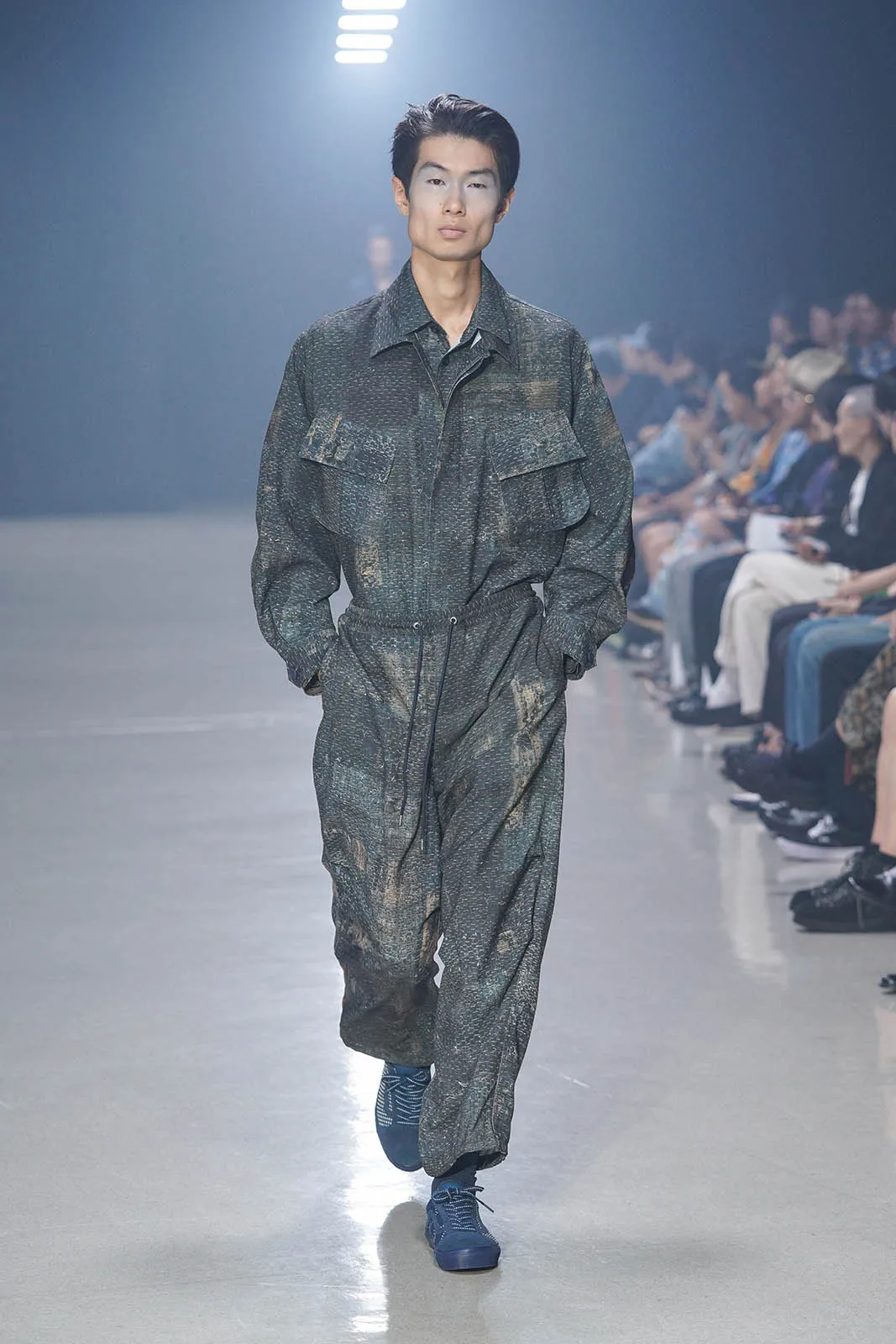
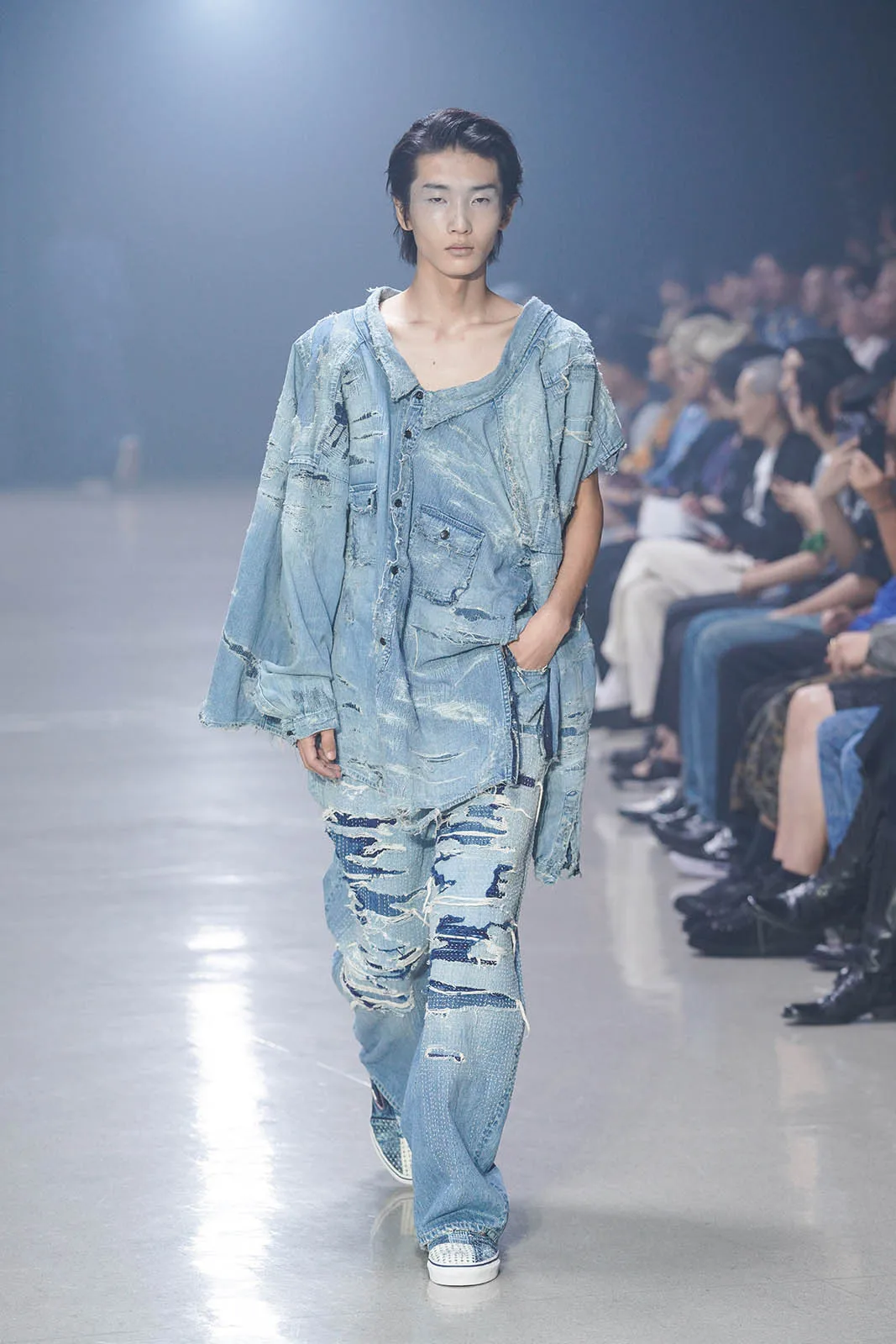
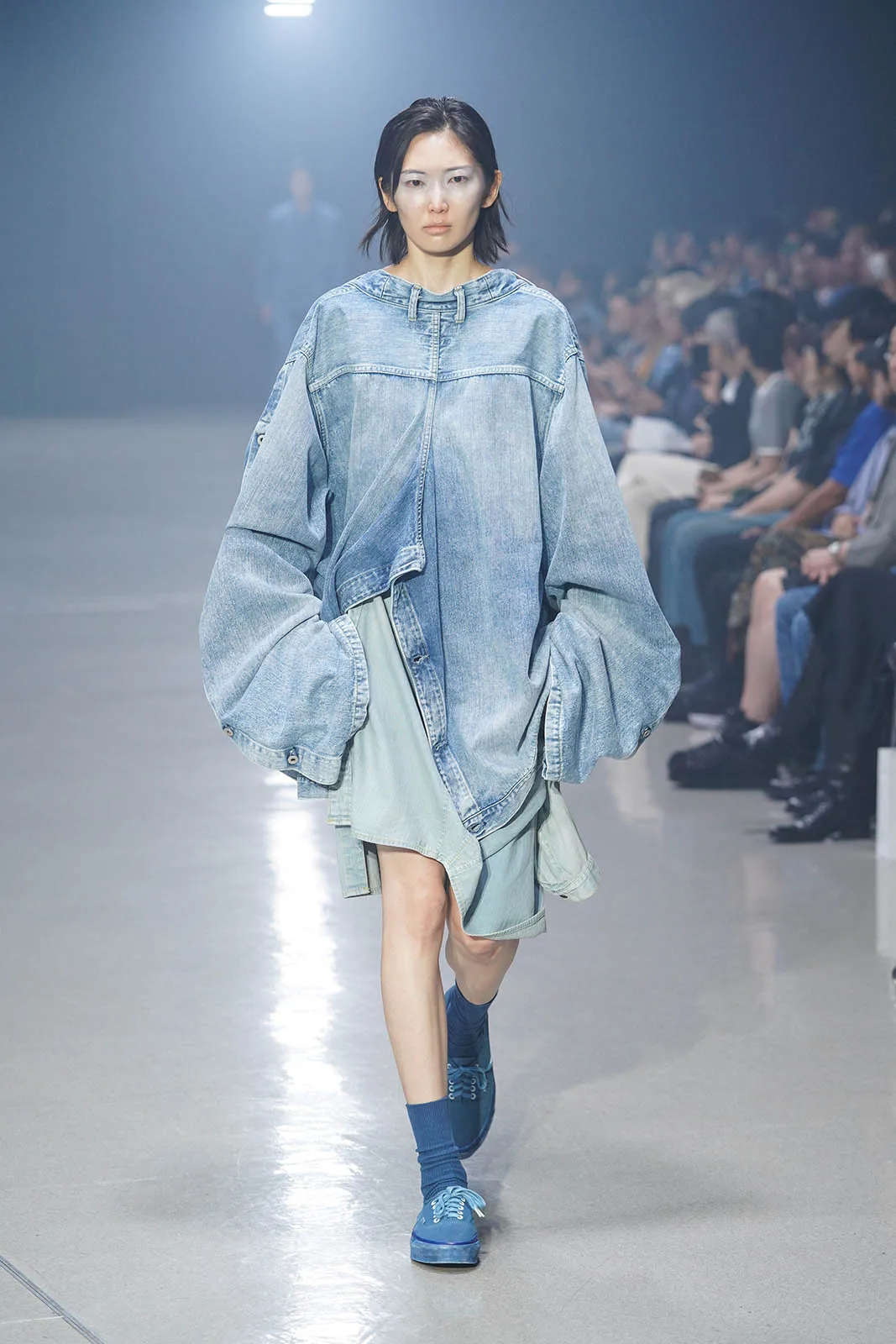
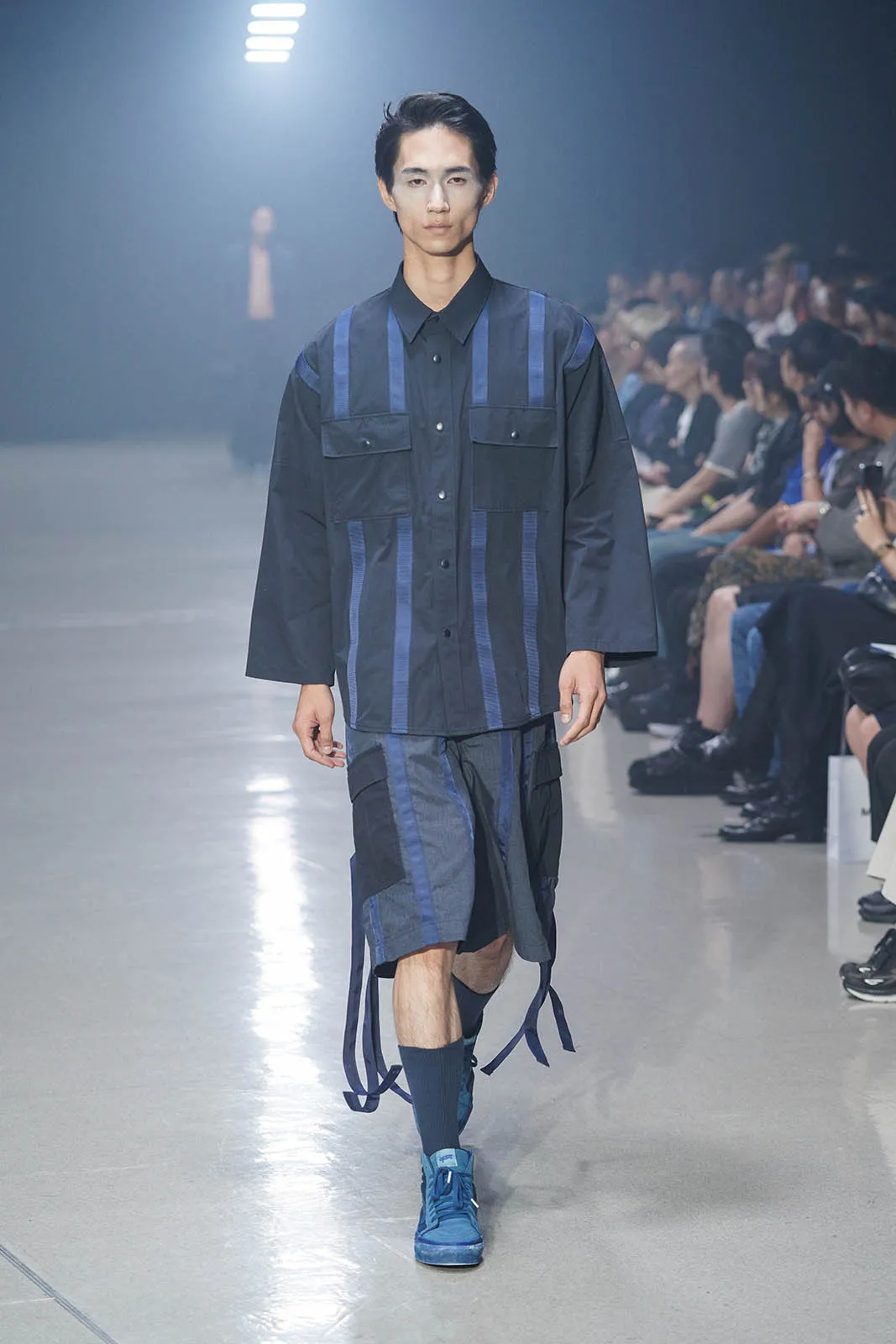
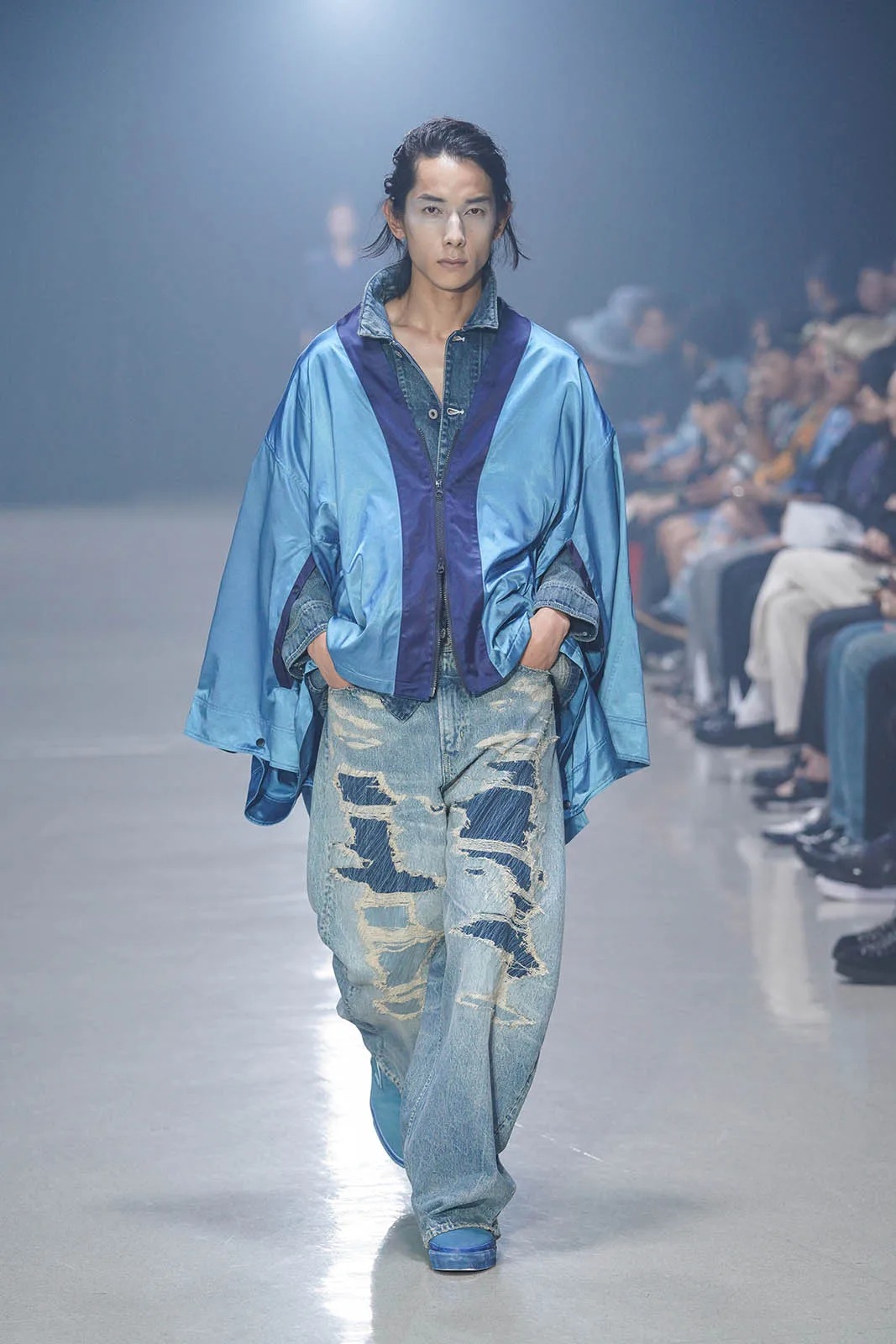
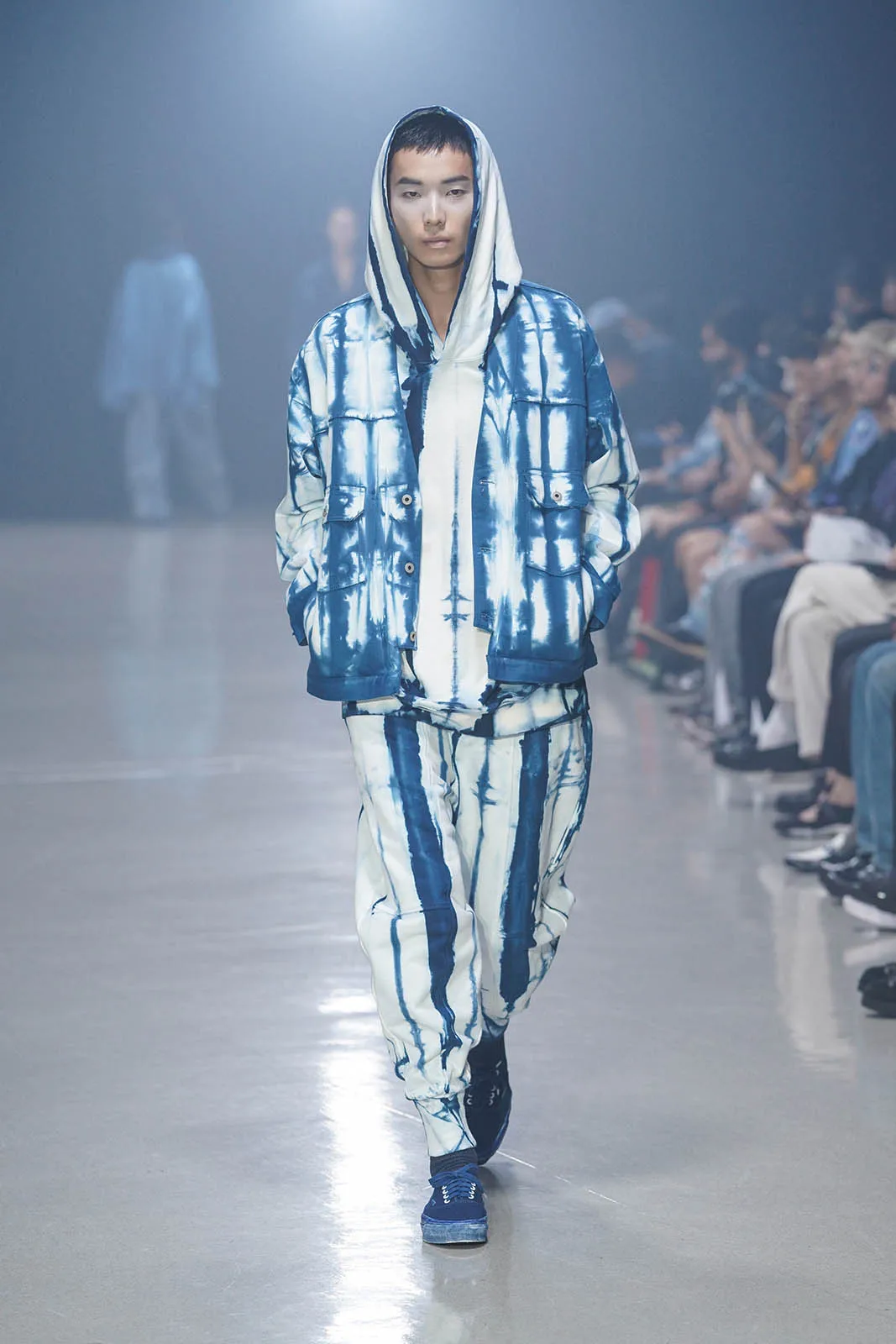
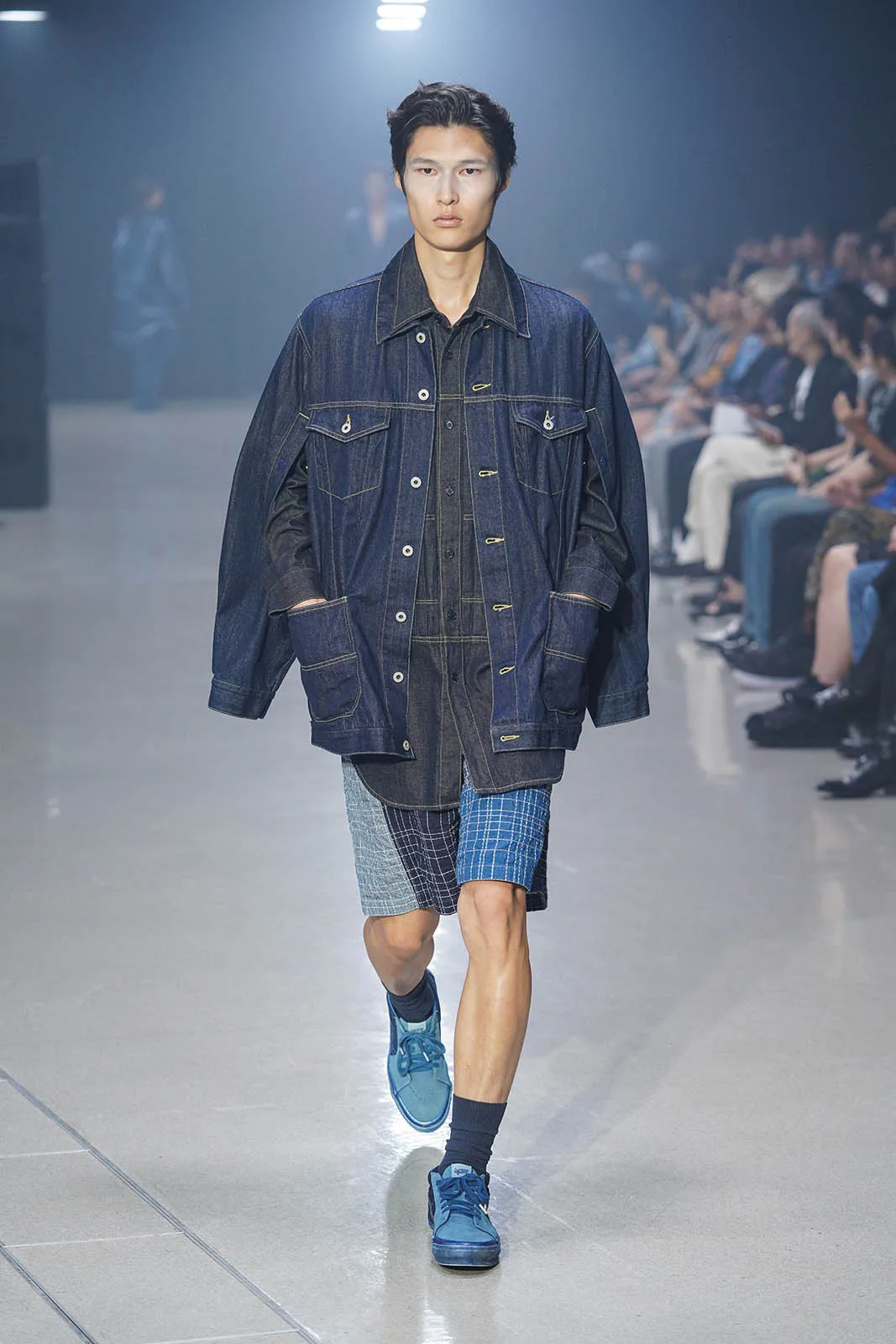
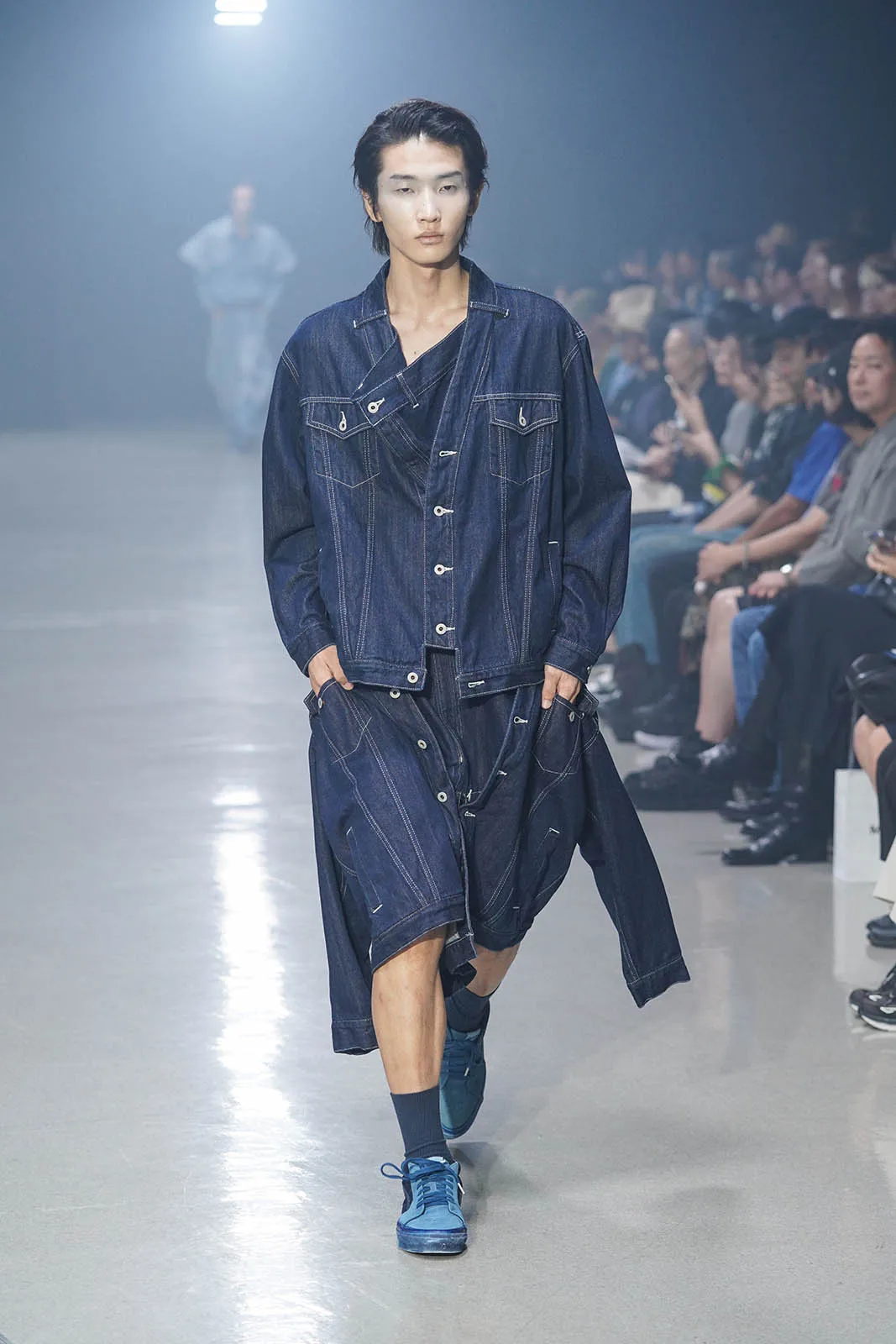
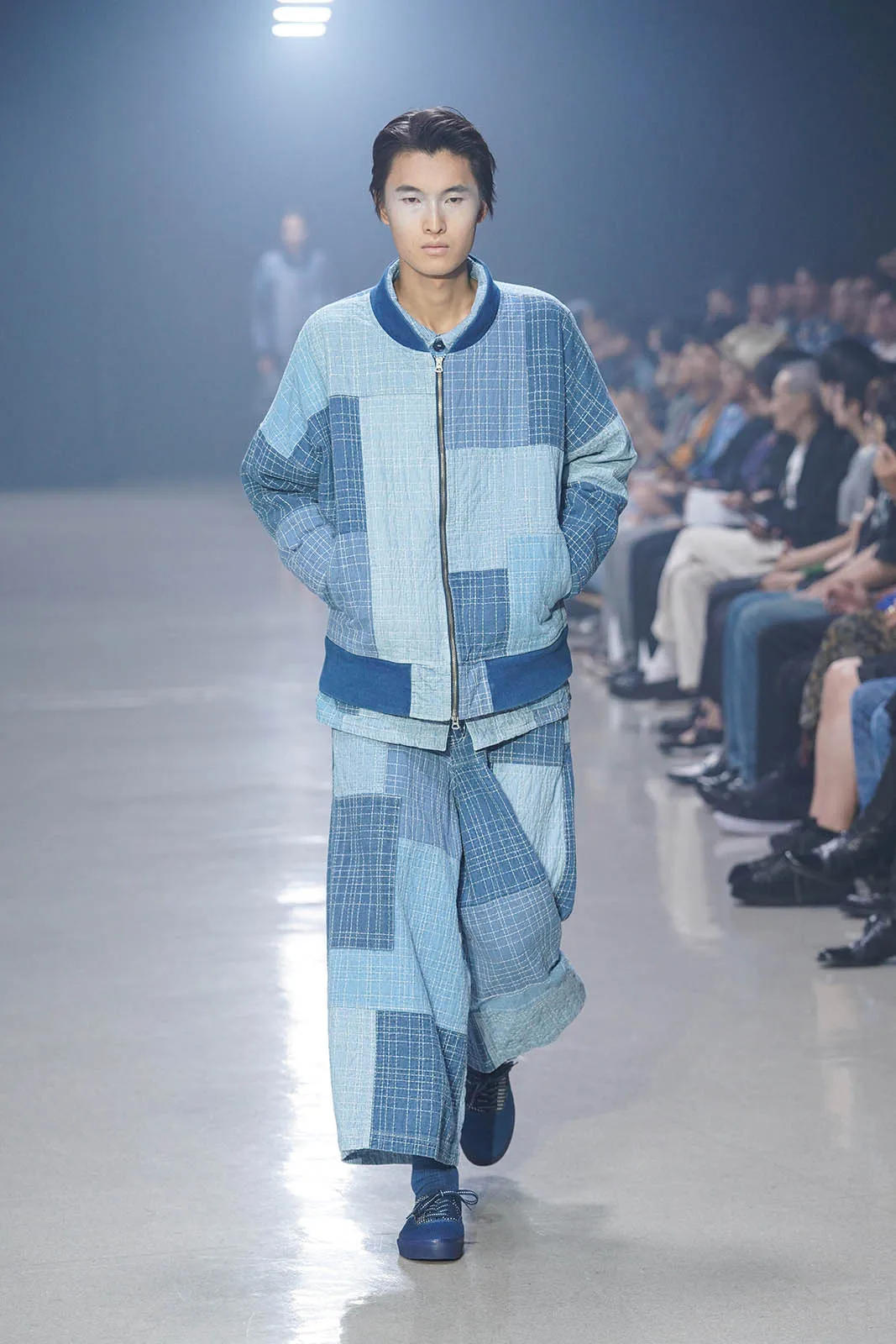
Two of the biggest symbols of the country's high quality were the main characters in FDMTL’s show: Japanese denim and Japanese music. Seeing the live band setting when entering the venue, we knew we were up to something great. Not because a show automatically becomes good in the presence of music, although everything with a live band is better, but because if the brand is as conscious about the different elements that make up a show, like the staging and the music, that means there's an undeniable sensibility that will most likely reflect in their creations. Also, the idea of having the chance to see the pieces in a context similar to Yoshiokubo’s show, being worn by actual artists performing their art, was nothing short of attractive; luckily, it was the case.
The band that took the stage was Ichikoro, an instrumental group formed by the reunion of multiple artists, like the singer and drummer of Indigo la End or the legendary guitarist Ichika Nito. TMI, but this was an insane day to be me, seeing them on the front row of a fashion show. That's Tokyo Fashion Week for you. All of the band members were, of course, wearing FDMTL pieces, the unique pants in different widths sharing the protagonism with the t-shirts displaying this season’s concept: Echo of [ ]. Made entirely of denim, the collection showcased a wide exploration of the many techniques this versatile fabric can be subjected to and the different results it can have. Sand-washed, bleach-washed, laser-washed, and tie-dyed, even the unique Japanese techniques like sashiko were present in the multiple looks.
But the protagonism of the fabric does not mean the weight of the collection was only relying on it; the construction and deconstruction of the signature denim pieces, like the jeans or the jackets, gave birth to a whole new range of garments, becoming ready to wear in any setting or occasion that allows it. Something particular about this twenty-year-old brand is Gaku Tsuyoshi’s, its founder’s, mindset. You may think with such long-lasting experience he must be comfortable with being called what he is, a fashion designer, but actually it is only recently that Tsuyoshi has come to terms with being called that. With a humble sense of discomfort that's born from understanding the responsibilities a fashion designer actually has, the work of someone who thinks so highly of his profession becomes even more valuable. Humble to the point of leaving the [ ] empty, just so we can fill it with our own meanings and our own echoes.
Harunomubarata
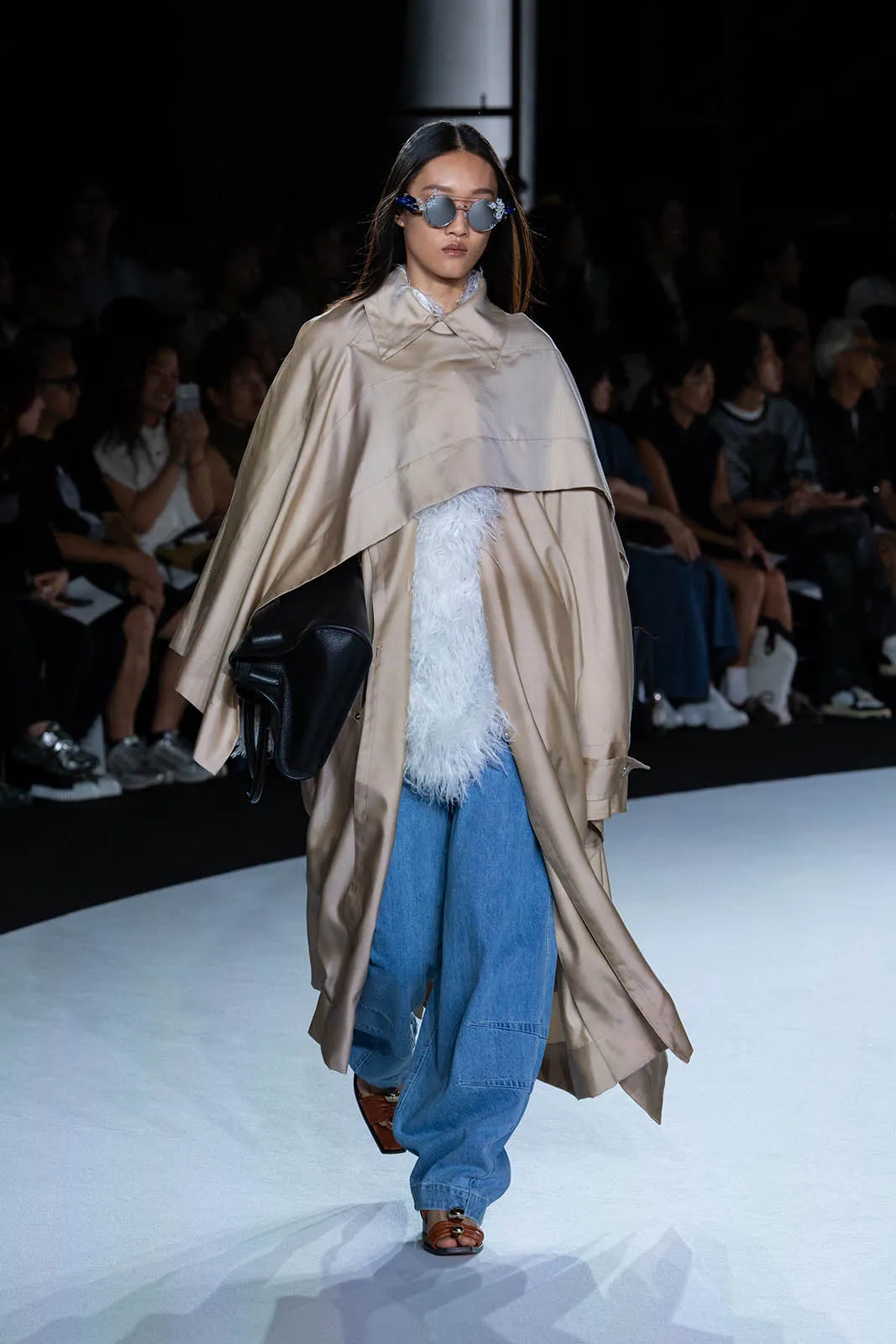
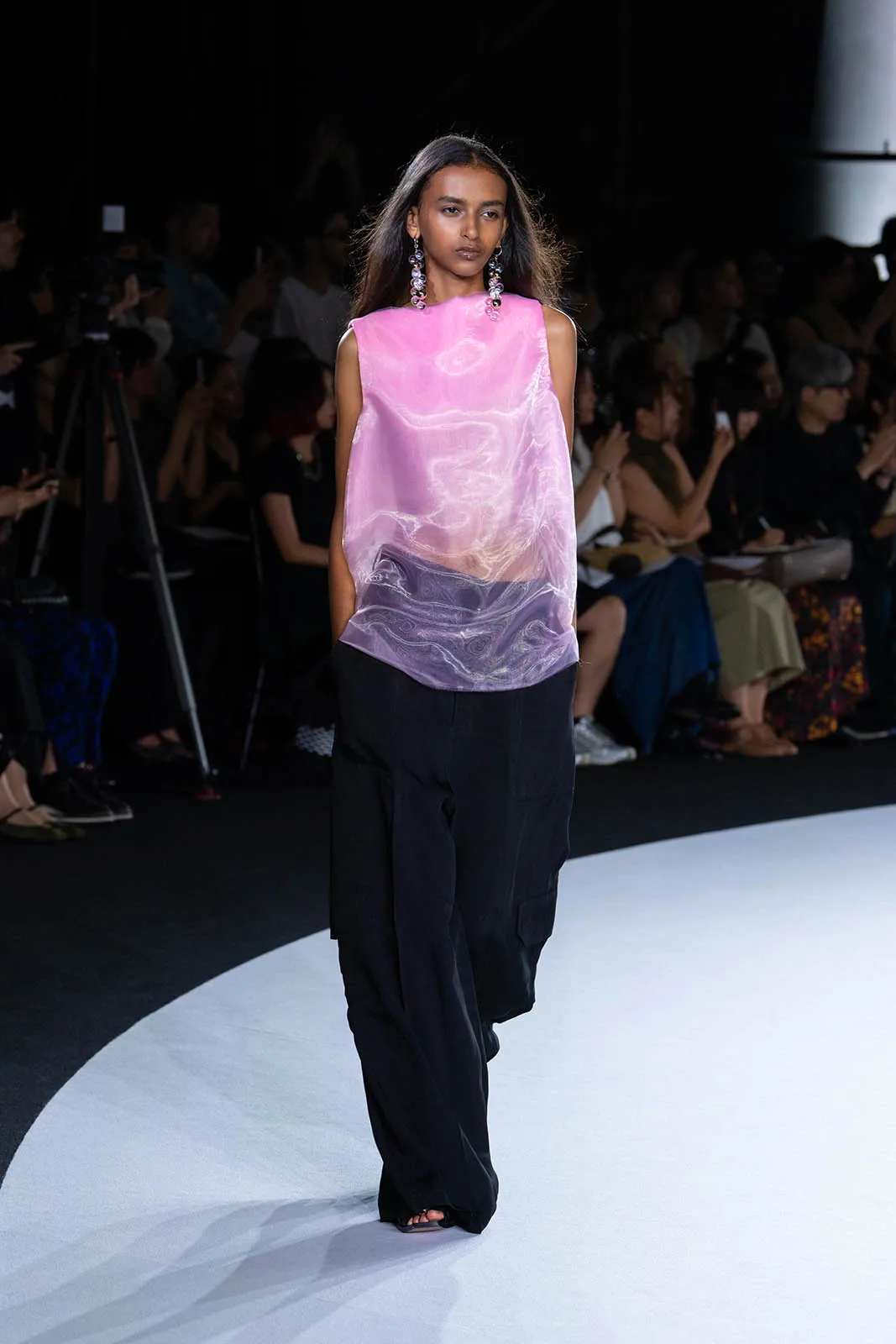
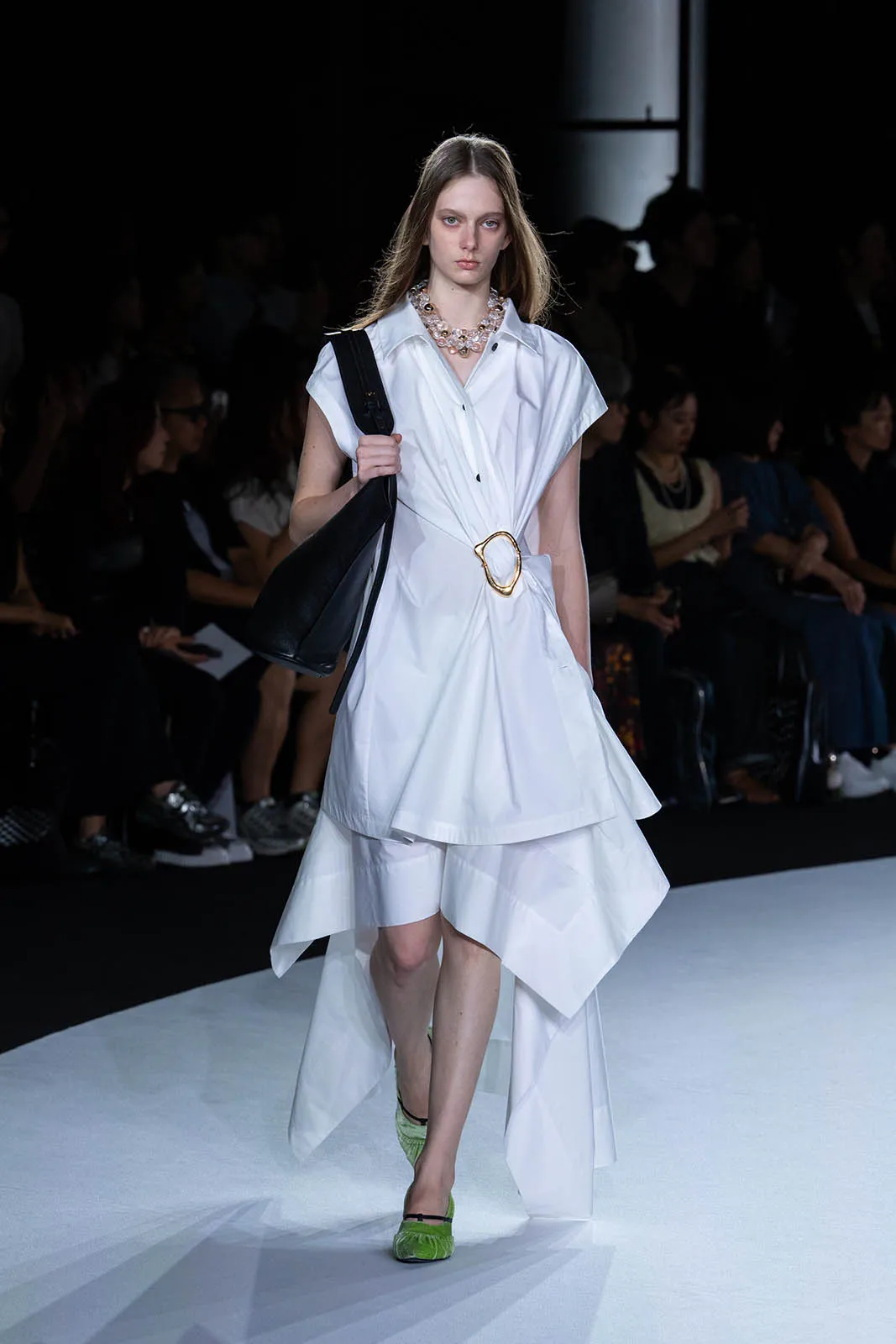
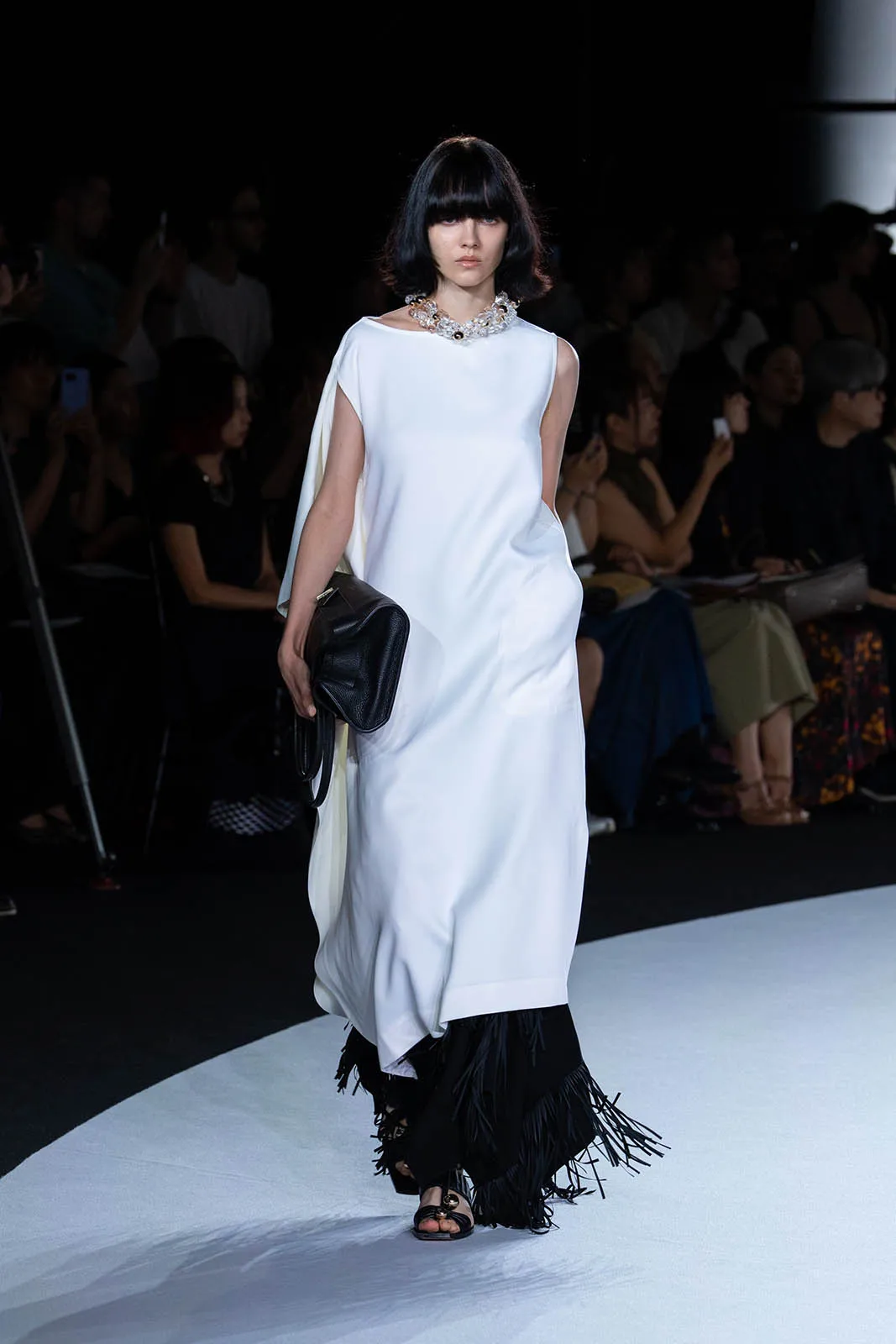
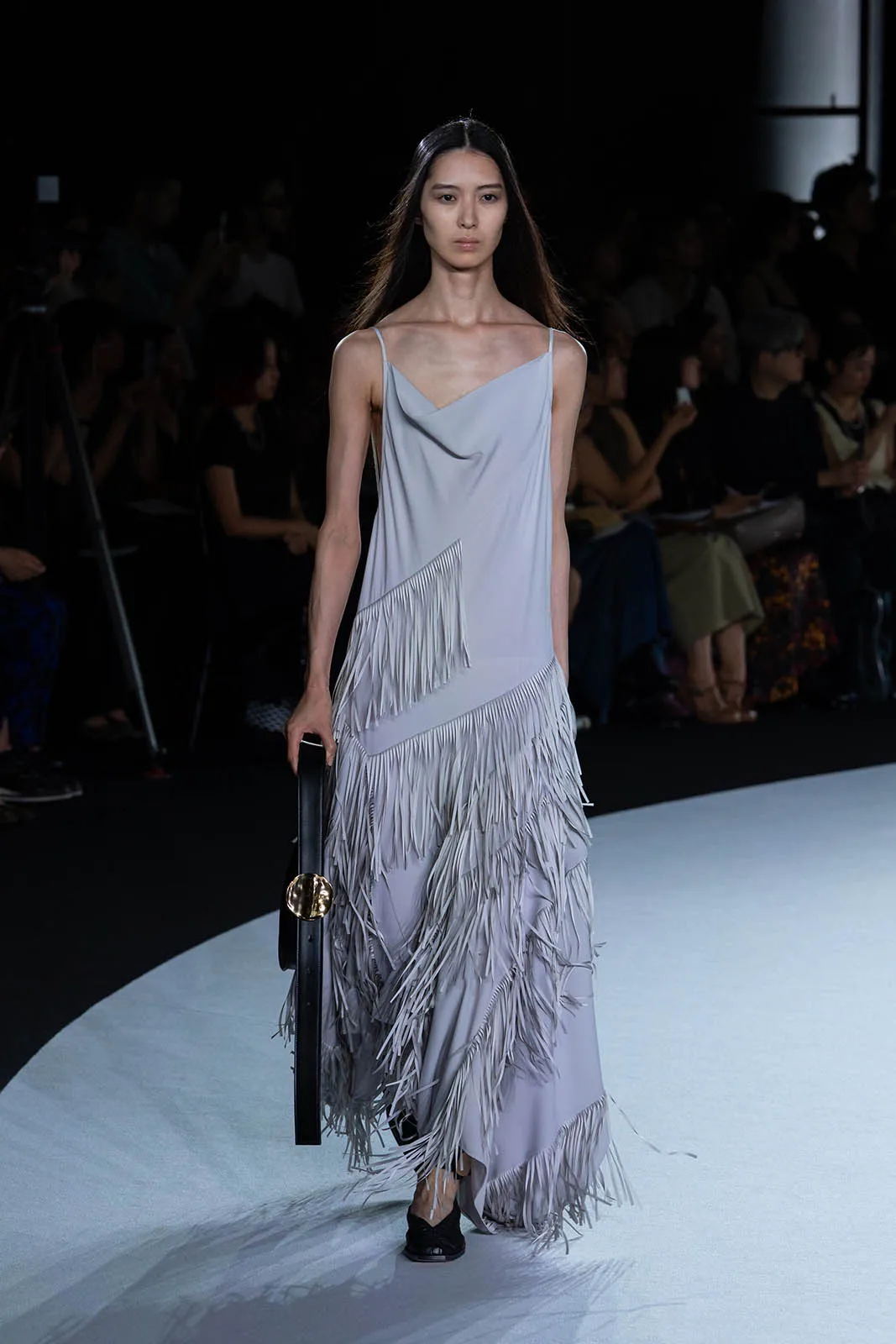
This Fashion Week was divided for us between great discoveries and shows we were looking forward to. Harunomubarata show was one of the ones we were anticipating, being a brand that perfectly represents the taste, cleanness, and sensibility of Japanese cultural values and translates it with sleek and elegant perfection into garments that can satisfy the needs of the eastern and the western desires when it comes to a beautifully constructed, unique, sophisticated piece. The show started with a bang, literally, with a drone accidentally crashing into the ceiling of the Telecom Center and falling from the sky with a frankly scary speed. It certainly got our attention, to say the least; after that, the focus could only be on the runway, where delicate but powerful combinations of textures, colors, silhouettes and pieces made us forget the electronic attack we just witnessed.
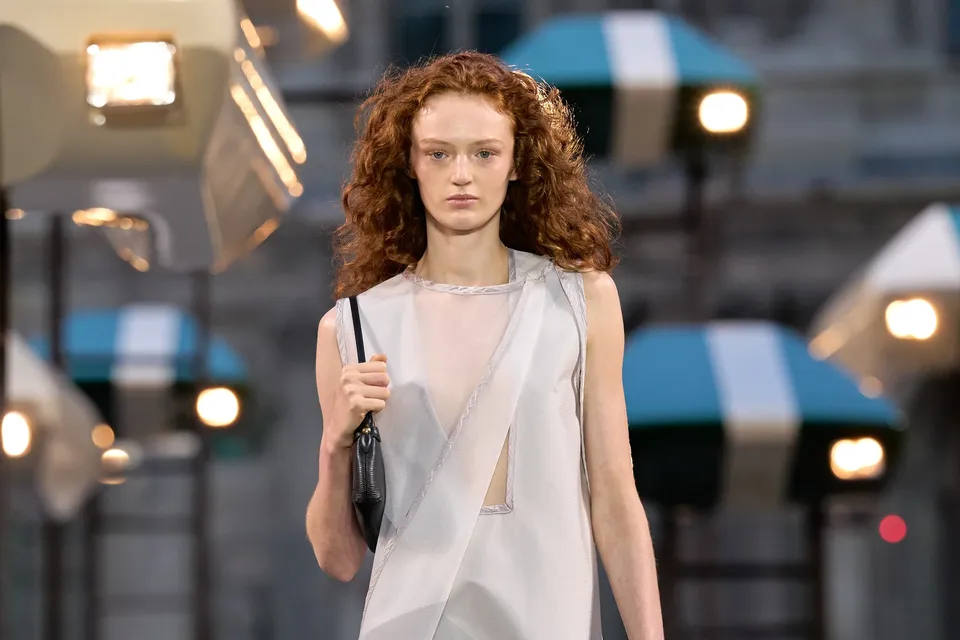
This collection is born from a more relaxed mindset than the usual Haruno creations, more leaned to the architectural and constructive side of fashion, but always with the image of a woman as the main inspiration. A reflection about the beauty of the nature that surrounds us, seen from the eyes of city people; the pieces that could easily be worn in various daily life situations, from business meetings to relaxed brunches or night dates, all had those elements of peace and calmness that can be born only from nature. To achieve this, many new explorations of handcraft techniques, joining forces with local artisans expert in very particular disciplines, allowed the creation of extremely interesting effects, like degrade organza pieces that seemingly become more transparent towards the bottom or silver thread skirts, dresses, and even bags that moved with the ease leaves or trees do in the wind.
With a highlightable attention to detail, from the styling choices to the accessories like bags, sunglasses or shoes, or the newly added denim pieces that keep the same Haruno elegance combined with the casual essence of the fabric, this show conveyed the “beauty in the present moment” that it was intending to. Maybe a drone spinning on top of our heads during the whole show would have been a technological distraction to the natural essence of what was going to happen in front of us. Maybe nature does work in mysterious ways.