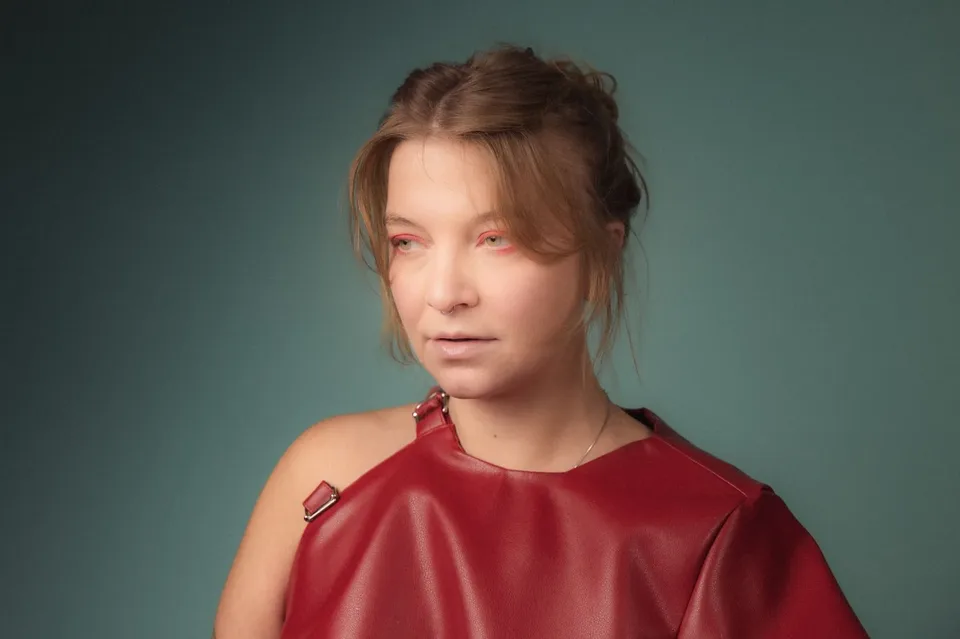
When substances are part of your identity, how do you part ways with them? Rachel Chinouriri has probably asked herself this same question a million times. Her new album, I think I spoke too soon, is mostly about her past relationship with alcohol. With songs that seem to address a lover and disco-fuelled party anthems that invite us to dance our feet off, Chinouriri has no time for lamentations, only for this newfound happiness. Well, maybe there is room for a couple of heavy guitars and sad songs, but crying and dancing are both cathartic, so perhaps they aren’t so different after all.
Things have changed a lot for the singer-songwriter. Born in London to a Zimbabwean immigrant family, she began writing songs at seventeen, recording them in her room with a £20 microphone. Years later, So My Darling went viral and appeared on seemingly every new-music playlist, while her acclaimed debut album, What a Devastating Turn of Events (2024), earned her nominations for Artist of the Year and Best New Artist at the BRIT Awards. In the two years since then, the British-Zimbabwean singer has found mainstream success, opening for Sabrina Carpenter’s Short n’ Sweet Tour, performing at Olivia Rodrigo’s Daisy Chain Fields music festival and appearing as a musical guest on Saturday Night Live UK. In between, Chinouriri returned to the recording studio to process her mid-twenties—and the intense identity crisis that came with them—through dance-pop.
Today, life has become a celebration for the singer, who, after a tumultuous relationship with alcohol, has decided to turn her life around and stop drinking for good. It’s a difficult choice, not only because alcohol is addictive, but also because it’s so readily available, especially at parties. If you love the dancefloor, it can feel as though you need to sacrifice it to save yourself. I think I spoke too soon is a fantastic record in itself, but it gains extra merit when you consider Chinouriri’s attempt to reconcile with her early twenties without becoming her own worst judge. I can’t imagine anything harder than coming to terms with your worst decisions—in public—and turning them into a celebration. Rachel Chinouriri shows everyone that she’s the OG party girl, and she no longer needs substances or anyone else’s approval. After all, one of her songs repeats, over and over: “Well, baby, I’m a star.”
Moving away from her softer, more indie sound, Chinouriri turns to disco with One Song Away From Crying, the perfect opener for the record. Tongue-in-cheek, she introduces its theme almost instantly: “Blue, tryna see a silver lining / It’s blue, this drink, this loo / Mirror wall, disco ball / I’ve never looked better and I’ve never felt worse.” Melancholic disco has never felt this good. Pretty Girls, the girl-loving anthem that follows, uses this soft, slightly nostalgic mood to introduce loneliness, addiction and the experience of being surrounded by beauty while feeling empty inside. The chorus brings Euphoria to mind: could it become Rue’s anthem? We think so. “Watch her as she fades / Slowly bleeding glitter, glitter on the floor / Still don’t know her name / Dancing is her weakness, weakness I adore.”
We mentioned disco; now we’re having a full ’80s moment with Baby Steps. The airy, whispery song reminds us how much we need each other to overcome difficult moments and, although the album’s subject is serious, this might be one of its most emotional tracks. Returning to her alternative, indie sound, Favourite Desperation adopts a writing style that recalls Olivia Rodrigo’s diaristic pop-rock.
I’m a Star keeps playing with the guitars and the alternative sound we know Chinouriri for. Its upbeat music and even more upbeat lyrics pave the way for the jumpiest song on the album yet: AAAHHH!!!, an emotional rollercoaster in both rhythm and lyrics. Give a girl a cigarette. Yes. We get it, Rachel.
And so we reach the middle of the album and its most emblematic—and probably rawest—song. Although the rhythm isn’t sad, the lyrics are shattering: “Tell me what I’ve done, I can’t remember / As the better half, I can’t defend her / She’s throwin’ up into a gutter / It’s getting really hard to love her.” Rachel had been sober for a year when the album came out. Broken Chair explores the duality of being the life of the party and the loneliness that can come with it. She sees a broken chair on the street: something someone once liked, bought, welcomed into their home and treated with care, but which is now a discarded object. It’s a song about denial and final recognition, and the Jekyll-and-Hyde game that addiction can play. We can feel high when, in reality, we’re quite low.
Shiver is Mr Hyde in plain sight. After seeing the chair and experiencing this moment of clarity, Rachel decides to go back into the club, ignoring the realisation that she needs help. An empty chair, an open door: proceed with caution. The feeling of being in the club is then mimicked through the harsh edges and electronic sounds of Make Believe. Parasite continues the story with the fall from grace of an alcoholic bender: “What am I doing? / It’s the end of the night / And I don’t think I have it in me to fuck and apologise.” Hectic and unglamorous, the scene exposes how addiction can be romanticised to hide what lies beneath it—the parasite. “Live for the weekend, I’m your perfect sin, baby.”
The first song she wrote for the album sits near the end, not because it isn’t important—quite the contrary—but because it follows the singer’s journey towards the light, from the height of her problem to its resolution. The Good Fight plays out like a drunken train of thought and, according to Chinouriri, marks the moment she decided to stop drinking. Around that time, a hangover also left her with a broken toe: physical pain reflecting the emotional one. Crash This Car, the last of the album’s twelve tracks, is a call to action to burn bridges with what has afflicted her for so long: “Is this as good as it gets or are we just chasing time, time? / Did we lose our path in the aftermath just to be somebody, just to be somebody?”
It is a mature album that follows the twenty-seven-year-old singer into adulthood and along the path of self-discovery that comes with examining substances, fake friends, partying and fame. More than a goodbye to alcohol, I think I spoke too soon is an exercise in forgiving the girl you used to be without disowning her. Chinouriri didn’t speak too soon after all, and if this is what the dancefloor sounds like sober, we’ll happily stay until the lights come on.