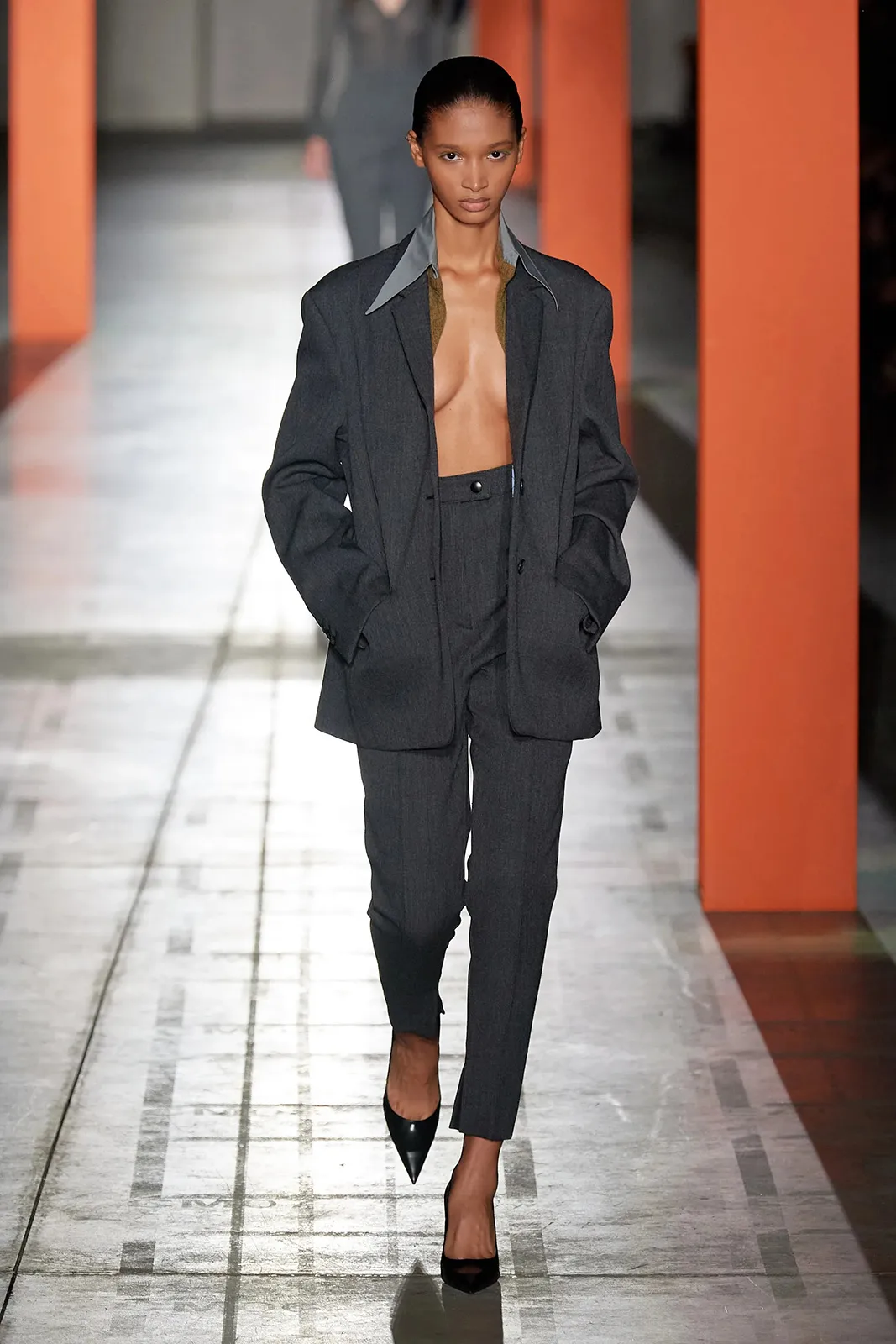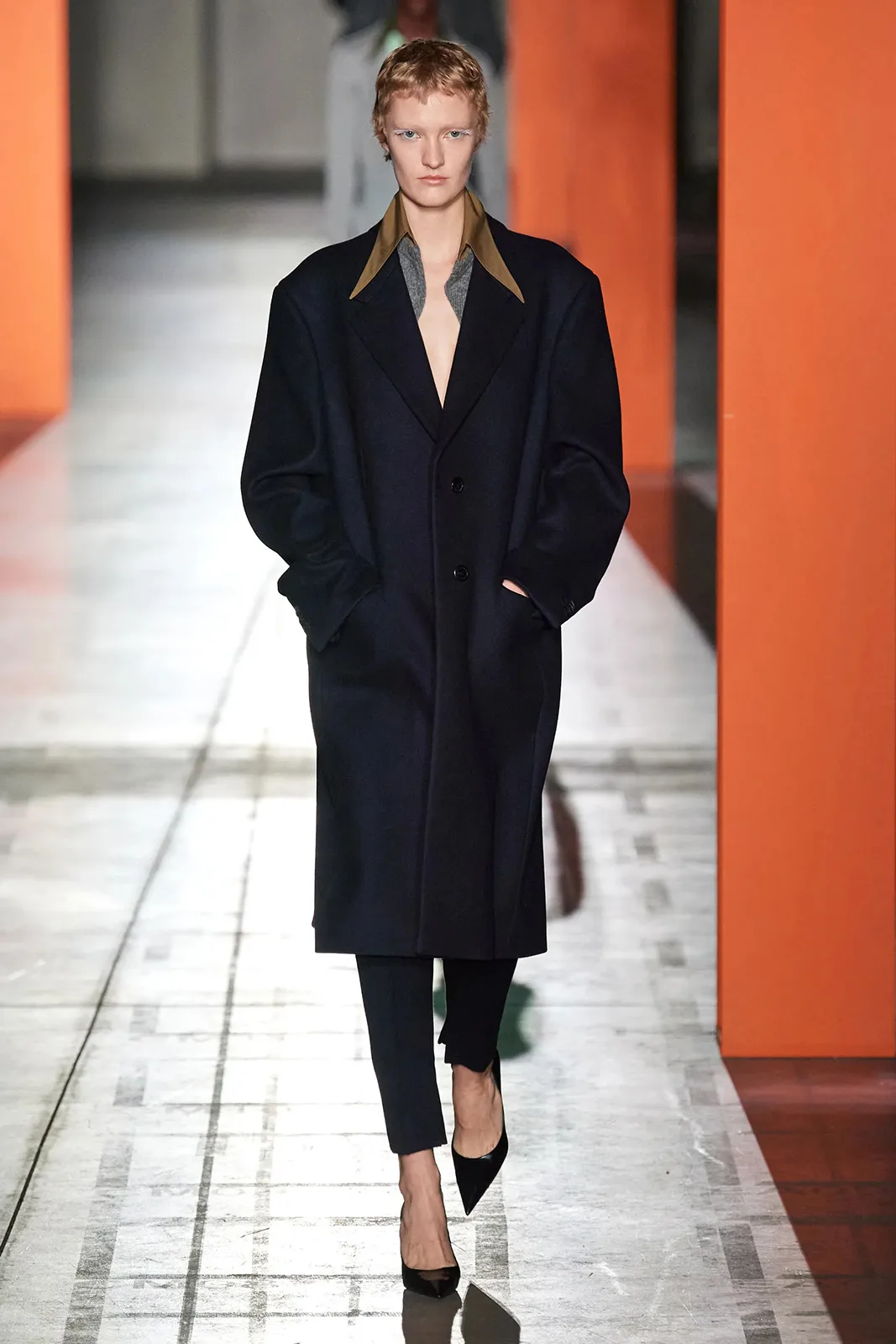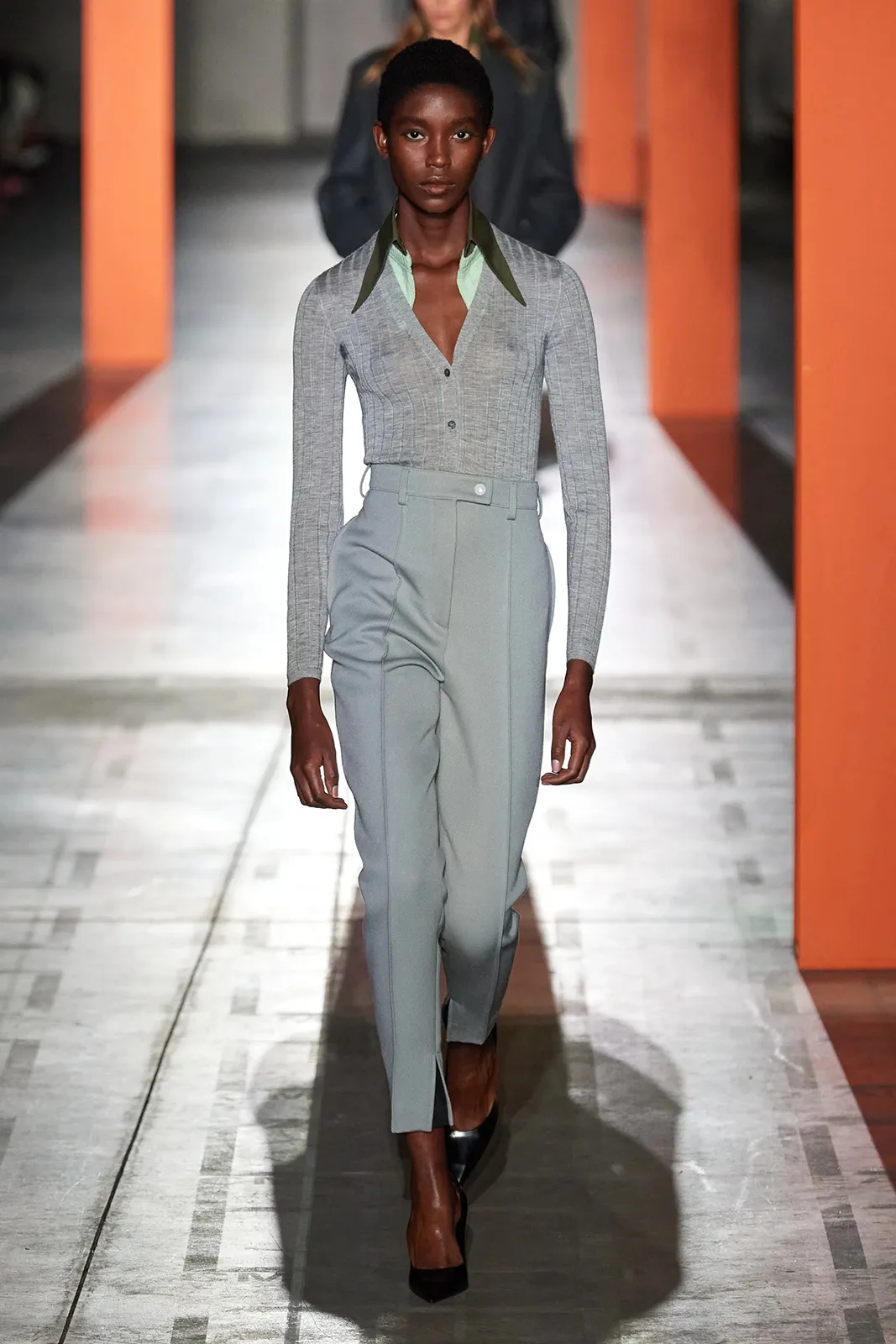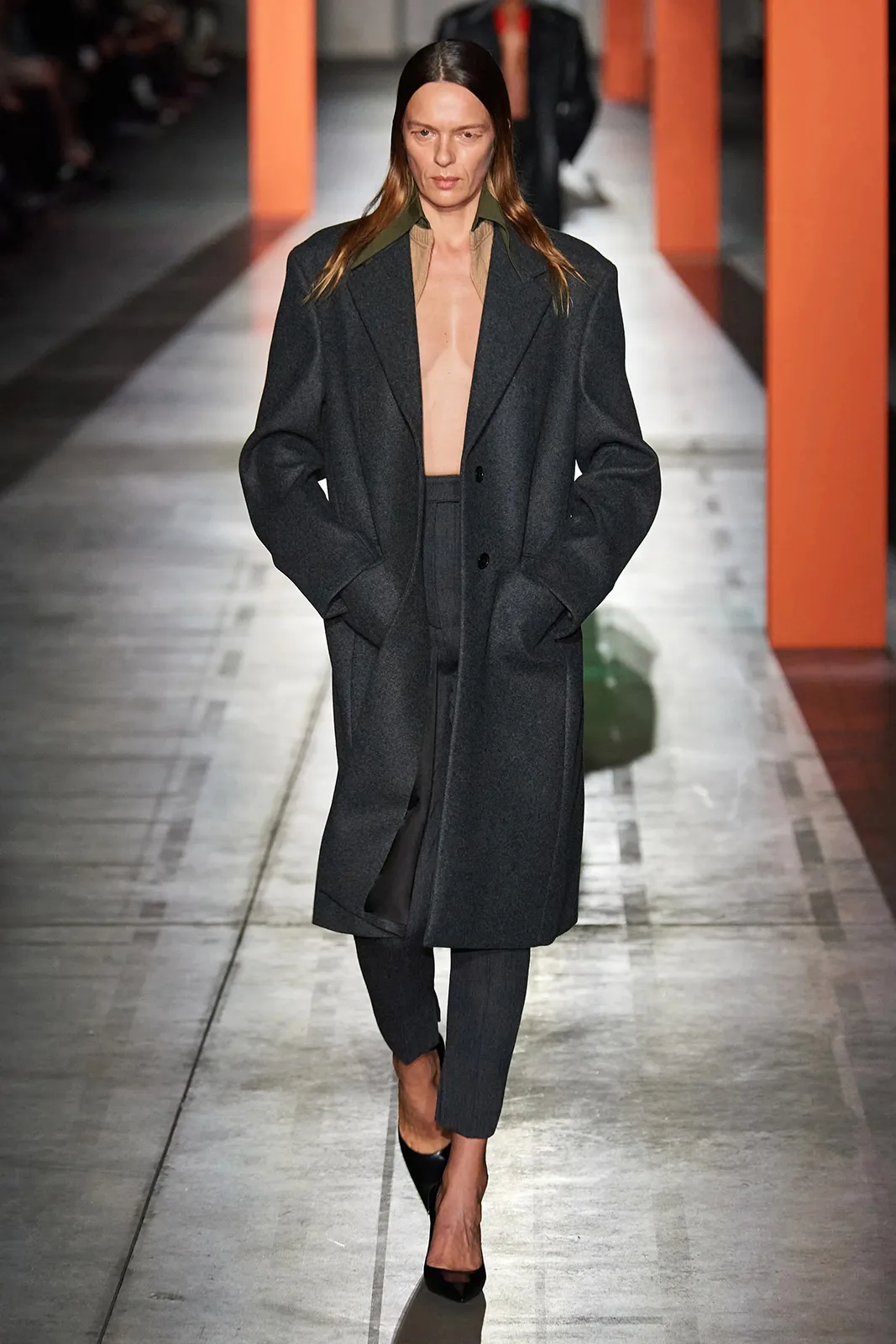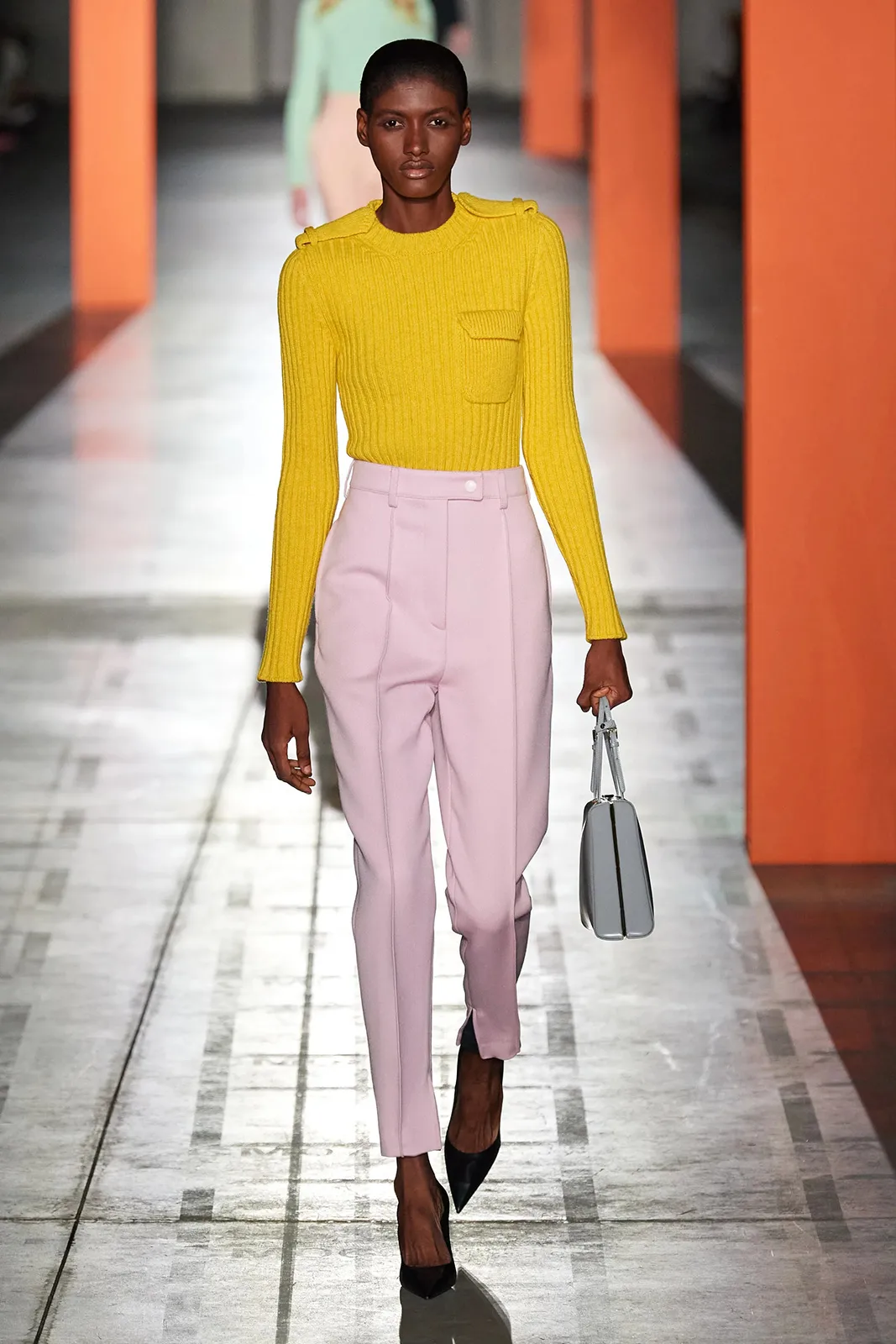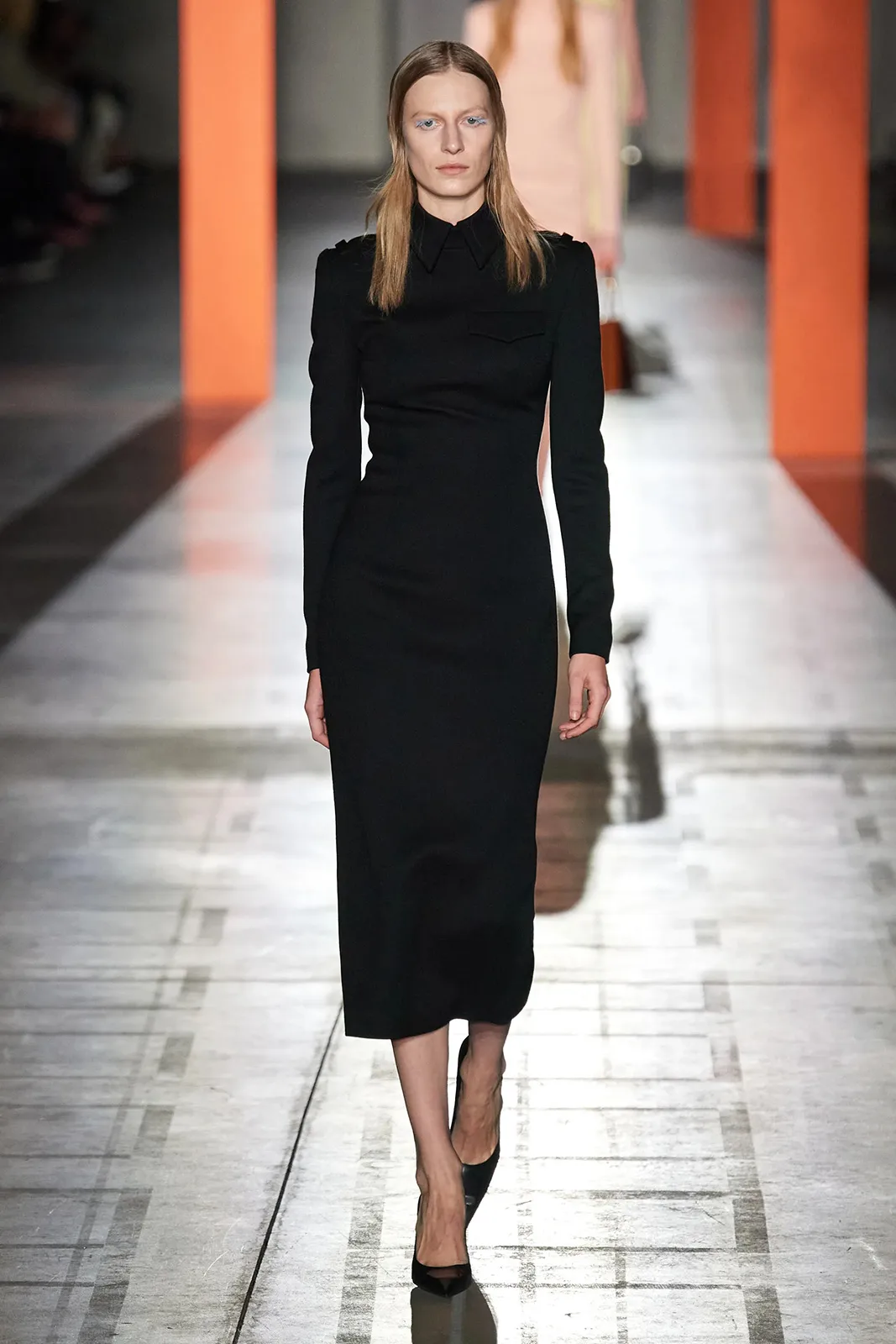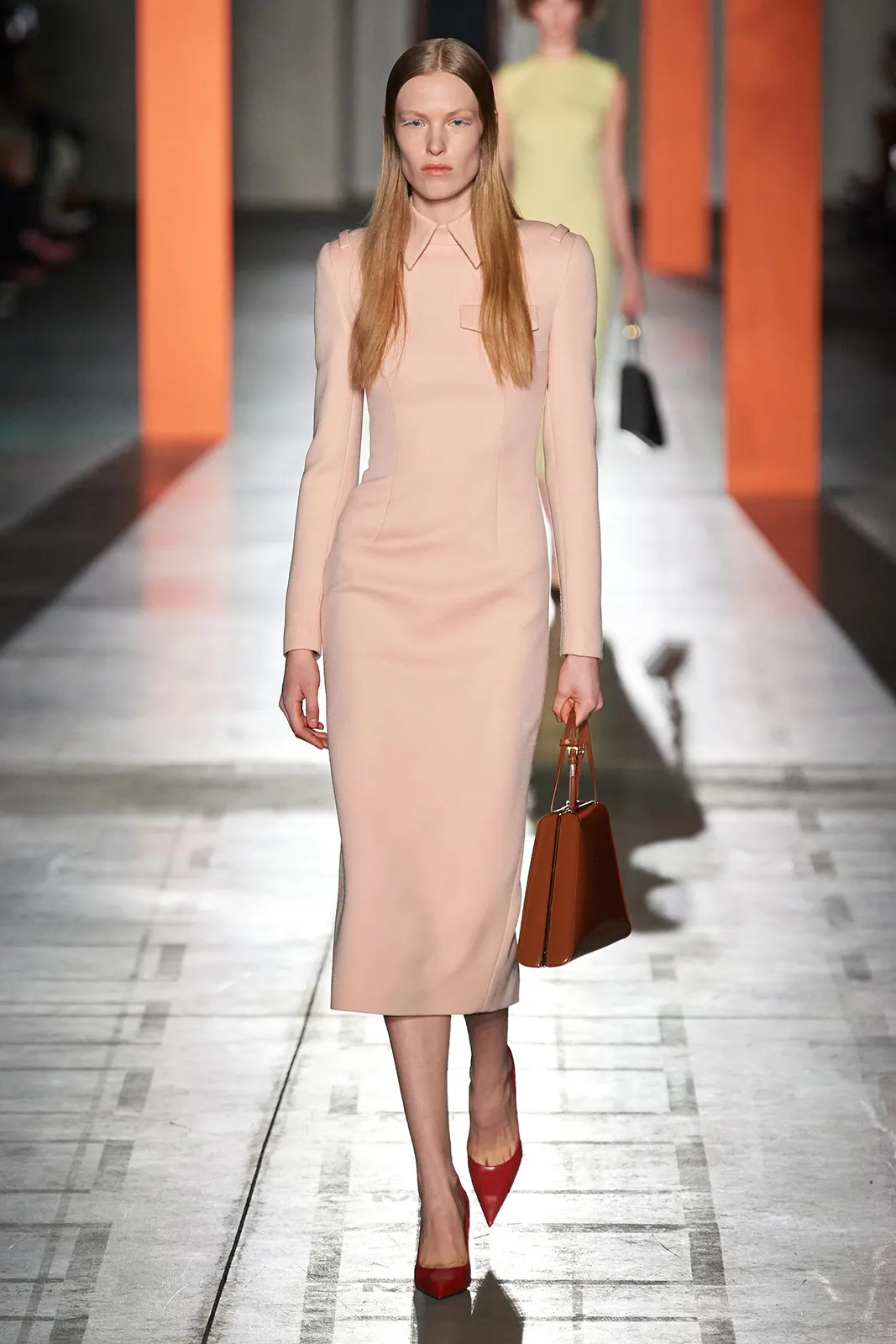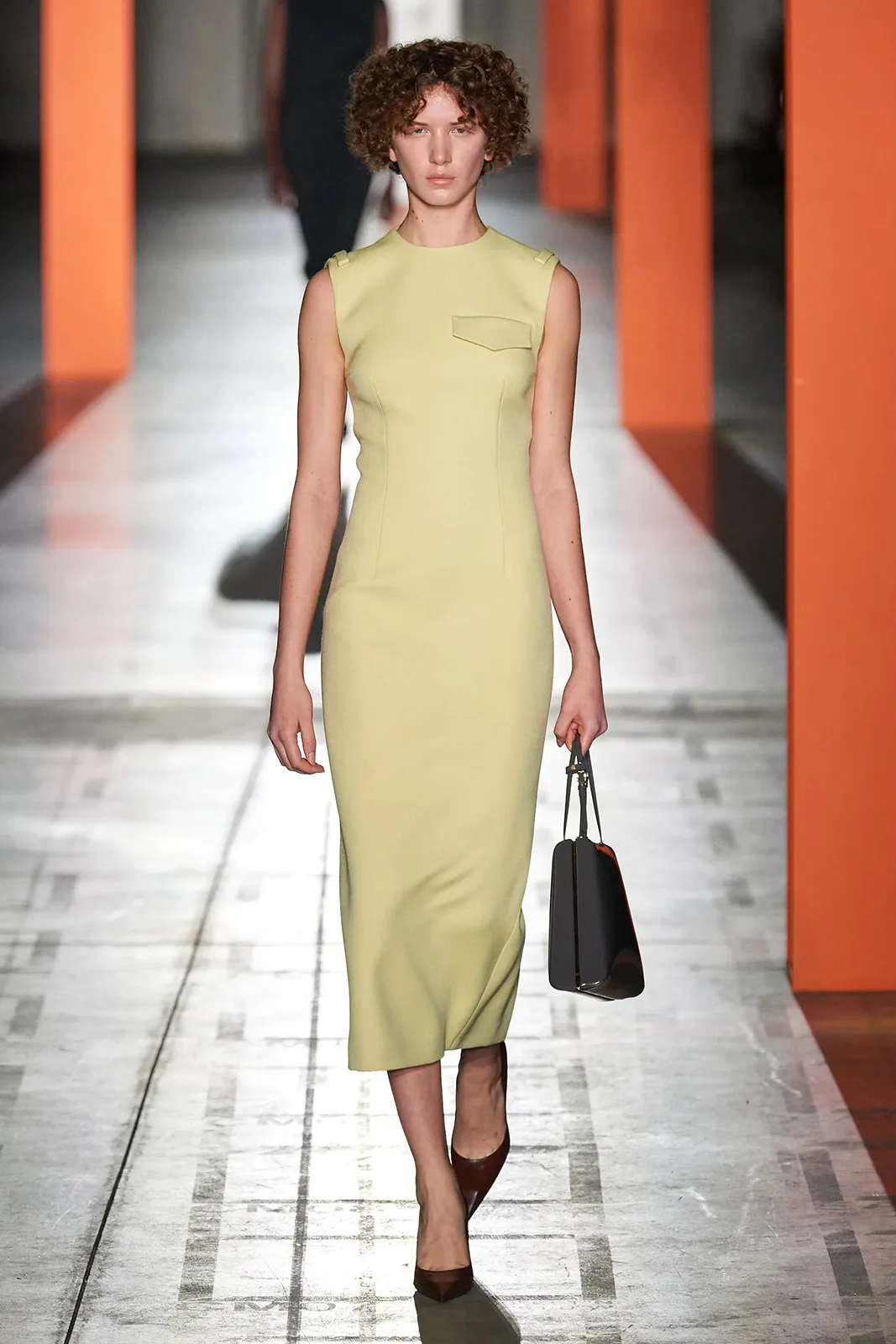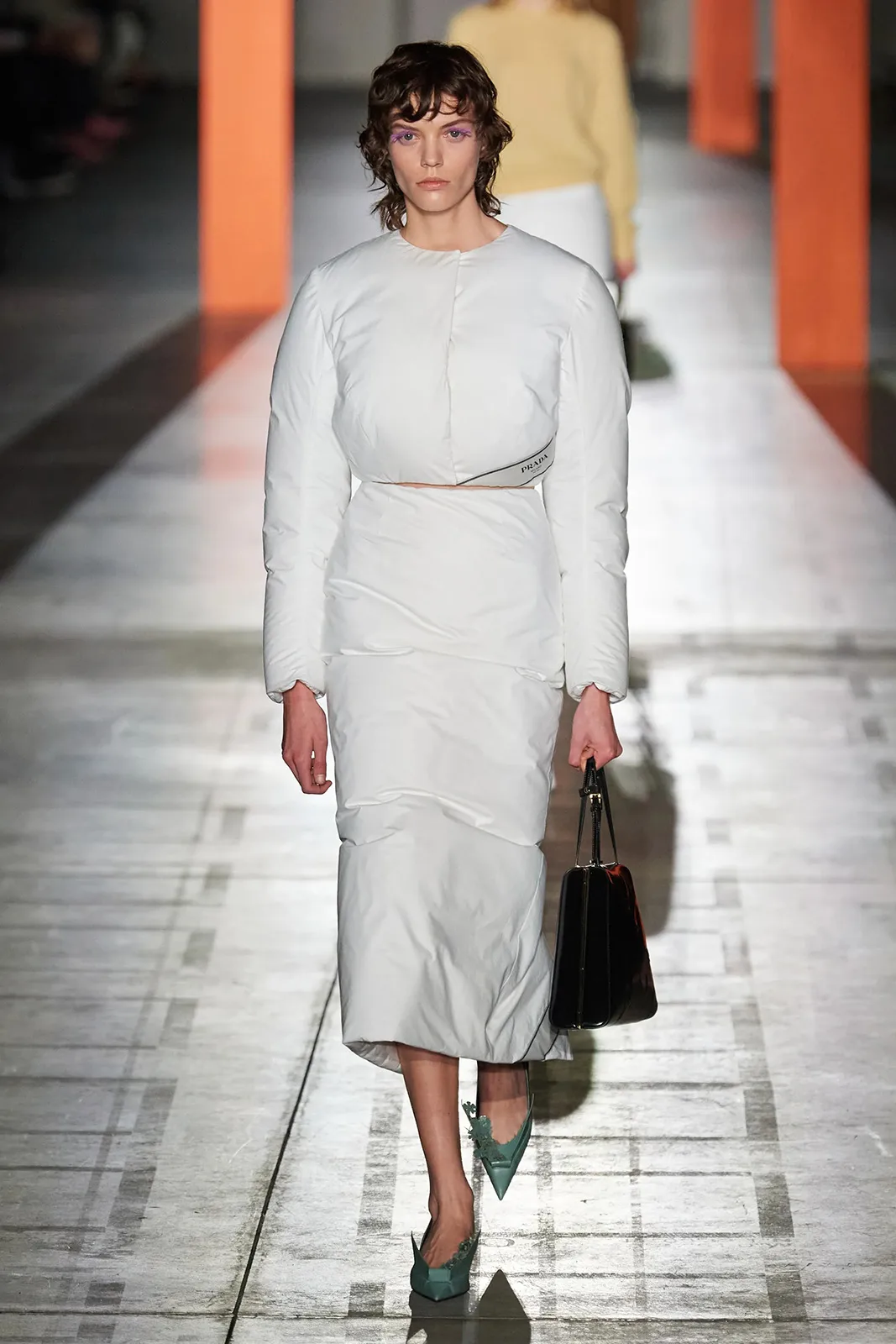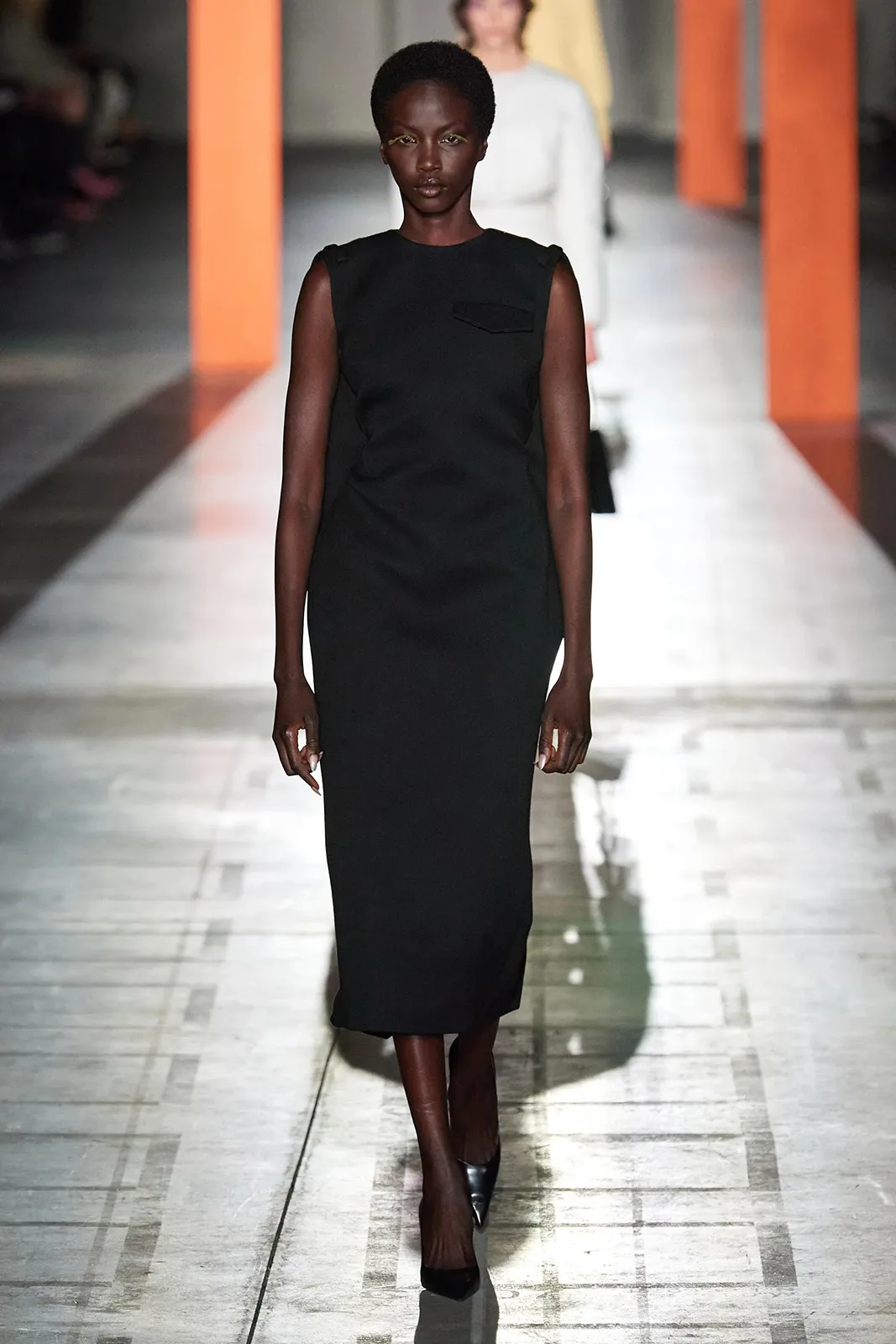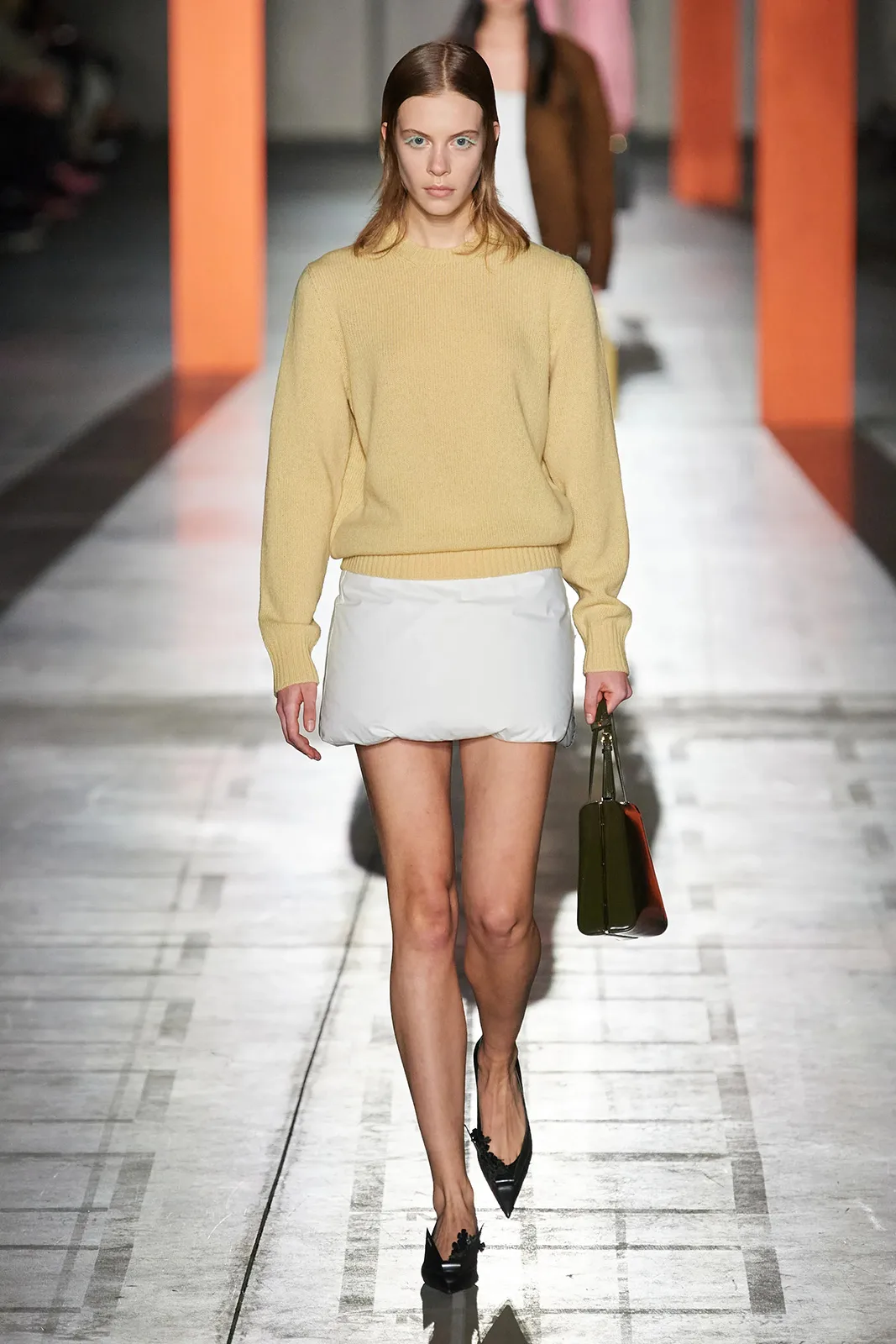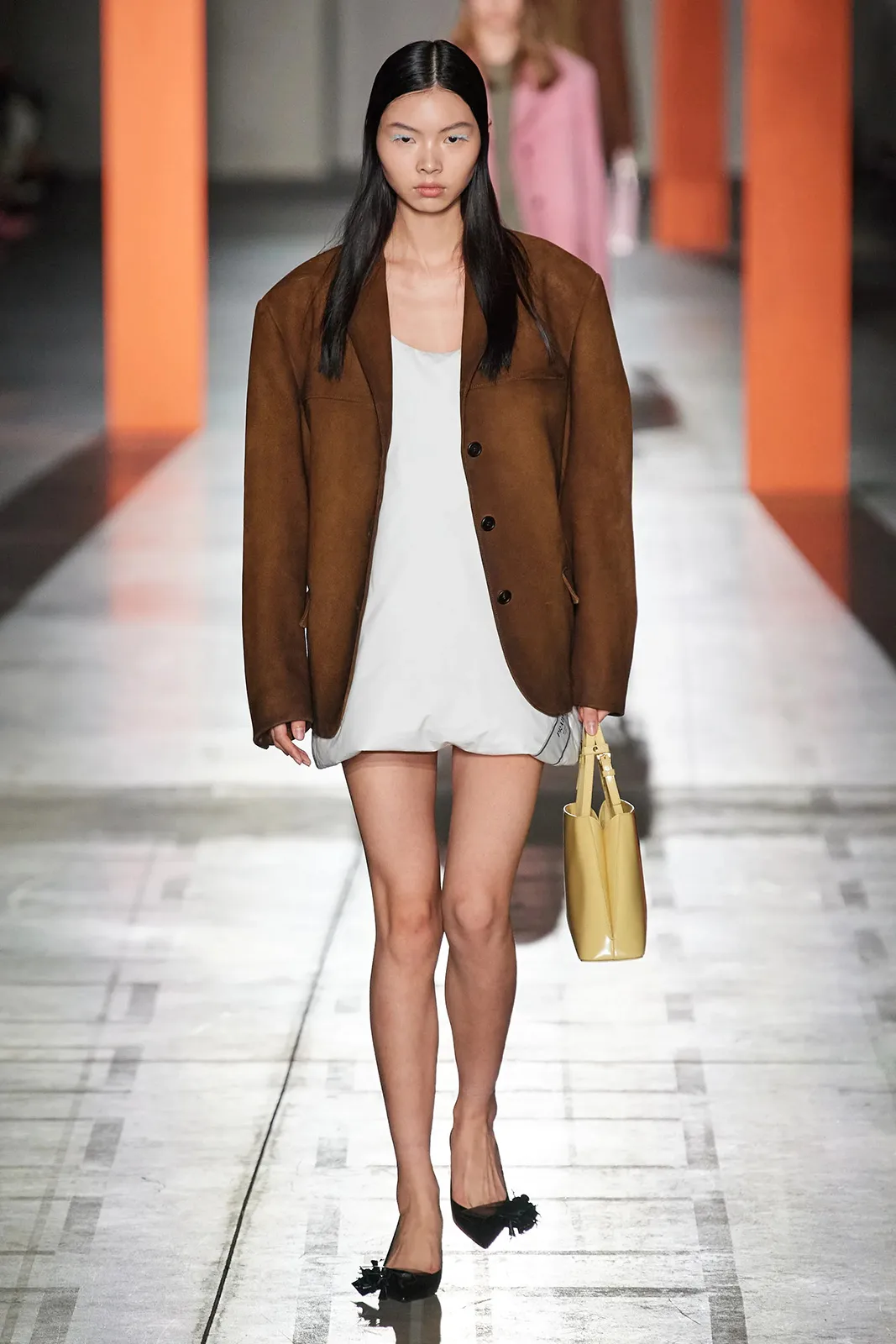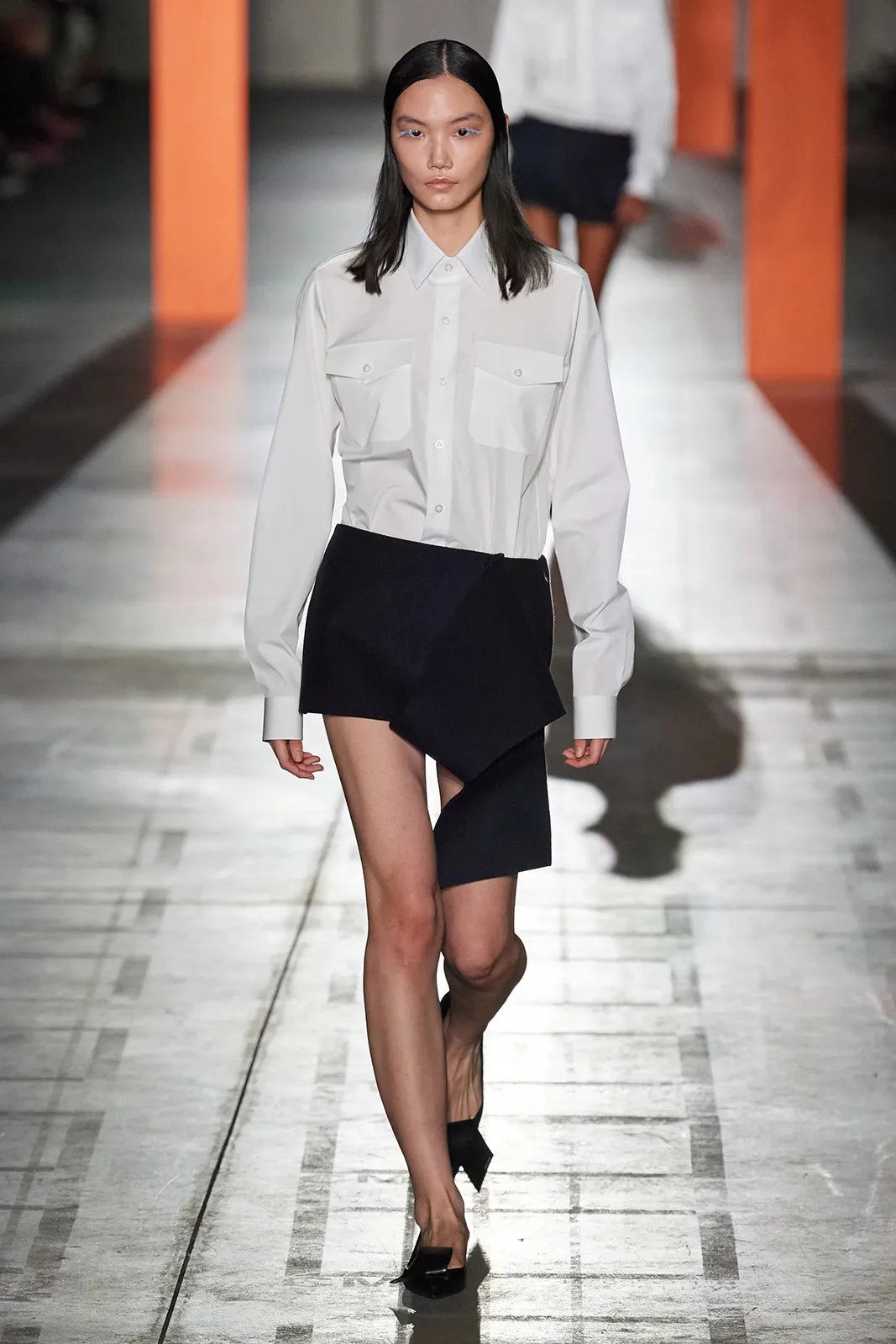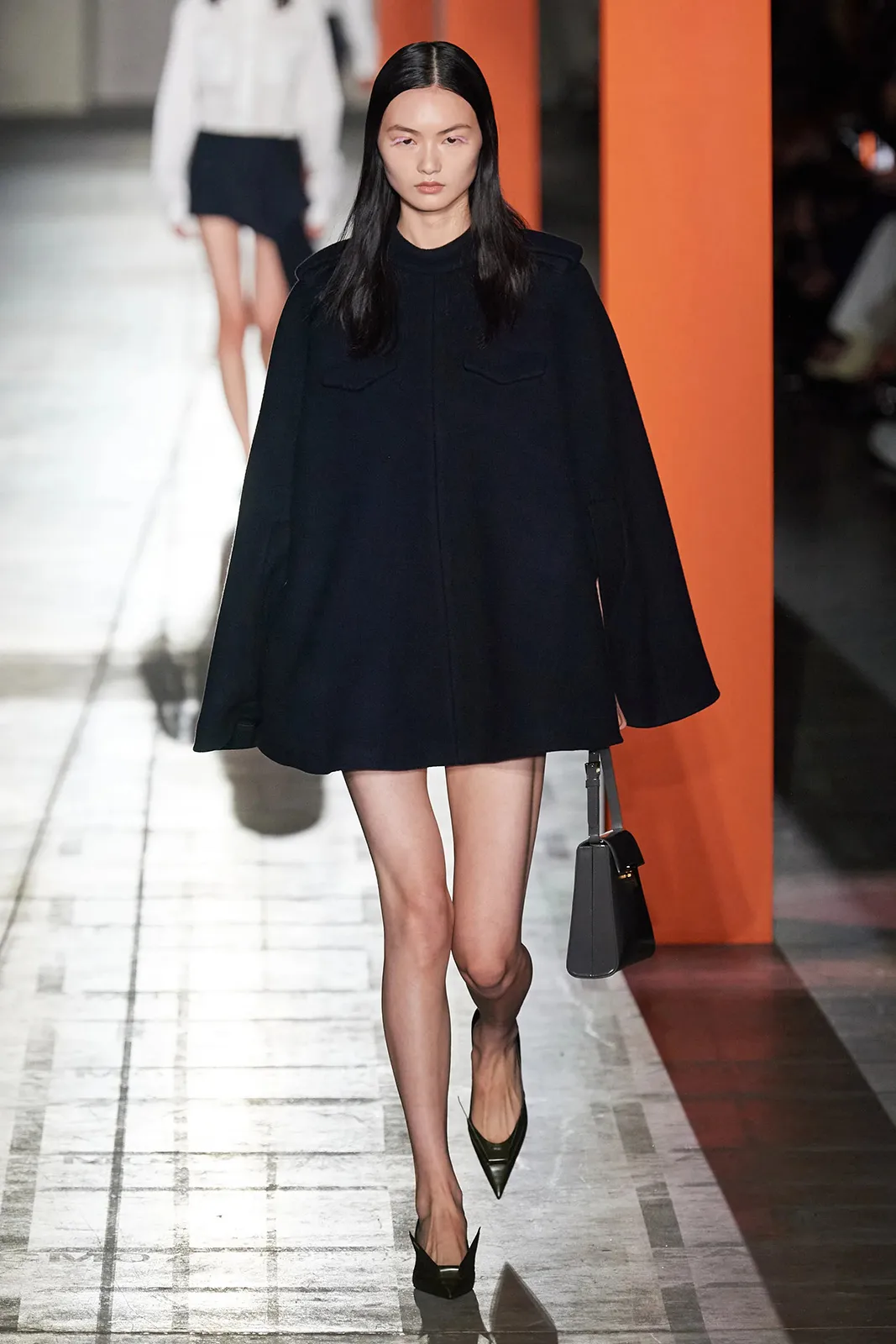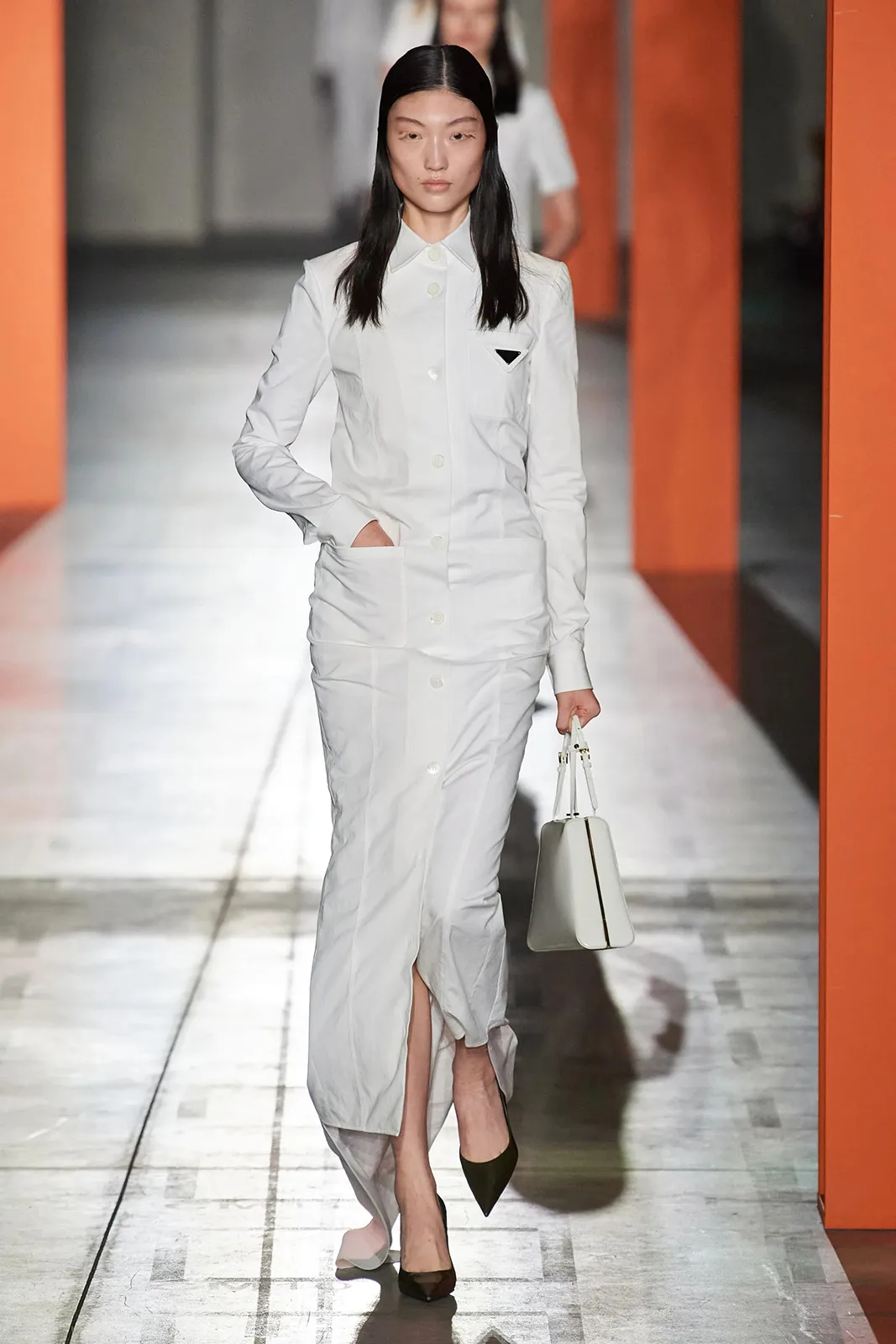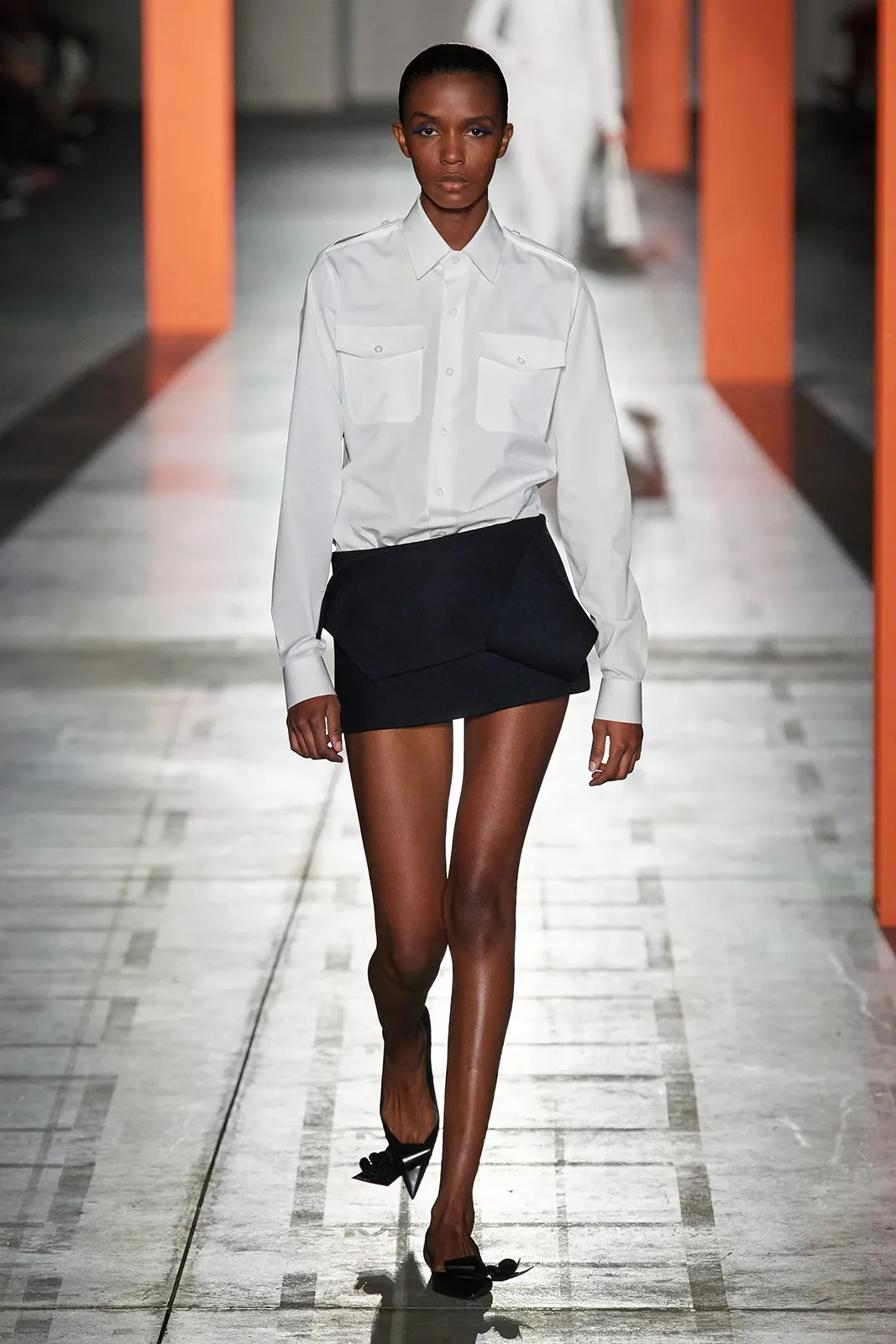
Parallel to the fantasticality of Prada’s runway presentations, there is a deeper questioning of our actuality. For their Fall/Winter 2023 collection, Creative Directors Miuccia Prada and Raf Simons sought to challenge not only our perception of clothing but the way in which we confer significance onto their wearers. To do so, the duo took inspiration from perhaps the most multifaceted and omnipresent garment of all, the uniform.
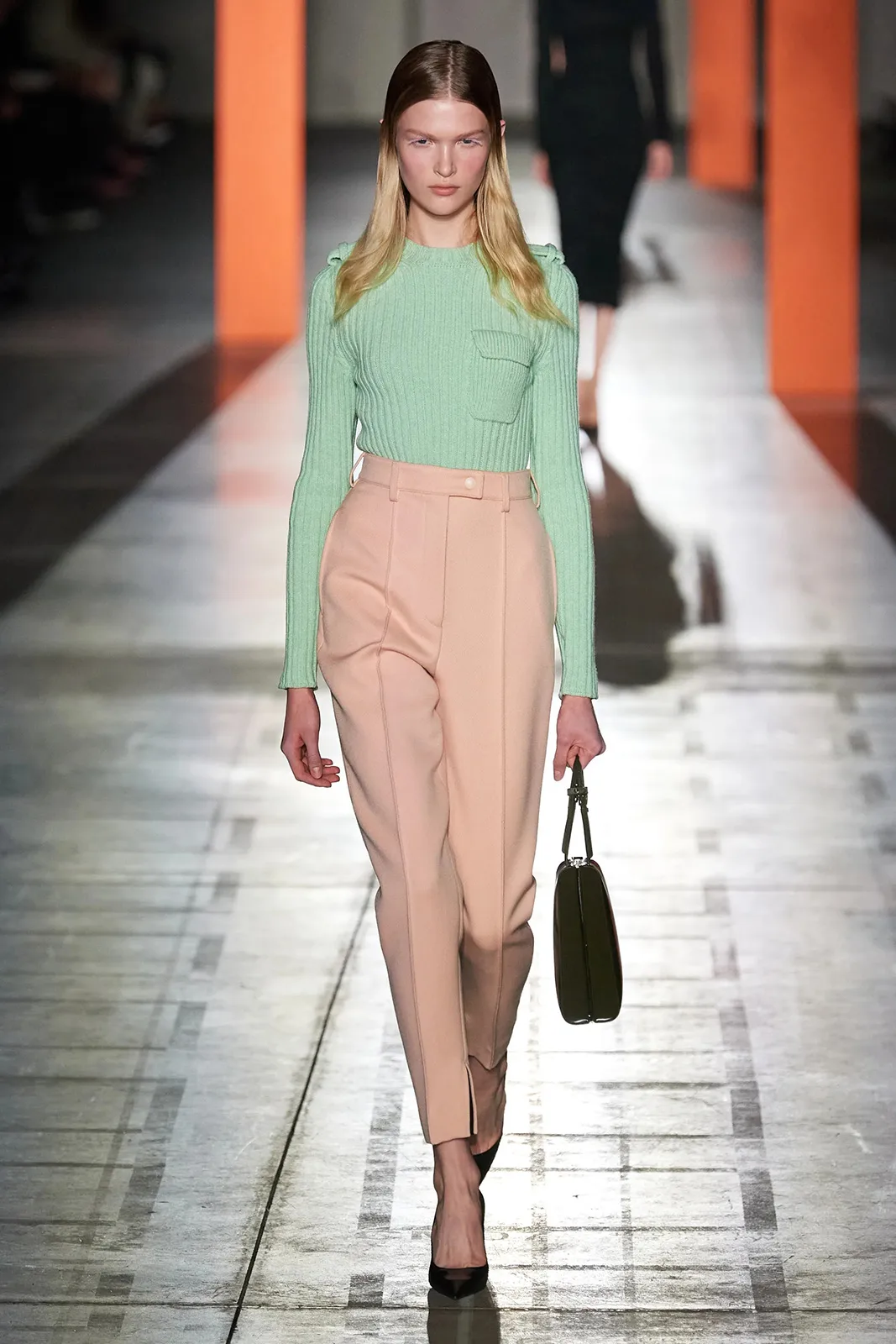
A triptych of lilies, delicate and transcendental, both words to which Prada is becoming increasingly ubiquitous, introduced its Fall/Winter 2023 presentation Taking Care. A presentation which in turn, not only sought to question the characteristics which define something as being beautiful but reinterpret those very same idiosyncrasies from the point of view of a brand which continually seeks to challenge both the notion of it and where we as a society look for it. To this end, Miuccia Prada said of the collection, “What’s important to me at this moment is to value simple (work)… not only to value glamour but the beauty of simple garments.”
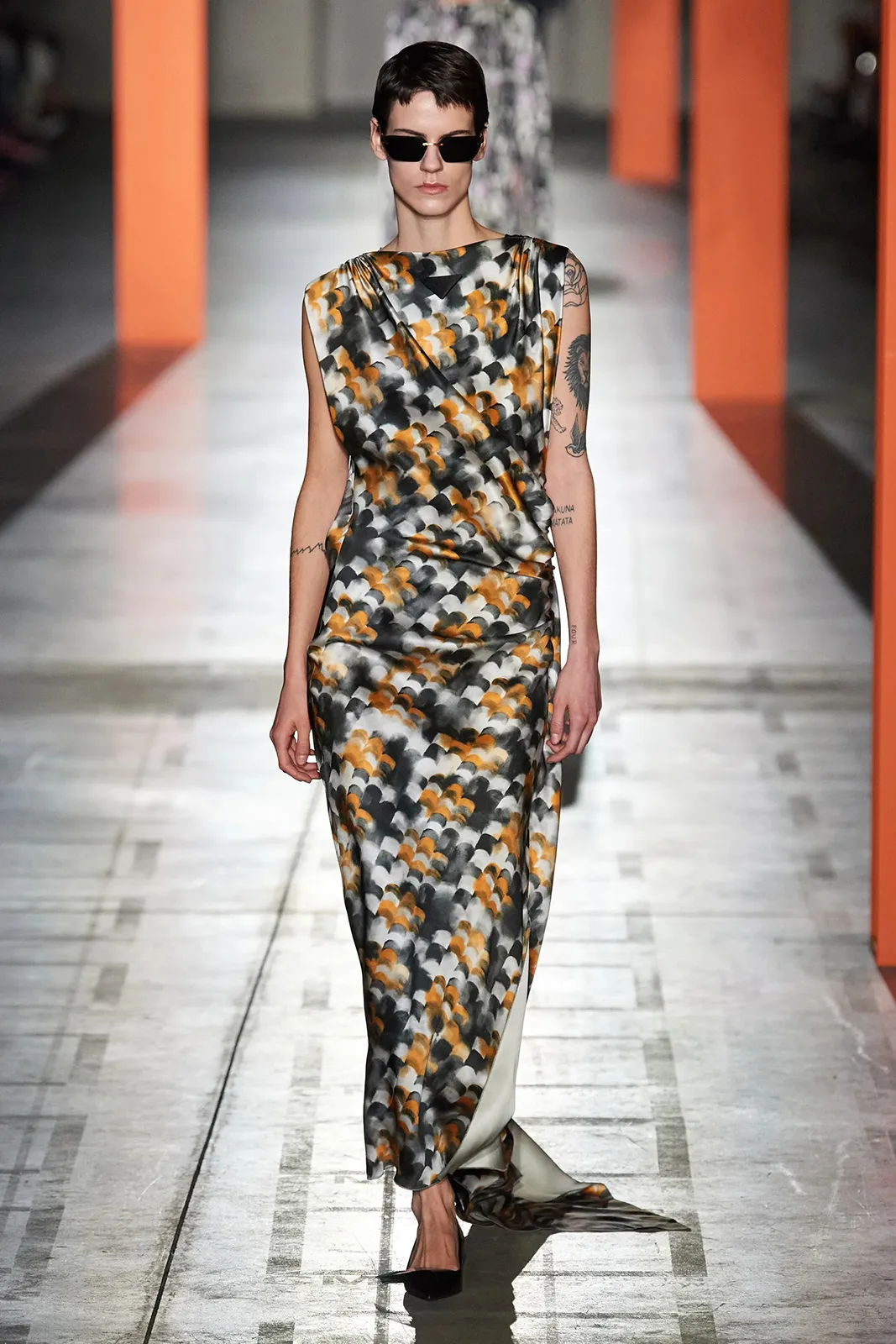
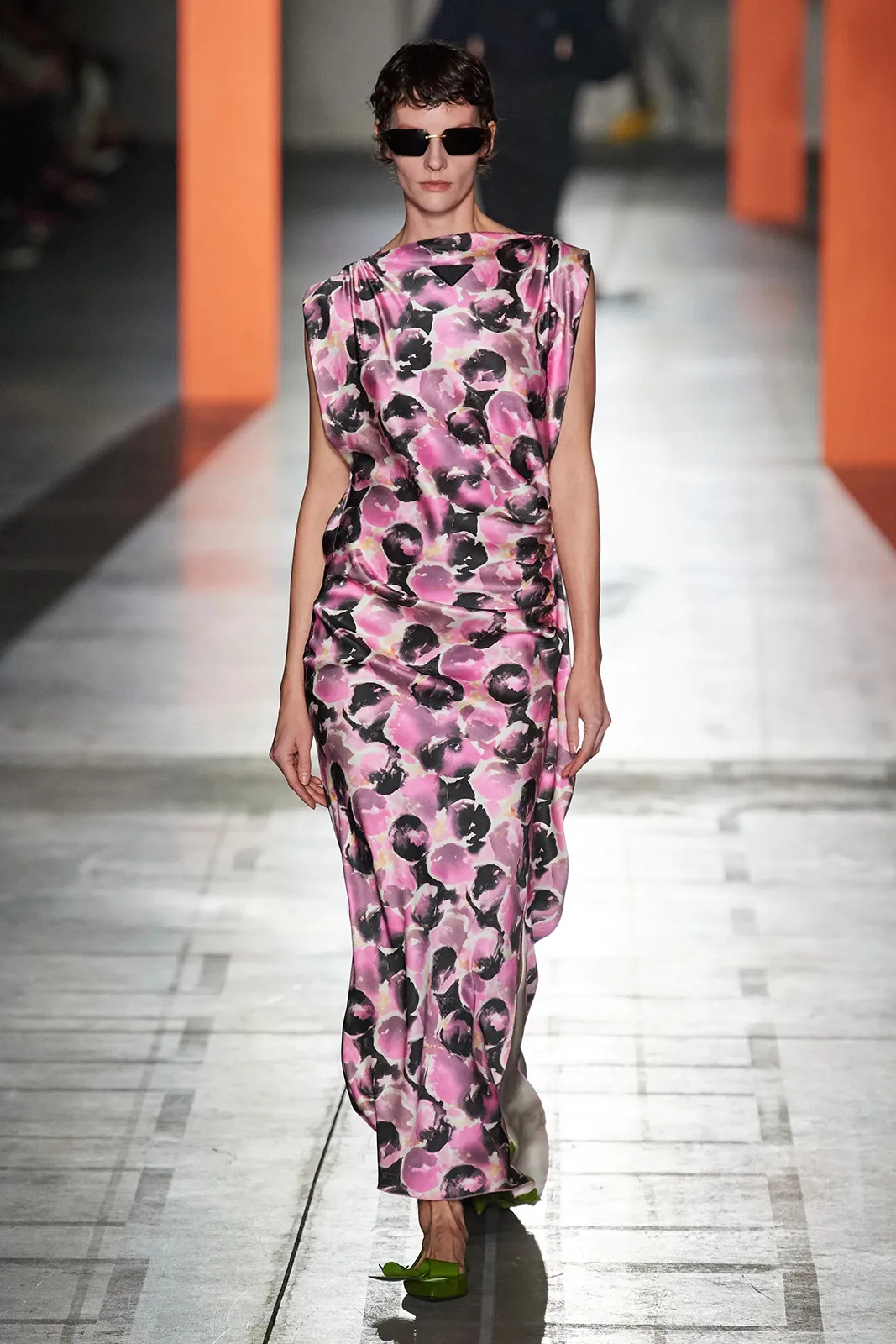
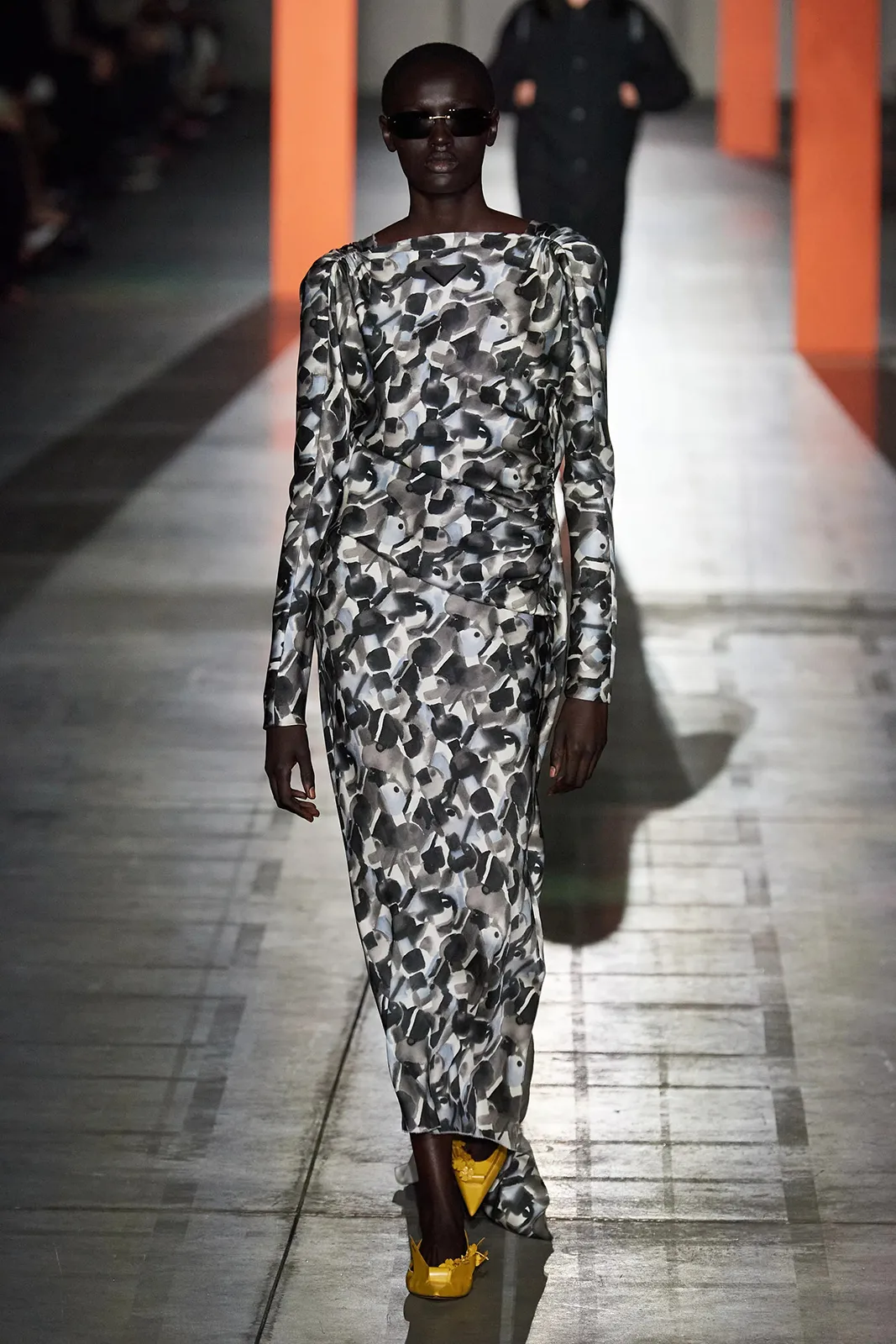
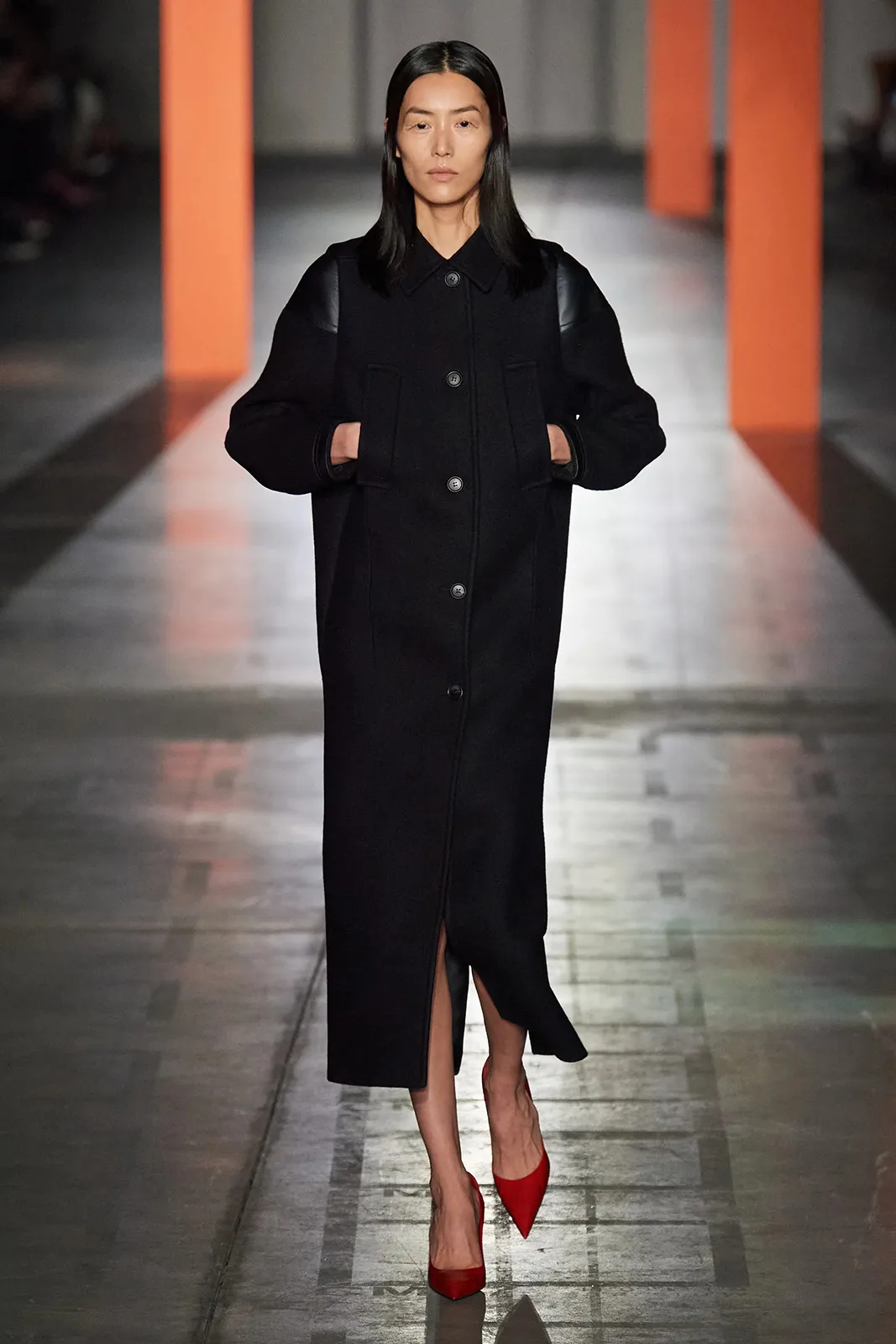
In keeping with this philosophy, the fifty-four-piece collection was presented to an audience, inside the Fondazione Prada, where a ceiling in motion alternatively amplified and reduced spatial dimensions whilst waterfalls of cascading lilies, imperceptible in their entirety unless the observers of the show looked up, flowed from the tops of orange pillars. Against this landscape, models navigated the space dressed in silhouettes which simultaneously paid homage to the everyday heroes who inspired them, from nurses to military personnel, and the beauty of care, of love and of reality to which these same uniforms and their wearers are ultimately associated.
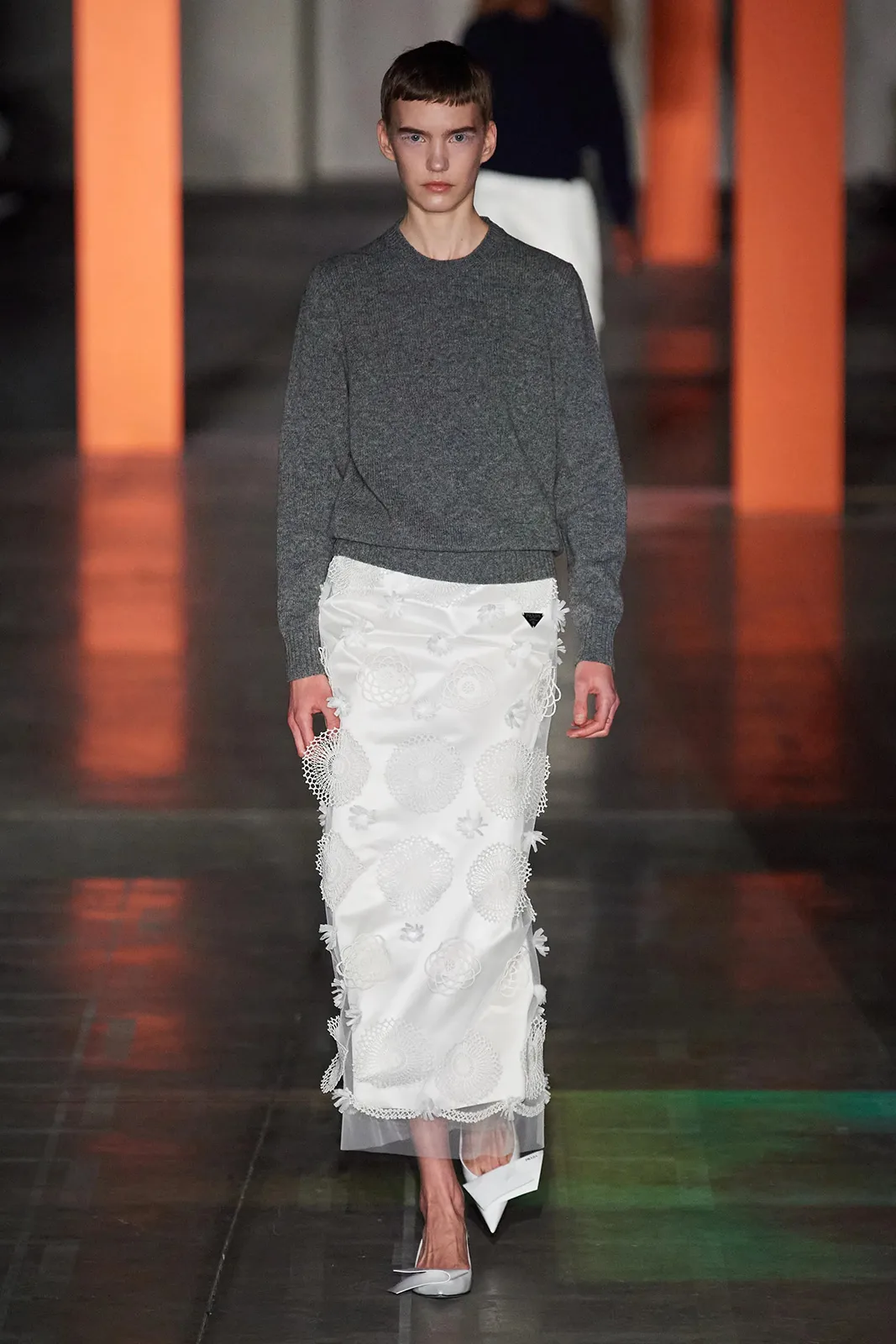
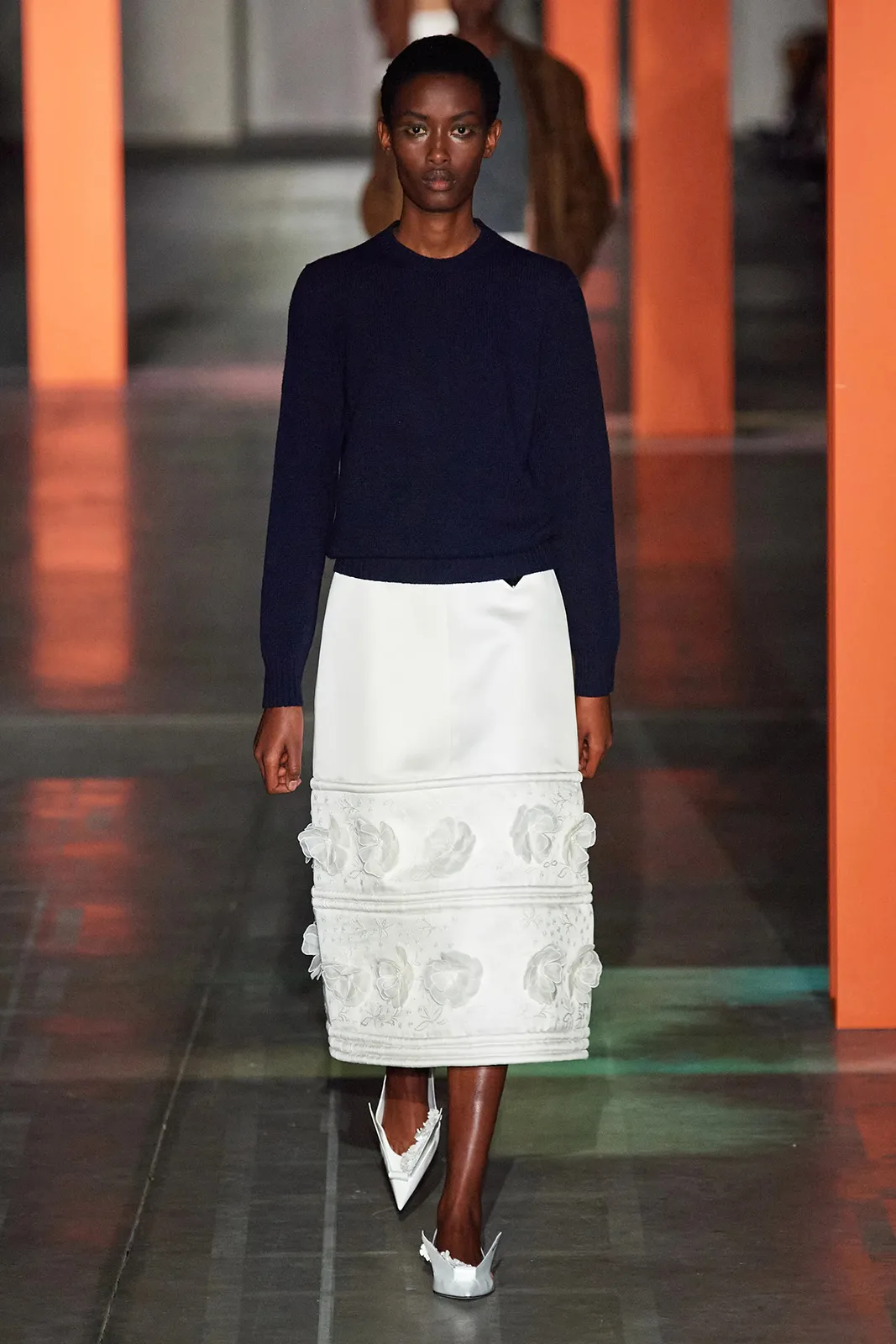
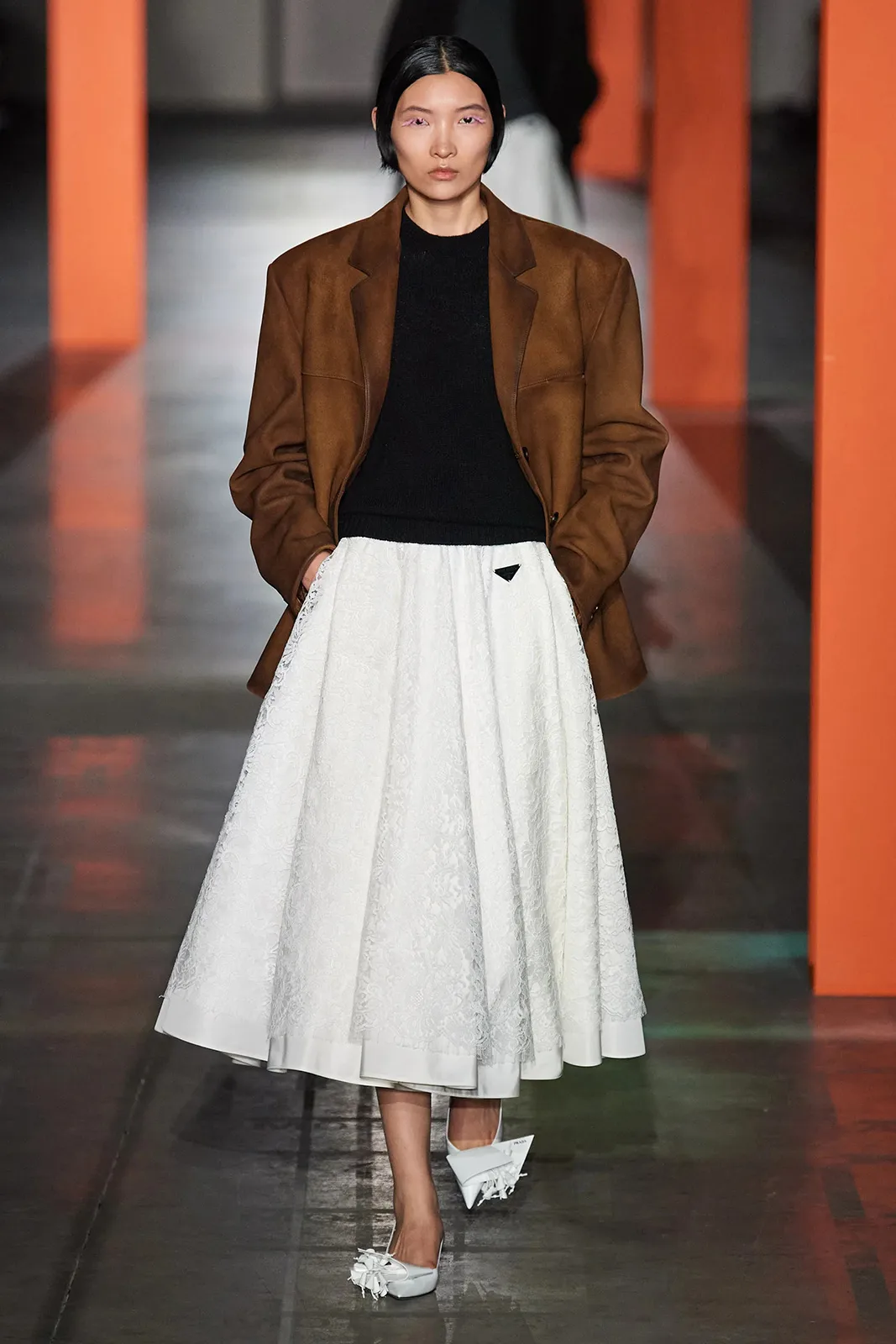
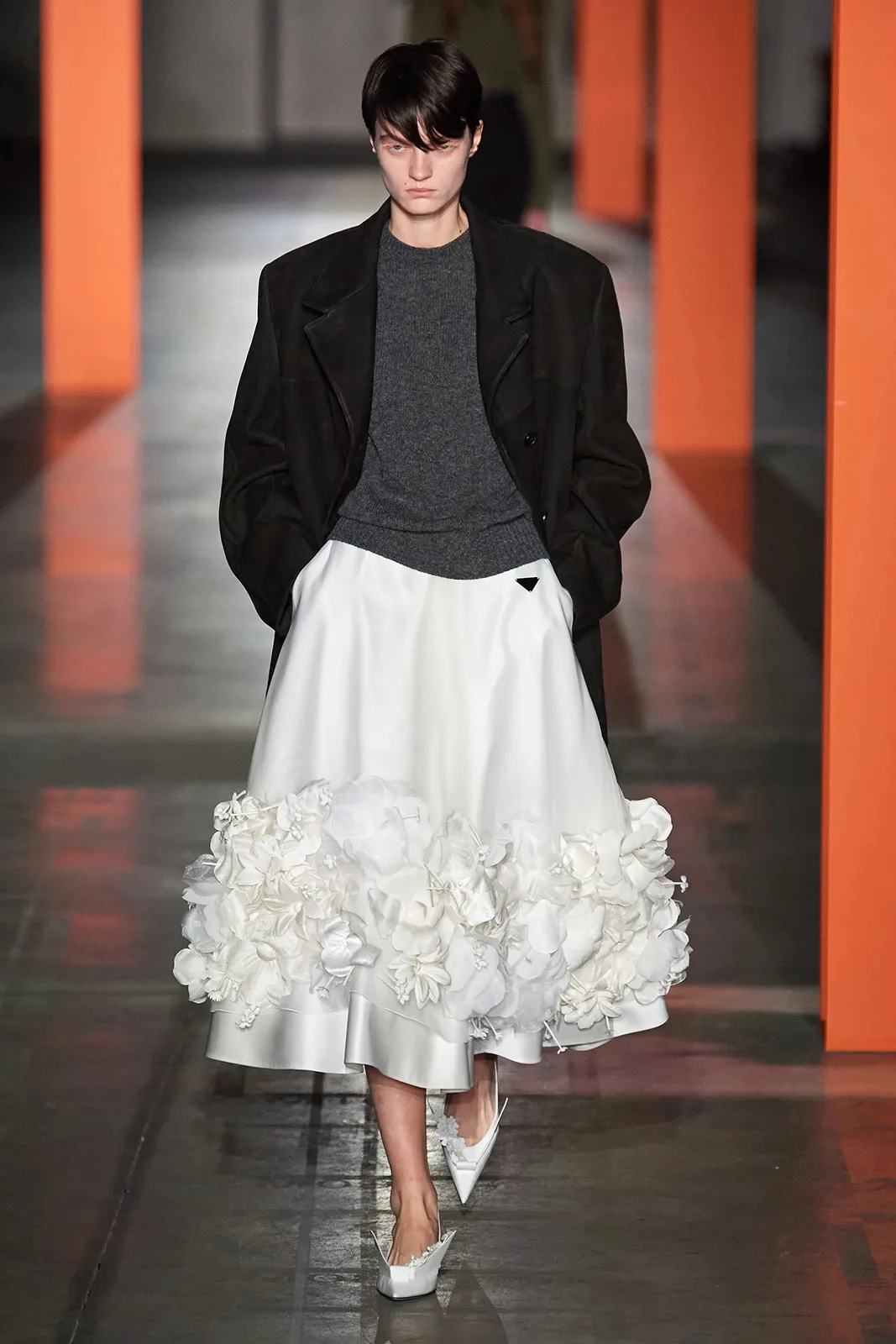
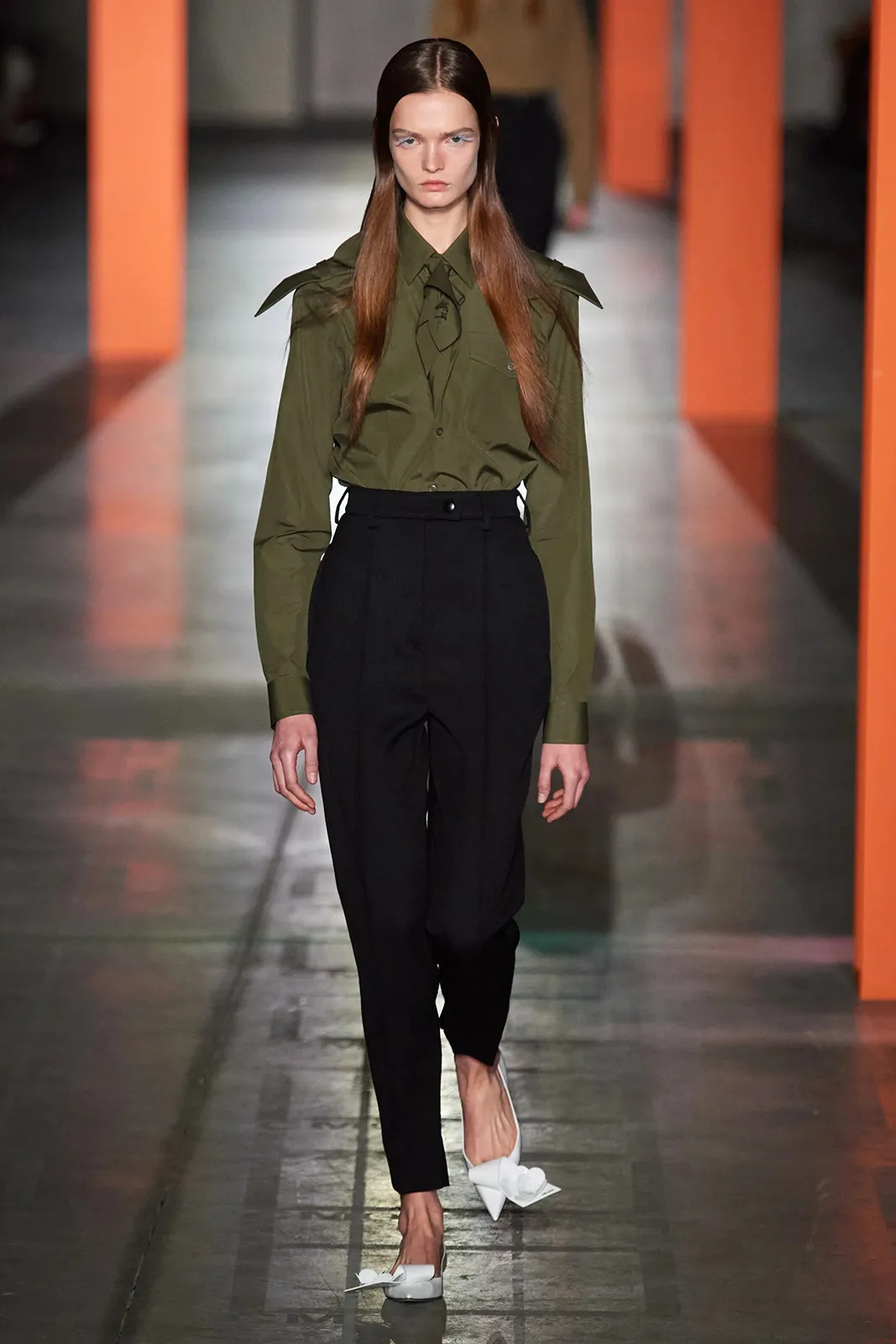
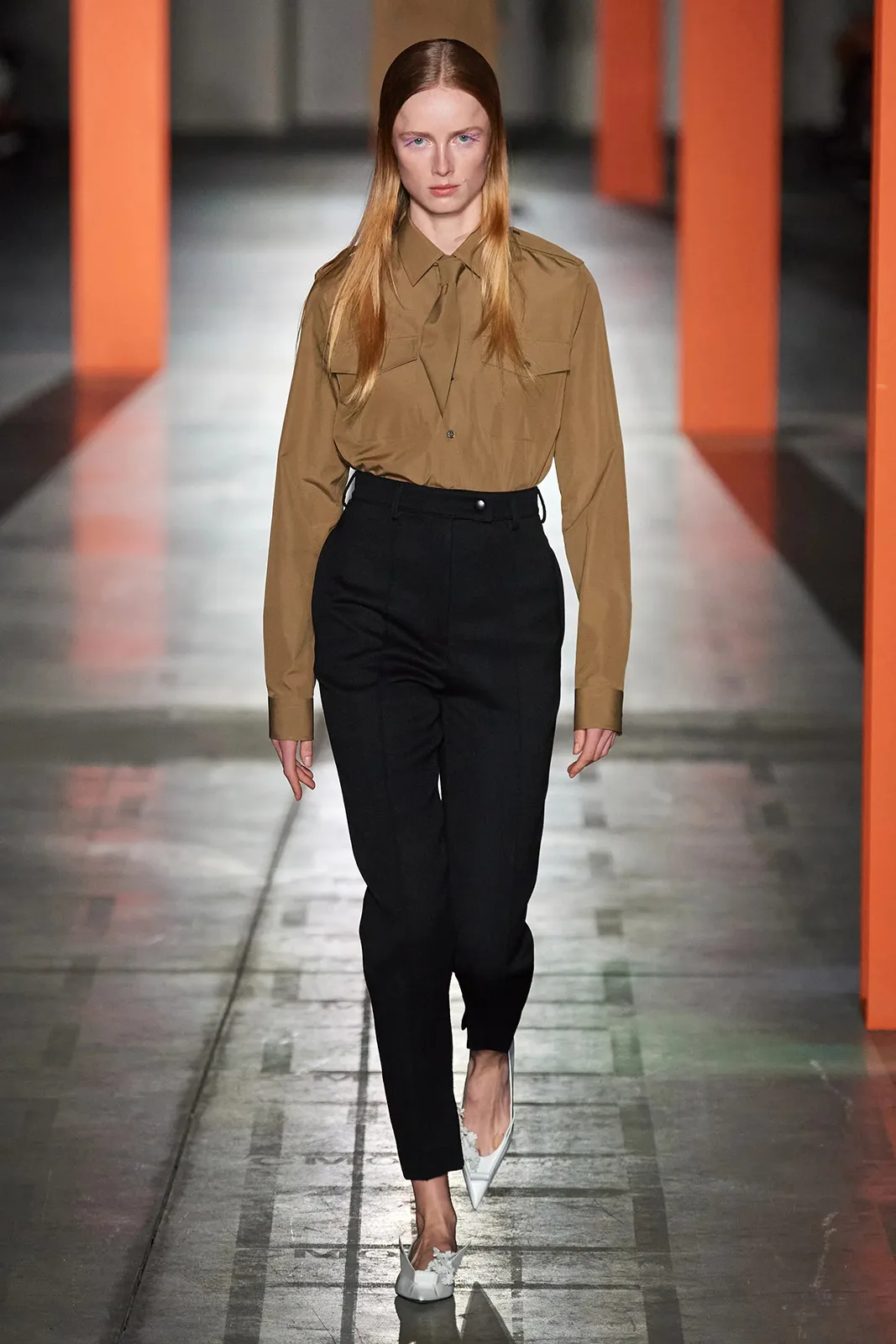
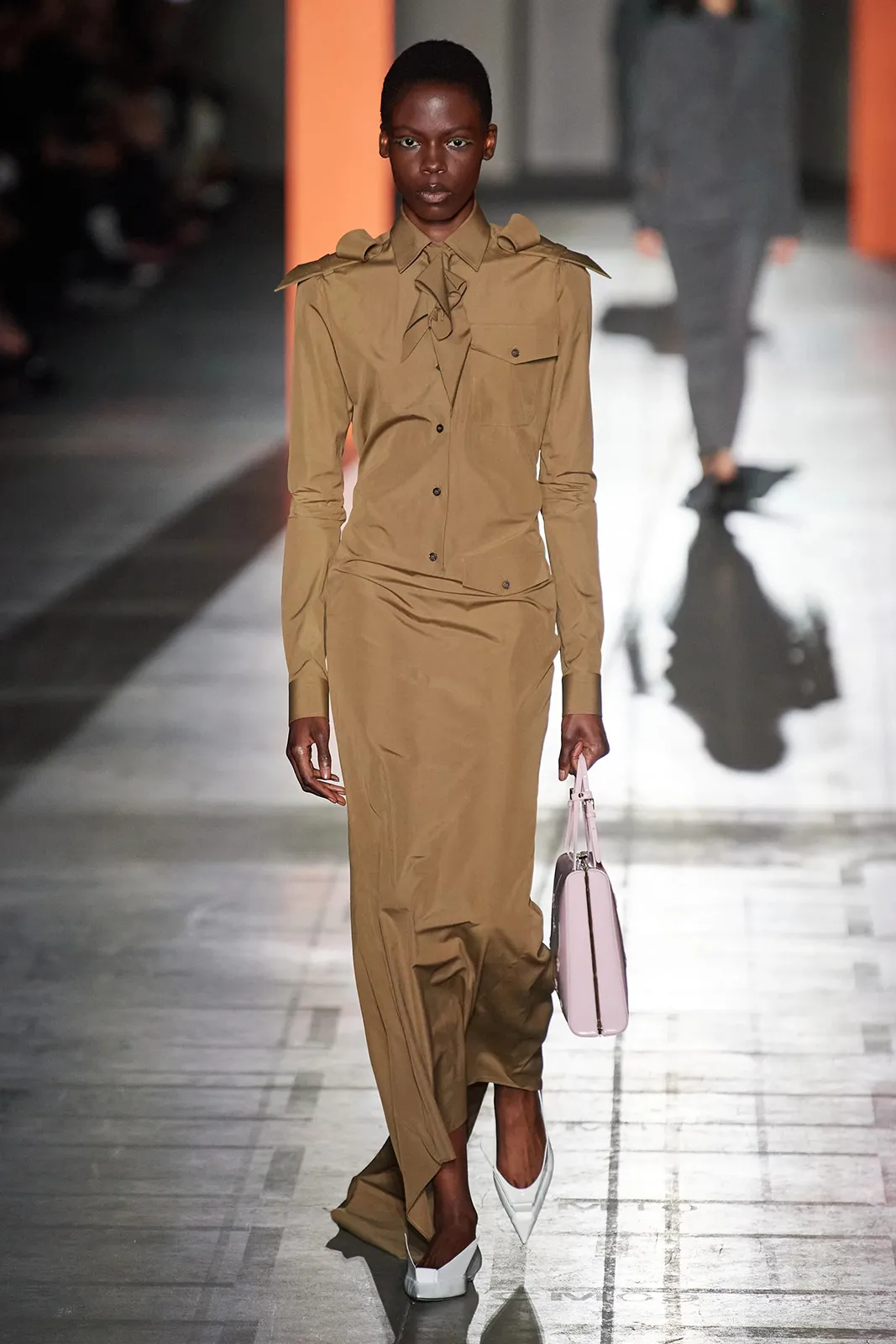
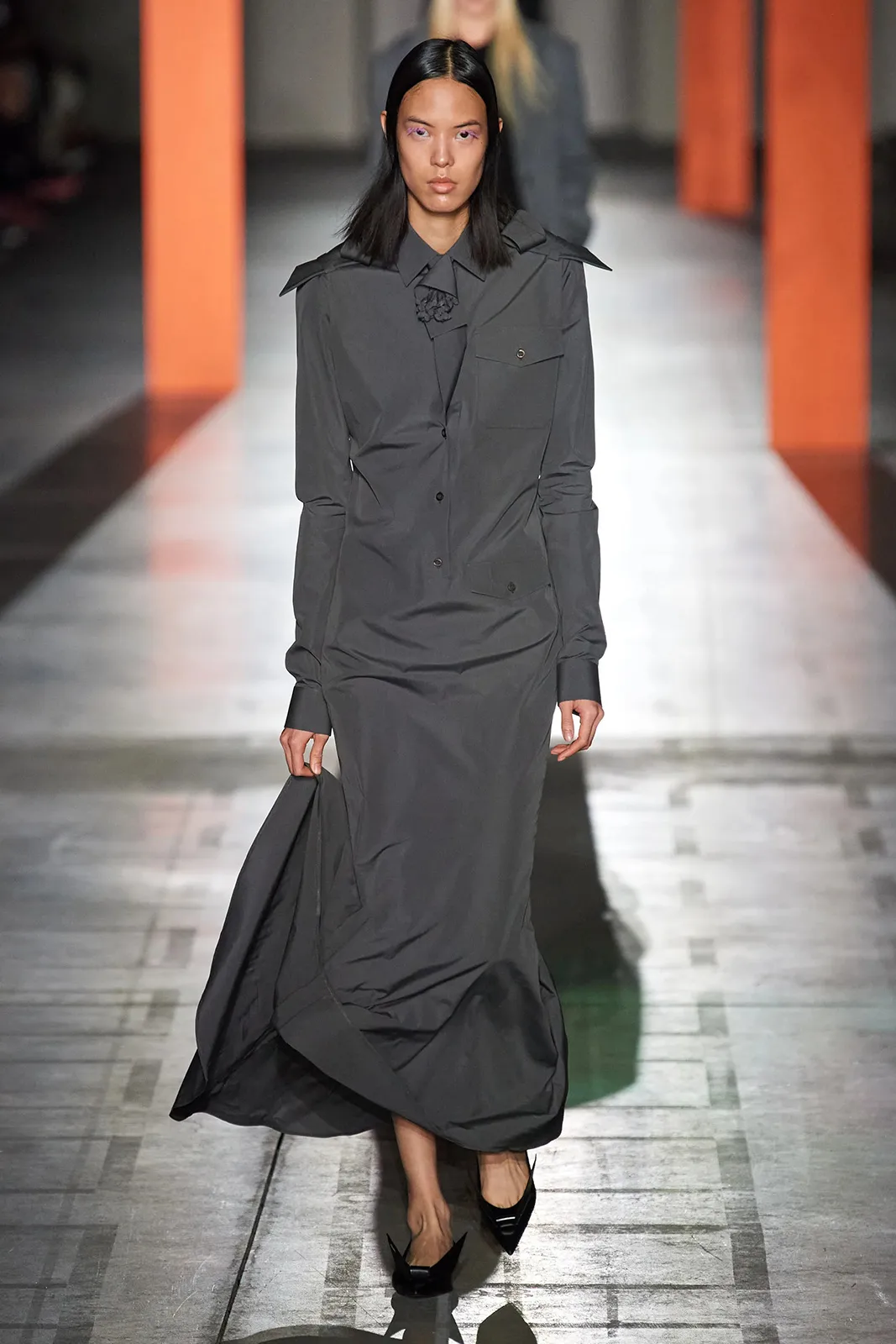
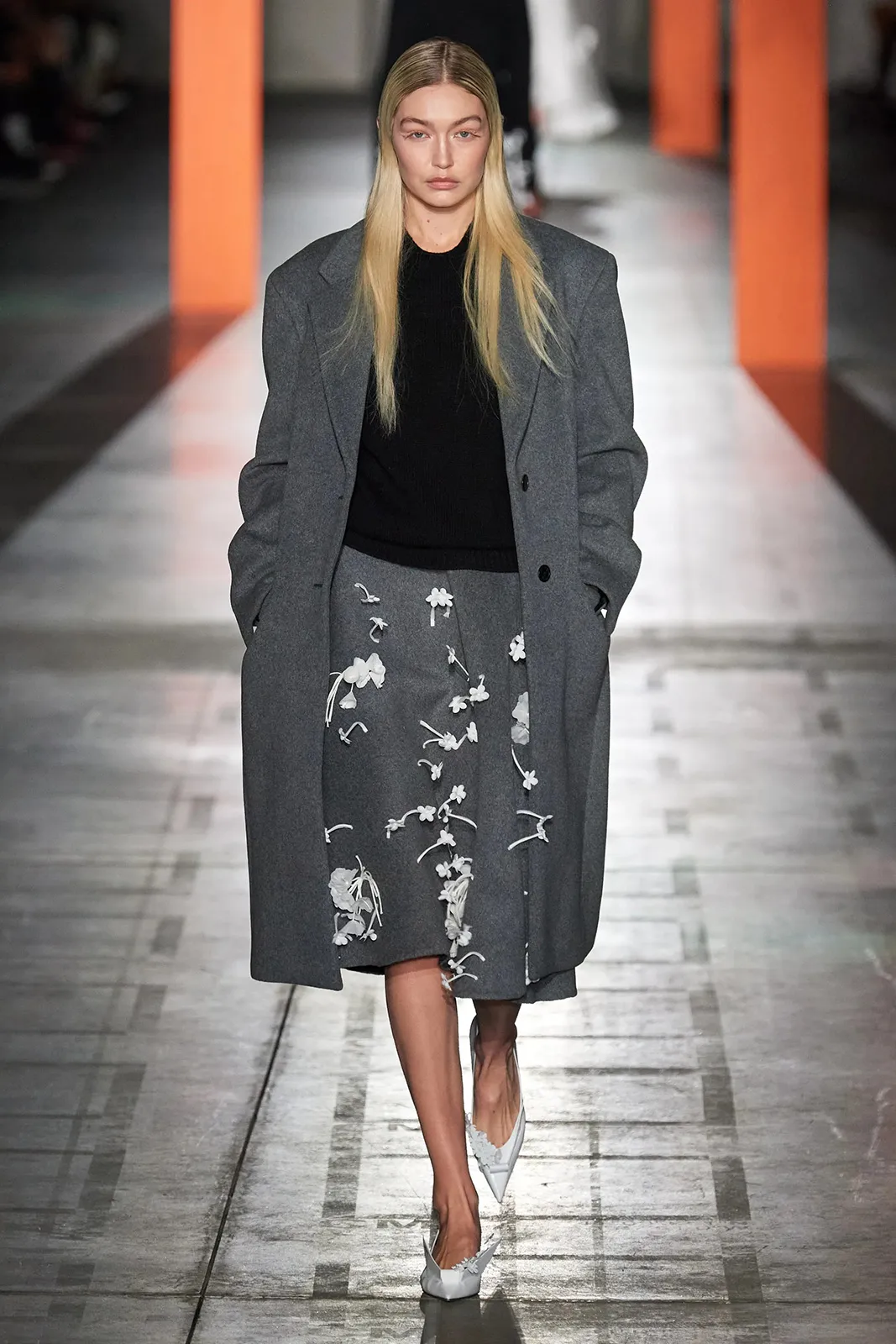
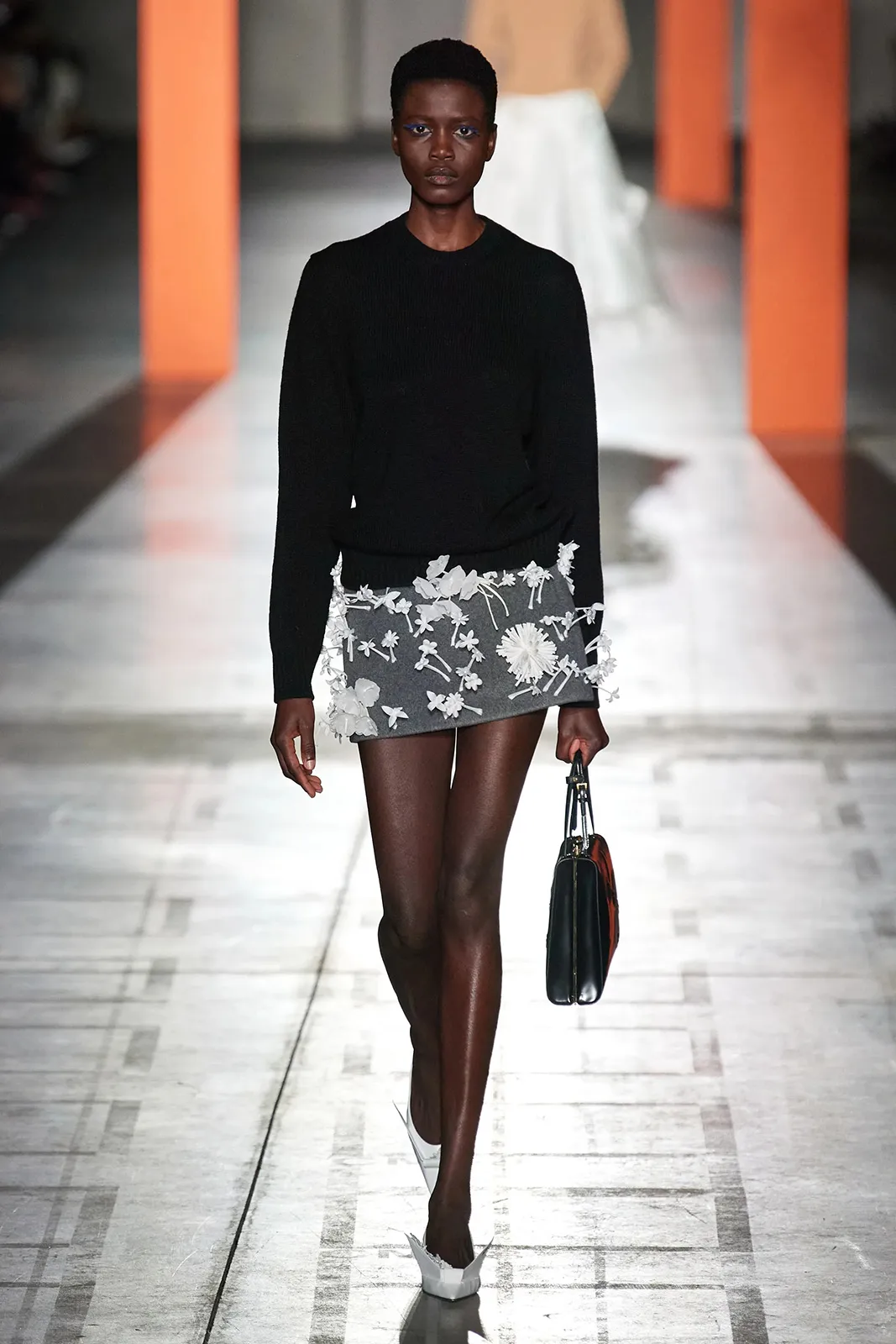
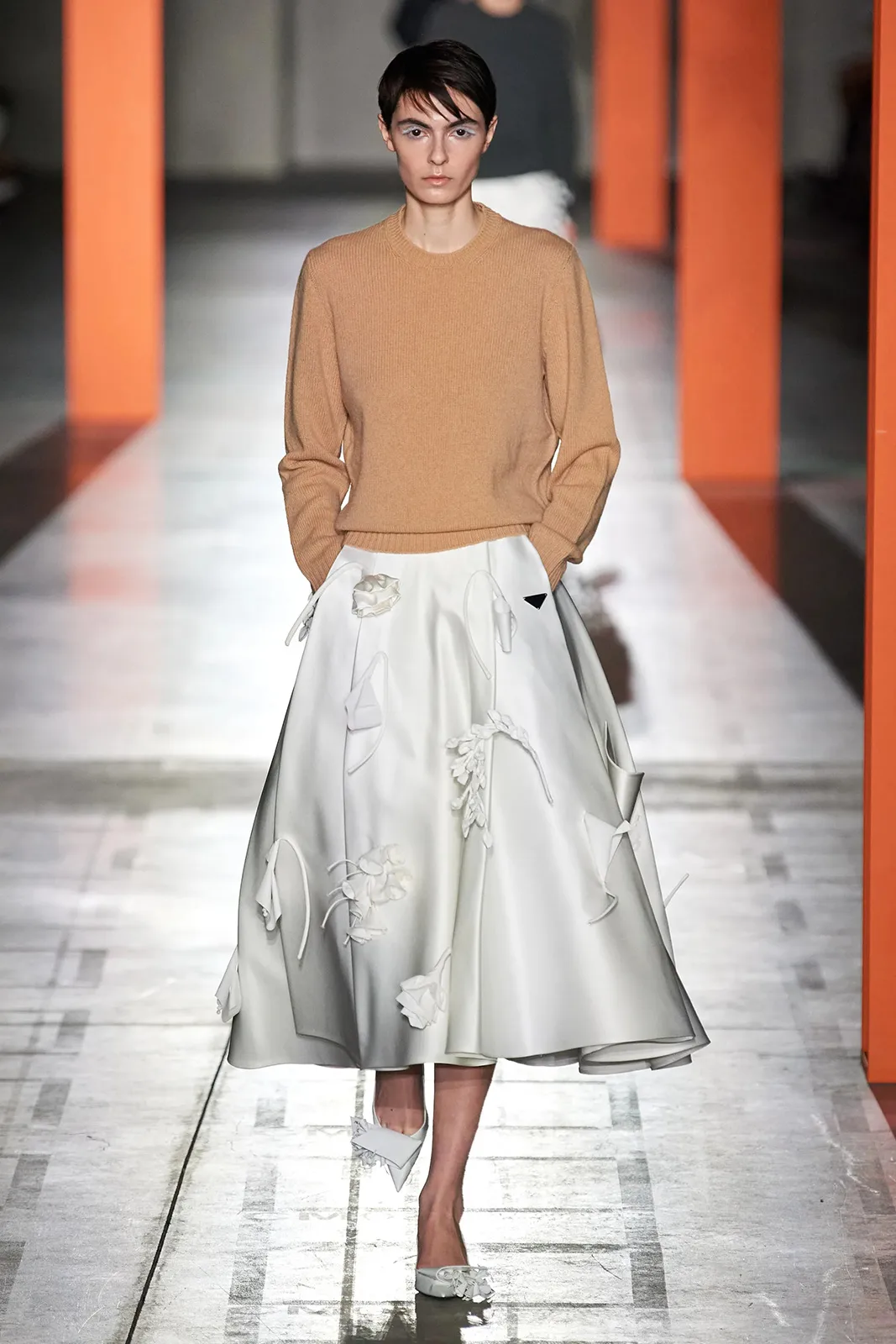
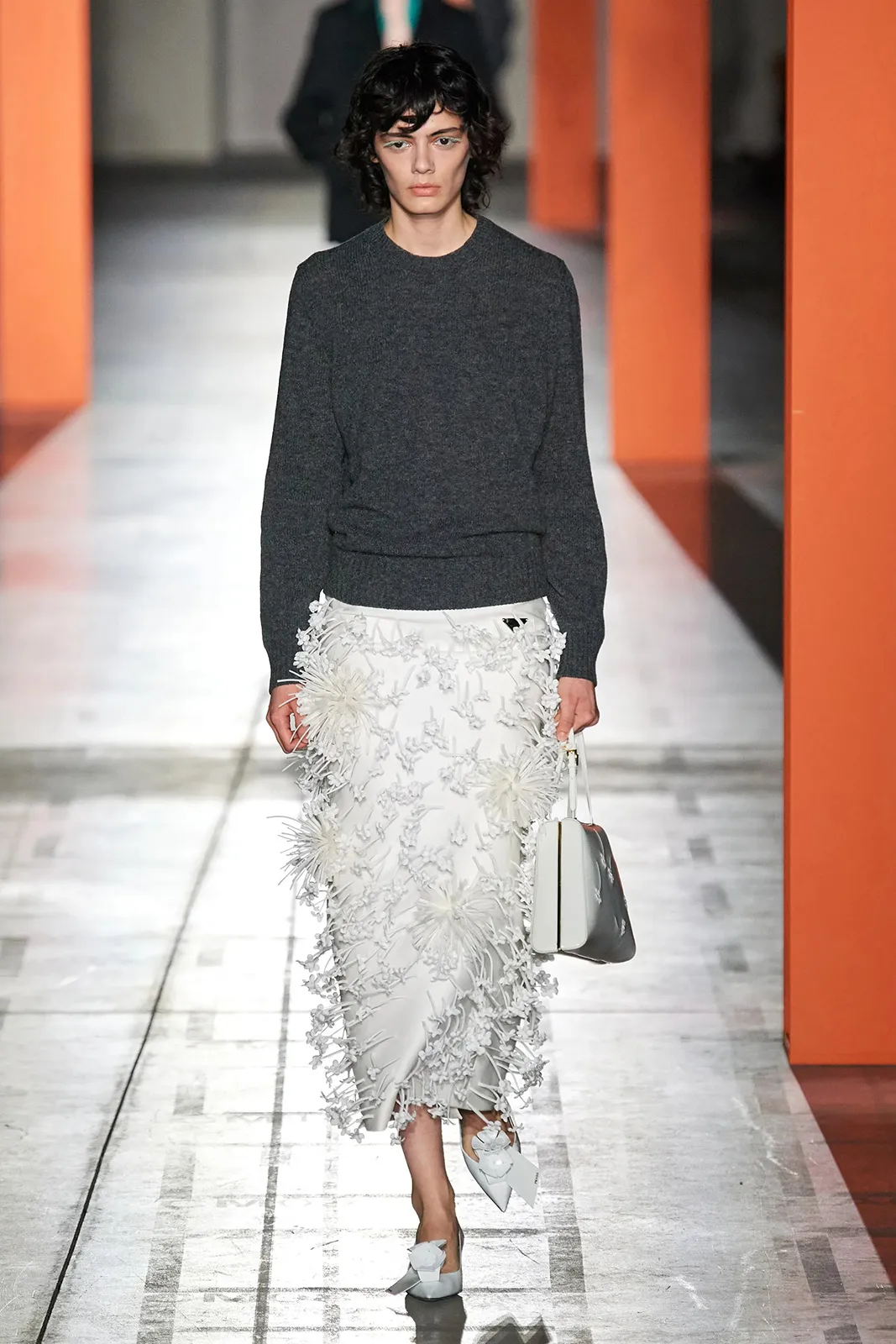
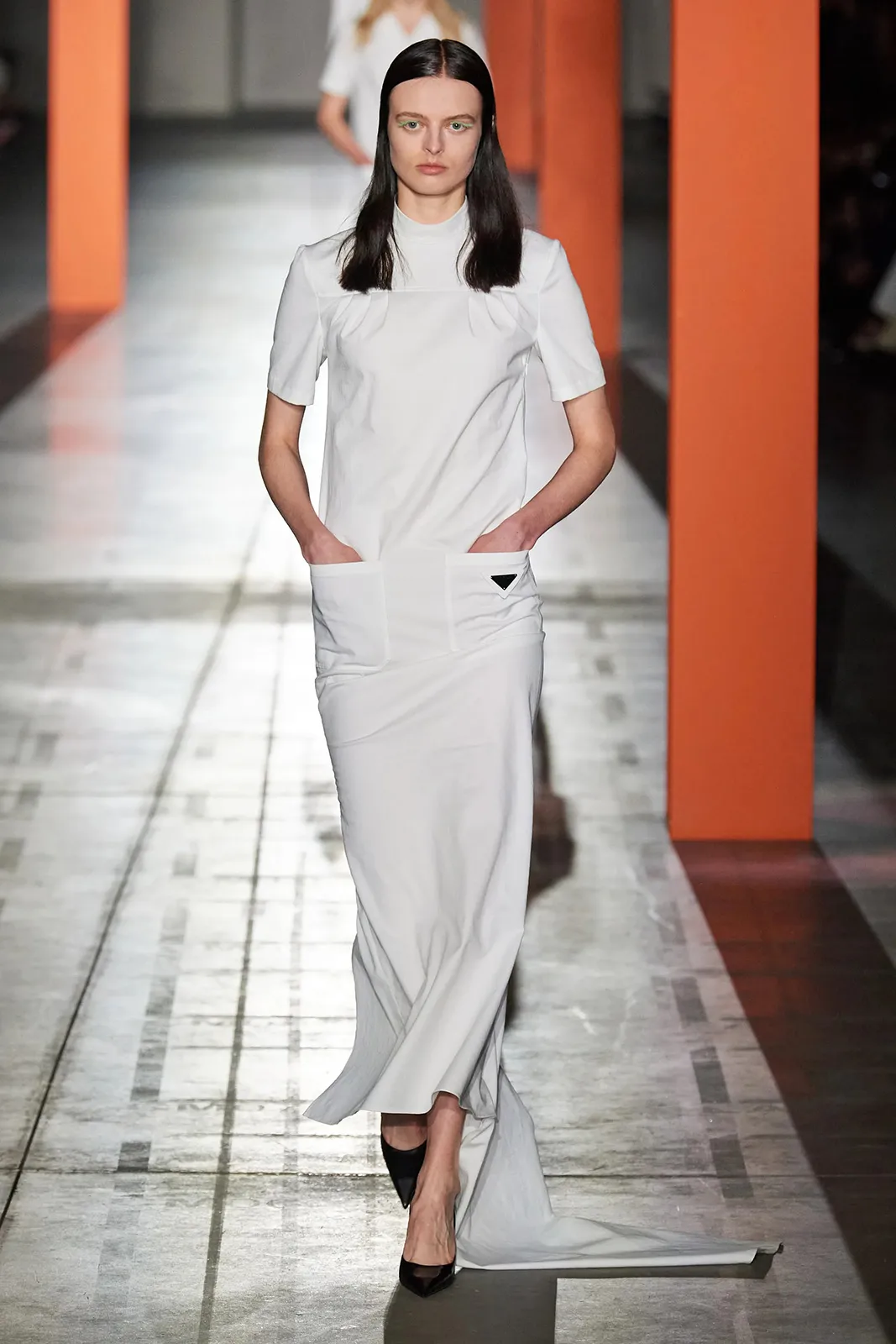
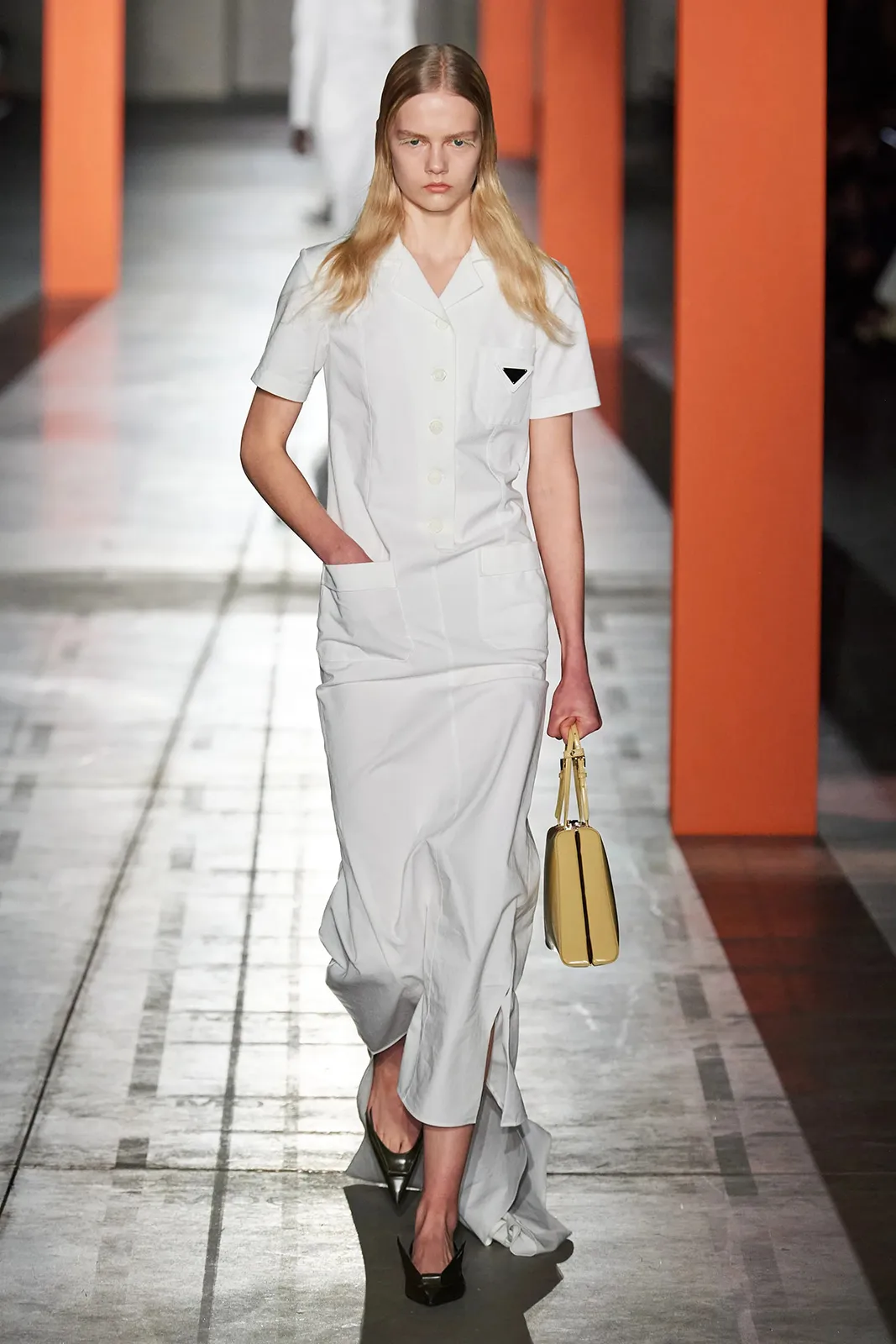
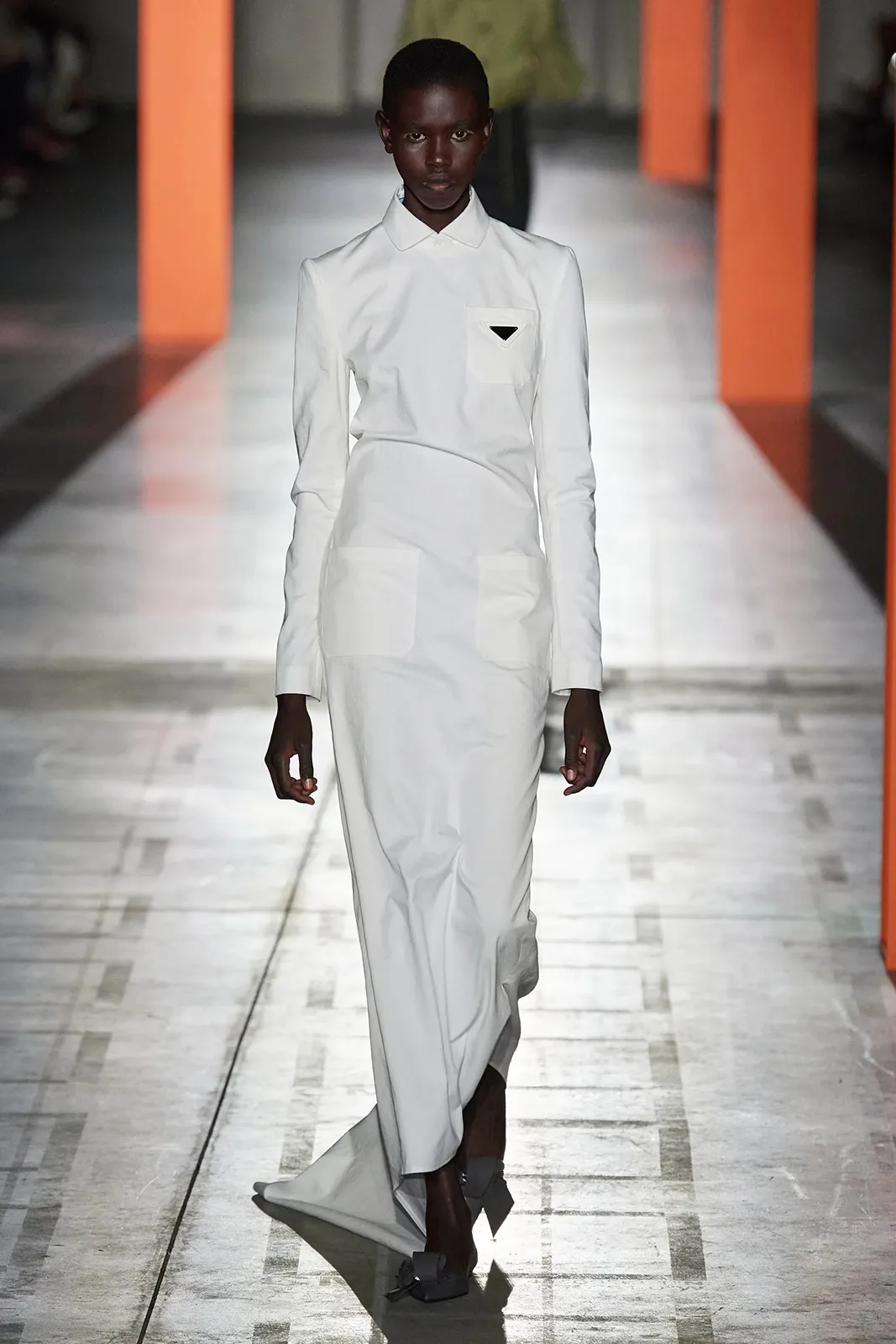
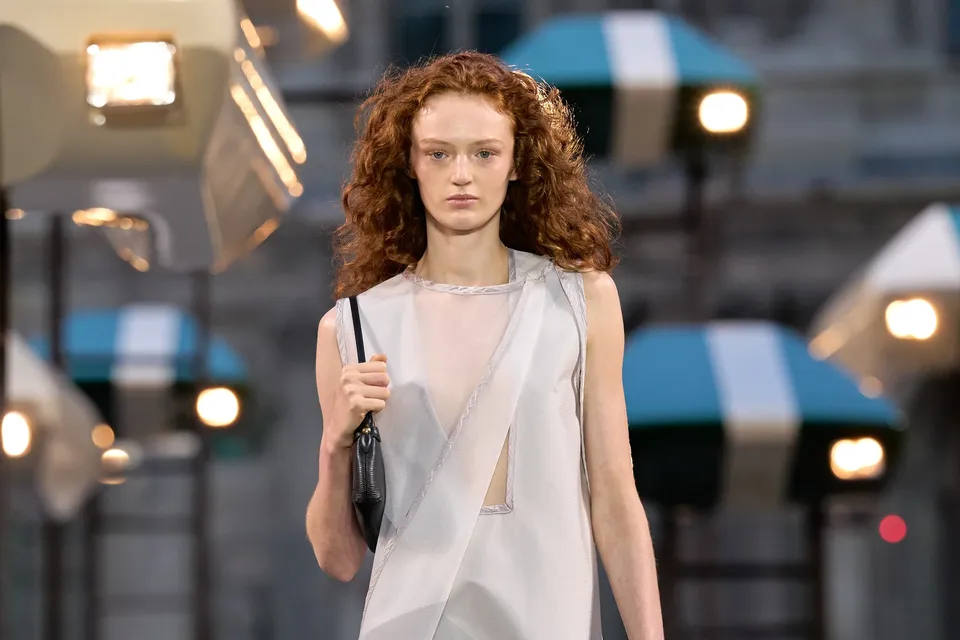
The introductory looks, for example, reinterpreted the traditional elements of a nurse’s wardrobe, by incorporating ivory fabrics, which bloomed with three-dimensional flowers and techniques associated with wedding dresses whilst military shirt-dresses came smartly buttoned to the collar and yet made elegant by flowing fishtail trains. The interweaving of “everyday and occasion-wear, the familiar and the exceptional” as illustrated in the press release gave “a different importance to both.” Accessories too tapped into this utilitarian spirit, triangular, structurally shaped bags, hung strictly by the model’s sides as they made their way down the catwalk and neckties connoted the idea of sharp military uniforms.
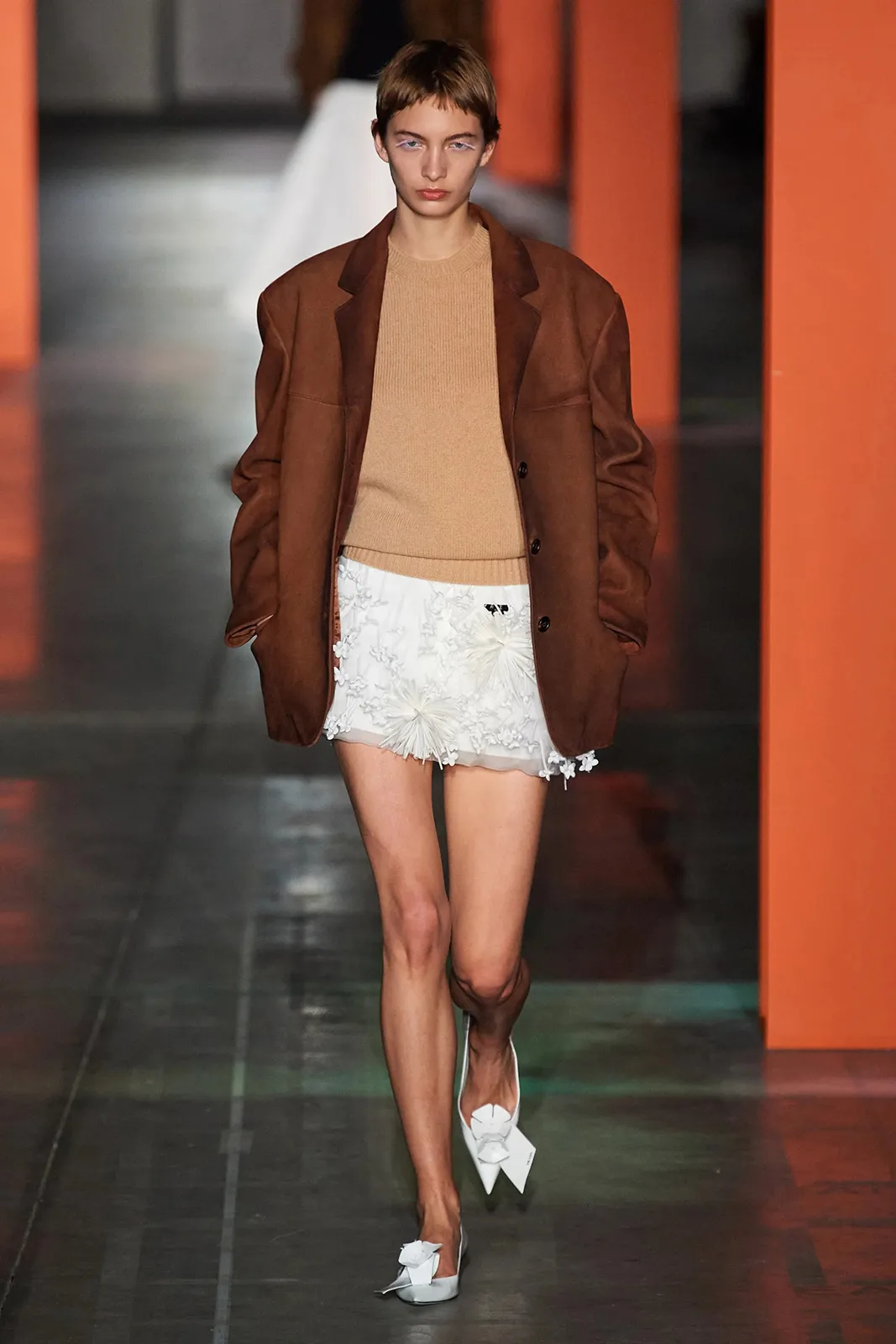
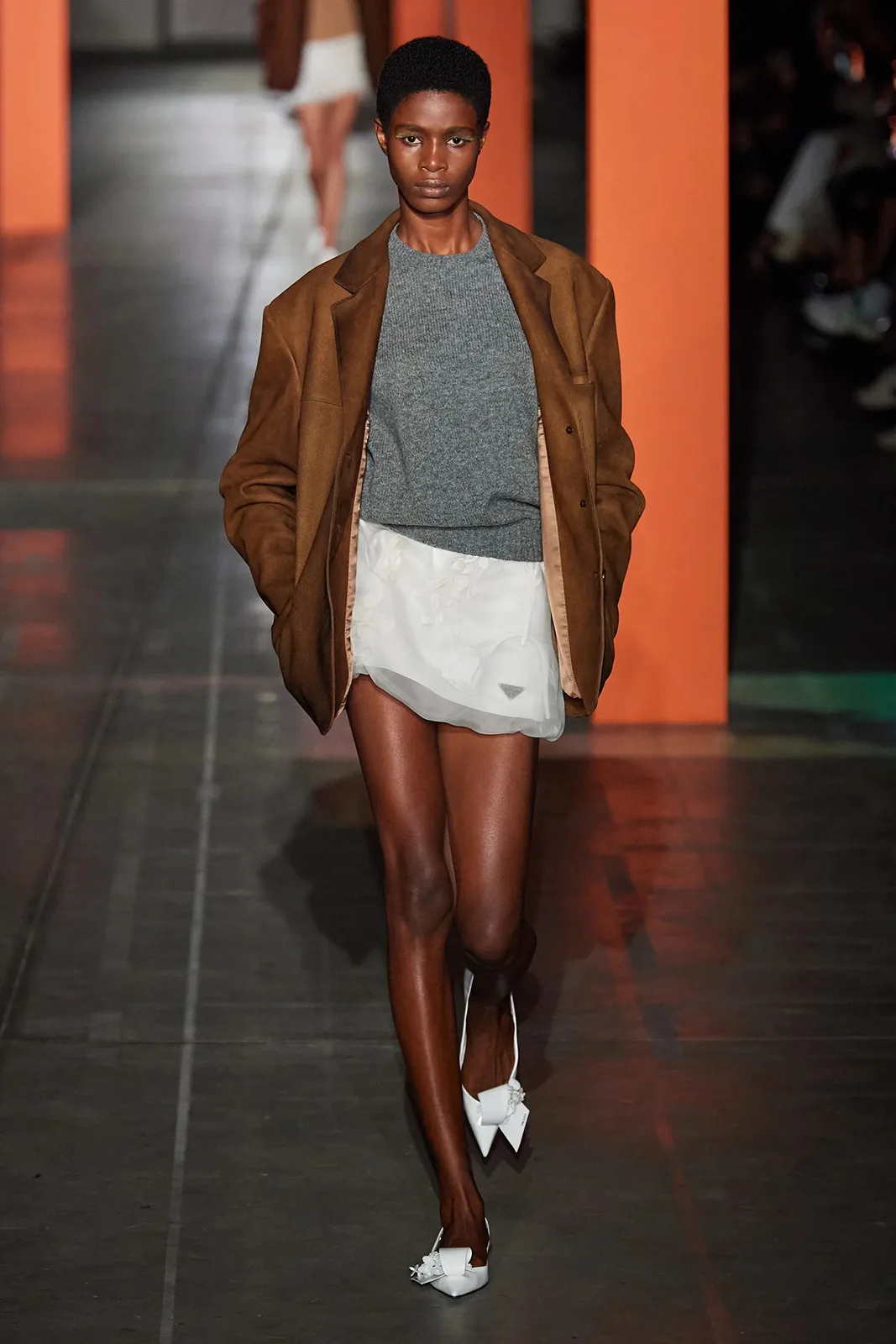
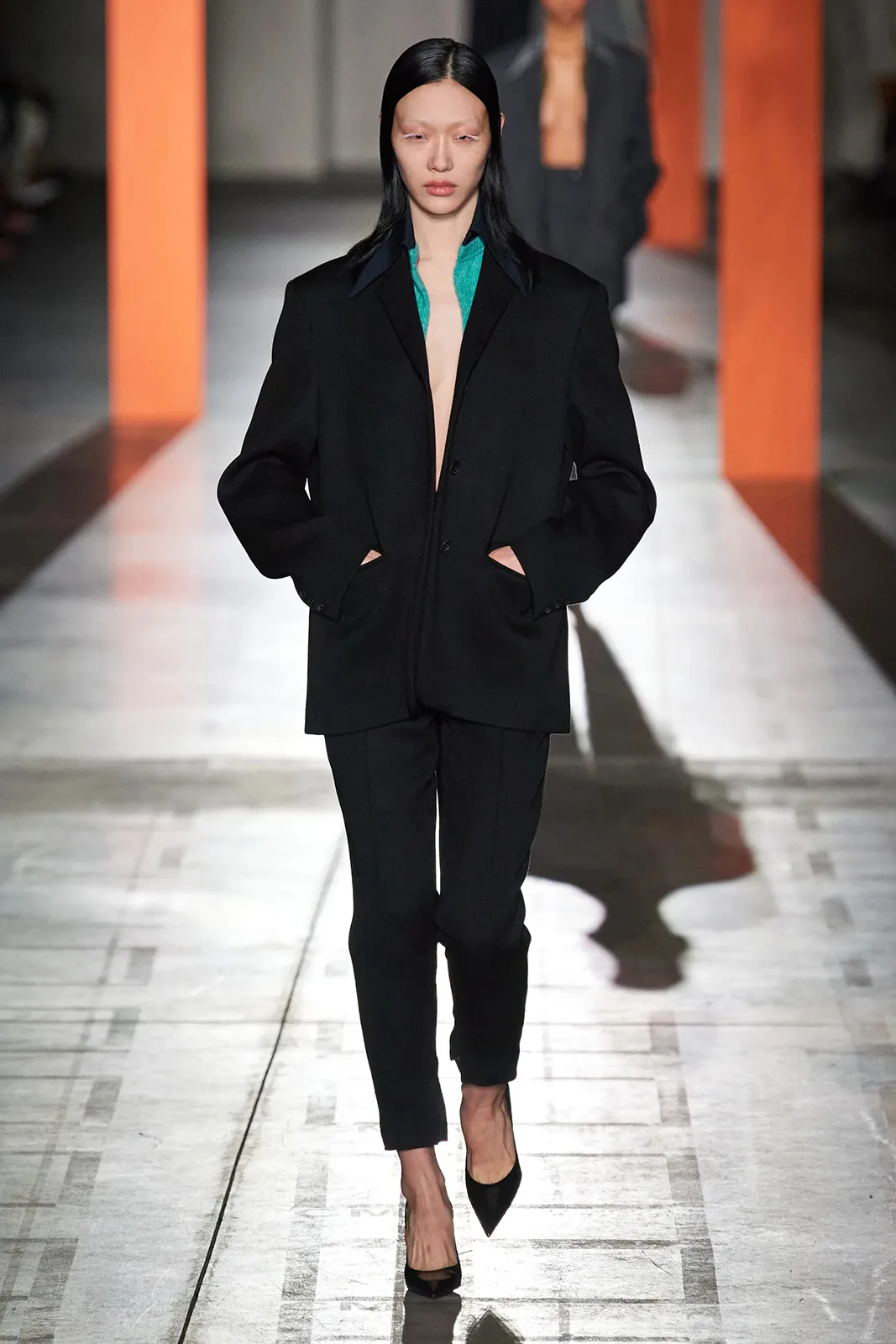
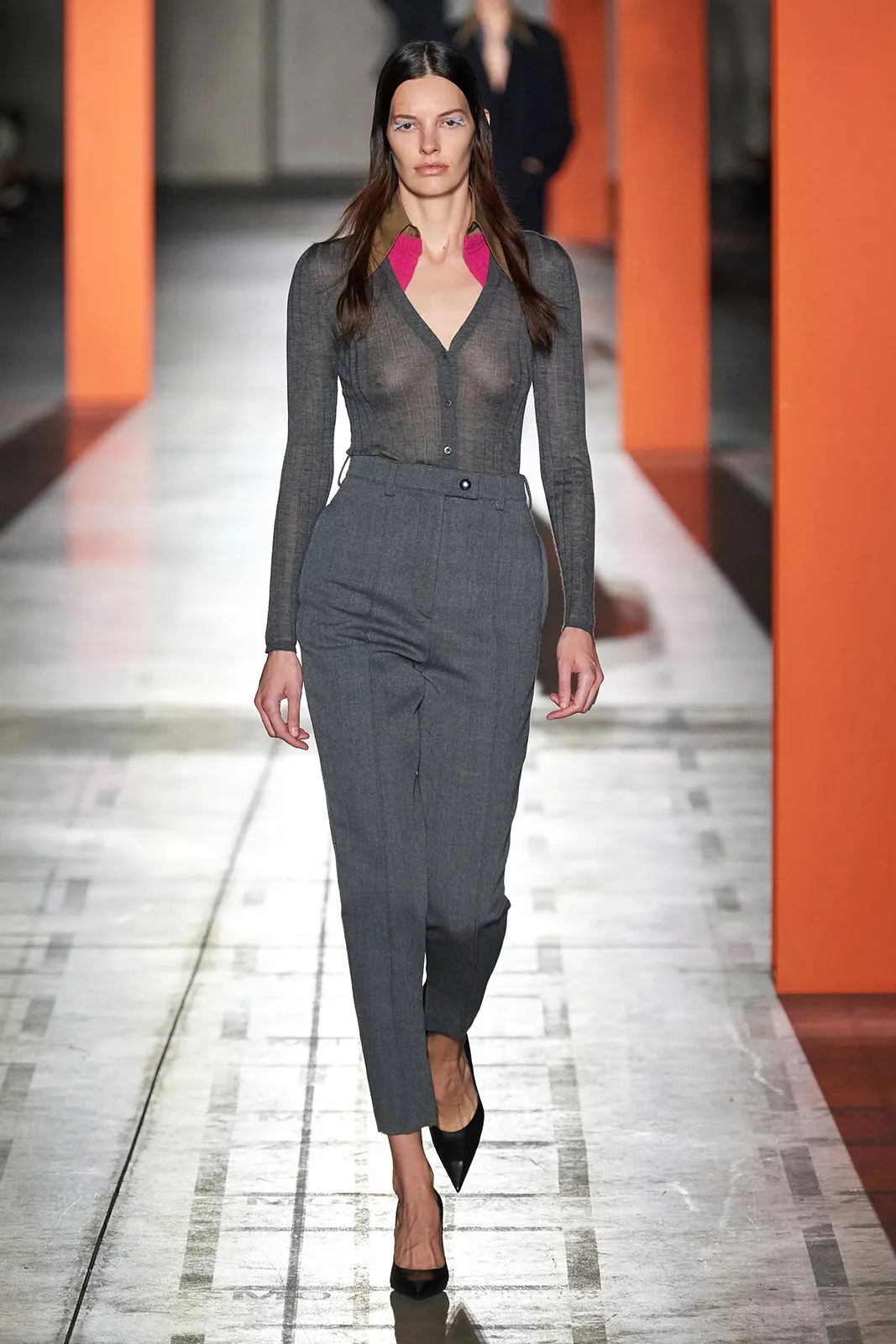
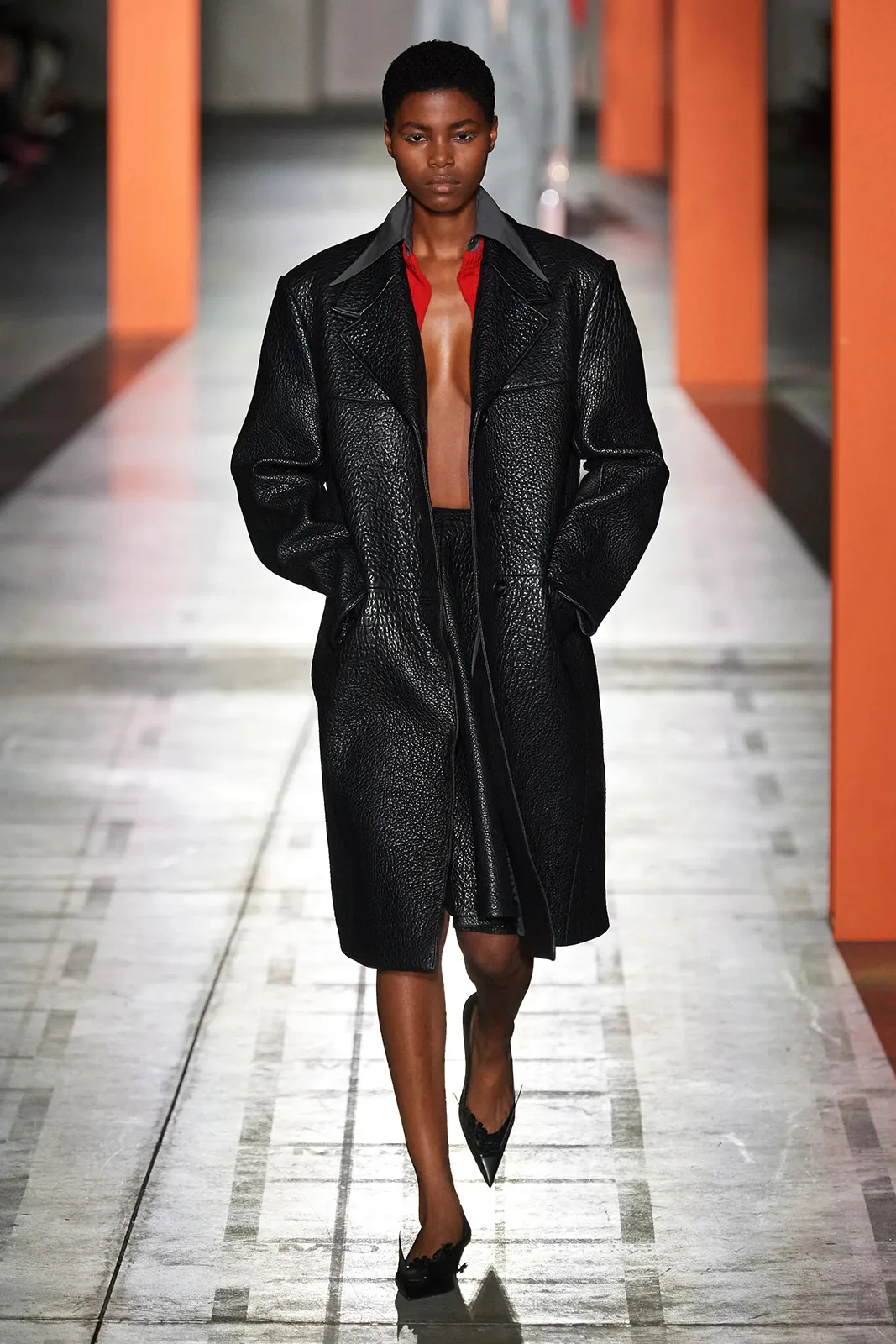
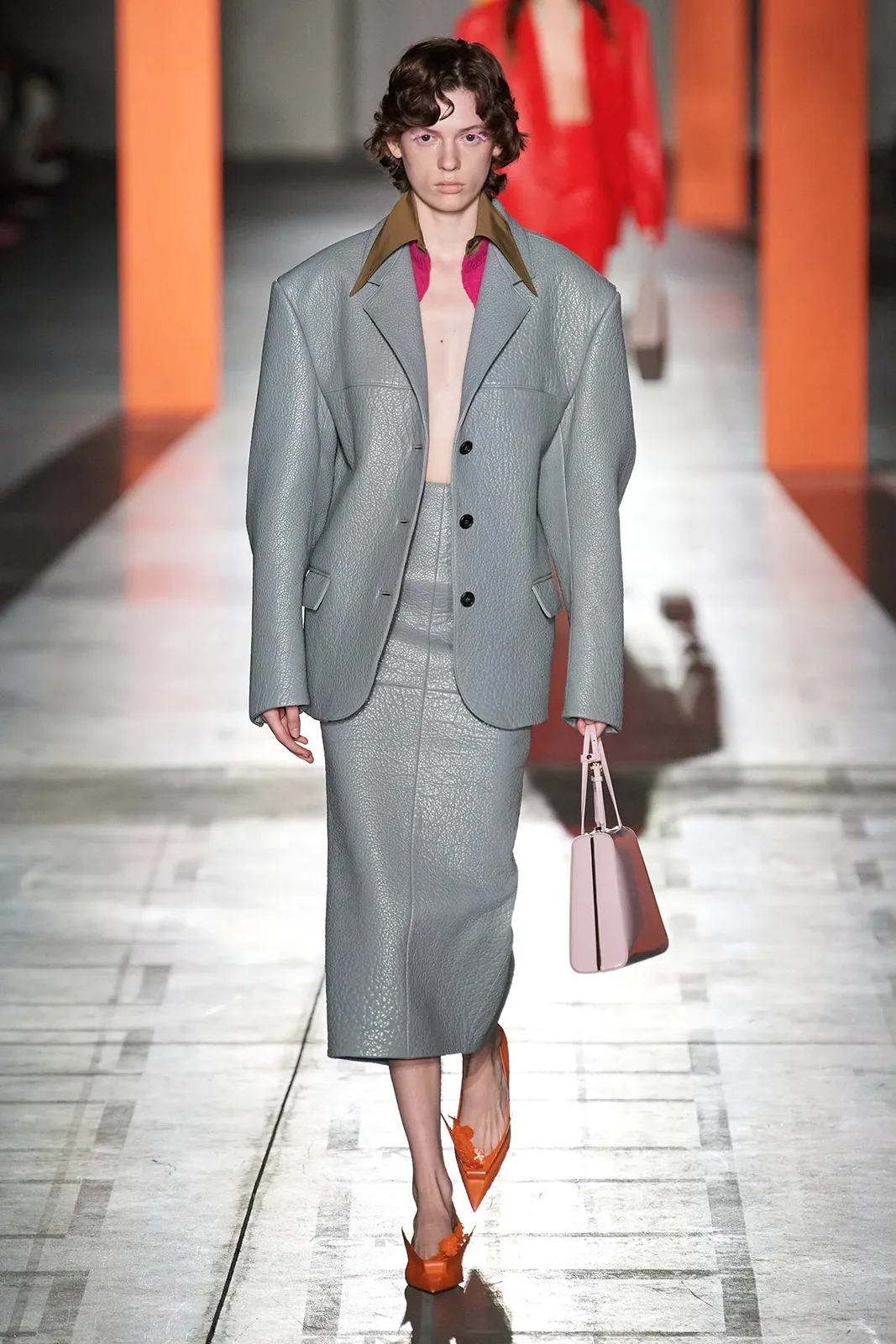
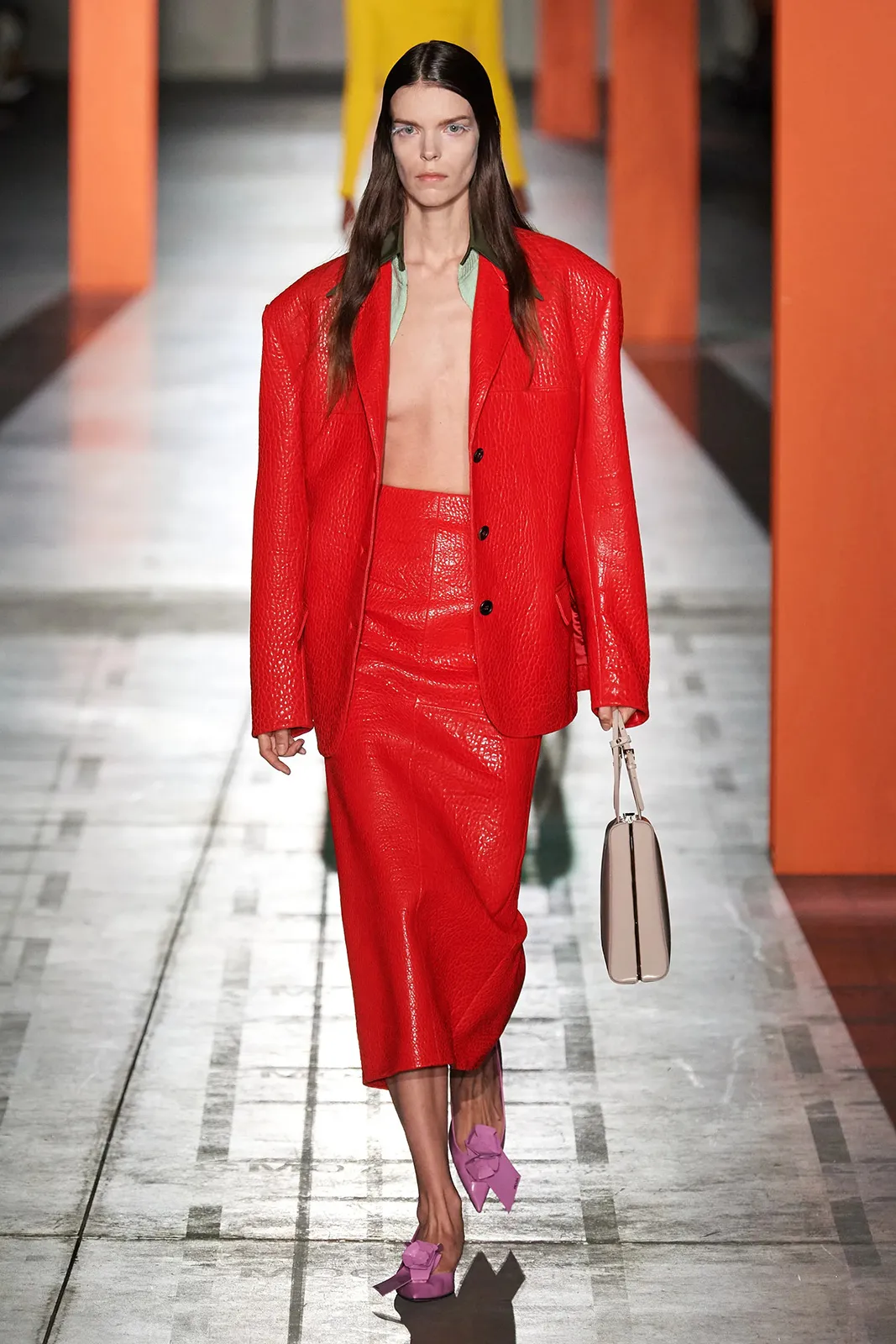
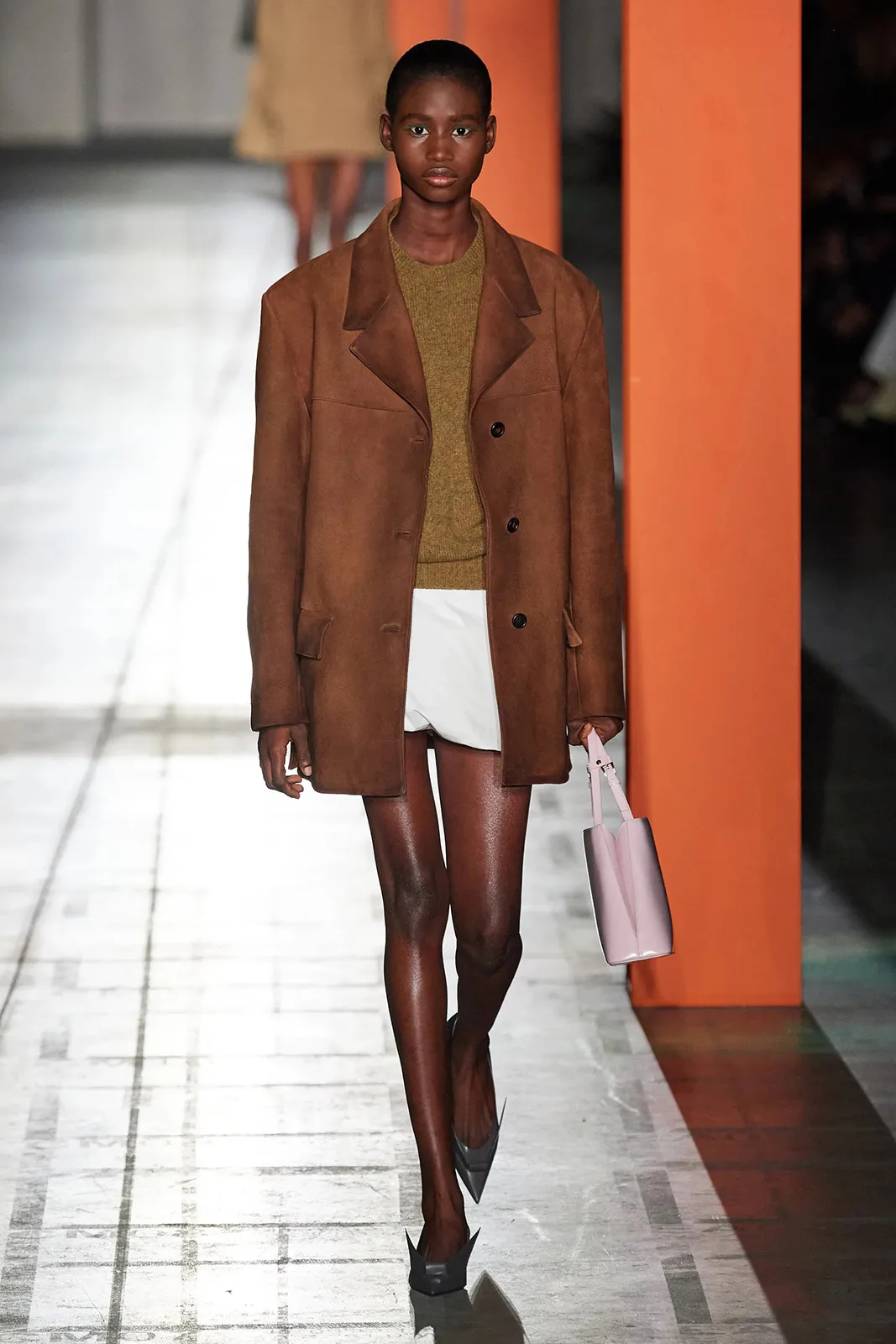
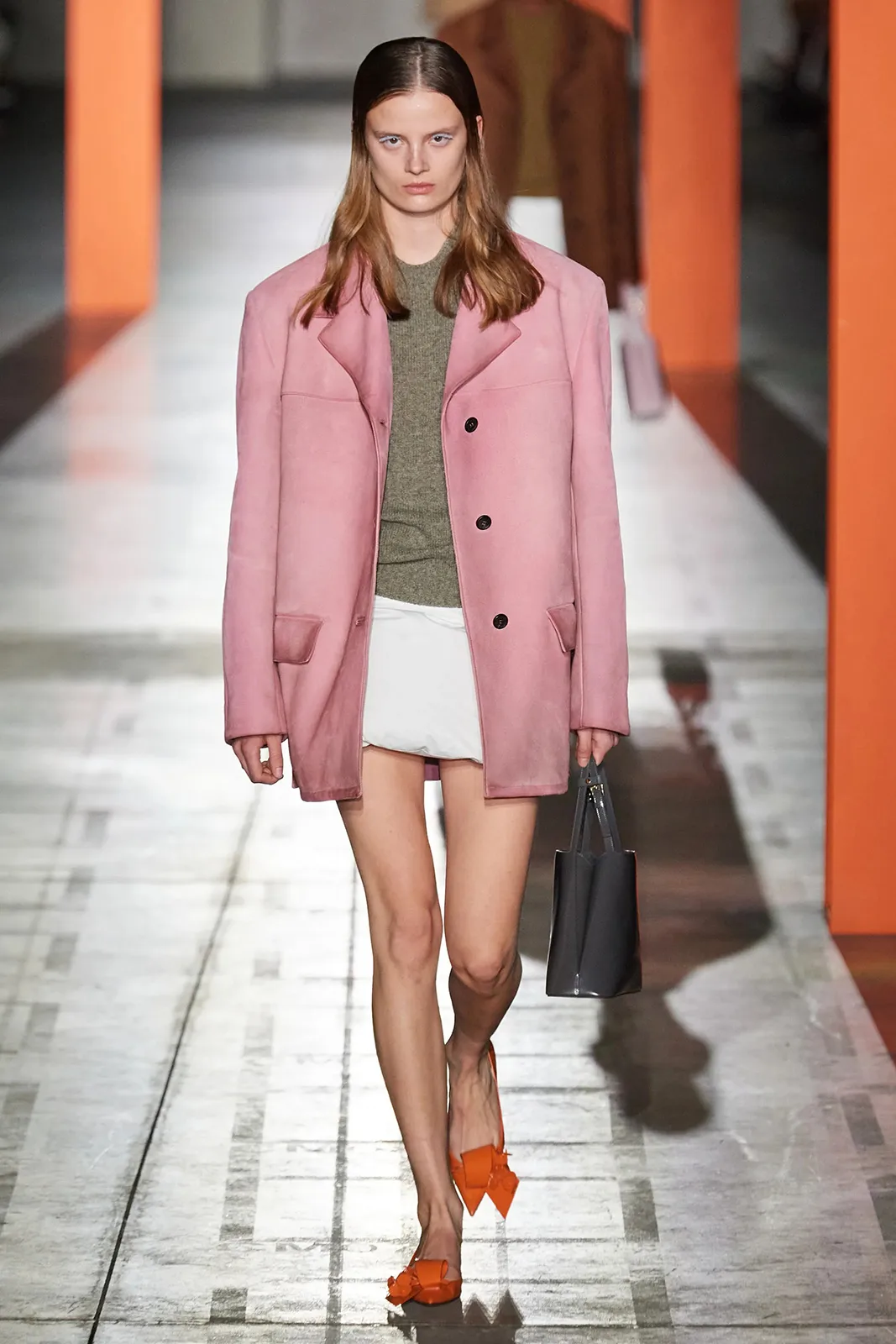
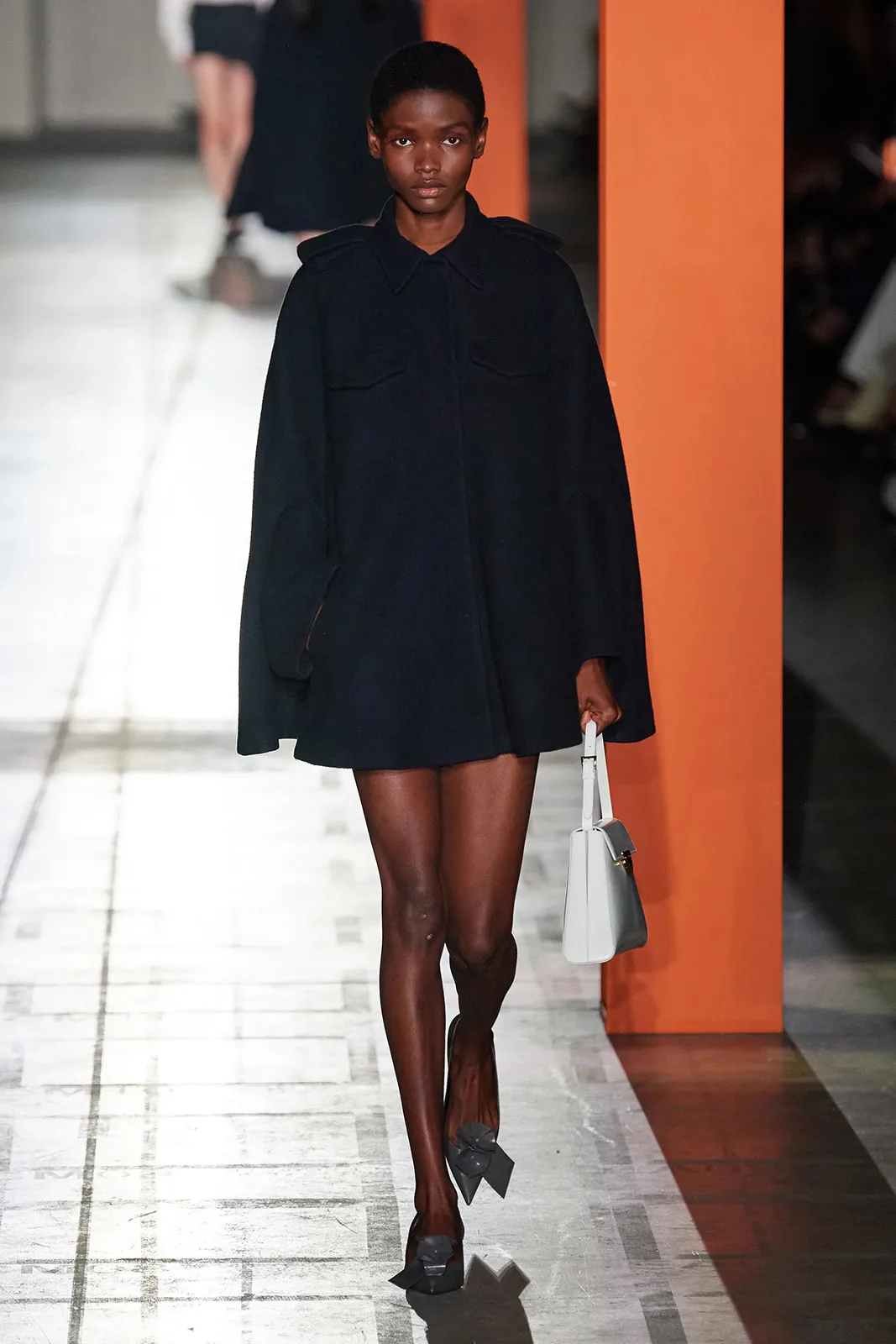
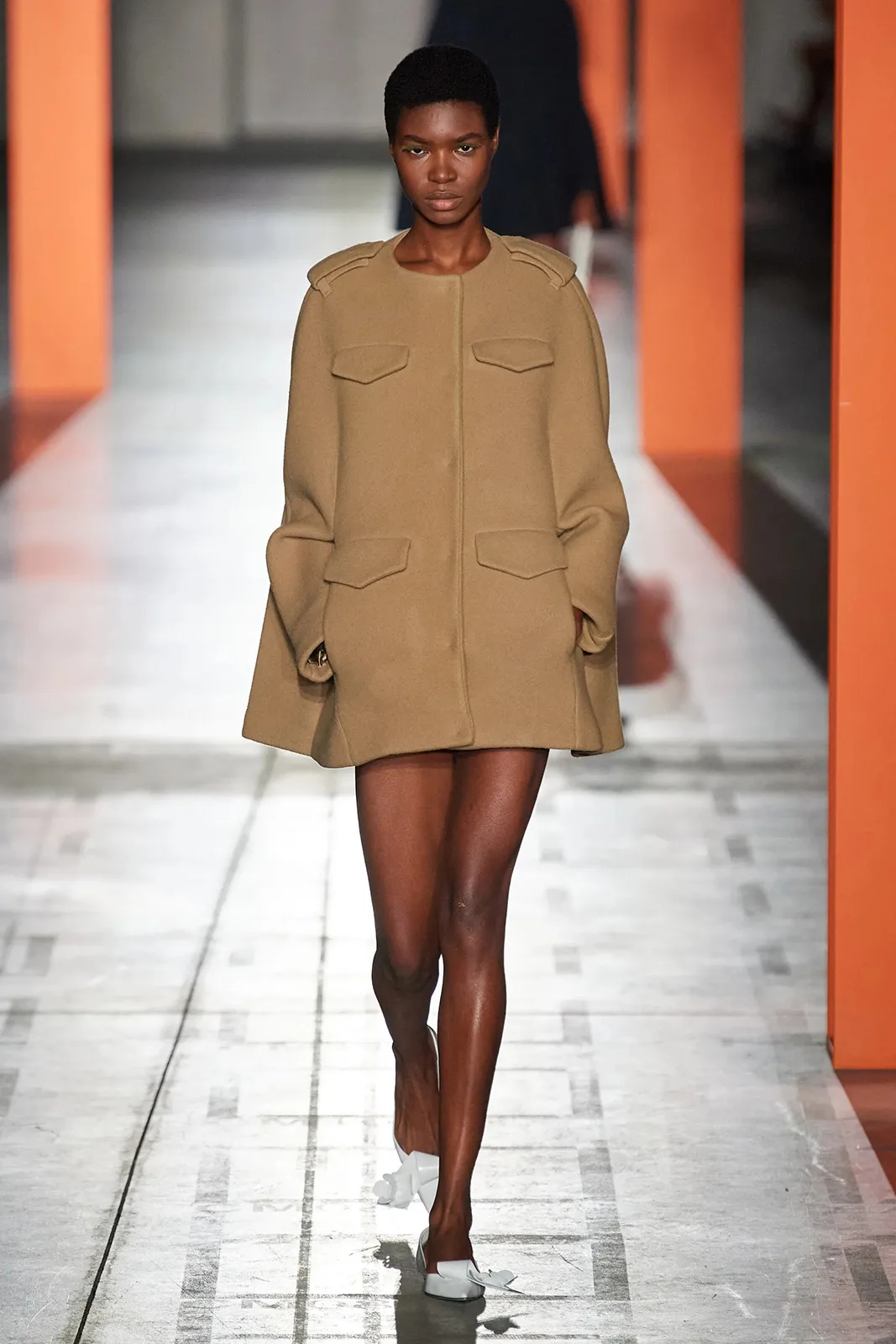
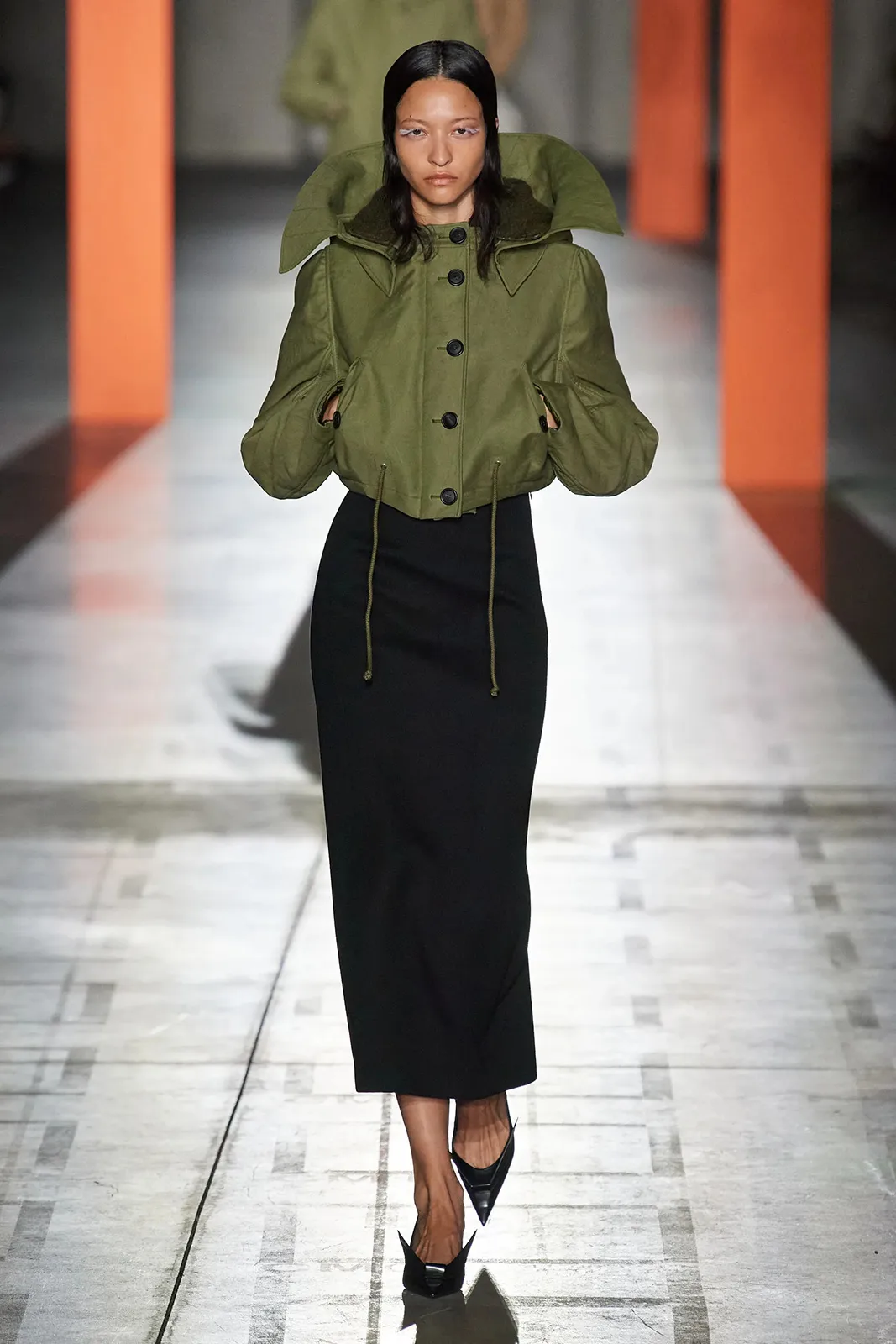
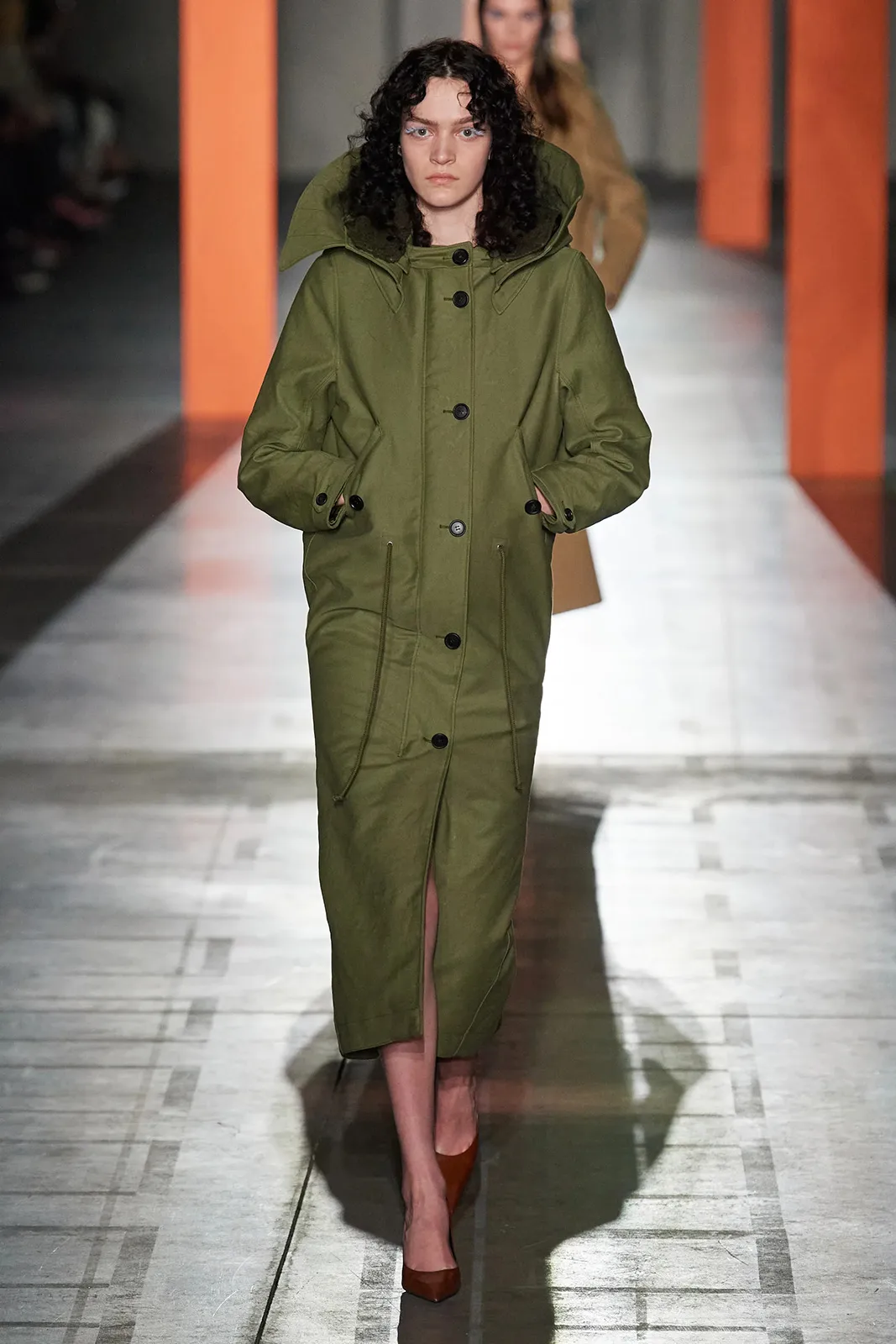
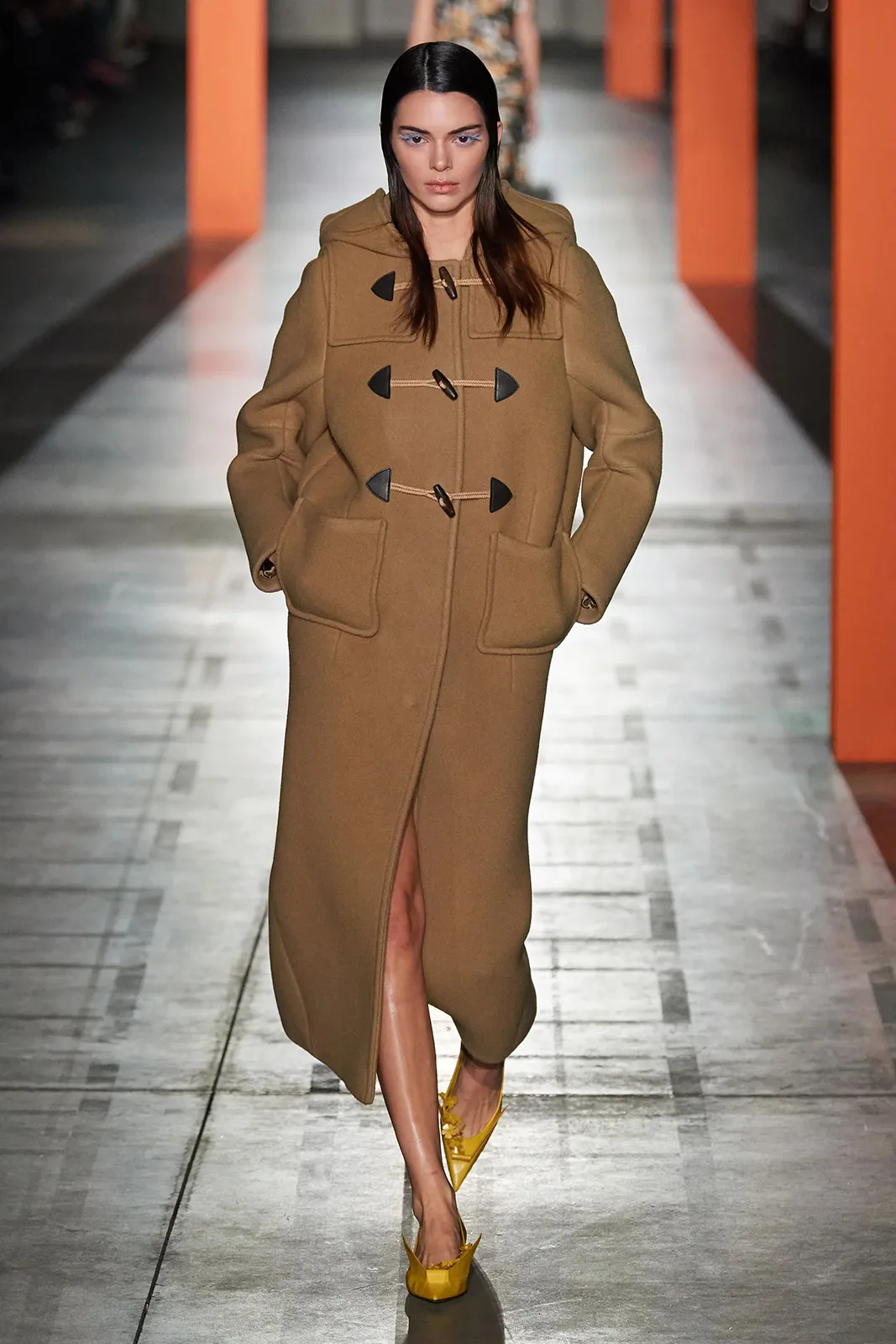
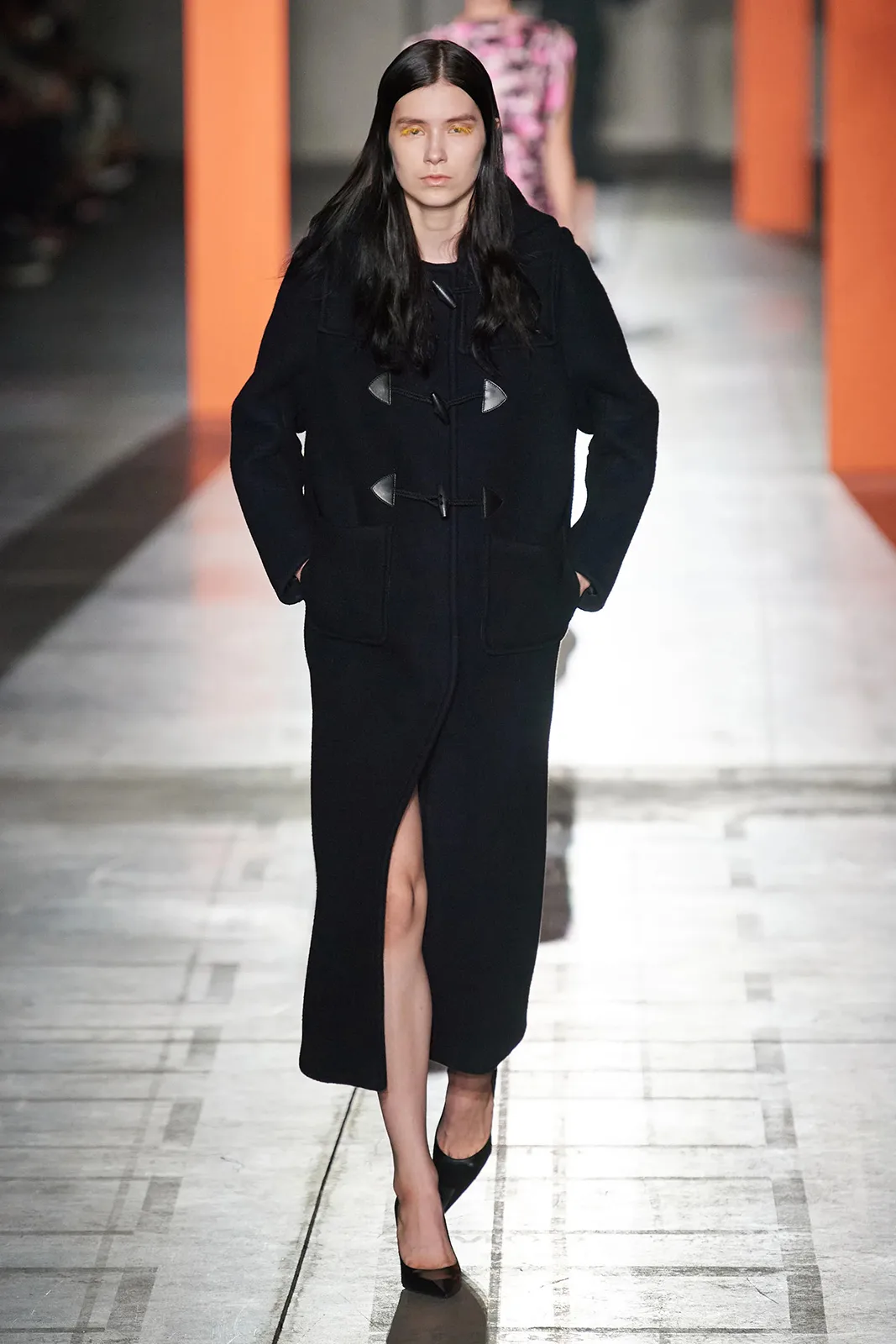
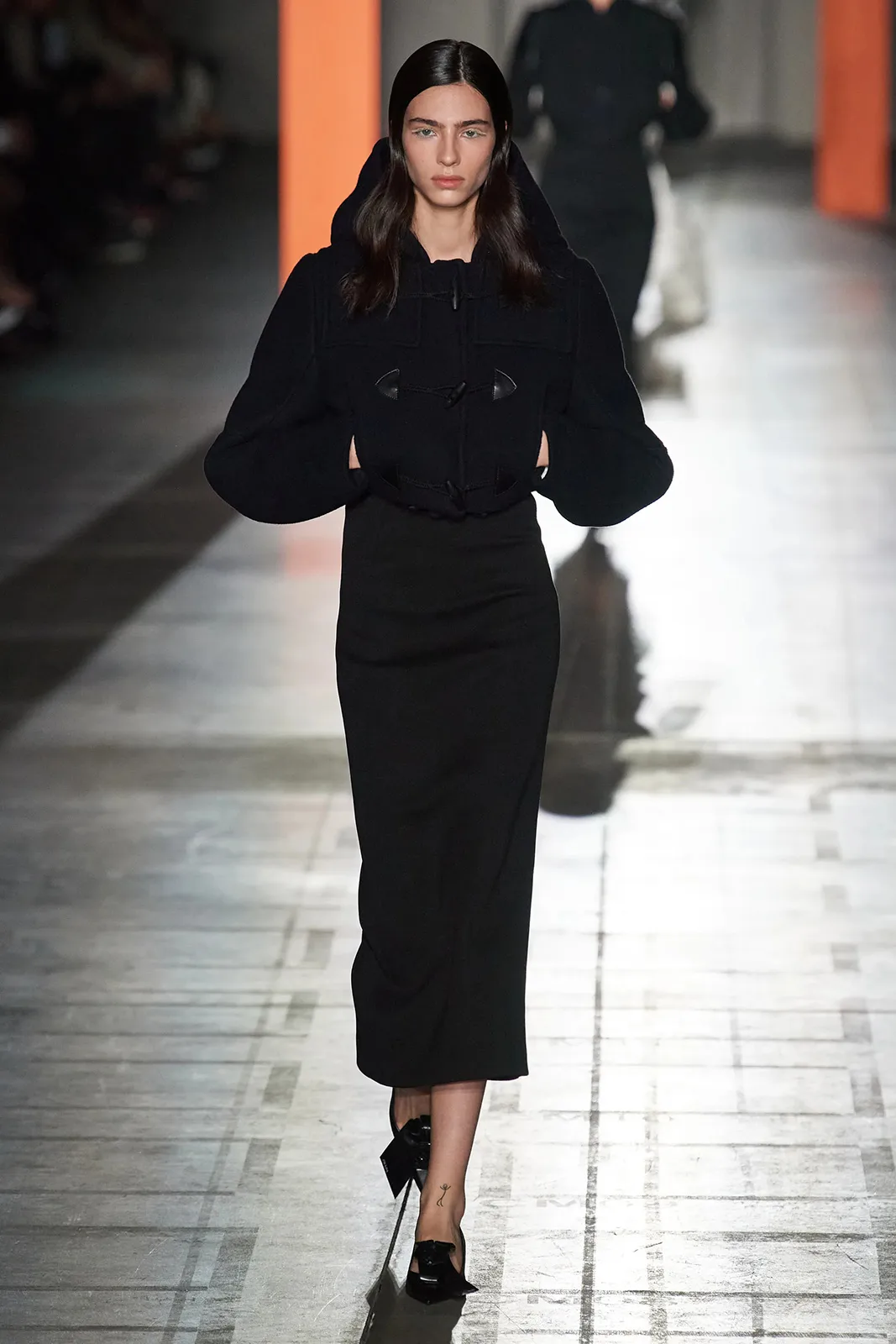
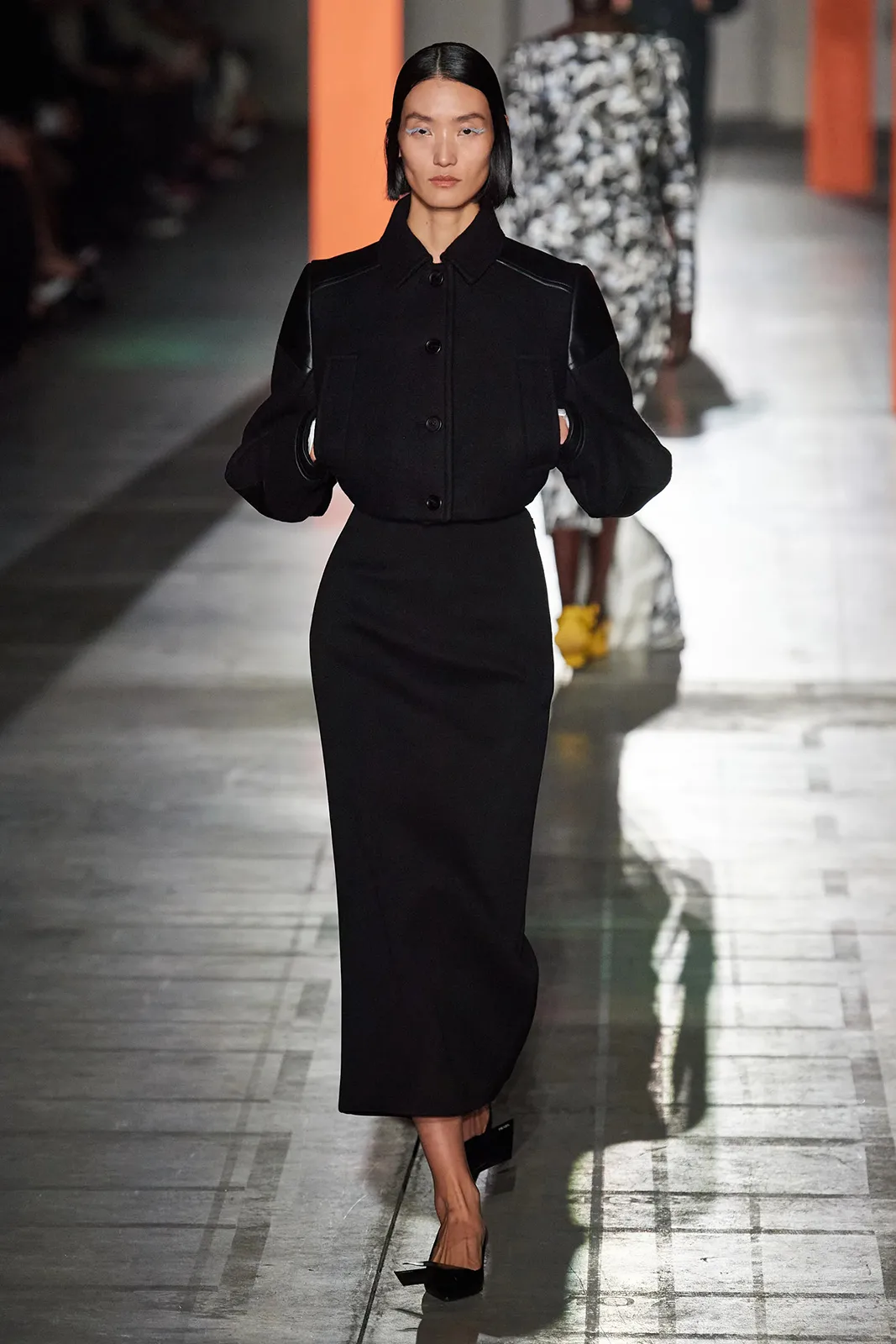
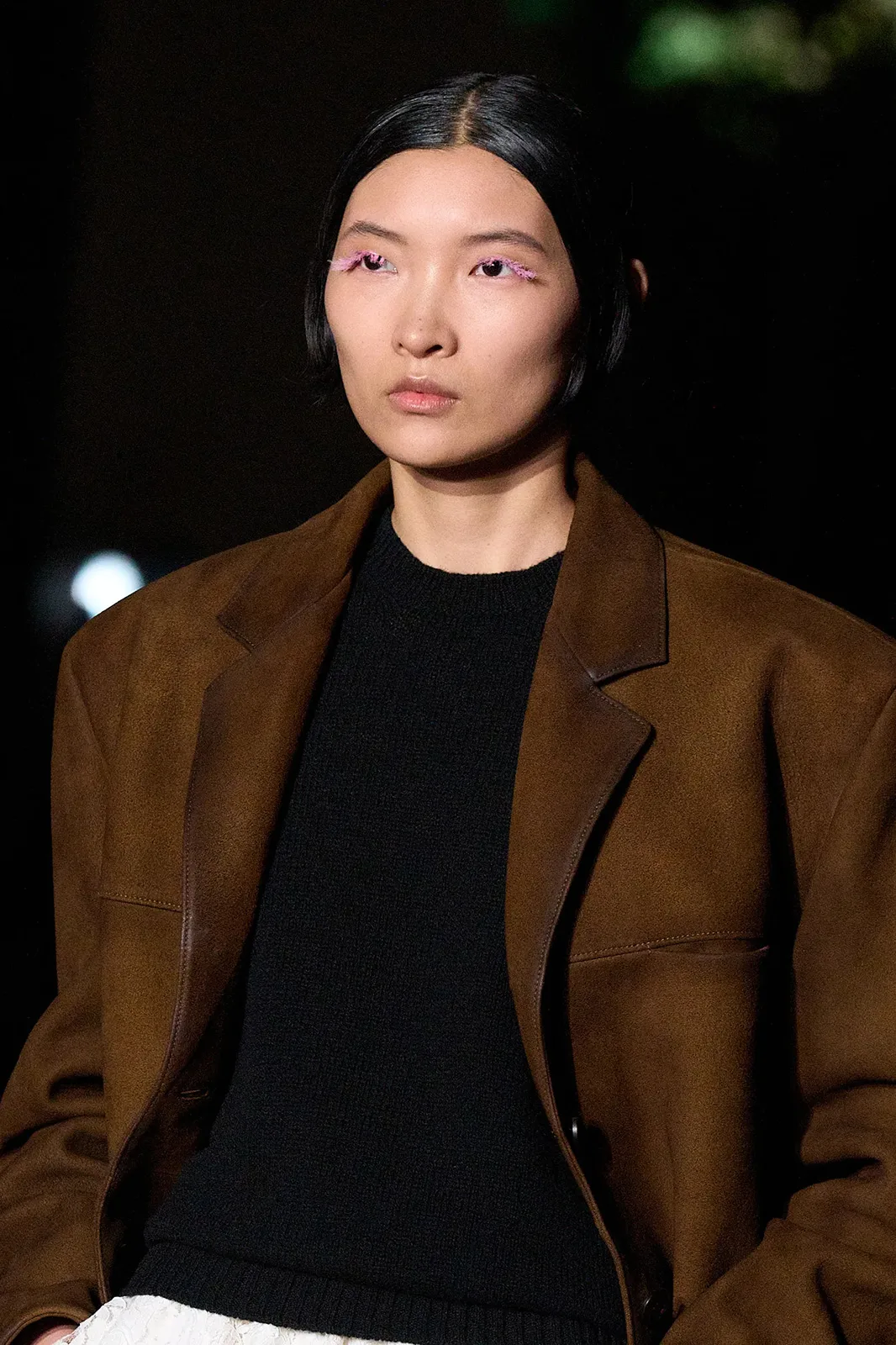
Another focal point of the presentation was its outerwear, for which silhouettes had been taken, translated and transformed from the male wardrobe, classical blazers crafted out of suede arrived on the runway in oversized proportions, tailored outerwear introduced in a palette of muted colours reflected the corporate spirit to which Prada is synonymous, army-green jackets and indigo toggle coats were made elegant, and both warms and down-padded safeguards reflected the notion of clothing being a tender cocoon of safe-keeping for the human form.
In keeping with this philosophy, the fifty-four-piece collection was presented to an audience, inside the Fondazione Prada, where a ceiling in motion alternatively amplified and reduced spatial dimensions whilst waterfalls of cascading lilies, imperceptible in their entirety unless the observers of the show looked up, flowed from the tops of orange pillars. Against this landscape, models navigated the space dressed in silhouettes which simultaneously paid homage to the everyday heroes who inspired them, from nurses to military personnel, and the beauty of care, of love and of reality to which these same uniforms and their wearers are ultimately associated.
The introductory looks, for example, reinterpreted the traditional elements of a nurse’s wardrobe, by incorporating ivory fabrics, which bloomed with three-dimensional flowers and techniques associated with wedding dresses whilst military shirt-dresses came smartly buttoned to the collar and yet made elegant by flowing fishtail trains. The interweaving of “everyday and occasion-wear, the familiar and the exceptional” as illustrated in the press release gave “a different importance to both.” Accessories too tapped into this utilitarian spirit, triangular, structurally shaped bags, hung strictly by the model’s sides as they made their way down the catwalk and neckties connoted the idea of sharp military uniforms.
Another focal point of the presentation was its outerwear, for which silhouettes had been taken, translated and transformed from the male wardrobe, classical blazers crafted out of suede arrived on the runway in oversized proportions, tailored outerwear introduced in a palette of muted colours reflected the corporate spirit to which Prada is synonymous, army-green jackets and indigo toggle coats were made elegant, and both warms and down-padded safeguards reflected the notion of clothing being a tender cocoon of safe-keeping for the human form.