In an exceptionally cohesive season, Italian brands placed their bets on the quality of garments and the importance of techniques, thought, and care for the craft while tapping back to the past in search of inspiration and reference, some in a nostalgic and melancholic way, and others with a rational and realistic approach. With an extensive calendar, there are many options to choose from. This is our selection of the best of the best.
Marni
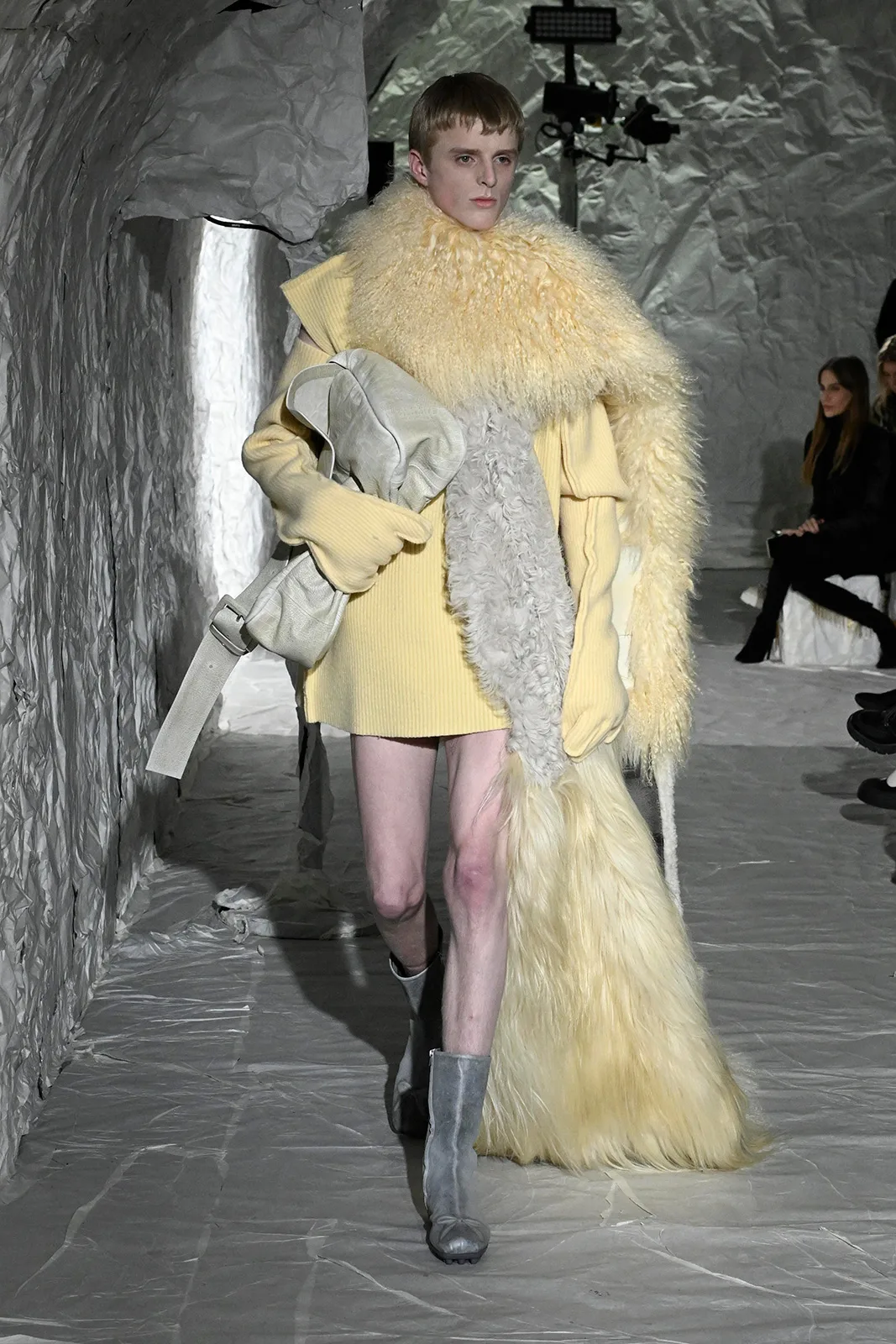
This season, Marni came back to its native country to deliver what was probably the best show of this Milan Fashion Week. Tapping into a core part of his life –his childhood–, Francesco Risso found that the most primal and childish emotions can also be the most genuine. Reminiscing about the particular freedom of creation during the early years, when there were no such concepts as garments, style, or even fashion, and it all summarises in translating your internal world using colours, shapes, and textures, Risso used this collection as a sort of experiment where he intentionally brought back that feeling not only for himself but also for his team. The use of graphic references was completely avoided during the design process, which leaves the space on the canvas empty and ready to start painting on it with the colours and images extracted directly from our minds.
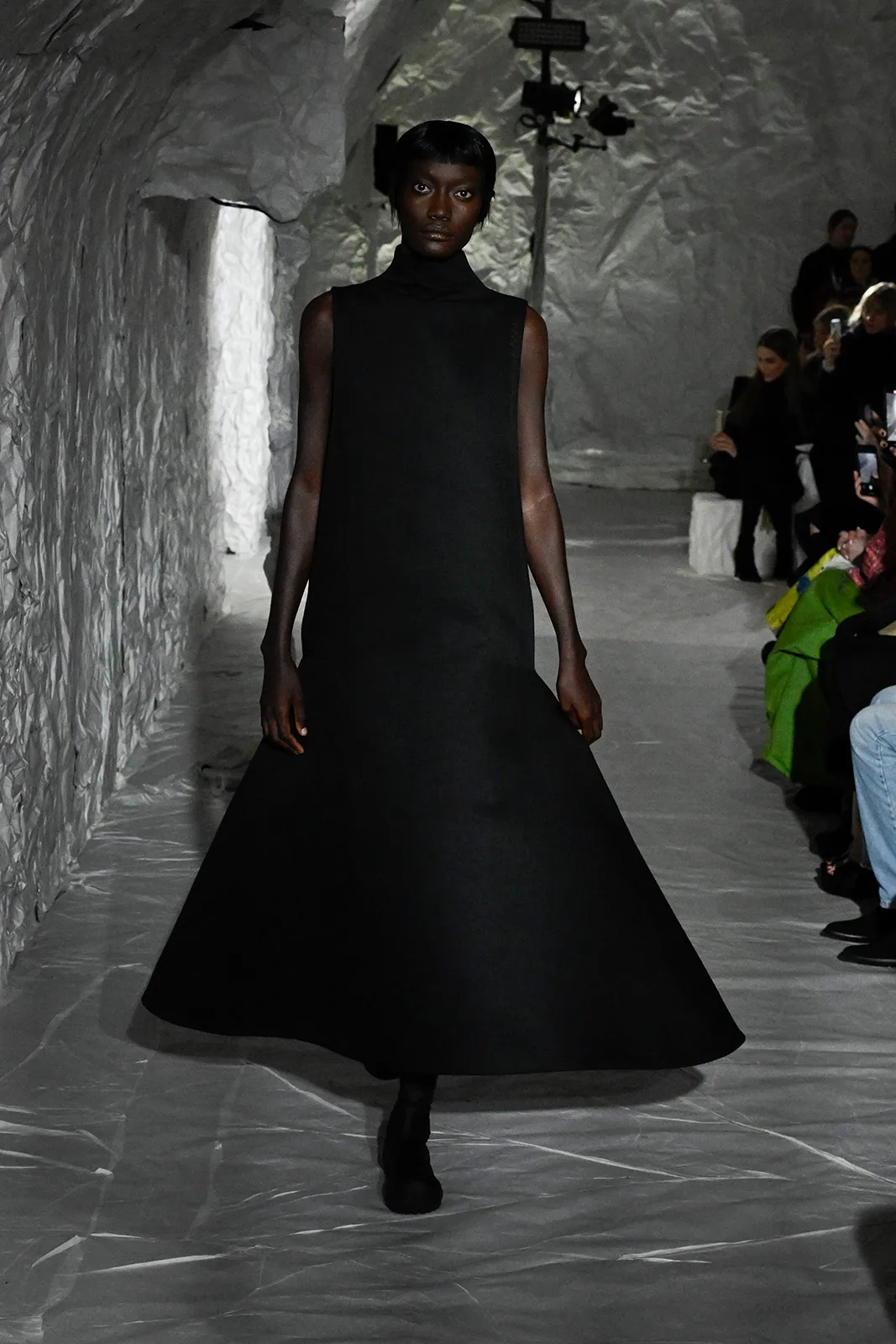
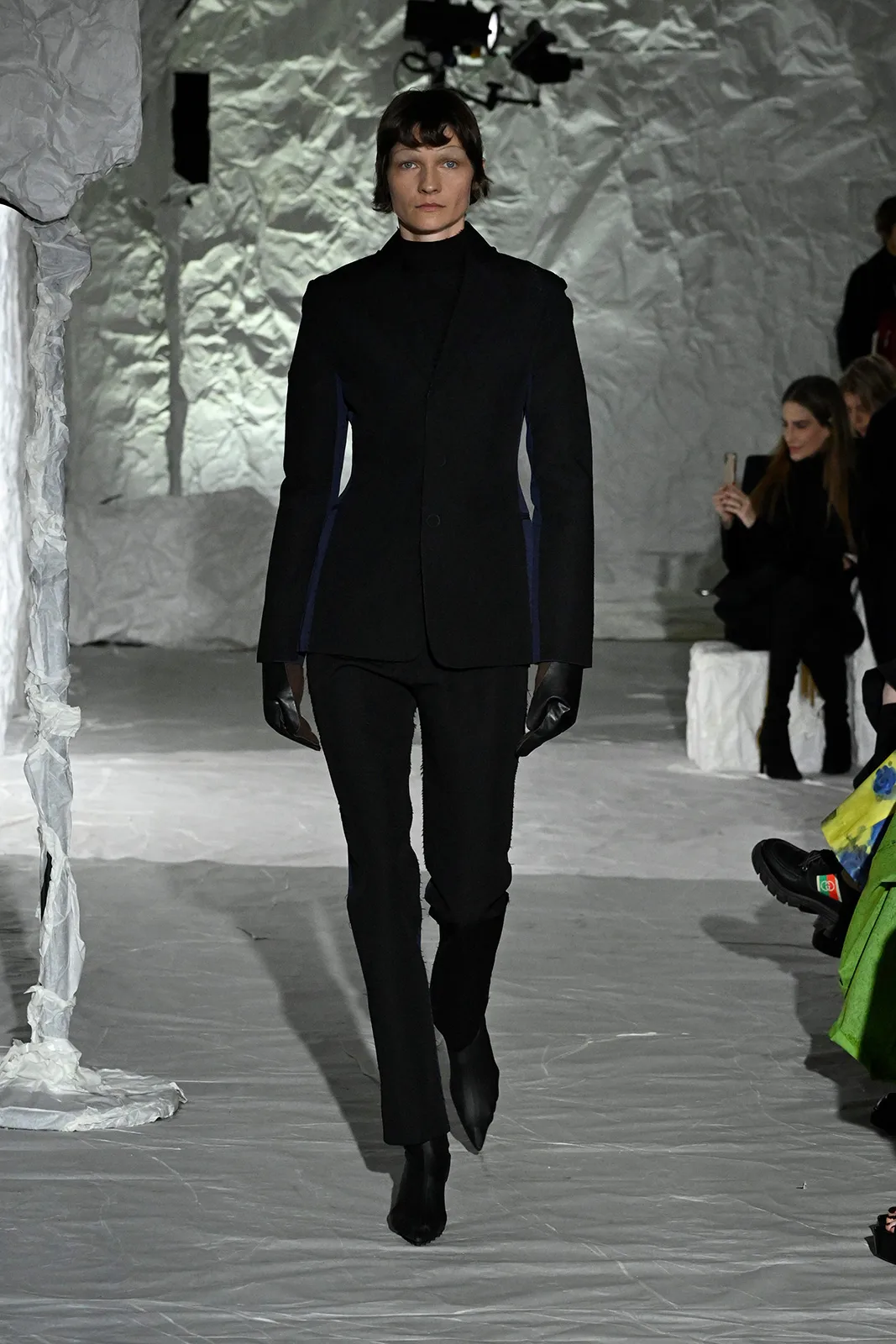
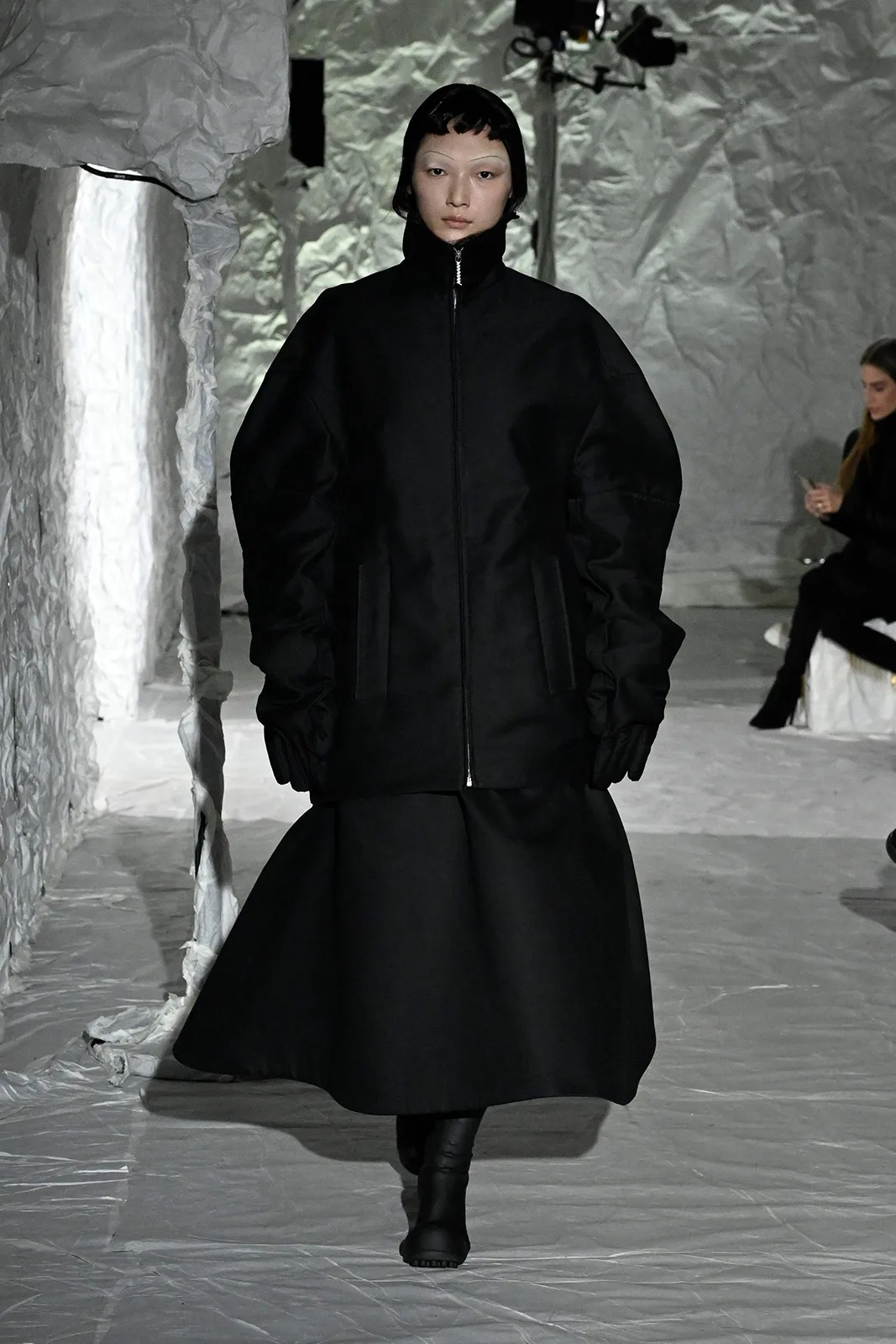
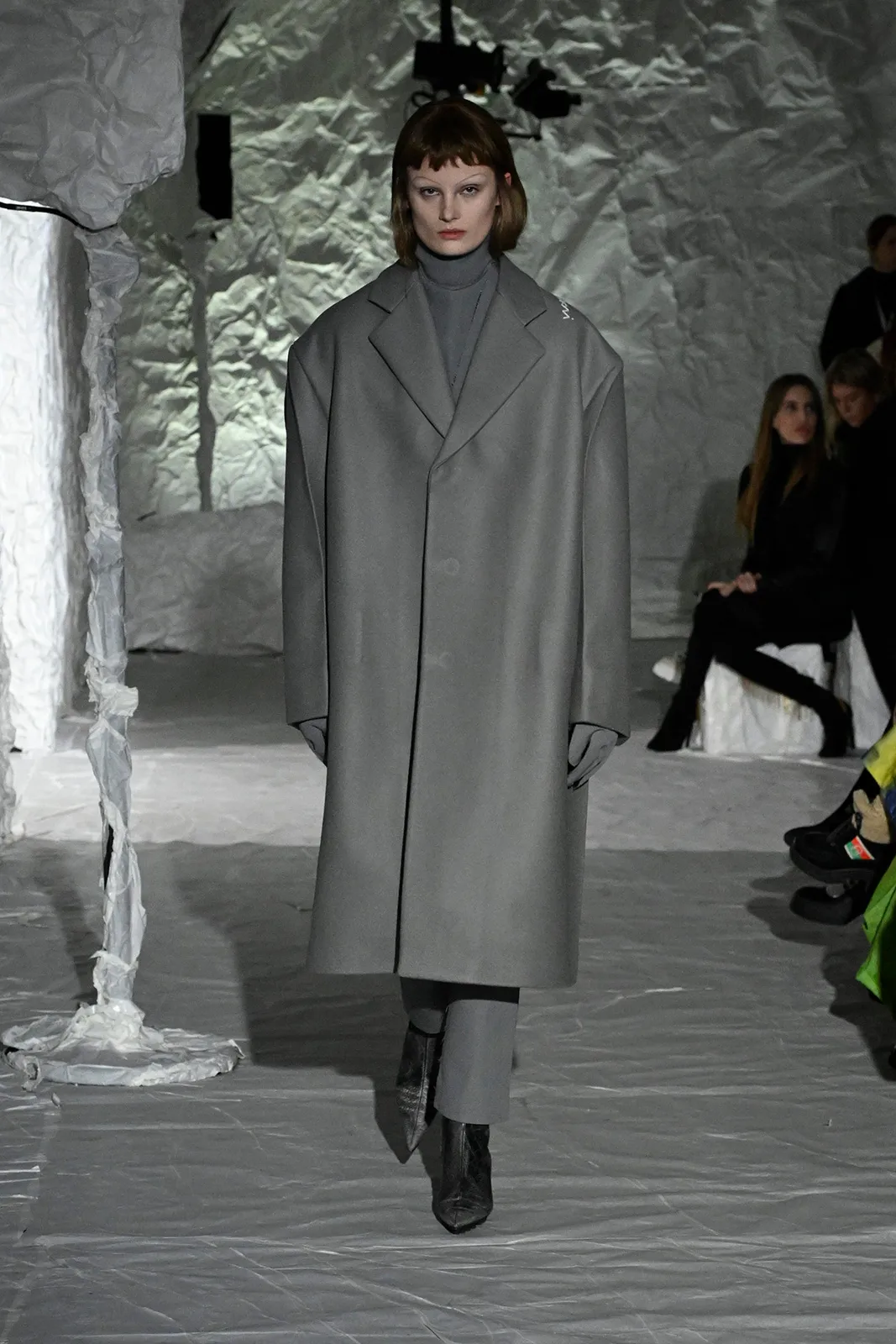
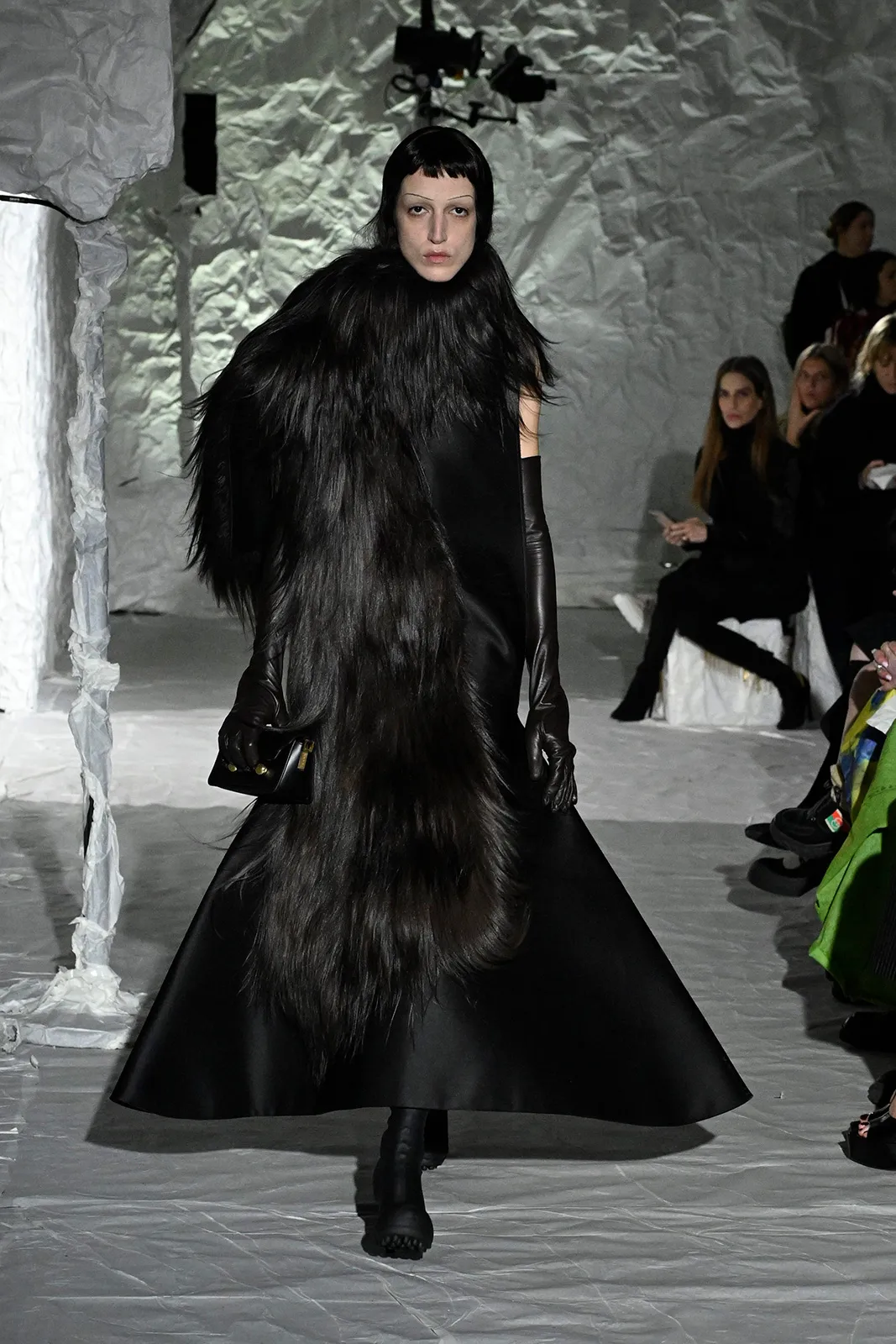
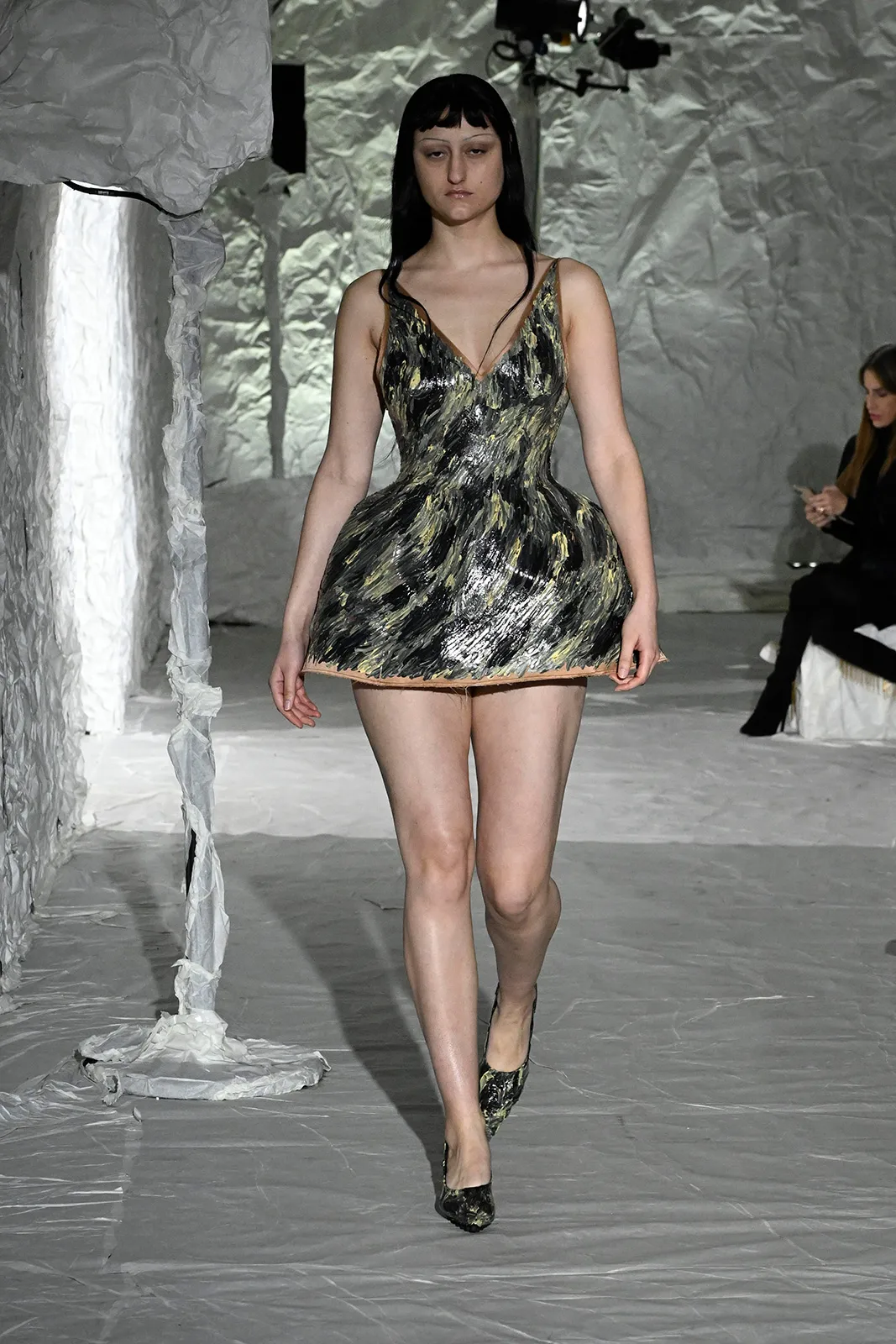
The result was a beautifully raw arrangement of garments, where the shapes and shades were the main characters inhabiting the paper cave that surrounded them. The colour was absent in a large portion of the looks, with brown, black, and cream enhancing the construction of the pieces. Details and minutiae often added to clothes, such as darts, pockets, or cuts, were ignored in what seems like an attempt to stick just to the necessary seams and let the patterns take the shape that they wanted when worn on the body, resulting sometimes in very geometric forms, either sharp and angular or round and curved.
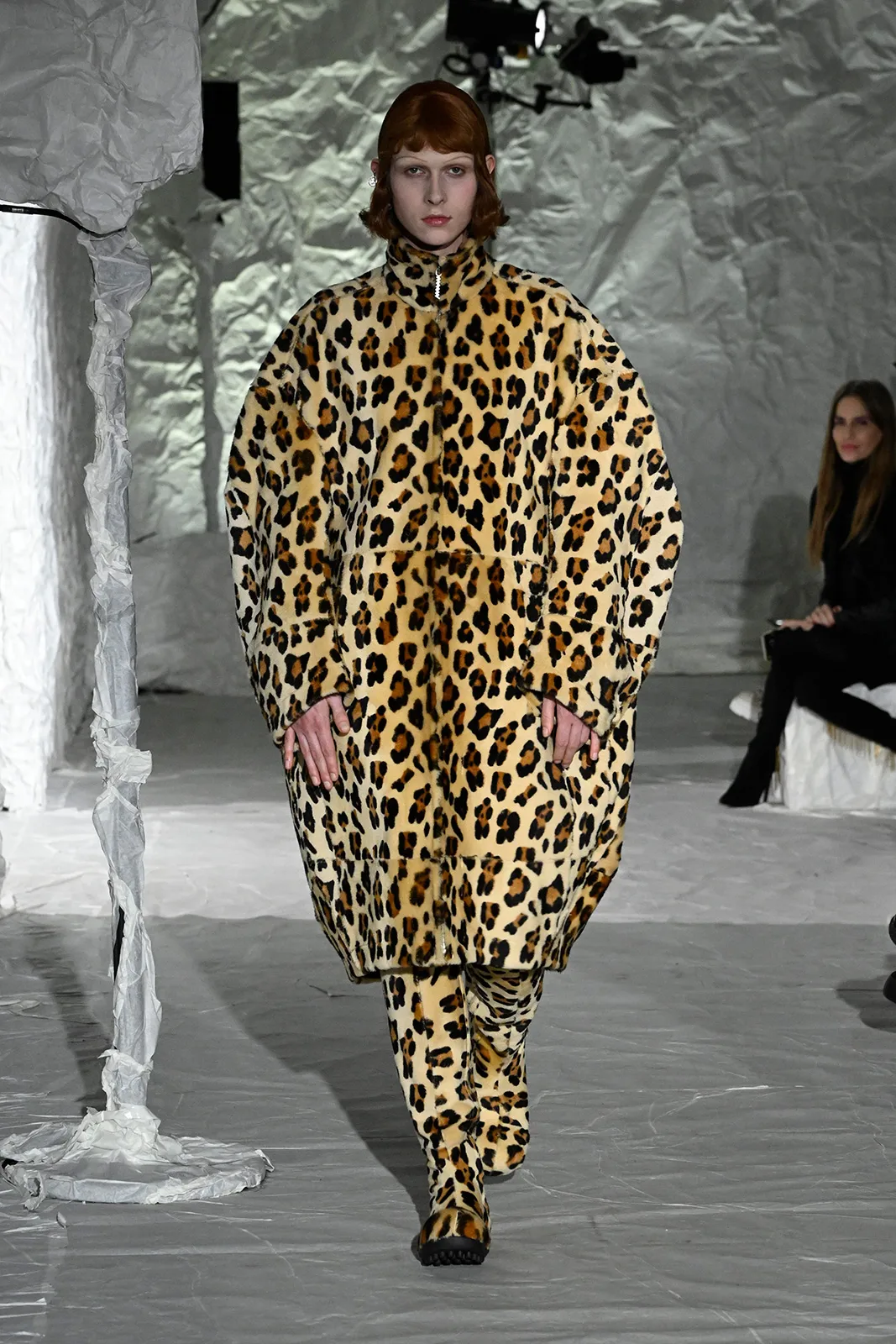
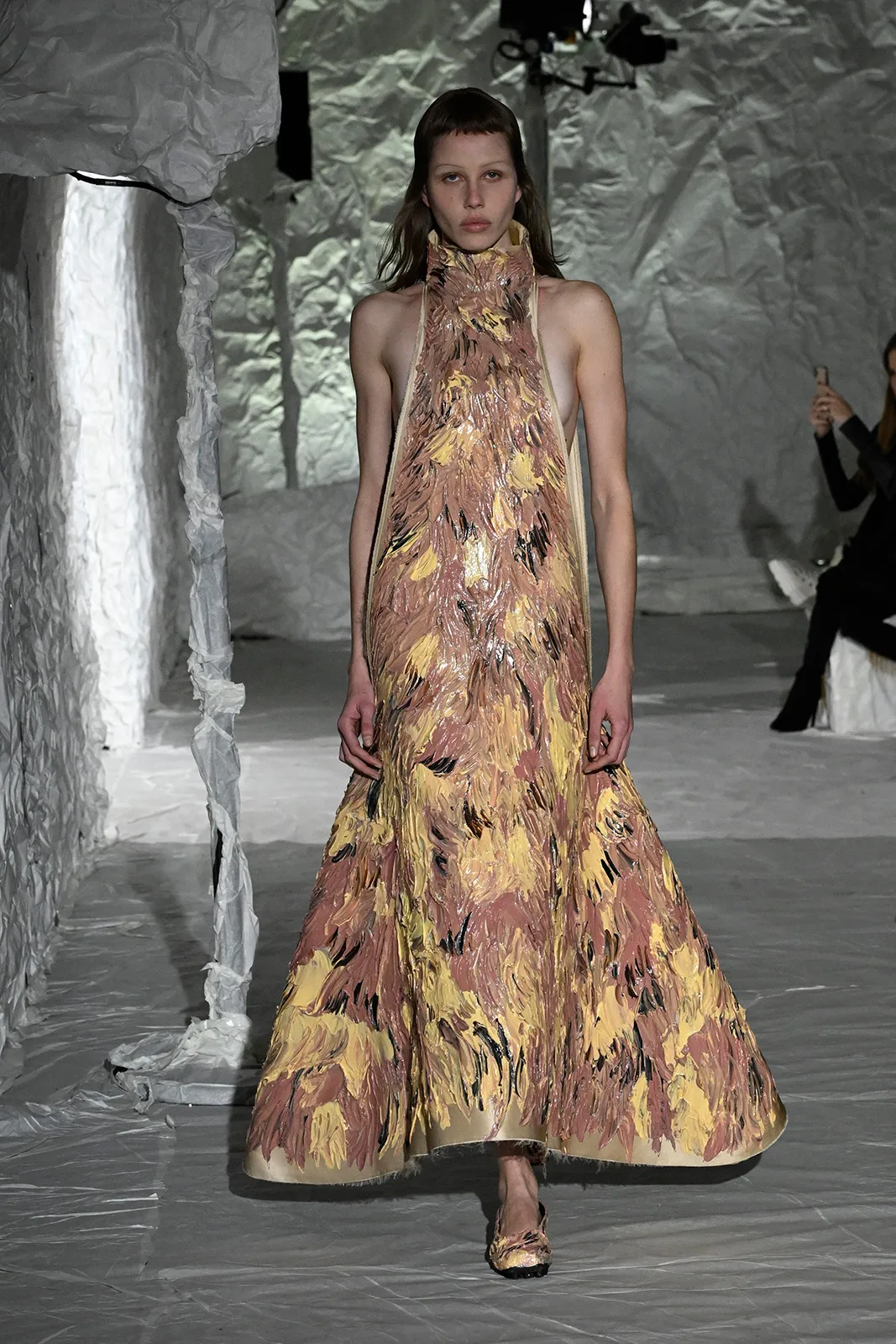
Aside from some animal prints that may make a literal reference to those primal instincts we mentioned in the beginning, the key moments of the show were brought about thanks to the impressive impasto technique applied to dresses, pants, and even fur coats, where the unique texture and contrast between different colours of paint turned the clothes into works of art in a non-pretentious way. They did look like paintings, but not the ones an arrogant artist makes, but the ones a hopeful child pours all its pure emotions into. Some coats look like the brush, while others look like the painted canvas. Some looks are quiet and calm, while others are full of energy and life. Marni captured all the range of a pure creative experience.
The result was a beautifully raw arrangement of garments, where the shapes and shades were the main characters inhabiting the paper cave that surrounded them. The colour was absent in a large portion of the looks, with brown, black, and cream enhancing the construction of the pieces. Details and minutiae often added to clothes, such as darts, pockets, or cuts, were ignored in what seems like an attempt to stick just to the necessary seams and let the patterns take the shape that they wanted when worn on the body, resulting sometimes in very geometric forms, either sharp and angular or round and curved.
Aside from some animal prints that may make a literal reference to those primal instincts we mentioned in the beginning, the key moments of the show were brought about thanks to the impressive impasto technique applied to dresses, pants, and even fur coats, where the unique texture and contrast between different colours of paint turned the clothes into works of art in a non-pretentious way. They did look like paintings, but not the ones an arrogant artist makes, but the ones a hopeful child pours all its pure emotions into. Some coats look like the brush, while others look like the painted canvas. Some looks are quiet and calm, while others are full of energy and life. Marni captured all the range of a pure creative experience.
Bottega Veneta
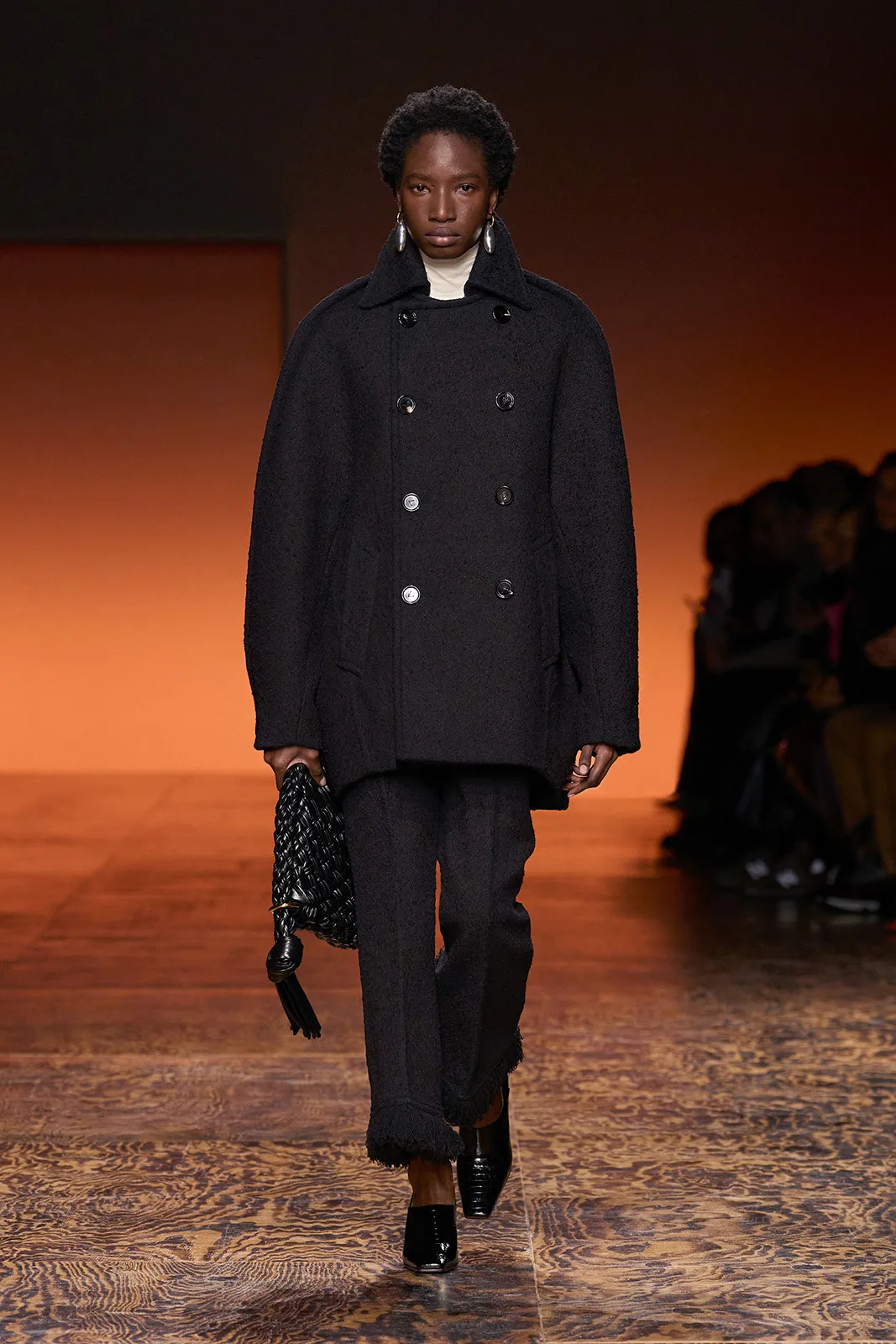
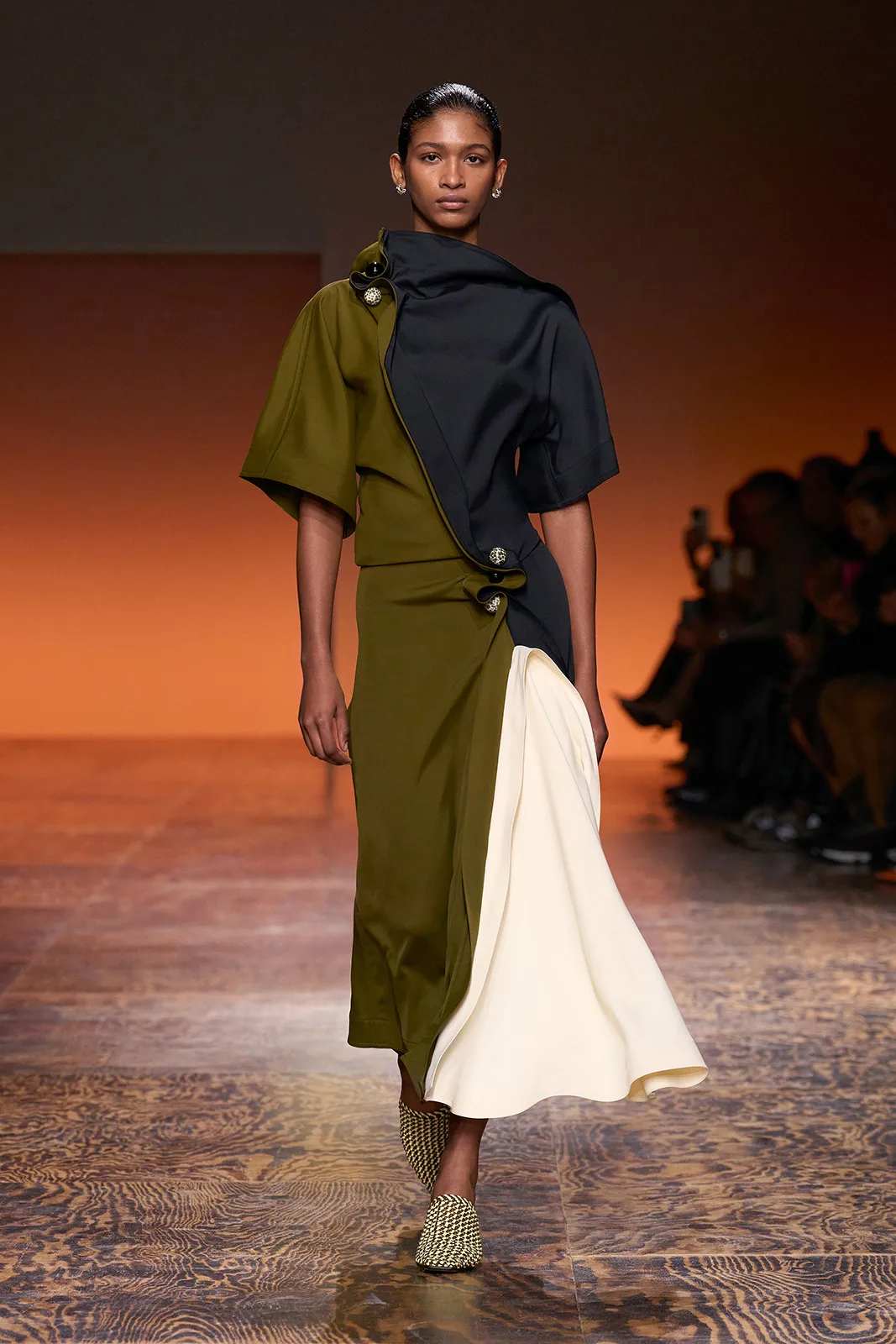
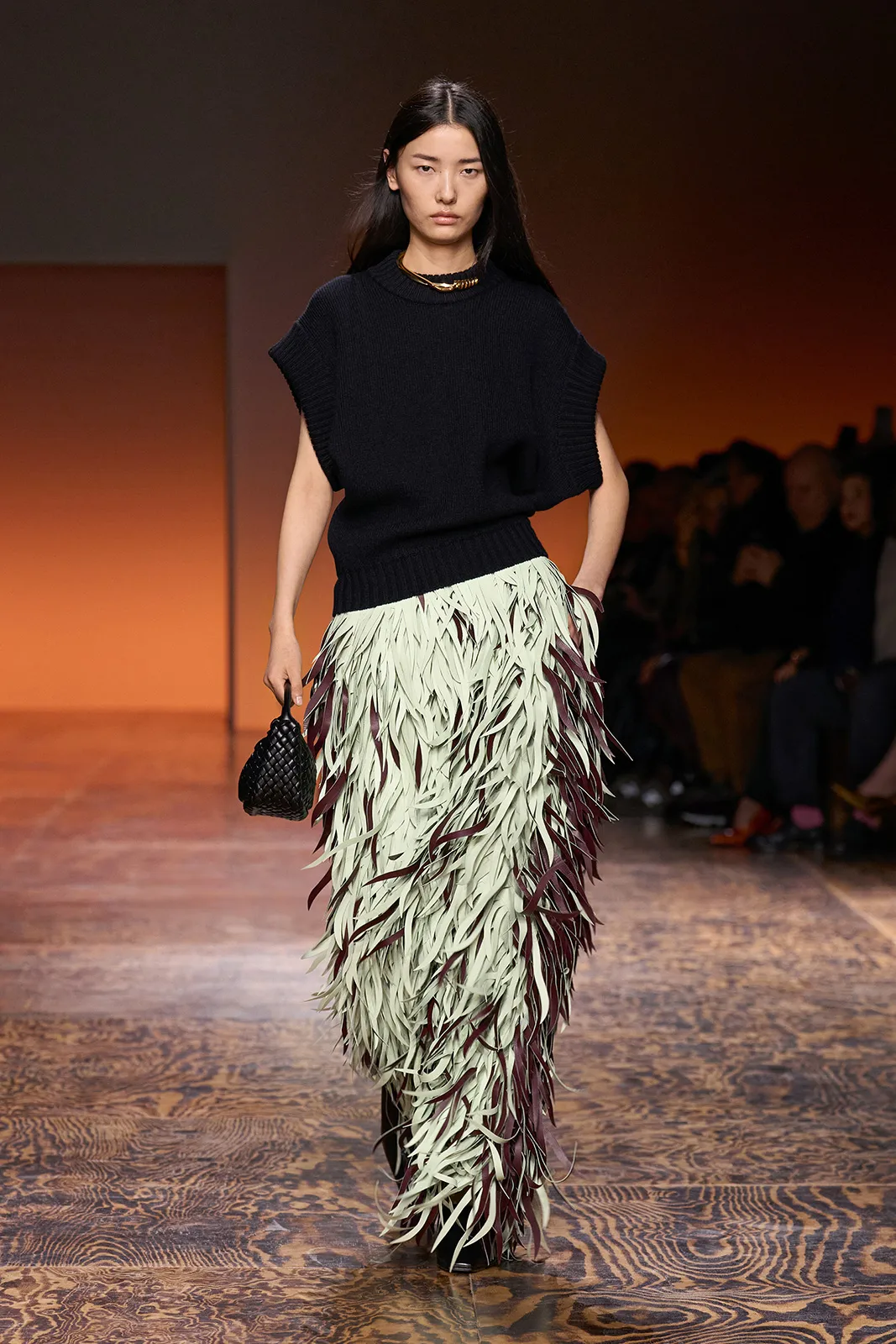
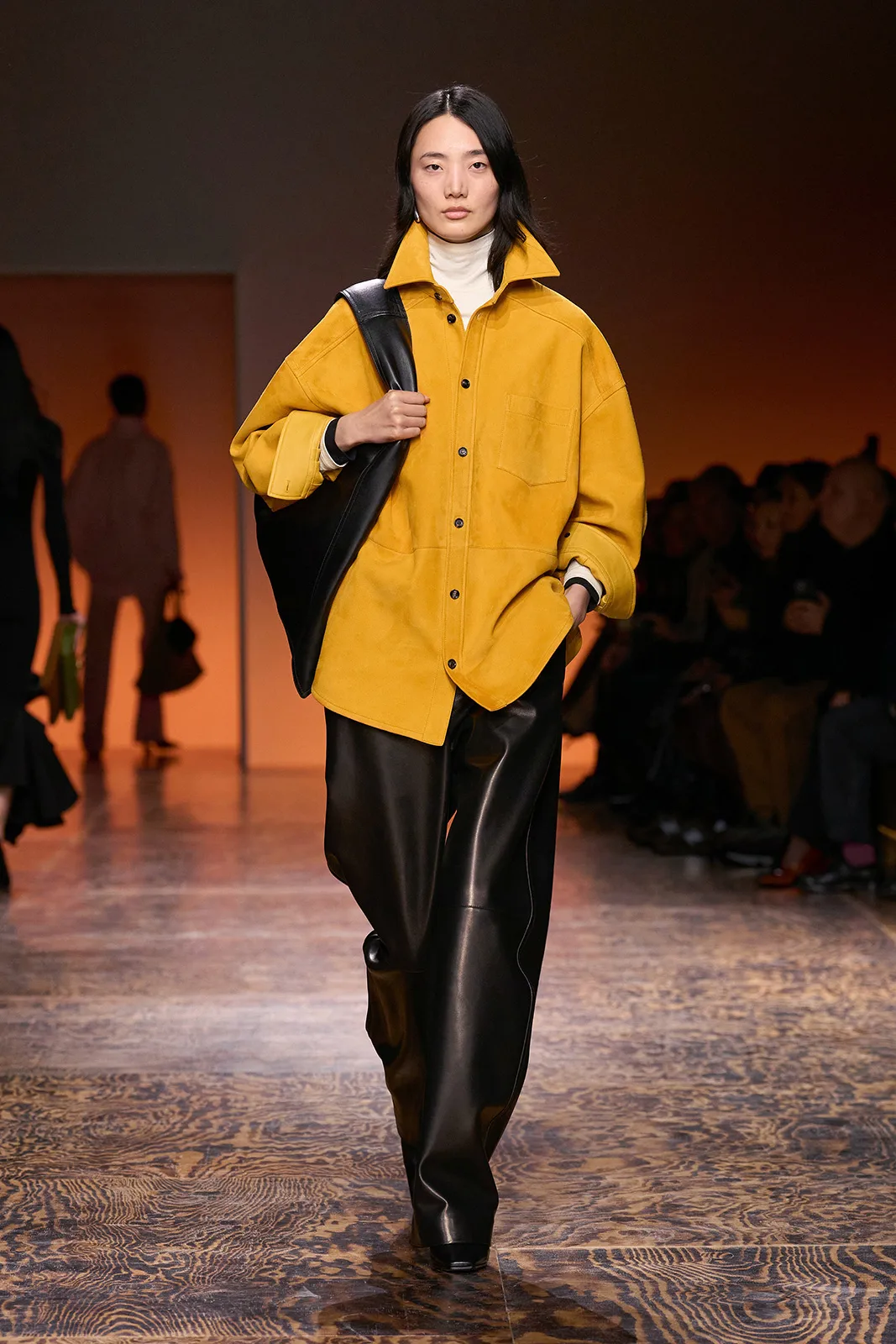
Matthieu Blazy is feeling introspective. “We all watch the same news. It is hard to be celebratory at this point.” Don't we all agree? We also agree with the second part of this statement: “Still, the idea of rebirth is beautiful, too.” For this rebirth that represents a fresh start on a new journey, garments are used as a tabula rasa that has no hurry on being filled or stained with information. This season, we are sticking to the essentials. There is no need to rely on vain ornaments when the most intelligent decision in this day and age is to trust the pragmatic, utilitarian, and purposeful nature of depurated garments. For this, Bottega Veneta is embracing negative spaces, where the construction of the clothes is the main focus and the particularities of each piece are integrated into them and not superimposed.
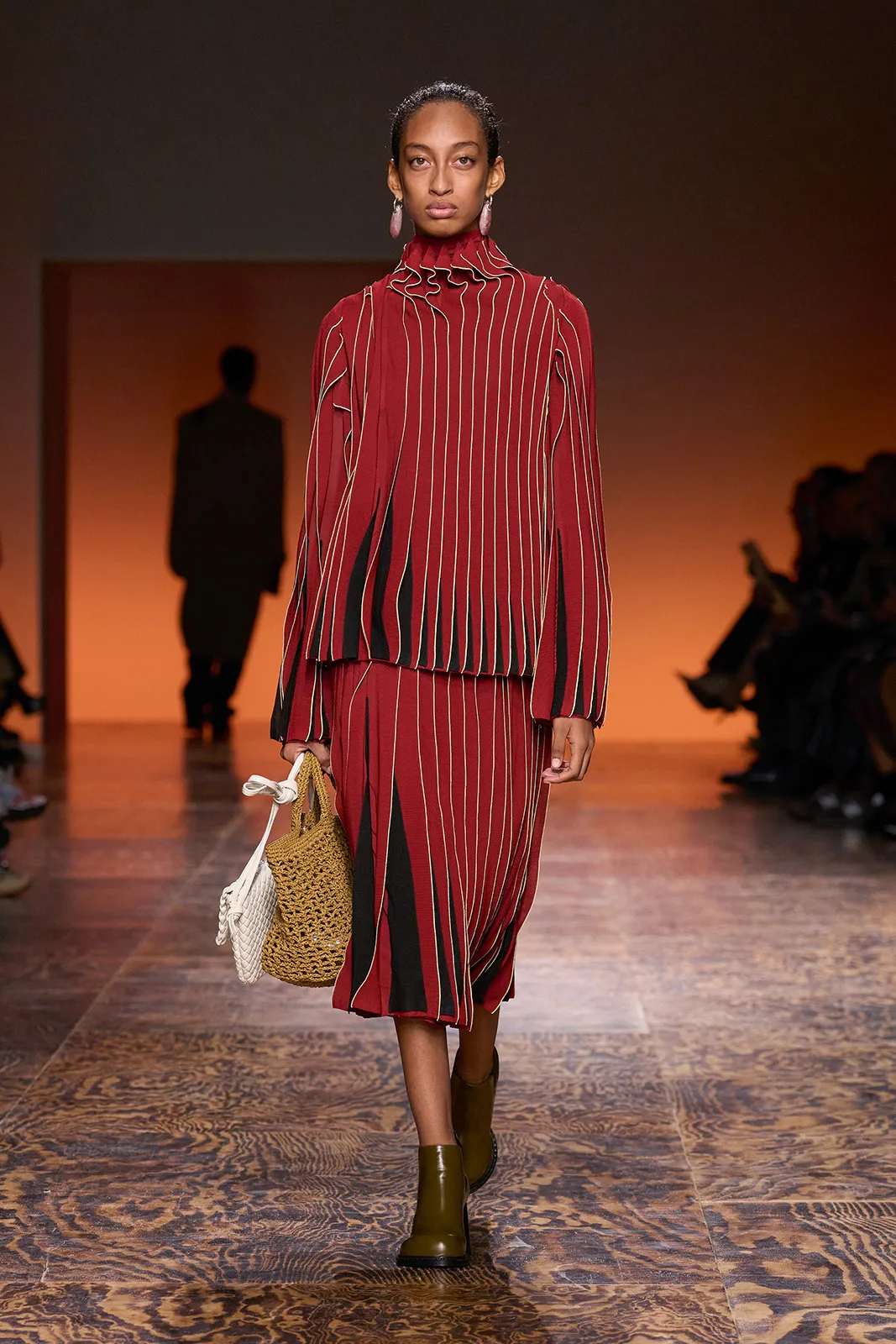
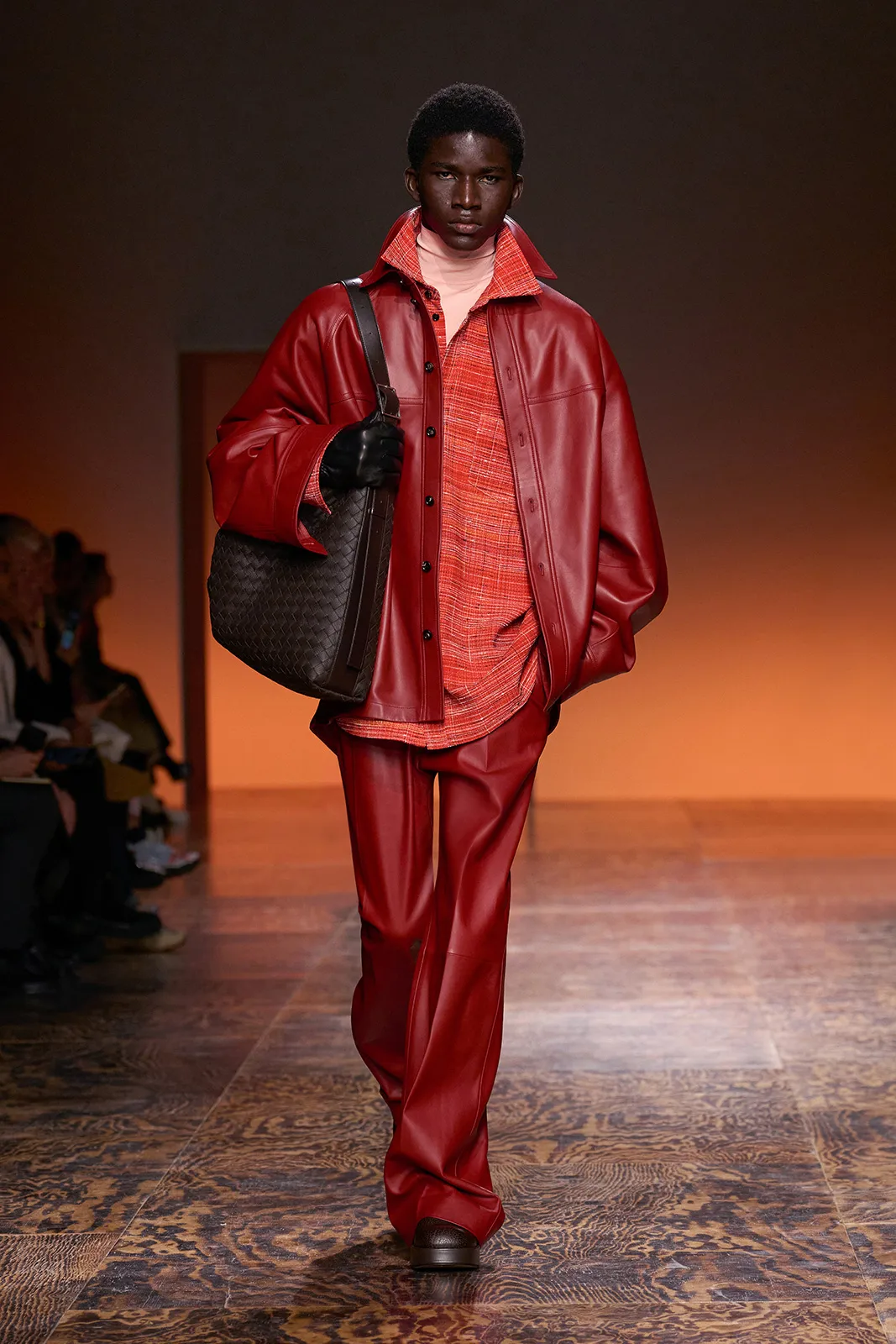
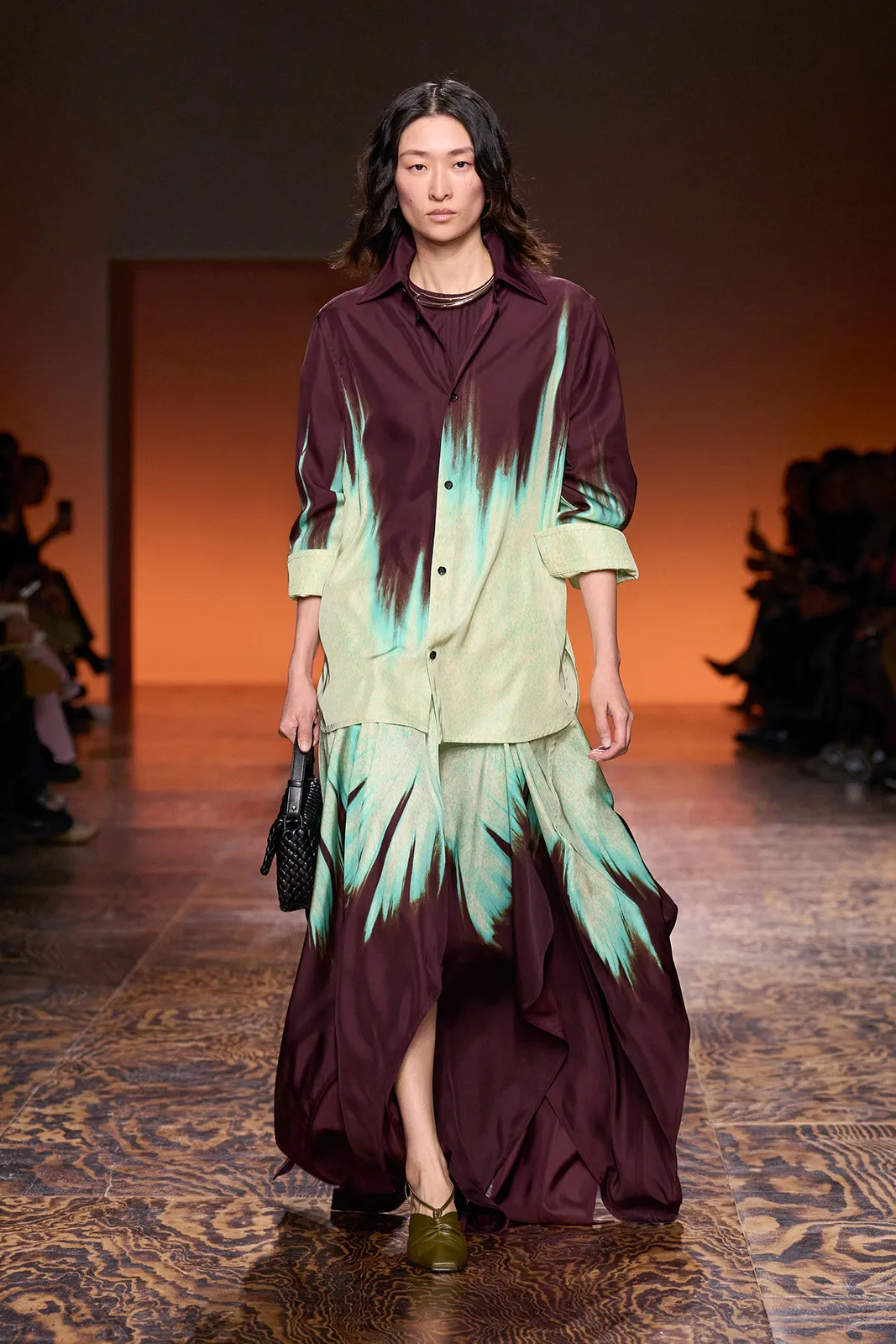
A literal representation of what was just mentioned is the ingenious print found on sets of pants and shirts (presumably on leather, knowing how much Blazy loves this technique), where the typical notebook lines create a stripe pattern that is both subtle since the lines on it are thin and light, just like in a real notepad, and evident for the theme, a white page. Another print made a similar reference, but on the opposite side, with handwritten notes layering on top of each other, reflecting the passage of time. This time, the clothes do not do the layering; the print does. Some of the most visually appealing looks consist of pleated skirts and blouses with a triangular-shaped colour contrast segment at the bottom of each pleat, creating a stunning trompe l'oeil effect when movement occurs.
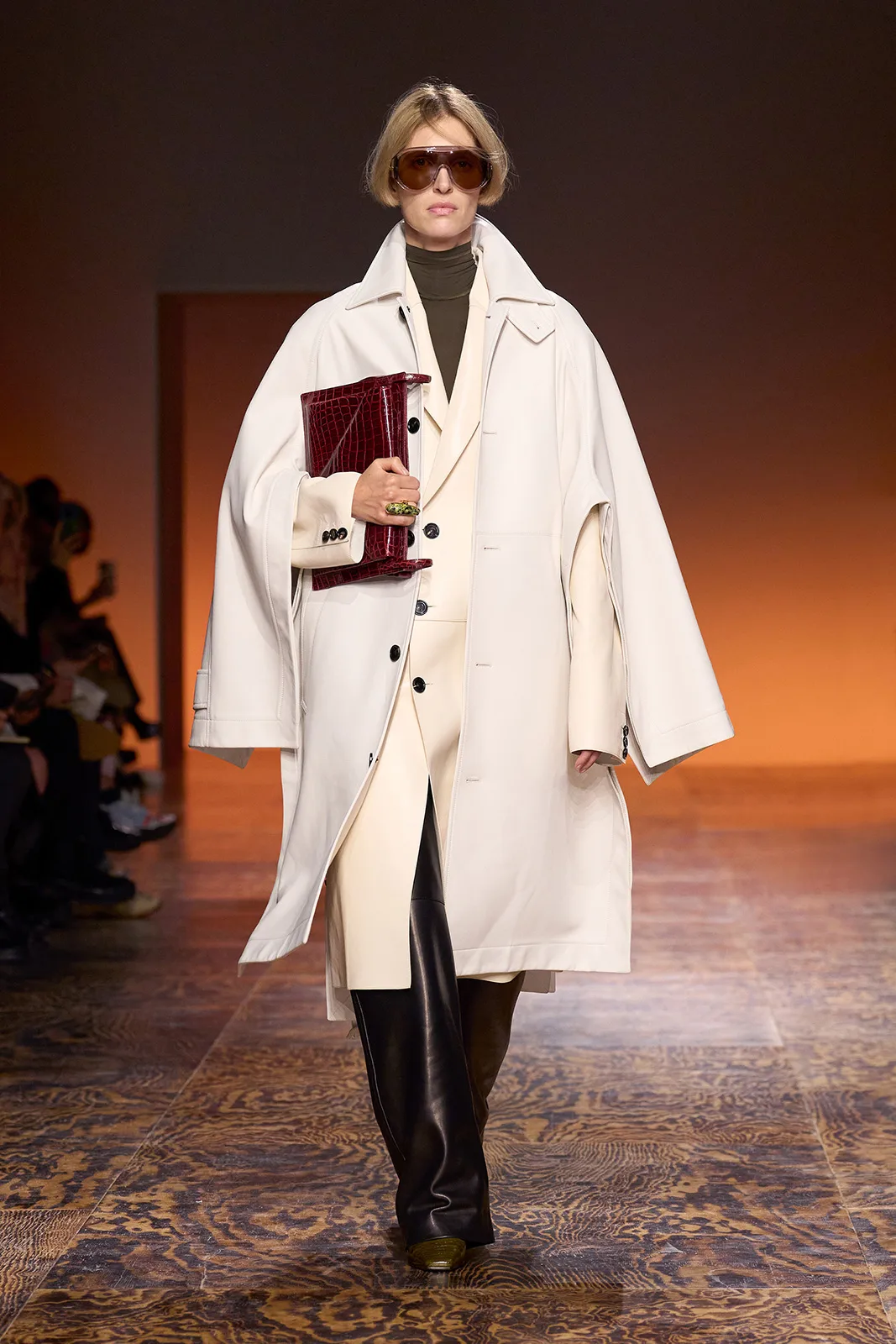
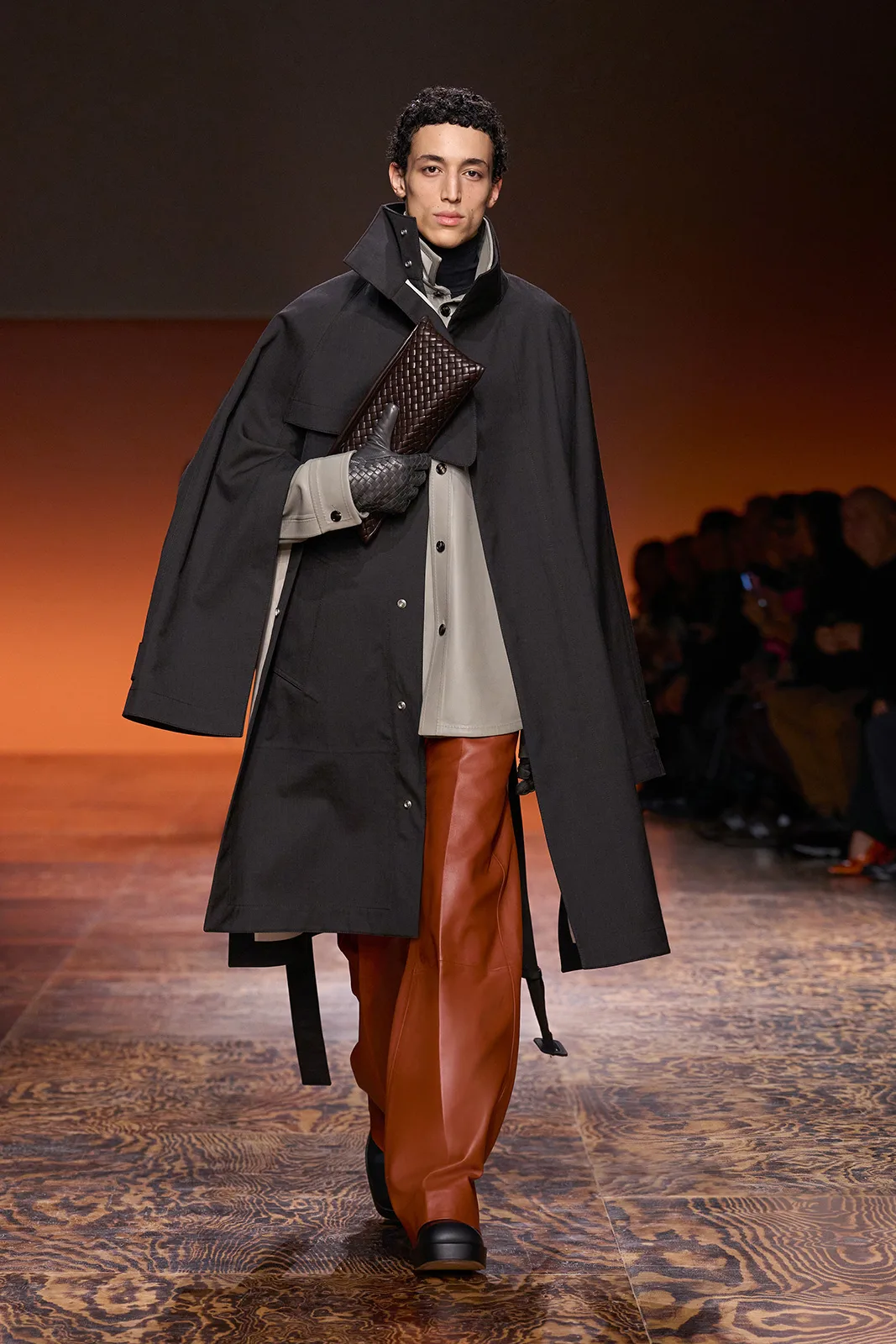
Driving attention away from the decorative aspect of clothes to the functional, Matthieu created beautiful pieces where the construction shines brighter than ever. A sort of infinity collar on knit sweater that never starts or ends, a structured wool jersey with strong shoulders and an almost sartorial fit, and trencoats that wrap around the body. The show notes said it best: “Honesty in materiality and silhouette means the clothing is no longer pretending to be something other than what it really is.”
A literal representation of what was just mentioned is the ingenious print found on sets of pants and shirts (presumably on leather, knowing how much Blazy loves this technique), where the typical notebook lines create a stripe pattern that is both subtle since the lines on it are thin and light, just like in a real notepad, and evident for the theme, a white page. Another print made a similar reference, but on the opposite side, with handwritten notes layering on top of each other, reflecting the passage of time. This time, the clothes do not do the layering; the print does. Some of the most visually appealing looks consist of pleated skirts and blouses with a triangular-shaped colour contrast segment at the bottom of each pleat, creating a stunning trompe l'oeil effect when movement occurs.
Driving attention away from the decorative aspect of clothes to the functional, Matthieu created beautiful pieces where the construction shines brighter than ever. A sort of infinity collar on knit sweater that never starts or ends, a structured wool jersey with strong shoulders and an almost sartorial fit, and trencoats that wrap around the body. The show notes said it best: “Honesty in materiality and silhouette means the clothing is no longer pretending to be something other than what it really is.”
Ferragamo
Maximilian Davis has been in our top spots ever since his debut at Ferragamo https://www.instagram.com/ferragamo/ last year, and he’s keeping his place effortlessly and flawlessly. Each collection, the increase in confidence in his style and the ideas he has for the house is noticeable, and it works as well for him as it does for us on the other side. This Fall/Winter, Davis is talking about liberation, taking the 1920s as a reference as an era where clothes were used as an almost political tool (more than usual) to claim the existence of personal style and the existence of intention behind each fashion choice.
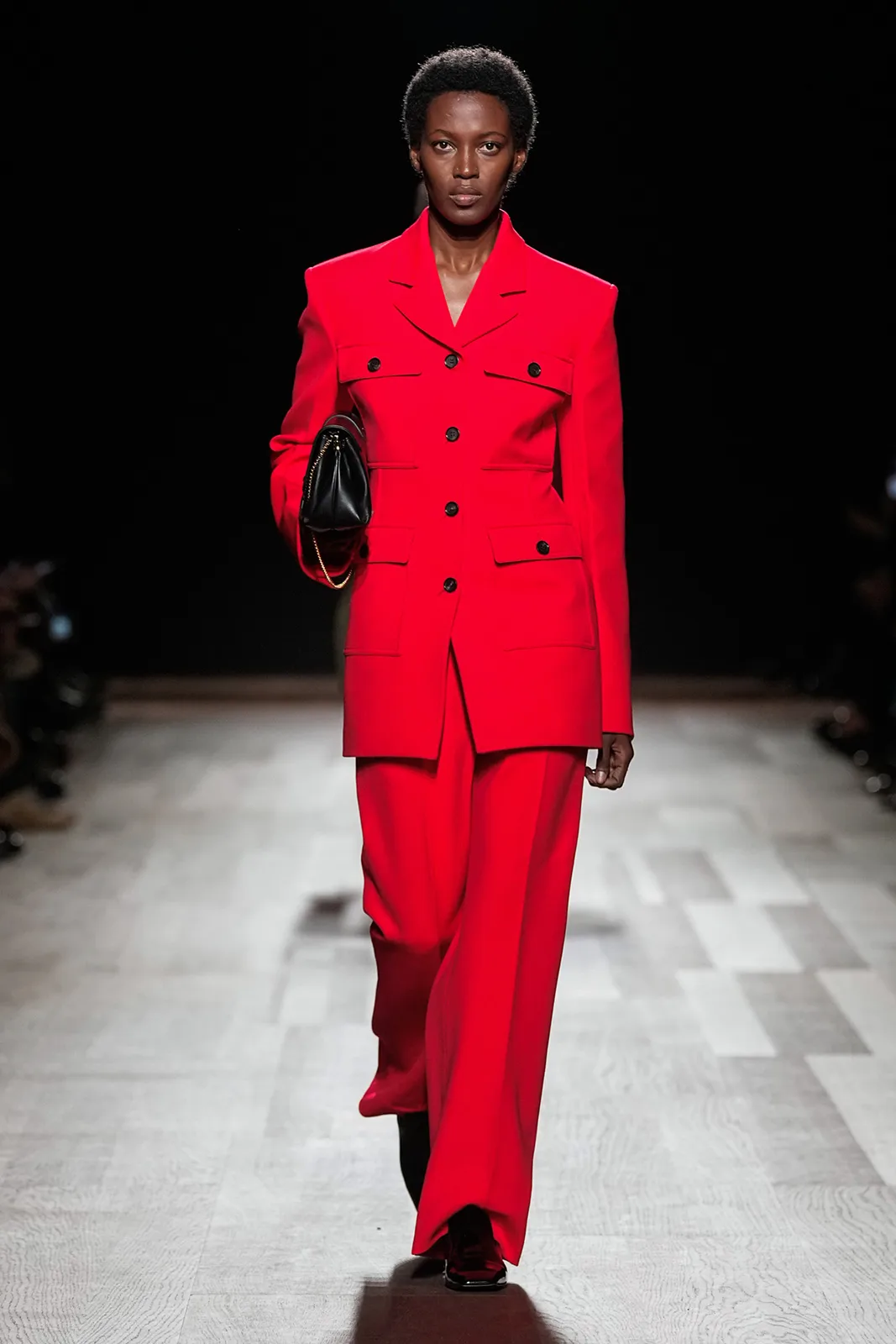
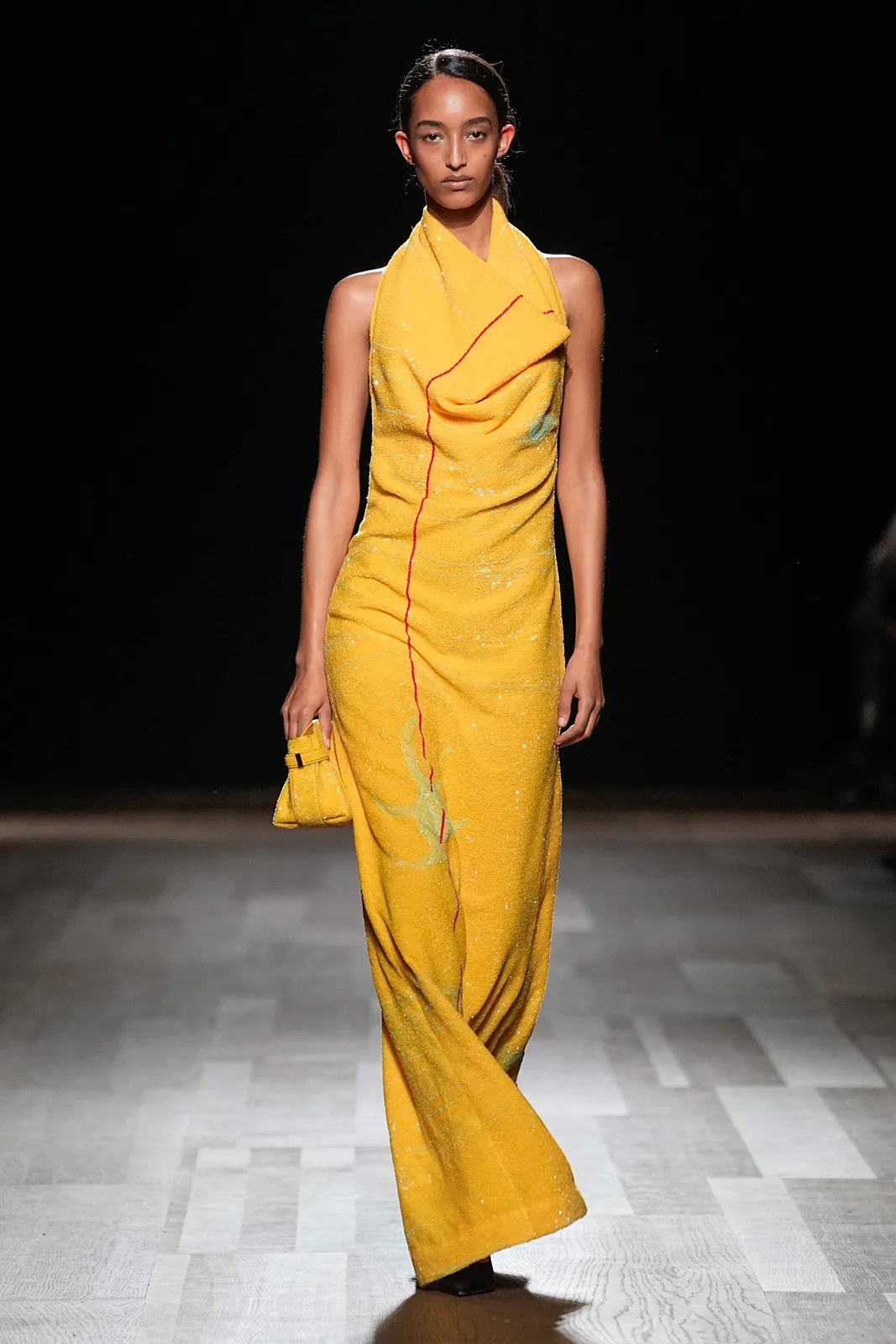
This freedom translates in many ways, according to Maximilian, from the type of fabrics to the way clothes are constructed. The stunning chromatic palette talks about the taste of the creative director, who has been pushing the great use of contrast of colours, taking advantage of the materials and their properties, ever since he started. Ferragamo Red keeps positioning itself every season.
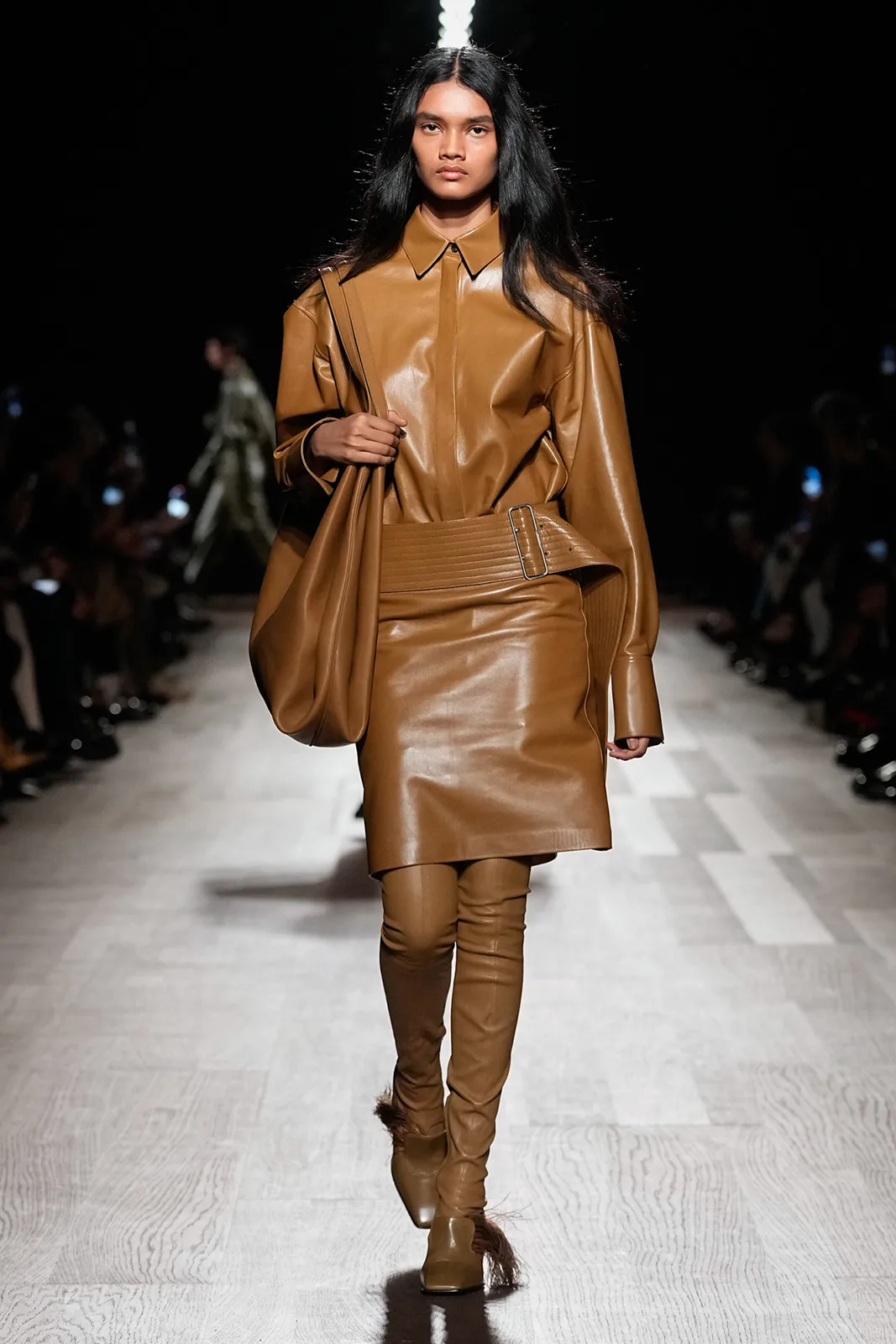
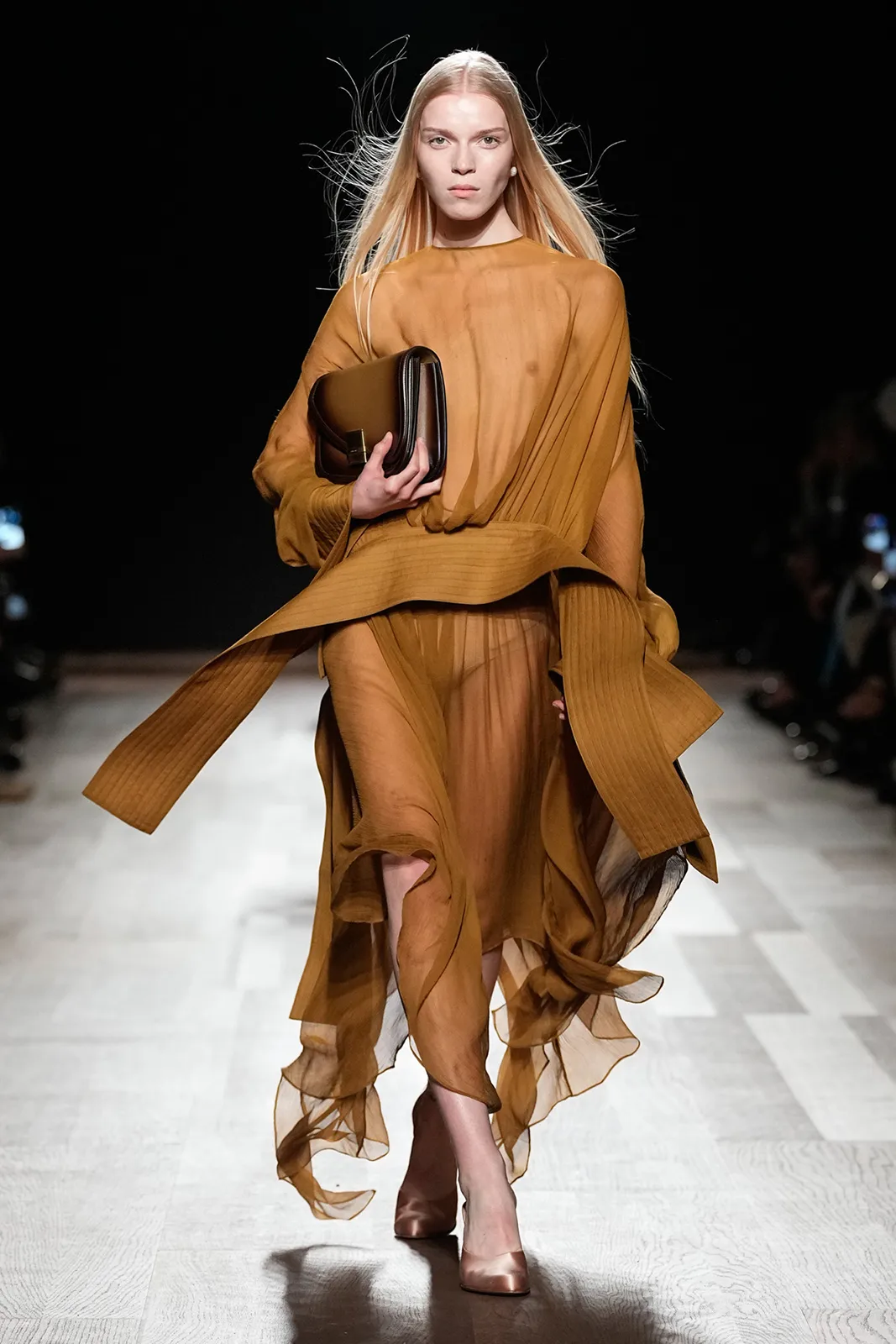
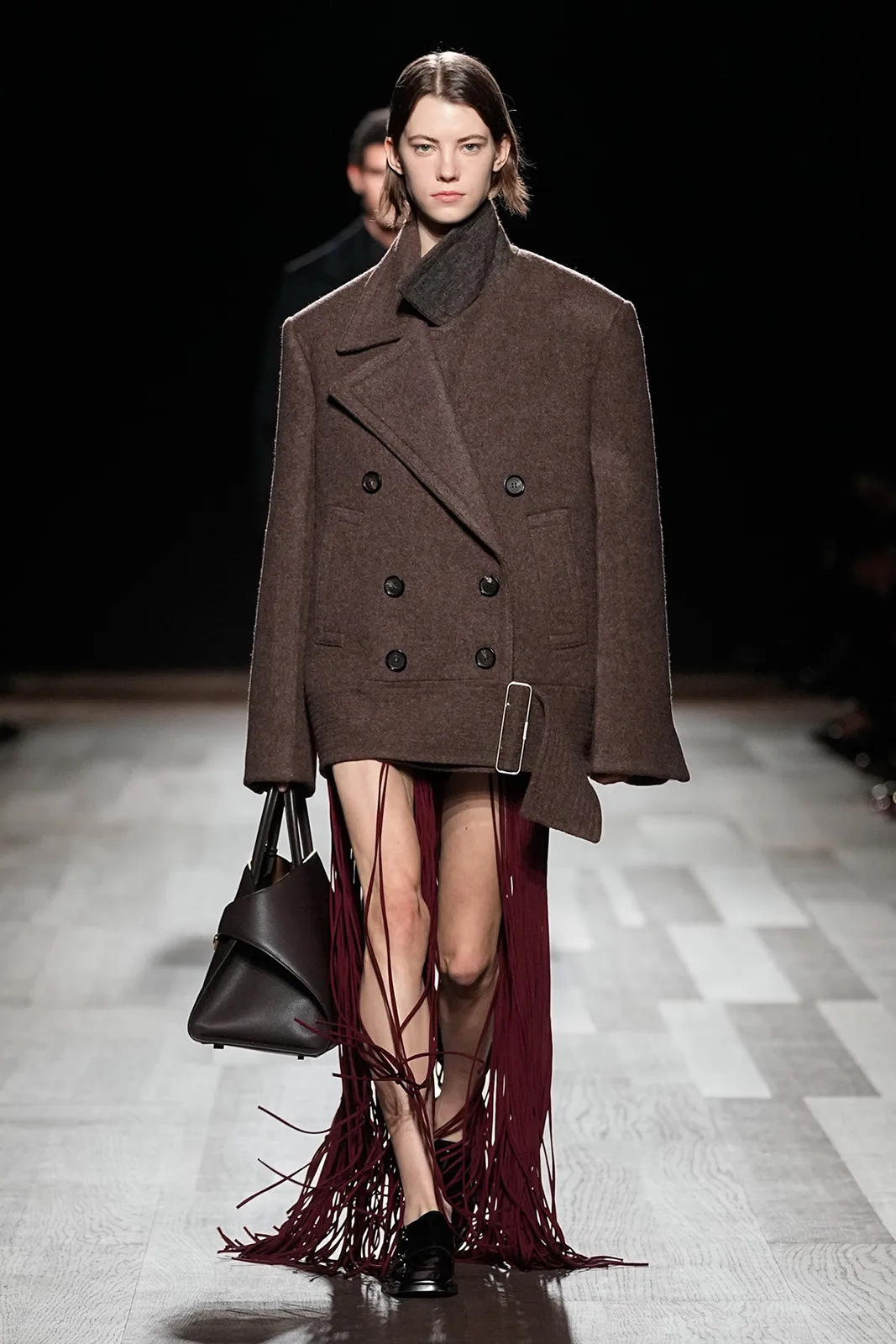
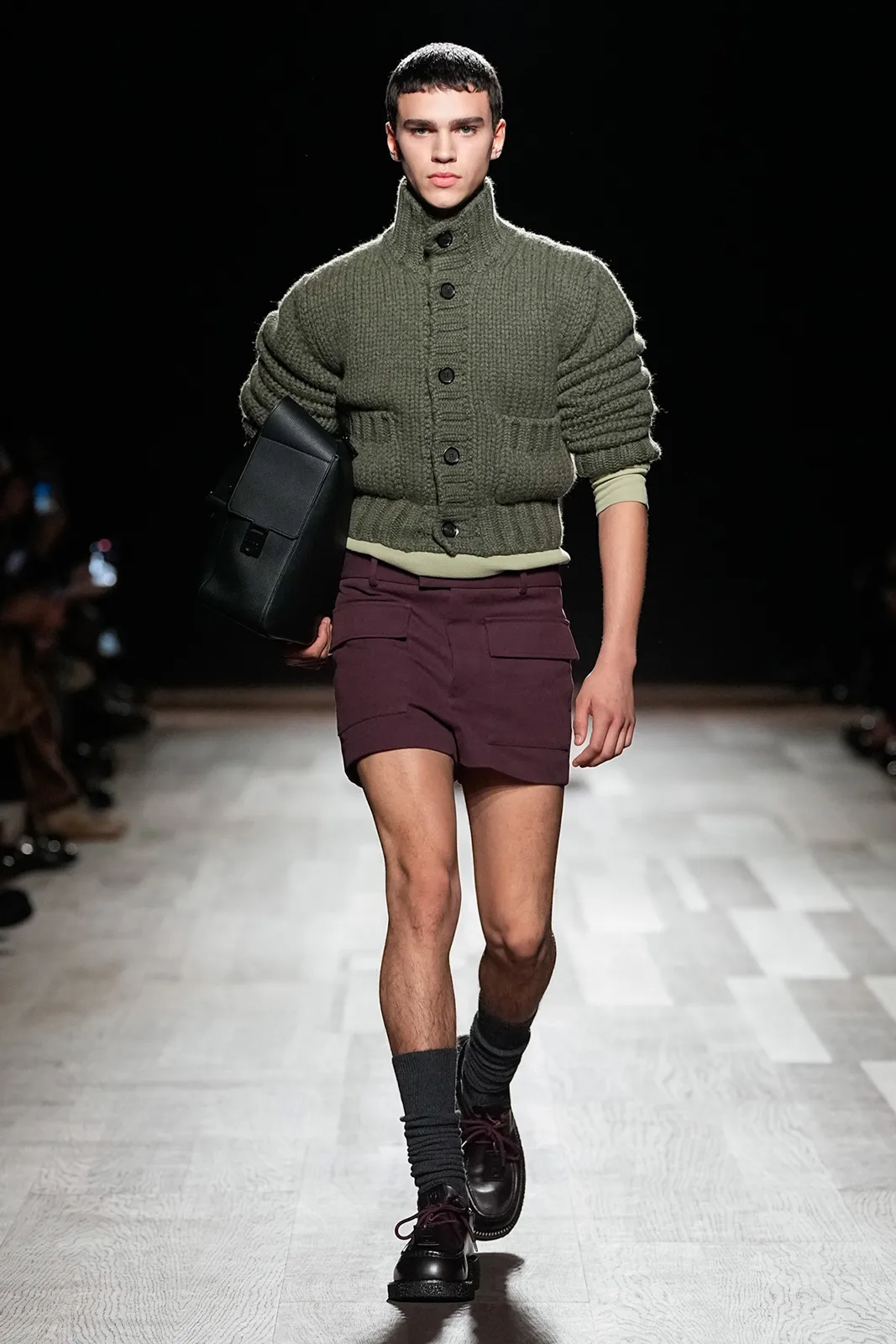
As a collection made for colder weather, wool is very present in a very sophisticated way, with coats and matching skirts not looking too heavy thanks to the effortless fit they have in the body; they are complementing it, not consuming it. Thigh-high, almost hip-high boots are a cheeky element added to otherwise sober knitted looks, and feathers combined with transparency are surprising elements that add character in an elegant way.
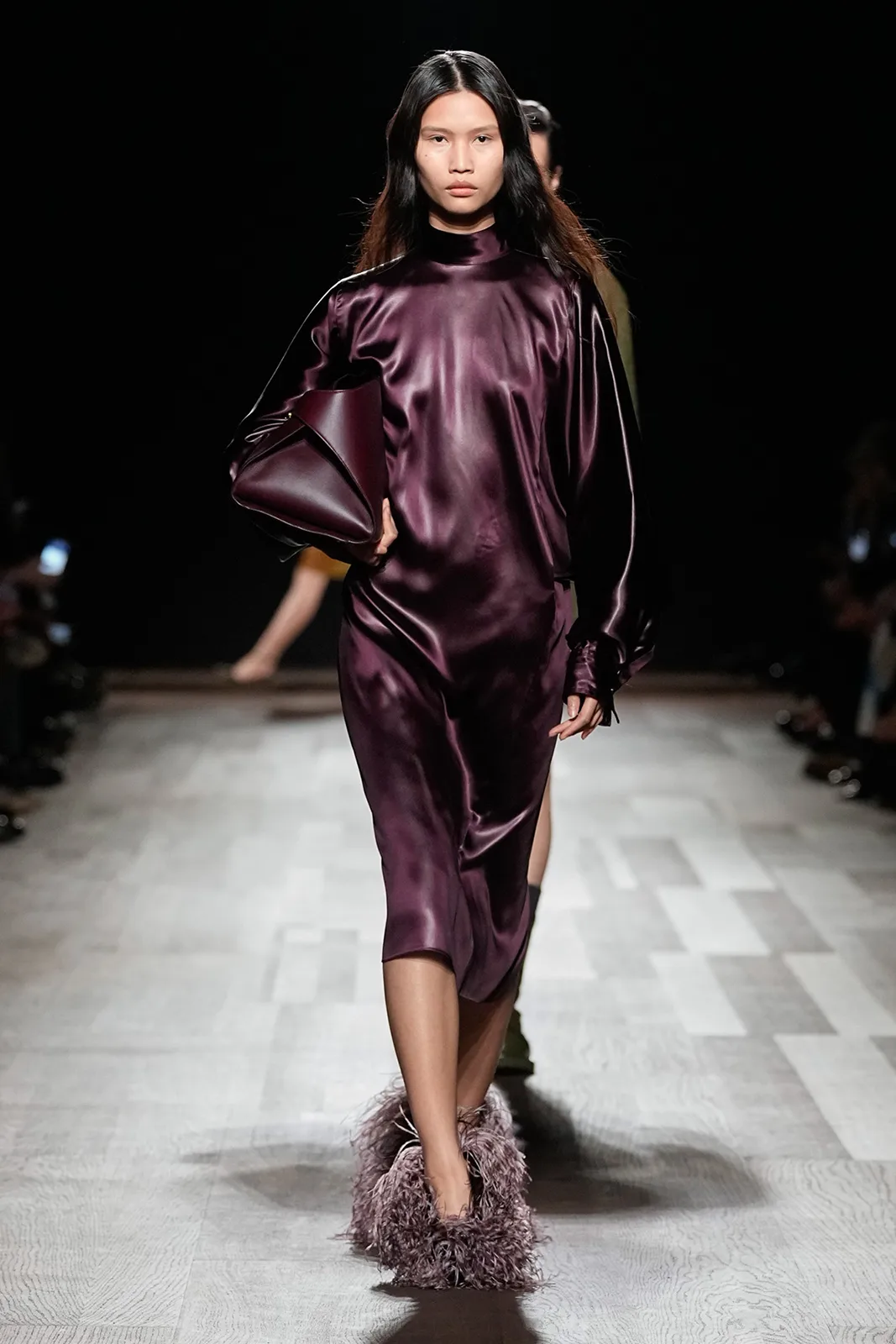
The 1920s inspiration was present all along, but especially in the flowy dresses with the low waist belt piece, which reminded us of the silhouettes the dresses had during that period of time. However, the crown jewels of the collection were the couple of paillete looks, one in a deep burgundy shade and one in black, that had a shine and a movement that captured all the attention. Well, you must know this are not your usual pailletes; they are actually made using patent leather. In Ferragamo, we trust.
This freedom translates in many ways, according to Maximilian, from the type of fabrics to the way clothes are constructed. The stunning chromatic palette talks about the taste of the creative director, who has been pushing the great use of contrast of colours, taking advantage of the materials and their properties, ever since he started. Ferragamo Red keeps positioning itself every season.
As a collection made for colder weather, wool is very present in a very sophisticated way, with coats and matching skirts not looking too heavy thanks to the effortless fit they have in the body; they are complementing it, not consuming it. Thigh-high, almost hip-high boots are a cheeky element added to otherwise sober knitted looks, and feathers combined with transparency are surprising elements that add character in an elegant way.
The 1920s inspiration was present all along, but especially in the flowy dresses with the low waist belt piece, which reminded us of the silhouettes the dresses had during that period of time. However, the crown jewels of the collection were the couple of paillete looks, one in a deep burgundy shade and one in black, that had a shine and a movement that captured all the attention. Well, you must know this are not your usual pailletes; they are actually made using patent leather. In Ferragamo, we trust.
Prada
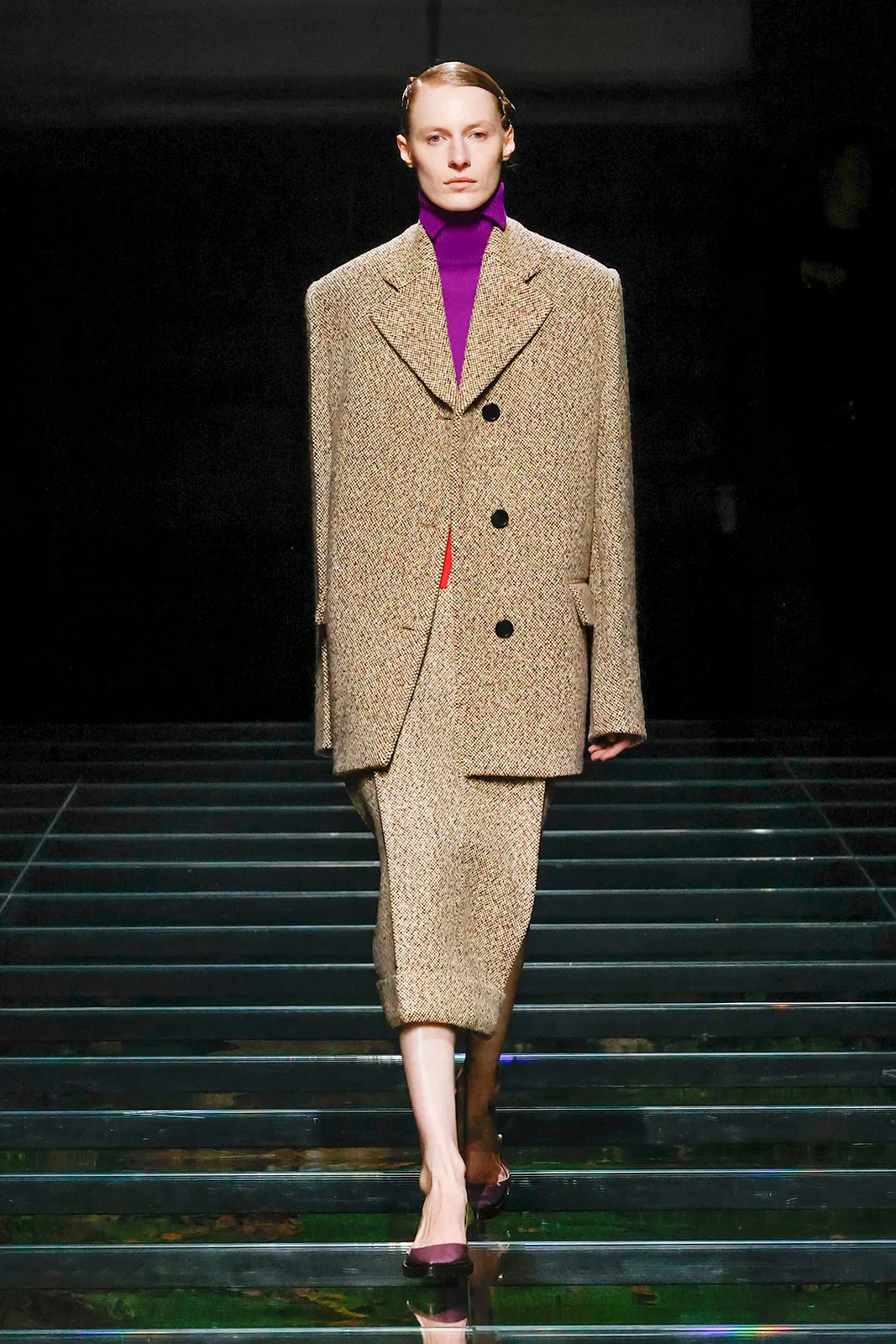
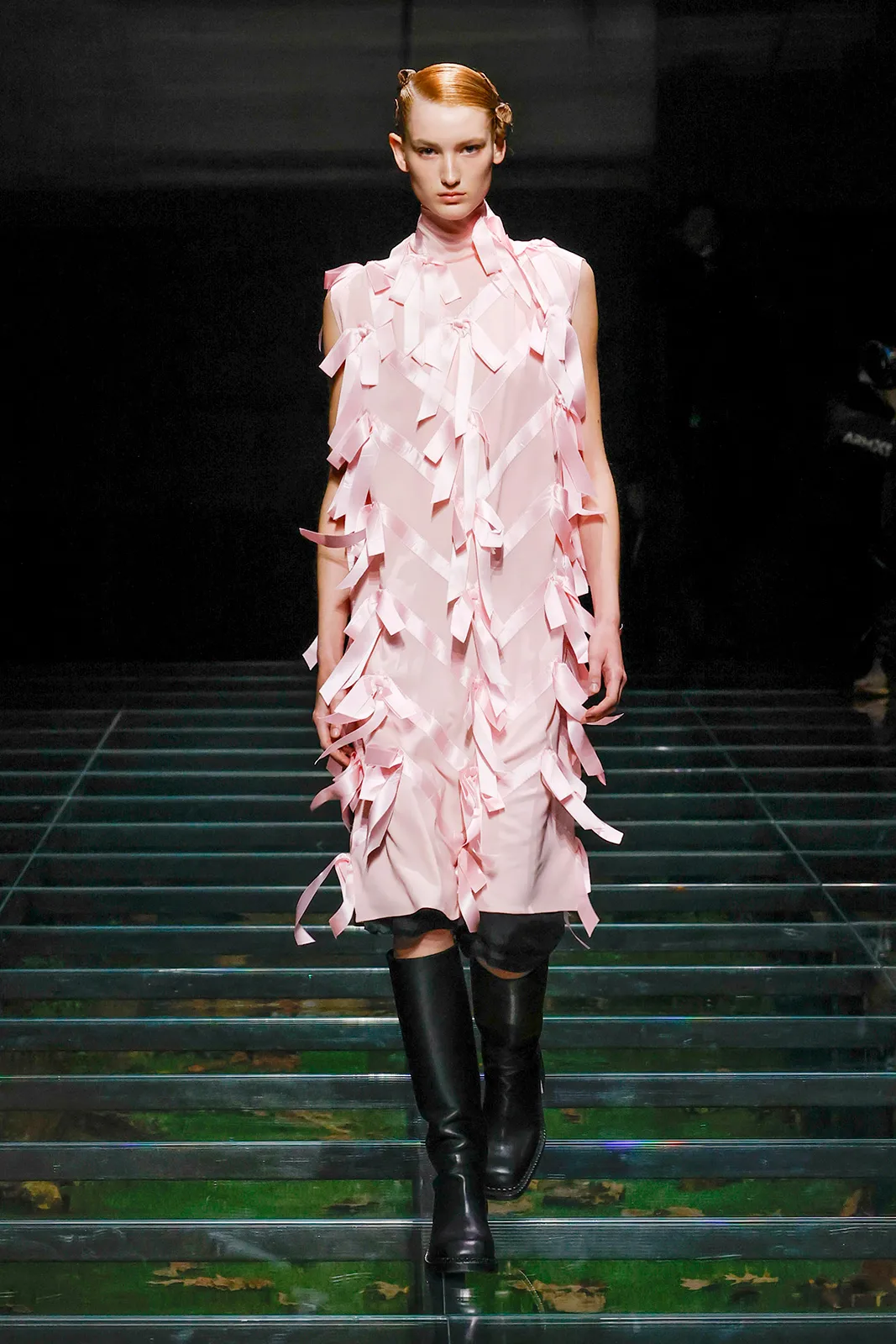
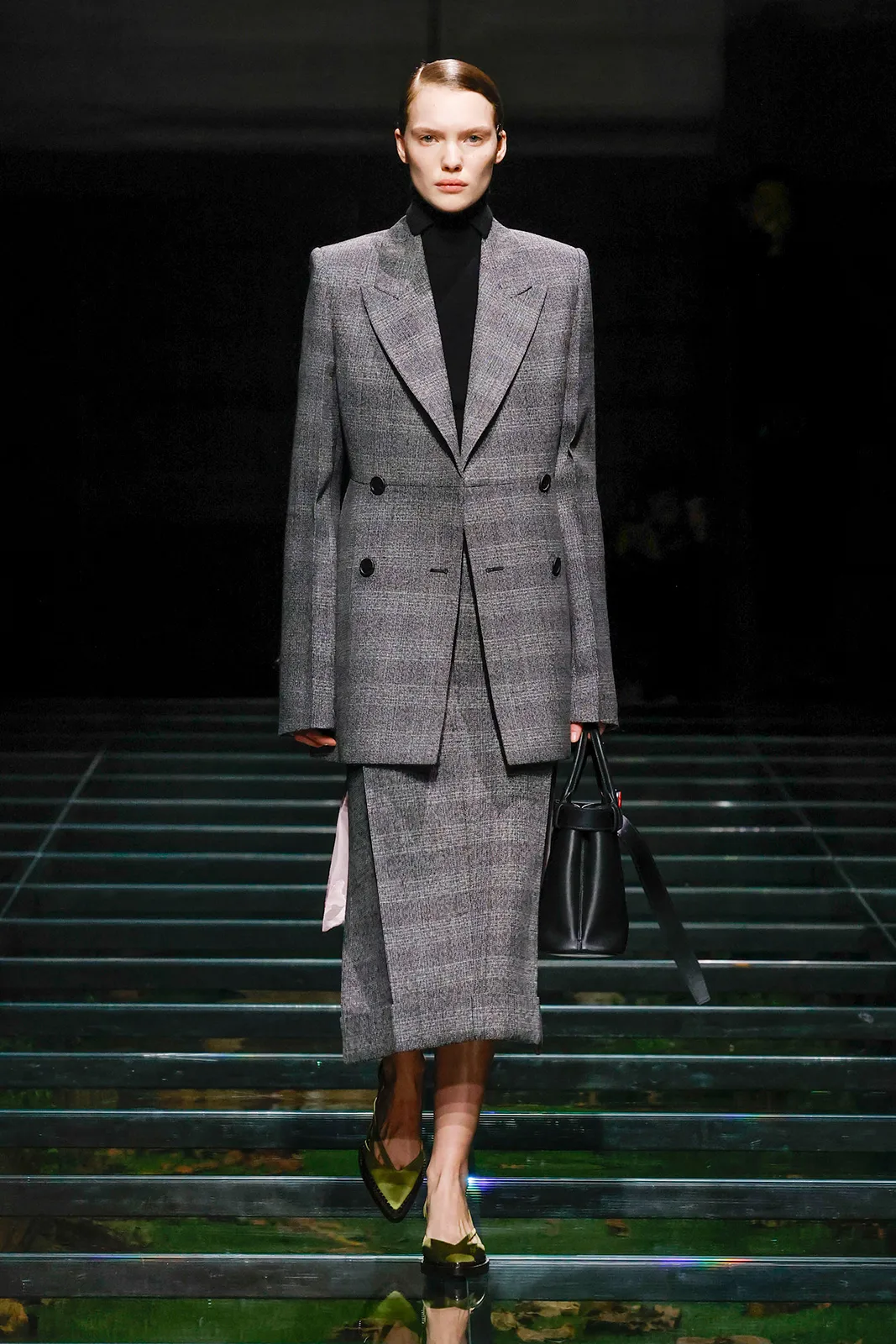
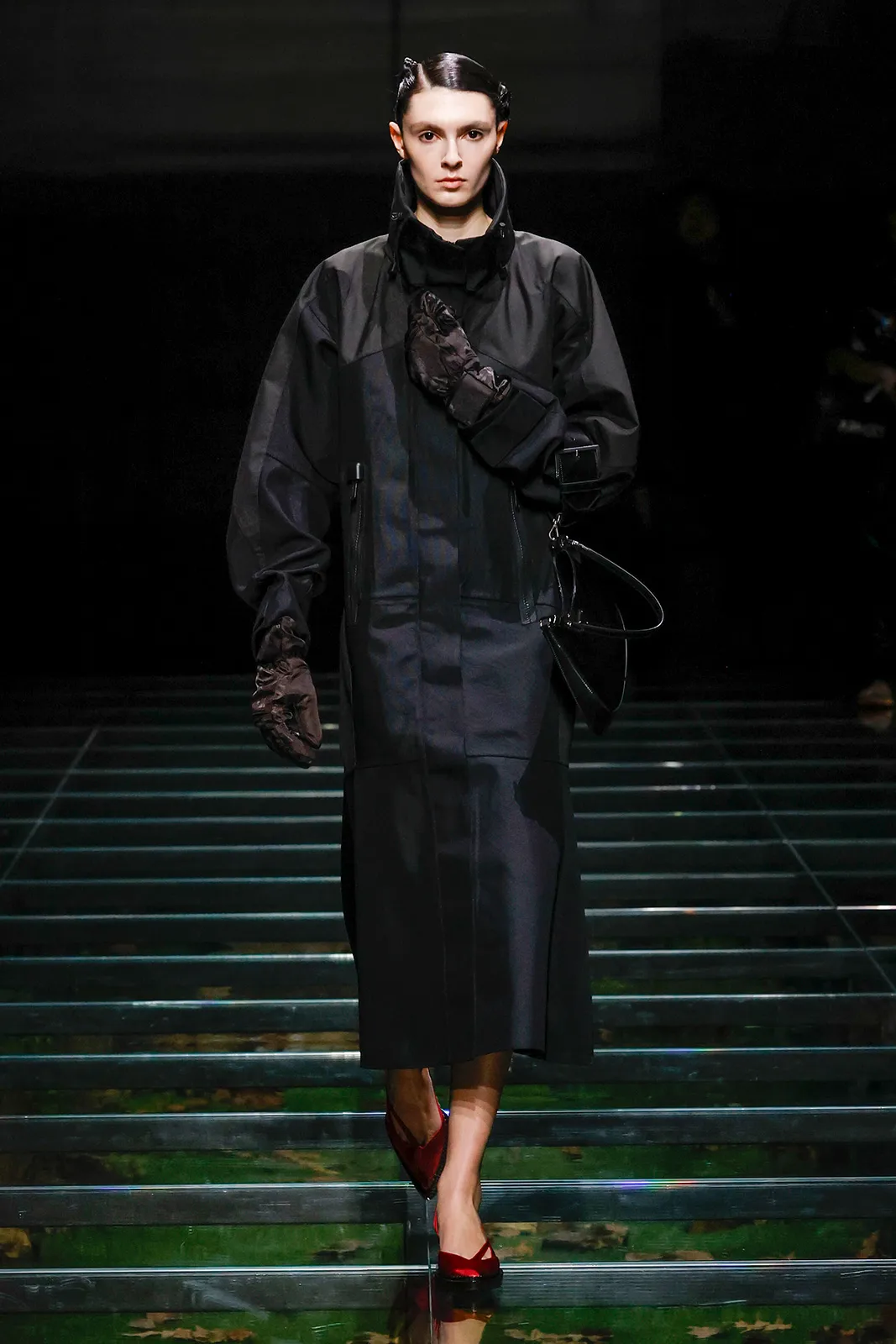
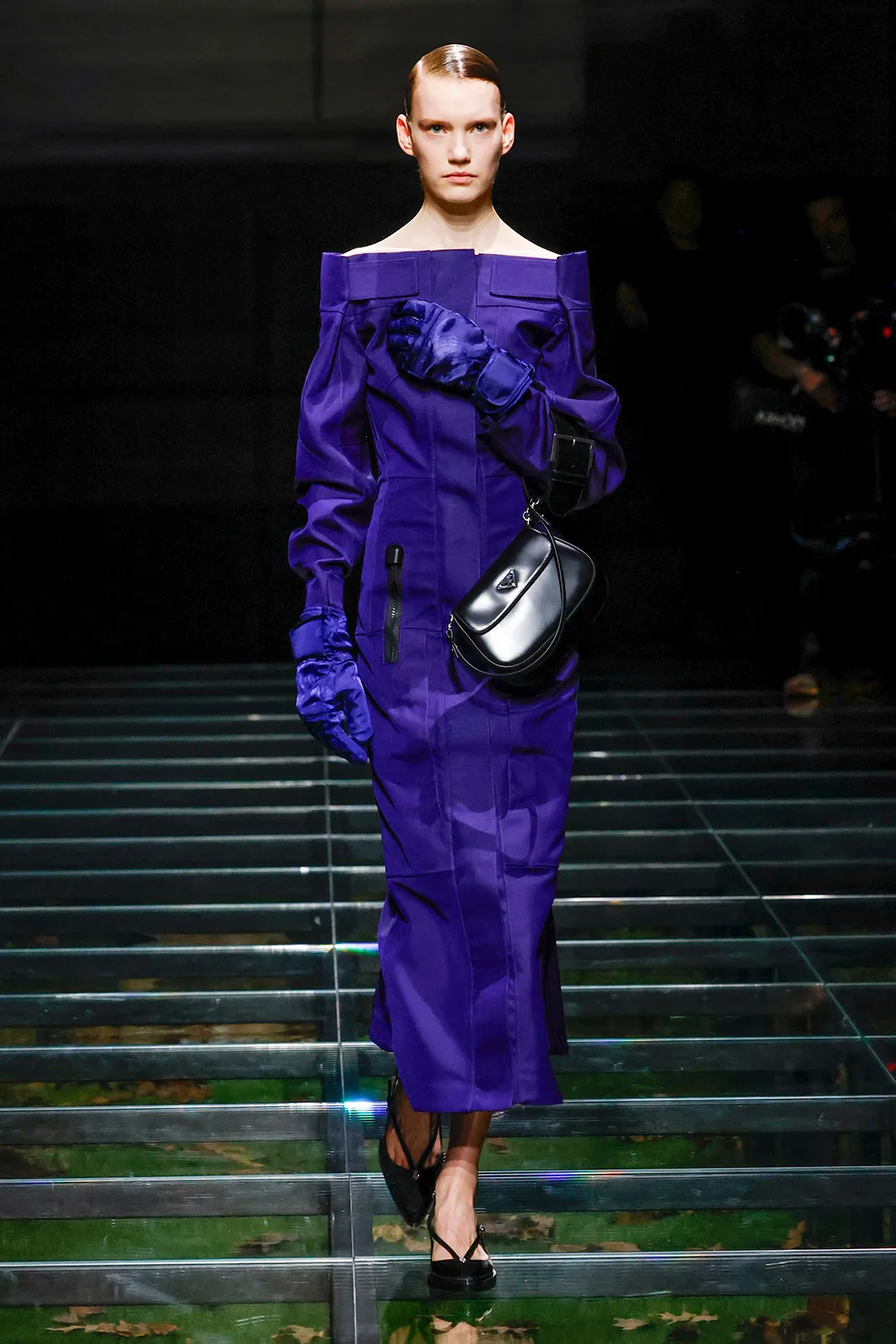
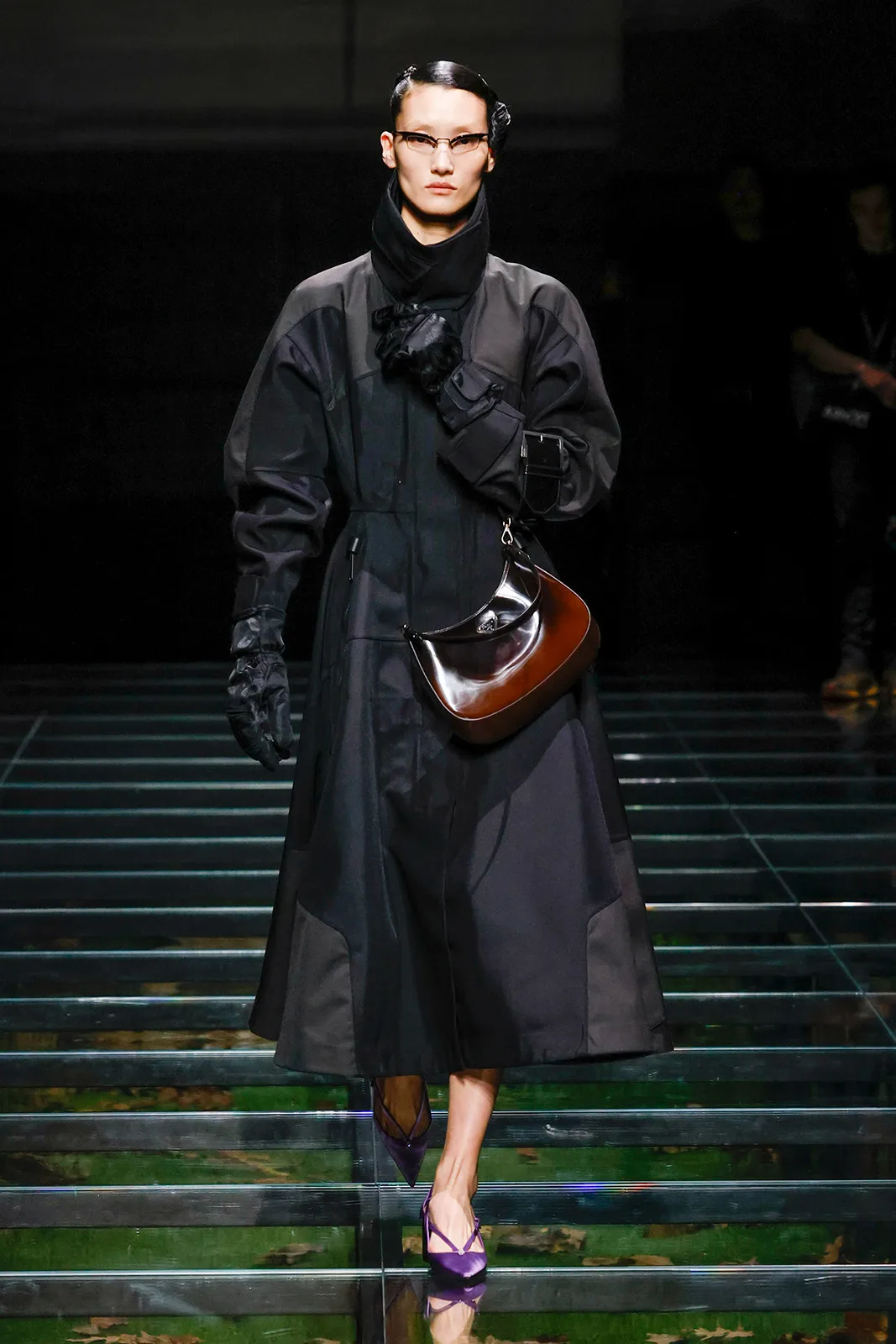
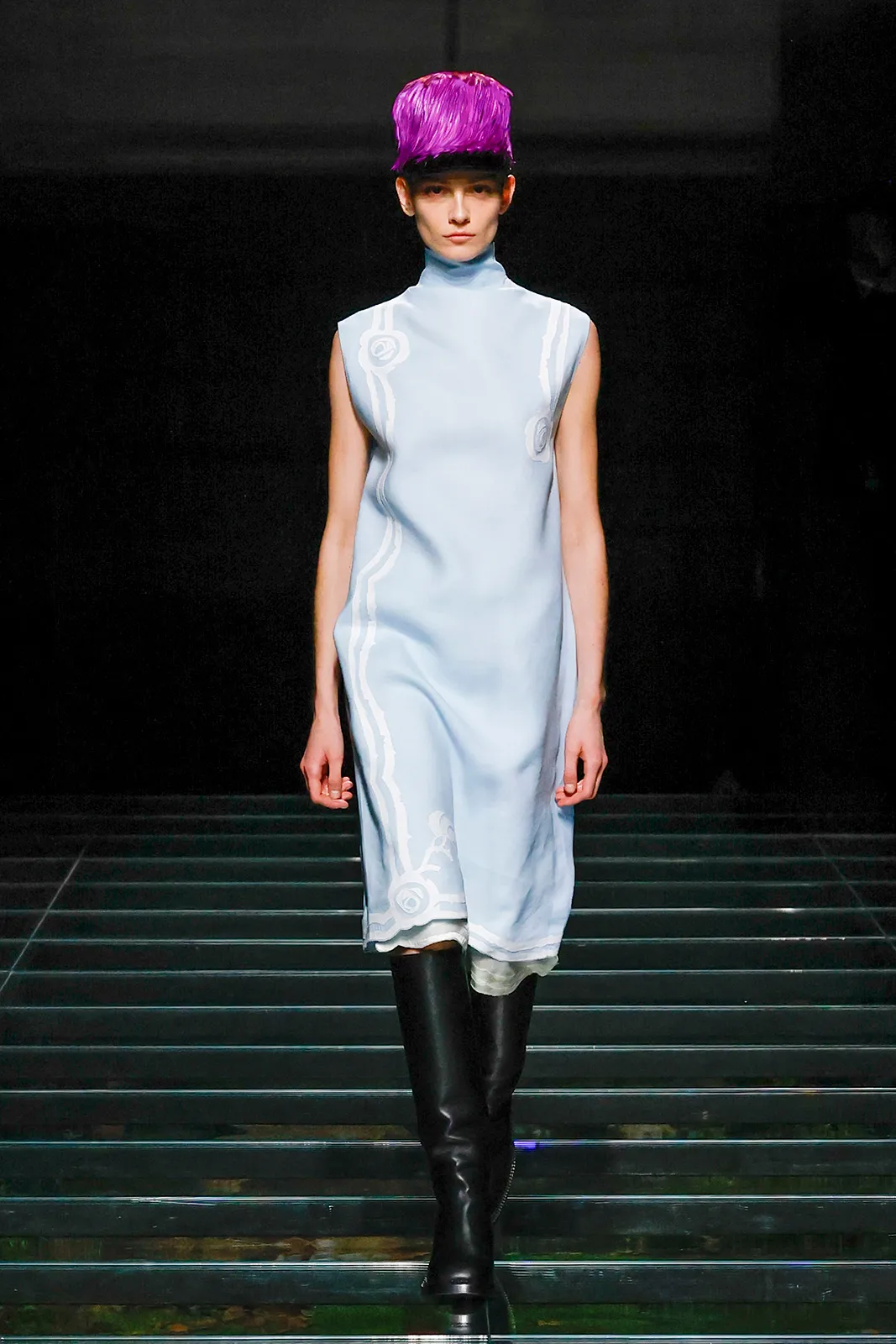
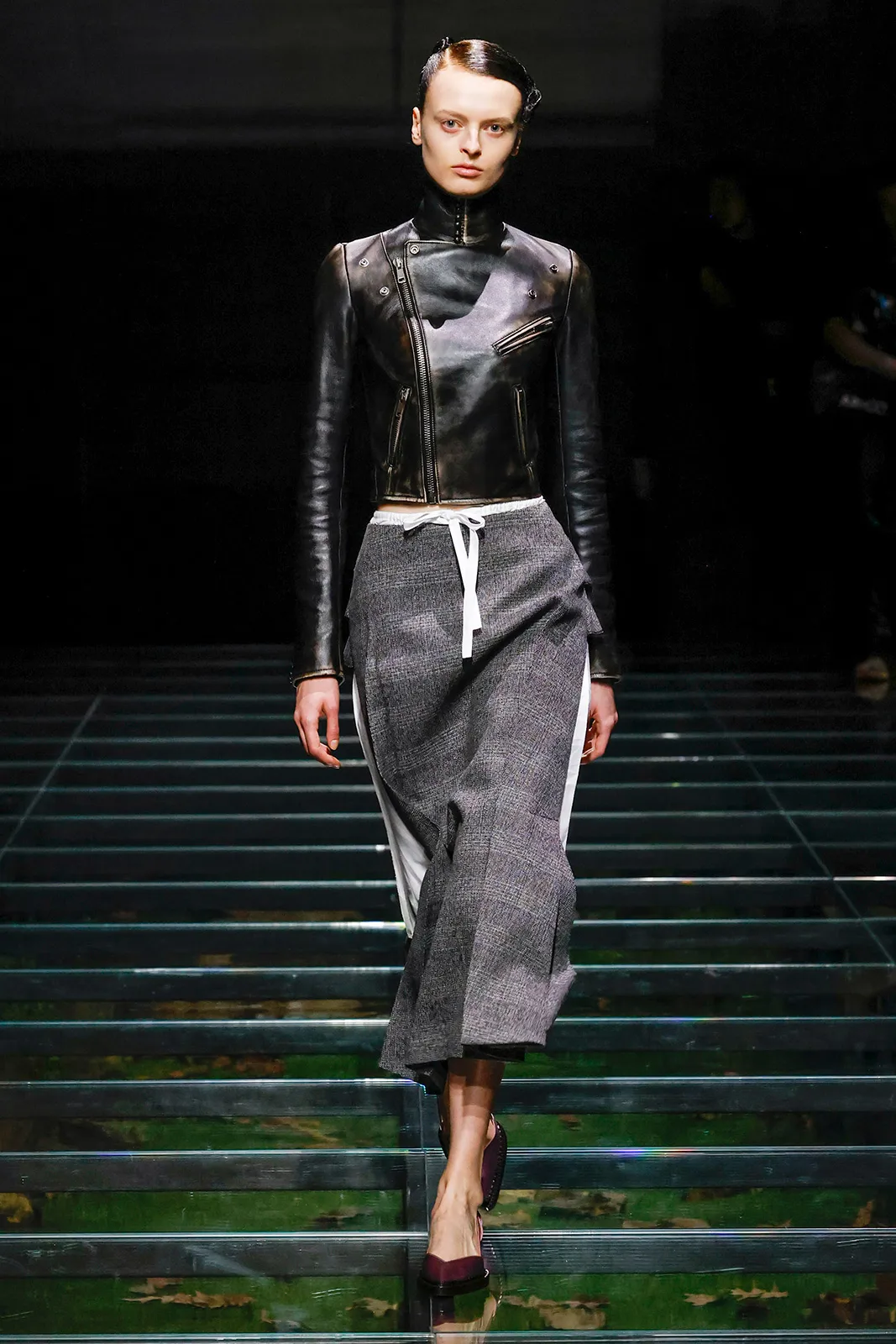
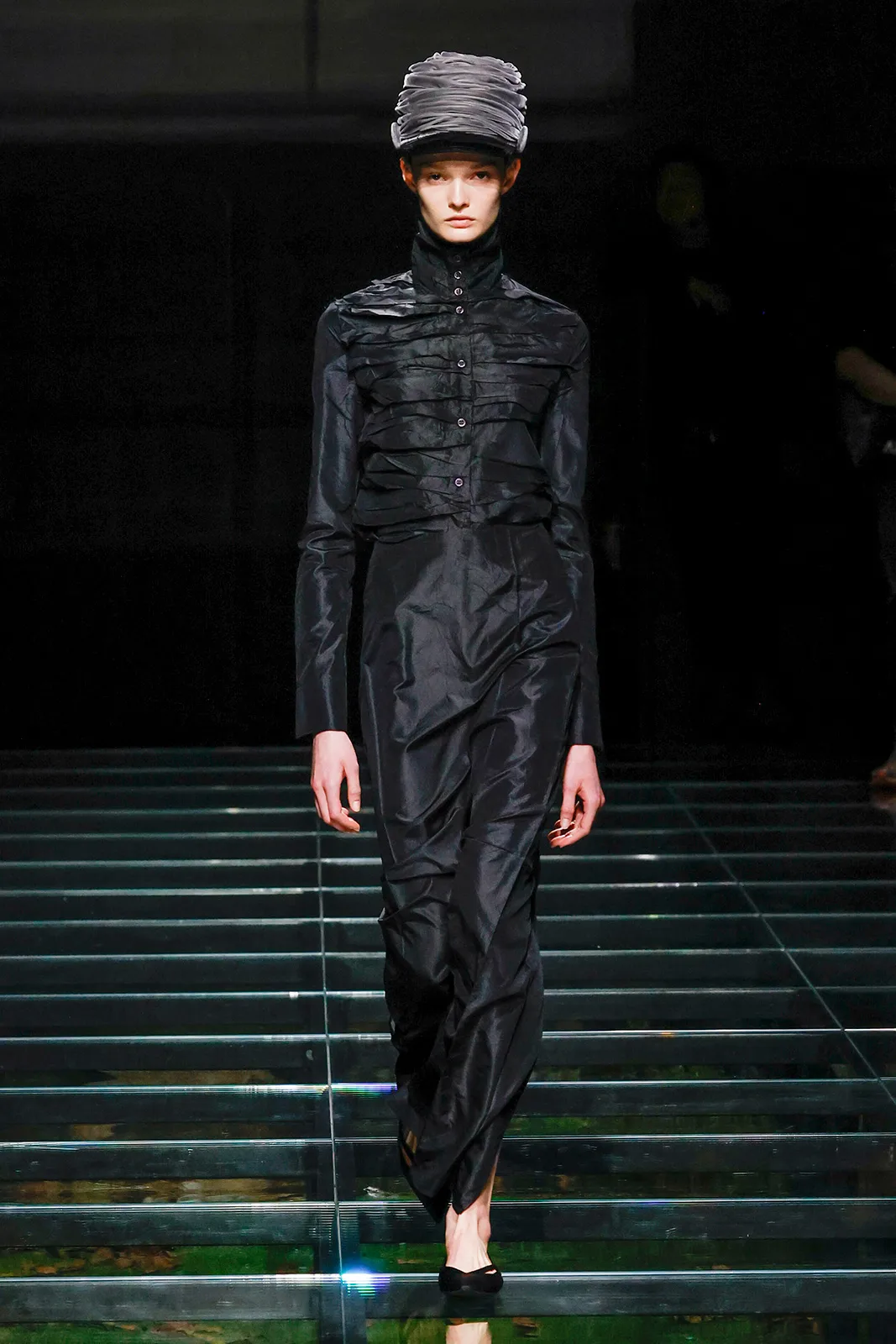
Miuccia and Raf have mastered the art of creating symbolic collections with a melancholic yet realistic approach in a dichotomy where time and the passage of it seem to play a big role in the process of understanding oneself. As much as this collection is a look back at the past, there is a clear distinction to be made regarding the approach we have towards it. This is not a nostalgic type of trip down memory lane; rather, it is a much more rational and history-based take on it. “There is a romance with the past,” and in this romance, there is space for everything, from the pretty, ideal, and sweet to the harsh, straightforward, and rigorous. This is reflected in the very evident way the collection is divided, with the first half being more flowy, soft, and delicate than the second. Just put the first and last look side by side, and the timeline is there.
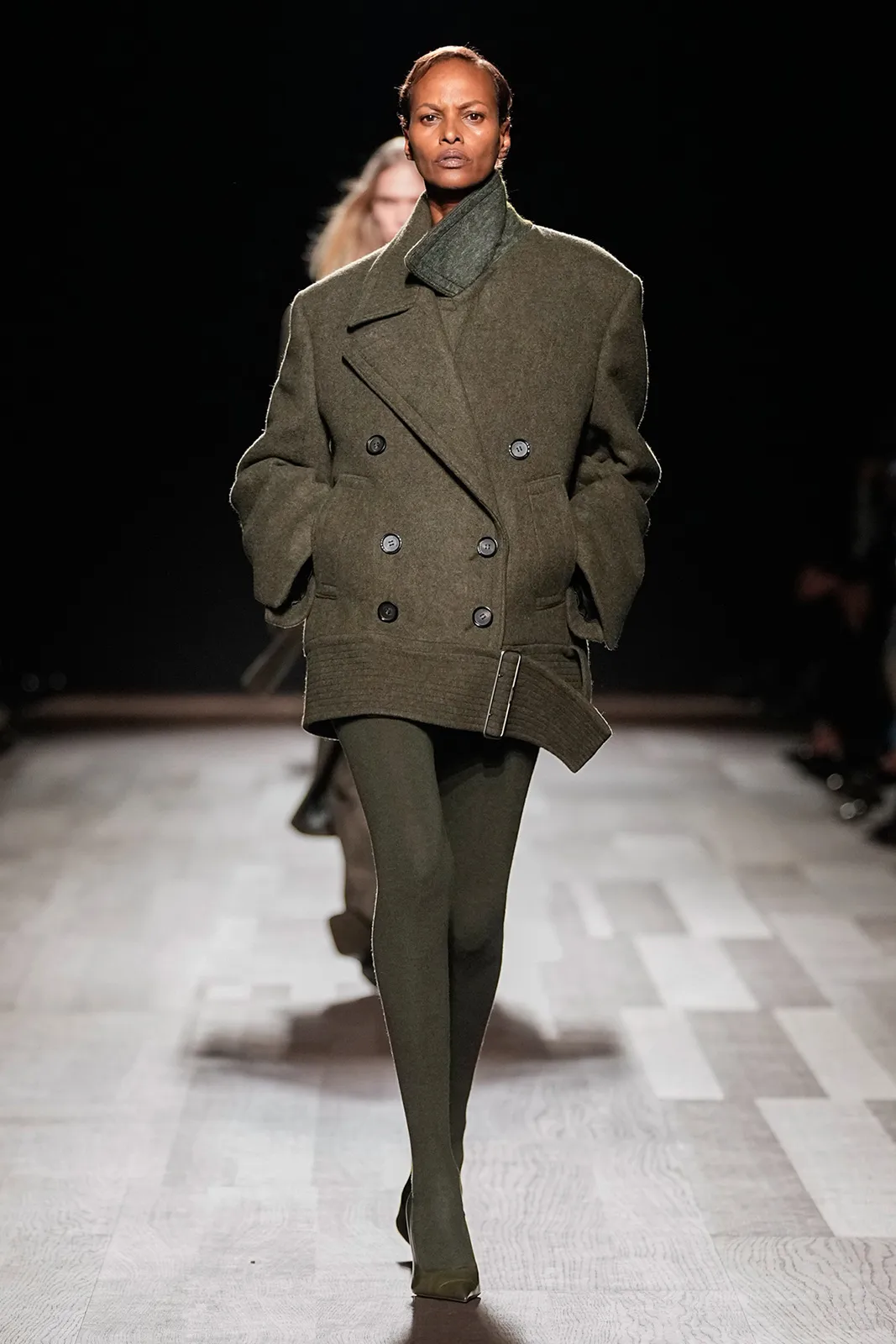
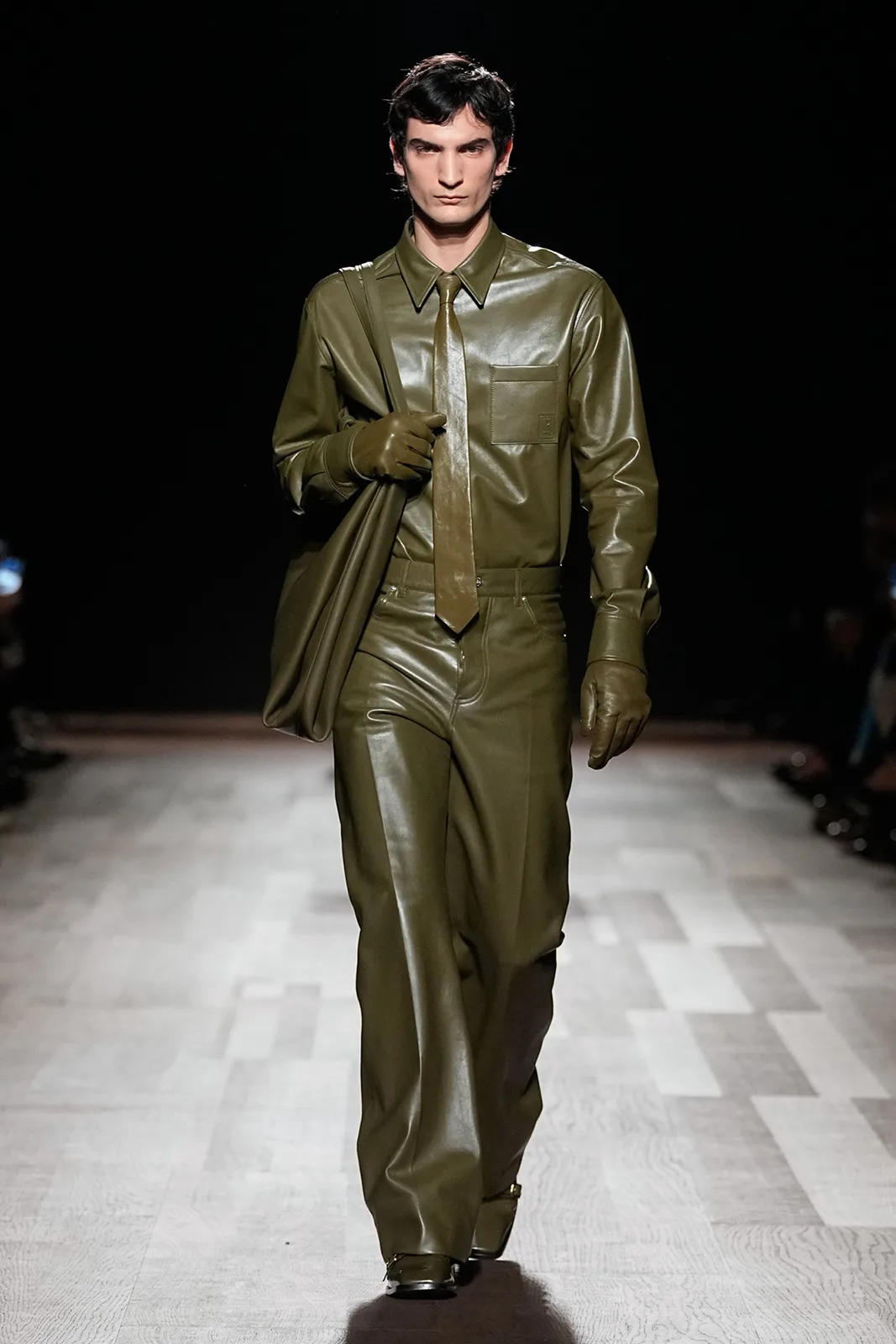
The omnipresent bows that are flooding us a little bit too much—not only our phone screens but also the runways—are also present here, but with this particular Prada touch that makes them look less coquette and more symbolic. Miss Prada and Mr. Simons are behind the decision to place them with a purpose deeper than the mere aesthetic, and with their infinite knowledge, they can do no wrong. Delicate faux fur details in dresses and some spark here and there in some knits have a warm retro feeling to them. The change in vibes is evident in the tailoring choices and the incorporation of heavier materials such as leather and those technical fabrics that Prada works so well with.
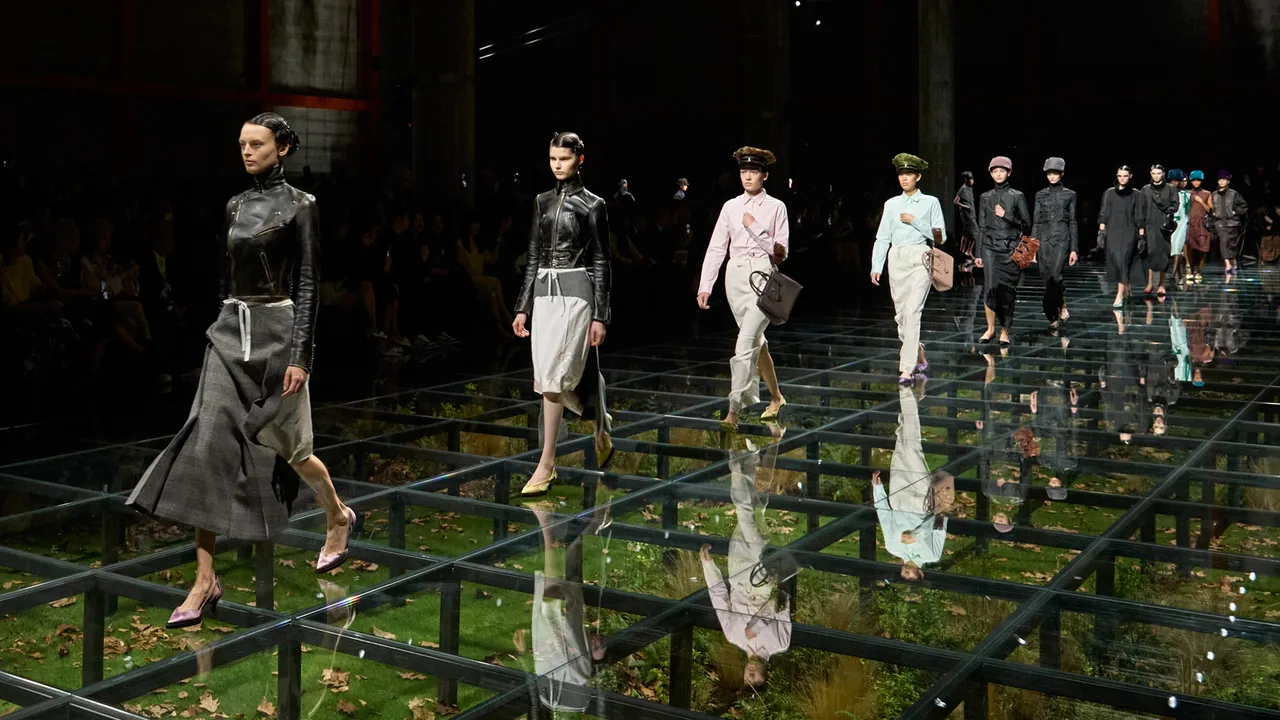
A detail that is less apparent but very telling is the way the skirts are constructed throughout the collection. On the first looks the shape is loose; there are some wide pleats that flow with the movement of the legs, and even the straight ones don't look restrictive at all. However, halfway through the show, the lines become more harsh and the silhouette more boxy, but the more telling element is the hem and the almost geometric shape the inside-out seam gives to the garment. The darker memories from the past are brought out by the military-inspired pieces like the sailor caps, pillbox hats, and coats that give us a reality check that reminds us that not necessarily the past was a better time.
The omnipresent bows that are flooding us a little bit too much—not only our phone screens but also the runways—are also present here, but with this particular Prada touch that makes them look less coquette and more symbolic. Miss Prada and Mr. Simons are behind the decision to place them with a purpose deeper than the mere aesthetic, and with their infinite knowledge, they can do no wrong. Delicate faux fur details in dresses and some spark here and there in some knits have a warm retro feeling to them. The change in vibes is evident in the tailoring choices and the incorporation of heavier materials such as leather and those technical fabrics that Prada works so well with.
A detail that is less apparent but very telling is the way the skirts are constructed throughout the collection. On the first looks the shape is loose; there are some wide pleats that flow with the movement of the legs, and even the straight ones don't look restrictive at all. However, halfway through the show, the lines become more harsh and the silhouette more boxy, but the more telling element is the hem and the almost geometric shape the inside-out seam gives to the garment. The darker memories from the past are brought out by the military-inspired pieces like the sailor caps, pillbox hats, and coats that give us a reality check that reminds us that not necessarily the past was a better time.
Sunnei
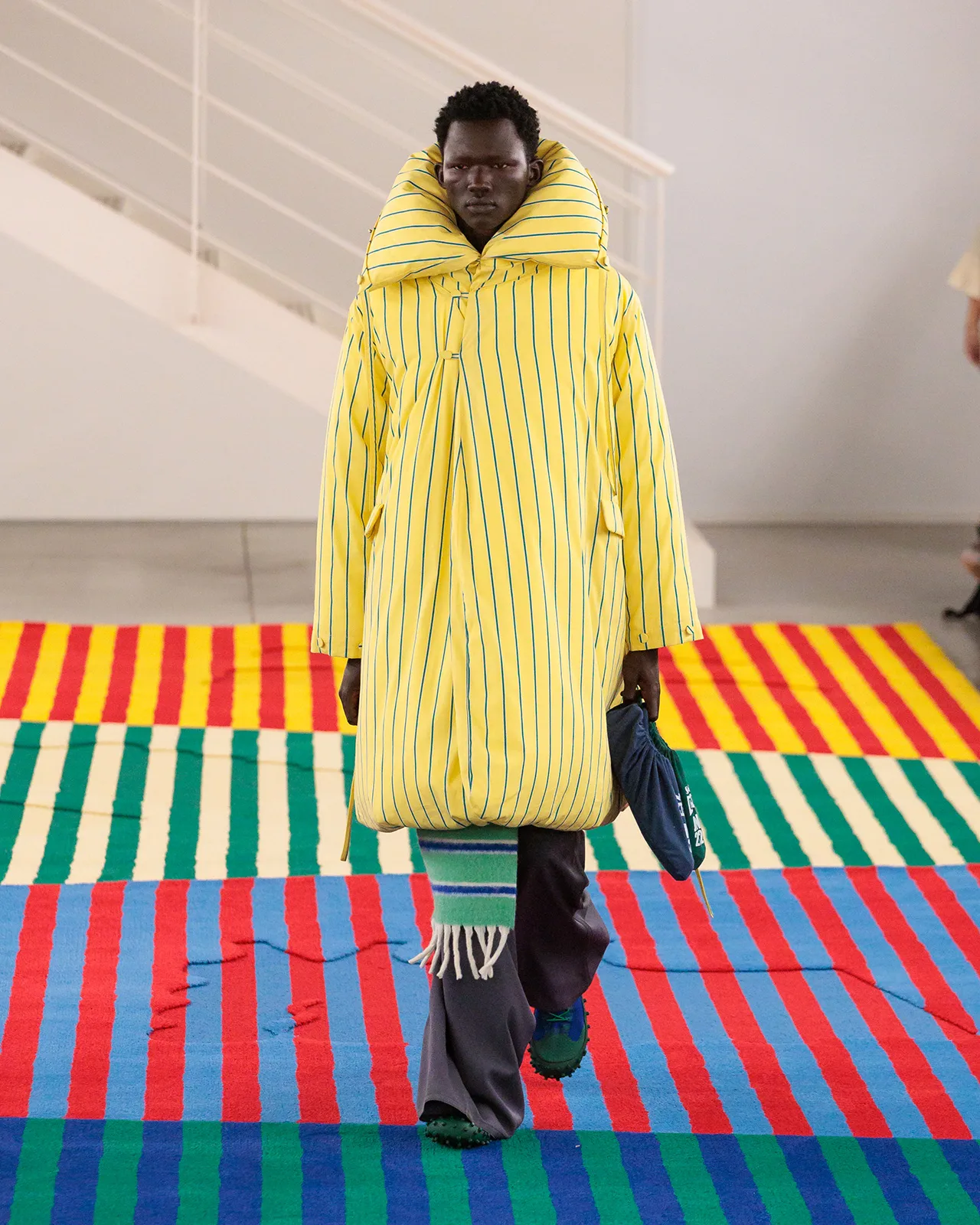
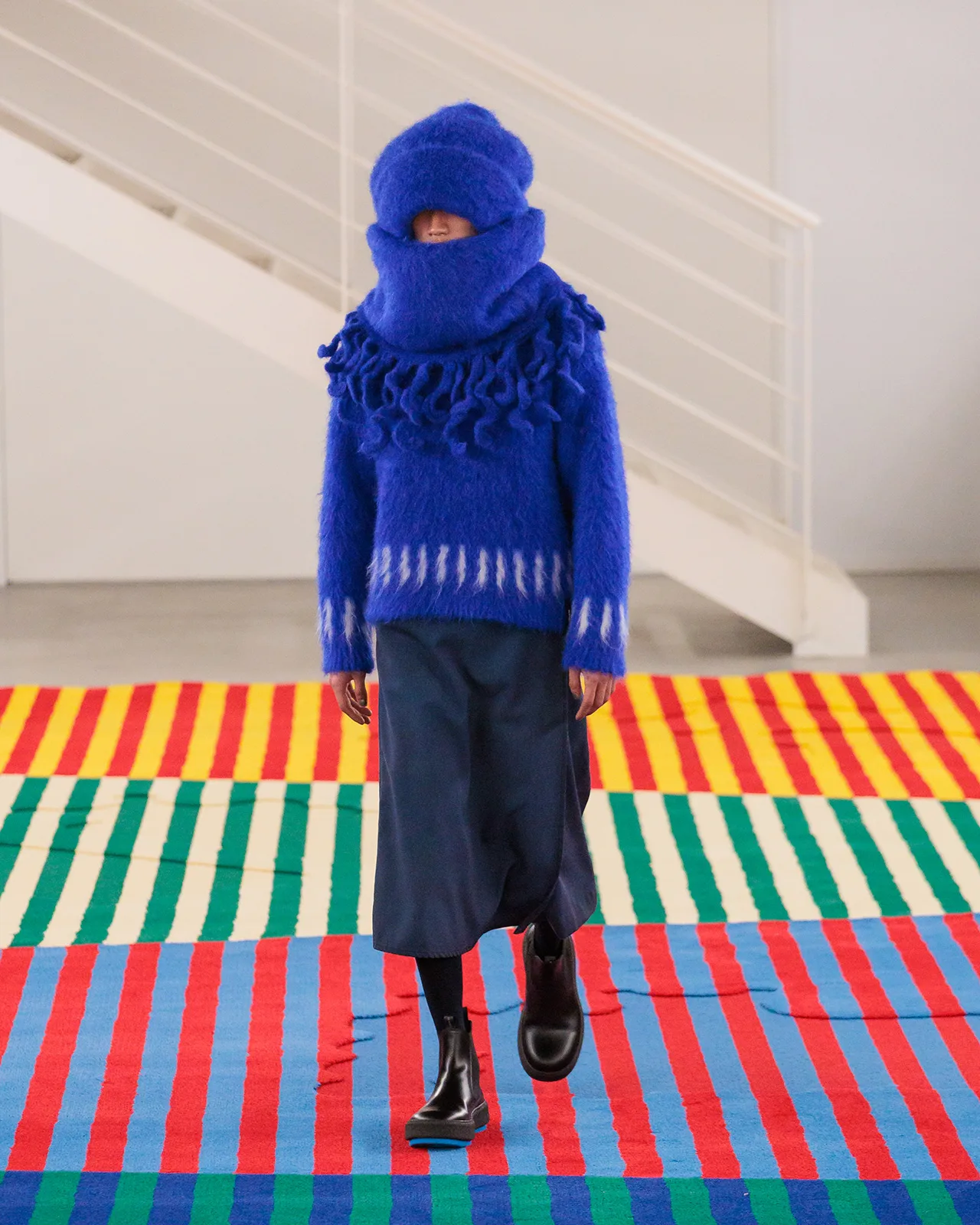
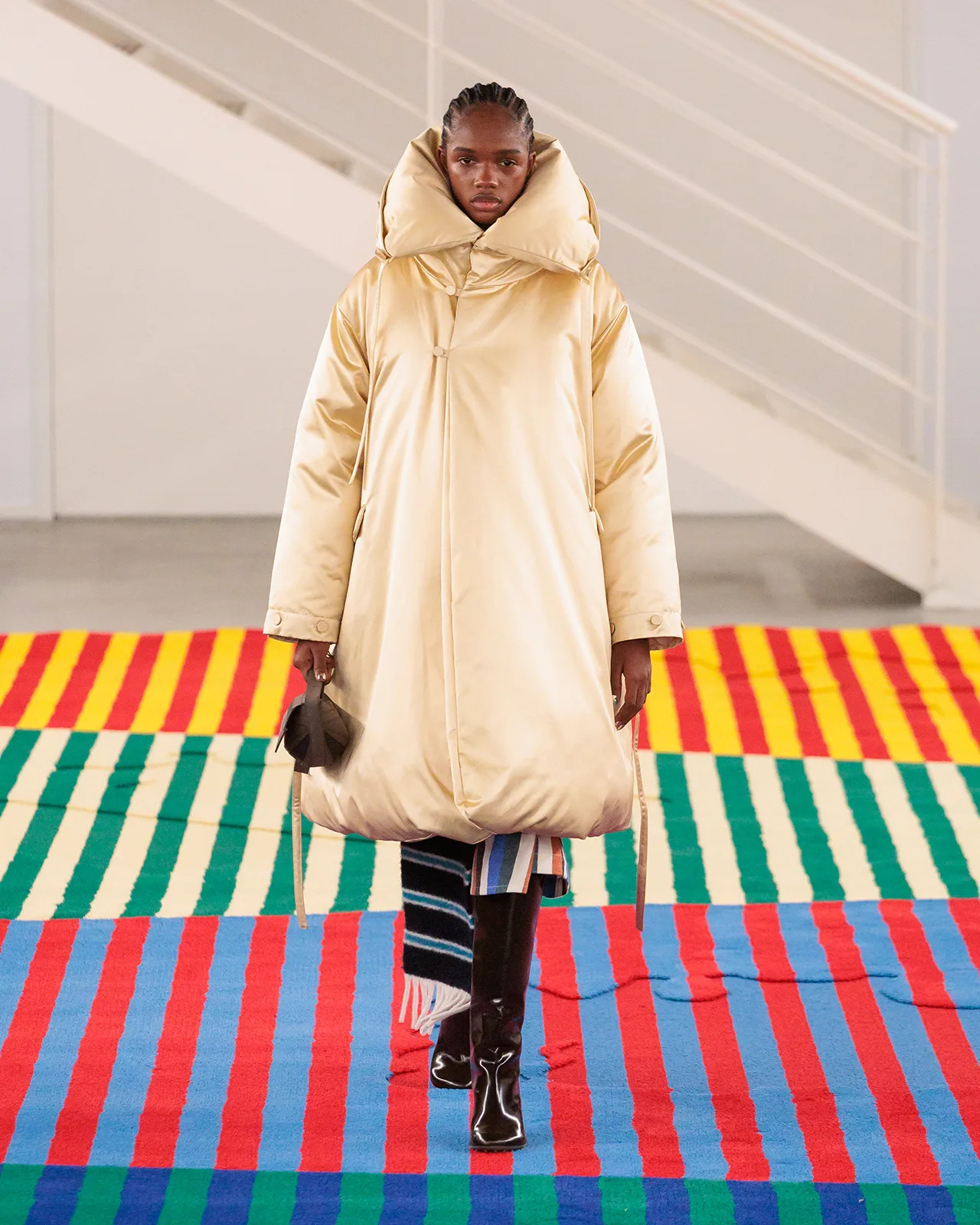
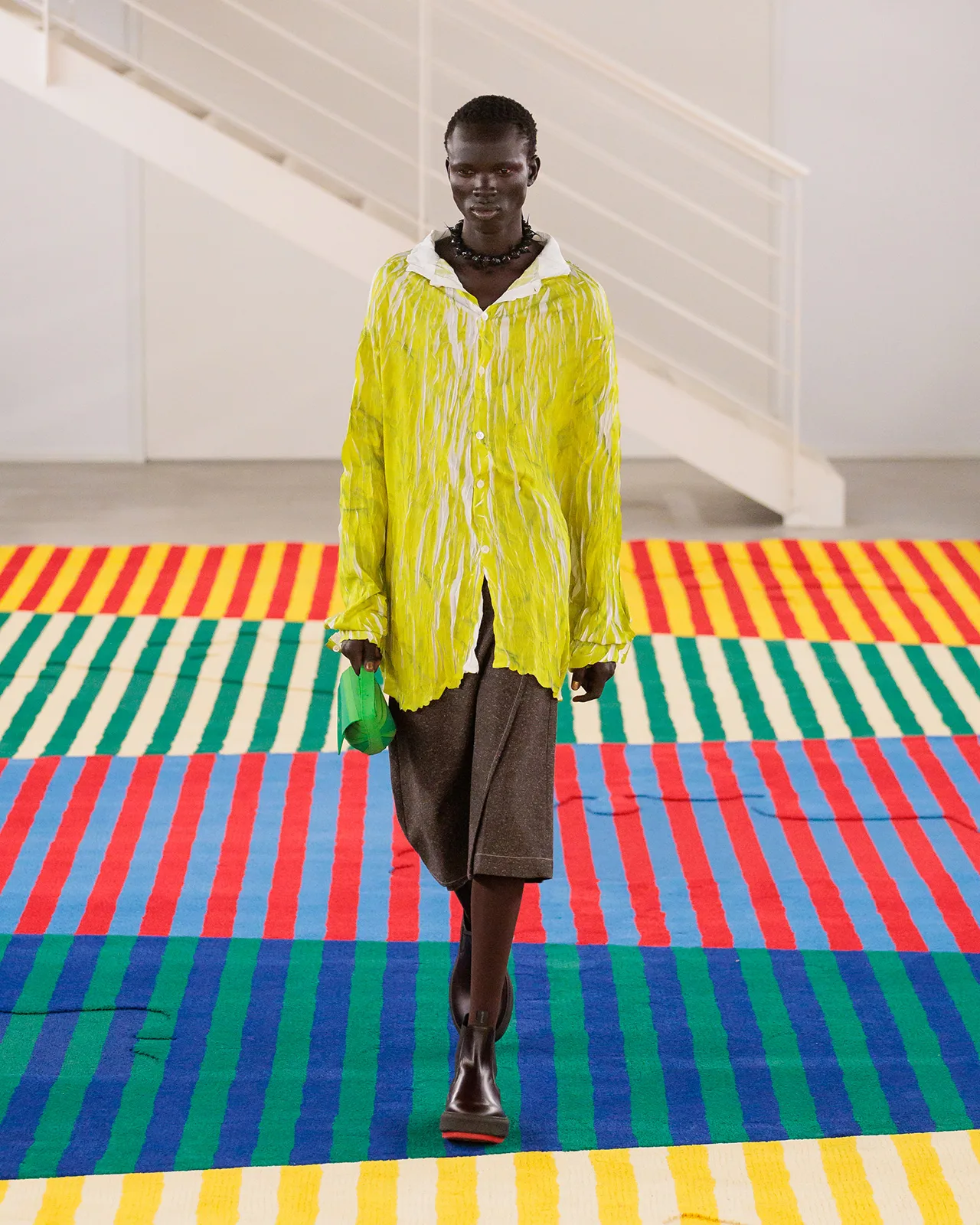
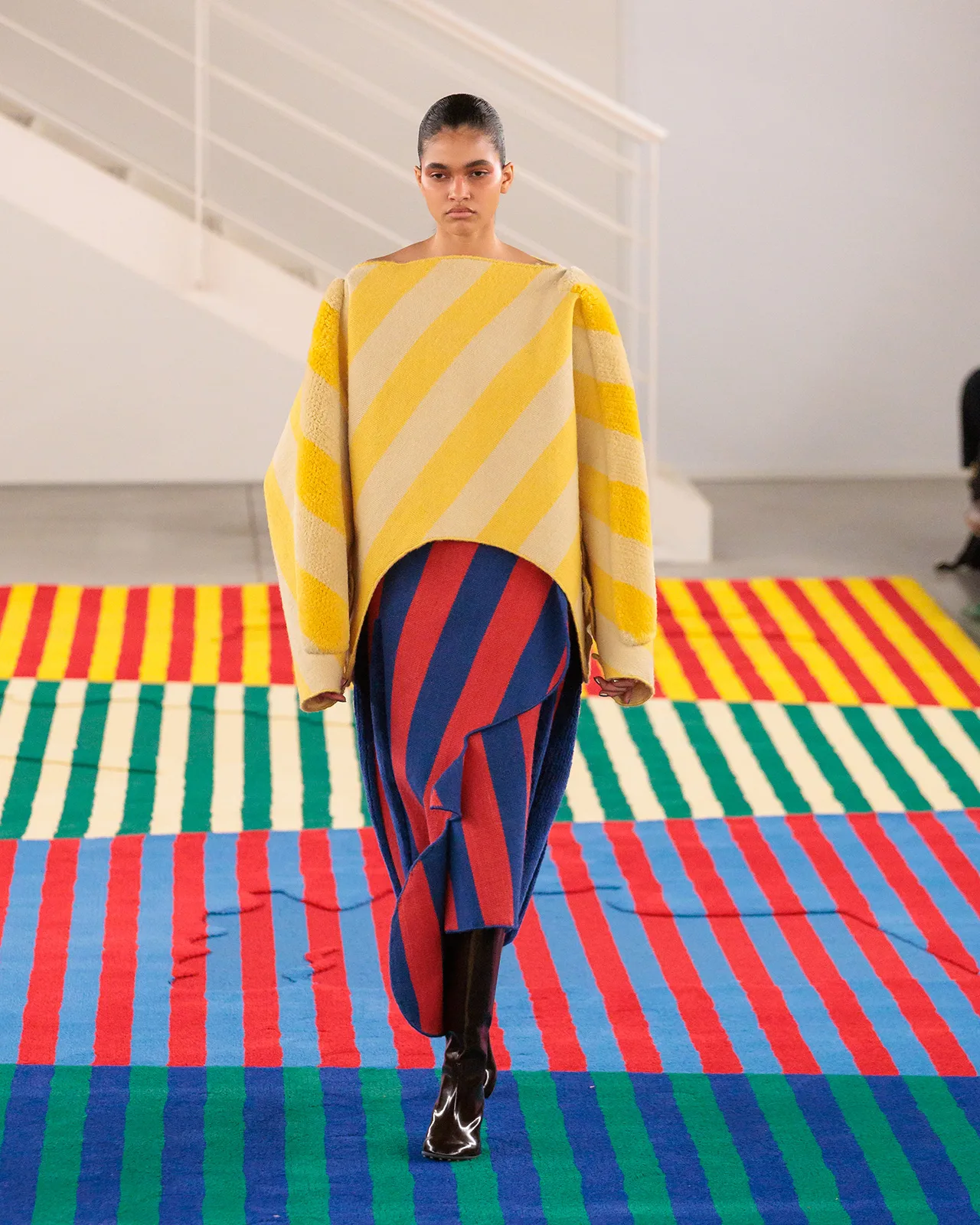
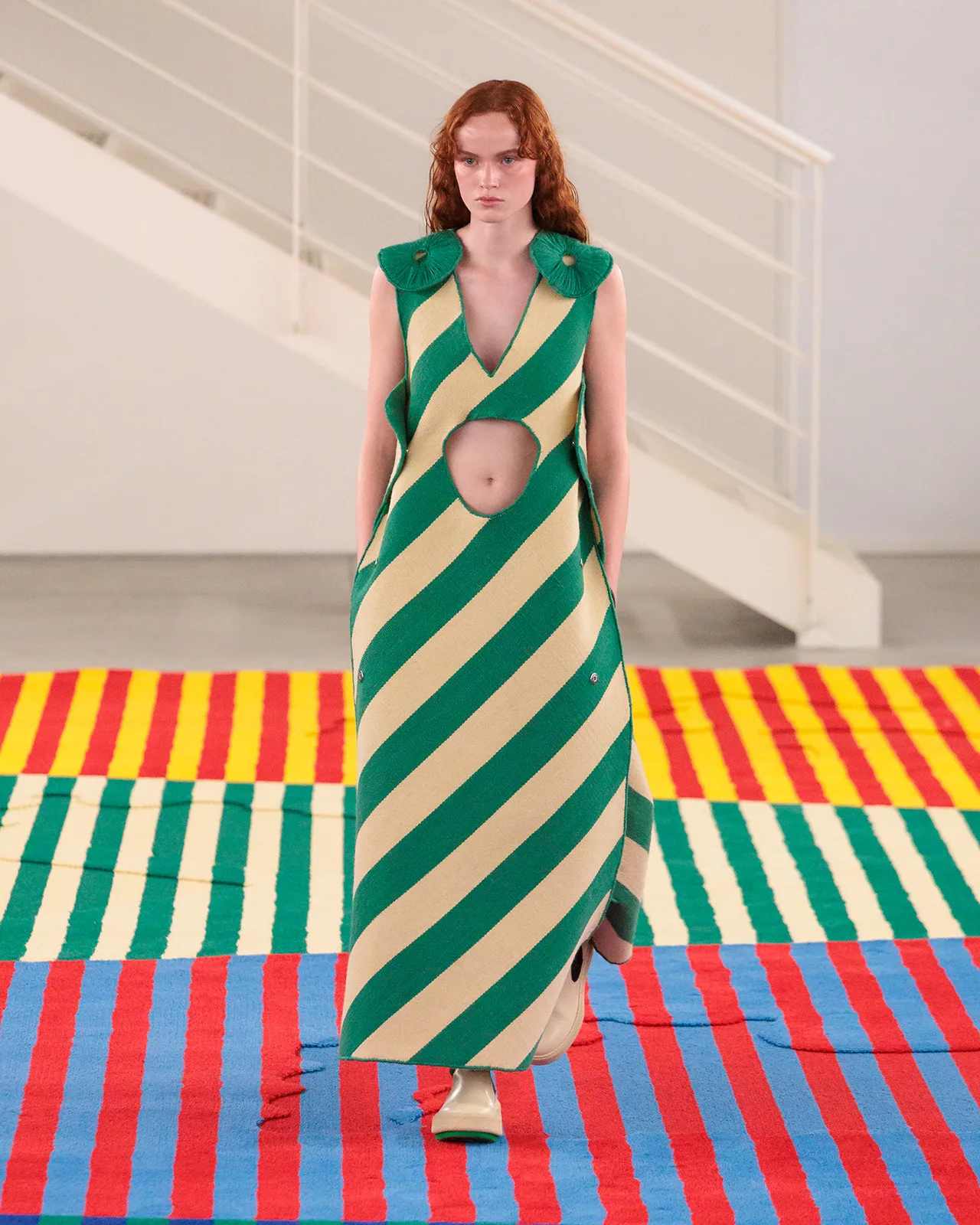
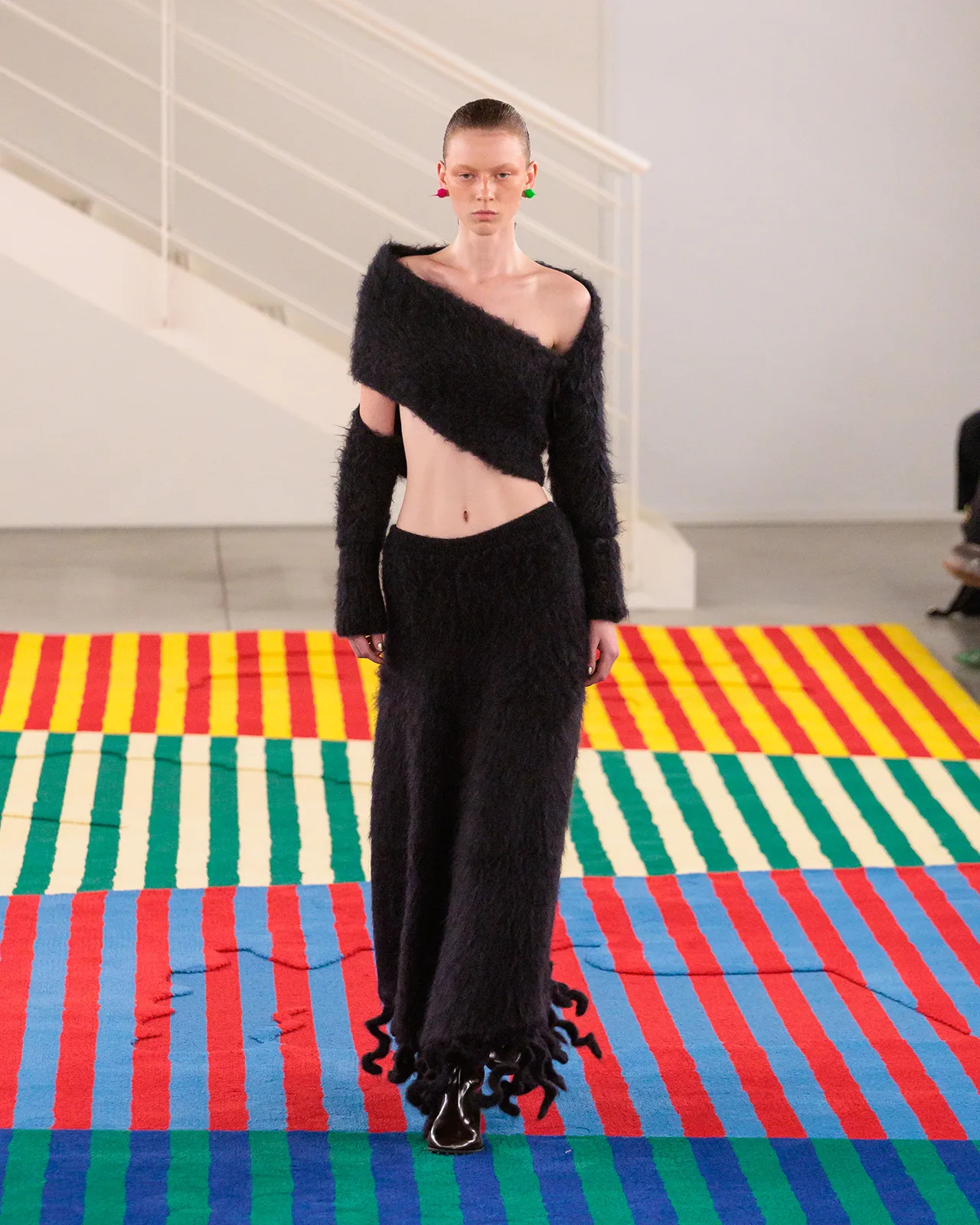
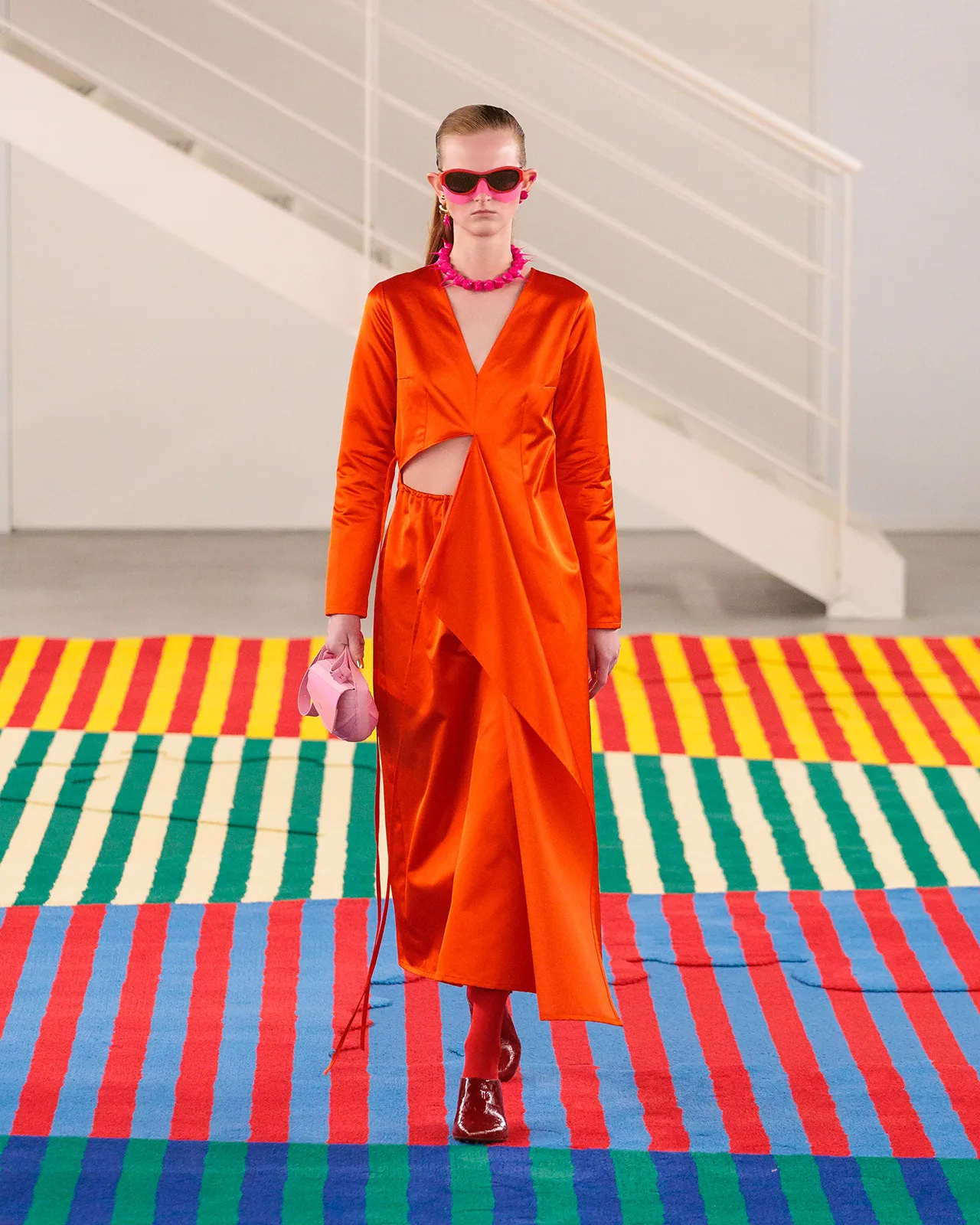
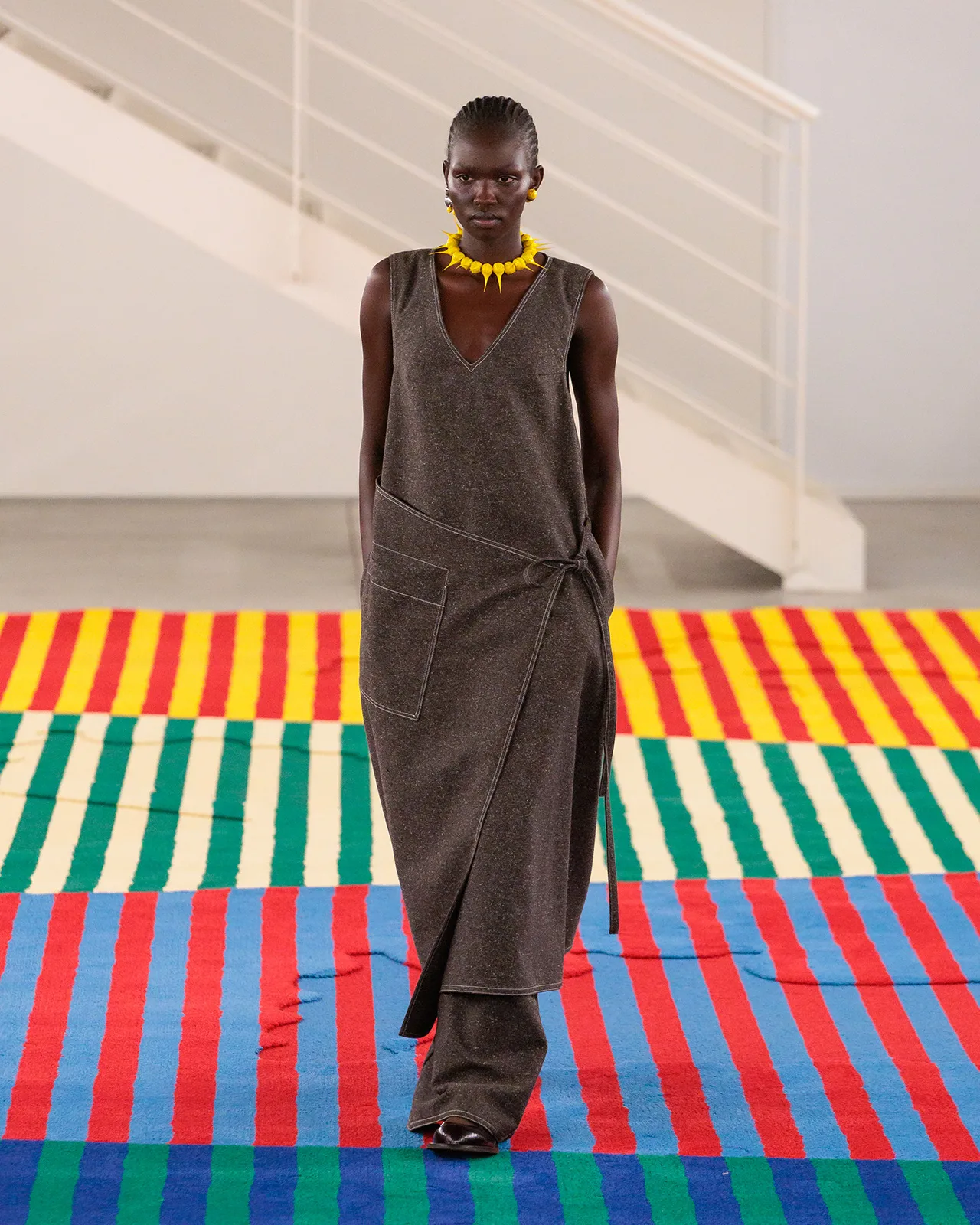
The concept of Sunnei is a very simple but effective one. Start with the traditional elements of a runway and exploit one of them. Last season, we saw how the judgement behind personal taste in fashion came into play when the audience rated the looks appearing on the runway. Well, this time it was time for the models to express themselves, and they did so by playing a recording of each one of them talking while walking down the stripe rug.
From “left, right” to “the world is on fire and we’re talking about fashion,” it's impressive how adding voices and thoughts to the generally silent models adds character to the pieces they are wearing; suddenly, it’s a human wearing the clothes and not a silent, perfect mannequin. It’s a unique concept that makes it easier to imagine ourselves as fashionable, opinionated individuals as the ones walking in front of us.
When it comes to the actual clothes, rugs, and animals, they were at the core of it all. In the most colourful looks of the collection, the models were matching the big rug that covered the runway, wearing garments like dresses, sweaters, and vests made only with a big piece of fabric, cutted and closed only with snap buttons that allow them to become completely flat when unbuttoned, revealing funny animal shapes that camouflage perfectly with the floor. Behind this is not just a silly concept, but Sunnei’s own take on circularity and craftsmanship, with the rug being created in Milan by CC-Tapis as a reflection of how an object can transform into clothes and vice versa.
The nonstriped looks were interesting as well, with big cosy feather coats with an XL collar that hug the head, thicc hats and scarves with fringe that all together resemble an octopus, and reinterpreted jewellery and bags with neon spikes and scratches on them. A collaboration between the brand and Camper scheduled for June of this year was teased, with some models carrying shoes with covers with the information over them. It seems like we won't take our eyes off of Sunnei anytime soon.
From “left, right” to “the world is on fire and we’re talking about fashion,” it's impressive how adding voices and thoughts to the generally silent models adds character to the pieces they are wearing; suddenly, it’s a human wearing the clothes and not a silent, perfect mannequin. It’s a unique concept that makes it easier to imagine ourselves as fashionable, opinionated individuals as the ones walking in front of us.
When it comes to the actual clothes, rugs, and animals, they were at the core of it all. In the most colourful looks of the collection, the models were matching the big rug that covered the runway, wearing garments like dresses, sweaters, and vests made only with a big piece of fabric, cutted and closed only with snap buttons that allow them to become completely flat when unbuttoned, revealing funny animal shapes that camouflage perfectly with the floor. Behind this is not just a silly concept, but Sunnei’s own take on circularity and craftsmanship, with the rug being created in Milan by CC-Tapis as a reflection of how an object can transform into clothes and vice versa.
The nonstriped looks were interesting as well, with big cosy feather coats with an XL collar that hug the head, thicc hats and scarves with fringe that all together resemble an octopus, and reinterpreted jewellery and bags with neon spikes and scratches on them. A collaboration between the brand and Camper scheduled for June of this year was teased, with some models carrying shoes with covers with the information over them. It seems like we won't take our eyes off of Sunnei anytime soon.
GCDS
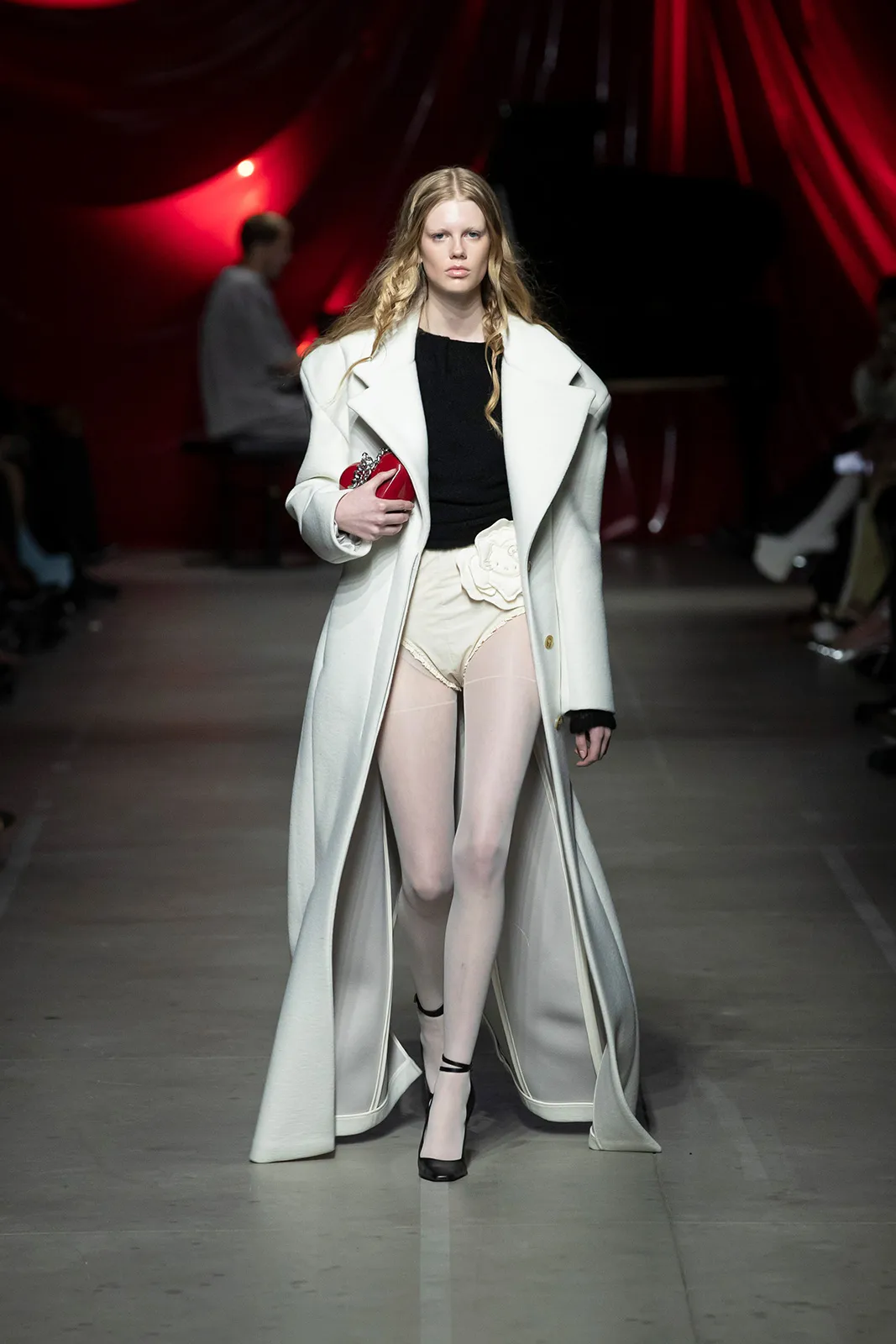
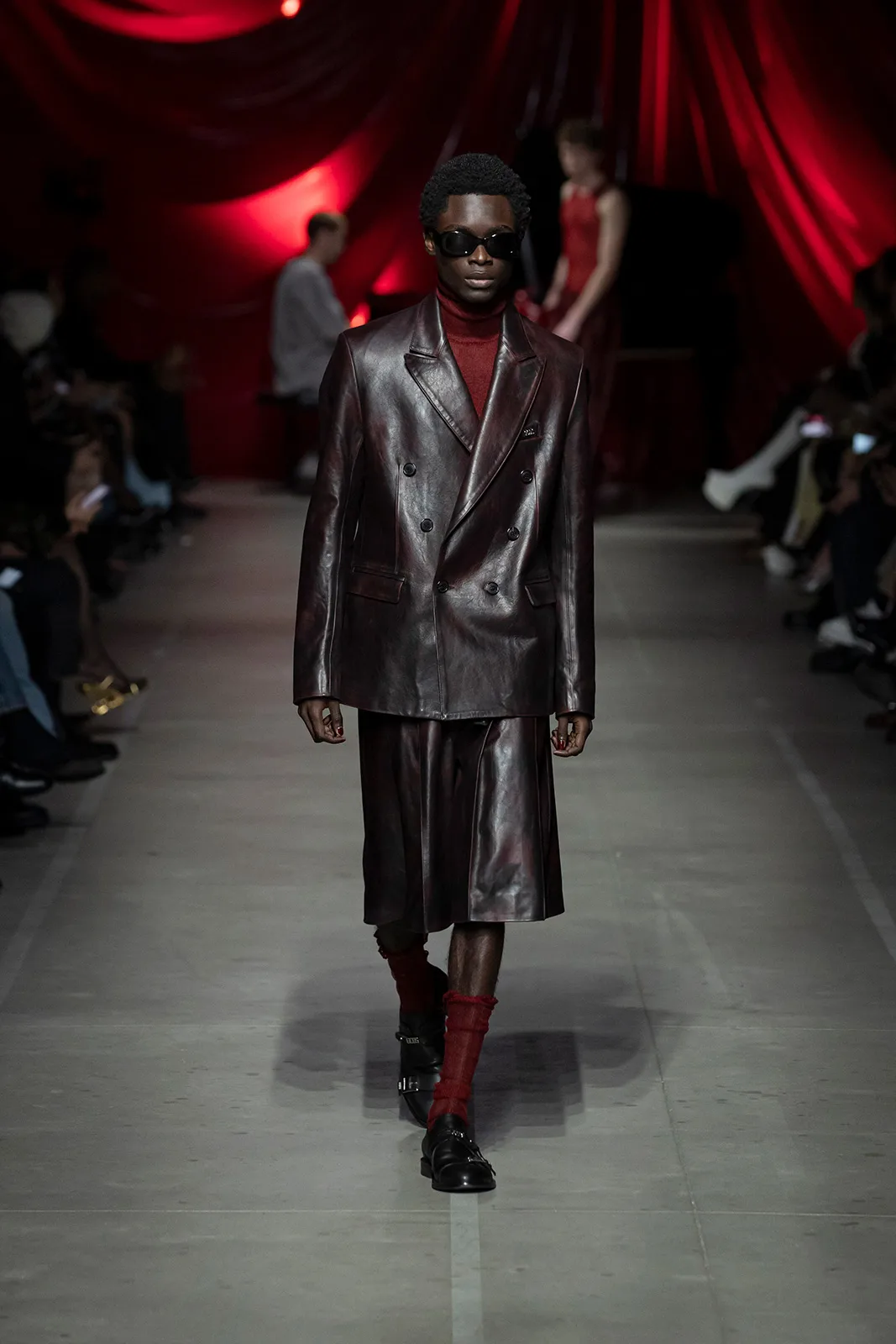
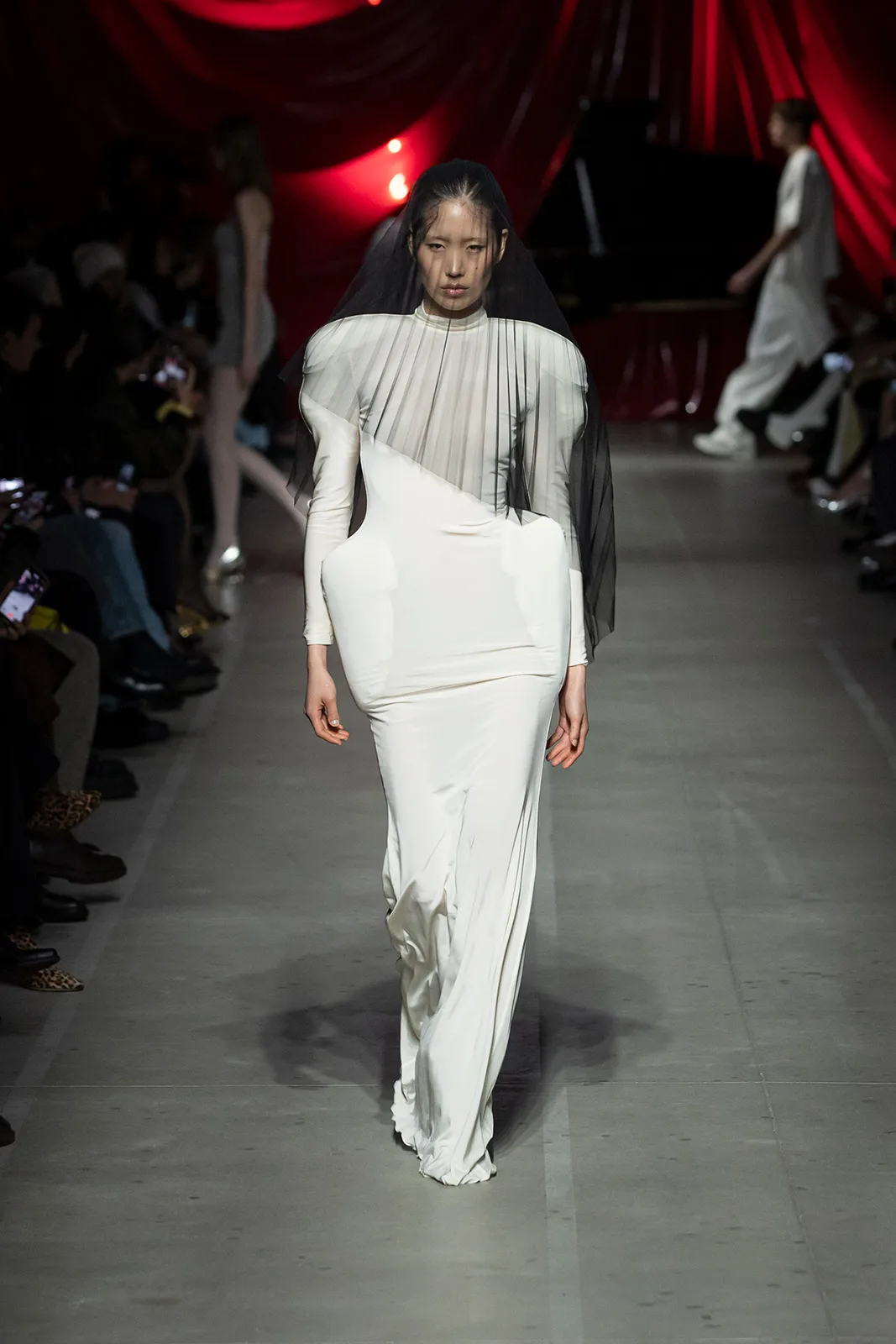
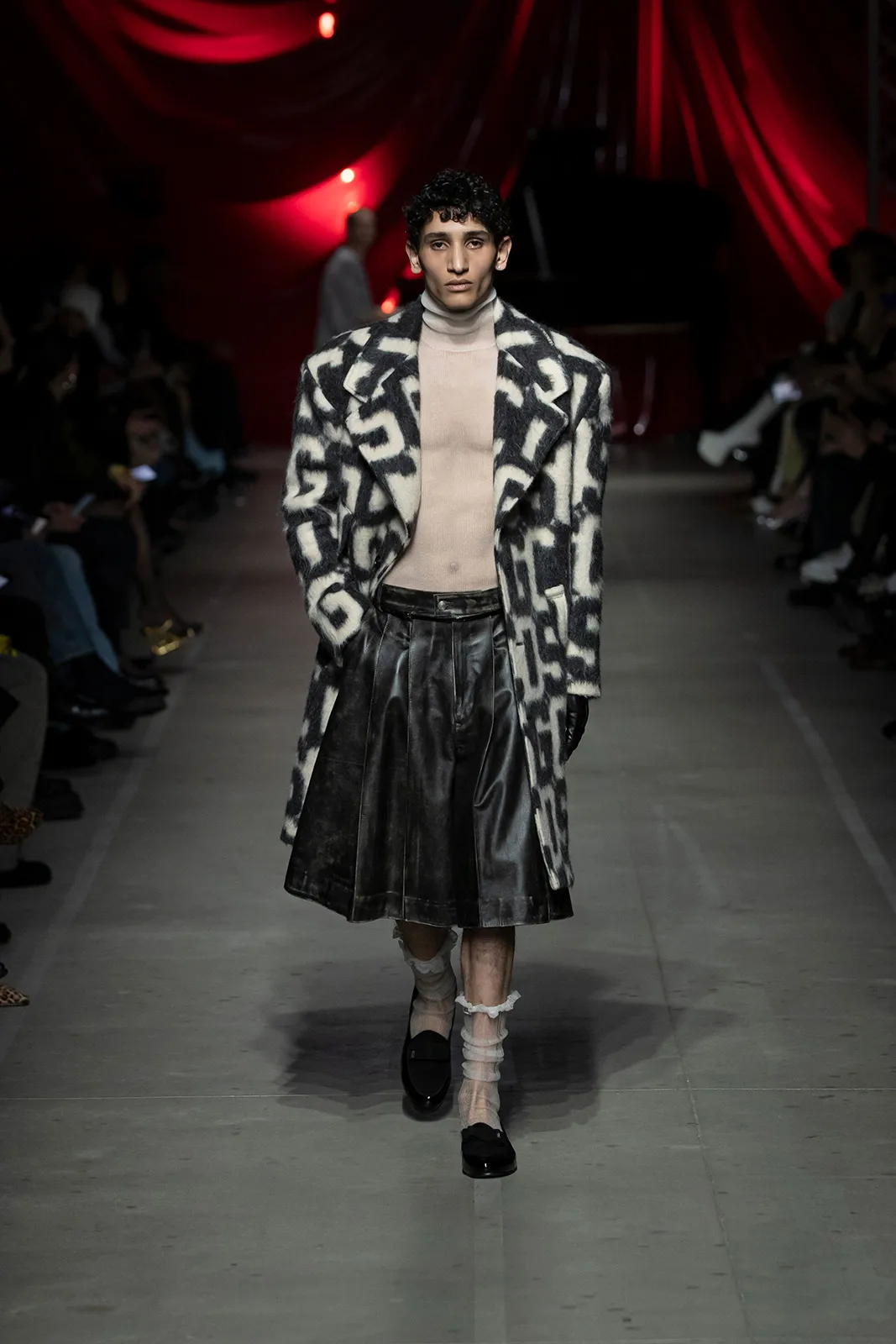
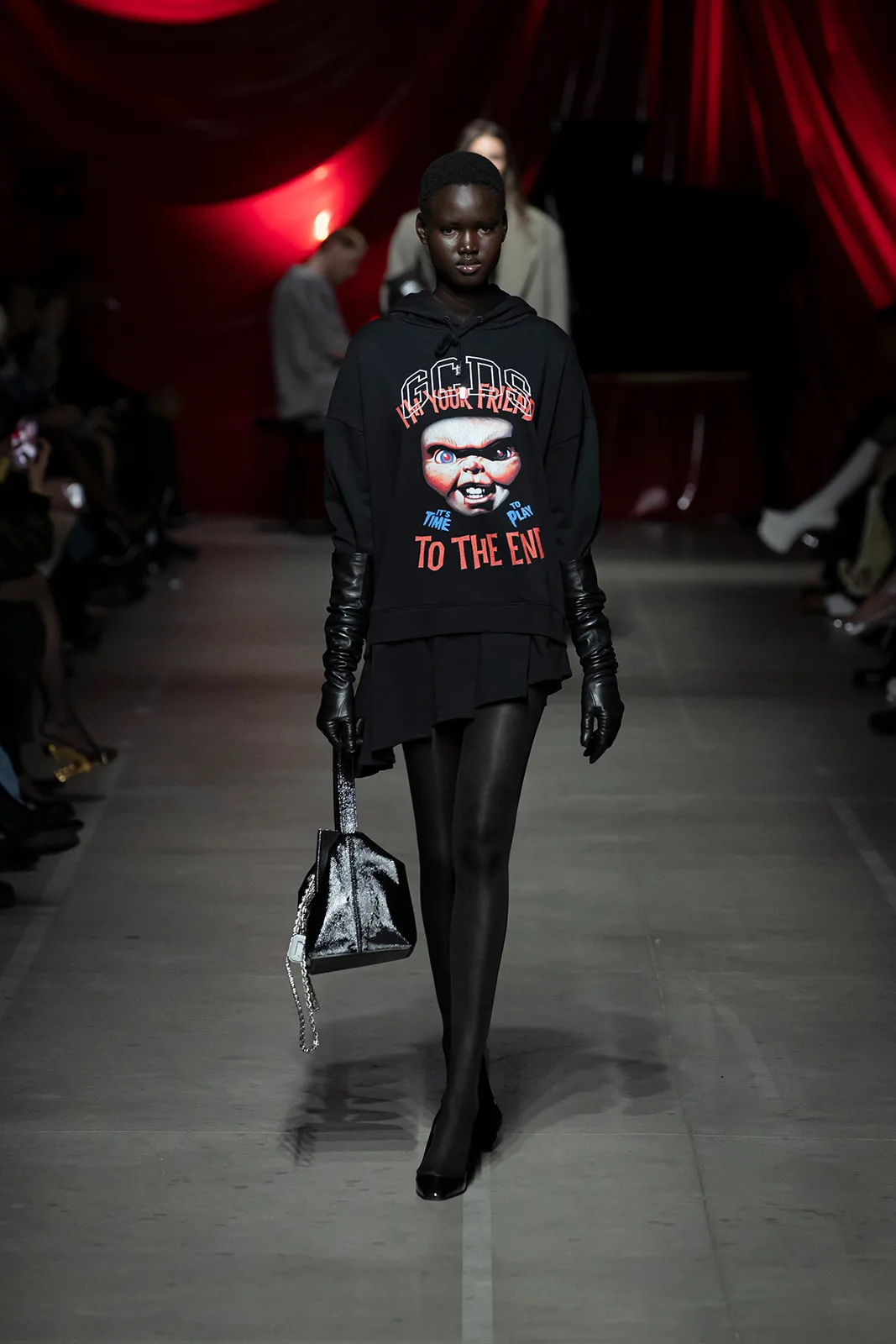
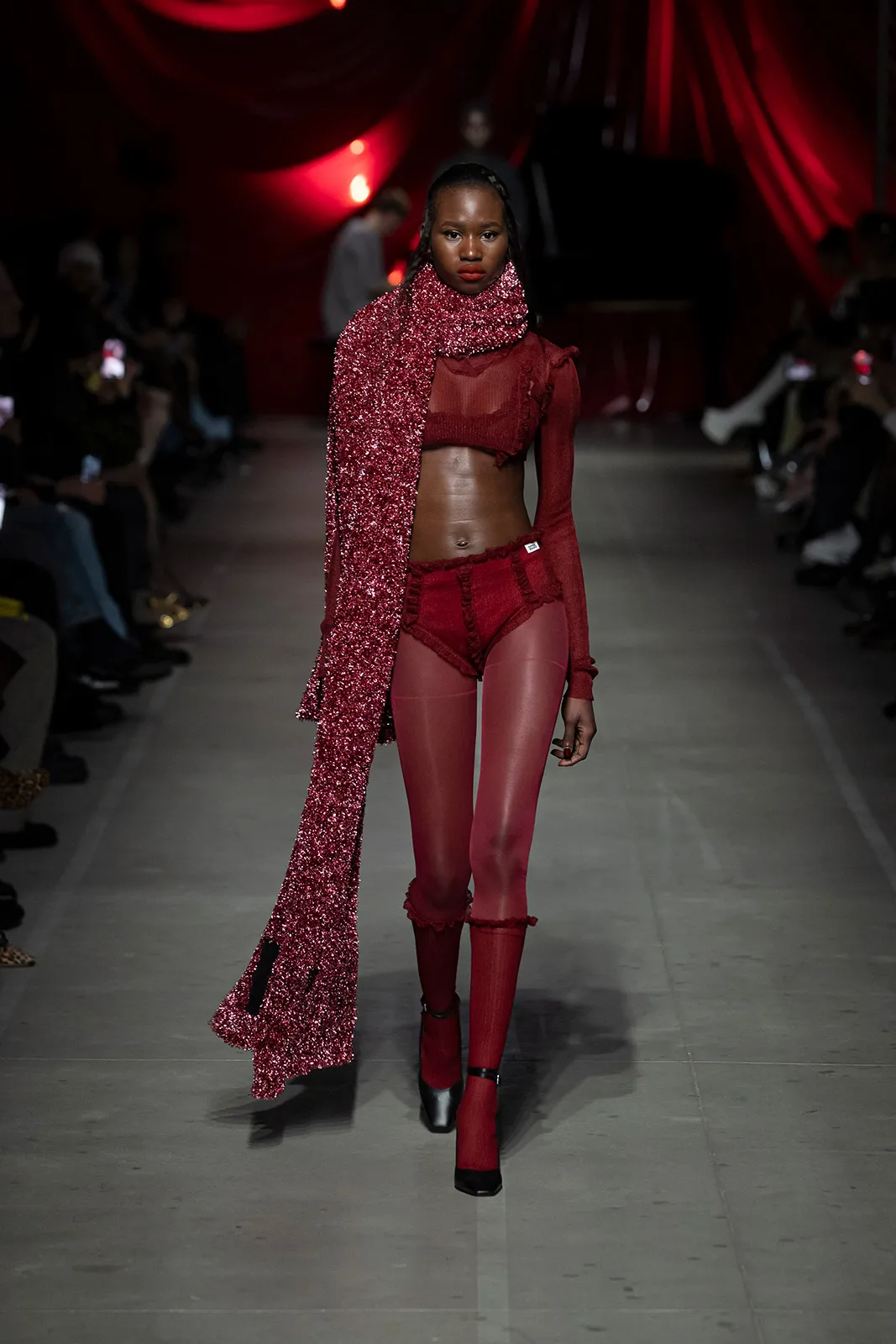
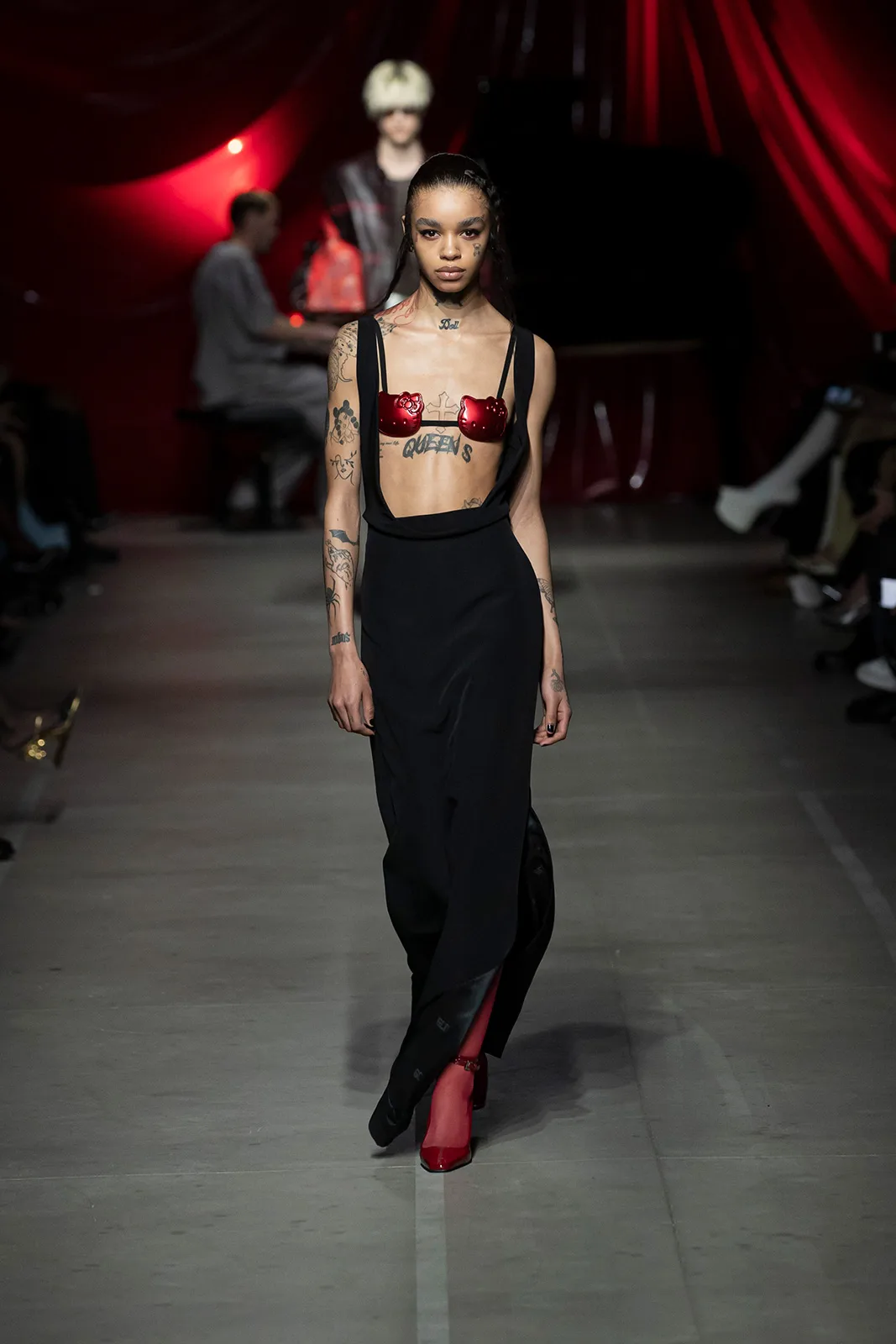
There seems to be an ongoing theme this season in which the creative directors are looking back at the past for inspiration, which is not uncommon, but the approach with which they are visiting it is, with a more nostalgic and introsporive energy that often comes from the memories of the youth. Giuliano Calza asks a very important question: Why should kids have all the fun? It seems like growing up is synonymous with being less entertained and taking everything more seriously, when on the contrary, there should be an escape route to our reality through something as fun and pure as the toys were in our childhood. The appeal of these toys resides not only in their form and function but also in the emotional aspect linked to them, as they were often pieces gifted by someone who loved us and wanted to see us happy. Giuliano, this season is giving us multiple gifts.
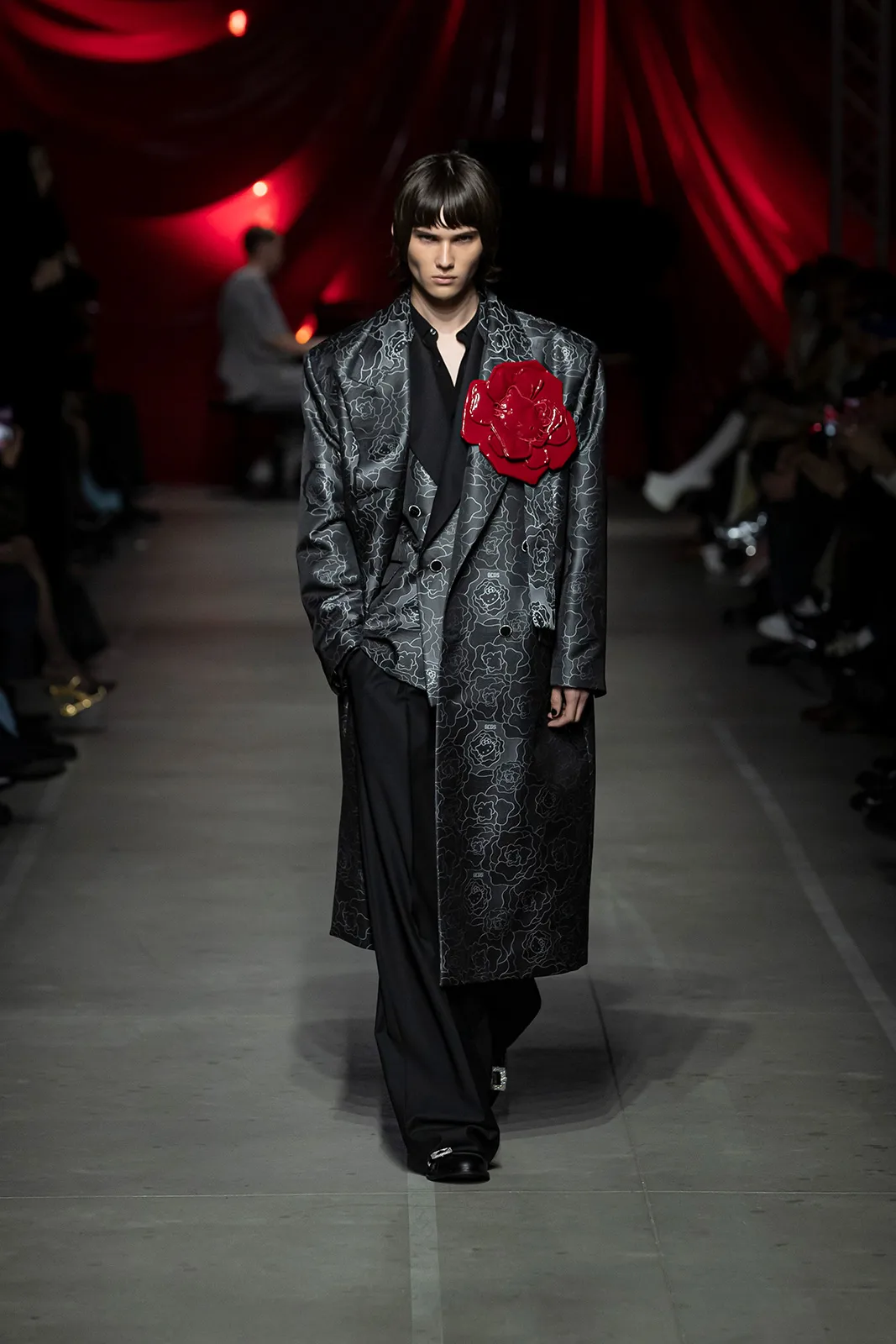
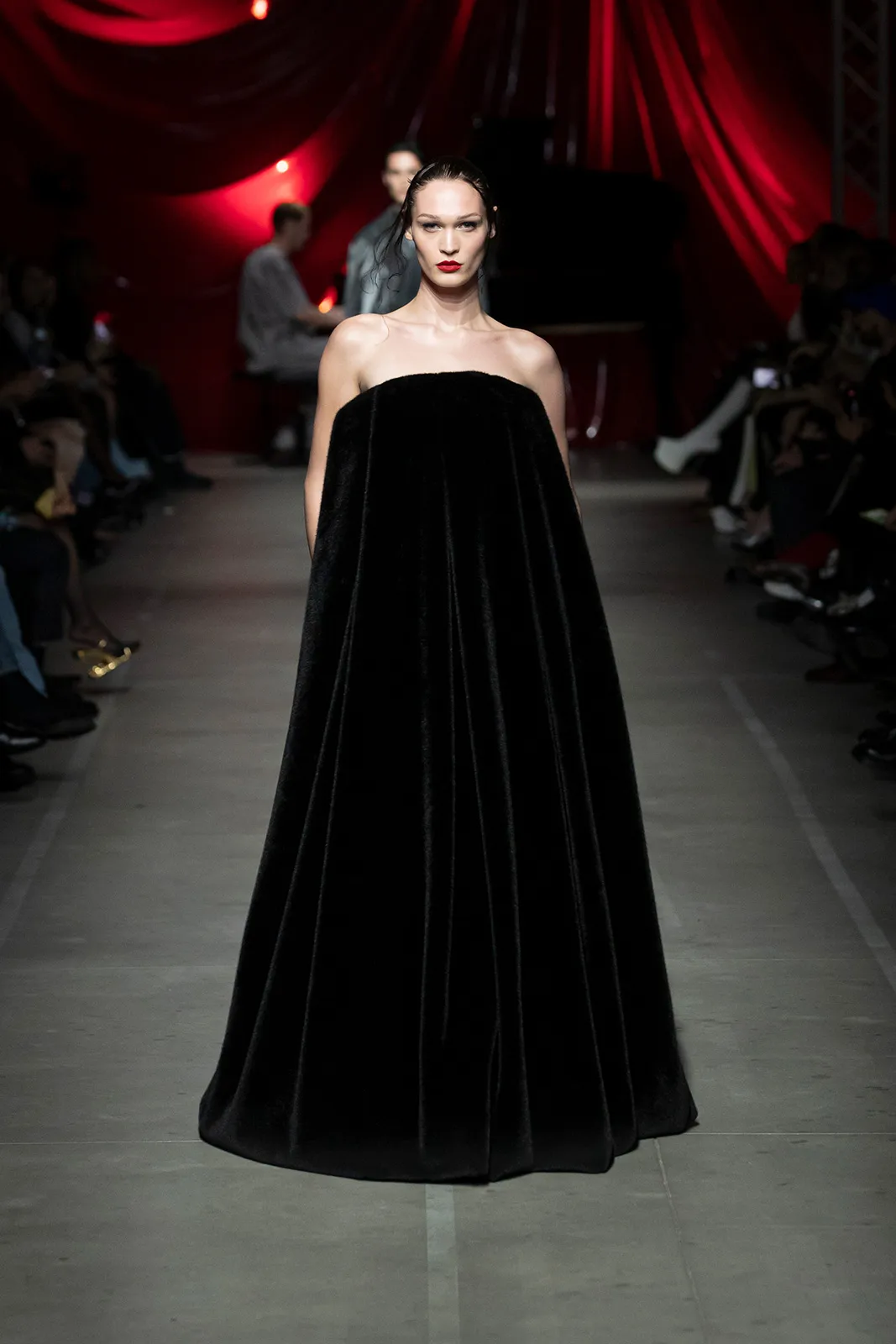
The collection narrates how the progression and evolution of our age reflect in the energy we exude, with the first looks being light and soft, with knits, flowers, and ruffles alluding to the purity with which we come into the world. Gradually, the tones get darker and the garments riskier, with dramatic shades of red, leather in all its forms, and revealing silhouettes. However, not because one grows up should they forget where they came from. References to childhood beloved icons are incorporated everywhere in a very seemingly but outstanding way.
The iconic GCDS heart bag meets Polly Pocket to create new versions that look as delicious and edible as the little rubber ones did in our childhood. Hello Kitty keeps going with us everywhere, but not as a plushie anymore but as a bold bra and some fuzzy mules that look like we are weaning her in our feet, and Chucky looks more stylish than ever on a bag that, if you don't look closely, you'll confuse the killer doll with a very elegant floral motif. The thrilling feeling that caused us horror movies is translated into Dracula and Chucky dresses, pants, and hoodies, very on brand considering how much sense they make next to existing pieces of the brand like the iconic Morso heels. Overall, GCDS created a desirable collection that establishes iconic and reminiscent pieces that make us feel as happy as little kids.
The collection narrates how the progression and evolution of our age reflect in the energy we exude, with the first looks being light and soft, with knits, flowers, and ruffles alluding to the purity with which we come into the world. Gradually, the tones get darker and the garments riskier, with dramatic shades of red, leather in all its forms, and revealing silhouettes. However, not because one grows up should they forget where they came from. References to childhood beloved icons are incorporated everywhere in a very seemingly but outstanding way.
The iconic GCDS heart bag meets Polly Pocket to create new versions that look as delicious and edible as the little rubber ones did in our childhood. Hello Kitty keeps going with us everywhere, but not as a plushie anymore but as a bold bra and some fuzzy mules that look like we are weaning her in our feet, and Chucky looks more stylish than ever on a bag that, if you don't look closely, you'll confuse the killer doll with a very elegant floral motif. The thrilling feeling that caused us horror movies is translated into Dracula and Chucky dresses, pants, and hoodies, very on brand considering how much sense they make next to existing pieces of the brand like the iconic Morso heels. Overall, GCDS created a desirable collection that establishes iconic and reminiscent pieces that make us feel as happy as little kids.
Jil Sander
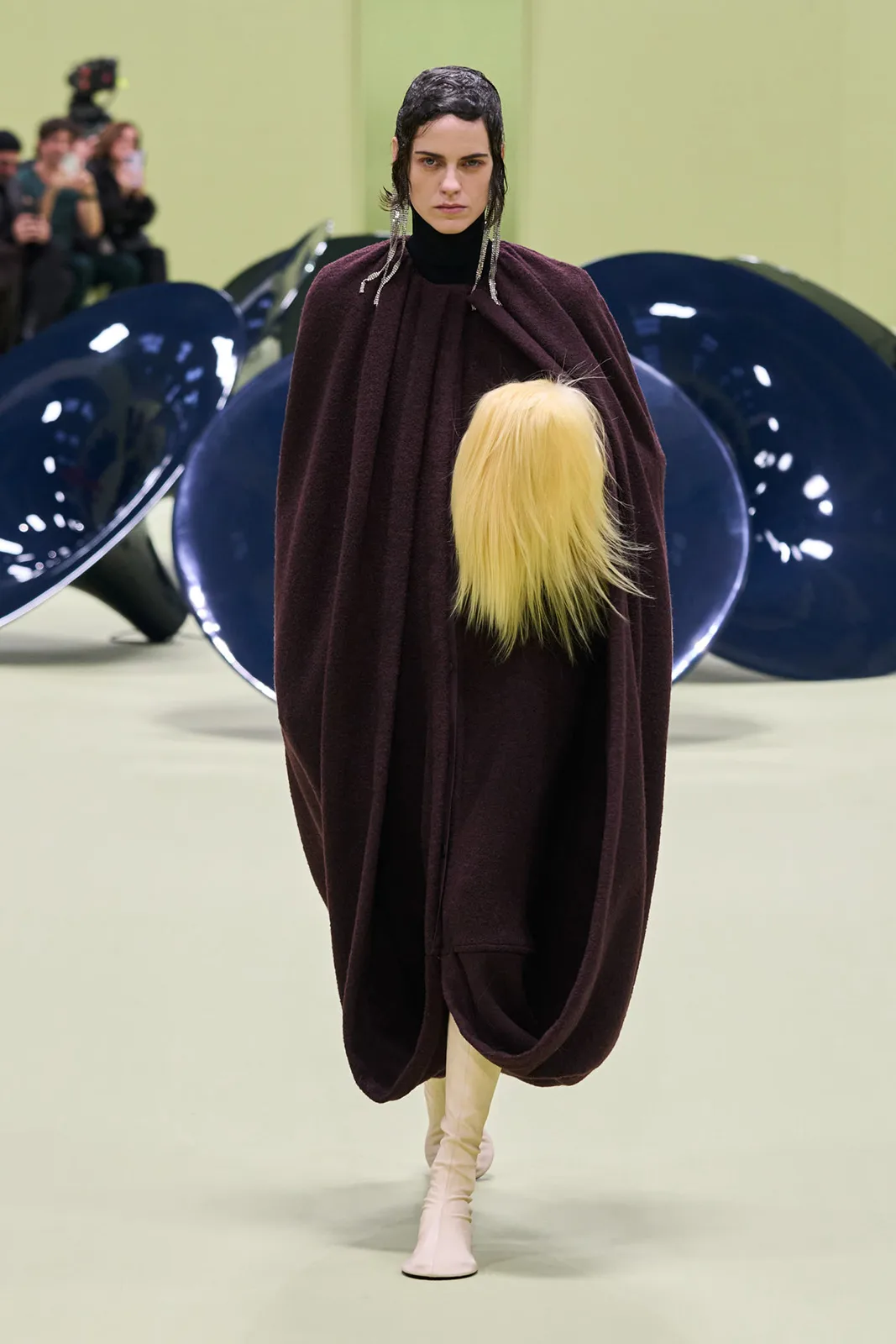
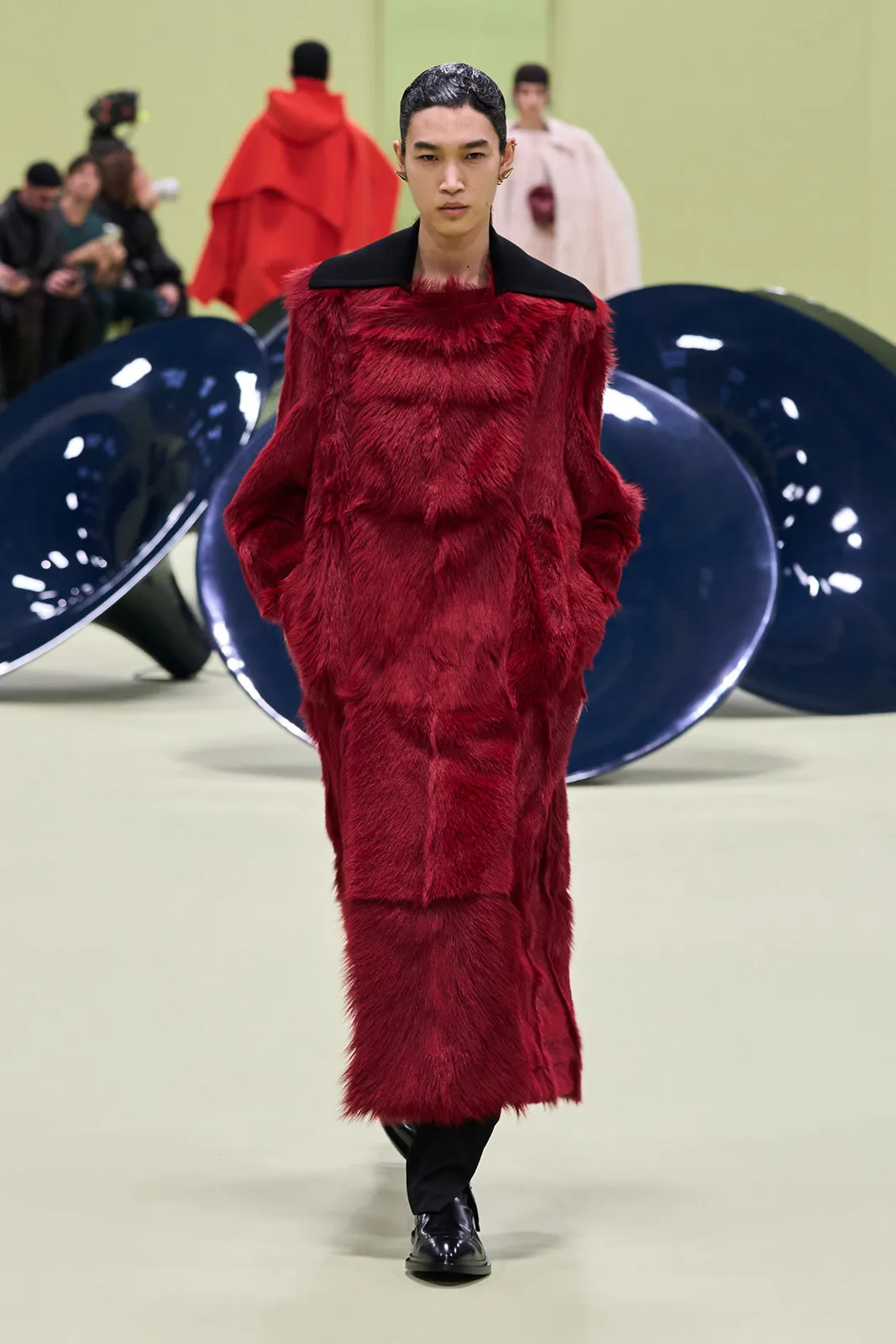
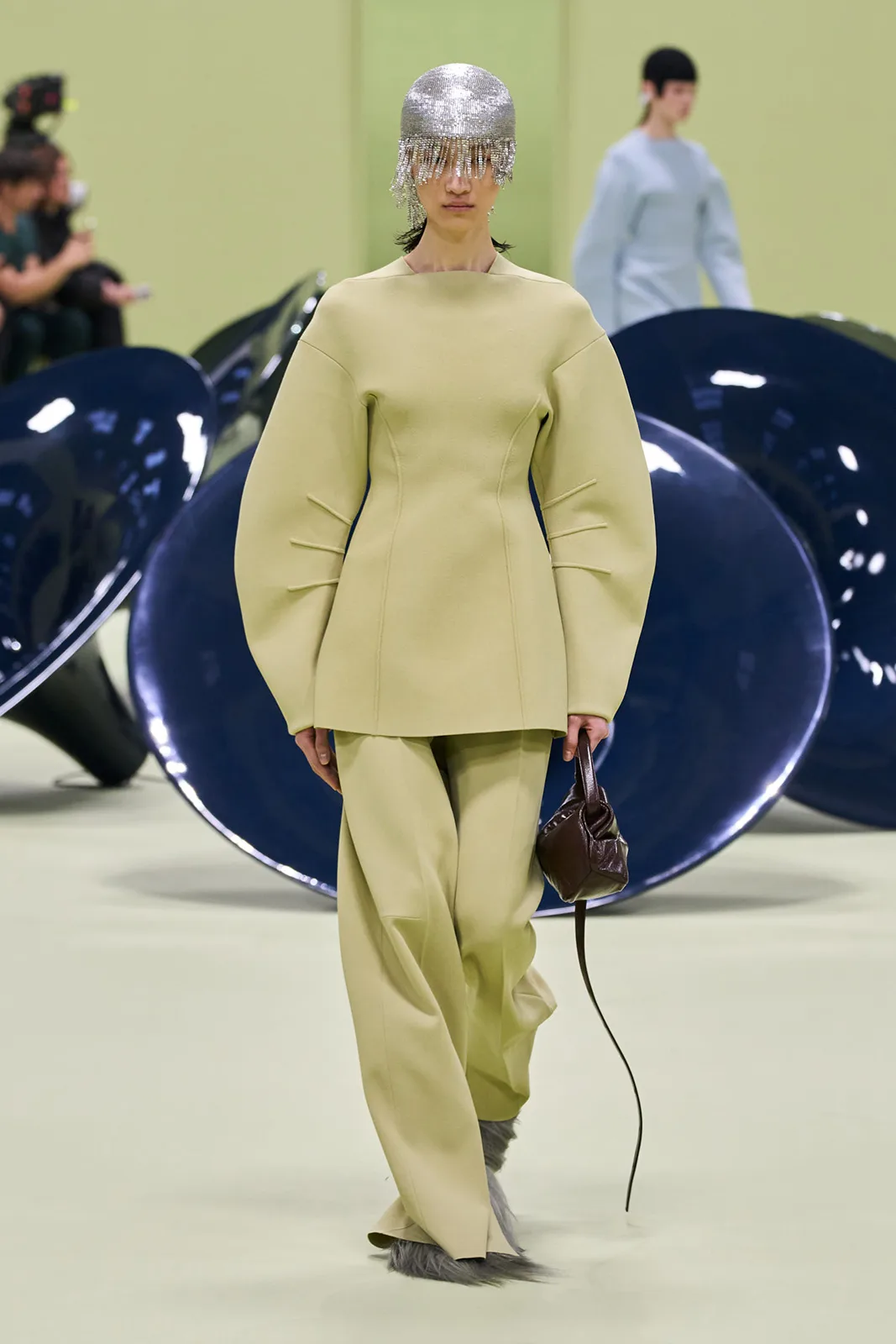
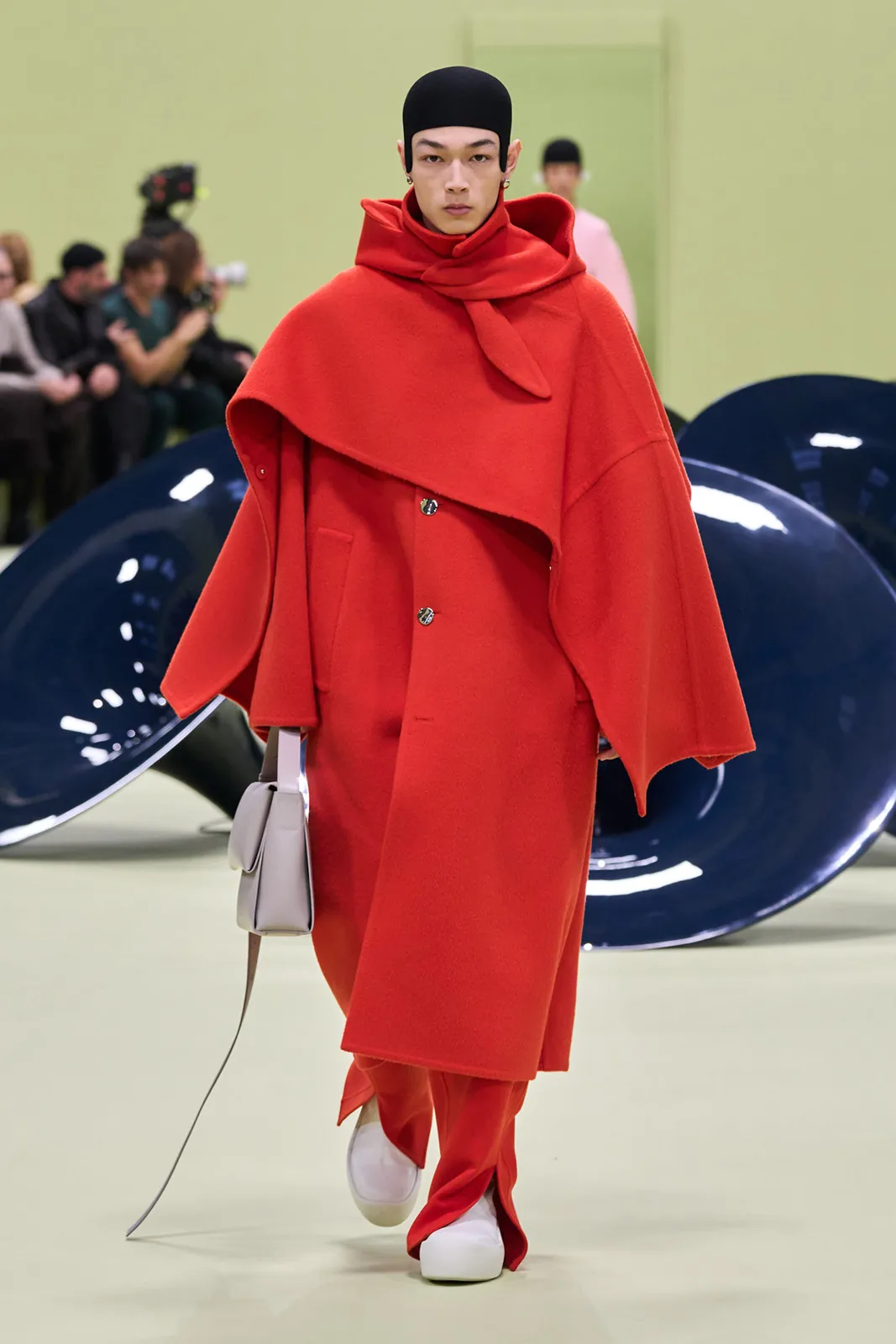
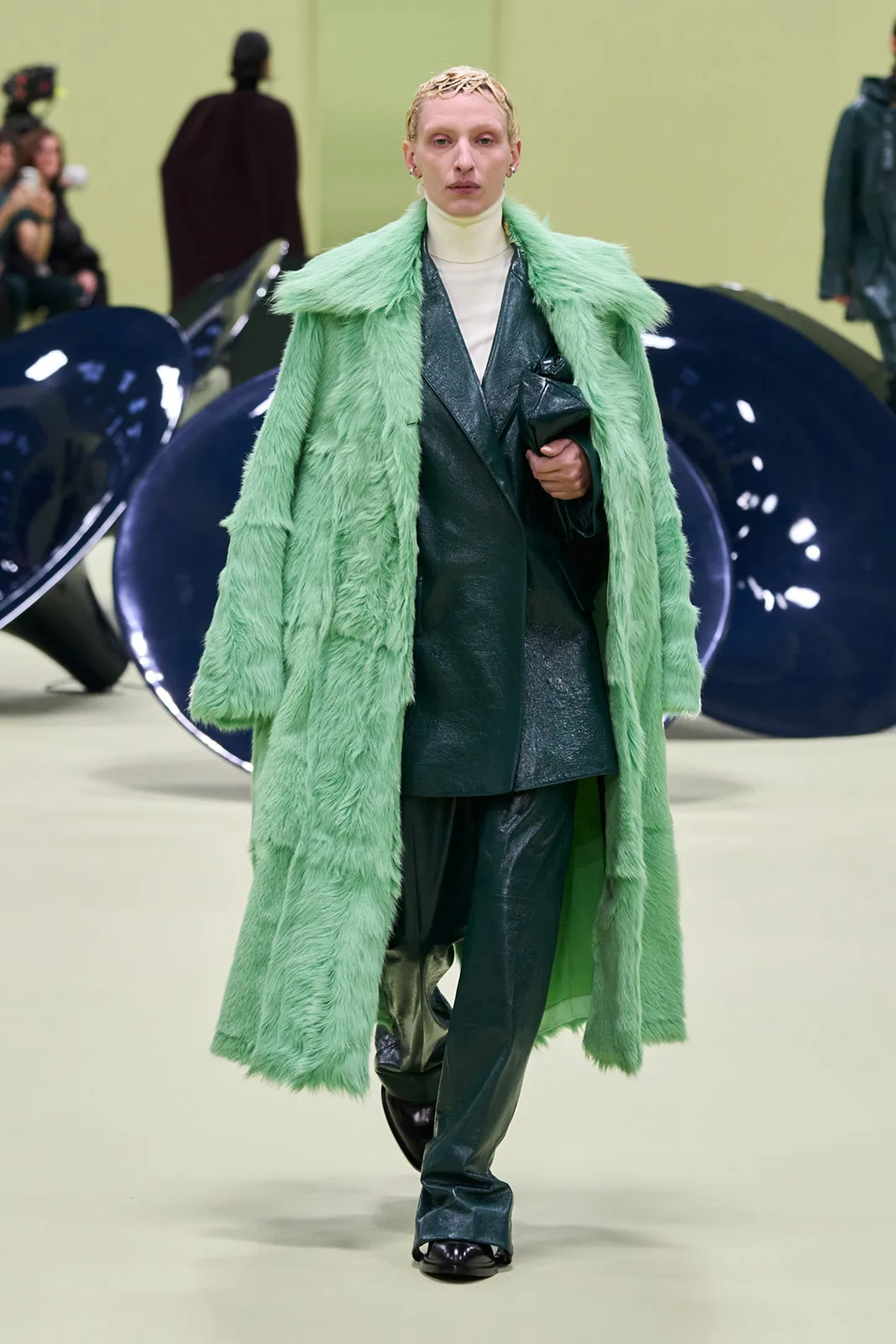
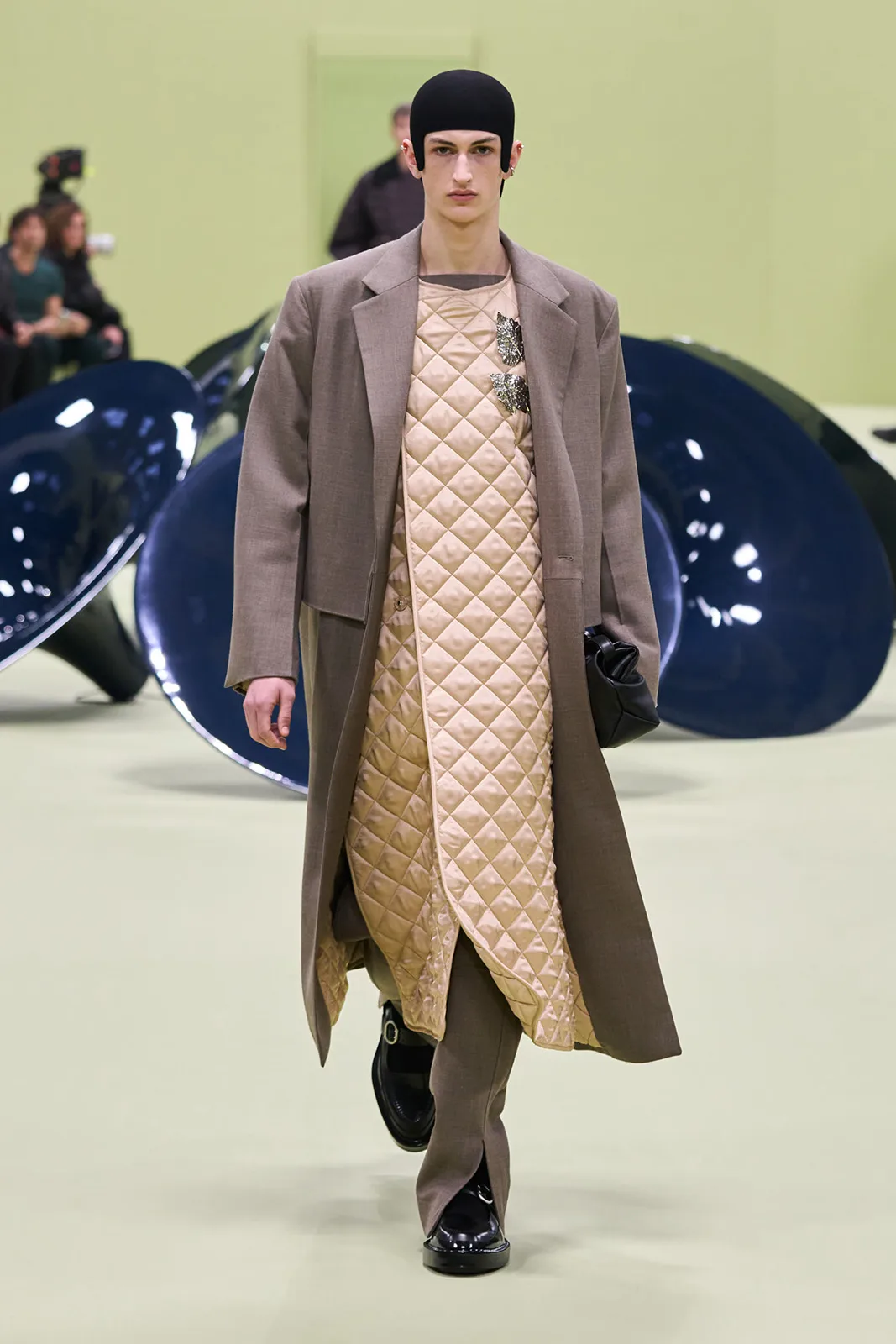
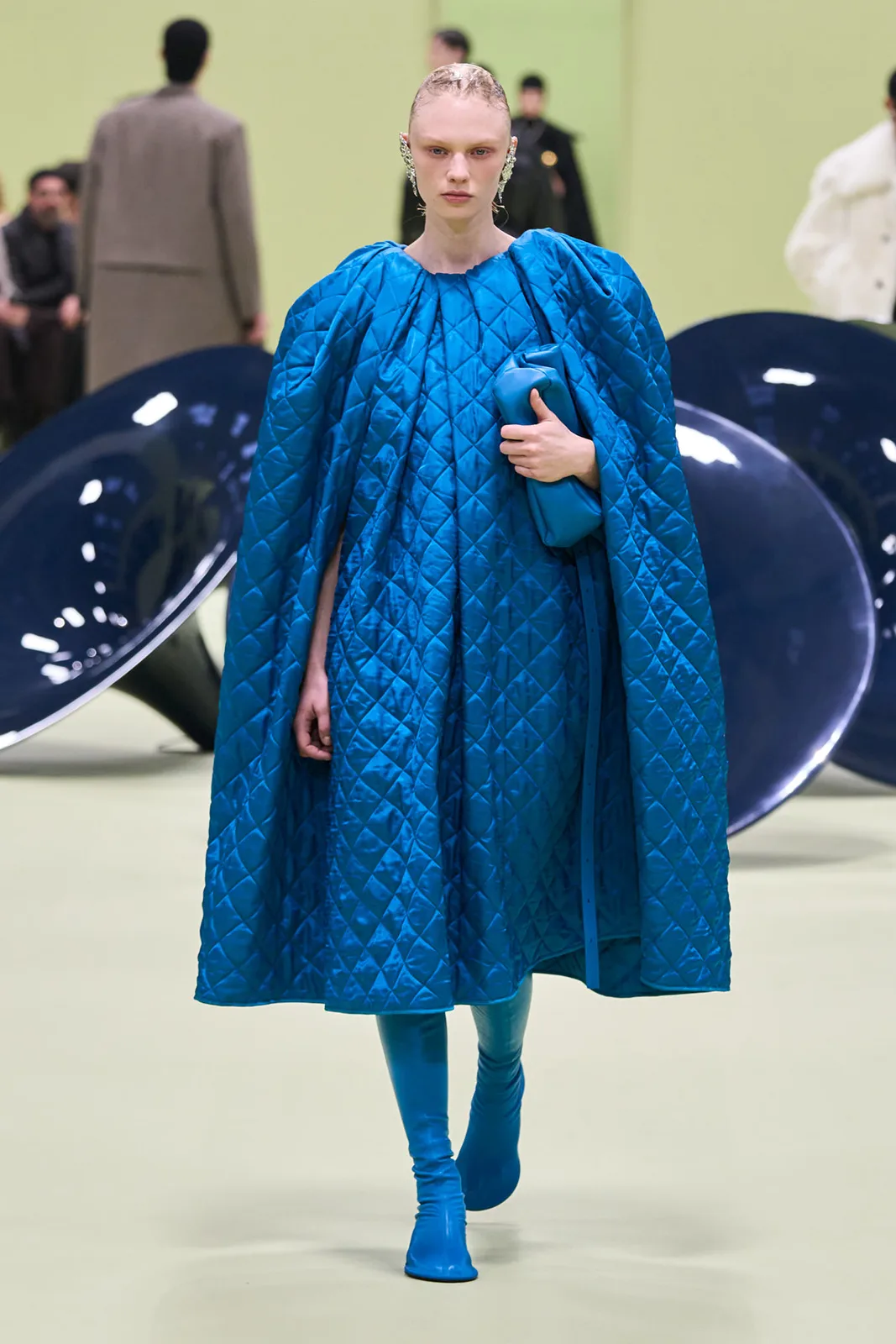
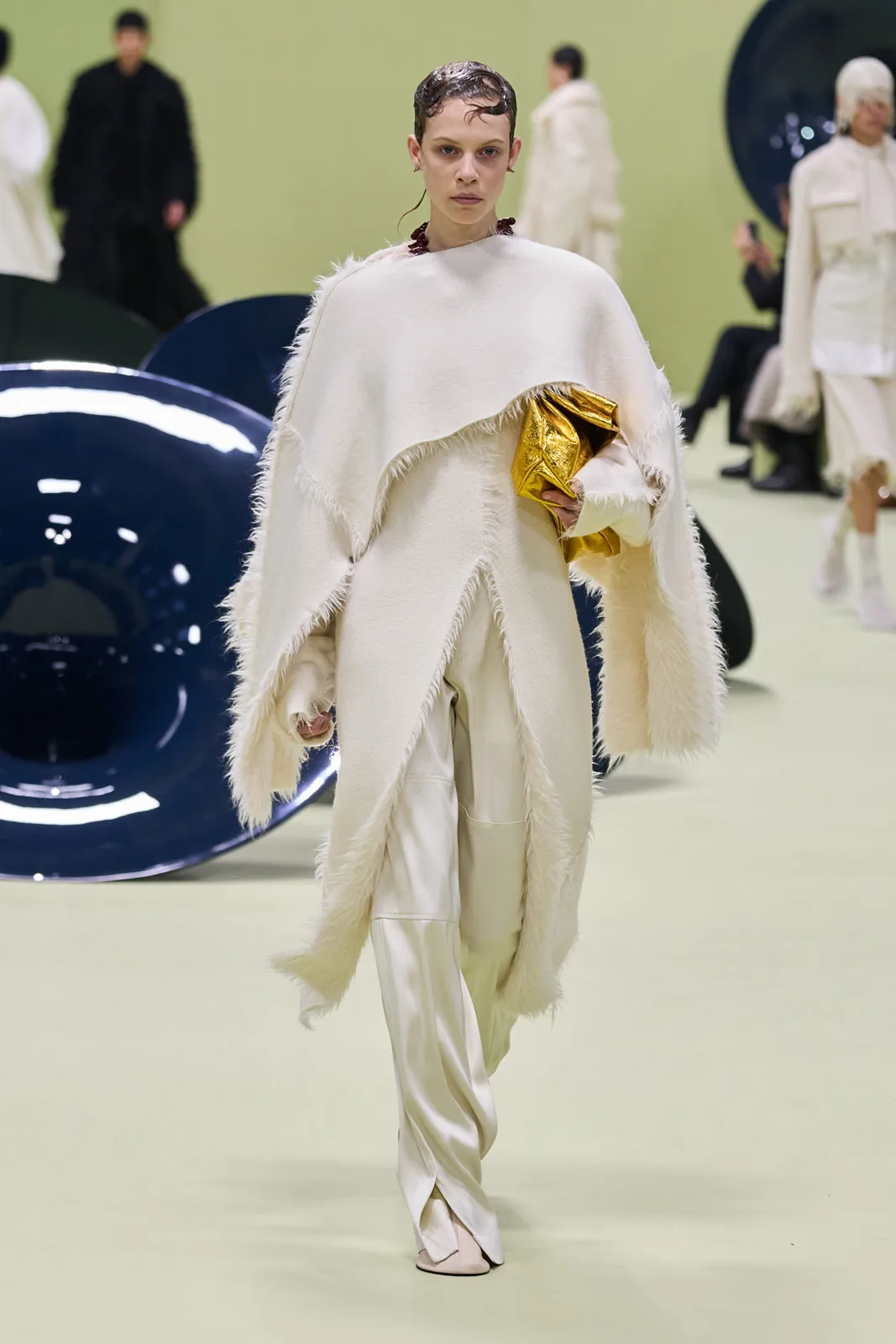
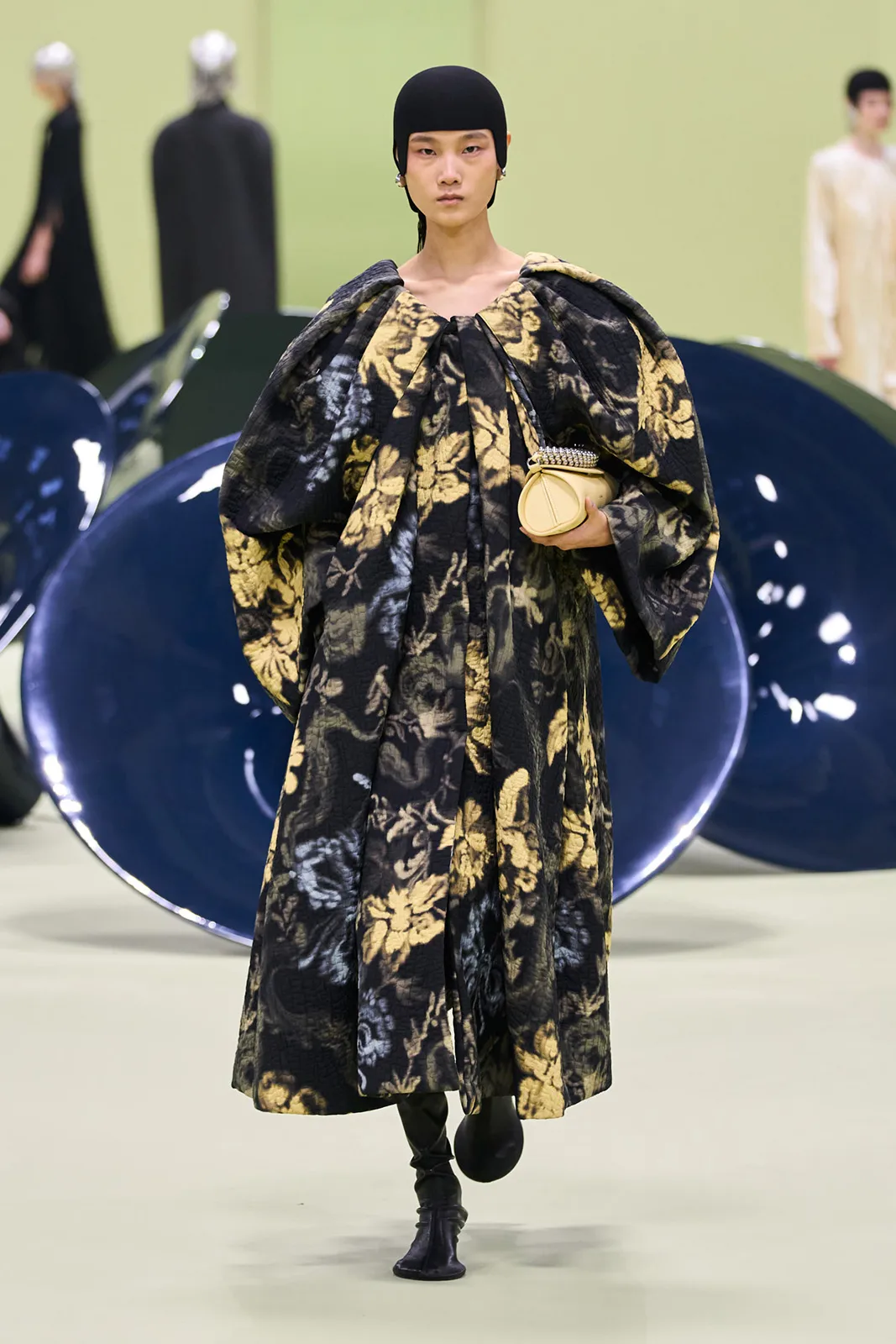
To the rythm of Mk. Gee’s soulful guitar, Lucie and Luke Meier presented a collection for Jil Sander where comfort was the priority, starting from a very cosy and inviting staging in a fully sage green room decorated only by giant cobalt blue horn speakers that helped the music reach every corner in a soft way. In an intimate approach to the craft, the garments were full of subtle details that, as they mention, are made for the wearer more than they are for the aesthetics. Half of the garments we use are exposed on the outside; the other half is in direct contact with our skins, and this is often the part that we are most linked to in terms of comfortability and connection between us and the piece.
This sensibliity that we can only presume was translated to the internal part of the garments was also reflected on the outside, with smooth curvy shapes that interact with the body in a non-restrictive way; they are like a fluffy cloud that surrounds it and lets it be as they are. The volume of the pieces was key, as were the materials that they are made of, predominantly natural fabrics that translate into high-quality garments. The variety of textures found in the outerwear made this a very versatile collection, going from soft fur, silk yarn, and matelassé to striking leather, chainmail, and quilted fabrics. The couture appeal of good materials and savouire faire met the inventive craftsmanship that is the signature of everything Jil Sander does.
This sensibliity that we can only presume was translated to the internal part of the garments was also reflected on the outside, with smooth curvy shapes that interact with the body in a non-restrictive way; they are like a fluffy cloud that surrounds it and lets it be as they are. The volume of the pieces was key, as were the materials that they are made of, predominantly natural fabrics that translate into high-quality garments. The variety of textures found in the outerwear made this a very versatile collection, going from soft fur, silk yarn, and matelassé to striking leather, chainmail, and quilted fabrics. The couture appeal of good materials and savouire faire met the inventive craftsmanship that is the signature of everything Jil Sander does.