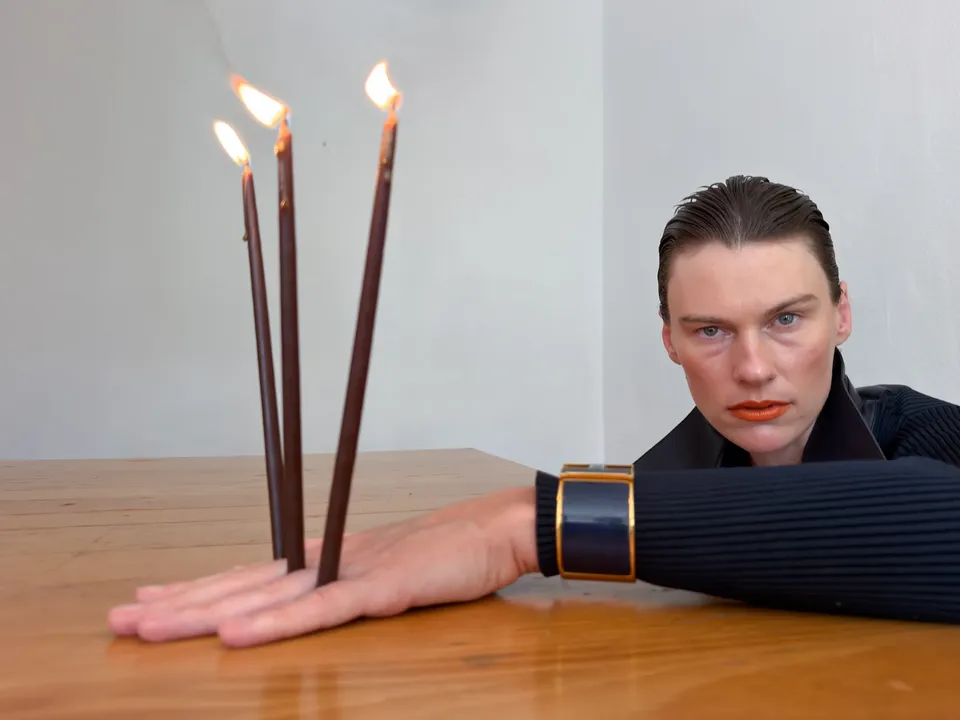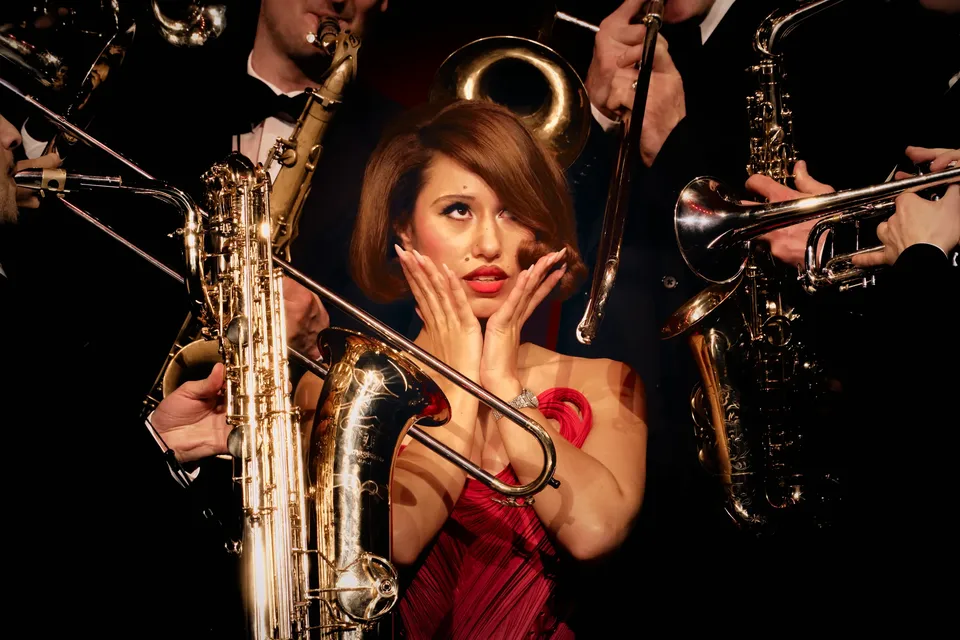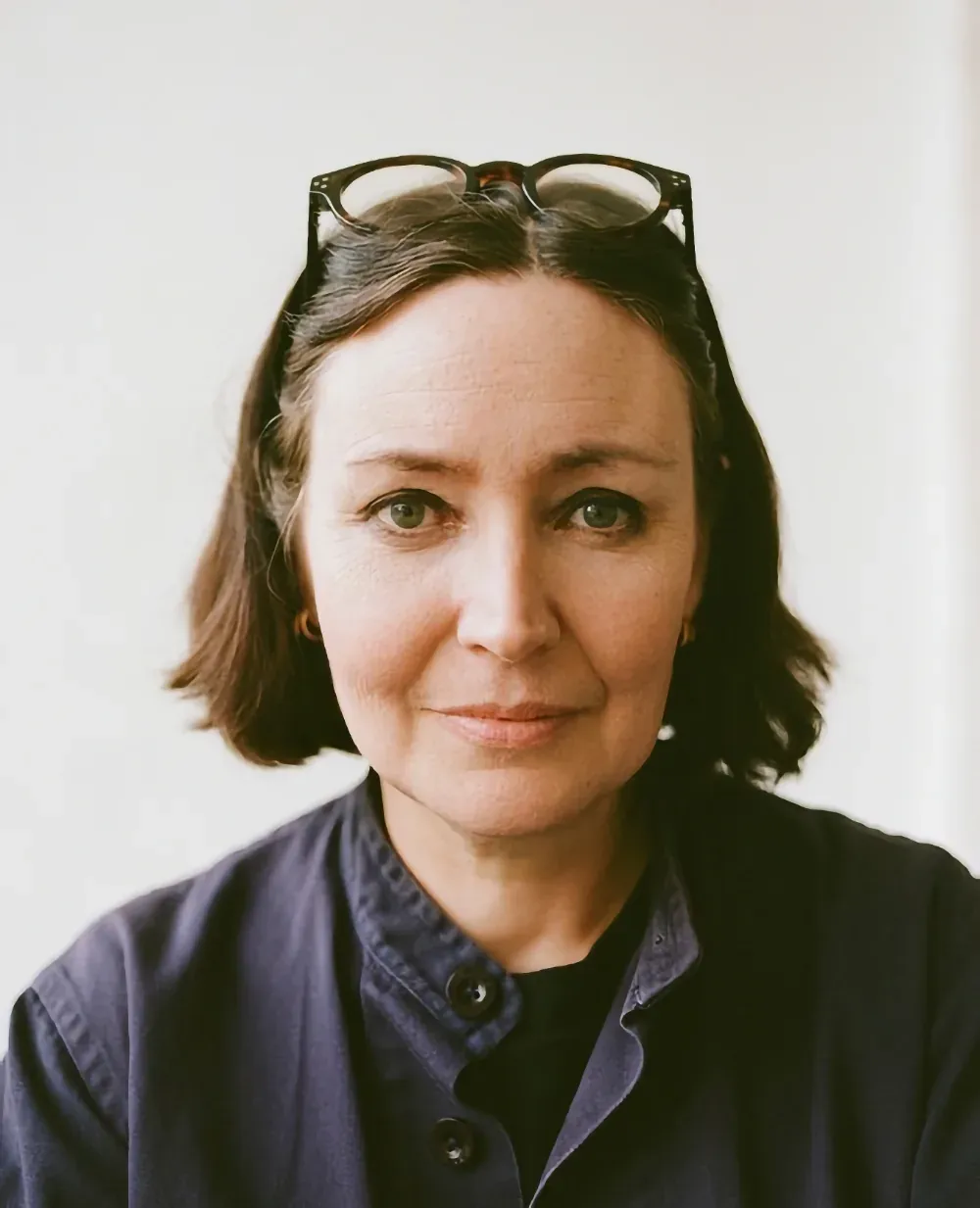
Prefigured: Fashion and Exhibition-Making by Judith Clark, published by SPBH Editions / MACK, explores the different narratives and intentions that underpin the process of exhibition-making. The book unfolds around nearly three decades of work by Judith Clark, one of the curators who helped bring fashion curation and exhibition-making into sharper focus as a field in its own right.
Structured around the central threads that have shaped her practice, the book takes the form of eight seminars, a tribute to Clark’s academic work as a professor at the University of the Arts London. Together, they trace the evolution of a practice built over the last thirty years, revealing the many interests, ideas and encounters that have contributed to her rich career in fashion curation and exhibition-making. And if you’re not the kind of person who studies for fun, don’t worry: the book unfolds sequentially, and some might say it reads more like a novel than a textbook.
Today, we have the pleasure of hearing from her about more than just the publication: her evolution as both an exhibition-maker and a fashion curator, and what it meant to build a career at a time when these fields (and even the terms used to describe them) were still taking shape.
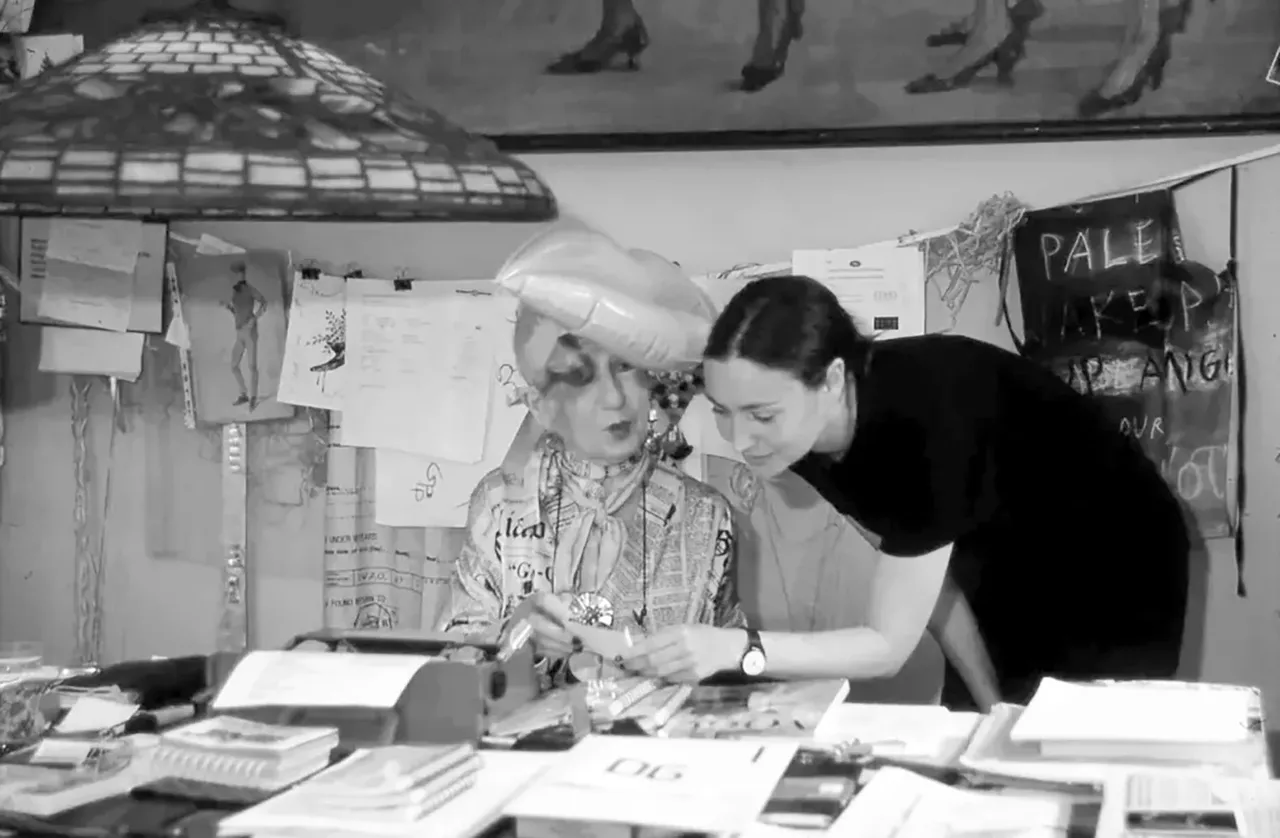
Bardo Fabiani, Judith Clark and Anna Piaggi in Milan whilst working on Anna Piaggi: Fashionology, 2005, from Prefigured: Fashion and Exhibition-Making (SPBH Editions, 2026). Courtesy of Judith Clark, SPBH Editions, and MACK.
Judith, it’s such a pleasure to speak with you, especially after the publication of your new book, Prefigured: Fashion and Exhibition-Making. How are you feeling in these first days after its release?
Thank you so much. I am curious of course to see what people make of it. It is a book that doesn’t really fit into a clear tradition, so it will have to rely on word of mouth.
You have described yourself as an “exhibition maker” rather than a fashion curator. I’ve always felt that your work encompasses both ideas, but I’d love to hear how you define your practice. Could you tell us, in your own words, what being an exhibition maker means to you, and what led you to choose that title even if someone still refers to you as a fashion curator?
I chose the title as I felt it was a useful distinction and it draws attention to a mode of practice: a fashion curator (and I generalise of course) is usually a specialist in an area of fashion, a fashion historian who puts together and researches the thesis of an exhibition and then (usually) delegates the staging of that research to an exhibition designer. As an exhibition-maker I blur the lines between thesis and staging more and take on both, as I work in the round. An example of this is the delegation of aspects of the work for example away from a caption and towards an effect where I think that is helpful. Research is full of adjectives.
Could you give us a glimpse into your day-to-day work? When you begin building a new exhibition, what principles guide you in creating an atmosphere?
I look at the space where the exhibition will be built, so there is an immediate dialogue between the temporary and the permanent, and I often then build a model of that space, and draw the plans over and over again, so the placing of objects happens gradually and not at the end.
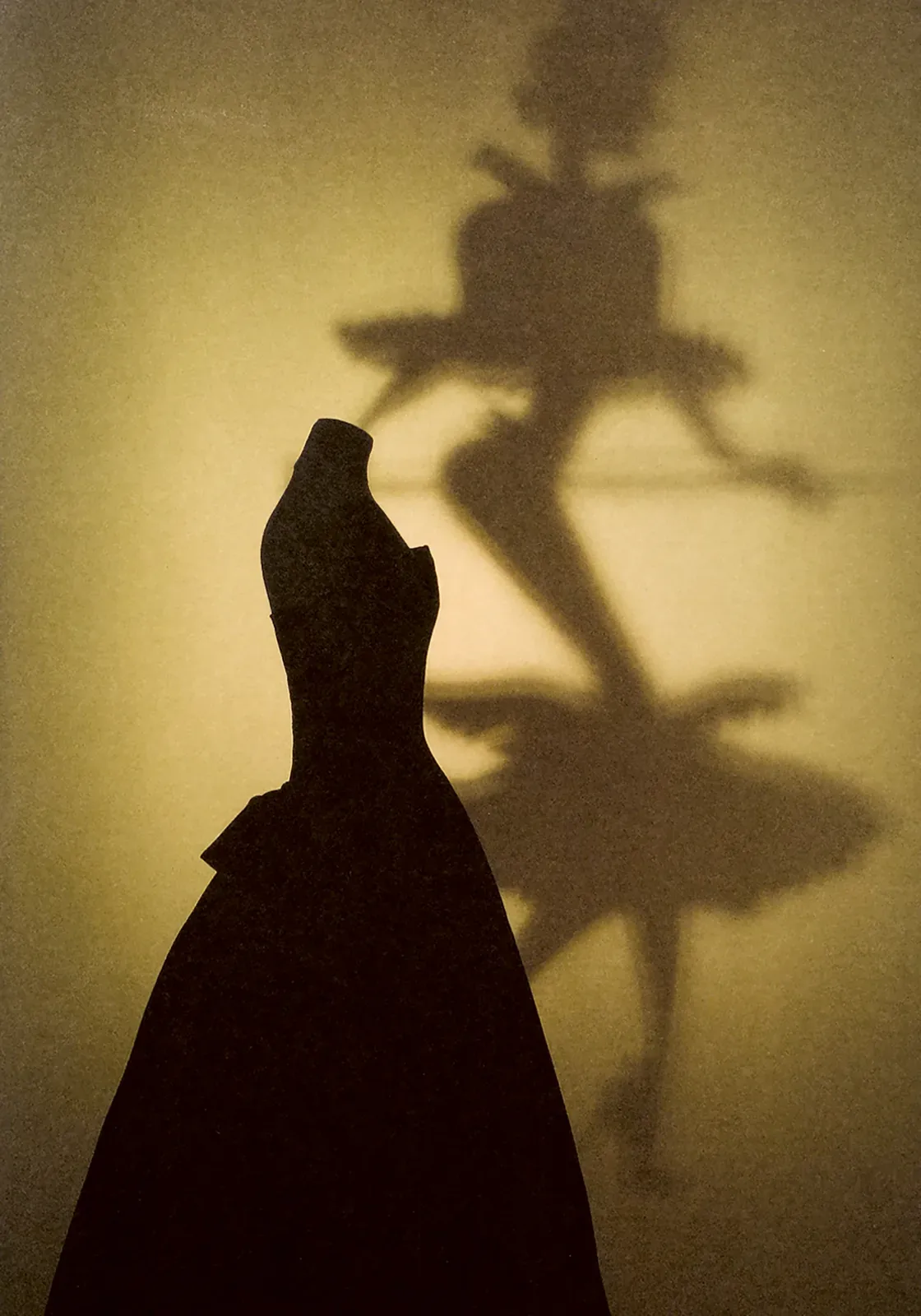
MoMu Fashion Museum Antwerp, catalogue cover image, Spectres: When Fashion Turns Back, 2004, from Prefigured: Fashion and Exhibition-Making (SPBH Editions, 2026). Photograph by Ronald Stoops. Courtesy of the museum, SPBH Editions, and MACK.
As I understand it, you moved to London to study architecture. Was there a particular moment when you realised you wanted to take your career in the direction of fashion?
I was always interested in fashion, so it ran parallel to studying architecture. When I first contributed to the college magazine, it was about Christian Lacroix’s collection. It was the late 1980s and it felt like a seismic shift, it was a new attitude to historicism in fashion; it felt symptomatic of something larger.
Today, fashion curation is a familiar term, but I imagine that when you began, it was not yet such an established field. You were among the early figures to shape and expand the practice. Could you tell us about those beginnings? What was it like to build a career around a profession that was still finding its place in the cultural landscape?
It’s a cliché now to say it was the underdog in the museum and in academia, but it really was. I came from Italy, where it was not only about material culture and cultural studies, but about a huge and complex industry and sign system, semiotics, that was written about in the press by public intellectuals. I wanted to work in an experimental space and I still do, so my own beginnings were to establish a small gallery (in 1997) and start building tiny shows, cold calling designers and collectors for loans — there was no structure, but I was stubborn.
Let’s talk about the fashion object itself. In your experience, what makes a piece of clothing worthy of being exhibited in a museum, rather than simply hanging in a wardrobe? What is it that transforms a garment into something we need to look at, think about, and perhaps understand differently?
I believe all objects are worth looking at, they’re the work of a person, evidence of a system of taste and production and circumstance. This is one of the wonderful things about being a curator: that you build the story and it can be about embellishment, or social history, about taste or resistance to it. I think there is a shift in our public gaze as well, we don’t think museums should only tell us aspirational stories anymore.
“I believe all objects are worth looking at, they’re the work of a person, evidence of a system of taste and production and circumstance.”
I imagine every project brings its own challenges. The exhibition you created at Frida Kahlo’s house particularly caught my attention, as it seems to involve a very different kind of intimacy from working with an entire fashion house, as you have also done. Could you tell us a little about that experience, and what it taught you about working with a person’s home, belongings, and personal history?
It was one of the most powerful experiences of my life, living amongst her belongings for those weeks. There is a reverence to her work and the pain associated with her life which creates a very particular aura around the objects she owned. There was also the fear of feeding into a caricatured version of her self-styling. Every person involved in that installation in her home was changed by it, she went from icon to person for us very quickly.
Back to Prefigured: Fashion and Exhibition-Making, the book explores how fashion exhibitions are conceived and constructed, and how they operate as forms of authorship and interpretation. After almost three decades of working in the exhibition field, what made you want to write this book now? Was there something about the current moment that made you feel it was time to reflect on your own career?
I have taught for many years and the question I am asked most often is how I came to be working in this field. I think there is a desire to believe there is a way into this subject that is trackable. In a way my book shows the way it is instead driven by very disparate interests that converged, that it is personal (my longing for Rome permeates the book and is its leitmotif) and that it took a long time. The book is structured as eight seminars in homage to teaching, but it reads sequentially and I am told it reads more like a novel than a textbook.
In 2014, you co-authored Exhibiting Fashion: Before and After 1971 with Amy de la Haye, a book that orbits around the legacy of Cecil Beaton’s exposition Fashion: An Anthology. Beyond its significance as one of the early major fashion exhibitions in the Western world, what was it about that exhibition that truly spoke to you? What made you and Amy want to dedicate a book to it?
We were teaching together and we kept on referring to it as prescient of many of the aspects of contemporary exhibitions and how it wholeheartedly embraced Fashion with a capital F as distinct from dress and textile. There was a resistance to it (if you read the museum correspondence) and a nervousness towards it, these are all things that need to be debated still. It is a fabulous case study for persistent concerns.
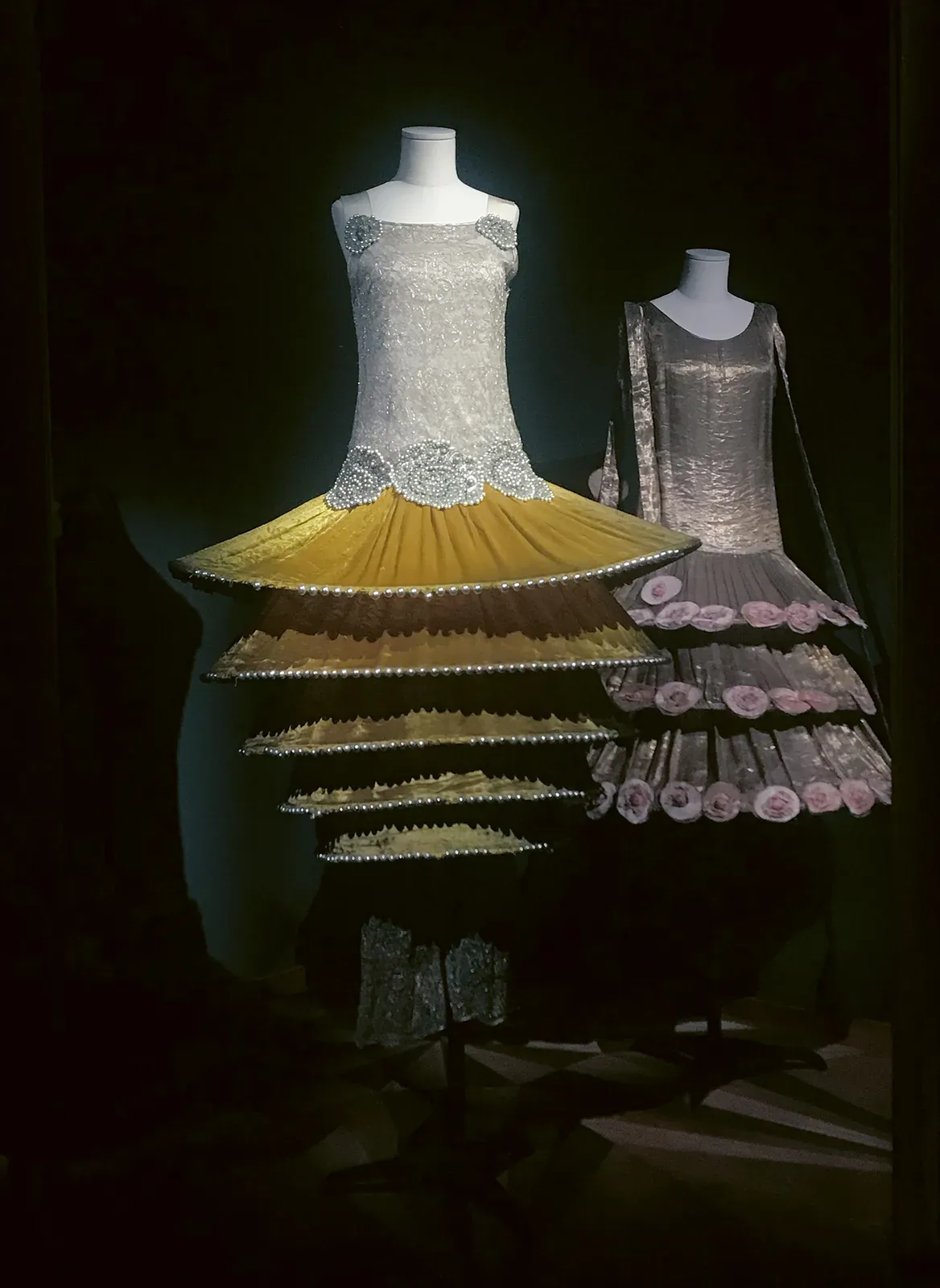
House of Lanvin, Lanvin 130, Fosun Foundation, Shanghai, 2019, from Prefigured: Fashion and Exhibition-Making (SPBH Editions, 2026). Photograph by Judith Clark. Courtesy of Judith Clark, SPBH Editions, and MACK.
Staying with the idea of references, I’ve read that the theories of art historian Aby Warburg are also an important inspiration for your approach to displaying clothing and historical dress in museums. Could you tell us a little more about that connection? How does Warburg’s thinking help you shape your exhibitions, and the way visitors encounter clothes across time?
I found that many books (of art history but also literature) that I loved thanked the Warburg Institute. I fell in love with something that was implicit in his Mnemosyne Atlas, his art history without words, the fact that he had worked with the idea of resonance, reference, afterlives, but never spelled out his method such that we can make it our own. I decided to return to do an MA there in 2013 and it changed how I work. I had extraordinary teachers.
Diving deeper into the references in the fashion world, today, who are the people, artists, designers, or thinkers who are inspiring your work at the moment?
I’m afraid I’m looking further and further back at the moment, to antiquity. Back to Rome, I guess.
I couldn’t let this interview end without asking you about the contemporary landscape of fashion exhibitions. They have become spaces where clothing, storytelling, and cultural debate intersect. Looking at where things stand today, how do you feel the practice is evolving?
Yes, it’s evolving and it’s thrilling to hear about my students’ ideas, they are engaged with a far broader landscape each year, a responsible one, a politicised one fortunately.
Finally, if you had the opportunity to create a new exhibition today, with no limitations, what would you choose to explore? Is there a story, a person, an idea or perhaps a certain historic period that you haven’t had the chance to bring into an exhibition yet, but would love to?
My ongoing research project (and for the past fifteen years) is about the Judgement of Paris, the longue durée of the representation of that story over and over again. It is about choice and about desire. If I could I would stage an exhibition on that subject.
Prefigured: Fashion and Exhibition-Making (SPBH Editions, 2026) by Judith Clark, published by MACK.
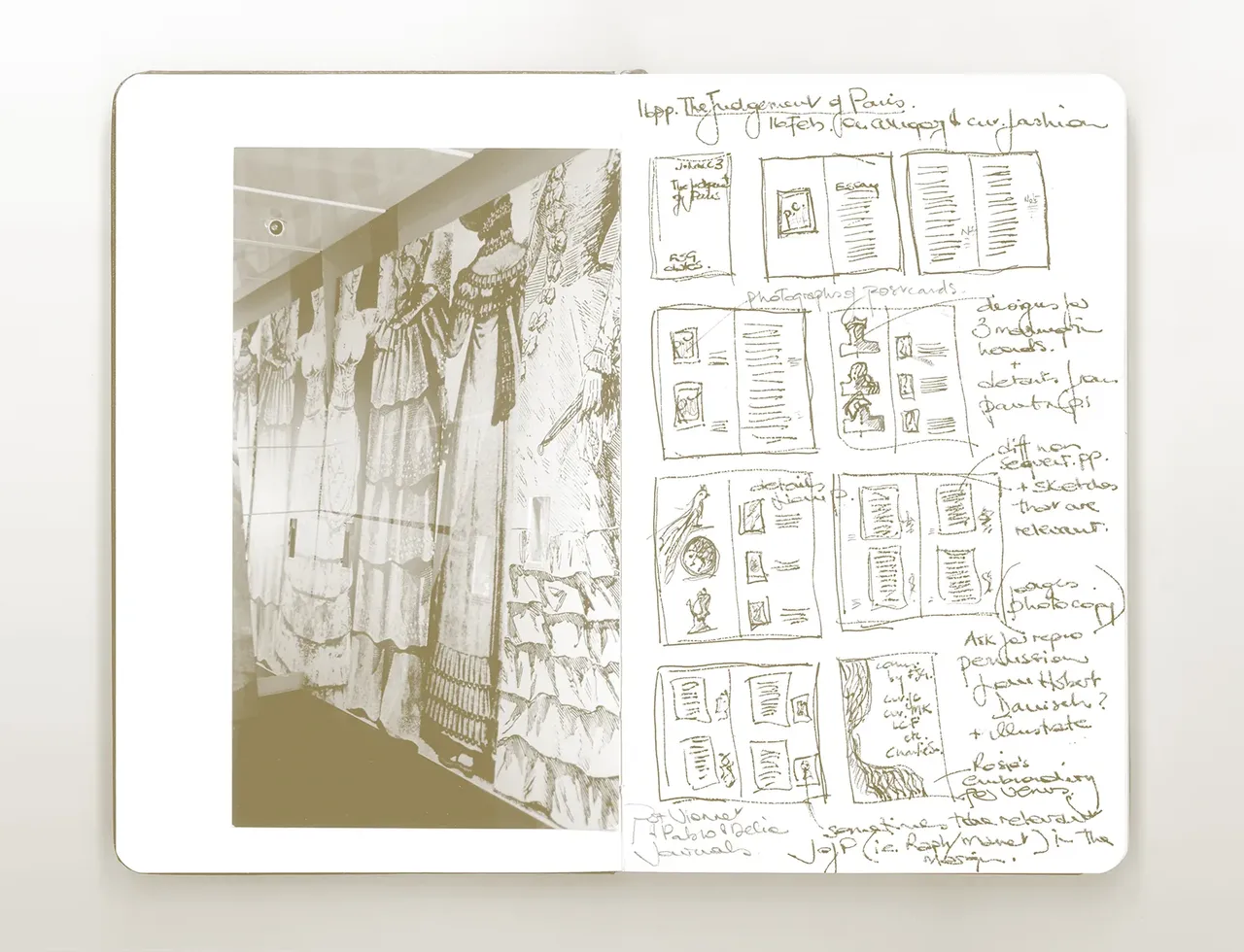
Judith Clark, Sketchbook J. C. Archive, from Prefigured: Fashion and Exhibition-Making (SPBH Editions, 2026). Courtesy of Judith Clark, SPBH Editions, and MACK.
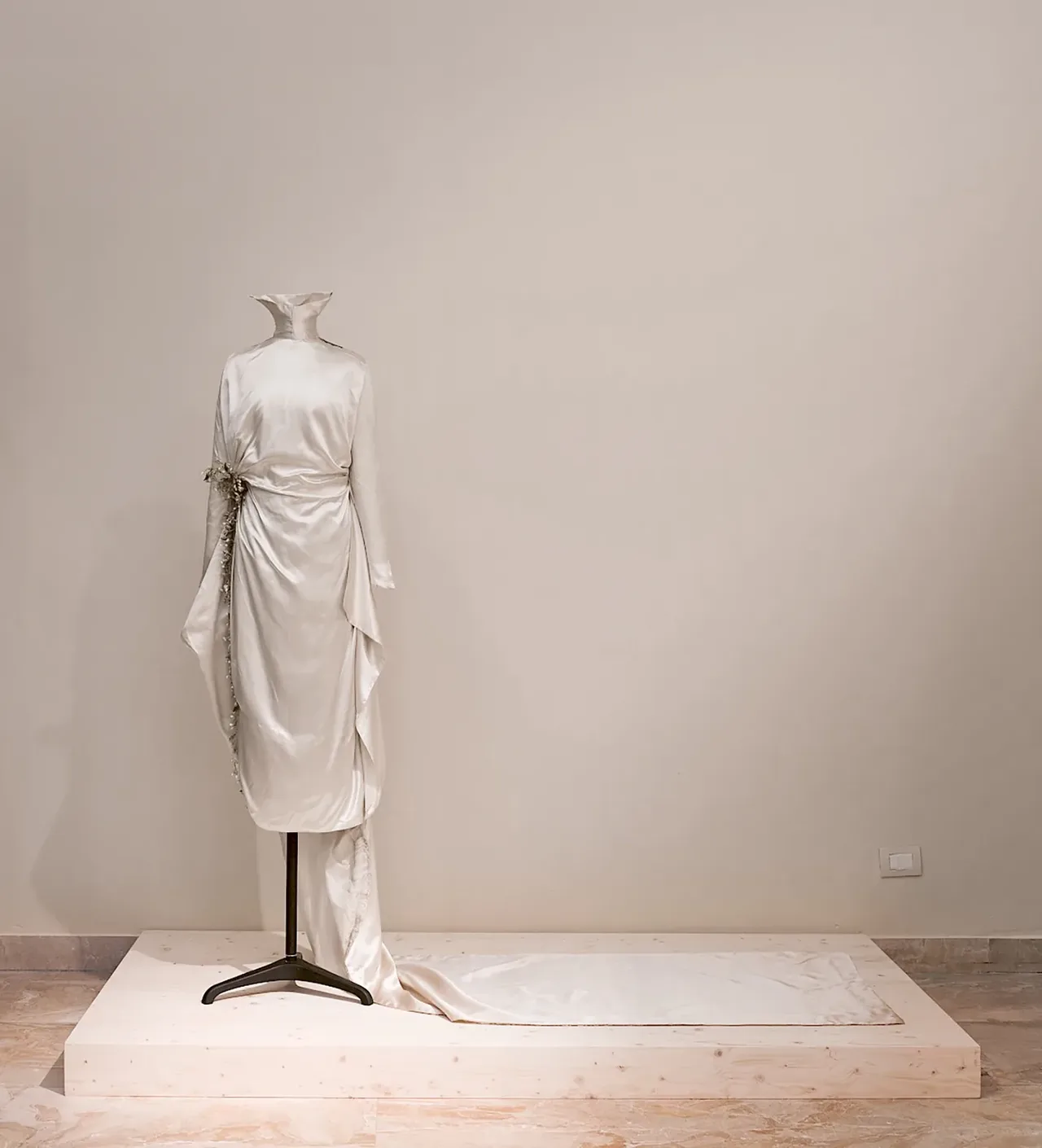
Judith Clark, installation photograph of On Fashion in this Millennium, Museo Poldi Pezzoli, 2020, curated by Maria Luisa Frisa, designed by Judith Clark, from Prefigured: Fashion and Exhibition-Making (SPBH Editions, 2026). Courtesy of Judith Clark, SPBH Editions, and MACK.
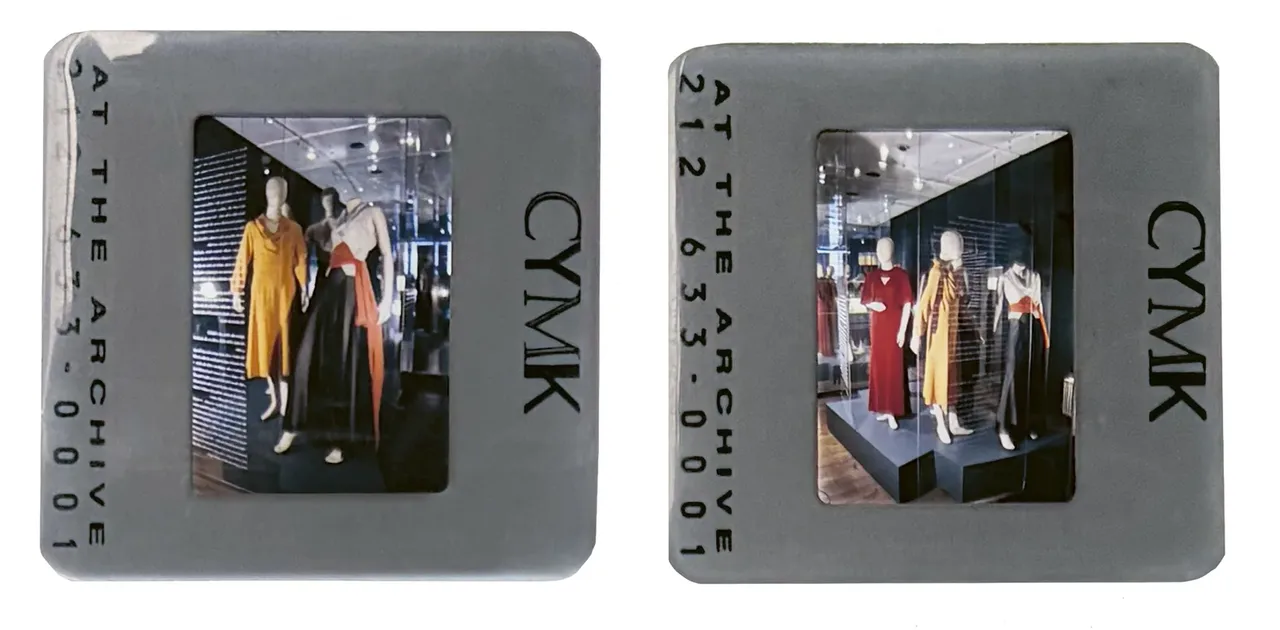
Judith Clark, slides of a photograph taken in Judith Clark Studio during Vionnet exhibition, 2001, from Prefigured: Fashion and Exhibition-Making (SPBH Editions, 2026). Courtesy of Judith Clark, SPBH Editions, and MACK.