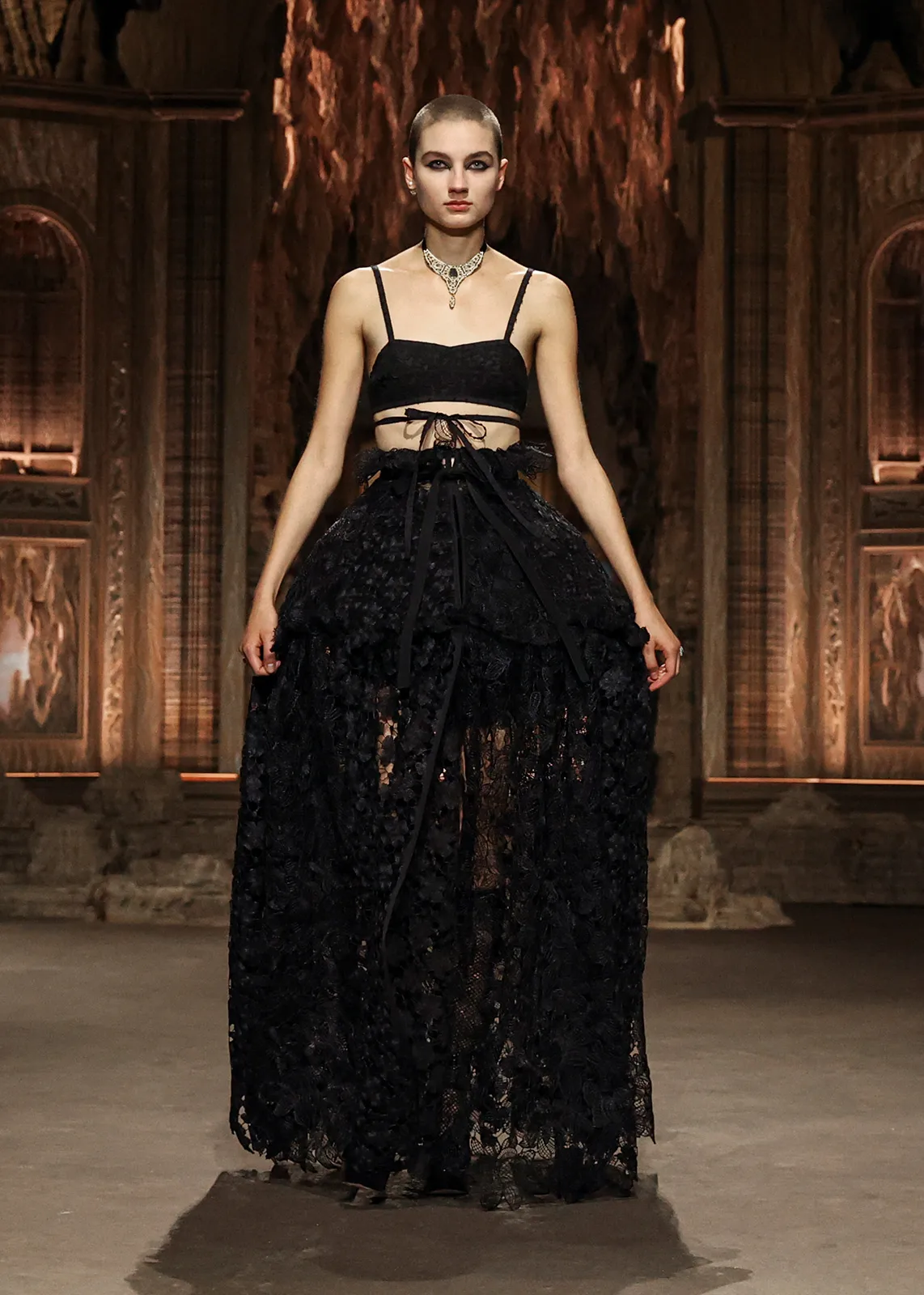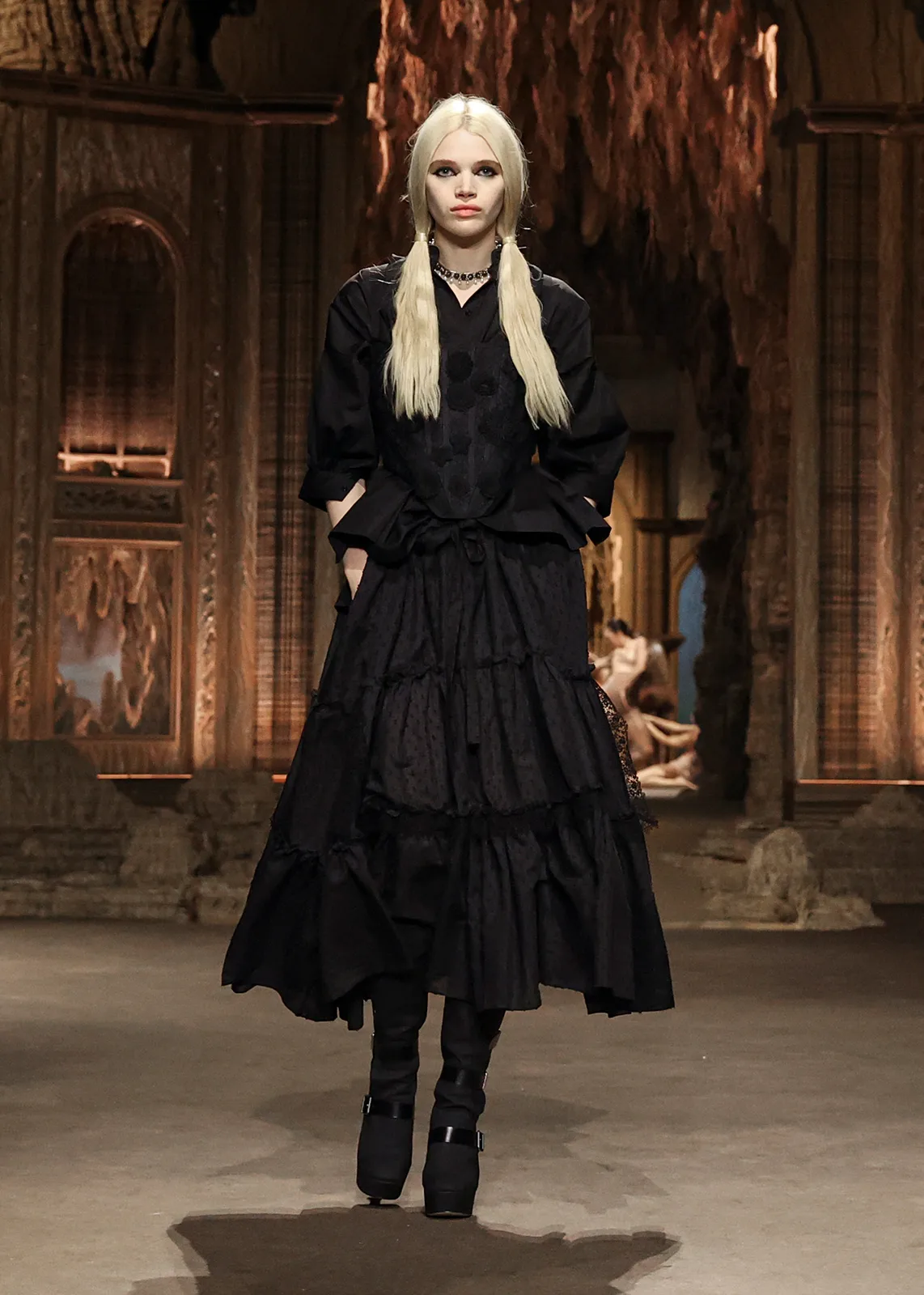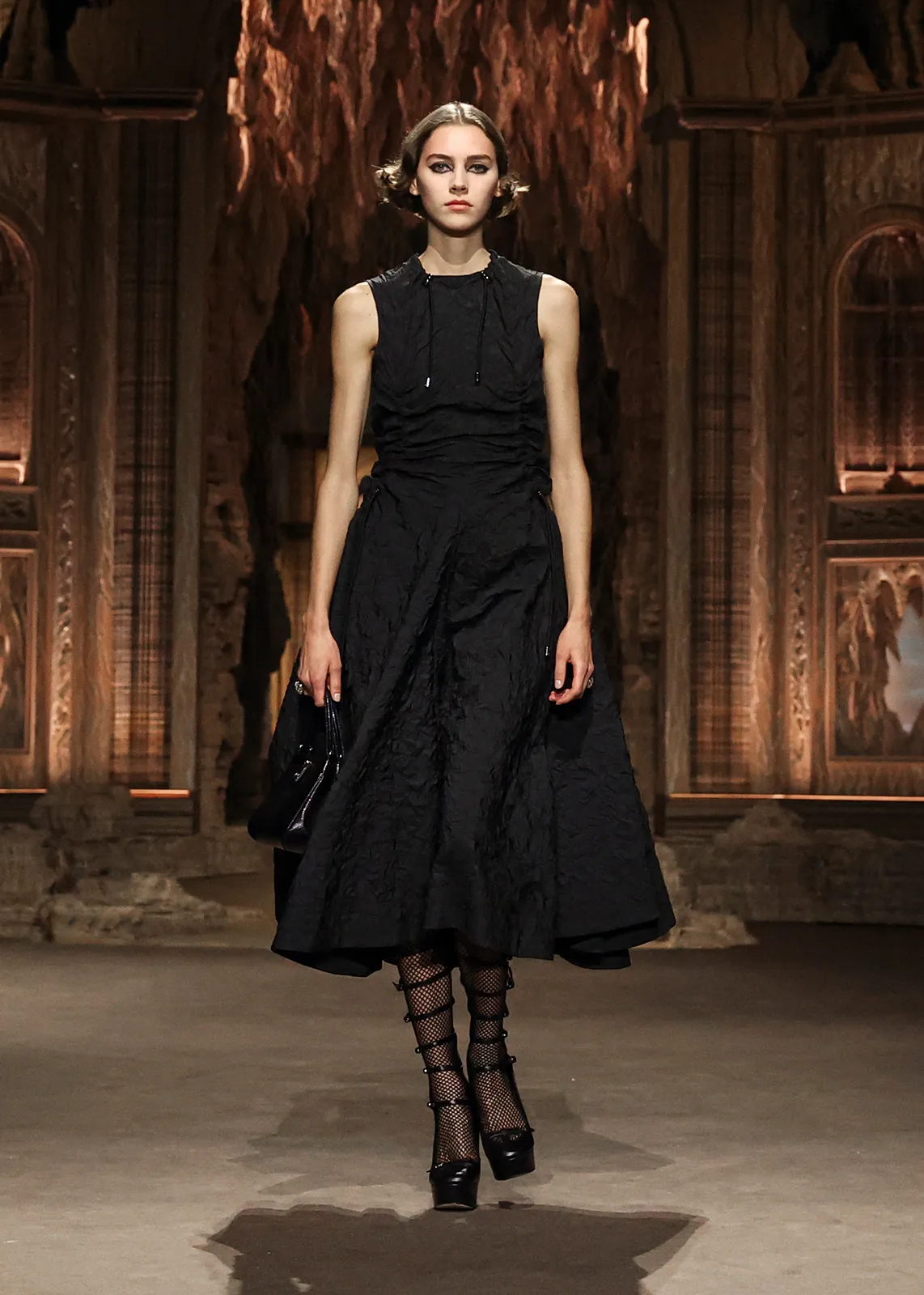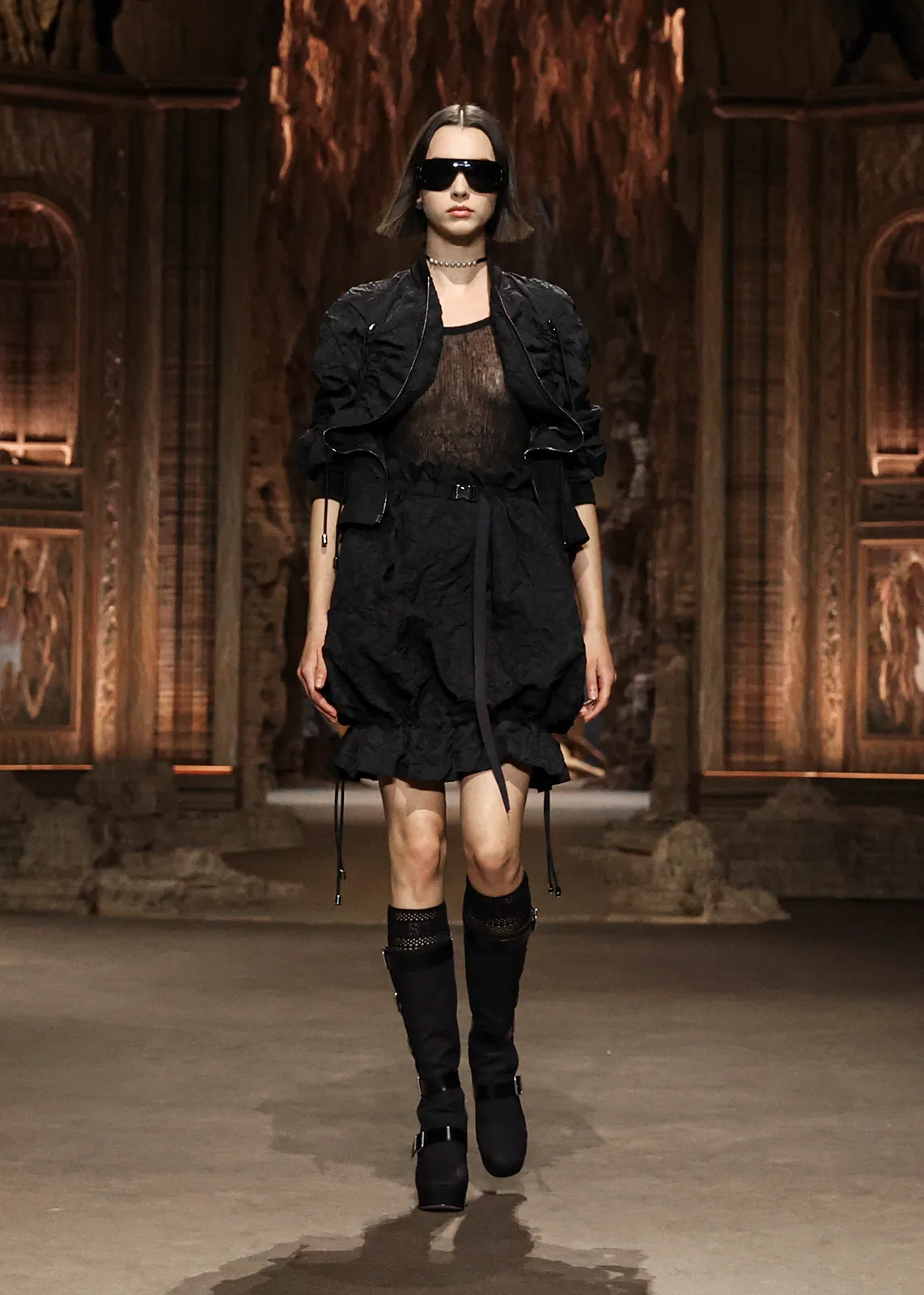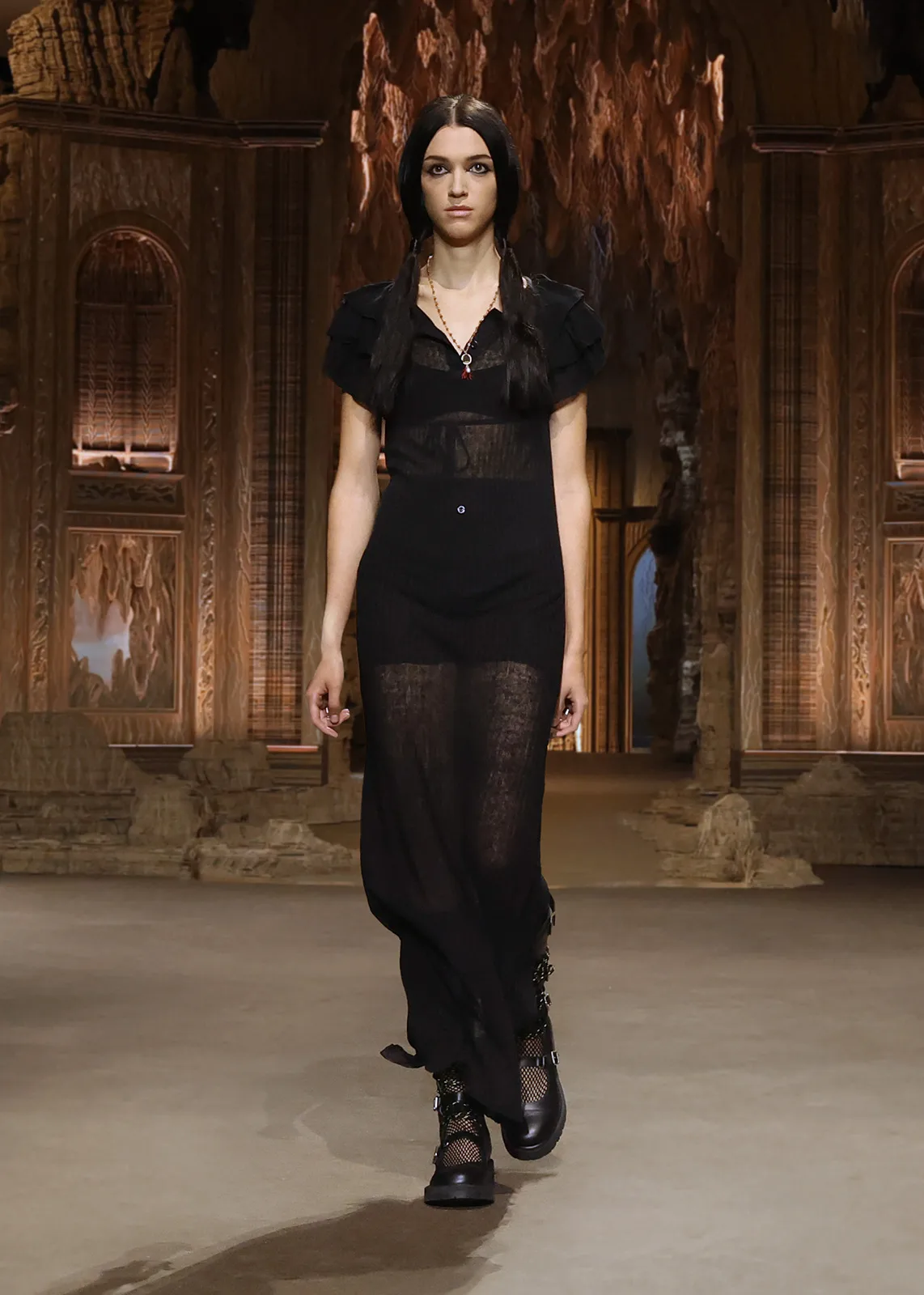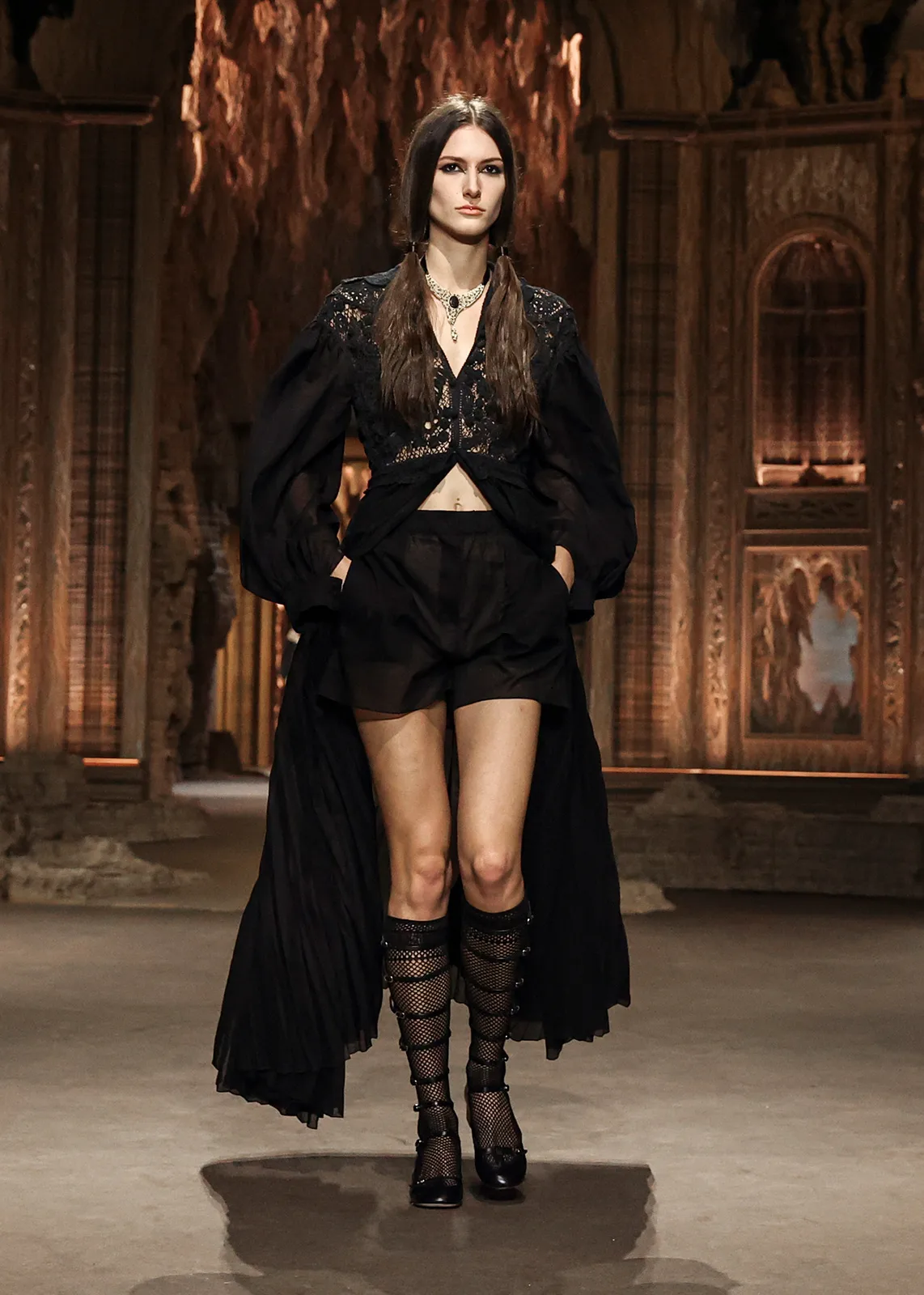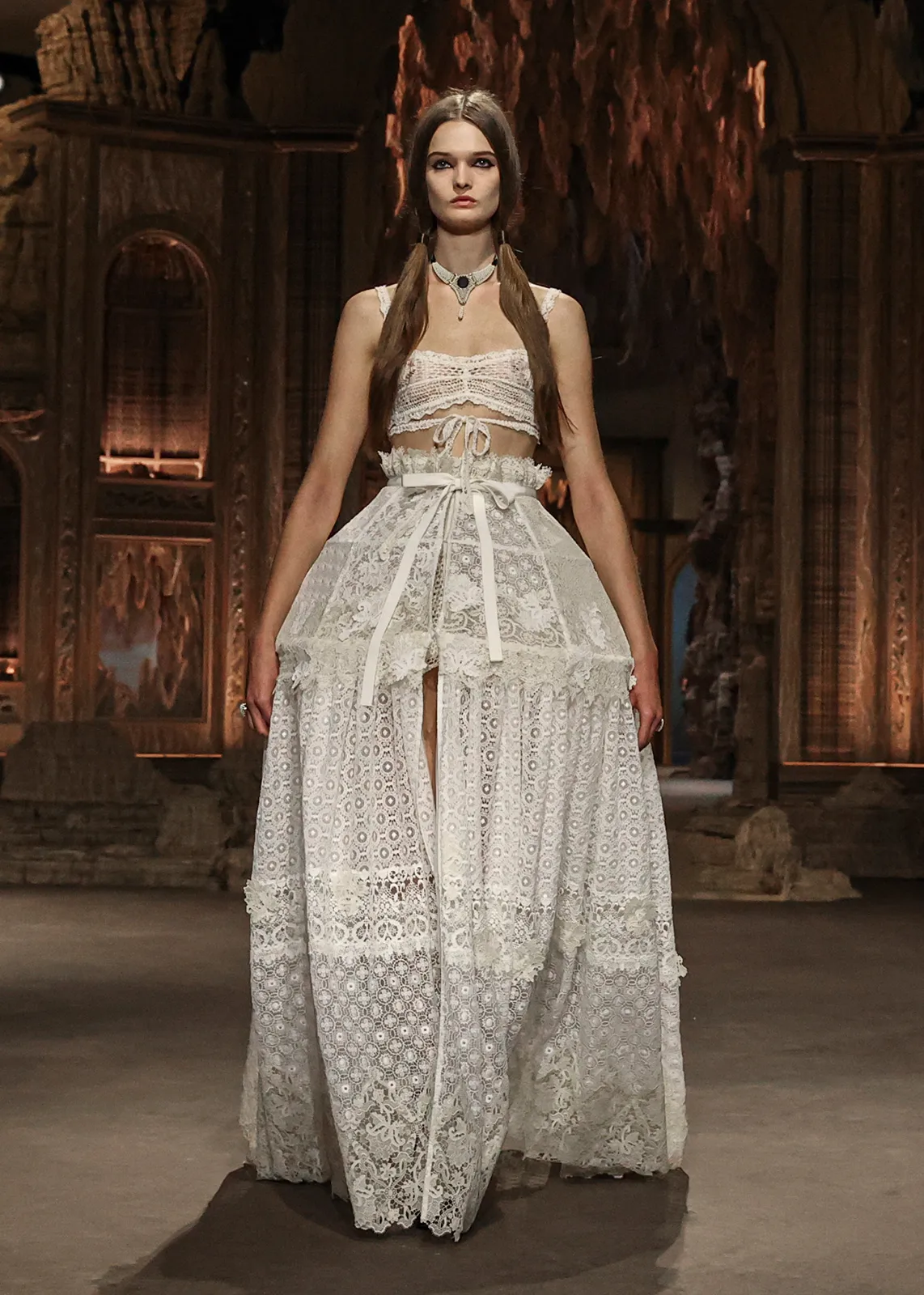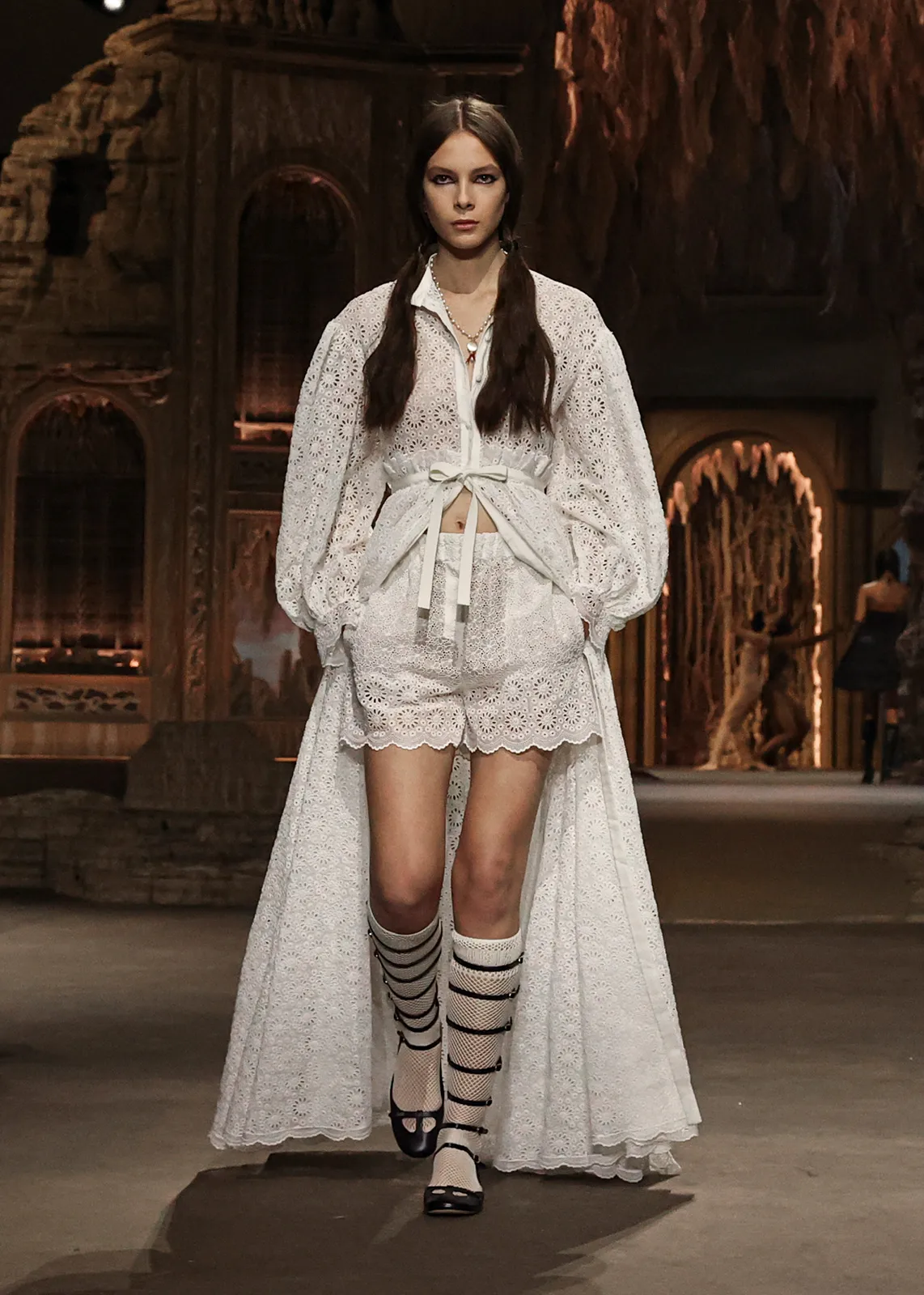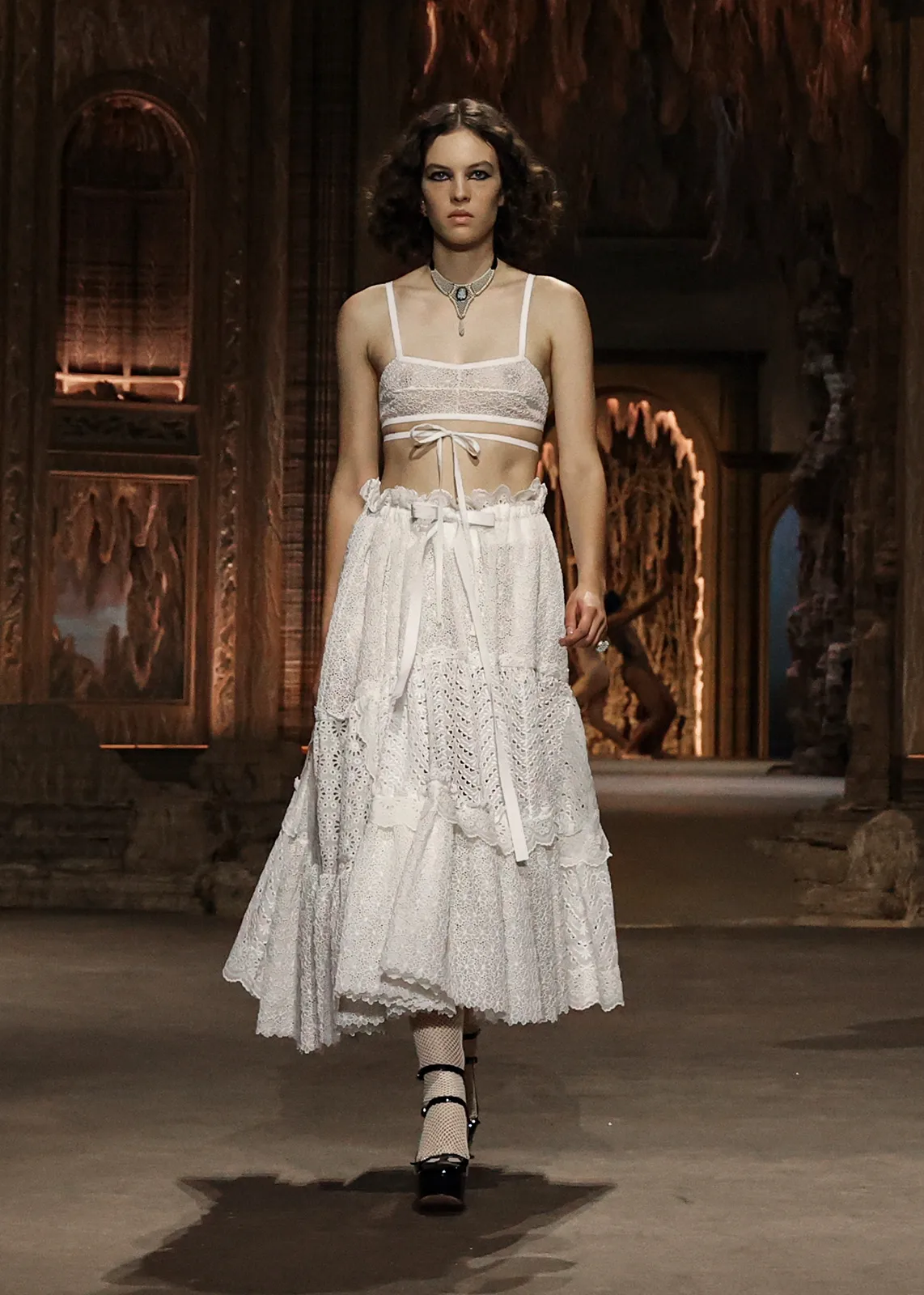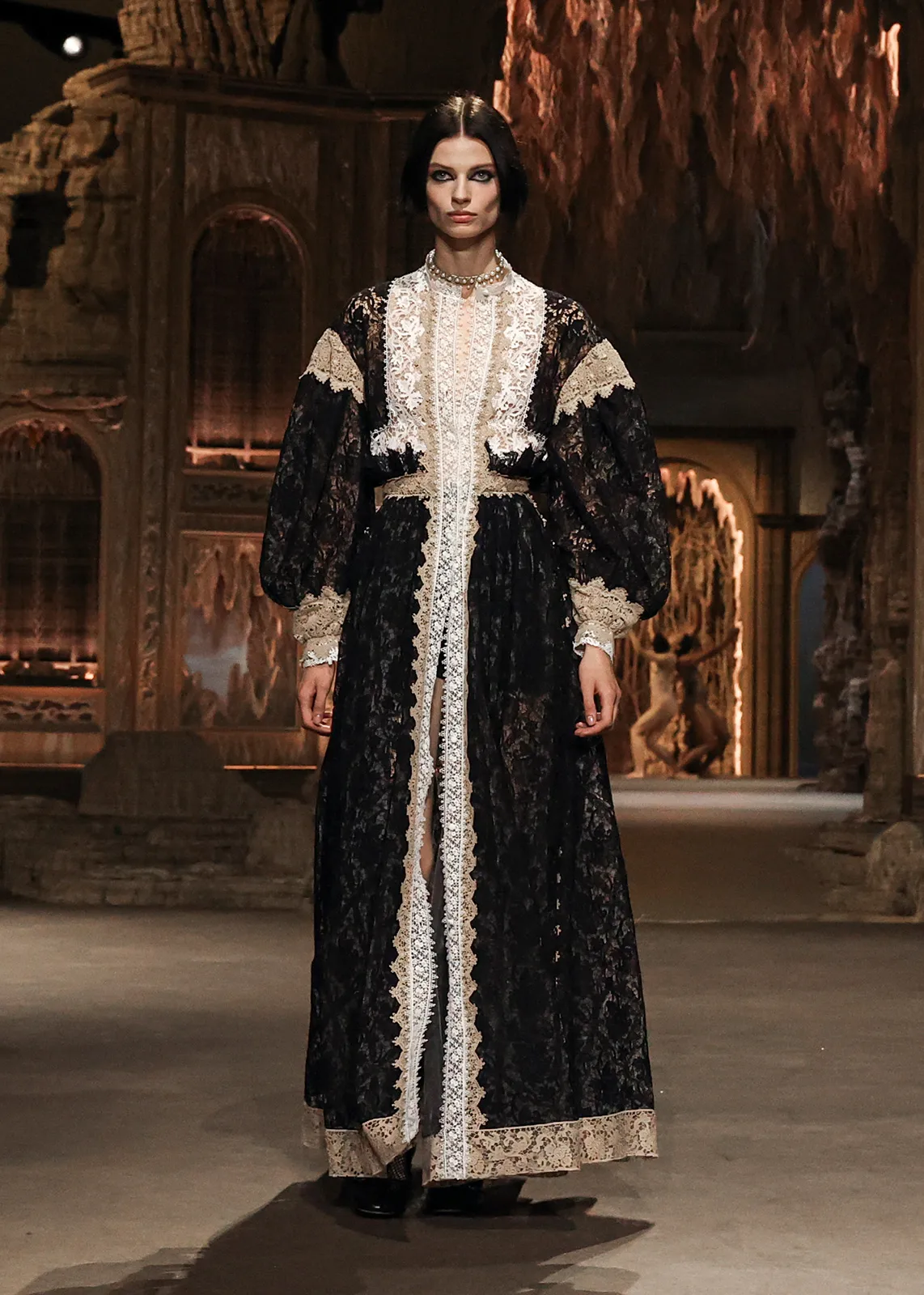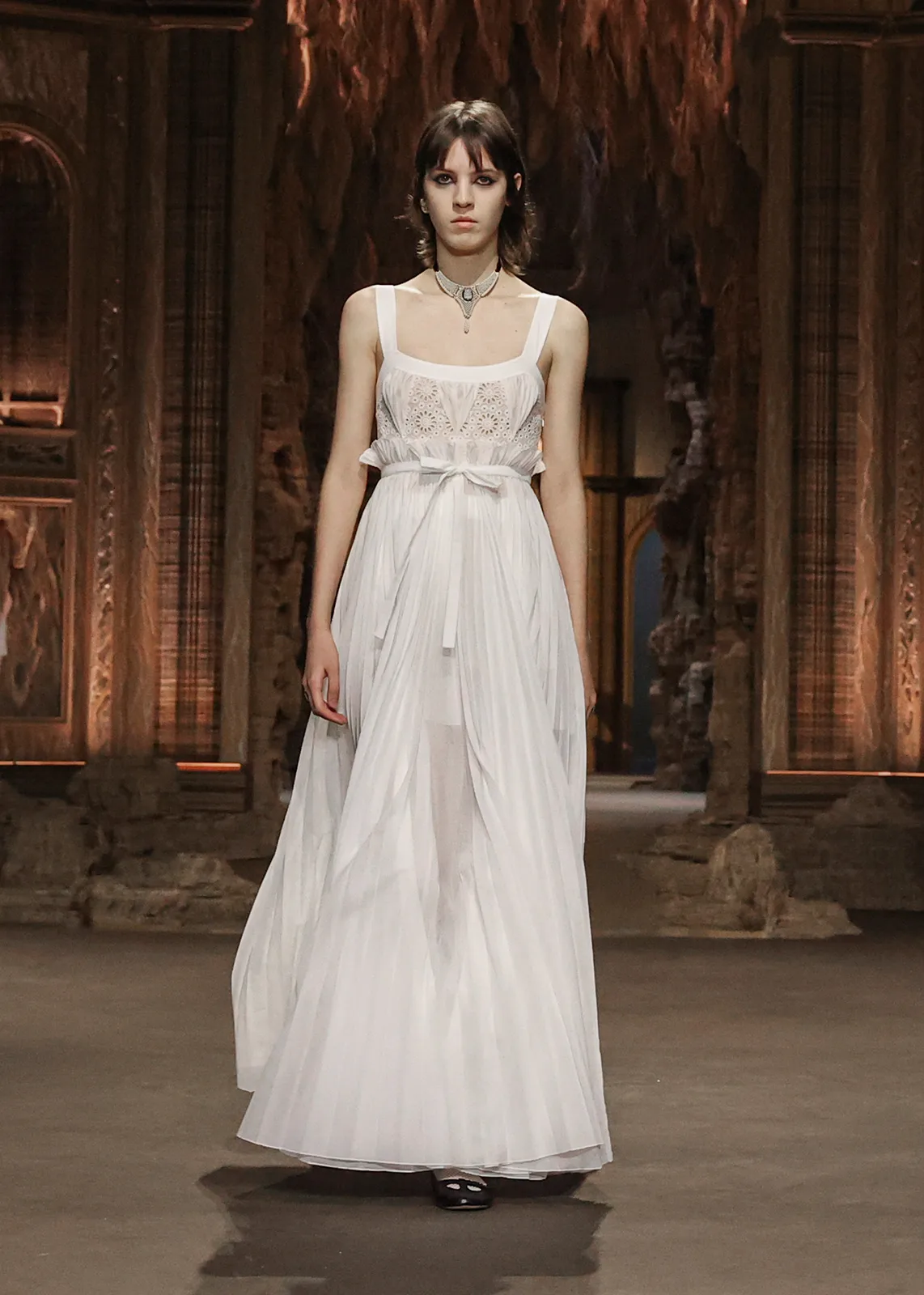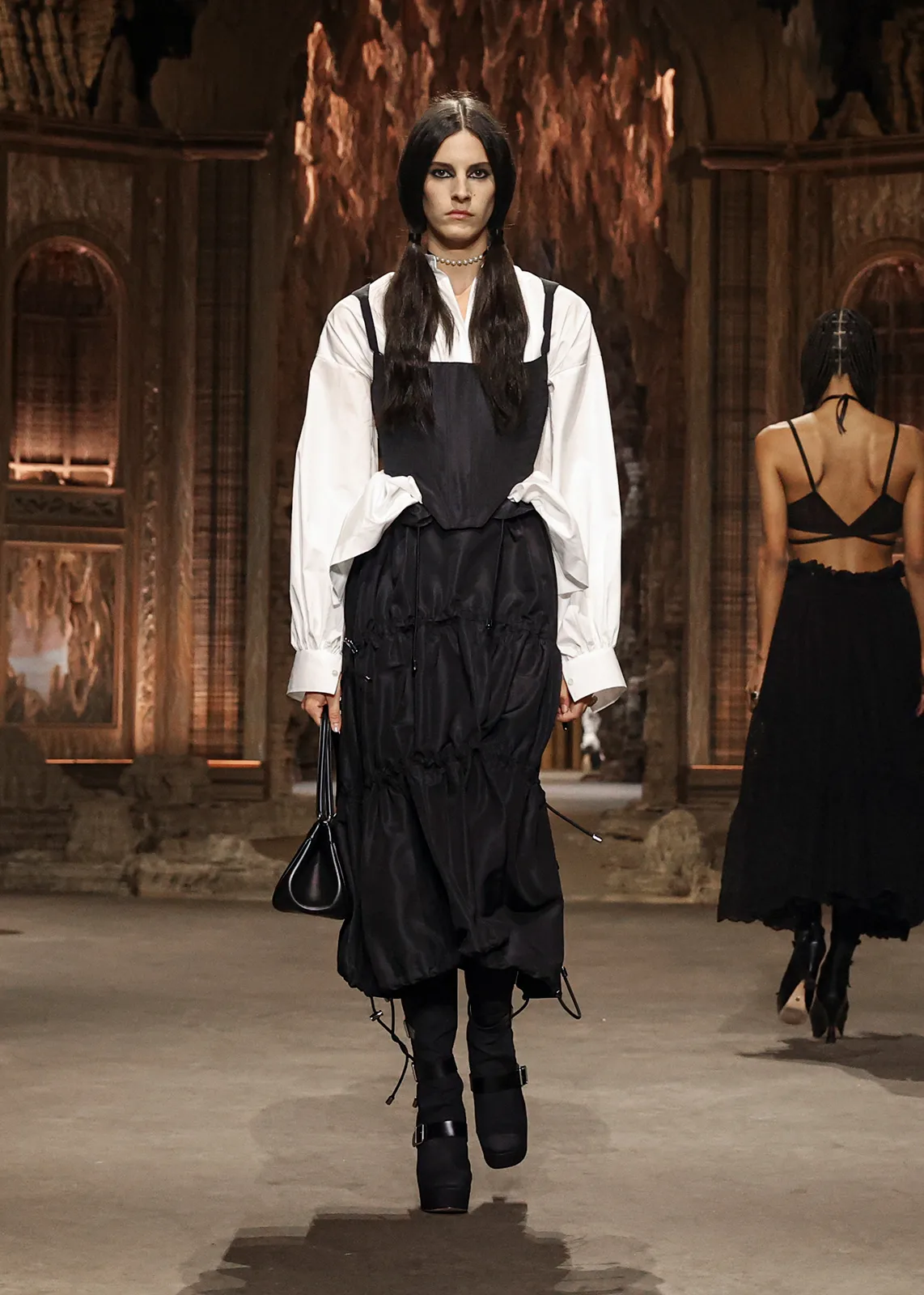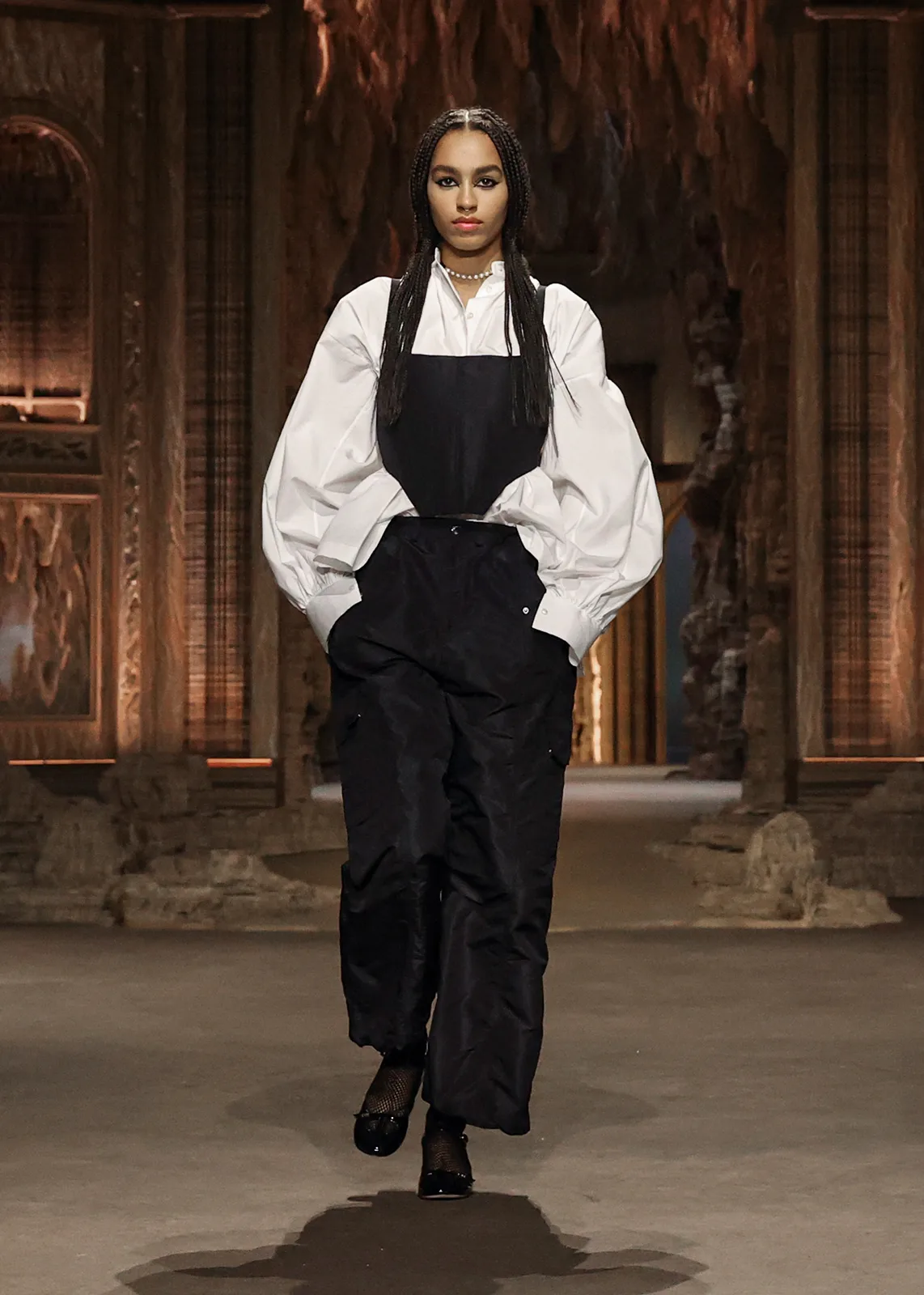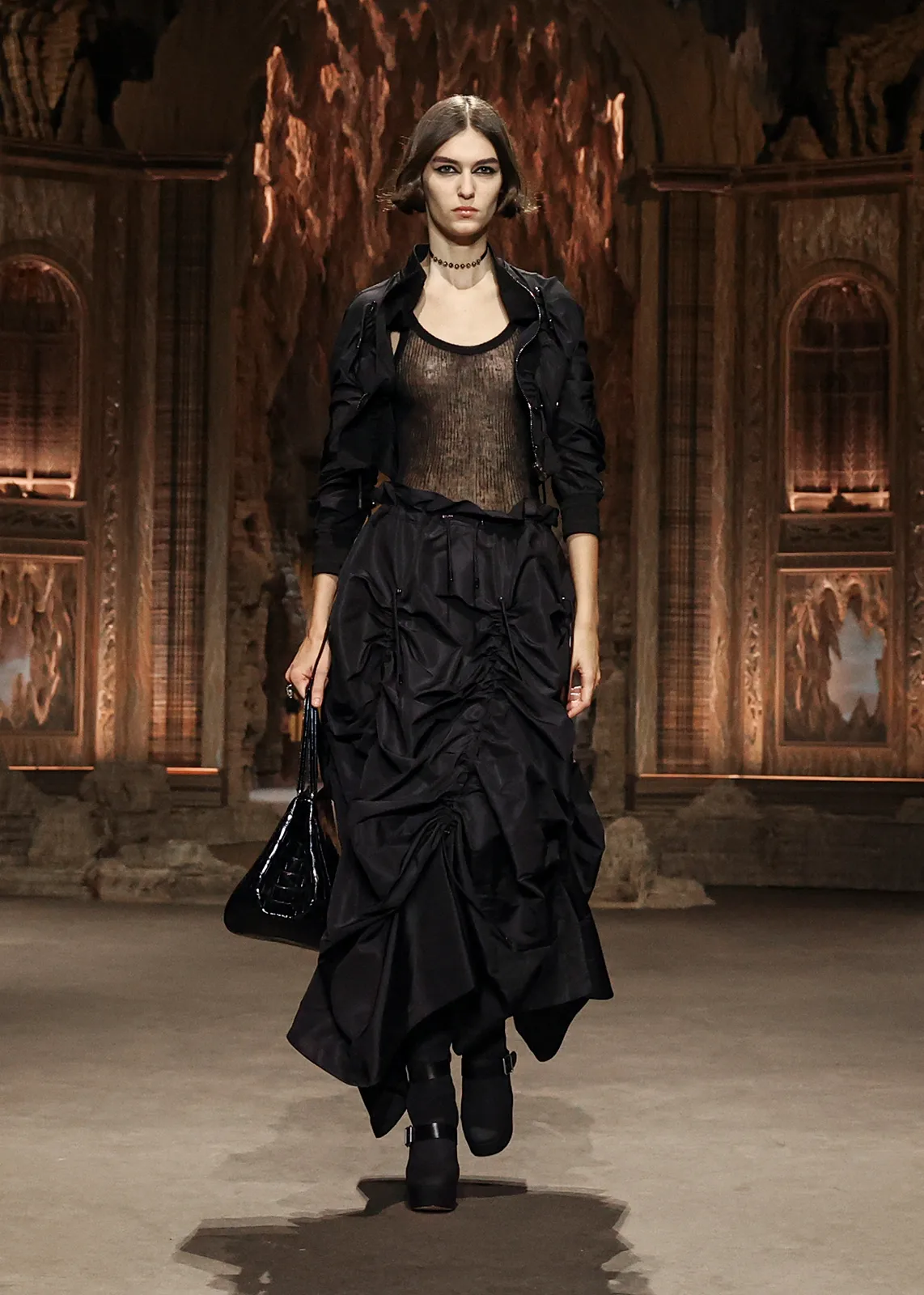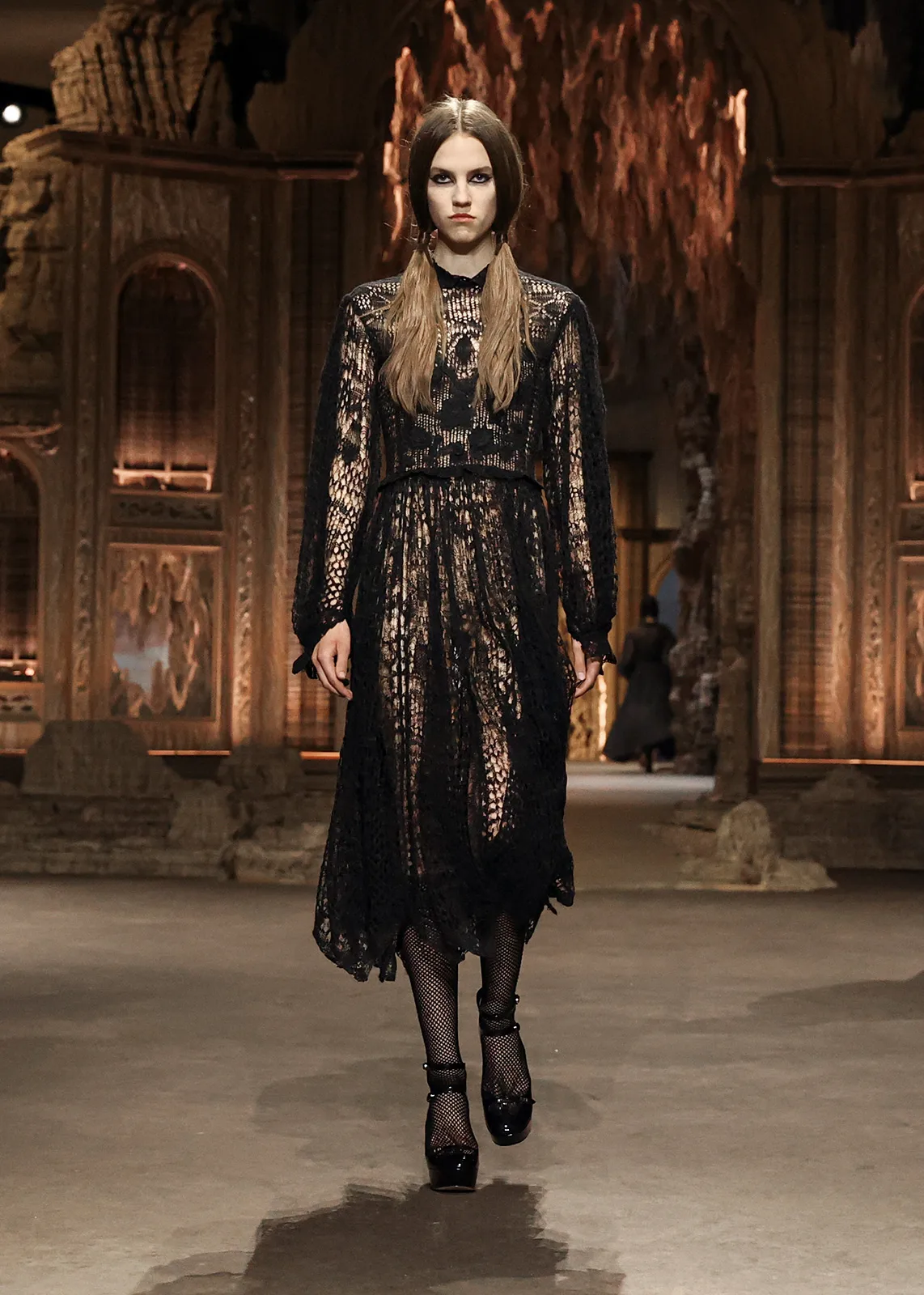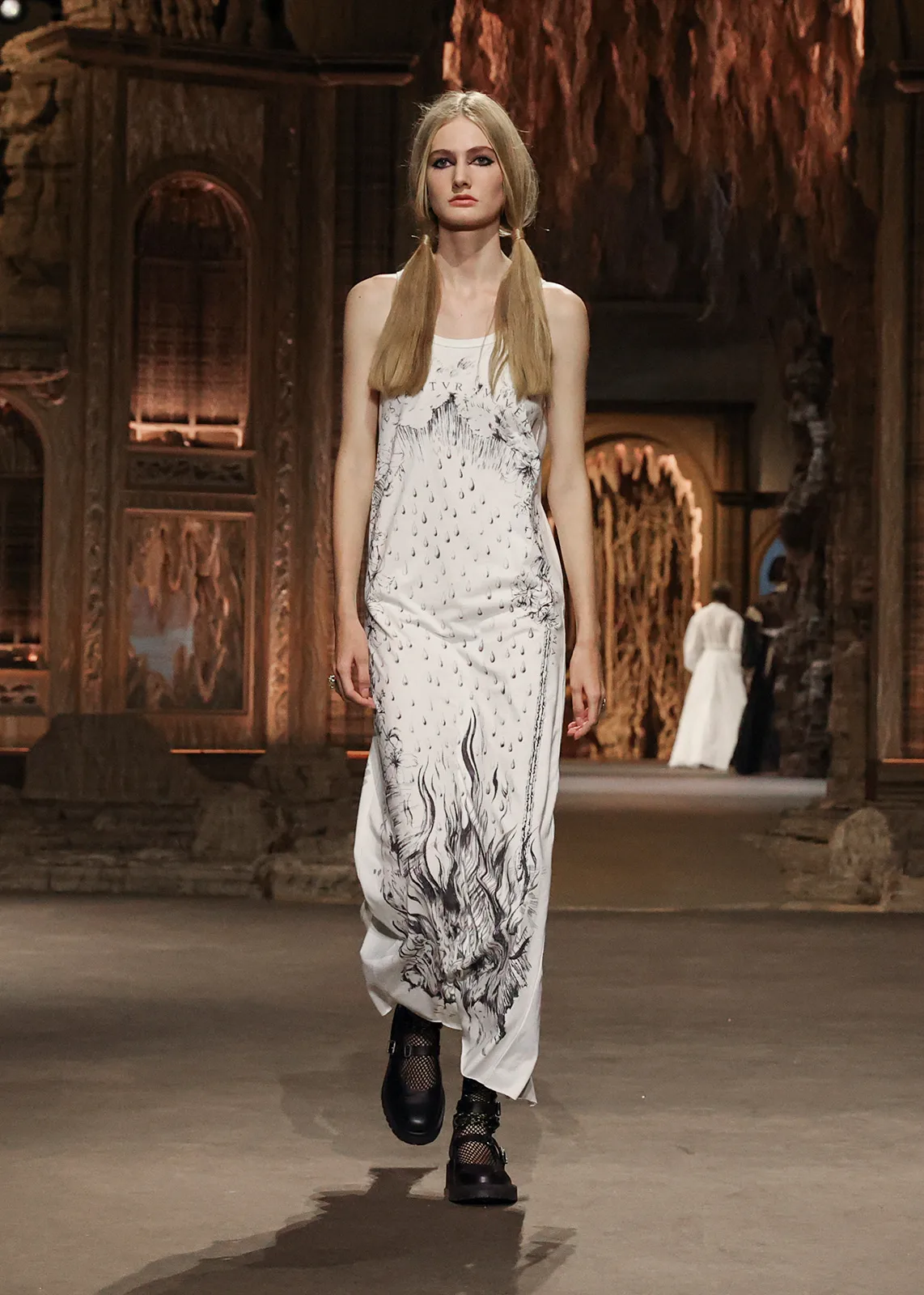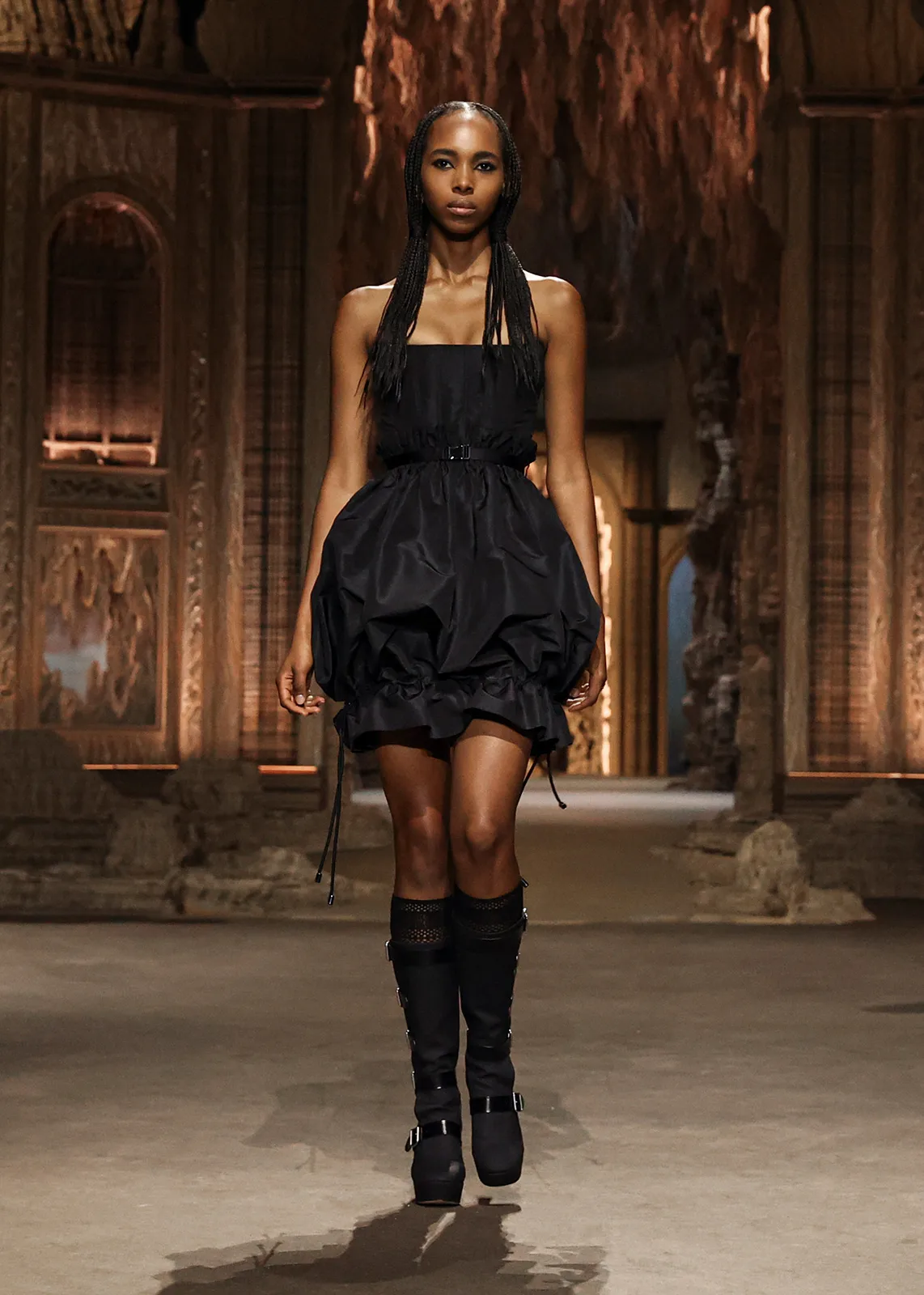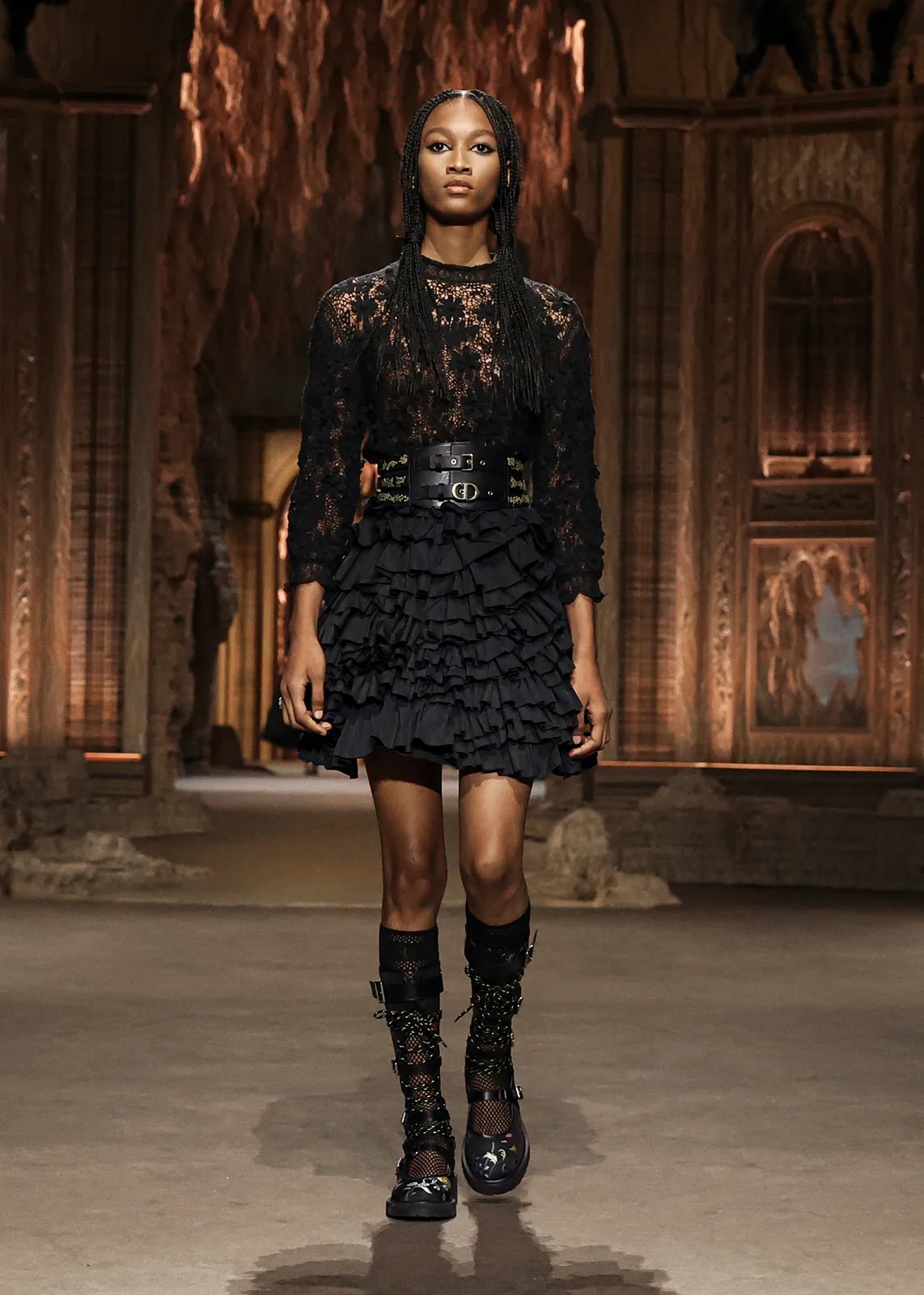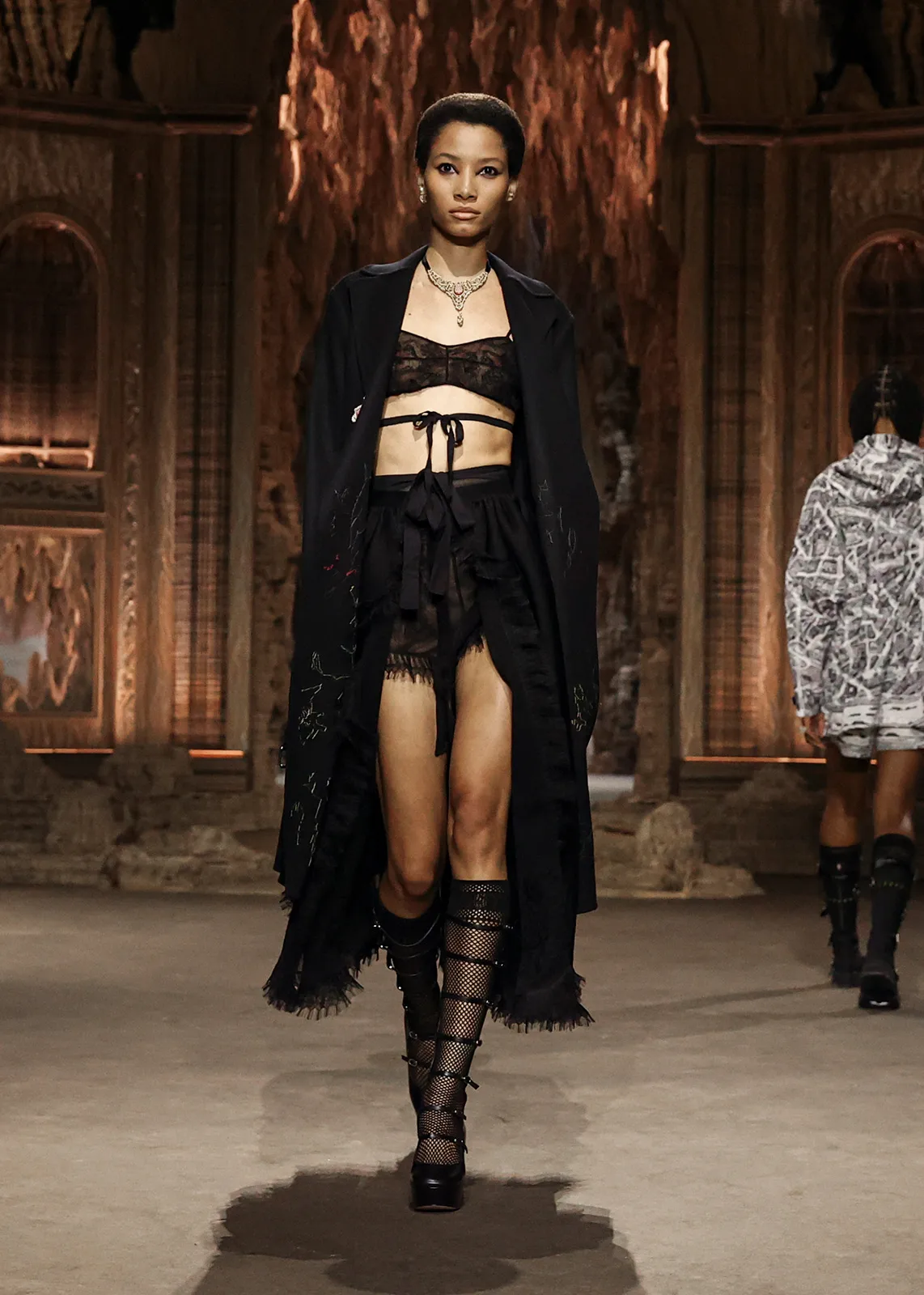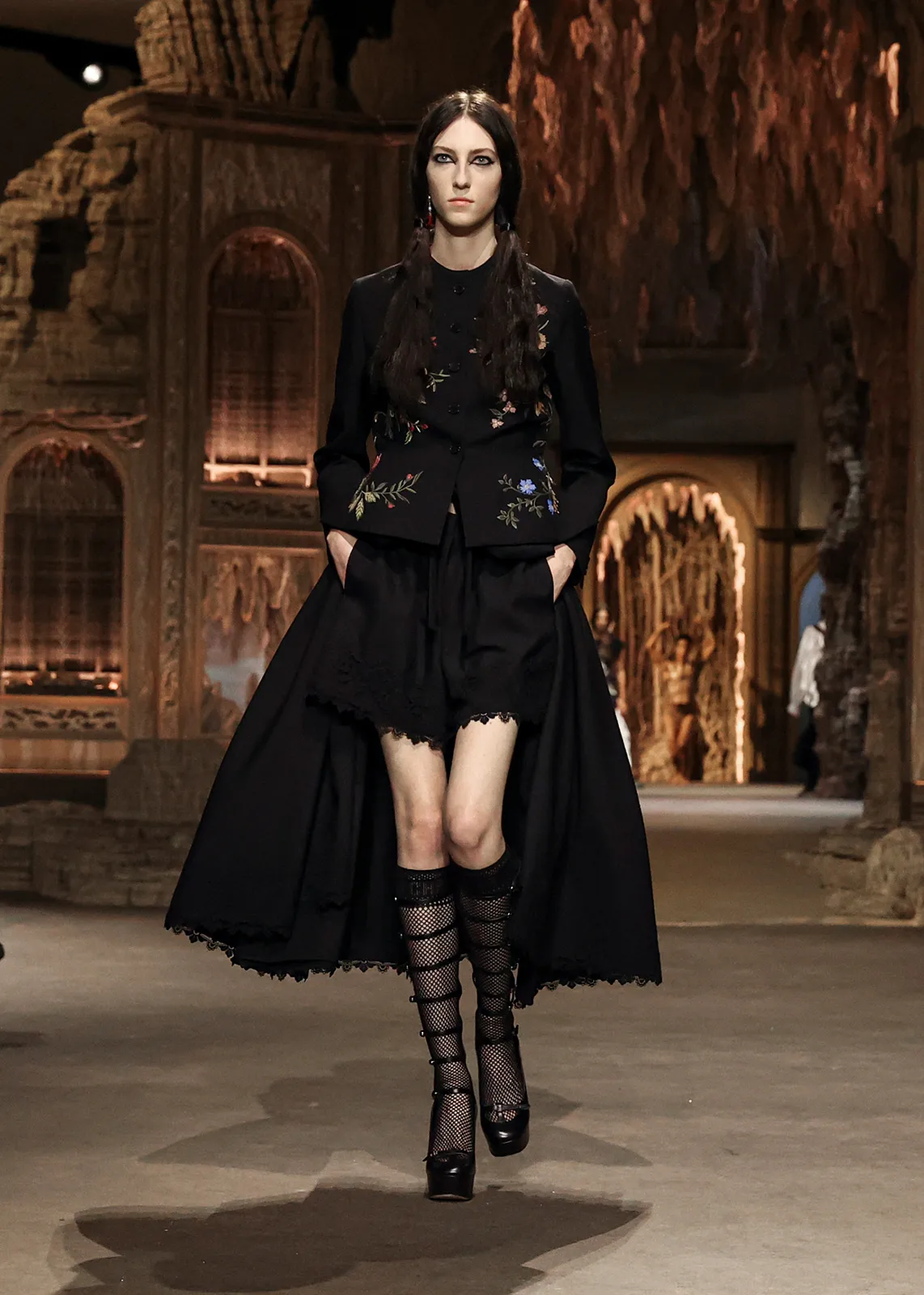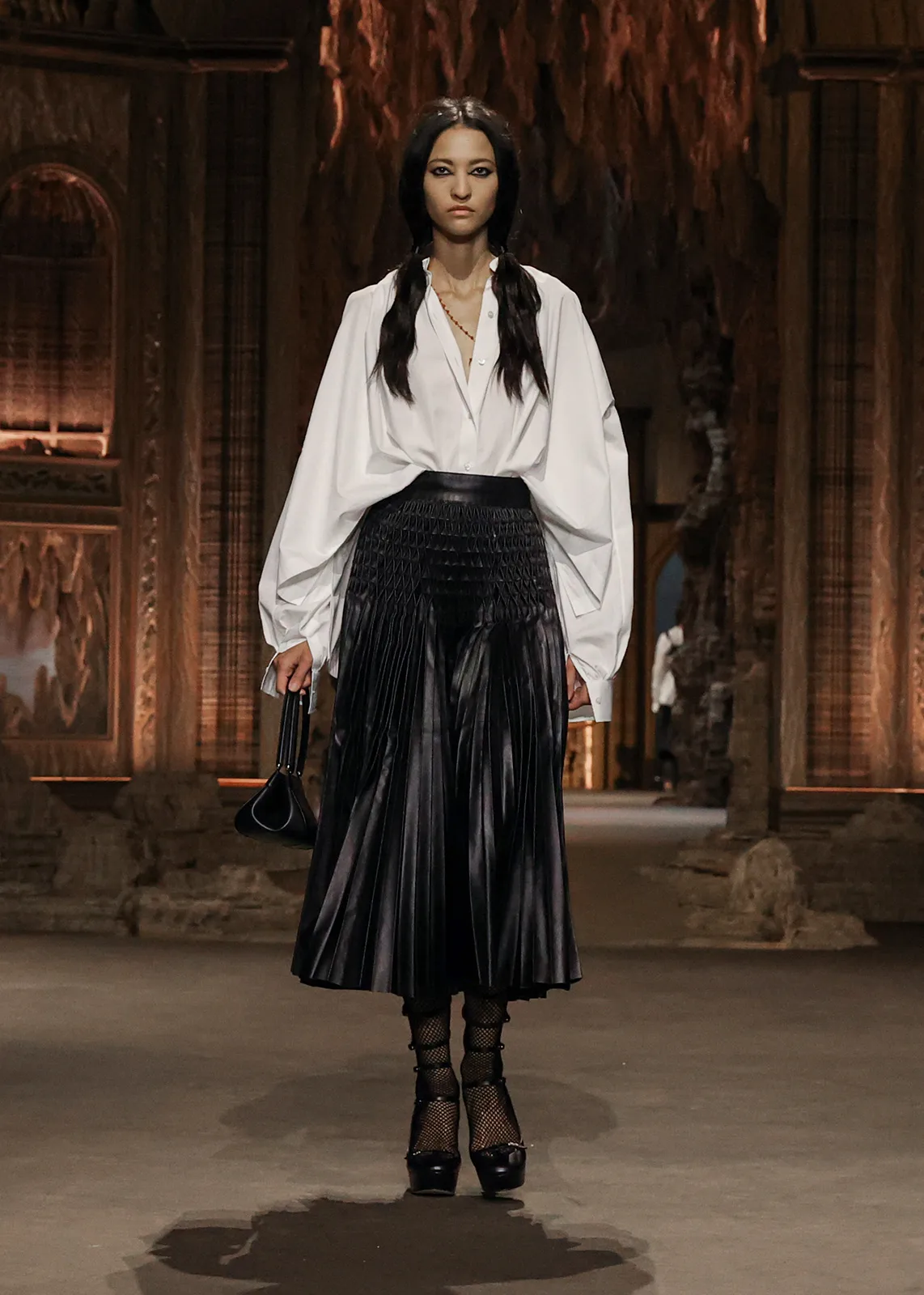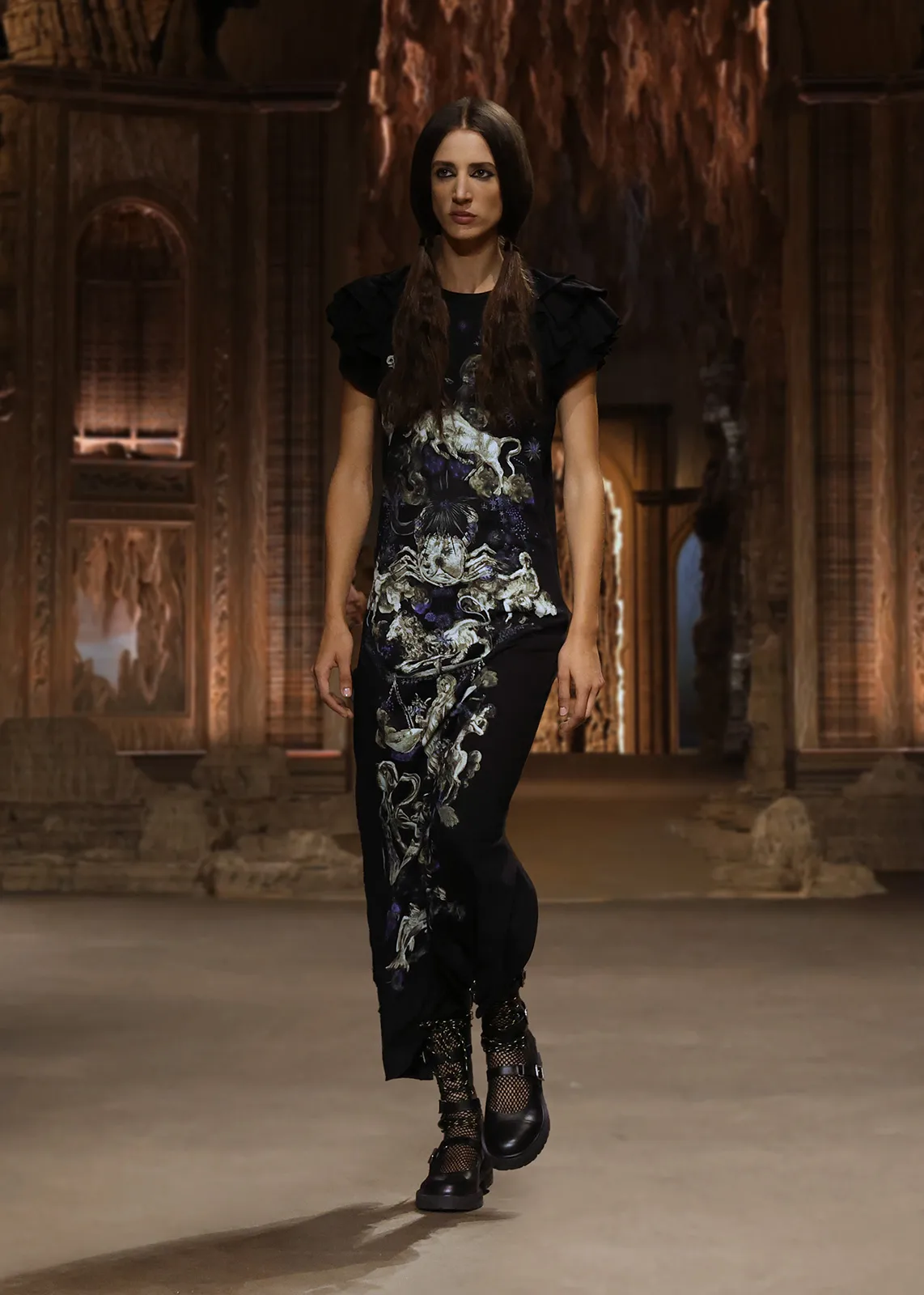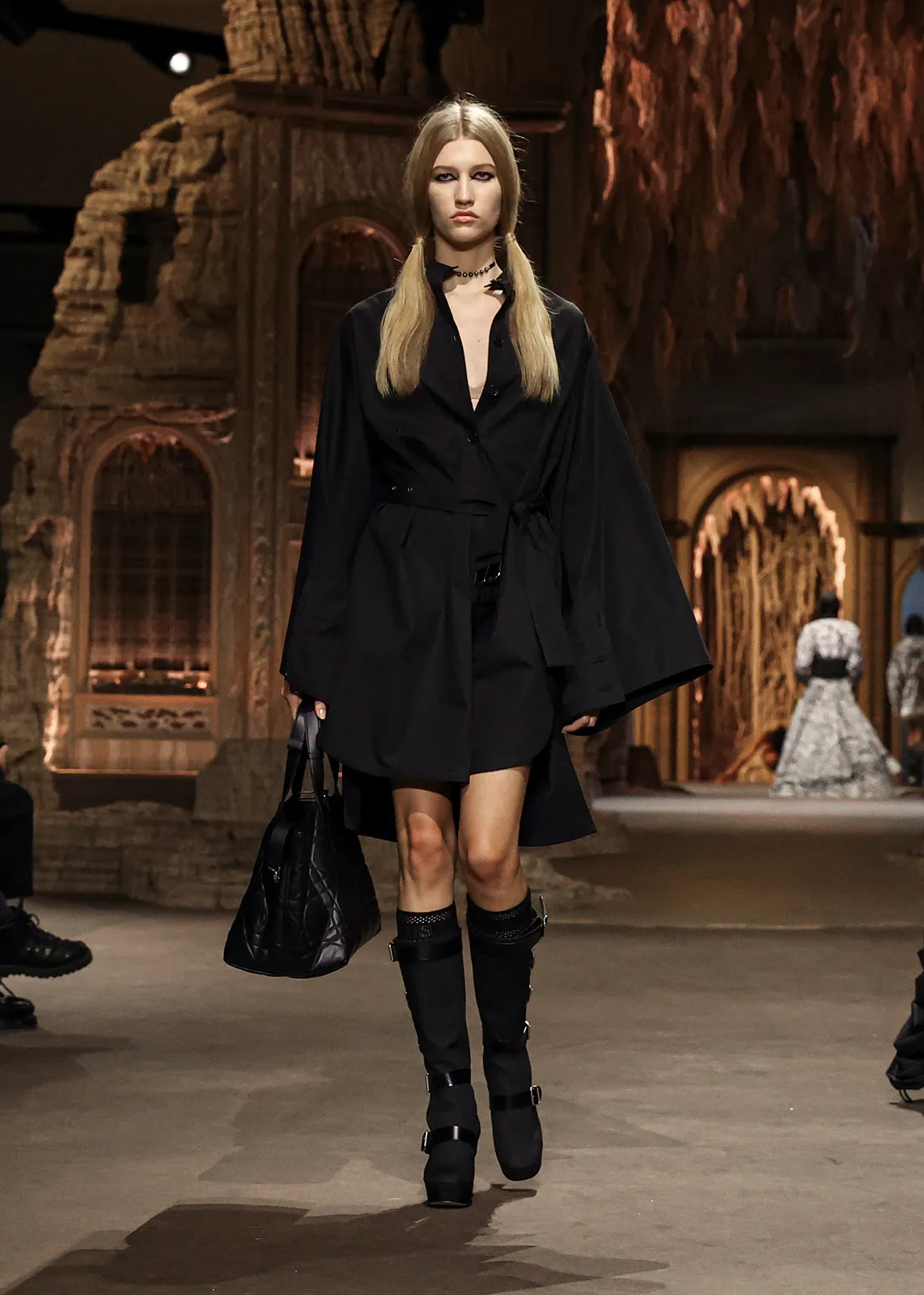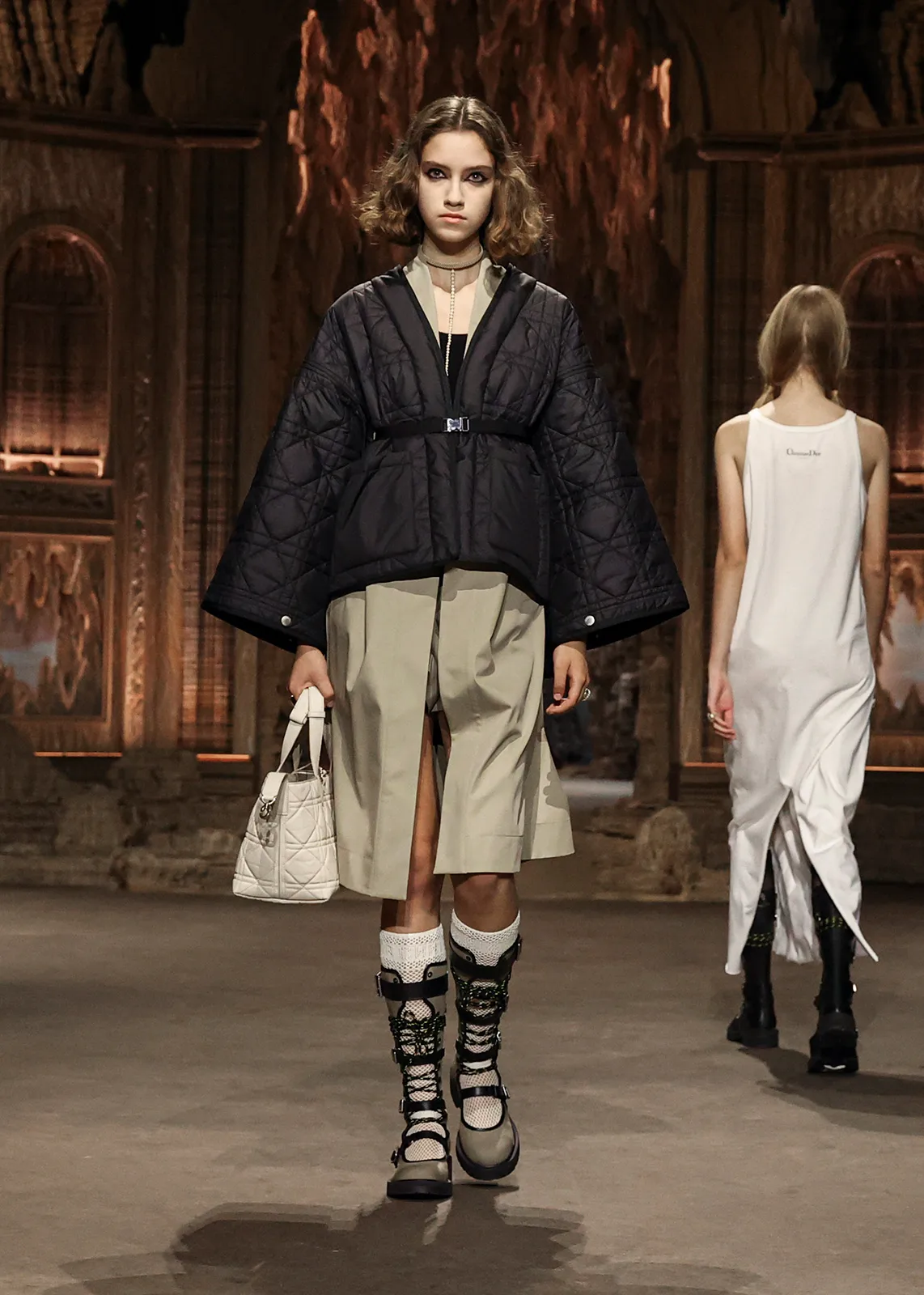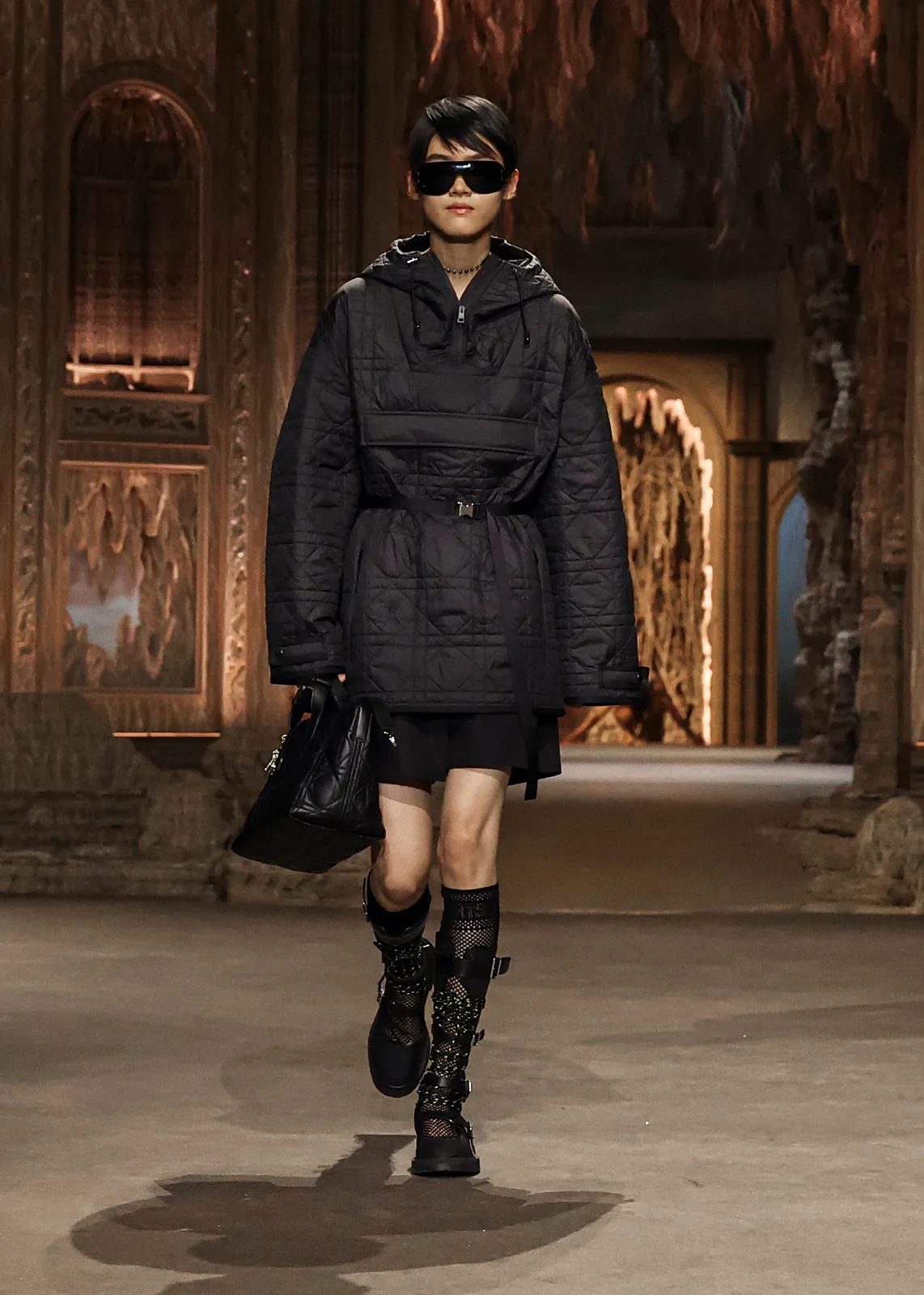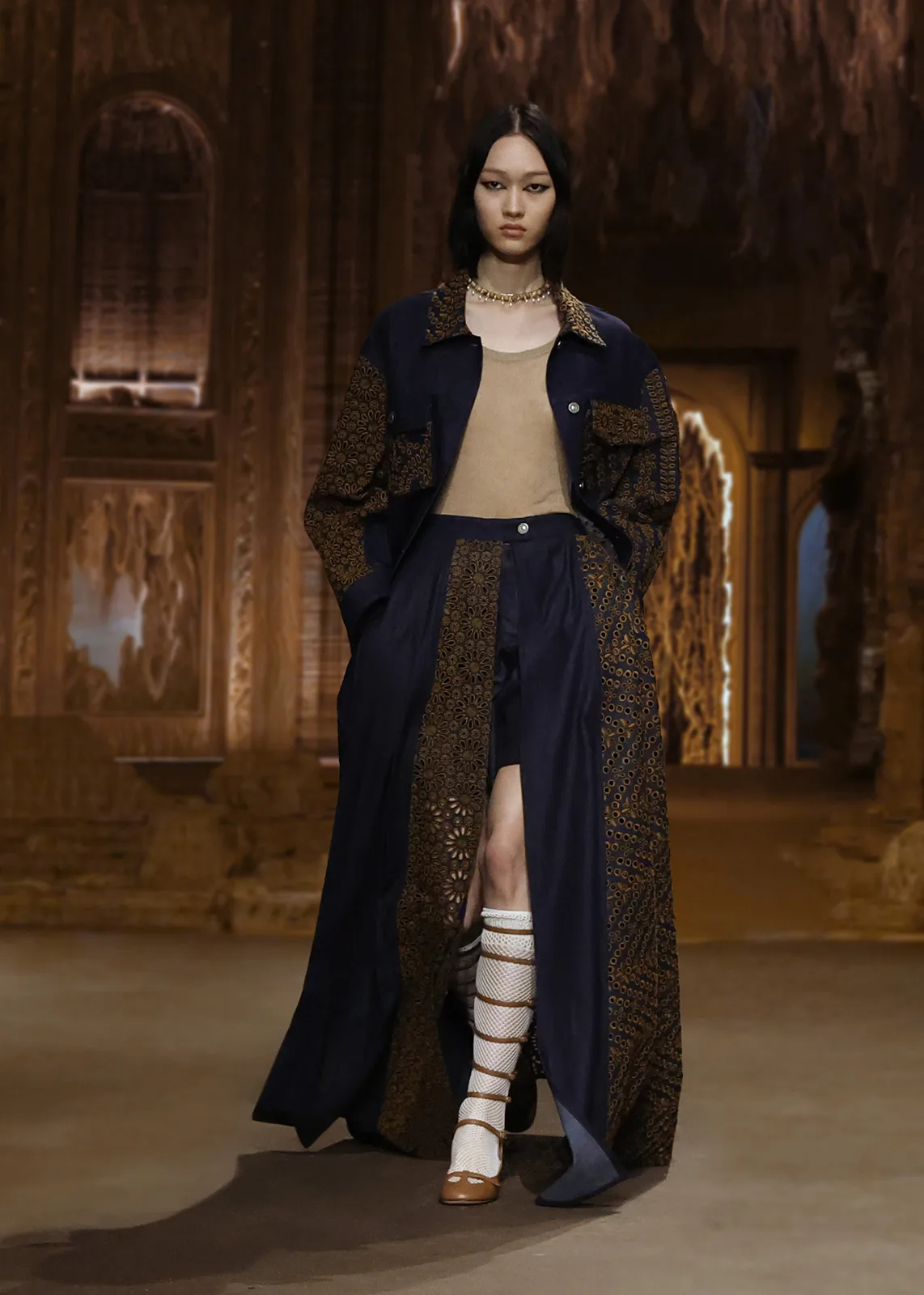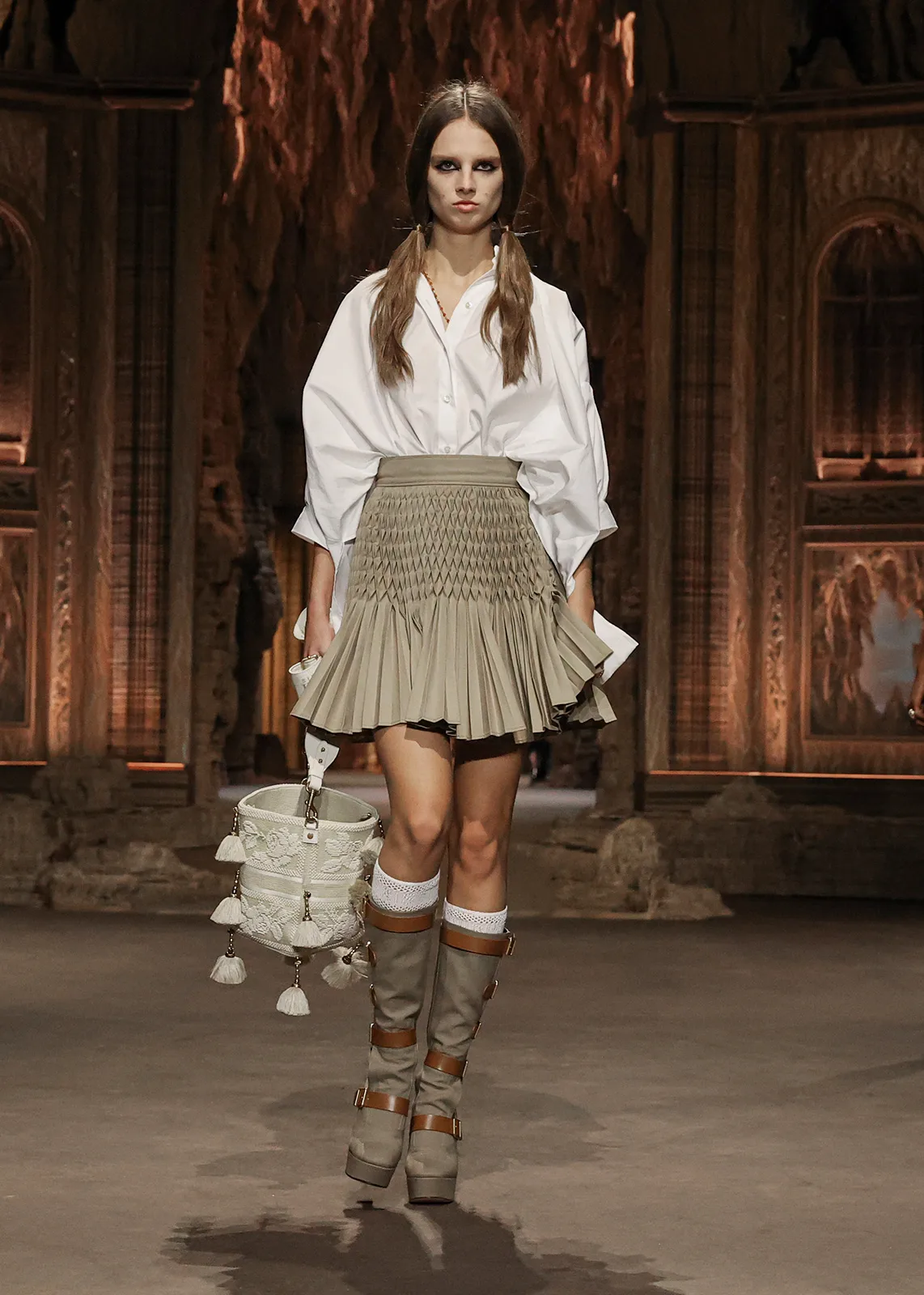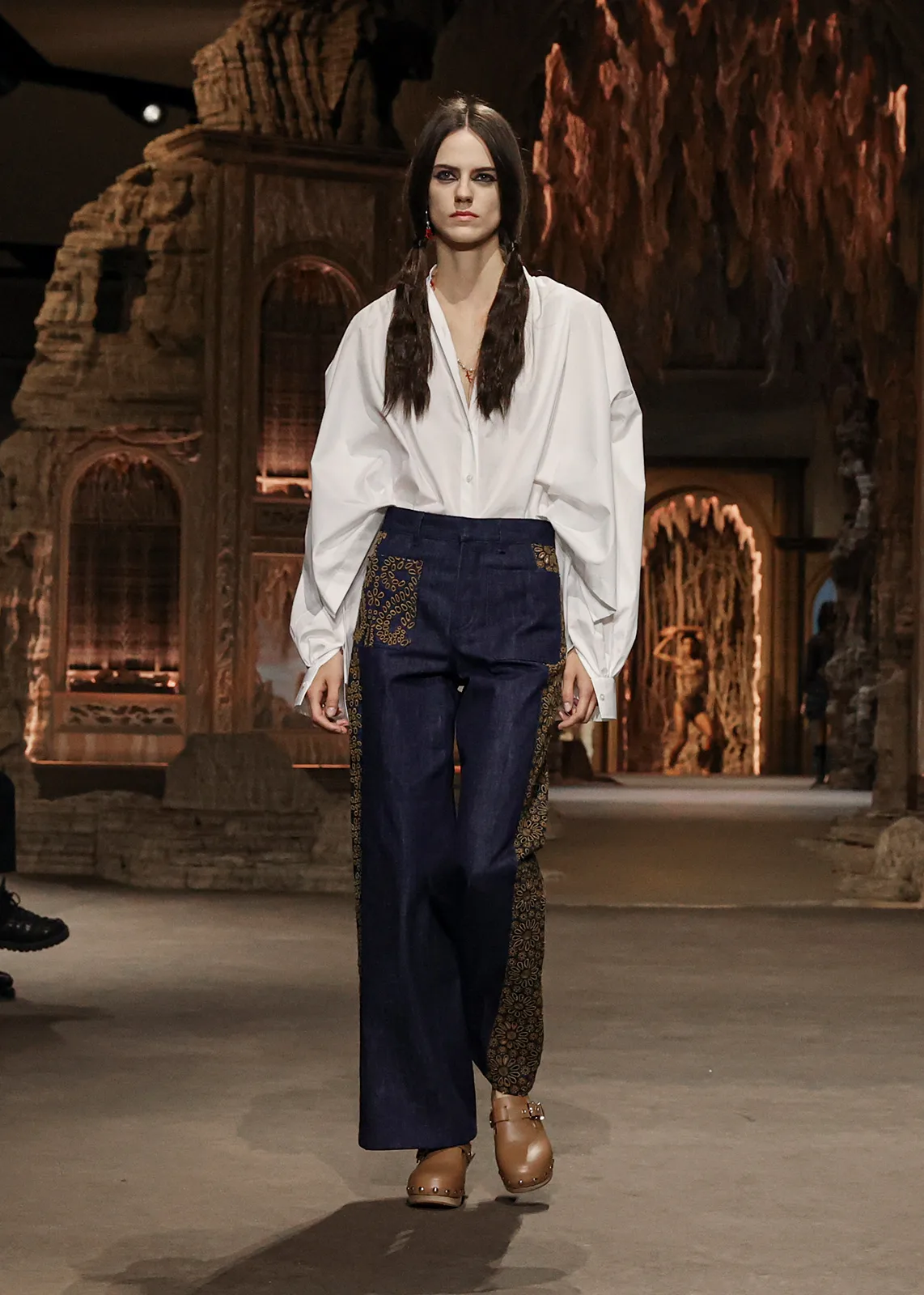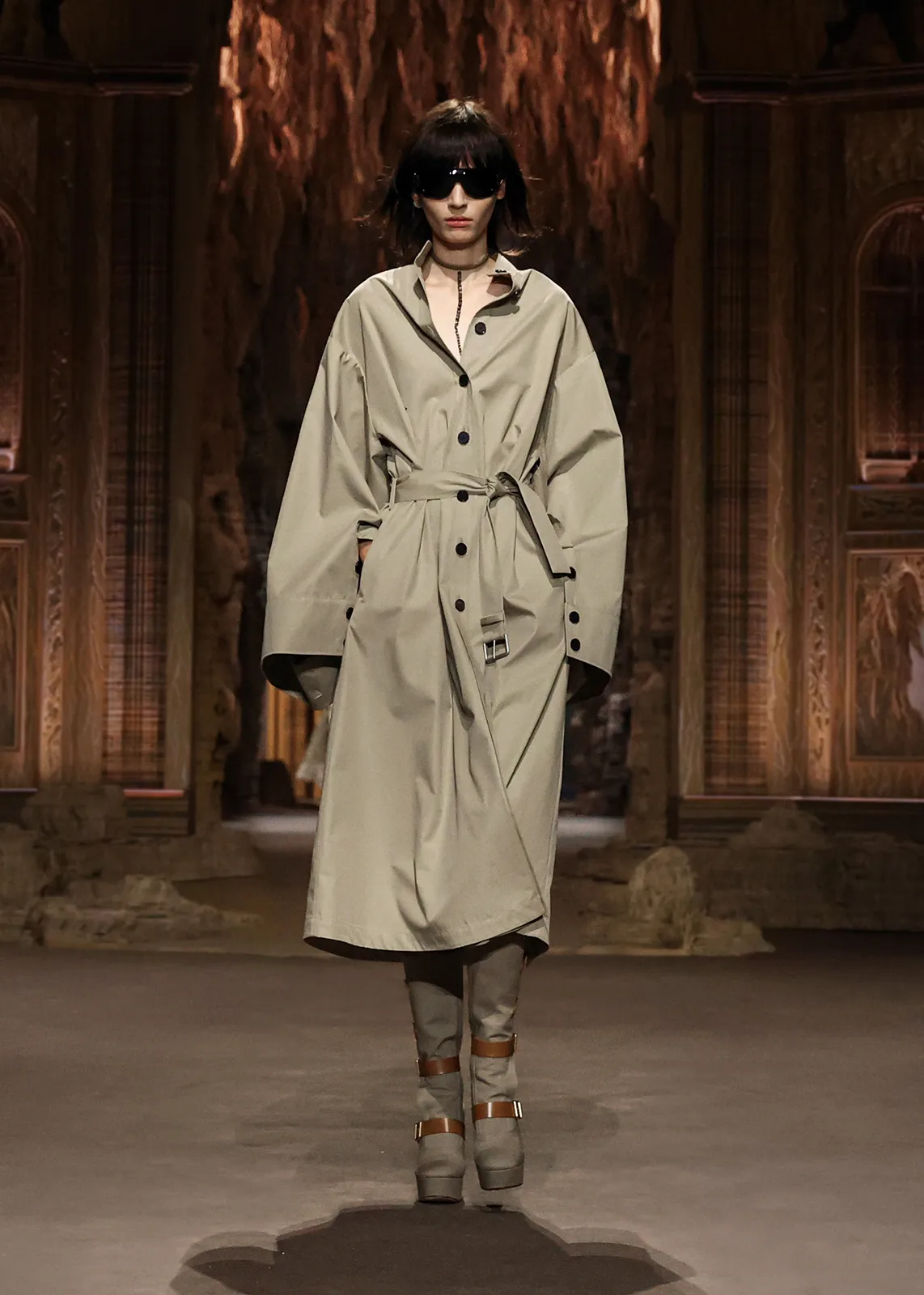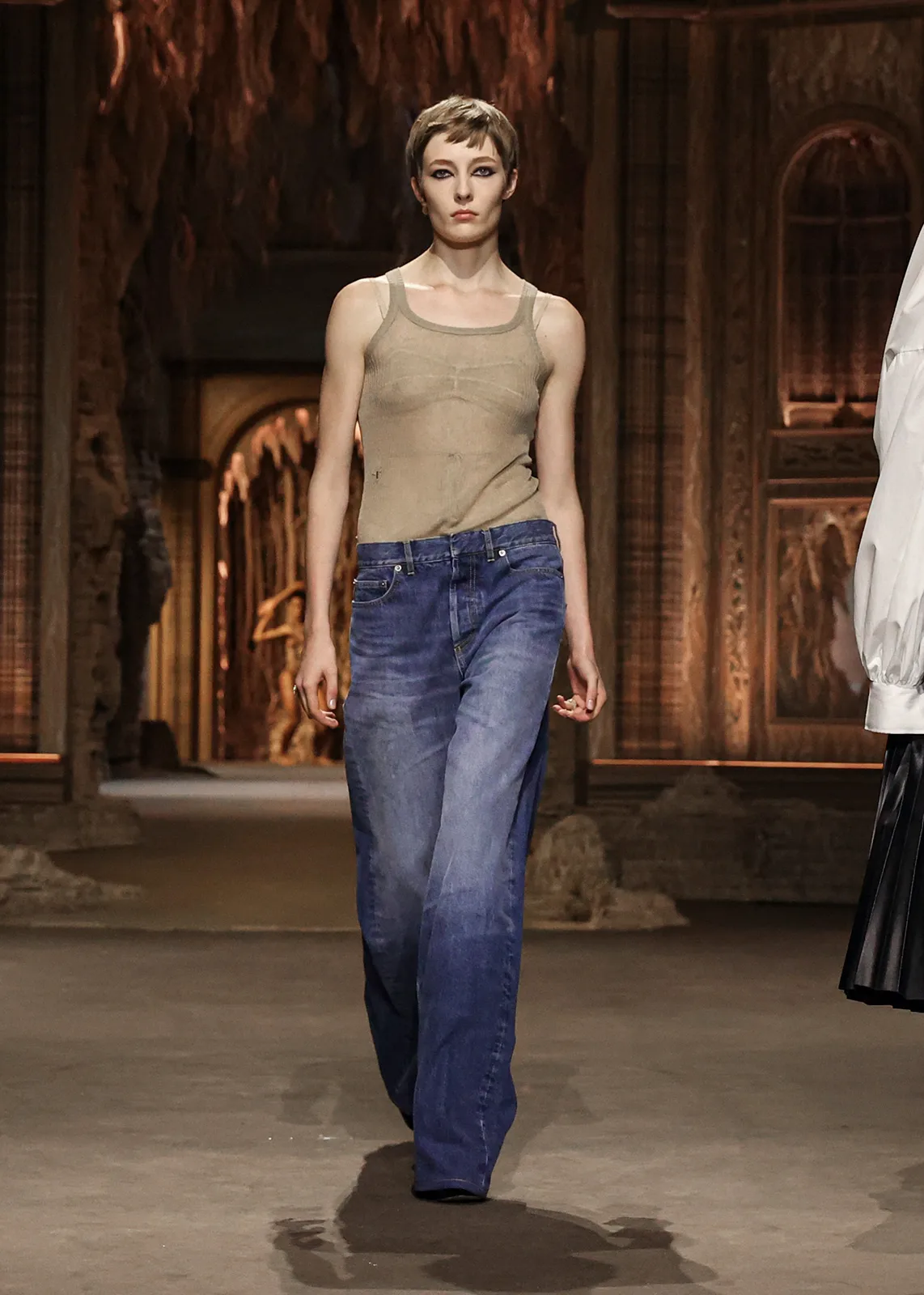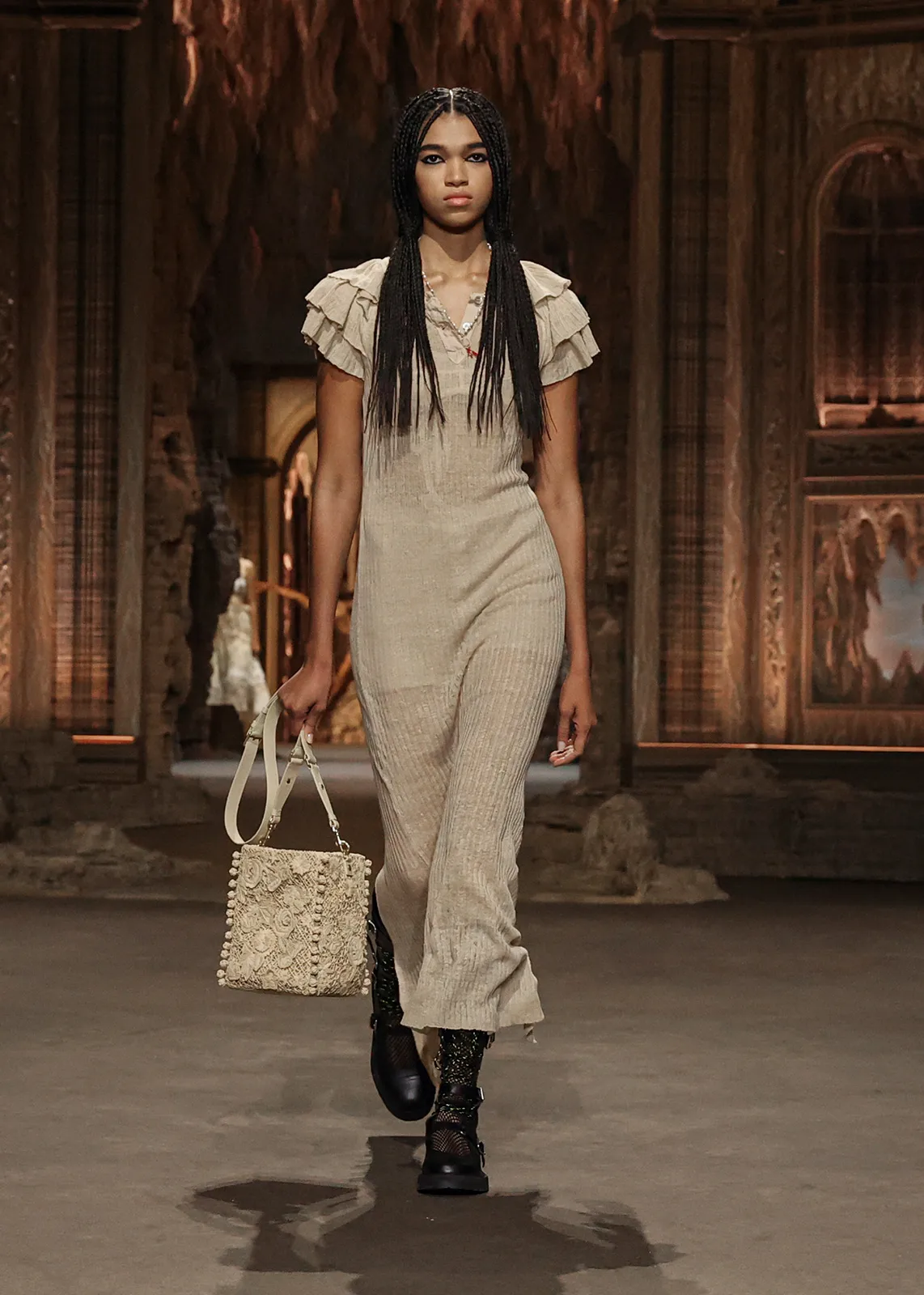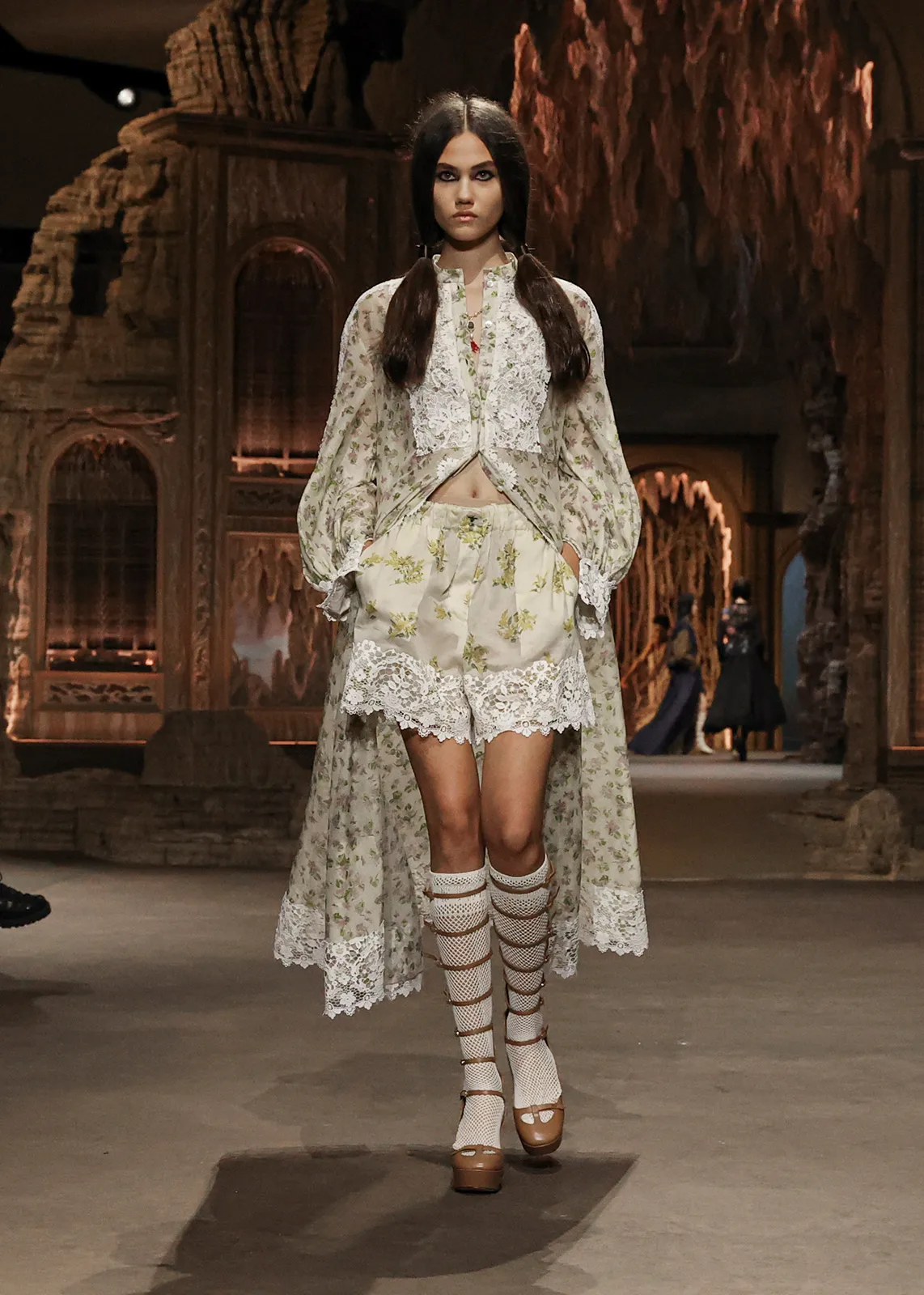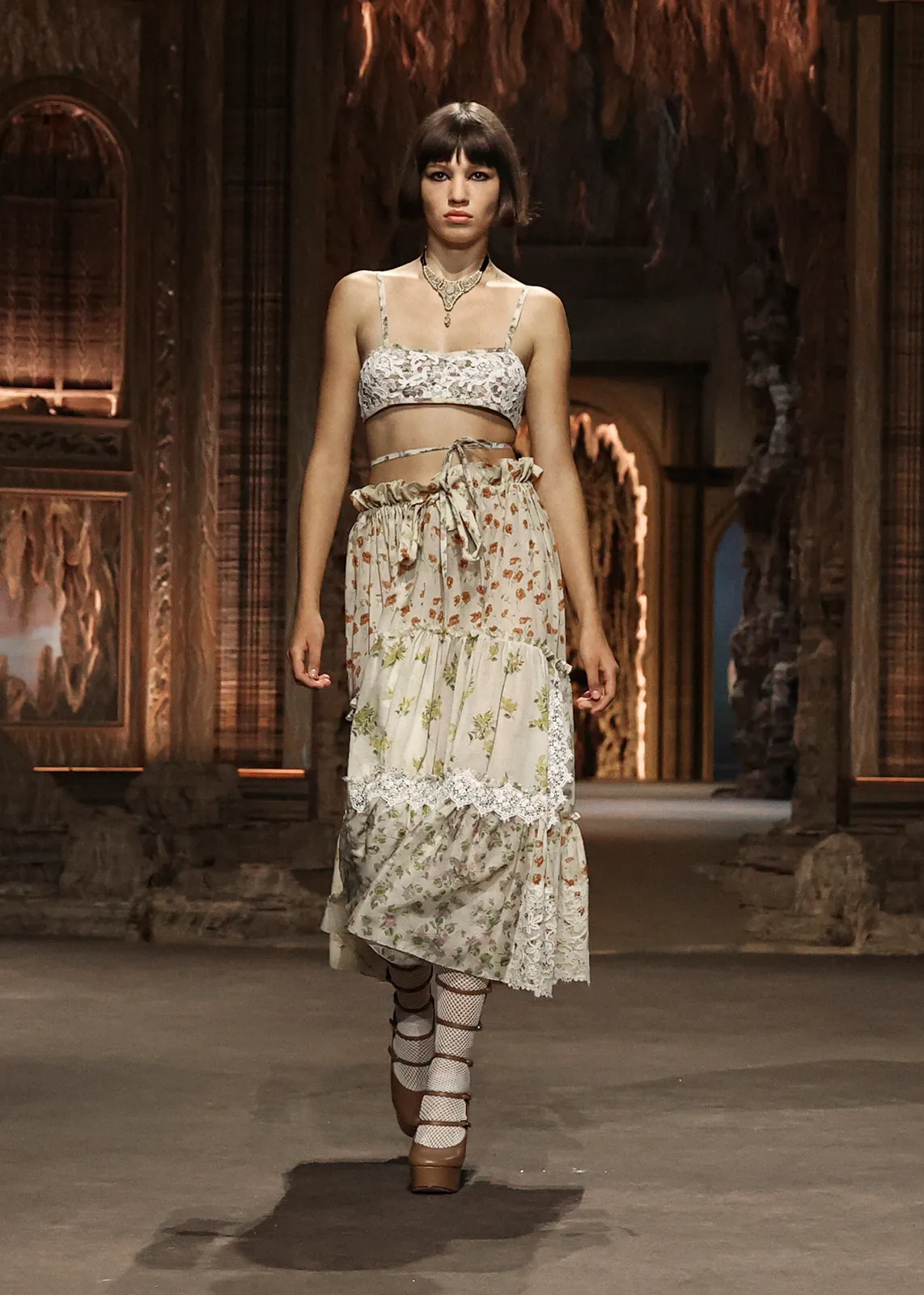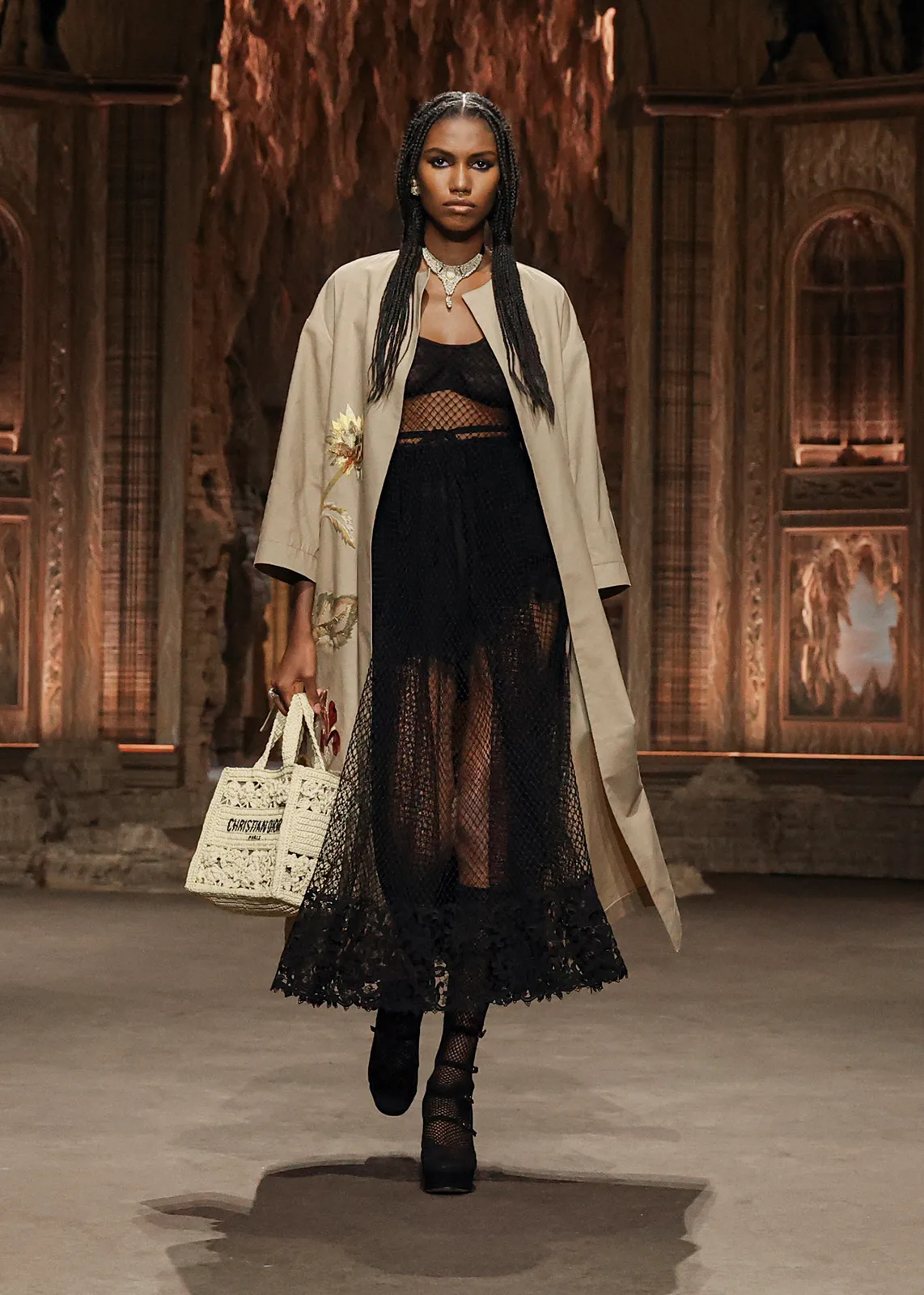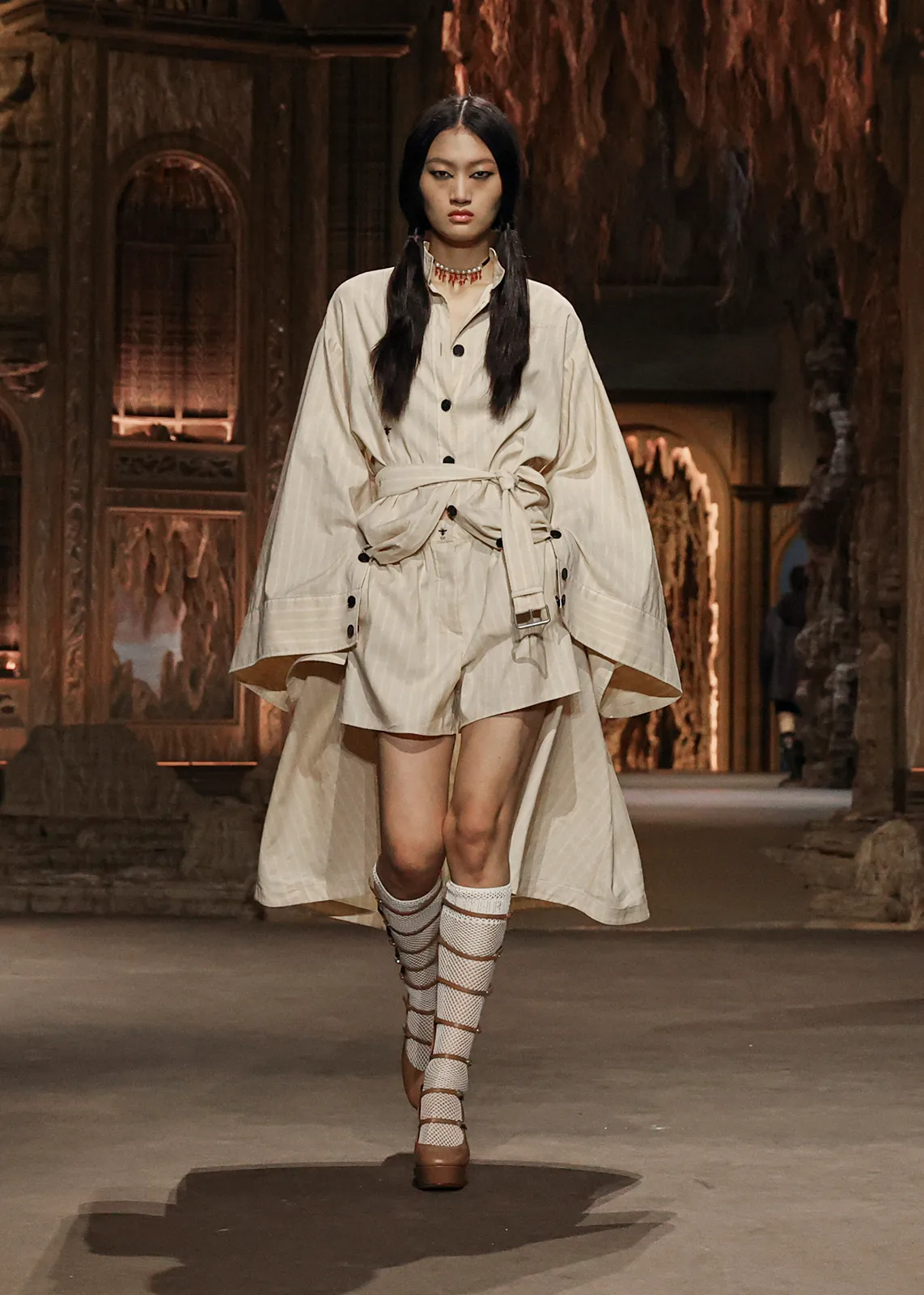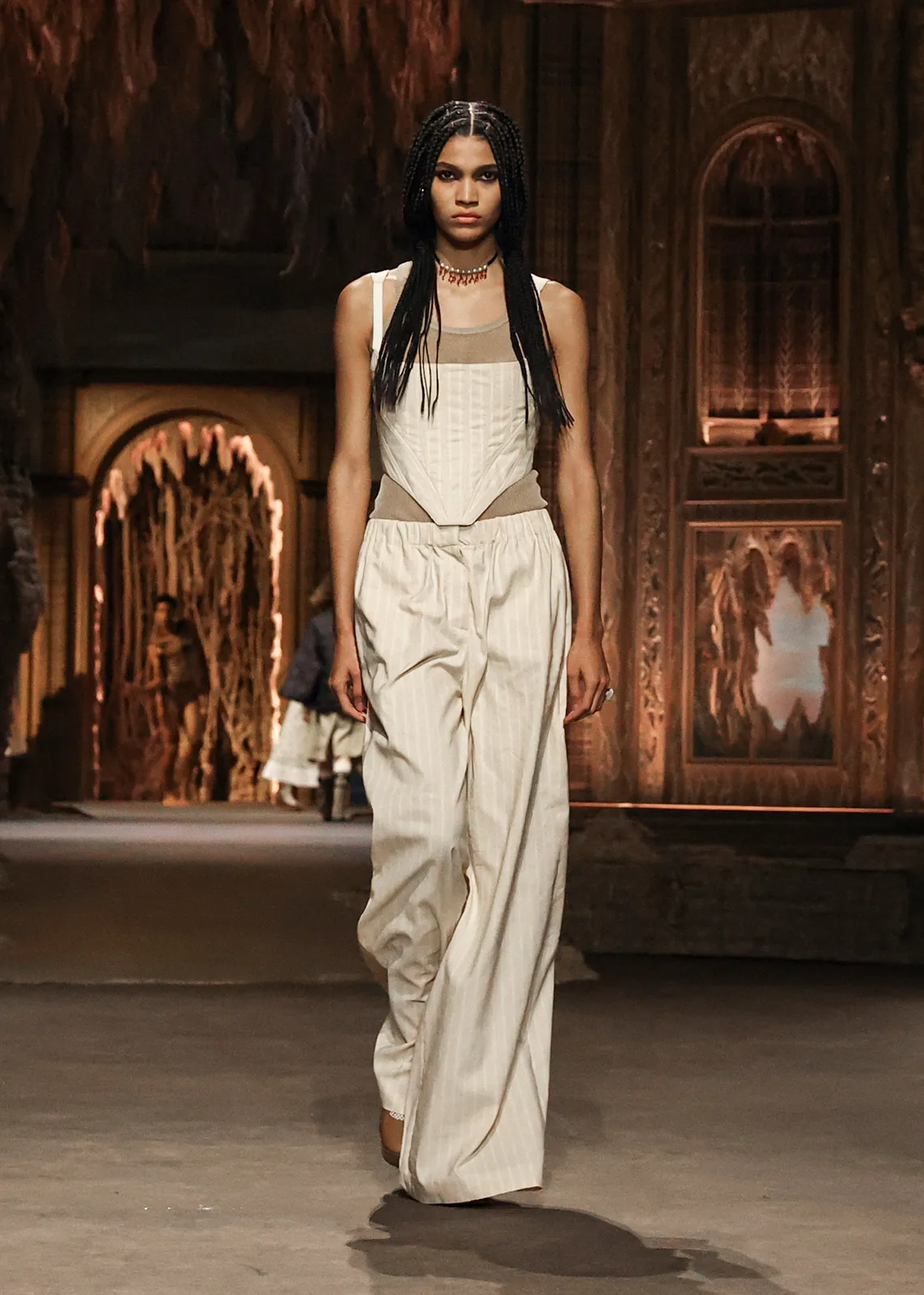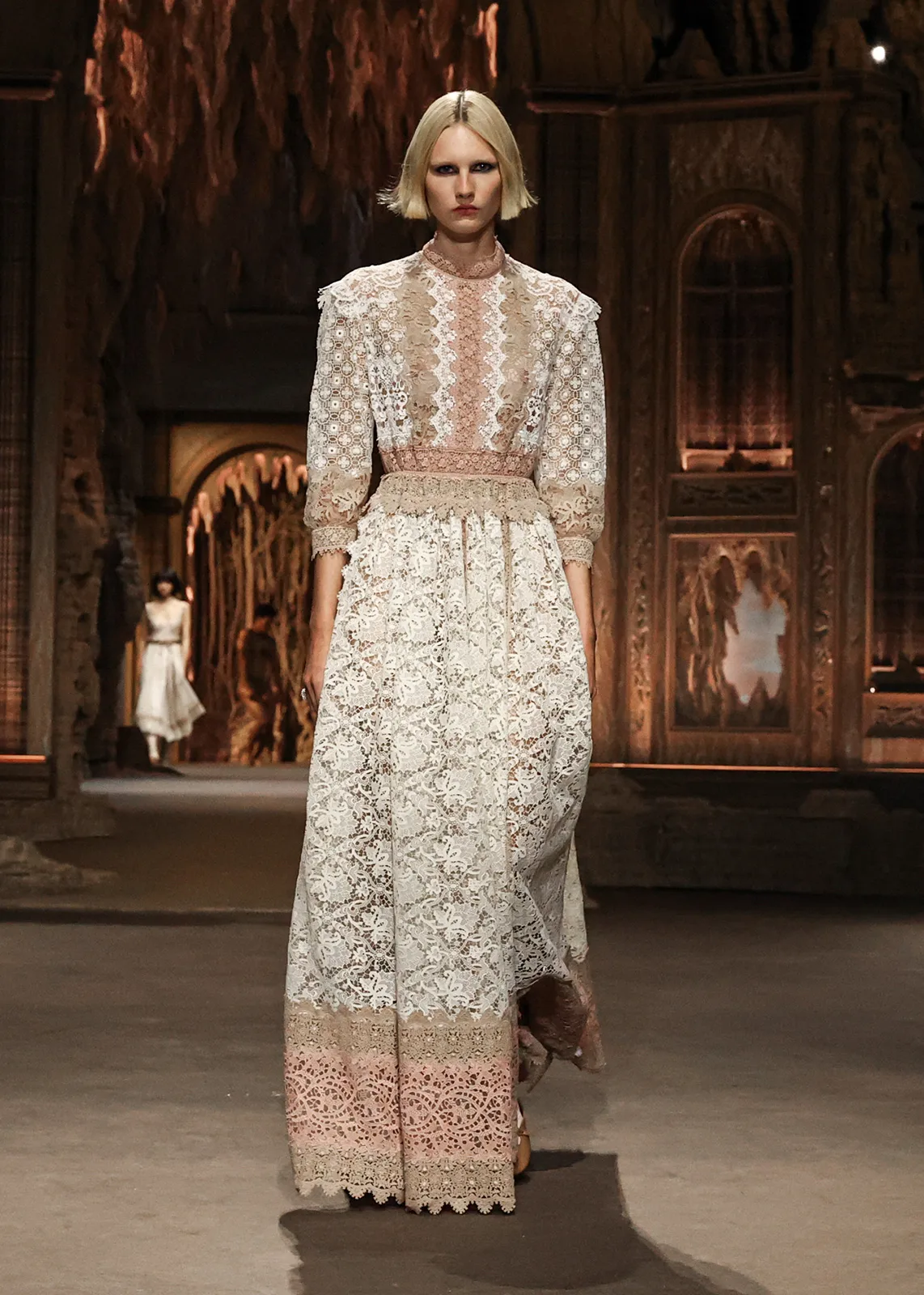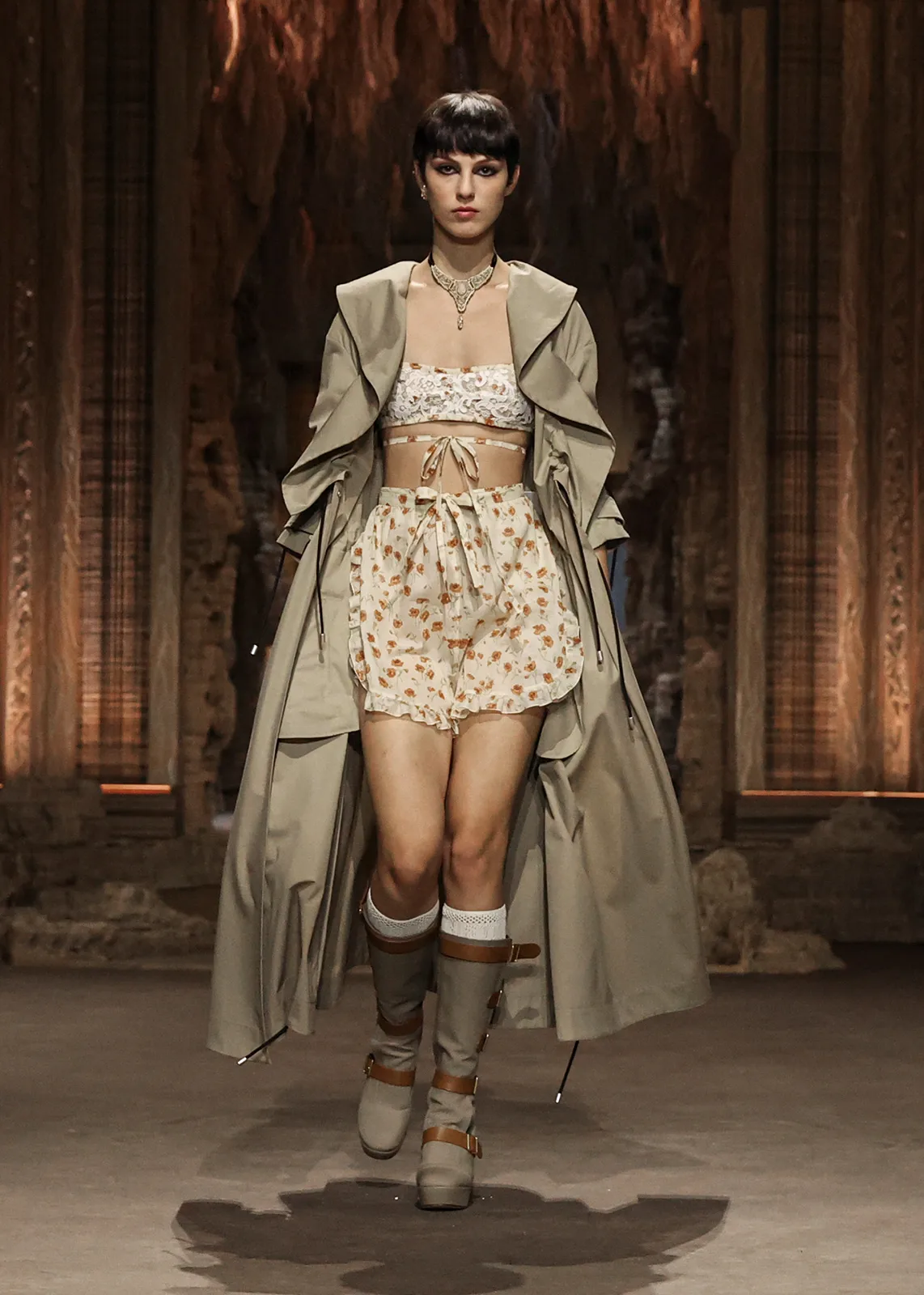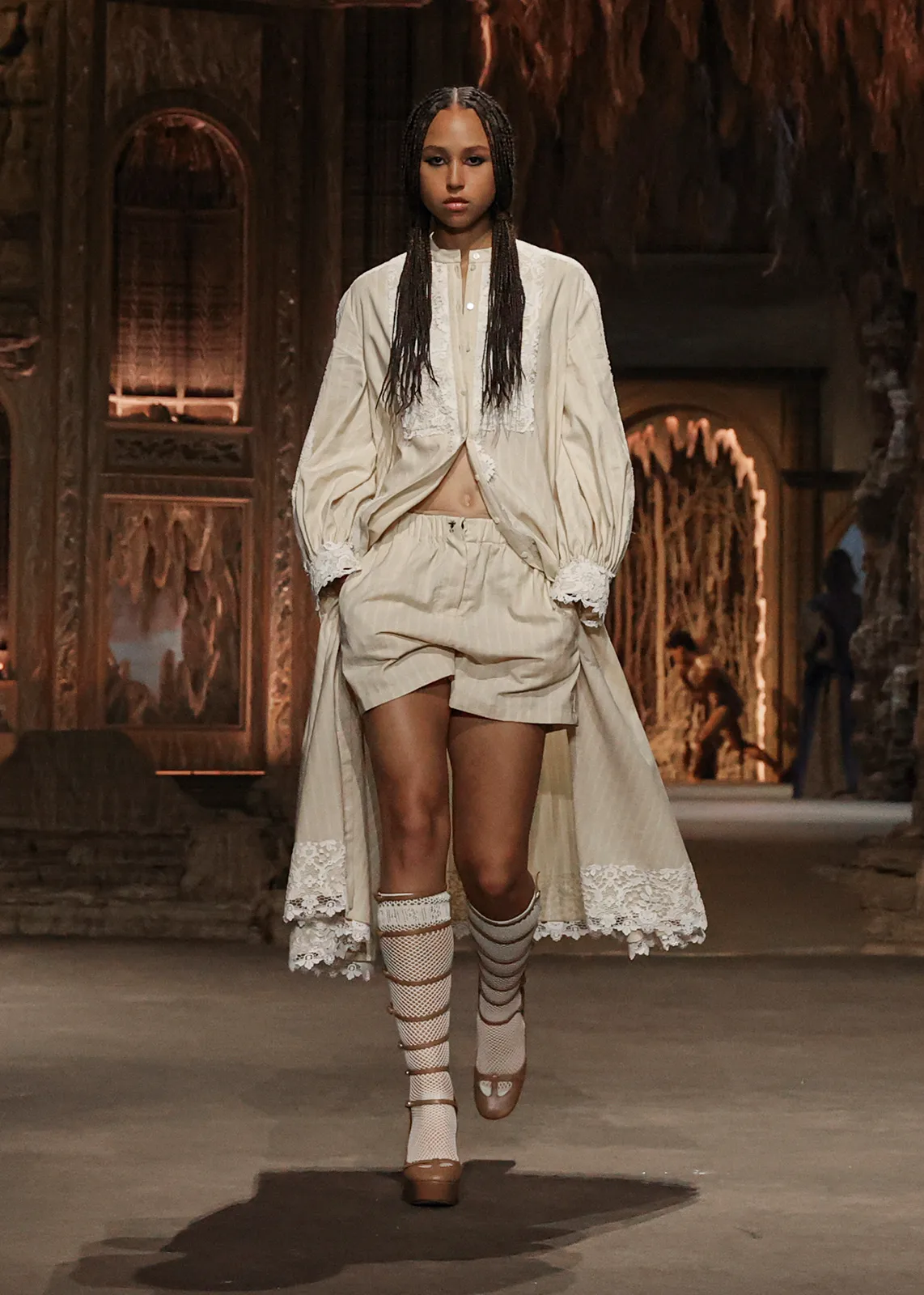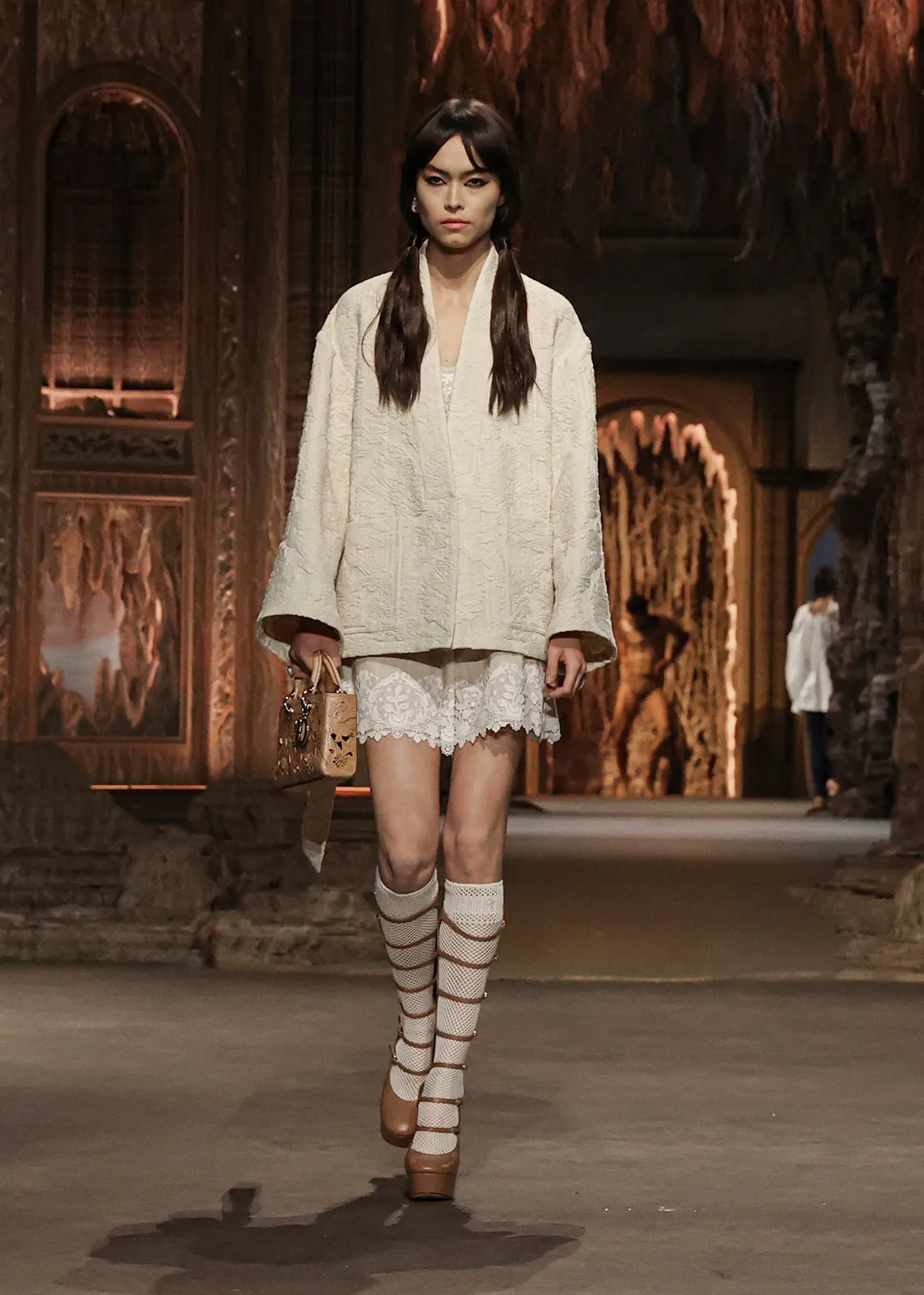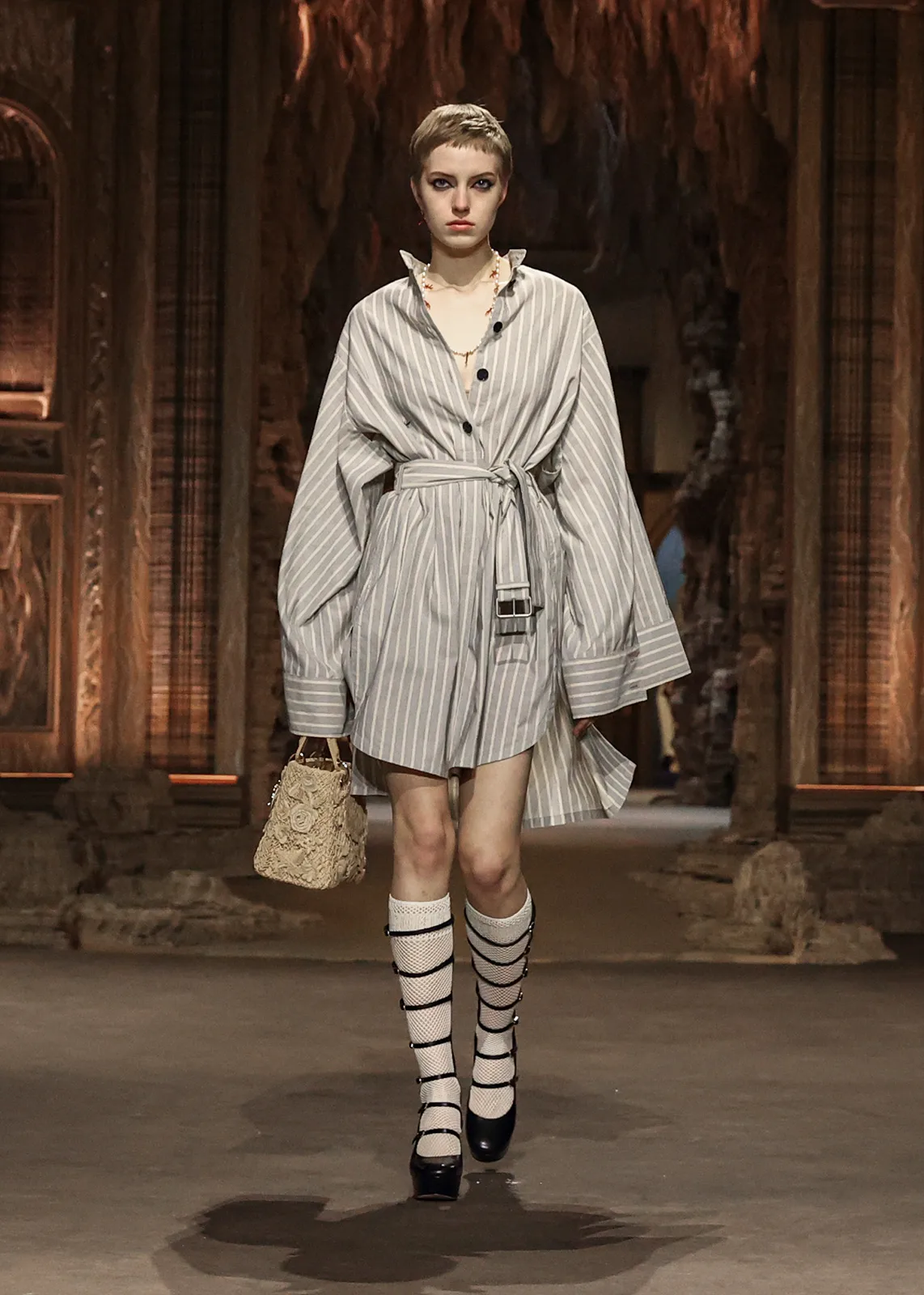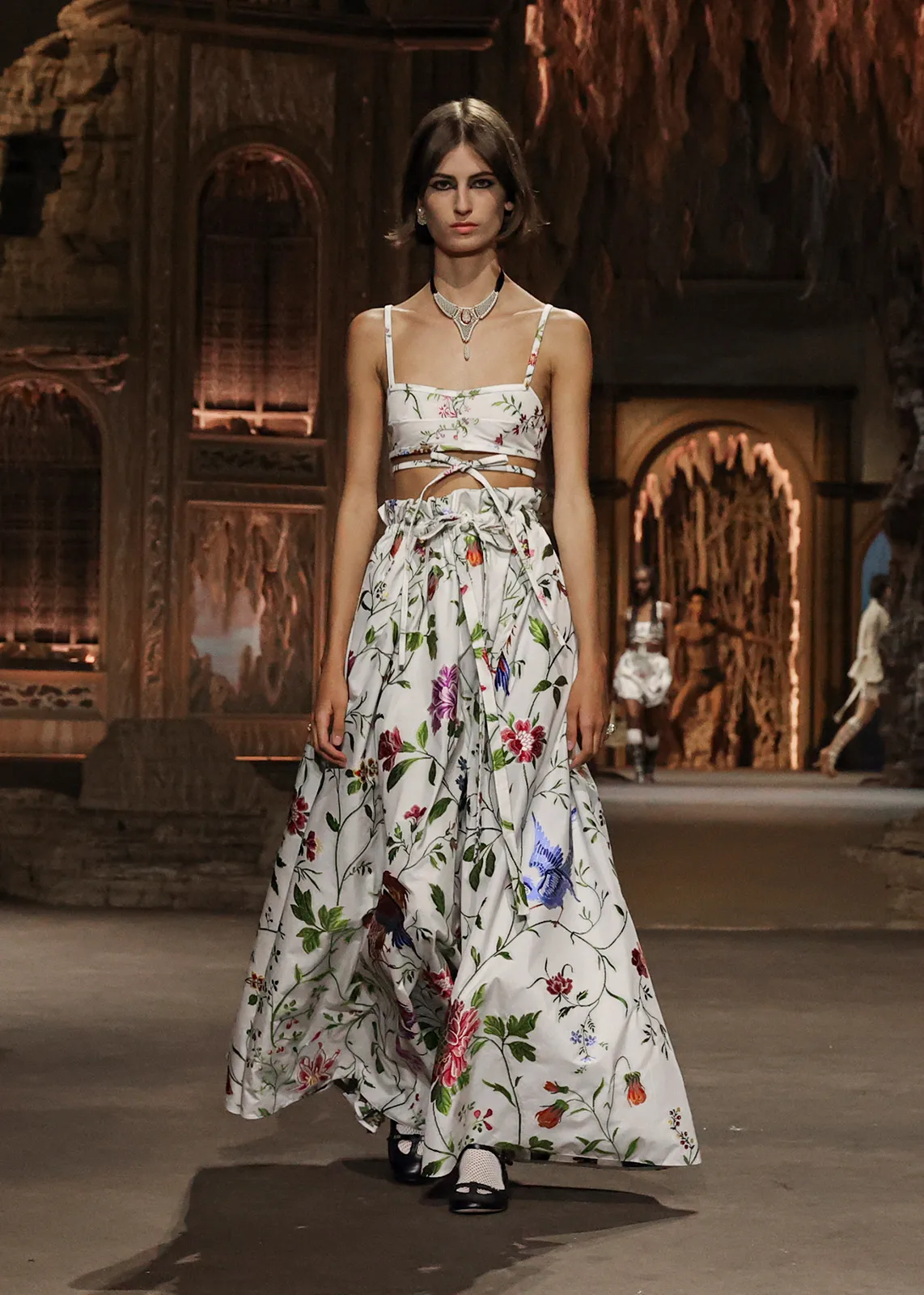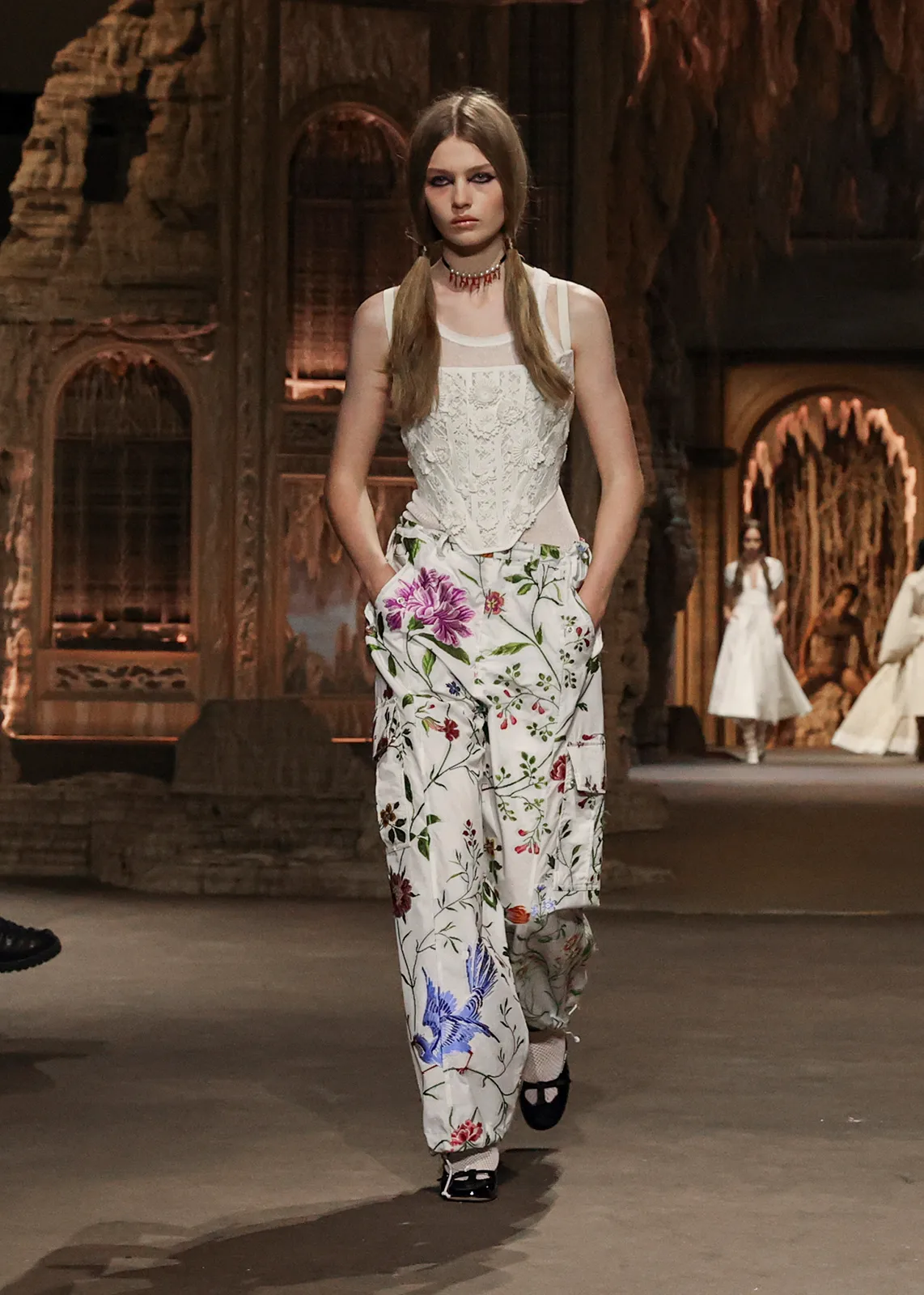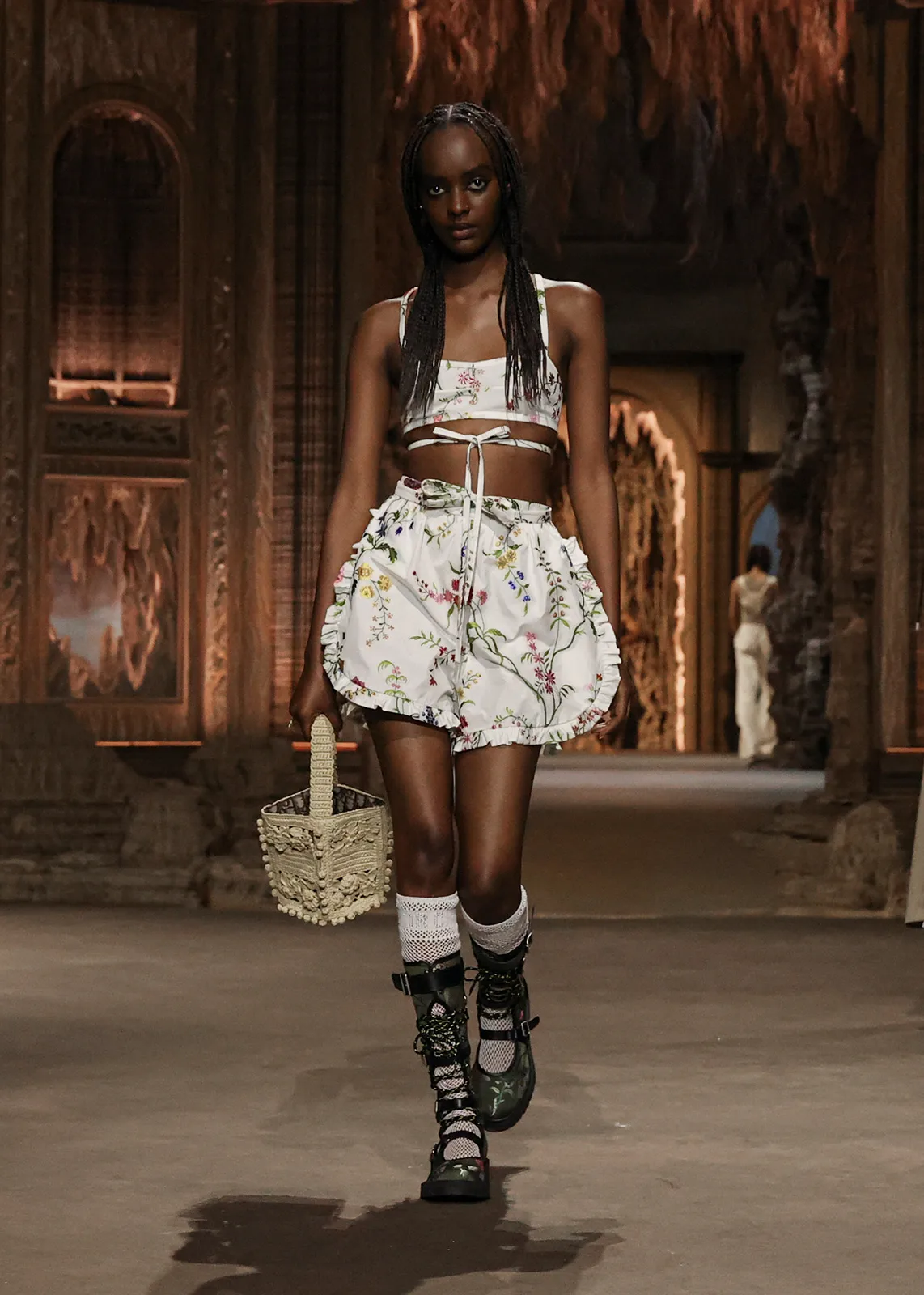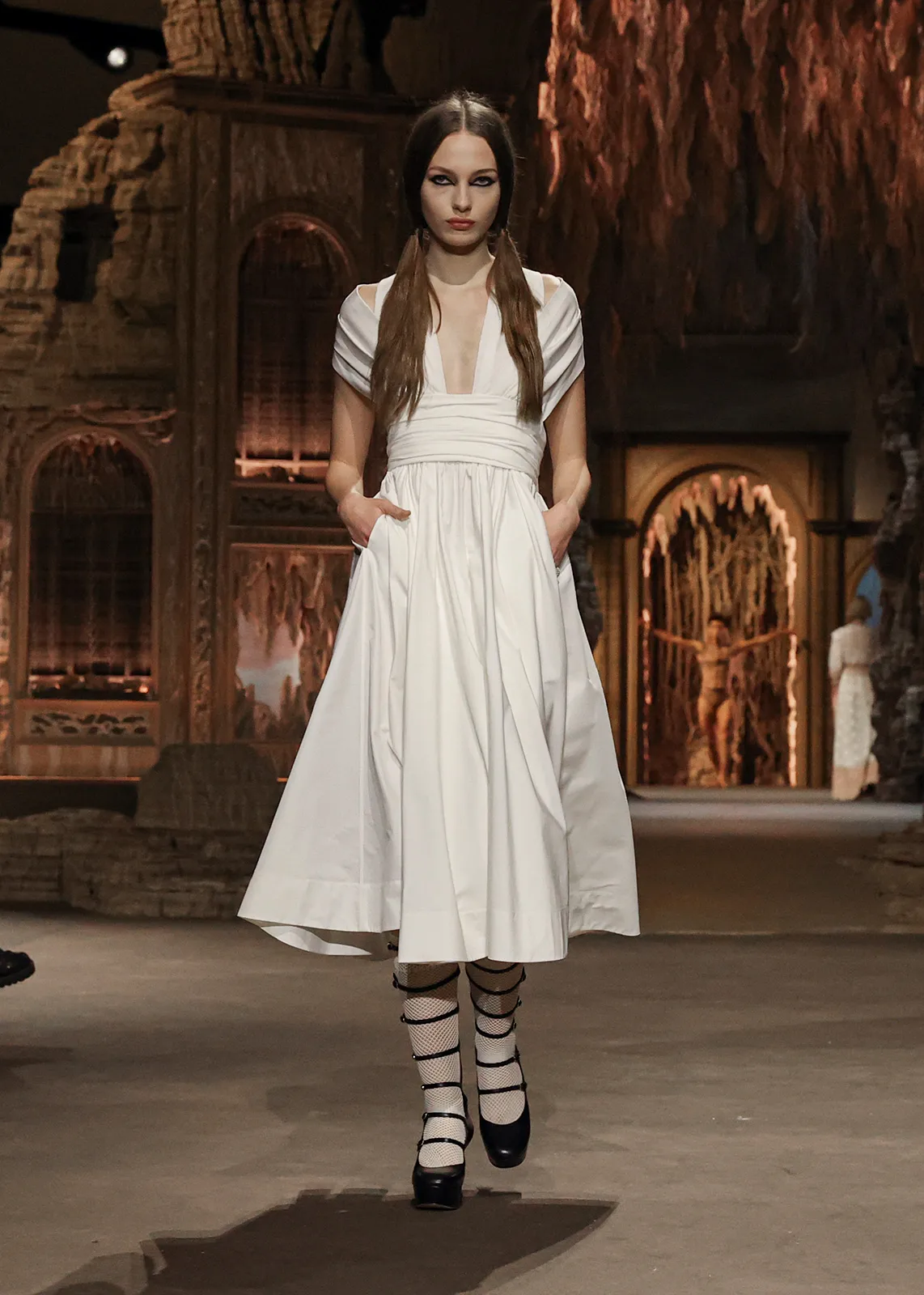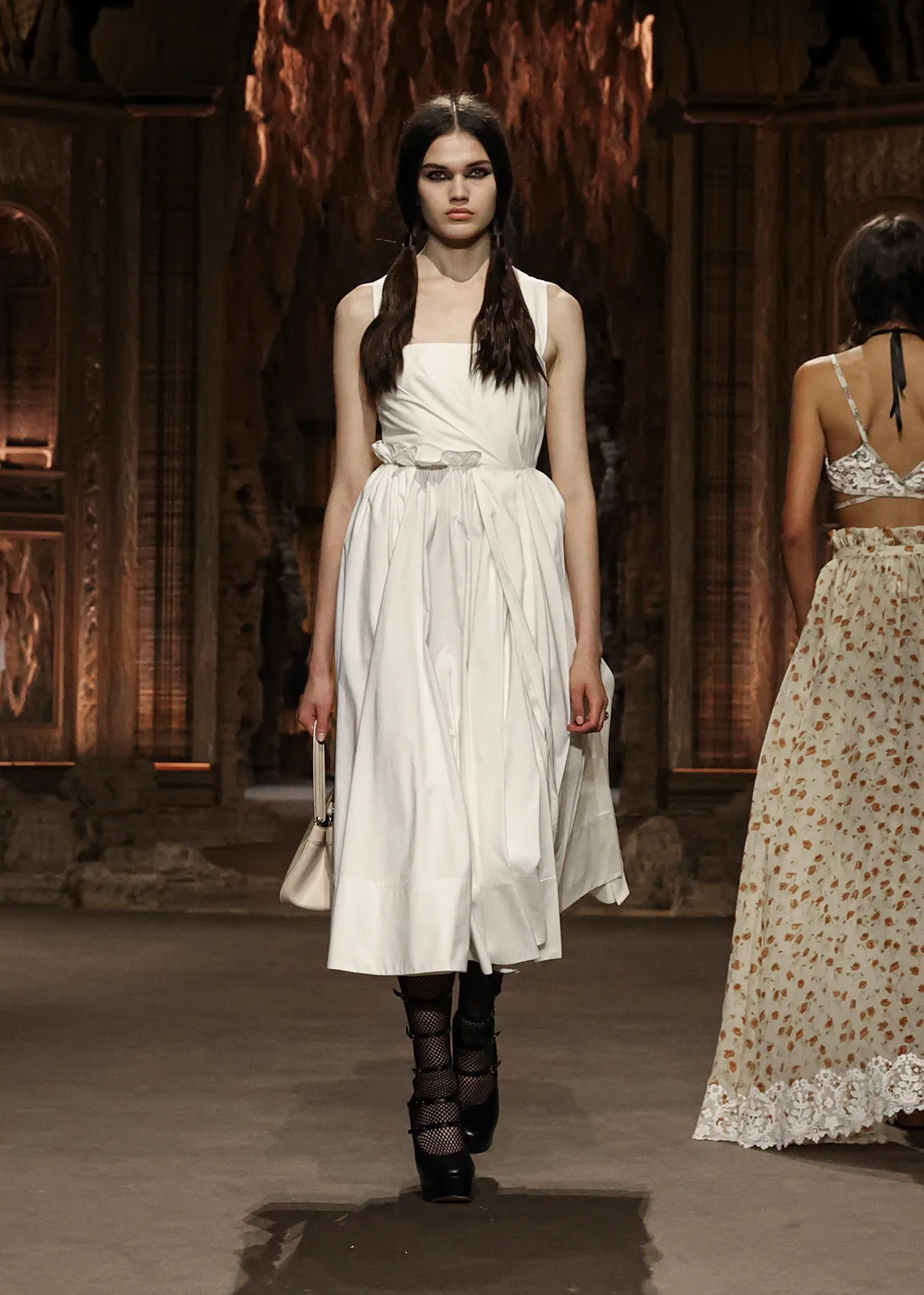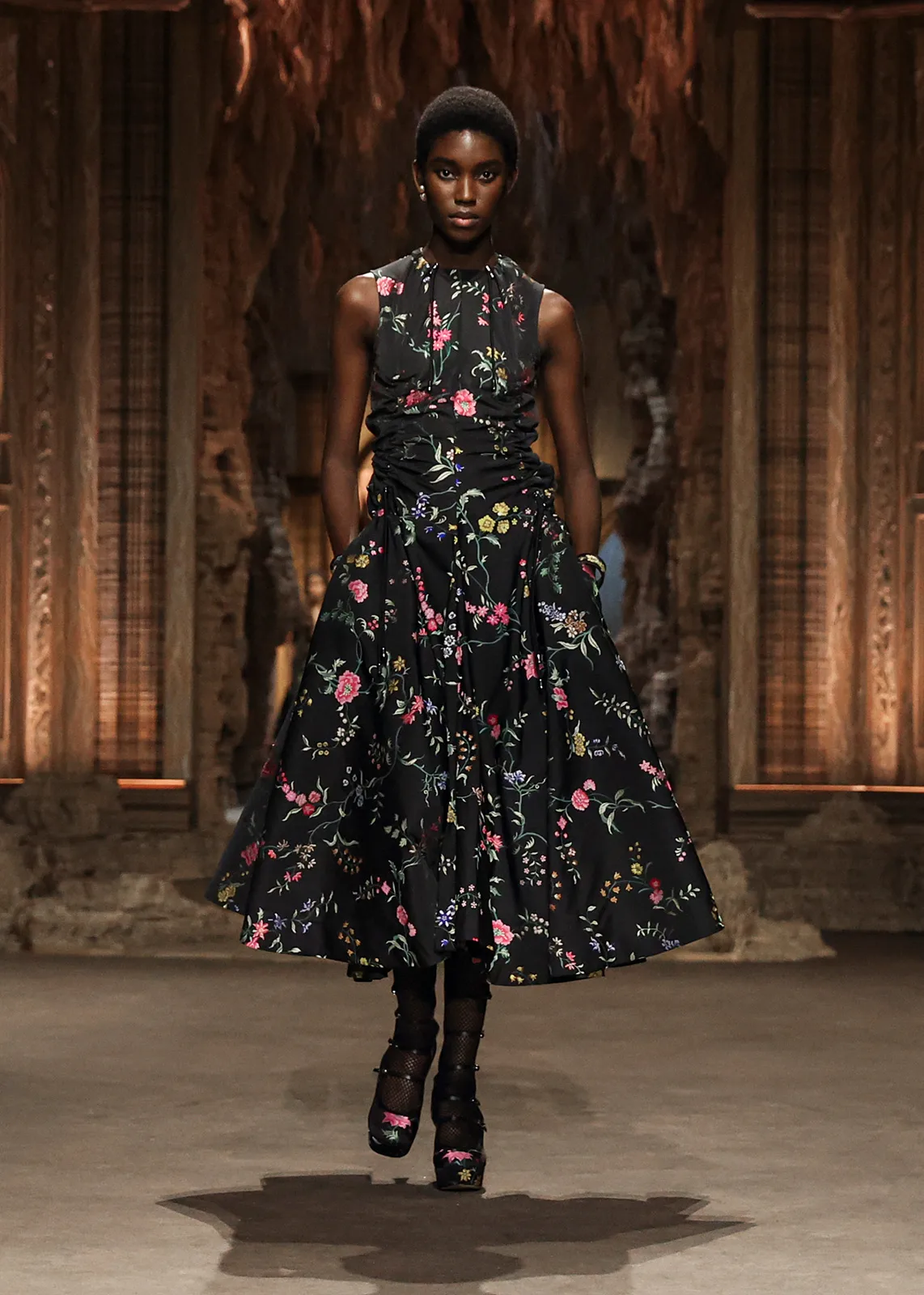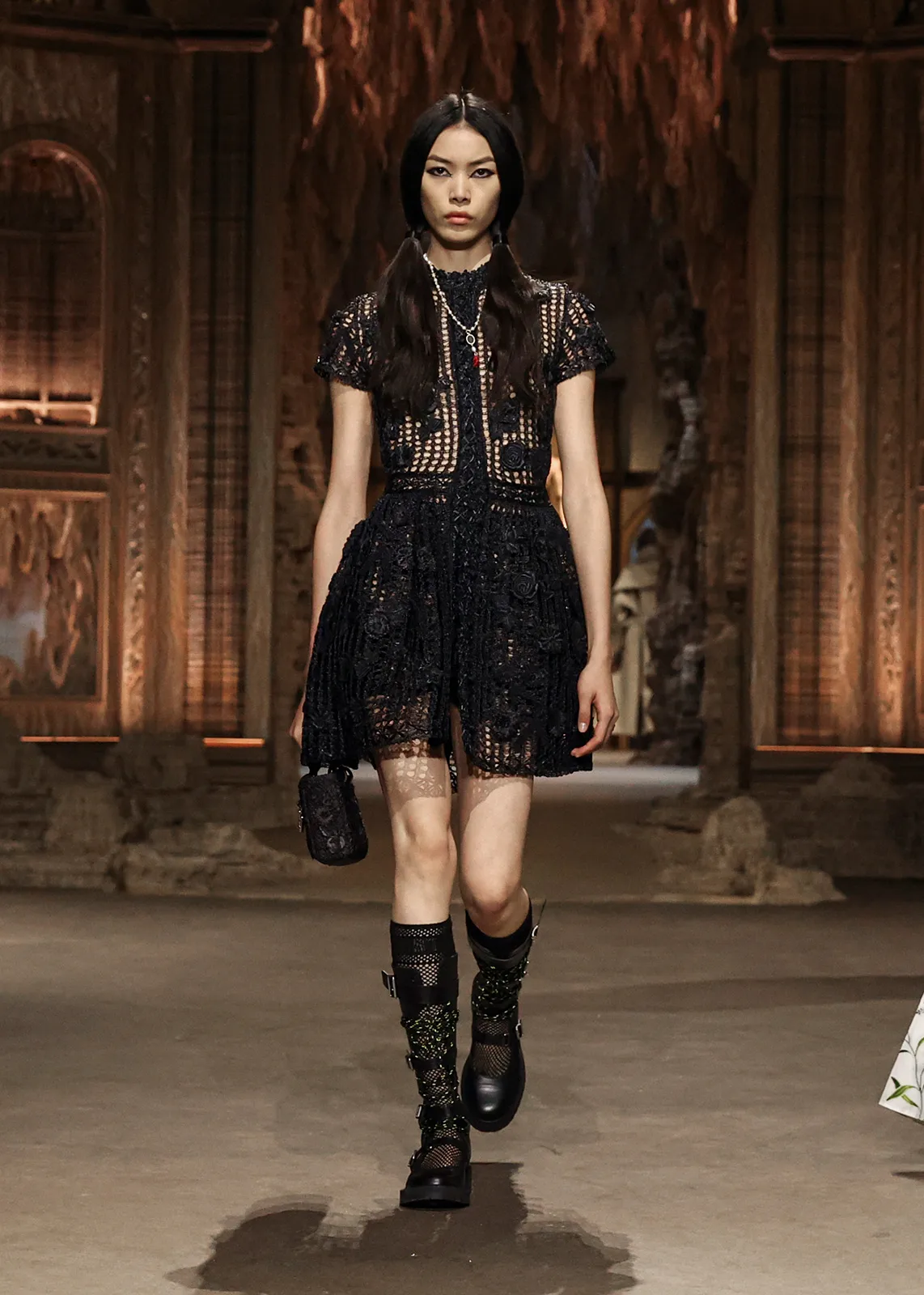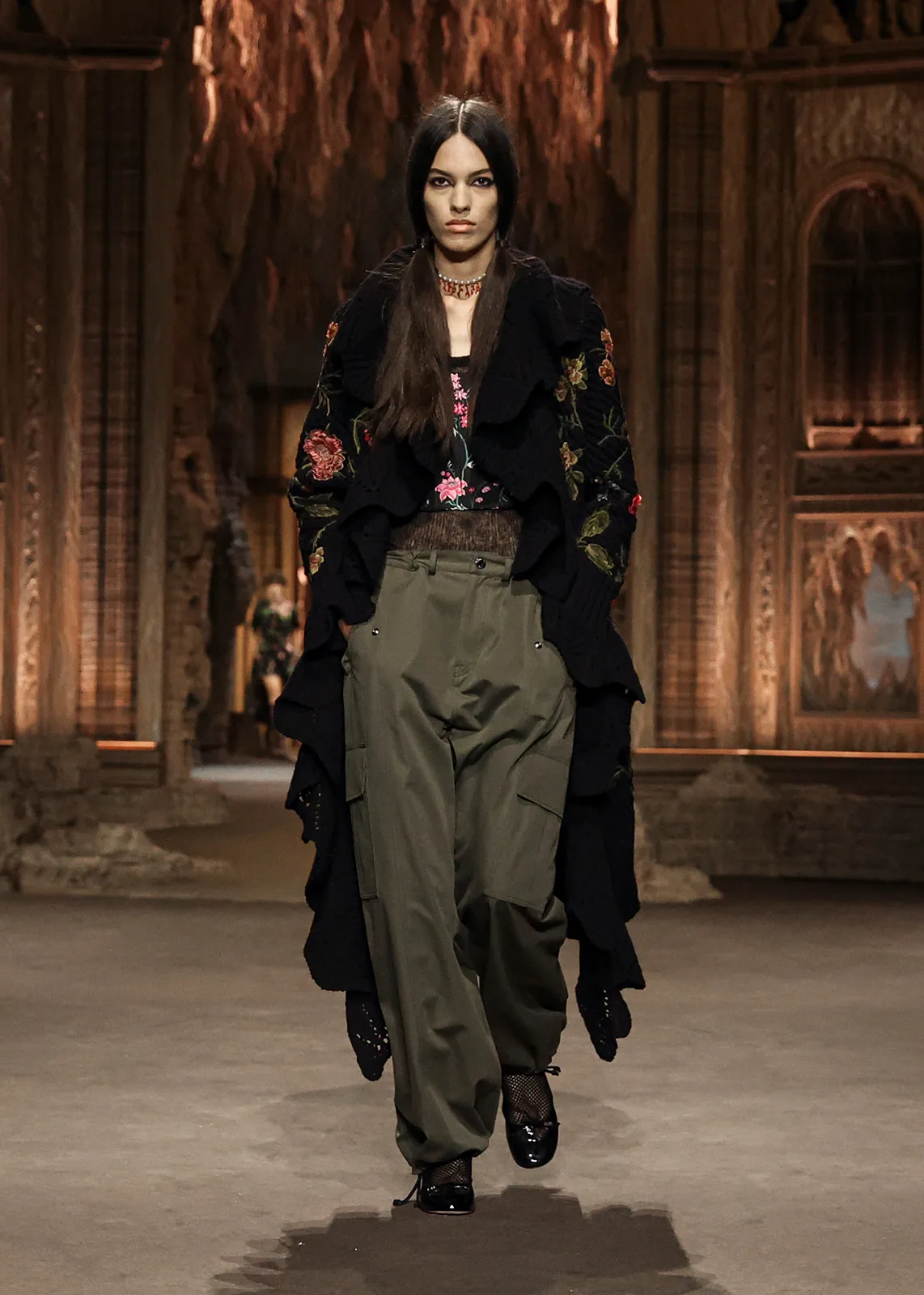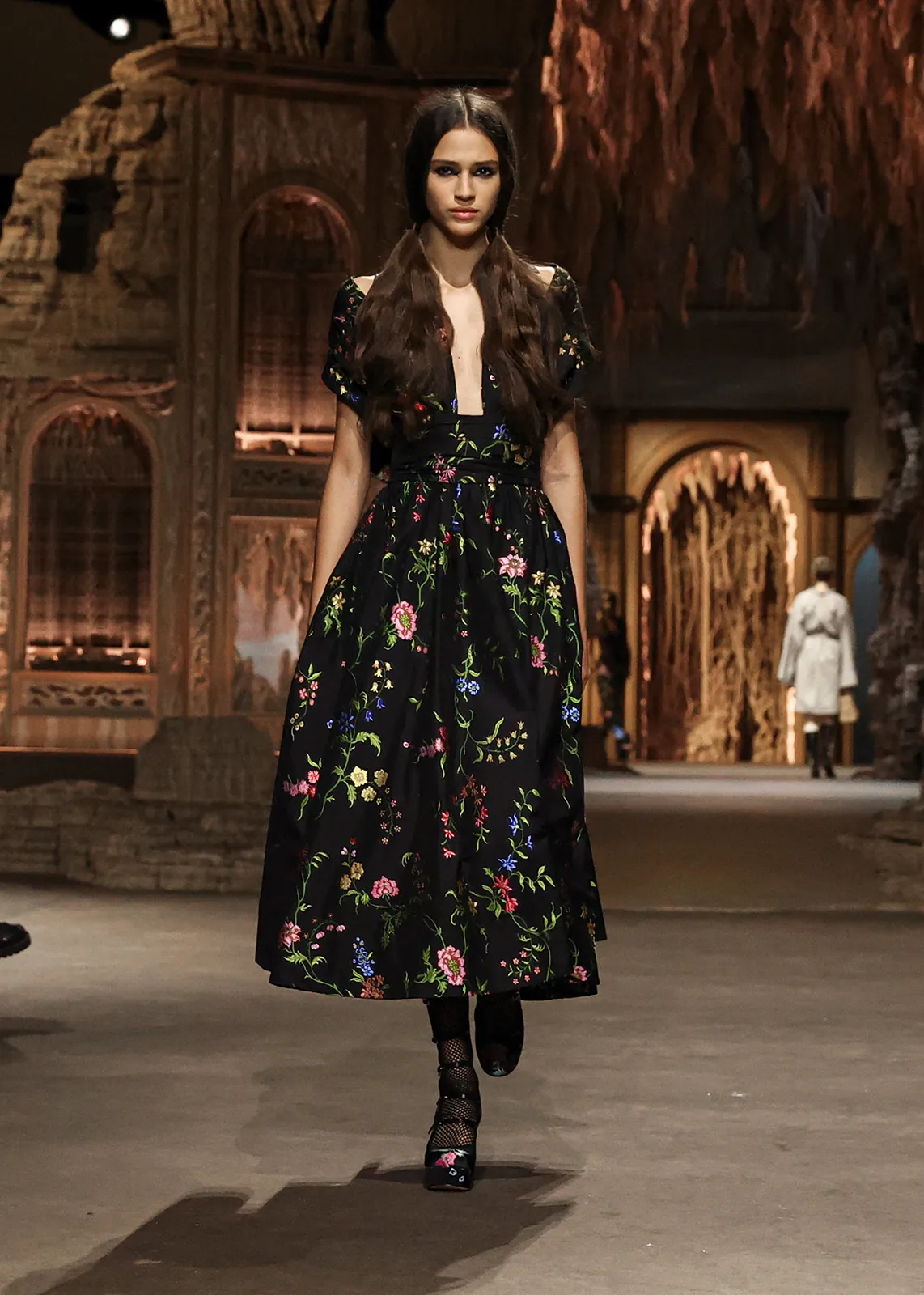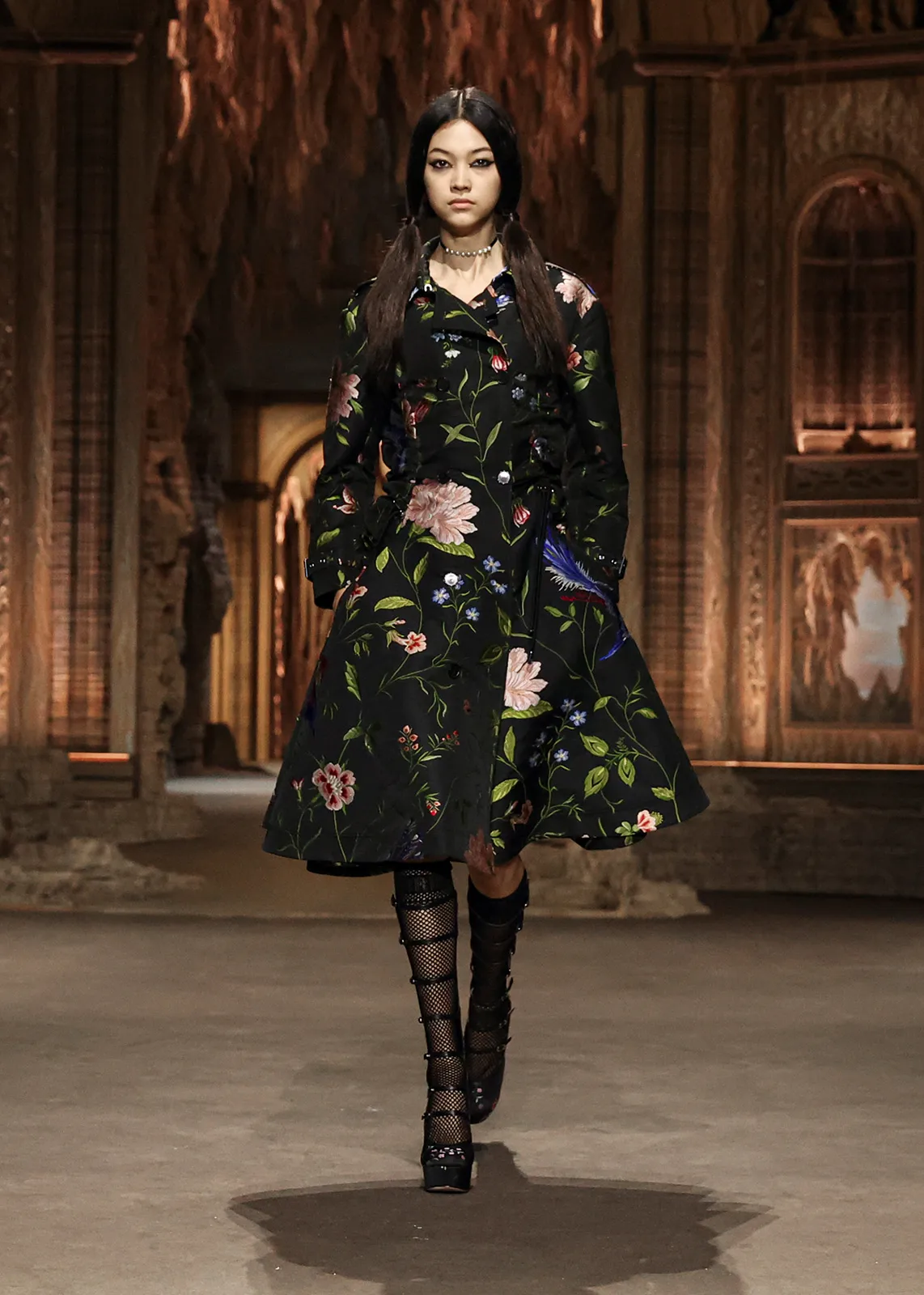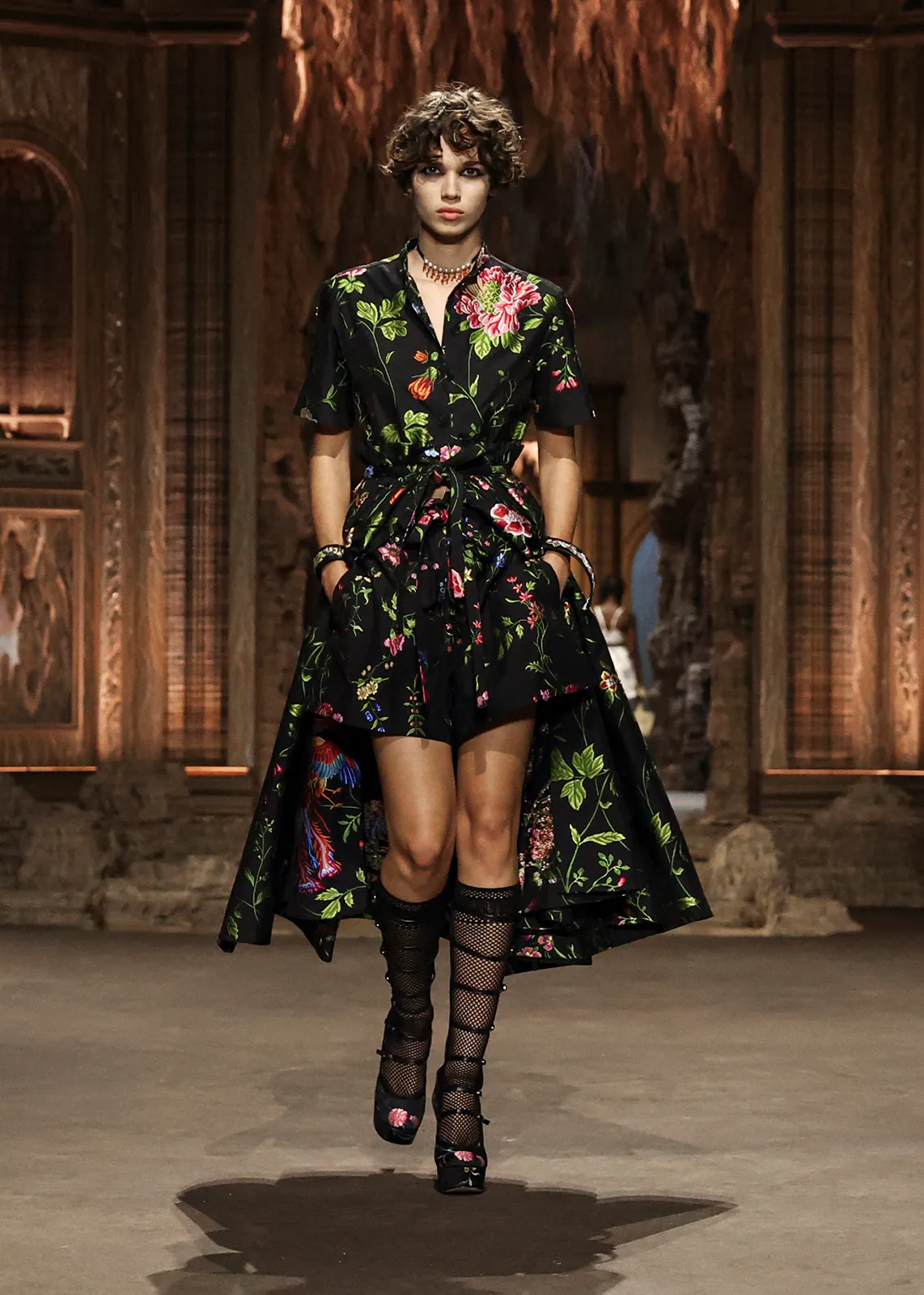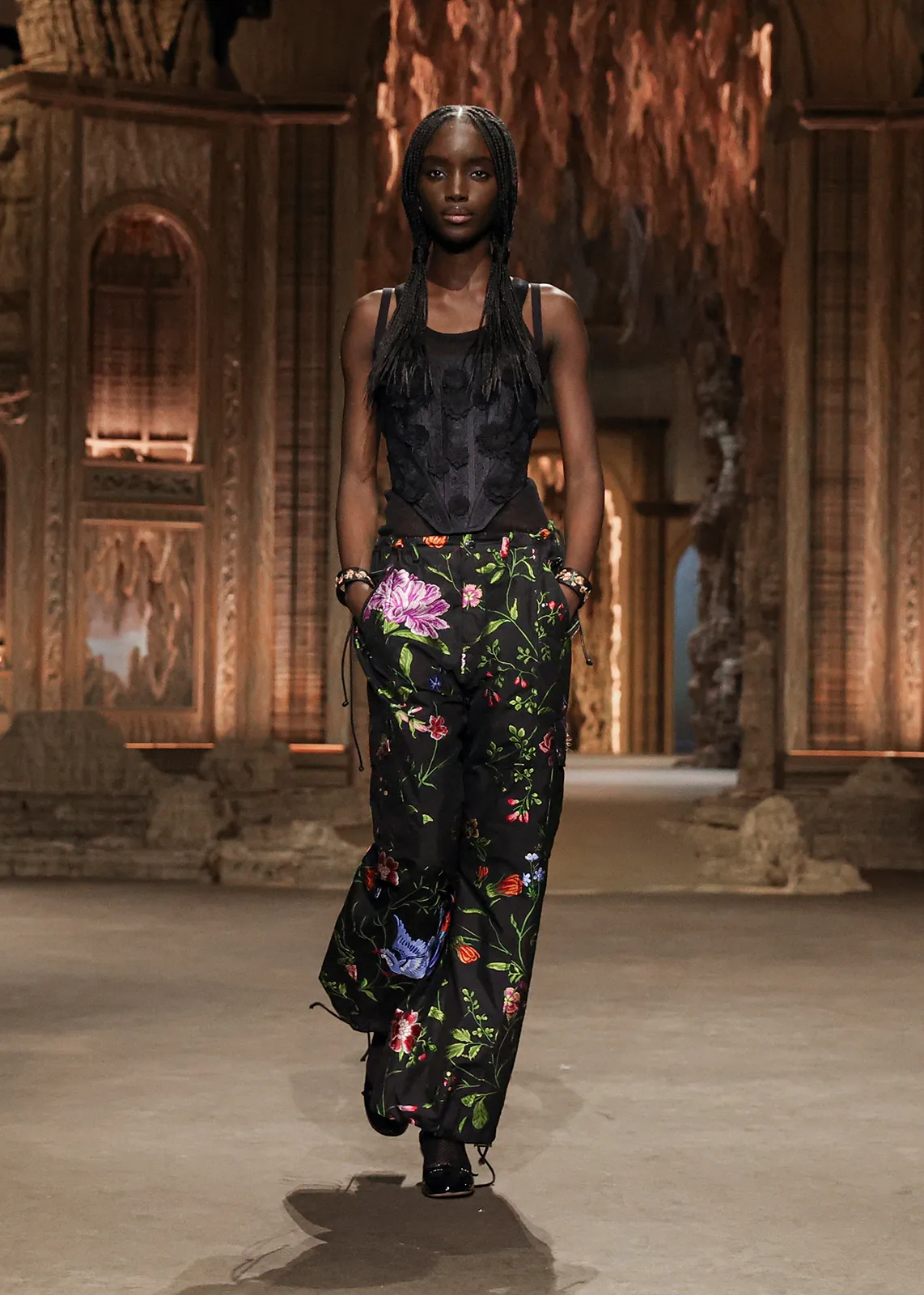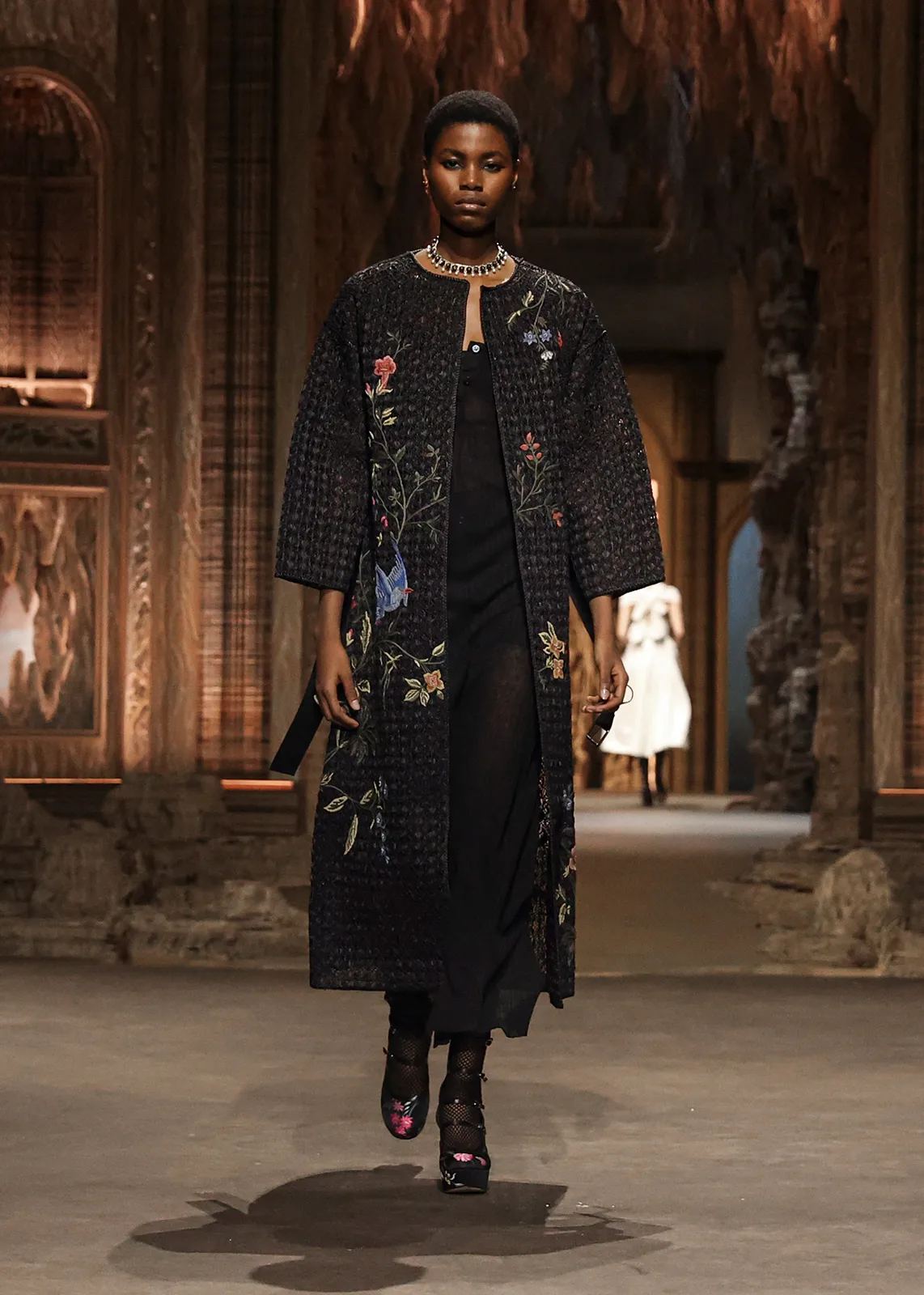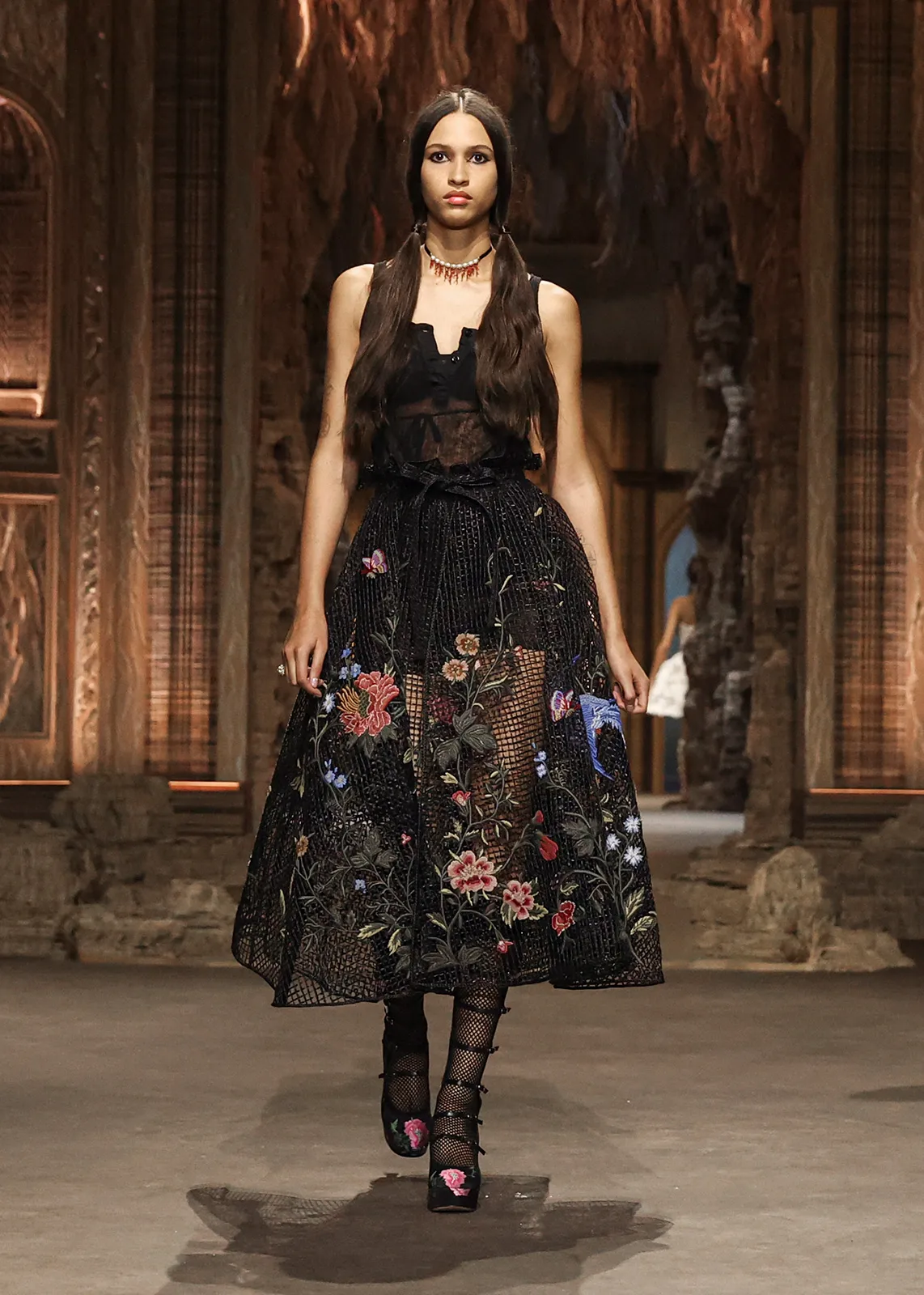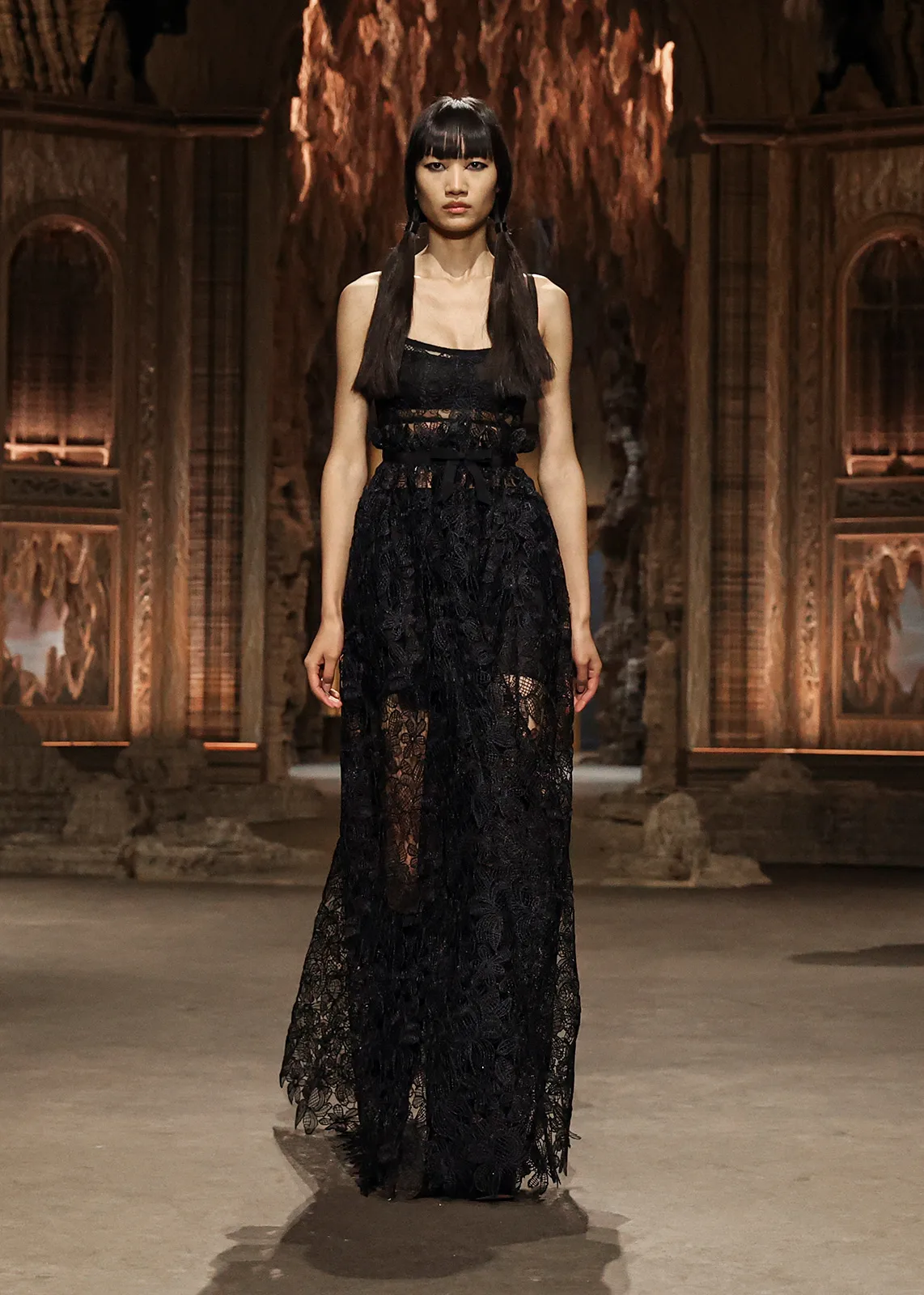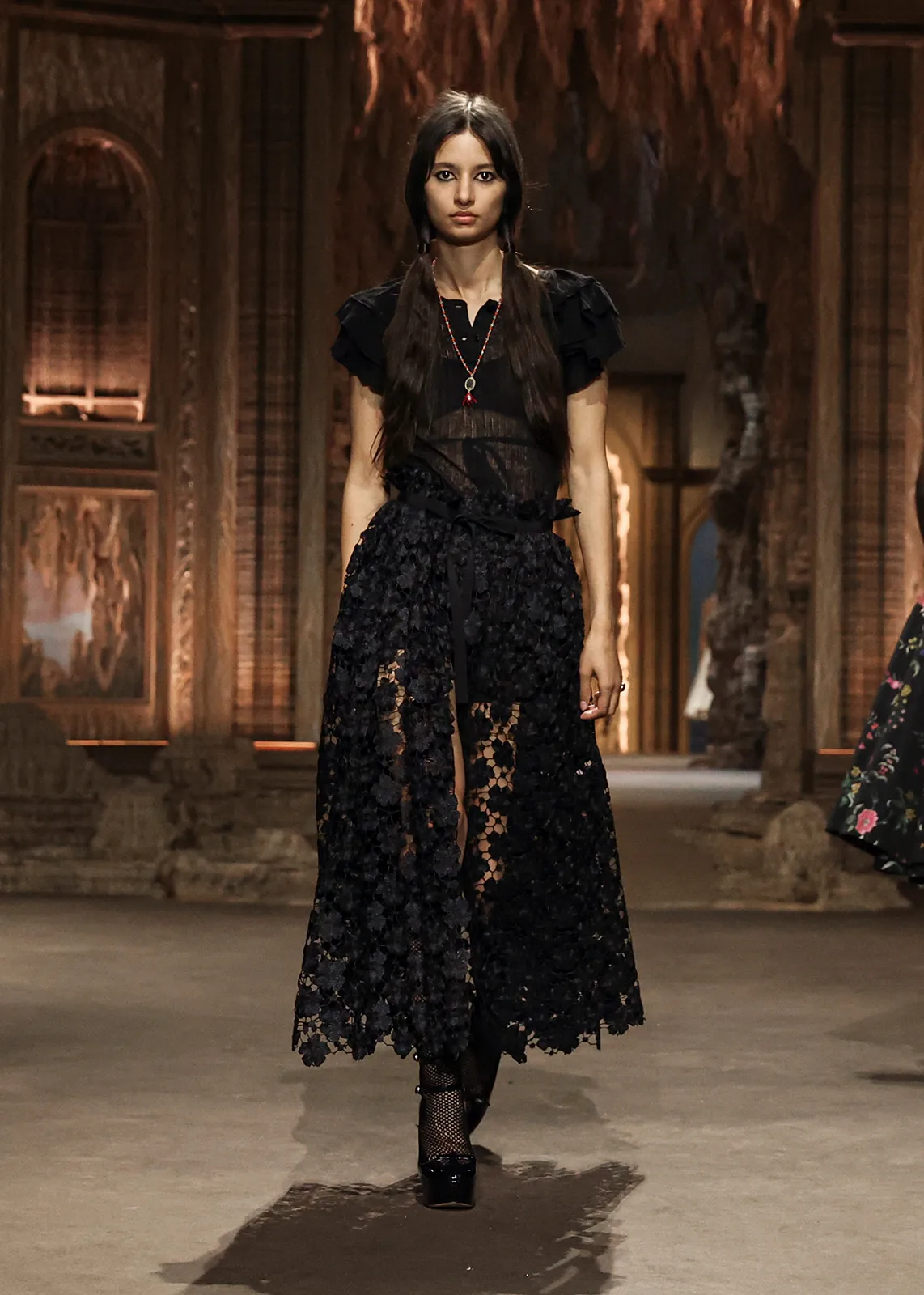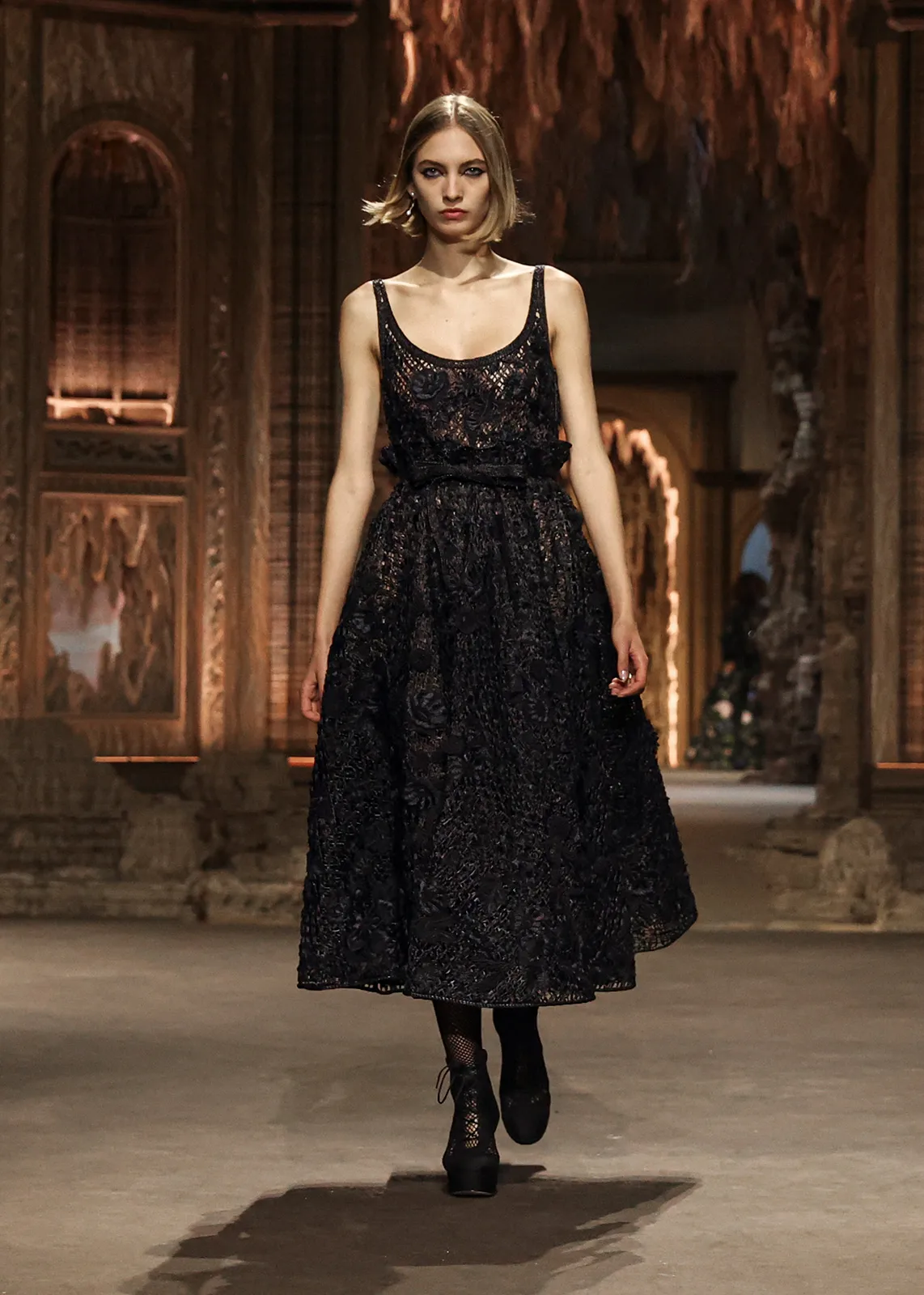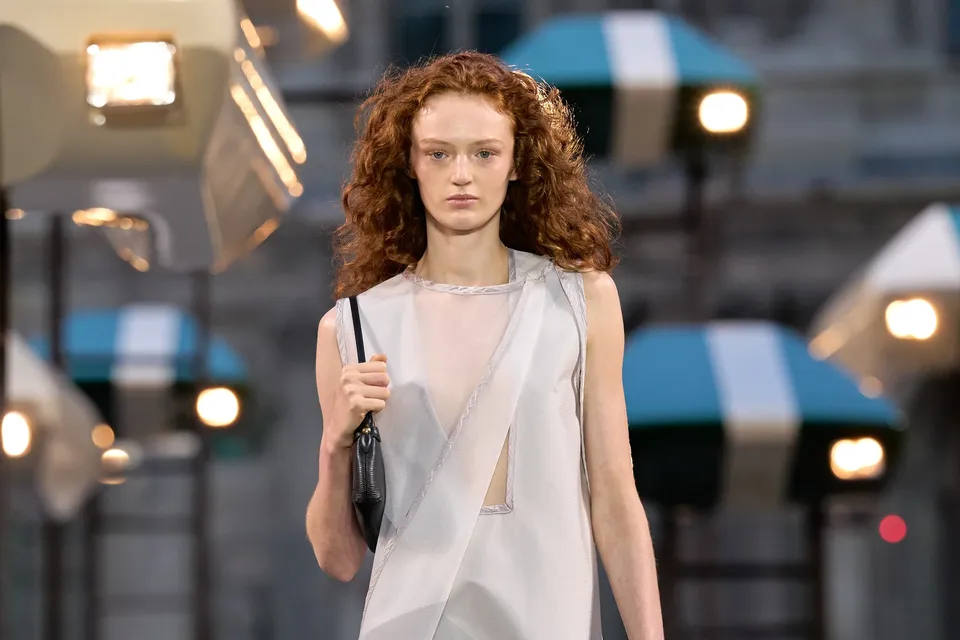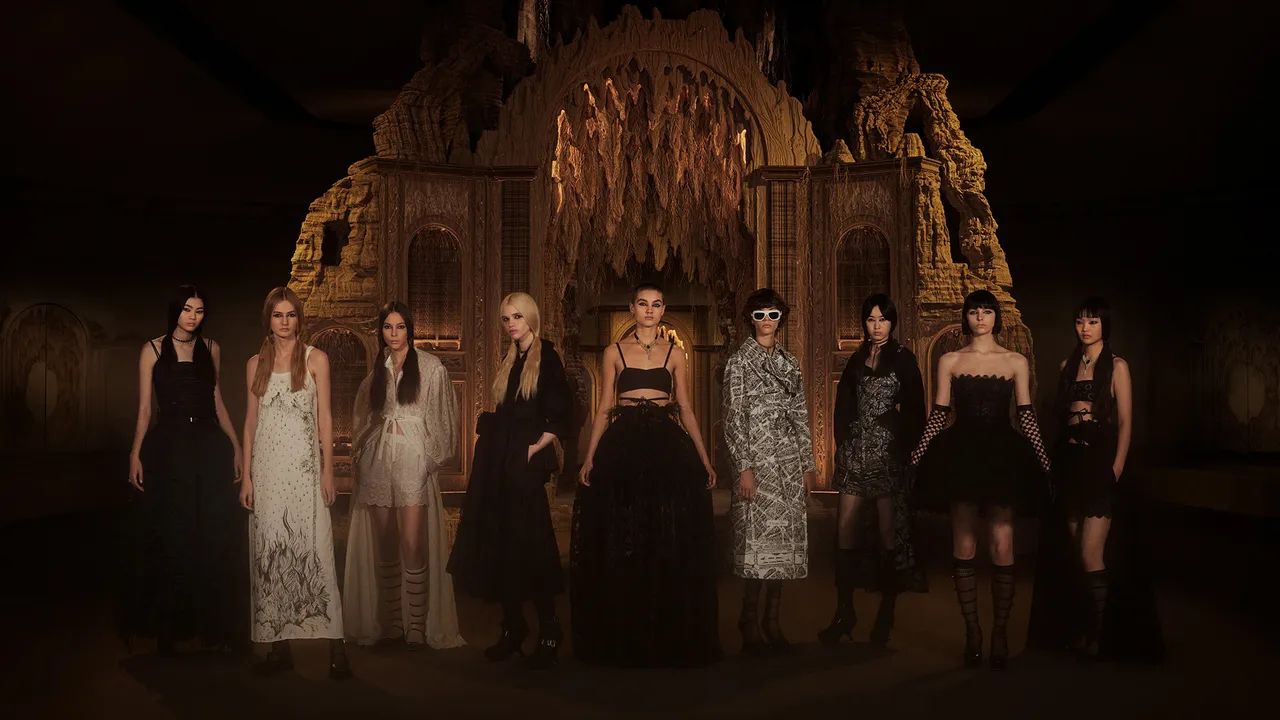
As the first of the major houses to present at this edition of Paris fashion week, Dior once again turns to feminism, but this time from a much more historical perspective, to present to the audience its Spring/Summer 2023 ready-to-wear collection. A tribute to Italian roots, Parisian streets, and one of history's most powerful women, Queen Catherine de Médicis.
One of the great strengths of creative director Maria Grazia Chiuri since her arrival at Dior has been the defence and promotion of feminism. Throughout her 6 years at the helm of the Maison, she has presented several collections in which feminist symbols have been present, many times more successfully than others. The collection presented this season is perhaps one of the best achieved both in this conceptual aspect and in the final result. The keys to the collection were already given with three posts on the firm's Instagram account anticipating what would be found in the show. The map of Paris, recovered from the archives of the house in which the heart was the Avenue Montaigne, the location of the iconic Dior flagship store, a teaser of what would be the baroque staging of the parade by the artist Eva Jospin, and finally the revelation of the most important source of inspiration, Catherine de Médicis.
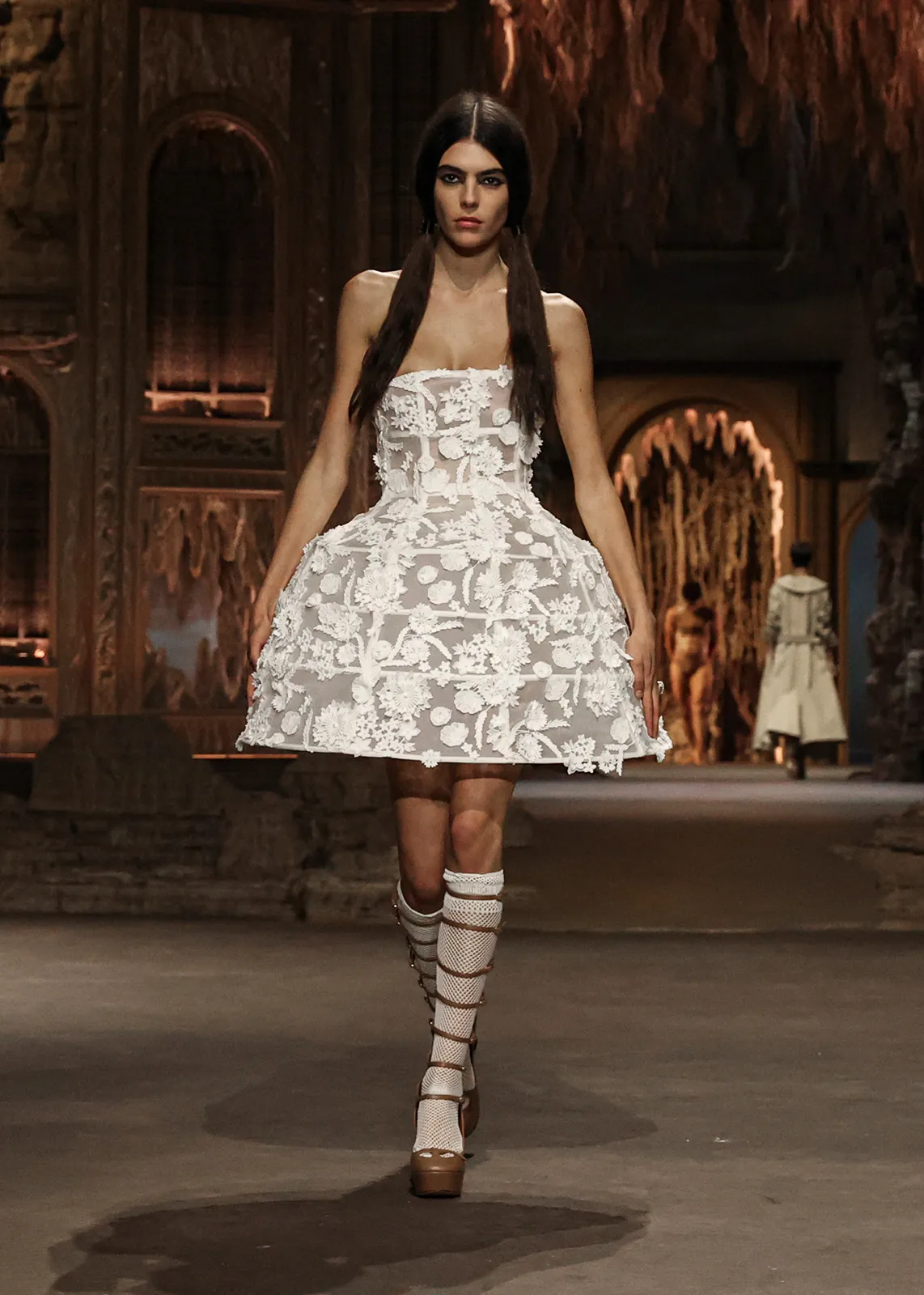
Queen Catherine of France, in addition to intensely influencing the vision of art, fashion, and cuisine in her time, this Italian by birth managed to transform the relationship between women and power, introducing the Renaissance sensibility to the rigid French monarchy. Perhaps Maria Grazia identifies in some way with her, an Italian changing the course of a French institution, and that is why in this extensive collection of eighty-four looks she incorporates and pays tribute to elements such as heels, corsets, or burano lace, innovations implemented by the monarch.
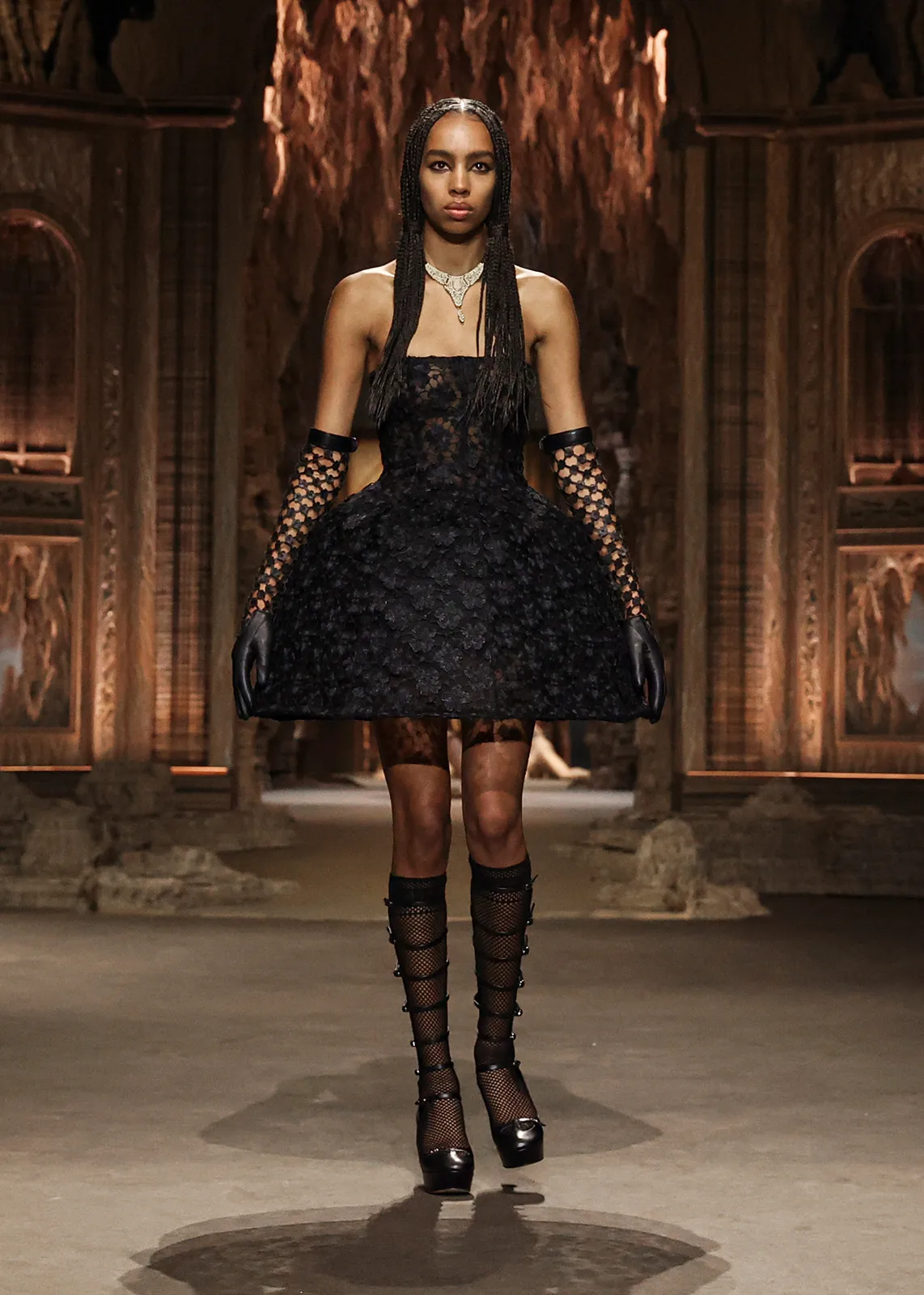
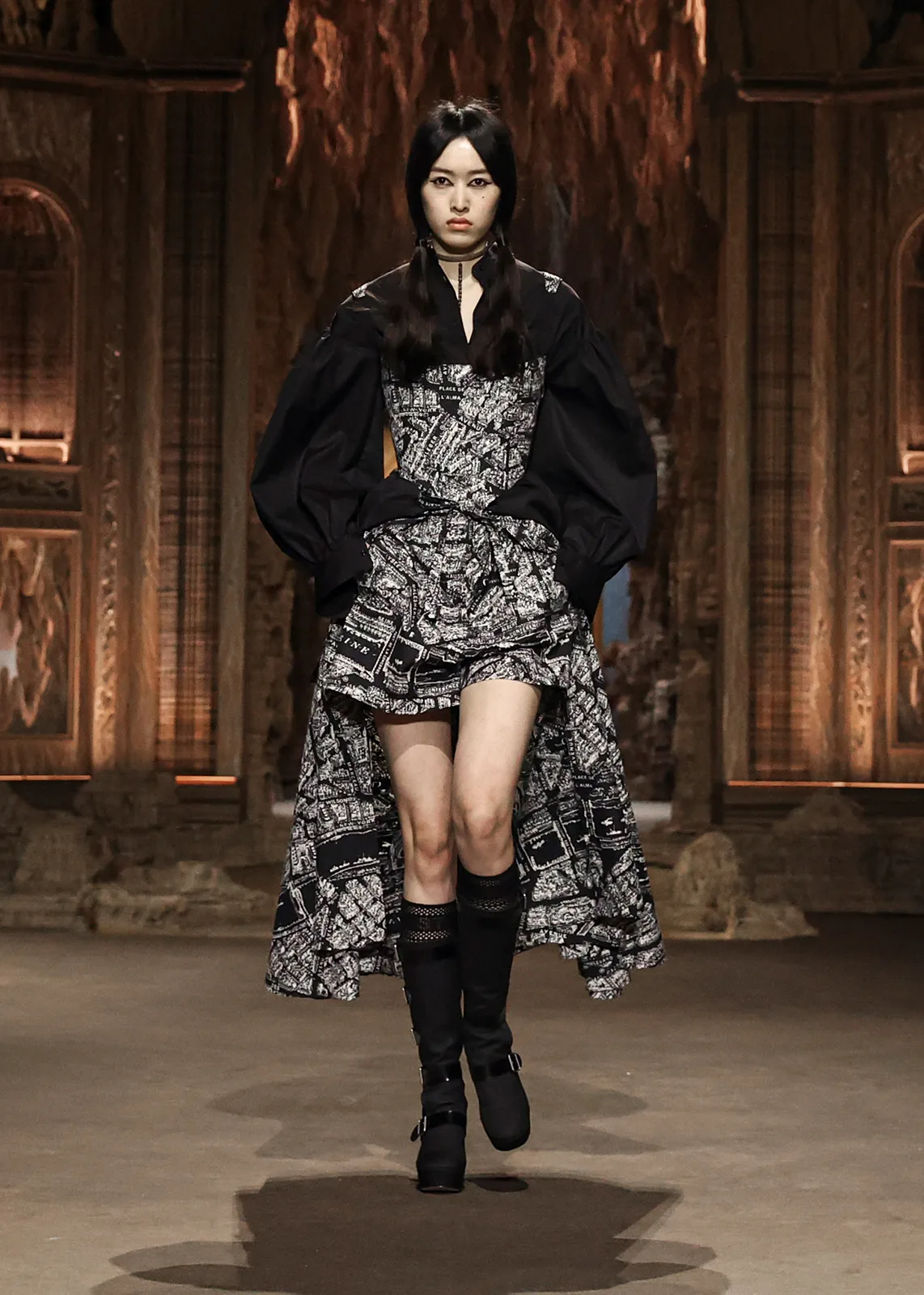
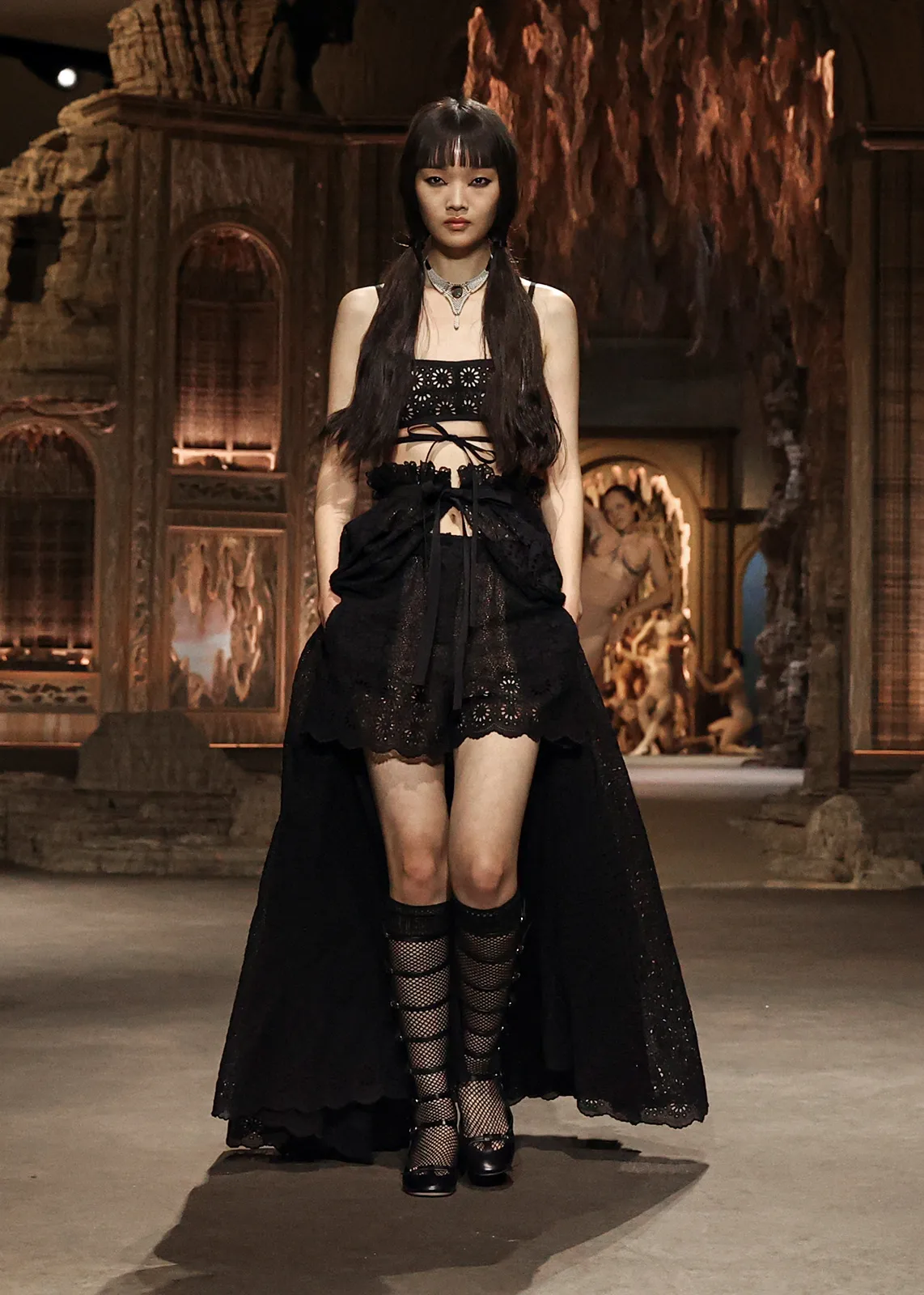
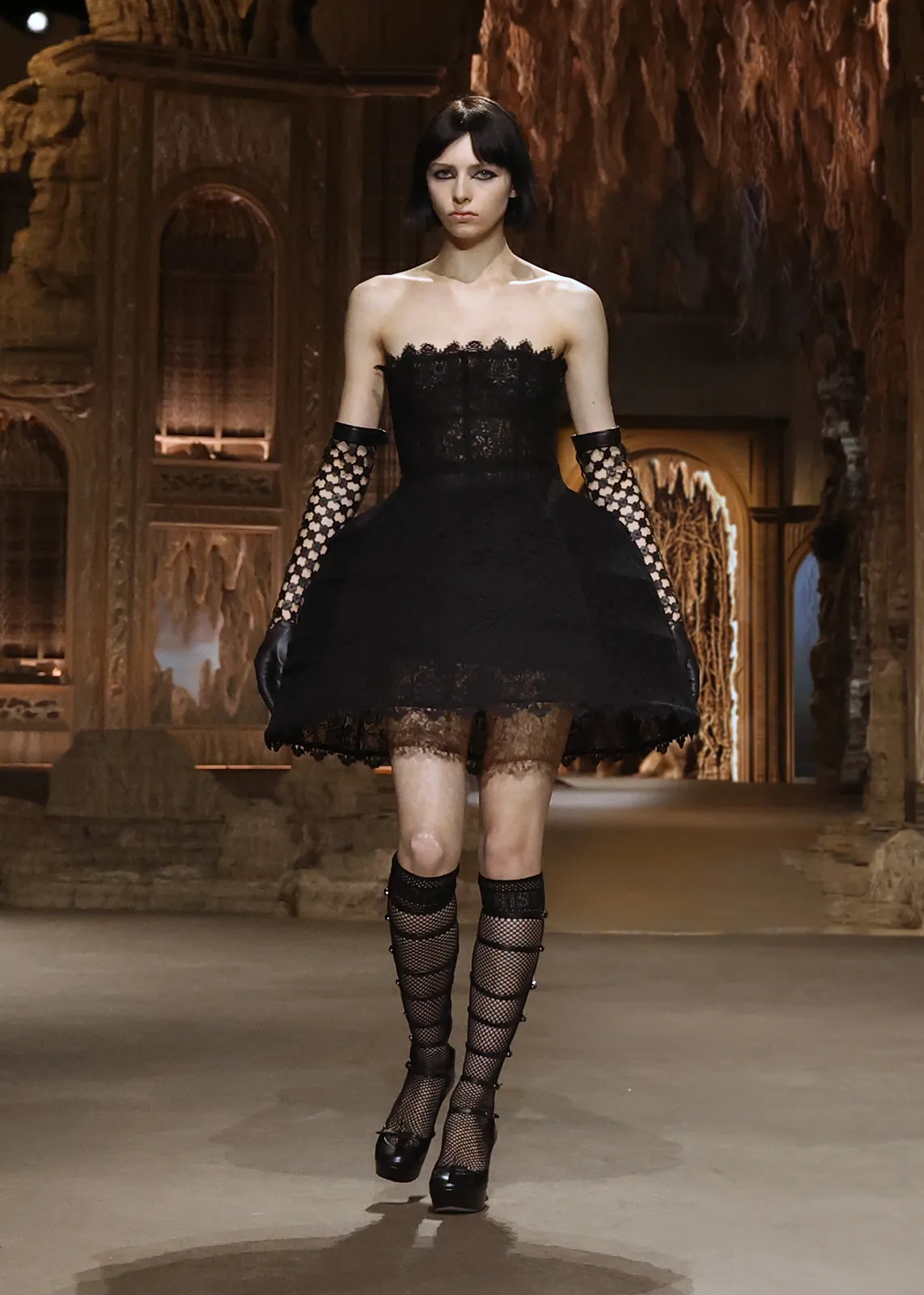
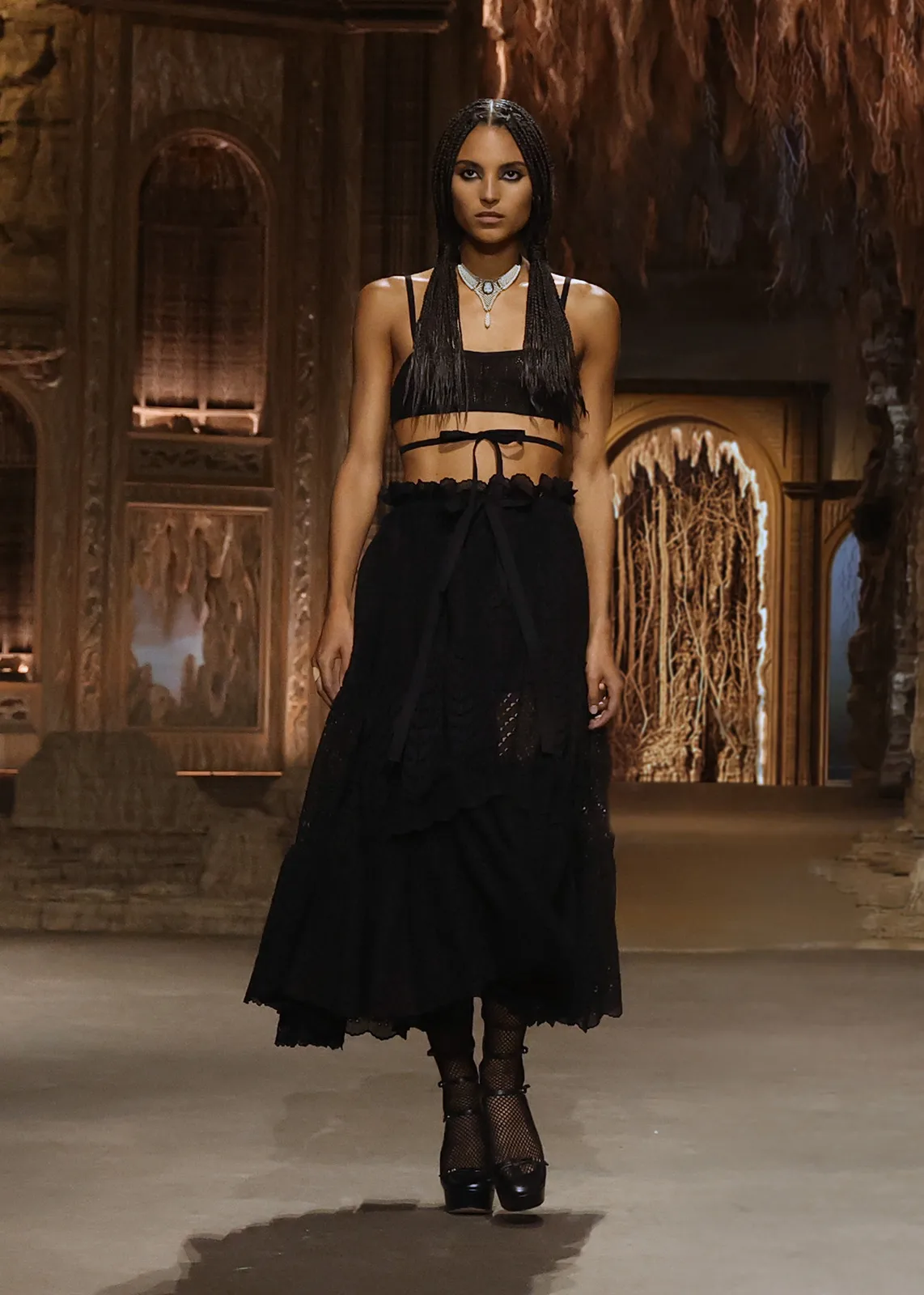
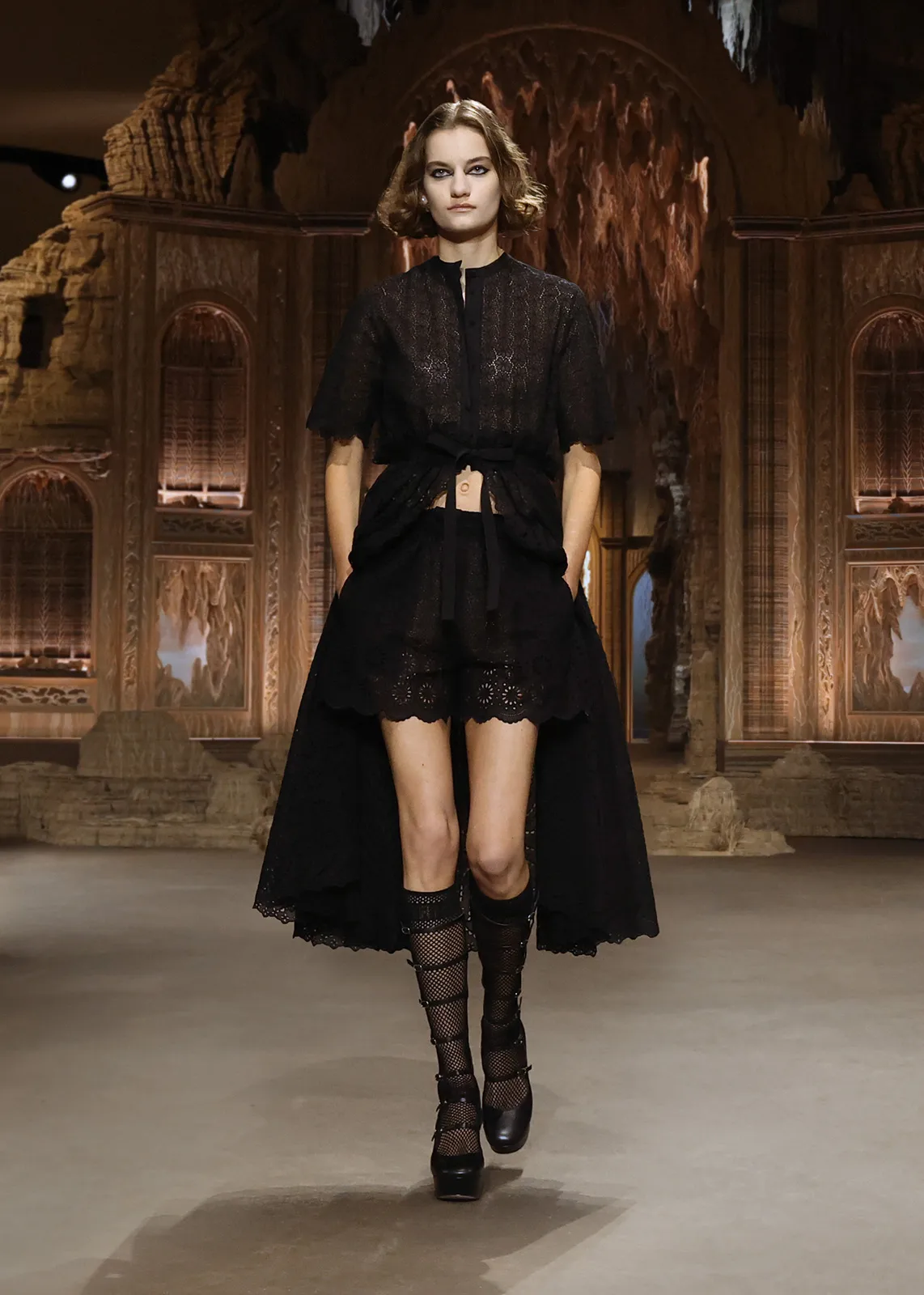
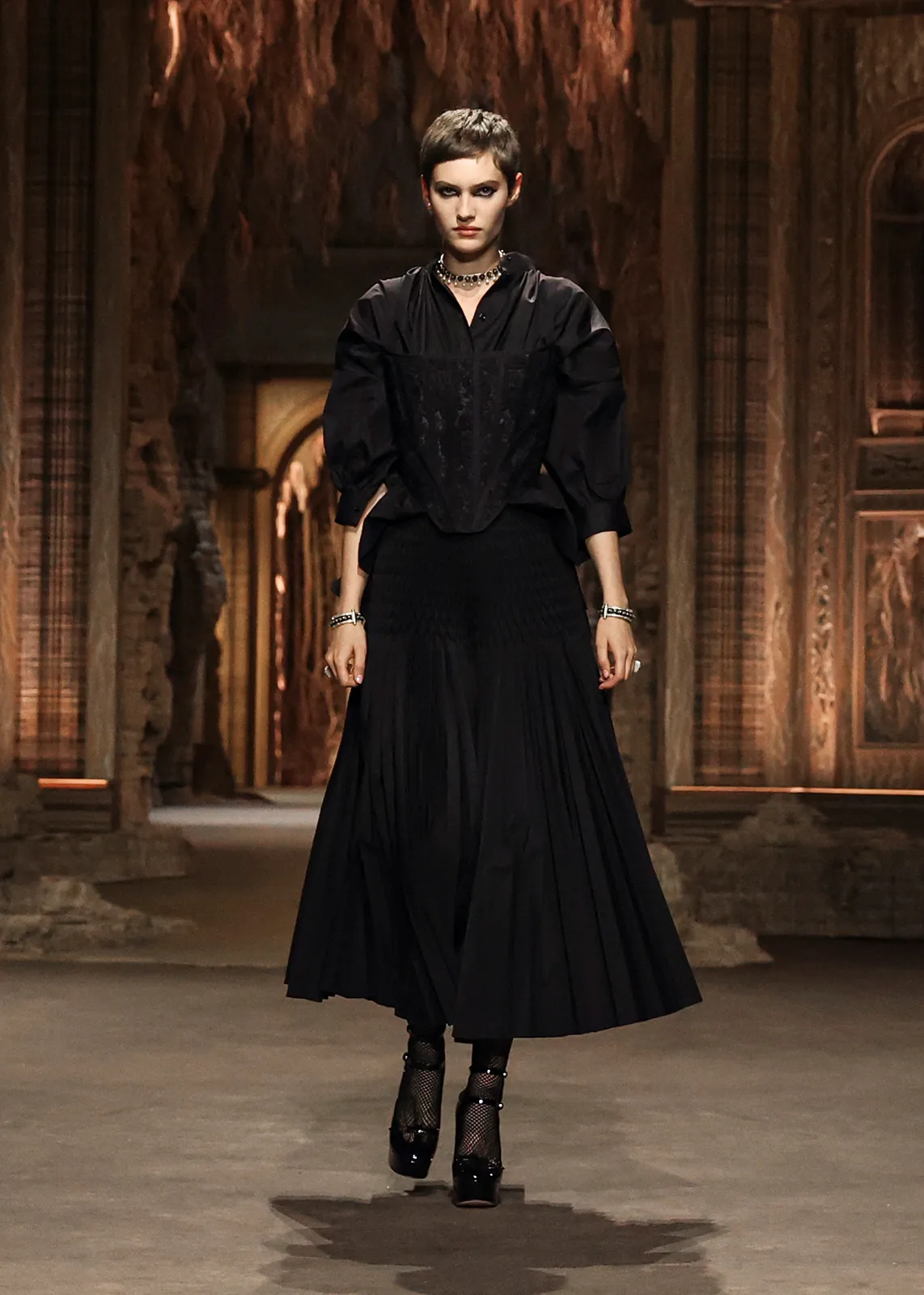
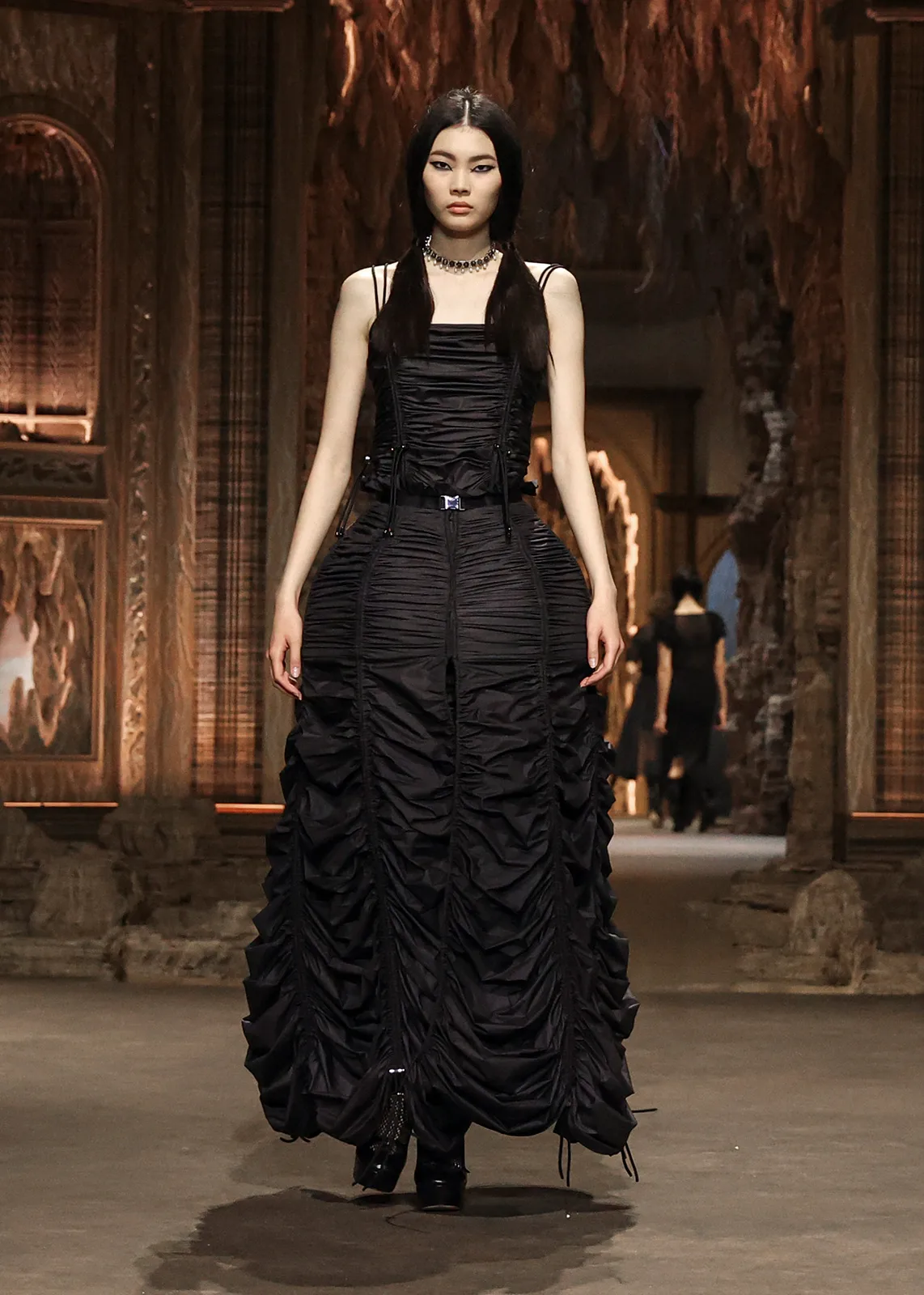
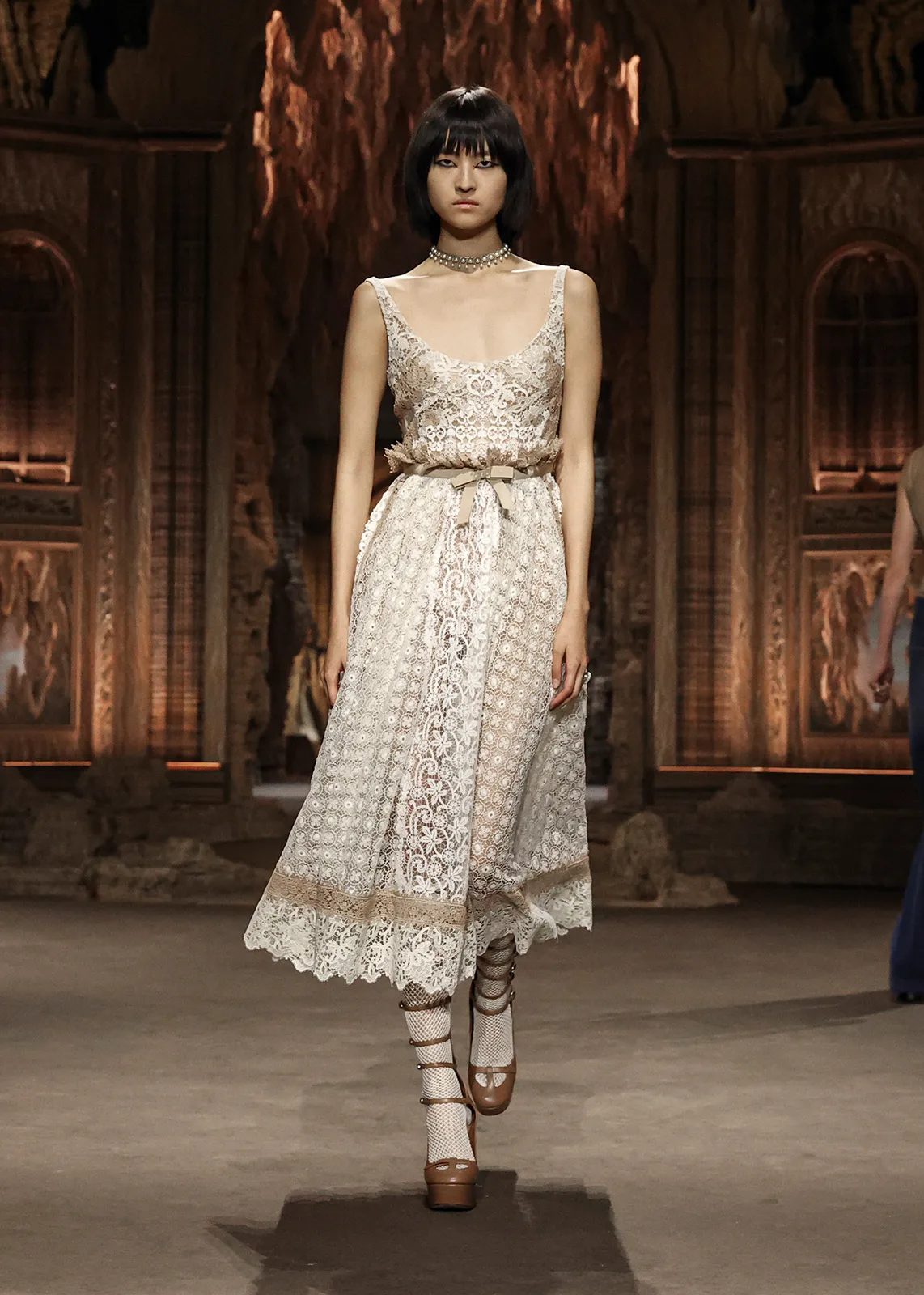
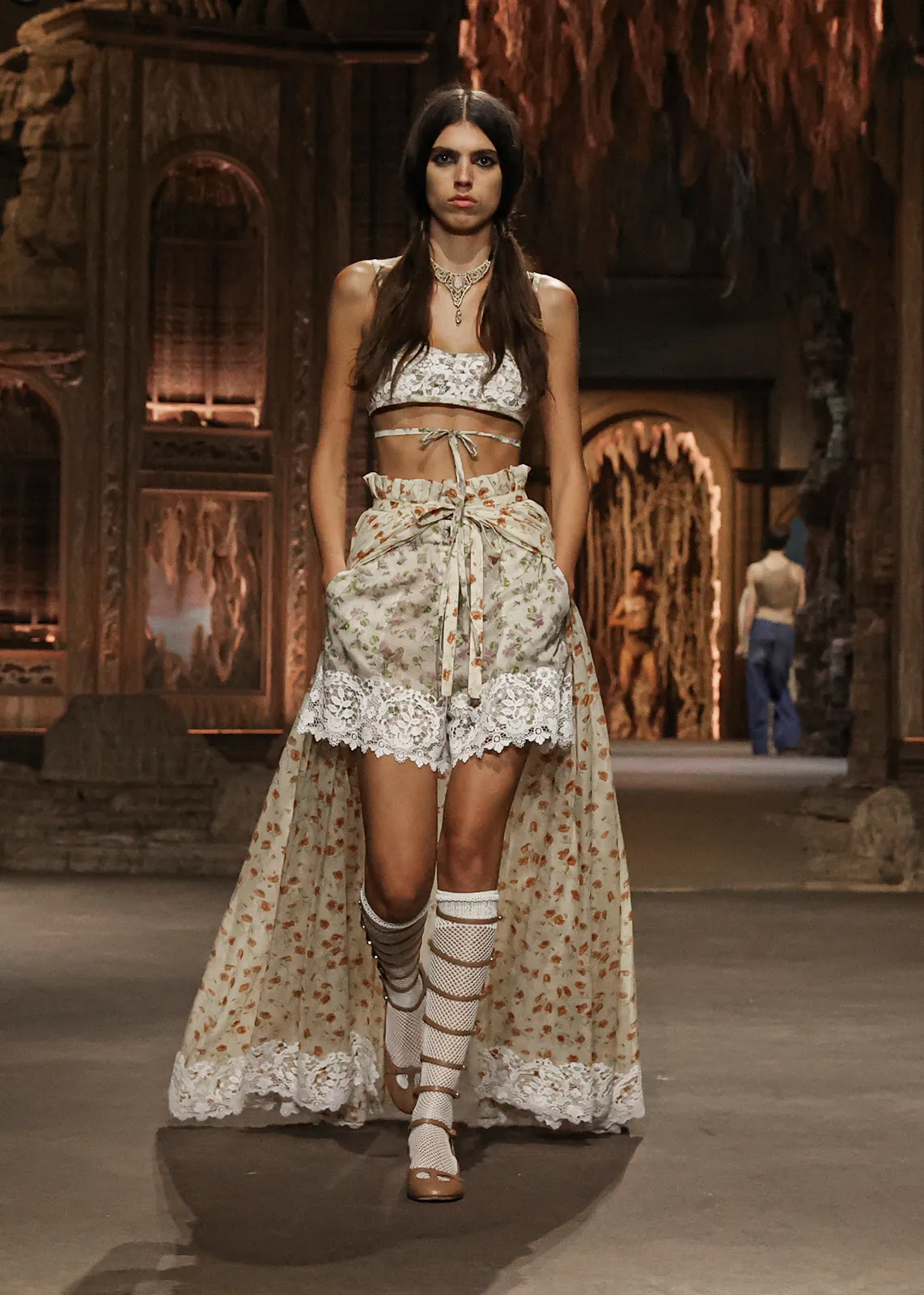
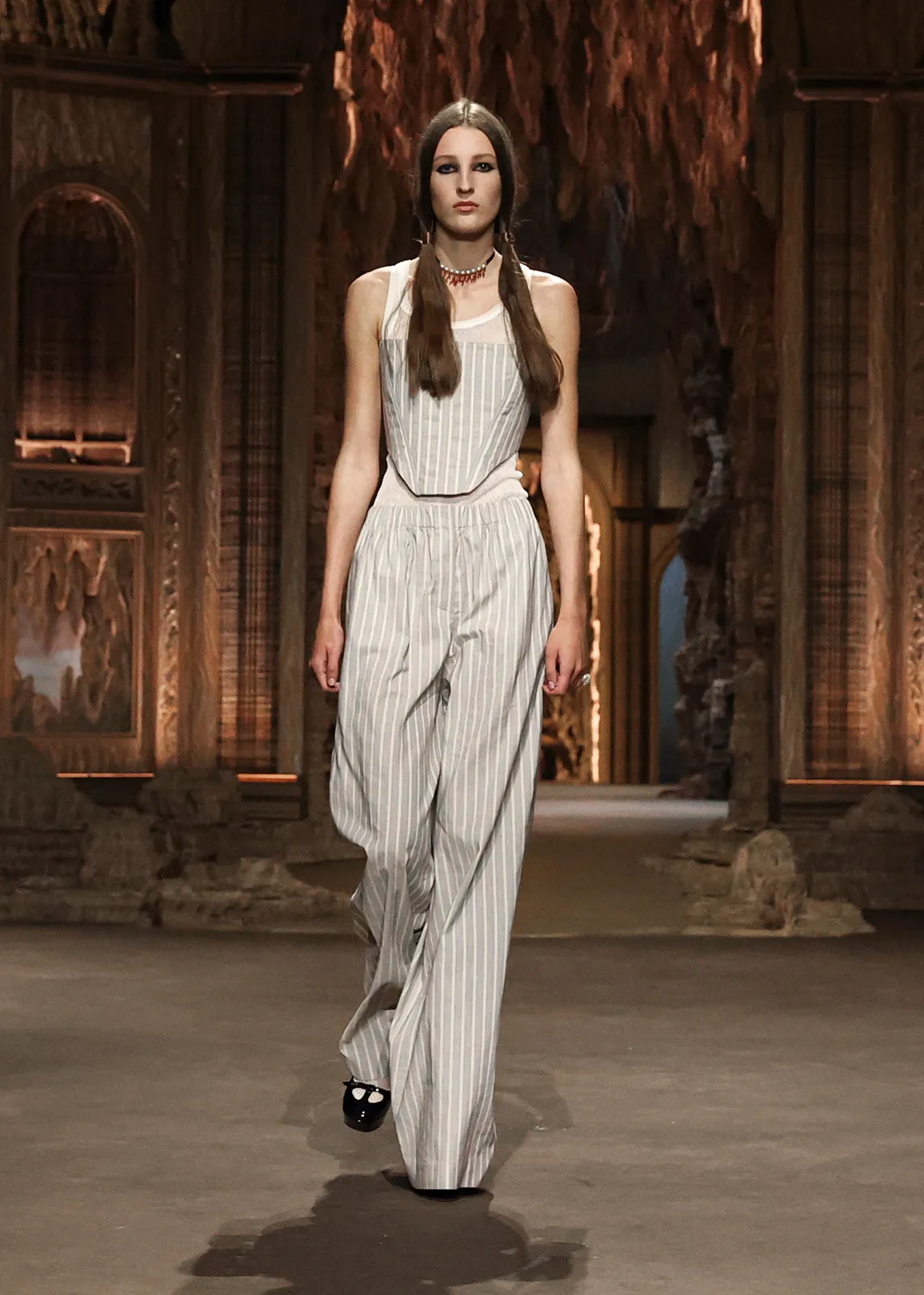
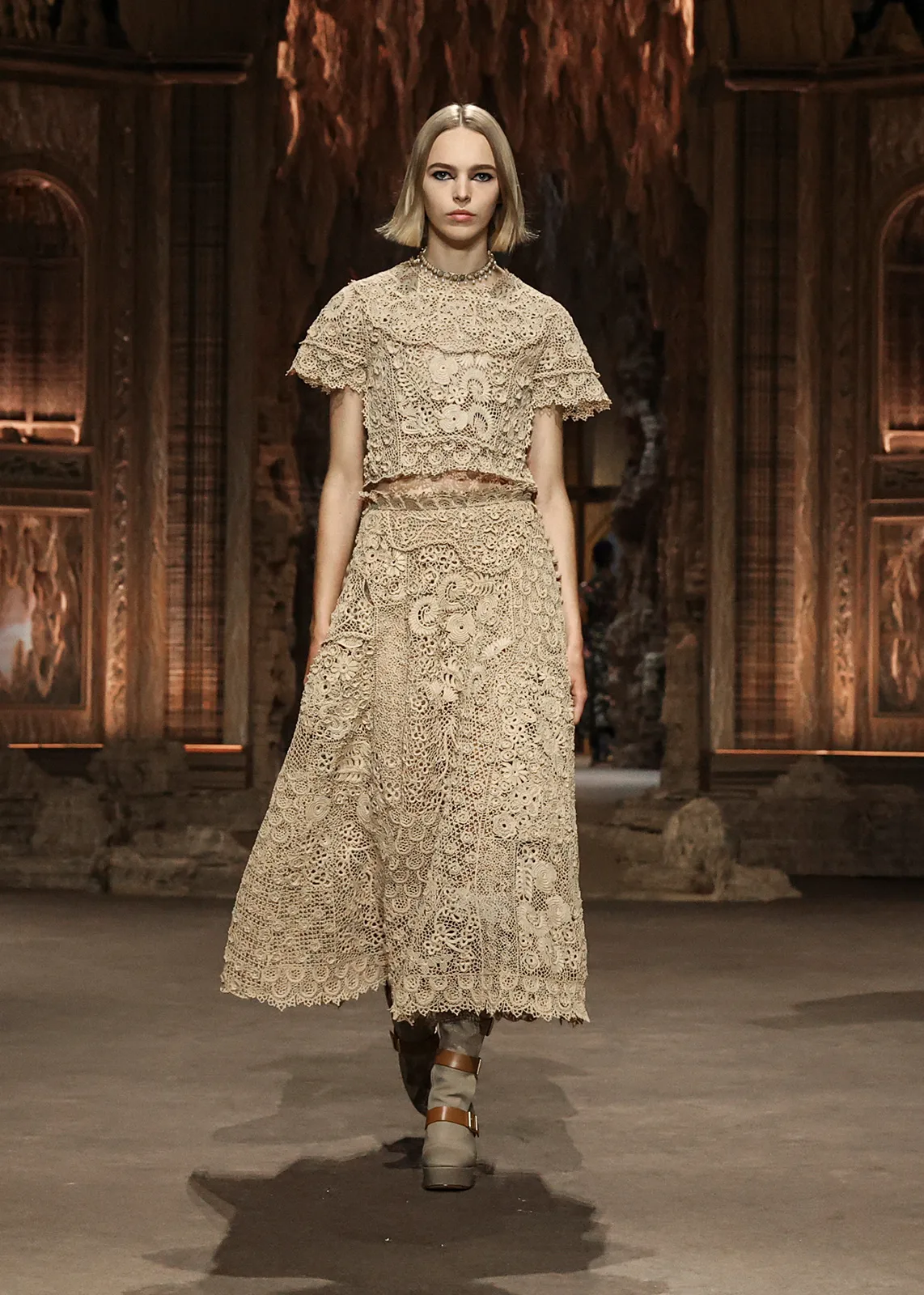
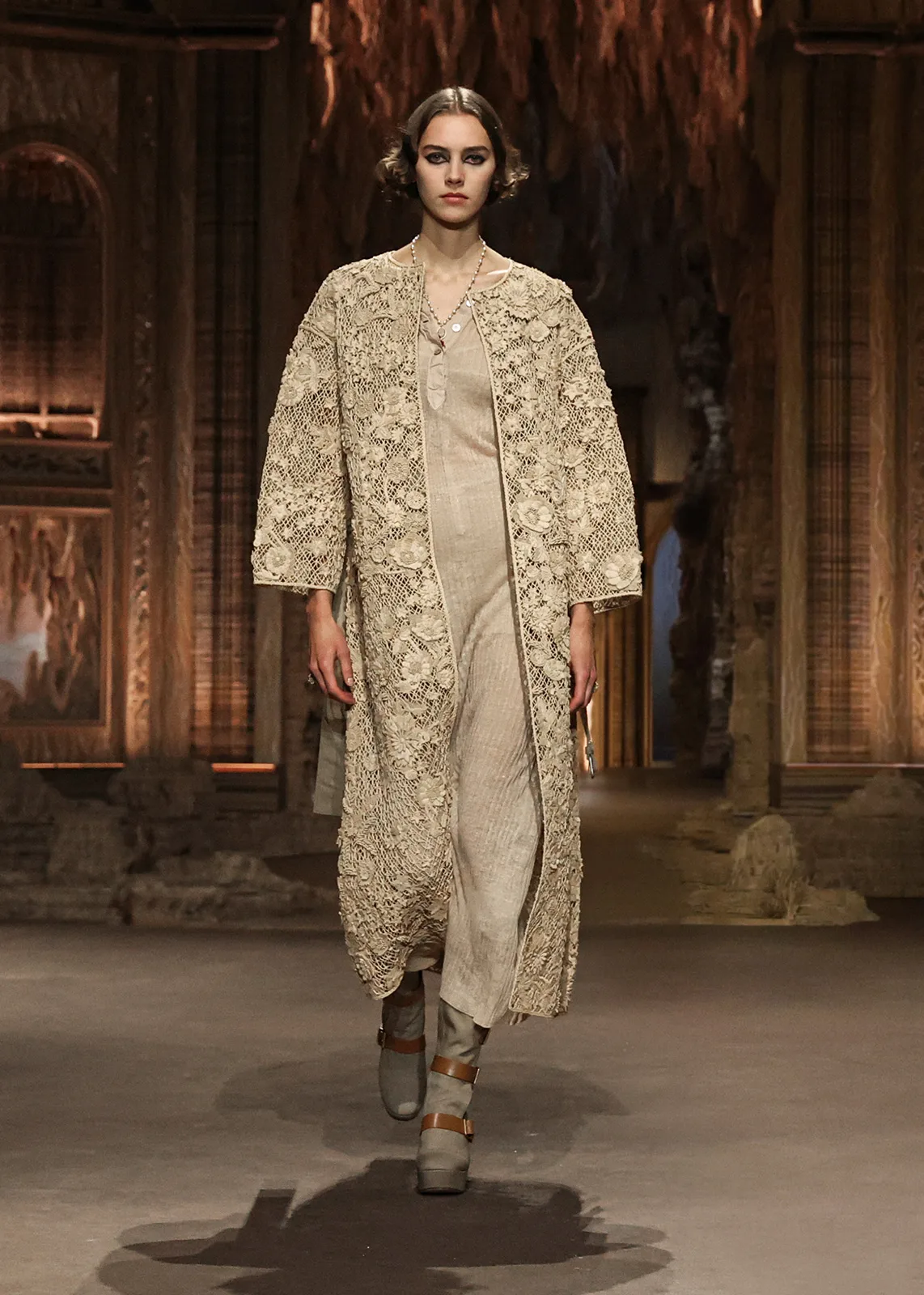
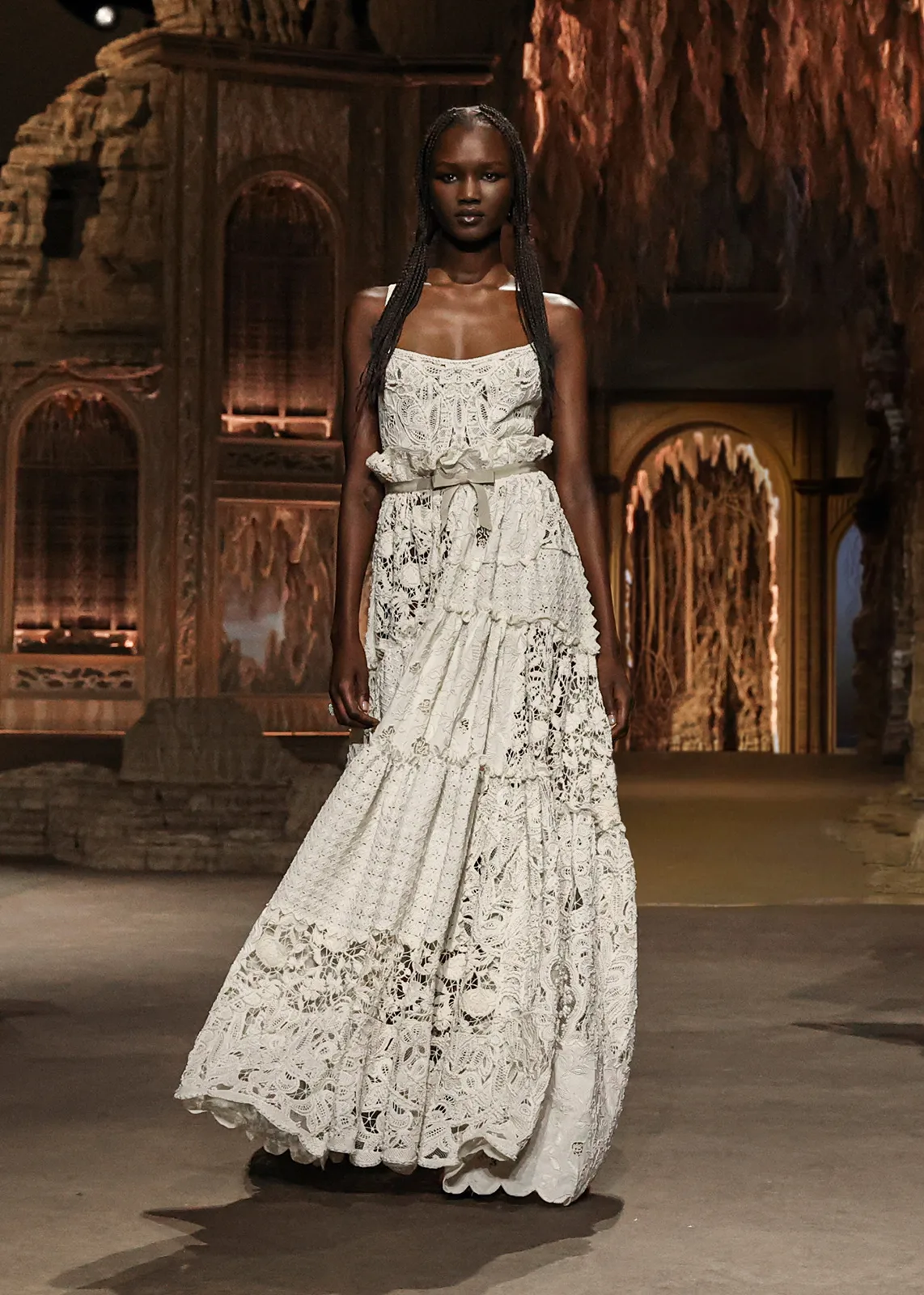
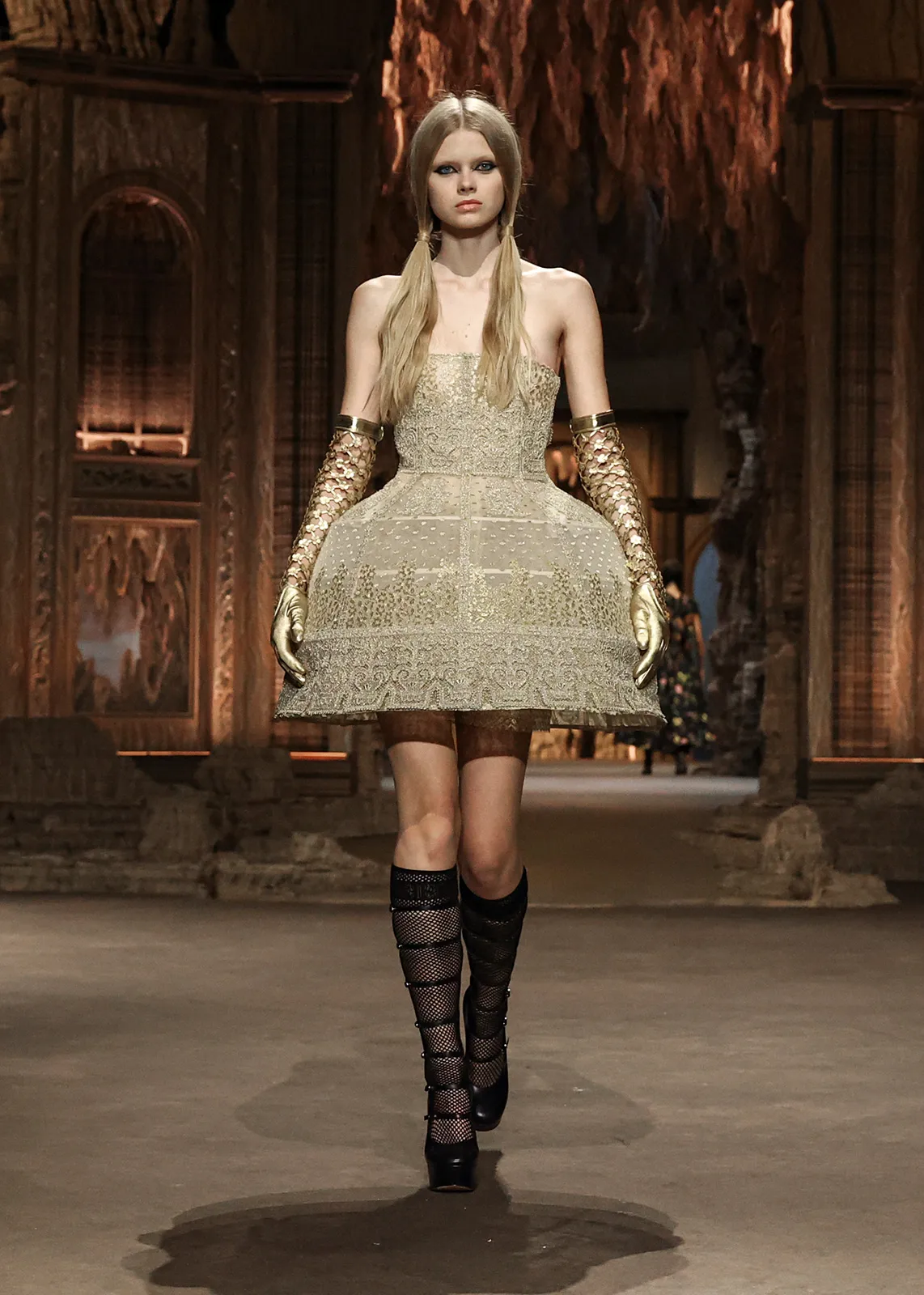
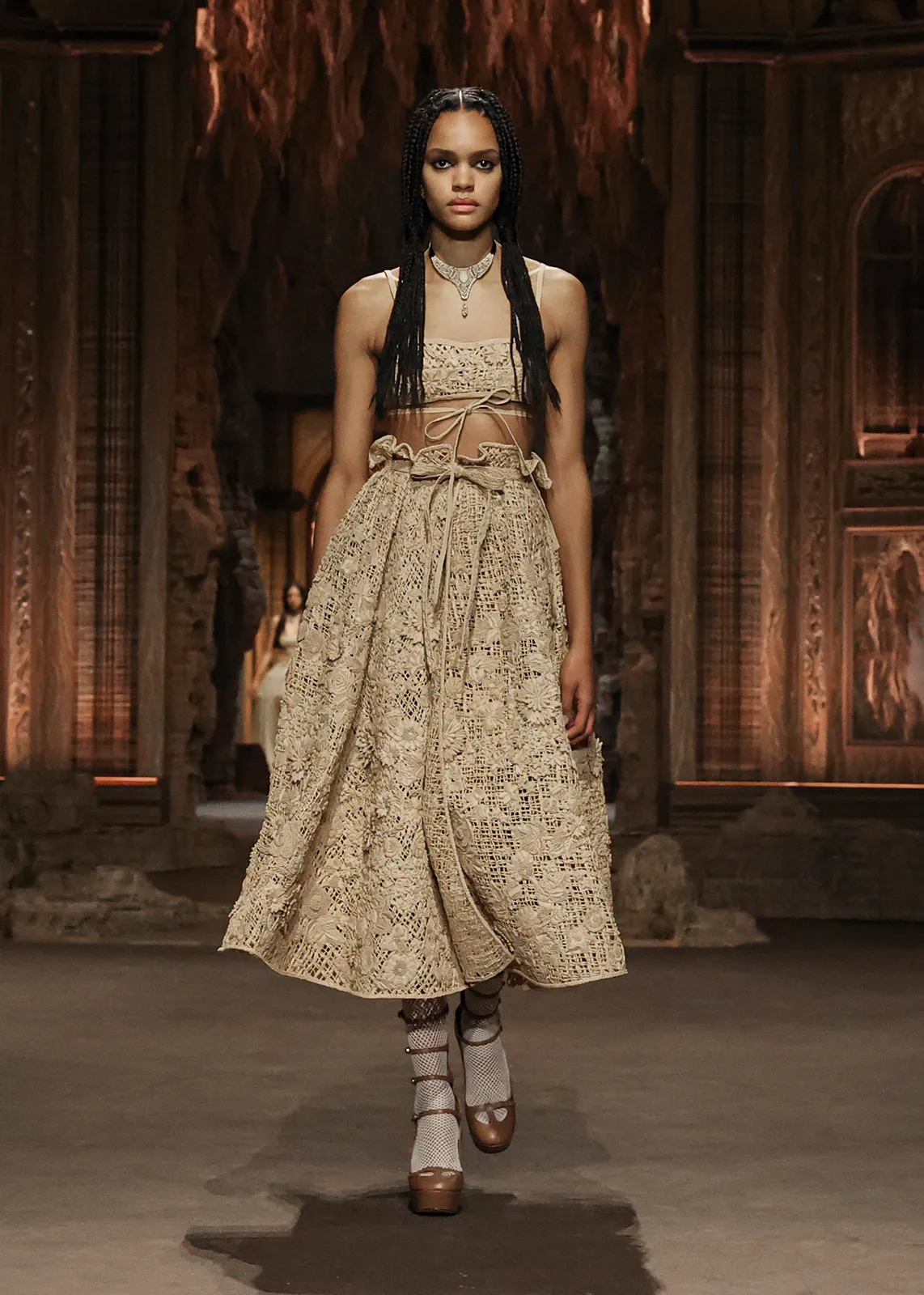
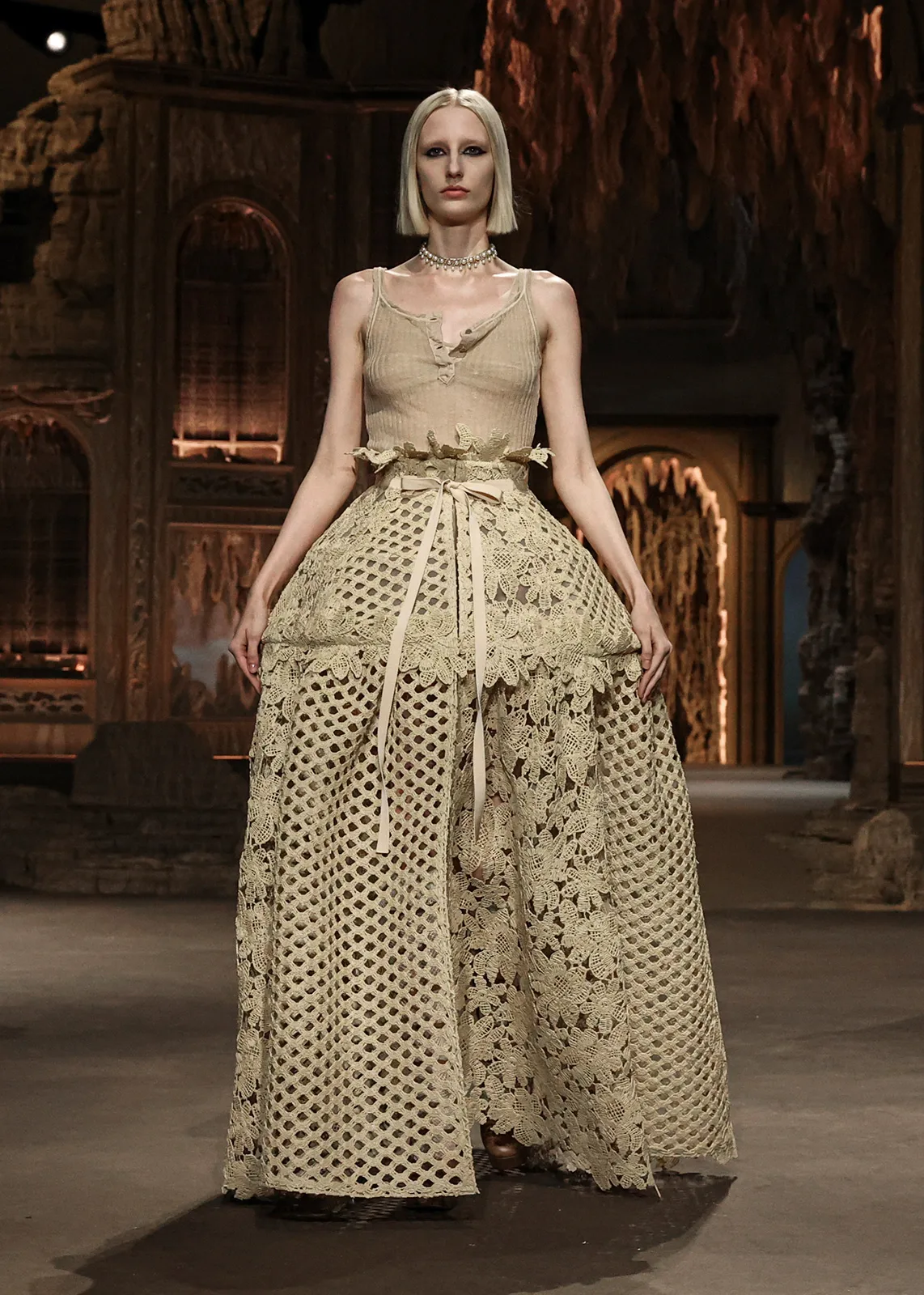
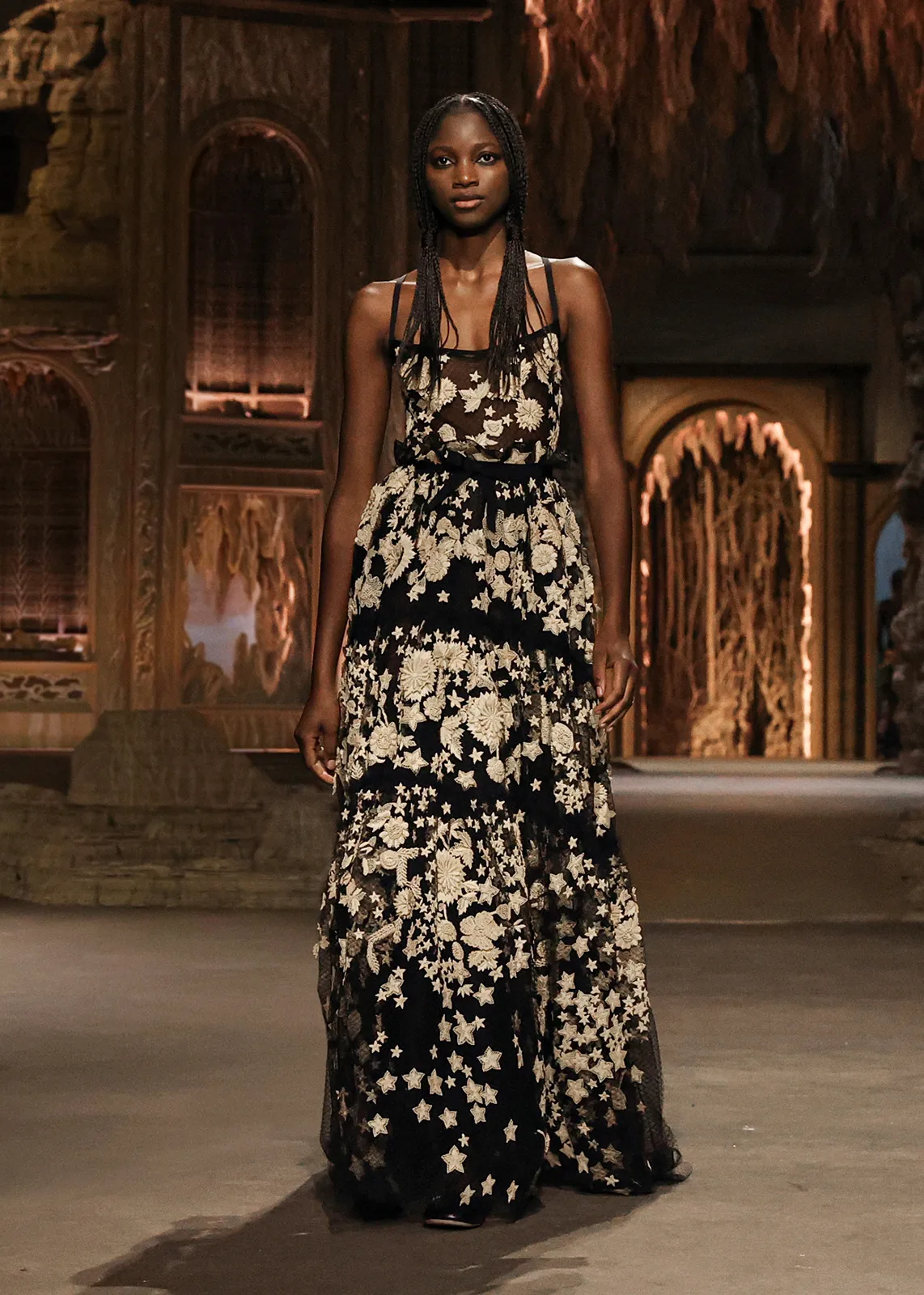
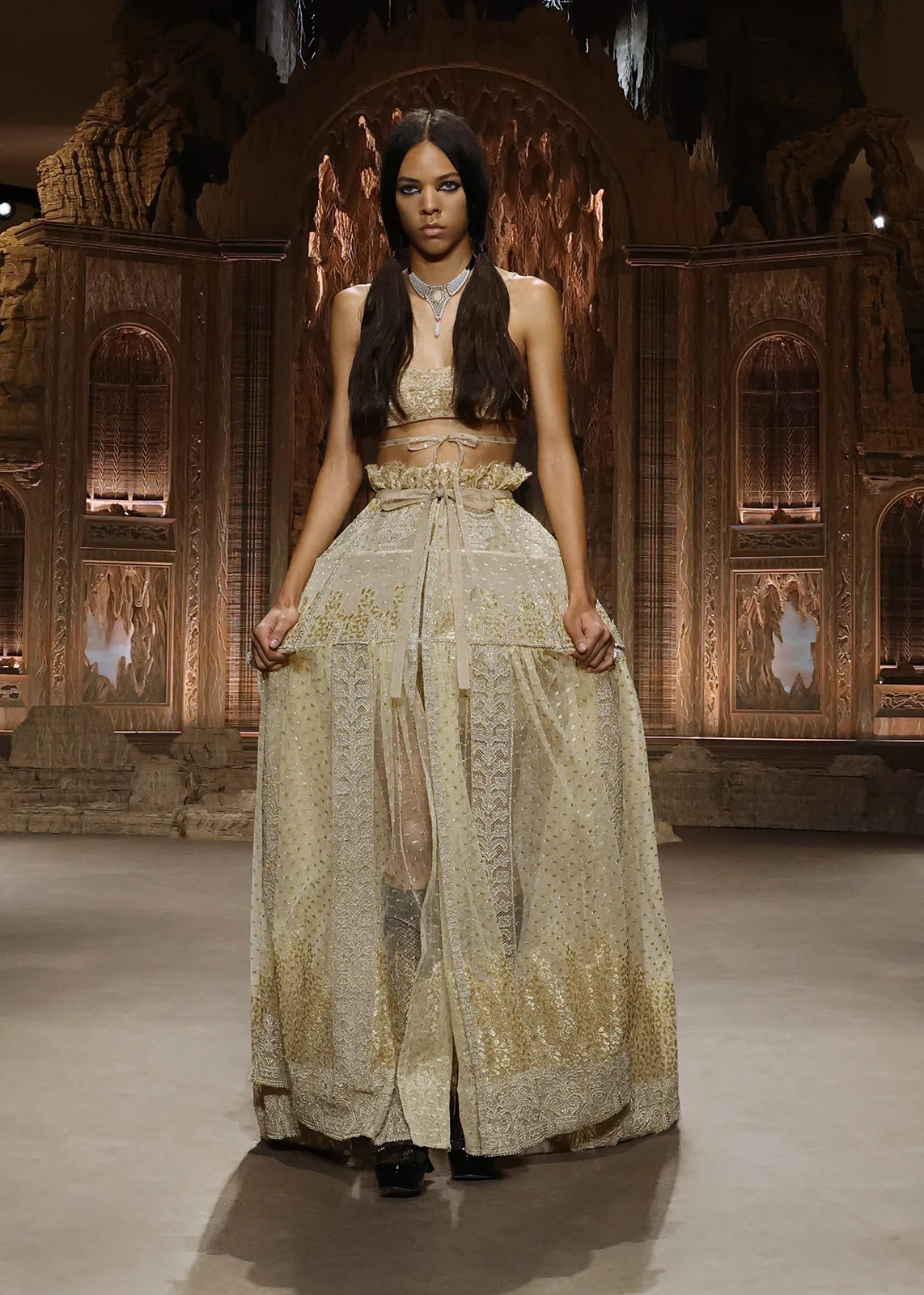
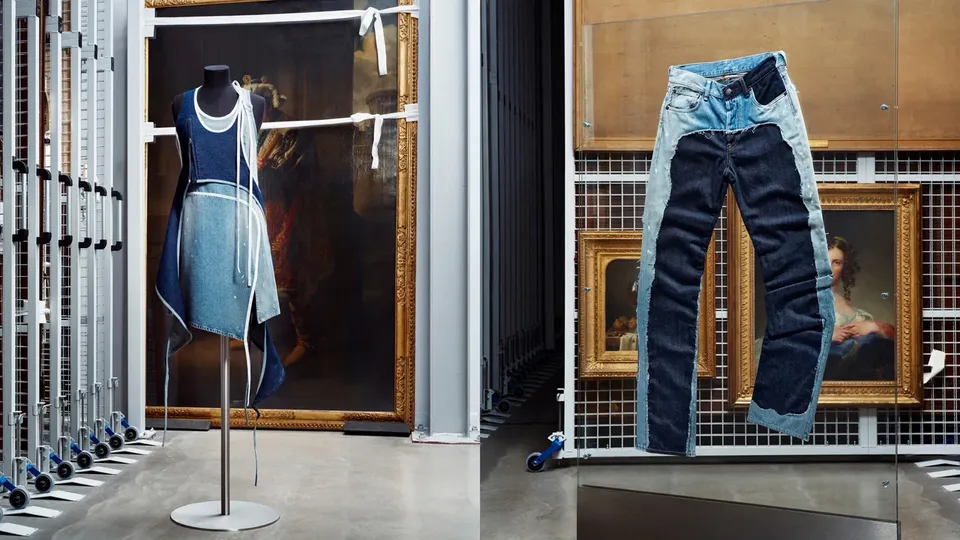
Thus, looks with skirts with structures similar to the farthingale characteristic of the era are presented in multiple looks, paired with delicate and small tops that give the modern touch; both pieces are made with the aforementioned lace, or in raffia, an unusual material in such delicate pieces, demonstrating the house's signature artisanal expertise. Corsets are layered over wide shirts, leaving them on a more symbolic than functional level in a twist appropriate for this generation; and several looks with denim pieces sneak in among the more traditional ones, including the more urban character of the woman, which Chiuri didn't want to leave out.
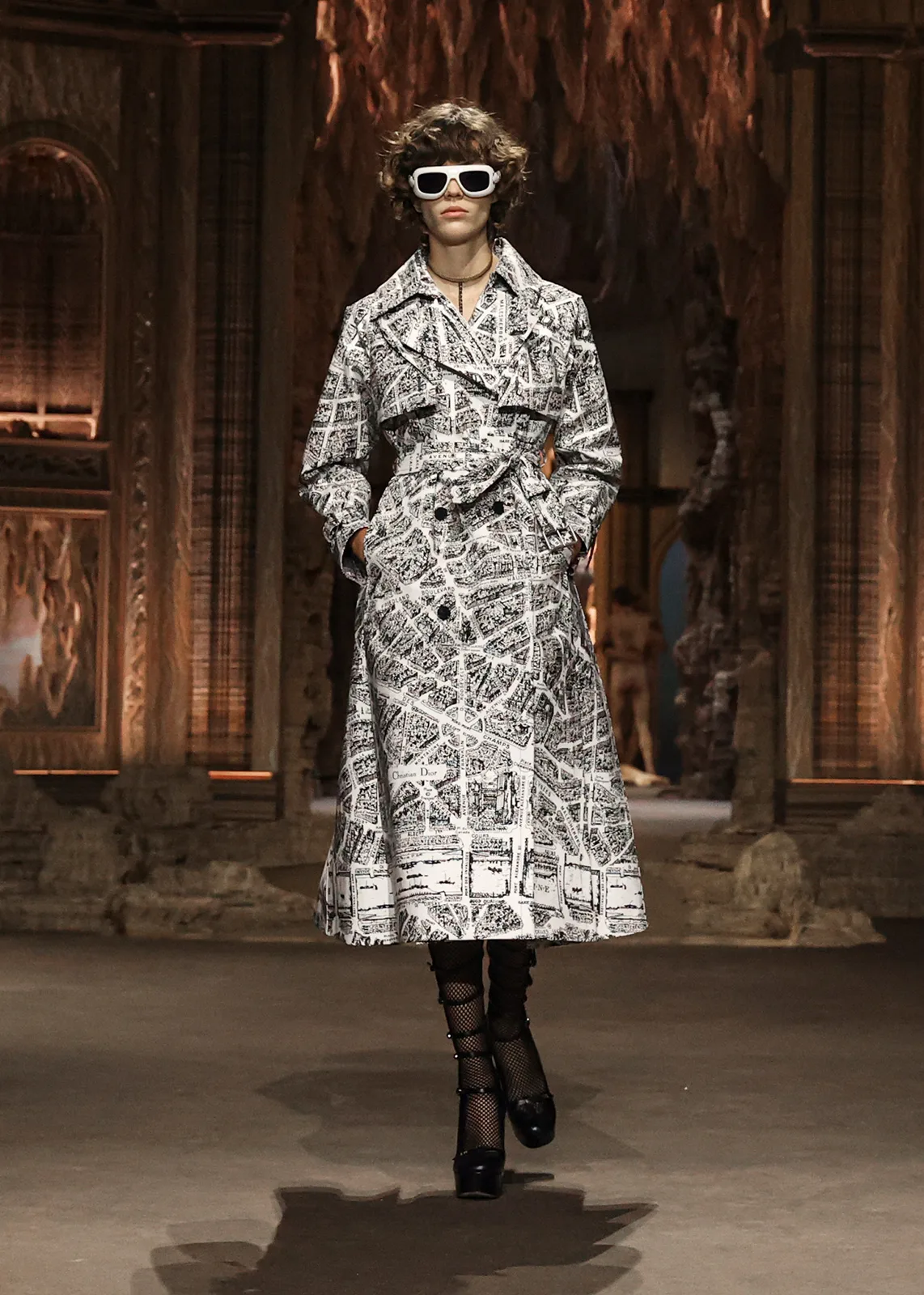
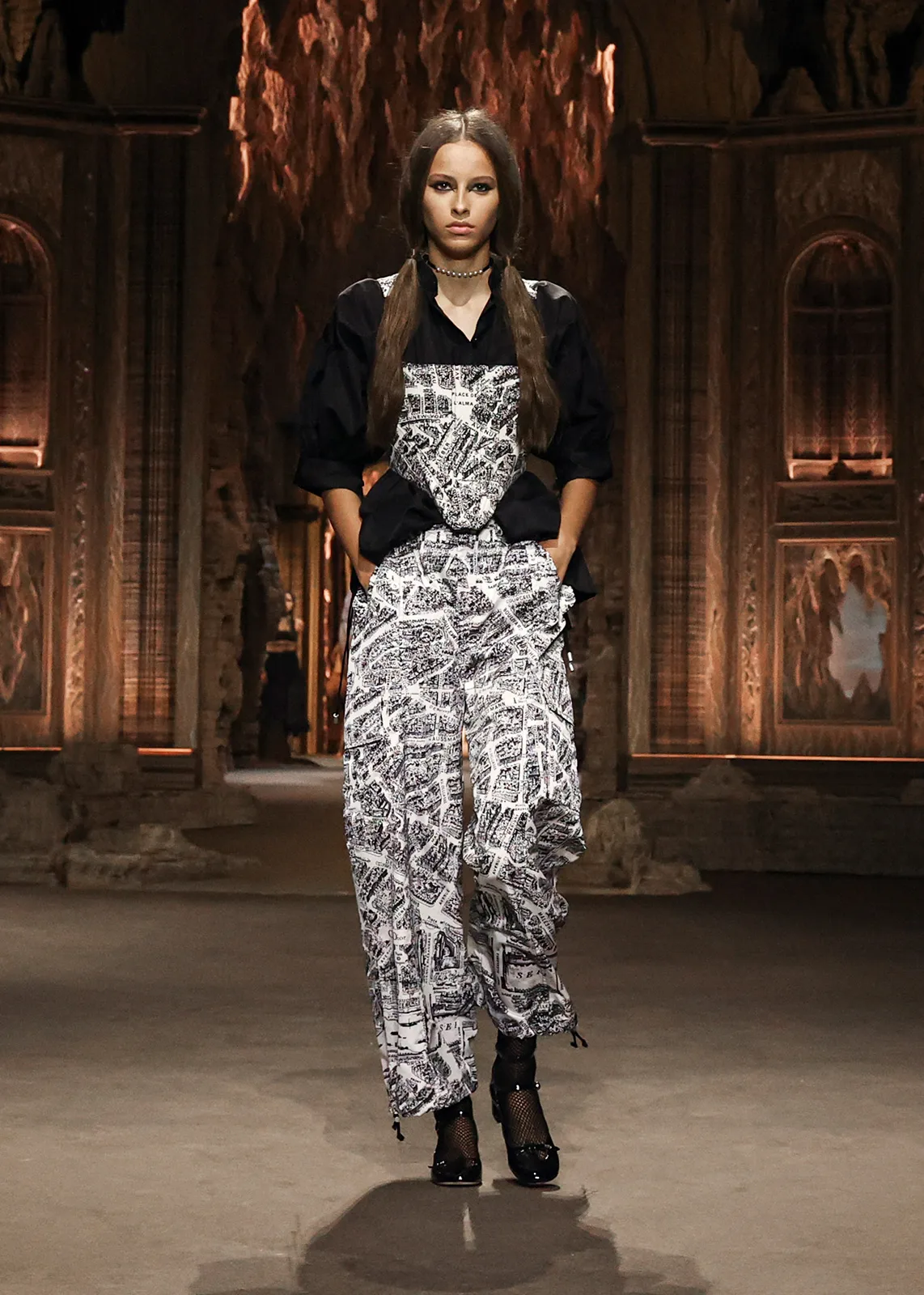
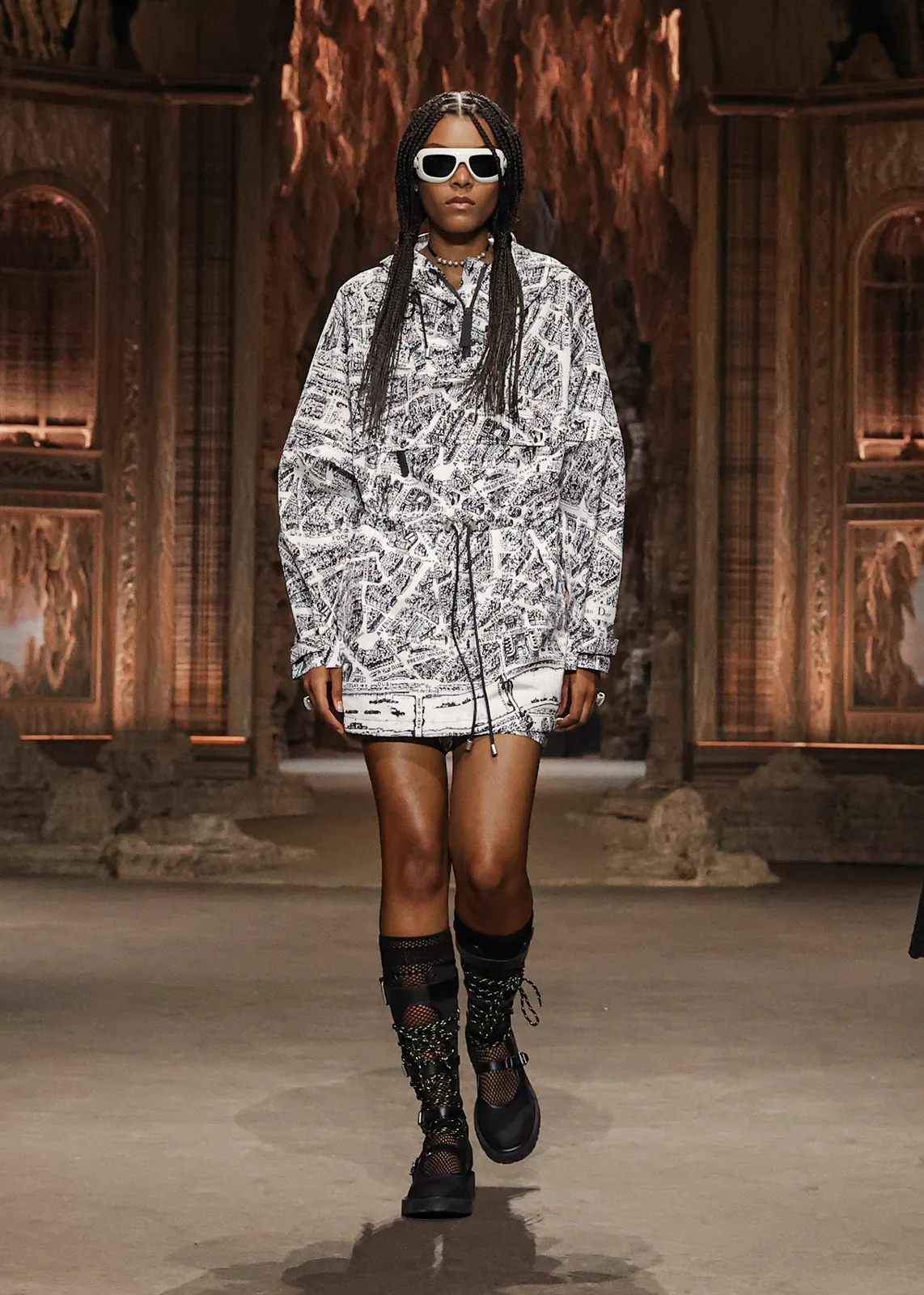
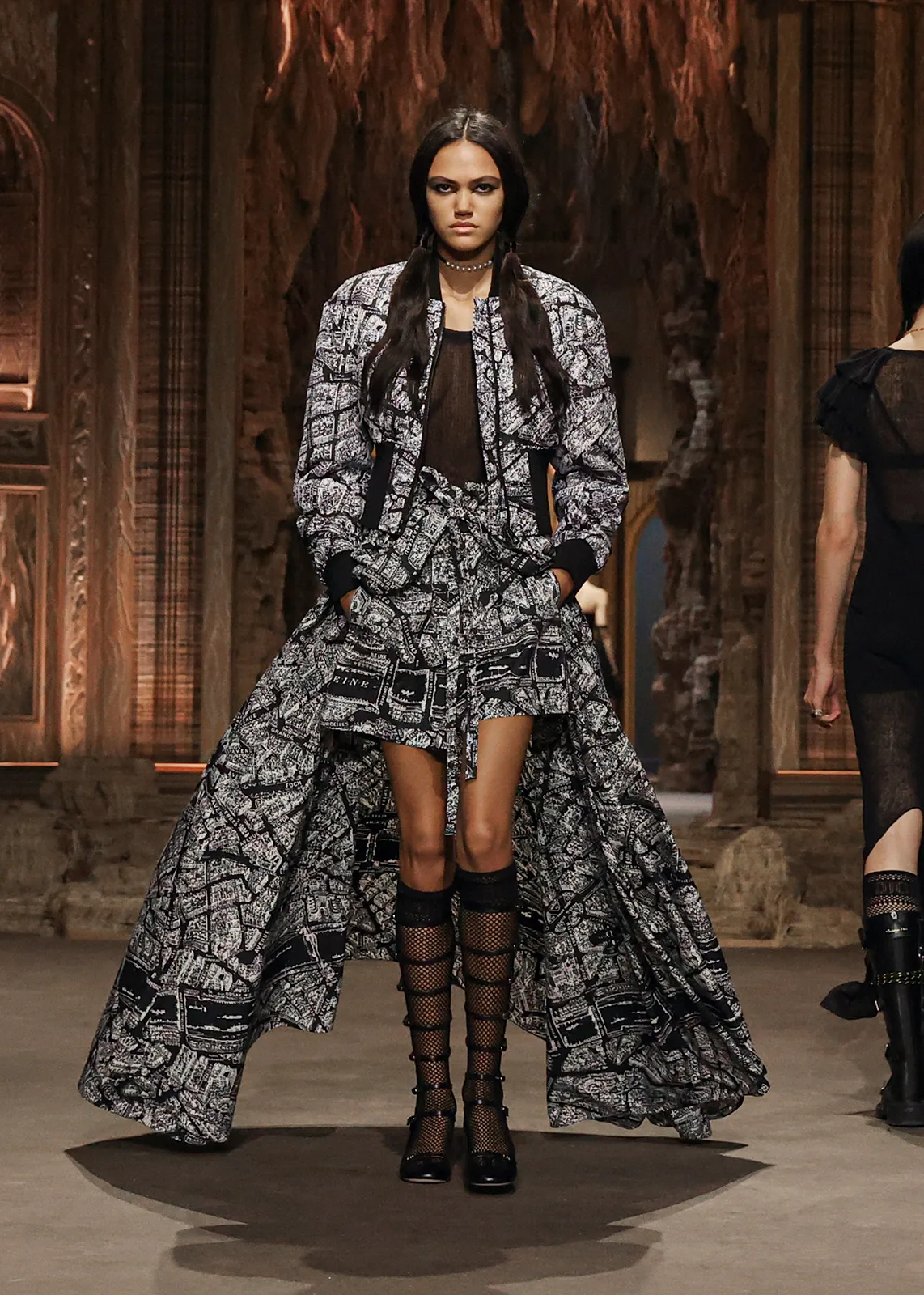
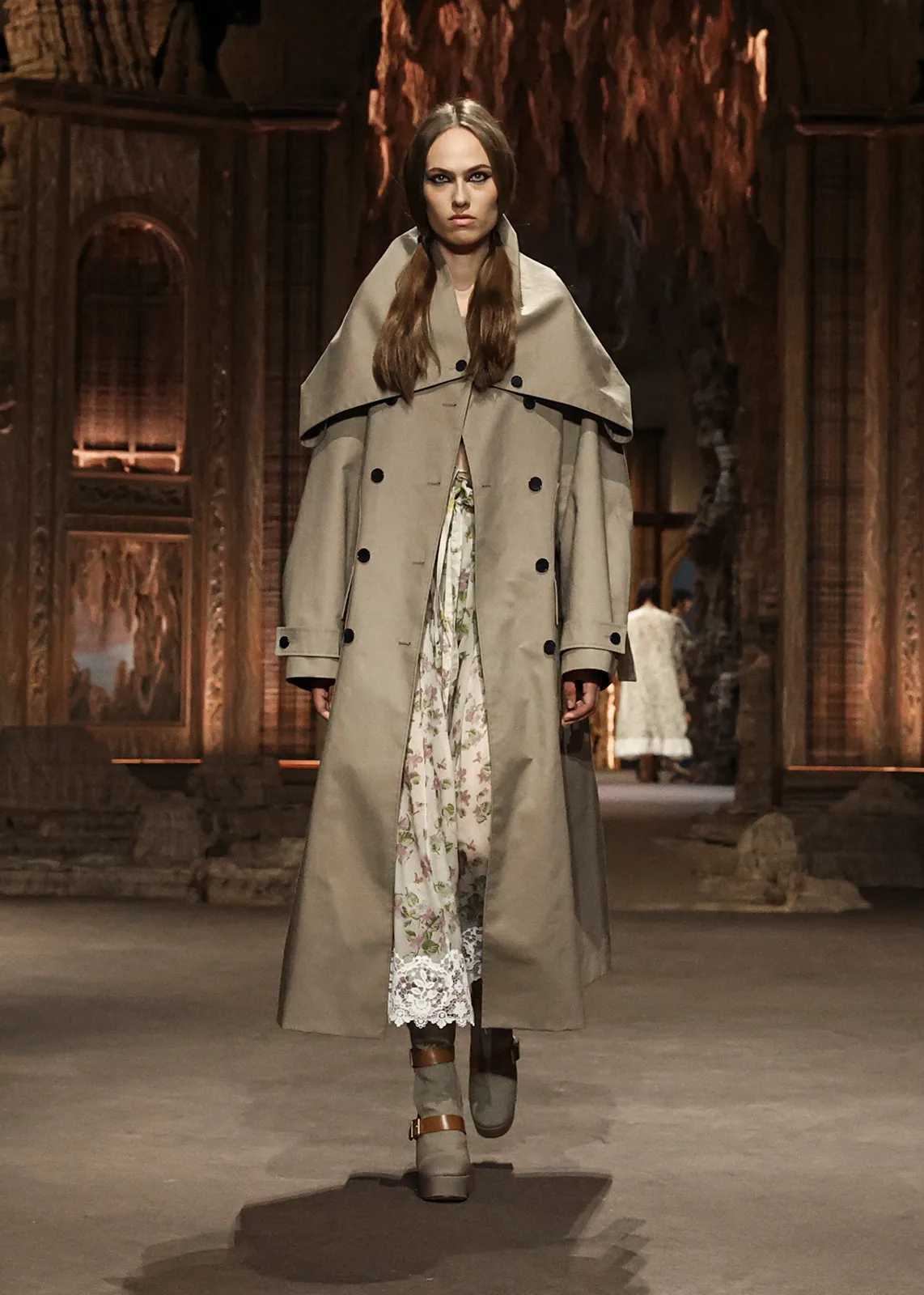
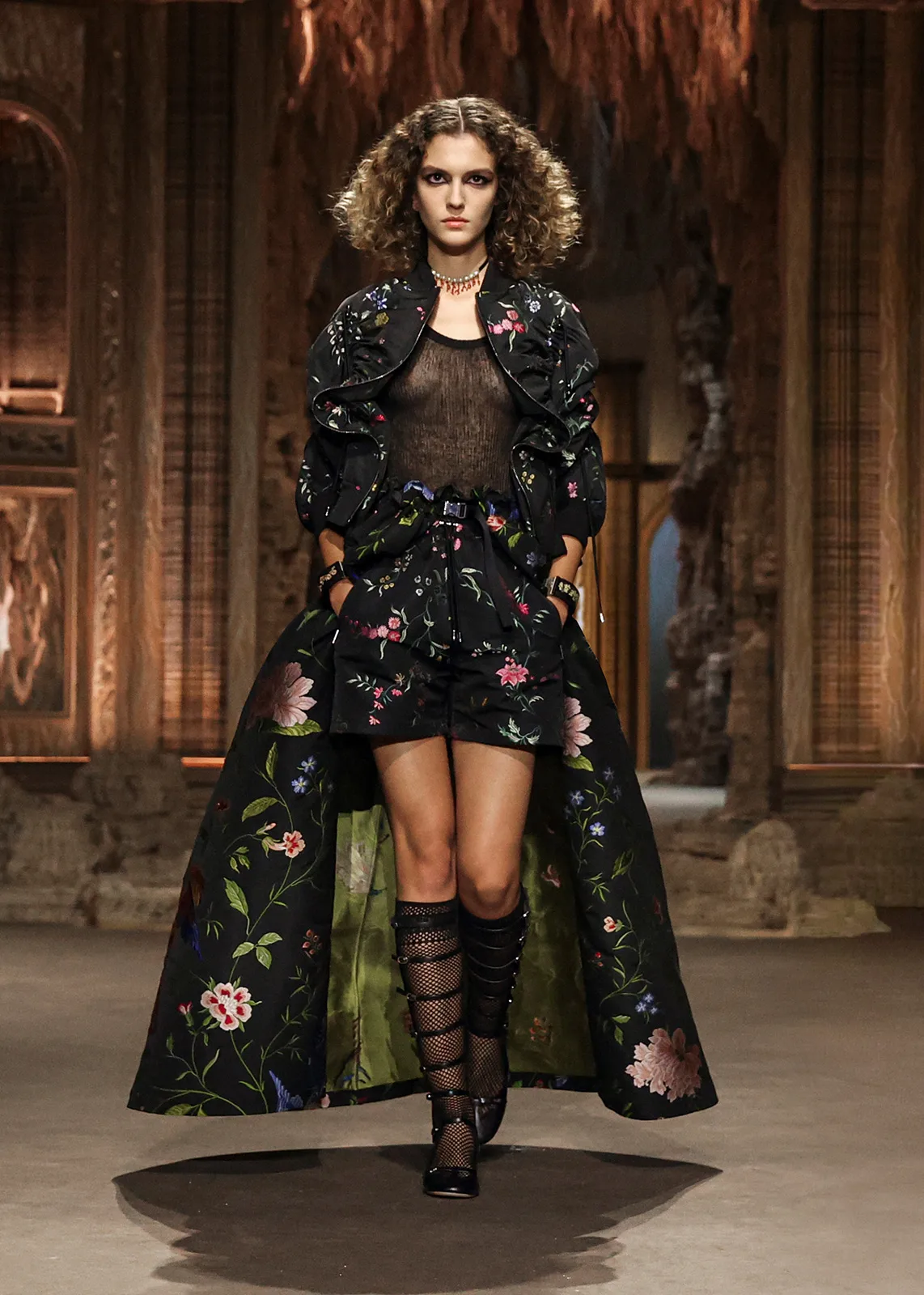
This urbanism is found literally in trench coats, corsets, skirts, and pants printed entirely with the old map of Paris, constituting one of the two most recurrent motifs in the collection, the second being the floral patterns, favourites of the designer. In a collection of historical connotations brought to modernity, Maria Grazia seems to find a way to highlight the historical importance of the female figure in a much more subtle and effective way
Queen Catherine of France, in addition to intensely influencing the vision of art, fashion, and cuisine in her time, this Italian by birth managed to transform the relationship between women and power, introducing the Renaissance sensibility to the rigid French monarchy. Perhaps Maria Grazia identifies in some way with her, an Italian changing the course of a French institution, and that is why in this extensive collection of eighty-four looks she incorporates and pays tribute to elements such as heels, corsets, or burano lace, innovations implemented by the monarch.
Thus, looks with skirts with structures similar to the farthingale characteristic of the era are presented in multiple looks, paired with delicate and small tops that give the modern touch; both pieces are made with the aforementioned lace, or in raffia, an unusual material in such delicate pieces, demonstrating the house's signature artisanal expertise. Corsets are layered over wide shirts, leaving them on a more symbolic than functional level in a twist appropriate for this generation; and several looks with denim pieces sneak in among the more traditional ones, including the more urban character of the woman, which Chiuri didn't want to leave out.
This urbanism is found literally in trench coats, corsets, skirts, and pants printed entirely with the old map of Paris, constituting one of the two most recurrent motifs in the collection, the second being the floral patterns, favourites of the designer. In a collection of historical connotations brought to modernity, Maria Grazia seems to find a way to highlight the historical importance of the female figure in a much more subtle and effective way