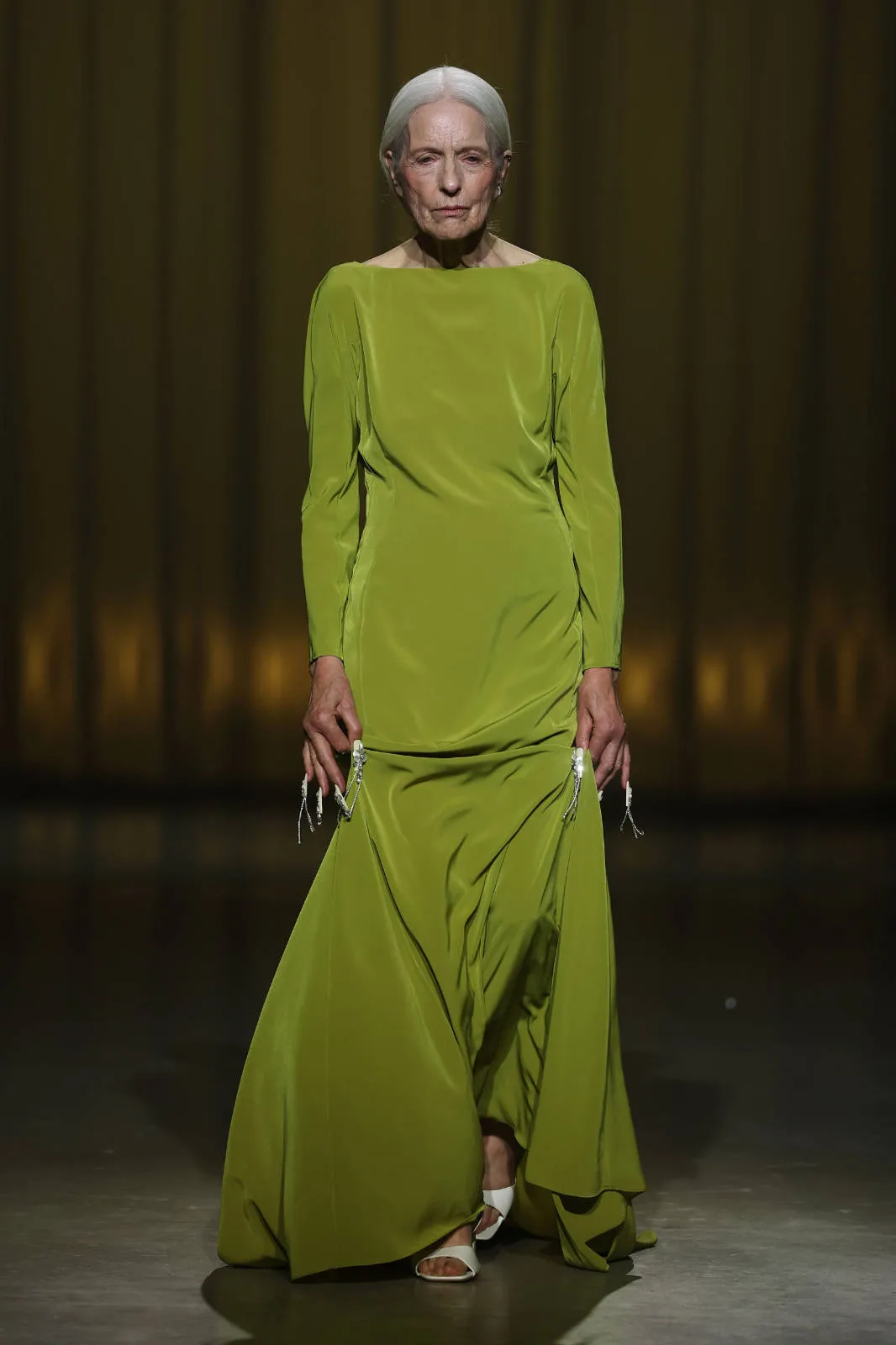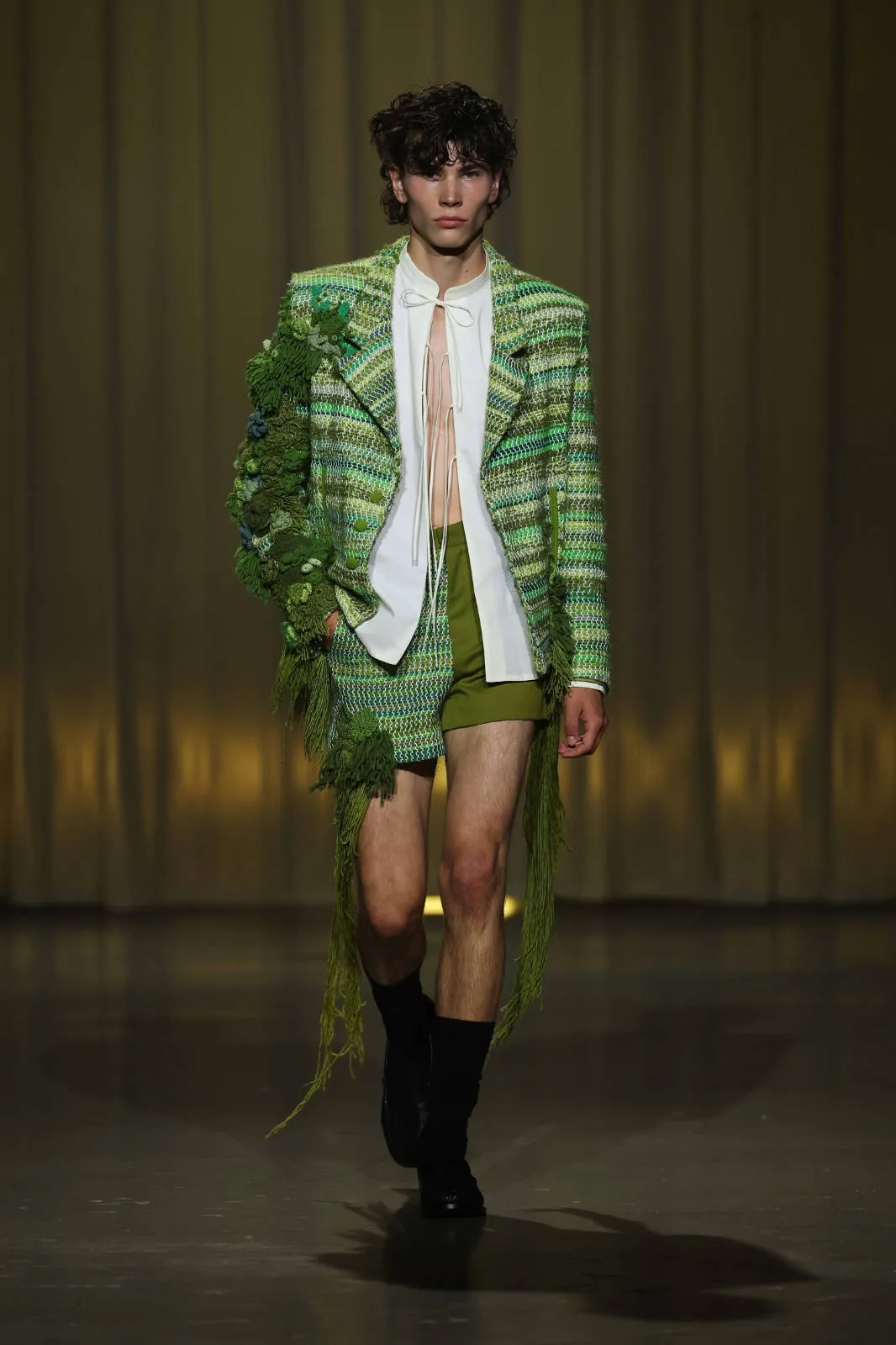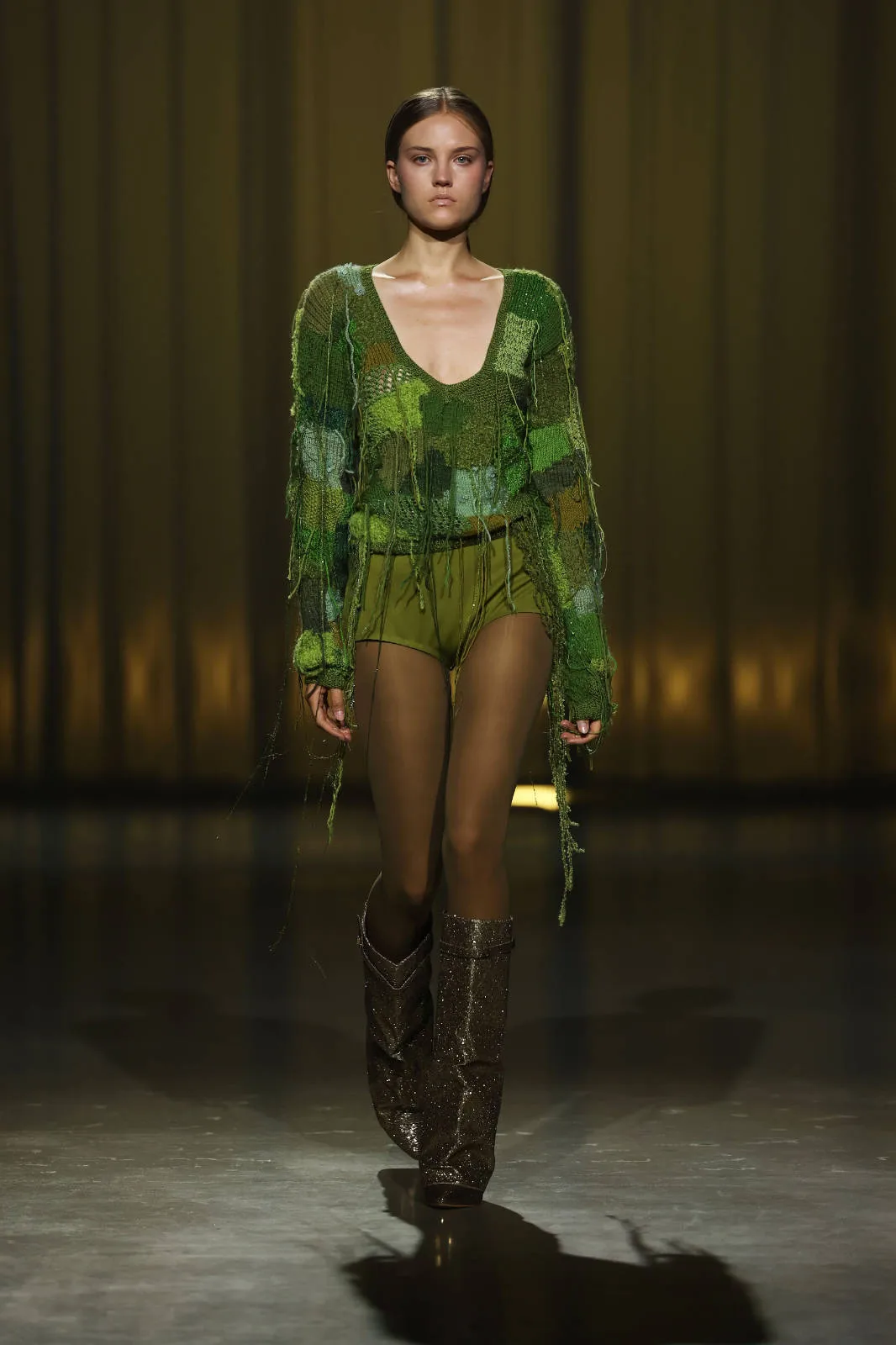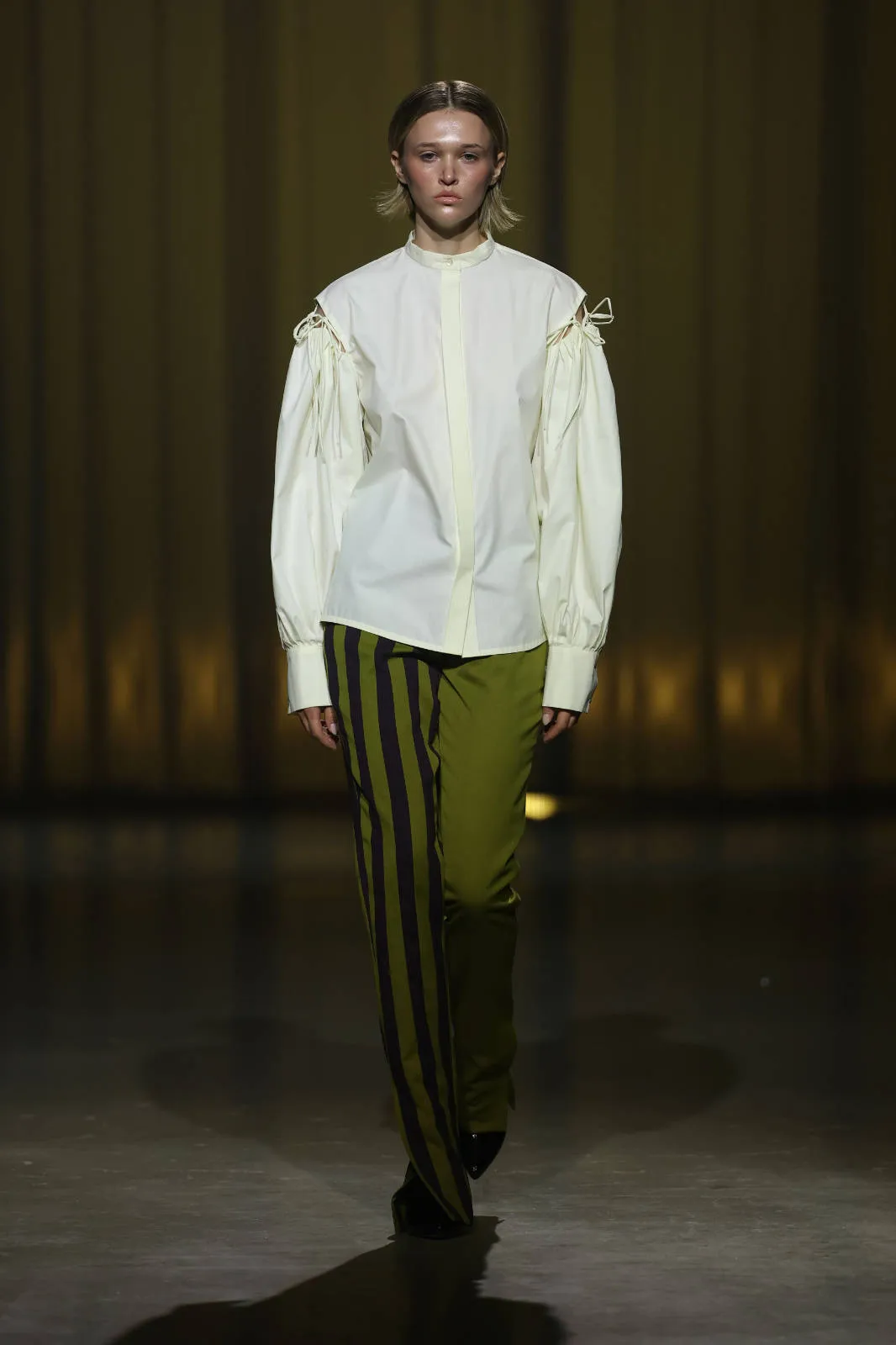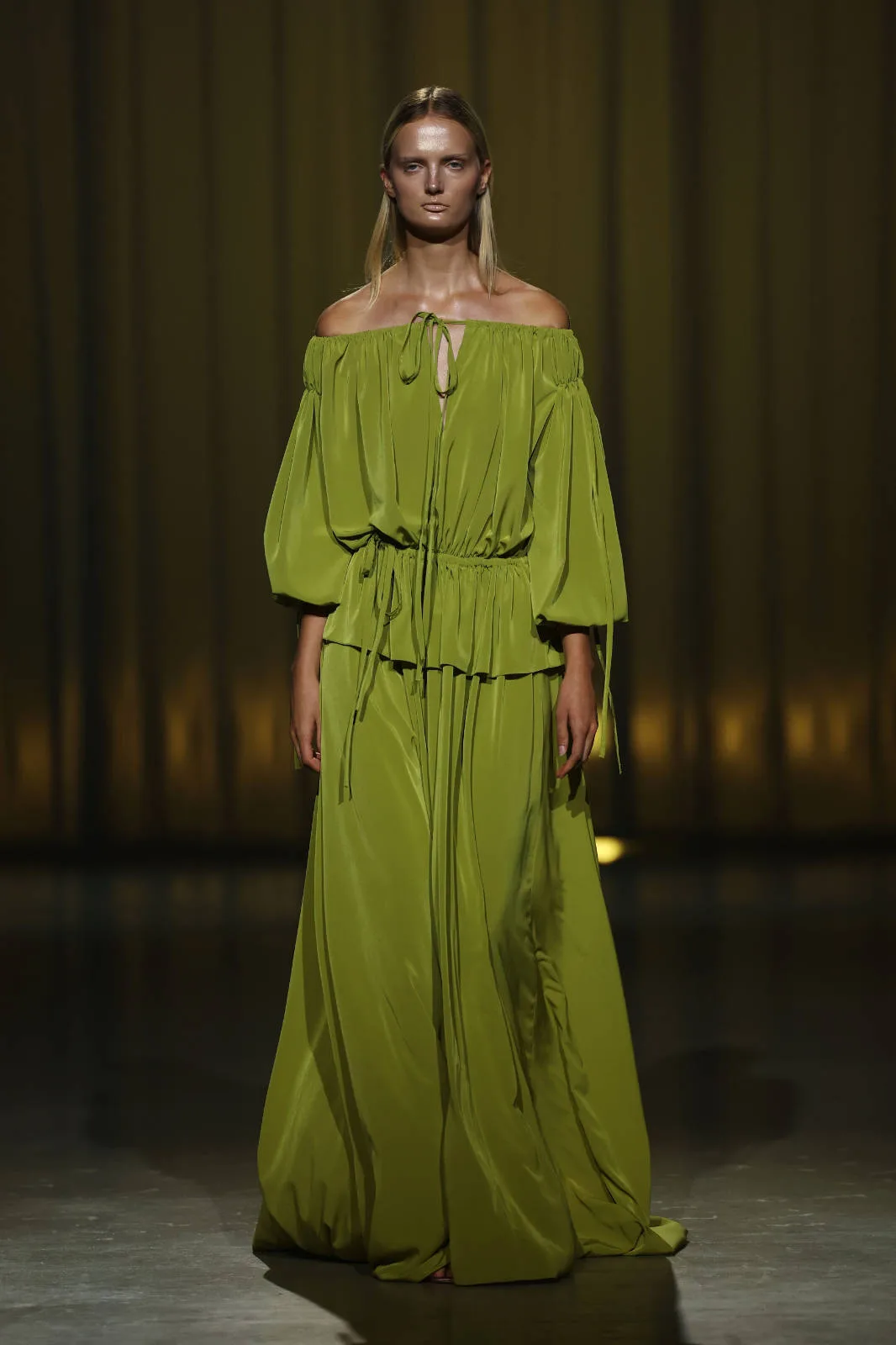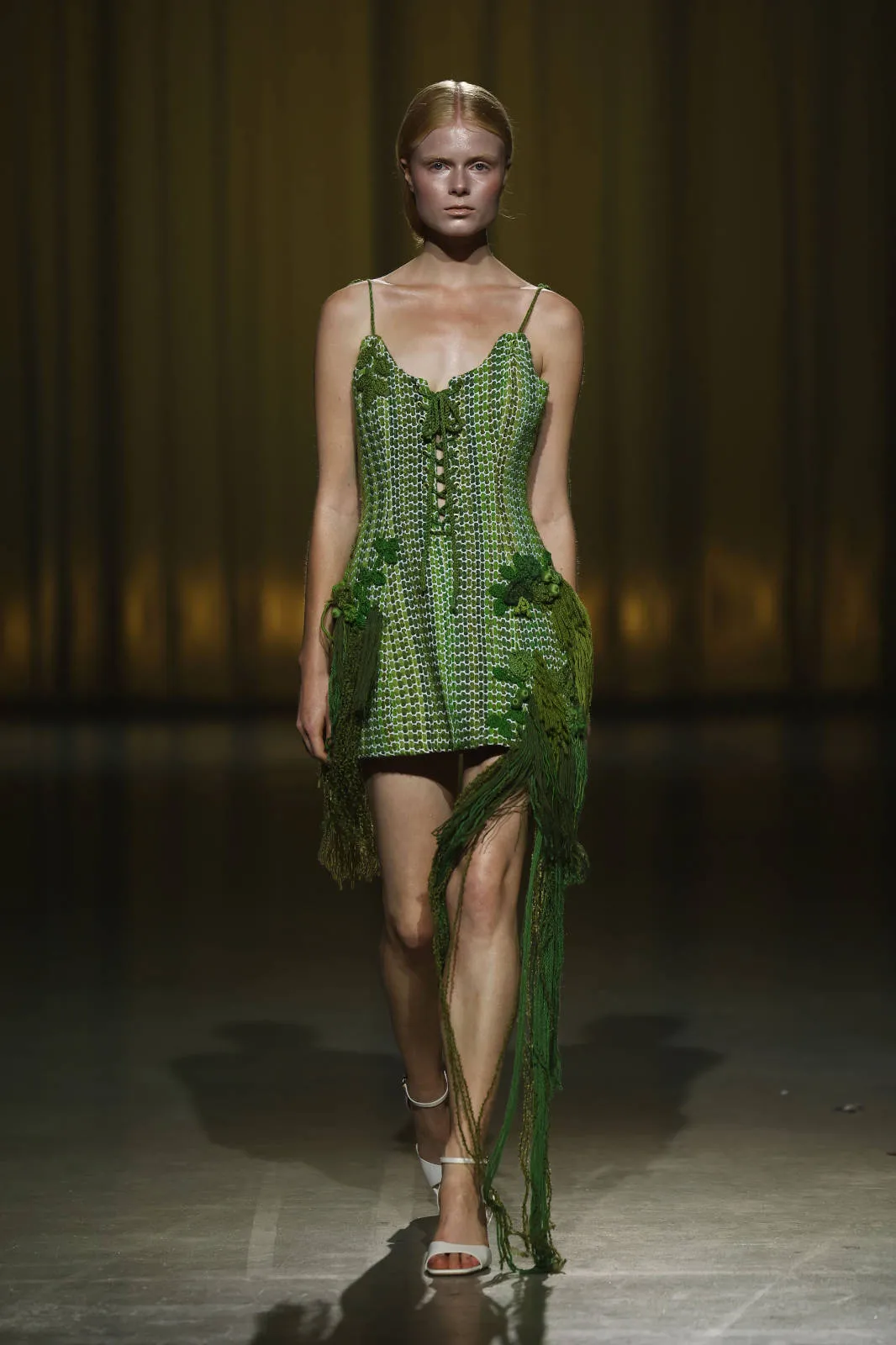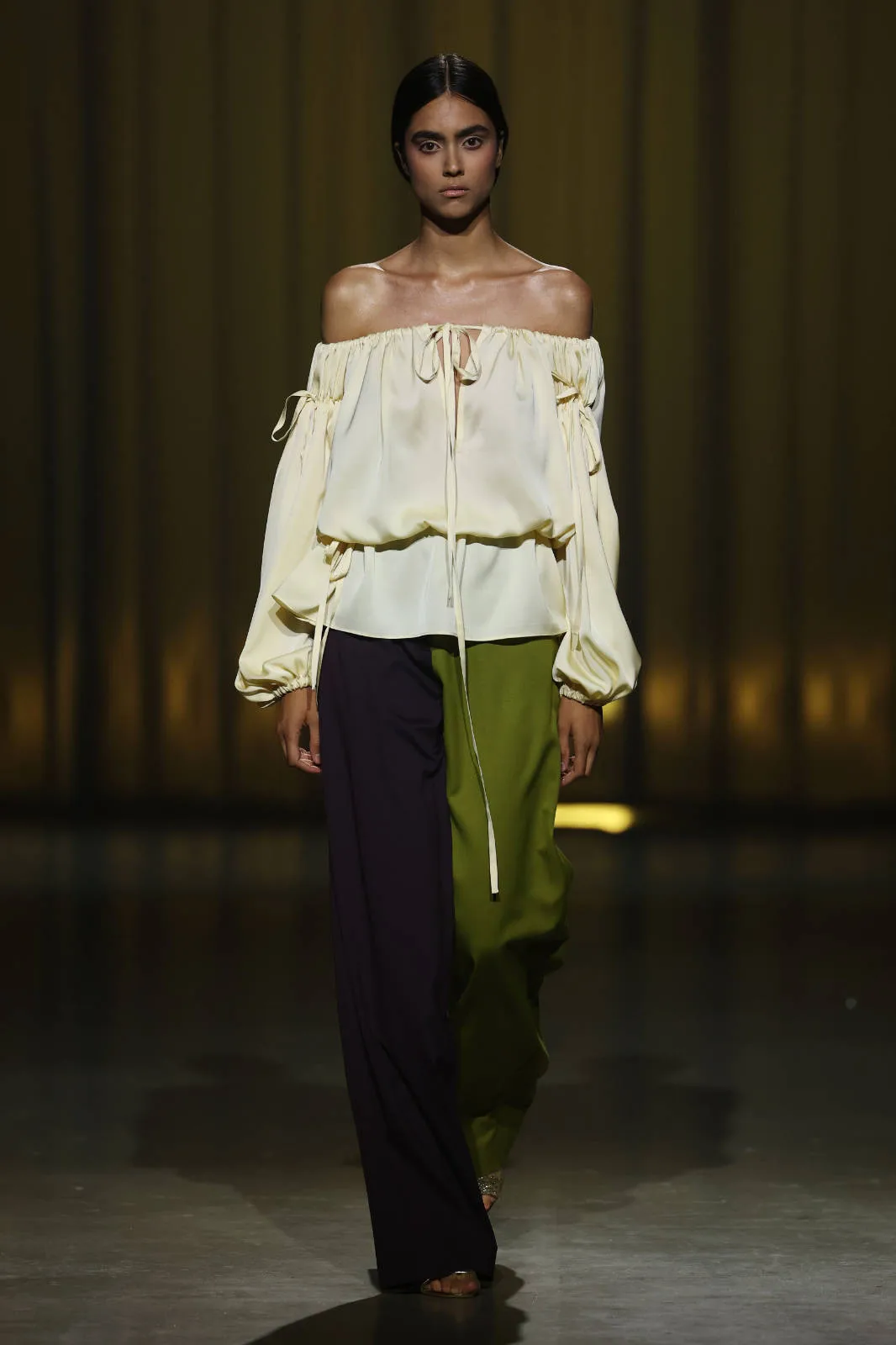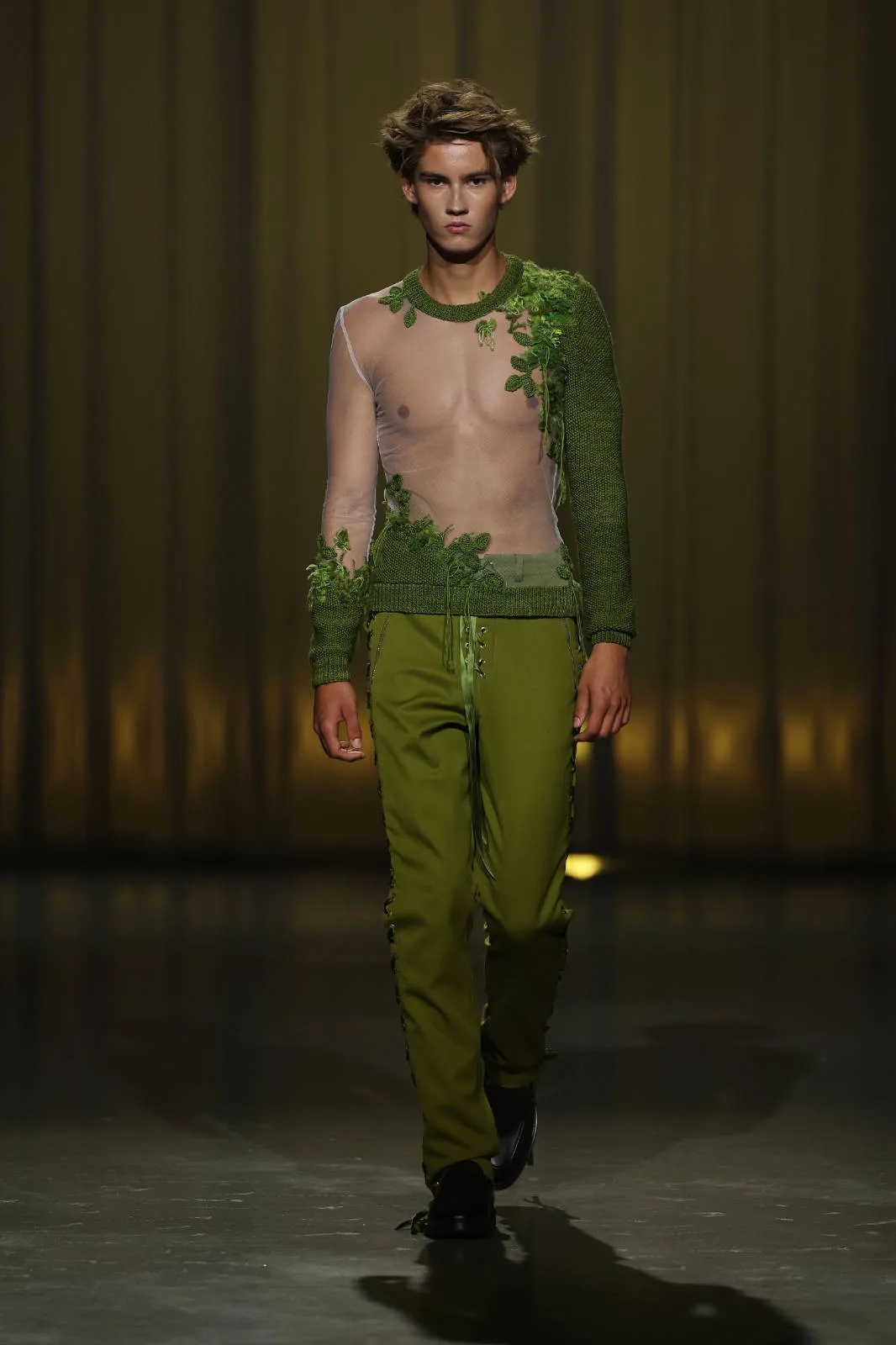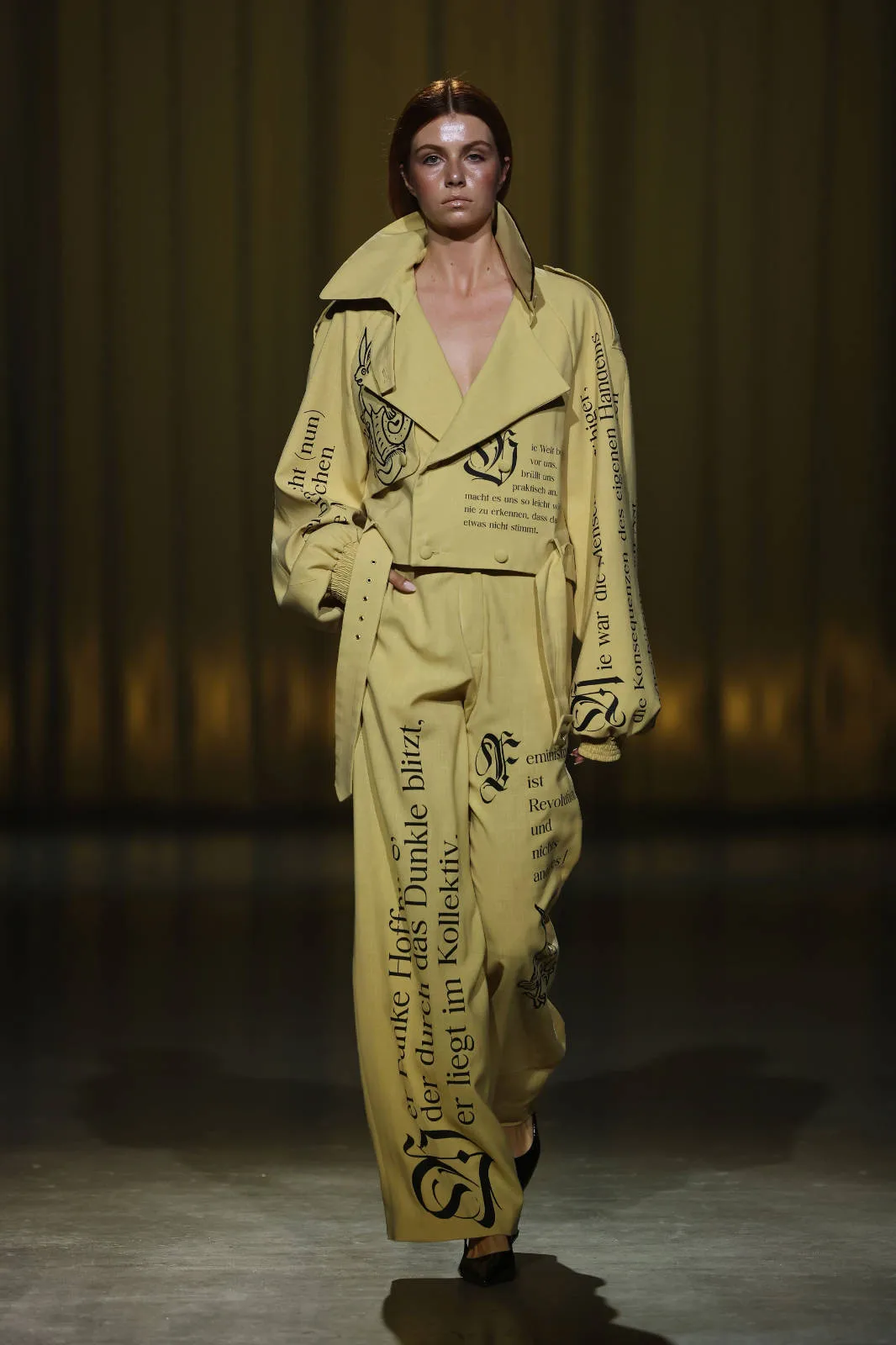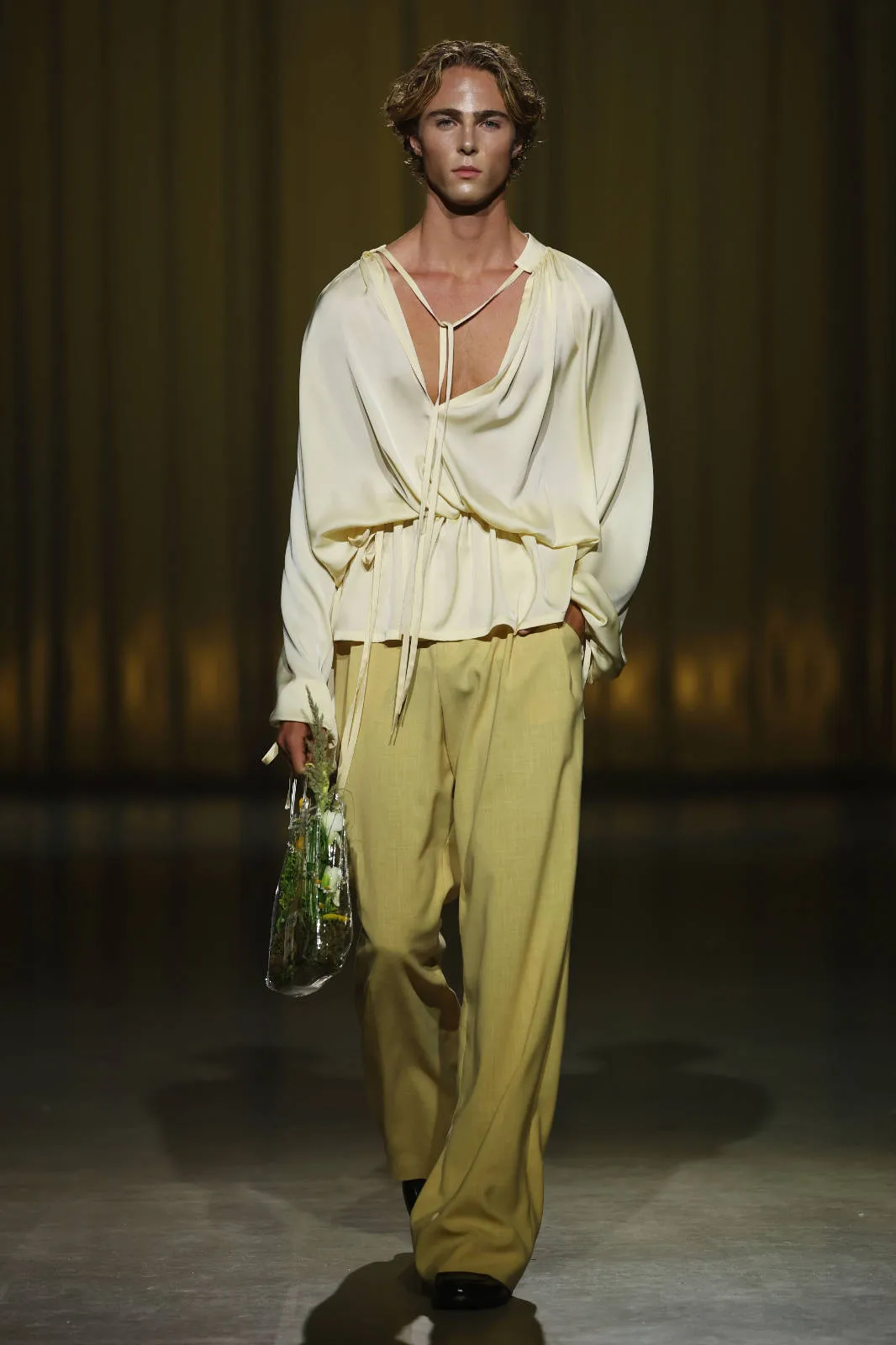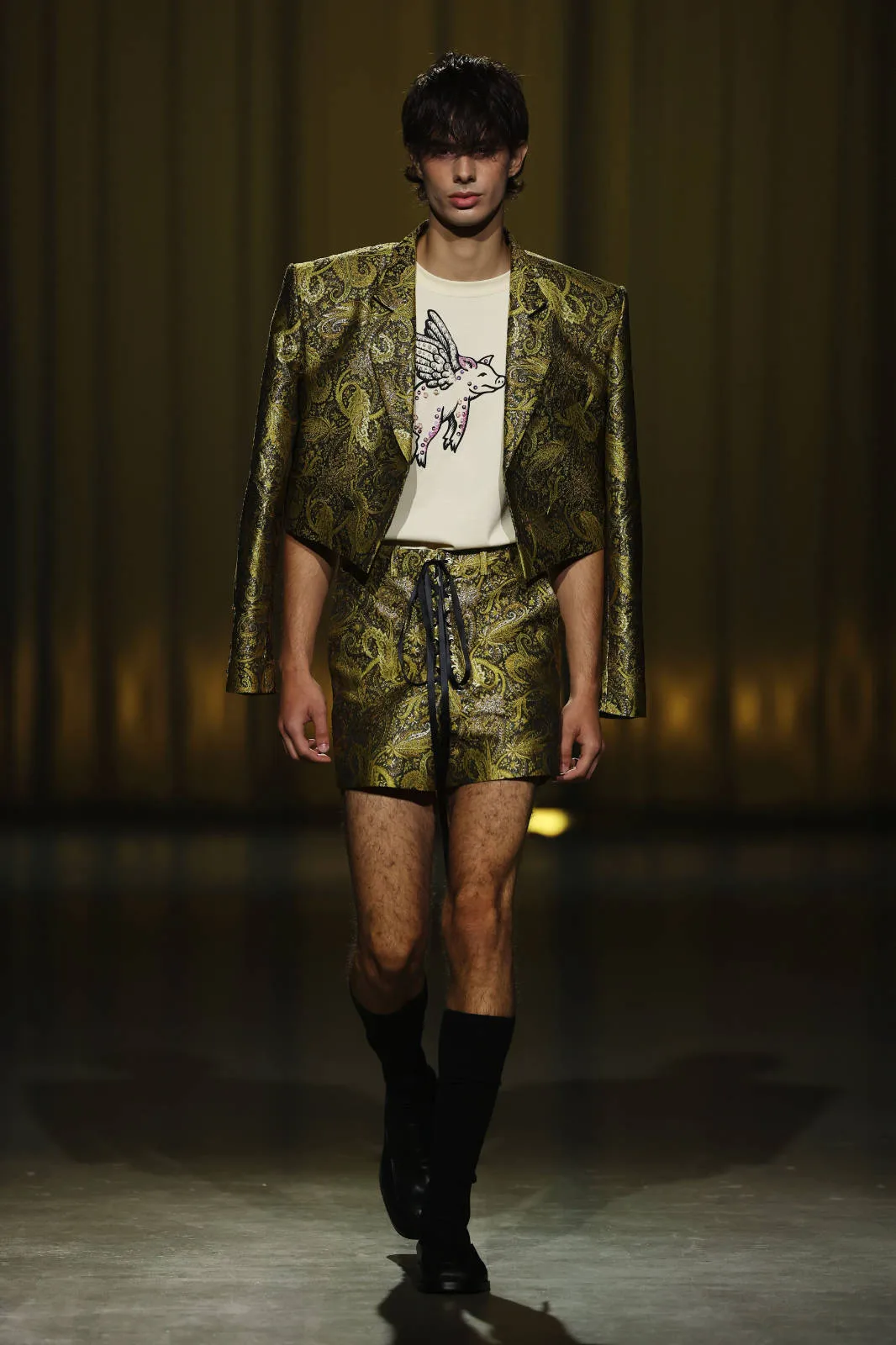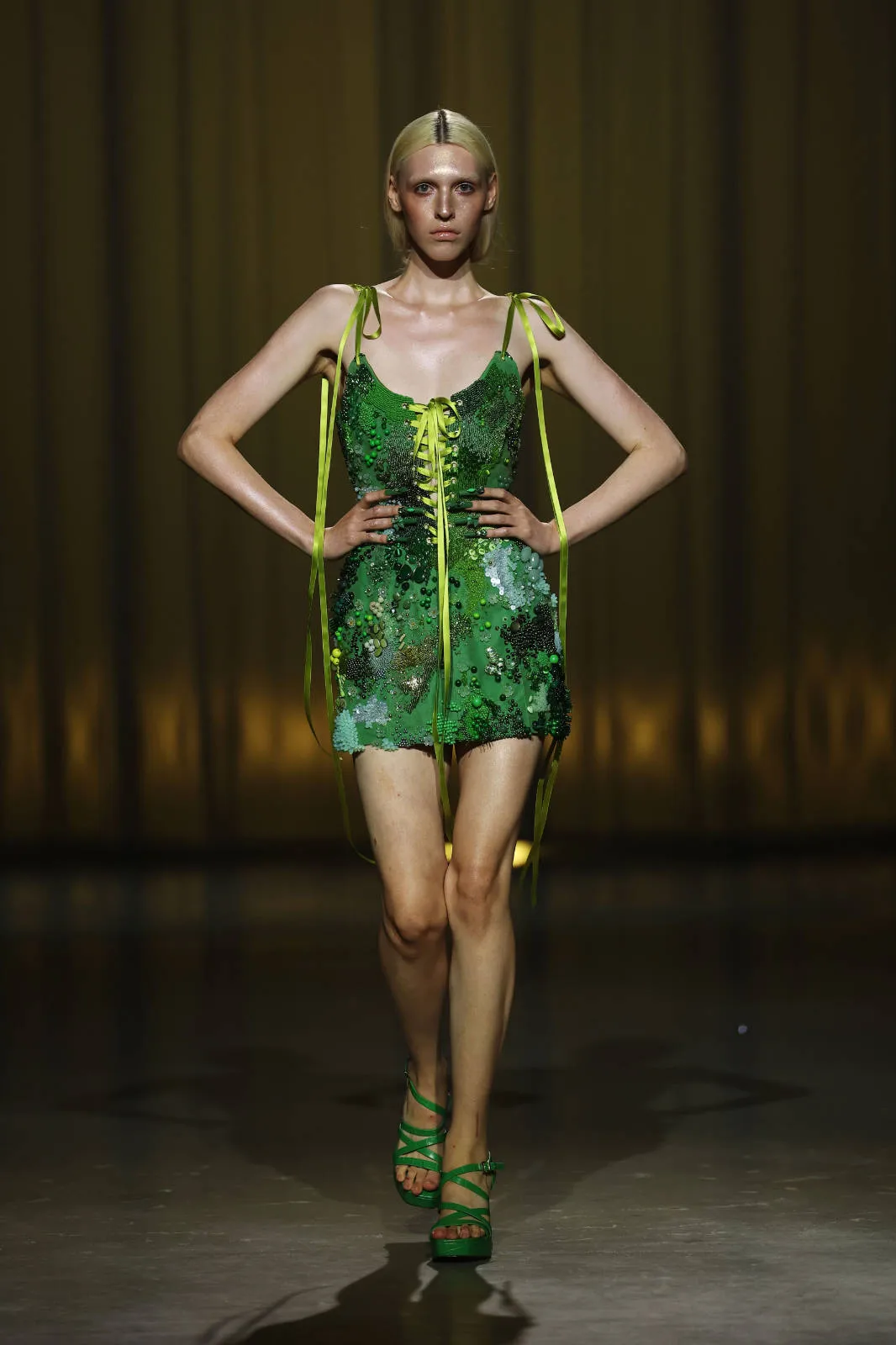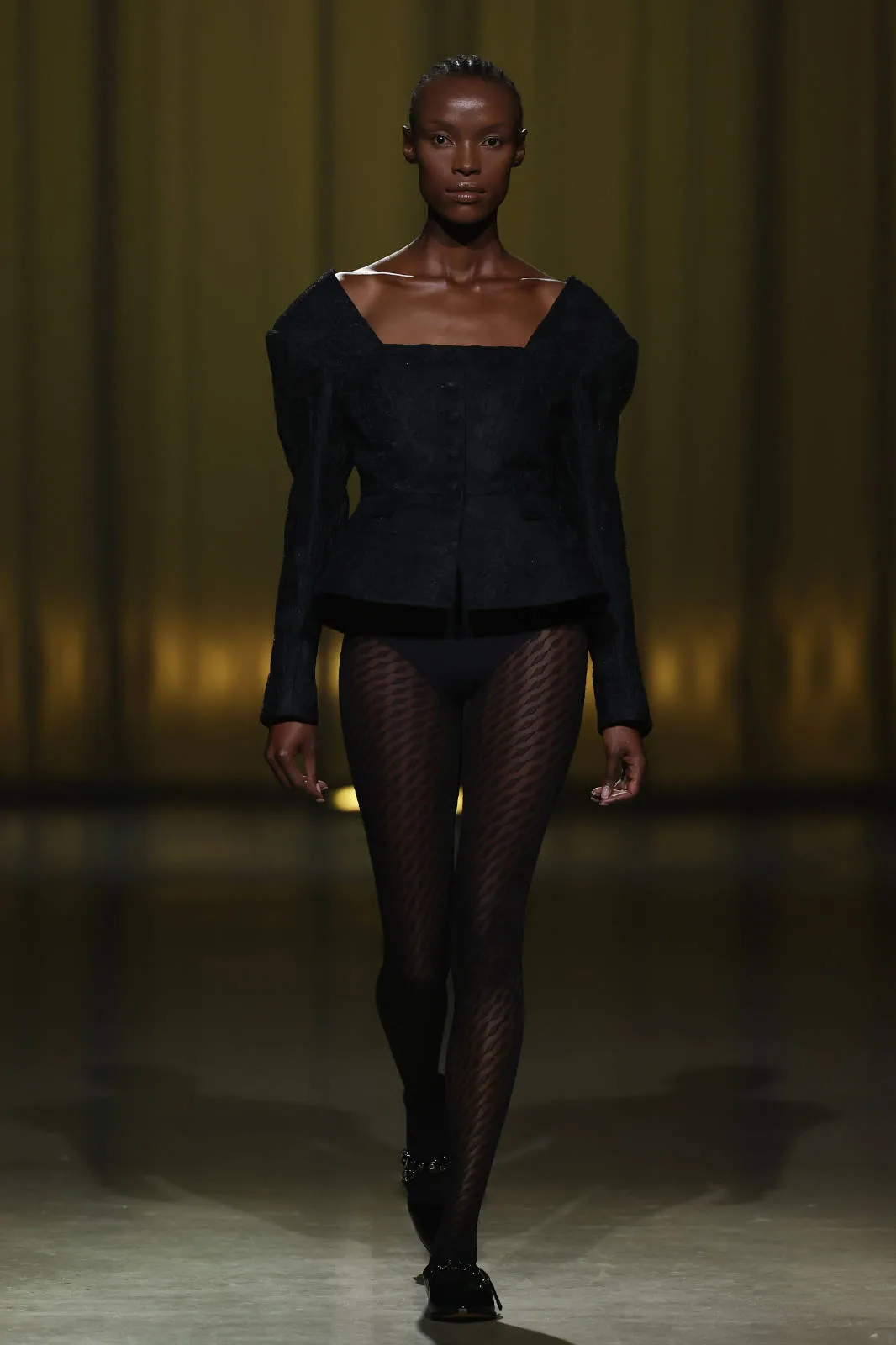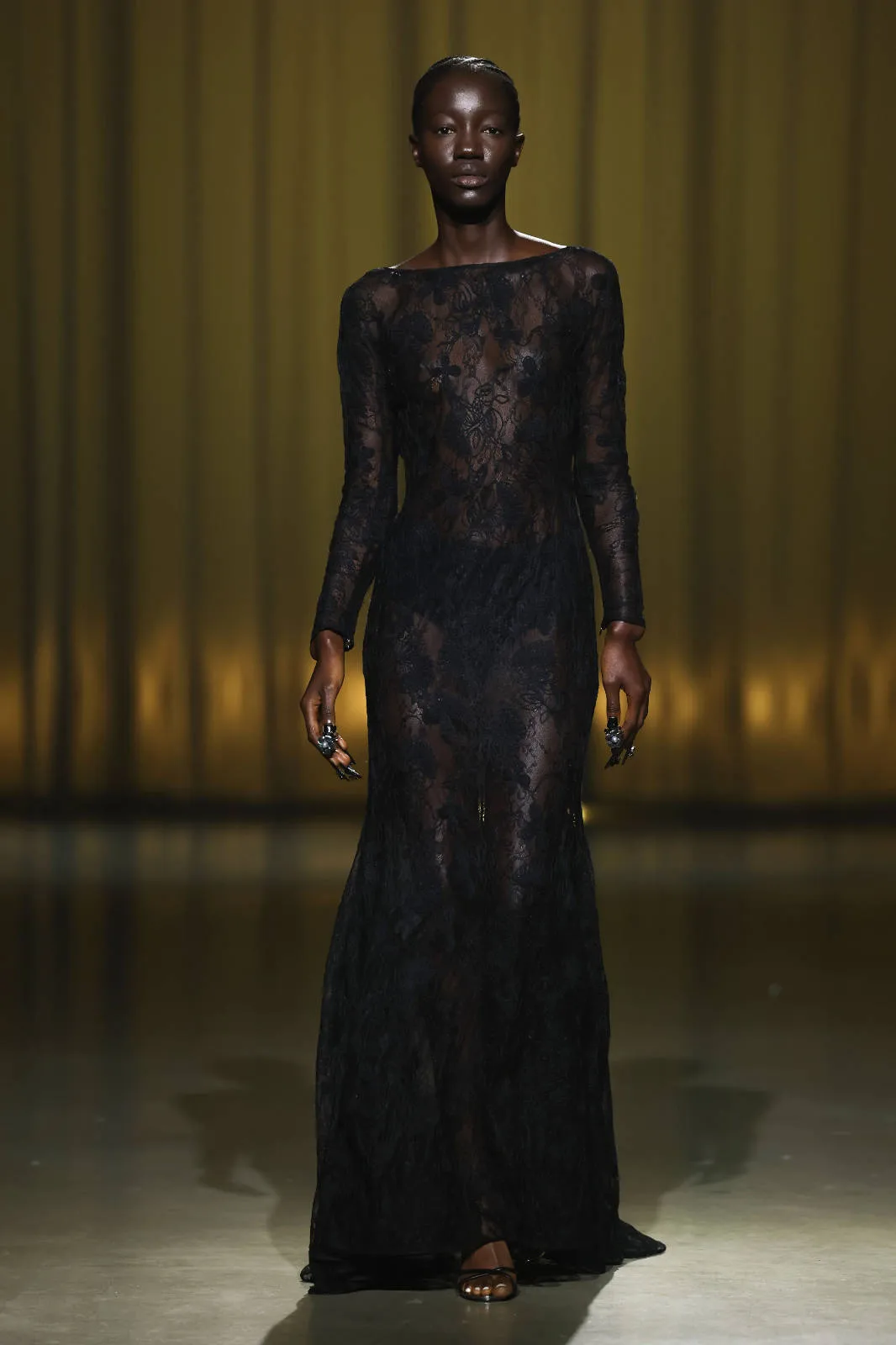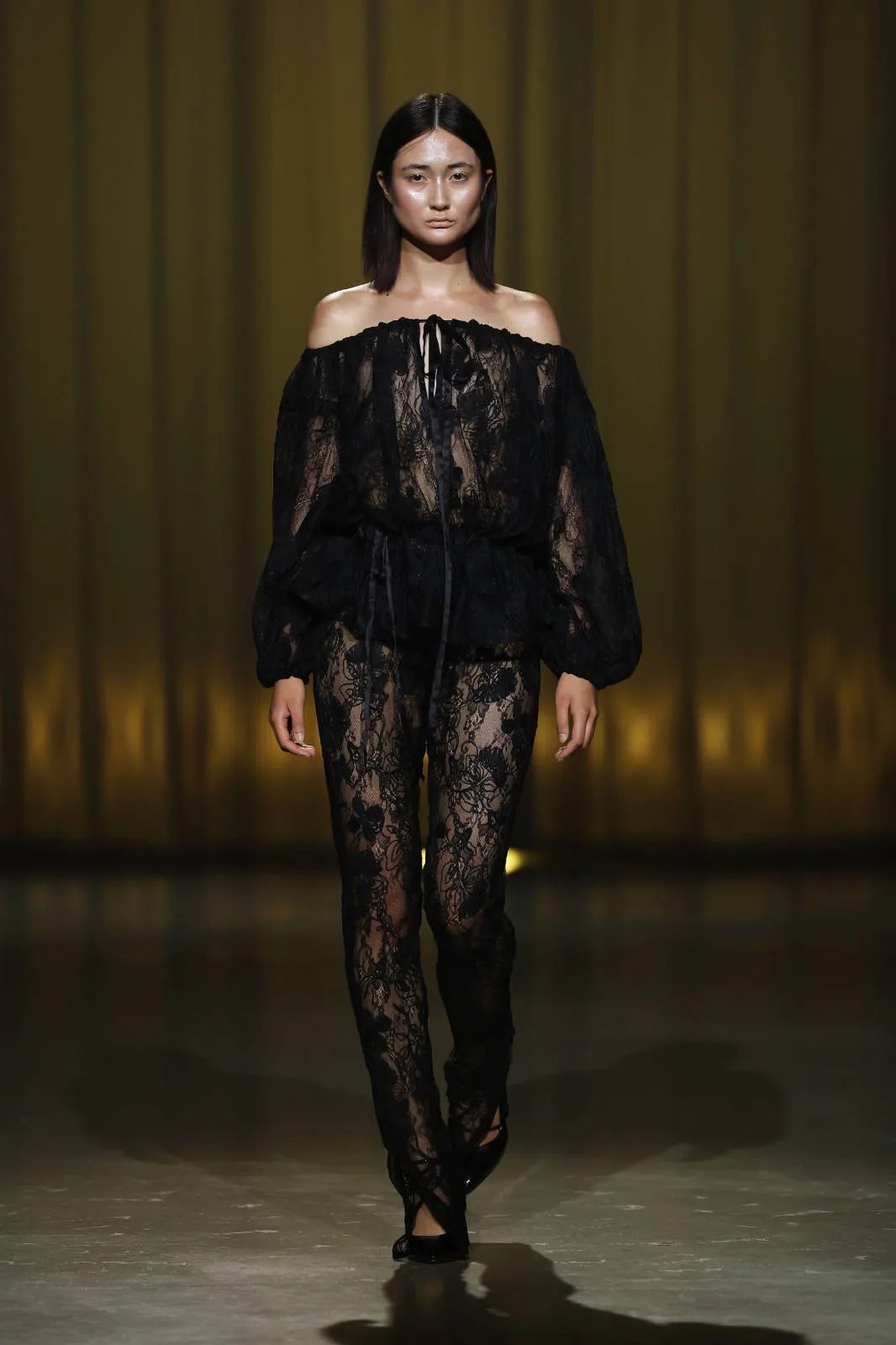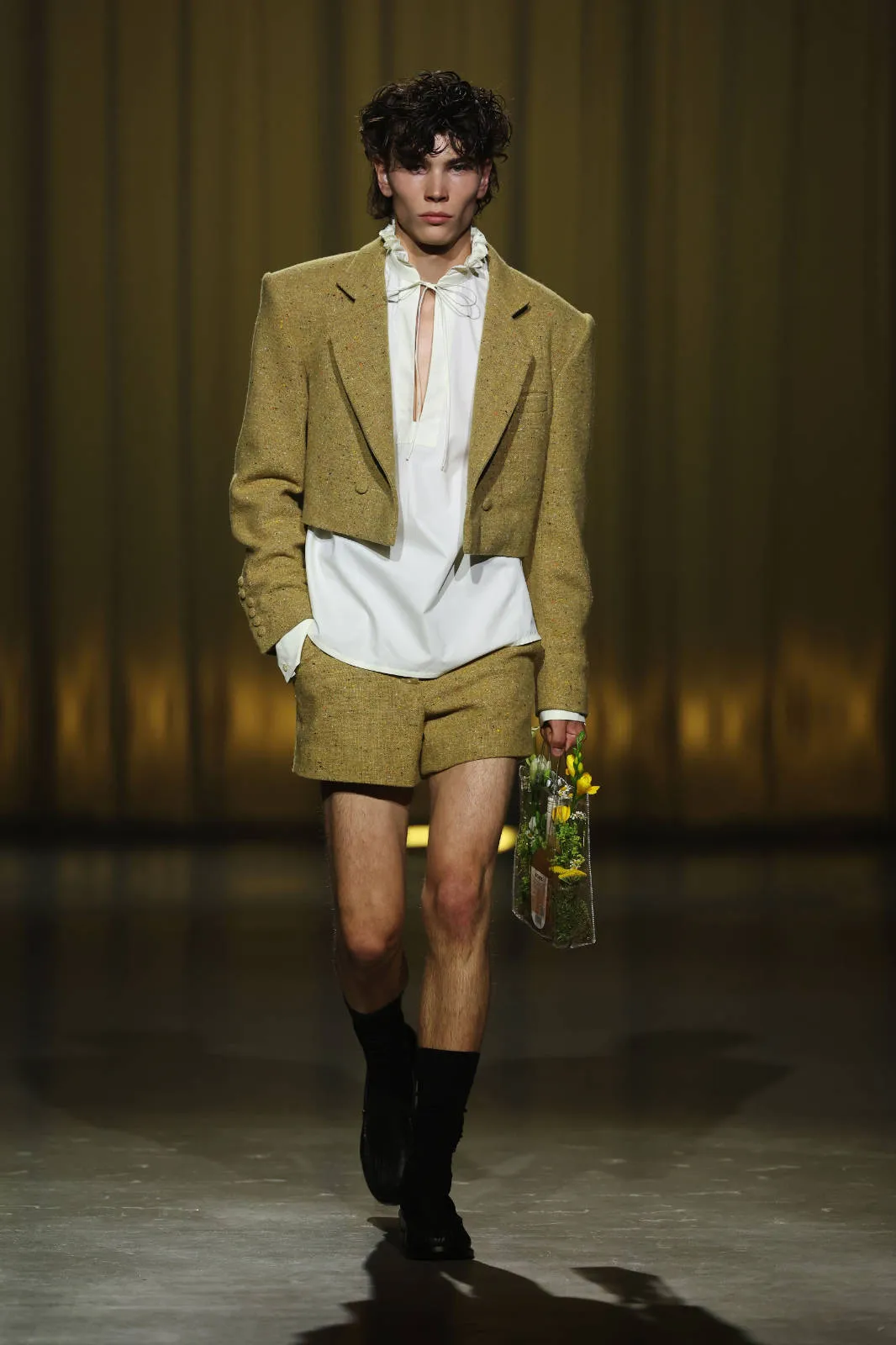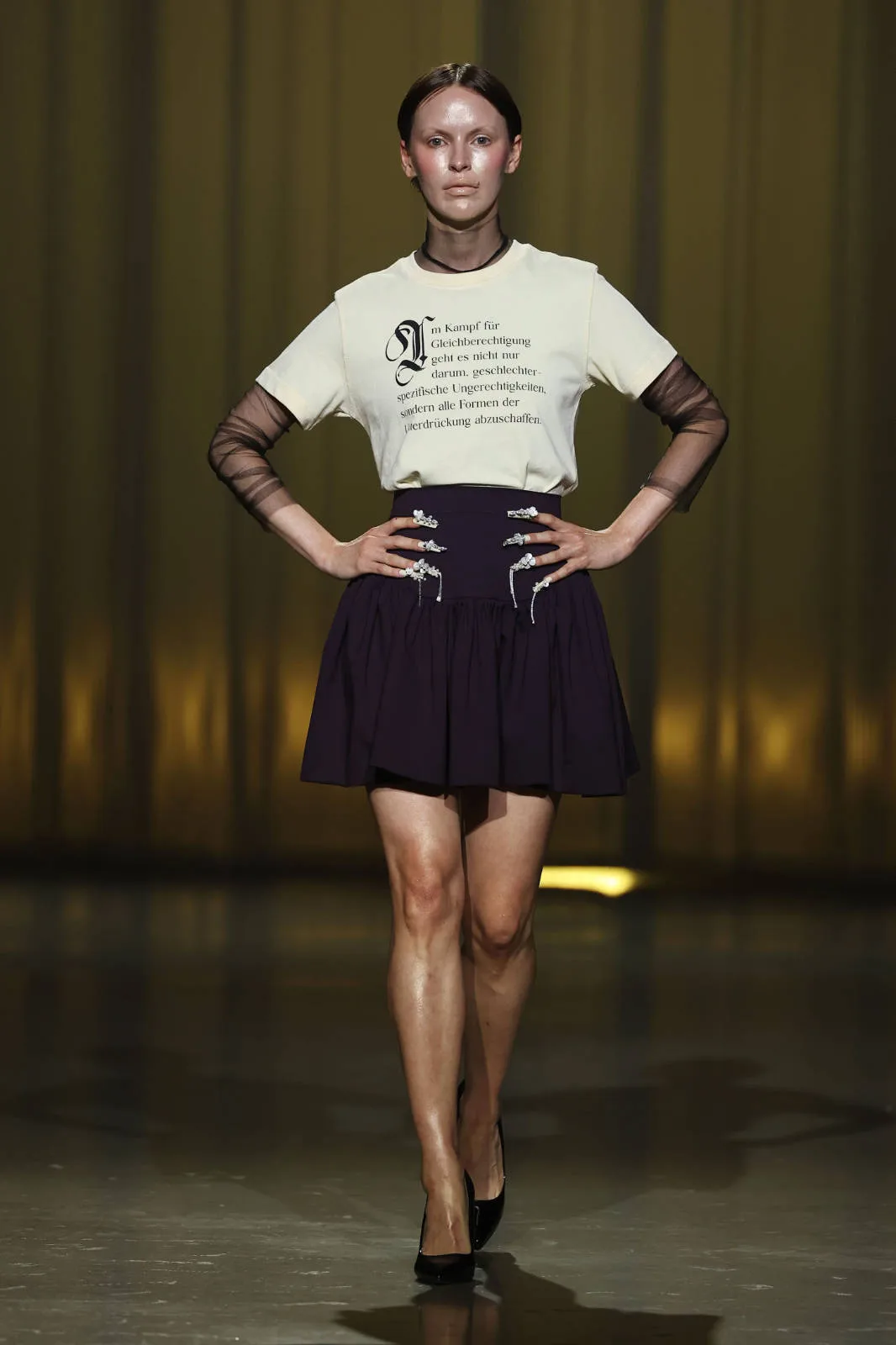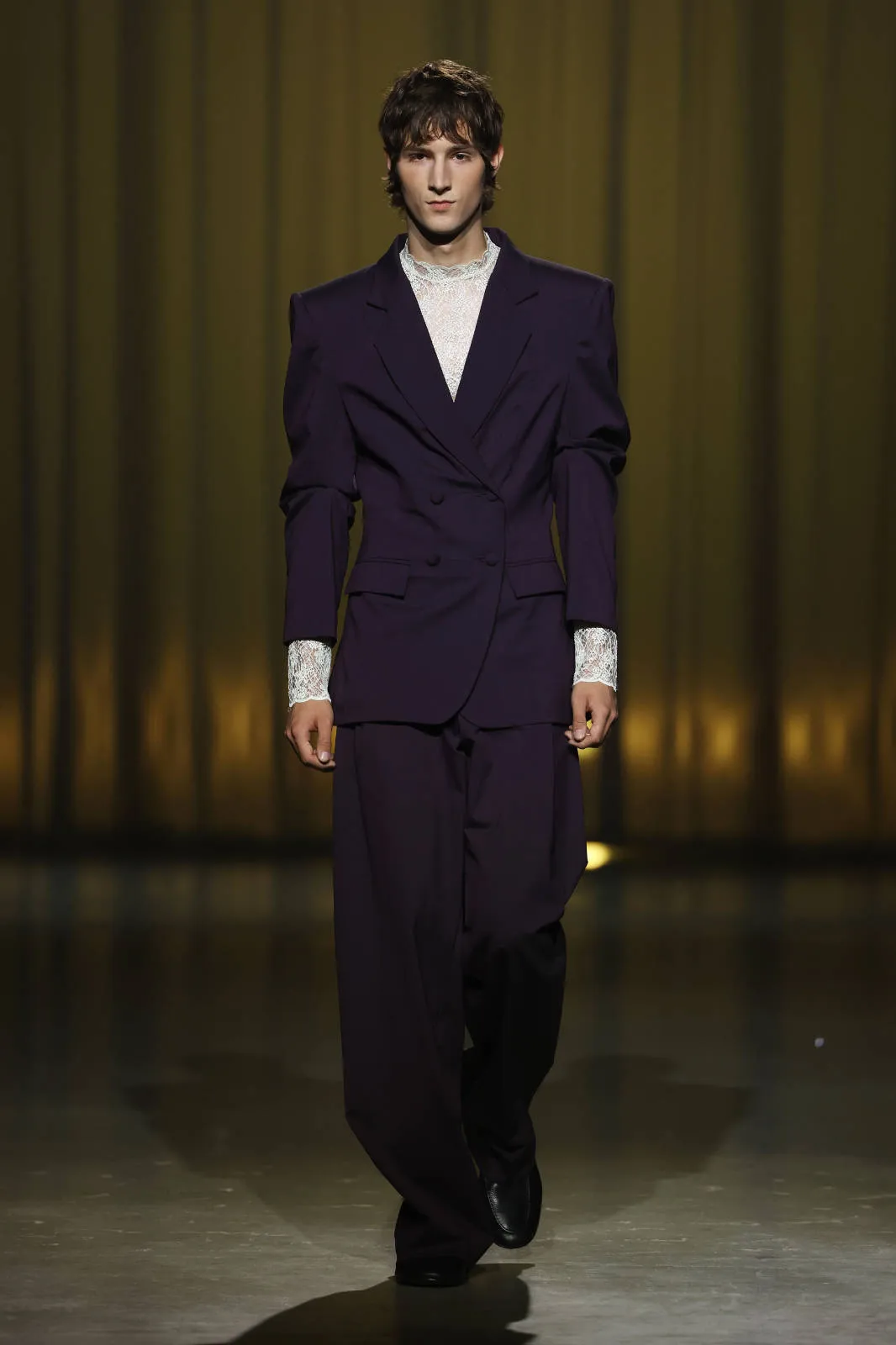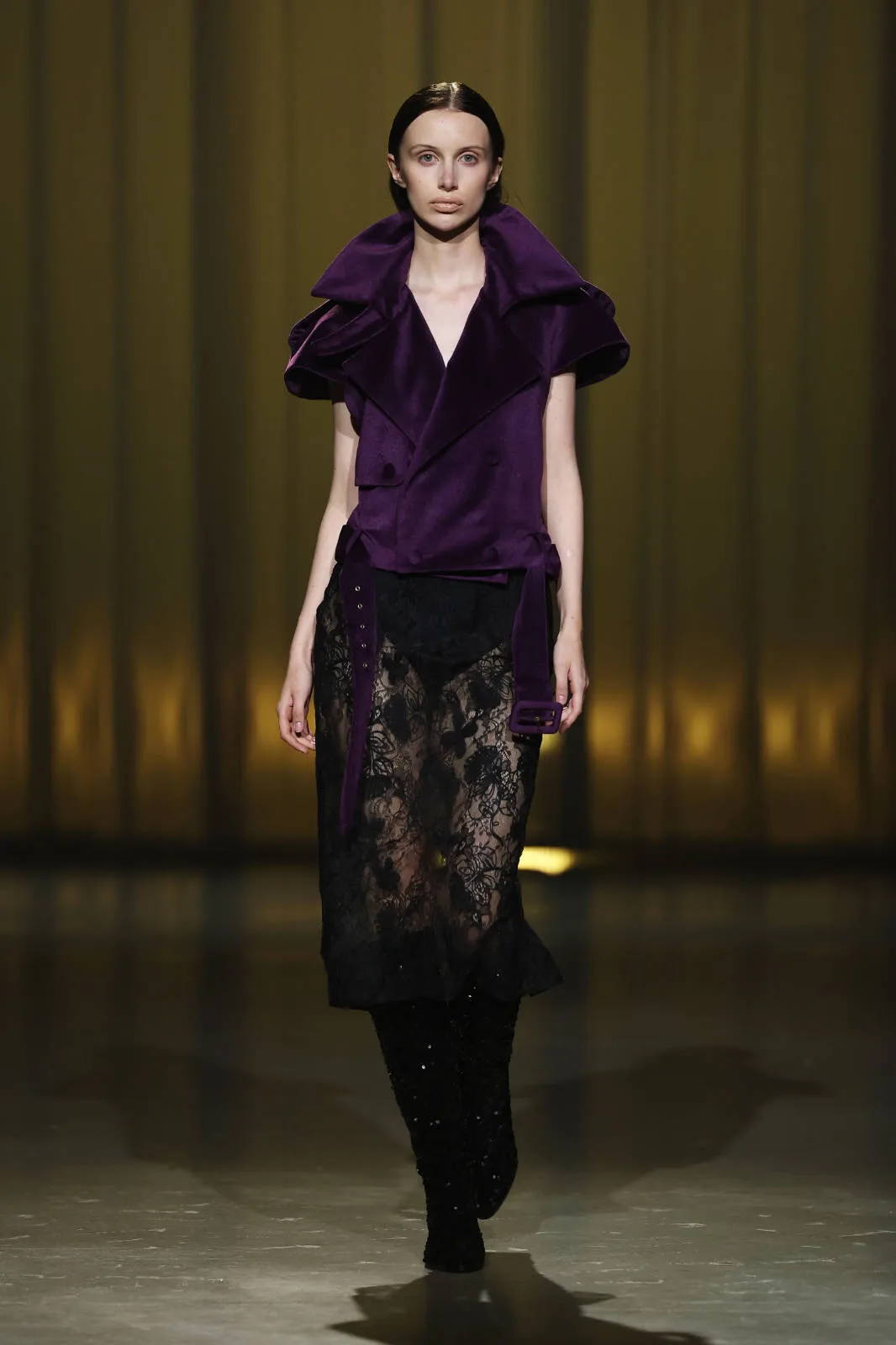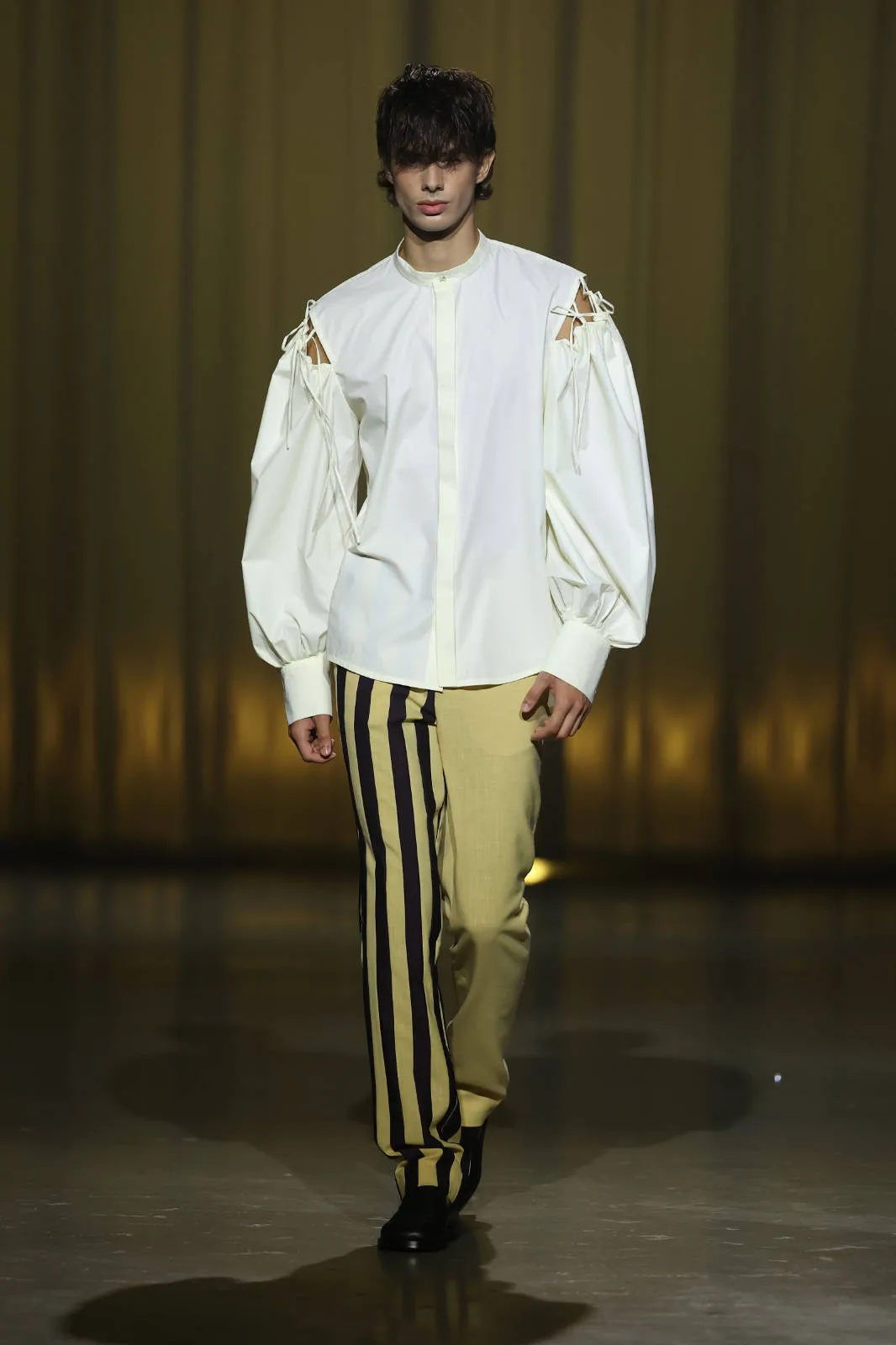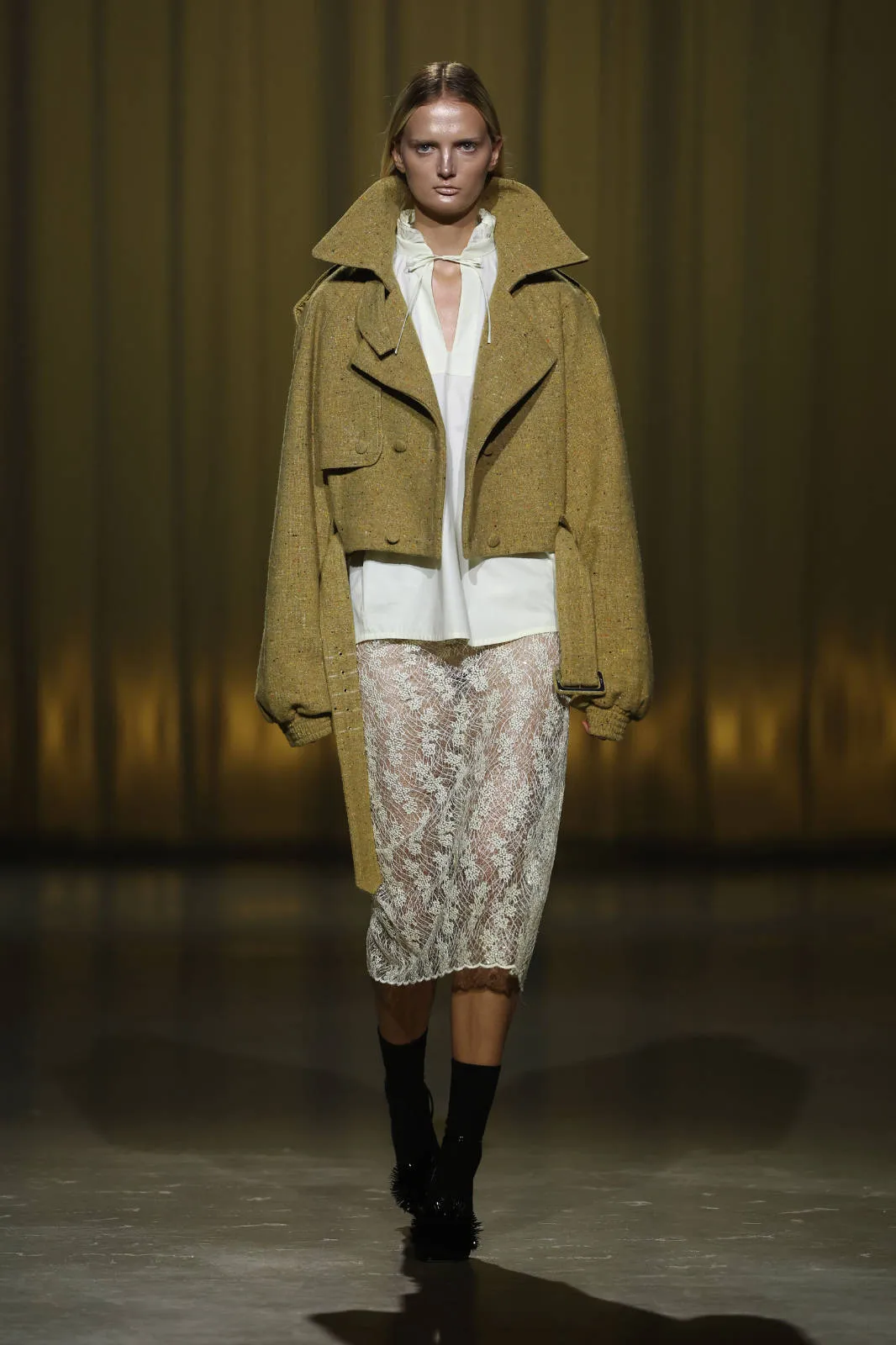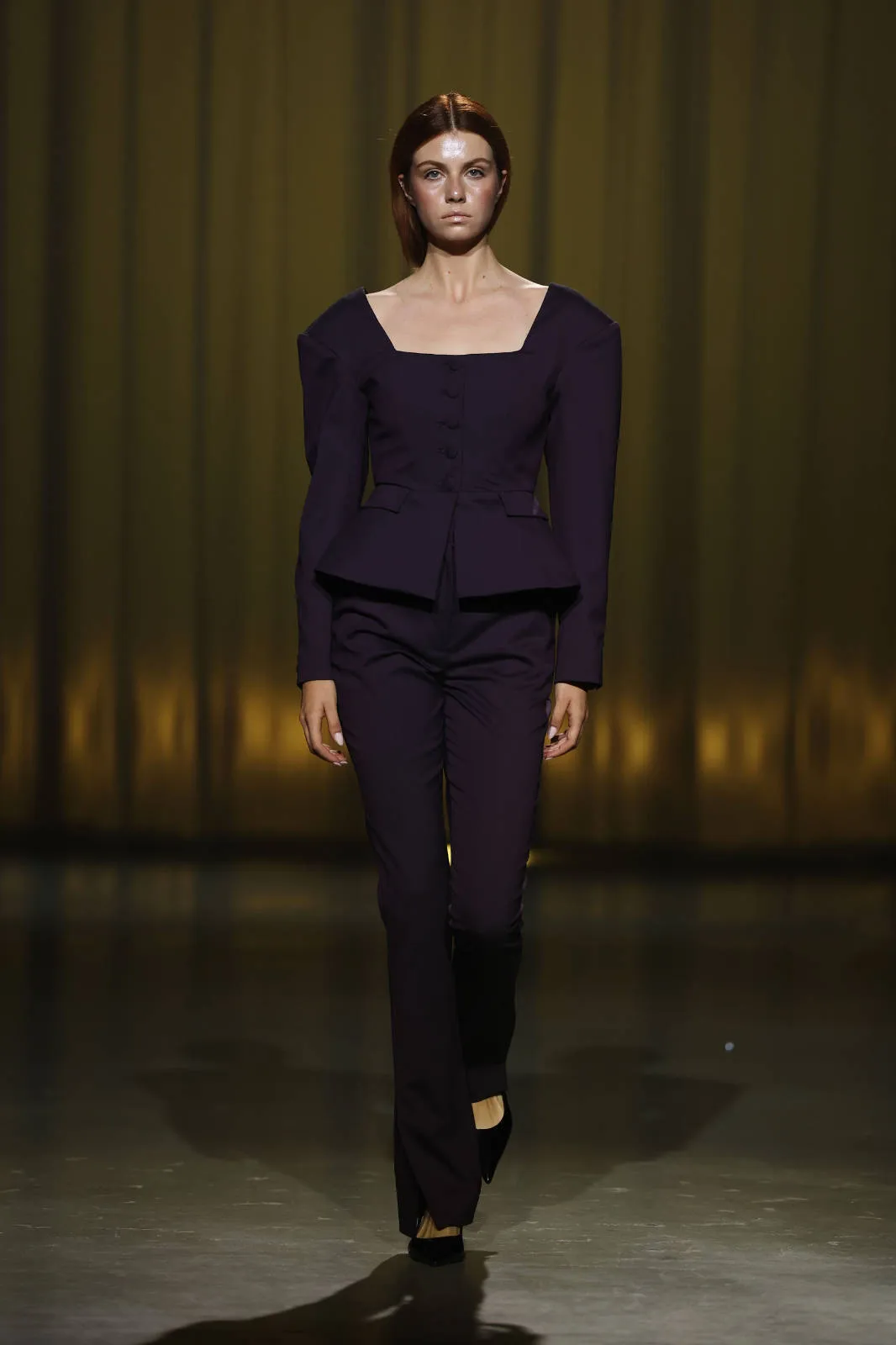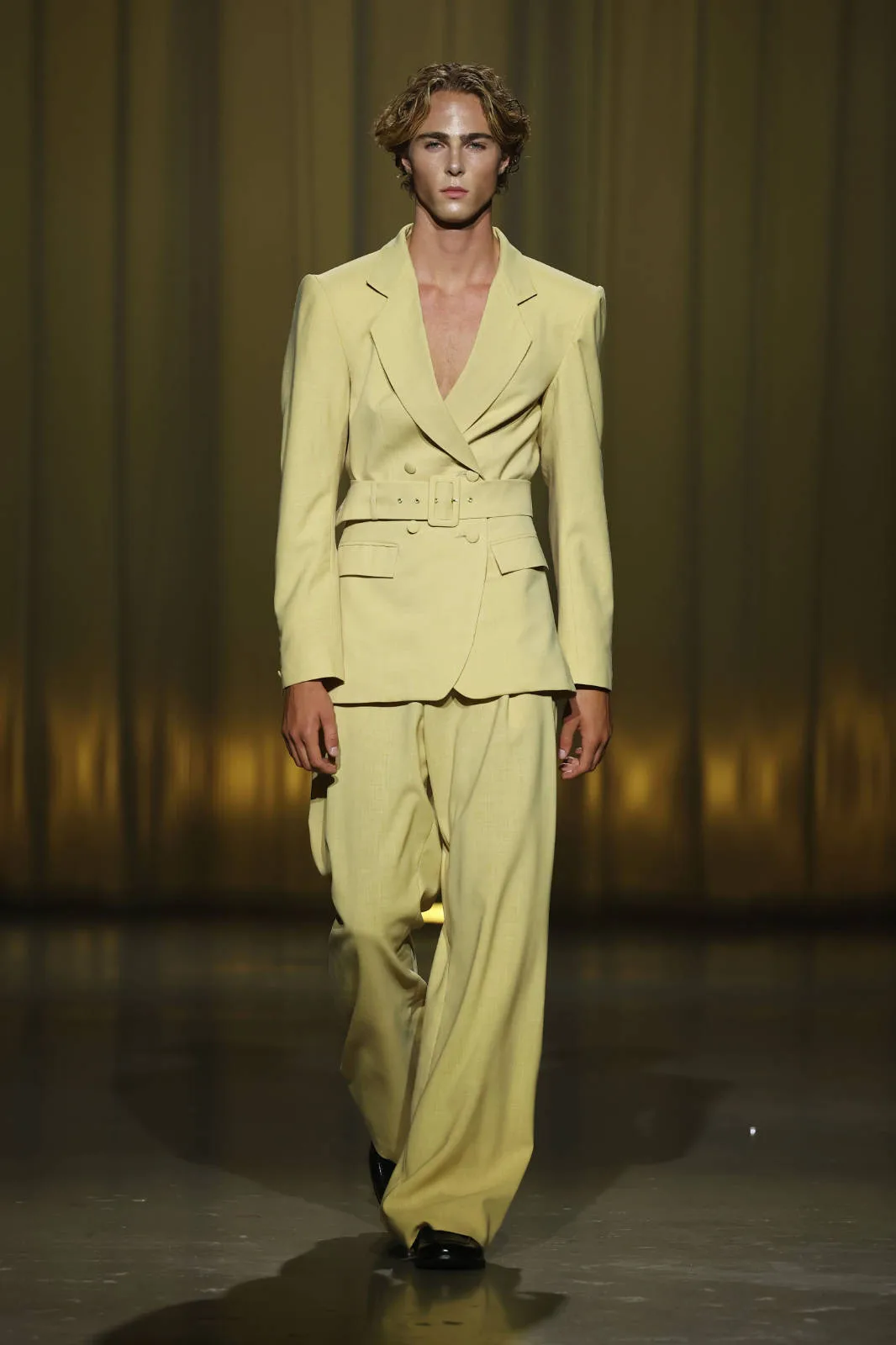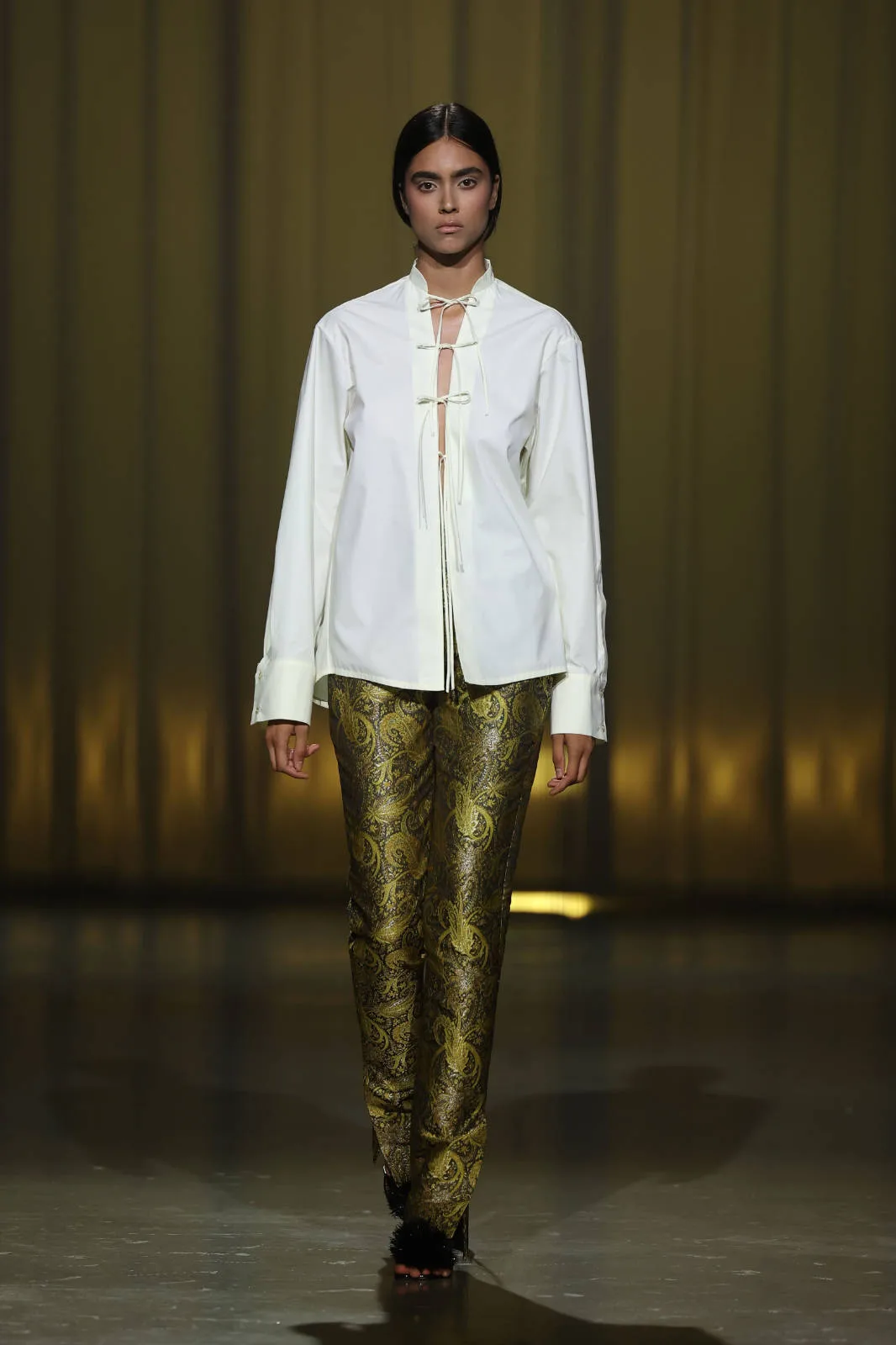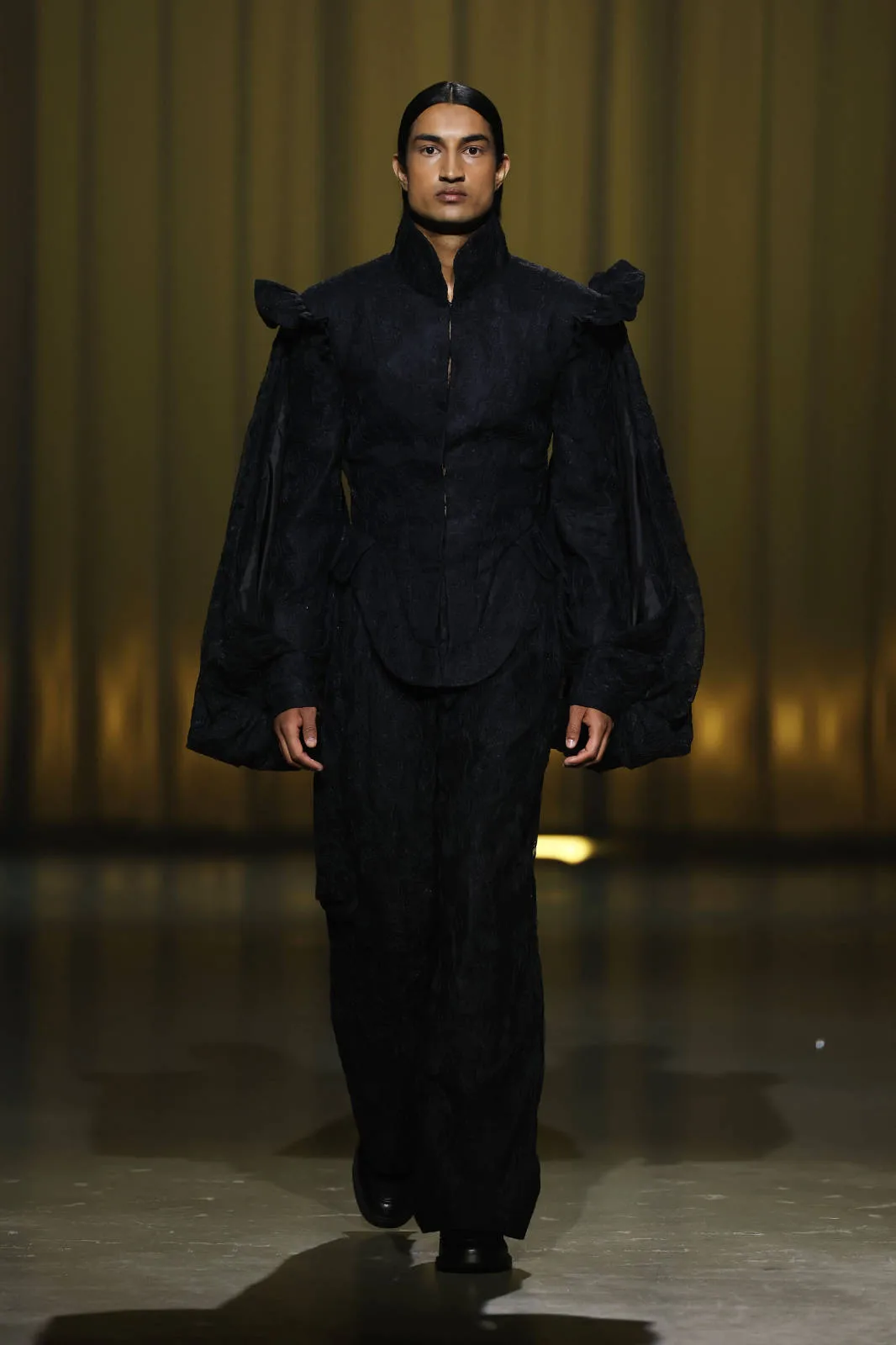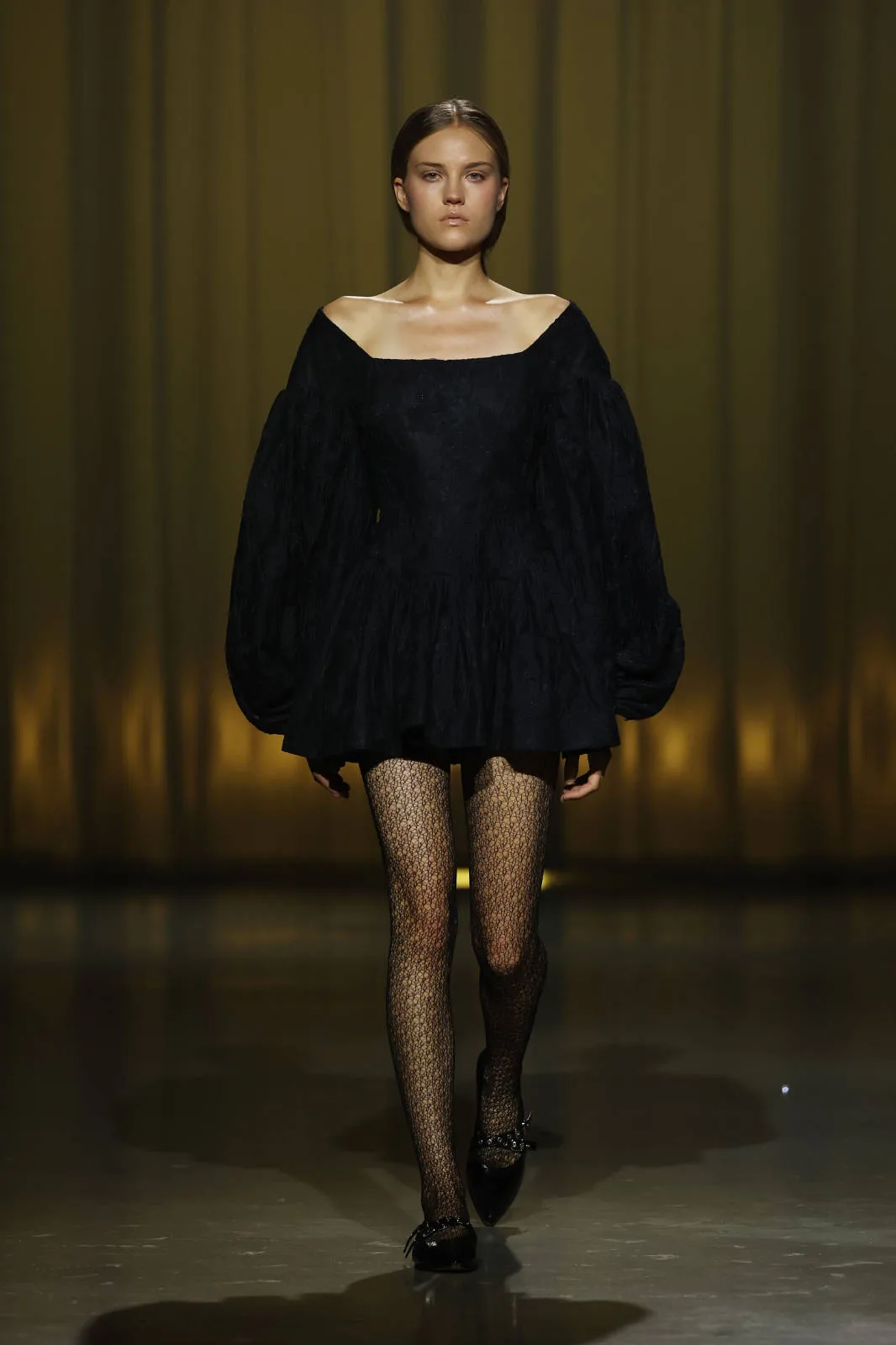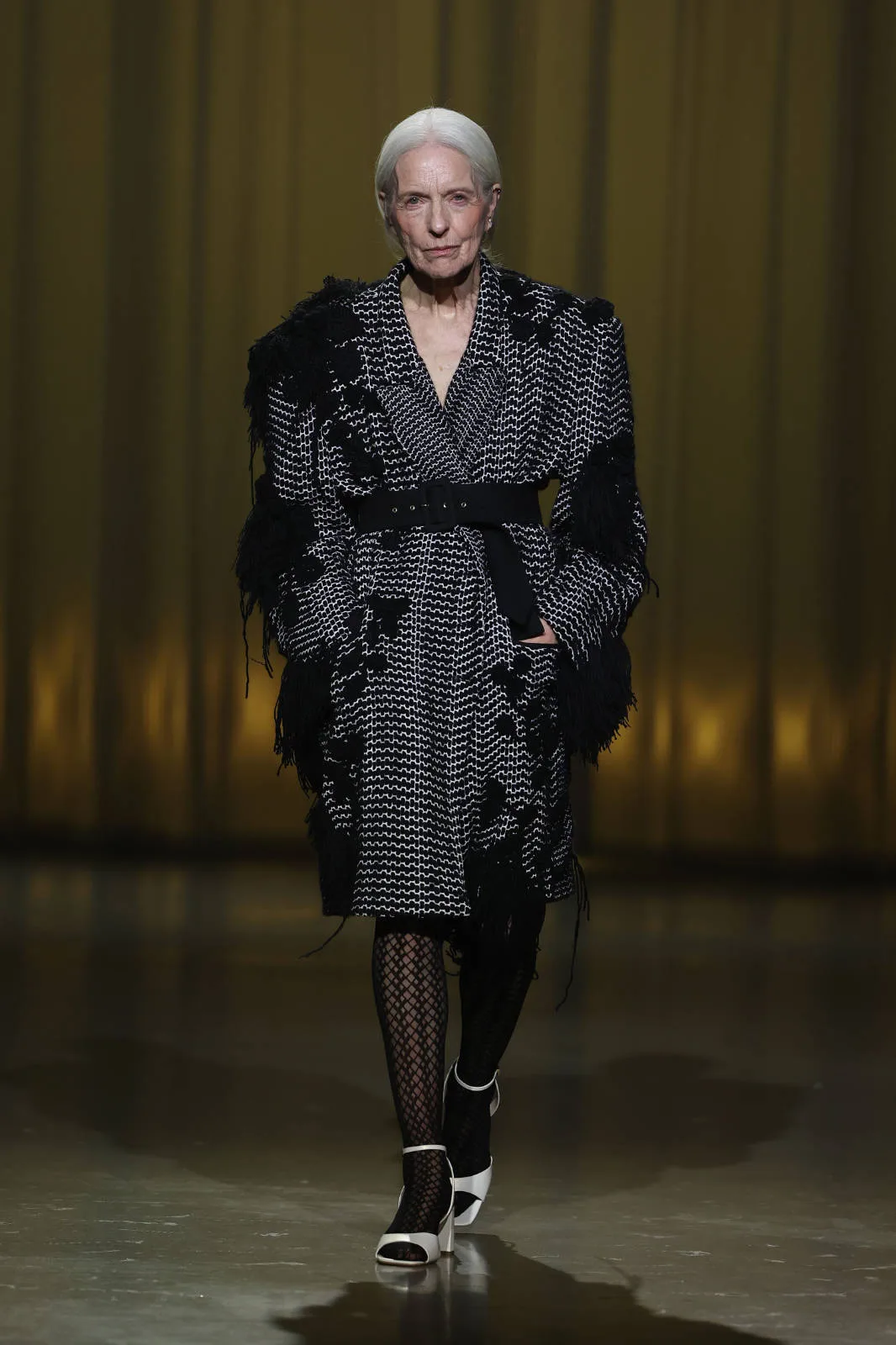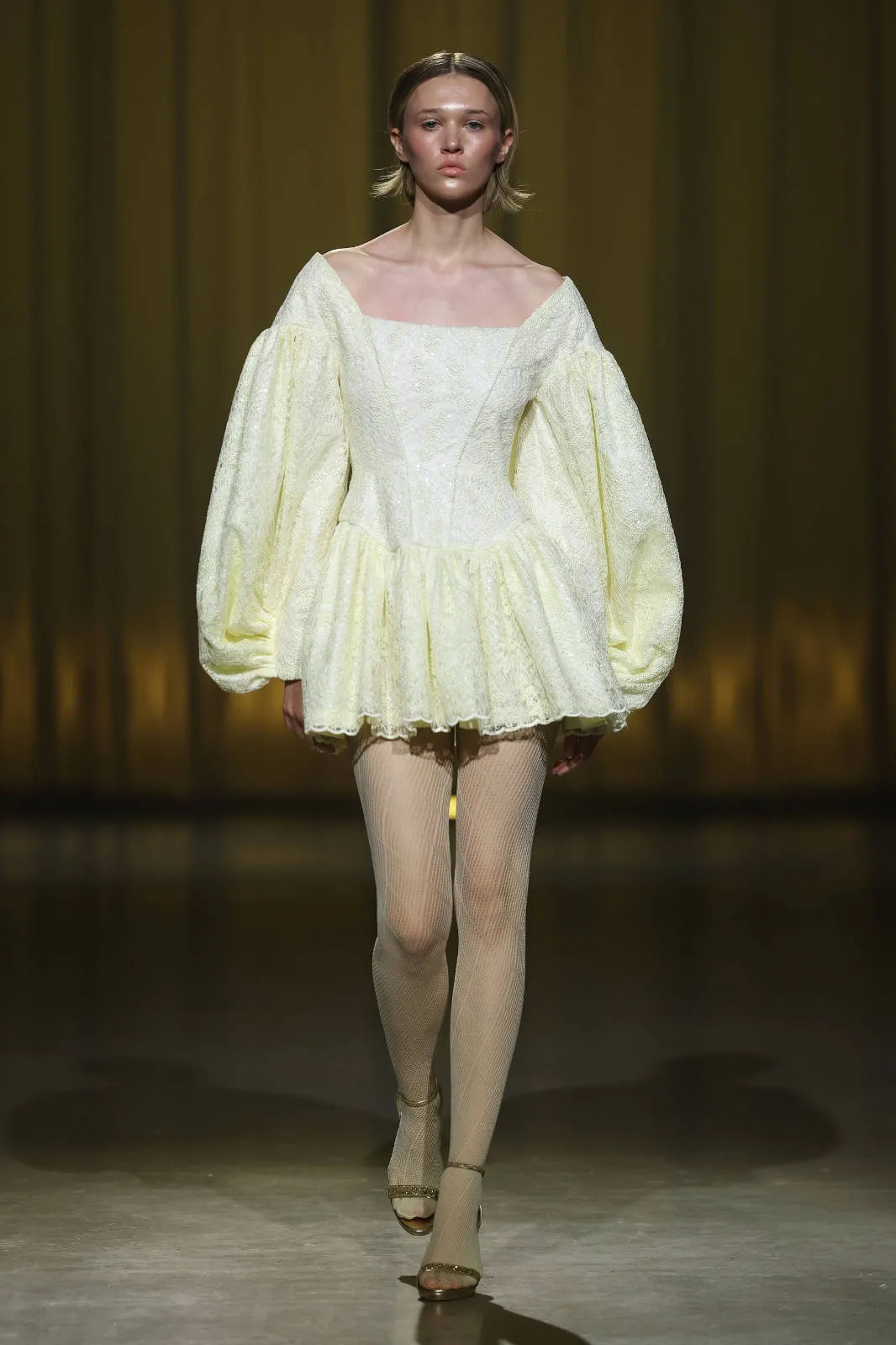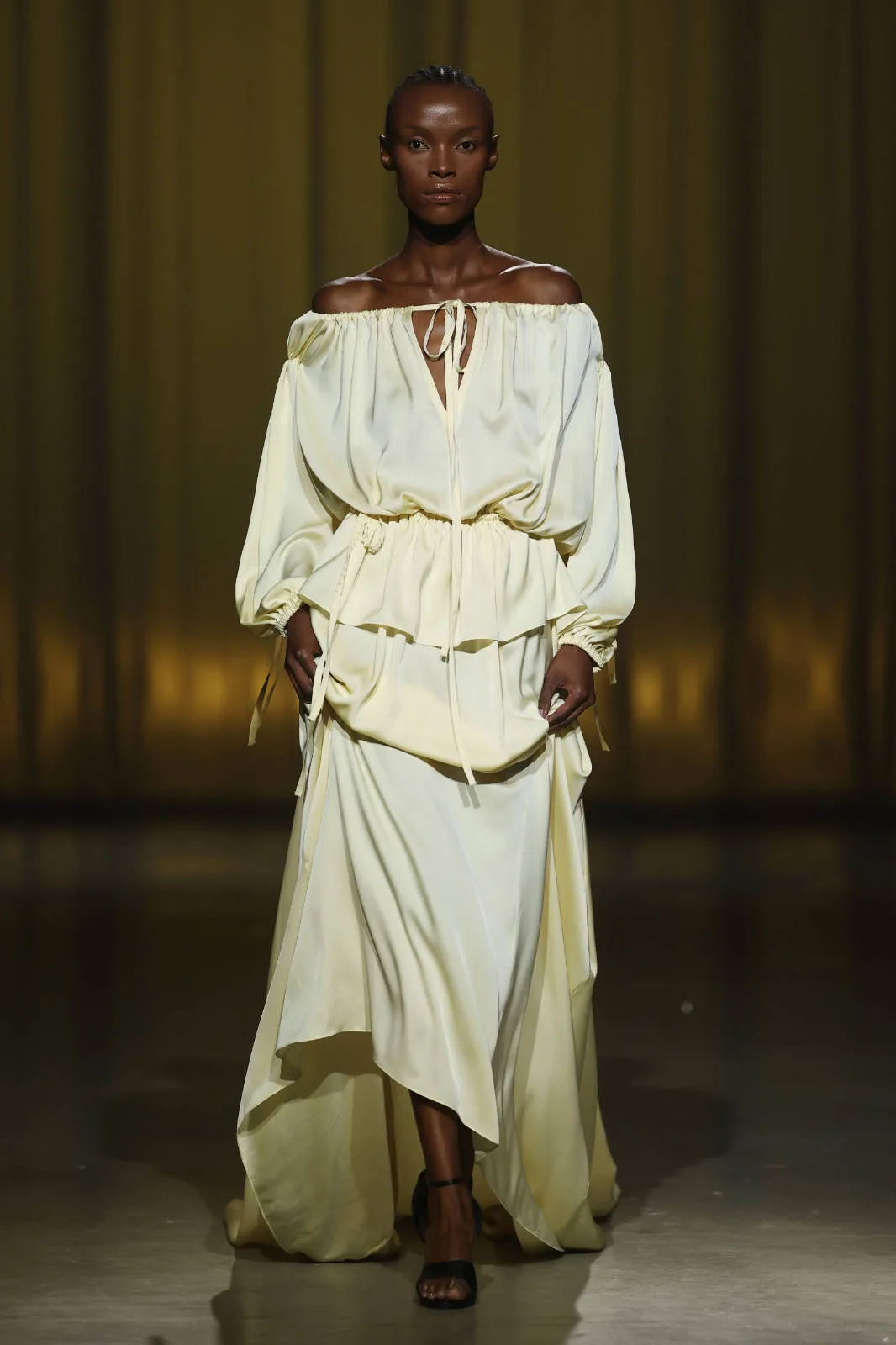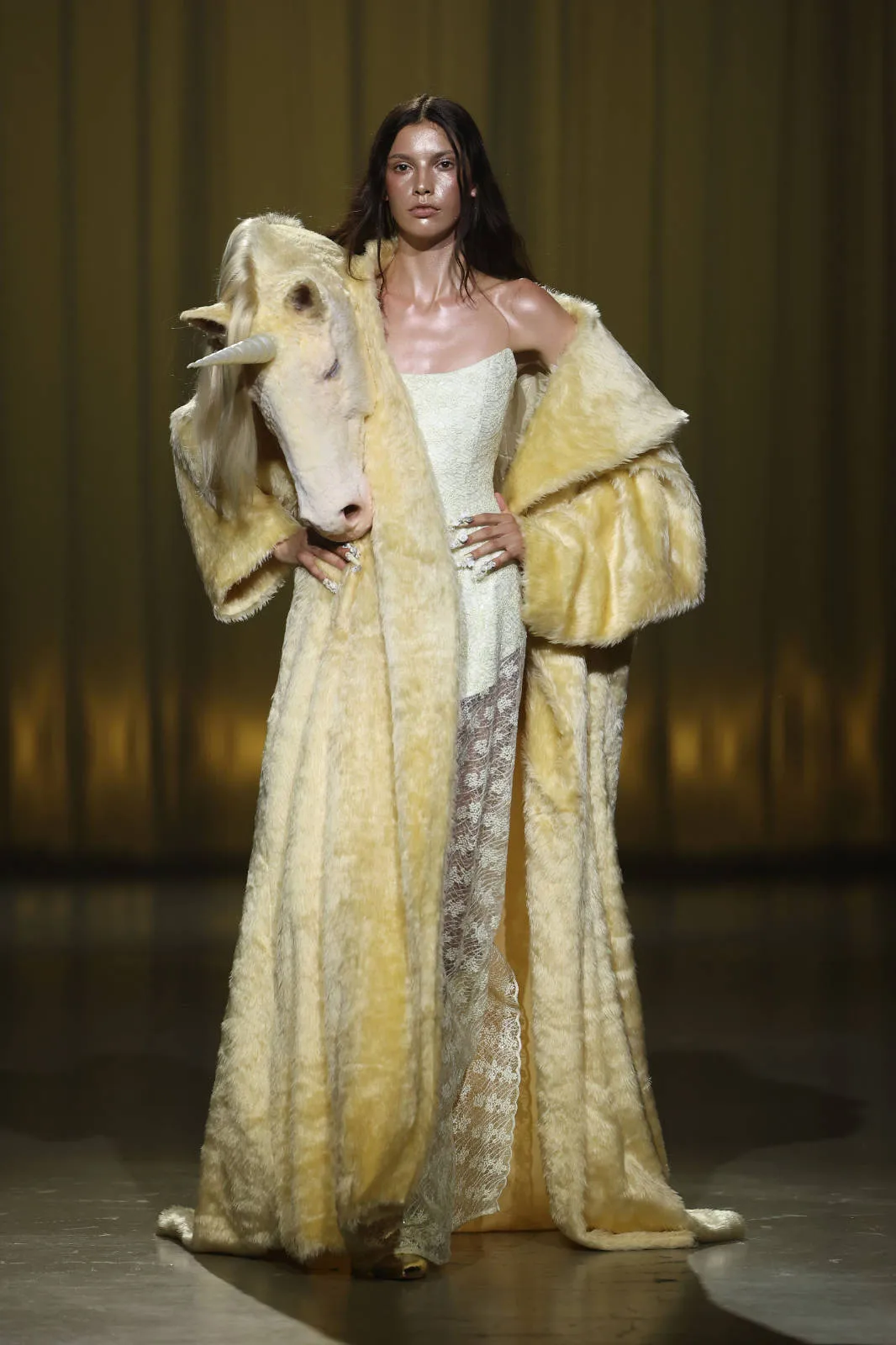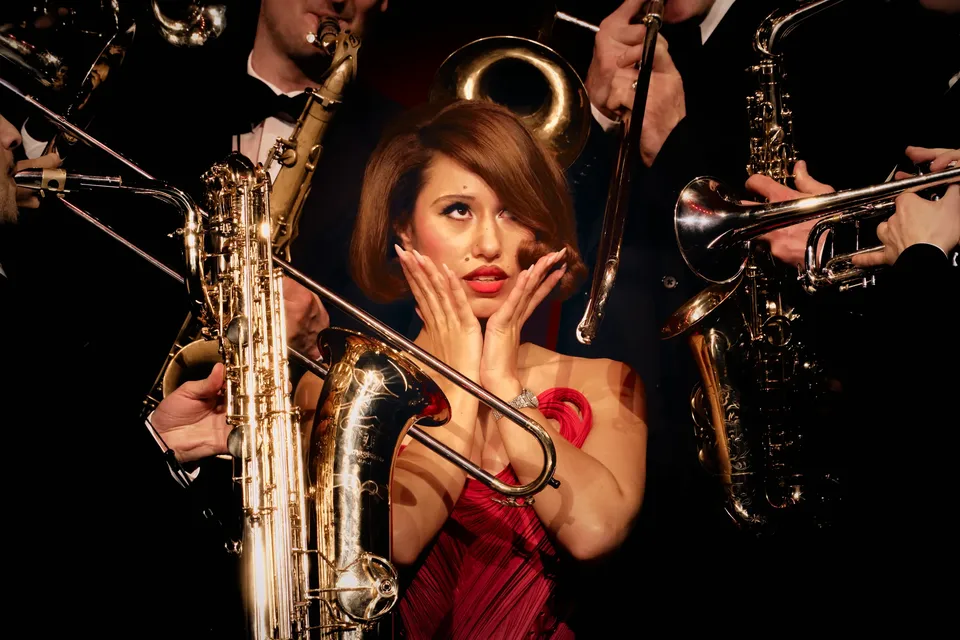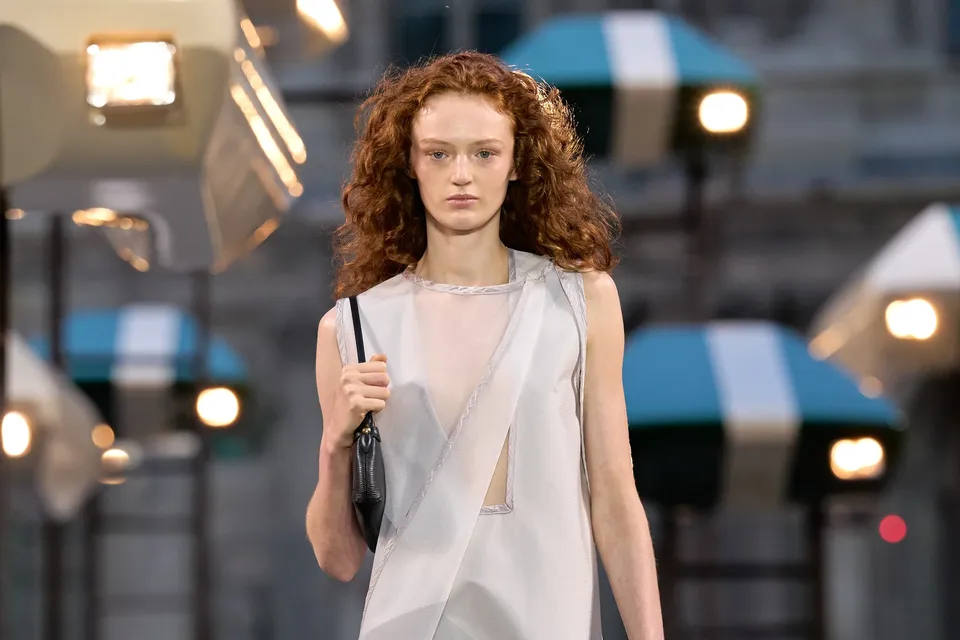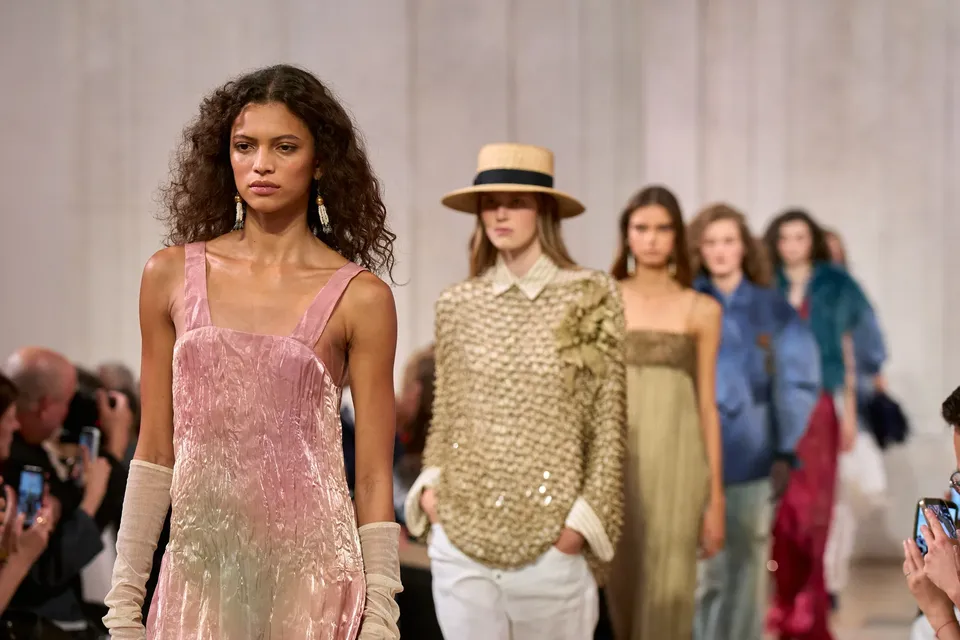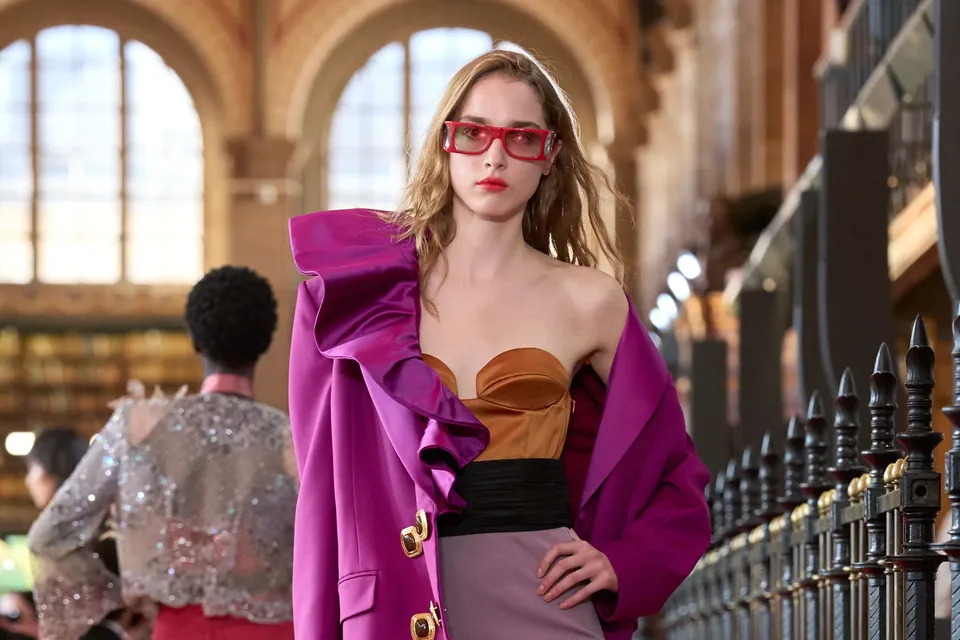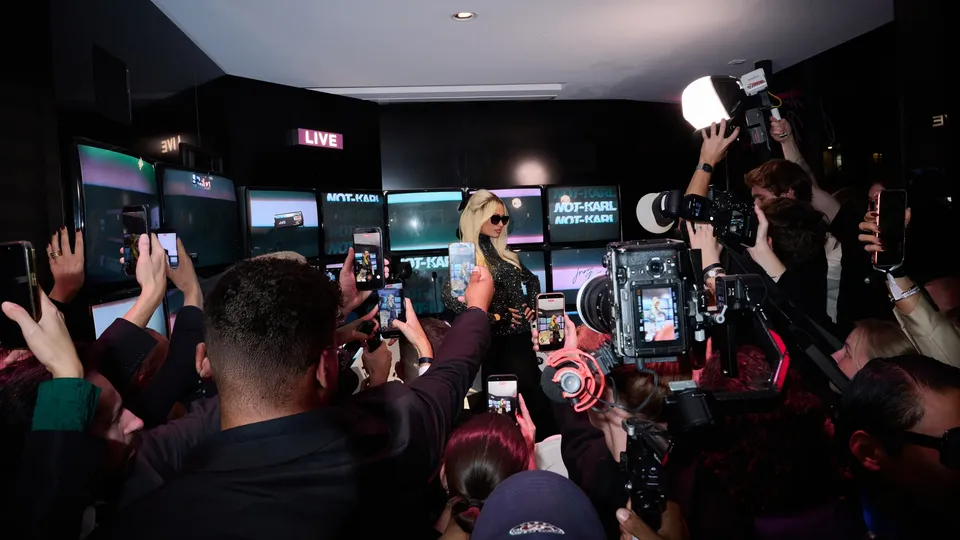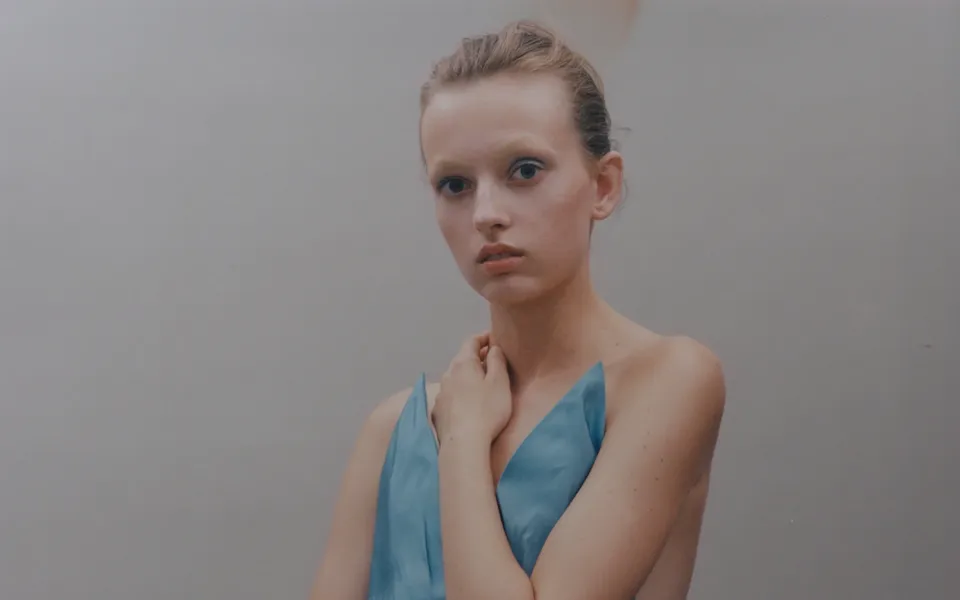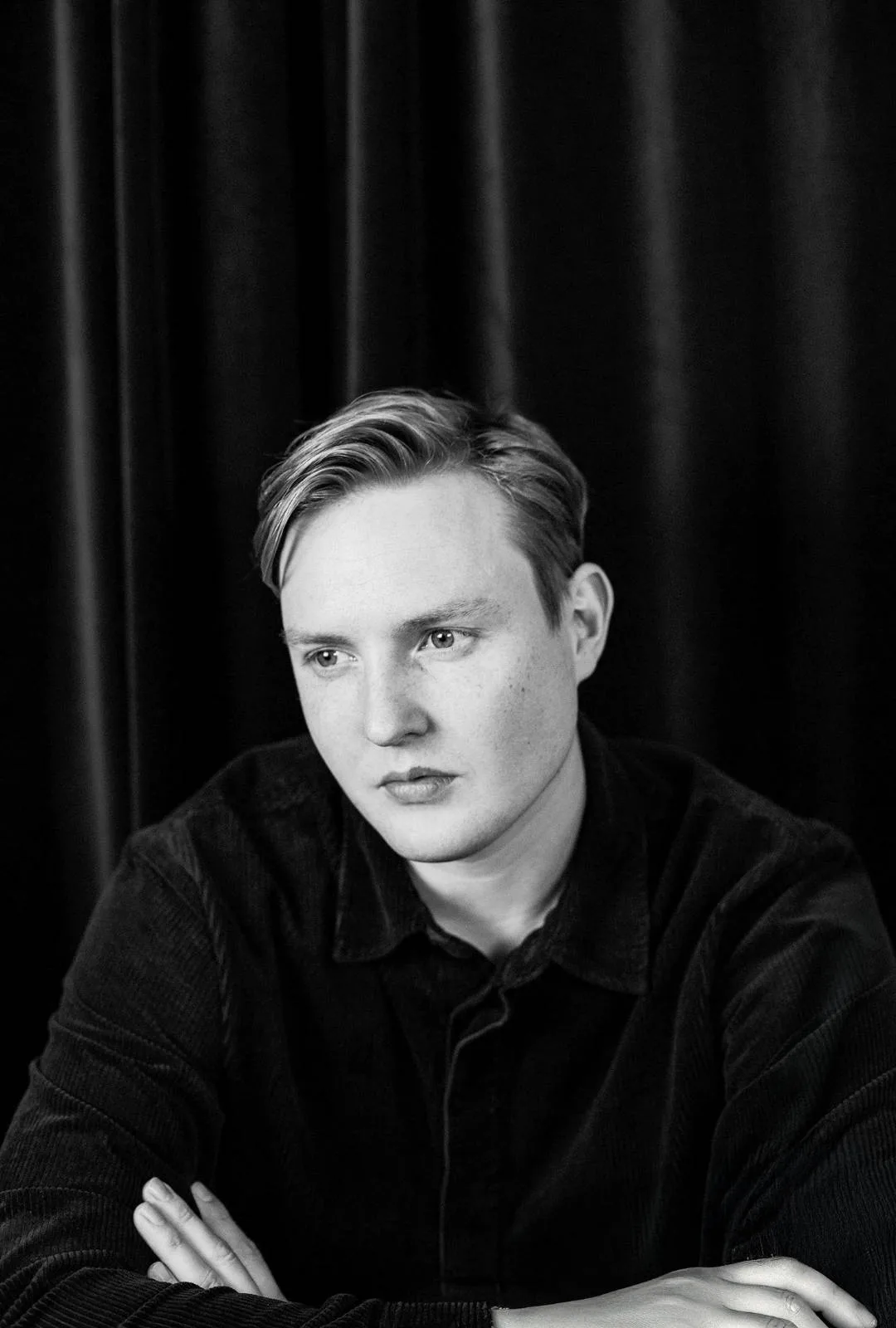
Scrolling through Danny Reinke’s Instagram feels like entering a carefully constructed parallel universe: a unicorn coat from his Spring/Summer 2026 collection, HorsegiirL wrapped in red chiffon, moodboards layered with Botticelli references, nail tips crafted from recycled jewellery. His language is symbolic and narrative, every collection tells a story. But what at first appears as a fantasy aesthetic slowly reveals something deeper: a world built on craft, discipline and a persistent exploration of identity.
Reinke’s path to fashion didn’t begin in a Parisian atelier, but in a fisherman’s family far from the industry’s traditional pipelines. It starts with an art course, a need of creative expression and a deep desire to grow. More than fashion, Reinke creates narratives. Across his collections, storytelling becomes a way of questioning the present rather than escaping it. In this conversation, he reflects on identity, discipline, Berlin’s cultural ecosystem, and the constant negotiation between instinct and structure that defines his work.
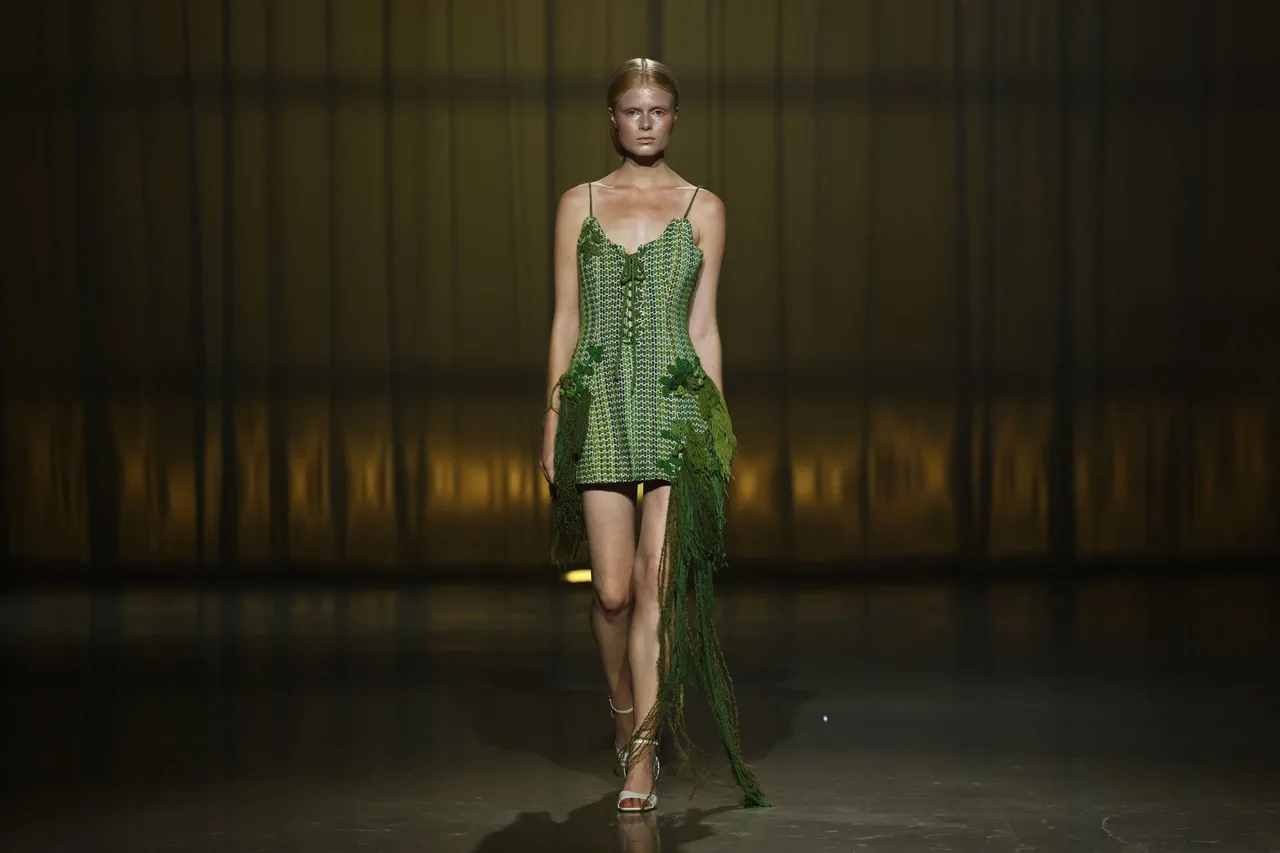
Coming from a fisherman’s family, your background feels far from the world of fashion. Was there a specific moment or image from your childhood that awakened your curiosity for clothes and creativity?
When I was about eleven, I joined an art course at school where we explored art on the human body. That experience was a revelation to me. I still remember the moment vividly. It was the first time I understood that creating clothes could be an artistic expression and even a profession. It opened my mind and set something in motion that never stopped growing.
Berlin is often described as a city of total freedom, but sometimes too much freedom can make you lose your focus. How do you personally experience this?
Berlin and my work exist in two very different spaces for me. The city’s freedom and creative energy constantly inspire me. There is this feeling that everything is possible here, and that energy pushes me to keep evolving, to experiment, to stay curious. I love how Berlin never stops moving and how it attracts people who live and think differently. At the same time, my work requires a very different mindset. I am extremely focused and disciplined, often working seven days a week and up to fifteen hours a day, especially when I am in a creative flow. In those moments, I completely immerse myself in what I do. Sometimes I even have to remind myself to step back and breathe, to protect that sense of freedom that Berlin gives me. It is a balance between chaos and control, and I think that is exactly what keeps me going.
The city has a strong and complex identity. How does its cultural scene influence your work and aesthetic?
I have a slightly different understanding of Berlin and its zeitgeist than many others who move within a certain bubble. And that is perfectly fine. For me, the role of a designer is to look ahead. We create clothes today that will be worn in a year’s time. Sometimes I have the feeling that a lot of what is being produced now reflects what was considered trendy yesterday. My approach is more about observing, understanding, and then moving forward. Berlin’s strength lies in its diversity. There is so much space here for different perspectives, ideas, and aesthetics. I believe in the principle of live and let live. The city offers room for everyone, and that openness is what makes it so endlessly inspiring to me.
Everyone has a specific image of Berlin and of the Berliner. In your opinion, what’s the Berliner starter pack?
If I may, I would actually reframe that question a little. For me, there is not just one kind of Berliner, and that is exactly what makes this city so fascinating. Each district has its own rhythm and character, and every person brings a different story to the mix. What connects everyone here is a certain openness, a curiosity, and the freedom to be who you are. I love that I can move through every neighbourhood and feel that each identity is acknowledged. So maybe the real Berlin starter pack is simply authenticity and the courage to live it.
You founded your own brand four years after graduating from fashion school; it’s a bold decision. It’s not just about design but identity. What was your main motivation when you created Danny Reinke? Was it a creative necessity, a statement of independence or something else?
When I started my label, it was really about creative expression. I simply followed my curiosity, and suddenly there was interest in what I was doing. I applied for a show and got a slot, and almost at the same time I won the FASH Award. That combination gave me an incredible push. I remember thinking, if I can create so much in such a short time, what might be possible in ten or twenty years? From the beginning, I wanted to keep evolving. Of course, there are recurring themes, materials, and silhouettes in my work, but no collection is ever the same. Each one marks a new step in the process. Looking back now, having created eighteen collections and shown internationally, I would say it was a mix of everything: a creative necessity, a statement of independence, and a deep desire to grow.
In your latest collection the hunting theme becomes a metaphor for the search for identity and freedom. What would you say you’ve managed to hunt or discover about yourself through this creative process?
Through this collection I realised that creativity and independence both have many layers. You can be the hunter and the hunted at the same time. There are moments when you feel hunted by deadlines, expectations, and the constant urge to reinvent yourself. And then there are moments when you become the hunter, when you understand how to use all those challenges to your advantage. Over the years I have also learned that creativity cannot exist in isolation from reality. I am not creating pure art, I am creating fashion. And to sustain a label, you sometimes have to make compromises that ensure its survival. For me it is always a balance between passion and pragmatism, between instinct and structure. In that sense, this ongoing shift between the two roles has become part of who I am as a designer.
The image of the unicorn head is powerful and unsettling. How do you interpret it, as a symbol of loss, transformation, or perhaps liberation?
I think everyone can interpret that image in their own way. When I started working on the collection, I was not even sure myself whether the unicorn would survive in the end or symbolically die. Eventually it was carried through the show, almost like a ritual. Some people found it unsettling, and I had to explain it afterwards. For me it reflects a broader feeling that I sense in the world right now. When you look at what is happening globally, it often feels as if freedom is slowly shrinking. There is this small, unsettling feeling in your stomach when you read the news every morning and see yet another conflict, another crisis. I wanted to translate that sense of unease into a single image. The unicorn became a kind of warning, a reminder of what we might lose. Or perhaps it is simply asleep, waiting to awaken again.
Your production on demand model is a strong statement in an industry driven by mass production. What led you to this choice?
For me, it was a necessary counter-movement to what is happening in the industry. I am fully aware that my fashion is not for everyone, because not everyone can afford it. But there are many people who can, and still choose fast fashion. To them I want to say, it is time to rethink. The fashion industry is one of the major contributors to global warming, so this concerns all of us. Producing on demand is my way of taking responsibility and showing that there is another path, one that values time, craftsmanship, and awareness.
How does visual art, from classical painting to contemporary culture, shape the way you design?
Art in all its forms has always been a major source of inspiration for me, from painting and music to architecture and the work of other designers. I believe creativity can only exist when you keep feeding your mind. I also look at current trends, not to copy them but to understand how they can be reinterpreted. When you study art history, you realise that many ideas and visual languages have already appeared before. The beauty lies in bringing them together in a new way. For me that is the essence of creativity, combining two things that have never existed together before. Classical paintings like Botticelli’s Primavera inspire me as much as contemporary culture because they show how timeless beauty and storytelling can be.
The fashion industry is extremely competitive, and it’s often difficult to stand out; every designer tries to offer something new to an already saturated industry. In your opinion, what is the essence of Danny Reinke, the element that can’t be replicated?
In Berlin there are actually very few designers who do what we do at Danny Reinke. I would describe the essence of our brand as a balance between craftsmanship, quality, and sustainability. We work with opulent silhouettes and highly refined materials, always aiming to create pieces that feel both emotional and enduring. For the upcoming season we are even weaving our own fabric, which is something quite special. Of course, no one is completely protected from being copied, but we continue to evolve and redefine ourselves with every collection. That constant development is what keeps our work alive and authentic.
Your designs have been worn by several well-known personalities, from HorsegiirL to Rita Ora. When celebrities wear your designs, your work enters a wider cultural dialogue. How do you perceive that relationship between your artistic vision and the identity of the person who wears it? Do you feel that they somehow speak for your brand?
As a brand, it is important to be aware of who wears your designs, so we are quite selective in that regard. At the same time, I find it fascinating to see how different personalities interpret our pieces in their own way. Once a design leaves the studio, it takes on a new life through the person wearing it. For me that is one of the most beautiful aspects of fashion. It is a dialogue between the designer’s vision and the wearer’s identity. When someone like Rita Ora or HorsegiirL wears one of our creations, it expands the narrative. It shows how the same piece can tell completely different stories depending on who embodies it.
You studied at Fahmoda Academy, where you were also a lecturer on design and technical drawing. How did it feel to teach at the same place where you once learnt?
It was a privilege to work with so many young and talented people. I truly enjoyed that time. It was an exciting, sometimes wild chapter that I would not want to miss. Still, I felt that the moment had come to move on and fully dedicate myself to my own creative journey. Teaching gave me a lot of perspective, and I carry that experience with me every day in my work.
How did this experience change your perspective on creativity and mentorship?
We all start small, and teaching reminded me of that. As a teacher you can still learn a lot from your students. The key is to meet each other on the same level and stay grounded. Creativity works best as a dialogue, not a hierarchy. That experience taught me how important humility and patience are in this field. What we do is never self-evident, it takes years to build real skill. Seeing that process through the eyes of young designers gave me a renewed respect for craftsmanship and for the journey itself.
Is there a piece of advice you wish your teachers had given to you? One that you tried to share with your students?
Do it only if you truly want it. This industry can be incredibly hard and unforgiving. If you do not feel it with every fibre of your being, it will be difficult to sustain. But if you do, if you really believe in it and are willing to give everything, then go for it and never stop. To those who feel that passion, I wish all the success in the world.