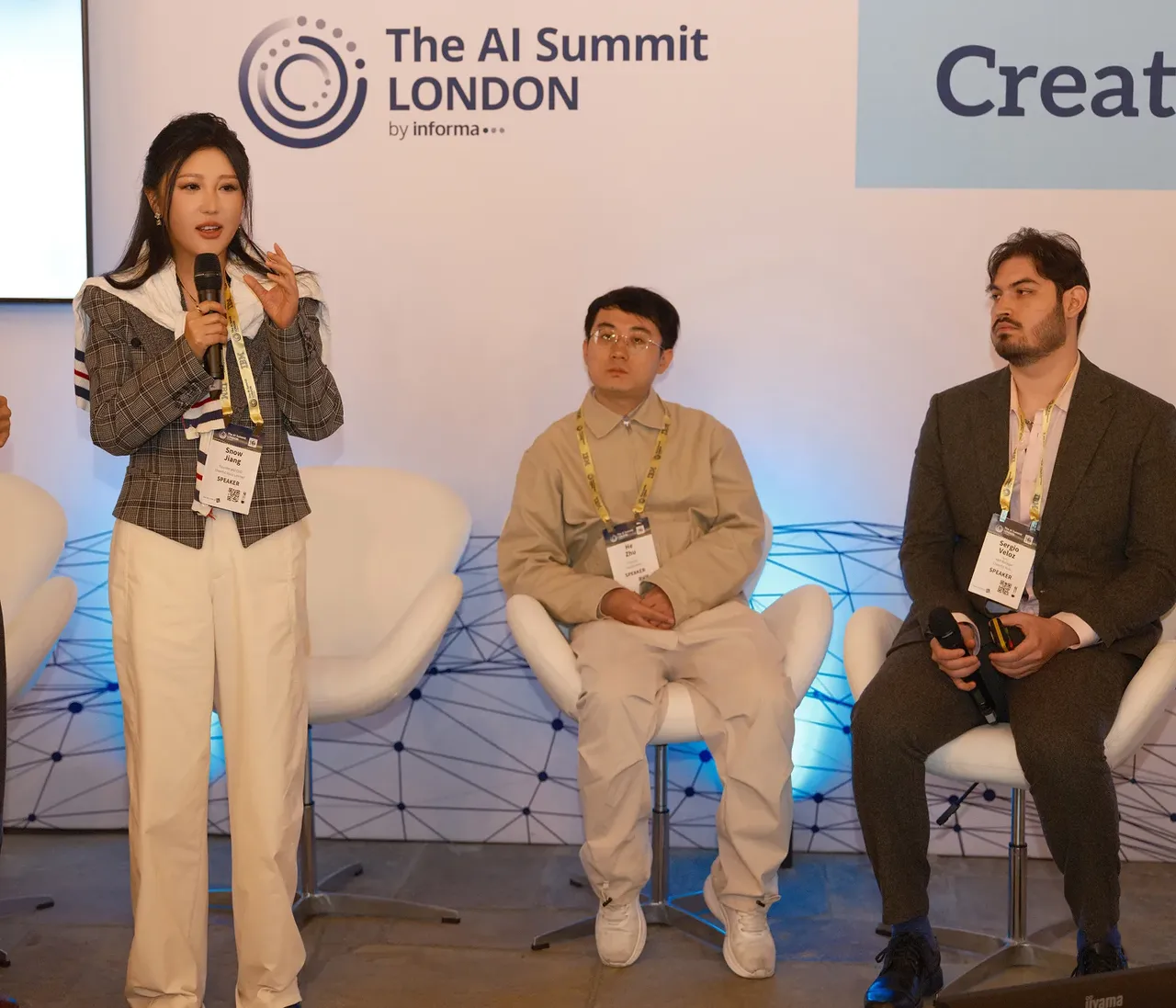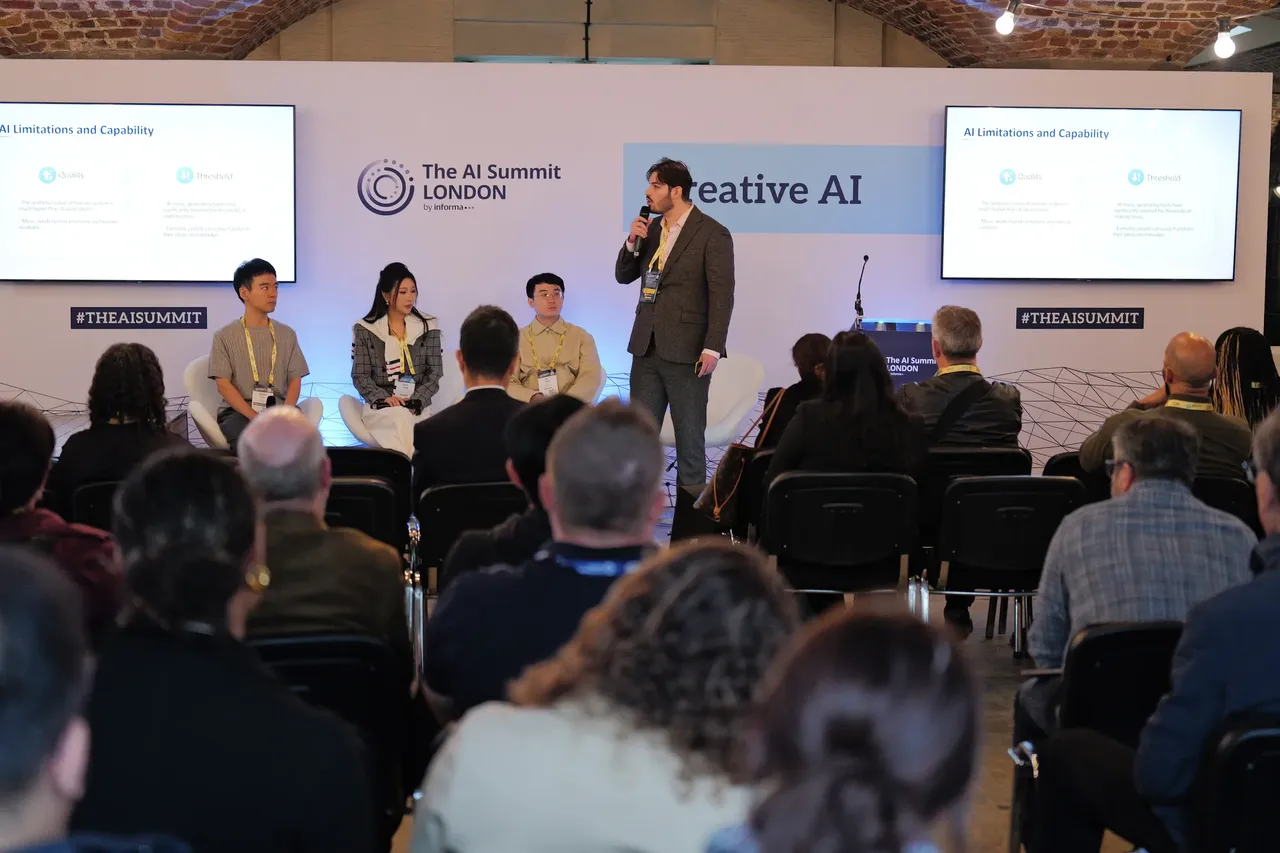
Artificial intelligence is already part of music's working language, but the more interesting question may be less about what machines can generate and more about what listeners still recognise as human. At the tenth anniversary of The AI Summit London, Cheerful Music joined that discussion through the panel Can AI Make Human Music More Valuable? Founder and CEO Snow Jiang, A&R manager Sergio Veloz and producer He Zhu used the session to think through how AI is changing music without treating technology as the only protagonist.
It’s a debate the label has been circling for some time. A few months ago, we spoke with Cheerful Music after its appearance at SXSW, where AI’s growing role in the industry was already central to the conversation. In London, the focus moved from novelty to responsibility: authorship, emotion, copyright and artistic identity, all subjects that become harder to separate as creative tools keep evolving.
“We see AI as a tool that expands creative opportunity rather than replaces artistic value,” explained Sergio Veloz during the panel. His point shifts the emphasis away from the software itself and back towards the people using it. When production becomes more accessible, the challenge is not only to make music, but to make work that carries weight, reflects experience and connects beyond the mechanics of the algorithm.
That position also informs Cheerful Music’s approach to its roster of virtual artists. Rather than presenting the project as fully AI-generated music, the label says it combines AI-trained vocal models with songs written by human songwriters. For Snow Jiang, that distinction is central. “Every song we release is written by human songwriters, ensuring genuine creativity remains at the core of the music,” she explained.
The panel also moved into the less romantic questions around AI: copyright, voice licensing, ethics and the responsibilities attached to developing creative tools. Cheerful Music outlined a framework based on licensed voice models and artist consent, while acknowledging that regulation is still trying to catch up with the technology. It was a useful reminder that innovation rarely moves cleanly, especially when creativity and ownership meet.
The label also presented its growing ecosystem of virtual artists, including Lynn (灵玥), whose music has reached millions of viewers across short-form video platforms. Still, the conversation kept returning to the same point: AI may change the tools, but it does not remove the need for a story. “People connect with stories, experiences and identity,” Veloz noted. In a musical landscape increasingly shaped by automated systems, those human qualities may become more valuable, not less.