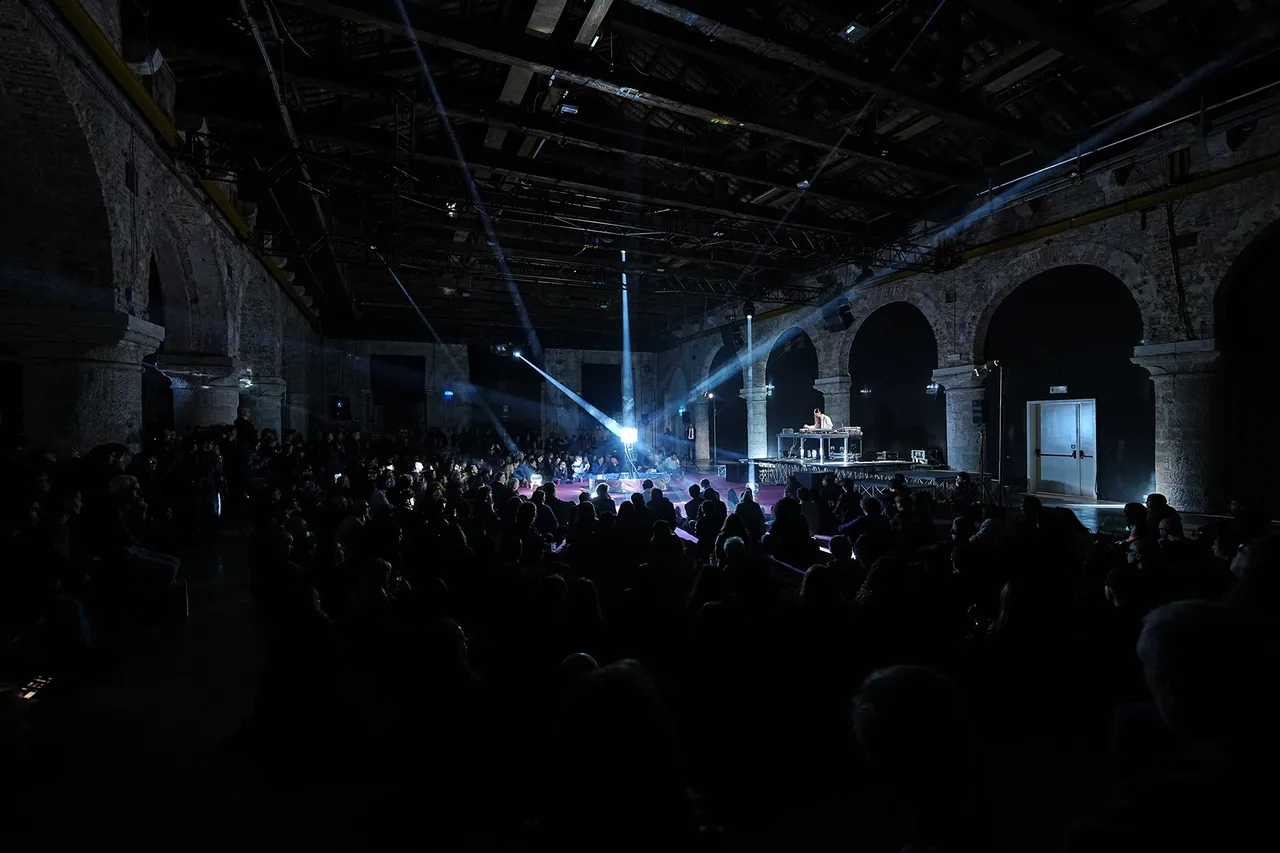
This year, there was a wind of change blowing through Venice. The Italian city, especially known for its historical ties to the arts, was ready for a shift in direction. La Biennale, a centenary institution that has been reflecting the social and cultural changes throughout architecture, dance, visual arts, and music, was receiving a new Artistic Director: Caterina Barbieri. Her radical, forward-thinking approach has turned this year’s Biennale Musica into a guiding light for contemporary creators that expand our understanding of what music and sound can achieve. From October 11 to 25, it welcomed creators like Meredith Monk (who was awarded the Golden Lion), Ecco2k, Sunn O))), Moor Mother, Bendik Giske, Suzanne Ciani, Los Thuthanaka, Carl Craig, Abdullah Miniawy, or William Basinski, among others.
Under the theme The Star Within, the 69th edition of International Festival of Contemporary Music of La Biennale di Venezia promised to be wildly different from previous ones. Barbieri, an Italian-born, Berlin-based producer and multi-hyphenate artist, has an impressive academic background in music, philosophy, and literature, which helped her approach the artistic direction with an open mind and a clear path. Speaking with us, she said that the theme was “a compass to navigate the present. […] I followed this idea and tried to create a programme that was centred around the theme of cosmic music. The idea is more about music and its generative nature, and how it can create new worlds beyond the static idea of genre, style, geography, or time.”
With this, she captured the zeitgeist on the margins, those who help expand the limits of what music can (and perhaps should) be and our understanding of beauty, meaning, and harmony in sound. In return, the festival registered a six percent increase in total ticket sales, proving that a more avant-garde approach is exactly what the audience might expect from an event like this. We attended the last three days of Biennale Musica, immersing into experiences that ranged from the celestial to the infernal, bringing together a myriad of artists that proposed some incredibly interesting live acts especially developed for the occasion.
The first one was the Kamigaku Ensemble, a four-piece ensemble that paid tribute to the late Swedish pioneer, Catherine Christer Hennix, who saw music as “a metaphysical vocation.” That sense of divinity permeated the performance, which felt incredibly meditative and reflective, with a lot of the audience deciding to lay down and soak up the sound and emotions running through their bodies. The musicians, who took turns in playing their instruments (two trumpets and two Japanese shōs) and singing, also felt (and even sat down) like meditating while using their bodies and instruments like channels through which they were conveying a message coming from another dimension.
After that inspiring performance, it was the turn of two solo artists. First, Enrico Malatesta performed Occam Océan – Occam XXVI (2018), by the French pioneer of electronic and drone music, Élianne Radigue. It was a very minimalist exercise where the Italian artist played a drum plate with something unexpected: a bow. Thus, the repetitive yet subtly distinct sounds that came out from it were somehow soft compared to what one might expect at first sight. Then, the night finished with Lucy Railton’s Blue Veil, a composition for cello that is guided “by resonances within the cello’s body, her own, and their shared vibrational space.”
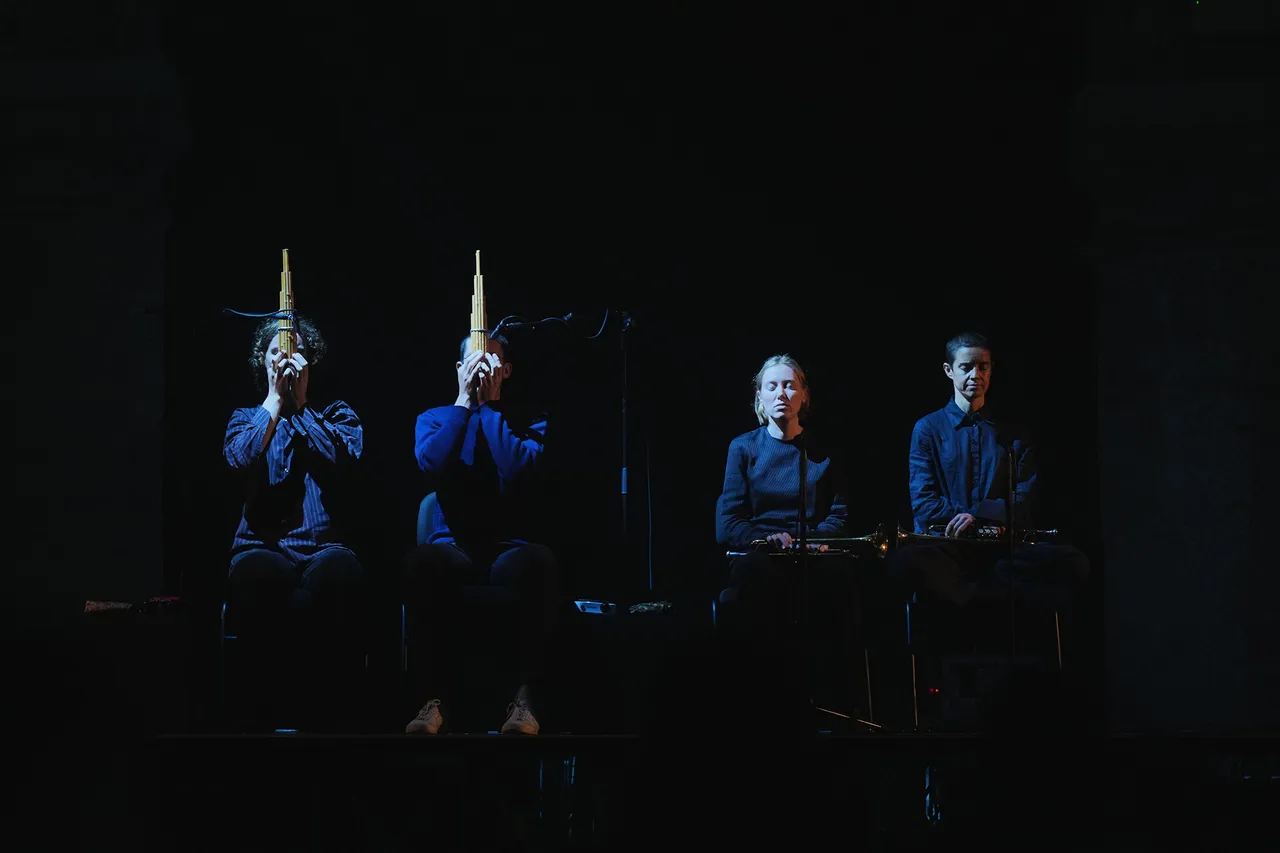
Catherine Christer Hennix
On Friday, we kicked things off with Meredith Monk’s Songs of Ascension Shrine. The multi-hyphenate artist and pioneer, awarded this year’s Golden Lion, was presenting this work via a three-screen installation inside a dark room where people could sit down and just be transported by its enigmatic aura. Recorded on location inside the Ann Hamilton Tower at the Oliver Ranch in Geyserville, California, and inspired “by ritual motifs of ascension and circumambulation throughout time,” the work is sweetly enveloping, making listeners forget about the outside world and mainly concentrating on the split images they see in front of them. It’s a religious-like experience that awakens the senses and touches the soul, something this Biennale Musica did constantly.
We then moved to Sala d’Armi G to experience Jasmine Morris’ So-ōn, a piece blending a string quartet, field recordings, and found sounds. Distributed across the room, the musicians started very slowly. Actually, the forty-minute piece started with almost imperceptible sounds, and the violins and cello sounded like they were complaining, more similar to noise than to harmonic music — that’s hugely inspired by a Japanese aesthetic project, Sō-on no naka kara umareru kōjō ongaku (Factory music born from noise), which emerged during the Second World War. But as the performance went on, the field recordings became louder and more pleasing, almost resembling ocean waves, and the instruments also started to become more harmonic and in-tune, taking listeners through a rollercoaster of emotions. On the other hand, Ellen Arkbro’s Nightsong, performed by three bass viols that were very coordinated, was a bit more static.
After changing location, we entered into Fuji|||||||||||ta’s site-specific piece, Resonant Vessel. Sitting in the middle of the room, a small plastic pool with a mechanical structure within it standing tall, and on each corner, connected via cables of some sorts, four fish bowls whose water moved thanks to vibrations and mechanisms. Bridging water, sound, technology, and architecture, the Japanese artist presented one of the most original live performances of the festival. It resonated with the audience as we were confronted with the most crucial element for life on Earth (water) while using it to his own advantage via technology, something we see every day happen with not so-creative outcomes.
From that strange stage we moved to Sunn O)))’s live act, which brought us immediately to the darkest depths of noise and drone metal. As the Biennale puts it, their “monolithic sound conjures a sense of the transcendent and transformative power of distortion, resonance and volume.” Indeed, a two-meters-tall wall built with amplifiers had all of our bodies vibrating, making us feel like we were going to explode from the inside out. Cult-like, haunting, and strangely captivating, the duo’s performance was one of the best of the entire programme: nothing to understand, just feel it. Two electric guitars, the aforementioned wall, and the two artists commanding the small stage as if it were their exquisitely gothic living room.
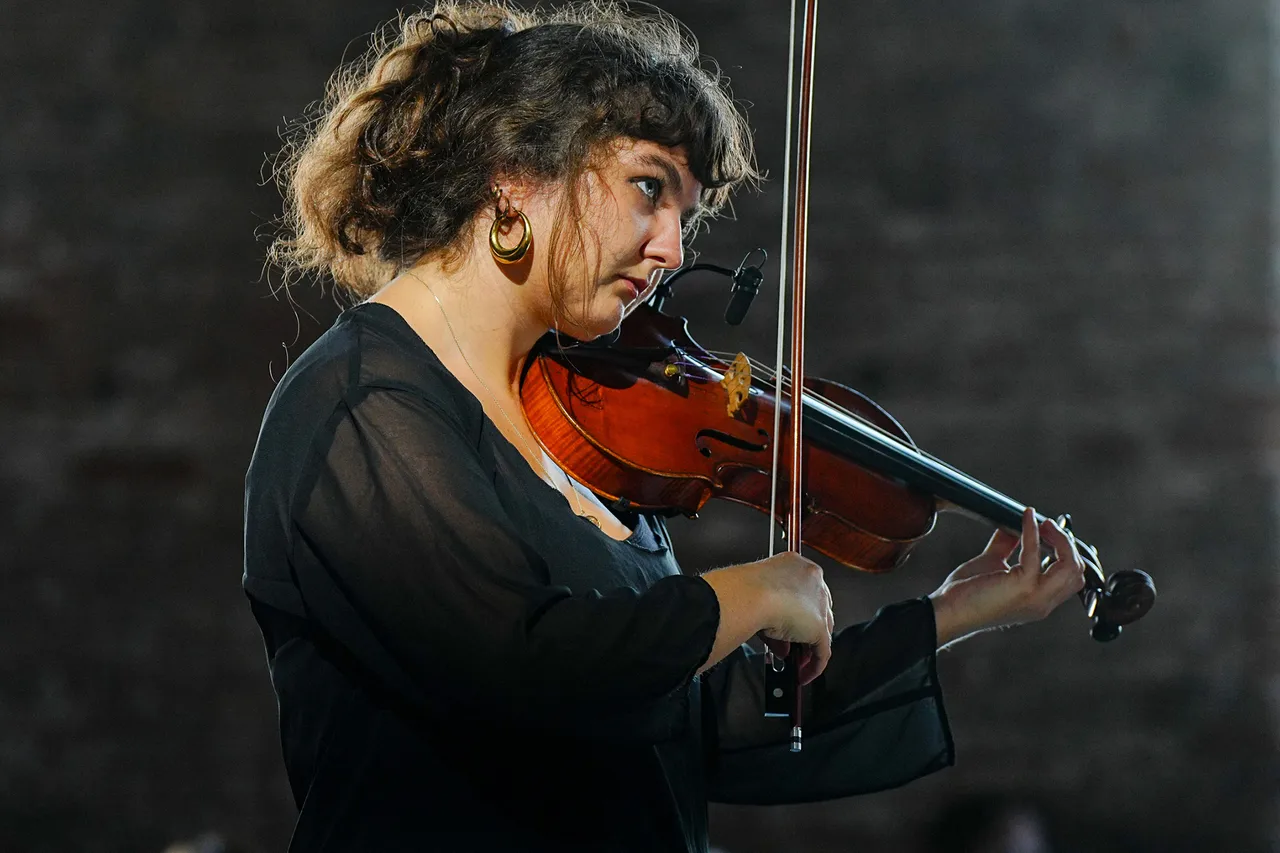
Jasmine Morris
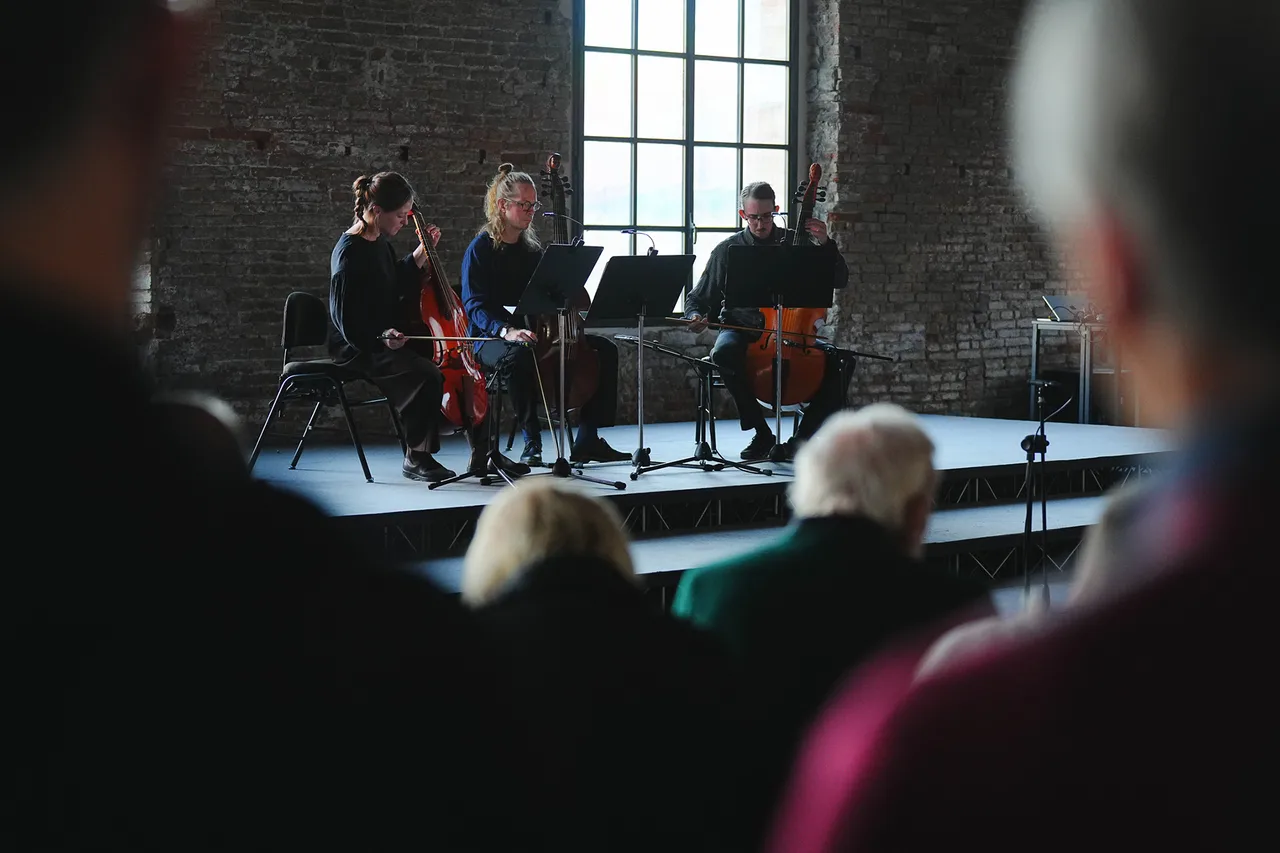
Ellen Arkbro
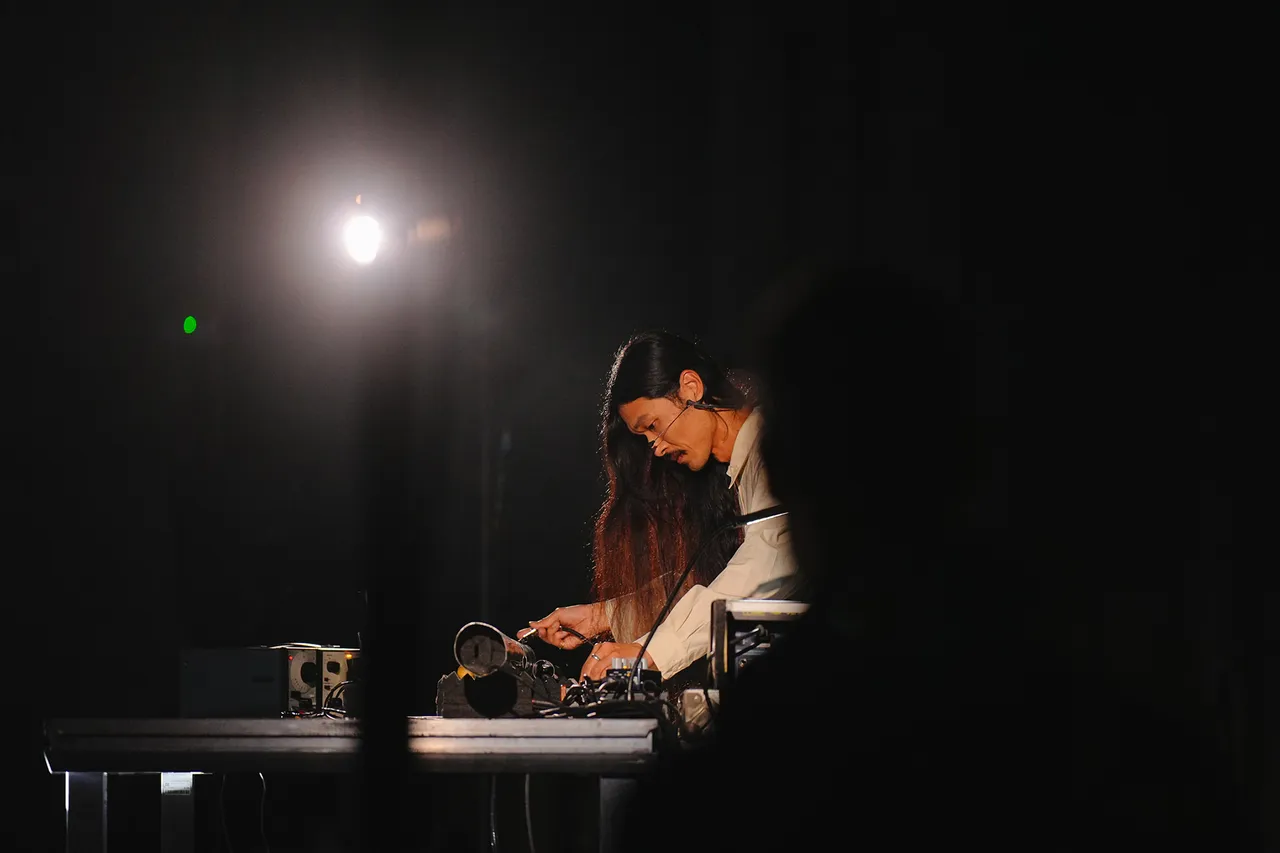
Fuji|||||||||||ta
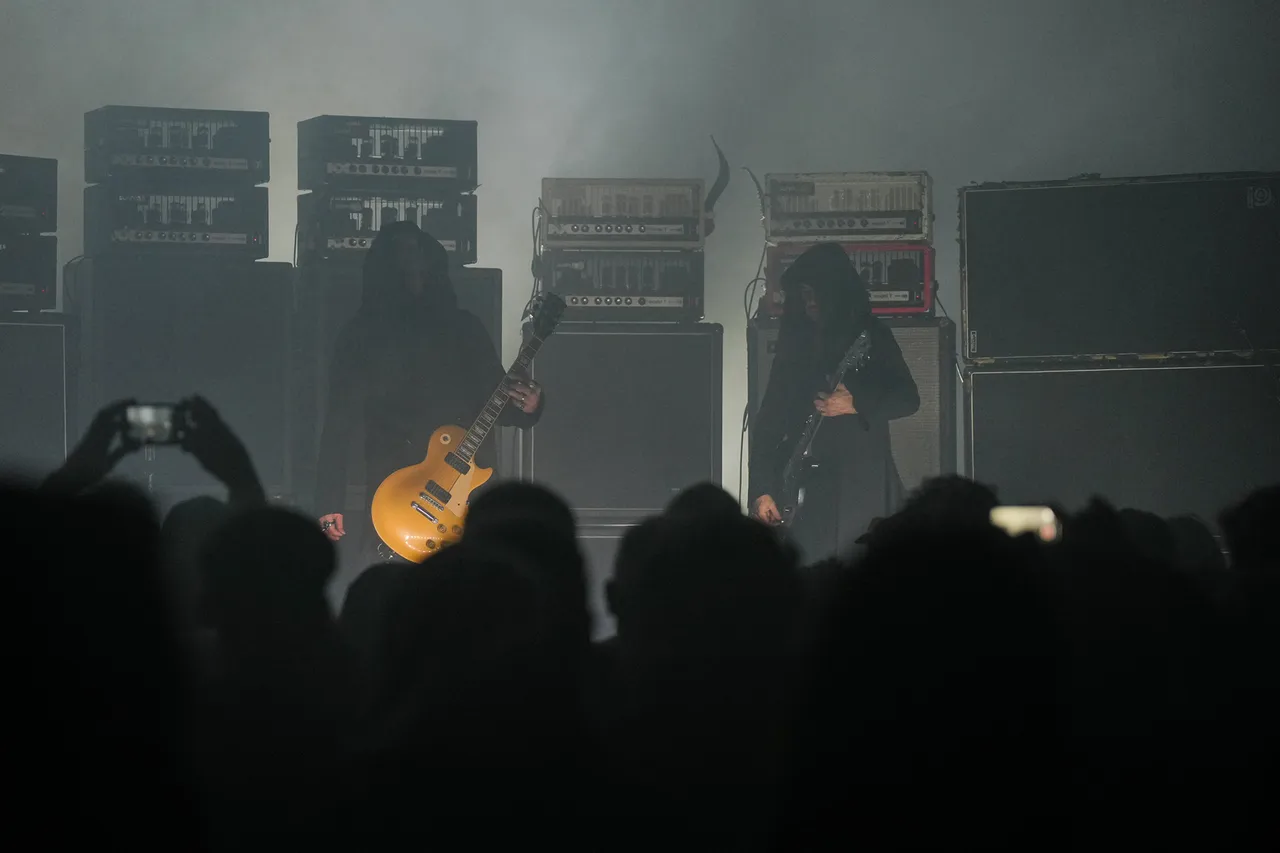
Sunn O)))
After such visceral performances, we thought it’d be hard for the remaining artists to surprise us. Of course, we were wrong. Saturday, the last day of Biennale Musica, was the cherry on top of a perfect edition. To make it easier, the entire day took place at the Teatro alle Tese, just where we finished the night before. To start things smoothly, Agnese Menguzzato presented Undici (‘eleven’ in Italian), where she and her eight-cord electric guitar took over the stage. She started slowly, showing us her domain of the instrument, and little by little, she moved towards a more electronic sound. What was really striking was how she played with the stage lights, creating a grandiose atmosphere that helped the audience feel trapped in the soundscapes she was creating.
Then, Morgana continued that otherworldly journey, only he took it into a more dystopian route, with rushing visuals of fires, glitches, explosions, sunrays. It was clear that he has an obsession with the ambivalent power of fire, at times creative, at times destructive, as he took us from deserted landscapes to industrial factories. Music-wise, he worked a lot on the glitch, on taking unexpected turns that kept us on our toes, forcing us to be present and thoughtful, which in today’s day and age isn’t an easy feat.
The most shocking act of the weekend was Moor Mother’s. Her work Shinkolobwe, named after one of Congo’s mines supplying radium and uranium, is defined as “a sonic excavation of trauma, resistance and the residual violence of extractive capitalism.” On stage, a four-piece ensemble playing the trombone, percussion, piano, and electronics that gave an incredibly moving, heart-wrenching performance, where Moor Mother’s voice (sometimes natural, sometimes distorted to sound monstrous like the things she was talking about) perfectly blended with the instruments. Using repetition as a tool to engrave what she was saying in our minds, several quotes and questions still echo today: “Belgian Congo for discover; We must remove this place from the net. No one can find it; The US Army, Oppenheimer. Enrich uranium, plutonium; Who will win?; Who will die?; Who decides?; When will they surrender?; The mine that shaked the world.” For forty-five minutes, Moor Mother had us in a chokehold and proved why she is one of the most necessary voices in today’s arts.
To close the 69th edition of Biennale Musica on a more positive, hopeful light, Ecco2k took to the stage with an incredibly visual show made of strobing lights, police sirens, and an angelic closing with himself mounted on top of the decks holding a flower as the audience cheered and applauded. Bridging deconstructed club music with evocative monologues, the artist proved that you can be conceptual while making people dance and enjoy, the perfect way to end a phenomenal festival.
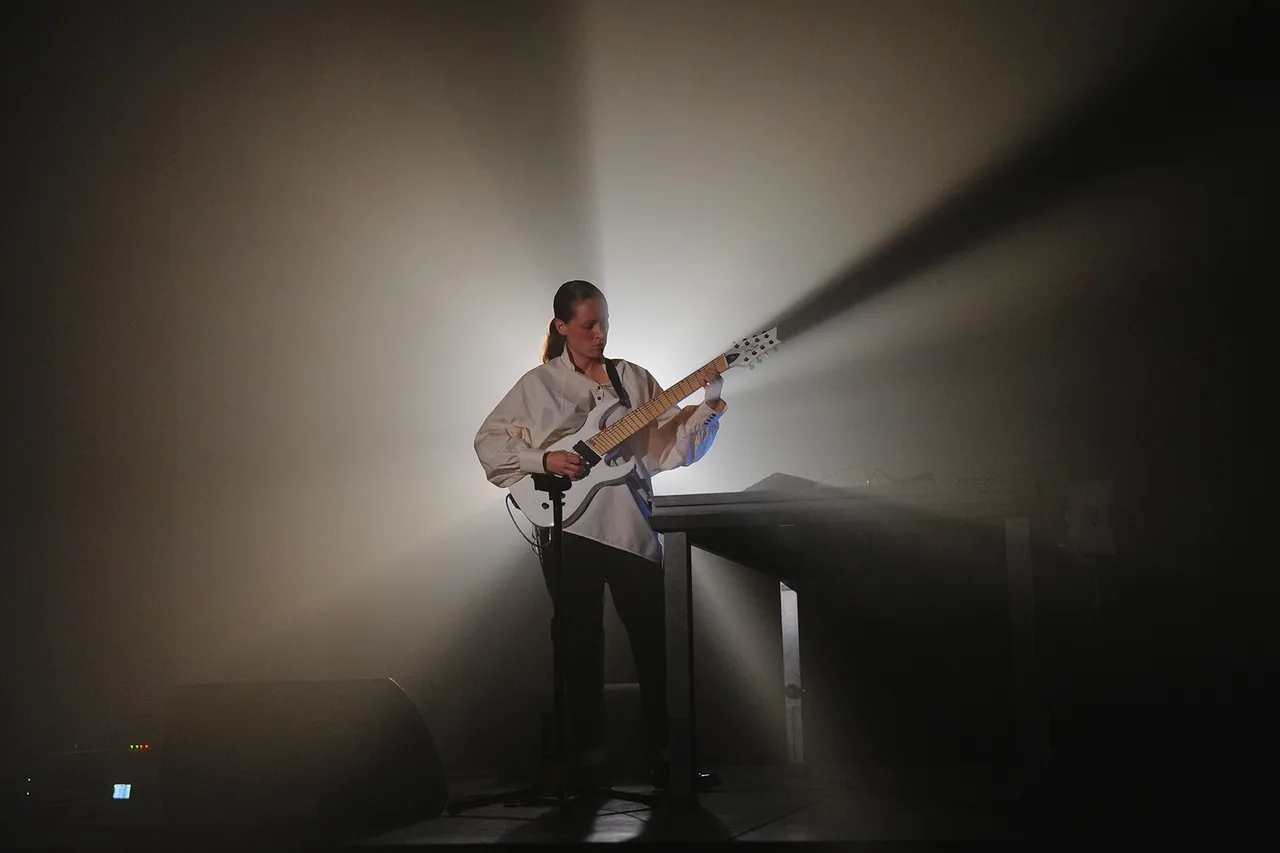
Agnese Menguzzato
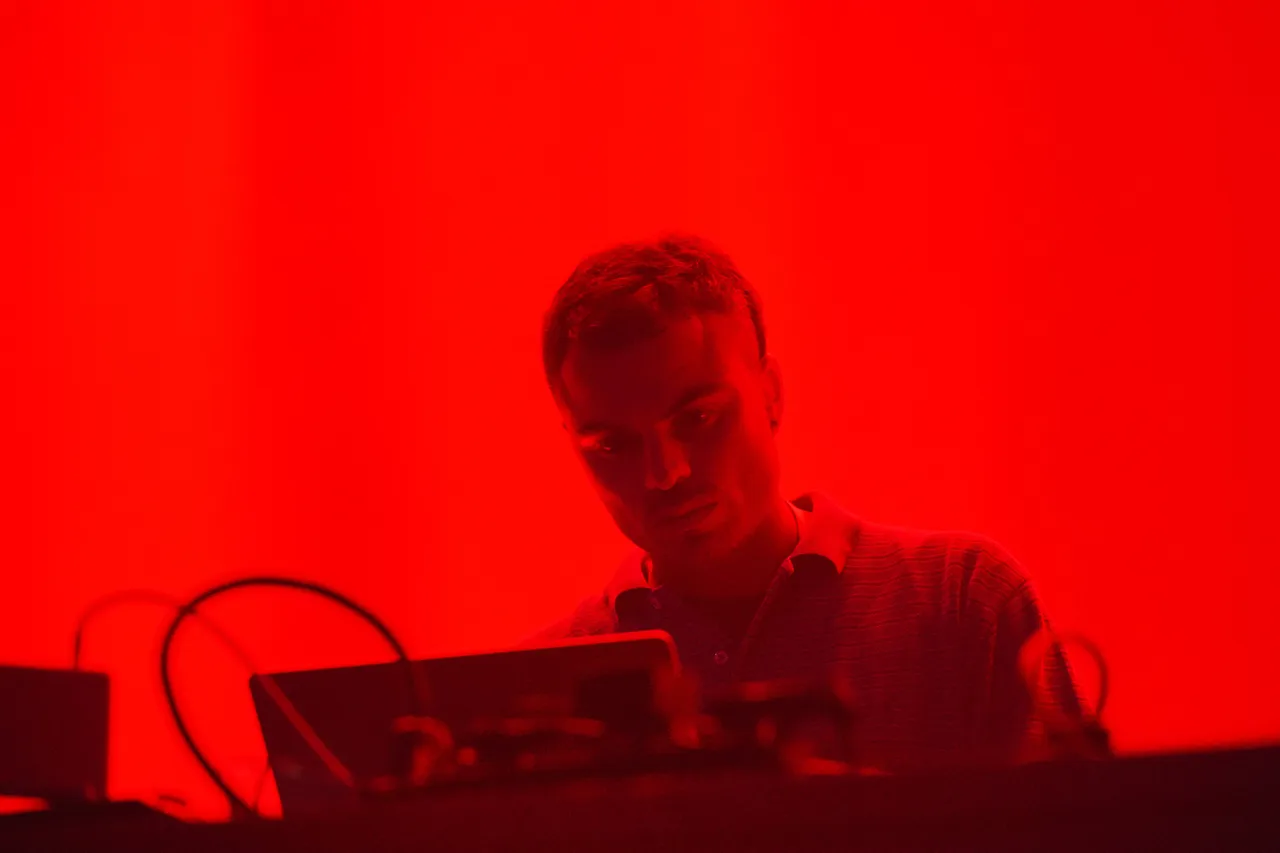
Morgana
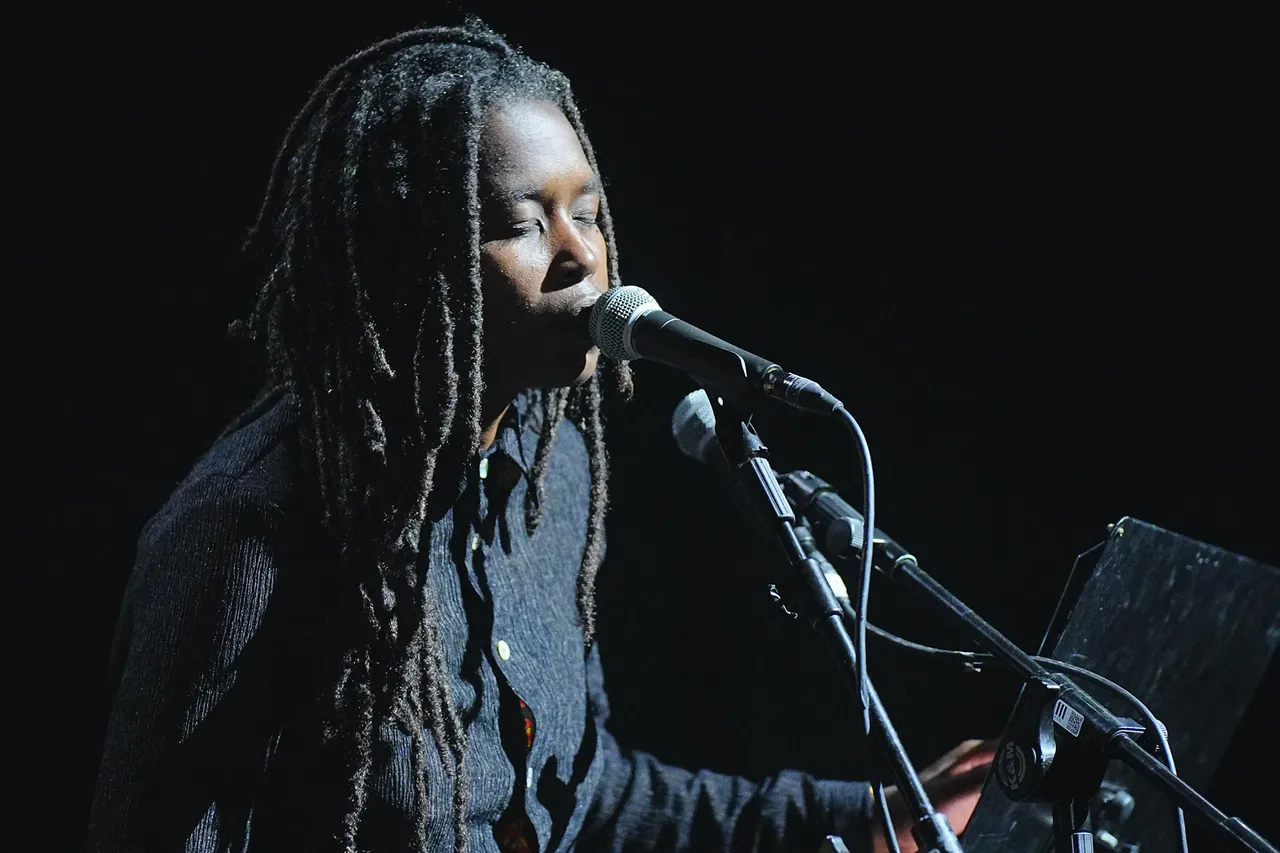
Moor Mother
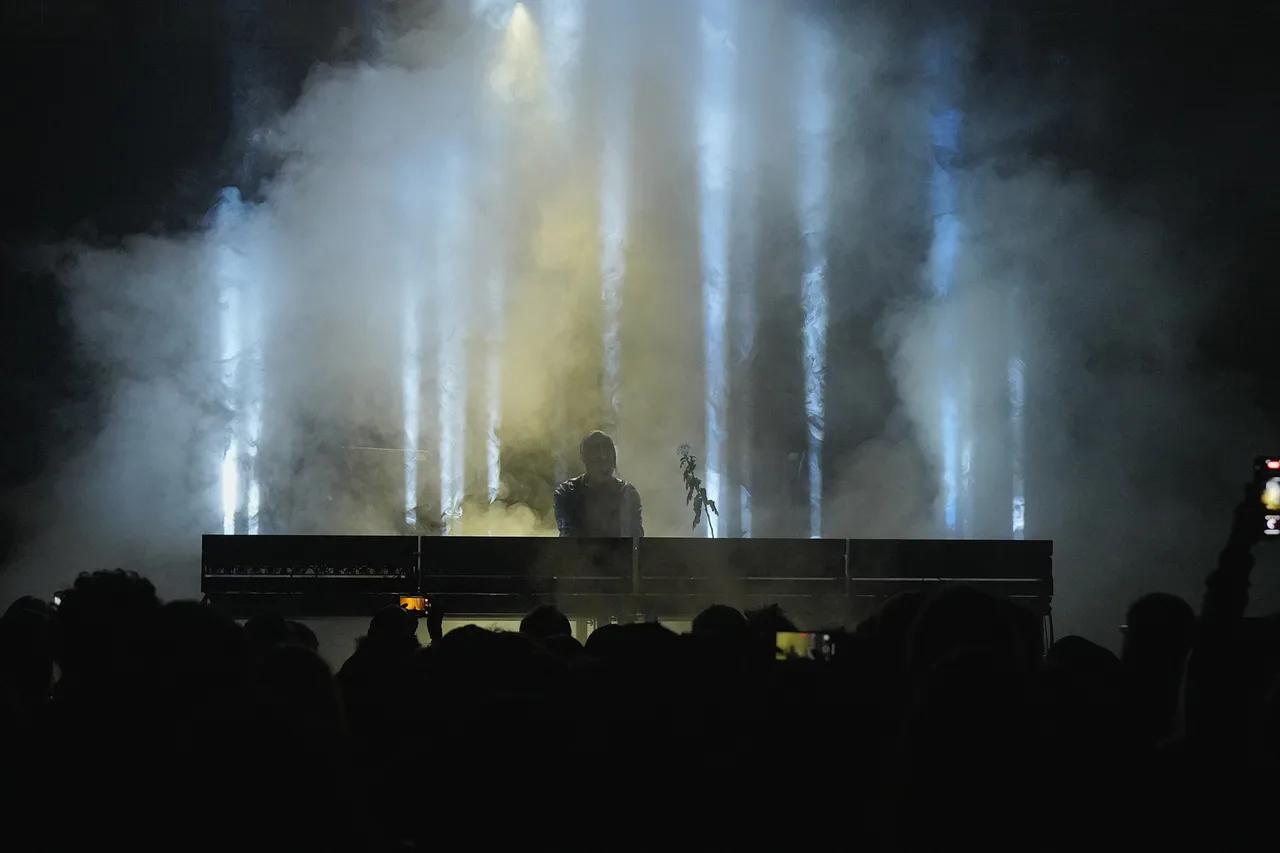
Ecco2K