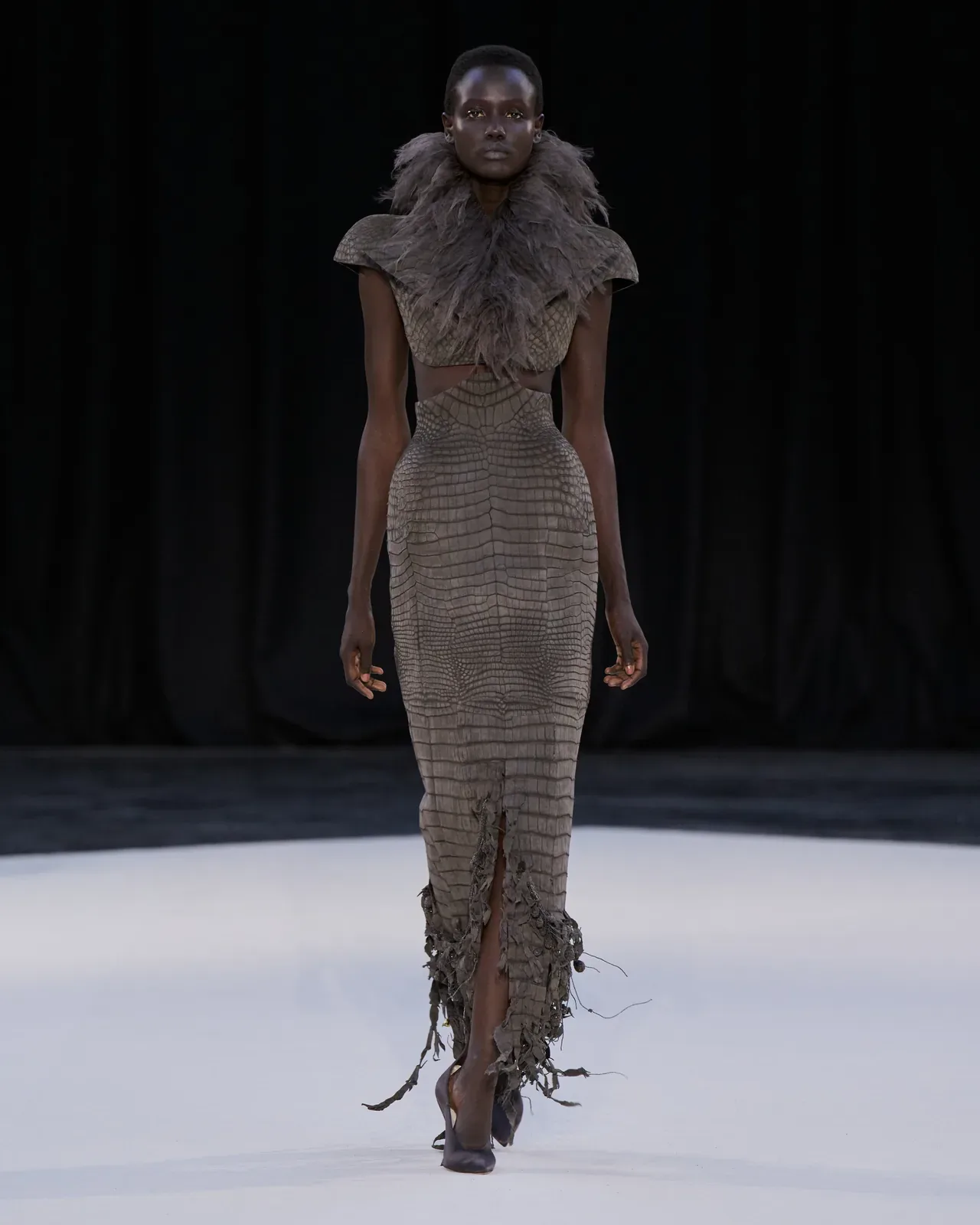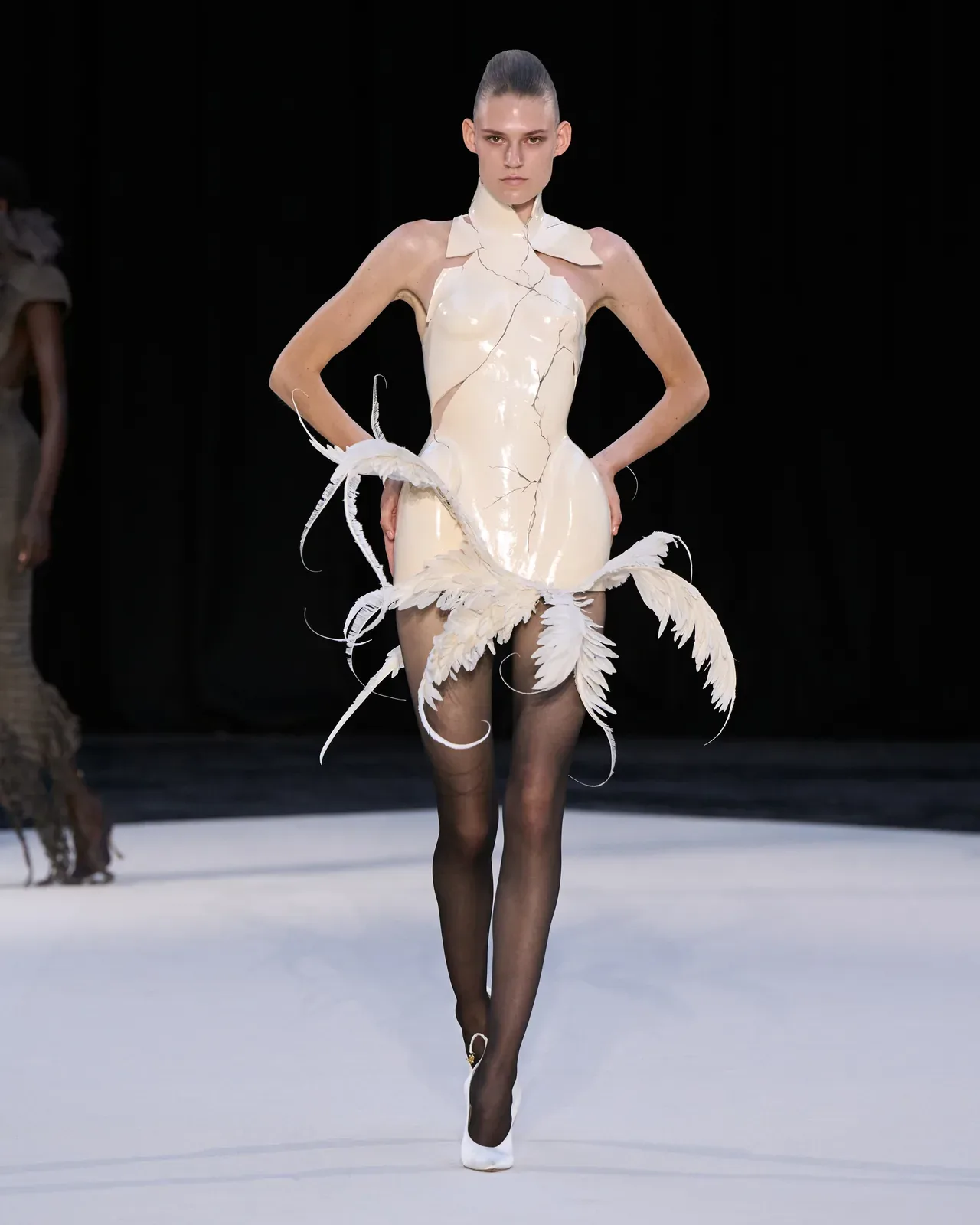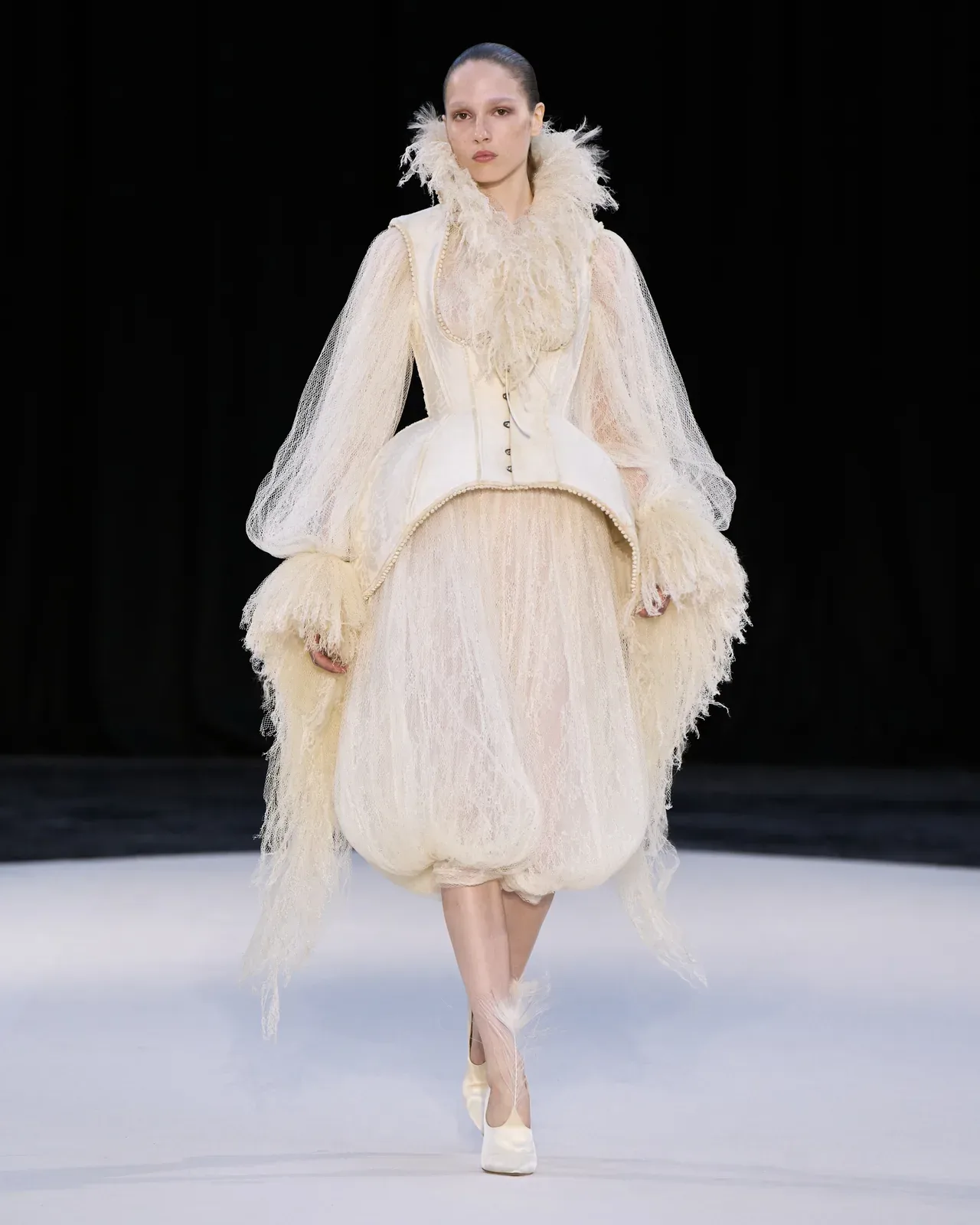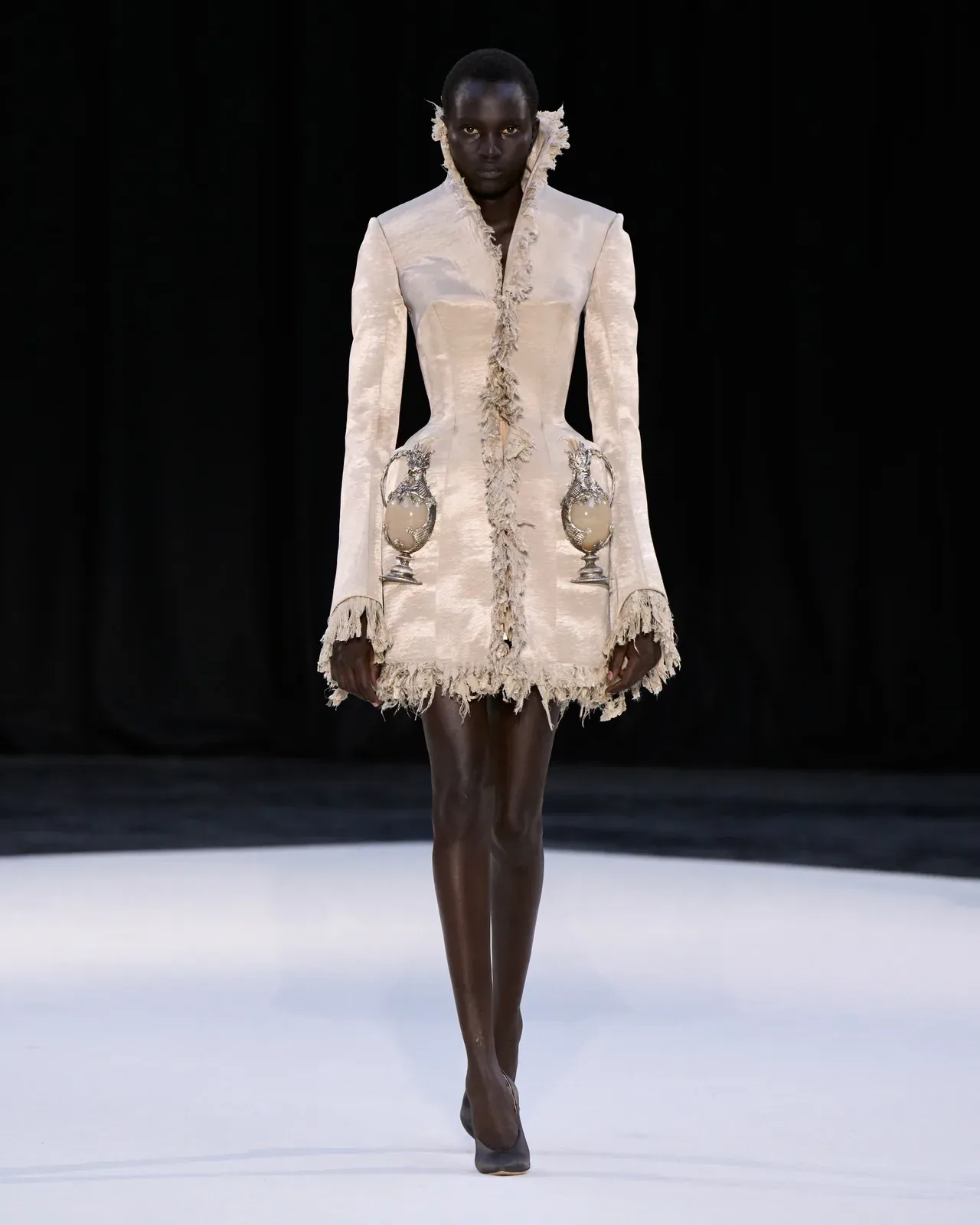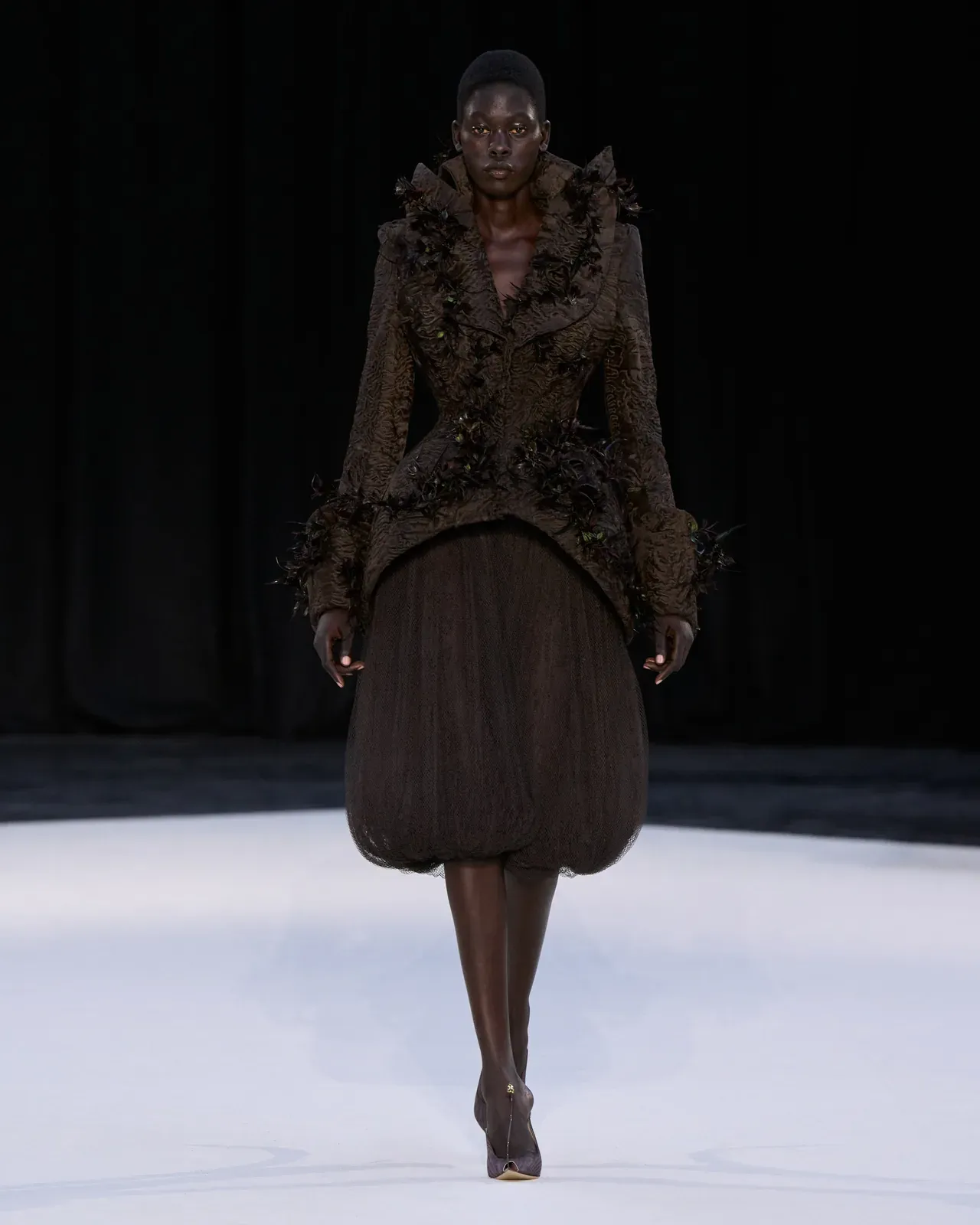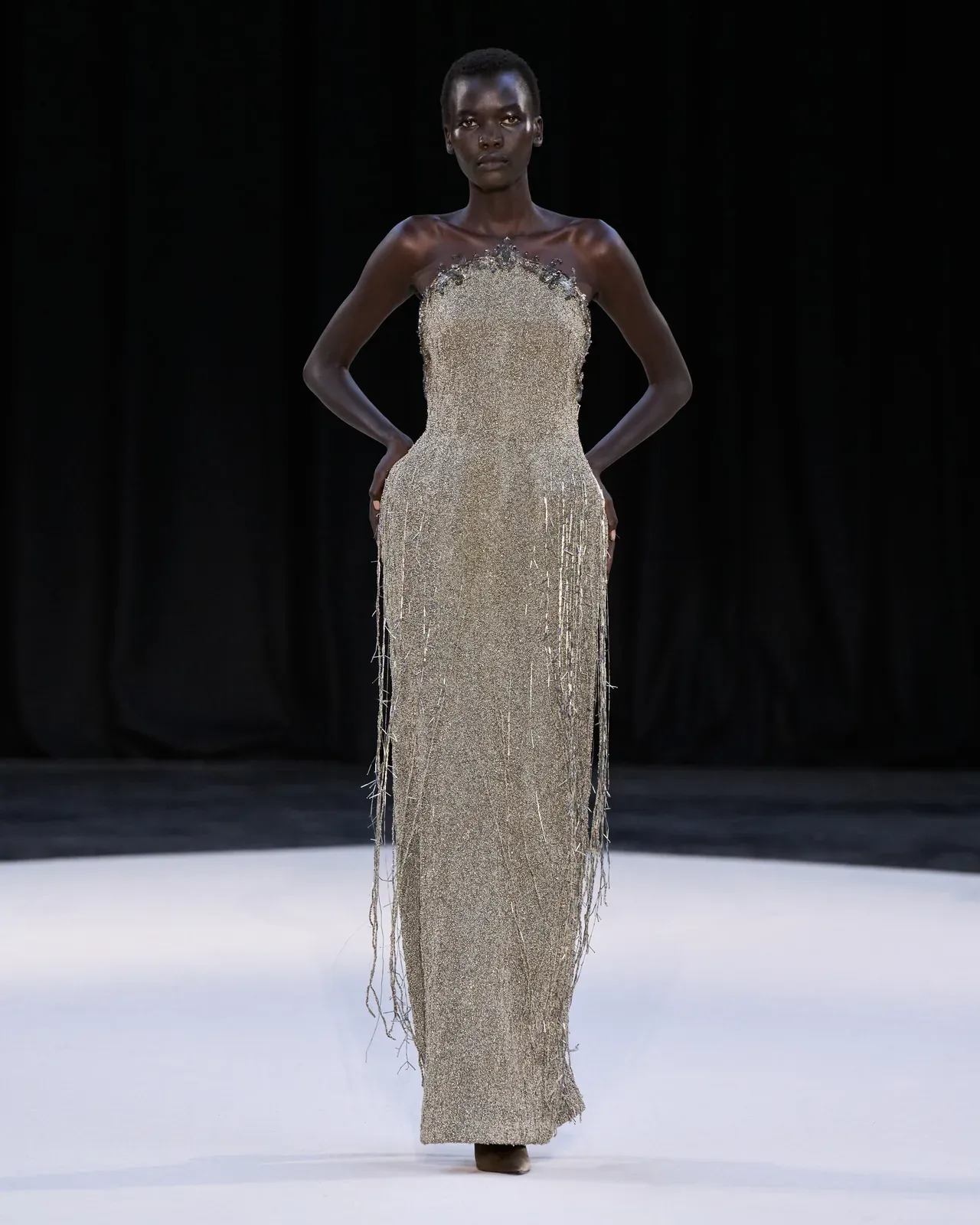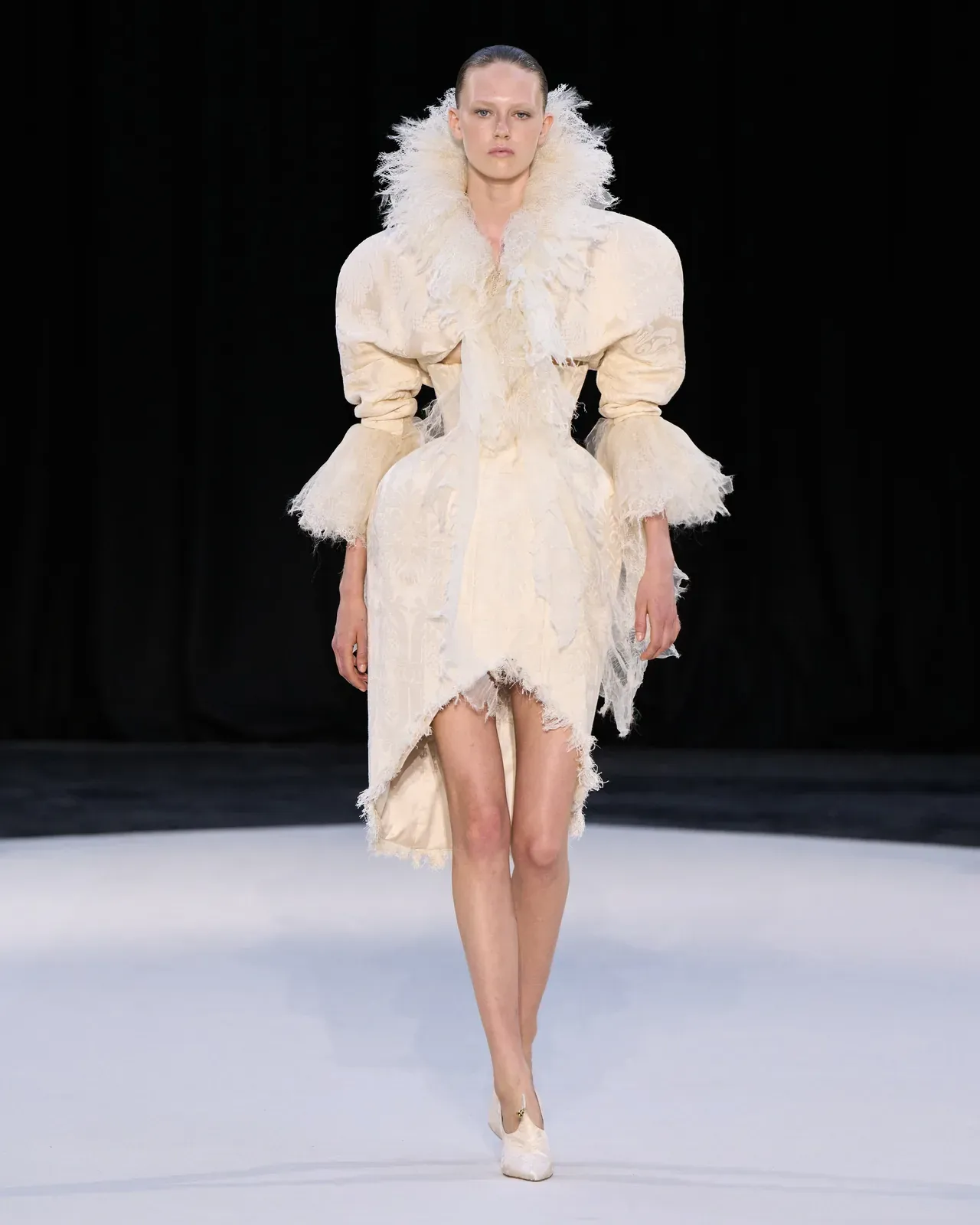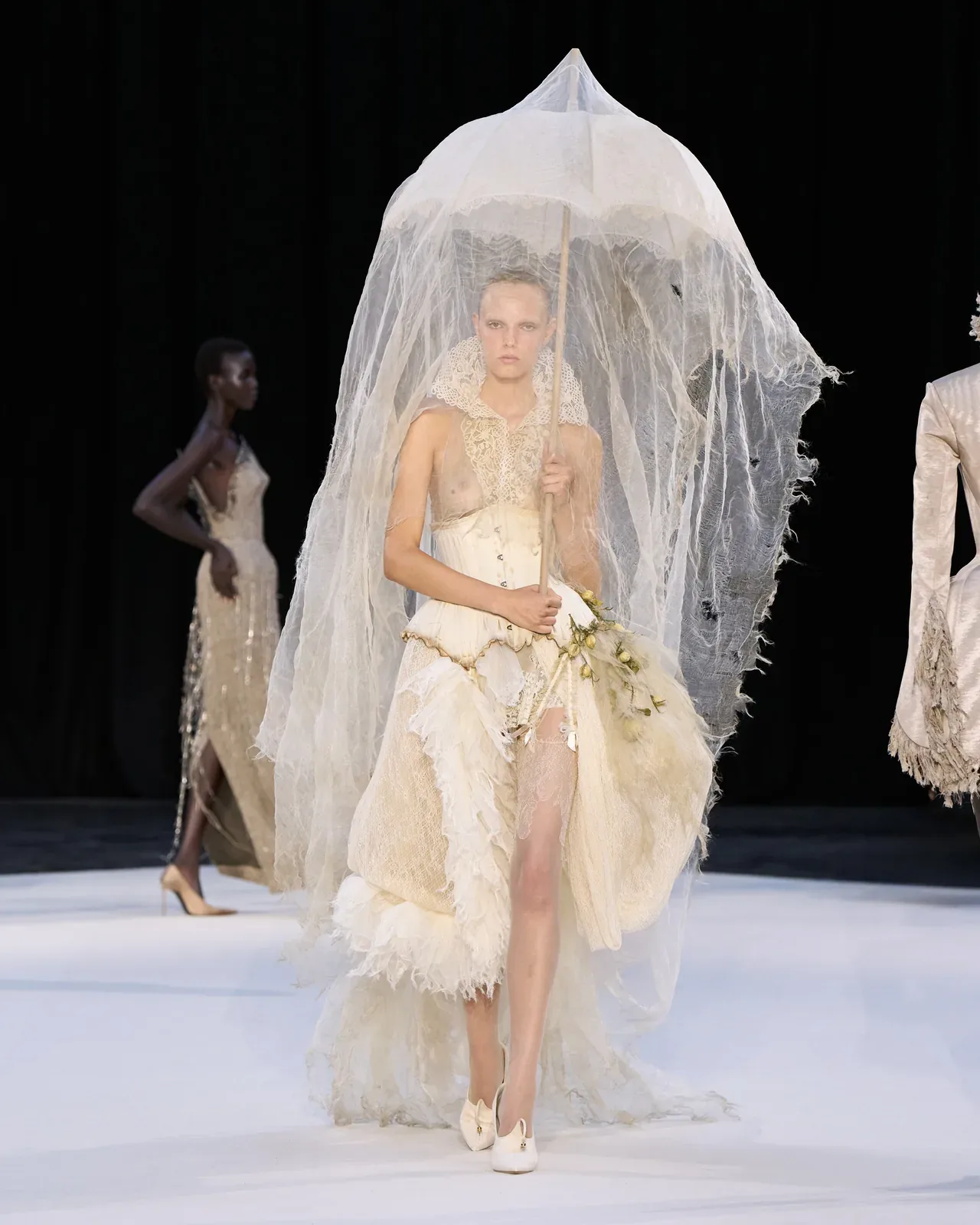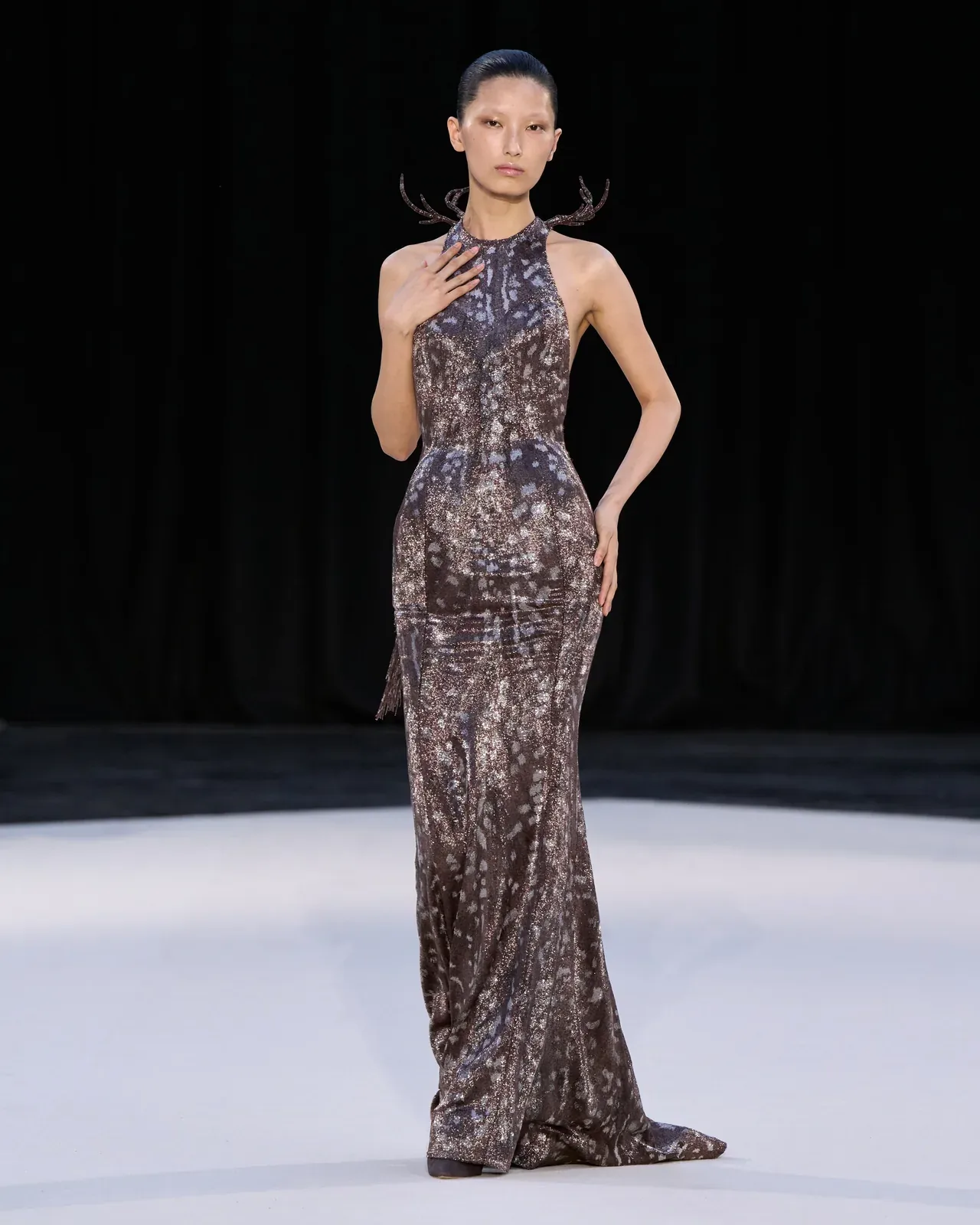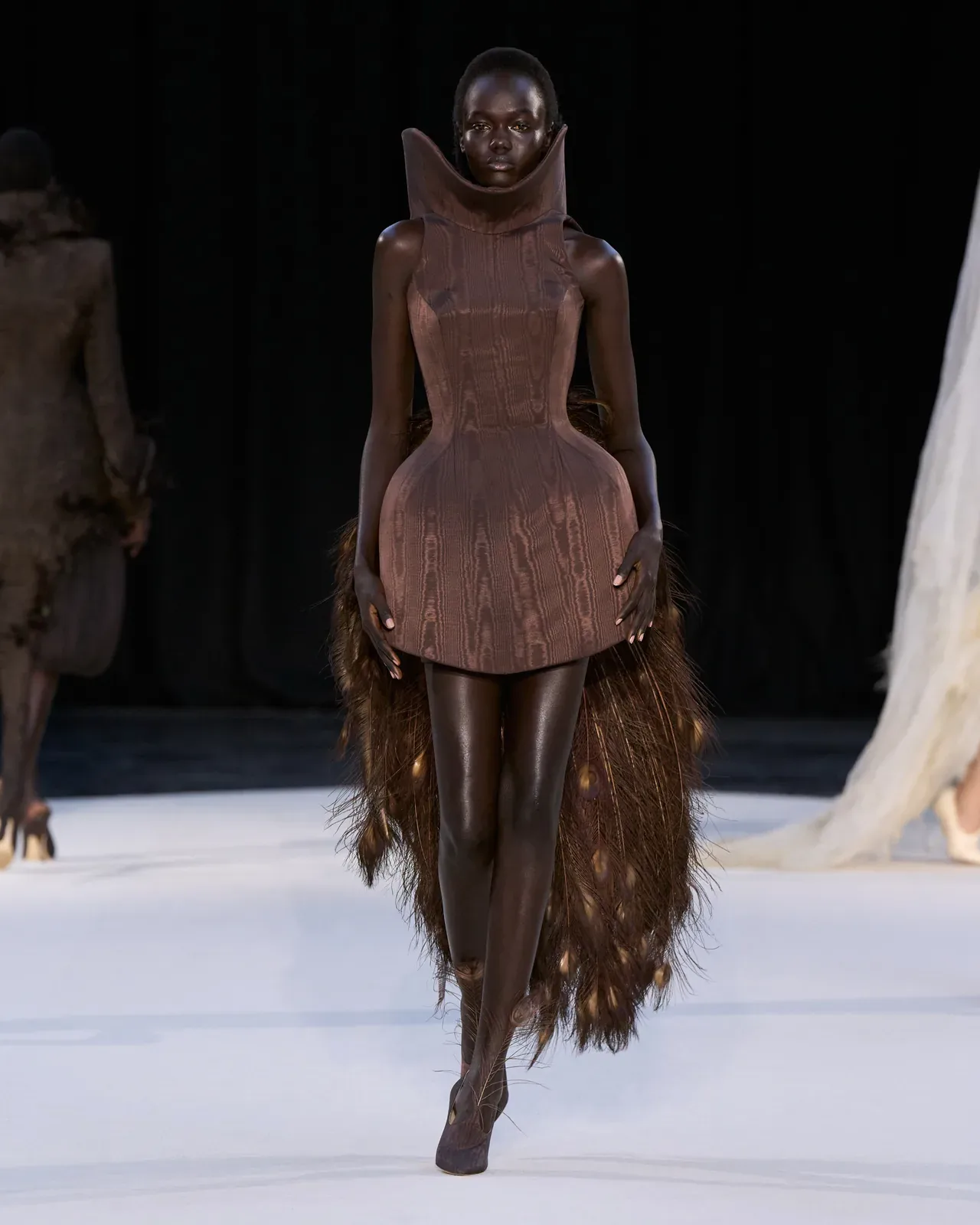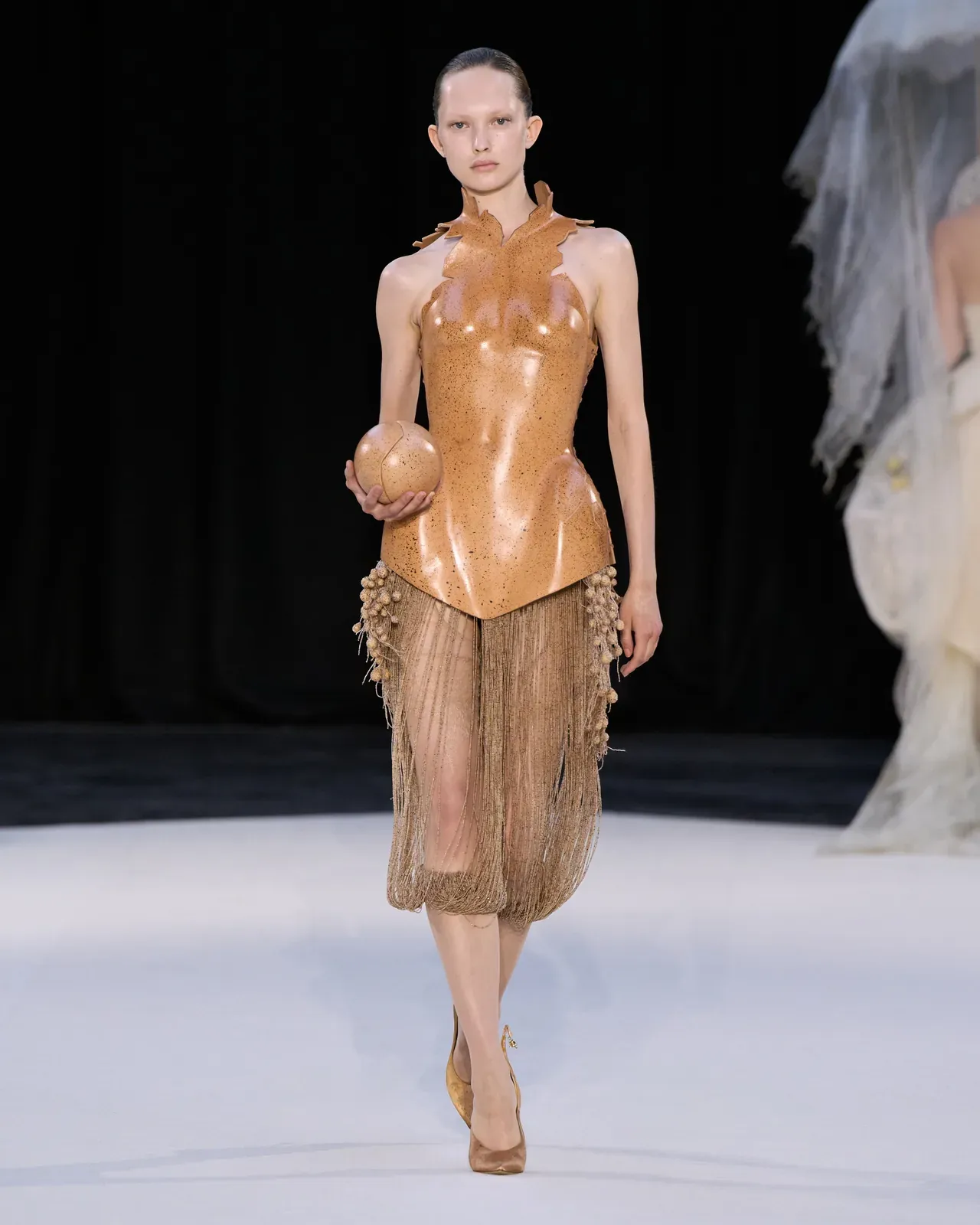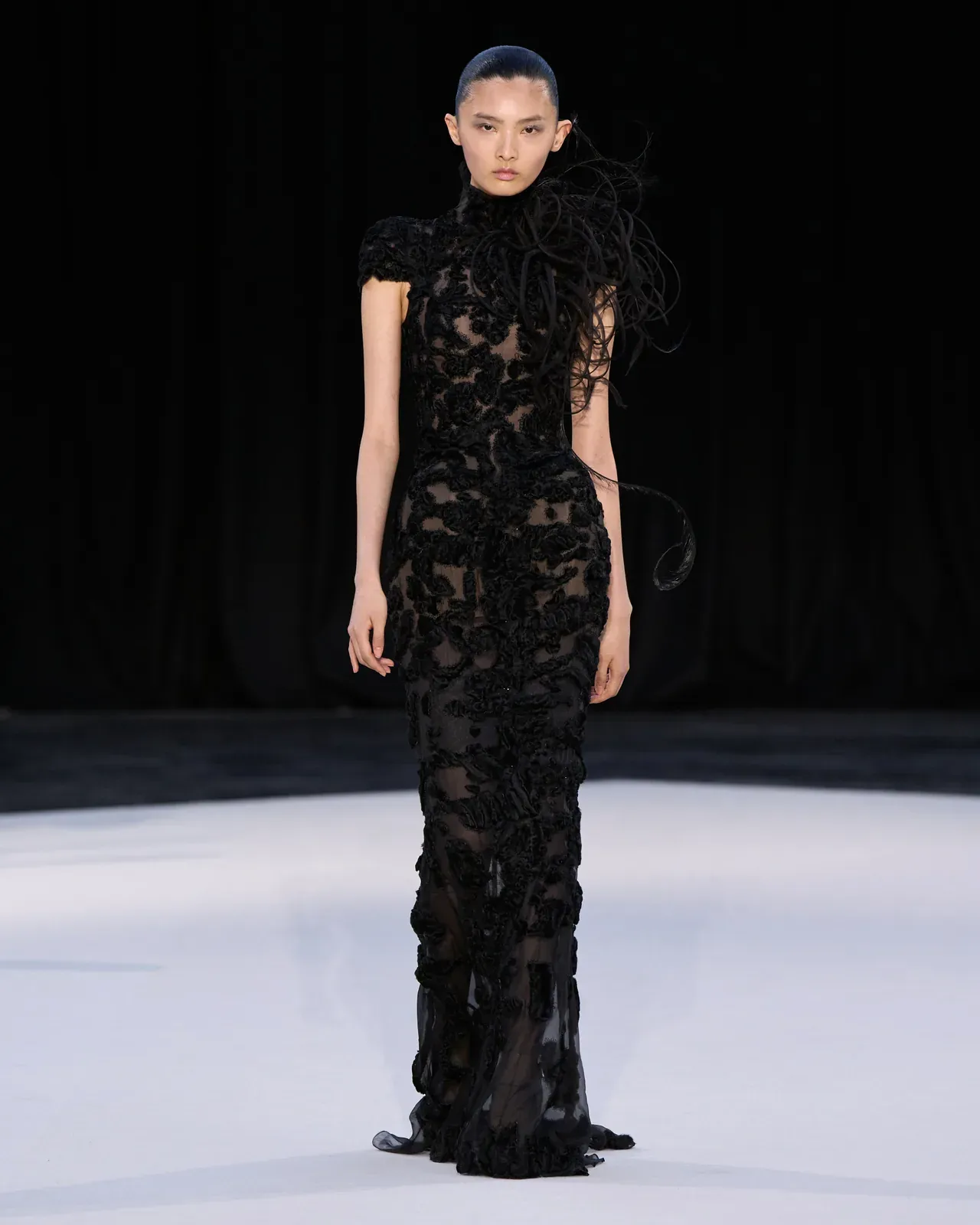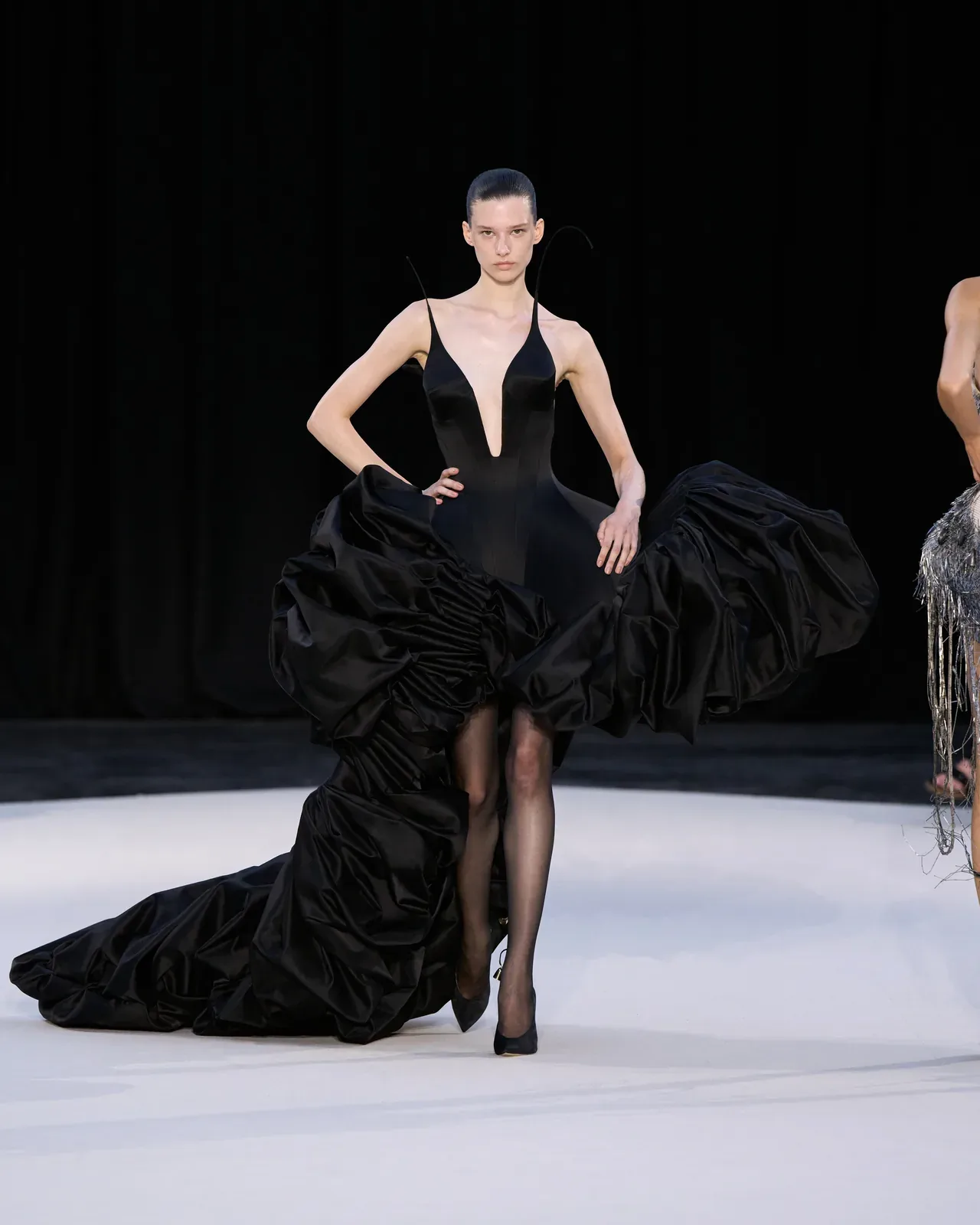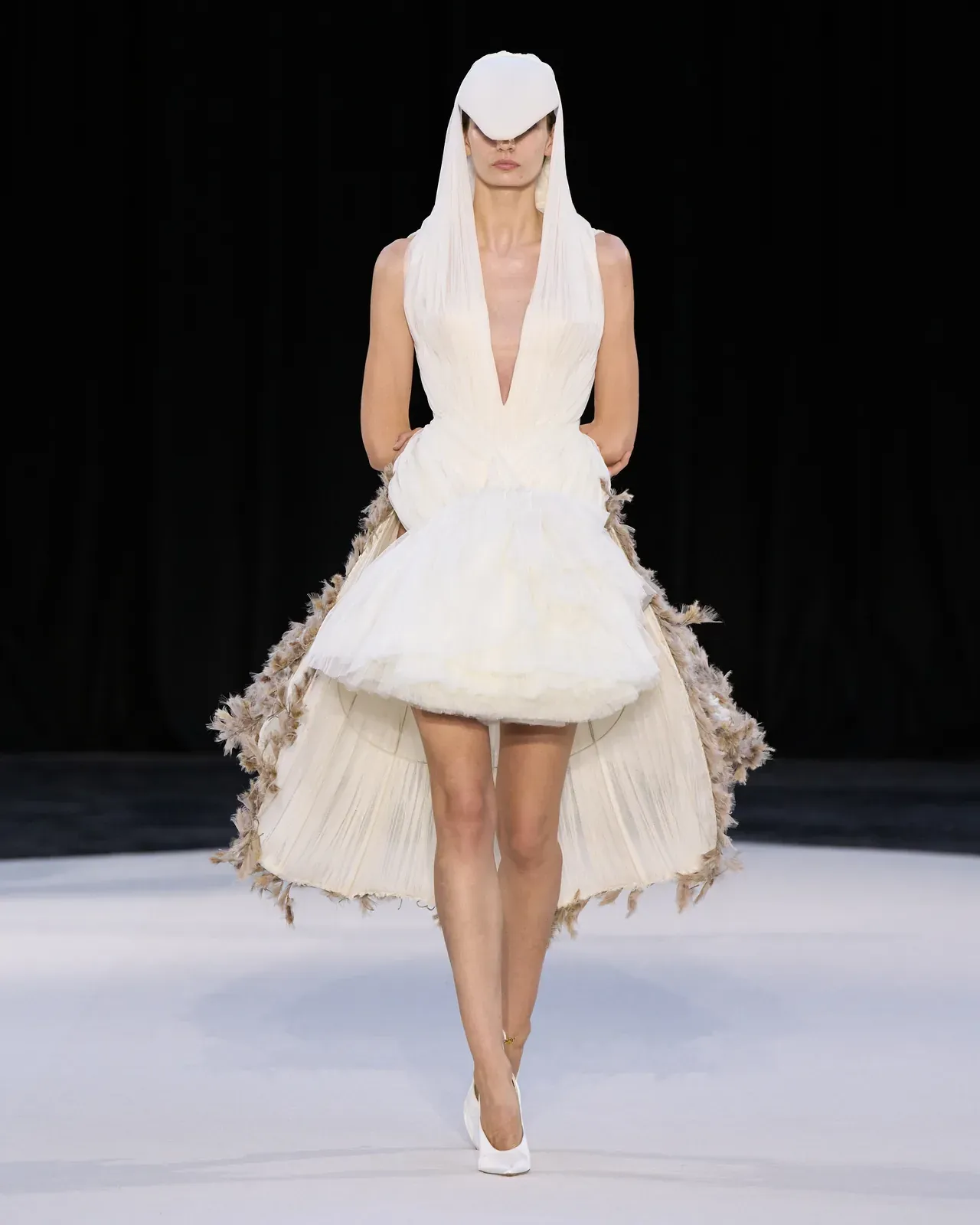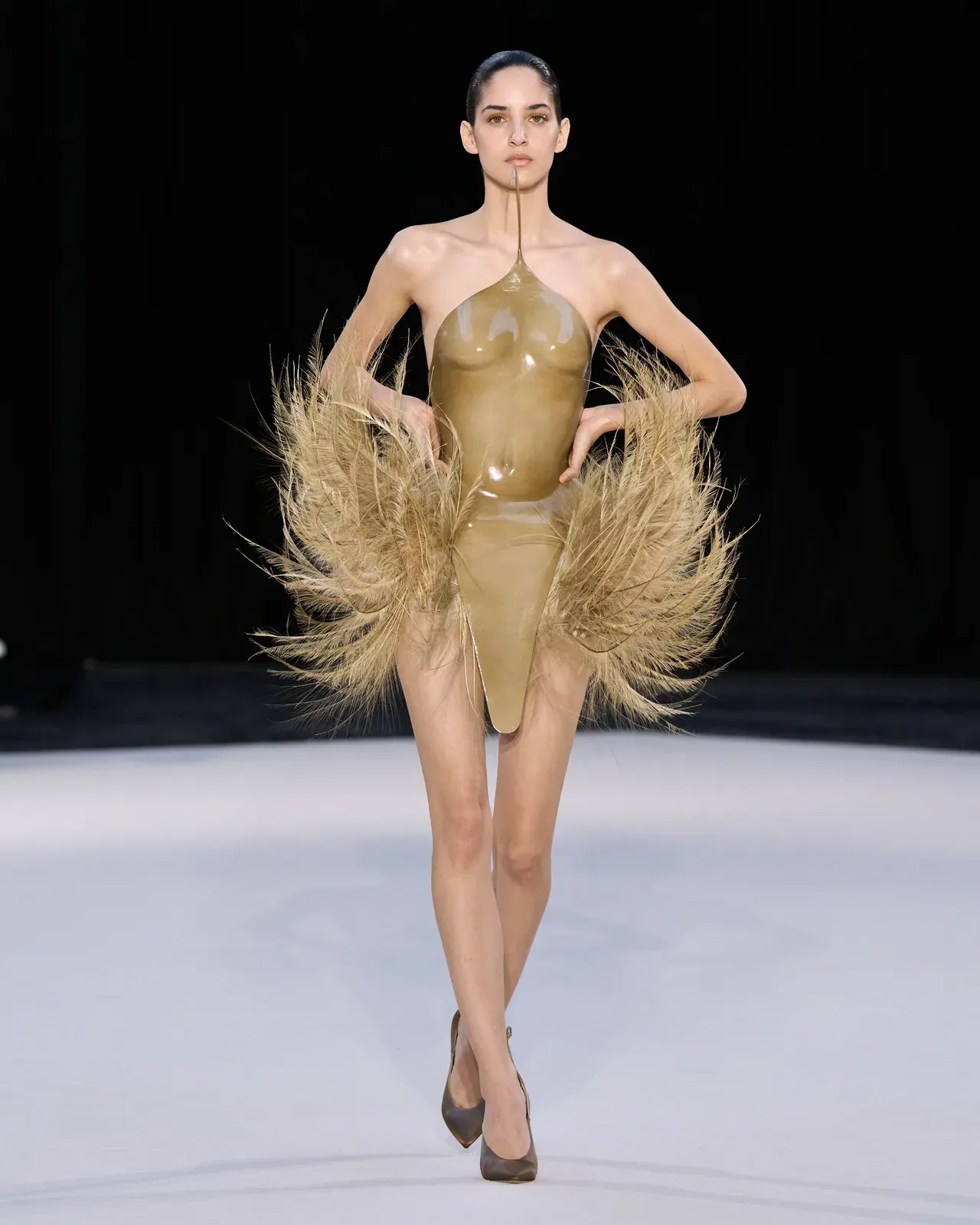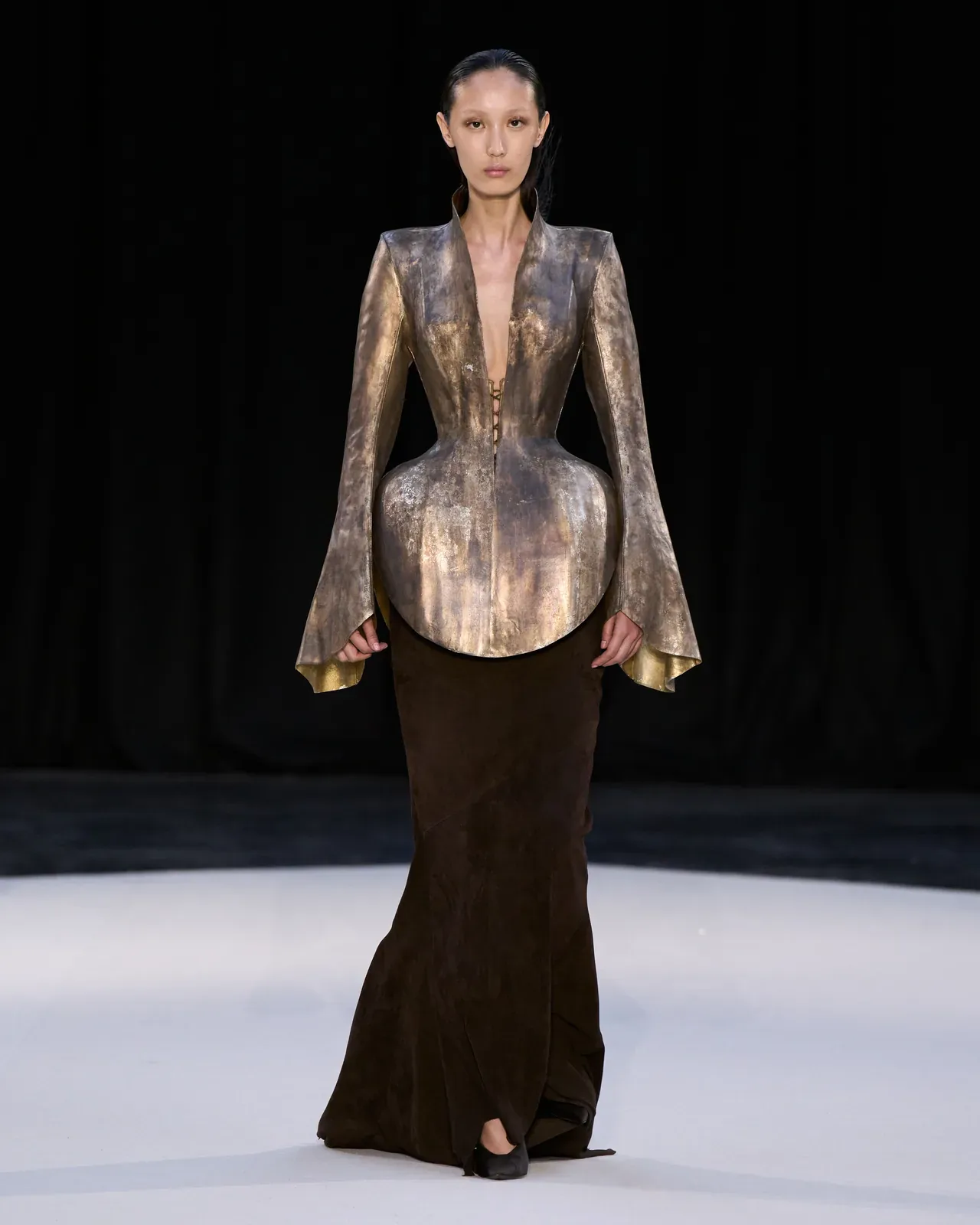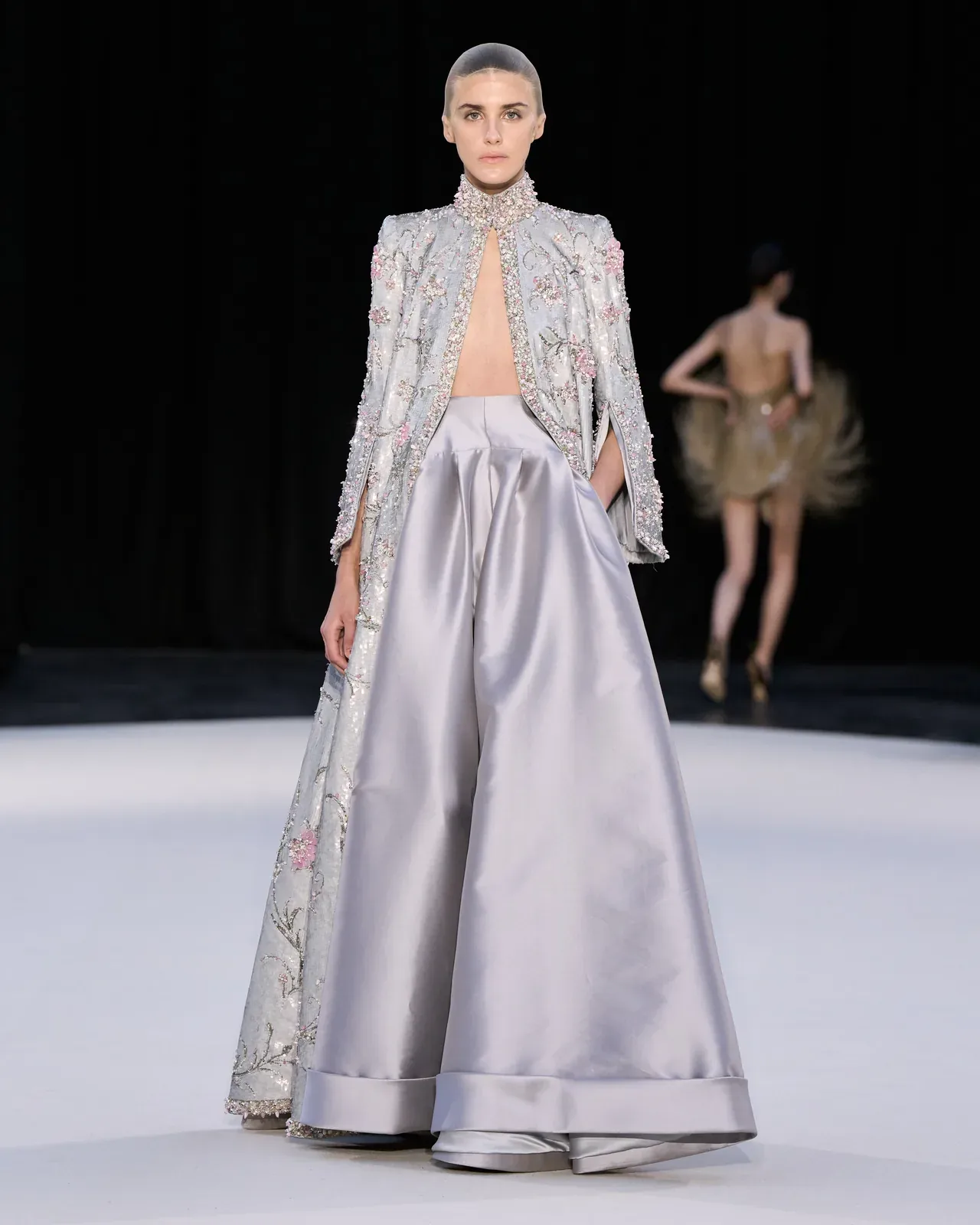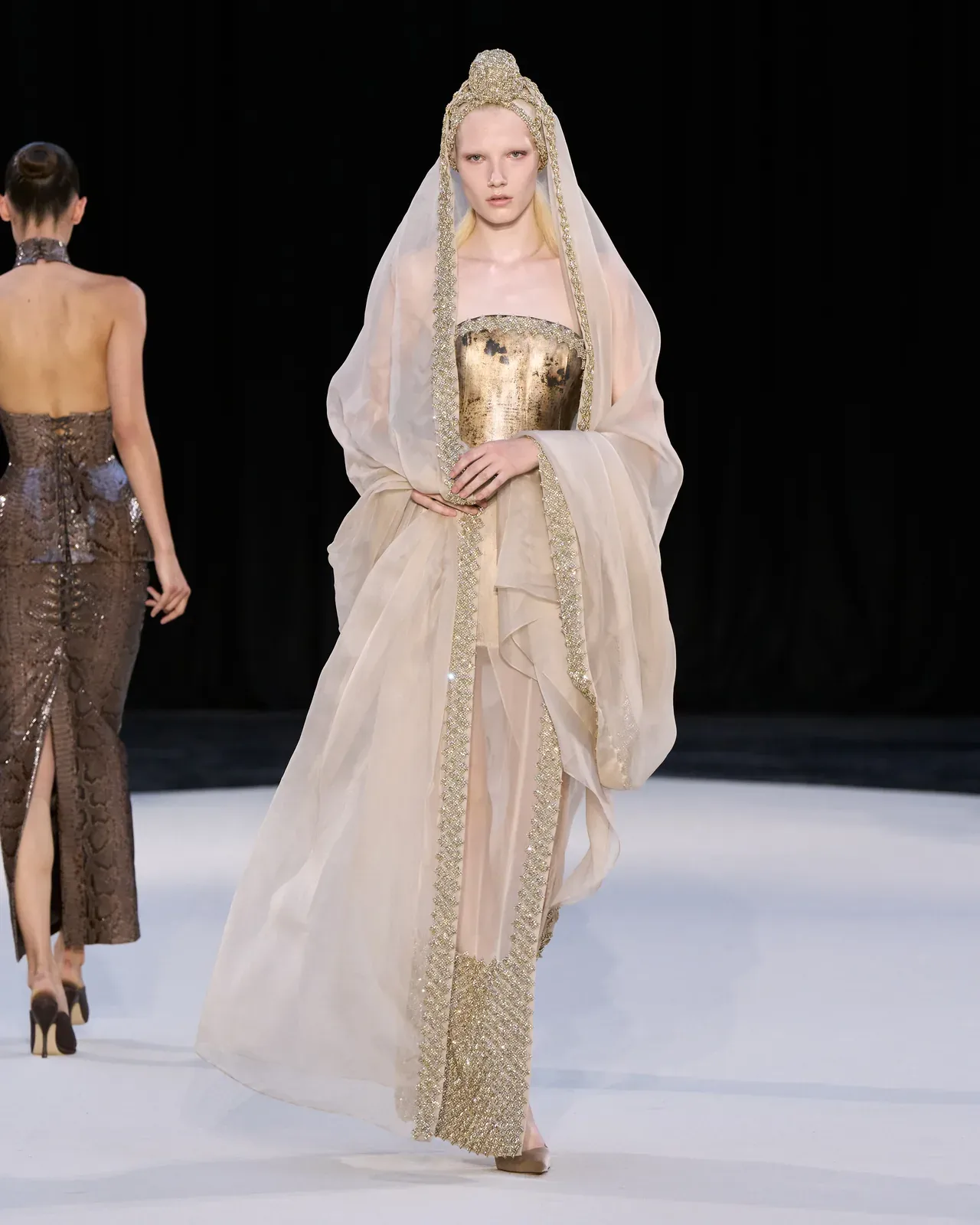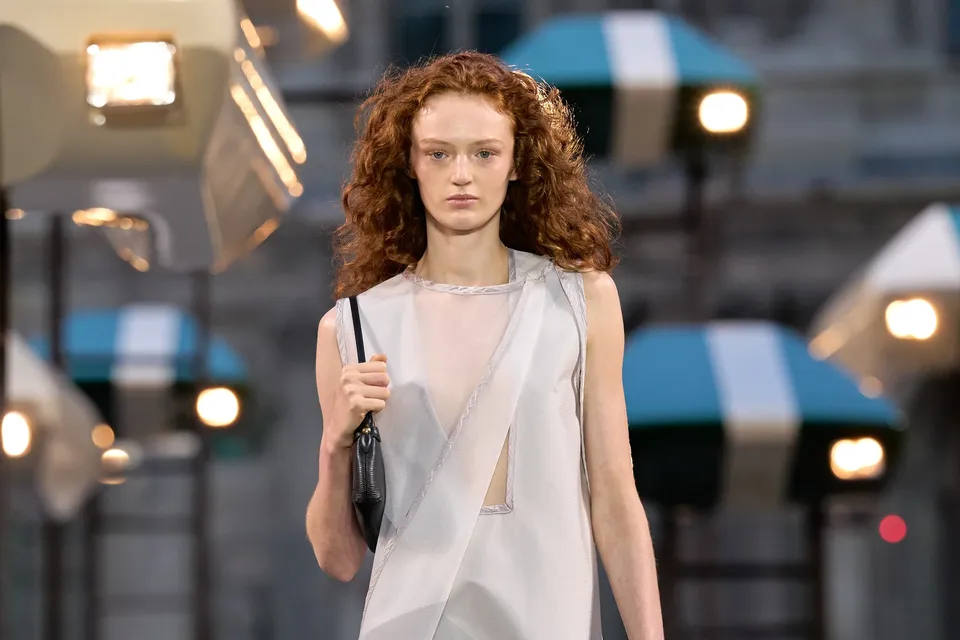
“One morning, when Gregor Samsa woke from troubled dreams, he found himself transformed in his bed into a gigantic insect.” Few openings capture the tension between identity and transformation quite like Kafka’s The Metamorphosis. Ashi Studio’s latest Fall 2026 Couture presentation begins at a decadent ball, only to end with the role consuming the person beneath.
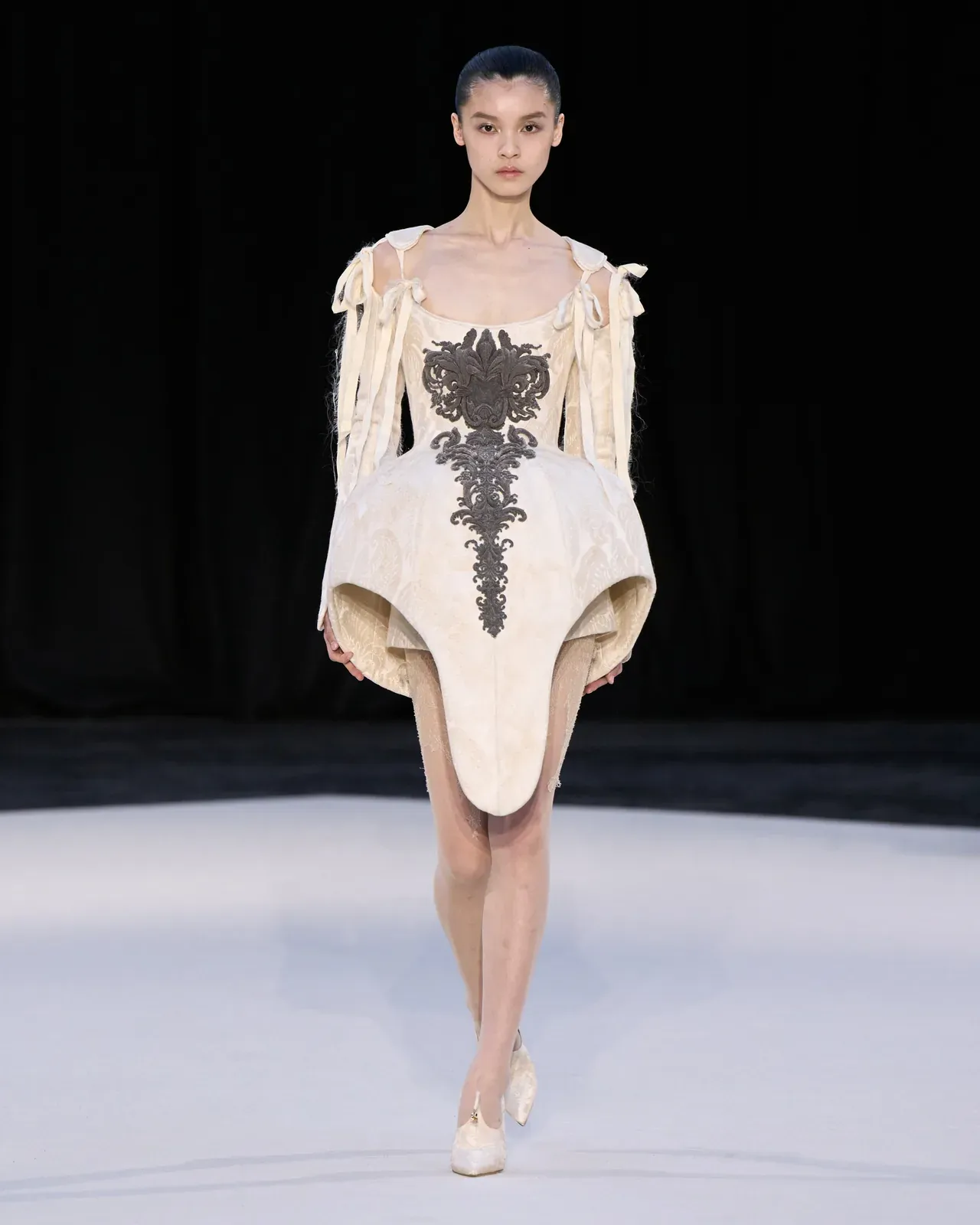
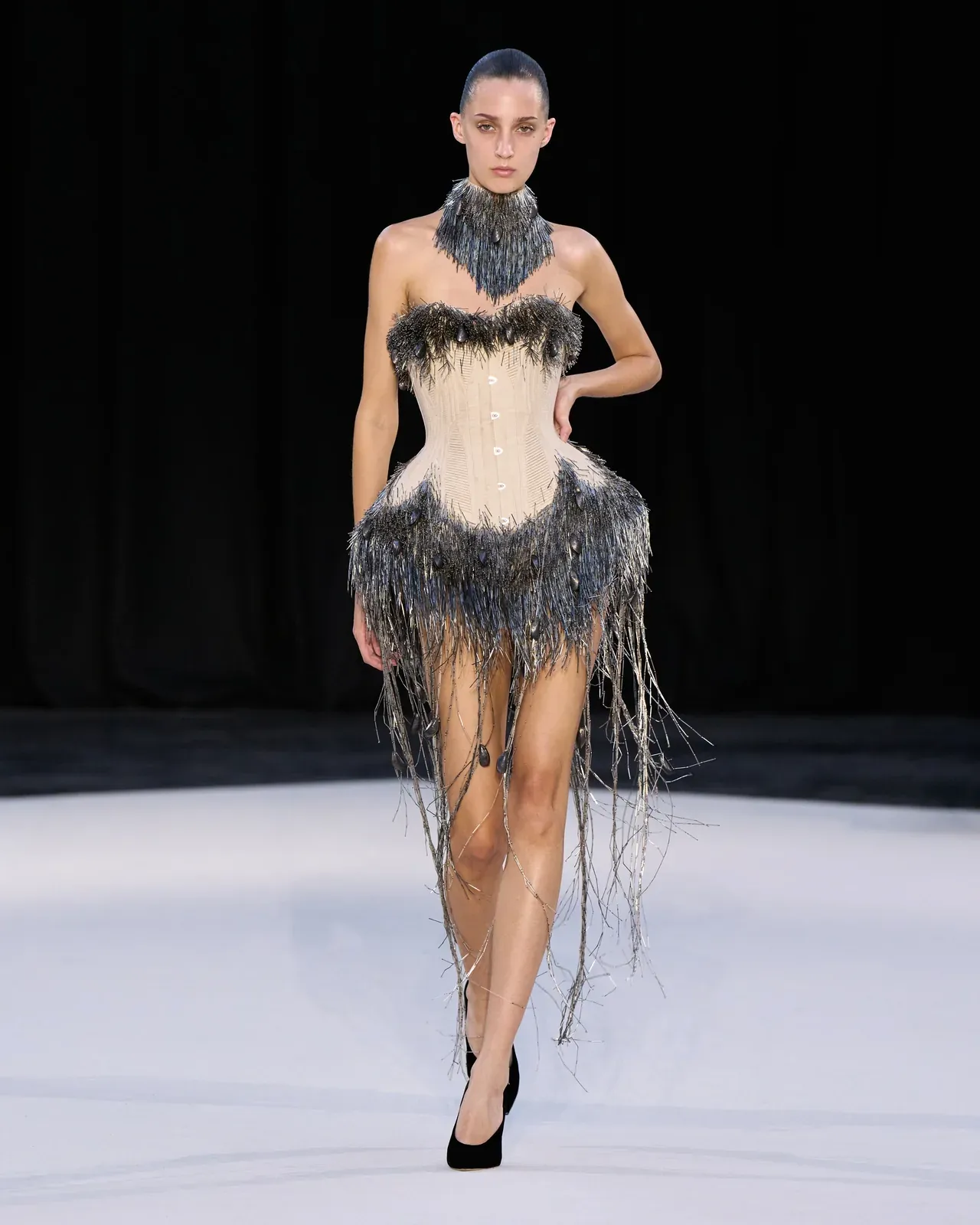
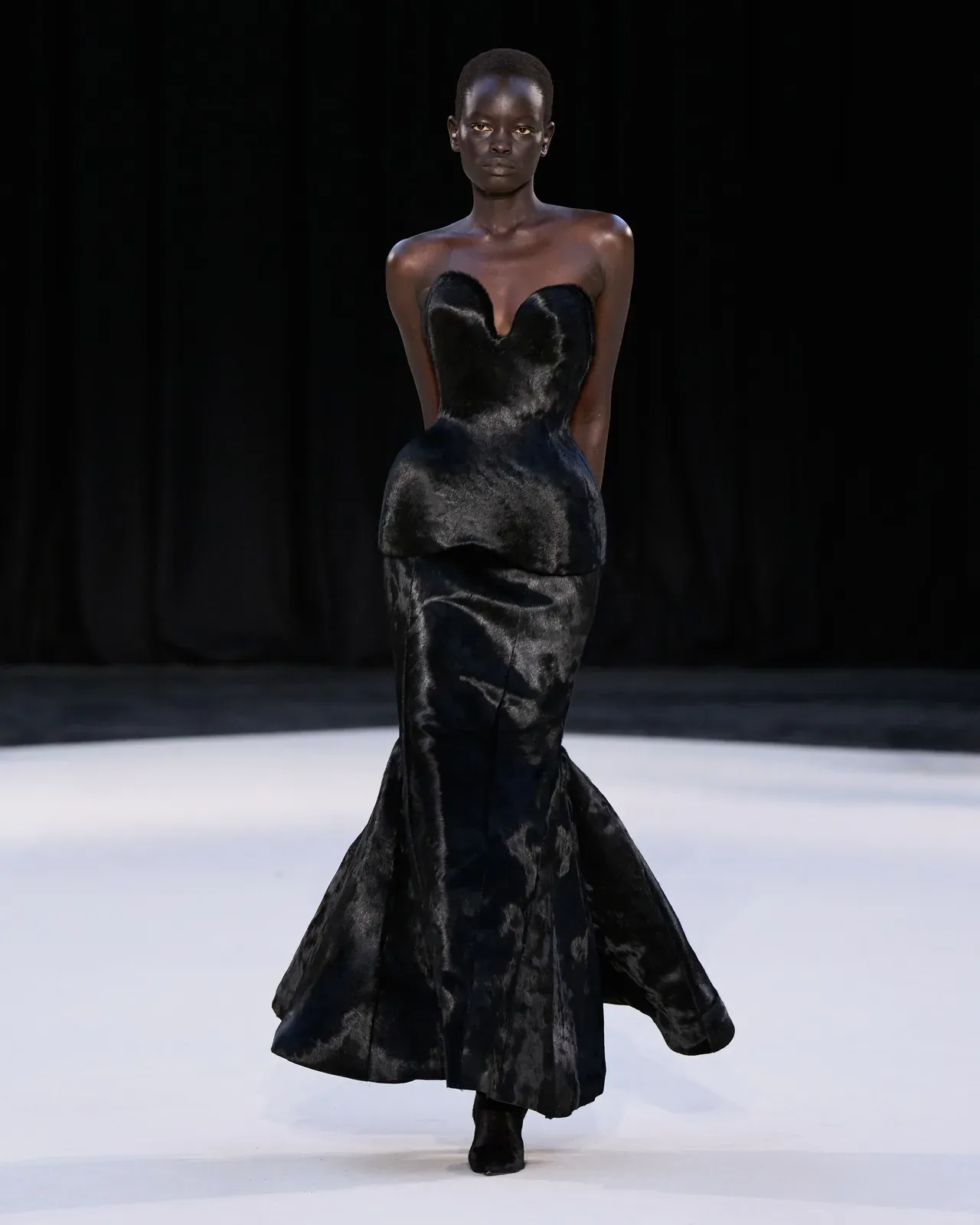
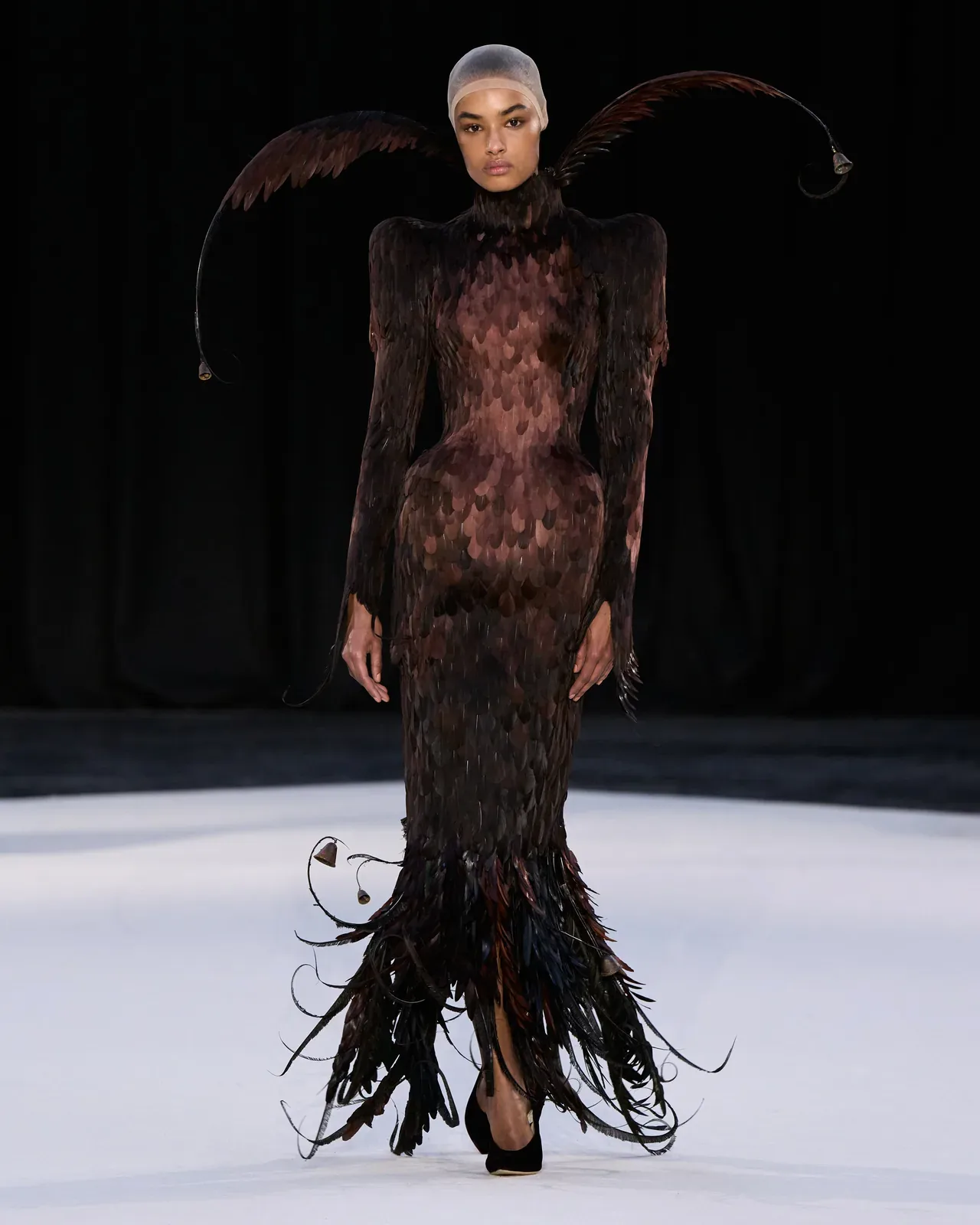
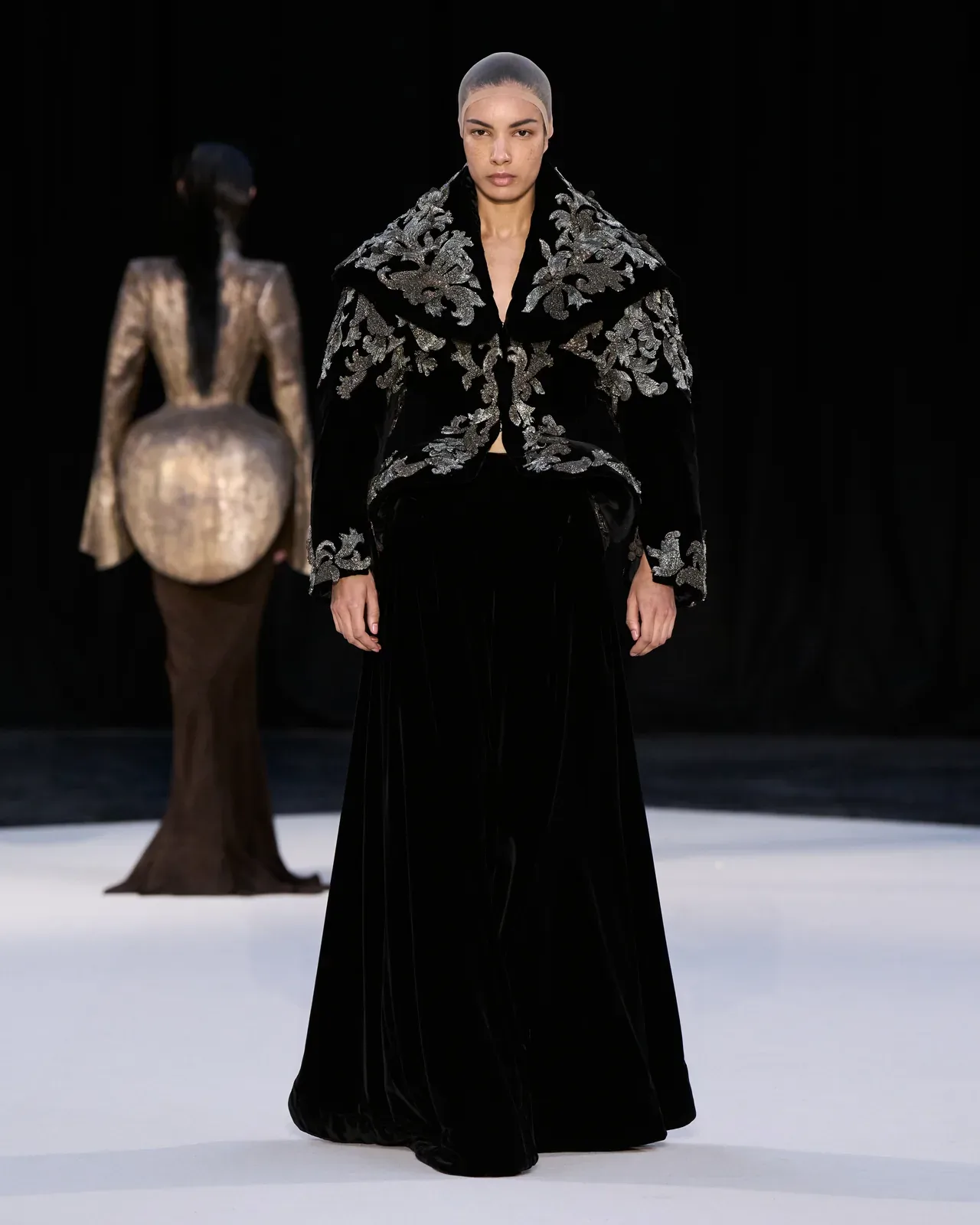
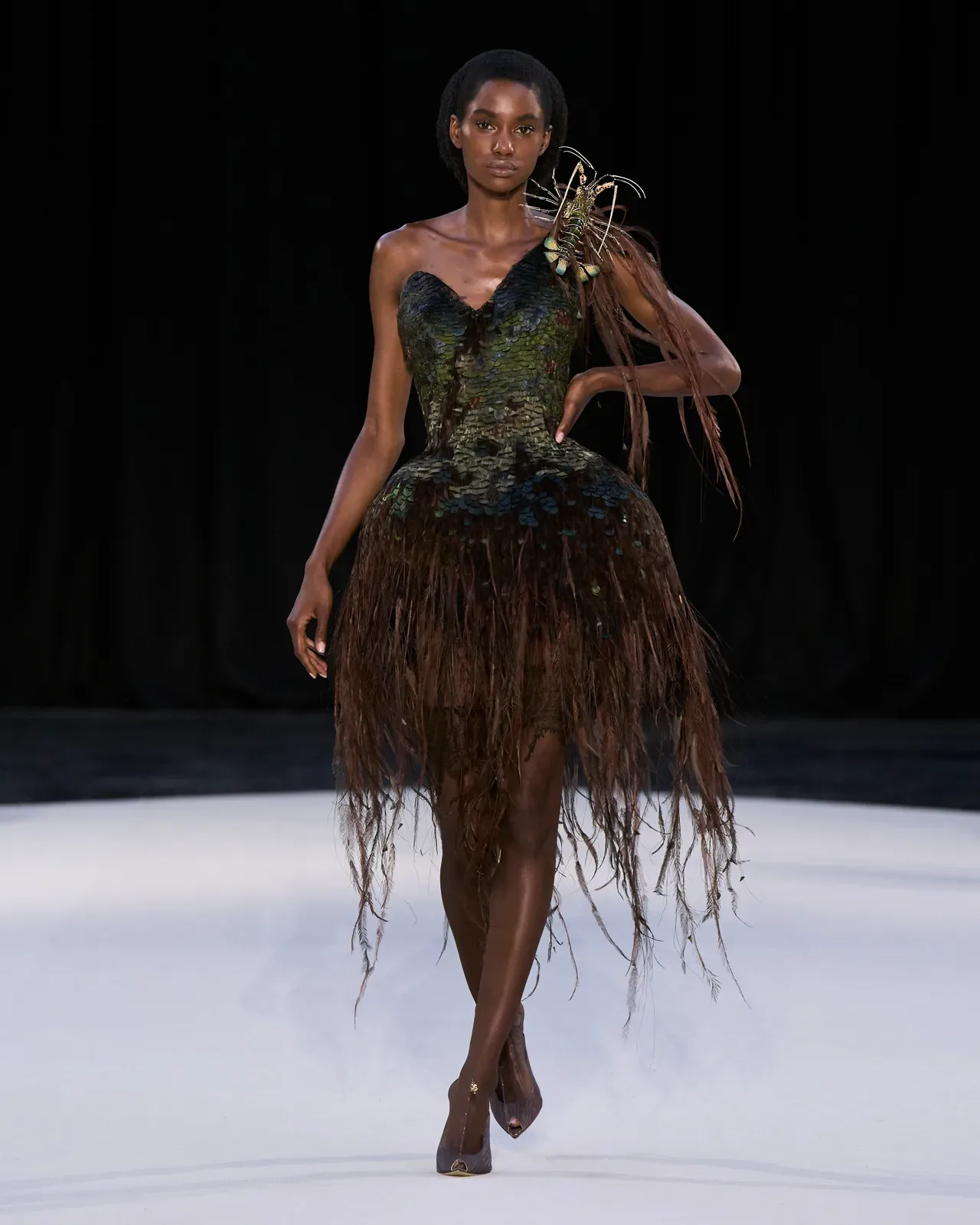
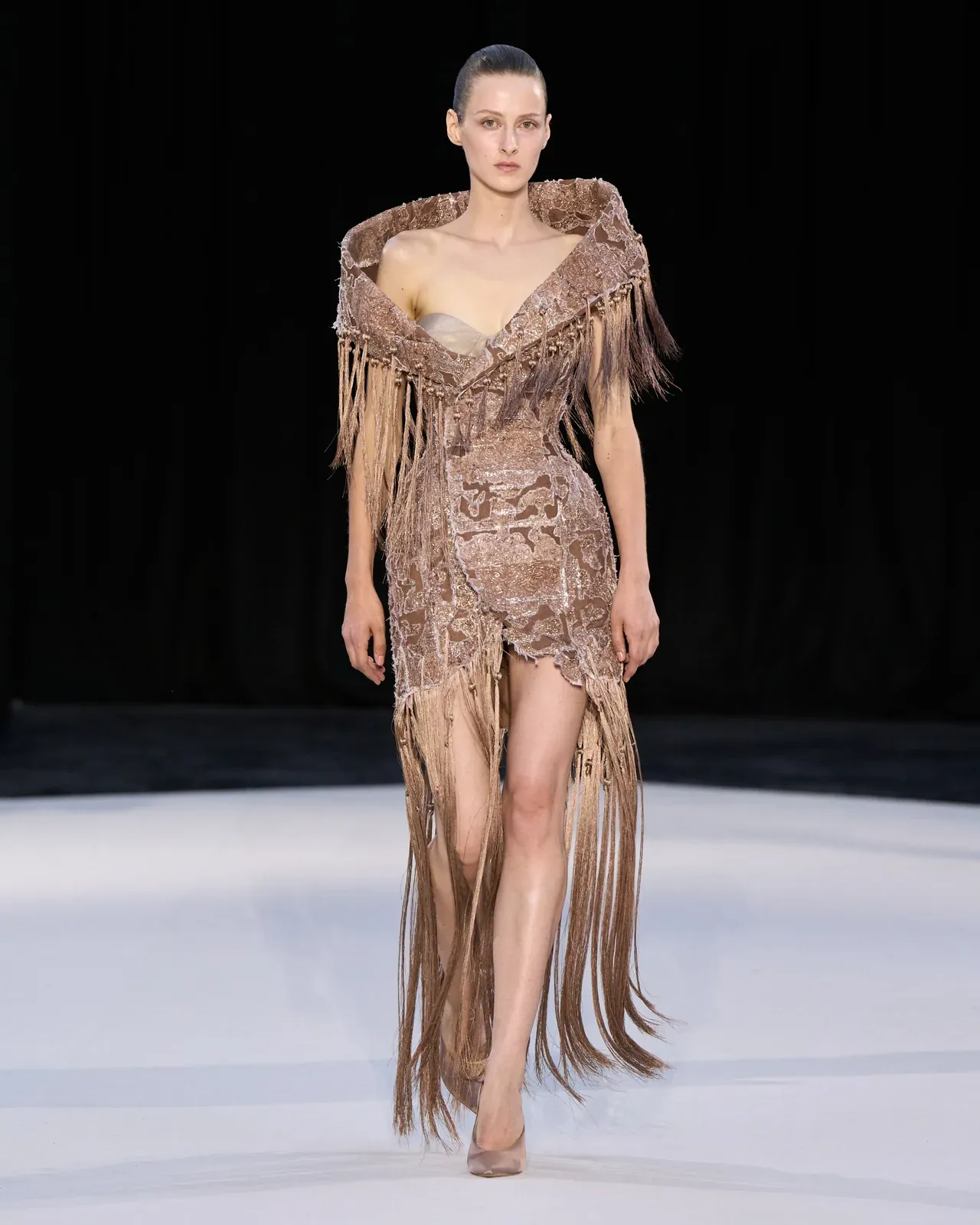
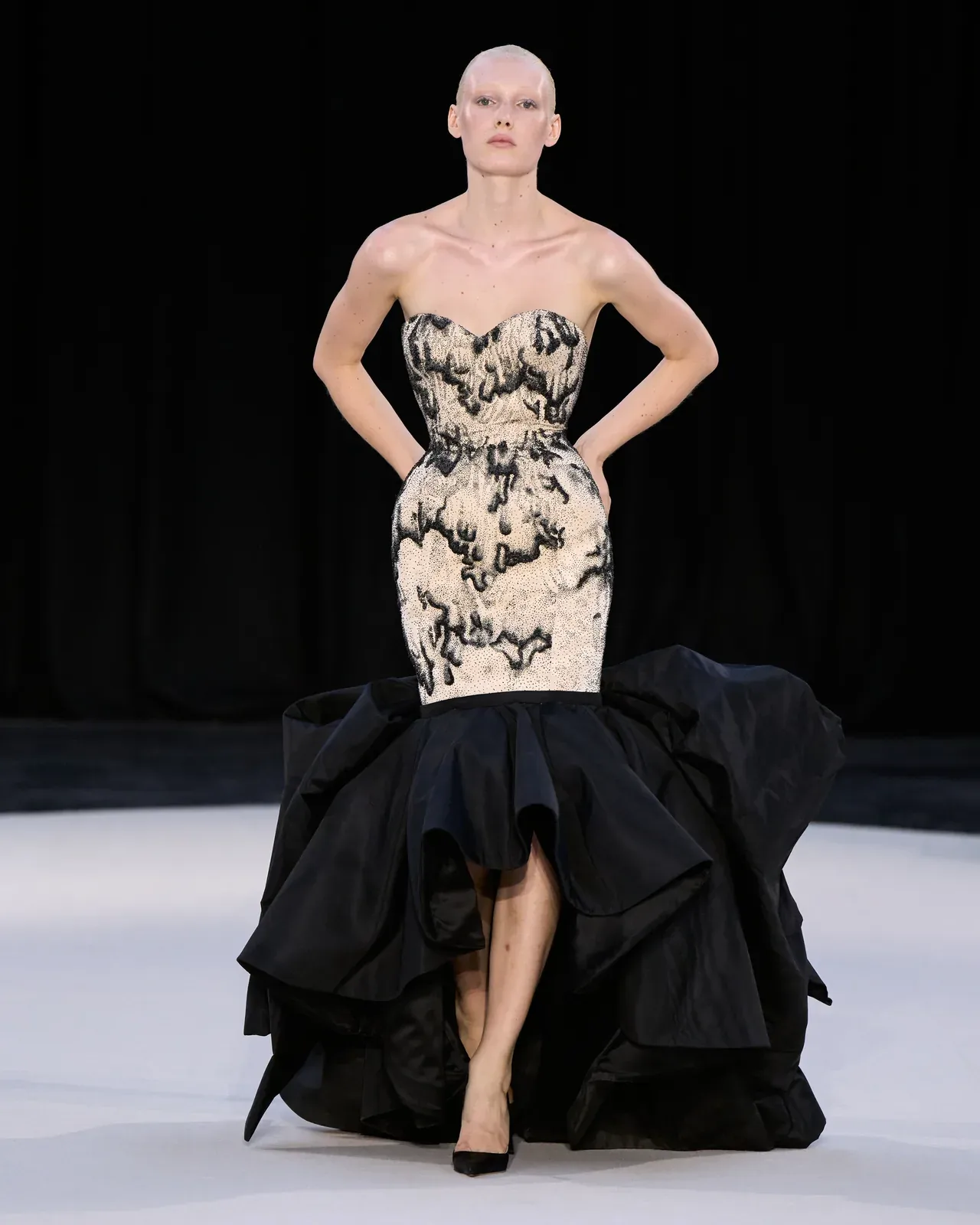
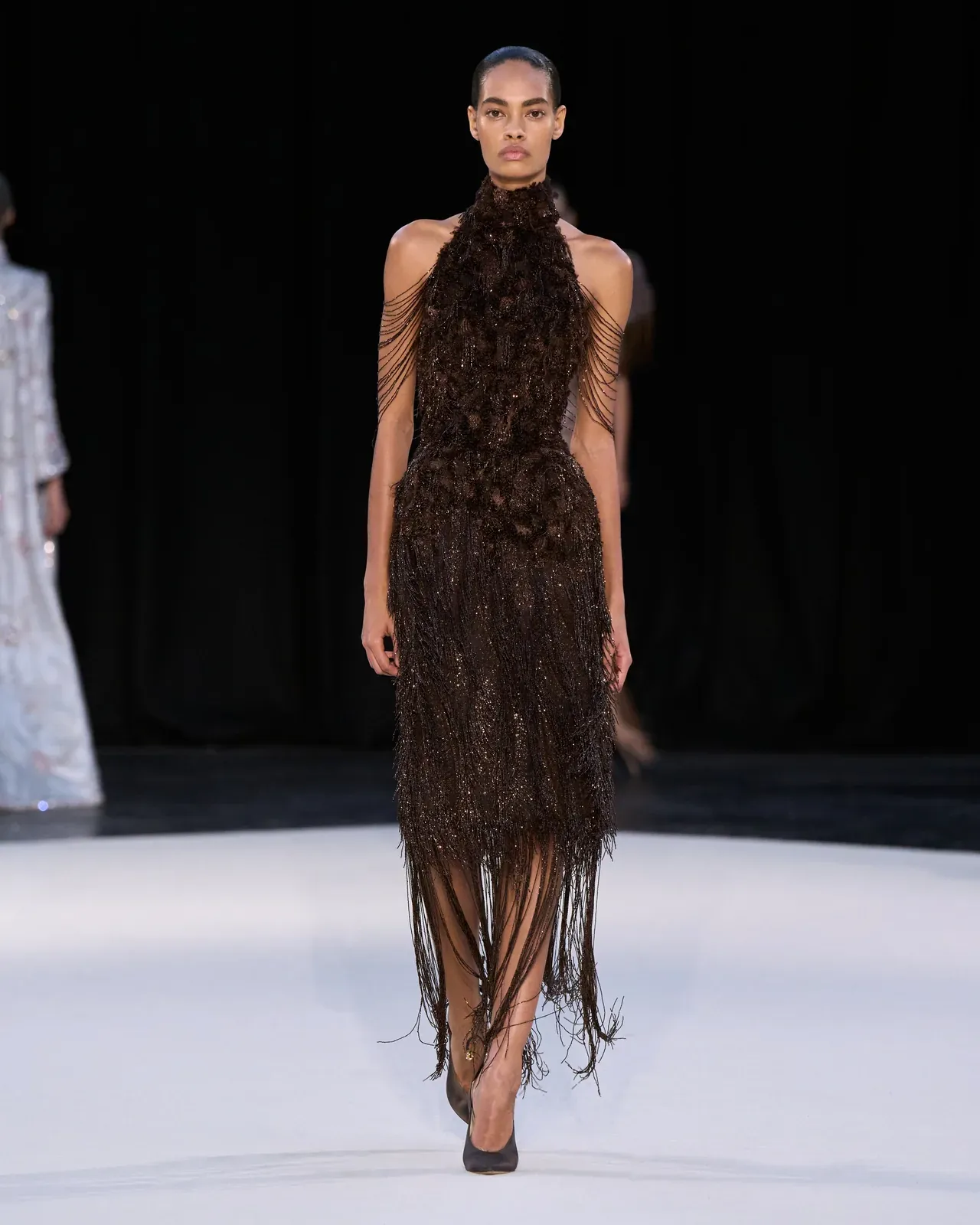
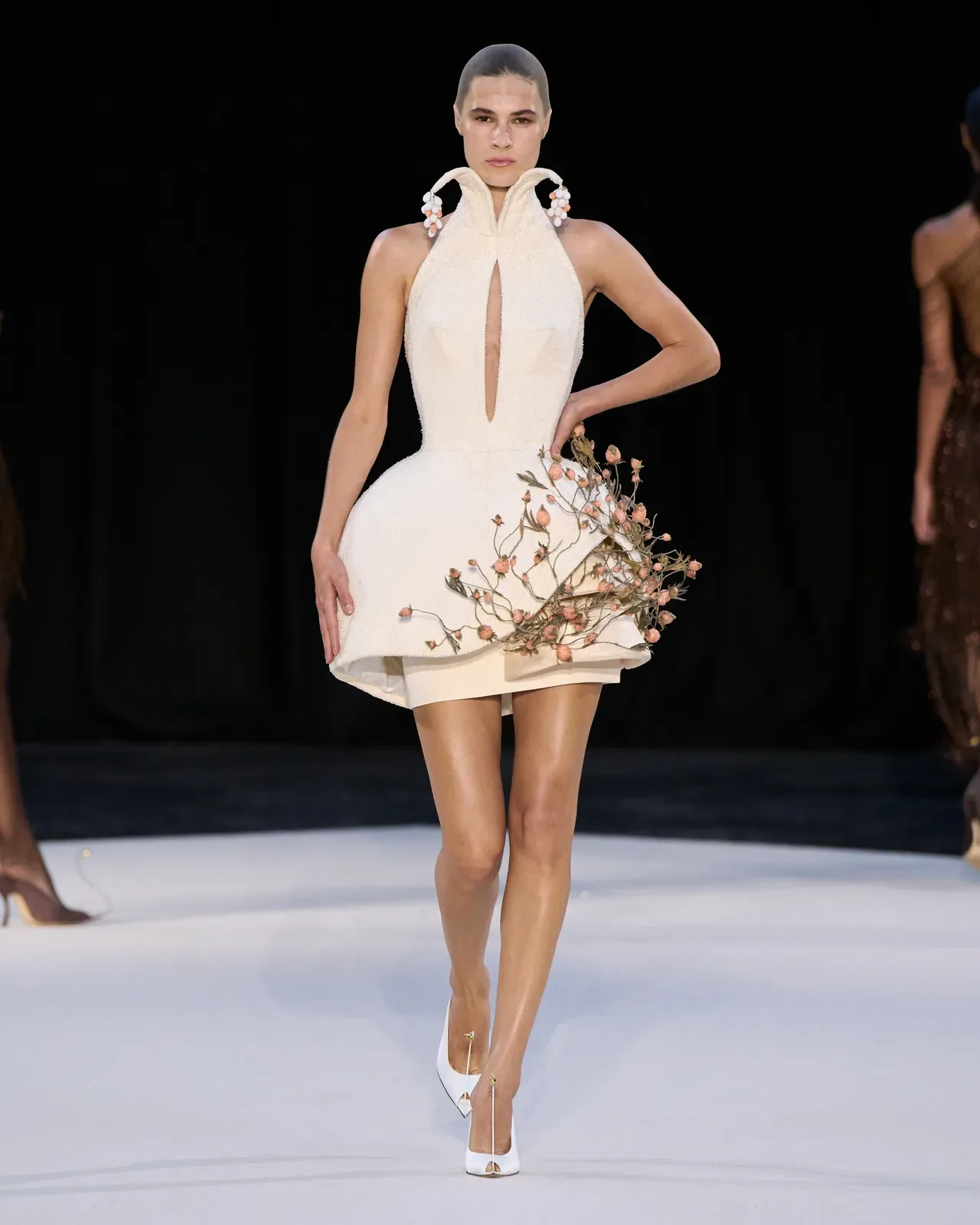
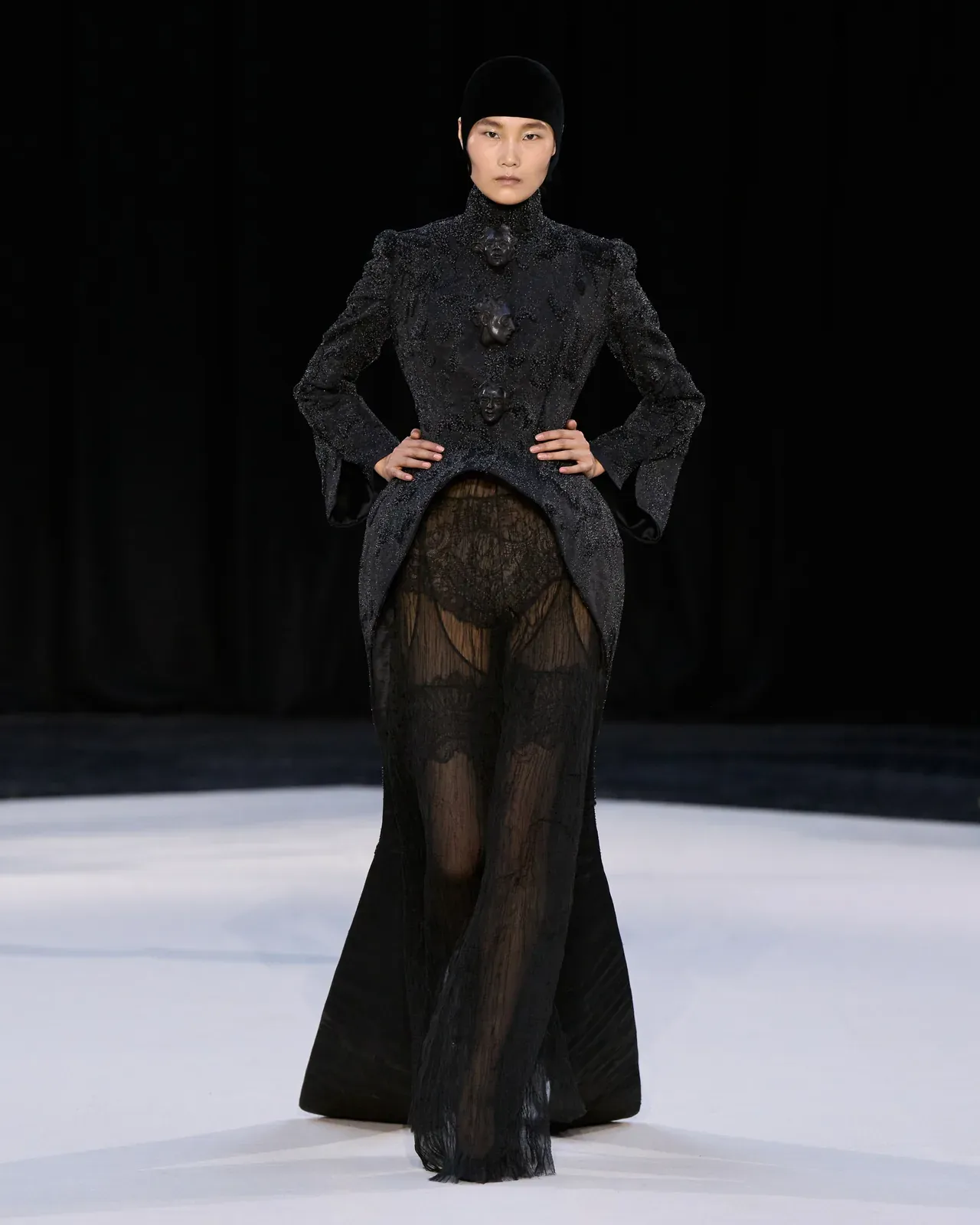
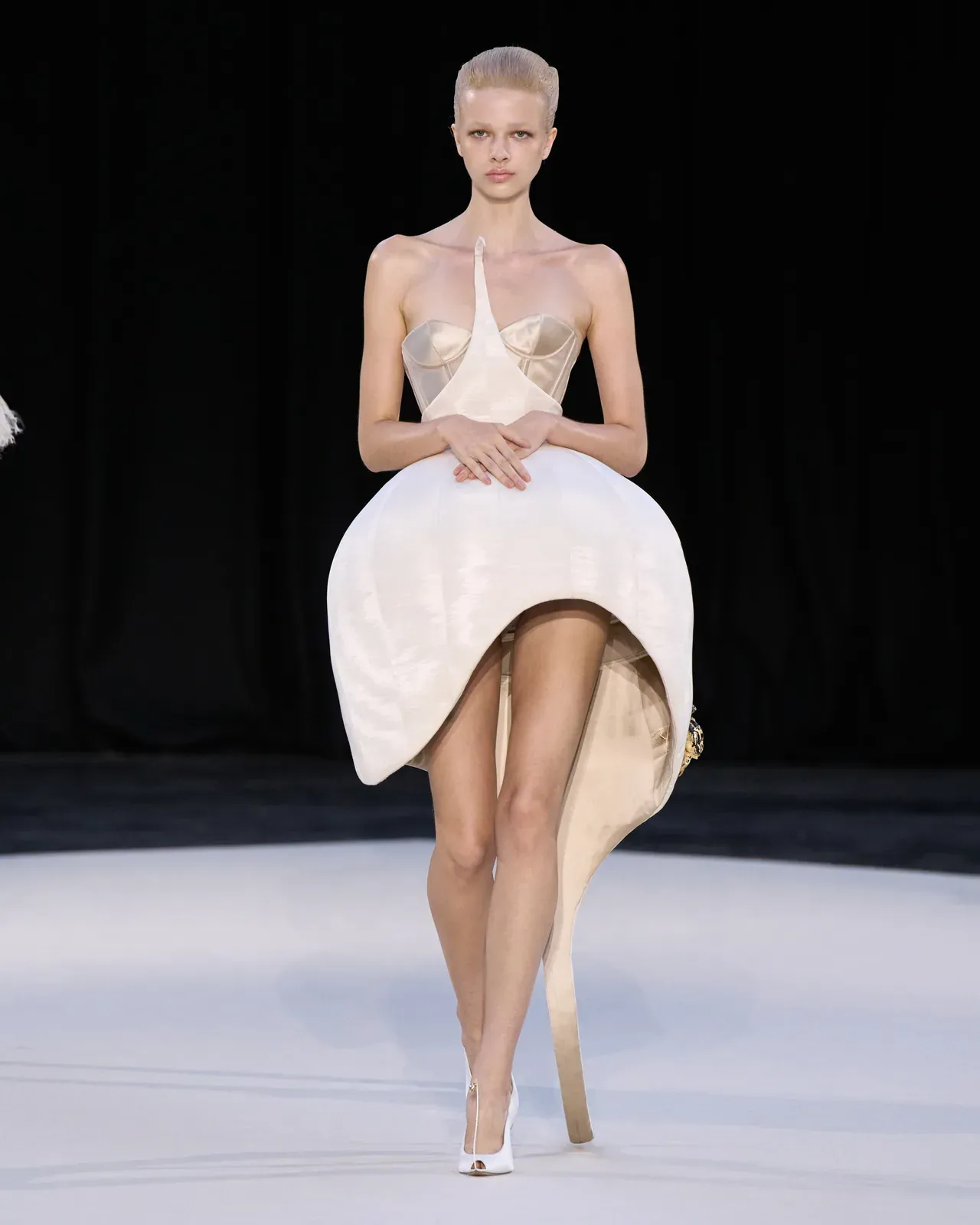
Towering Elizabethan collars, distressed lace, sculpted hips and fringed bustiers become creatures emerging from a darker world. Each character carries a different tormented past. Their expressions, their drift through the ballroom, the shifting tempo of the composition and the gowns they wear speak for them: a cockroach, a swan, a lion, a Dalí-esque lobster, perhaps even a rat. Words are not necessary, except those of the narrator, who keeps telling us not to look in the mirrors, only to make it more irresistible.
Some figures are regal, others grotesque, yet all are suspended between a haunted château and a forgotten court. Royal figures slowly make their way through the nightmare. A queen leads the procession in an embroidered black velvet jacket with an exaggerated collar that spreads like a crown. She is followed by a spectral courtier in an ivory coat dress with sculpted hips and unravelled edges. Both the garment and the palace seem to have been quietly decaying together. Then comes the broken bride, sheltered beneath a tattered parasol, forever wandering towards a ceremony that will never take place. Each has inherited a role, but none of those identities are fixed.
Dehumanisation and loss of identity are themes that run through Ashi Studio’s collection just as they do in Kafka’s world and the surreal masquerades of Salvador Dalí, where invitations needed to be read backwards and guests had to come as extravagant creatures. All of them share a warped reality where the familiar becomes uncanny and the truer self hides behind the looking glass.
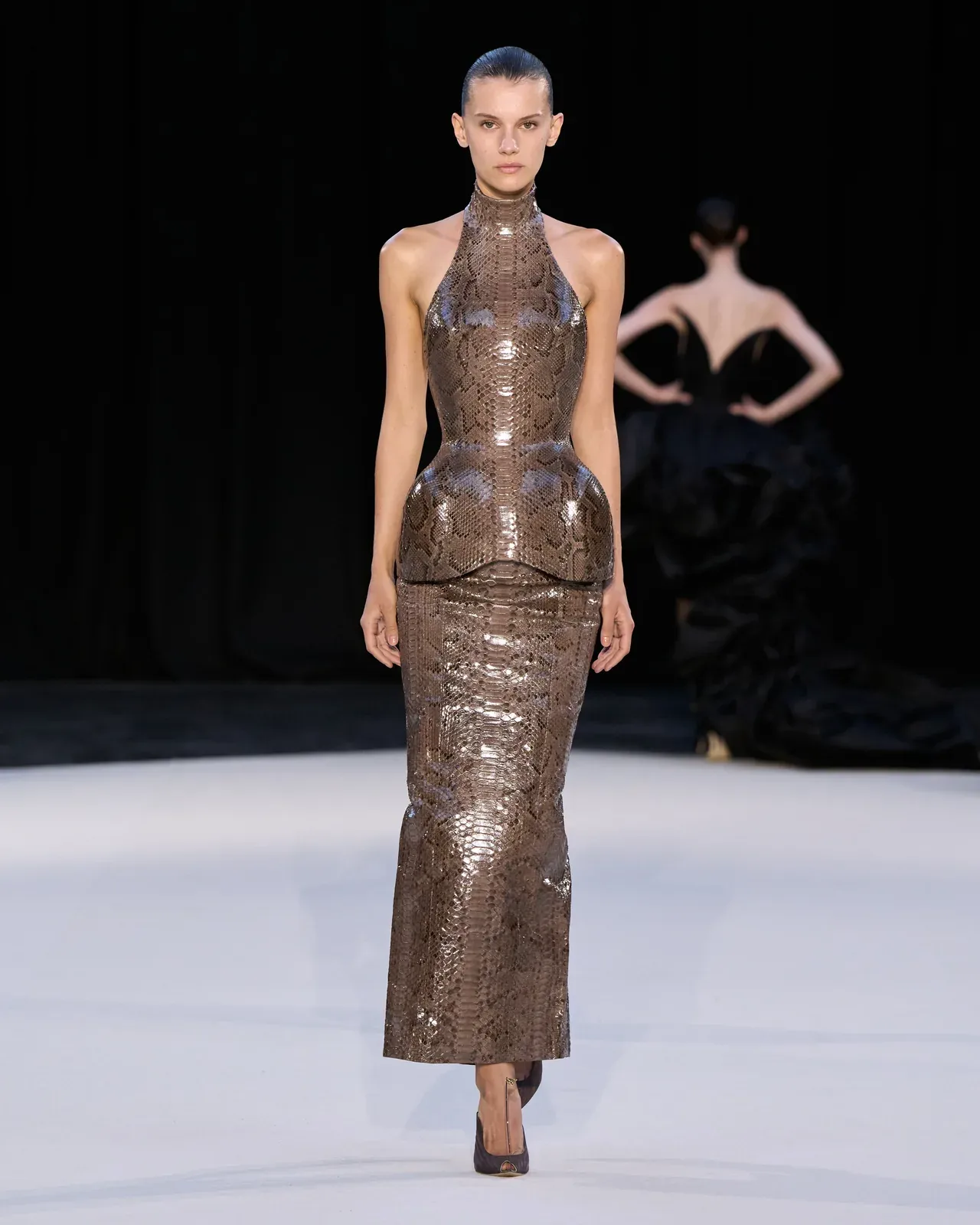
Corsets sculpt impossible proportions with exaggerated volumes protruding from both the front and the back of the body. Not even fabric can escape the force of the mask. Leather takes on the quality of porcelain, real insects are trapped inside the fabric, while metal and glass become part of the garments themselves. A Venetian mirror is sewn into the back of an intricate gown and hourglasses recur throughout the silhouettes. Tiny bells hang from trailing tails, feathers and stilettos, quietly counting down the final moments of the performance.
To look into one of those mirrors would be to catch a glimpse of a stranger staring back. It is only once we have become something entirely unexpected that we begin to recognise ourselves. After all, “behind every mask is another mask.”