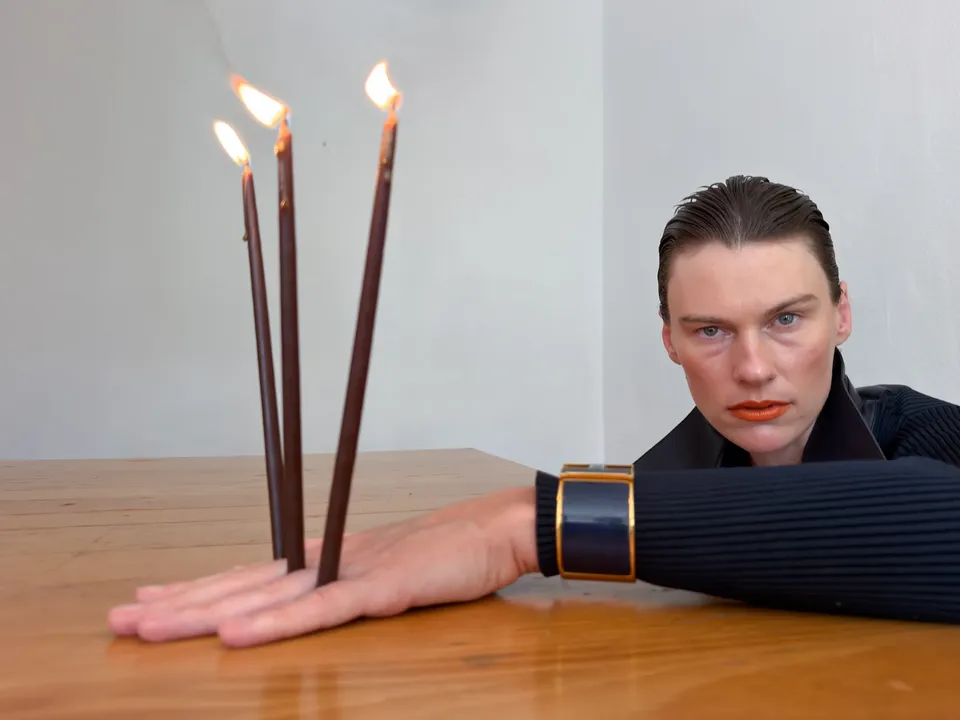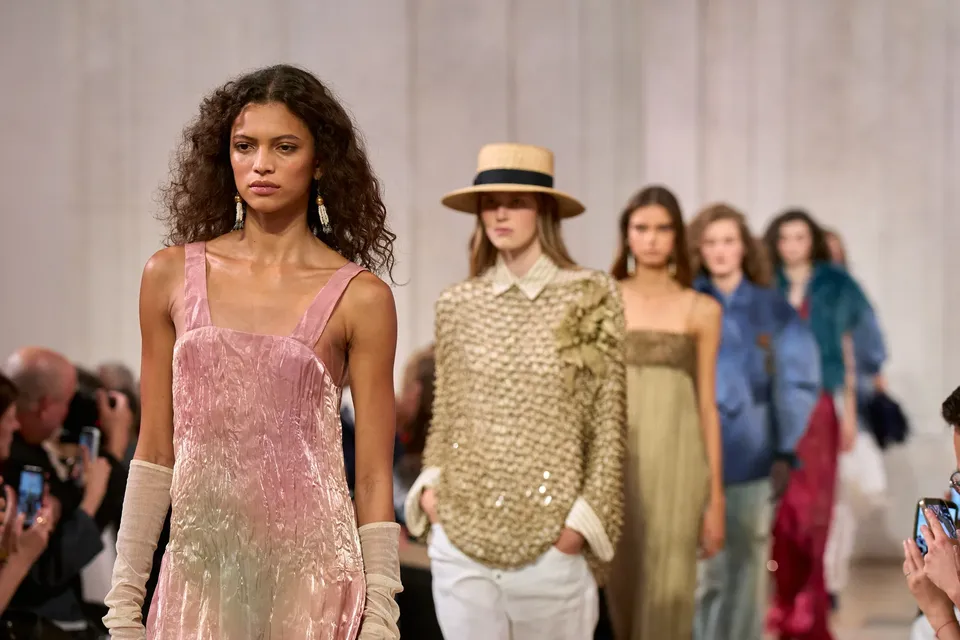
Some designers create clothes; others change the way we think about them. Yet fashion has a habit of looking back: archives are revisited, past collections resurface, and once-radical ideas find their way into the present, often stripped of the context that made them matter in the first place. But what happens when revisiting the past becomes an act of reinvention rather than repetition? Acne Studios explores this question through a new collaboration with Hussein Chalayan, a designer who has spent his career challenging conventional ideas of fashion.
For Chalayan, clothing has never been only about appearance. The British-Cypriot designer approaches fashion as a philosophical practice, using garments to investigate transformation, technology, displacement and the passage of time. His work blurs the boundaries between fashion, art and design, turning clothes into objects that question their own purpose. Now, Acne Studios co-founder and creative director, Jonny Johansson, brings Chalayan’s conceptual language into a new context, connecting two generations of experimental thinking.
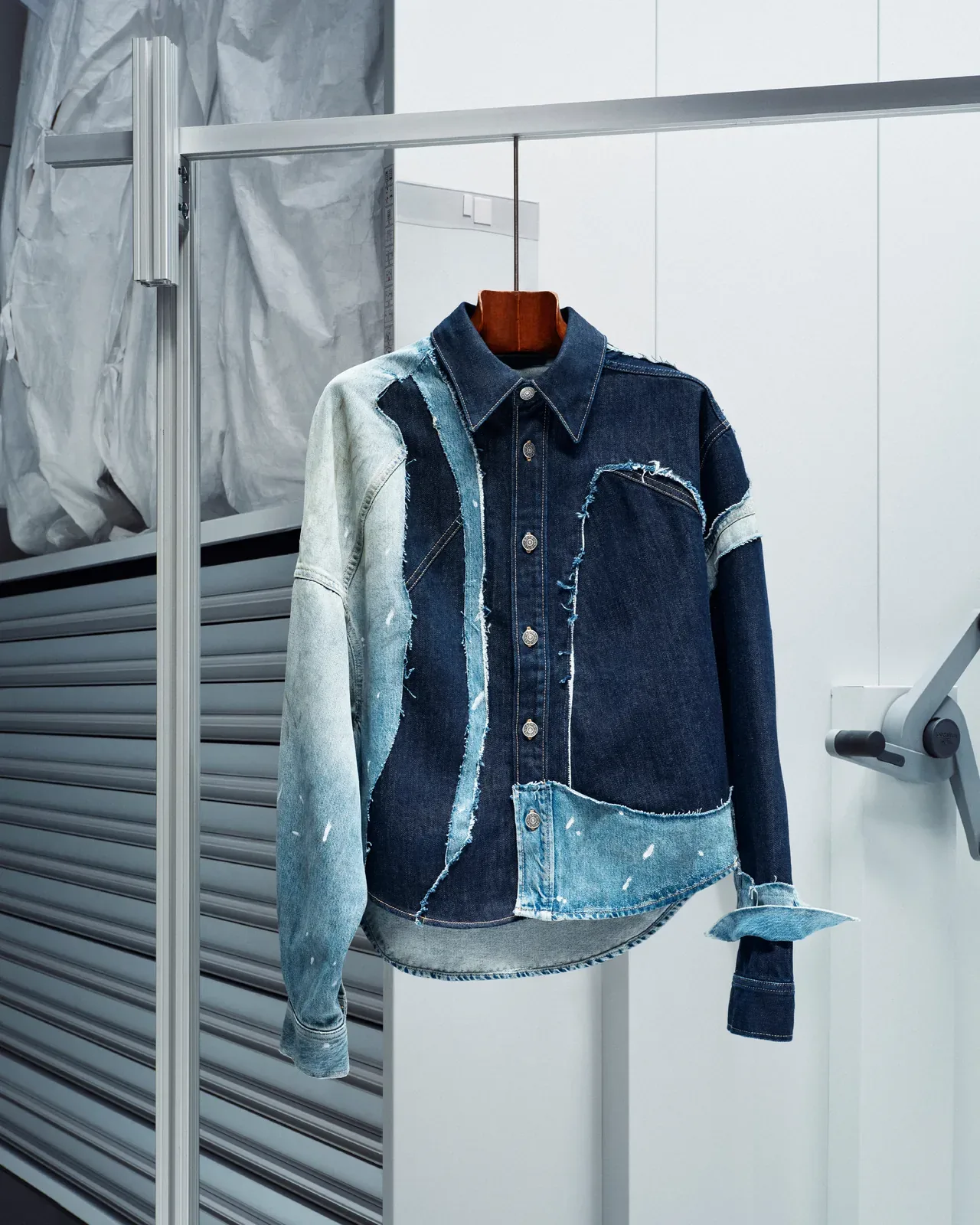
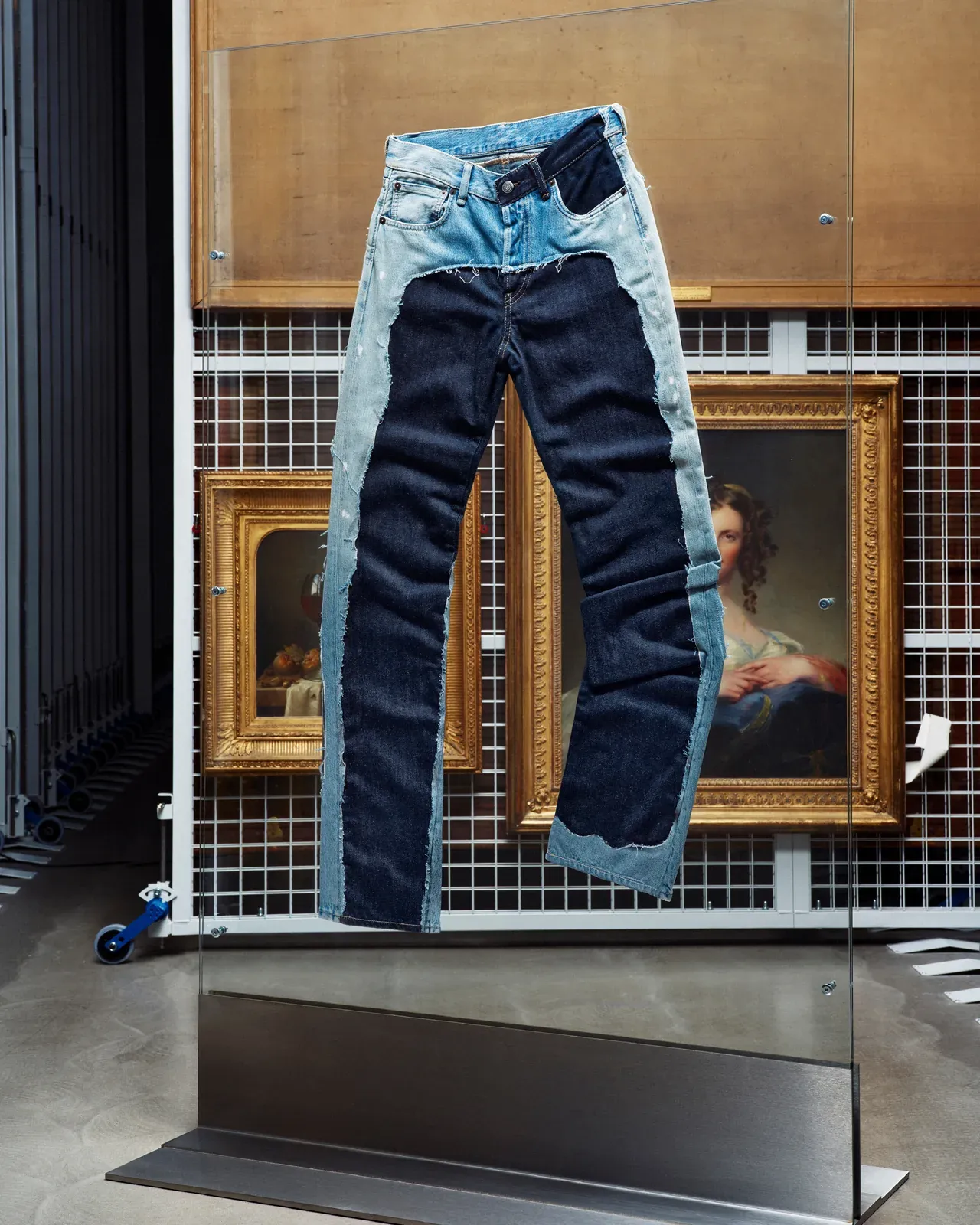
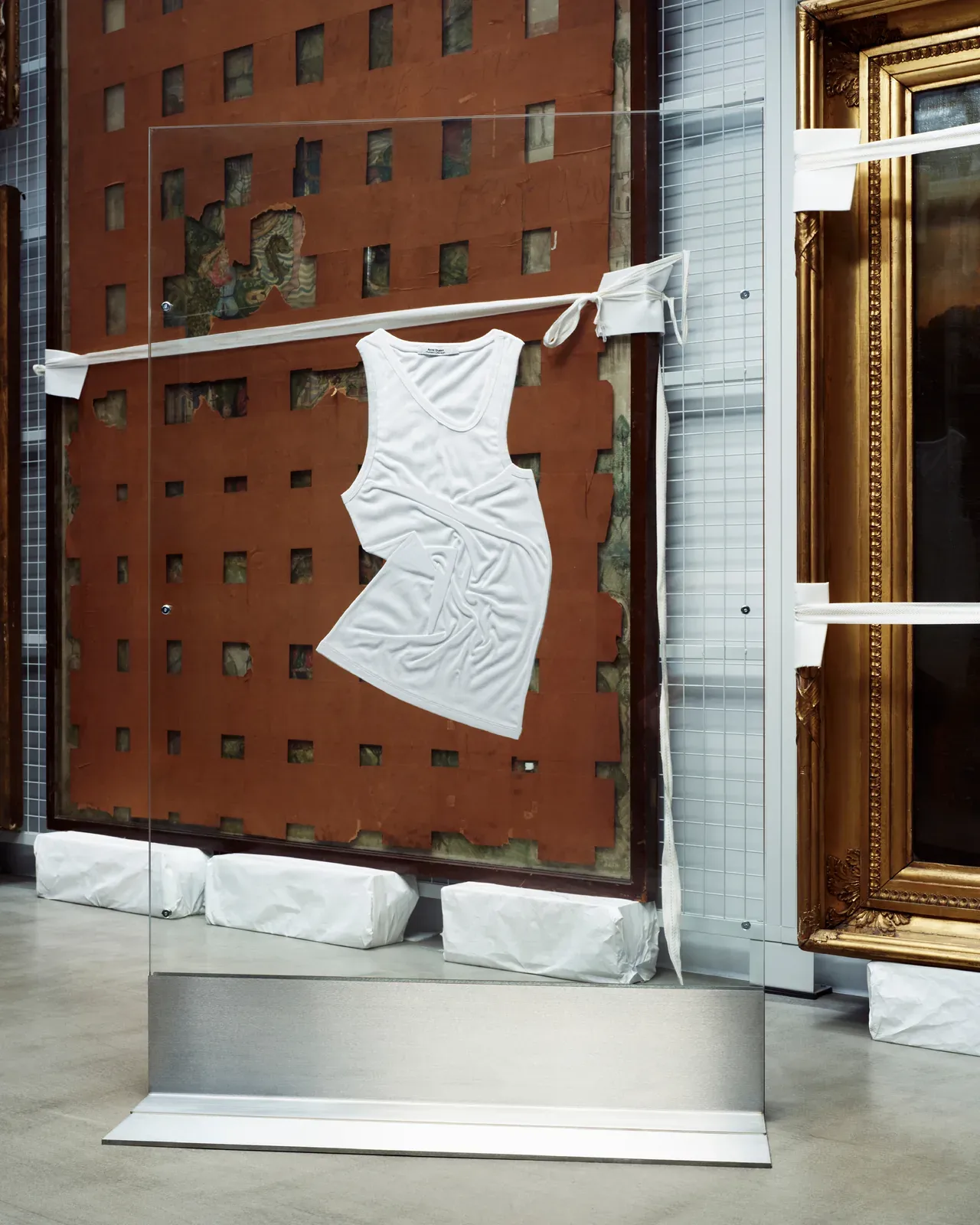
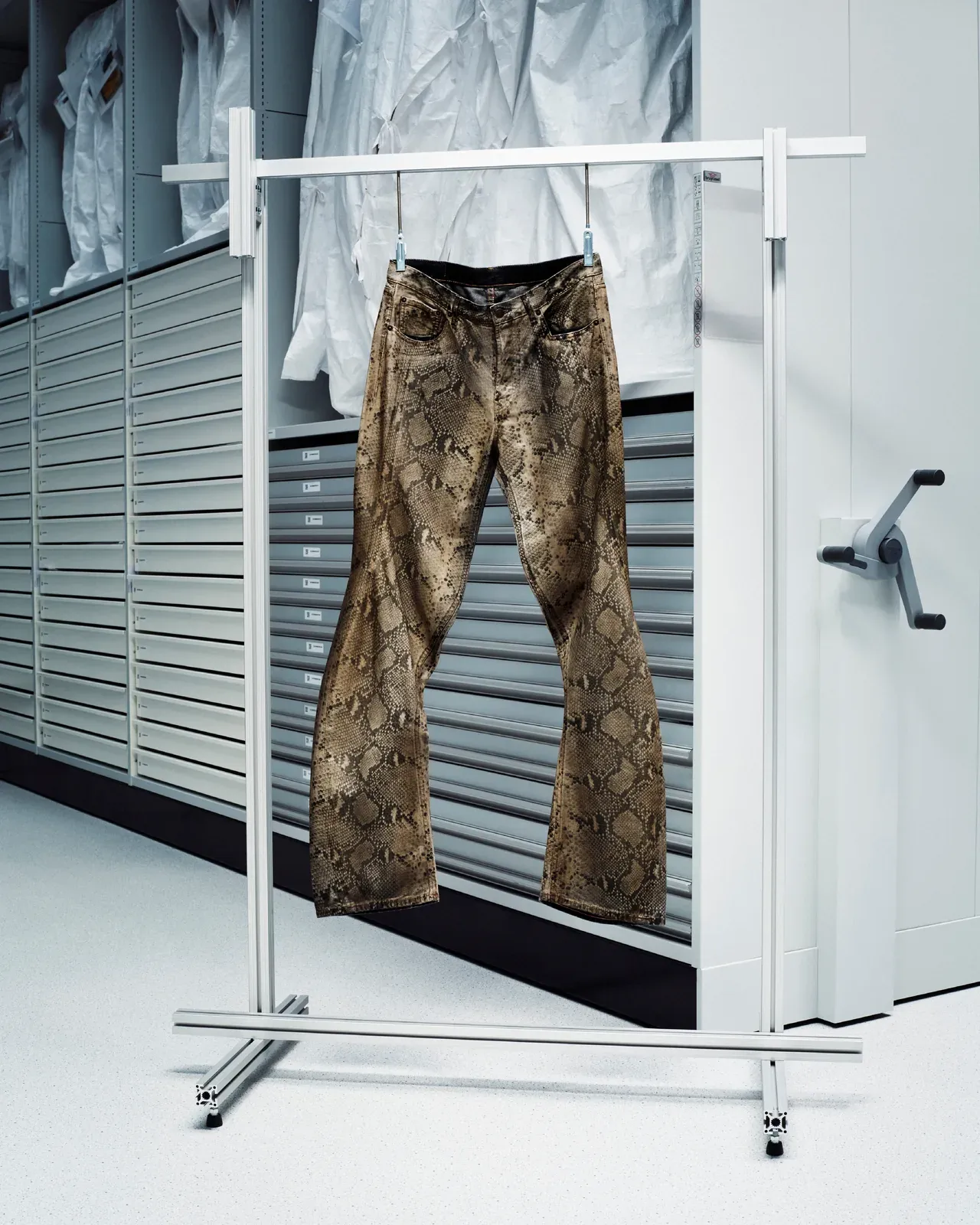
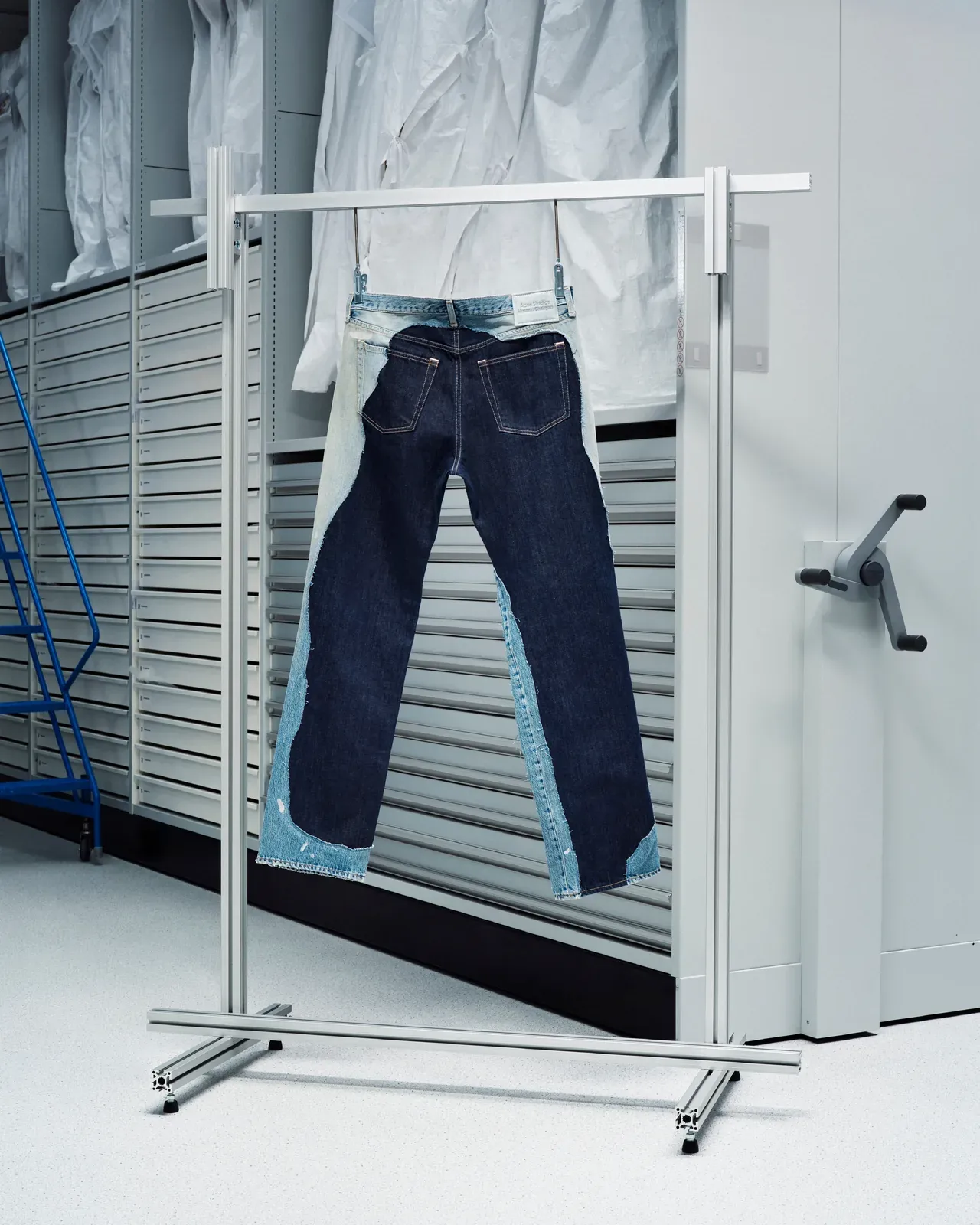
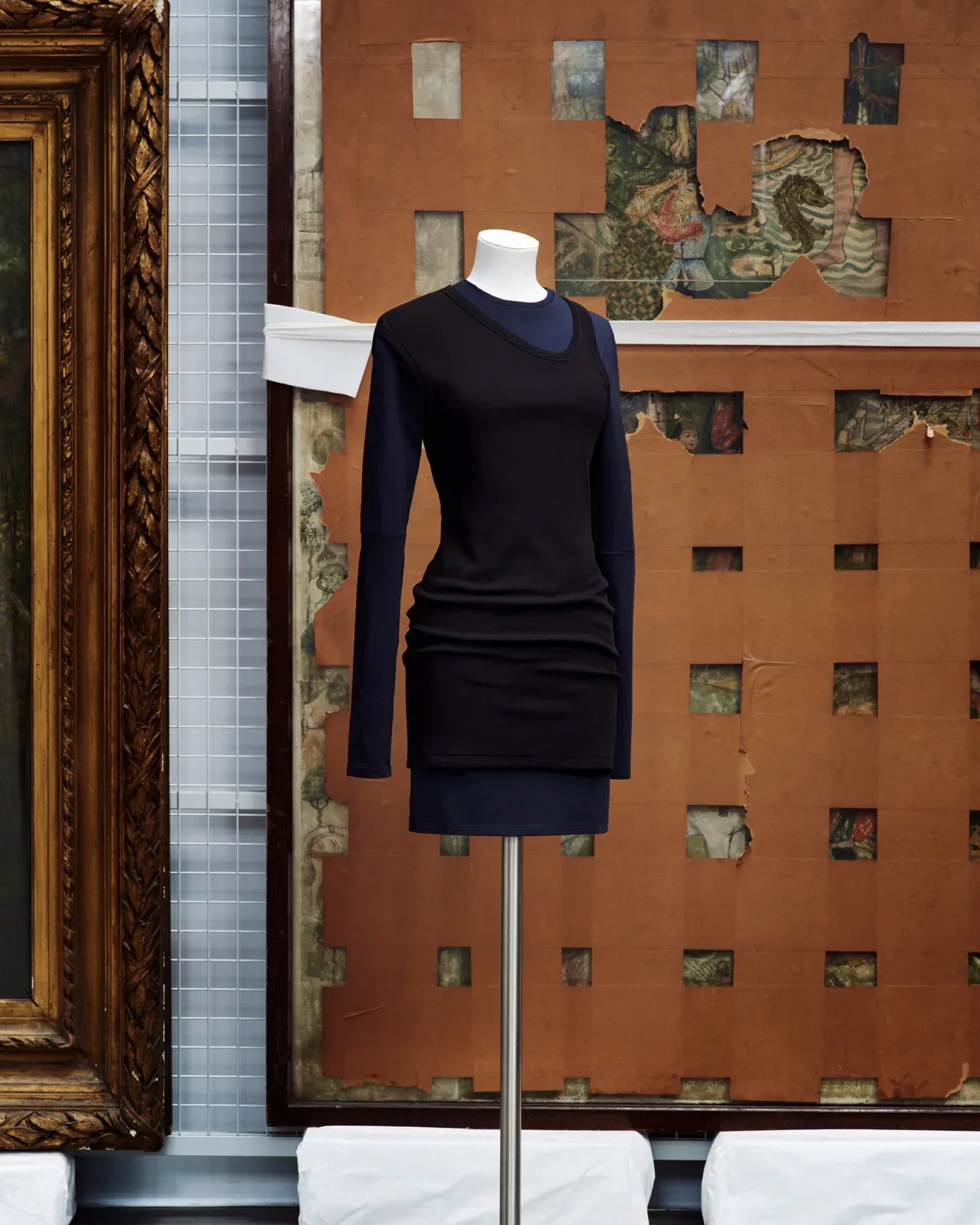
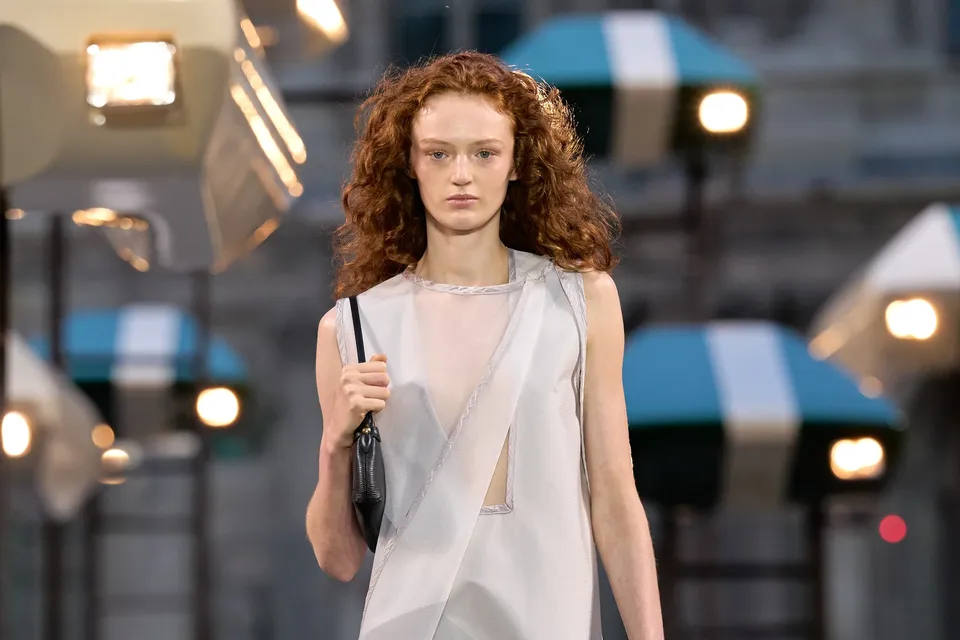
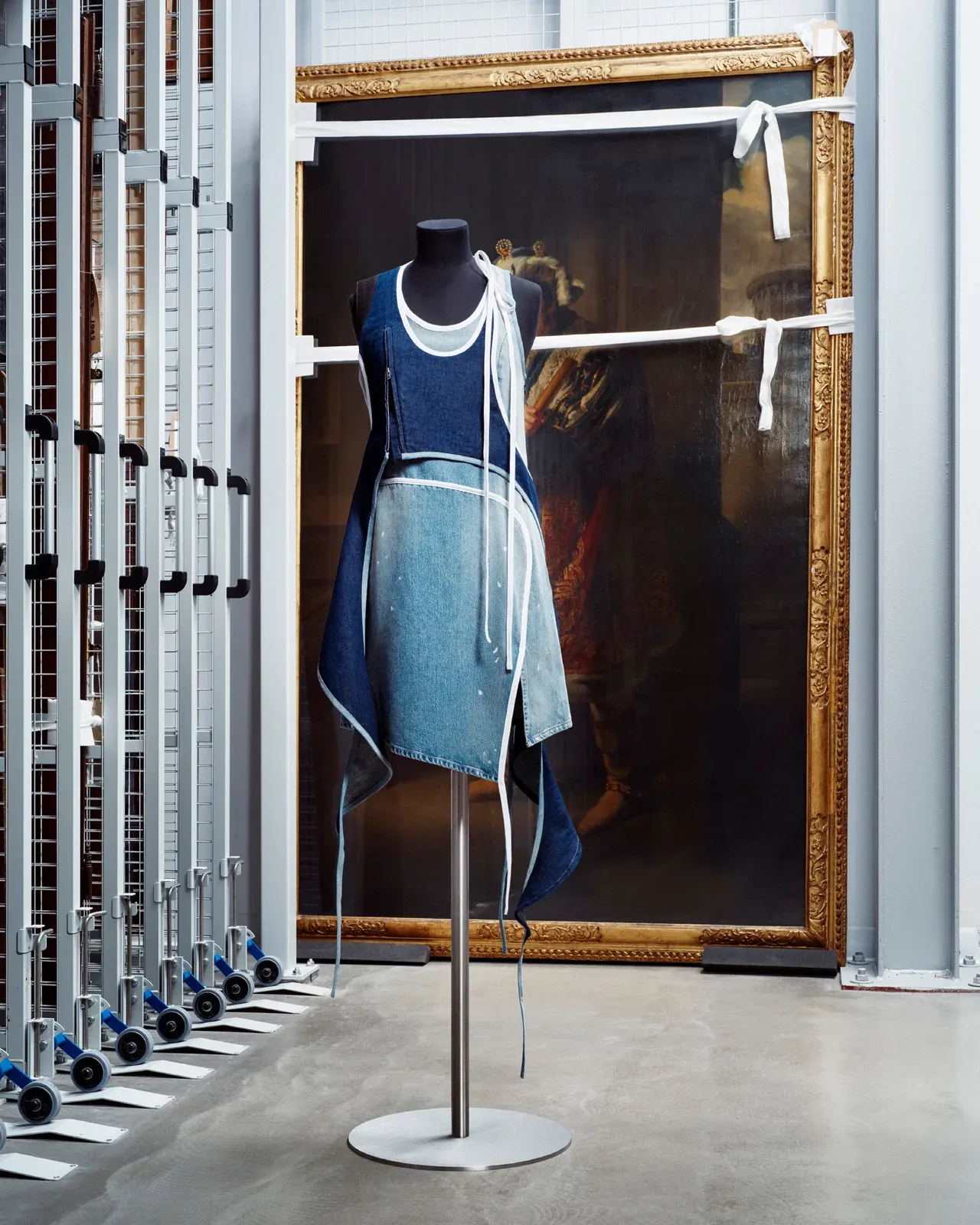
Drawing on three seminal collections from the early 2000s — Ventriloquy (2001), Medea (2002) and Manifest Destiny (2003) — the twelve-piece capsule translates Chalayan’s experimental approach to construction through Acne Studios’ signature materials: denim, jersey and leather. Patchworked jeans, twisted silhouettes and asymmetrical pieces reinterpret his original designs, bringing together two creative visions with a shared interest in challenging convention.
For Johansson, the collaboration stems from a longstanding admiration for Chalayan’s work. “I have always found Hussein’s work to be incredible — he has had a gigantic impact on fashion, and I wanted to bring that back,” he says. Rather than simply revisiting a moment in fashion history, the project reintroduces the ideas that made Chalayan’s work so influential, allowing them to resonate with a new generation.
Throughout his career, Hussein has used construction and transformation to challenge conventional ideas of dress. His garments often function as statements about the world beyond the runway, reflecting broader questions about culture, identity and the human experience. At Acne Studios, these concepts move between conceptual experimentation and everyday dressing. The collaboration has also encouraged Chalayan to reconsider his own work. Seeing it through the eyes of a younger generation offered a new perspective on a design language developed decades ago and revealed the lasting relevance of ideas beyond their original context. Instead of reproducing archival designs, the collection explores how they can evolve when reinterpreted by another creative mind.
Photographed at London’s V&A East Storehouse, the campaign places the capsule alongside pieces from Chalayan’s archive, including his Tulle Dress (2011) and the Haiku Dress from his Spring/Summer 2011 Sakoku collection. The setting connects fashion history with contemporary creation and presents the archive as a source of inspiration rather than a static record of the past.
The collaboration is accompanied by Reference: Hussein Chalayan, a limited-edition book published by Acne Studios and editorially directed by curator and editor Charlene Prempeh. Bringing together archival imagery, illustrations and texts, the publication examines Chalayan’s influence on fashion and design and extends the project into the research and ideas that underpin his practice.
In an industry constantly searching for what comes next, looking back can be just as radical as moving forward. With this collaboration, Acne Studios and Hussein Chalayan treat the archive as a space where familiar ideas can be reworked, challenged and made relevant again.