Muted tones paired with larger-than-life sand dunes and ant-like people set the scene in the Gobi Desert, marked by an uptick in tourism for its vast landscape and encounters with Buddha statues. It feels like miles (or planets) away from any cityscape I’ve seen. Back to speak with us seven years later is Chinese photographer, Zhang Kechun, with his new exhibition The Yellow Desert on display at London’s Huxley-Parlour Maddox Street gallery from 30 January to 28 February 2026.
His photos provide a painterly way of looking at the landscapes from afar, noticing small specks of humans and camels among giant Buddha sculptures. They show how we as humans are quite insignificant, and how the things we build may remain for years to come, but eventually they too will be forgotten about centuries later. Although he makes an important point to say that even though we may be insignificant in the long run, we must still live with purpose to experience and witness the richness that life has to offer. In our conversation, Kechun details his motivations for landscape photography, the symbolism of yellow, and his own relationship with nature.
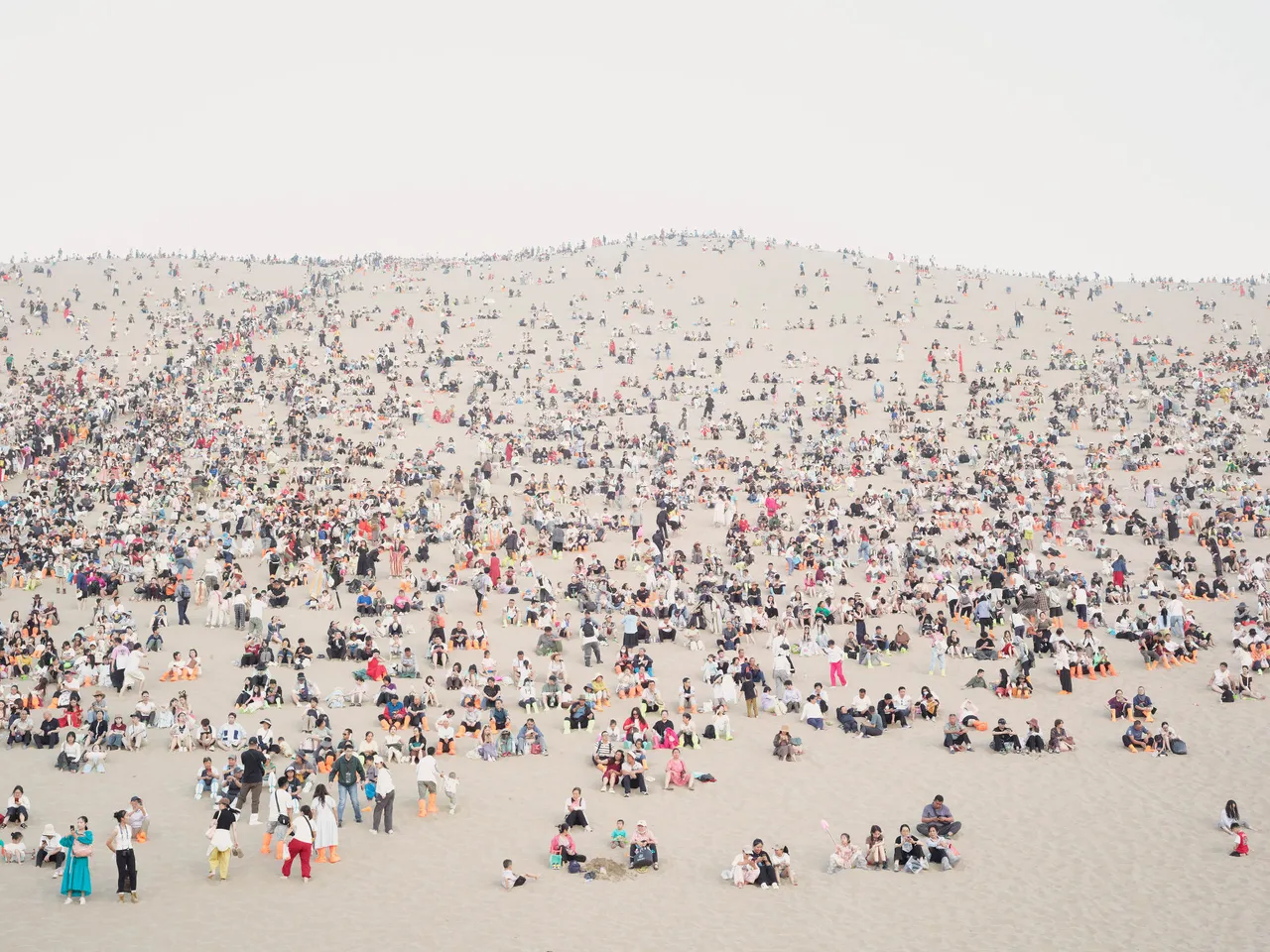
People Singing in the Desert, 2025, Zhang Kechun, image courtesy Huxley-Parlour
Hi Zhang! It’s a pleasure to have you back. We last spoke with you in 2019 about The Yellow River series. What have you been up to these past years?
During the Covid-19 pandemic, I rarely went out to travel and take landscape photos. Instead, I did a photography project called Suspended Garden near my home, which was about the trees and stones in the gardens. During China’s urbanisation process, the demand for trees and stones is huge. Every day, many trees and stones are transported to cities for planting. They are lifted by cranes and placed in trucks to be sent to various places.
I wandered around these gardens and cities every day and captured the moments when they were suspended in the air. Of course, once I was able to go out again, I still loved taking landscape photos. This is not just a photography project, but also a form of self-healing for me. When I realised that I was no longer young, I preferred to do things that made me comfortable, regardless of whether they were related to my art. Travelling outside would relax my body and mind.
I wandered around these gardens and cities every day and captured the moments when they were suspended in the air. Of course, once I was able to go out again, I still loved taking landscape photos. This is not just a photography project, but also a form of self-healing for me. When I realised that I was no longer young, I preferred to do things that made me comfortable, regardless of whether they were related to my art. Travelling outside would relax my body and mind.
From the Yellow River, we now move to the Yellow Desert. It seems like yellow is a persistent colour in your oeuvre. What symbolism do you think it holds for you?
Through nearly twenty years of photography, I wanted to use colour as a method for taking landscape photos. I like landscapes with a yellowish tone. The Yellow Desert project started in 2025 when I received a commission from a Singaporean magazine. I was able to travel to the desert. In all the landscapes I have taken, I have unified them in a yellowish tone. This time, since the subject was mainly yellow, it made me feel even more comfortable.
Why did you want to travel and photograph the Gobi Desert?
People are striving to migrate to Mars. In fact, there is a considerable area on Earth that resembles Mars. I wanted to see how people lived in this barren land and the efforts they made to transform it. There is not much difference in the shooting compared to The Yellow River.
What is a practice you do to make you feel closer to nature?
I spent most of my time at home addicted to my phone and computer, which was extremely harmful to my eyesight and health. I set a rule for myself that if I had the opportunity to create, I would try to go to nature instead of working on the computer or in the darkroom.
It is noted that your photography takes inspiration from the traditional Chinese landscape art of the Song and Yuan dynasties. What about their creative philosophies do you find resonates with your work and intentions?
A large part of my photography is derived from my misinterpretation of traditional Chinese landscape paintings. For example, the tones actually come from the yellowing and aging of ancient paintings that have been preserved. Of course, the relationship between people and nature in paintings can also be seen in my photography.
Yes, you emphasise the interaction between humans and nature. Due to the muted colours of the landscapes, the people provide a stark contrast between natural versus imposed. What is the role of humans in your work? What do you hope to highlight with their presence?
People in my pictures are both necessary elements to set off the surrounding environment and reflections of myself. Just as I once placed myself in the pictures in my Between Mountains and Water series.
You also noted that tourism is a primary activity in the Gobi Desert nowadays, aside from the large nomadic population and many farmers. What is the effect of tourism on the locals’ day-to-day lives?
With the rise of self-media, people are constantly expanding their travel destinations. Many desert no-man's-lands have even become popular tourist spots, receiving tens of thousands of visitors every day. Local people open restaurants and hotels nearby, as well as offering camel rides and other services. The desert is also experiencing harsher conditions than ever before due to climate change.
Do you find that tourism, climate change, and modernisation are interconnected in the Gobi Desert?
The desert is changing. Over the past few decades, people have been constantly managing the desert, and its area has been continuously shrinking. The ecological barrier around the Taklamakan Desert has also been completed. Modernisation has played a positive role in the desert.
You’re working on a solo show at London’s Huxley-Parlour gallery, set to open on January 30th. Tell us more about how this came to be, and what do you expect audiences to take away from it.
I have been closely collaborating with the gallery for over ten years. Whenever I have new works, they will display them as soon as possible. I hope everyone will like these yellow-toned works.
I read that during The Yellow River, you didn’t initially set out to capture the pollution and ecological degradation of the waterway, but that you couldn’t portray the river without showing it. Do you feel similarly about your portrayal of the Gobi Desert in The Yellow Desert?
I want to explore how humans survive in extreme environments and how they utilise this land. Portraying the Gobi Desert allows me to do so.
You also took photos of the Buddhas, a symbol of peace and enlightenment, that can be found scattered through the desert. How did you find peace and enlightenment during your time in the desert?
Yes, after travelling through the desert, I have become more [aware] about self-healing. As I grow older, I gradually realise that life has no meaning, but we still have to live in the present. We strive to create the illusion that life is meaningful.
The Gobi Desert is famous for many archaeological discoveries and historical revelations. What shocking things do you think humans will discover in the future about our current epoch?
When future humans look back at us, they might not do so with the same pity as we do when viewing the mummies of Loulan, for example, but rather as if they were observing a group of half-gods standing on the edge of a cliff — we possess the power to reshape the world, yet we are still learning how to control it.
Where are you planning on going next?
I will go to Xinjiang to continue shooting the desert.
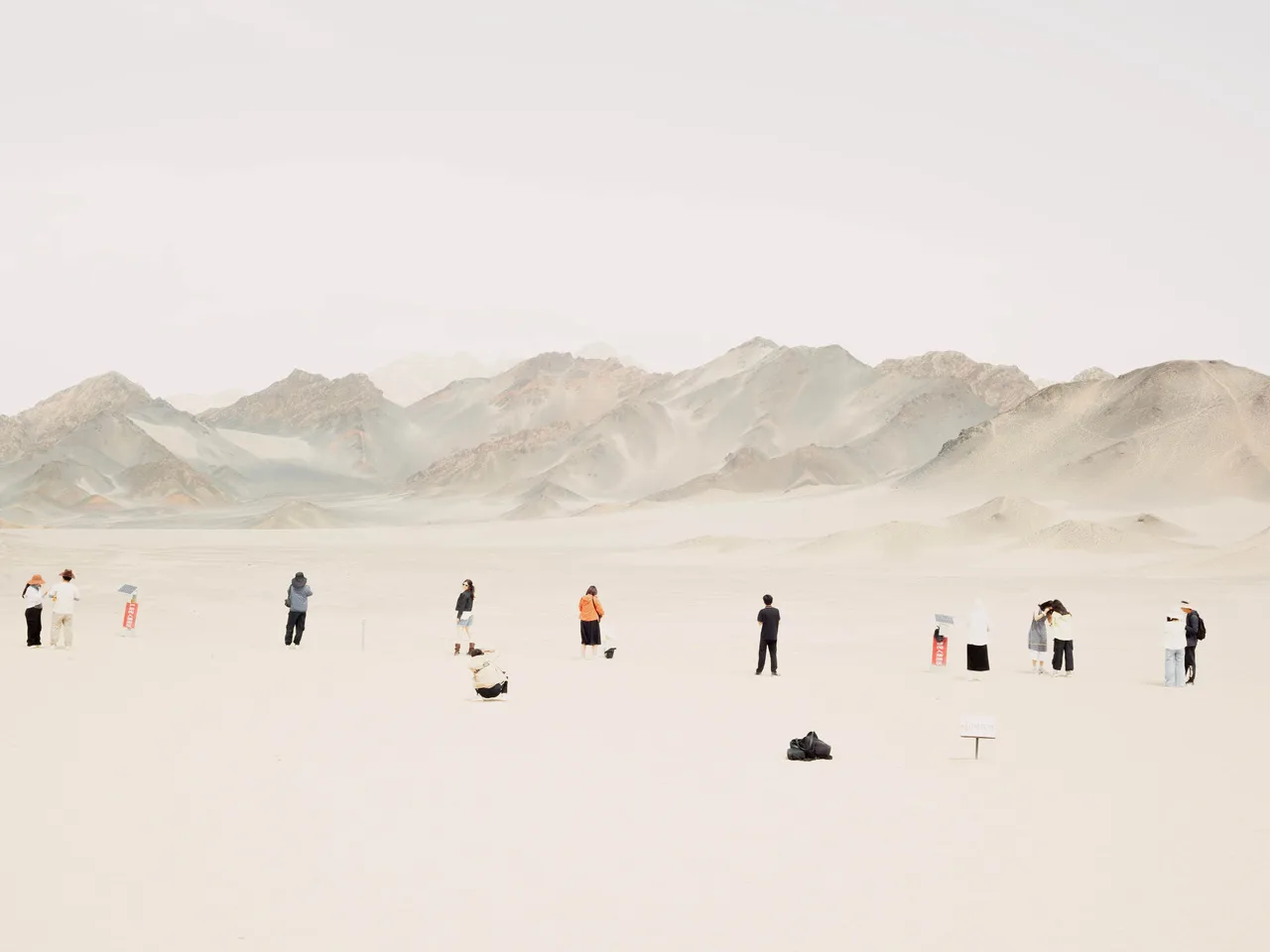
People Taking Photos at Heidushan, 2025, Zhang Kechun, image courtesy Huxley-Parlour
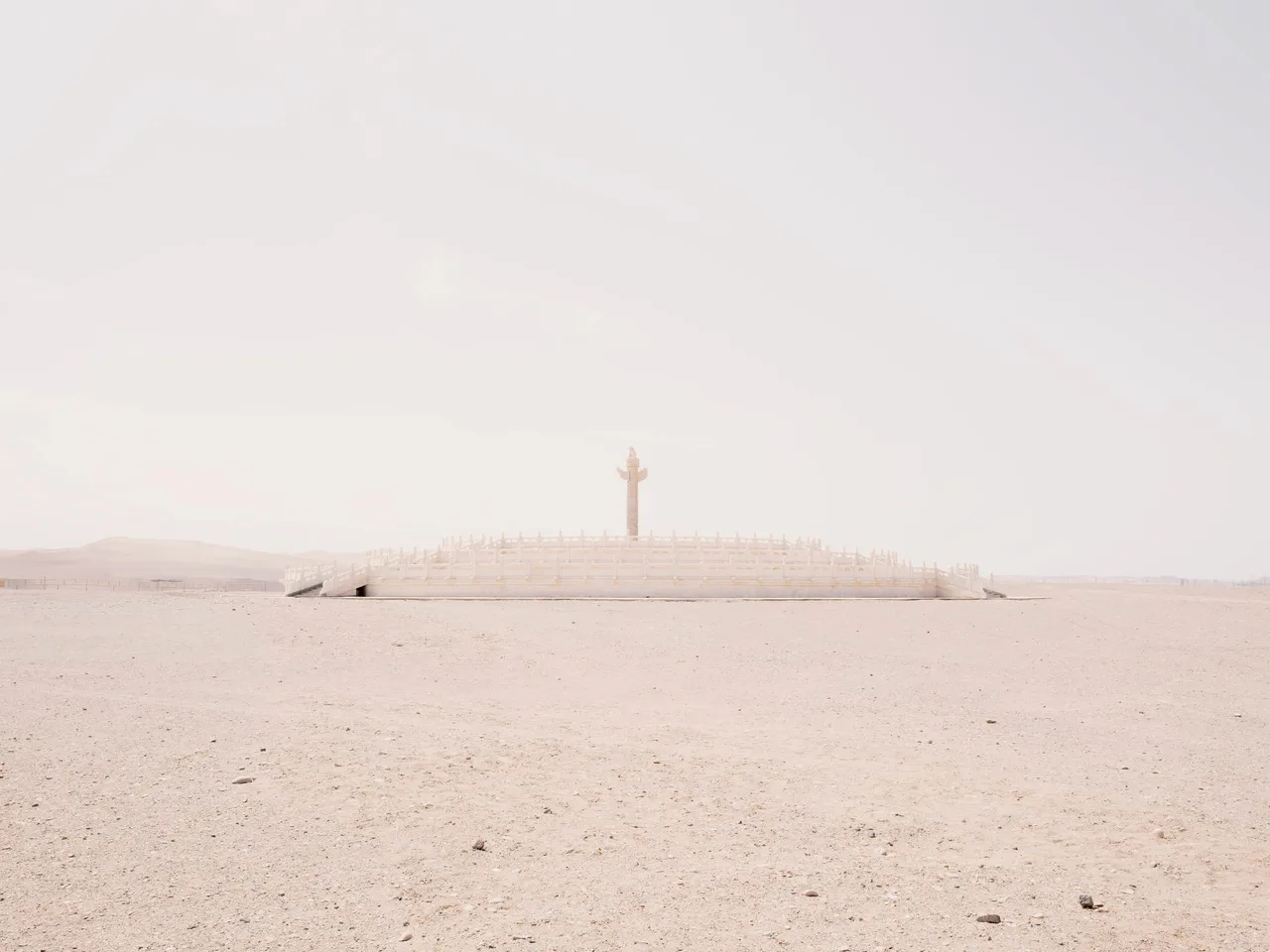
Huabiao, 2025, Zhang Kechun, image courtesy Huxley-Parlour
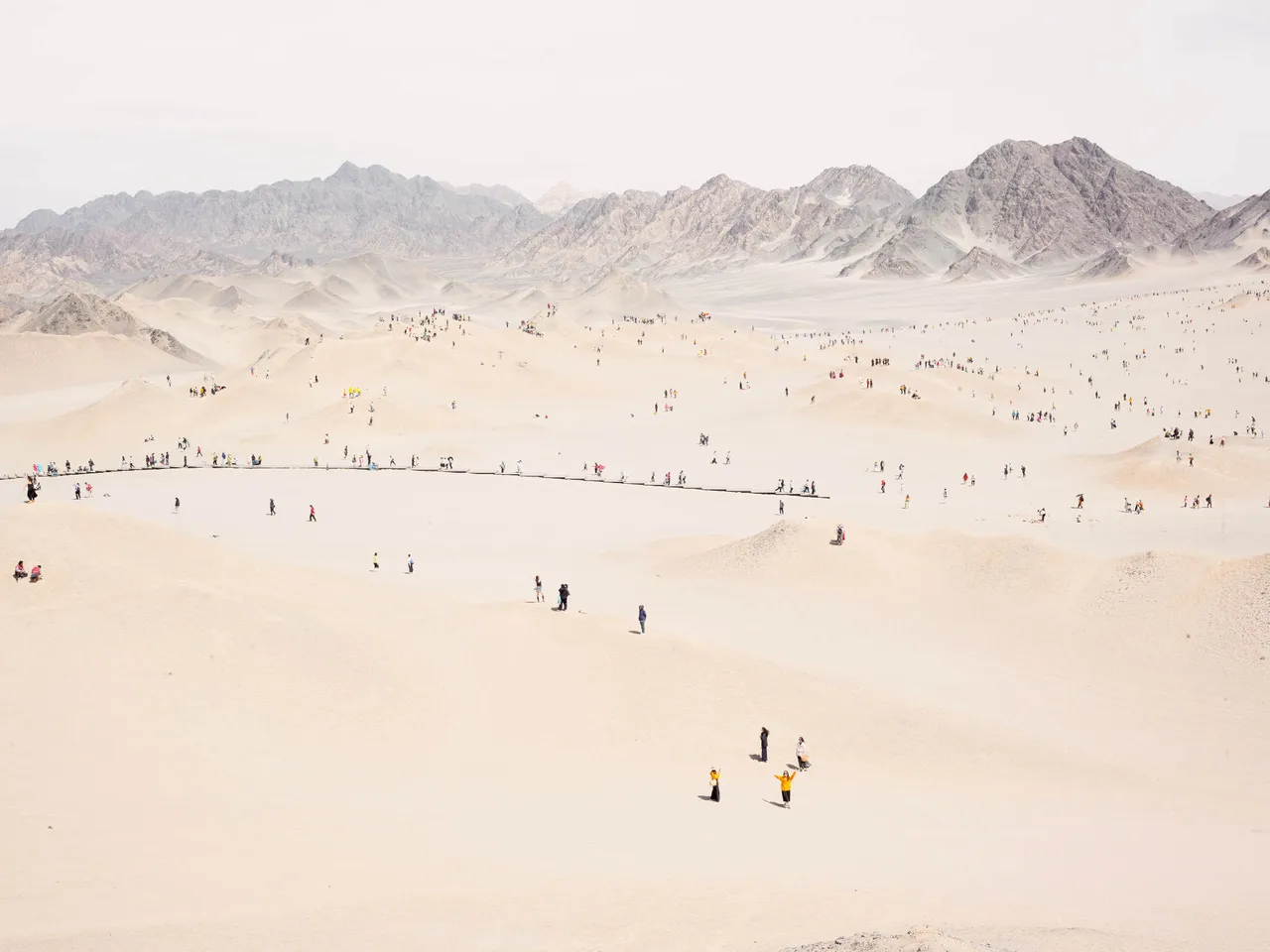
People Travelling in Heidushan, 2025, Zhang Kechun, image courtesy Huxley-Parlour
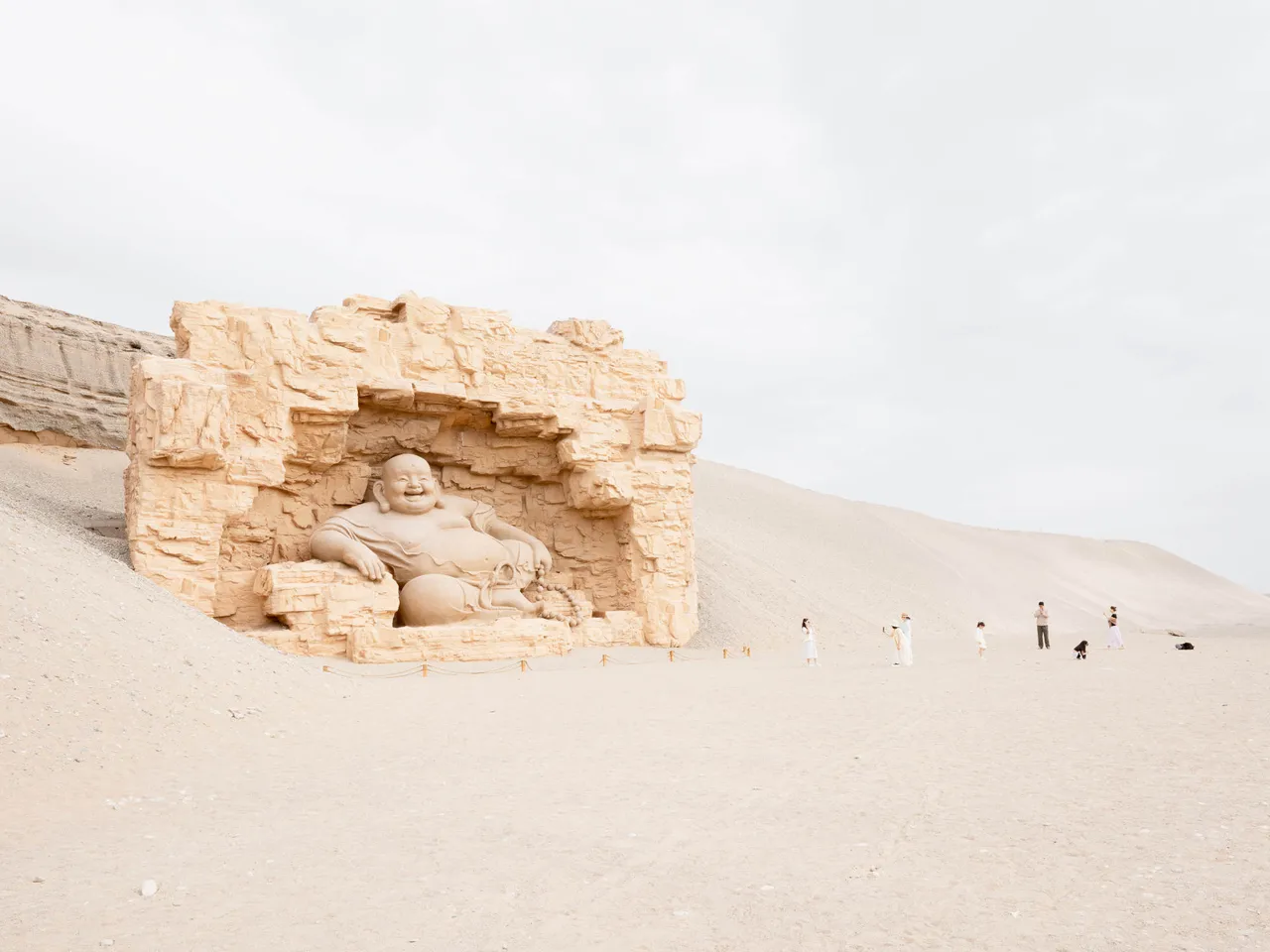
Maitreya Buddha, 2025, Zhang Kechun, image courtesy Huxley-Parlour
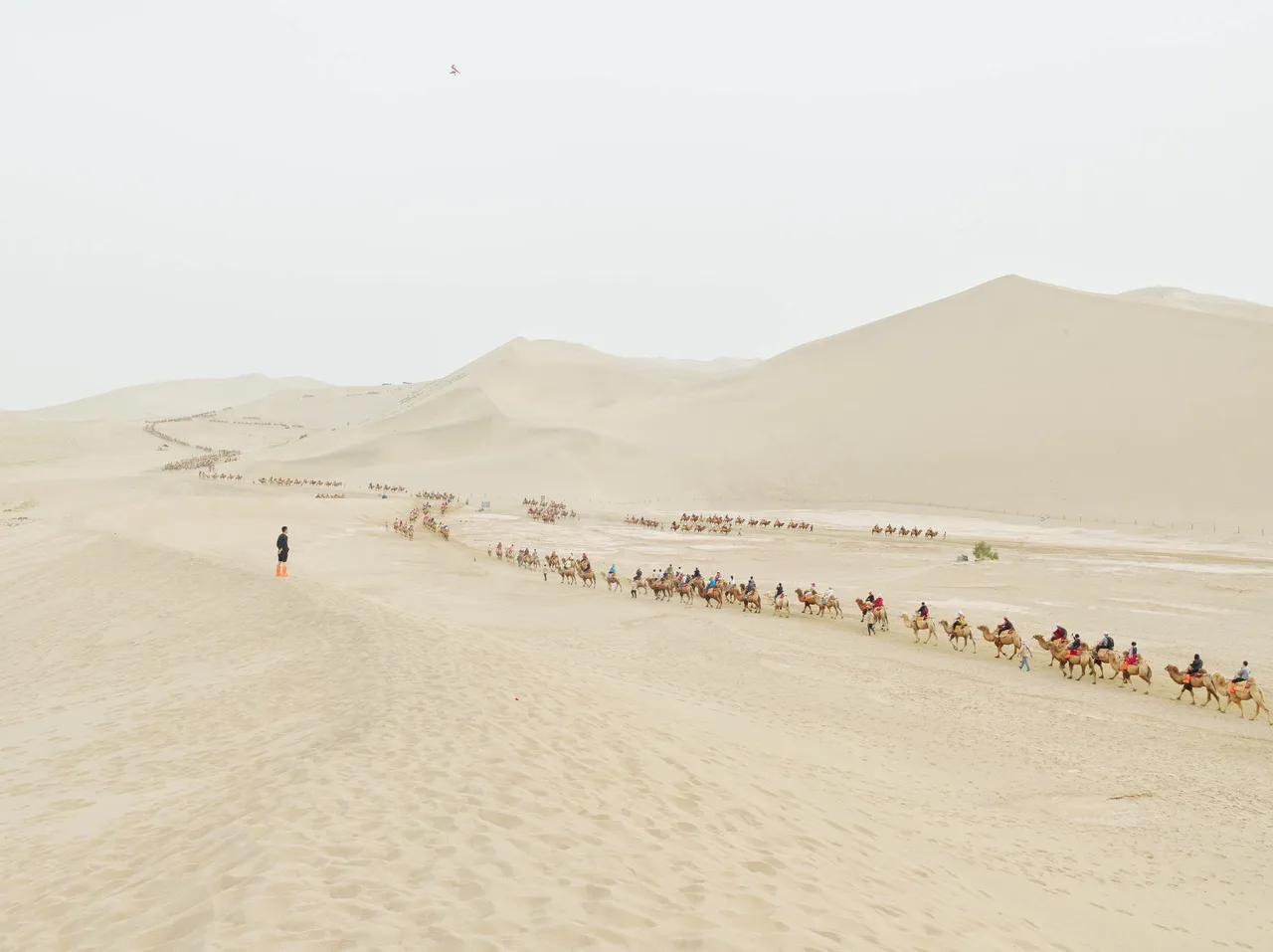
People Riding Camels in the Desert, 2025, Zhang Kechun, image courtesy Huxley-Parlour
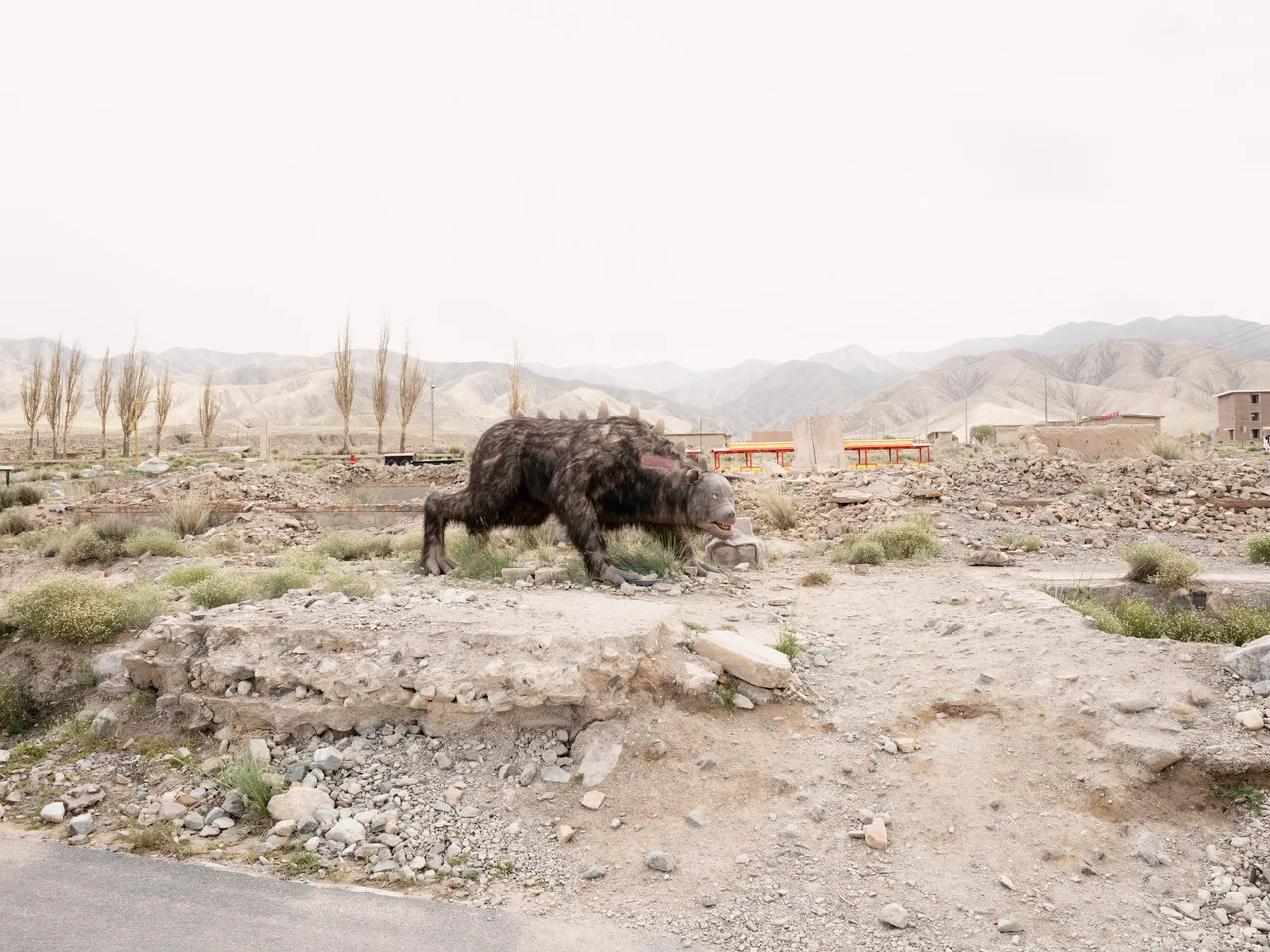
Monsters in the Nine Storey Demon Tower, 2025, Zhang Kechun, image courtesy Huxley-Parlour
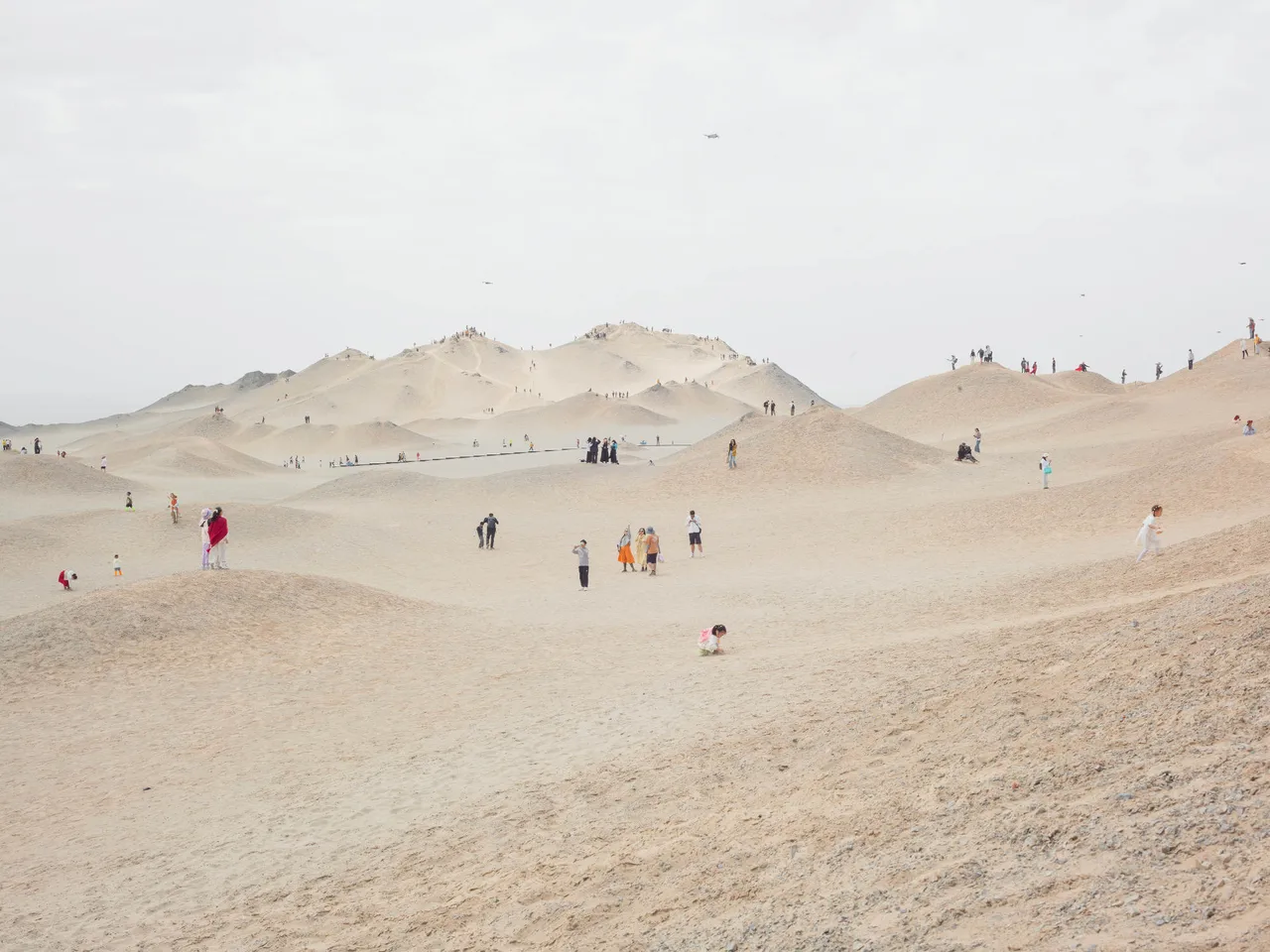
People Climbing Mountains, 2025, Zhang Kechun, image courtesy Huxley-Parlour