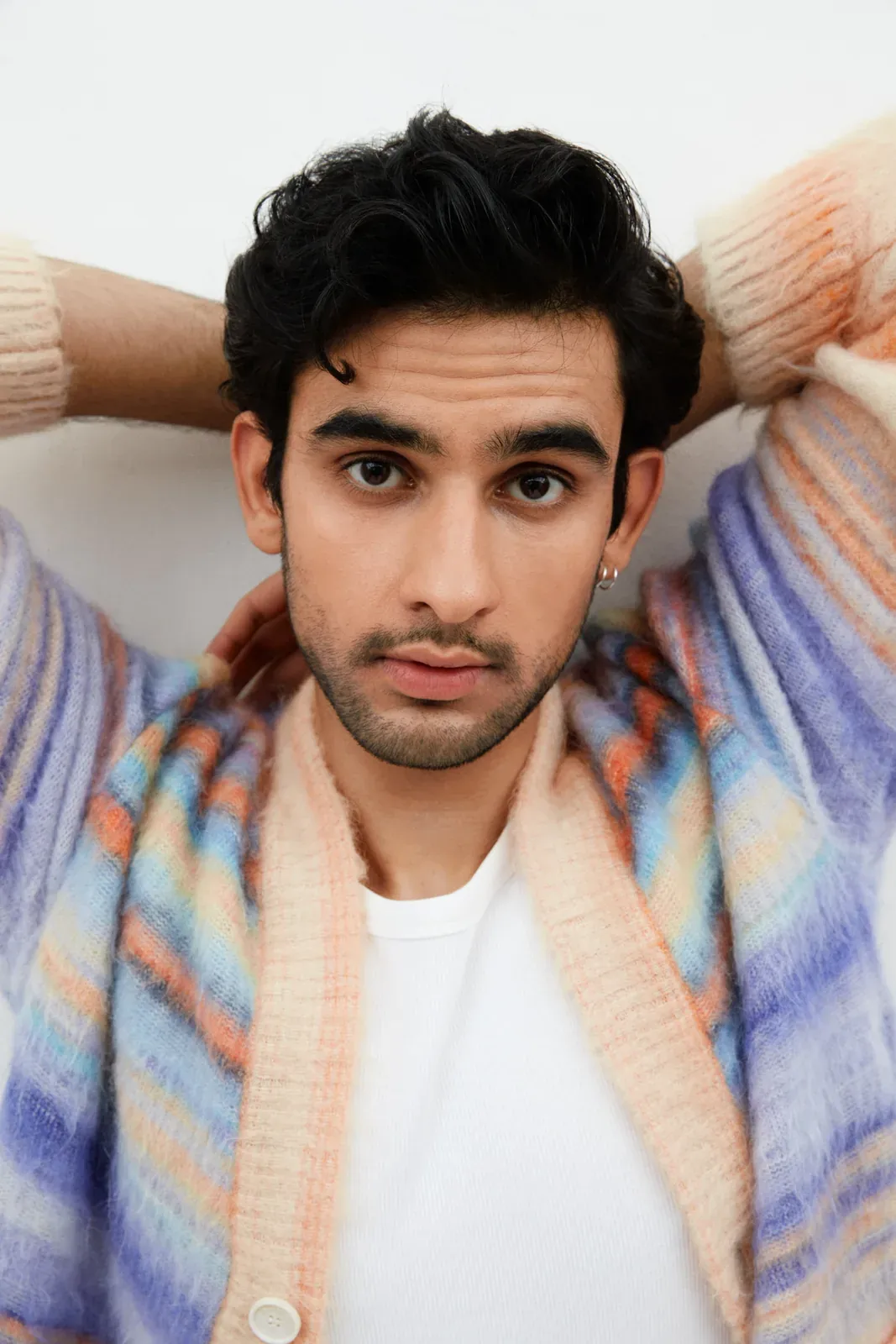
In a society where we’re taught comfort is in homogeneity and being otherwise runs the risk of exclusion, actors who leap off the screen with sincerity are a refreshing break from fear-based conformity. This is how we became enthralled by Zain Iqbal and his performance in the BBC series, also on Netflix,, A Good Girl’s Guide to Murder, where he plays Ravi Singh opposite Wednesday’s Emma Myers, portraying Pip Fitz-Amobi.
The series, based on the 2019 novel from Holly Jackson, follows seventeen-year-old Pip’s investigation into the disappearance of classmate Andie Bell who was rumoured to be murdered by Sal Singh, Ravi’s brother. As the series progresses, Ravi and Pip uncover hidden truths about the case and the community surrounding it. Recently renewed for a third and final season, A Good Girl’s Guide to Murder is a testament to the compelling on-screen performances and earnest character development.
Iqbal’s acting leaves you immersed in the story, embodying Ravi and bringing an honesty to the character who’s trying to figure out where he fits into all the chaos around him. His particular situation may be very specific, but the overarching theme of finding your place is something most people can relate to, including Iqbal himself. Getting his start in student films, he was thrust into an environment of risk and experimentation. It’s a terrifying prospect to try and fail — a lesson we learn over and over again throughout our lives. It becomes an active choice that leads us to our most raw selves. True for the creative process, and for personal growth.
Part of what makes Iqbal’s performance so riveting is the responsibility he feels to the role, noting that such a well-fleshed-out character with all these complications and nuances who looks like him is a rarity in mainstream television. He approaches the part with pride, pouring his all into developing a versatile character. We speak with Iqbal about the power of representation when it’s treated as the standard, his experimental and free-flowing process, and what parts of himself he sees reflected in Ravi.
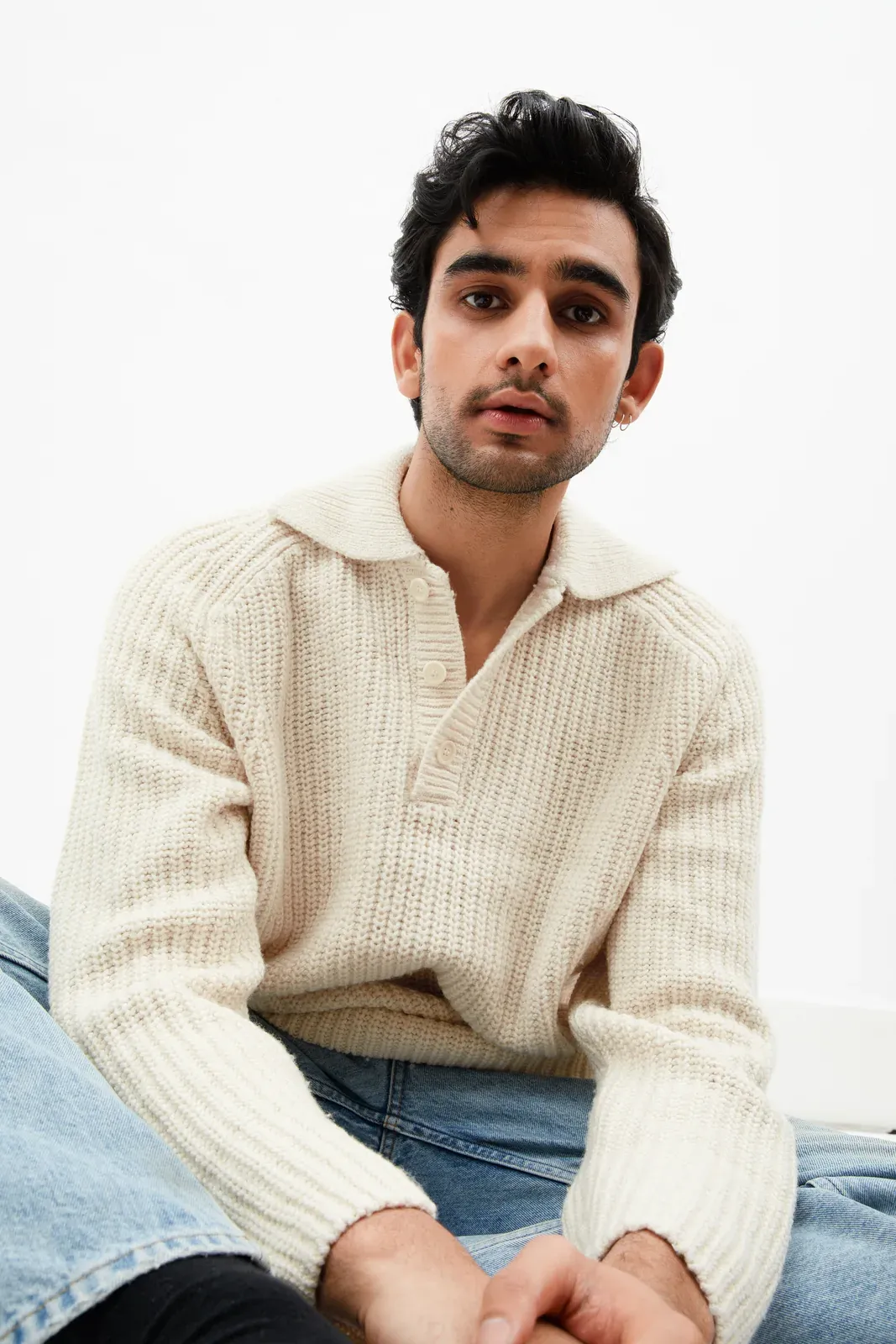
You’ve said you got your start acting in student films. What’s something about that environment which you’ve taken with you in your career now?
I’d say the biggest thing I took from working on student films was learning not to let whatever is going on around you affect your performance. Student productions can be chaotic at times, so you quickly learn to stay focused on your job and your job only. It taught me to block out distractions, trust my instincts, and concentrate on the work in front of me. It also taught me that there’s almost always one more take. That gives you the freedom to be brave, take risks, and try something unexpected rather than playing it safe. Some of the most interesting moments come from those risks, and that’s a mindset I’ve carried with me.
What was something about Ravi’s character that you feel connected to?
He’s an outsider. Ravi is constantly trying to find where he fits and how he’s perceived by the people around him, which I think is something many of us can relate to at different points in our lives. There’s a quiet resilience to him that I found very compelling. Even when he feels like he doesn’t quite belong, he keeps moving forward and trying to find his place in the world, and that was something I really connected with as I was playing him.
The show delves into a lot of relevant issues for young people like drug abuse and sexual harassment. How does A Good Girl’s Guide to Murder approach these topics in a new way?
I think it approaches these issues through a gripping and engaging story that immediately pulls you in. It explores them through young, relatable characters, showing how these everyday issues can have far-reaching consequences.
What I found particularly interesting is how the series examines the ways people can use these situations and other vulnerabilities as tools for power, manipulation, and social status. It highlights the ripple effects these actions can have, not just on individuals but on entire communities, while still keeping audiences invested in the mystery at the heart of the story.
What I found particularly interesting is how the series examines the ways people can use these situations and other vulnerabilities as tools for power, manipulation, and social status. It highlights the ripple effects these actions can have, not just on individuals but on entire communities, while still keeping audiences invested in the mystery at the heart of the story.
“Some of the most interesting moments come from those risks, and that’s a mindset I’ve carried with me.”
How are we going to see Ravi tested in this series of the show?
This series really puts Ravi through the wringer. We see him out in the world with what is essentially a new life. He’s doing a law internship, which brings a whole new set of challenges and pressures, particularly when it comes to his relationship with Pip. At the same time, he’s started to build new friendships and is trying to move forward, but he also chooses to help Pip in the search for Jamie, which inevitably pulls him back into situations that force him to confront the weight of his past. Throughout the series, he’s constantly balancing who he was with who he wants to become. All of this leads Ravi to question his place in the world, his purpose, and ultimately what his relationship with Pip means. It’s a season of growth, but also a lot of uncertainty, and that makes his journey particularly compelling.
What techniques or tools do you use to drop into a character and, at the end of the shoot, leave the character on set?
I do a lot of the work before I ever arrive on set. I spend time interrogating the script, breaking down the scenes, asking questions, and really trying to understand the character’s motivations and place within the story. Then, once I’m on set, it’s about letting go of all that preparation as much as possible. I try to stay relaxed, present, and in a free state. For me, acting is really about listening. If you’re genuinely listening to what the other actor is saying and responding truthfully in the moment, a lot of the work takes care of itself. At the end of a shoot, I make a conscious effort to switch off and do things that have nothing to do with acting. I love cooking, watching films, working out, and even colouring books. Anything that helps bring me back to myself and back into my own world rather than staying in the character’s for too long.
As a South Asian person in a leading role and as the love interest, what does it mean for you to provide this kind of representation?
I feel very fortunate to be able to play a character like Ravi, because roles like this don’t come around often. As a South Asian actor, it means a lot to be part of a story where a character who looks like me is not only at the centre of the narrative but is also portrayed in a positive, nuanced, and aspirational way.
Representation is important because it allows people to see themselves reflected on screen. For young South Asians in particular, being able to watch a character like Ravi as a leading man and a love interest can help broaden what feels possible for them. At the same time, it’s valuable for wider audiences too, because it helps challenge outdated perceptions and expands the kinds of stories and characters people are used to seeing. Characters like Ravi matter because they normalise representation rather than making it the focus. He’s a fully realised person with strengths, flaws, ambitions, and relationships, and I think the more audiences see characters like that on screen, the more open-minded and inclusive storytelling becomes.
Representation is important because it allows people to see themselves reflected on screen. For young South Asians in particular, being able to watch a character like Ravi as a leading man and a love interest can help broaden what feels possible for them. At the same time, it’s valuable for wider audiences too, because it helps challenge outdated perceptions and expands the kinds of stories and characters people are used to seeing. Characters like Ravi matter because they normalise representation rather than making it the focus. He’s a fully realised person with strengths, flaws, ambitions, and relationships, and I think the more audiences see characters like that on screen, the more open-minded and inclusive storytelling becomes.
“Characters like Ravi matter because they normalise representation rather than making it the focus.”
What has been your greatest lesson from playing Ravi?
One of the greatest lessons I’ve taken from playing Ravi is to stand firmly in what you believe in, and the world will find you. Throughout his journey, Ravi stays true to his values, even when it would be easier not to, and there’s something really inspiring about that. He’s taught me the importance of authenticity and not changing who you are in order to fit in or gain approval.
You speak with a lot of passion for the filmmaking process. Have you also considered other roles behind the scenes?
I would love to direct one day, but I still feel like I’ve only scratched the surface of acting. There’s so much more I want to learn, explore, and challenge myself with as an actor before I make that leap. Acting is something I’d like to really conquer first. I still feel excited by the process of discovering different characters, genres, and ways of working. Directing is definitely an ambition of mine, but for now my focus is on continuing to grow and develop as an actor.
What was a piece of advice that you received as a young actor that changed your perspective?
As tough as rejection is, all that hard work makes you a better actor.