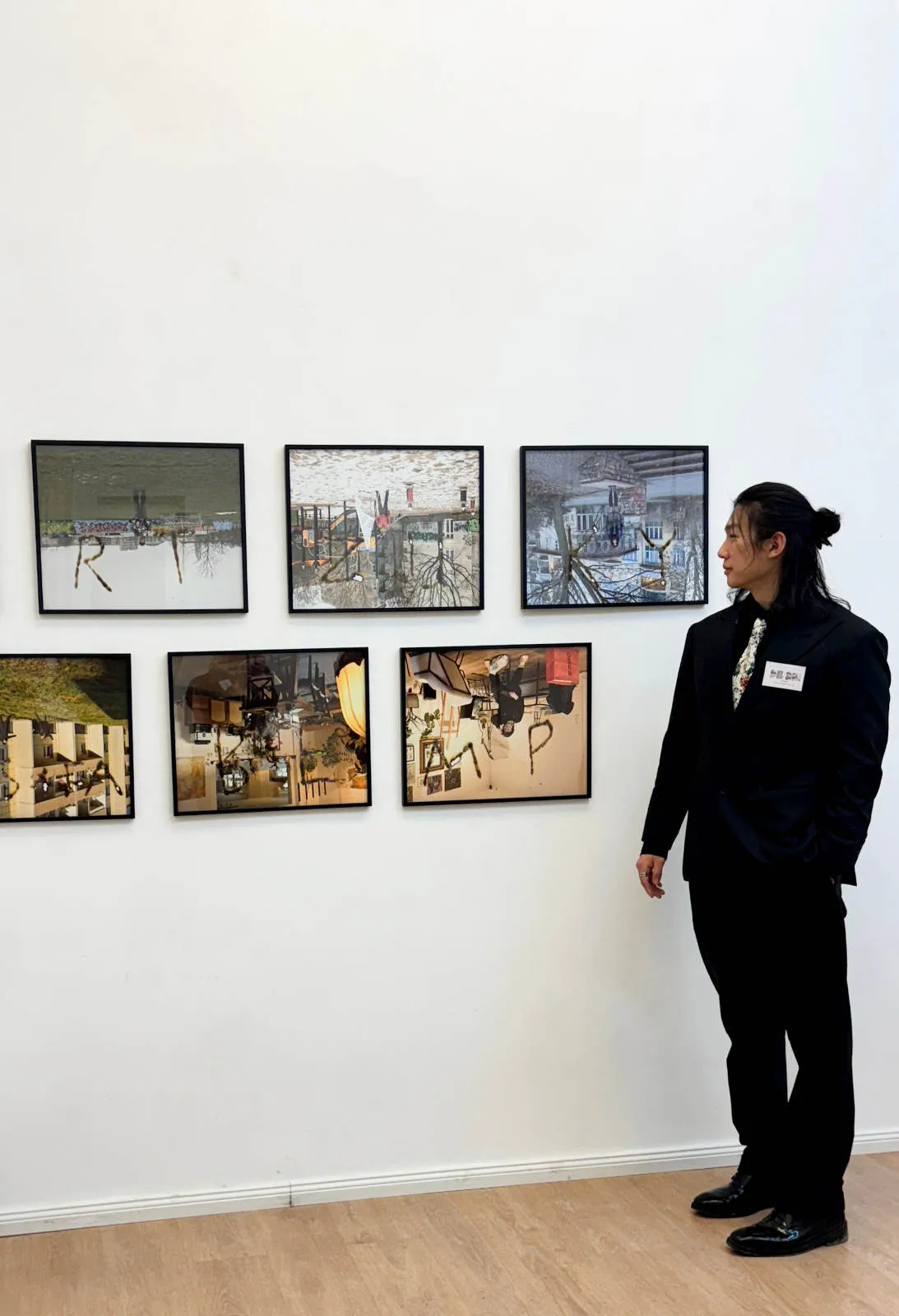
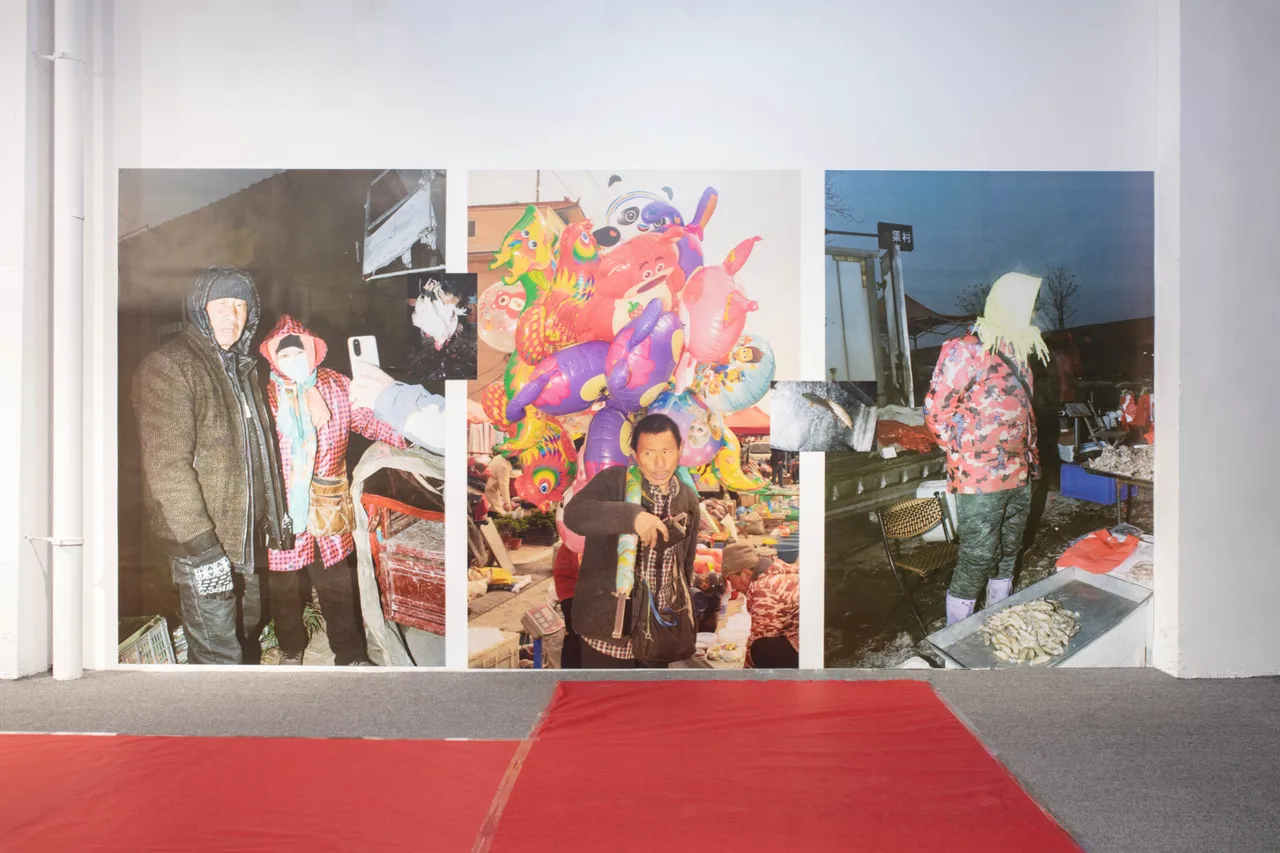
In the photo, you see a woman slightly leaning forward as she pushes a bicycle. Her face is strained. Not angry, but determined. Although you have not spoken to her, it seems as if her back has curved from all the times she has pushed this bicycle before. At least that is what you can imagine when you look at the gloves she is wearing, knowing the physical labour will blister her skin. It is a photograph the young emerging artist Yu Hao shot at one of the markets in rural China, shown in his solo exhibition Island.
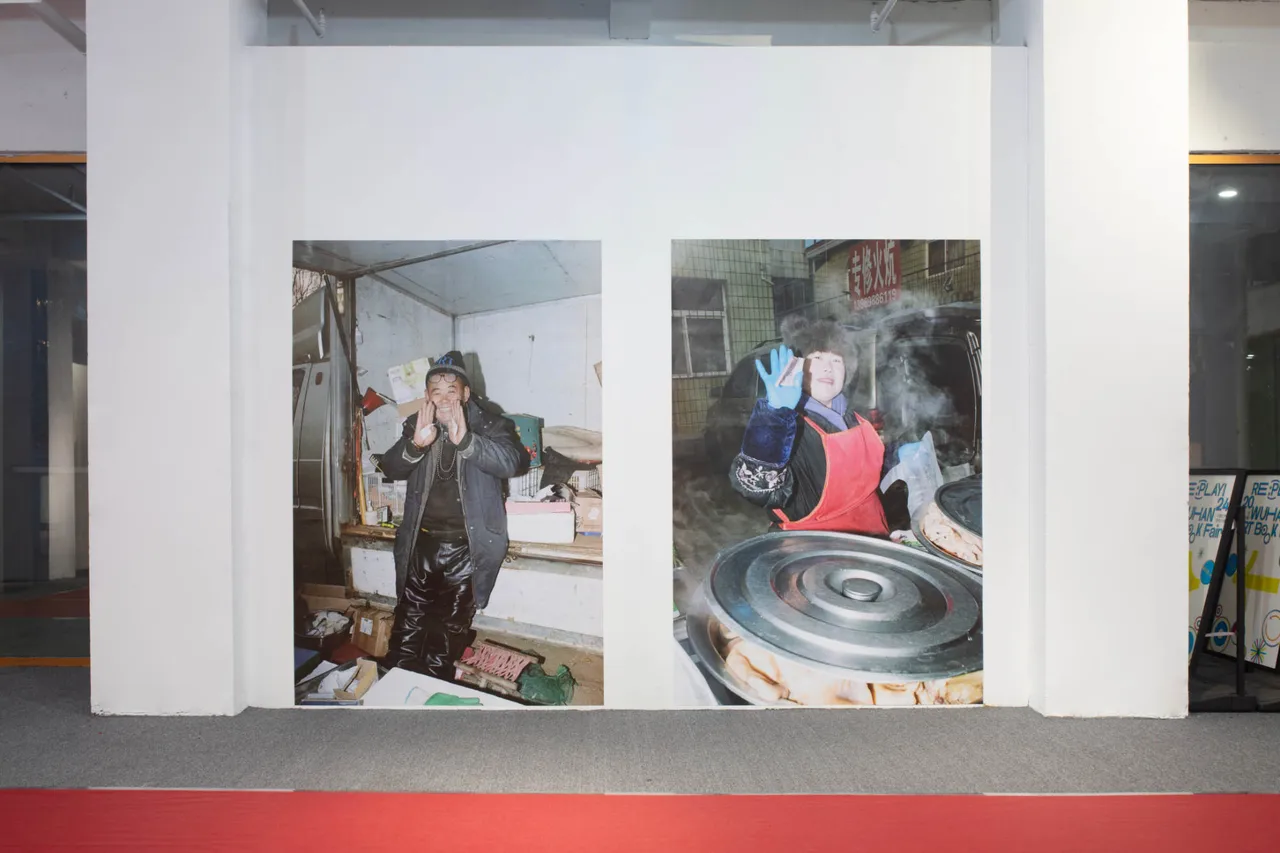
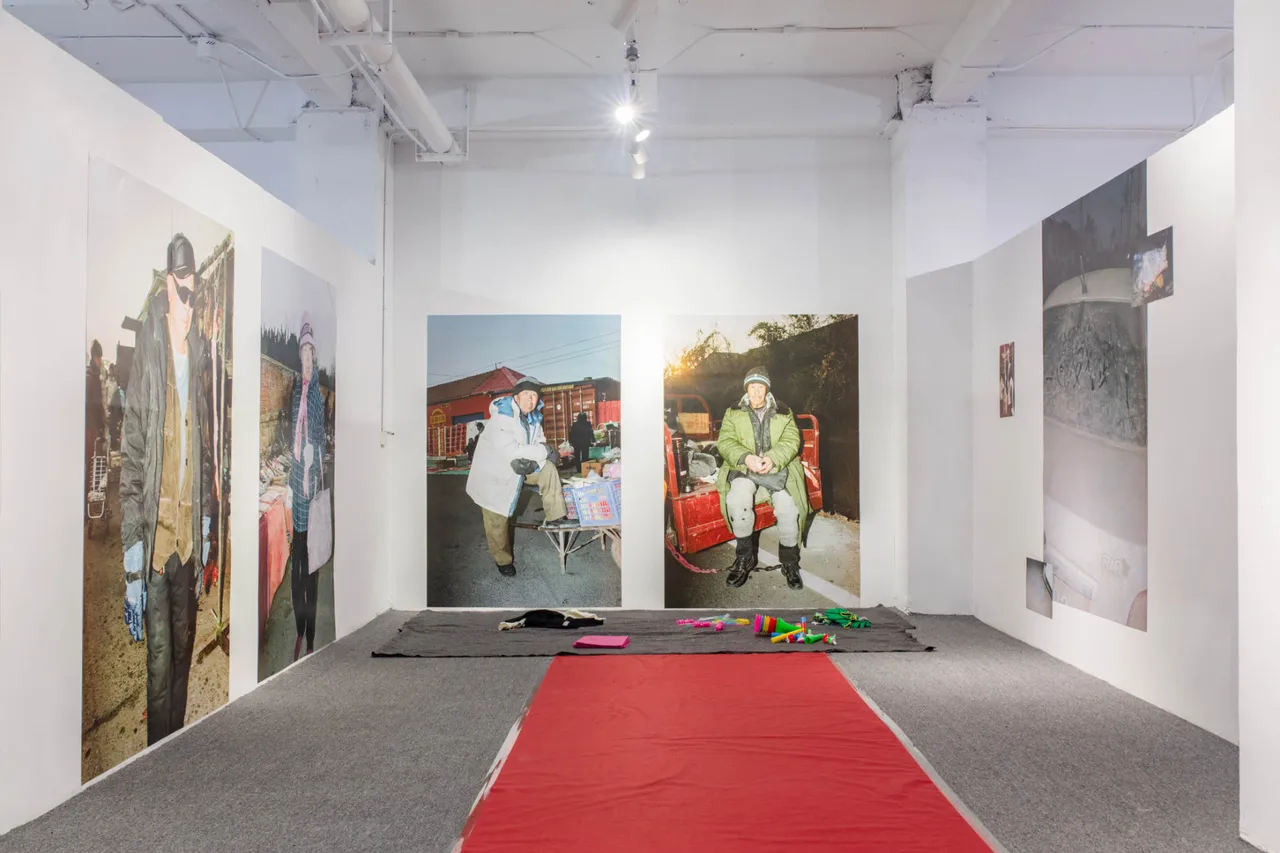
Just like the rest of his work, this image from the series Five, Ten explores contemporary social realities through a sharp, cinematic lens. It’s a lens that kind of freezes time, you could say. That feels a bit like holding your breath. There is stillness, created through flash, through bold contrasts, making it look like a film scene paused at exactly the right second. And yet, there is movement everywhere. In the stories. In the emotions. In the social urgency behind each frame. Yu Hao’s images touch on class structures, on the stories of marginalised communities, on the quiet ways our bodies carry history into everyday spaces.
In the past, Yu Hao has participated in exhibitions in Paris, Glasgow, Chengdu, Beijing and London. Basically, he has seen a lot. Yu Hao’s work is artistic. The photography appears to centre on human and bodily experience that challenges the western mind-bodily duality put forward by Descartes, and the order implied by that. His visual world aligns with contemporary ideas on the body as a space for knowledge.
An experience that continuously shapes his work is his own androgynous expression, that was suppressed in his environment growing up. And because of that, his images often challenge the boundaries of clothing, turning it into a universal language that breaks stereotypes and that explores the desires of a society shaped by patriarchal structures. It sounds theoretical, but if you look at another piece of his work, at Invisible Castle, an intimate portrait series of his three great-uncles dressed in nightgowns and hats, you’ll understand.
After his contribution to Rebuilt Babel and solo exhibition Island, we sat down with the artist for an in-depth conversation. We wanted to know, did his great-uncles enjoy wearing dresses? Were they shy? Did they laugh? We spoke about the Five, Ten markets, about masculinity, about what replaces traditions and about how the artist imagines his own future.
Hi Yu Hao! Let’s start. What’s one piece of advice from your grandparents that still echoes in your mind today?
My grandfather once told me, “Everyone needs a place of their own, even if it cannot be seen.” That sentence has stayed with me ever since.
Tell me, why this sentence?
As I grew older, I began to realise that many people spend their lives adapting to external expectations, rarely living according to their own desires. You see this especially in older generations. They often place personal choice behind family roles and social structures, while still carrying an inner imagination of freedom and dignity. Now, through photography, I try to approach this condition by creating spaces that temporarily step outside labels and norms, allowing the body to exist in a more relaxed and autonomous way. For me, photography is about making overlooked emotions and desires visible. And about reminding us that even within seemingly stable systems, individuals can still search for a place that belongs to them.
You can definitely see that in your work. Both Five, Ten and Invisible Castle centre elderly people. What is it about older bodies, gestures, and presences in particular that fascinates you so deeply?
For me, older bodies feel like books that have been repeatedly written on by society. Time, labour, family relationships, and historical change all leave traces in posture and gestures, giving even the smallest movement a deep understanding of life. Compared to younger bodies still being shaped by expectations and projections, older presences exist in a more sedimented state. They may appear calm, yet they hold layered stories and emotions. This is what fascinates me. So, in my practice, older bodies offer a way to observe how individuals, after long periods of adapting to social structures, maintain a subtle balance between compliance and selfhood. And how personal will persists even when it is no longer openly expressed.
You’ve said you never treat elders as mere subjects, but enter into conversation and shared time with them. What were those encounters like in the rural markets of Five, Ten?
Rural markets function more like temporary gatherings that form and disappear quickly. They usually last only one morning, and return to the same location every five days. This rhythm made each encounter of this project very brief and fragile. I had to observe, speak, and build a small sense of trust within a limited time before raising the camera.
Was there one person or one moment that touched you the most?
What stayed with me the most was the overall condition rather than any single individual. I remember vendors who remained at their stalls, having developed a stable, almost natural relationship between their bodies and the space. On the contrary, people moving though the market introduced a constant flow and shifting rhythm. At one point, they resembled models on a runway. But, unaware of being observed, their gestures unconsciously revealed their lived experience. At that moment, photography felt like witnessing how time becomes visible.
In Invisible Castle, you didn’t photograph strangers but your three great-uncles. Were they hesitant at first?
At first, they were somewhat hesitant. It was not resistance to being photographed, it was more uncertainty about being seen in this way. In their generation, clothing and the body are often closely tied to identity, age, and social roles, and there is little space to question or step outside those expectations. But as the process switched from an act of documentation to a form of spending time together, they began to relax and even actively participated in choosing clothing and poses.
Did this process reveal sides of them that you hadn't seen before?
Yes. I definitely discovered aspects of them I had not noticed before. Their sensitivity toward self-image, for example, their imagination about possibilities that were never realised when they were younger. There was a quiet sense of humour and subtle resistance that still existed beneath everyday life. My photography did not change them, but it allowed me to recognise that beneath layers of social convention, they had always maintained their own flow and desires.
You speak about “clothing freedom” and masculinity. Why is clothing still such a battleground, especially for men?
In many cultural contexts, the male body has long been expected to convey stability, restraint, and functionality. Particularly within traditional Chinese family structures, appearance helps maintain social and familial order. Because of that, clothing is never just aesthetic. Instead, it becomes part of social roles. And compared to women, men always have had less freedom in dress, with colours, styles, and even posture tied to ideas of proper masculinity. Deviating from these norms is often seen as inappropriate or immature. In my observation, older men carry these long-established expectations but, over time, gradually step outside the judgement at the same time. This creates a space where clothing can rethink identity and regain a sense of agency. So, for me, clothing freedom is less about fashion than about whether the body still holds the possibility of choice and transformation.
When traditions like these disappear, what replaces them?
When traditions disappear, a true void rarely emerges. What replaces them are often new forms of regulation. These may no longer appear as family structures, lineage, or explicit moral codes, but instead take shape through aesthetics, efficiency, consumption, and ways of living. People seem to have more freedom of choice, yet many of these choices are still shaped within new systems. For me, what matters is not the disappearance of tradition itself, but this process of replacement: how the body searches for a new position once older constraints fade, and how it continues to be shaped within emerging structures.
When you picture yourself forty years from now, what kind of life, or what kind of freedom, do you hope to be living?
The kind of freedom I hope to have is not one of complete detachment from society, but the freedom to choose how I participate in it. When we are younger, it is easy to be pushed forward by environment, industry, and systems of evaluation. So, in the future, I hope for a slower rhythm of life while still maintaining curiosity and independent judgment toward the world. And that, without the need to constantly prove myself or be confined by fixed identities. I may still be making work, but creation would no longer be about resisting something. Rather, it would become a way of coexisting with time and with my own accumulated experiences. In that state, freedom isn’t about escaping structure, for me. I want the ability to understand it and retain my own position and sensitivity within it.