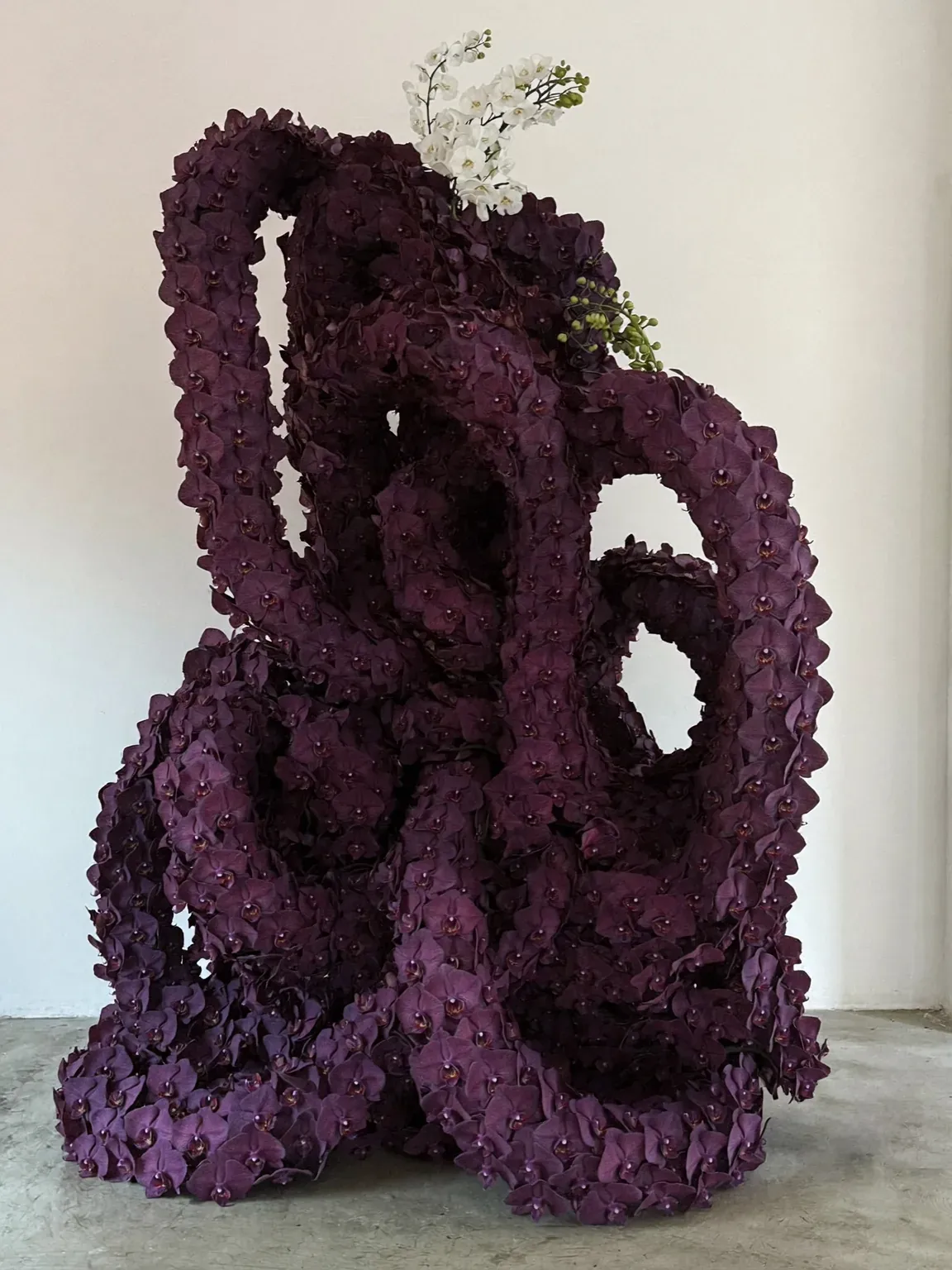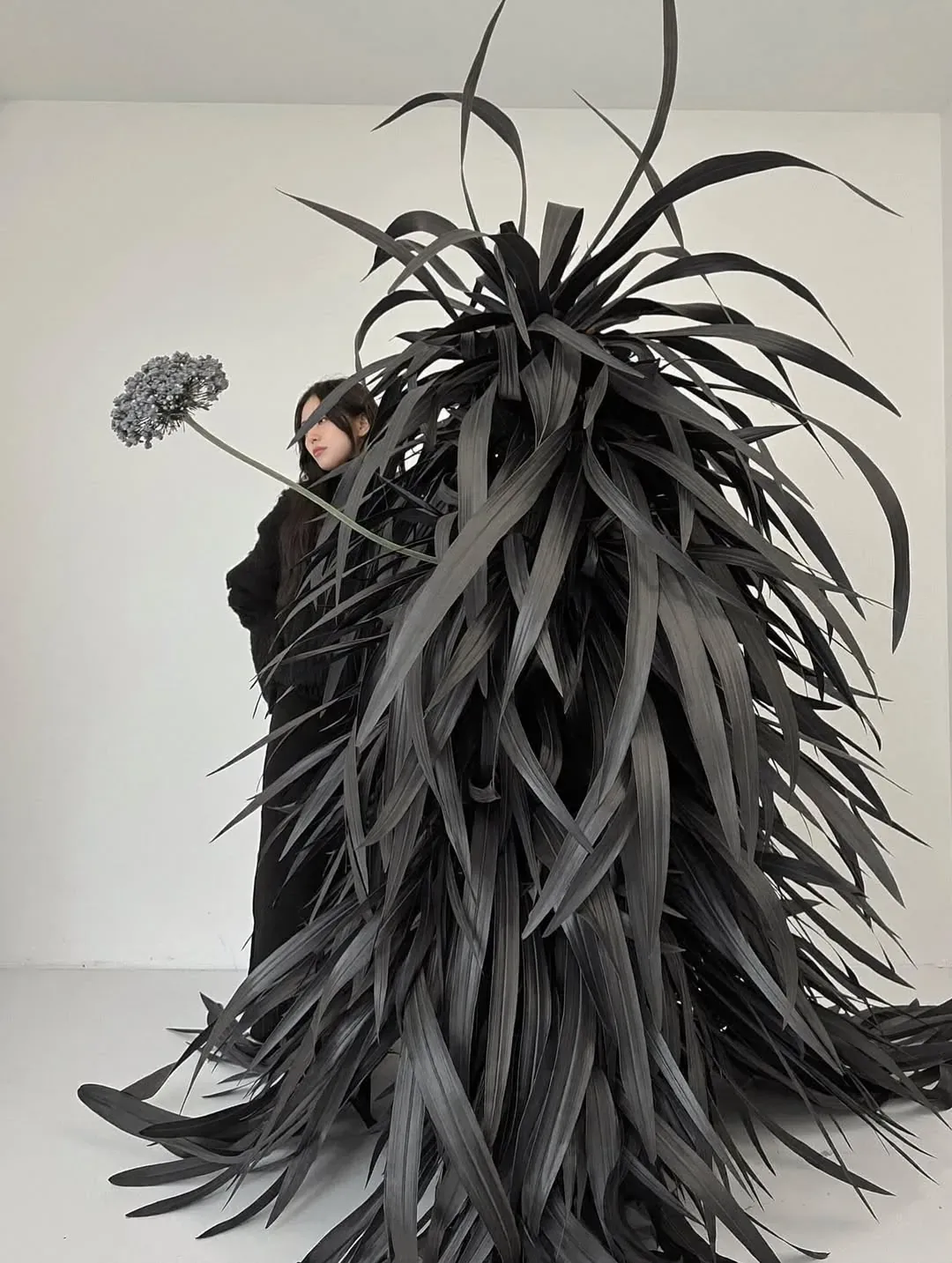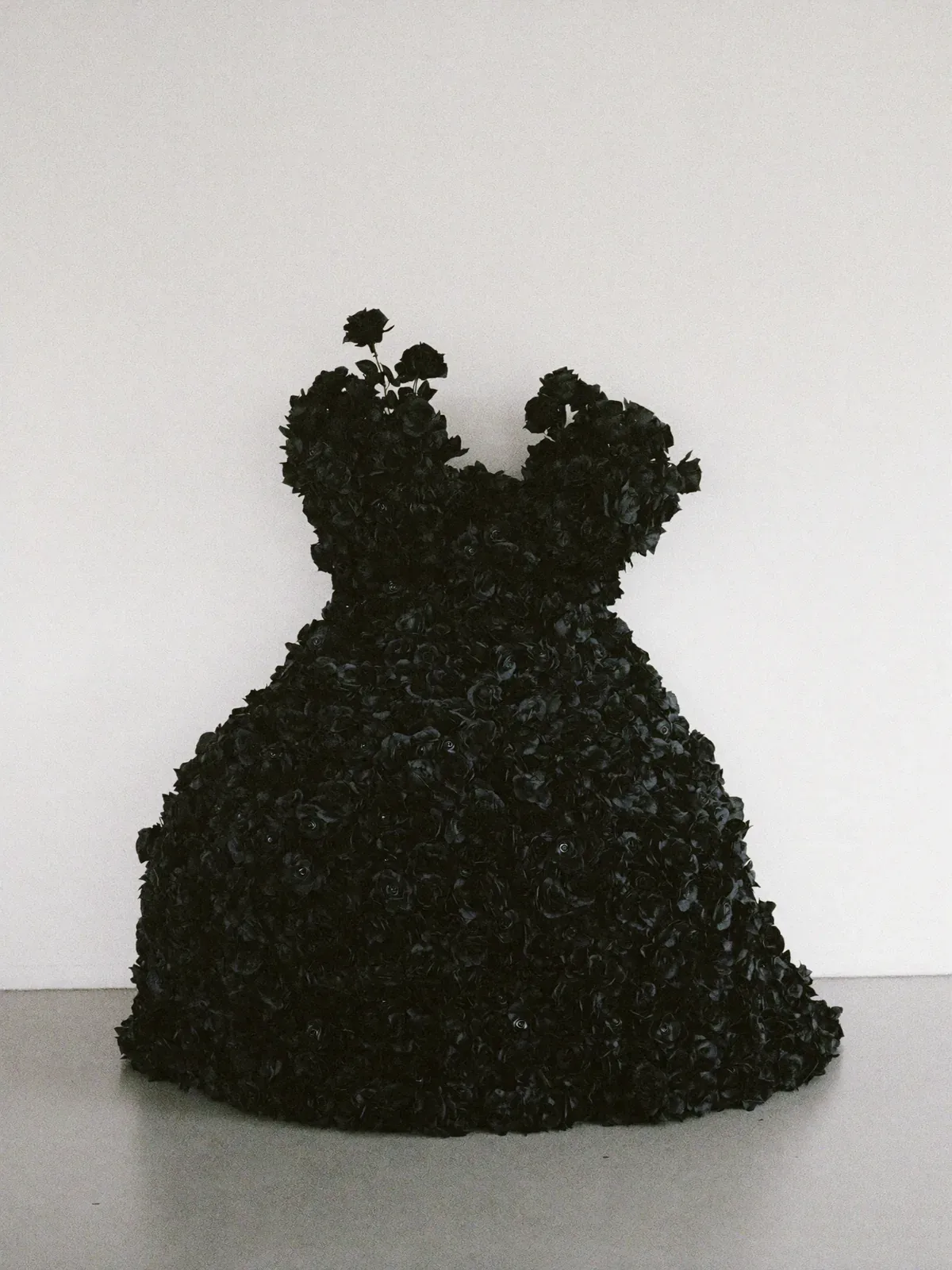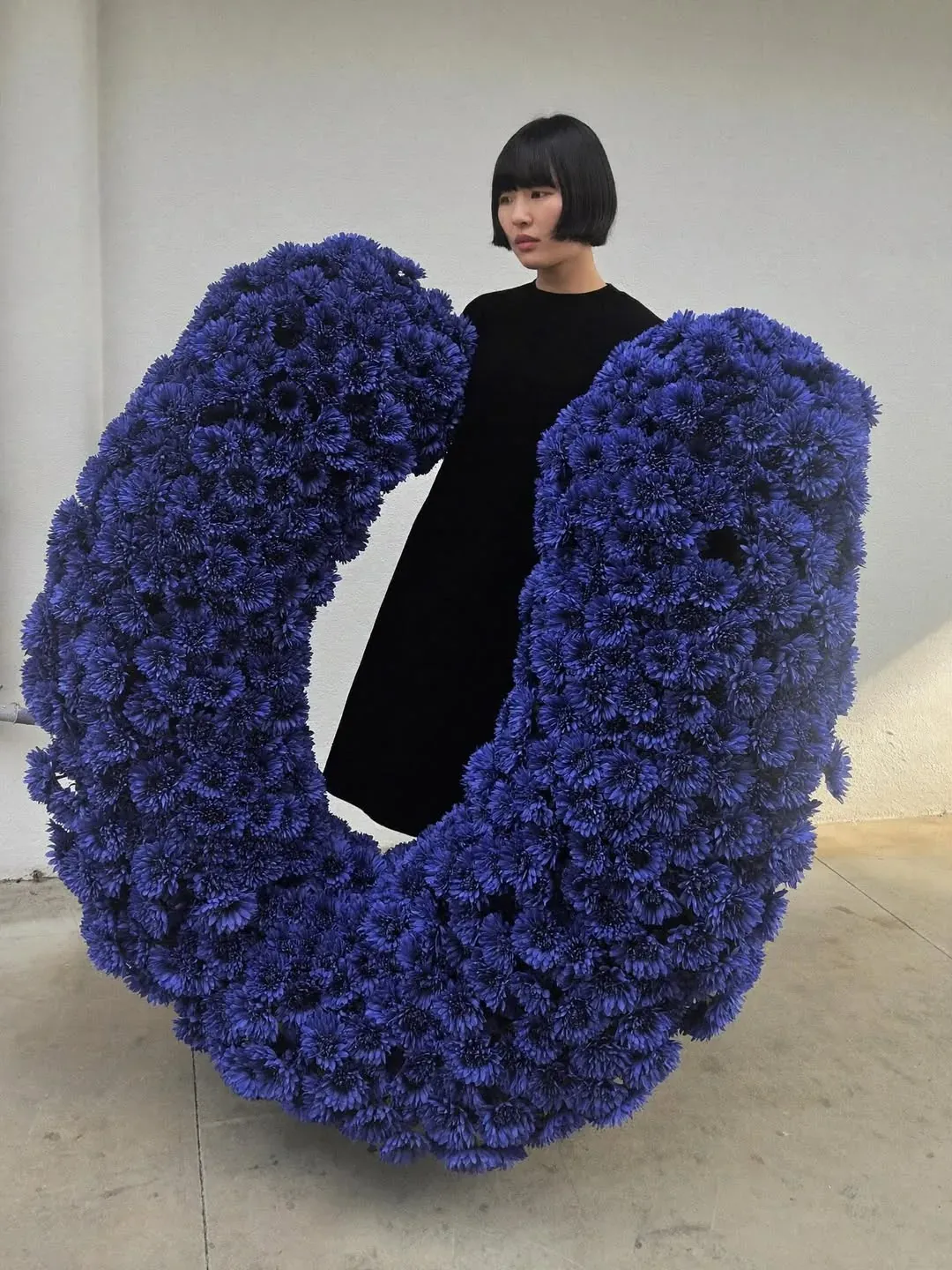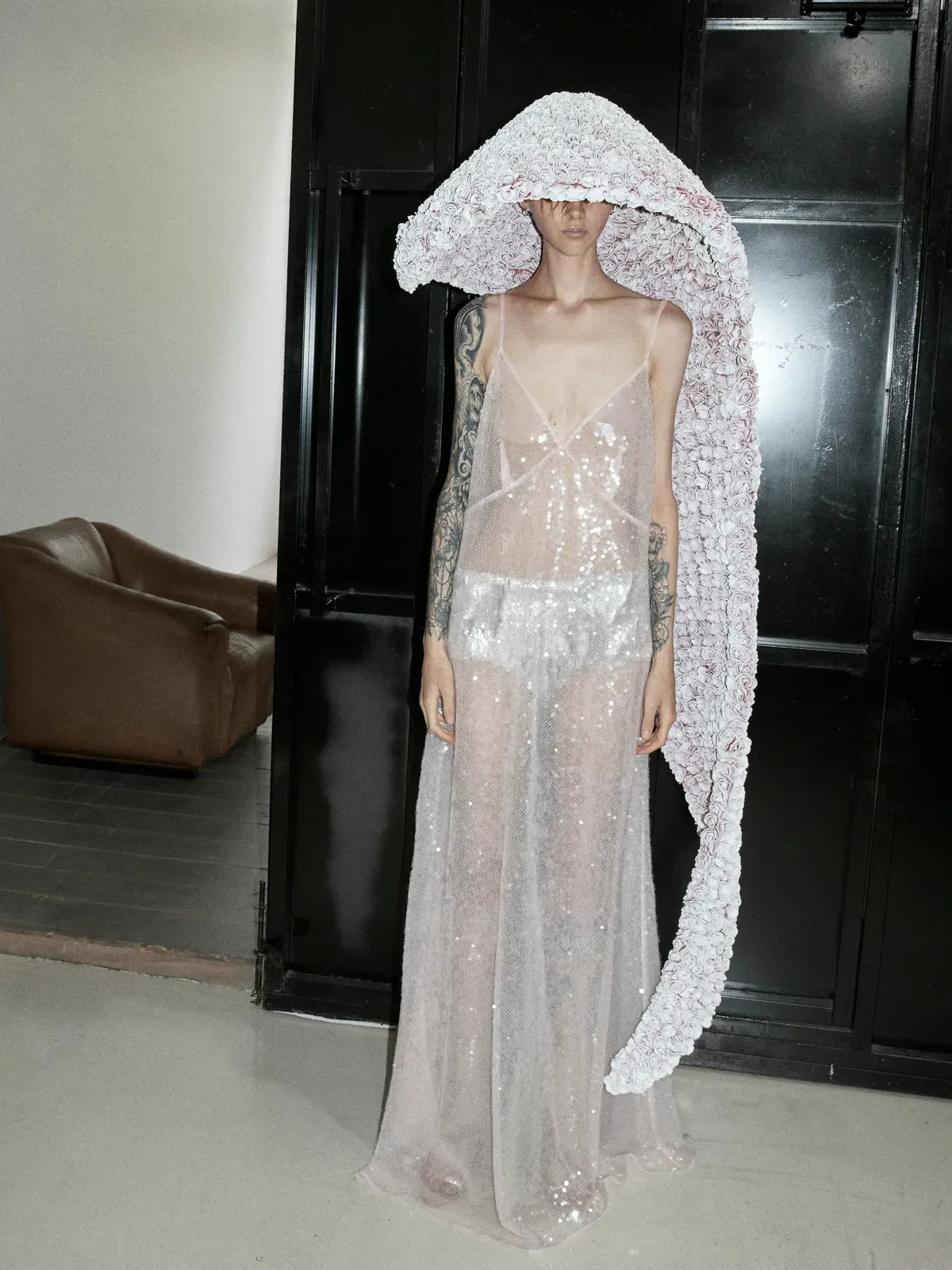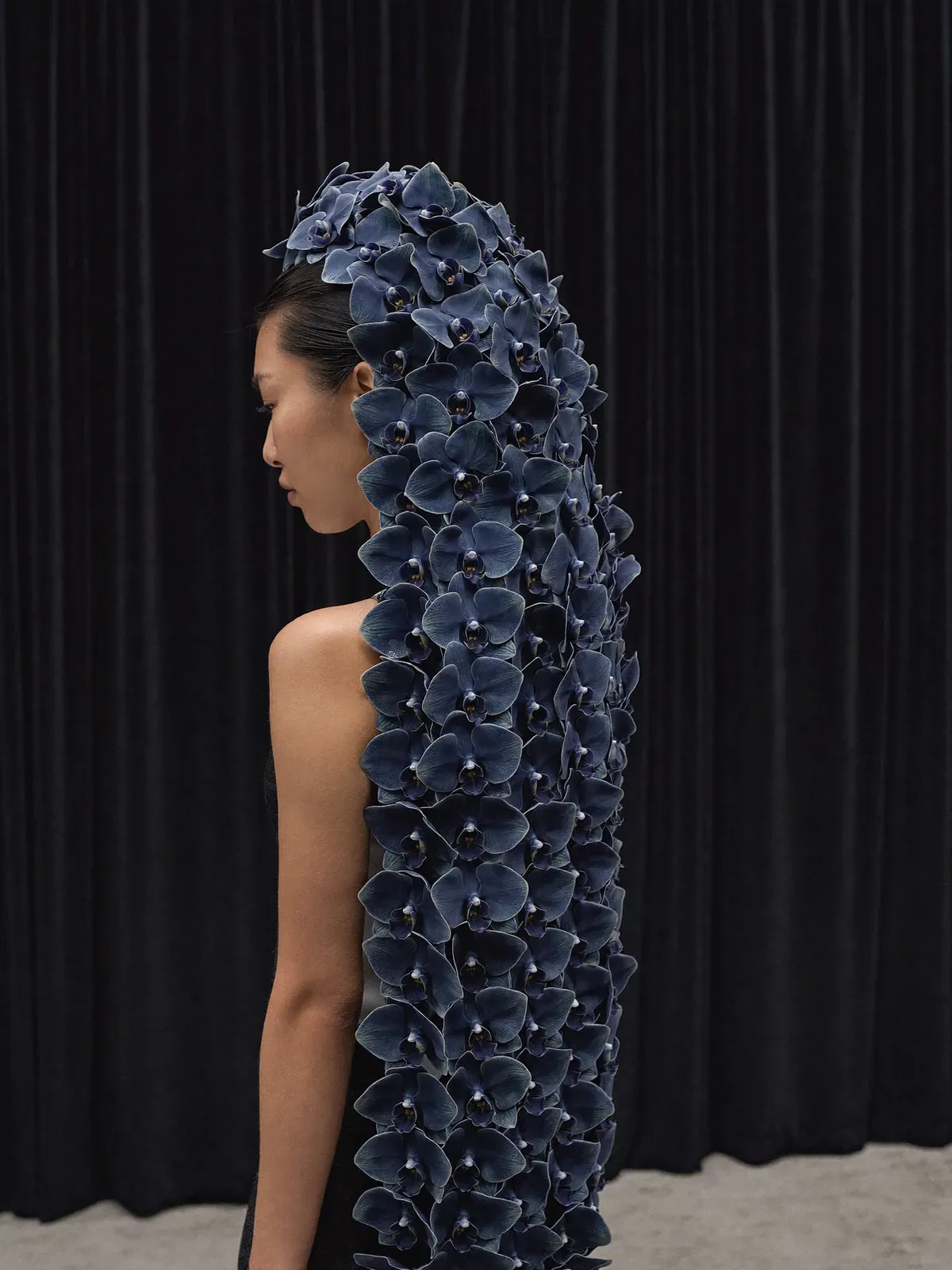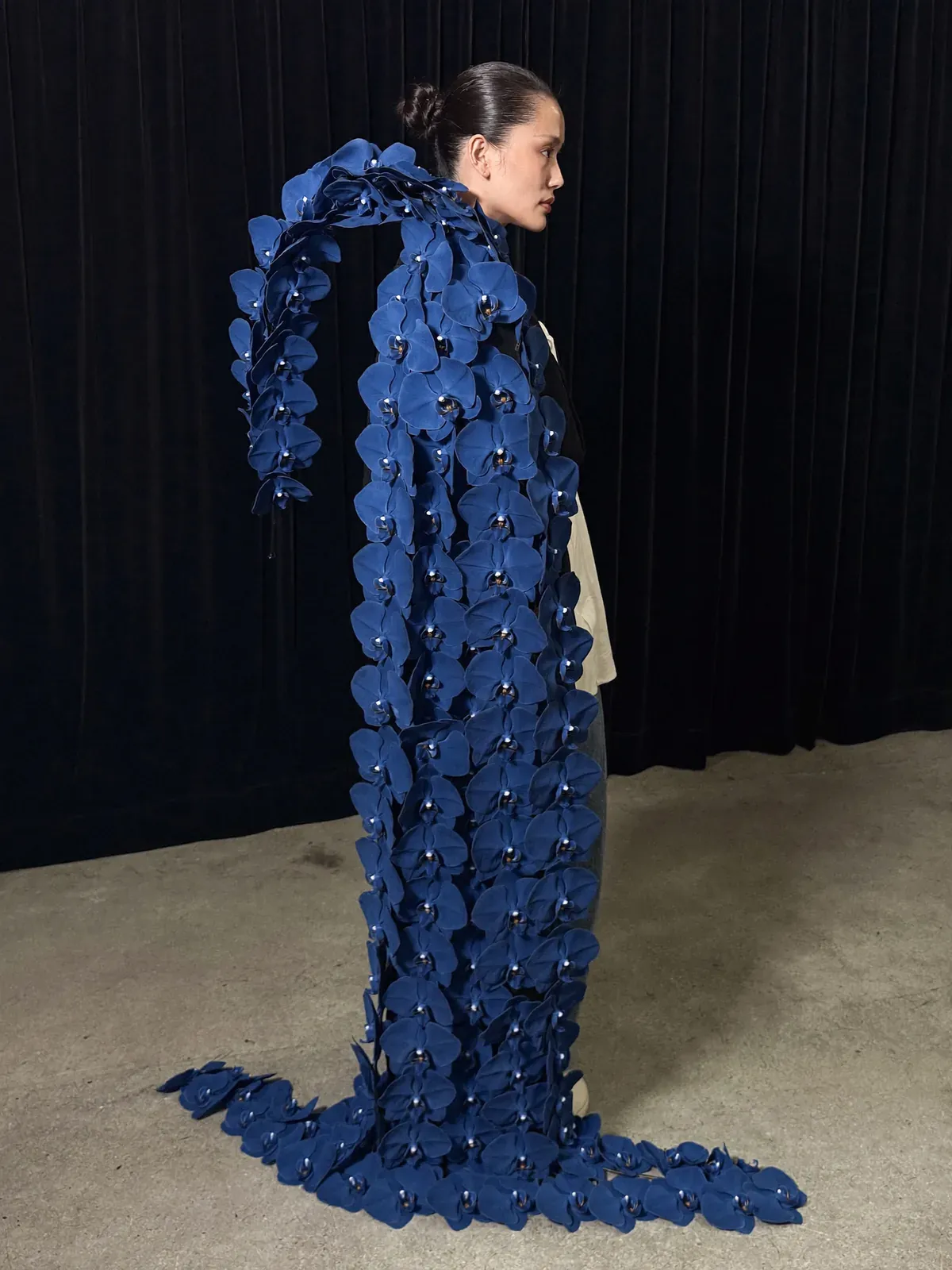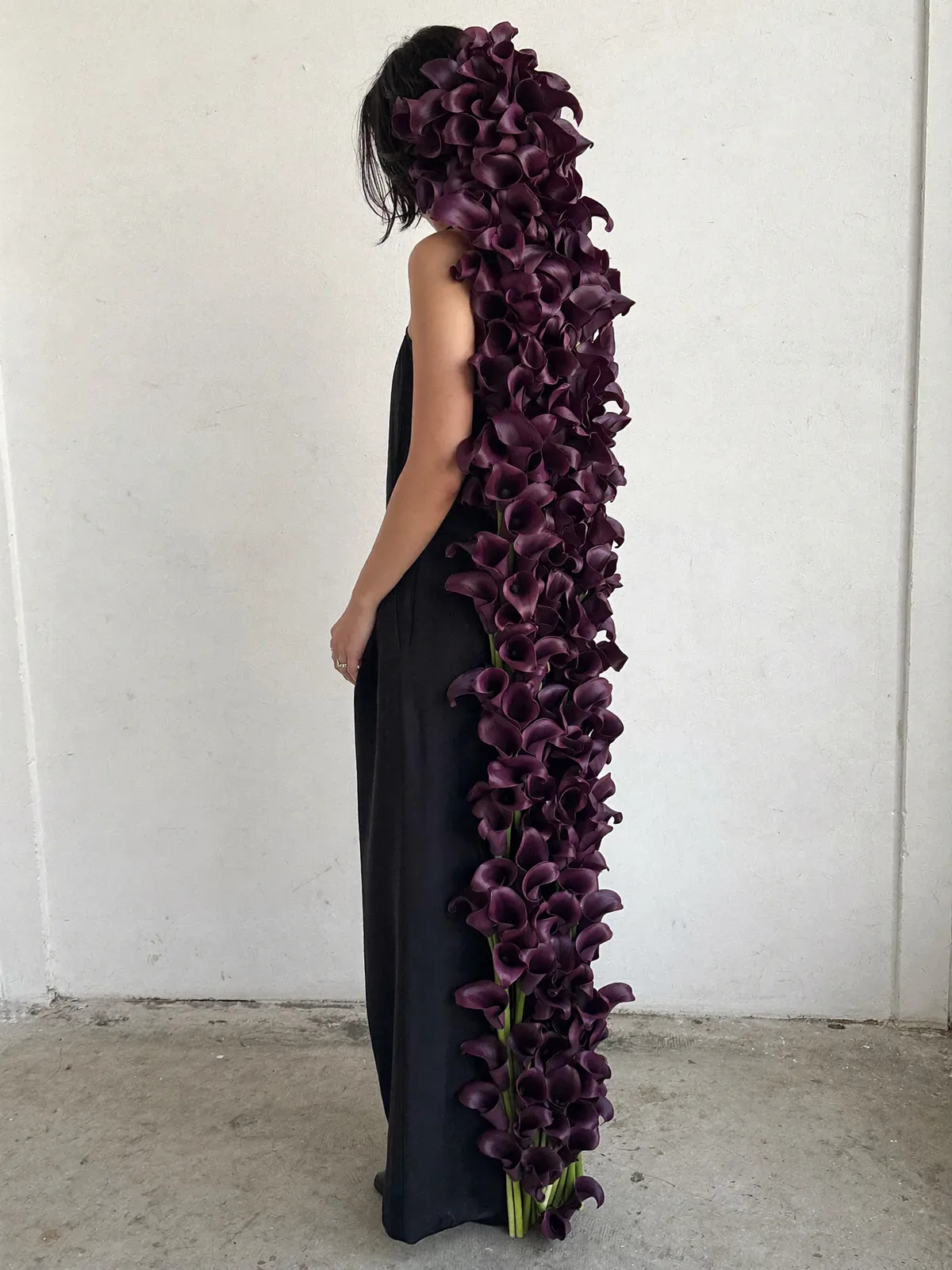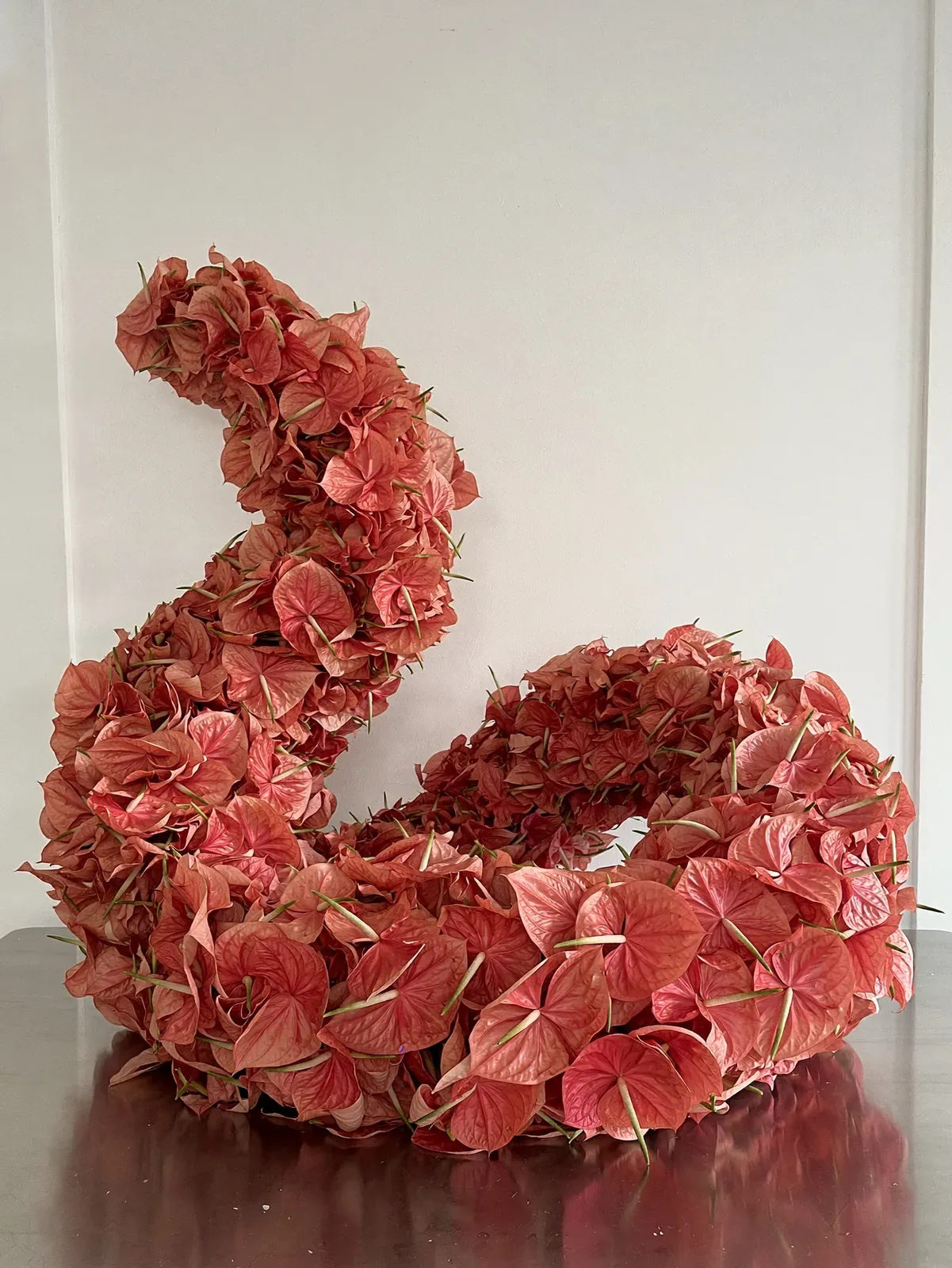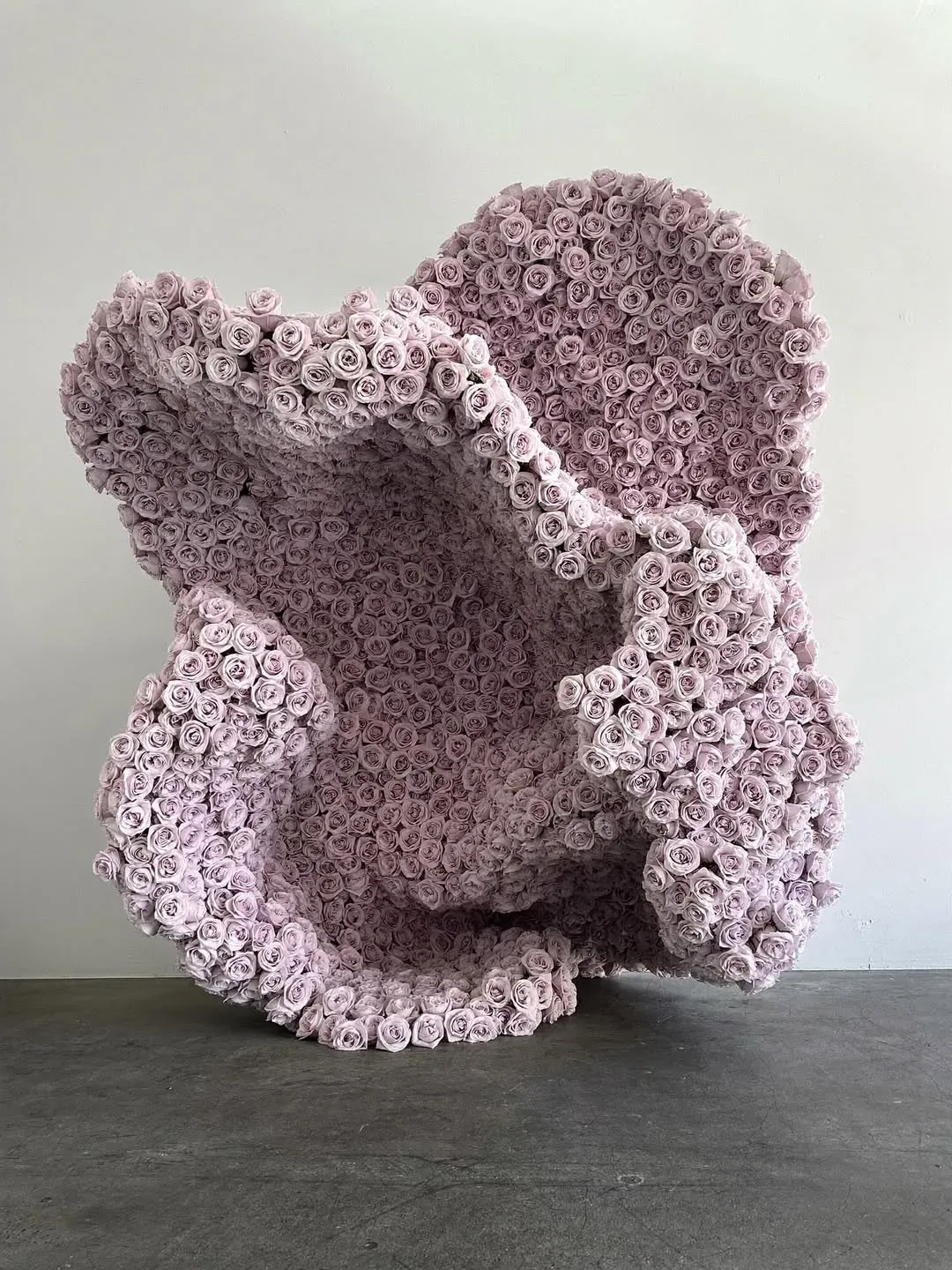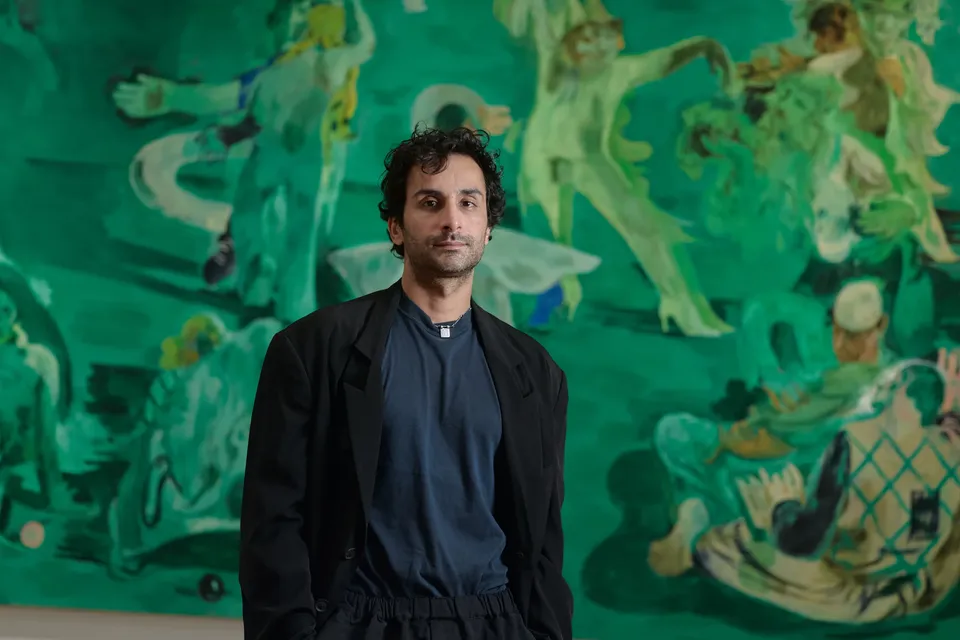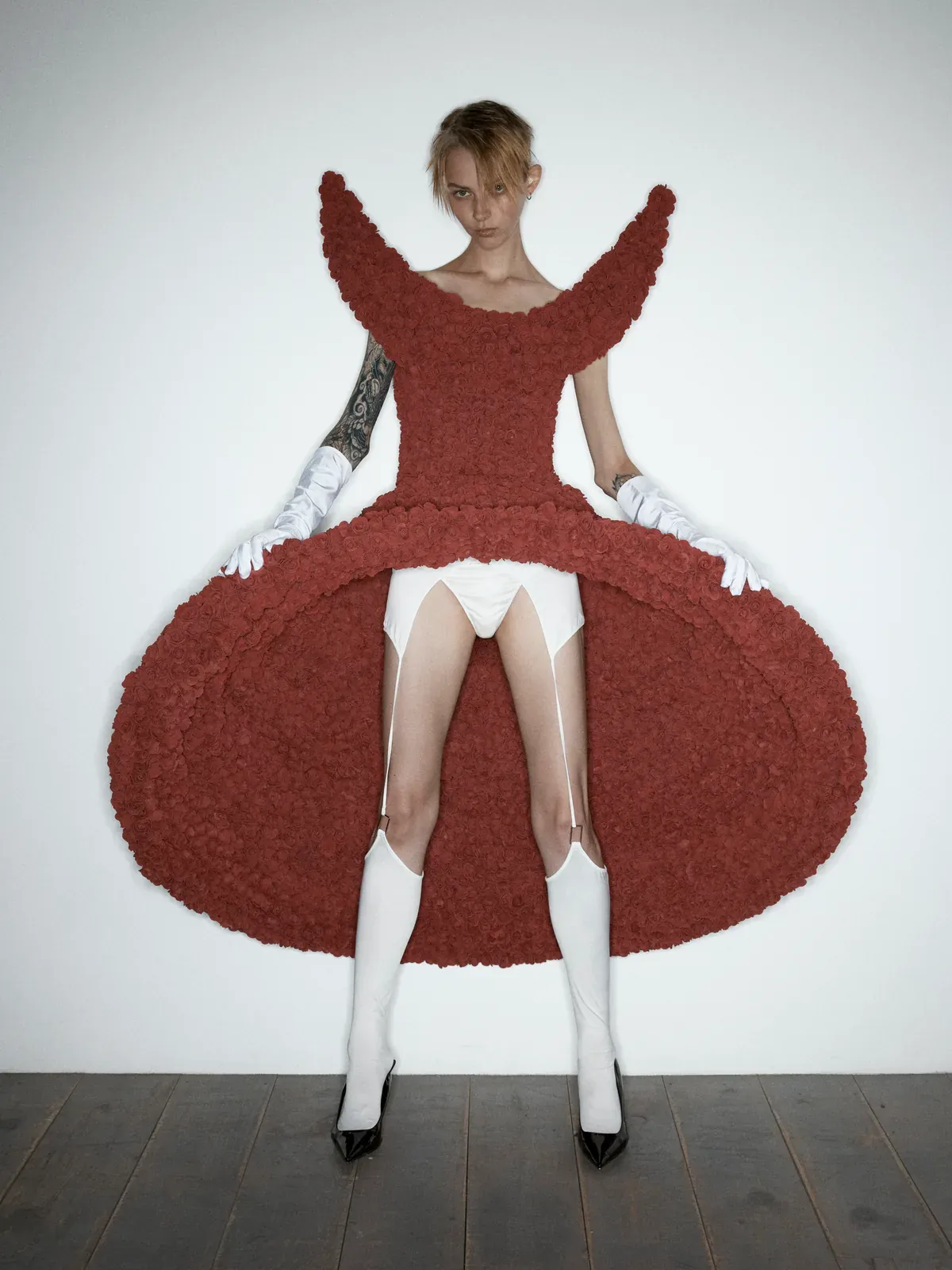
Flowers are one of nature’s most beautiful creations, but what if their familiarity were transformed into something entirely different? What if we saw them exist in a space separate from our own? That is exactly what Korean artist Yeeun Jang aims to examine in her sculptures, where flowers take on a life of their own outside the boundaries of reality: modernity sculpted from the ancient existence of flora.
Hey Yeeun, it’s a pleasure to speak with you. To get to know you better, what have you been working on lately?
I’ve been spending a lot of time researching various materials for building frames in order to challenge myself with forms that are more complex and seemingly unreal. Even ordinary tools that we use in daily life can become interesting frames in my work, so I try to expose myself to as many different materials as possible.
You were born and raised in Korea. How do you think that has impacted your creative process and outlook on life?
I was born and raised in Seoul, which is a city that changes very quickly. I think growing up in that environment naturally influenced the way I work. I enjoy constant development and experimentation. Korea is also a place where tradition and modernity coexist. While my work does not directly reference traditional Korean aesthetics, I think that contrast has influenced the way I perceive beauty. I am interested in transforming organic and familiar materials such as flowers into unexpected forms. The speed and energy of Seoul have naturally become part of me as well. Repetitively attaching large quantities of flowers actually helps calm that side of my personality. At the same time, I tend to complete large-scale projects faster than most people. Life in Seoul taught me how to work quickly, adapt quickly, and turn ideas into reality. It remains an important part of my creative process today.
What are some non-negotiable habits you maintain in your daily routines?
I feel most comfortable when a pair of flower shears is always within reach. I have a specific pair that I like, and whenever I visit the flower market, I usually buy several of the same ones. Whether I am in the studio, in my car, or at home, I like having flower shears nearby.
Floristry is obviously a driving inspiration of yours. Talk us through where that fascination came from. Has it always been something you were drawn to?
I am not someone who started this work because I particularly loved flowers. To be completely honest, I do not have the talent to create something beautiful from a blank slate. My father was a graphic designer, and I also studied design, but I always felt that I lacked the ability to create something entirely from nothing. That is why I chose flowers as my material. Flowers already possess a strong sense of beauty on their own, and I wanted to borrow that beauty to create my own expression.
Has there been a particular flower or form you have previously tried to create but that didn’t end up working out?
There have been so many failures that it is difficult to choose just one. At one point, inspired by a fashion designer, I wanted to create a large-scale sculptural piece with a complex geometric structure using wire and fabric. However, I do not think my technical skills were sufficient at the time. I would like to challenge myself with it again someday.
Flowers are the basis of your work, but are there any other ways you try to incorporate flowers and nature into your daily life?
Surprisingly, I rarely look at flowers outside of work. I do not have flowers or plants in my home. Instead, I enjoy observing nature itself. I live in an area where the city and nature coexist closely, so I take my dogs for walks every day. I enjoy observing the structures and textures created by nature, such as branches that grow downward rather than upward, unusually shaped rocks, or the regular yet irregular arrangement of lotus leaves floating on a lake. Those observations often find their way into my work.
The ephemeral existence of flowers means their lifespan is brief. Do you use preservation techniques, or do you prefer to embrace their temporariness and let nature run its course?
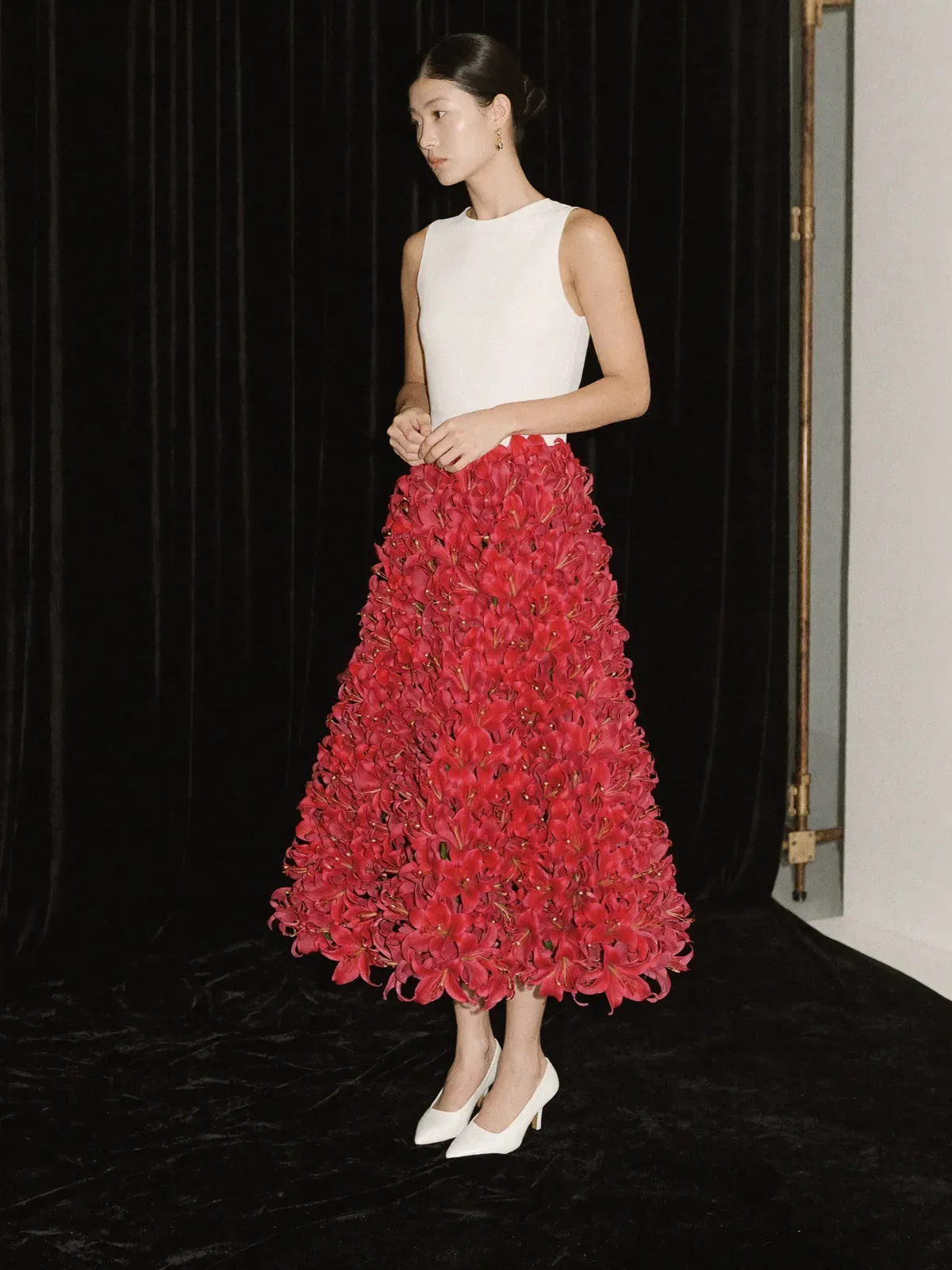
My approach depends on the type of flower and the purpose of the work. Sometimes I use wire, and other times floral glue or tape. When I work with fresh flowers, I prefer varieties that last relatively long, such as anthuriums, tulips, and calla lilies. However, due to the nature of my work, I use artificial flowers much more often than fresh flowers.
How long does it typically take you to complete a sculpture from the moment the idea comes into your head?
I spend far more time building the frame than selecting the flowers. In my work, the most important thing is not which flowers I use, but how perfectly I can realise the frame. Depending on the scale of the project, the process can take anywhere from three days to a month.
“I enjoy observing the structures and textures created by nature, such as branches that grow downward rather than upward, unusually shaped rocks, or the regular yet irregular arrangement of lotus leaves floating on a lake.”
Has there been a design that initially started as one thing and completely evolved into something different?
Almost always. When the work begins moving in a different direction from my original sketch, I adjust quickly. I believe that trying one more thing and failing one more time is ultimately what helps me grow.
After completing a design, how do you wind down and prepare yourself to go back into it?
My work requires a great deal of physical energy, so I prefer going to bed early and waking up early rather than staying up all night. After completing a large project, I can usually prepare for the next one after getting around twelve hours of sleep.
While you’re creating, what do you do to stay focused? Are you listening to music, talking to someone, or do you prefer to work in silence?
While working, I often play videos about society, art, philosophy, or documentaries about space. Spending long hours working alone can sometimes make me feel disconnected from the world.
Spending so much time indoors and on our screens, how do you think your work resonates with or challenges the world we live in?
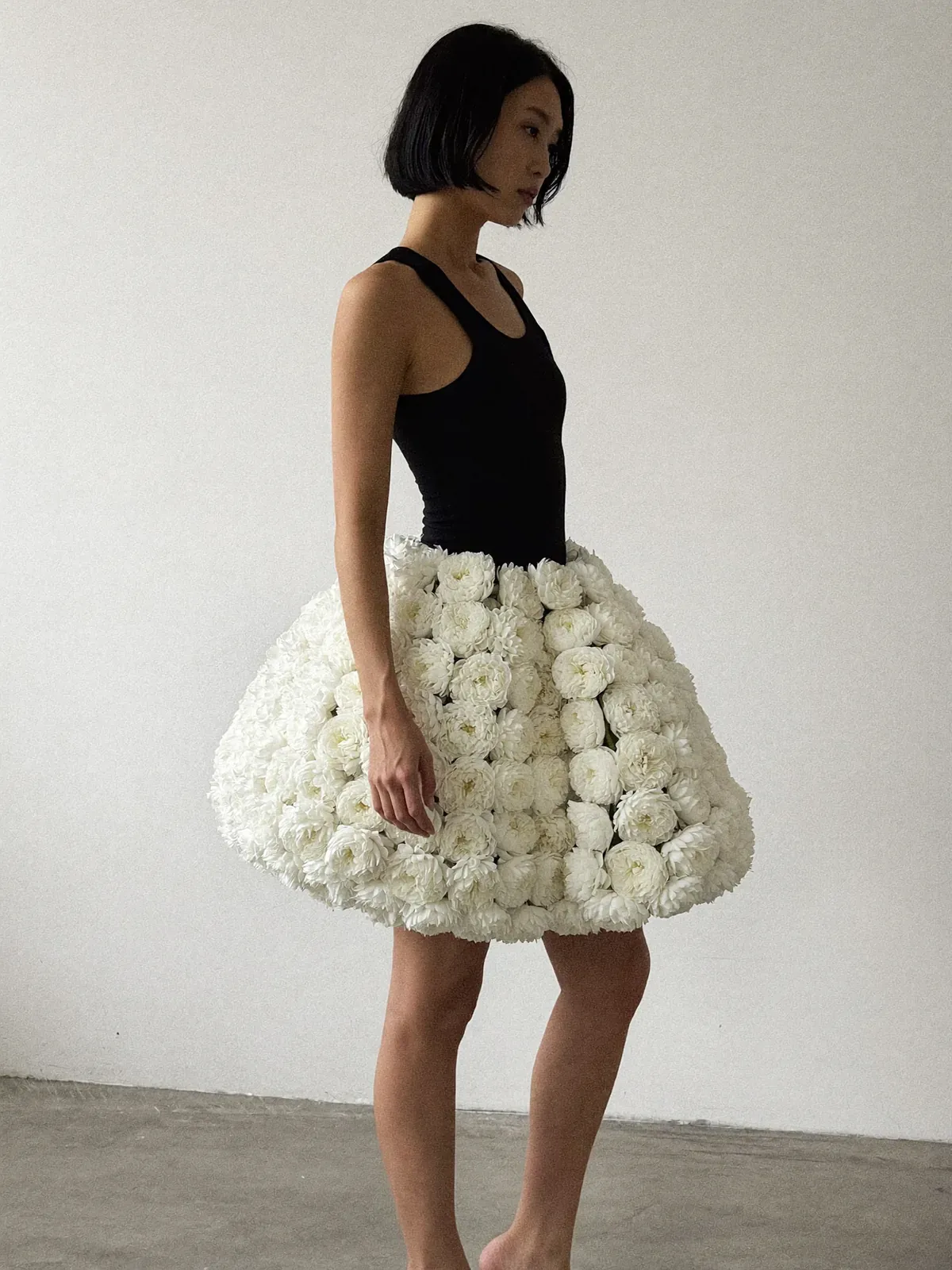
I think we have become very accustomed to experiencing everything through images and videos. Flowers are also mostly consumed as decorations, products, or photographs. I want to present those familiar things in unfamiliar ways. I am interested in moments when changing the scale, structure, and context allows people to see something they thought they knew from an entirely different perspective. I like the concept of chagyeong (borrowed scenery). It is a landscape design technique that brings scenery from outside a space into the space itself. Today, we spend much of our lives indoors and in front of screens. Because of that, our longing for nature seems to grow stronger, and when we represent nature, we often try to recreate it exactly as it appears in reality. However, rather than imitating nature, I want to use flowers to create landscapes and emotions that feel as though they could not exist in reality. If I ever have the opportunity to install my work in a large space as a form of landscape design, I would like to create a sense in which the boundary between reality and unreality becomes blurred. I hope people can spend a moment wandering somewhere between the two.
Do you have a dream museum or gallery where you would like to hold an exhibition?
I am not particularly attached to a specific museum or gallery. For me, the name of the space is less important than how well the space suits the work itself. It could be a white-cube exhibition space, a street, a public space, or somewhere completely unexpected. I would like to meet audiences in a place where my work can exist most naturally.
This year the theme for the Met Gala was Costume Art. How do you define the intersection of these two creative disciplines? When does a garment transcend its status as clothing and become wearable art?
I believe fashion itself is already a form of art. People express their tastes, emotions, values, and identities through clothing, and I see that as a creative act of expressing oneself. For that reason, I do not think of fashion and art as completely separate. Both are completed through people, and both function as languages of self-expression. I do not think there is a specific criterion that transforms clothing into wearable art. Rather, it happens when the person wearing it is able to place their own story into it. If someone can express themselves, communicate with others, and create new emotions or experiences through clothing, then it is already fulfilling the role of art.
Are there any specific designers or collections that you believe successfully blur the line between fashion and art? Have you bought or thought about buying any of these pieces?
I greatly admire the work of Iris van Herpen. Her pieces often feel more like sculptural works than garments. The way she combines technology, structure, and movement is particularly impressive. However, I never studied fashion design, nor am I someone who collects fashion professionally. Rather than owning specific pieces, I am more interested in observing the work itself, studying how it was made, and considering how I might apply similar ideas to my own practice.
Who would be your ideal person to dress for the Met Gala? What look do you envision creating for the event?
There are simply too many people I would like to work with to choose just one. Honestly, if one of my works were ever to appear at the Met Gala, that alone would feel like a dream. It’s enjoyable just to imagine it. If I had one wish, it would be to work with someone who is open to seeing flowers as more than decoration and expressing them in a new way. Whether that person is a singer, actor, model, or designer is not particularly important. I think I could enjoy collaborating with anyone who is willing to view and express flowers in an unconventional way.
What do you want people to take away when they see your work? What message would you like to send?
Rather than delivering a specific message, I want to make familiar things feel unfamiliar. Flowers are materials that everyone recognises, but I try to reinterpret them through sculptural and structural approaches. If my work can make someone pause and look for a moment, that alone is enough for me.