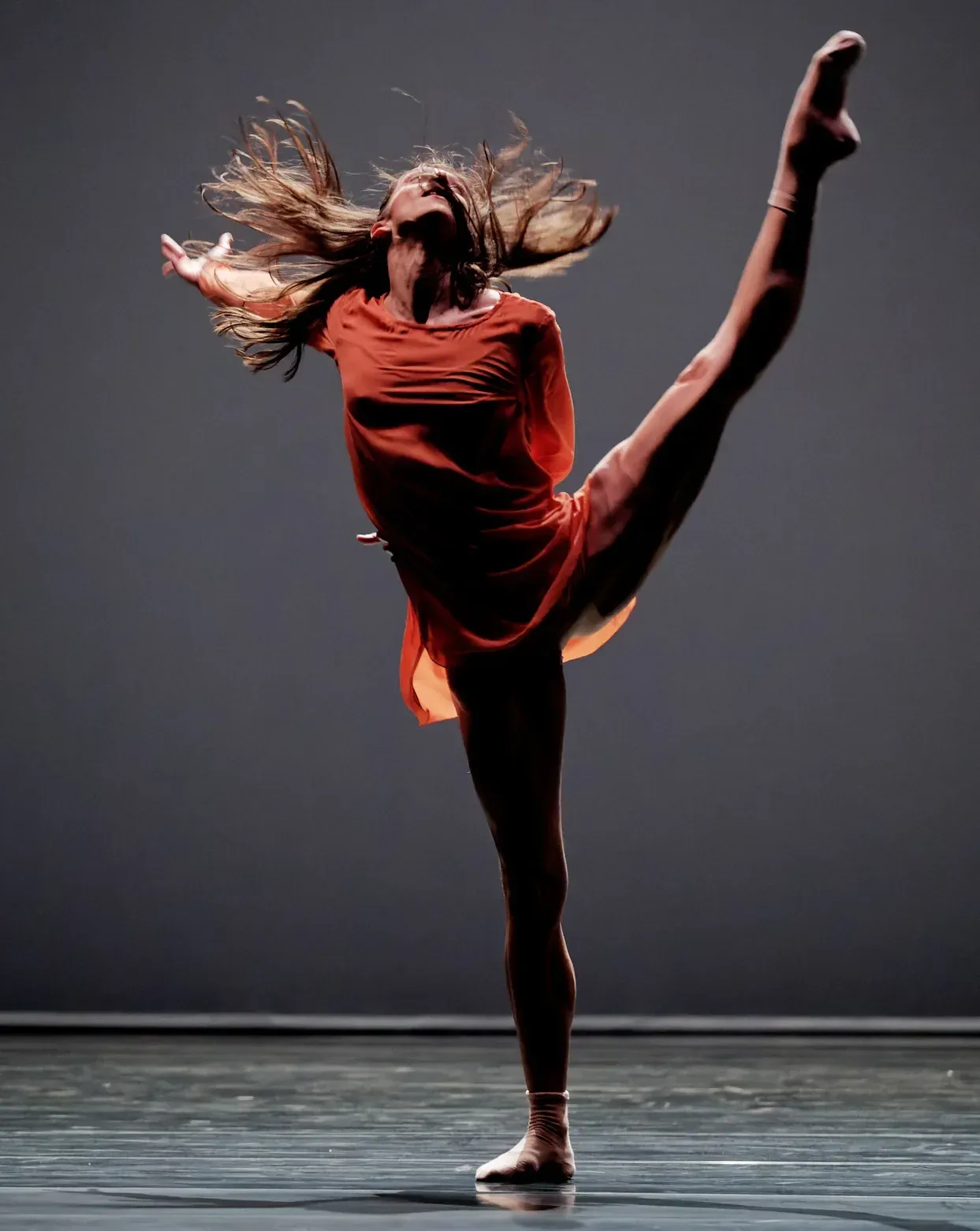
The Ballet de l’Opéra National du Rhin takes on the challenge of performing an essential triptych by William Forsythe, created during the nineties, the decade in which the choreographer finalised the deconstruction of classical codes to invent a ‘total language’. The programme brings together Trio, Quintett, and Enemy in the Figure, featuring the music of Ludwig van Beethoven, Gavin Bryars, and Thom Willems, whose classical vocabulary is stretched, folded, and reassembled with fierce intelligence. This union between the excellence of the Alsatian company and the structural genius of the New Yorker traces an arc of contemporary dance at the Théâtre de la Ville in Paris until 6 May, ranging from recreational vertigo to restrained elegy, ultimately exploding into a physical architecture of tribal impulse.
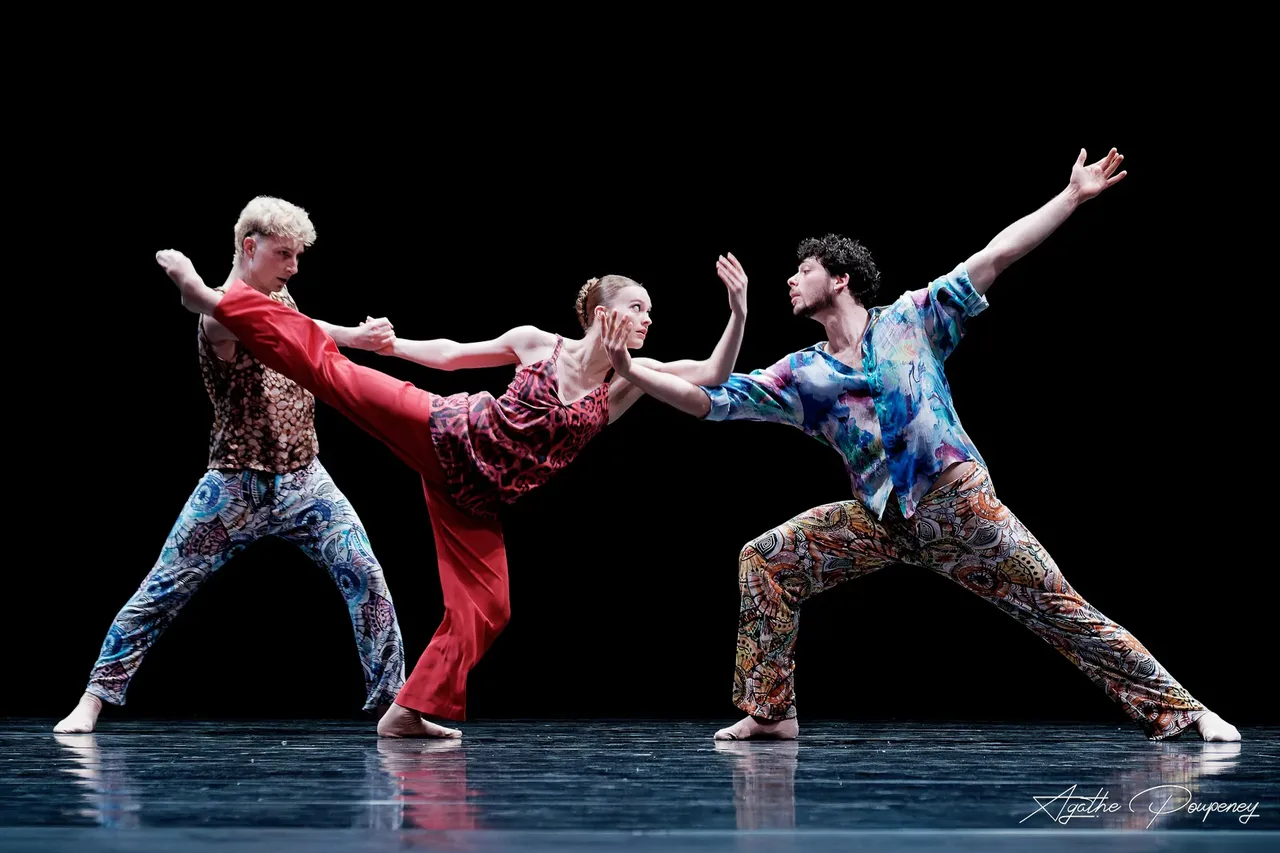
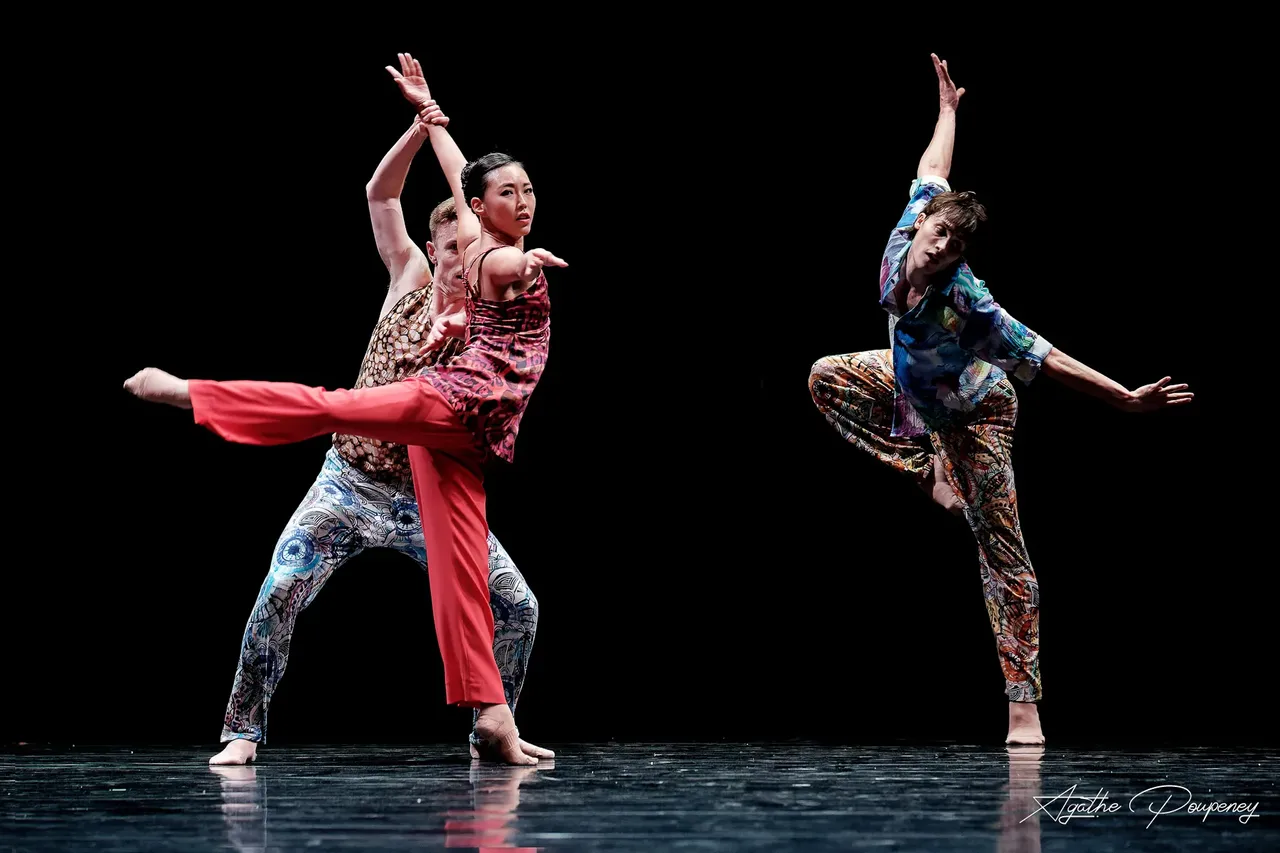
Trio shakes the atmosphere with a playful and daring vitality. Dressed in what appear to be colourful pyjamas and a nightgown, the three dancers open the piece in silence, focused on a curious exploration of the joints —elbows, hips, and, quite pertinaciously, the forearm— before intermittent music breaks in and fragments the attention of the movement. The score of the Allegro from Beethoven’s String Quartet No. 15 drives a dizzying dialogue between bodies that transform the bare stage into an aerial playground.
In this pulse of disconcerting agility against gravity, acrobatic prowess blends with a childlike complicity. Classical language appears reinvented through a radiant corporal affinity between the two men and the woman, whose arms and legs intertwine in a wisely orchestrated disorder. It is the deconstruction of classical ballet, disguised as child’s play, featuring graceful, precise movements that link together in an endless organic flow. During this tangle of limbs, which lasts barely sixteen minutes, precision masquerades as spontaneity; and that very brevity resolves its refined intensity before the game can exhaust itself.
Based on the concept of loss, Quintett (1993) unfolds as a current of bodies that link and dissolve in asynchrony with extreme delicacy. The piece is built upon the music of Gavin Bryars, formulated from a vocal fragment found by chance. The composer turns the voice of a homeless man in London into an almost unbearable loop. The stanza “Jesus’ blood never failed me yet, There’s one thing I know, For He loves me so” remains as an obstinate and immutable presence, from which the choreography develops.
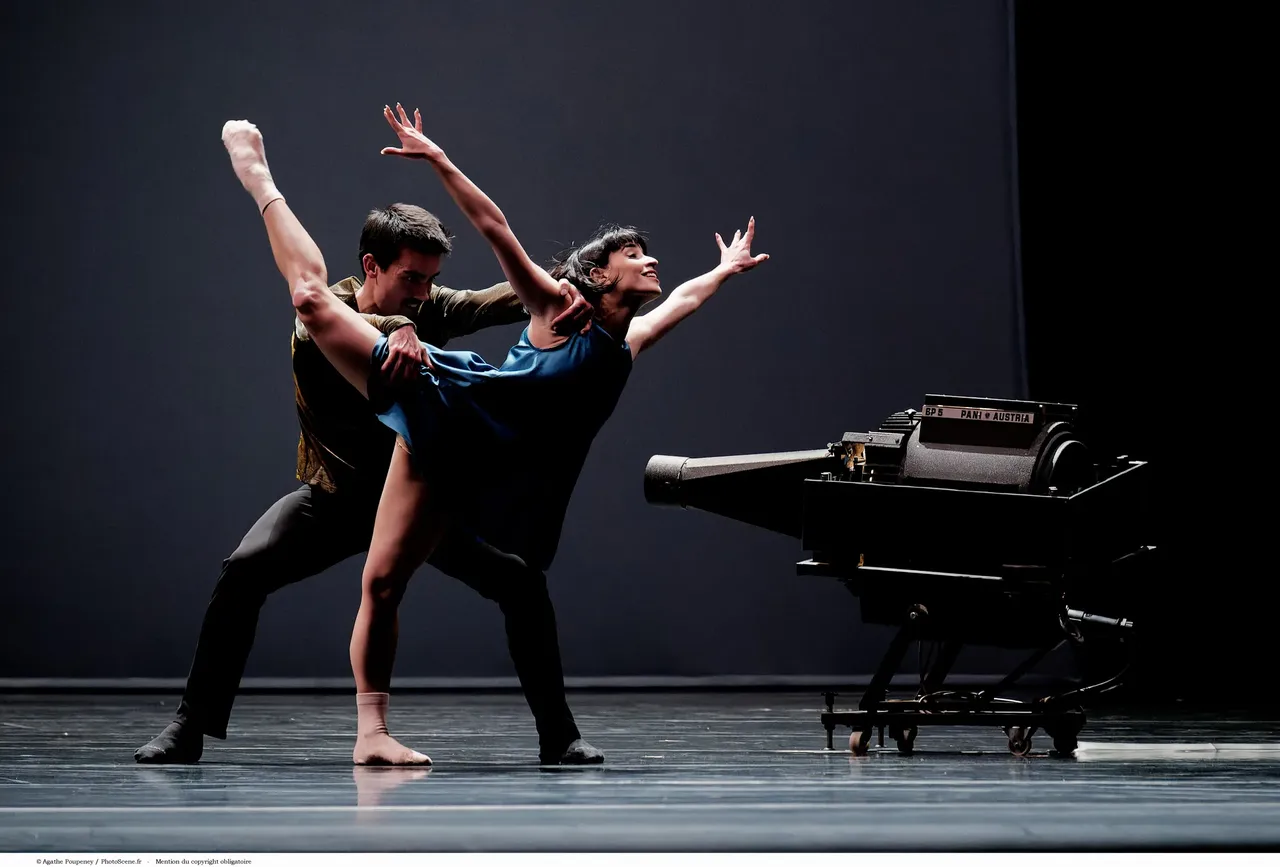
On the stage, where the dark sobriety is interrupted only by two inexplicable artefacts, the sonic insistence becomes exasperating, precisely because it does not evolve and conditions the rhythm of the five bodies that seem to revolve within a single, unresolved idea. Around this obsessive score, the dance (laden with a lightness bordering on the spectral) is sustained through balances, falls, and suspensions. The five performers, who rarely coincide on stage at the same time, weave an asymmetric torrent of duets, solos, and trios that spin and fall with an increasingly luminous complexity, even as the musical persistence erodes the viewer’s attention, forcing the viewer to struggle not to lose sight of what is happening on stage.
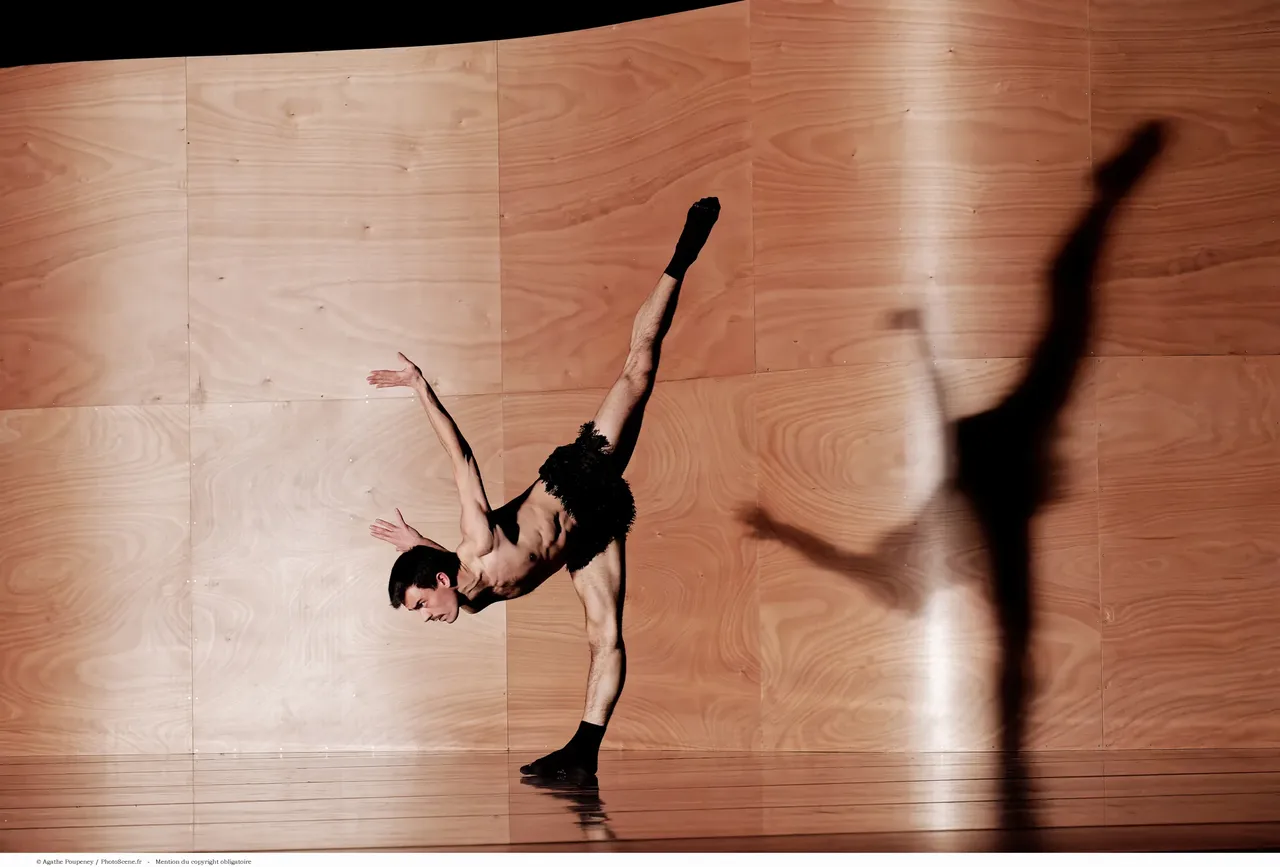
Enemy in the Figure (1989) closes the programme like a high-voltage stage machine. An undulating panel cuts diagonally across the space, while the light, portable and incisive, sculpts the appearances and disappearances of the dancers in a whirlwind of rapid movements and tribal energy. In this sharp, dramatic chiaroscuro, underscored by the percussive rhythms of Thom Willems, eleven ghostly silhouettes dressed in black and white emerge from the darkness, pursued for half an hour by a mobile spotlight that they displace themselves.
The geometric convulsions of the bodies play with the warm light, while simultaneously manipulating a rope on the floor or recoiling the spotlight’s cable after each movement. The hypnotic music sustains this volatile architecture, in which each performer resurfaces like a lightning bolt within a calculated system of structured improvisation. Even so, the accumulation of stimuli tends, at times, towards a wild saturation.
Tilting torsos, sharp leaps, and a kinetic sense of space conjugate the classical past with the magnetic present. The shadows projected onto the wooden backdrop amplify every torsion, consolidating a corporal lexicon of explosive energy. Rhythmic precision imposes itself in a magnetic pursuit between shadow and glow that slows down towards the end, only to accelerate once more shortly before dissolving completely.
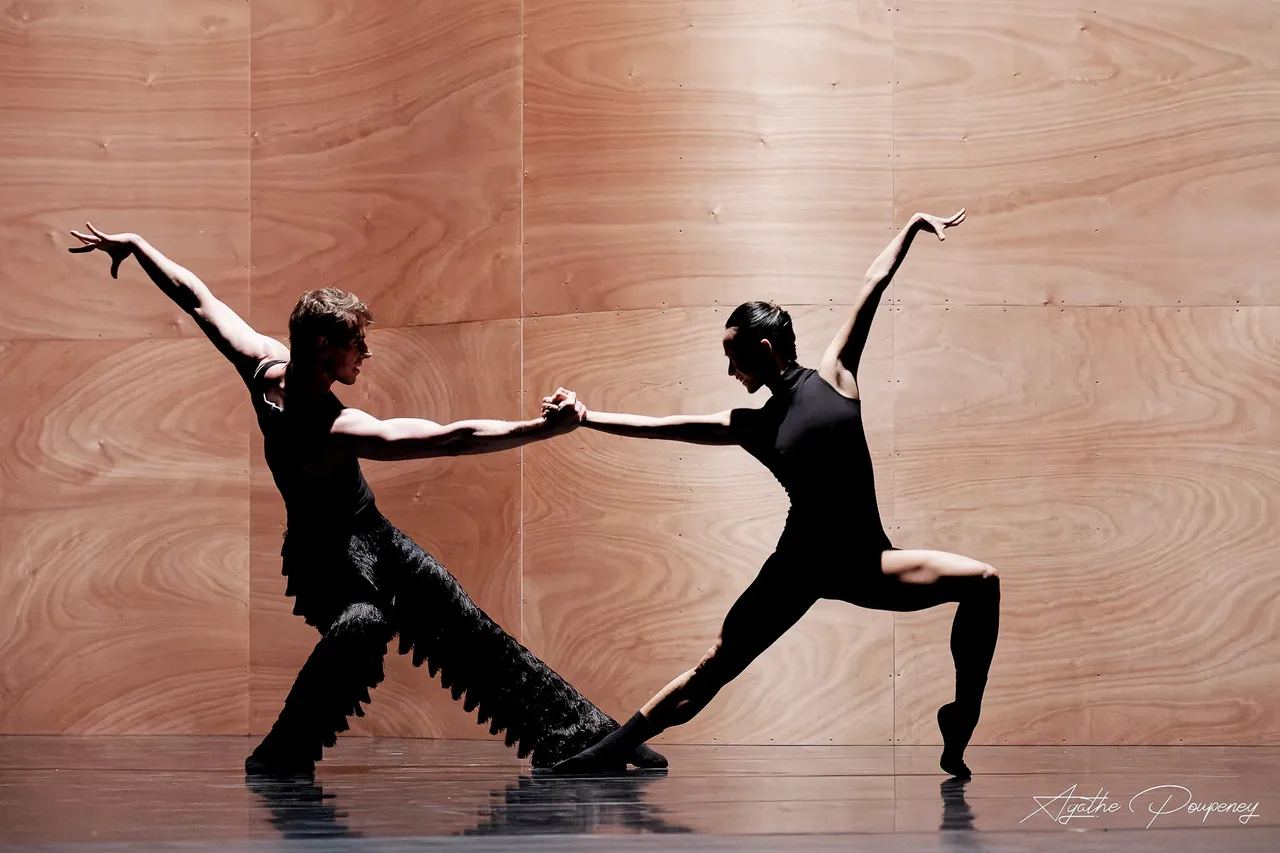
This triad from the end of the 20th century moves away from any retrospective temptation, proving instead to be a machine that continues to function at full capacity, albeit unevenly. In Enemy in the Figure, that efficacy manifests convincingly when the movement sharpens, the space tightens, and the energy stops insisting and begins to attack.