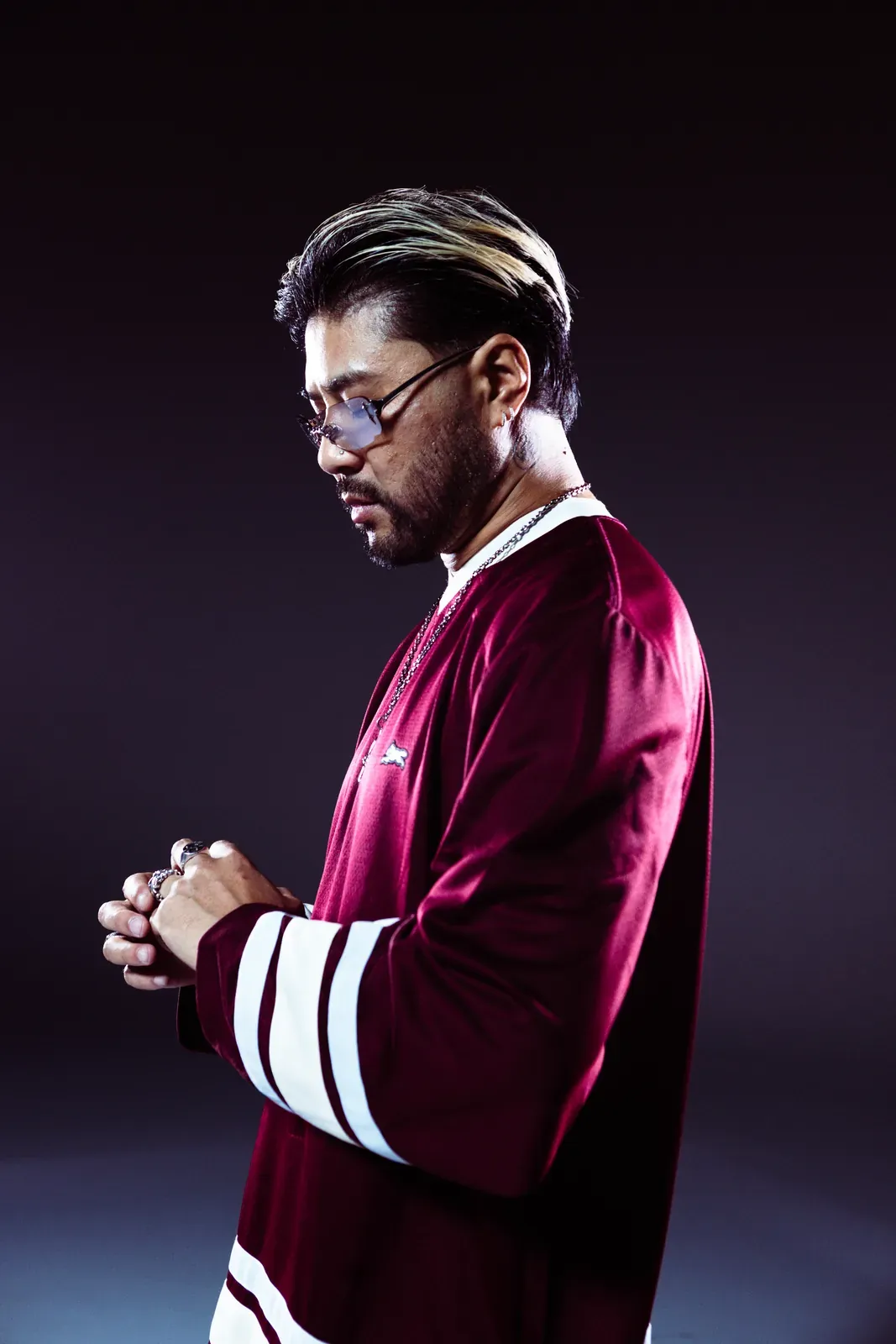
Wax Motif doesn’t rush moments like this. Some projects take time to settle, to find the shape they need before being shared. When we spoke with him a few days ago, House of Wax II was still just out of reach. Today, it finally lands. A defining step in a career that has steadily moved between club culture and something wider, harder to pin down.
“There’s always a bit of nervousness when you finally put something out into the world,” he tells us. “At the same time, I feel really confident in the body of work.” That tension runs through House of Wax II, a record that brings together collaborators like Ty Dolla $ign, and ZHU while staying grounded in the instincts that shaped his sound from the start.
When we look back at our last conversation in 2024, the shift feels subtle but real. He stepped away from touring for a moment, taking time to reset and focus on life outside of music. Now, with the album and tour arriving together, it feels like the right time to step back in. “I’ve definitely learned to slow things down a bit,” he says. You can hear it in the record: more time spent in vocal sessions, more space for ideas to develop, and a sound that feels tighter, guided by instinct, mood, and the voices that define it.
Let’s start simple. What’s the first thing you did when you woke up today? And how is the day unfolding for you so far?
Woke up a little later than usual today, so I jumped straight into a quick workout to get my head right. Grabbed some food, went through and approved a few new merch designs, and now I’m here doing this interview. It’s been a pretty productive start.
You’ve just announced House of Wax II, with less than a month to go until release. After holding onto a project like this for so long, what does it feel like to finally put it out there and start that countdown publicly?
There’s always a bit of nervousness when you finally put something out into the world — especially a project you’ve been sitting on for a while. I think that’s a healthy part of the process. At the same time, I feel really confident in the body of work. There are some records on there that I genuinely believe are some of my strongest yet, so it’s exciting to finally start that countdown and let people in on it.
Bad & U Know It has been out for a couple of weeks now, and it feels like a clear entry point into this new chapter. How have you been experiencing the reaction so far, both from fans and within your own circle?
It’s been really positive so far — people have connected with it straight away. I think it works because it hits that balance: it’s simple and effective in a club but still has a strong, fully formed vocal that gives it more of a pop structure. It still feels like house music at its core, but it’s not just forcing a vocal onto a beat — it’s all working together naturally.
As a first single, it sets a very specific tone — quite stripped-back but still built for the club, as you just said. What made it feel like the right way to introduce the album?
I think it sums up what I do pretty naturally. At the core, I’m a house producer, but I’ve always been heavily influenced by rap and R&B, and that’s been part of my sound since the early days. This track brings those elements together in a way that feels really honest to me. More than anything, it has that replay factor — it’s something you want to run back, not just play once and move on from. And having Ty on the first single made it feel like the right statement to lead with.
Your relationship with Ty Dolla $ign goes back years, both personally and creatively. Did this track come together naturally, or was it something that took time to really click?
It came together pretty naturally, but that’s really because of the history we have. We’ve made a lot of records over the years and even tested some of them out in my sets, so there’s been a long build to getting the right one. I never wanted to rush it or put something out just because we could. Even though we’re friends, it still has to be the right record — and this one finally felt like it clicked.
You’ve mentioned that some of these ideas had been sitting around for a while, even evolving across different projects. When you return to something like that, what makes you hold onto it and see it through instead of moving on?
For me, it really comes down to perspective. When you’re too deep into a record, it’s easy to lose what made it exciting in the first place. Coming back to something with fresh ears is usually very clear — I’ll either connect with it straight away or not at all. I don’t like forcing that process. If it’s there, I’ll follow it through. If it’s not, I’ll let it sit until it finds its moment.
There’s a sense that this album moves more freely between house, hip-hop and R&B, without feeling the need to clearly define where it belongs. At this point in your career, do you still think about those boundaries when you’re creating, or has the process become more about following instinct?
At this point, it’s definitely more about instinct. I try not to overthink genre too much anymore. That said, I’m still very aware that DJing is my main outlet, and I’m playing clubs and festivals, so the music has to work in those environments. But beyond that, it really comes down to making things I connect with — things that move me. It’s always going to come from a dance or electronic foundation, but where it goes is usually driven by the vocal or the mood. Sometimes a vocal just defines the world of the record, and you follow that.
The project brings together a wide range of collaborators, yet it still feels cohesive and very much yours. When you’re working in that kind of open, collaborative space, how do you make sure the project doesn’t lose its identity along the way?
It’s definitely a balance. As a producer, you want to make something that really works for the collaborator, especially when they already have a strong identity of their own. For me, it’s about finding that intersection where my sound is still present, but it doesn’t take away from who they are. It doesn’t always happen instantly. Sometimes it takes a bit of trial and error, but over time, you develop a sense for when it feels right.
In just a month, you’ll be stepping into the House of Wax II tour — Phase 1 across North America. The last time we spoke with you, you mentioned how important it was to find balance on the road, even if it wasn’t always easy. Have you picked up any new routines or habits that help you stay grounded while everything moves so fast?
I’ve definitely learned to slow things down a bit. I party a lot less now, and I’m more aware of my social battery, so I try to prioritise my own space and comfort when I can. Outside of shows and the studio, I’m drawn to quieter, low-key environments. There’s always a lot going on between production, the label, visuals, and merch, so it’s really about conserving energy and staying clear-headed so I can show up properly for everything.
In our last conversation, you mentioned that after years of building, you finally felt aligned with your vision, not just in the music but also in how everything connects. Looking back at that moment now, does House of Wax II feel like a continuation of that alignment, or has something shifted for you since then?
It feels like a continuation, just more dialled in. The vision hasn’t changed, but the execution has — better songs, bigger collaborations, and a tighter focus on the sound. The biggest shift is probably personal. My influences have evolved, and I’m naturally leaning into smoother, more refined records now. I’m not chasing the same energy I was years ago, and I think that’s made the music feel more intentional and, hopefully, more universal.
Looking ahead, is there a place you haven’t played yet that you’re especially drawn to?
I’ve played parts of Europe and South America before, but I’d definitely like to spend more time in both. There’s a different energy there that’s really inspiring. For me, being in new environments and experiencing different scenes is a big part of how my music evolves, so I’m always drawn to places that can give me that.
And on the flip side, is there a city or venue you keep returning to that still hits in a different way every time?
LA for sure. That’s where a lot of my core fan base is, so there’s a real connection there. Even then, it still feels different every time I play — the crowd’s really locked in, but also open to wherever I want to take things sonically, which keeps it exciting.
In the studio, did anything about your process change while making this album?
Yeah, definitely. I spent a lot more time doing vocal sessions on this project — recording, writing, and really exploring different ideas with each record. There was a lot more experimentation in terms of how far we could push things and bring in new sounds. At the same time, I’ve become more patient with the process. I’ll sit on records longer now and let them marinate a bit. The strongest ideas usually come together quickly, but I know something’s really special if I’m still excited about it weeks later.
And looking back, is there any particular moment or anecdote from those sessions you want to share with us?
Probably my first time in Brazil working with MC Lan. We spent a full day in the studio and just locked in creatively. New environment, different energy — it was super easy to get ideas flowing, and we ended up making a few demo ideas for both of our projects. He was super chill and easy to work with, and his perspective is different to mine, coming from a different scene, which made the whole process really inspiring.
We asked you this before, and it stuck with us — any current guilty pleasures? Or is Ed Sheeran still part of the rotation?
I don’t really think of anything as a guilty pleasure anymore. Lately I’ve been listening to a lot of Leon Thomas and Don Toliver, mixed with older, more nostalgic house records, and then more current dance artists like Chris Stussy, Ninajirachi, and X CLUB. It’s a pretty wide mix, but that’s kind of how I’ve always listened to music.
Do you feel like you’re living one of the best moments of your life right now? And what would you say is your biggest dream at this point?
In a lot of ways, yeah. I feel more grounded and stable on a personal level than I have in a long time. I took a bit of a step back from touring and used that time to reset and focus on my life outside of music. Now, with the album and tour coming up, it feels like the right moment to step back in and really push things forward again.
As for my biggest dream, it’s to keep building my live shows globally, keep growing in every city, and keep collaborating with artists I’ve always looked up to. Just continuing to evolve and stay consistent with the music.
As for my biggest dream, it’s to keep building my live shows globally, keep growing in every city, and keep collaborating with artists I’ve always looked up to. Just continuing to evolve and stay consistent with the music.