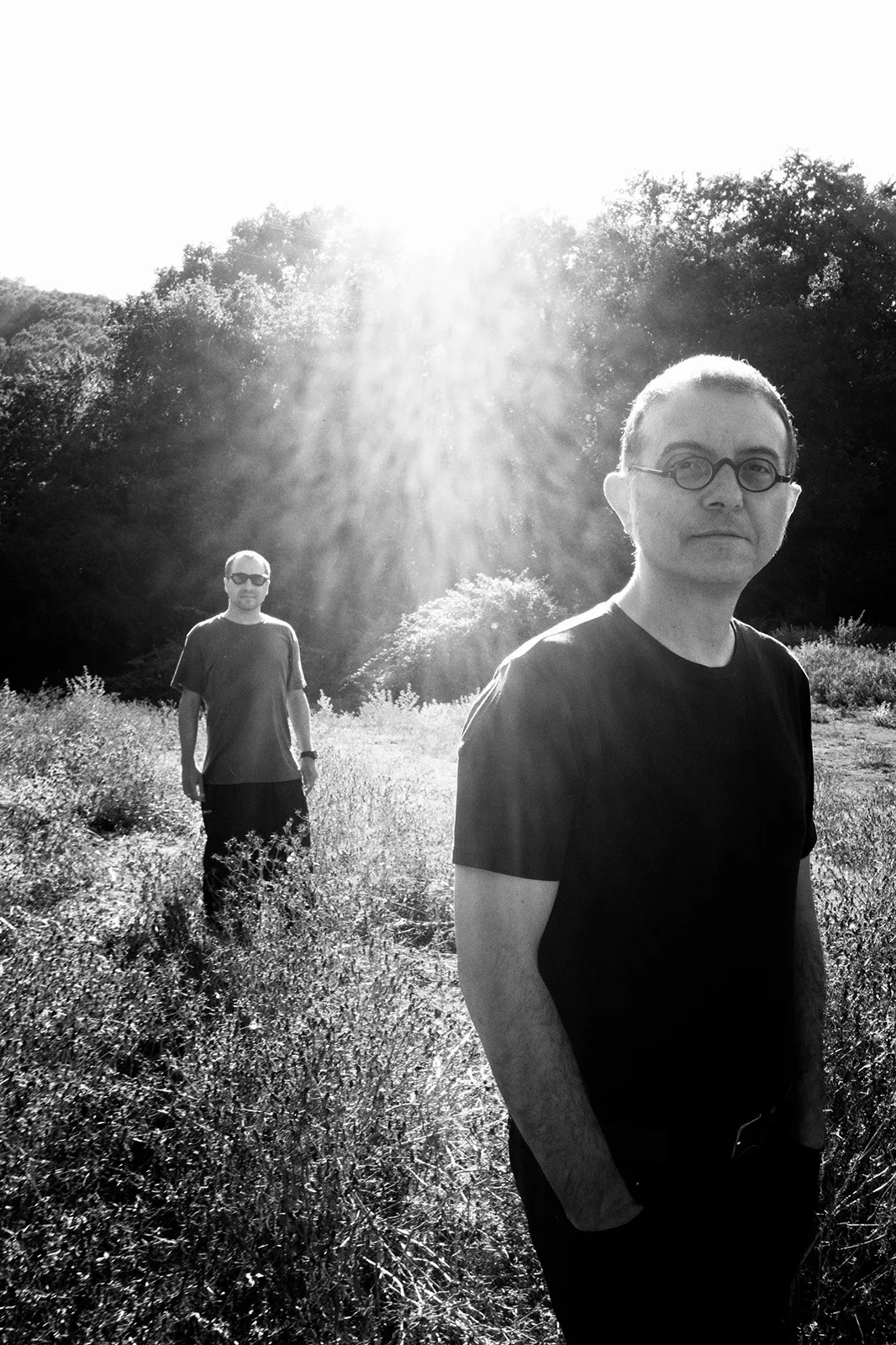
Voices From The Lake — the Italian duo of Donato Dozzy and Neel — have resurfaced with II, their first studio album in over a decade. Released on December 5, 2025 via their own Spazio Disponibile label, II arrives thirteen years after the pair’s revered 2012 debut: a record that achieved near-mythical status in ambient techno circles.
That debut self-titled album, born from a one-off live performance in the Japanese Alps, offered a feeling of lush minimalism: patiently evolving loops, waterlogged pads and restrained kick drums that blurred club hypnosis with environmental listening.
The pair came to such a performance after a long-standing friendship and shared studio practice in Rome, testing ideas in clubs and back rooms, before translating them into the improvised hardware dialogues of slow-mutating modular 808/909 drum machine patterns. The release aptly condensed the duo’s shared vitality and forensic knowledge of music into a single ecosystem.
In the years since, Voices From The Lake have played select live shows, issued a handful of EPs, while each artist pursued solo ventures. But on II, they reconnect with the spirit of that landmark debut.
Played on its continuous mix, II feels like a record well suited to meditation. Not necessarily in aesthetics — as a sound built for new-age gurus sat under Glastonbury Tor — but rather, in how it allows you to achieve a clear mind. It is scarcely overwhelming, instead employing hypnotic repetitions that are active and progressive enough to encourage that you follow along different threads as they emerge, and convince you to forget your surrounding day’s space-time. The core elements remain intact: pulsing bass and delicate, pitter-patter percussion entwine with absurdly crisp, naturalistic sound sources and soft-focus atmospheres, embodying their established aqueous sensibilities. The opener Eos is a good example: a three-legged bass tone slowly emerges to peak amplitude as the track's first propeller, yet remains incredibly light-touch, as a borderless orb slow-throbbing into purview. A similarly rounded synth tone quickly takes over focus, driving towards a pleasant crescendo via somewhat unpredictable modulations, alongside a growing wind swell of higher frequency artefacts, as the bass sits in the backseat.
Fans of Voices From The Lake’s original LP should get similar joy out of II. However, there’s a fresh undercurrent of energy in places, whether with the trance-adjacent Montenero, or periods more heavily steeped in dubby undercurrents than its predecessor. Ian is a particularly upbeat track, fitted with a rapid dub-pulse akin to a 110BPM heartbeat, met by bright hi-hats and a playful xylophone-like ascending scale, that all fades into a shimmering, two-note gloss during the final third. It’s very much closer material for a winding set, and leaves you with a sense of uplifting lightness after the near-hour runtime.
To accompany II, Voices From The Lake have unveiled an official video for perhaps the LP’s standout earworm in the track Aquateo, that translates the music’s motifs into literal landscape imagery. Directed by Dutch visual artist Heleen Blanken, it presents nature through a dreamlike lens, merging disparate terrains through various static shots of different locations into one composite environment. Fog-draped mountain slopes and tightly framed portraits of moving surfaces, like eddies, ripples, slow erosion, come together to make one continuous, otherworldly panorama, focusing on how nature shifts rather than what any camera movement could evoke. Blanken’s visuals certainly tap into a similar sense of elemental unfolding that II’s music conveys, and particularly across Aquateo’s euphoric middle-third synth line and squelchy pads.
In the conversation that follows, Voices From The Lake open up about the making of II, the ideas and inspirations behind their long-awaited return, and how elements like water, memory, and space have shaped this new chapter. It’s a rare glimpse into the duo’s creative currents, one that promises to illuminate the murmurings beneath the music’s surface.
So, thirteen years after the first album, what convinced you that this material had become the second Voices From The Lake record, rather than another run of live sets, for instance?
We always knew there would be a second chapter, a natural continuation of the first album but getting there wasn’t easy. After the debut, we were very busy, first with the project itself, and later, once we let it rest with our individual careers and our lives.
This record comes from the work of the last three years. We worked on it whenever it was possible, without forcing it and without trying to rush it. We couldn’t always meet or share the same creative space and timing, and that inevitably slowed the process down.
We liked the material, and we knew it was right. The question was whether it was the right material to become the second album after the first one, whether it could carry that weight and that legacy.
The intention was always there, the connection, the desire, the curiosity. We didn’t slow down because we were unsure; the process simply had its own pace. We just kept going, step by step, until one day, looking at what we had in front of us, we understood that yes, this was the album. And from that moment on, everything clicked.
This record comes from the work of the last three years. We worked on it whenever it was possible, without forcing it and without trying to rush it. We couldn’t always meet or share the same creative space and timing, and that inevitably slowed the process down.
We liked the material, and we knew it was right. The question was whether it was the right material to become the second album after the first one, whether it could carry that weight and that legacy.
The intention was always there, the connection, the desire, the curiosity. We didn’t slow down because we were unsure; the process simply had its own pace. We just kept going, step by step, until one day, looking at what we had in front of us, we understood that yes, this was the album. And from that moment on, everything clicked.
In the Aquateo video, we’re not in The Labyrinth Festival’s forest of Japan, nor at Sabaudia’s lake, but in the mountains somewhere, amongst up slope fog and looking at ripples of flowing water. Where is that place, and what made you choose it as the visual anchor for II?
For this question, we think the most appropriate person to answer is Heleen Blanken, the artist who created the video. So, we reached out to her and passed the question along and here is her response:
The core idea behind the videos is to embody the dynamics of water, not just as an element, but as a carrier of time, memory, and transformation. From its source to its kinetic and turbulent states, water becomes a metaphor for continuous movement and change. What interested us was not a specific narrative landscape, but the way water structurally behaves: erosion, flow, pressure, reflection. These processes are universal, and in that sense, water functions as a form of archive, it contains traces of ancient origins while constantly reshaping itself in the present. The mountainous, foggy setting and the close focus on surface ripples were chosen because they foreground these qualities of instability, transition, and suspended time.
The footage was recorded across multiple places; San Felice (where Donato lives), the Netherlands, Slovenia, and Madeira. Rather than constructing one coherent geographic setting, the intention was to build a composite environment: a shared natural condition rather than a specific site. Nature here is not presented as a backdrop tied to one territory, but as a globally legible system of force; water, fog, gravity, motion, that can be recognised anywhere. The “place” of the album is therefore not so much geographic as it is elemental.
The core idea behind the videos is to embody the dynamics of water, not just as an element, but as a carrier of time, memory, and transformation. From its source to its kinetic and turbulent states, water becomes a metaphor for continuous movement and change. What interested us was not a specific narrative landscape, but the way water structurally behaves: erosion, flow, pressure, reflection. These processes are universal, and in that sense, water functions as a form of archive, it contains traces of ancient origins while constantly reshaping itself in the present. The mountainous, foggy setting and the close focus on surface ripples were chosen because they foreground these qualities of instability, transition, and suspended time.
The footage was recorded across multiple places; San Felice (where Donato lives), the Netherlands, Slovenia, and Madeira. Rather than constructing one coherent geographic setting, the intention was to build a composite environment: a shared natural condition rather than a specific site. Nature here is not presented as a backdrop tied to one territory, but as a globally legible system of force; water, fog, gravity, motion, that can be recognised anywhere. The “place” of the album is therefore not so much geographic as it is elemental.
You’ve spoken a lot about trusting unpredictability on stage. Your live sets are built on things that can’t be repeated in exactly the same way. In the studio for this album, where did you allow chaos in, and where did you structure things with precise methodology? What kinds of methods did you use to achieve the end result? I believe modular is typically a big thing in your work, but how does that play out in practice.
Clearly, this is a studio album so unlike a live performance, there’s no improvisation in the moment. With this record, that aspect simply wasn’t part of the process, there’s a structure behind it and a deliberate way of shaping things.
Of course, everything still begins with ideas and instincts, and over the years there were moments where things aligned and the foundations of the album started to form. Even when we were talking about sketches, they already carried a strong character and a direction.
For this record, the way we approached the instruments was a bit different from usual. There are more synths, there are many modular parts, but not everything was created side by side in the same room. We couldn’t always work physically together, so sometimes one of us recorded in our own studio on top of an idea that already existed. Other times we recorded more open-ended material, like modular sessions that didn’t have a defined destination yet, but we knew they belonged to the world of the album. It’s a bit like collecting stones during a long walk: you don’t know exactly where they’ll go, but you know they have a purpose.
Then there’s the moment when everything gets laid out: you listen, rearrange, remove, and understand what belongs and what doesn’t and that’s when things find their role and start making sense.
For us, even if an album is divided into separate tracks, it’s never a collection of isolated pieces. It’s one journey, one single line running through all of it. Each track is there because it has a specific role, nothing is accidental. In the end, the album has to breathe like a living organism, with its own body, rhythm, and pulse.
Of course, everything still begins with ideas and instincts, and over the years there were moments where things aligned and the foundations of the album started to form. Even when we were talking about sketches, they already carried a strong character and a direction.
For this record, the way we approached the instruments was a bit different from usual. There are more synths, there are many modular parts, but not everything was created side by side in the same room. We couldn’t always work physically together, so sometimes one of us recorded in our own studio on top of an idea that already existed. Other times we recorded more open-ended material, like modular sessions that didn’t have a defined destination yet, but we knew they belonged to the world of the album. It’s a bit like collecting stones during a long walk: you don’t know exactly where they’ll go, but you know they have a purpose.
Then there’s the moment when everything gets laid out: you listen, rearrange, remove, and understand what belongs and what doesn’t and that’s when things find their role and start making sense.
For us, even if an album is divided into separate tracks, it’s never a collection of isolated pieces. It’s one journey, one single line running through all of it. Each track is there because it has a specific role, nothing is accidental. In the end, the album has to breathe like a living organism, with its own body, rhythm, and pulse.
Has there ever been a live passage you didn’t record that haunts you? Not necessarily haunting you in a good or bad way, not everything needs to be recorded, and actually, that’s what can make a live show, or simple jam session, so memorable in its time-space specificity. If so, where was this, and what was it about that set that made it so memorable?
I’d say this feeling happens almost every time. The beauty of an improvised live set lies in the act of surprising each other. When one of us does something unexpected, the other responds and pushes further, and that creates a very particular energy, almost like creative adrenaline. That’s how we slowly enter what we call our bubble.
While we’re playing, we’re aware of certain elements emerging, of moments taking shape but once everything is over, it’s hard to recall exactly what happened, both musically and technically. What remains is the vibration of the moment: we remember that it felt powerful, that something worked, but the details fade. And when we listen back to recordings of our shows, you can clearly hear that spontaneous character, everything comes from the moment, from the conversation happening between us, and from the connection with the audience.
Sometimes breaks, drops or openings happen without being planned at all: they simply appear because we and the audience become one organism, and time bends according to that relationship. There’s no predefined timeline or arrangement prepared in advance to be executed later when we play, we have no idea where we’ll be in half an hour or which direction the sound will choose.
Often we start a show thinking we’ll head one way, and then as soon as the music begins, it takes us somewhere completely different. And that’s exactly how it should be: the music leads. We just listen, respond, and follow the flow.
While we’re playing, we’re aware of certain elements emerging, of moments taking shape but once everything is over, it’s hard to recall exactly what happened, both musically and technically. What remains is the vibration of the moment: we remember that it felt powerful, that something worked, but the details fade. And when we listen back to recordings of our shows, you can clearly hear that spontaneous character, everything comes from the moment, from the conversation happening between us, and from the connection with the audience.
Sometimes breaks, drops or openings happen without being planned at all: they simply appear because we and the audience become one organism, and time bends according to that relationship. There’s no predefined timeline or arrangement prepared in advance to be executed later when we play, we have no idea where we’ll be in half an hour or which direction the sound will choose.
Often we start a show thinking we’ll head one way, and then as soon as the music begins, it takes us somewhere completely different. And that’s exactly how it should be: the music leads. We just listen, respond, and follow the flow.
“It’s not an album designed to bring you into our world, it’s meant to accompany you into yours. The idea is to immerse yourself in the music and let it take you somewhere, but the destination is personal. Each listener finds their own space within it.”
Your music has always felt site-specific. How did writing for a 360° L-ISA system change the way you thought about space and movement in II? I know you have created live shows where sound has been positioned above, behind, and inside audiences, so perhaps this something you’ve been evolving and thinking about more over time?
From the very beginning, going back fifteen years, we’ve always approached music in a three-dimensional way. For us, space has never just been a place where sound happens, but part of the composition itself. When you work with a minimalist mindset, the silence becomes as important as the sound: the distance between frequencies, the depth, the sense of movement, even with just a few sounds, everything can expand if you start playing with space, time, and breath.
We had experimented with similar concepts before, but this time it was different: here we were dealing with a fully immersive listening environment, with the audience literally positioned at the centre of the sound field. At first, it wasn’t easy to understand what to use, where to place it, or how it should move. But just like in fully improvised live sets, there’s a moment where you simply enter the flow: you make a choice, follow it, and that action triggers the next one, like a domino. You continue until the whole thing feels right, until you sense that the sonic world you’re building is breathing on its own.
For us, the most important thing is that we surprise ourselves first. We don’t compose with the intention of impressing the audience, if something catches us off guard, moves us, or pushes us somewhere unexpected, then we know it has the potential to reach others as well. It’s a simple rule, but for us it’s essential.
Of course, there’s also a very technical side to all of this because an immersive 360 degree system means dozens of loudspeakers and a huge number of audio signals to manage and distribute. But the technical part comes later: everything begins with how we perceive space and how we want the sound to live and move inside it.
It was an intense process, also because we started working on it right after returning from Asia and the jet lag definitely didn’t help. But in the end, seeing that world form around us was incredibly rewarding. And when you finally find yourself standing at the centre of the sound and everything feels right, you know it was worth it.
We had experimented with similar concepts before, but this time it was different: here we were dealing with a fully immersive listening environment, with the audience literally positioned at the centre of the sound field. At first, it wasn’t easy to understand what to use, where to place it, or how it should move. But just like in fully improvised live sets, there’s a moment where you simply enter the flow: you make a choice, follow it, and that action triggers the next one, like a domino. You continue until the whole thing feels right, until you sense that the sonic world you’re building is breathing on its own.
For us, the most important thing is that we surprise ourselves first. We don’t compose with the intention of impressing the audience, if something catches us off guard, moves us, or pushes us somewhere unexpected, then we know it has the potential to reach others as well. It’s a simple rule, but for us it’s essential.
Of course, there’s also a very technical side to all of this because an immersive 360 degree system means dozens of loudspeakers and a huge number of audio signals to manage and distribute. But the technical part comes later: everything begins with how we perceive space and how we want the sound to live and move inside it.
It was an intense process, also because we started working on it right after returning from Asia and the jet lag definitely didn’t help. But in the end, seeing that world form around us was incredibly rewarding. And when you finally find yourself standing at the centre of the sound and everything feels right, you know it was worth it.
The track titles on II sketch out a map of dawn, mist, mountains, and myth. Did you build a narrative world related to these titles, or did they arrive afterwards as a way of decoding what you produced?
The titles came afterwards. For us, the music always comes first, it shapes the atmosphere and sets the direction of the album. Once the sonic work was complete, the names appeared almost naturally, as a way to interpret and make sense of what we had created.
Some of the titles reference nature, dawn, mist, mountains, because those images were already present in the music. We didn’t force them; it felt more like acknowledging landscapes that were already there, waiting to be named. There’s also a personal side to it. Just like with our first album, some titles are connected to people who matter to us. And in this case, the entire album, in its continuous, flowing form, is dedicated to our dear friend Manuel Fogliata, who passed away this year. It’s a simple gesture, but a very meaningful one for us.
Some of the titles reference nature, dawn, mist, mountains, because those images were already present in the music. We didn’t force them; it felt more like acknowledging landscapes that were already there, waiting to be named. There’s also a personal side to it. Just like with our first album, some titles are connected to people who matter to us. And in this case, the entire album, in its continuous, flowing form, is dedicated to our dear friend Manuel Fogliata, who passed away this year. It’s a simple gesture, but a very meaningful one for us.
I find it’s often valuable, when speaking to a musician, to attempt to understand how they came to be who they are today, and how that informs their work. I’m wondering if you have anything to share on what you think has shaped your individual perspectives and preferences on music? Are there any specific places, scenes, or other memories that each of you have which feel important to Voices From The Lake?
If we talk about the scenes and memories that shaped Voices, I think there are a few truly defining moments. One of them is the summer of 2006 in Berlin, a time of curiosity, clubs, listening, and encounters that opened up a new way of perceiving music.
Then there was the period between 2009 and 2011, the years leading up to the live performance at Labyrinth. During that time, we spent a lot of hours together, playing, experimenting, talking, exchanging ideas and impressions. The project didn’t officially exist yet, and even between us there wasn’t a clear awareness that Voices From The Lake would become something concrete.
But looking back now, it’s evident that something was already forming inside both of us: a shared vision, still without a name, but with an identity that was slowly revealing itself. In hindsight, that was the real starting point, the moment when everything quietly began to take shape, even if we weren’t aware of it at the time.
Then there was the period between 2009 and 2011, the years leading up to the live performance at Labyrinth. During that time, we spent a lot of hours together, playing, experimenting, talking, exchanging ideas and impressions. The project didn’t officially exist yet, and even between us there wasn’t a clear awareness that Voices From The Lake would become something concrete.
But looking back now, it’s evident that something was already forming inside both of us: a shared vision, still without a name, but with an identity that was slowly revealing itself. In hindsight, that was the real starting point, the moment when everything quietly began to take shape, even if we weren’t aware of it at the time.
I couldn’t help but notice the note on the album’s preview release that said, “You are encouraged to listen to the album as a whole”. There’s also an option for listening to the album as a continuous mix, which, naturally, makes the pacing of the album feel more conjoined than the track-by-track run, and was my preferred approach. If you could design the ideal first encounter with II, what would it look like in practice? Not the platform, necessarily, but the situation? Where is the listener, what are they doing, how loud is it?
Yes, there is a continuous version, a listening mode that allows you to experience the album as a single flow. This connects to what we mentioned earlier about how we see an artwork: even if it’s divided into tracks, for us it remains one single composition. Every sound and every transition is part of a larger journey. Nothing stands alone, everything is in dialogue with what comes before and what follows, moving in a natural way.
For that reason, the listening experience shouldn’t be fragmented. It should be allowed to unfold exactly as it was created. It needs to be listened to, and almost breathed, in its entirety, like a journey that only reveals its meaning when you experience the whole arc from beginning to end.
It can be listened to at any moment of the day. And based on the feedback we’ve already received, this seems to be working: many people have written to us saying they listen to it in the morning, in the afternoon, at night, outdoors in nature, or simply at home. And that was exactly the intention.
It’s not an album designed to bring you into our world, it’s meant to accompany you into yours. The idea is to immerse yourself in the music and let it take you somewhere, but the destination is personal. Each listener finds their own space within it.
It’s also not a record that needs to be played at very high volume. It needs to breathe. If you give it space, it will still capture your attention and connect with you. The experience should feel natural and pleasant, never forced.
From there, the music does the rest: it leads, and you decide where you want to go.
For that reason, the listening experience shouldn’t be fragmented. It should be allowed to unfold exactly as it was created. It needs to be listened to, and almost breathed, in its entirety, like a journey that only reveals its meaning when you experience the whole arc from beginning to end.
It can be listened to at any moment of the day. And based on the feedback we’ve already received, this seems to be working: many people have written to us saying they listen to it in the morning, in the afternoon, at night, outdoors in nature, or simply at home. And that was exactly the intention.
It’s not an album designed to bring you into our world, it’s meant to accompany you into yours. The idea is to immerse yourself in the music and let it take you somewhere, but the destination is personal. Each listener finds their own space within it.
It’s also not a record that needs to be played at very high volume. It needs to breathe. If you give it space, it will still capture your attention and connect with you. The experience should feel natural and pleasant, never forced.
From there, the music does the rest: it leads, and you decide where you want to go.
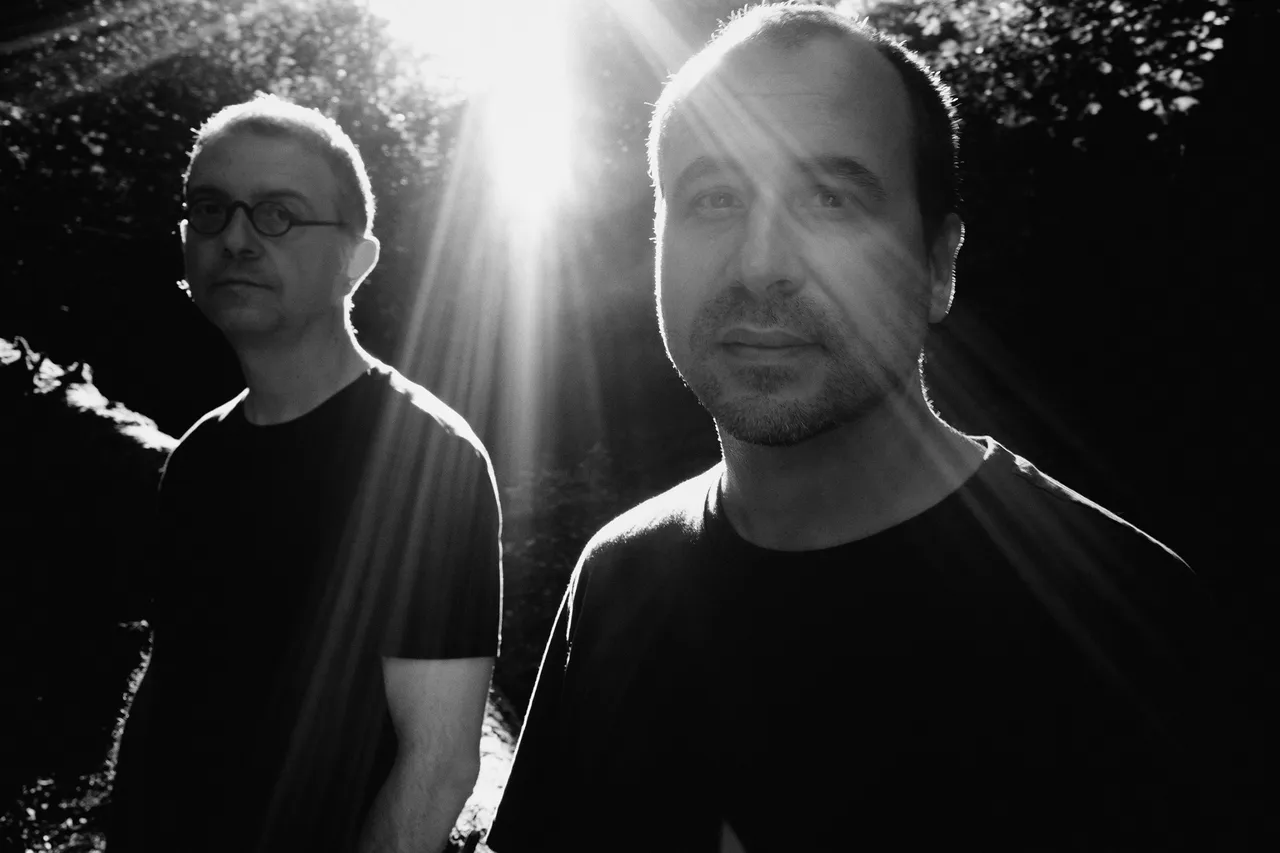
On a related point, the first Voices From The Lake album grew in a particular music ecosystem. What I mean by that is, it was a time yet to be wholly dominated by music streaming platforms like Spotify, or social media companies like TikTok. Both are likely to be arenas where people, actively or spoon-fed, discover and engage with music today, often on an individual track basis, completely stripped of context. Your music has always relied on things that only reveal themselves slowly, and directly immersed in-context. Has the rise of these platforms changed anything about how you pace tension and release? Not that you overtly should or do cater to these things, but some changes can be implicit.
Yes, the world is changing, and it’s doing so very quickly. Not always in a direction we would call positive. Today, everything tends to be consumed lightly, quickly, without giving time for depth or for things to truly sink in. The balance seems to have shifted toward immediacy: having everything ready, instant, and finished has become more important than the process, the search, or the waiting.
For us, one truth remains: the destination isn’t the most meaningful part, the journey is. Everything that happens along the way, mistakes, insights, detours, silence, is what gives value to the final result. Now, instead, it feels like there’s a tendency to jump straight to the end, skipping everything in between. And when creation is delegated to software that packages and finalises everything, what emerges is no longer an expression, but a product: polished, efficient, precise, but often missing the vulnerability and unpredictability that belong to creativity.
That said, not everything about this evolution is negative. Some changes have opened interesting possibilities. For example, compared to fifteen years ago, some platforms now allow you to experience an album as a single continuous flow, without forced gaps between tracks. Back then, you needed a CD or a physical format to get that feeling. So it’s not a matter of rejection, it’s a matter of balance.
In the end, everything comes down to the listener. We cannot, and have no intention of controlling how someone chooses to experience music, whether it’s Voices From The Lake or anything else. Our role, if we have one, is to create what feels authentic, what naturally comes from us. The rest, how it is received, interpreted, absorbed, belongs to the listener. And that’s how it should be.
For us, one truth remains: the destination isn’t the most meaningful part, the journey is. Everything that happens along the way, mistakes, insights, detours, silence, is what gives value to the final result. Now, instead, it feels like there’s a tendency to jump straight to the end, skipping everything in between. And when creation is delegated to software that packages and finalises everything, what emerges is no longer an expression, but a product: polished, efficient, precise, but often missing the vulnerability and unpredictability that belong to creativity.
That said, not everything about this evolution is negative. Some changes have opened interesting possibilities. For example, compared to fifteen years ago, some platforms now allow you to experience an album as a single continuous flow, without forced gaps between tracks. Back then, you needed a CD or a physical format to get that feeling. So it’s not a matter of rejection, it’s a matter of balance.
In the end, everything comes down to the listener. We cannot, and have no intention of controlling how someone chooses to experience music, whether it’s Voices From The Lake or anything else. Our role, if we have one, is to create what feels authentic, what naturally comes from us. The rest, how it is received, interpreted, absorbed, belongs to the listener. And that’s how it should be.
At the same time, there are now a few experiments going on in how music is released, like with Nina Protocol, Subvert and other artist-centred models trying to rethink how money and attention flow. From your experienced vantage point, do these feel like these could be genuine shifts in power? What would need to change, concretely, for you to feel that the music ecosystem had really moved for the better? Anything you specifically feel that artists aren’t being listened to in areas such as this?
Honestly, we’re not very familiar with these kinds of platforms or the whole blockchain ecosystem. It’s not something we’ve ever really looked into whether that’s a good thing or a bad thing, we don’t know. We just haven’t focused on it.
From what we understand and it’s really just the basics the idea behind it seems interesting, especially for independent music, giving artists a real alternative to mainstream streaming platforms, and allowing full control over rights, distribution, and revenue. In theory, that’s definitely a positive thing.
But beyond that, we can’t really add much, simply because we don’t know this world well enough yet. Maybe we’ll dig into it more in the future, but for now, we’re still observing it from a distance.
From what we understand and it’s really just the basics the idea behind it seems interesting, especially for independent music, giving artists a real alternative to mainstream streaming platforms, and allowing full control over rights, distribution, and revenue. In theory, that’s definitely a positive thing.
But beyond that, we can’t really add much, simply because we don’t know this world well enough yet. Maybe we’ll dig into it more in the future, but for now, we’re still observing it from a distance.
Looking back, I was curious about how the relationship between the two of you has changed over the years. You’ve often said that you hardly speak when you’re working. Have you settled into knowing both your quote unquote roles in Voices From The Lake? What kinds of things do you prioritize when you get in a room together, to get into a groove, and to work effectively with one another (musical or non-musical)?
We don’t really feel the need to talk much when we work together because in a way, we already understand each other. We enter the same mental space, the same atmosphere, and we let the music guide the conversation.
Within Voices From The Lake there are no defined roles and there never have been. There’s no division like you do the rhythm and I do the rest. Sometimes one of us takes the lead, sometimes the other does, and sometimes we switch without even noticing. It’s a fluid balance, something alive that keeps changing and that’s exactly what makes it special.
When we work together, the priority is simply to feel good. When we can and it happens less often now, we isolate ourselves for a few days. We go to Circeo, somewhere far from everything. We have a very simple routine: slow mornings, breakfast at our favourite bar, a walk in nature, sea, forest, silence and then studio time.
Food is part of the ritual too. We like to take care of that time, not rush through it. We spoil ourselves a little, we admit it. But mostly, we remove anything that could distract us. In those days, we are there fully, without interruption.
And even when we’re not sitting in front of the machines, we’re still working. The mind stays connected to the music, as if there were an invisible thread that keeps vibrating. Sometimes the best ideas arrive when we’re not playing at all, while walking, laughing, or thinking about nothing.
Maybe that’s our way of communicating: not through words, but through listening.
Within Voices From The Lake there are no defined roles and there never have been. There’s no division like you do the rhythm and I do the rest. Sometimes one of us takes the lead, sometimes the other does, and sometimes we switch without even noticing. It’s a fluid balance, something alive that keeps changing and that’s exactly what makes it special.
When we work together, the priority is simply to feel good. When we can and it happens less often now, we isolate ourselves for a few days. We go to Circeo, somewhere far from everything. We have a very simple routine: slow mornings, breakfast at our favourite bar, a walk in nature, sea, forest, silence and then studio time.
Food is part of the ritual too. We like to take care of that time, not rush through it. We spoil ourselves a little, we admit it. But mostly, we remove anything that could distract us. In those days, we are there fully, without interruption.
And even when we’re not sitting in front of the machines, we’re still working. The mind stays connected to the music, as if there were an invisible thread that keeps vibrating. Sometimes the best ideas arrive when we’re not playing at all, while walking, laughing, or thinking about nothing.
Maybe that’s our way of communicating: not through words, but through listening.
Lastly, you’ve both been involved in a lot of other projects and identities over the years. What is something you reserve only for Voices From The Lake. An approach, a sound, a way of thinking, that you don’t use anywhere else?
Yes, absolutely, but it’s something that happens naturally. Even when we’re not actively working on something for Voices From The Lake, it can happen that one of us is alone in the studio, experimenting, and suddenly a sound appears. And the moment it comes out, we recognise it instantly. There’s no need to discuss it, the sound itself seems to say, this belongs to Voices.
It’s an immediate feeling, almost instinctive. It’s not a rational or technical decision. It’s more like recognising a familiar voice in the middle of noise.
When that happens, if the sound moves us, we save it. It becomes part of an archive that has grown slowly over the years, without any pressure or deadline. And we may not know yet how or when we’ll use it: maybe in a future album, maybe in a live set, or maybe in something that doesn’t exist yet.
But when a sound has that quality, that depth, that softness, and at the same time that subtle movement, we never have doubts. It’s Voices From The Lake, and we understand it without needing to say anything.
It’s an immediate feeling, almost instinctive. It’s not a rational or technical decision. It’s more like recognising a familiar voice in the middle of noise.
When that happens, if the sound moves us, we save it. It becomes part of an archive that has grown slowly over the years, without any pressure or deadline. And we may not know yet how or when we’ll use it: maybe in a future album, maybe in a live set, or maybe in something that doesn’t exist yet.
But when a sound has that quality, that depth, that softness, and at the same time that subtle movement, we never have doubts. It’s Voices From The Lake, and we understand it without needing to say anything.