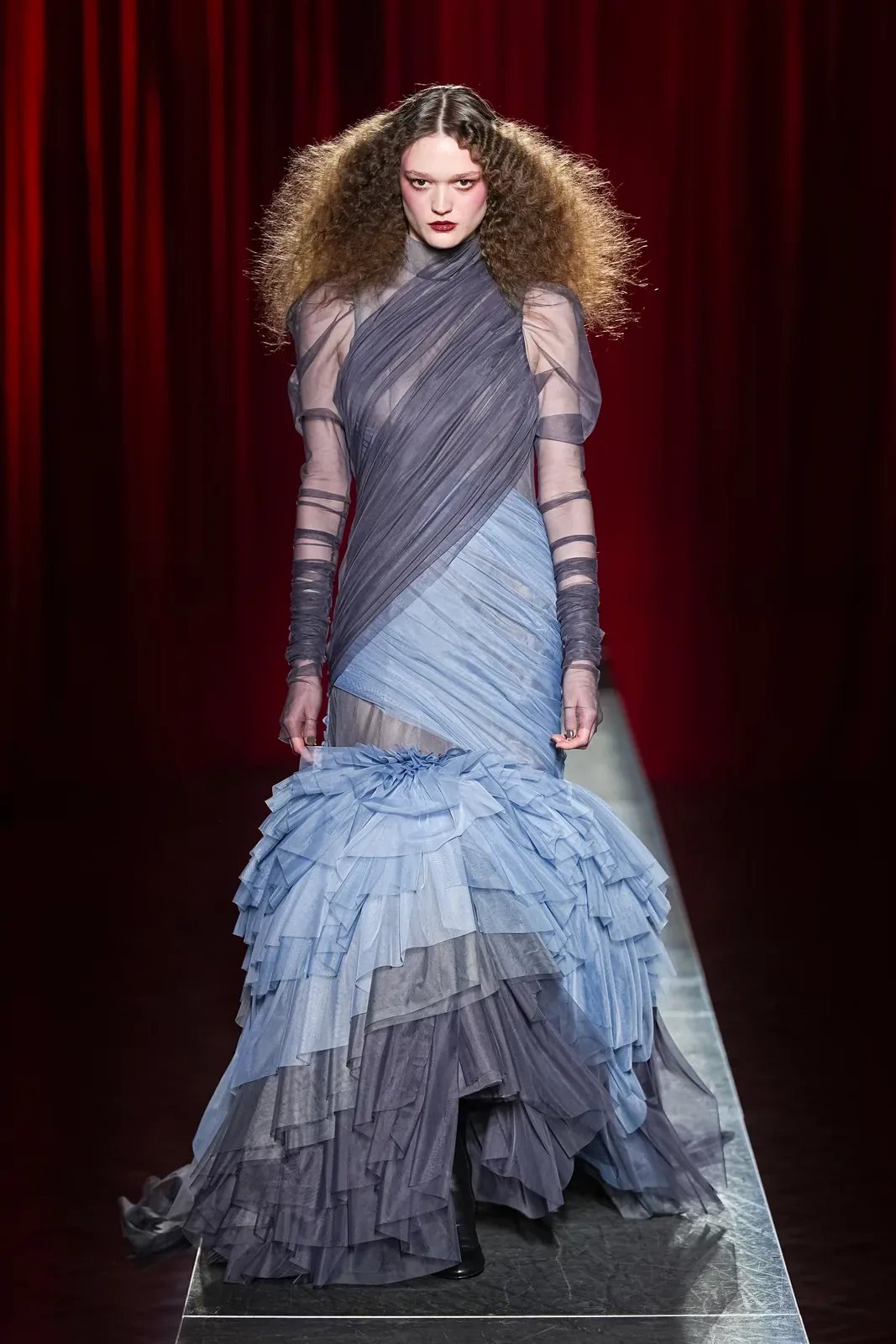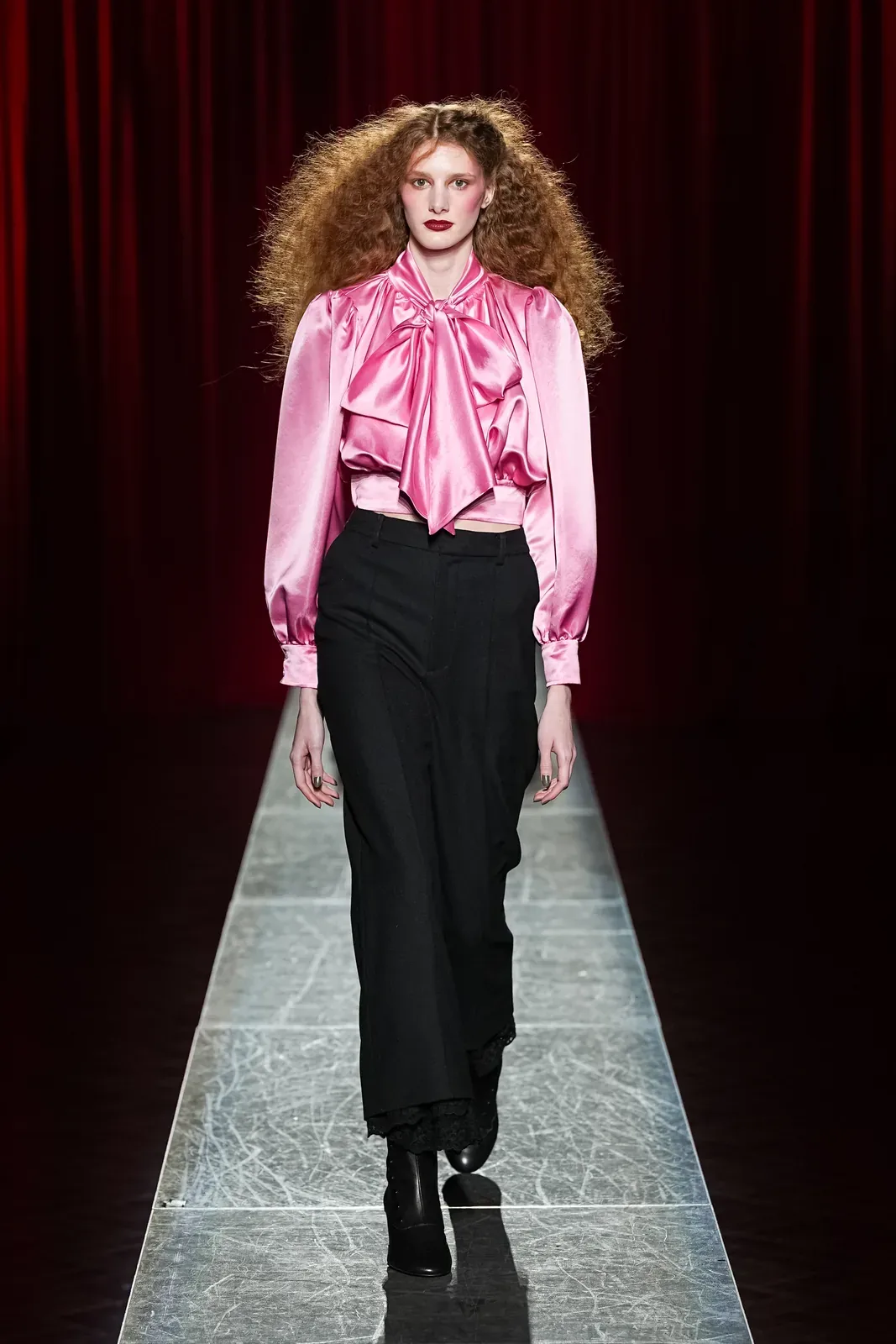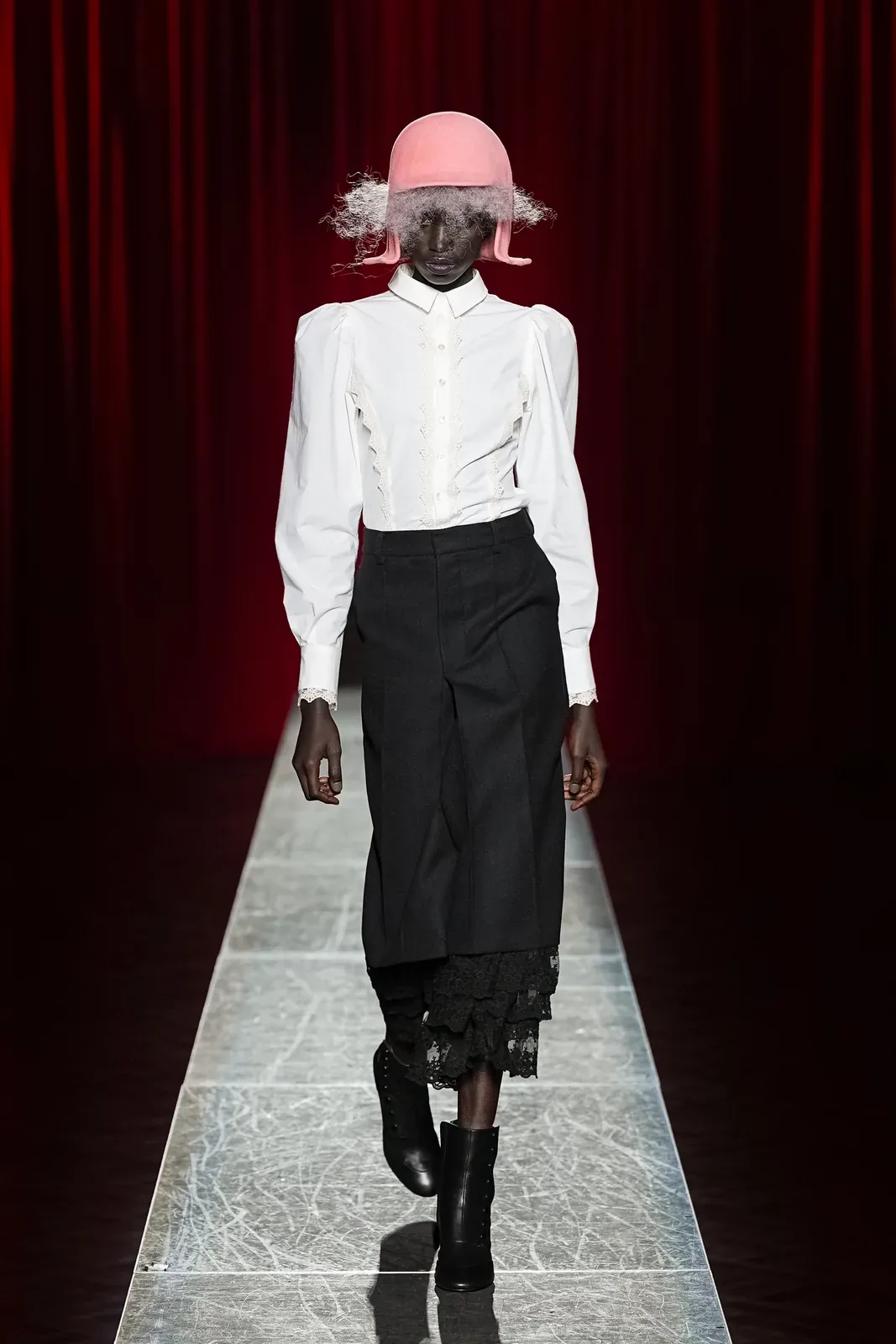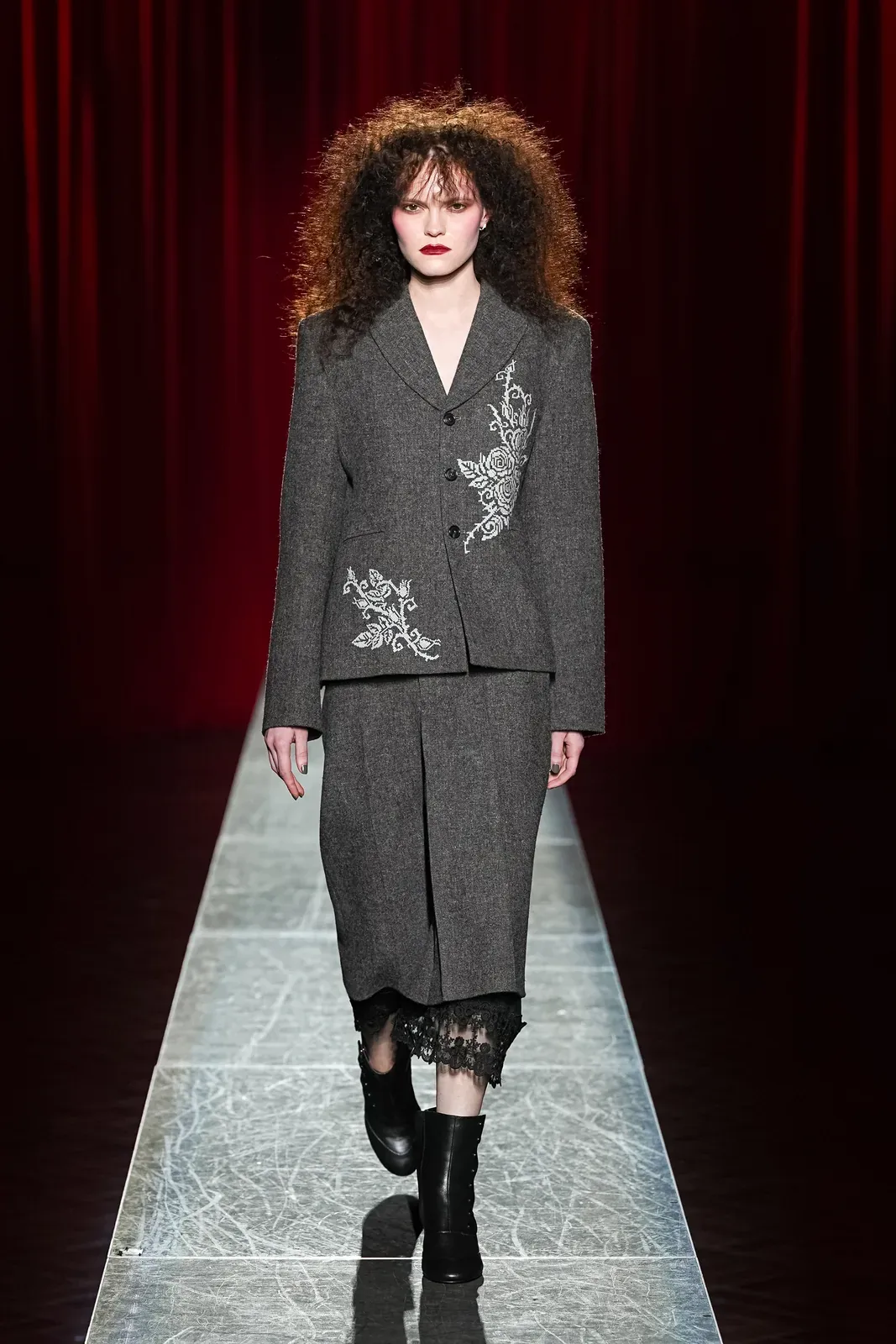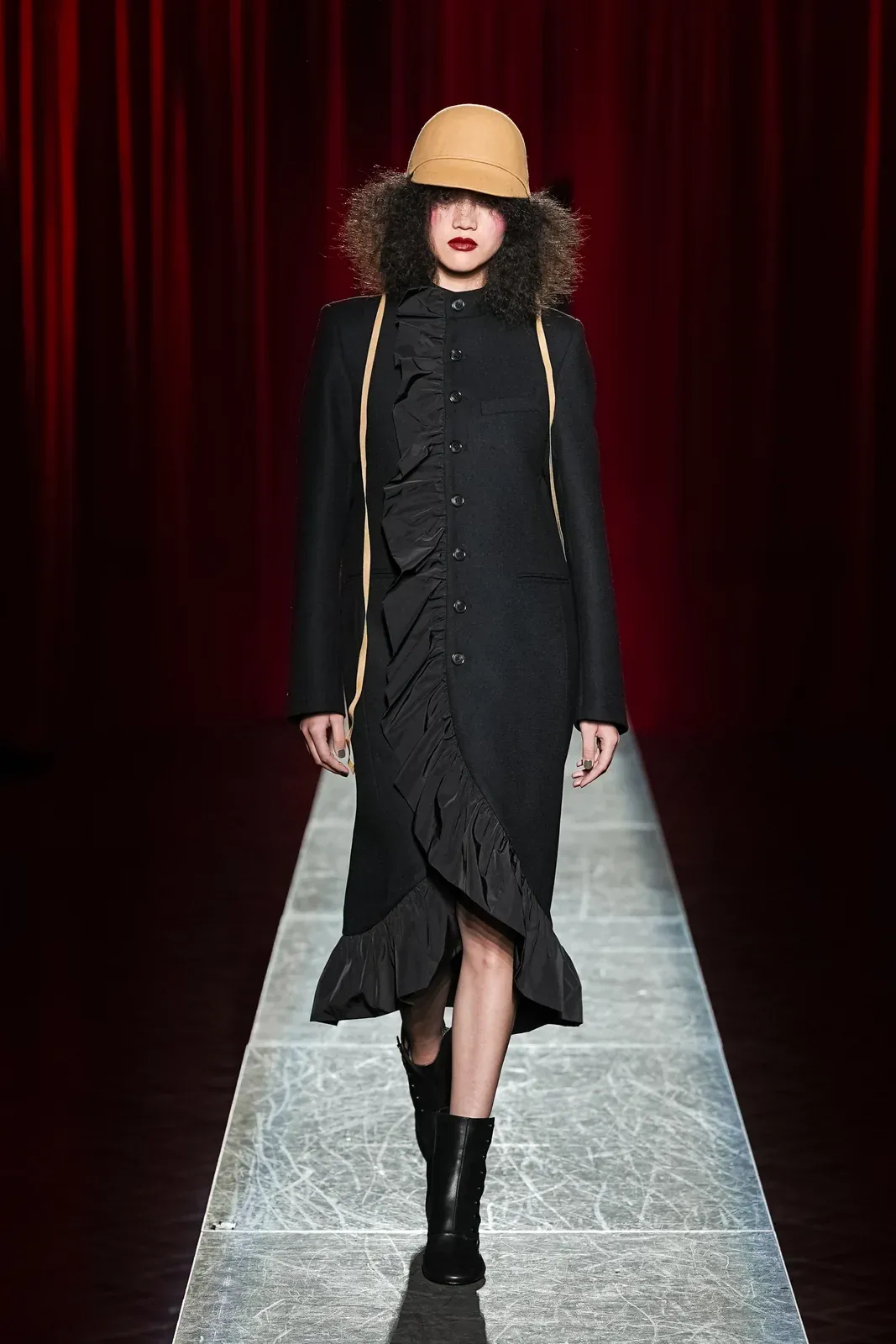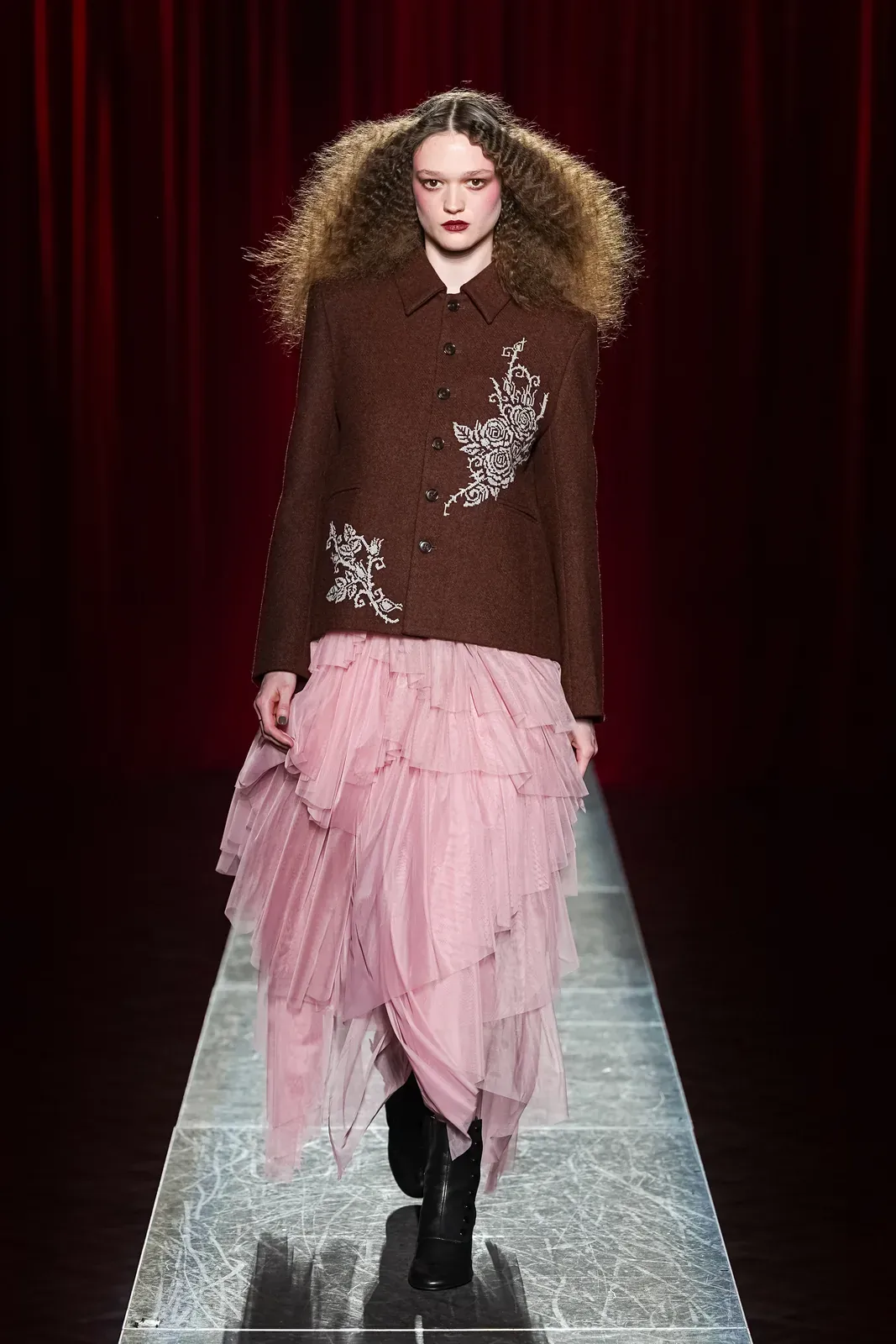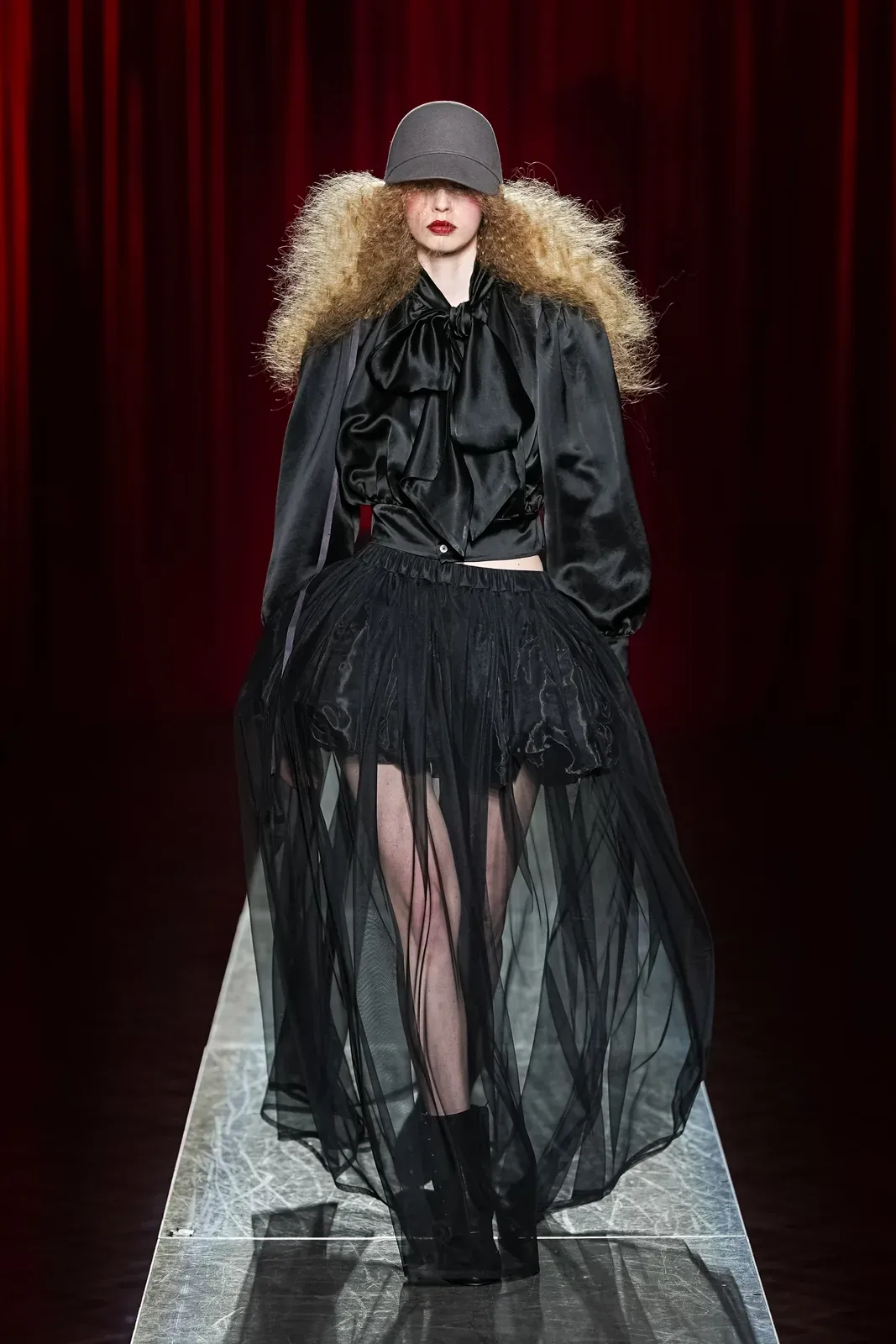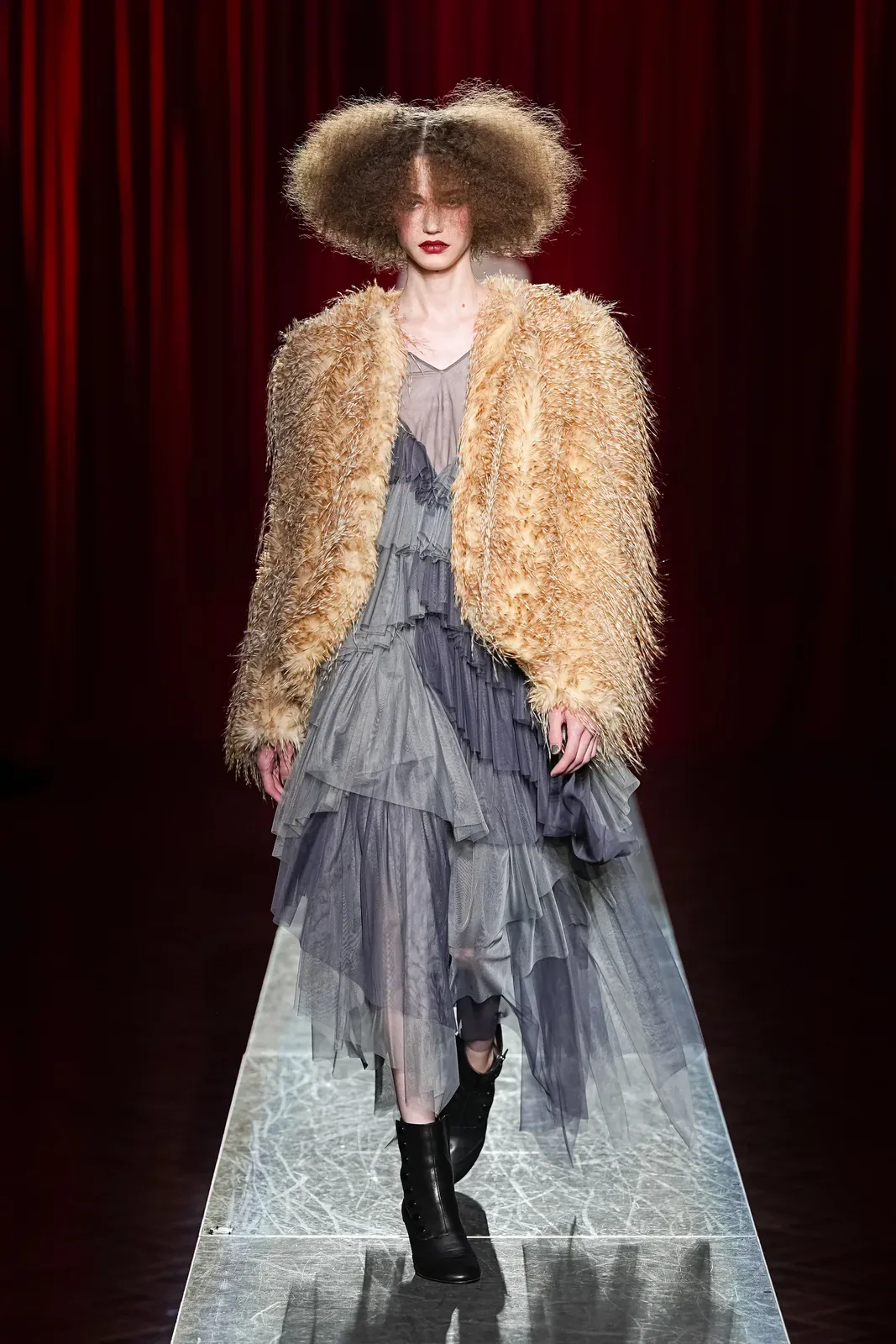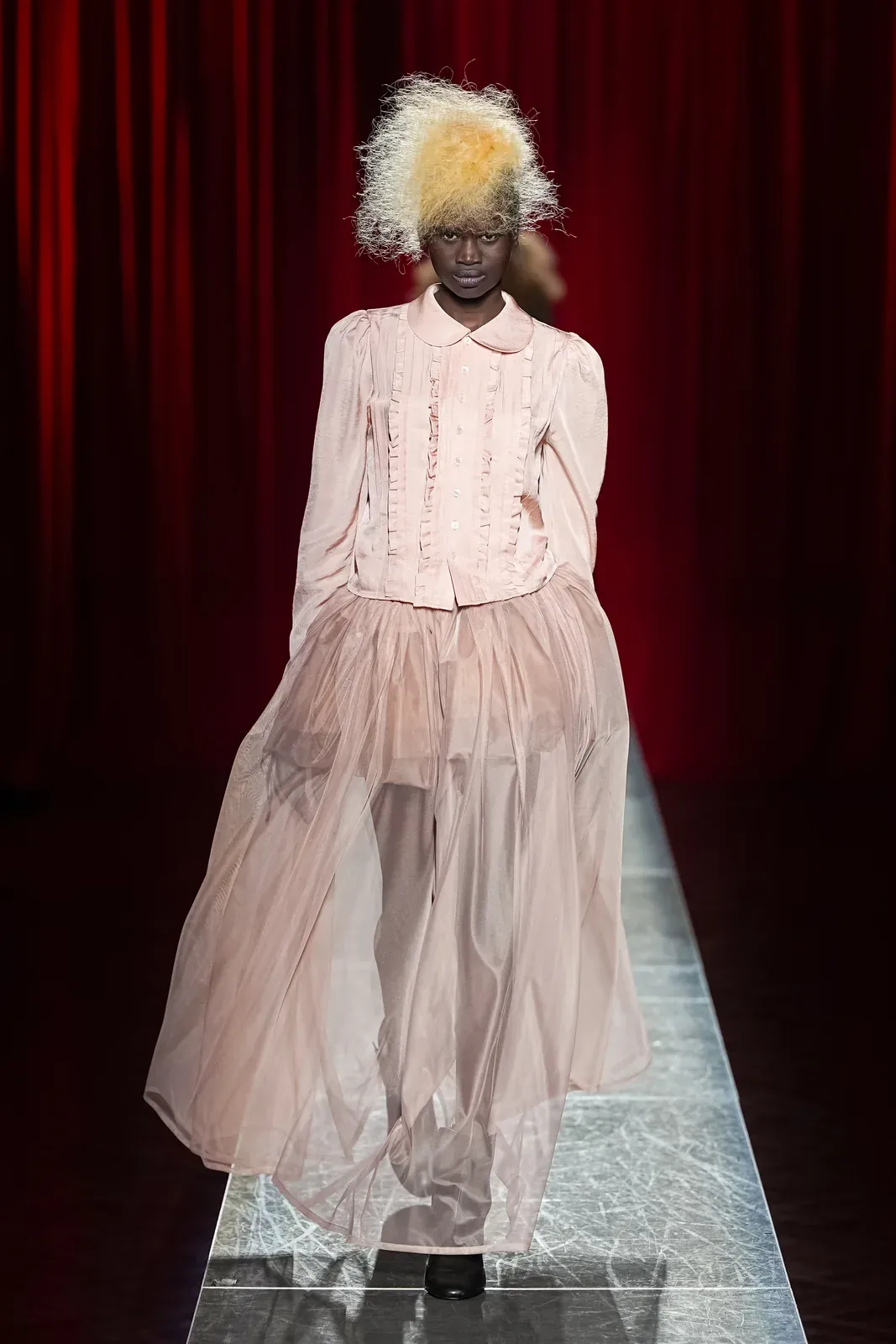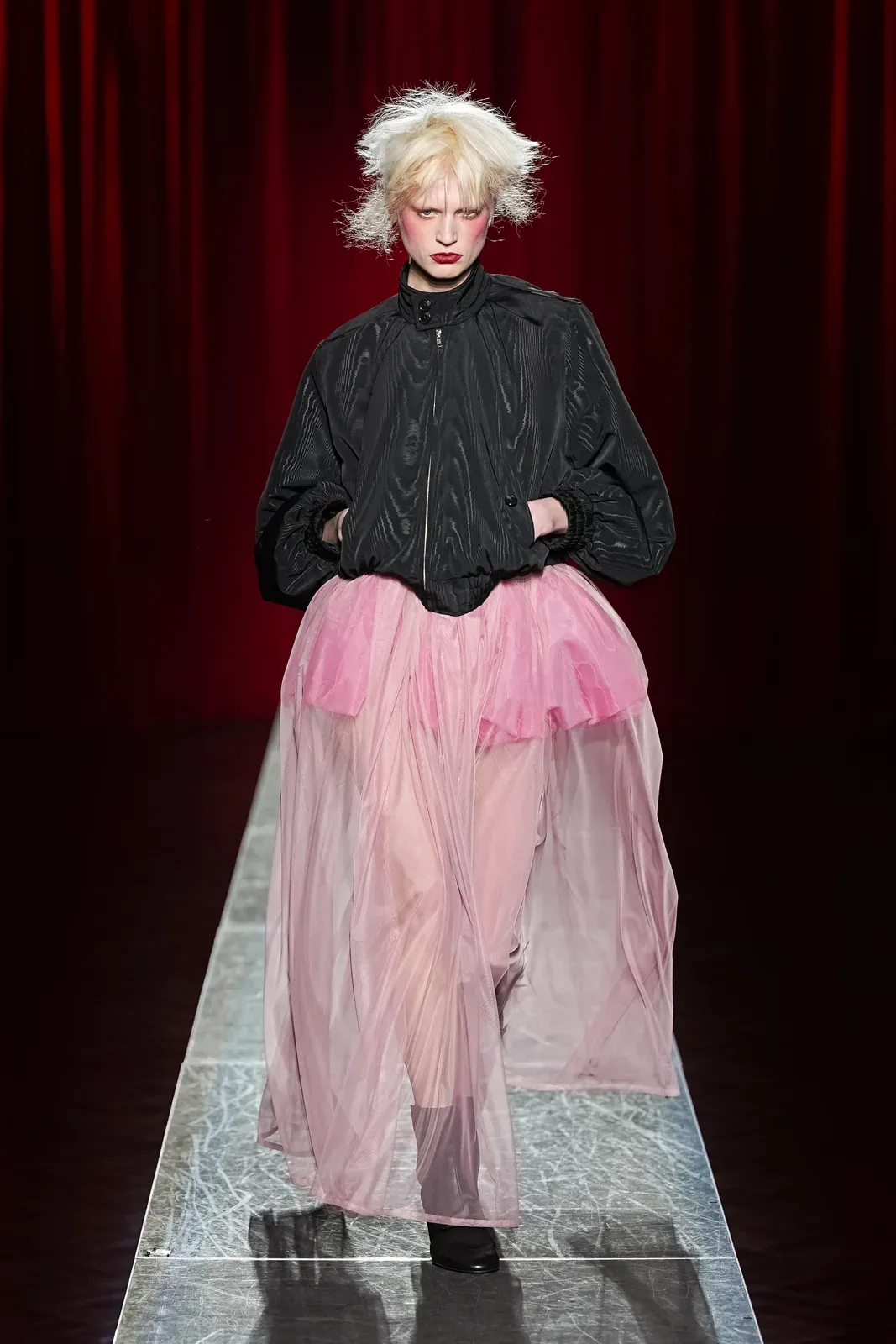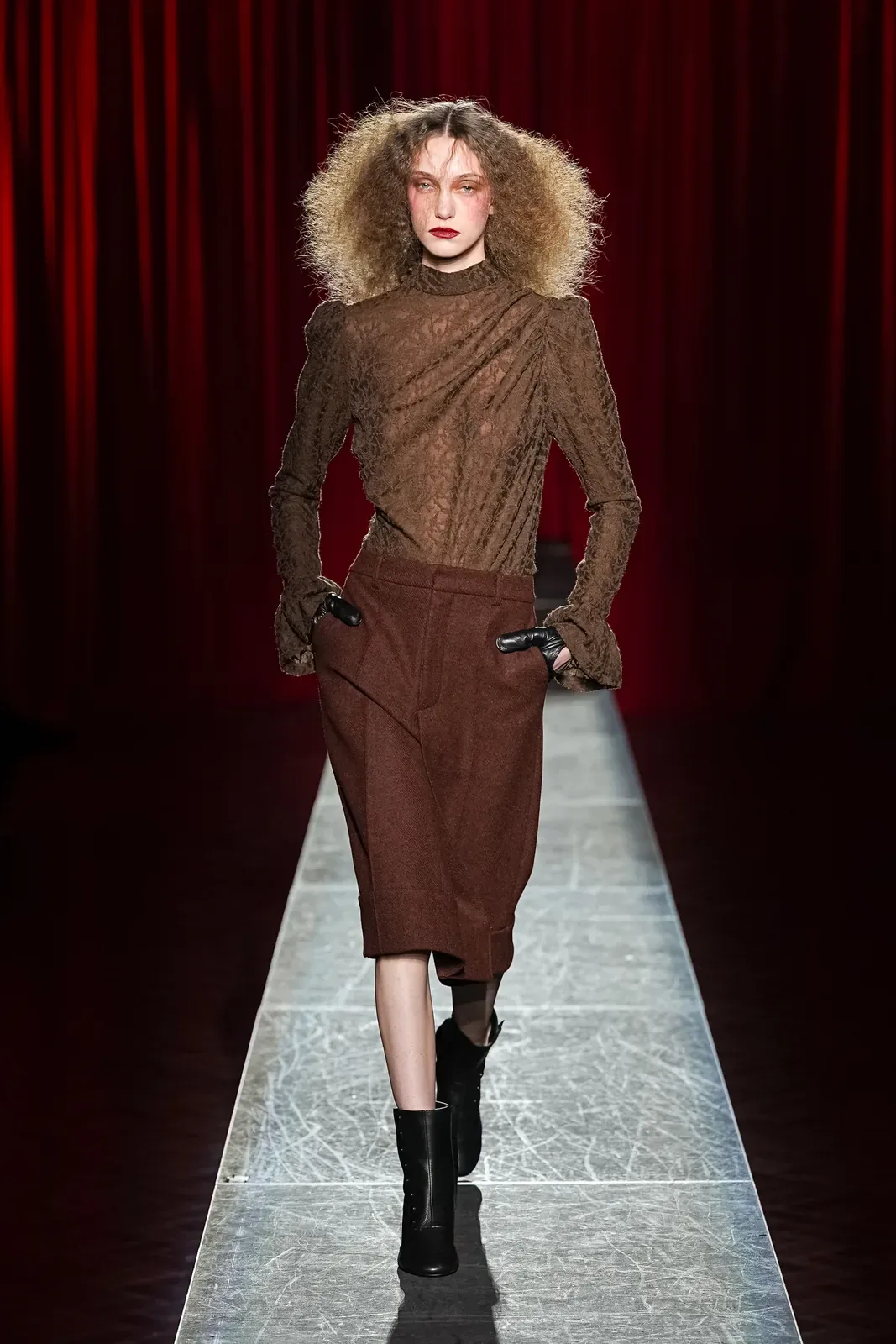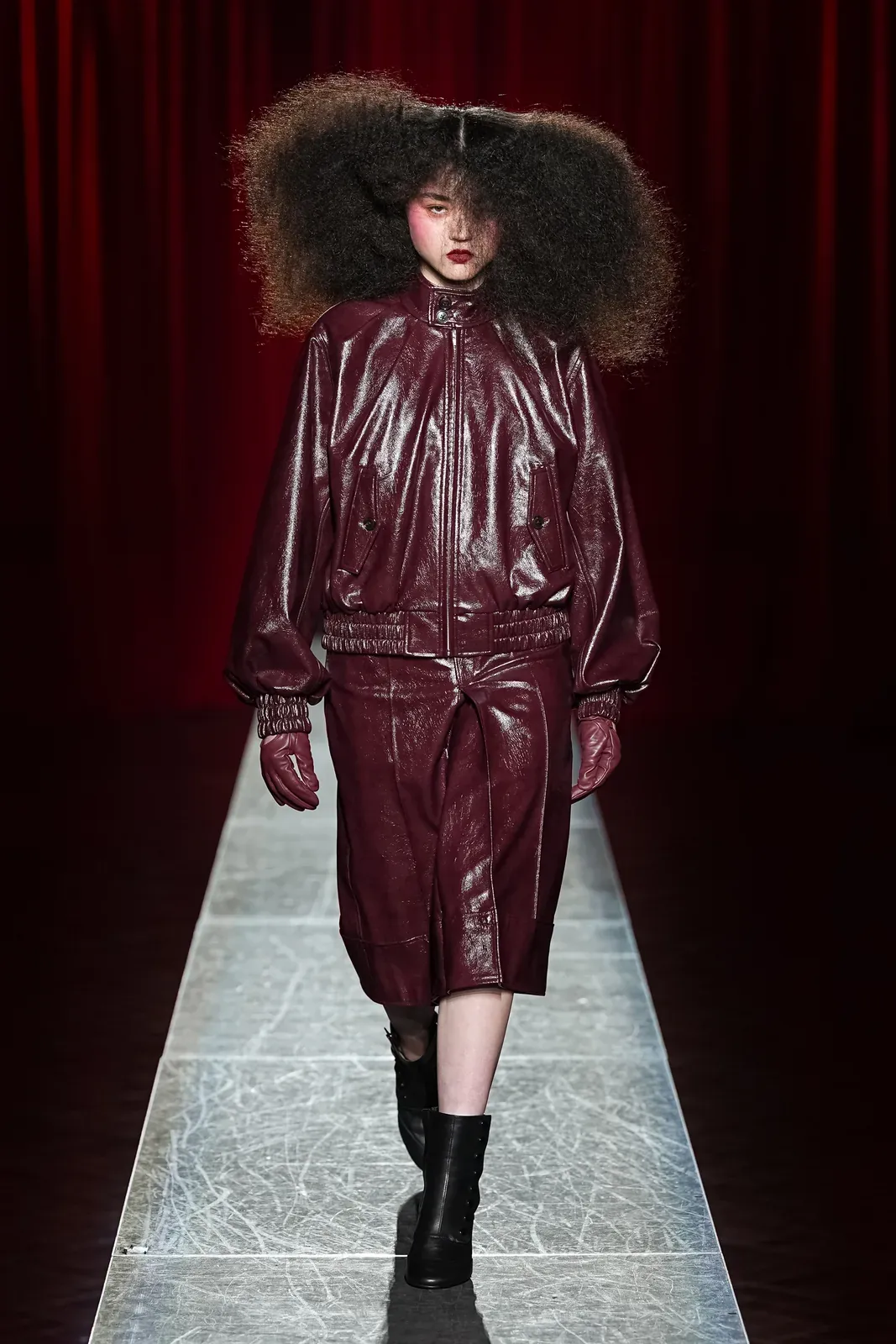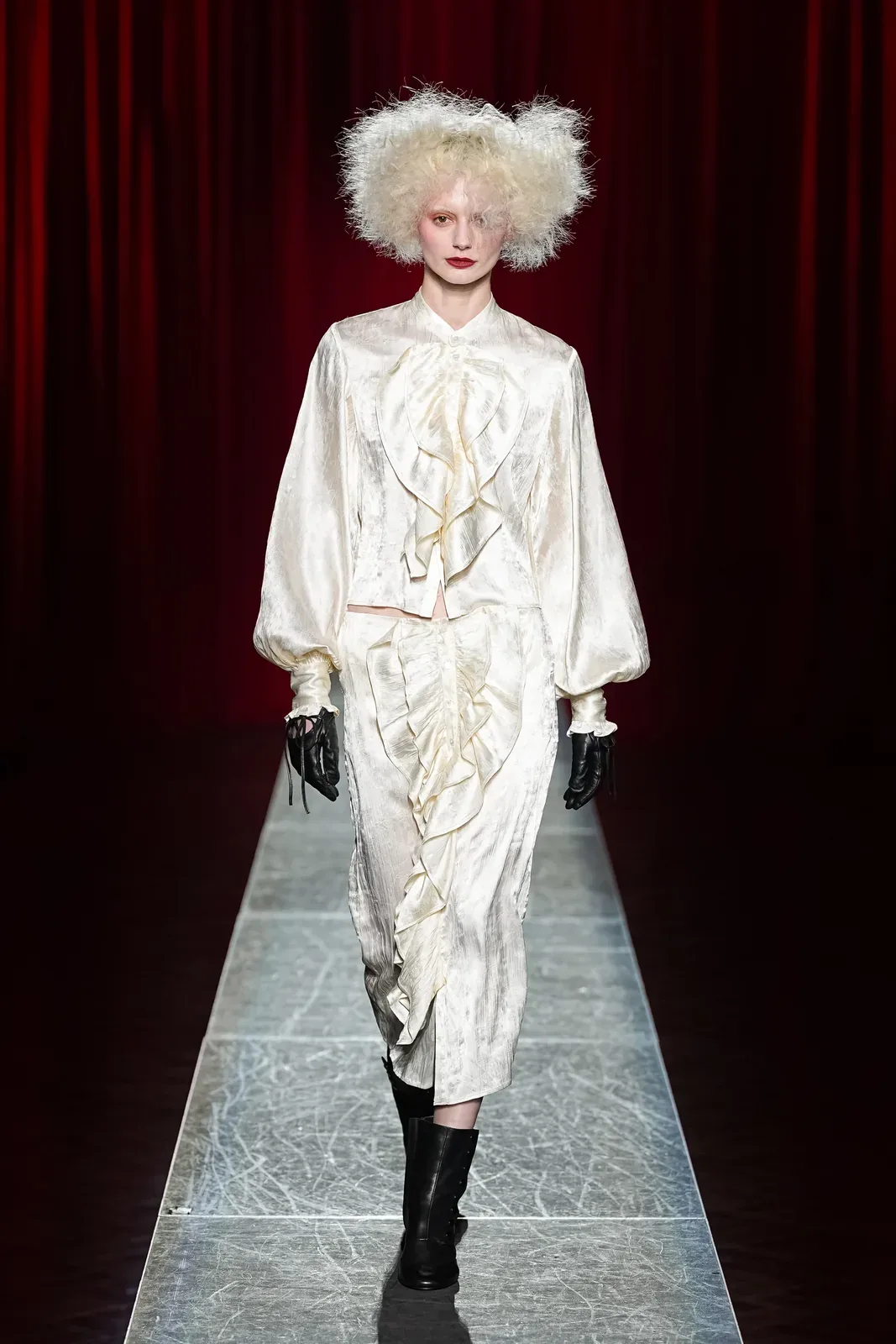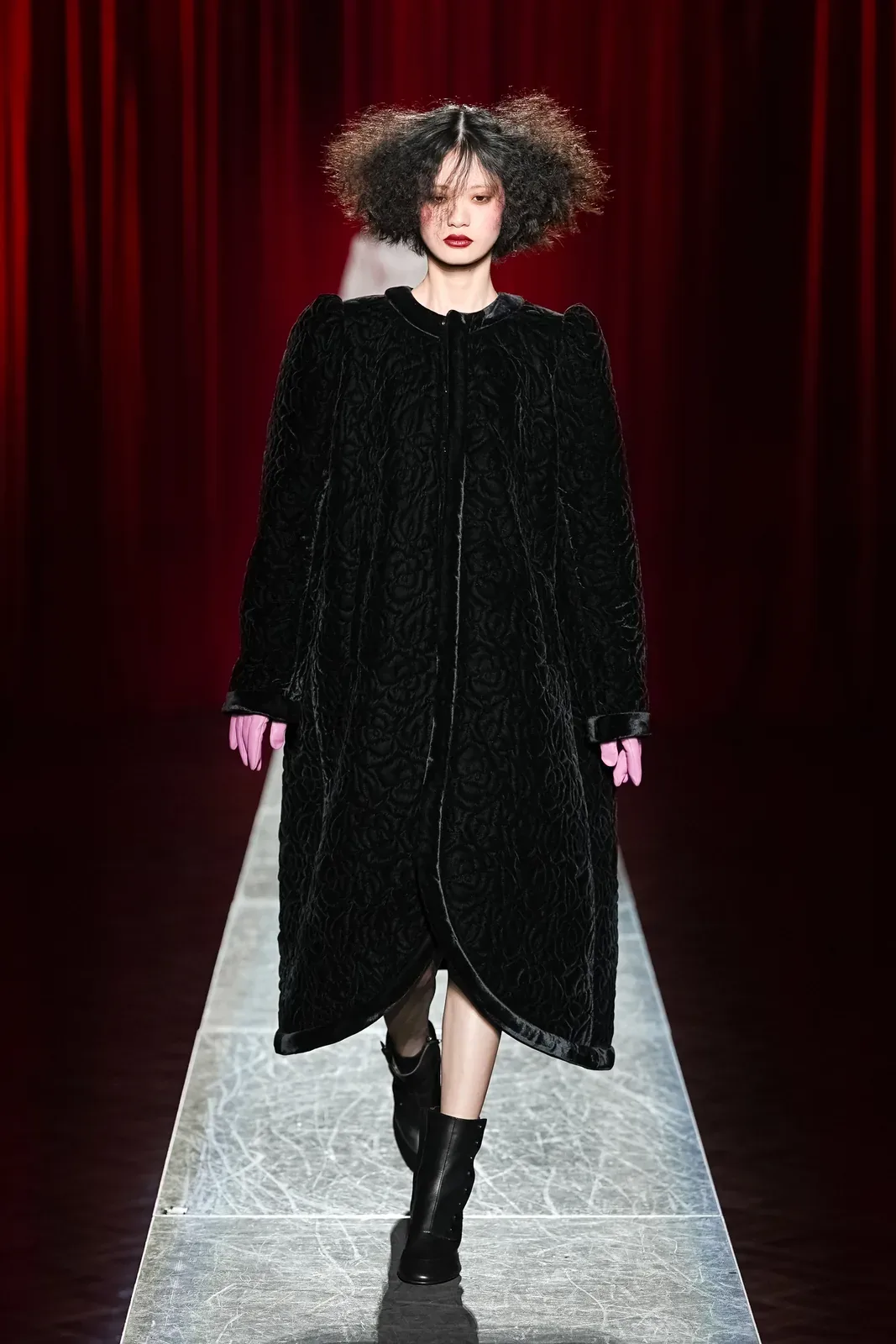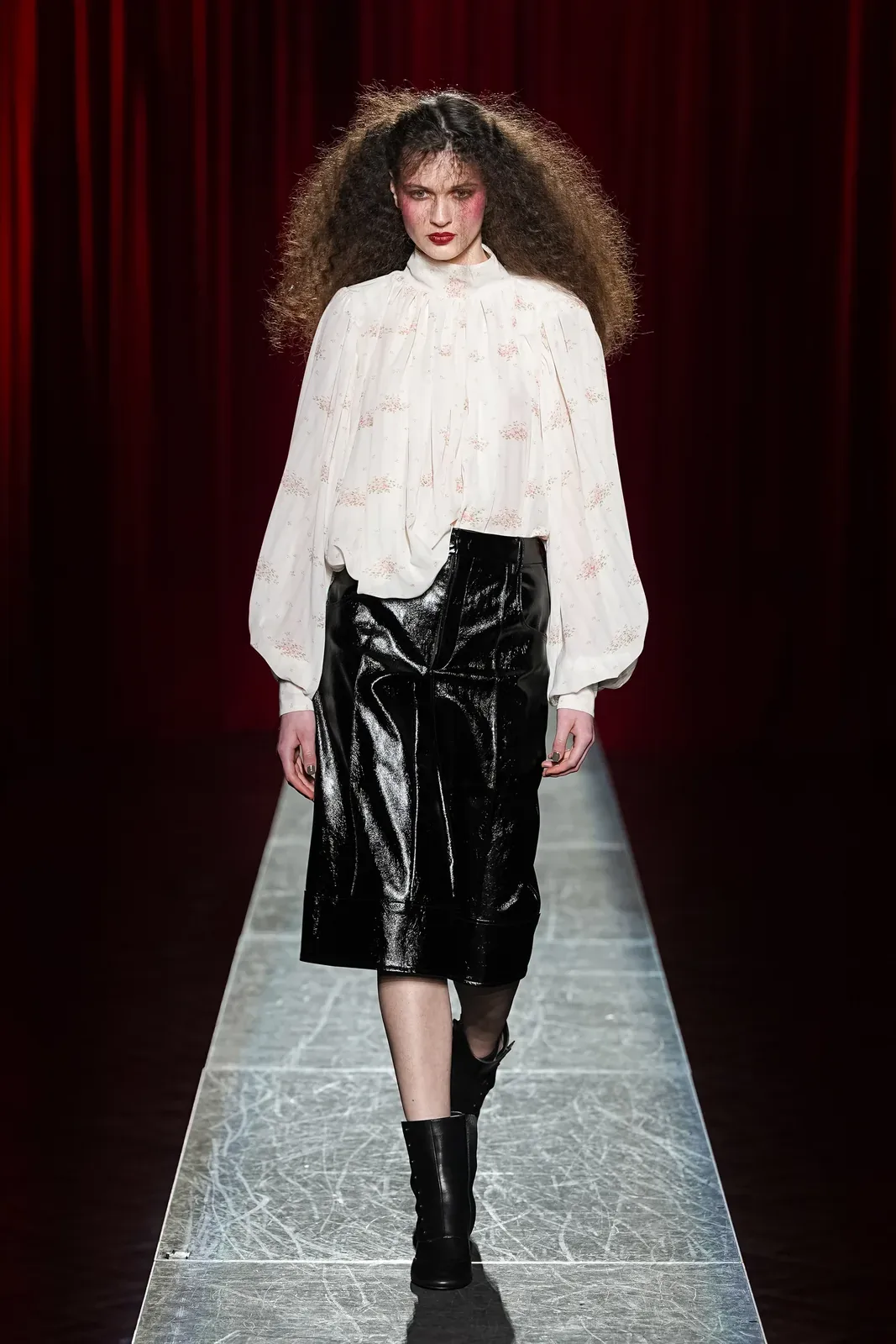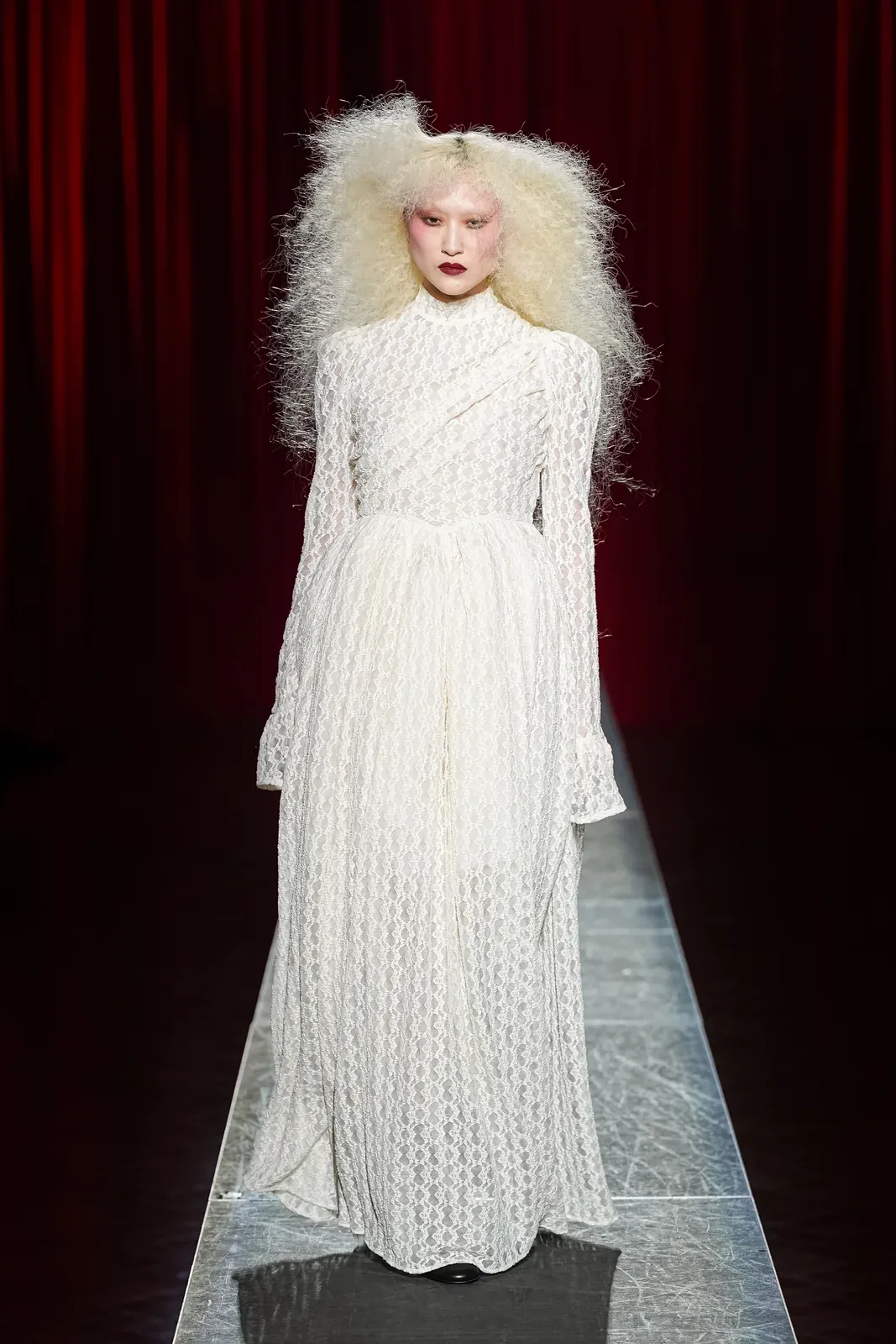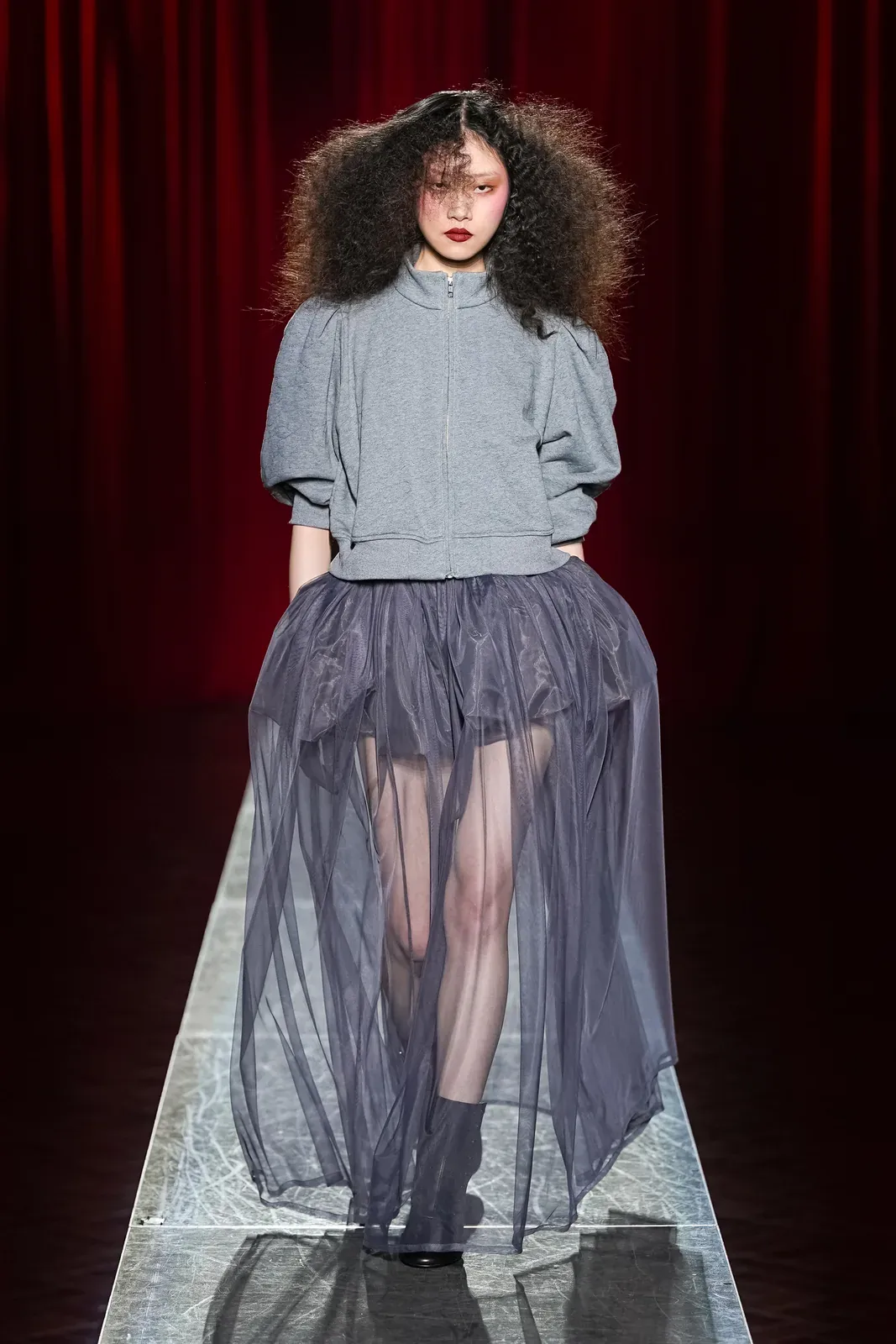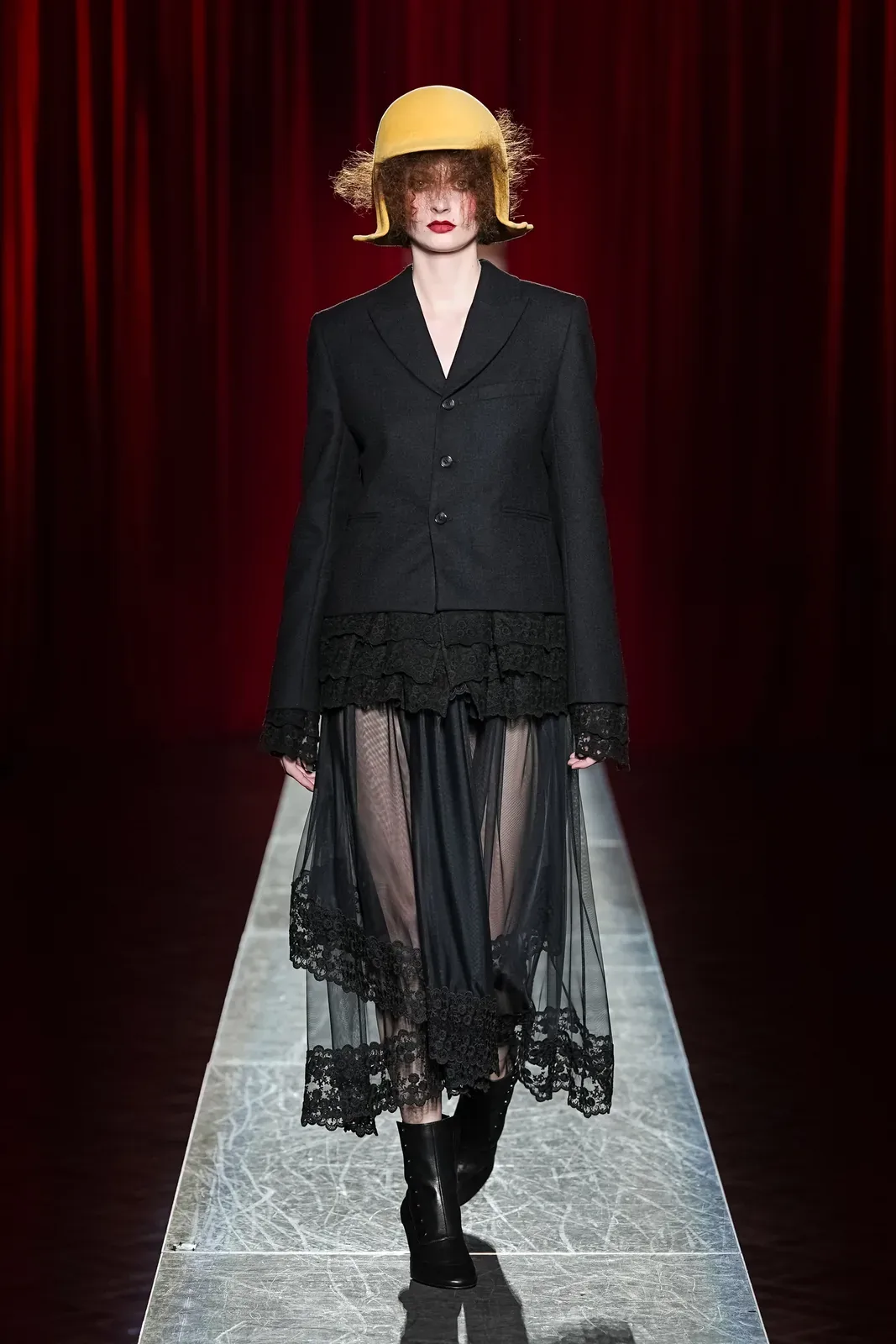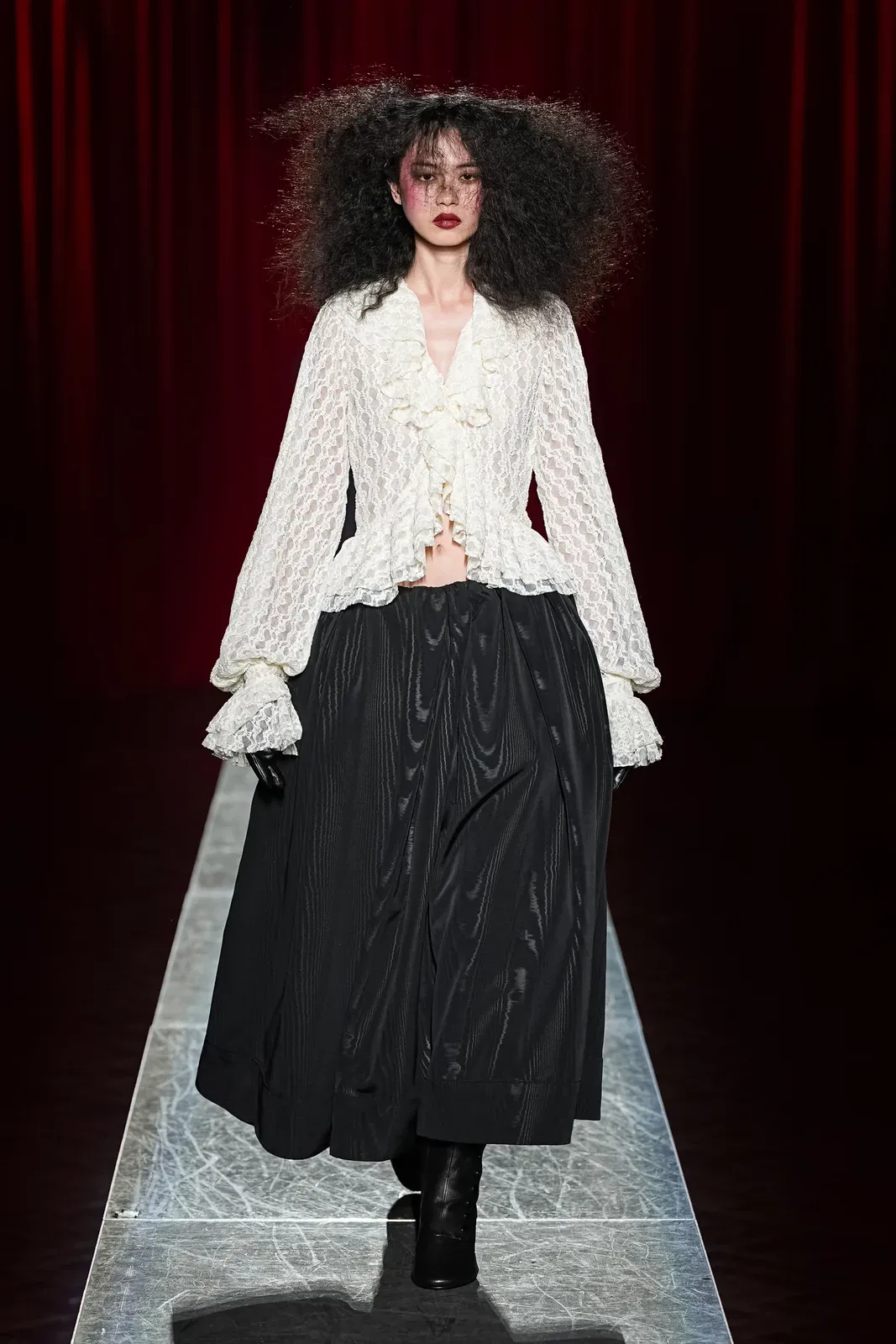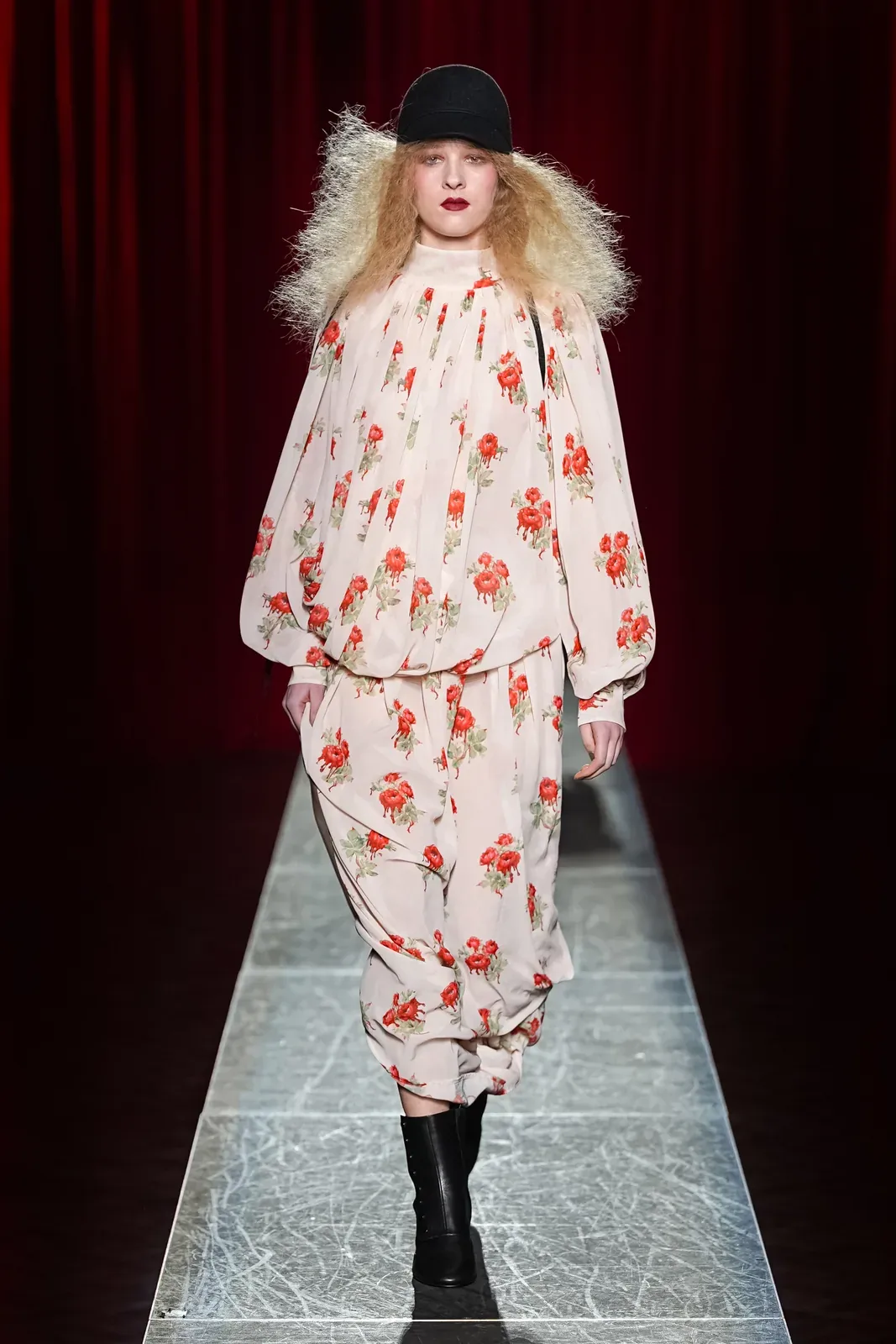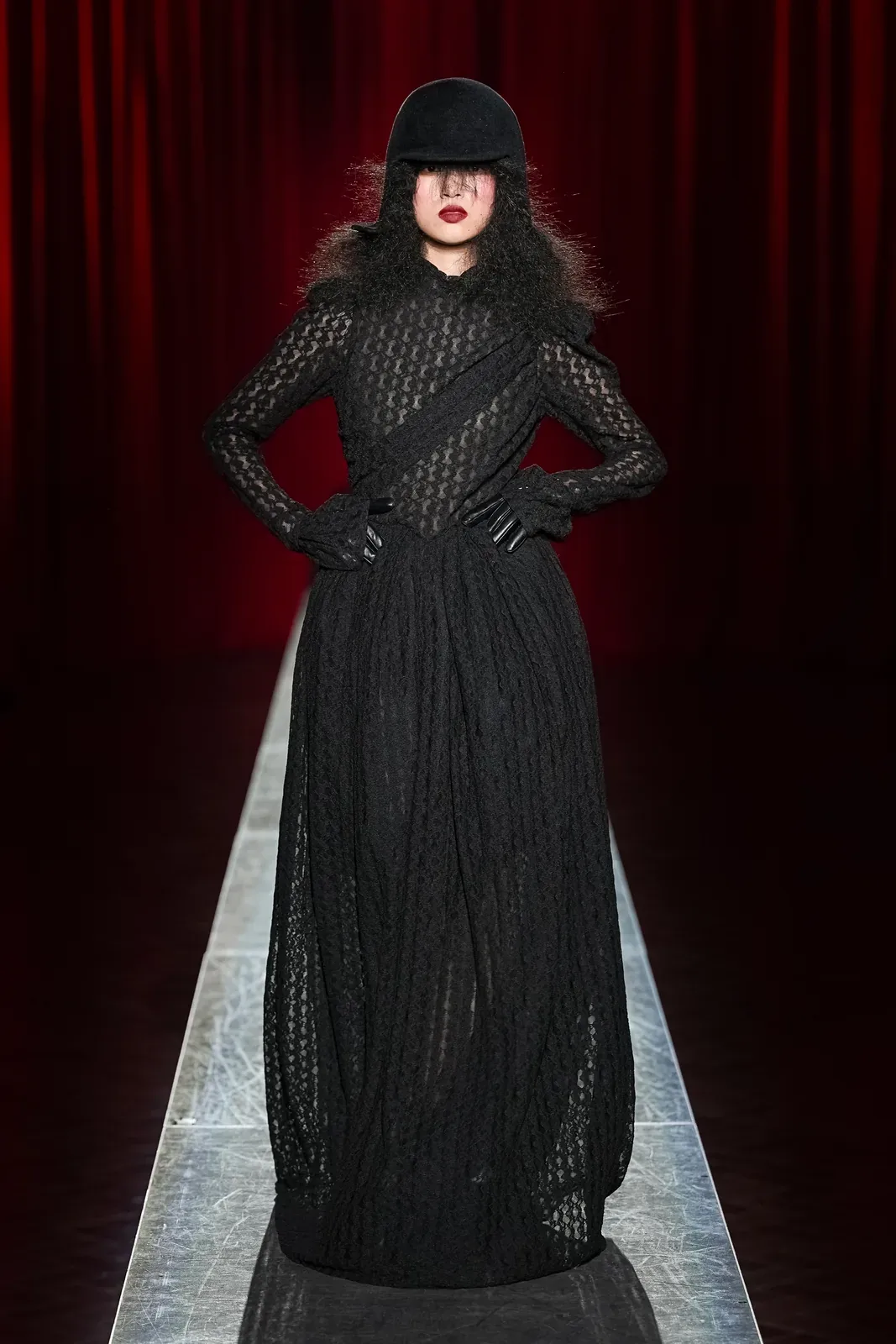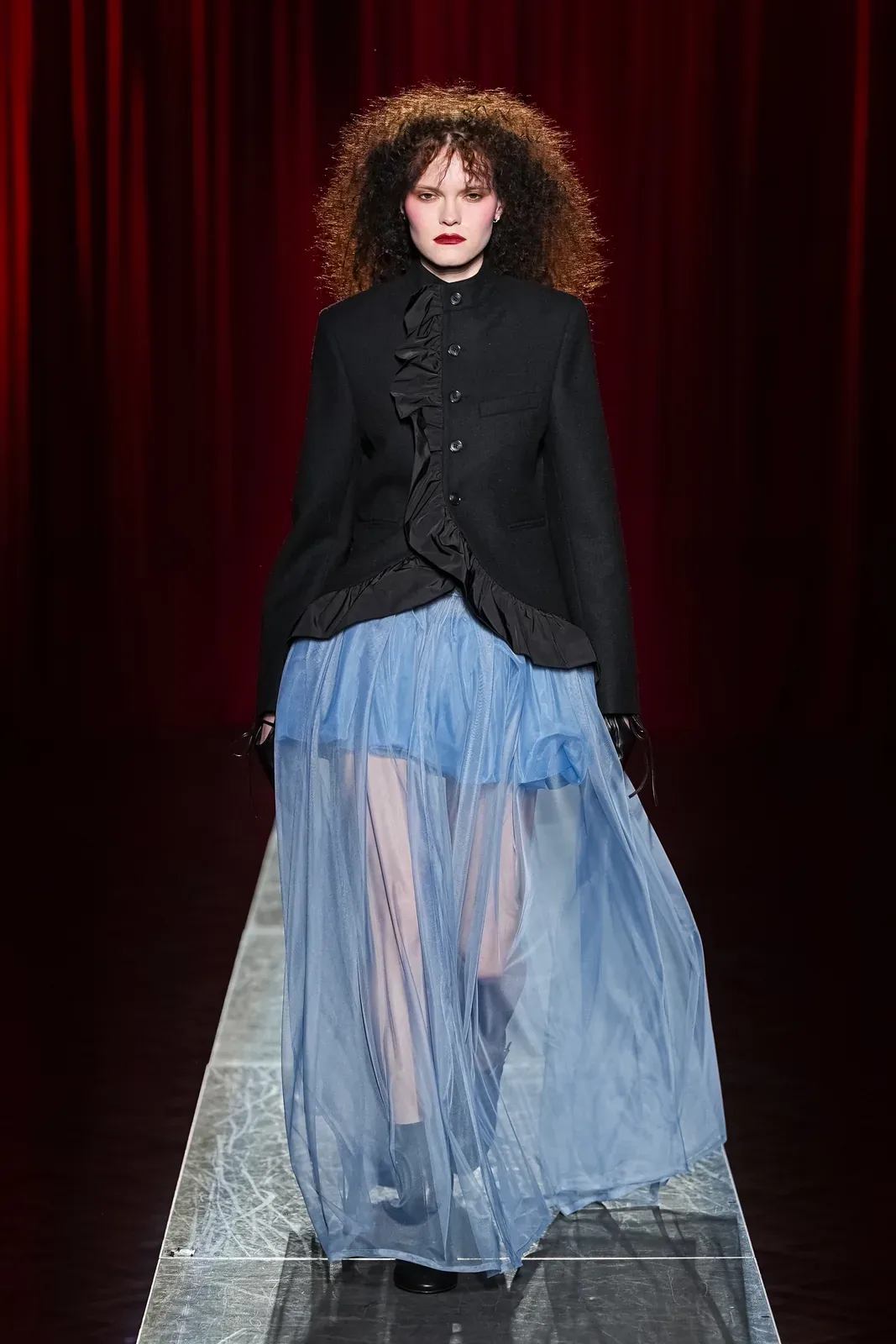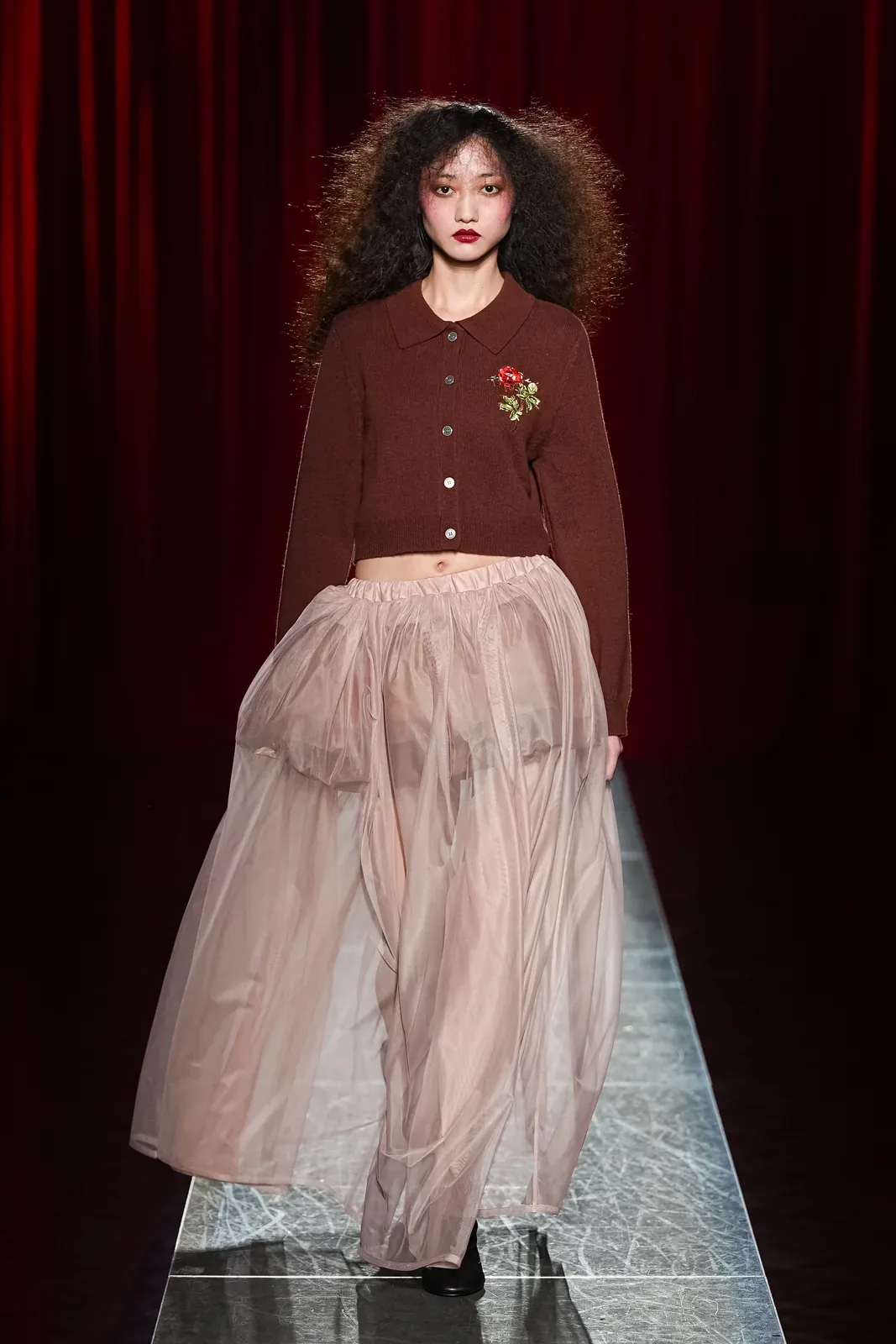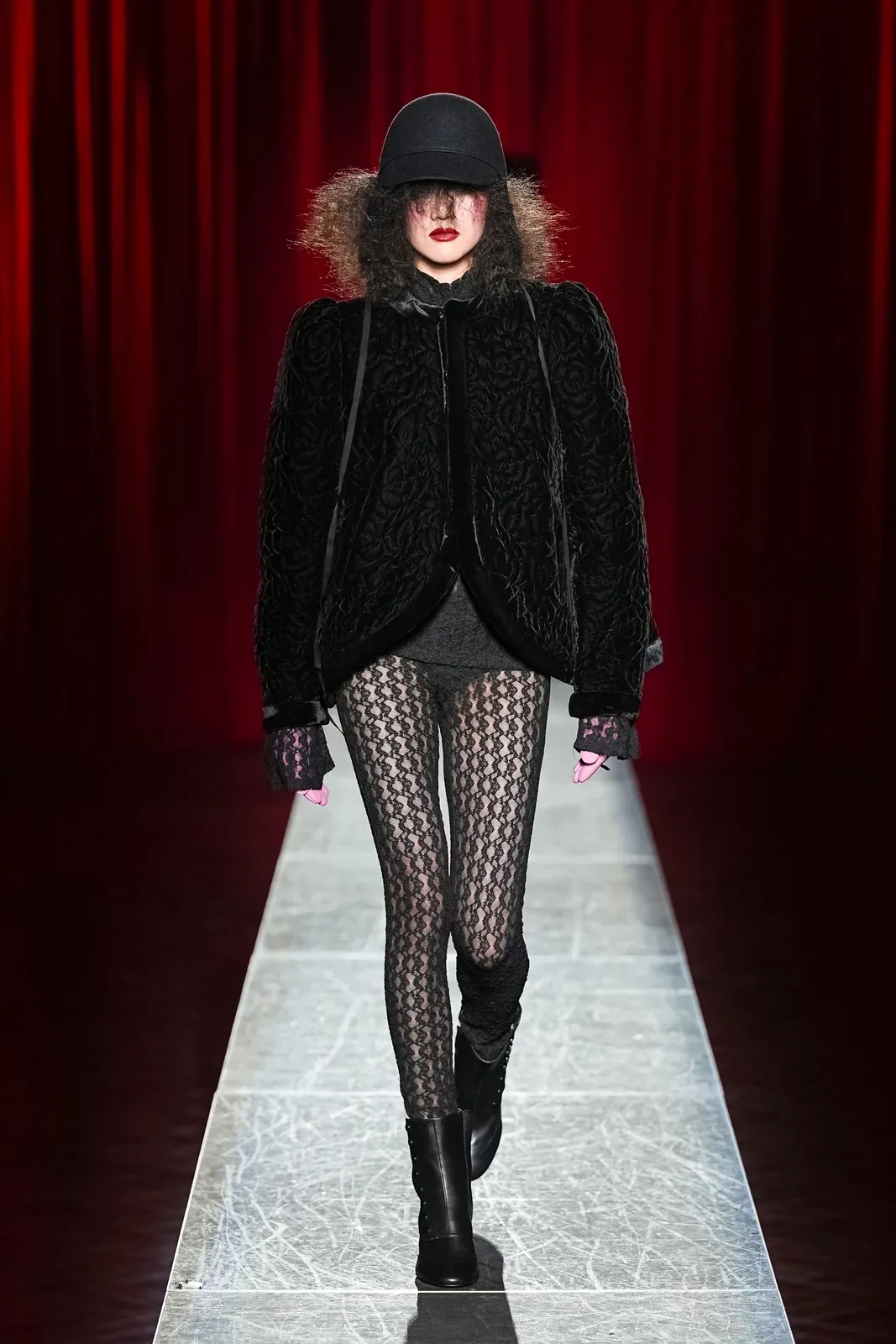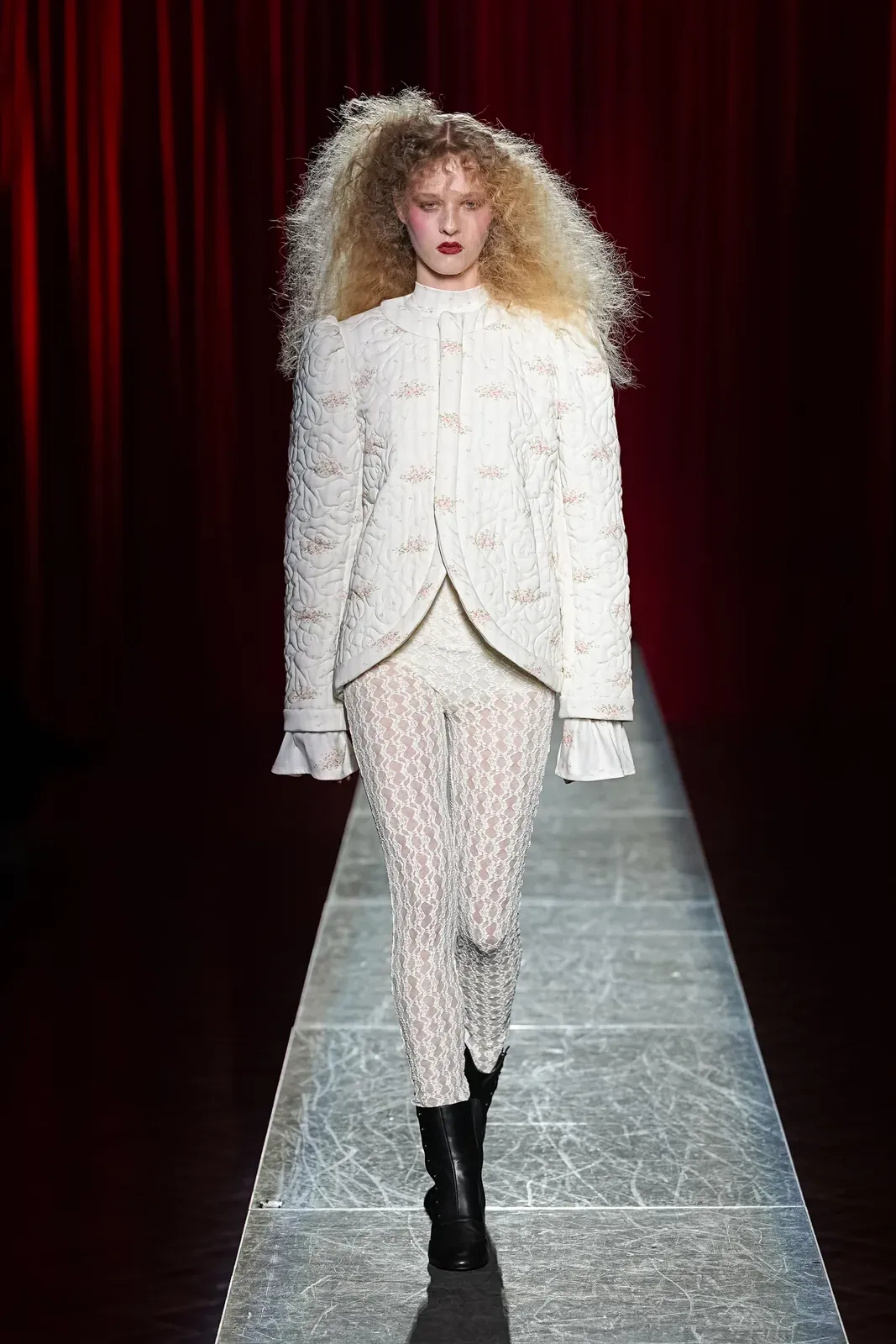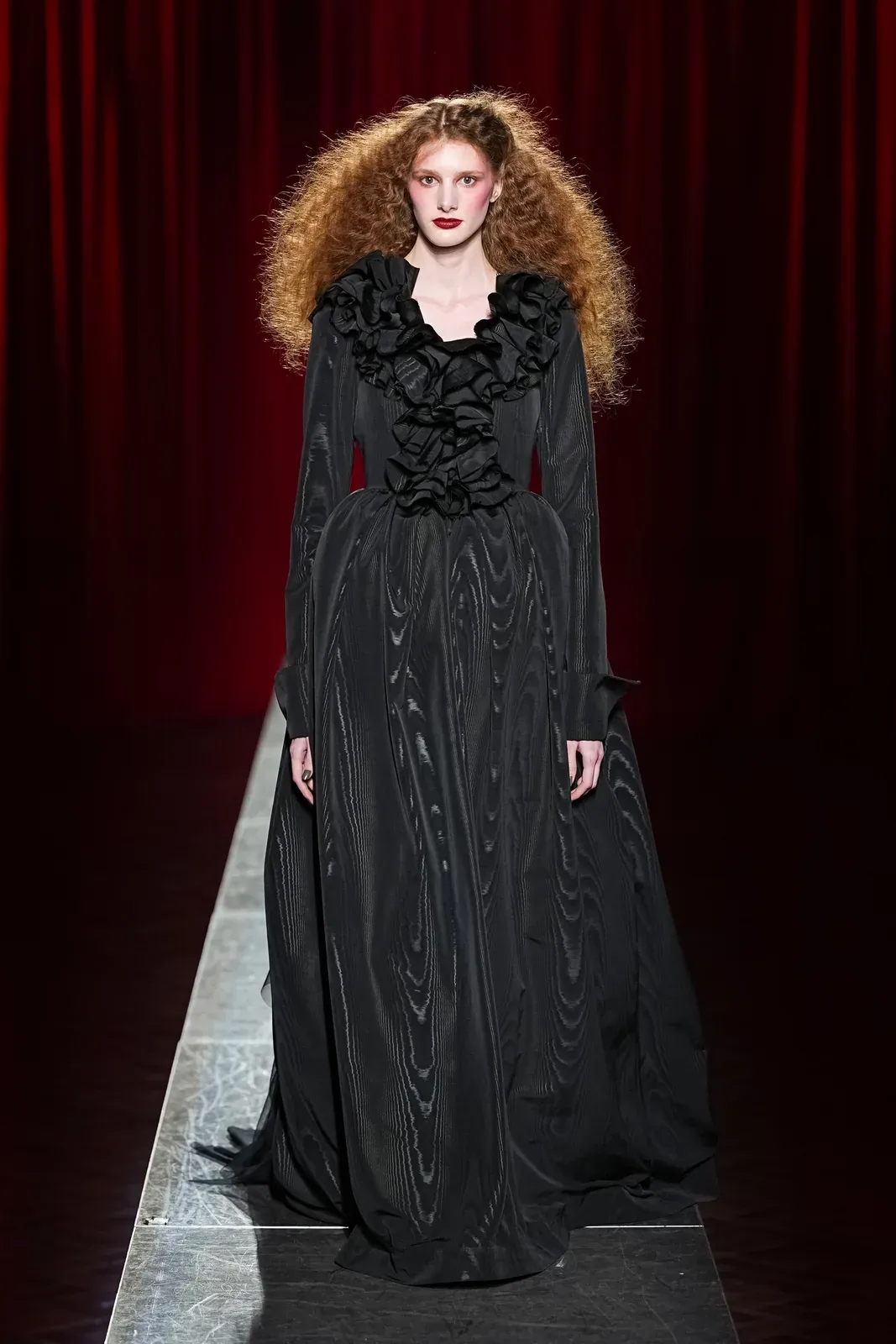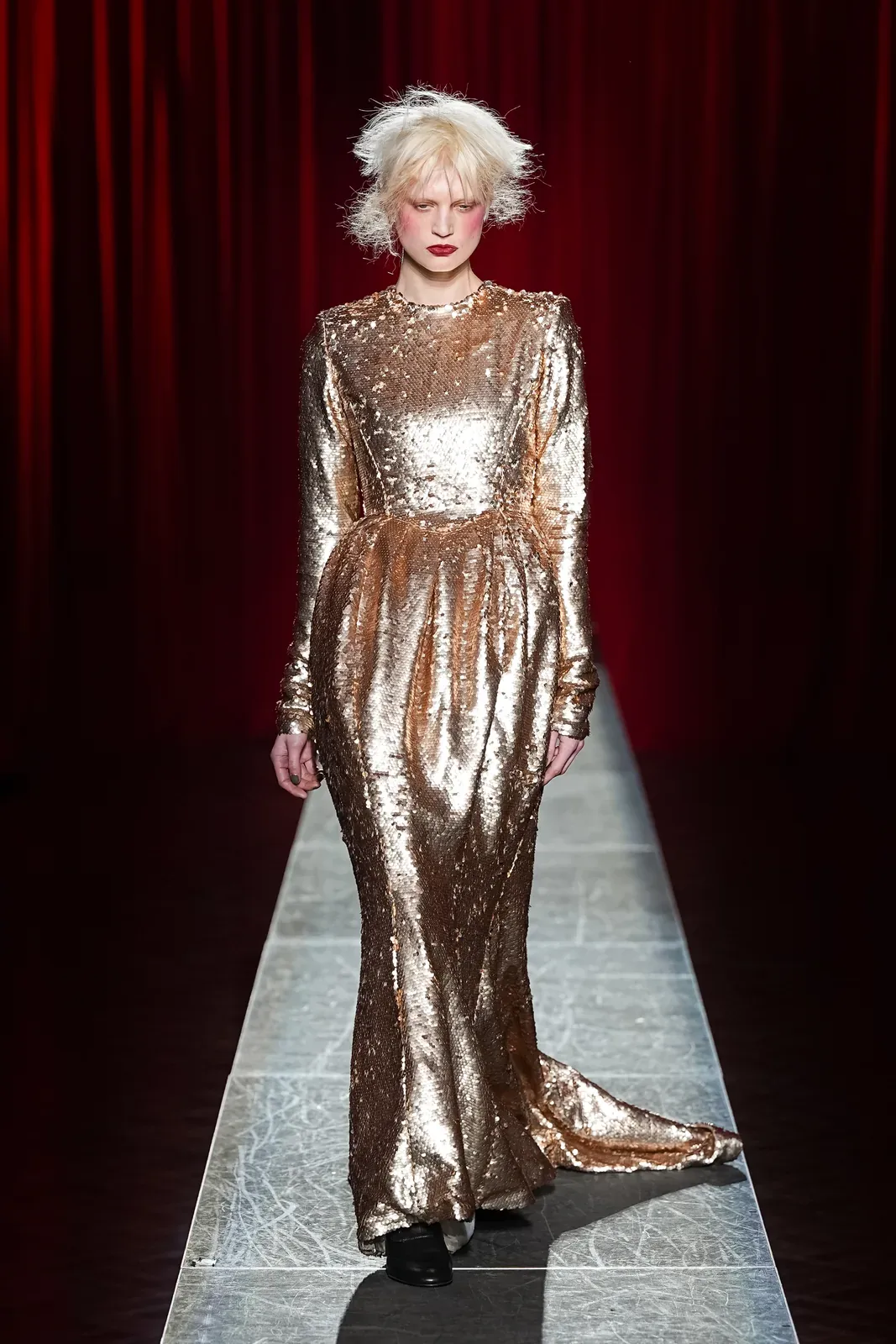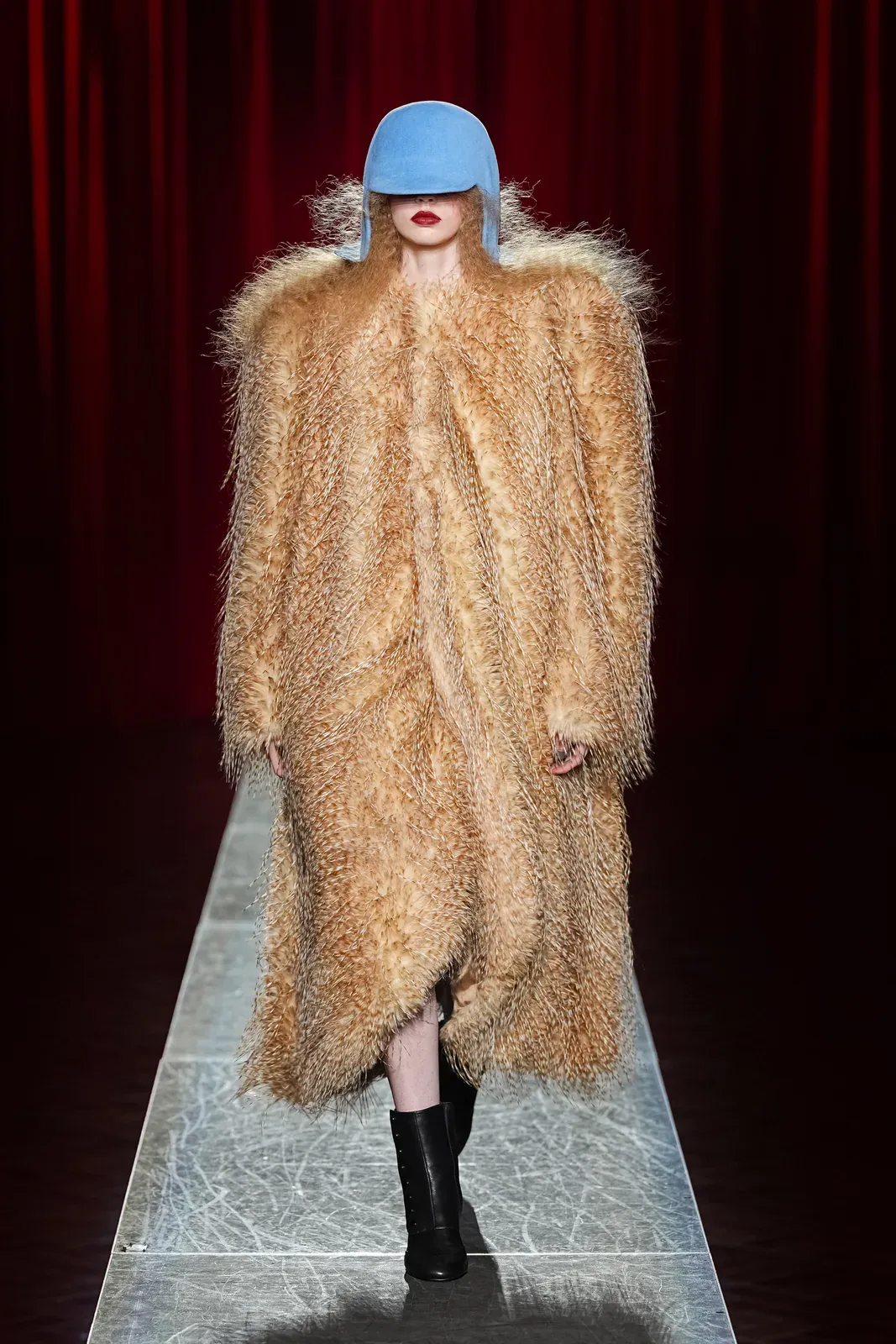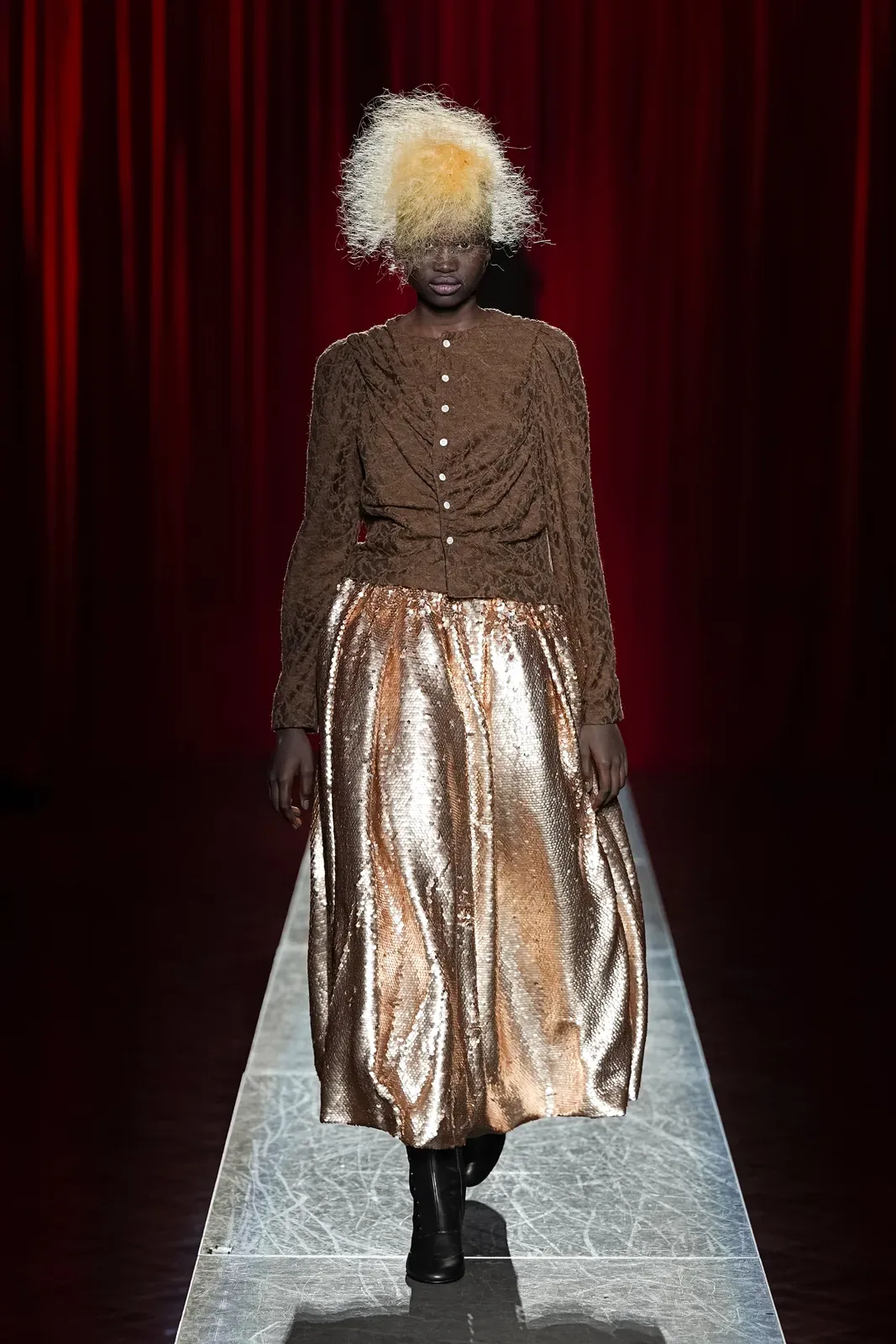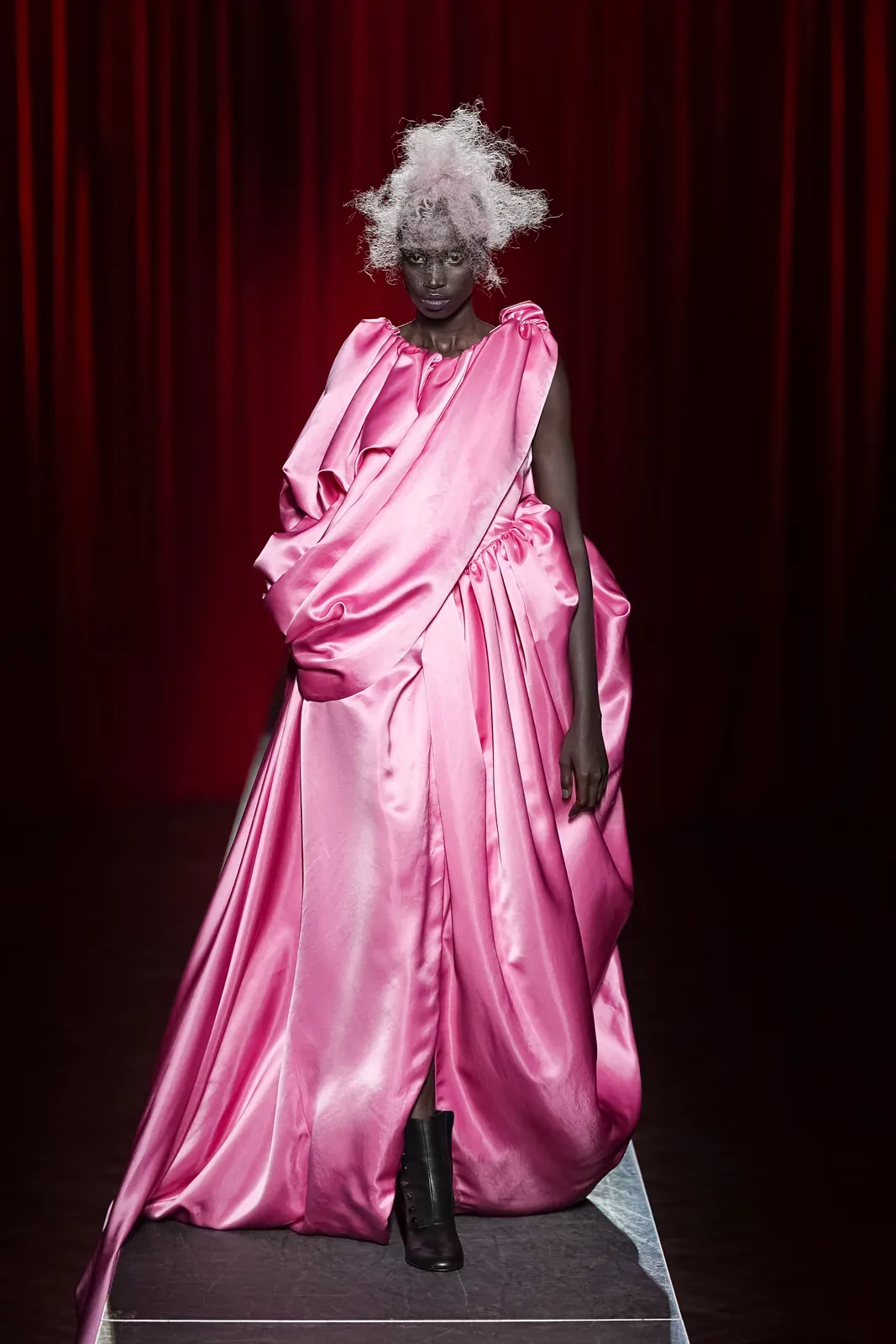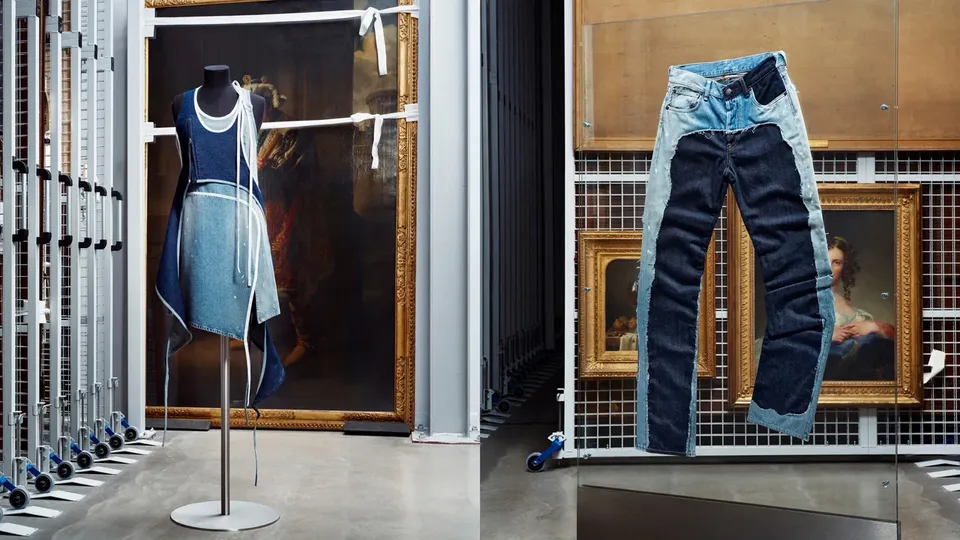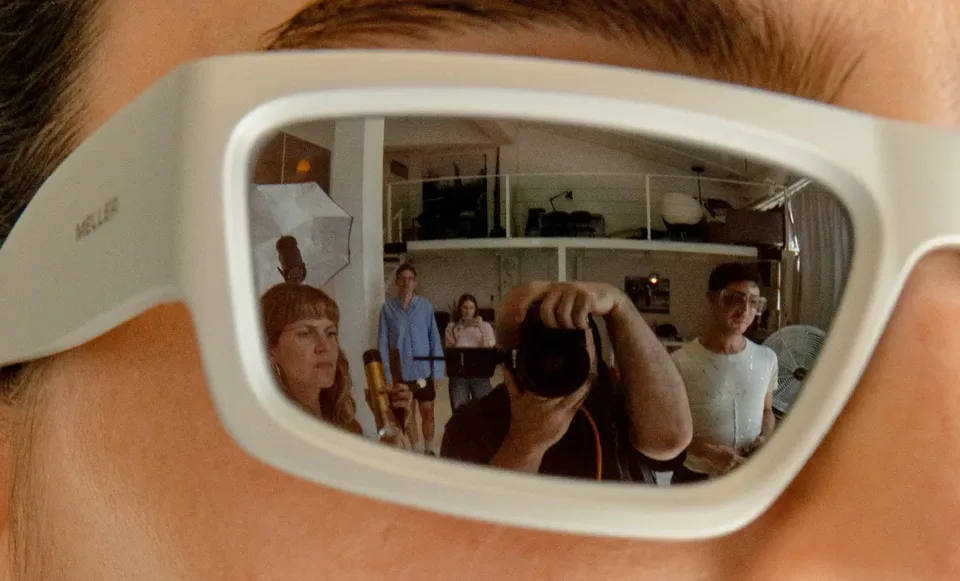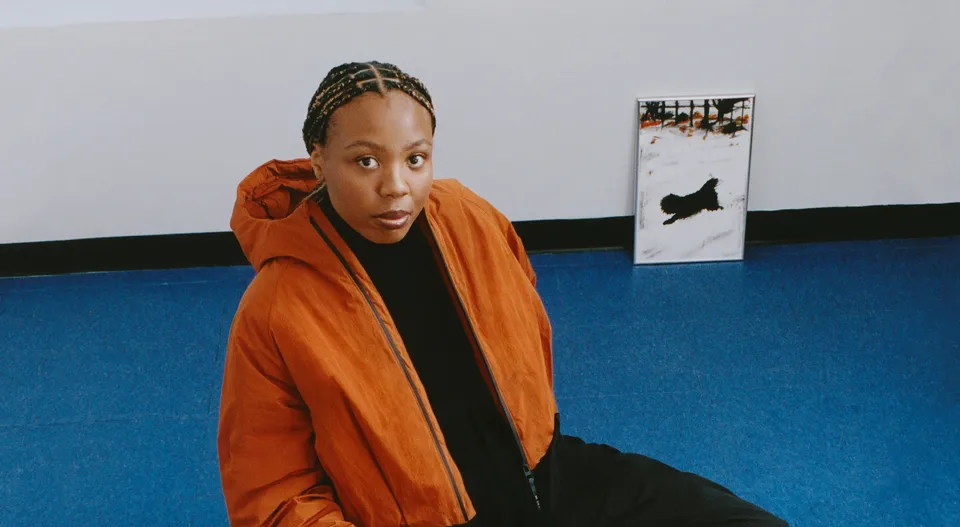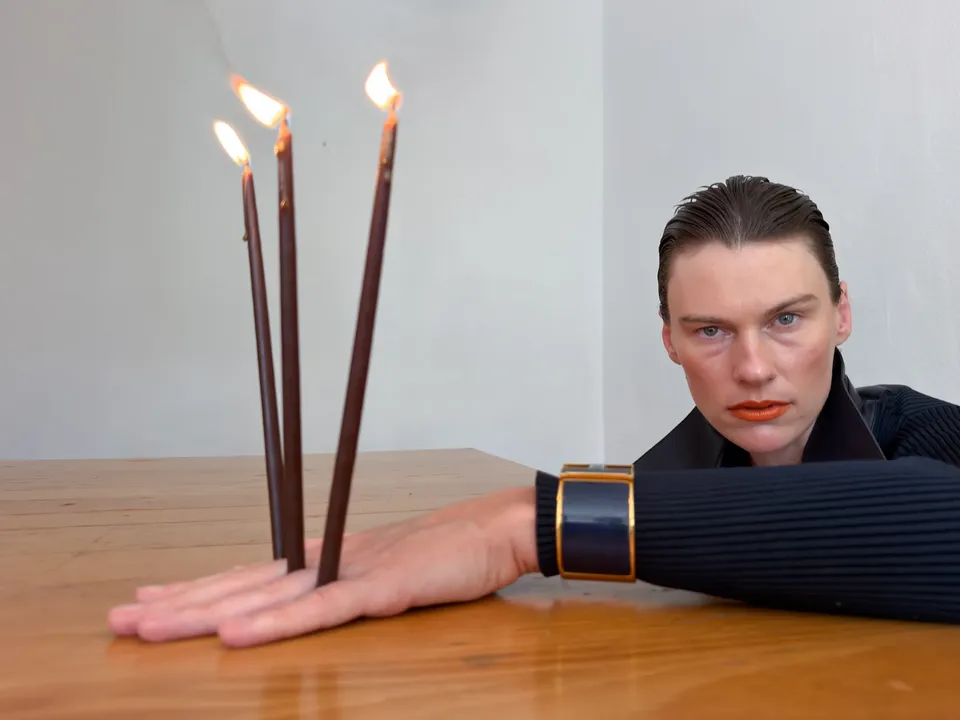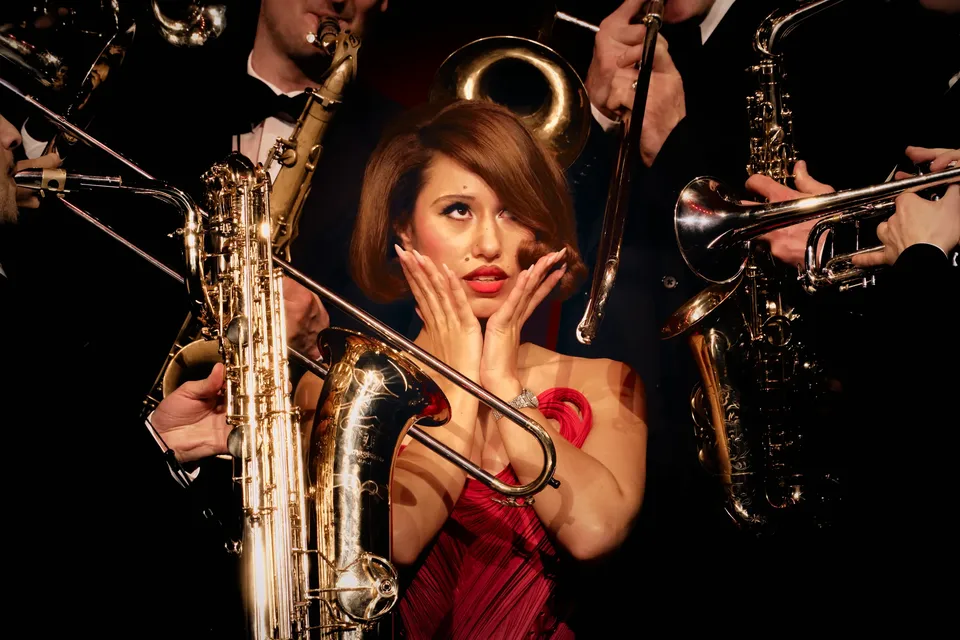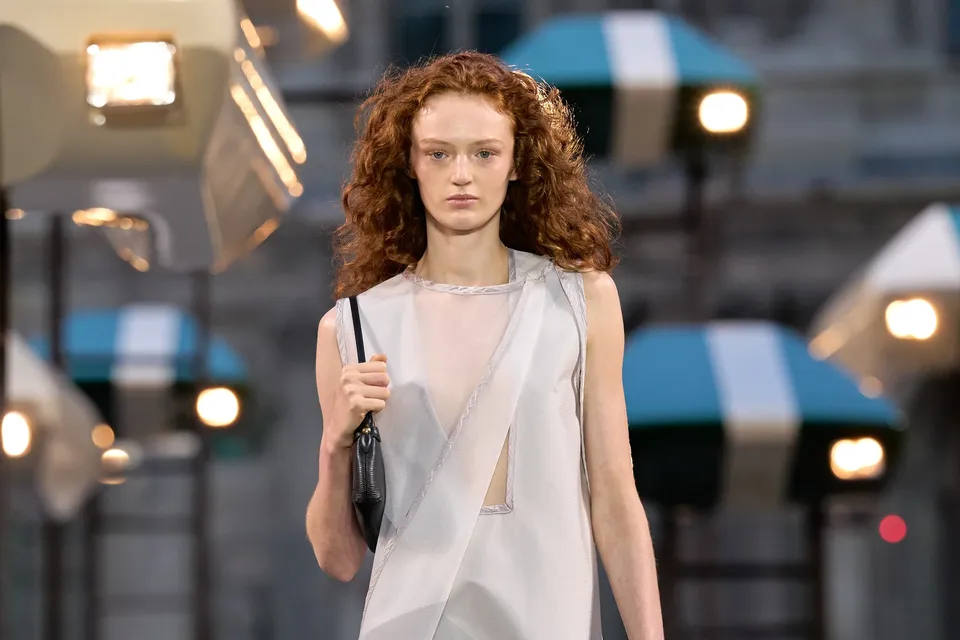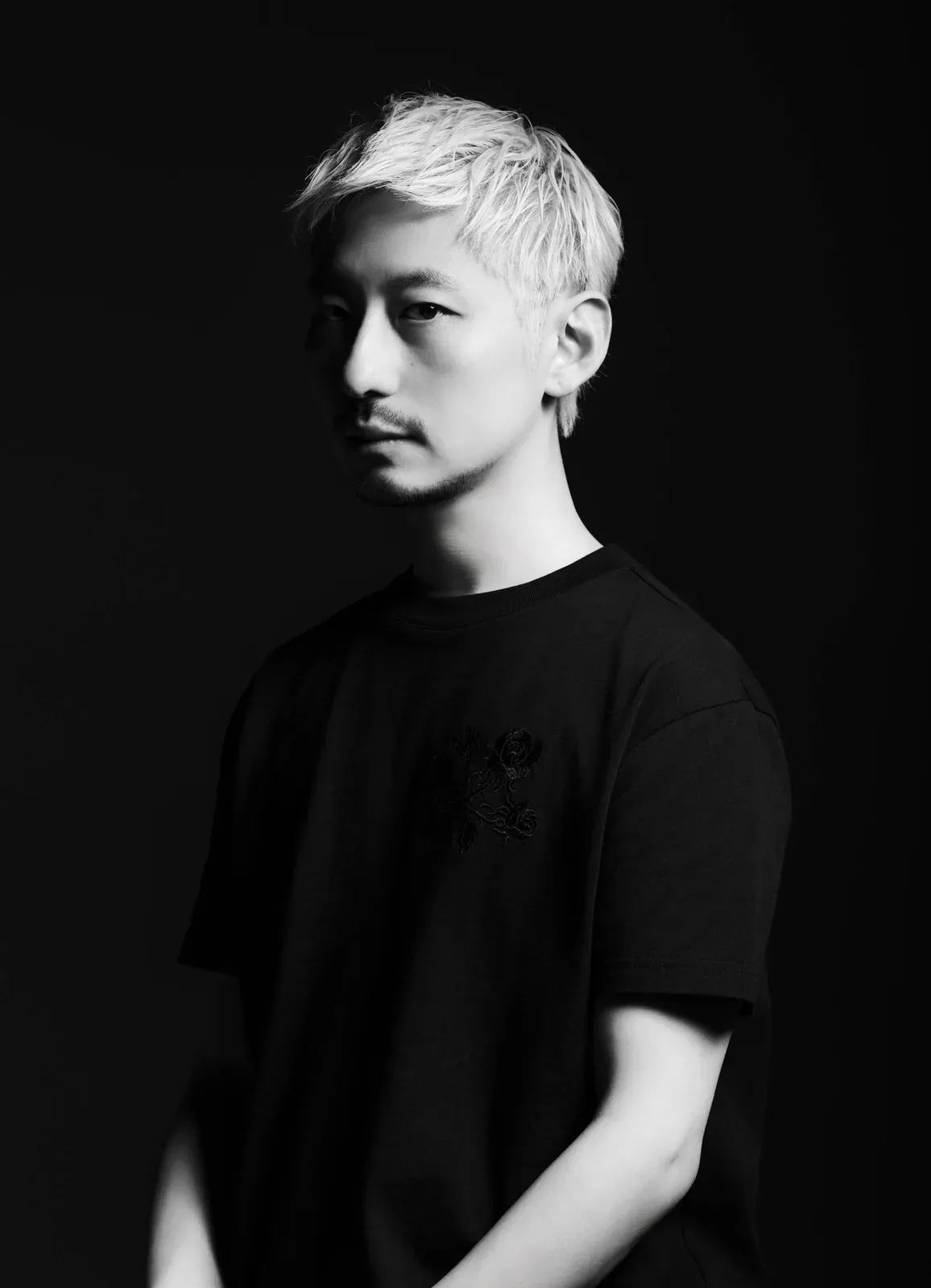
Nothing is fully defined. Fashion often demands clarity: categories, aesthetic codes, precise definitions. He, however, makes room for the unresolved. That being Viviano Sue. In the silhouettes that emerge from this uncertainty, a sense of loneliness, a sense of childhood, or a soft self-assurance sometimes comes to the fore. Thus, the garments cease to be merely what the eye sees, to transform into an emotional state that flows on and within the person.
Portrait of Her, Unnamed, your Fall / Winter 2026 collection, feels deliberately unresolved. Why resist naming her?
This collection is dedicated to those who don’t wish to be defined or categorised. For me, uncertainty represents a kind of boundless freedom, so I didn’t want to limit her by giving her a name.
Your work often sits in between states, never fully one thing. Are you drawn to that in-between space?
I think people are often complex and can’t be easily defined. The world isn’t just black and white, and my own background isn’t something that can be explained in a single sentence either. That sense of ambiguity has always been there, and perhaps, without even realising it, I’ve always been drawn to that kind of uncertainty.
There’s a subtle confidence in not defining identity too clearly. Do you see ambiguity as a strength?
I haven’t consciously framed it that way, but I think it’s true. Ambiguity, and not being fixed, keeps everything open. In that sense, it becomes a strength, giving us the freedom to be more fearless. Perhaps that’s also where my confidence comes from.
Your collections bring fantasy into the everyday. Is that an escape, or a way of reshaping reality?
Maybe. There are times when I don’t really want to look at the news; so much of it can feel heavy and disheartening. I think a lot of people feel the same, wanting to step away from reality, even just for a moment. But what I’m trying to do isn’t just about escape. It’s more about sharing a sense of joy. When I put on something I love, I feel a kind of happiness, and I want more people to experience that. Perhaps that’s my way of reshaping reality.
Tulle becomes almost casual in your hands. What happens when something precious is made ordinary?
I’ve always loved eveningwear. Making couture techniques and fabrics like tulle part of the everyday is something our brand has been exploring for a long time. I hope these pieces can bring a sense of elevation to daily life, turning something ordinary into something a little more special. In the end, it goes back to what I mentioned before: sharing that sense of joy.
You chose Tokyo over the traditional fashion capitals like Paris and London. What does building a brand there change?
It was partly down to circumstance. I studied fashion in Japan, and somehow, I ended up starting everything here. Tokyo isn’t the easiest place to build a brand as a foreigner; it can be quite challenging. Sometimes I wonder if things might have been more straightforward in one of the traditional fashion capitals. Maybe everything would have been simpler, in a way. But at the same time, I’m not sure I would have reached this point if I had started somewhere else. I tend to believe that things happen for a reason, maybe everything unfolds the way it’s meant to. That might sound a bit superstitious.
Do you feel like fashion is still centralised around the Big Four, or is that structure already shifting?
Maybe you were expecting a different answer, but I do think it’s still centred around the Big Four, especially Paris. For a designer brand, that remains the ultimate stage. Of course, being based in Japan gives us a strong foundation. The market here allows us to sustain and operate the brand. But to grow further, visibility is key. We need more people to see the work in order to create more opportunities. So naturally, it’s still something we’re working towards.
As a Chinese-American designer in Tokyo, where do you feel most at home?
That’s a good question (laughs). For me, home isn’t really a place. It exists in those quiet, personal moments: sitting on my bed with a book I love, talking with my loved ones, or lying down with music I love playing and my eyes closed. That’s when I feel at home.
Your work feels playful but never superficial. How do you keep that balance?
It’s honestly quite difficult to put into words. I don’t always start from a purely visual point when I design. Each collection begins from a sense of chaos, something that’s very much at the core of my brand. Every season, I take that internal confusion and work through it until it becomes something tangible. I don’t like to simply replicate references. I prefer to absorb and process what I’m drawn to, and then create from that place. Maybe that’s what helps keep the balance.
What does luxury mean to you right now?
In a world saturated with material things, luxury has, in many ways, become tied to the fulfilment of desire. But I don’t think luxury is defined by the price of something. To me, it’s more about a feeling. If something feels luxurious to you, then it is, regardless of its value. I think it ultimately comes down to each person’s own perception.
Your silhouettes often feel architectural. Are you constructing or deconstructing the body?
I see my work as being centred around the body. I’ve always felt that fashion is different from art. Many artworks don’t need to be functional, but clothing does. When I design, I’m always thinking about how it will feel and look when worn. In this collection, I experimented a lot with three-dimensional cutting, which allowed me to further explore the relationship between fabric and the body. So, in a way, it’s less about constructing or deconstructing, and more about engaging with the body itself.
Have you ever felt pressure to make your work more easily understood?
In the early stages, yes, there was some pressure. The core of our brand is chaos; within a single collection, there can be masculine strength, feminine softness, everyday pieces, eveningwear, even couture-level gowns. In Japan, there’s often a tendency to define and categorise, and because our work resists that, it hasn’t always been easy for people to understand. But when you stay committed to something long enough, that chaos eventually becomes your language, your identity. So now, I don’t really worry about it anymore. I feel like if someone wants to understand, they will, eventually.
As your brand grows globally, how do you protect its ambiguity?
I don’t think that will change. What I was doing years ago and what I’m doing now are essentially the same. From the initial idea of a collection to the final show, the process hasn’t really shifted, and I don’t see that changing going forward. If anything, I feel that this sense of ambiguity will only become stronger as the brand grows. A larger, more global context brings more possibilities, not fewer. So rather than disappearing, that ambiguity becomes even more intense.
If this collection were a space, what would it feel like to walk through it?
Walking through it would feel like moving through a space of chaos, but with a sense of excitement. And beyond that, I hope you would find a place that belongs to you, a space where you can feel safe and experience a sense of joy.
Are we moving toward clearer identities in fashion or further away from them?
I think the broader direction of fashion is moving toward greater diversity. But on an individual level, it can actually lead to a clearer sense of identity. I see fashion as a kind of tool, almost like a weapon for self-expression. In a world where we’re surrounded by endless choices, we have more opportunities than ever to choose who we want to be, and to become that version of ourselves.