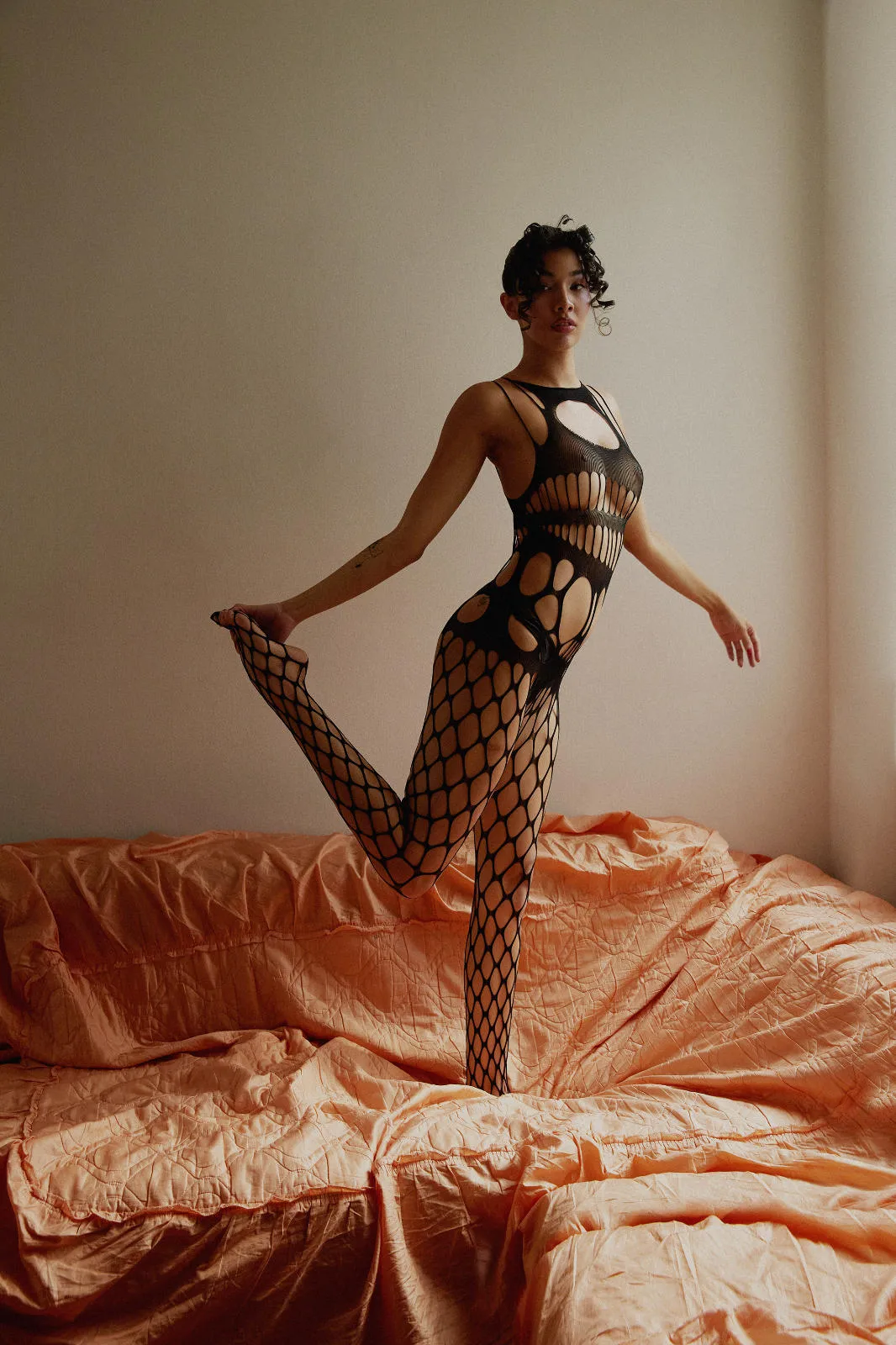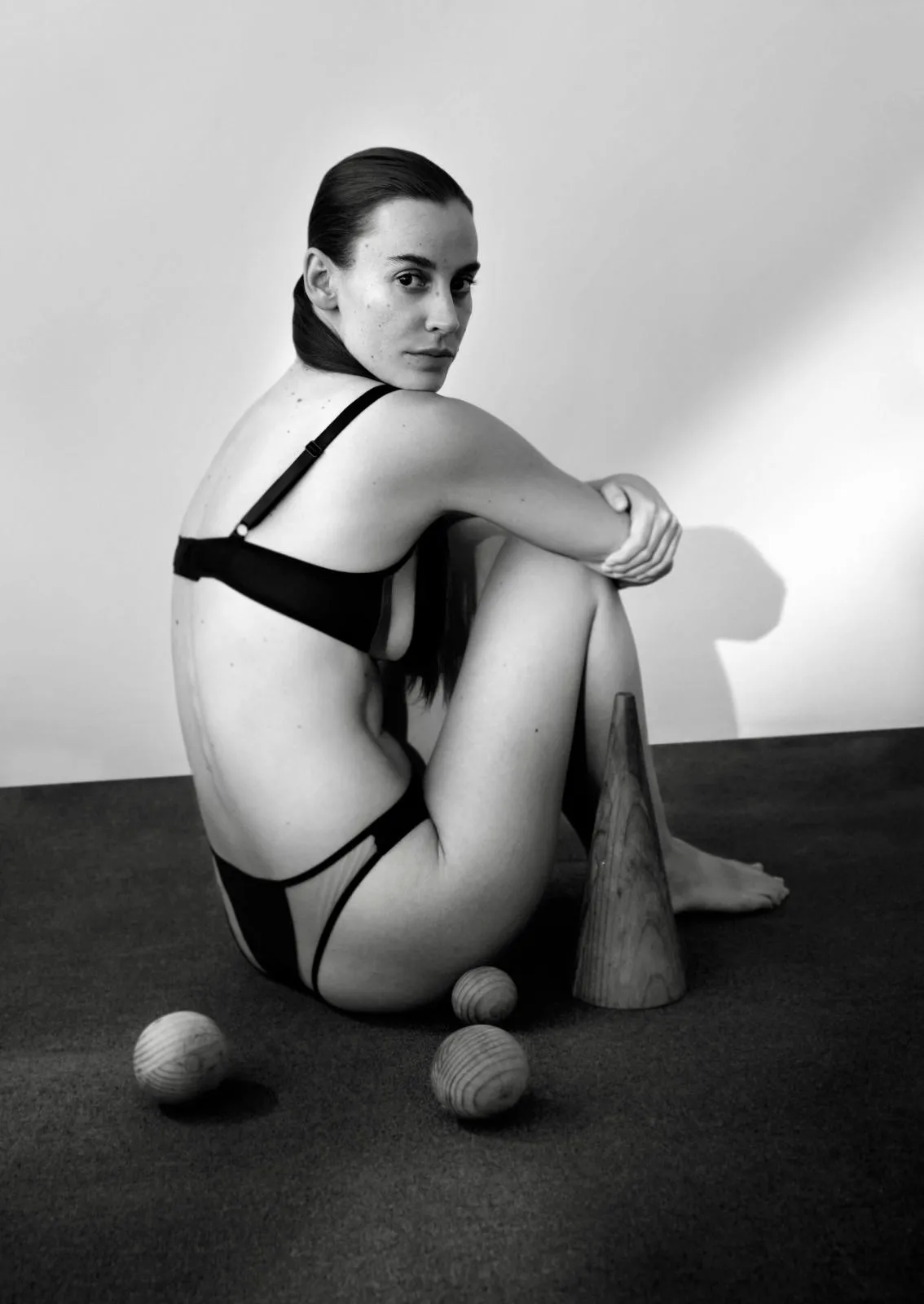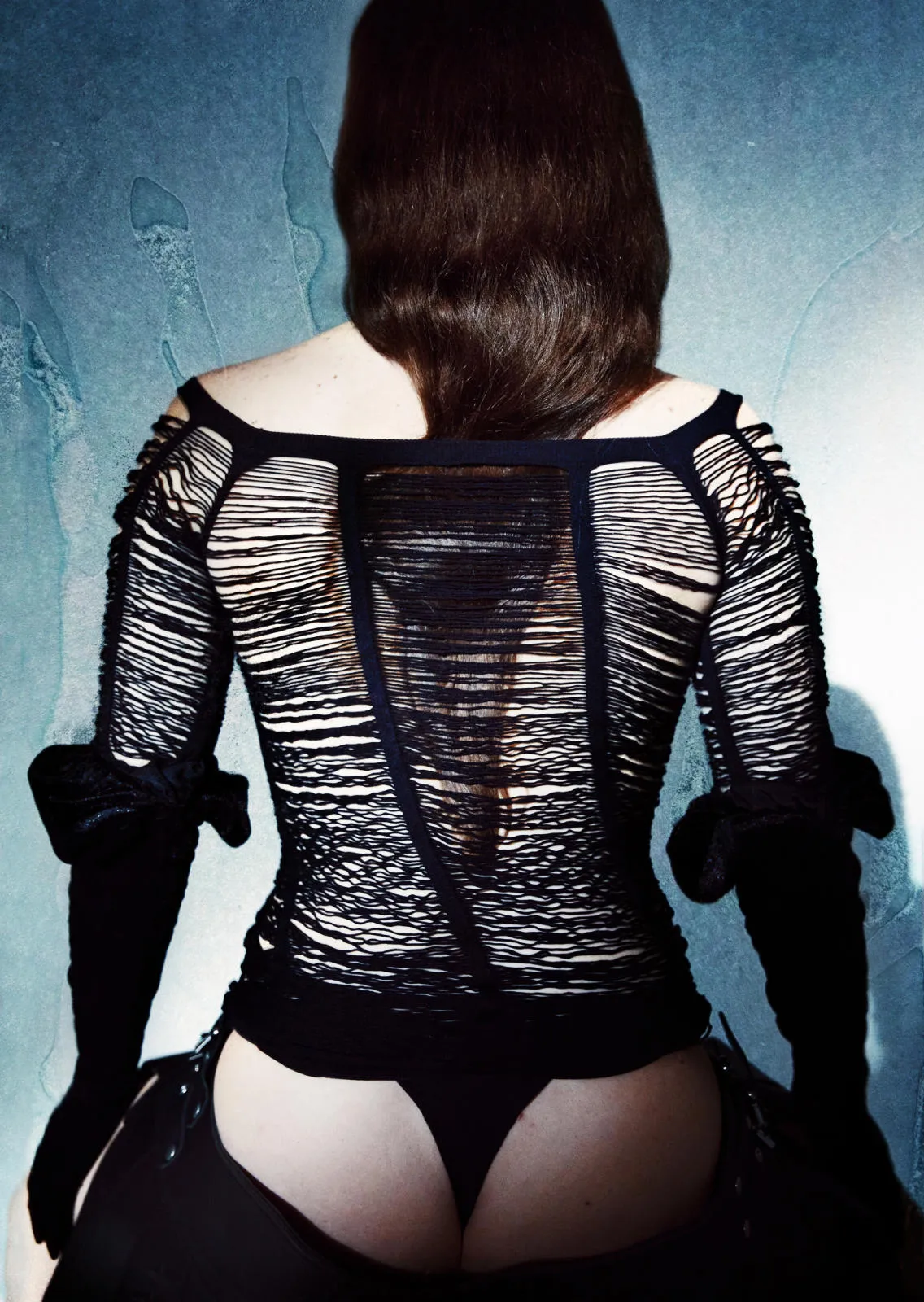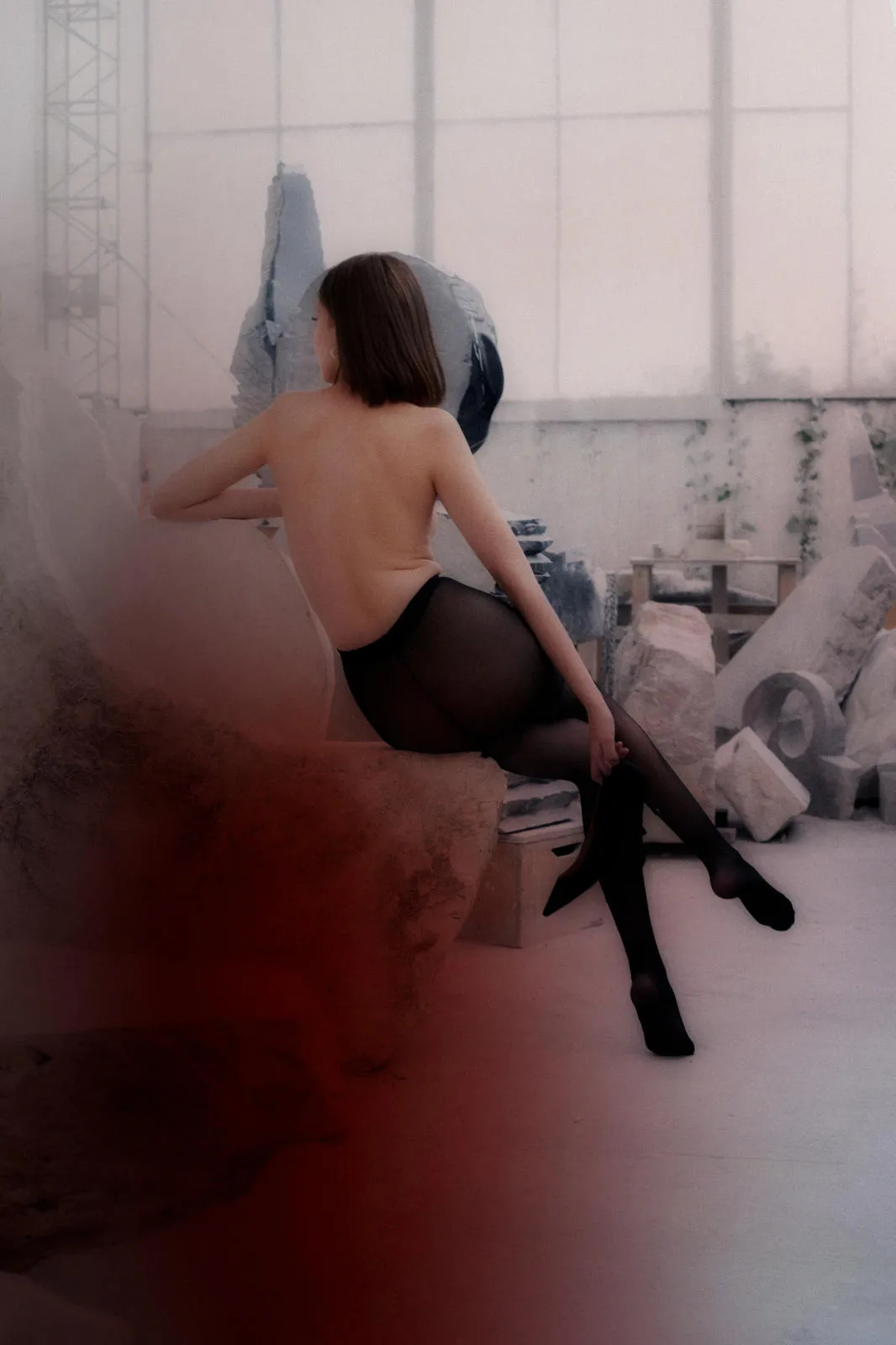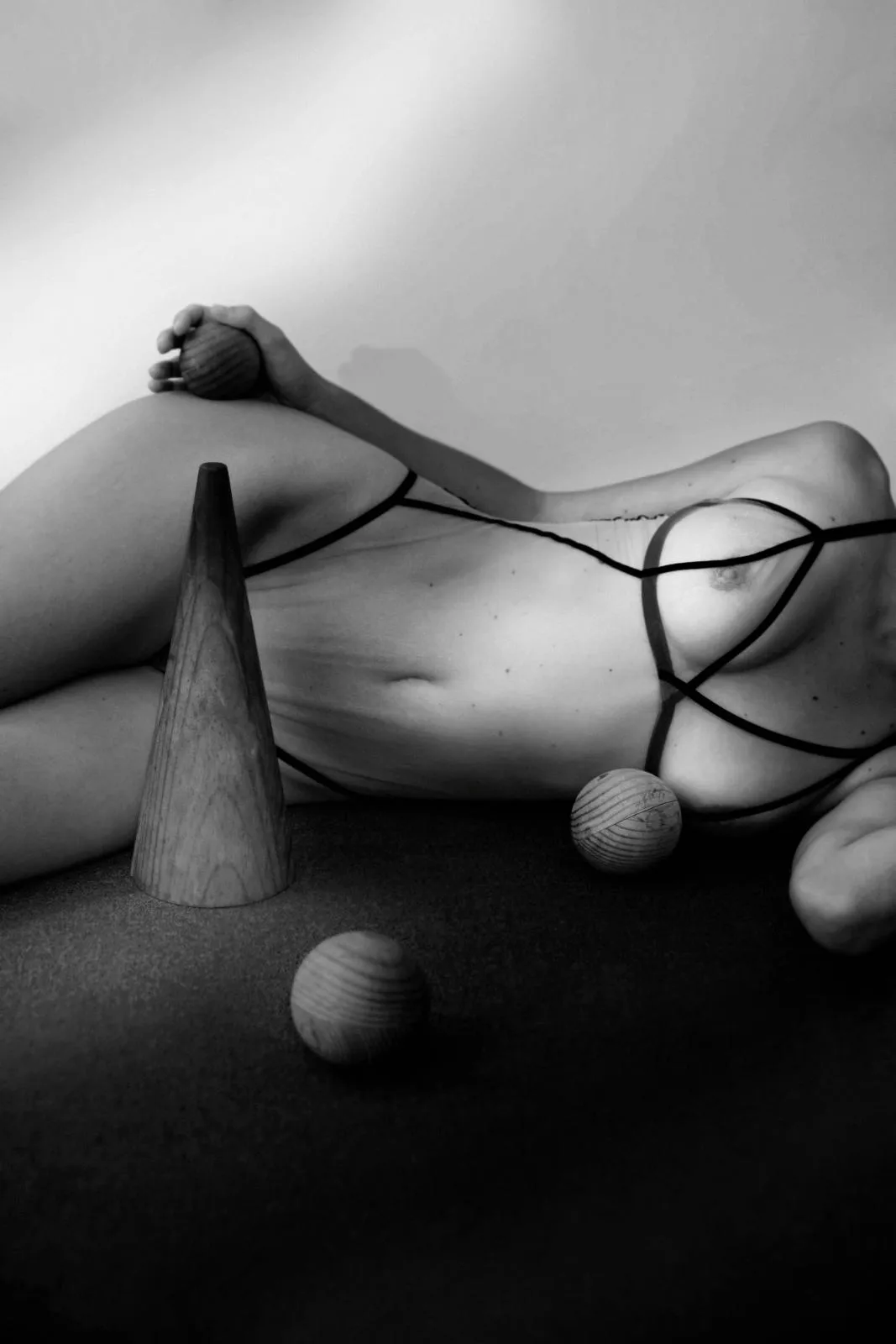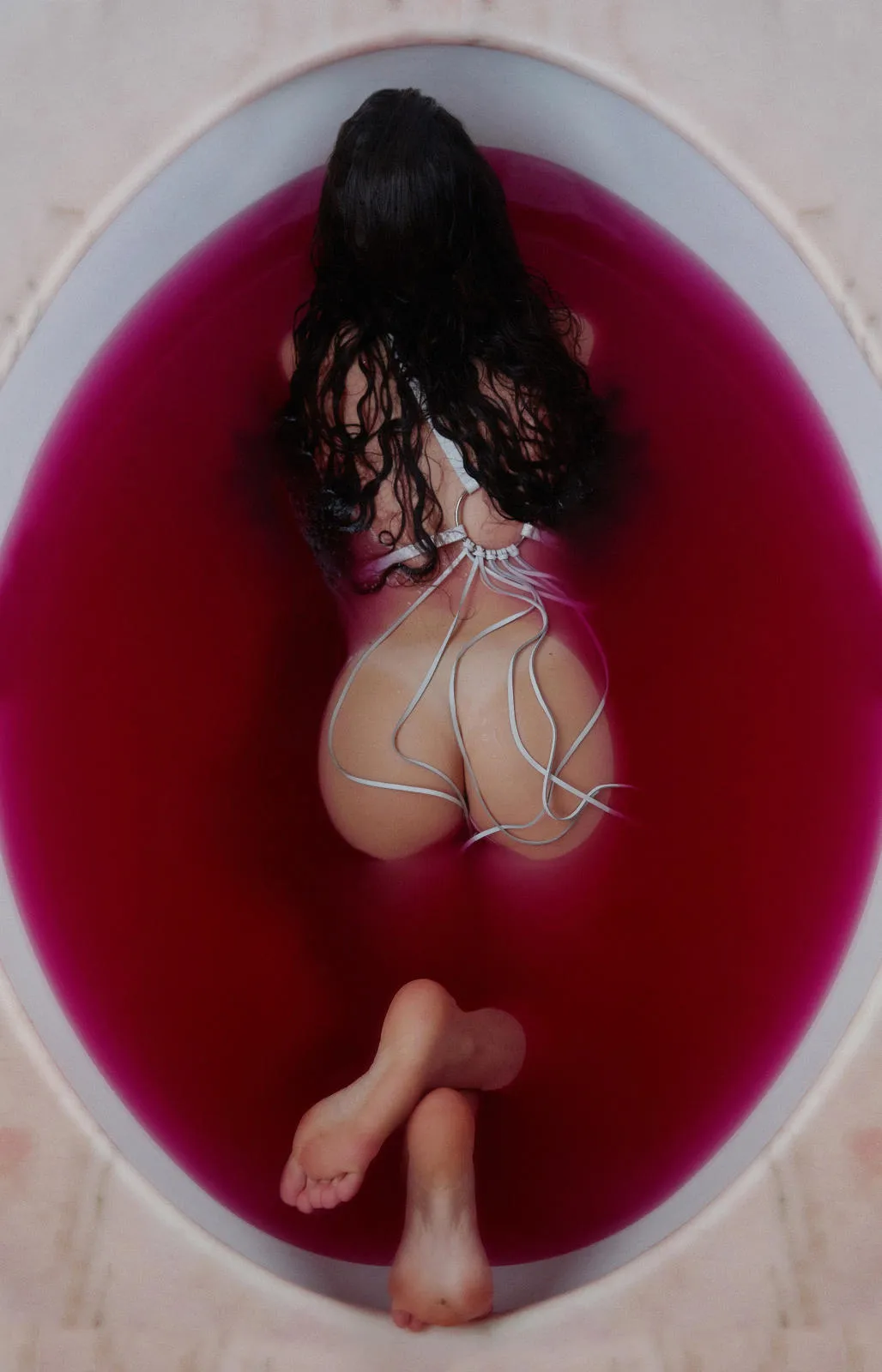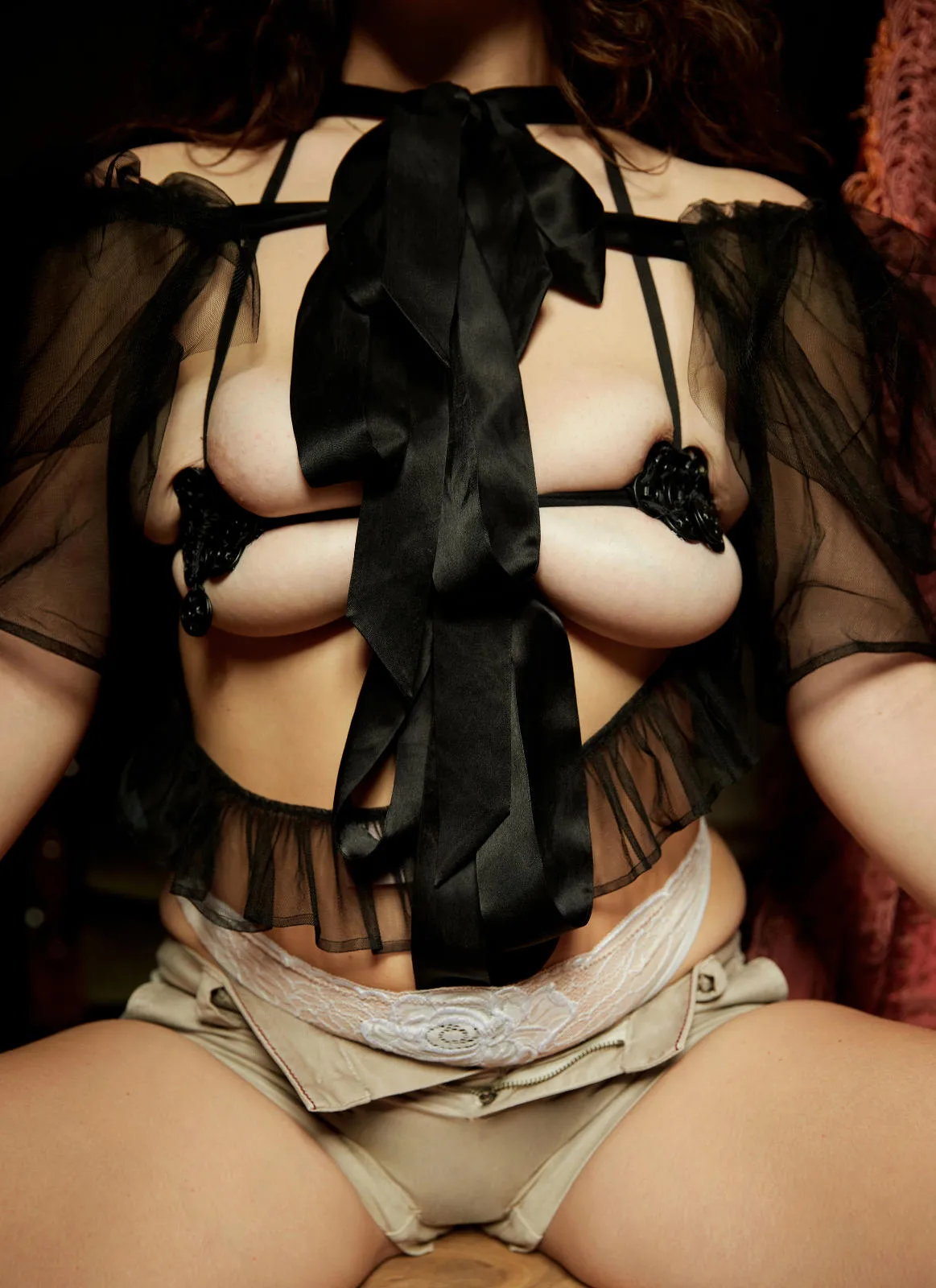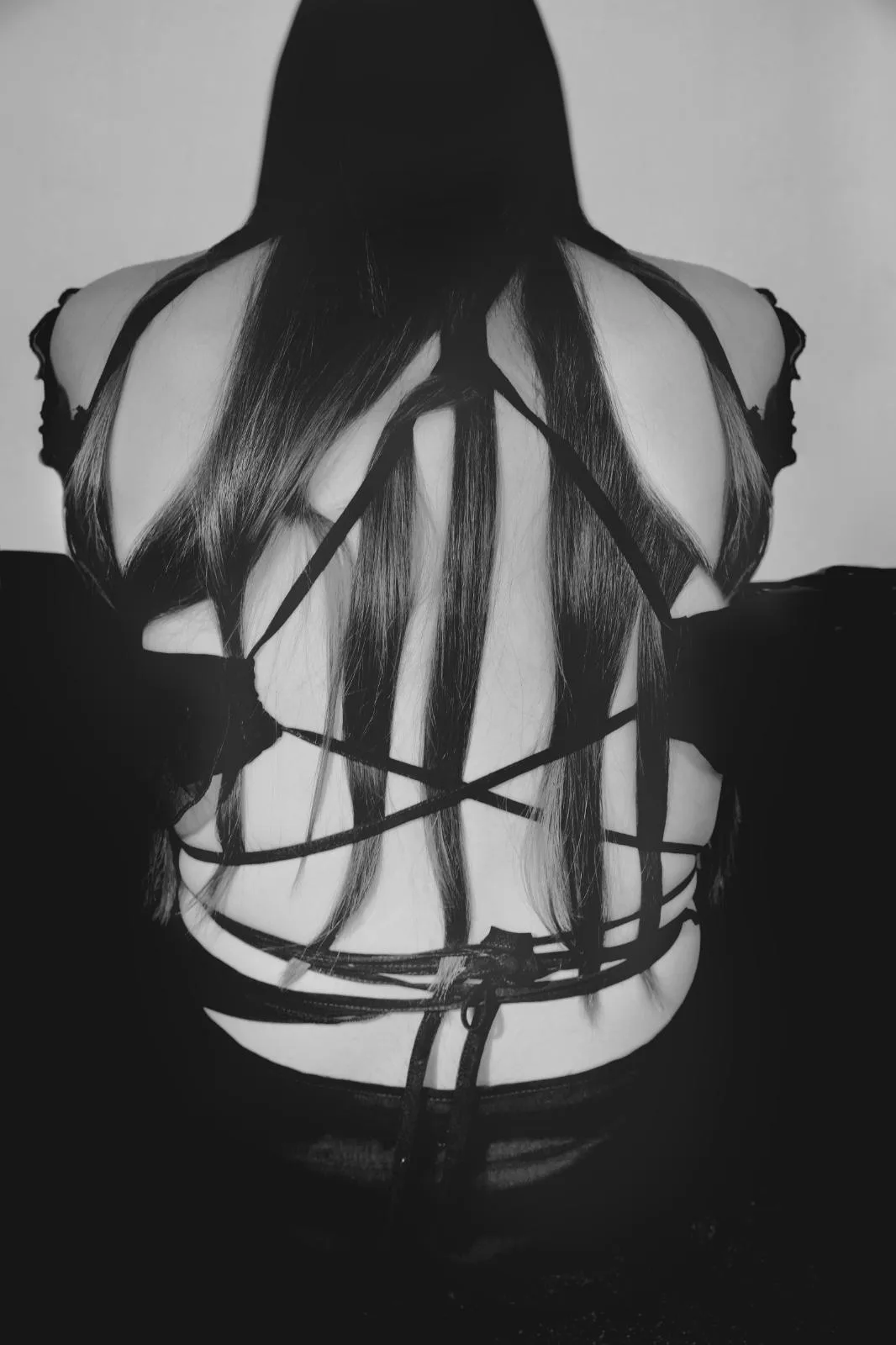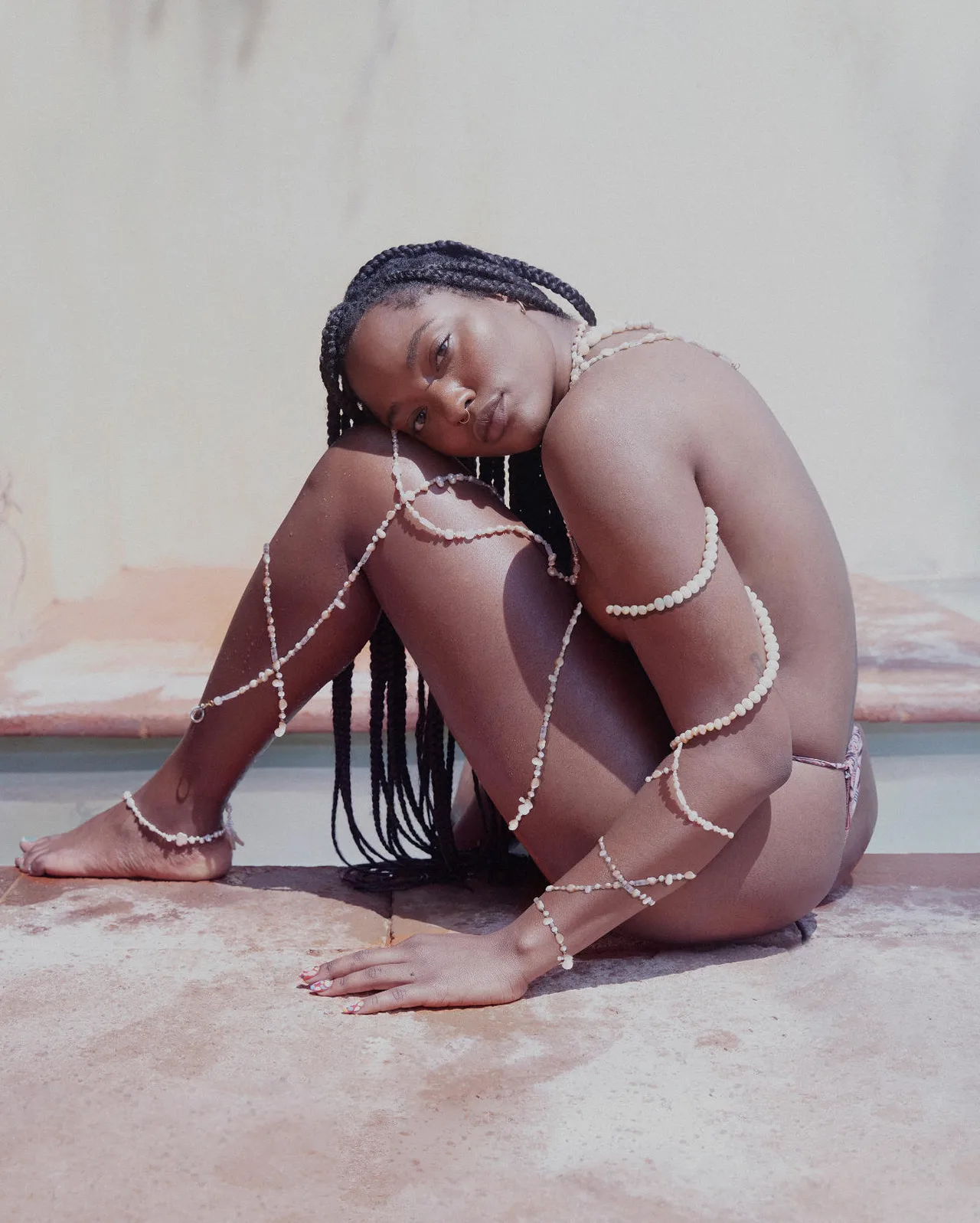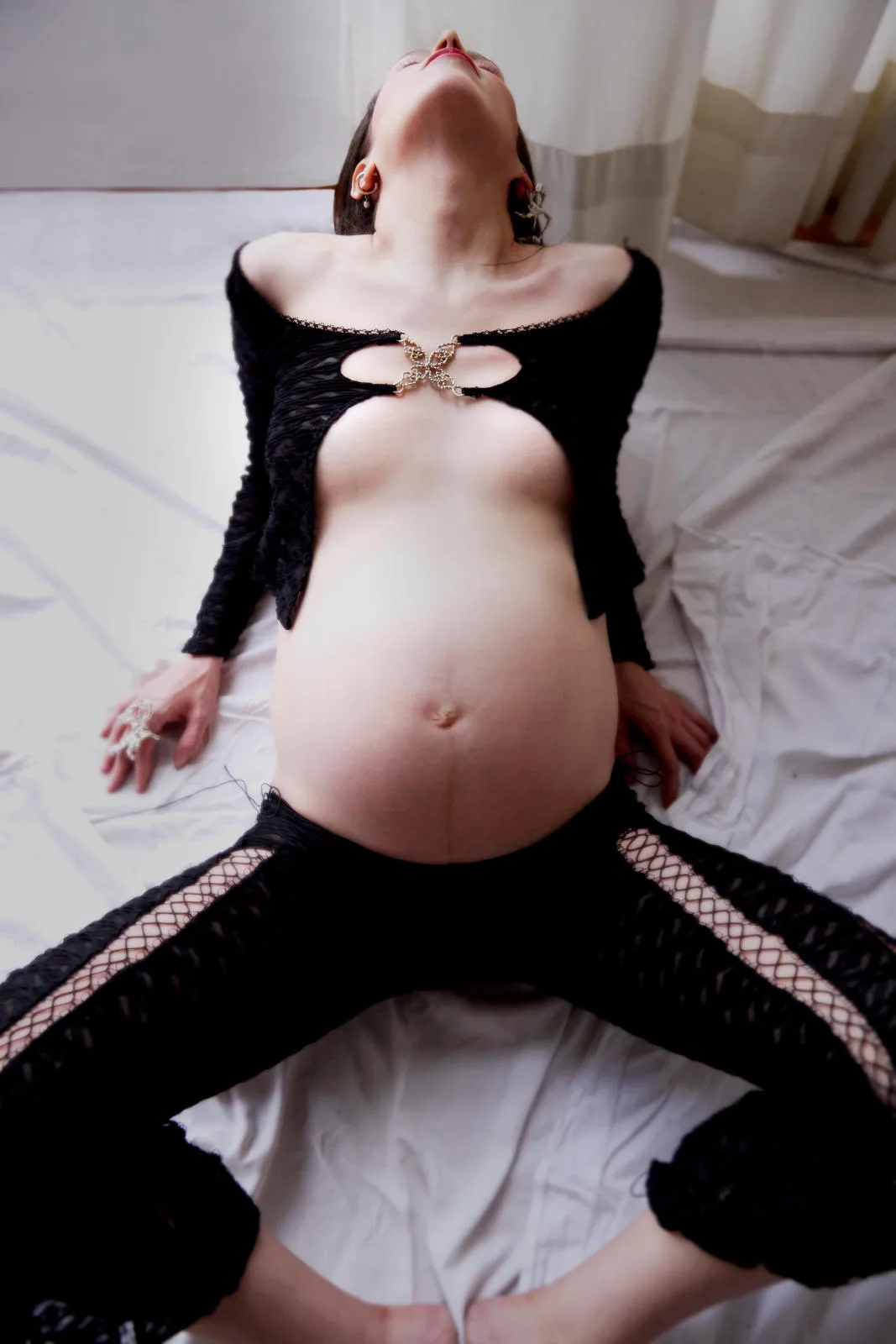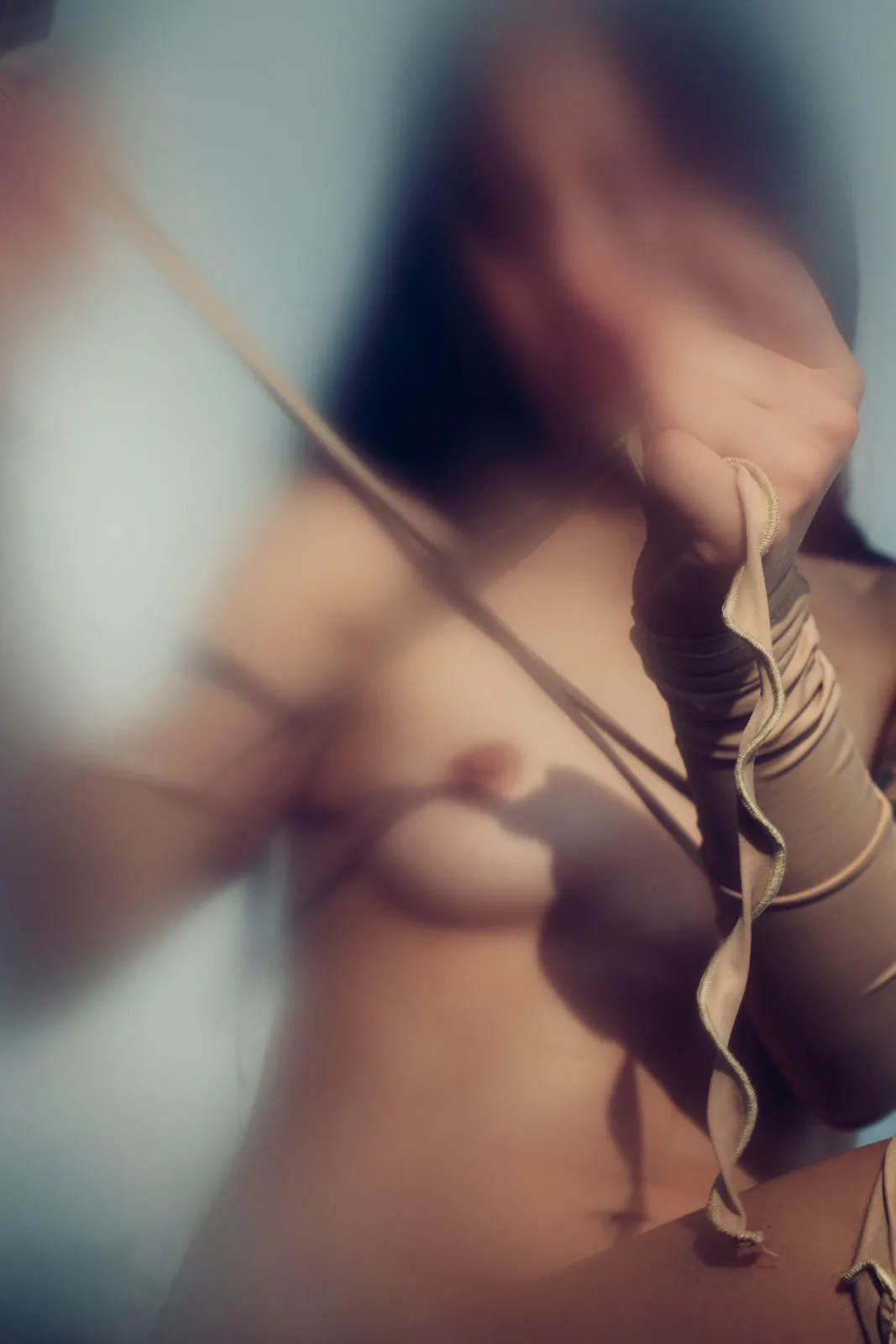
Viridiana relates The Body We Inhabit the way people talk about something they have lived with for years. She describes the project as a cycle that has simply reached its end. What excites her now is that the series she has worked on for the past five years will finally take a physical form. It never began with the idea of turning it into an exhibition. It started because something needed to be worked through, and photography was the only way she knew how.
Most of the campaigns and editorials she works on don’t last long. They move fast — a shoot finished in a few days, a project wrapped in two weeks. Everything starts and ends quickly. This series didn’t. It stayed, shifted, paused, and kept returning, asking for the kind of time her usual work never does. What followed was a slow exploration that moved between personal questions, bodies she wasn’t seeing in her commissioned work, and the instinct to photograph women in ways that didn’t fit the expectations she grew up with. Little by little, the images shaped the project rather than the other way around.
This project marks a shift from your usual fashion work. How did it begin emotionally?
Well, it has been a process — beautiful, but also with moments where, like in life, I felt: I don’t want to do this anymore. And I also left it for years, which is why the exploration took so long. During the pandemic, like for everyone, we were questioning many things. I had already been doing a lot of editorials, a lot of fashion, everything happening very fast. Shooting in Paris, in New York, and it was amazing. But I did feel there was a point where having a very beautiful model, incredible clothes, perfect locations, nothing is going to go wrong. However, I kept questioning: what else? What else do I want to say?
How did your personal relationship with your body shape the project?
I mean, when you’re a photographer, the images you make speak more about you than about what you’re photographing. And I saw myself in them. It brought me back to my eating disorders. I started very young, around eight years old, with this idea of what image you’re supposed to have, how you’re supposed to look. It lasted many years. So yes, it was a question to the body, how it should present itself, what is allowed and what is not.
You describe skin as material in your images. What does that mean for you?
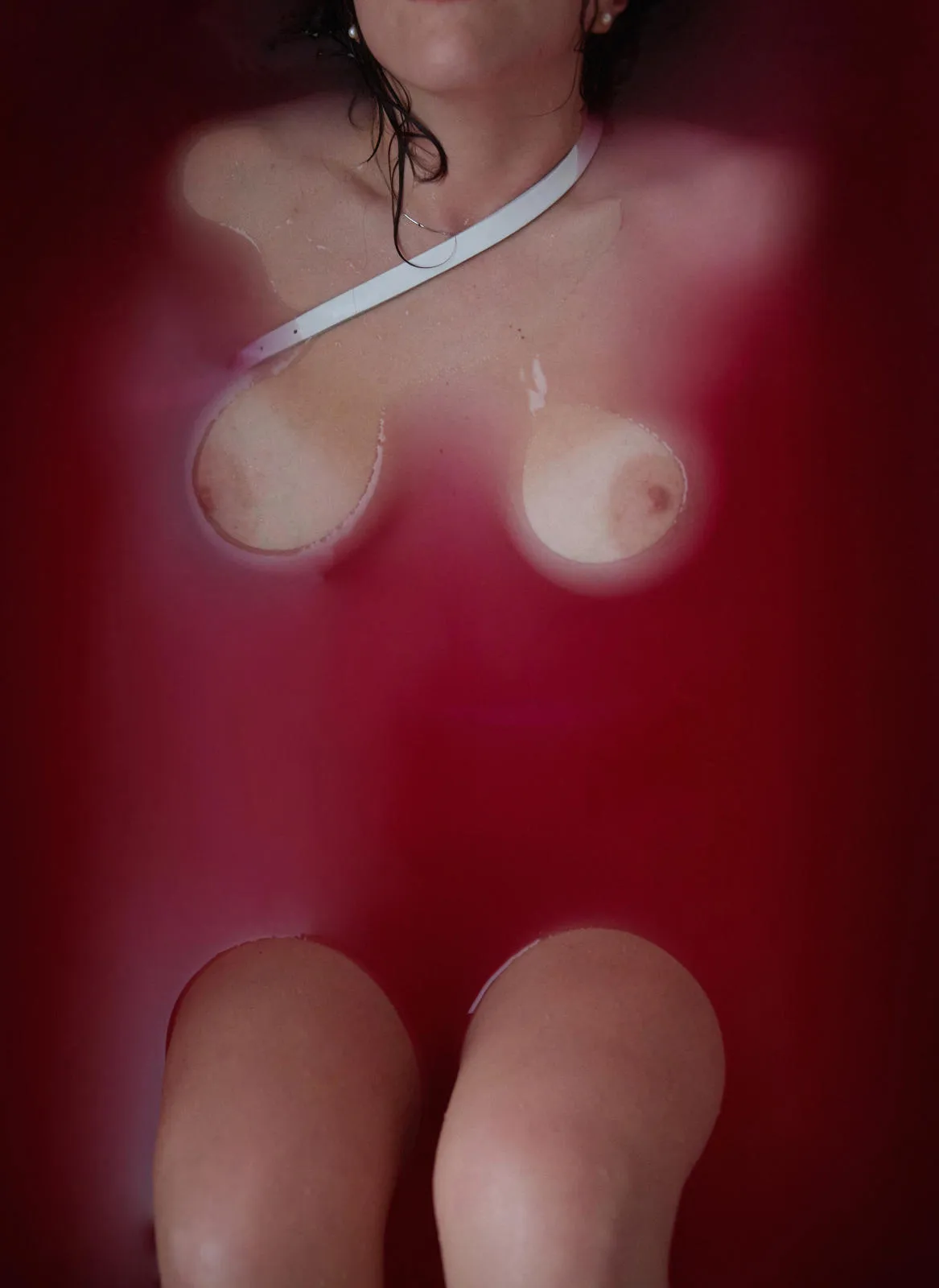
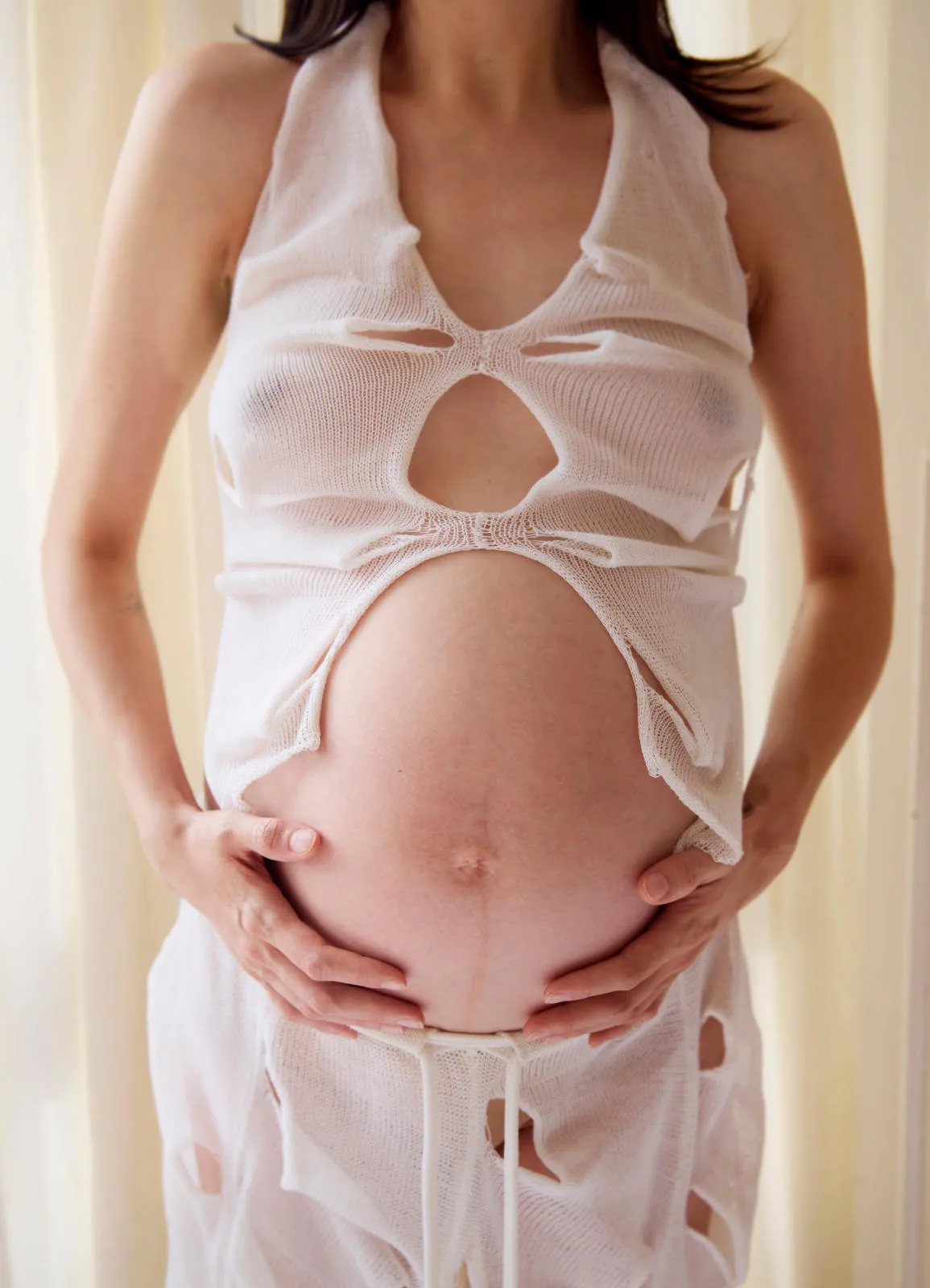
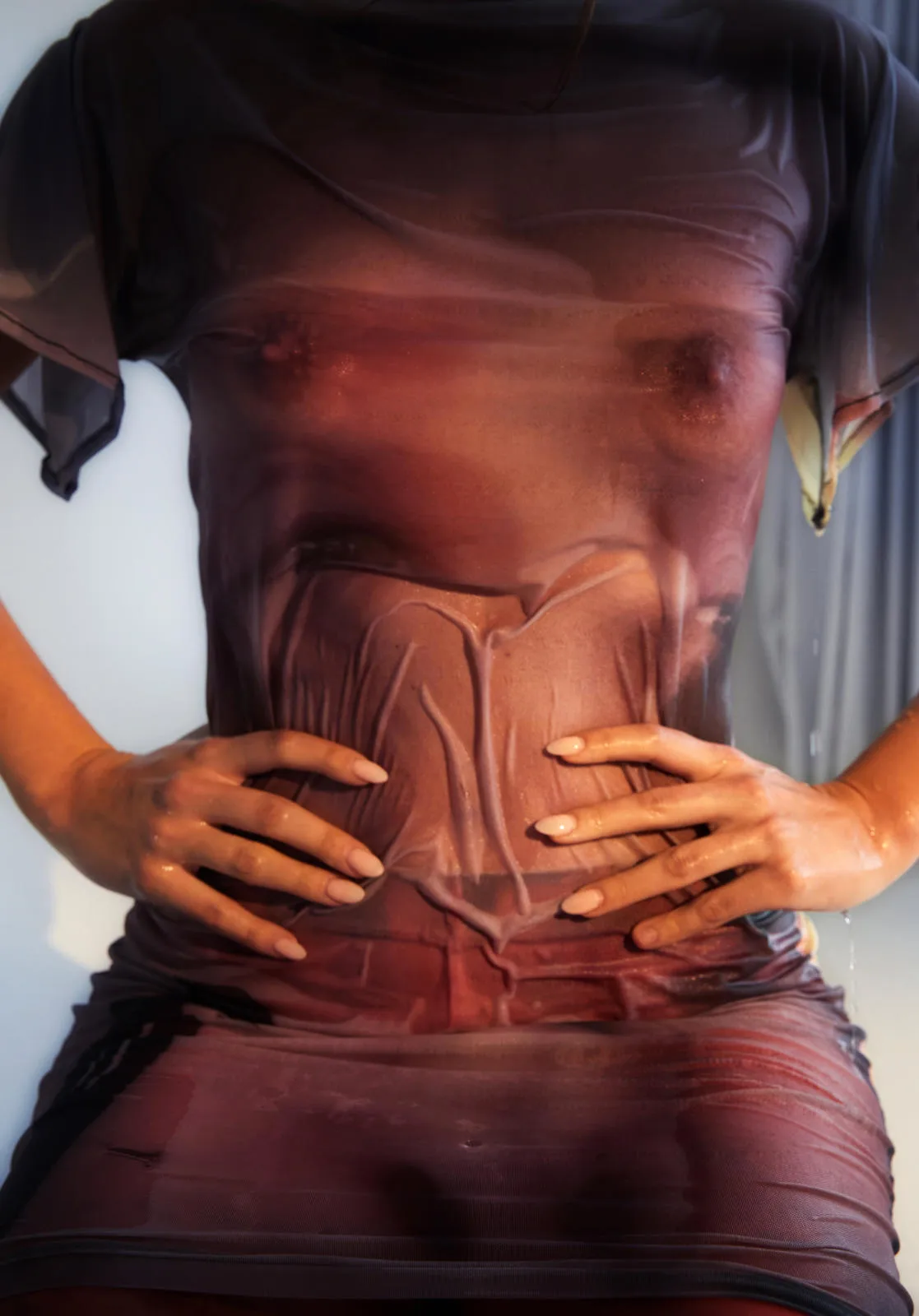
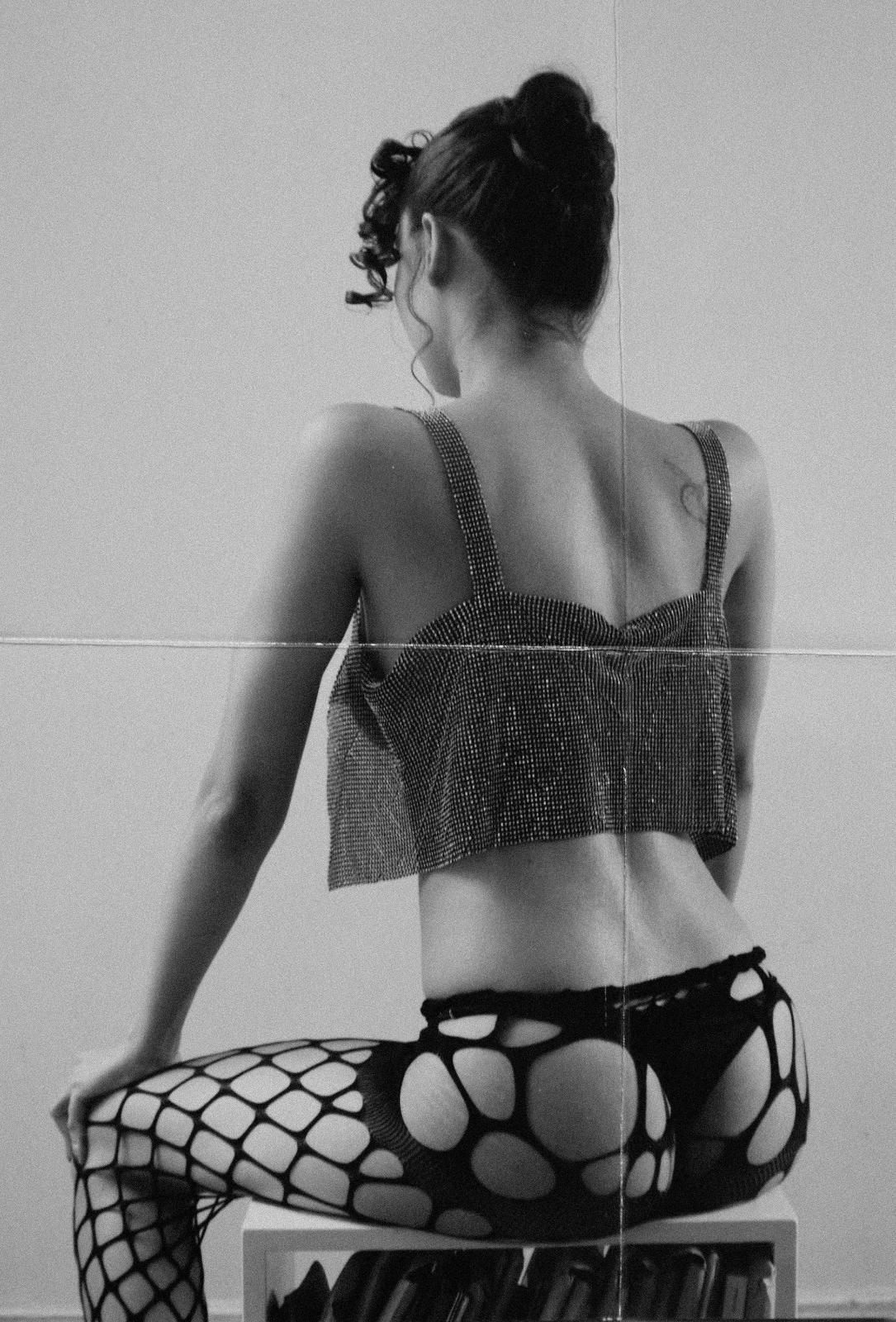
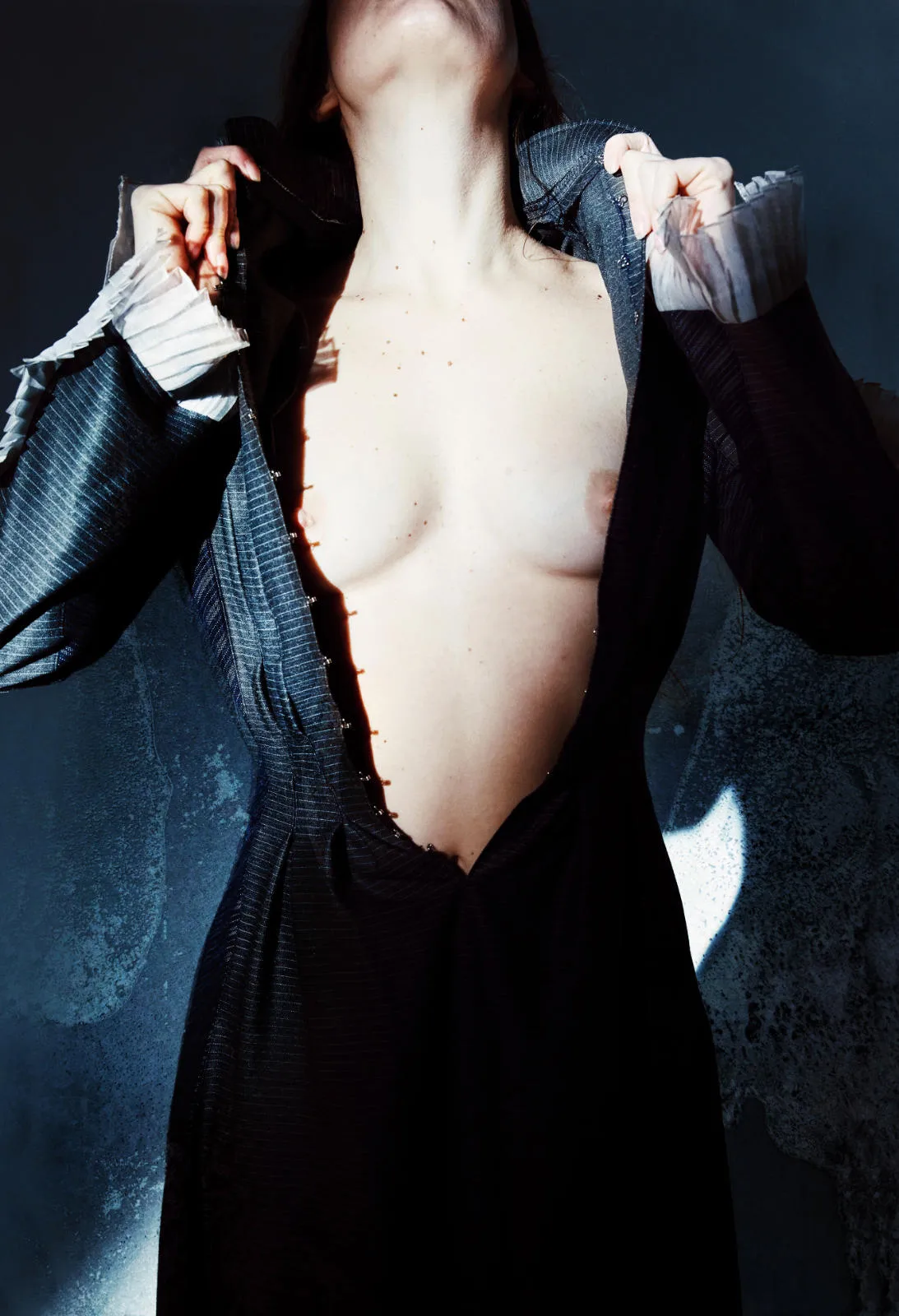
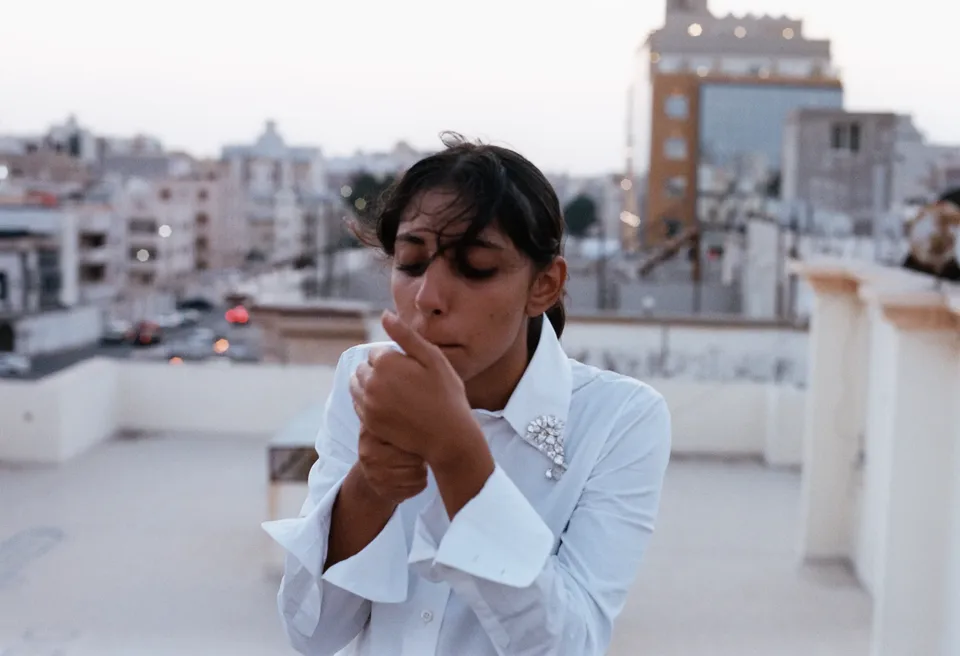
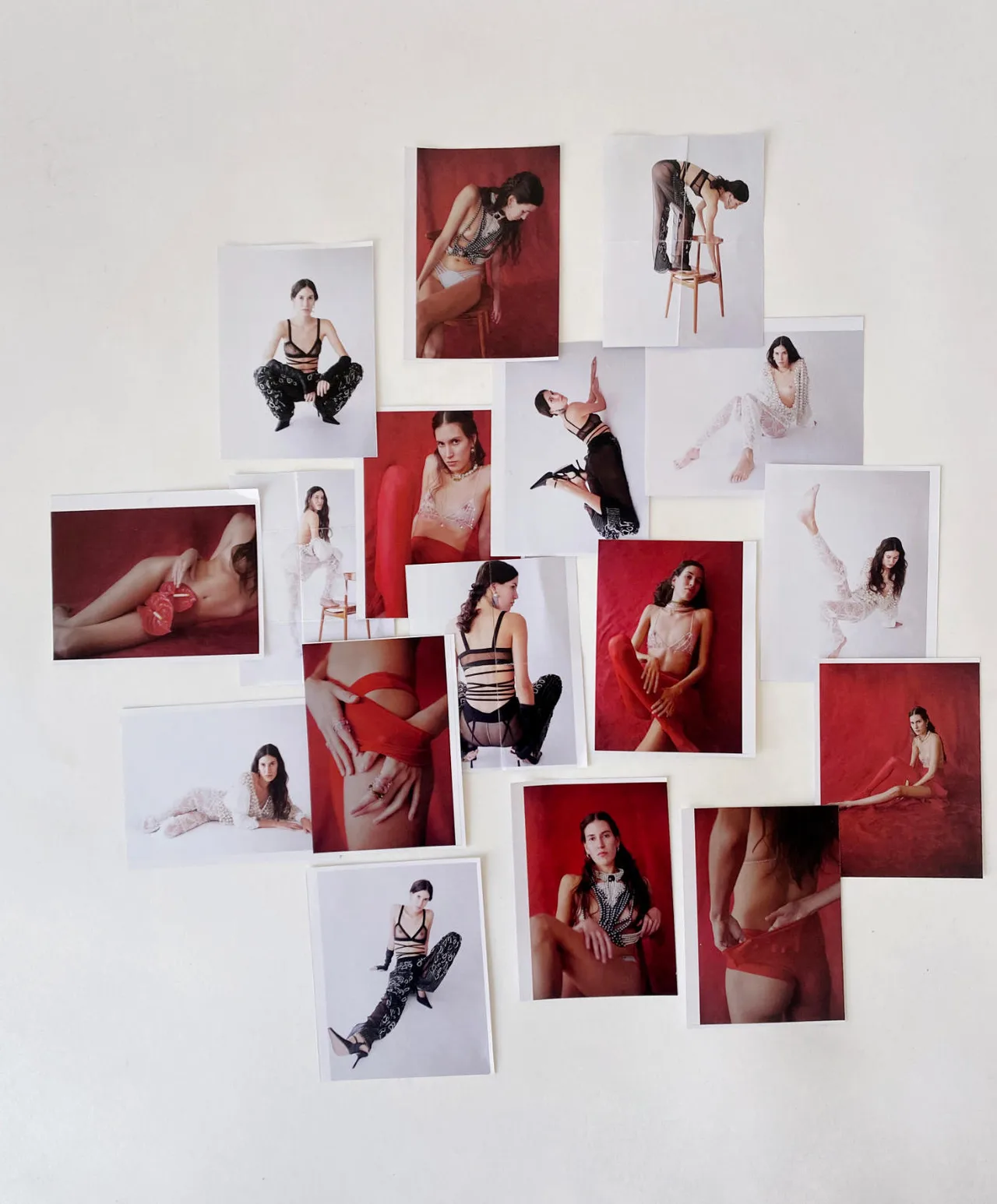
I use these visual resources — tightening, transparencies, wet fabric — symbolically. Tightening the skin, making the skin show. It’s intentional. It’s meant to provoke. What they told you not to show, now we put it in front, in a close-up. I started working with torsos. And wetting the fabric is a stylistic choice. It shows more, it suggests more without being nude.
At what point did the images start forming a narrative for you?
At the beginning there wasn’t really a thread. There was just an intention to say something, but it wasn’t clear to me. The images happened in different moments without a structure. Until 2022, when I casually submitted a group of images to a Photo Vogue contest, and they selected it. That made me think: okay, this might have a narrative. And that motivated me a lot.
The series is structured into three chapters. How did they emerge?
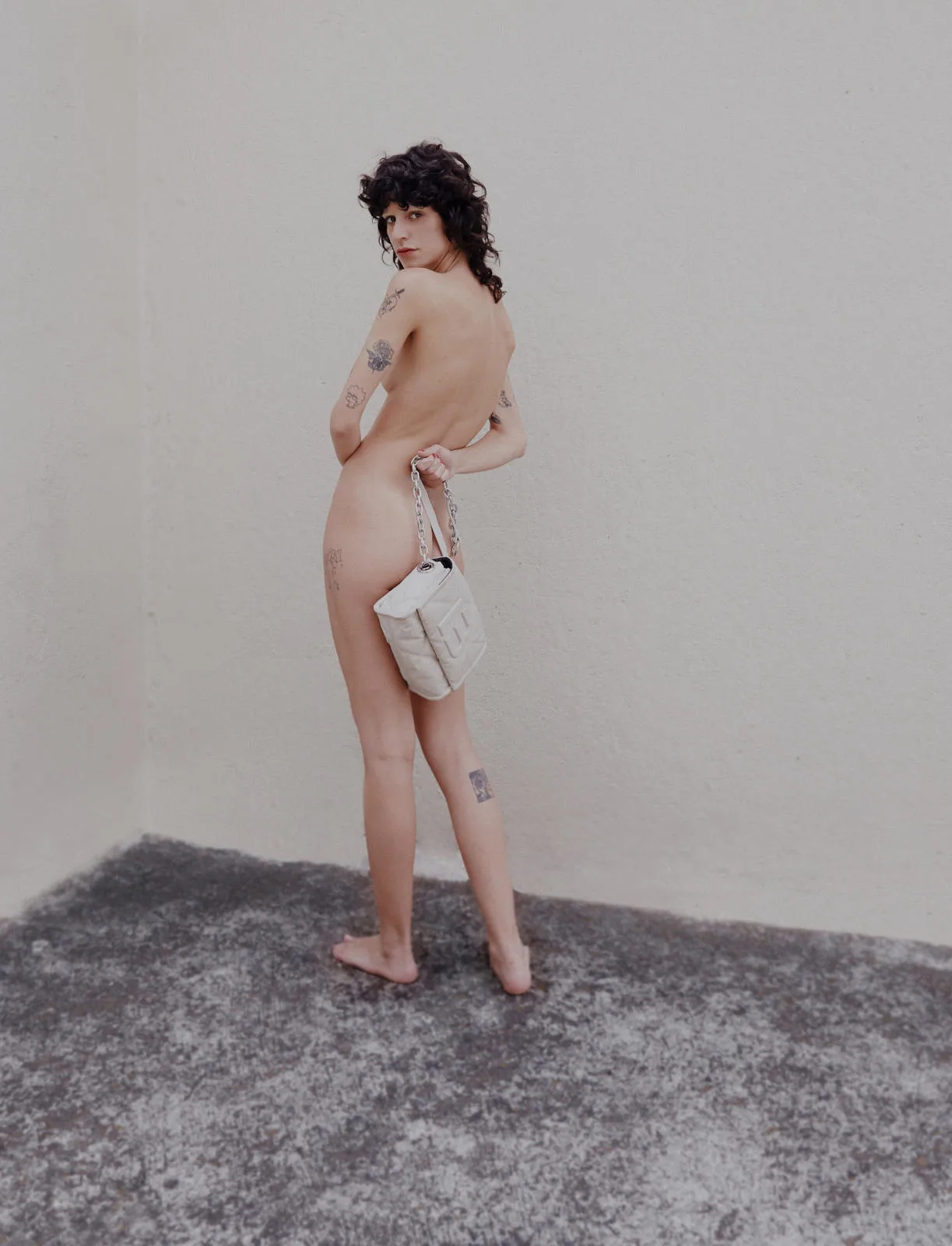
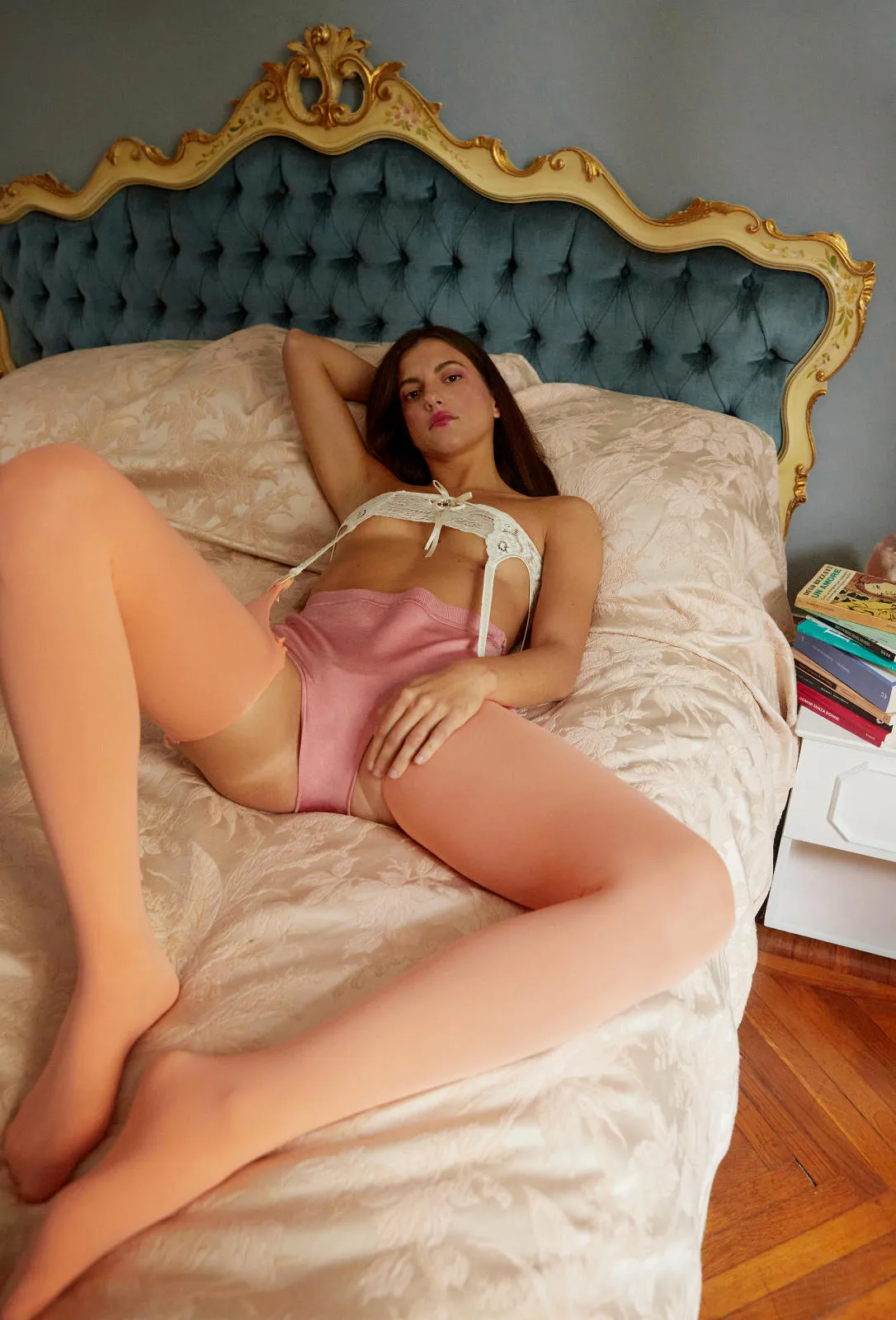
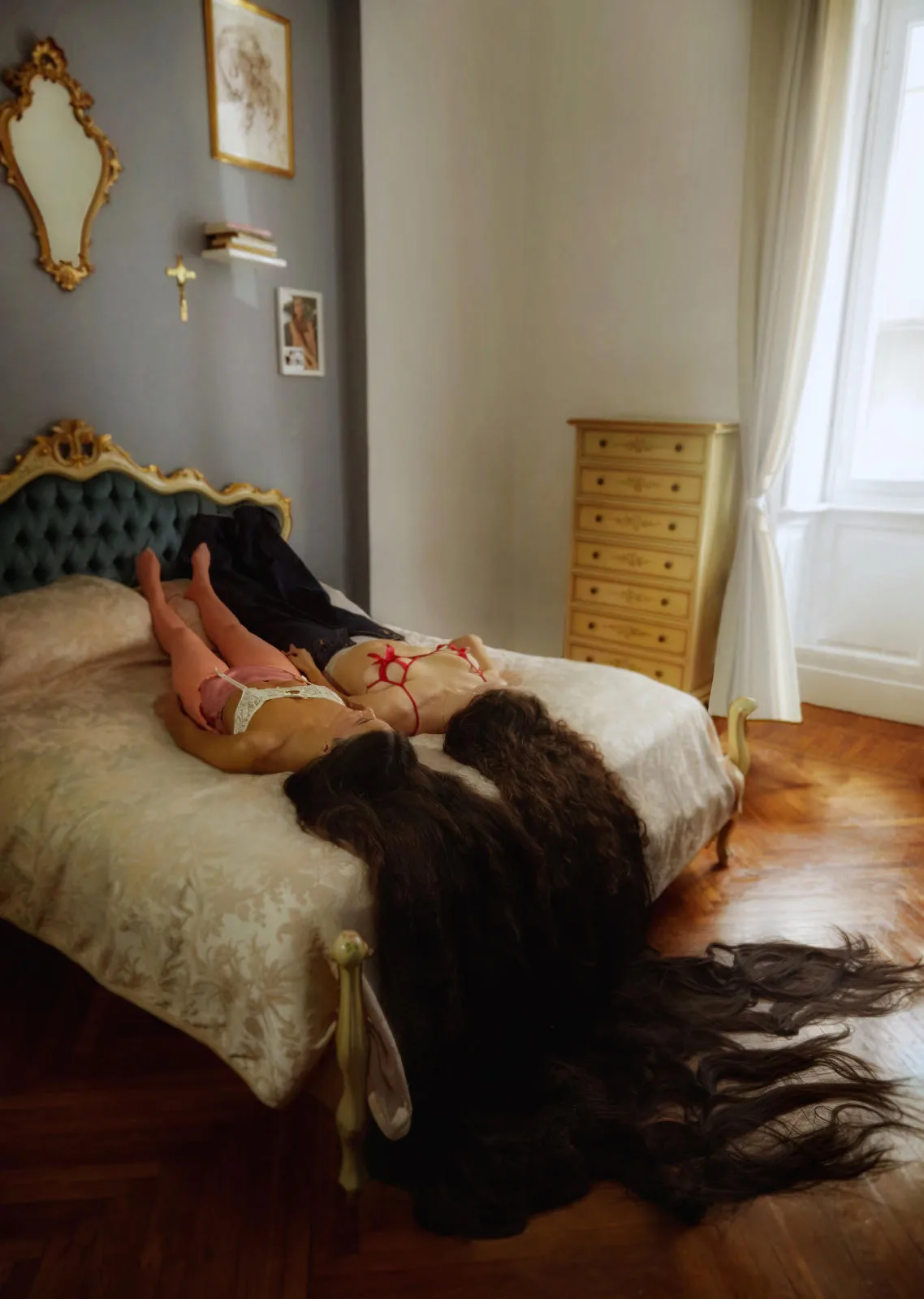
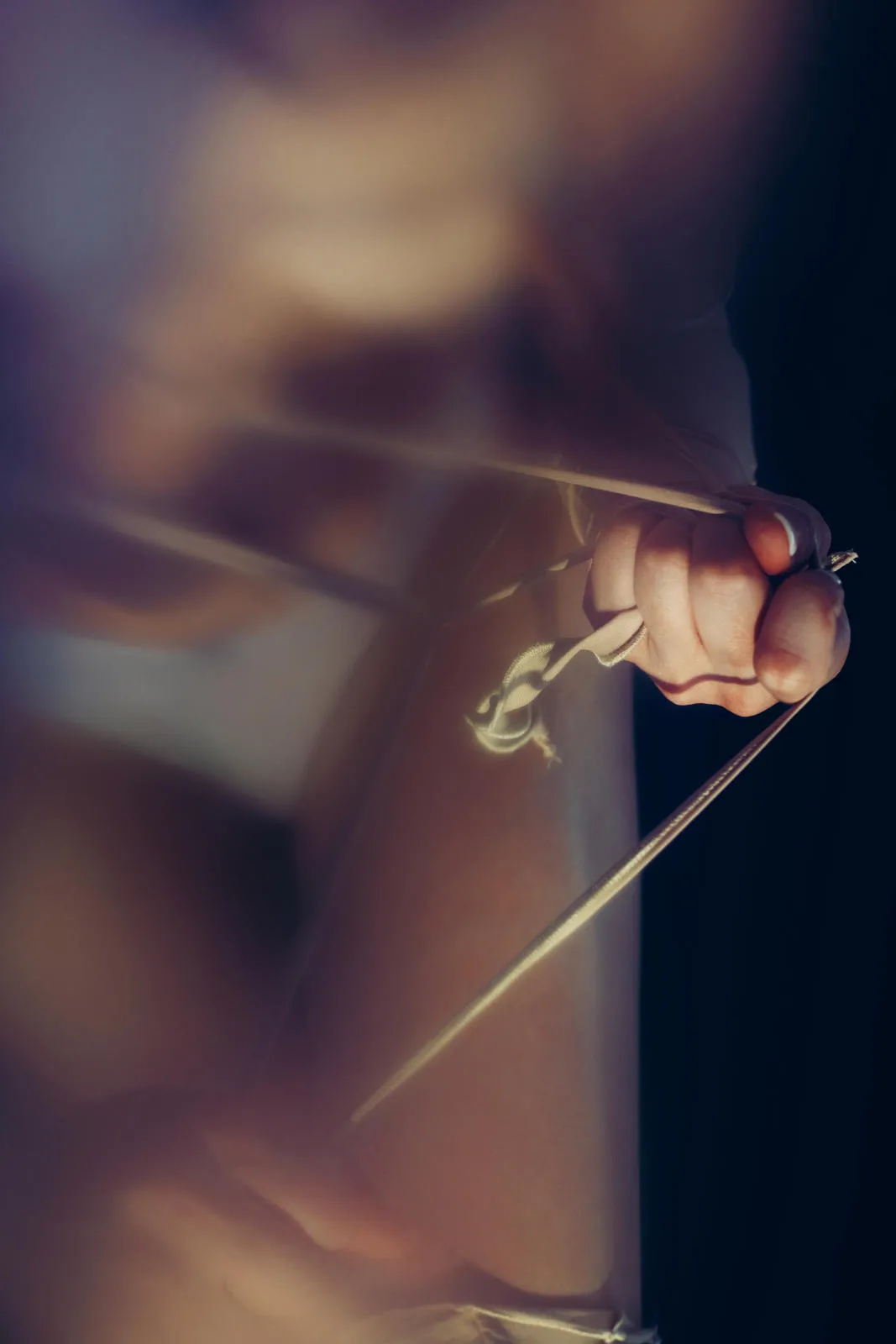
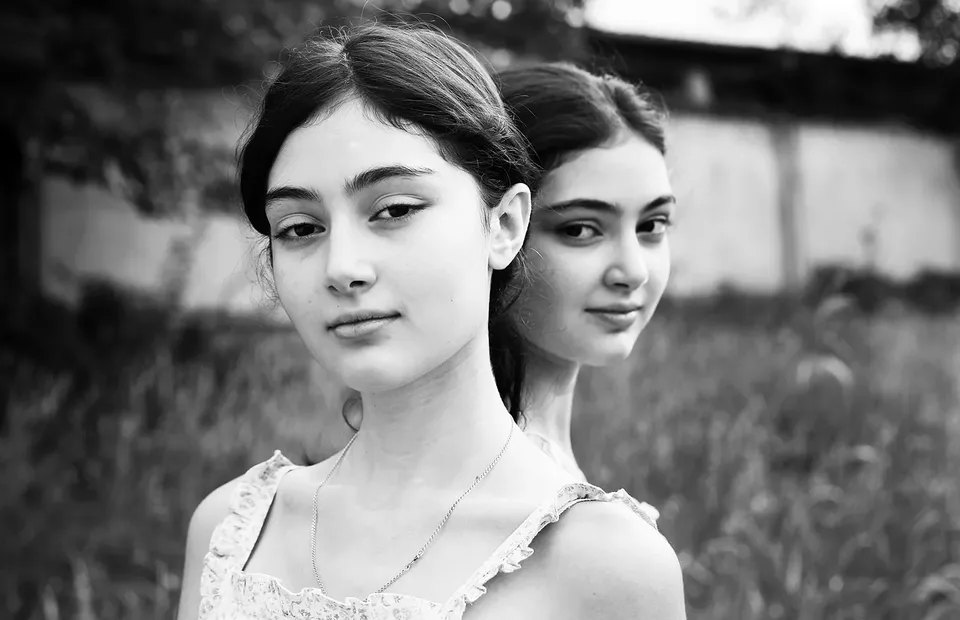
Translating everything into three chapters was a very long process. The first chapter is about erotic desire and the Madonna–whore complex. The second is about how women have been seen as muses, as objects of admiration, and how everything changes when a woman looks at another woman. The third is much more introspective, colder, more diffuse, about pleasure and pain, internal states. Some images were later intervened: scanned, dyed, worked on manually.
How was your relationship with the women you photographed?
There were many conversations. Many times we cried together talking about the body. It’s not necessarily about weight; it’s the look you grow up with, feeling not enough. Many of them became friends. We connected on something, and then: hey, do you want to take some photos? It was very spontaneous. And other times it just happened. Chapter Two is where you feel the photographer–woman relationship the most.
What does the last chapter mean to you personally?
The last chapter was something very intentional. It was about talking about myself, but not physically, internally. Pleasure and pain. That’s why the images change: colder, blurrier, more out of focus. I worked with models in Italy and Mexico. And at the end I had to do a self-portrait, which I didn’t want to do. I refused. But it made complete sense to close the cycle.
What social or cultural ideas do you feel this work challenges?
I think it’s something all women experience. In Latin America it has its specific layers, but it’s widespread. At the beginning I wanted to see them not docile. To challenge that. Like when they told me: sit properly, behave. And I realised all of us were told the same. Fashion is political. Clothing is territory. The body is territory. And we’ve always been told how the woman’s body should look. We’ve always been seen through a man’s eyes. A woman photographed by a woman is completely different.
Now that this five-year process has ended, what comes next?
Yes, it’s my longest project. I love photographing women. It fascinates me. I have other projects now, other paths, other topics like migration. But this cycle is closed. I love the idea of it taking physical form. It’s a recognition of the path and the people I worked with. Photography has allowed me to know myself. To see parts of me I didn’t know existed. And sometimes I look at the photos and think: they are them, but they are also me. It’s very strong. And I like ending with this: I see you, because now I see myself.