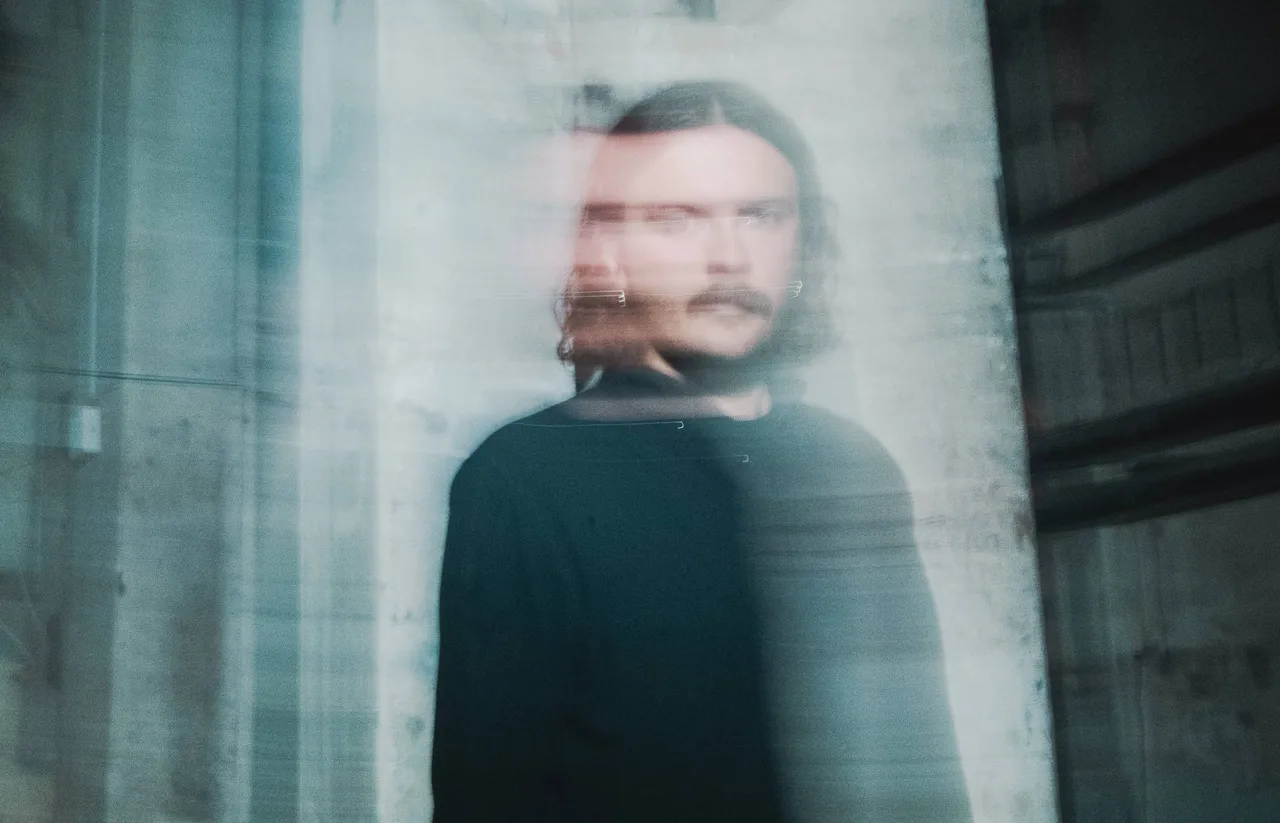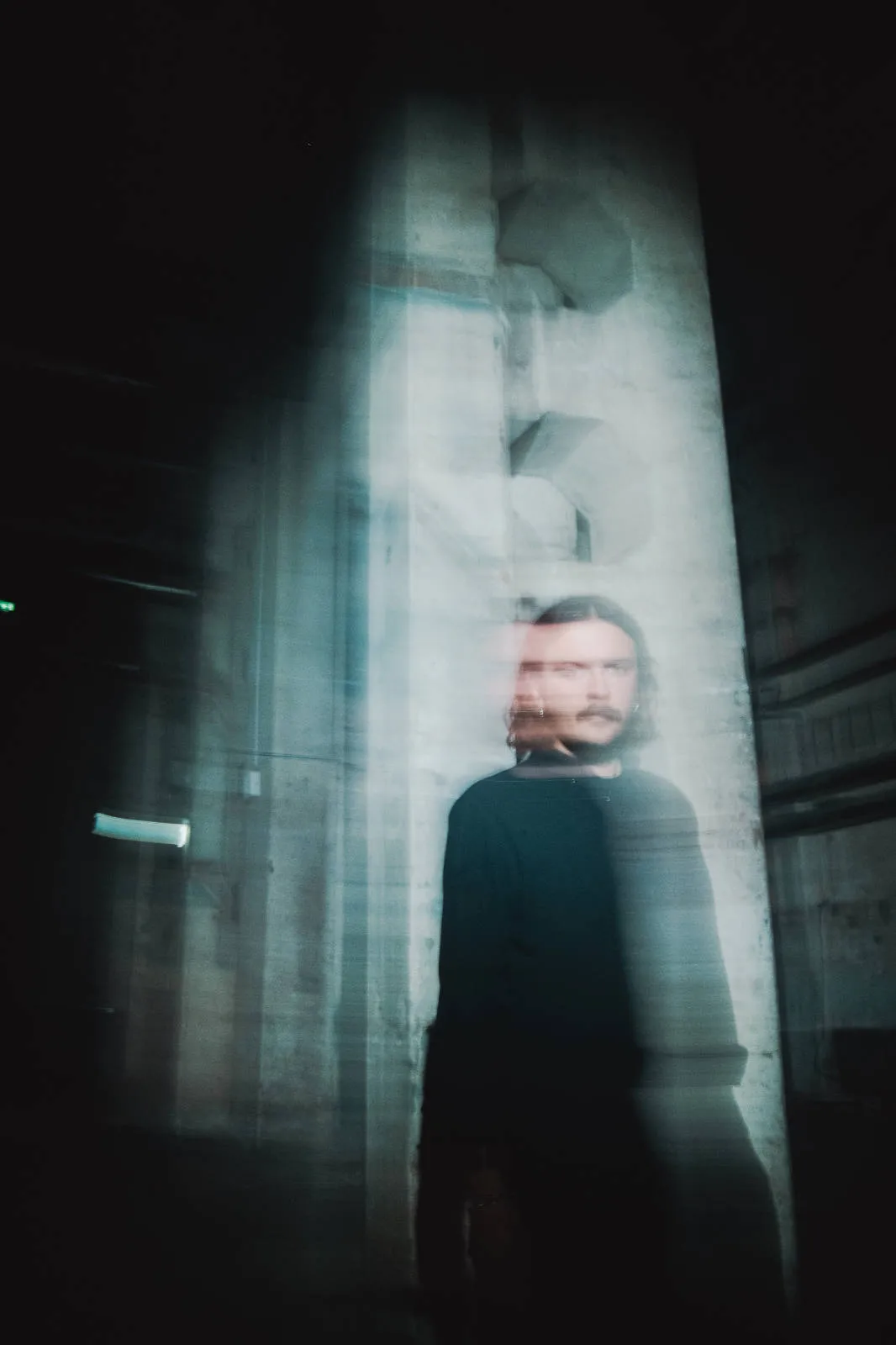
Few things are better in these dark, cold months than to relish in that darkness. That’s why UFO95’s latest release, A Brutalist Dystopian Society Part 2, feels like it’s come at the perfect time. Inspired by concrete and a somewhat asphyxiating feeling that this type of architecture conveys, the producer delivers a brilliant record with an atmosphere “where control and constraint are constantly felt,” he tells us in this interview.
The artist’s new album is a continuation of Part 1, which he published back in 2024 via Mord. Although he “didn’t plan it to be a two-part album,” he was so immersed in that sound, inspiration and theme, that he kept producing music that followed the same path. Hence, now we’re lucky enough to welcome a second part that is equally haunting. Just like brutalist architecture, UFO95 strips the tracks from any ornament or unnecessary effects; instead, he focuses on simplicity and structure — you can feel that in titles like Surface 1, Meditation 3, or Absence has shape. Today, we sit down with him to discuss his newest record, his goal to make it into an A/V show, and techno’s inherent protest essence.
Hey Killian, welcome to METAL! To break the ice, what’s a song that will always cheer you up when you wake up?
Hello, thanks for having me! For a morning song, I will always choose some folk music, probably America’s Ventura Highway.
As you play at night, I wonder what your routine is like. Do you live by night and sleep by day? Or do you try to follow ‘mainstream’ schedules despite your job?
I’ve tried both and I can say that the ‘mainstream’ schedule is the healthy one. I go to bed early and wake up early. When I’m on tour, I always try to sleep before the show or to have a calm moment in my bed to relax.
Your name and sound are linked to the unidentified. If you could score a sci-fi movie, which one would fit the UFO95 sound perfectly?
Blade Runner 2049 or Dune.
You’re about to release A Brutalist Dystopian Society Part 2 — congrats! You released Part 1 in late 2024. Did you always envision this project as a two-part saga, or did the concept keep expanding after the first release?
I didn’t plan it to be a two-part album, but when I finished Part 1 in 2024, I was still super inspired and kept producing music with the same inspiration and theme. So the idea to do a Part 2 came to me, and Bas Mooy, MORD label boss, found the idea cool and agreed to release it.
Part 1 was described as “monolithic” and “tough.” How does Part 2 evolve sonically? Is this the sound of the society collapsing, or are we exploring a different corner of this dystopian world you’ve built?
I would say Part 2 is a bit more minimalistic and deep, less ‘aggressive’ sonically. The society has collapsed already, so with Part 2 we are walking in the middle of the ruins.
Between the two albums, you released the Dissolution EP on your own label, TSSRCT. Did that release serve as a bridge between the two albums, or was it a completely separate headspace?
It served as a bridge for sure. The tracks on my Dissolution EP were part of the pack I did for the album. It was a good way to announce the sound of the upcoming album.
Releasing a double vinyl album on Mord is a major undertaking. With your live improvisation workflow, you likely generate hours of material. How hard was it to cut this down to the final tracklist?
It was pretty easy as I had a clear vision of how I wanted the album to sound, so I knew what kind of track I had to produce. Now, when I make a track, I think about the live performance and a potential release. If the tracks aren’t working in these terms, then I don’t use them at all.
“I’m not illustrating war or repression, I’m building an atmosphere where control and constraint are constantly felt. That physical tension is where the protest lives.”
The press release mentions tapping into techno’s “protest music essence,” specifically regarding war and repression. Techno is often escapist; how do you ensure the message of protest comes through in instrumental music without lyrics?
For me, techno’s protest aspect isn’t about delivering a clear message, but about creating tension. Techno comes from contexts of crisis and pressure, and that history is already political. Without lyrics, the message passes through the body: repetition, heavy bass, saturation. It’s not pure escapism, but endurance. I’m not illustrating war or repression, I’m building an atmosphere where control and constraint are constantly felt. That physical tension is where the protest lives.
You cite Brutalist architecture as a core inspiration, specifically its weight and minimalism. If you had to explain to a non-musician: how do you translate the texture of concrete into a synthesizer patch?
I think of concrete as something dense, raw, and indifferent. So I start with very simple waveforms, no ornamentation, and push them until they feel heavy. Slow attack, long sustain, little movement. The texture comes from imperfection: subtle distortion, filtering that shaves off warmth, a slight instability in pitch or modulation. Like concrete, it’s not smooth or expressive, it just exists and bears weight. The goal is to make the sound massive and unavoidable.
Brutalism is often called an ‘unfulfilled utopian ideal.’ Do you feel modern techno is facing a similar crisis? Are we living in the ‘failed promise’ of what the rave scene was supposed to be?
I don’t want to enter this ‘it was better before’ conversation, but we are for sure in an important moment for the techno scene, where changes have to be made to focus on what really matters: music, art, and innovation.
Given the strong architectural theme, does this album influence your visual presentation on stage? Do you see specific shapes or structures when you are performing these tracks live?
The visual aspect is very important, that’s why I’ve always imagined a live A/V show around those two albums. It’s not ready yet, but it might see the light one day! I can promise something dark, heavy and introspective.
You are famous for not using pre-arranged patterns and improvising 50/50 of your set. Since you are constantly jamming live, do you ever find it difficult to finish tracks in the studio?
I actually find it easier because I’m not looking for perfection. I love jamming and playing live because it’s always full of mistakes and imperfection — aspects I love and always want to carry in my tracks. I can make a track in one day or one week, it depends.
For the gear heads: Has your setup changed for the Part 2 tour? Have you added any new machines to help convey this specific ‘dystopian’ sound?
My setup is the same in the studio and on stage. In the studio, I do eighty per cent of the work in Ableton, the rest is from jams, recording with a 909/808/SH-101, and some noise and field recordings. On stage, I use the Elektron Octatrack, a Faderfox controller, pedal effects and sometimes I add a drum machine or an iPad.
Now that A Brutalist Dystopian Society is complete, do you feel you are done with this dark/brutalist chapter?
I think I’m done with this chapter. I’m ready and already working on the next one. More experimental and risky I would say, as it’s not what today’s standard in techno expects.