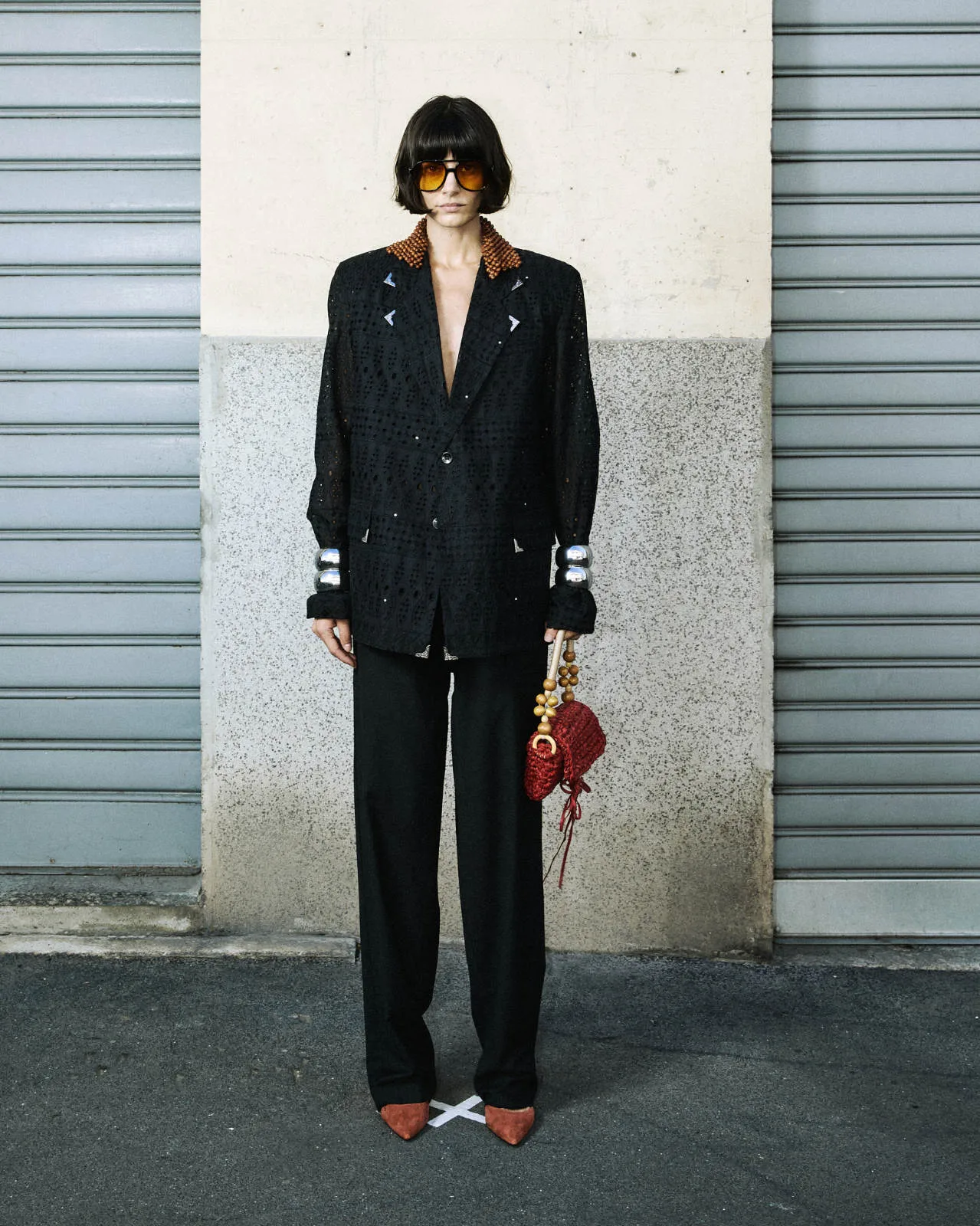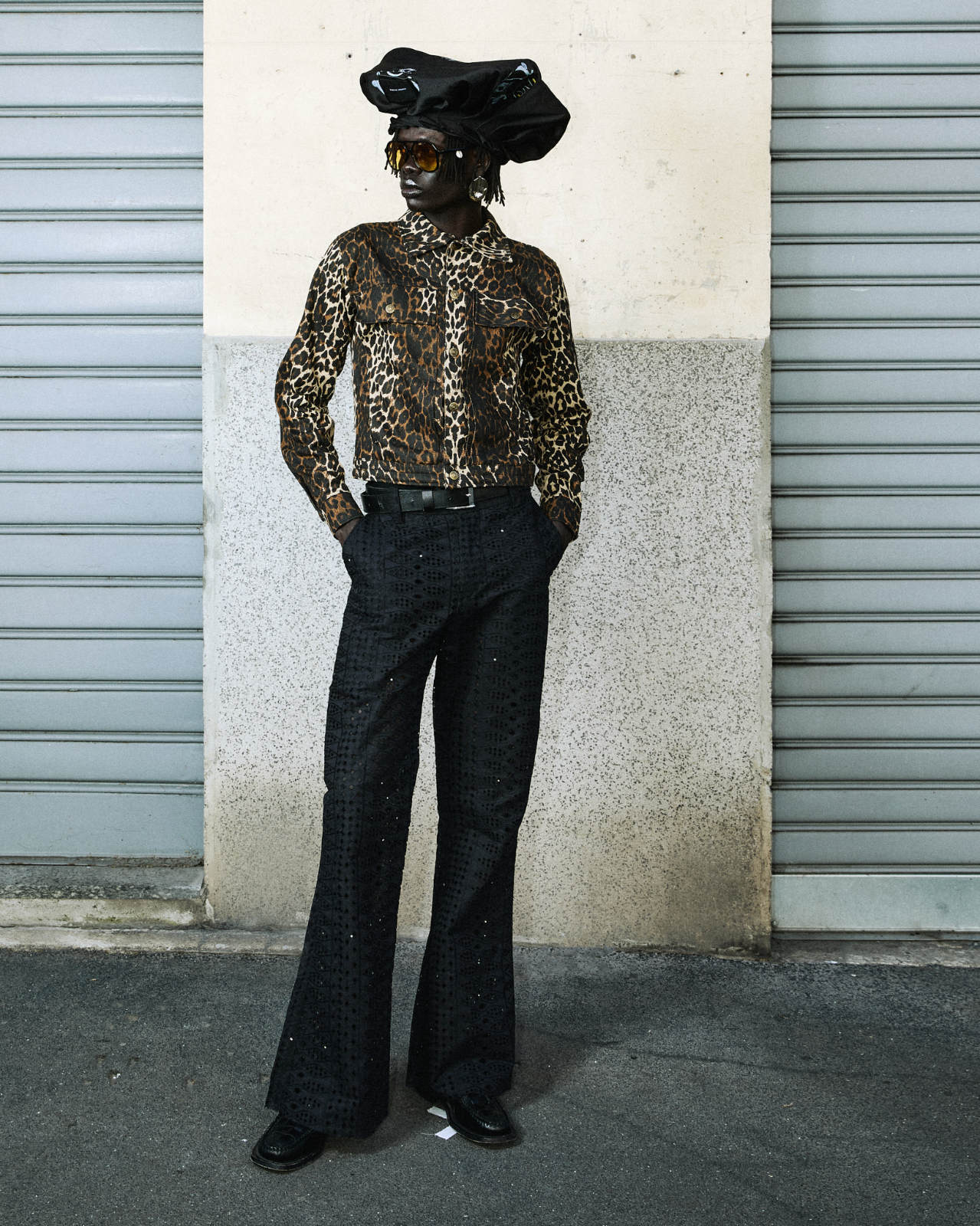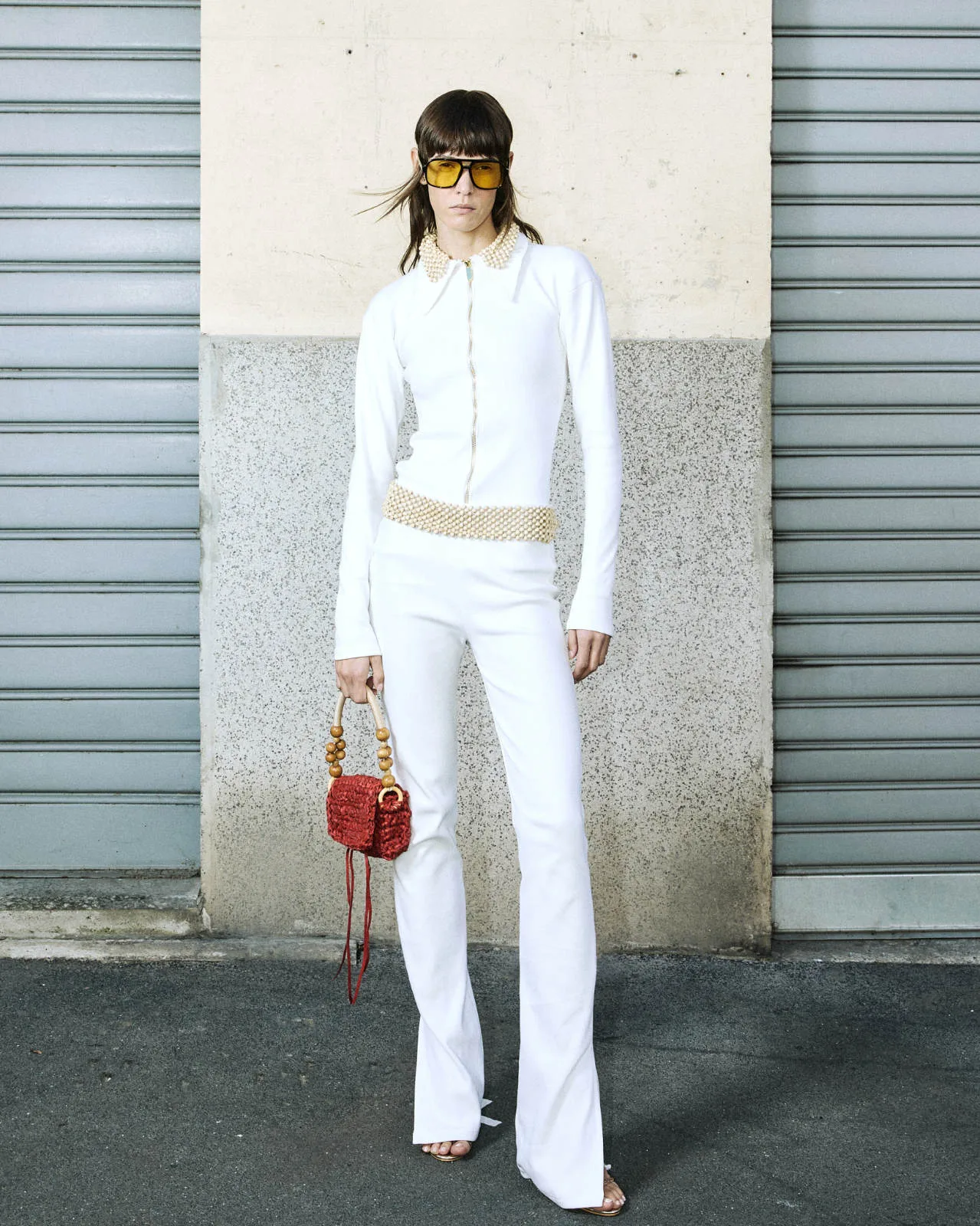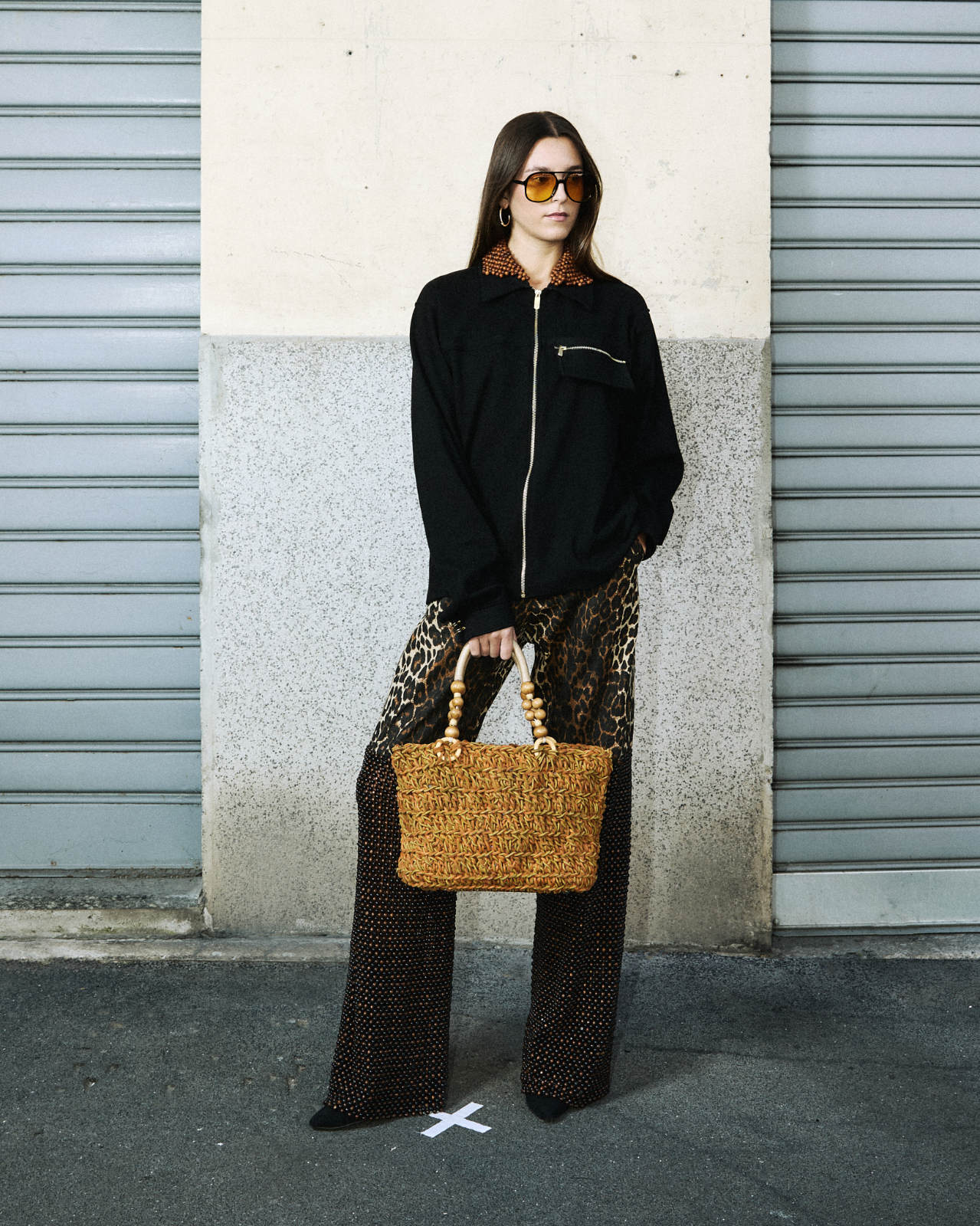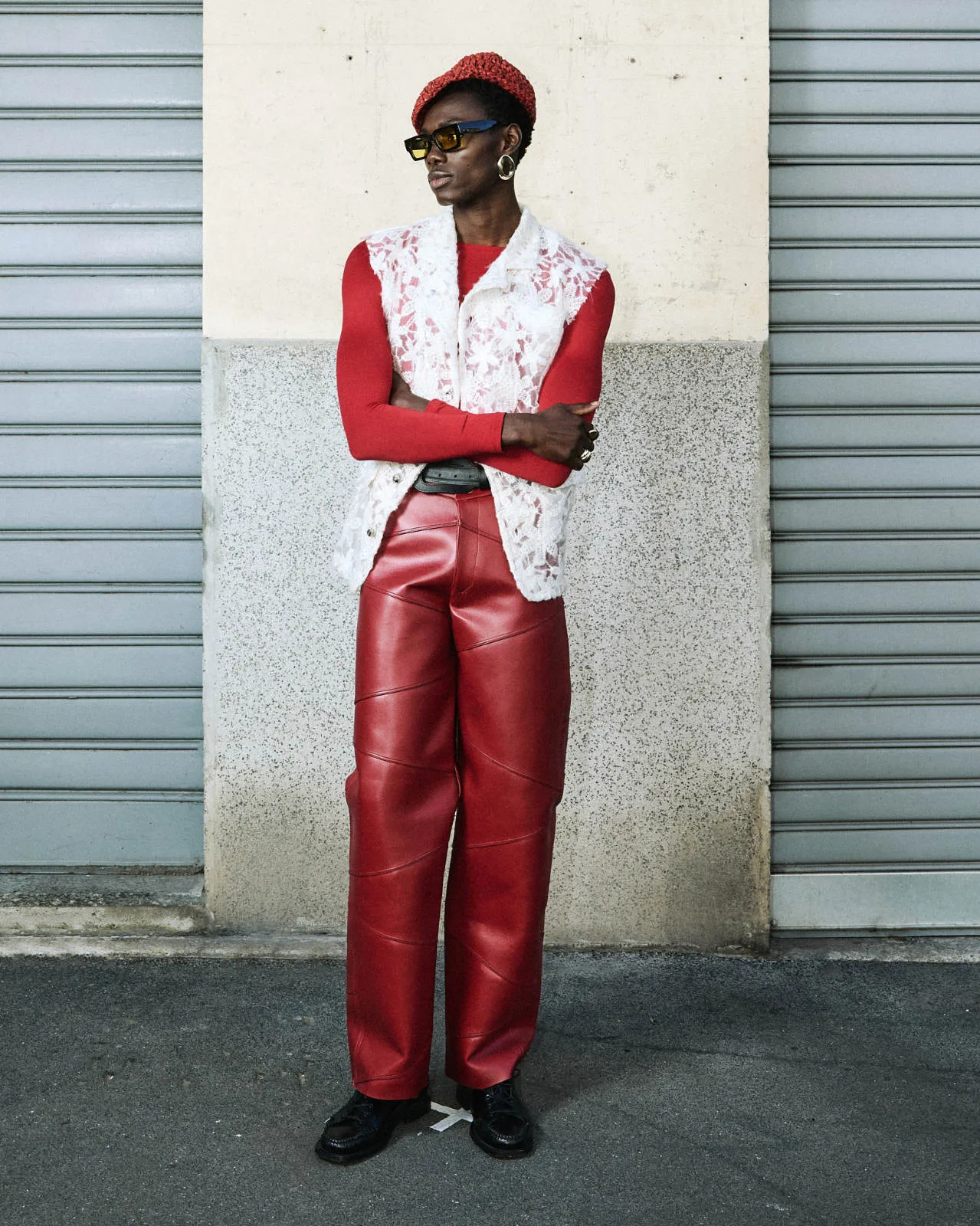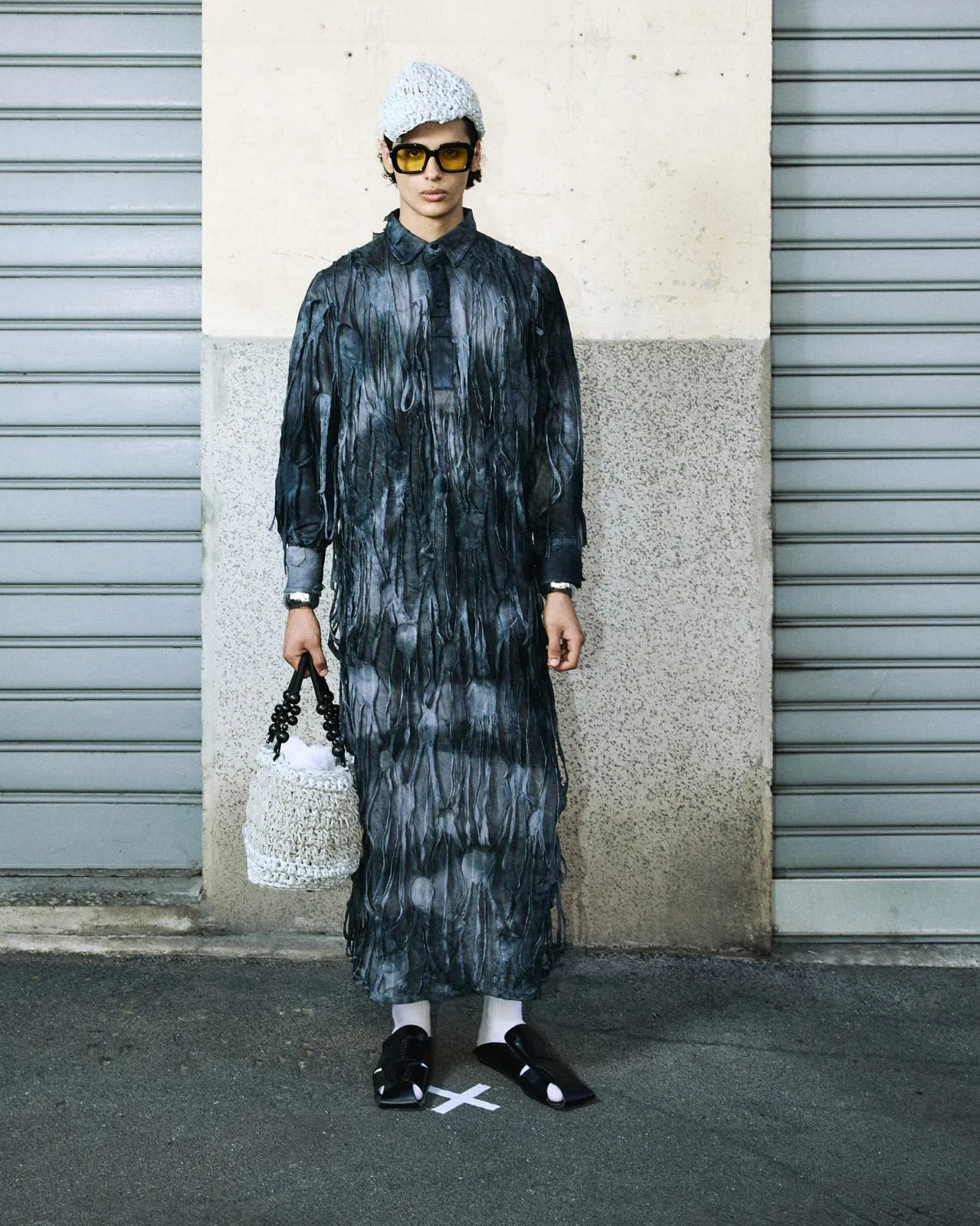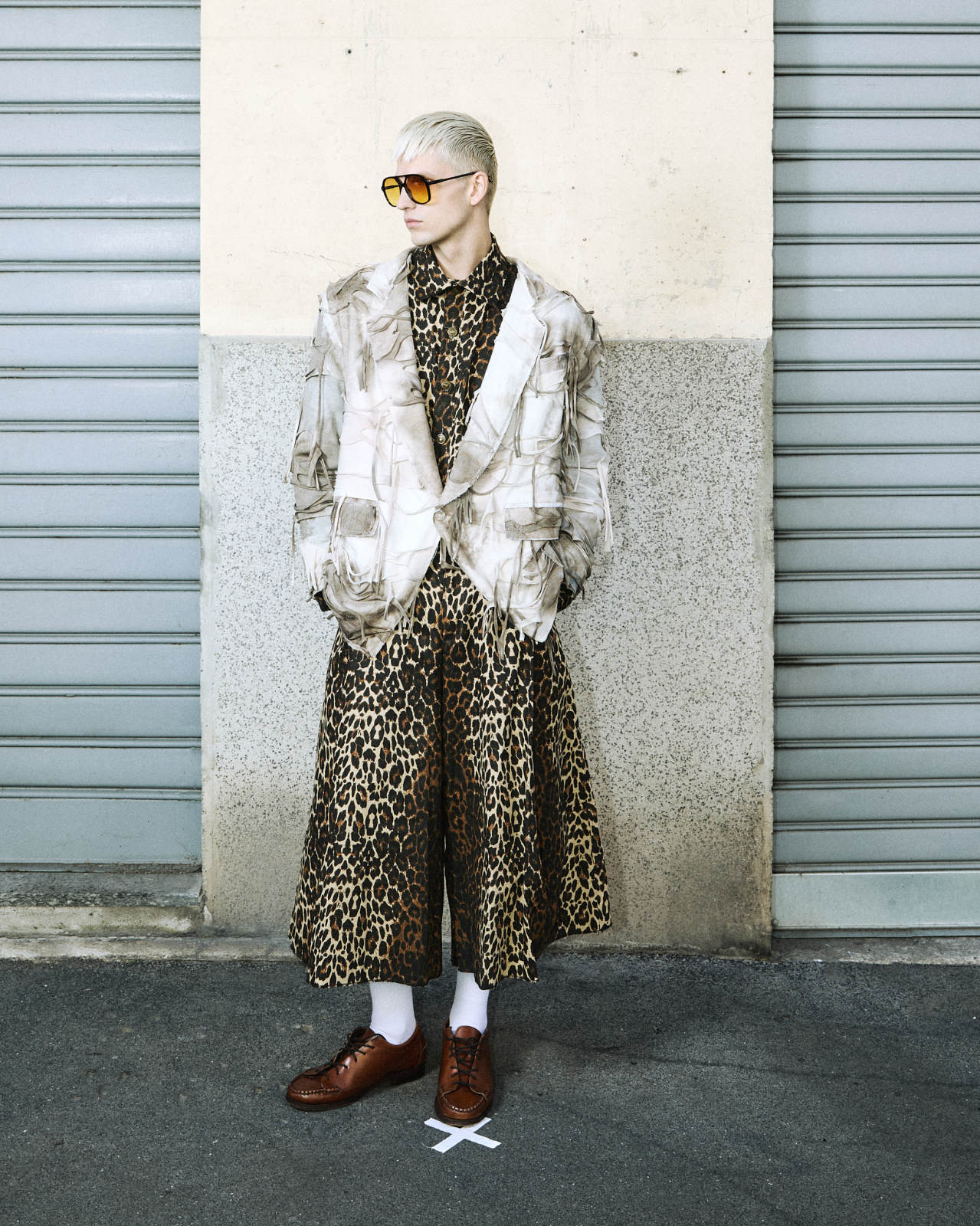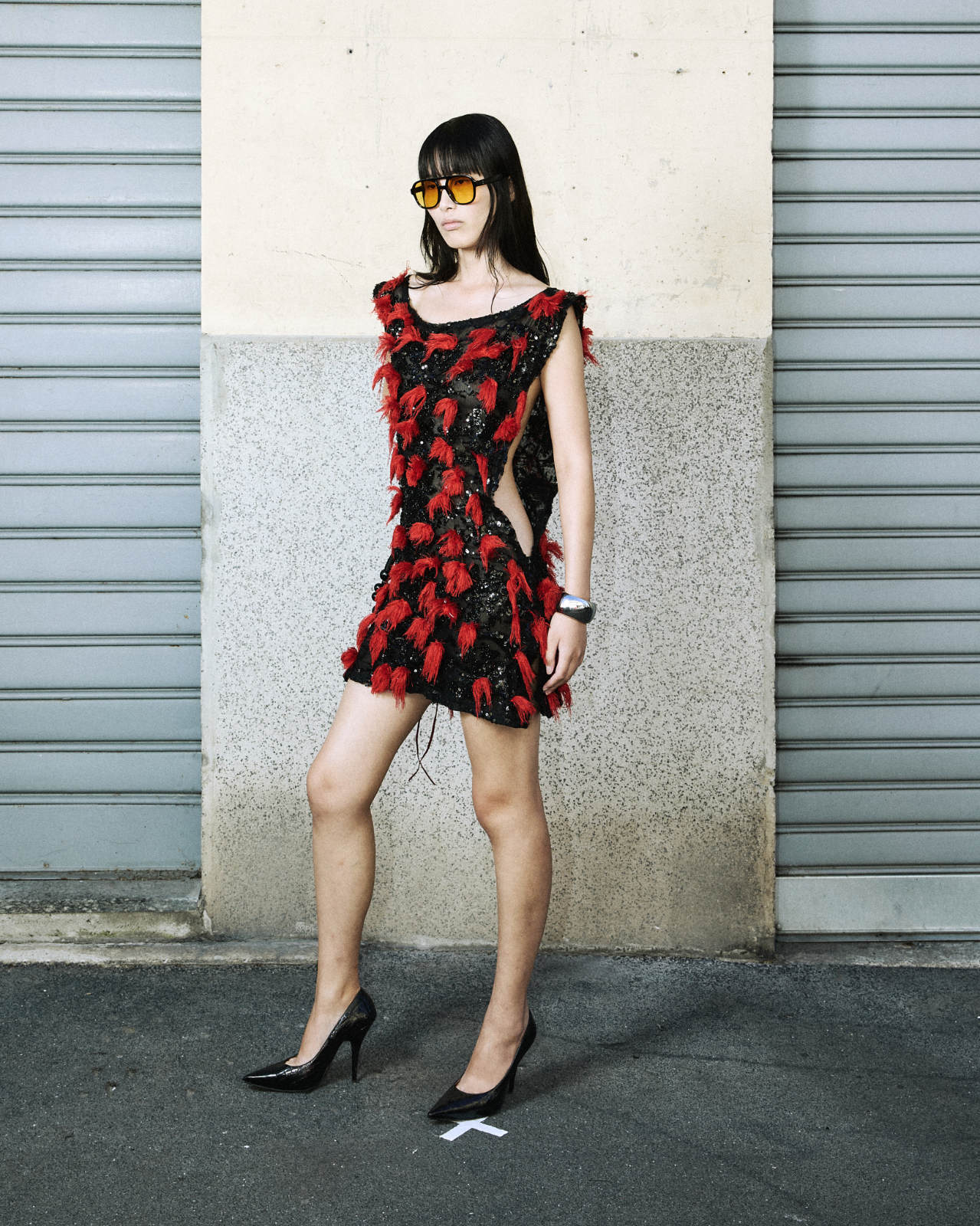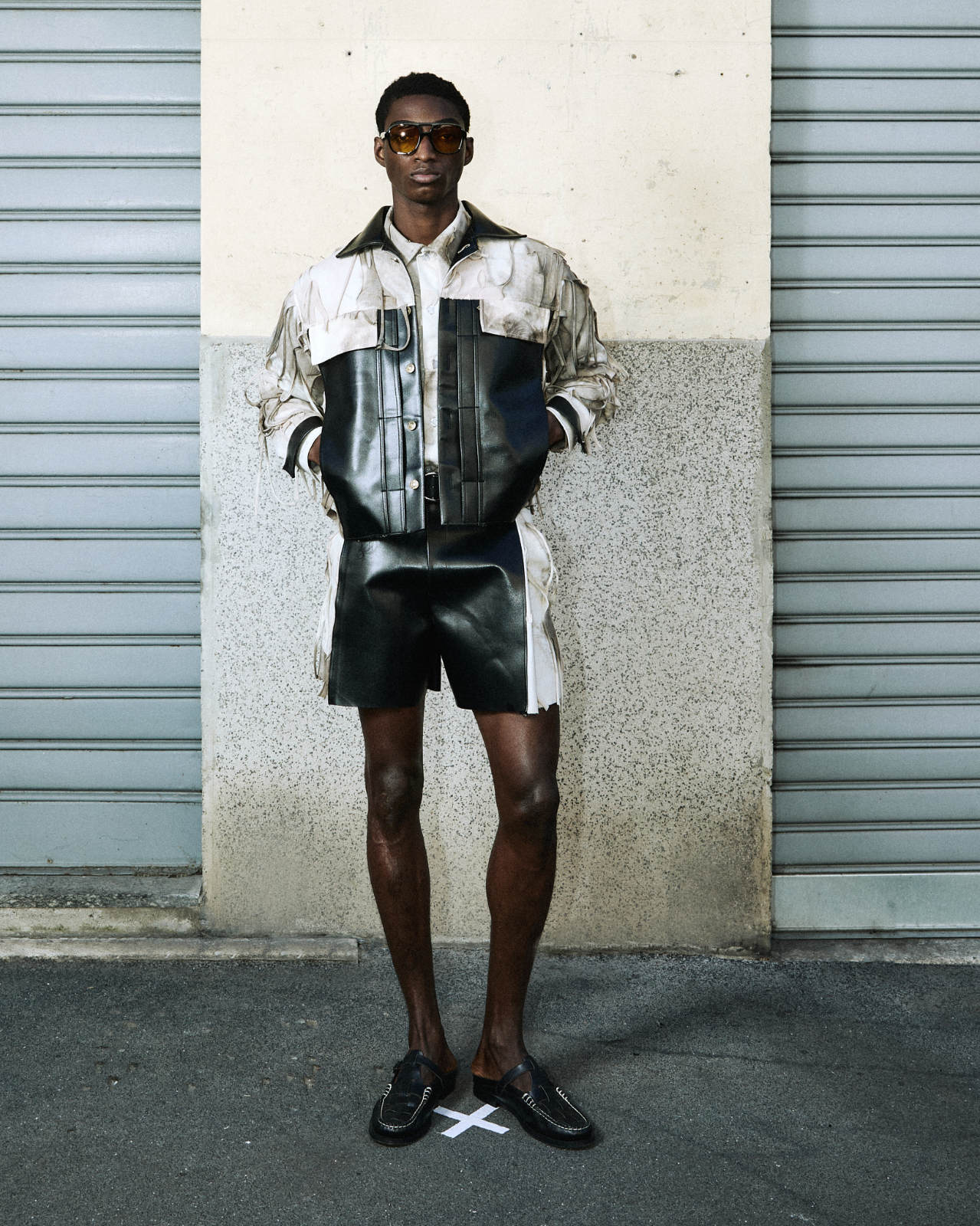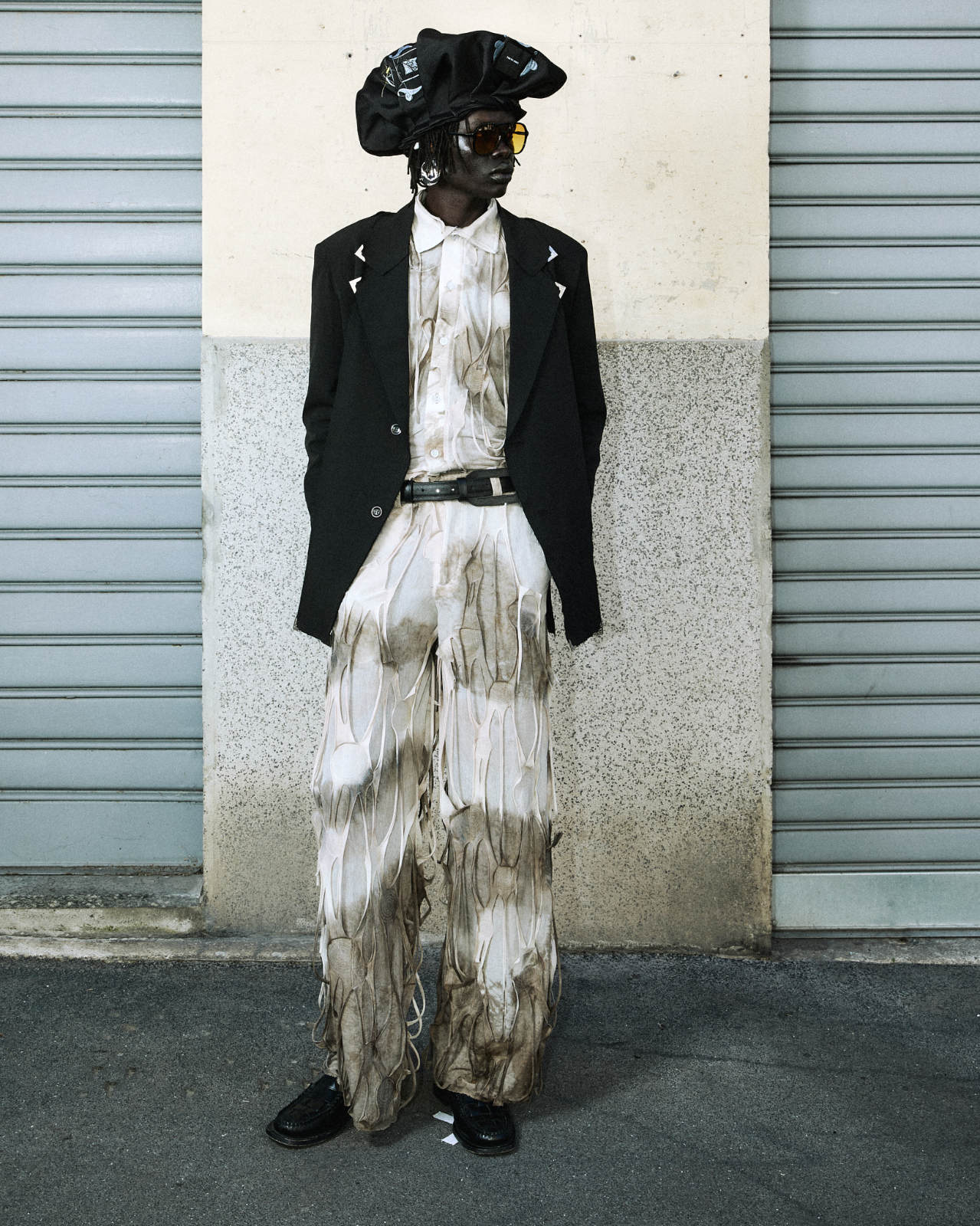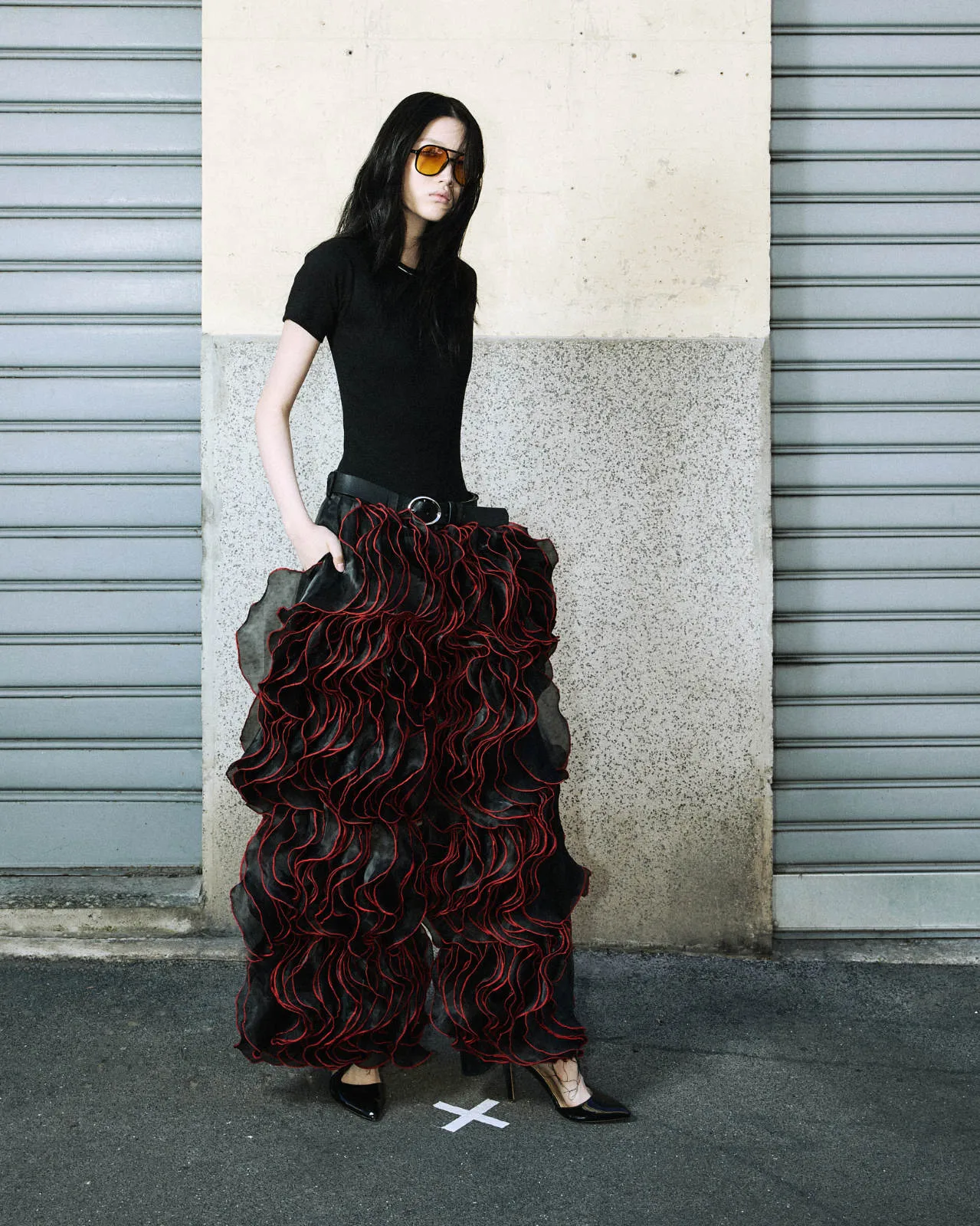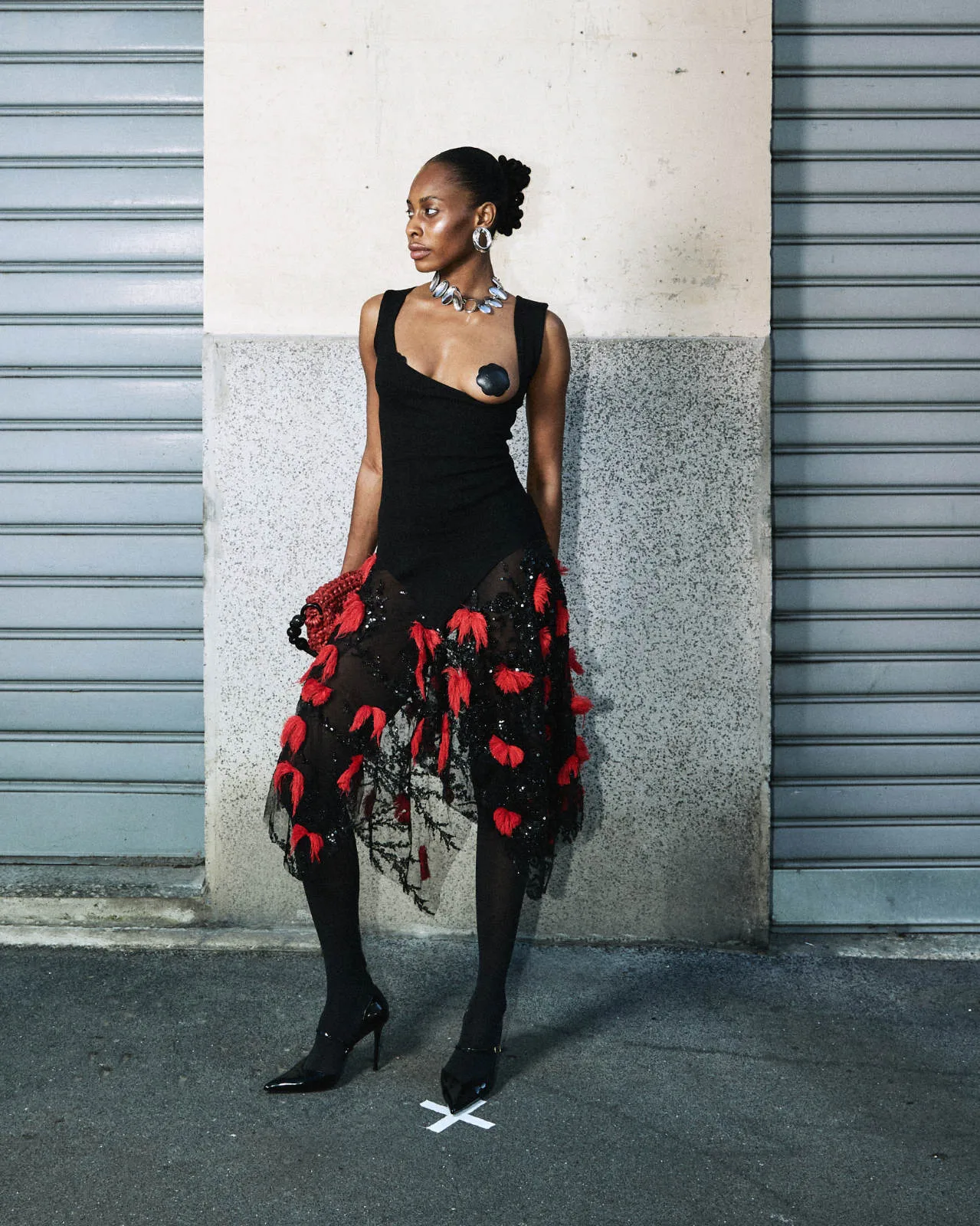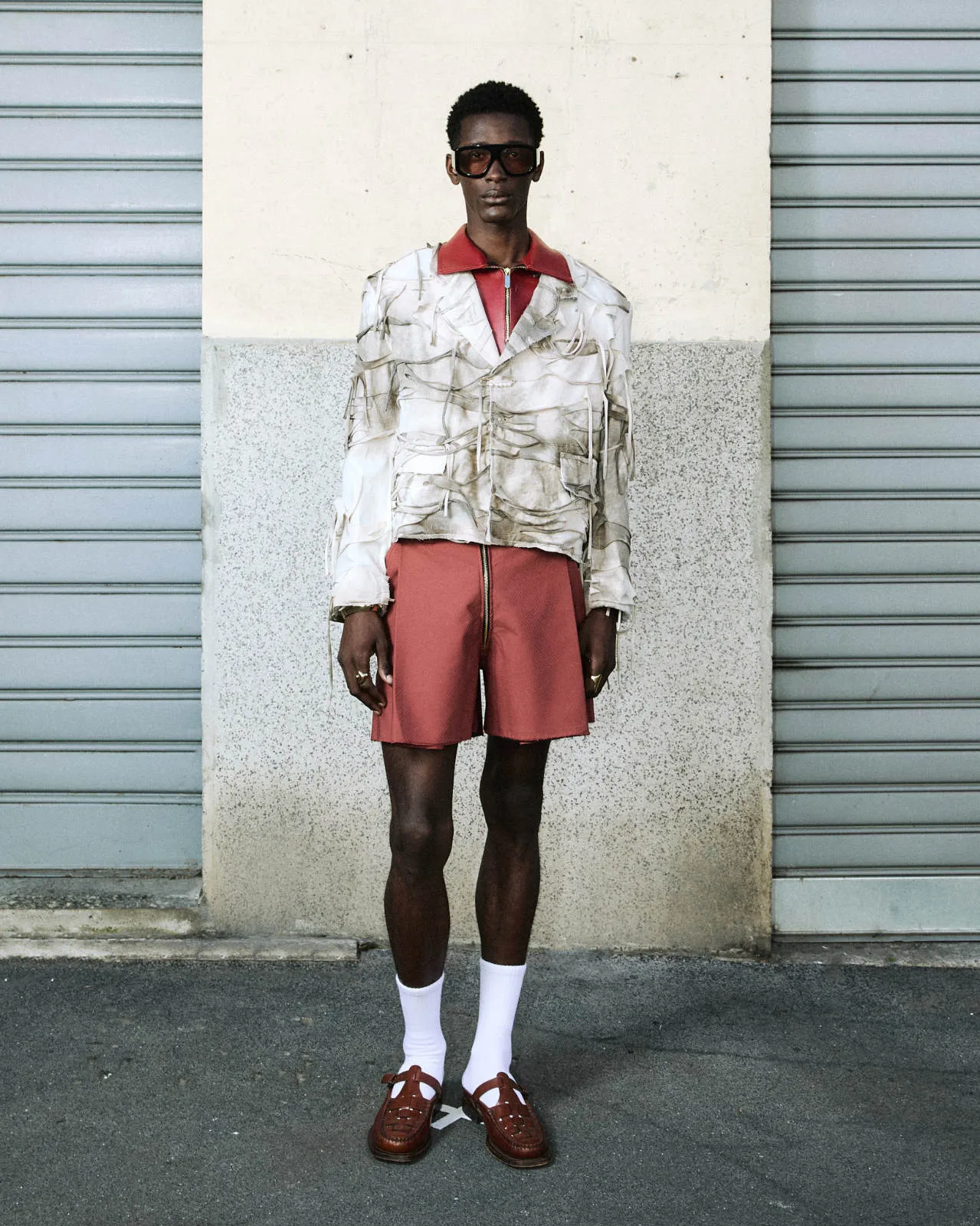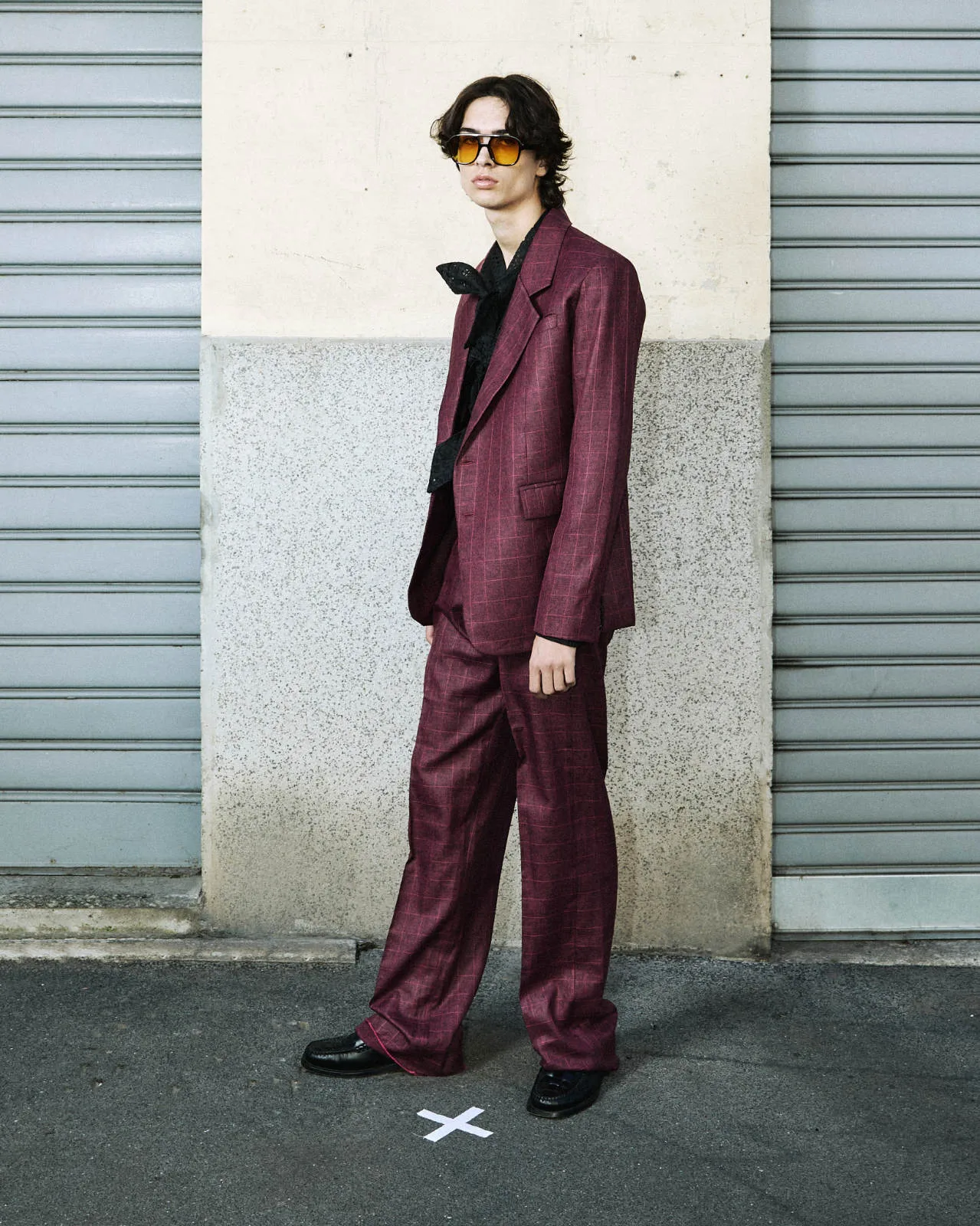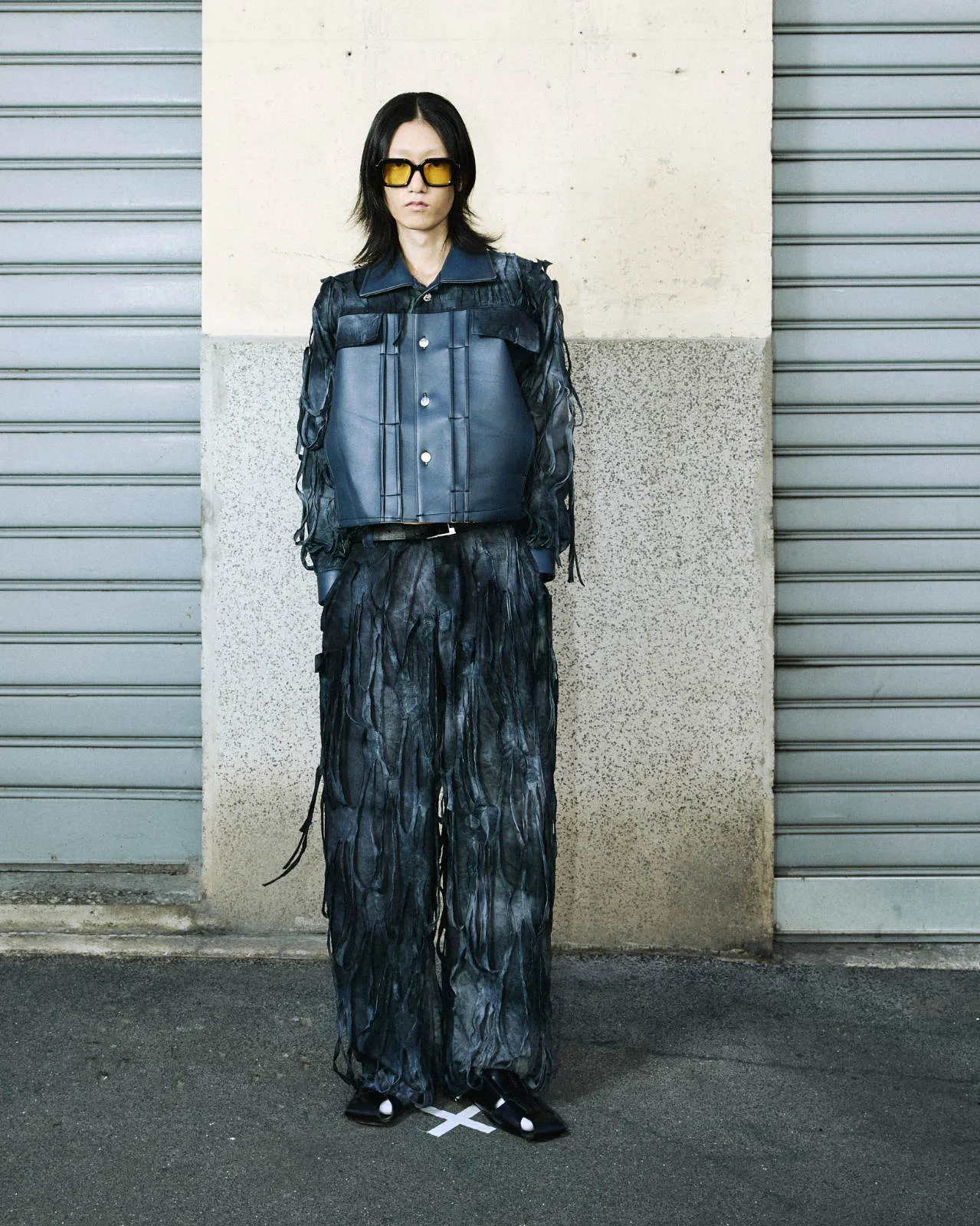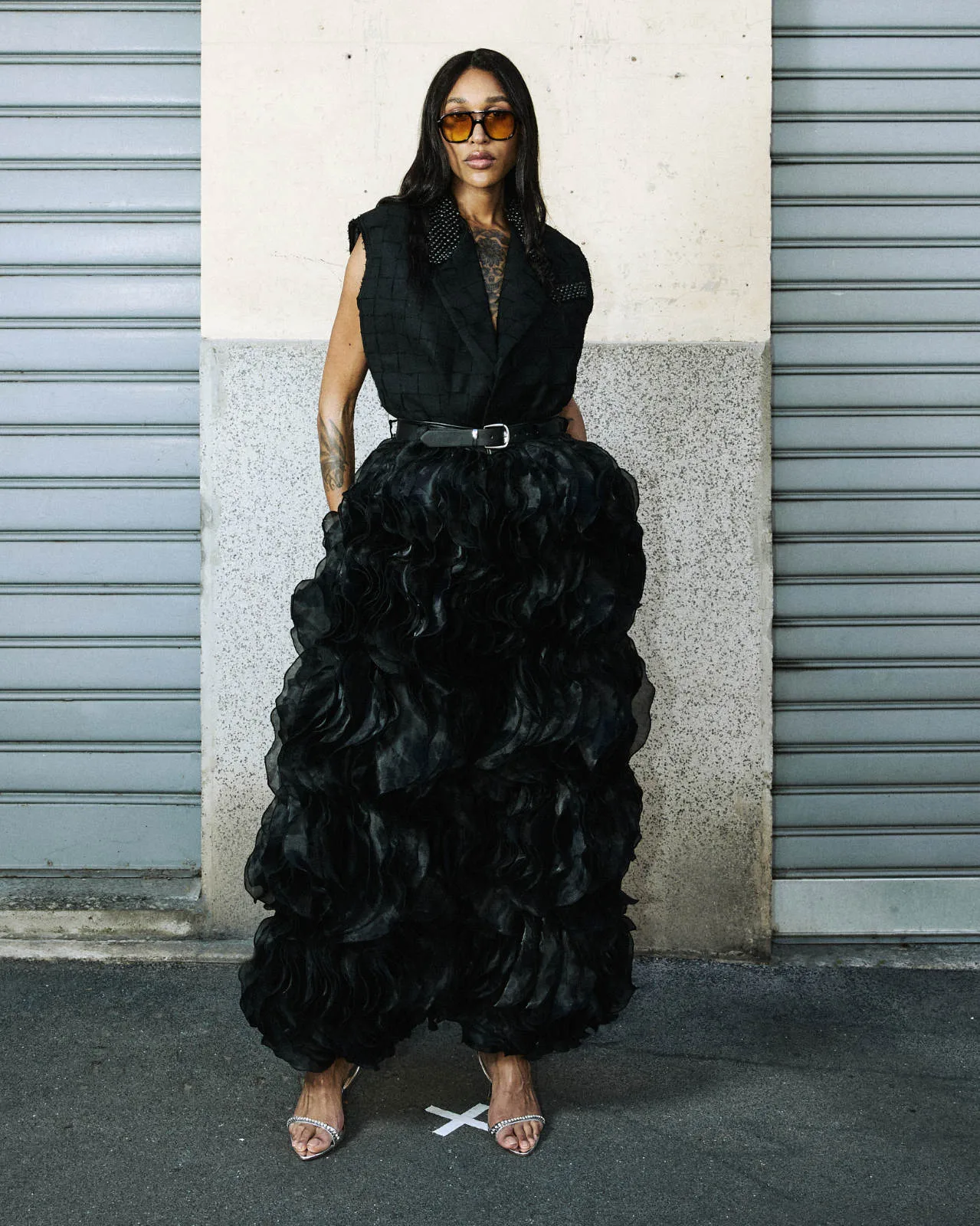
Balance is perhaps the clearest expression of Tokyo James’s unconventional academic background in exact science. It reveals itself in his constant pursuit of a language that is both powerful and honest, where innocence meets raw strength. As he puts it: “At the core of my creative process is politics — not in a loud way, but as something deeply unavoidable.”
Take a five-and-a-half-hour flight south from Tokyo James’s Nigeria and land in Congo, where a local fashion movement known as the sapeurs has had a profound impact on the look and spirit of contemporary African fashion. The movement is rooted in a complex relationship with London and Paris-made garments brought to the continent by travellers after the Second World War, in which the essence of dandyism is reinterpreted into something entirely new. Sapeurs developed their own codes — rich, elaborate fabrics, vibrant colours, and, of course, an exquisite sense of style. Tokyo James as a brand has a comparable network of references.
This context helps explain how Tokyo James has forged a path connecting his London upbringing with his Nigerian and broader African roots. He possesses a surgical eye for identifying the codes of architecture, fashion, community, and politics — and transforming them into an elegant visual language that looks like a million bucks on the runway.
Your work highlights those less-known birthplaces of fashion, and how a community of enthusiasts have aligned their efforts with them. I’d love to know more about your own creative process. What are those silent features not so visible in Tokyo James garments but always present in your mind and soul?
At the core of my creative process is politics, not in a loud or didactic way, but as something deeply personal and unavoidable. Fashion, for me, is a language of identity, especially for people and communities that have historically existed under oppression or with resistance. I am constantly thinking about how clothing can carry meaning beyond aesthetics, how it can assert presence, dignity and autonomy.
There is always a duality in my mind when I design. I am interested in creating pieces that make a statement while still offering balance, garments that can be bold without being aggressive, expressive without becoming chaotic. I want the clothes to exist at the intersection of beauty and belief, where aesthetics meet conviction. Even when it is not immediately visible, every Tokyo James garment carries that internal dialogue about power, resistance and self-definition.
There is always a duality in my mind when I design. I am interested in creating pieces that make a statement while still offering balance, garments that can be bold without being aggressive, expressive without becoming chaotic. I want the clothes to exist at the intersection of beauty and belief, where aesthetics meet conviction. Even when it is not immediately visible, every Tokyo James garment carries that internal dialogue about power, resistance and self-definition.
Your talent and vision have helped give a voice to places that canonically, some wouldn't expect to see as fashion hubs. You’ve also chosen to make Nigeria part of your creative headquarters. One could say you have a sixth sense for these unexpected creative jewels, are there any other unexpected destinations on your to-visit list? Maybe somewhere in Asia? South America? Somewhere else in Africa? Have you been in touch with any of the emergent fashion in these places?
I have always been drawn to places that exist outside of the traditional fashion canon, places where creativity grows organically rather than through institutional validation. Nigeria was a natural choice for me because of its raw energy, resilience and cultural depth, but my curiosity does not stop there. I am very interested in parts of Asia, particularly cities where tradition and futurism coexist seamlessly, as well as regions in South America where fashion is deeply tied to social identity and political history. Across Africa, there are still many under-explored creative hubs with extraordinary talent and storytelling power. I try to stay connected to emergent designers and creative communities globally, not to extract inspiration, but to listen, exchange and build dialogue.
Is it true that you used to publish in a personal digital vlog, Rough UK? And you also have a strong academical background in mathematics. What could these parallel keen interests tell us about you, your personality, your character? How do they all, including fashion, make up the talented designer we see behind runways?
Yes, it is true, I used to publish a digital vlog called Rough. We had Rough UK and Rough Italy, with two separate teams working independently in each market. It was an important period for me, creatively and intellectually. Even while running that platform, my relationship with fashion was continuing to evolve. Academically, I studied at Queen Mary University of London, where my elective was Mathematics.
These worlds are often seen as opposites, but for me they were always connected. Mathematics trained me to think rationally, analytically and with nuance. It taught me structure, discipline and problem-solving, all of which are essential in design. At the same time, creativity taught me how to dream. I genuinely believe that if you can imagine something, there is both a mathematical and a creative pathway to bring it to life. Together, these parallel interests shaped me into a designer who is both instinctive and intentional.
These worlds are often seen as opposites, but for me they were always connected. Mathematics trained me to think rationally, analytically and with nuance. It taught me structure, discipline and problem-solving, all of which are essential in design. At the same time, creativity taught me how to dream. I genuinely believe that if you can imagine something, there is both a mathematical and a creative pathway to bring it to life. Together, these parallel interests shaped me into a designer who is both instinctive and intentional.
It is so interesting to see how sculpture and-architecture driven you are when it comes to designing garments, accessories and putting them together to come up with a look. How does the contrast of Nigerian architecture, its eclecticism and history, and the United Kingdom resonate with your creative process when you travel from one place to the other?
I love this question because it speaks directly to how I experience identity. Moving between Nigeria and the UK is about interpreting two worlds and allowing them to intersect. I am always searching for similarities while honouring differences, celebrating individuality without losing sight of shared history.
Nigeria and the UK have a long, complicated and sometimes uncomfortable past, but that history is undeniable. In my work, I try to hold that truth carefully, acknowledging tension while still finding common ground. Architecturally, both places influence my approach to structure, volume and form. It is about building visual bridges and allowing contrast to exist without conflict.
Nigeria and the UK have a long, complicated and sometimes uncomfortable past, but that history is undeniable. In my work, I try to hold that truth carefully, acknowledging tension while still finding common ground. Architecturally, both places influence my approach to structure, volume and form. It is about building visual bridges and allowing contrast to exist without conflict.
If we were to spot people wearing the coolest fits, where in Lagos should we go? Can you recommend us some creative hubs in the city?
Lagos is overflowing with style, but if you want to experience where culture, fashion and community truly collide, I would say Nahous for fashion, arts and culture, Temple Muse for fashion and lifestyle, and most definitely Vici, not just for food, but for the city’s real tastemakers.
Best places to buy clothes or thrifting in Lagos?
Nahous, Alára, and Temple Muse, without question.
You’ve partnered with an amazing initiative, Nahous. Drawing a parallel between your personal upbringing in London and young creative enthusiasts in Africa, where do you think the influence of this kind of a third place will lead them to? Do you think your creative path would’ve been different if you had an initiative like this in the place you grew up in?
Growing up abroad, there were many barriers to entry into creative spaces, financial, social and institutional. What makes Nahous special is how radically open it is. It welcomes change, experimentation and diverse values within the creative world. Nahous genuinely fosters collaboration and exploration without limits. It is not just a concept, they truly put their money where their mouth is. If I had access to something like this earlier in my life, my creative path might not have been easier, but it would certainly have been less isolating.
What’s the most mathematical thing you still do while in your creative job, and what’s the most fashion thing you did back in the mathematics faculty.
The most mathematical thing I still do today is balancing budgets and ensuring we can move from season to season sustainably. That is pure logic and numbers. The most fashion-led thing I did back in the mathematics faculty was wearing fur hats and heavy coats to lectures every day. They absolutely hated me for it.
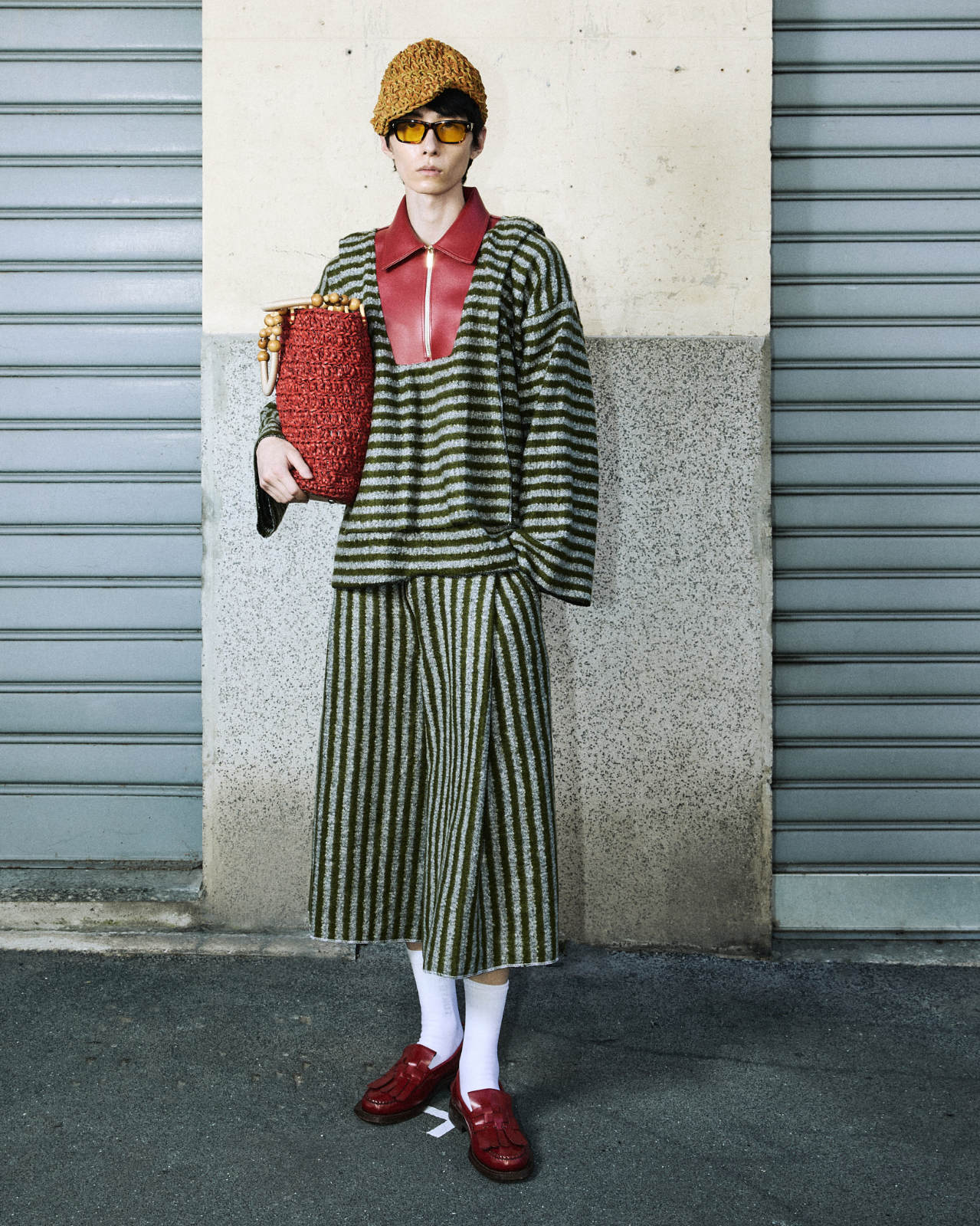
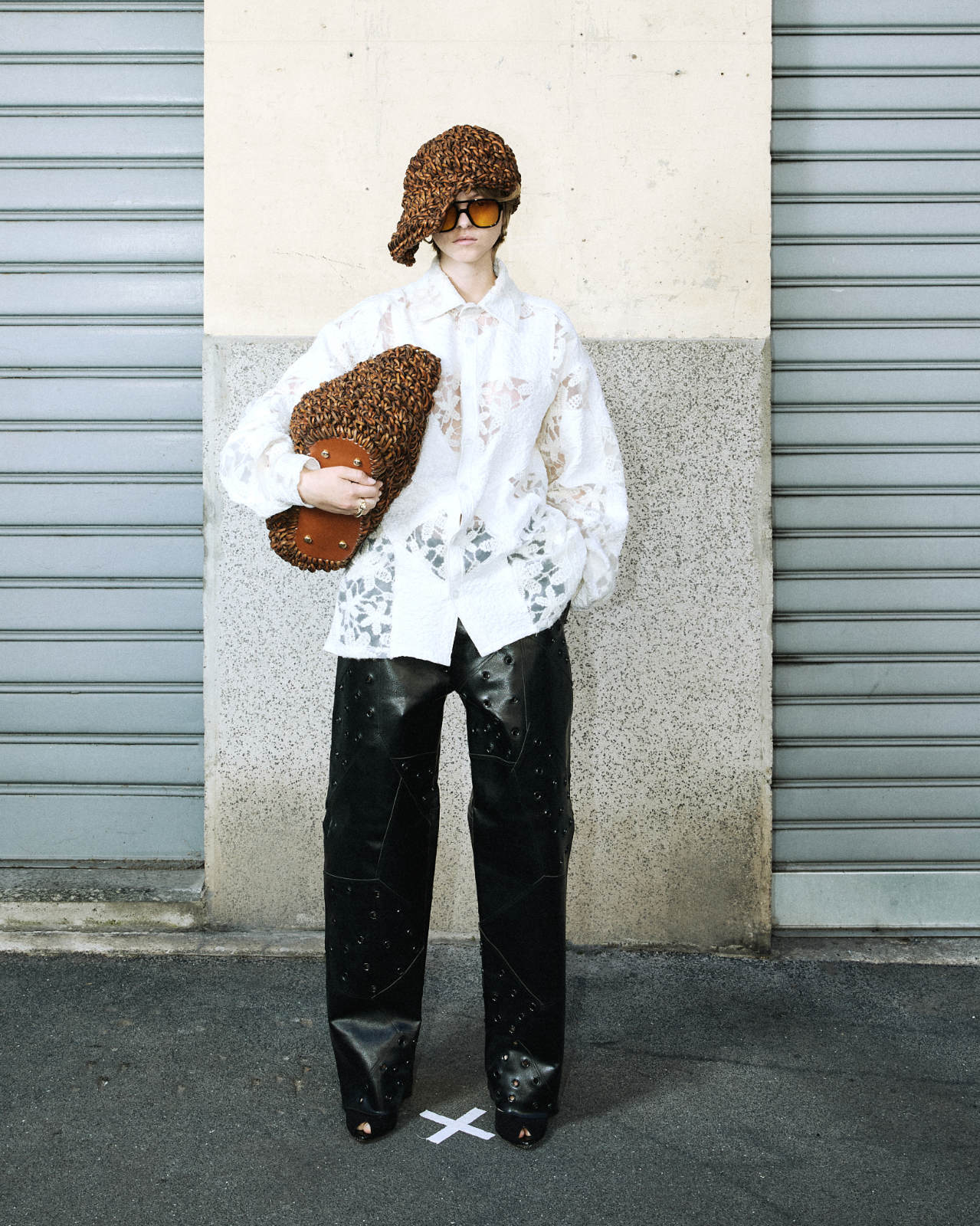
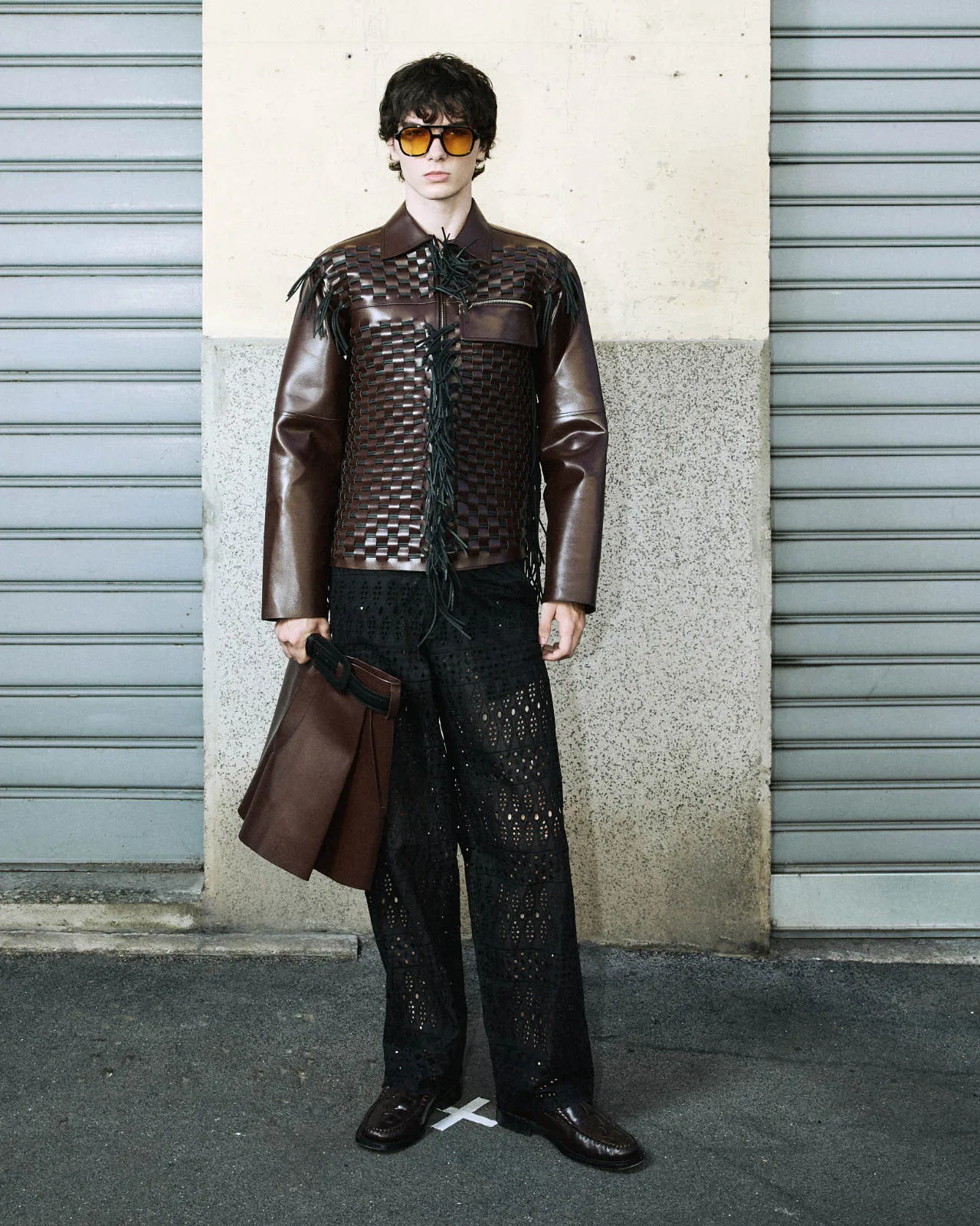
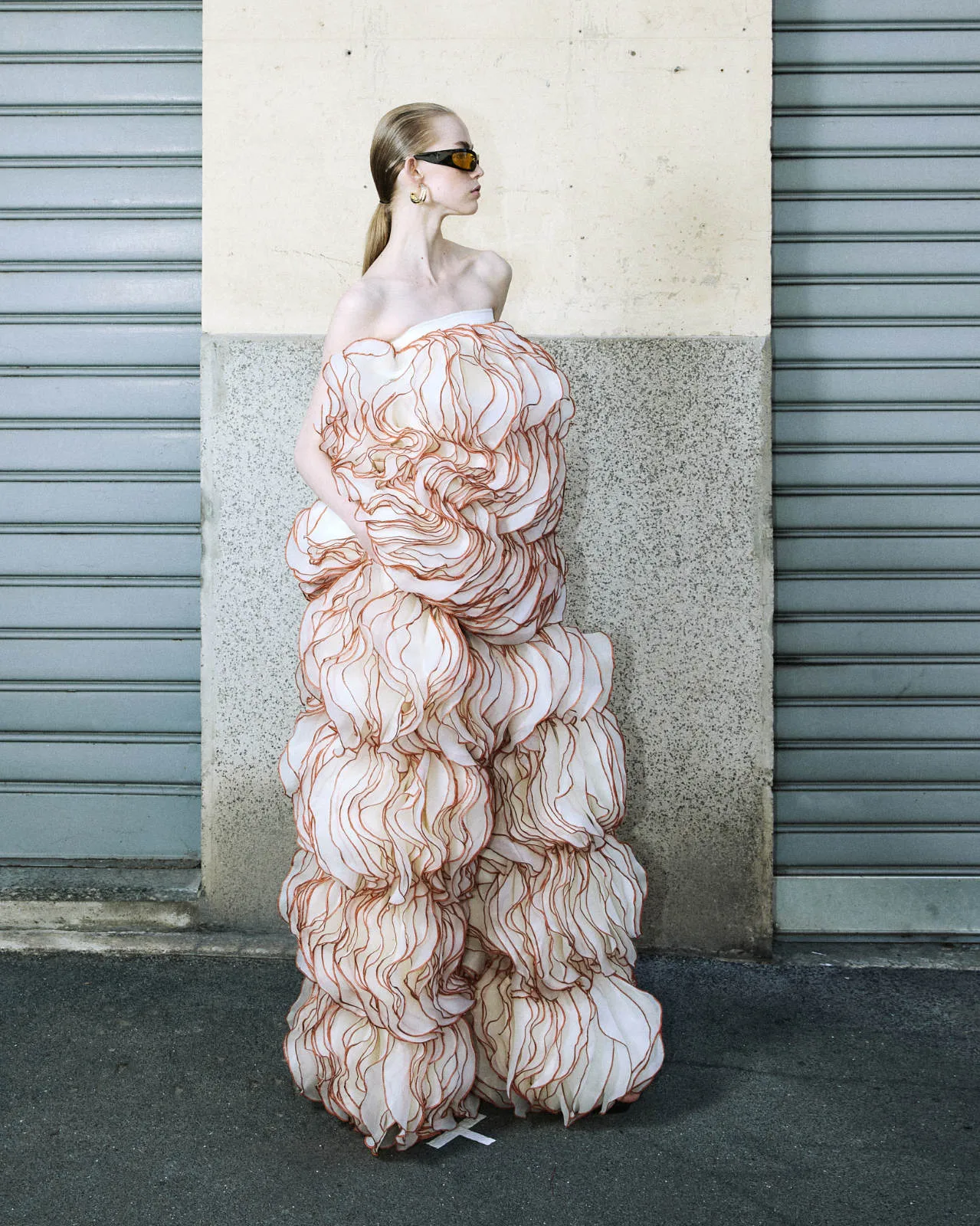
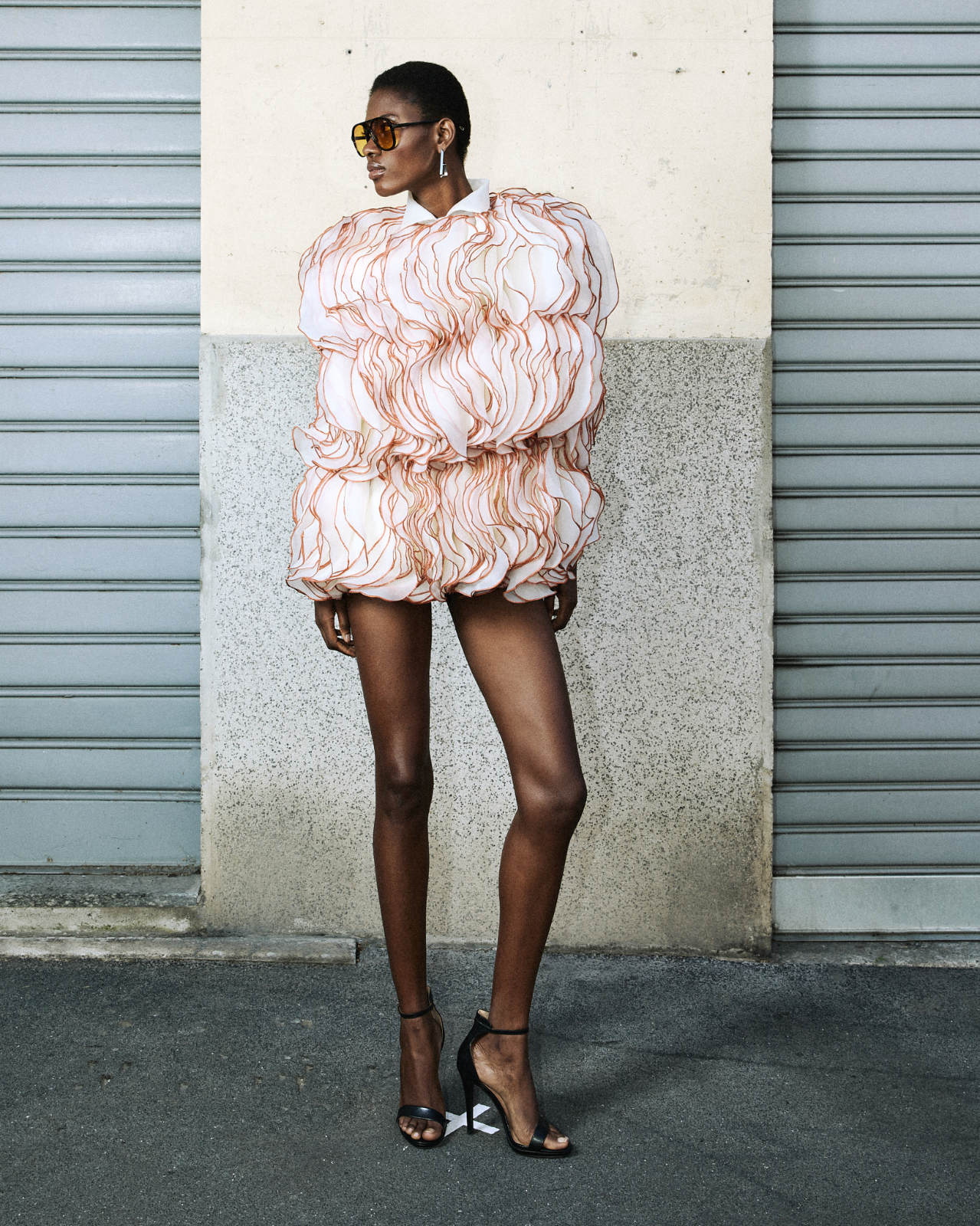
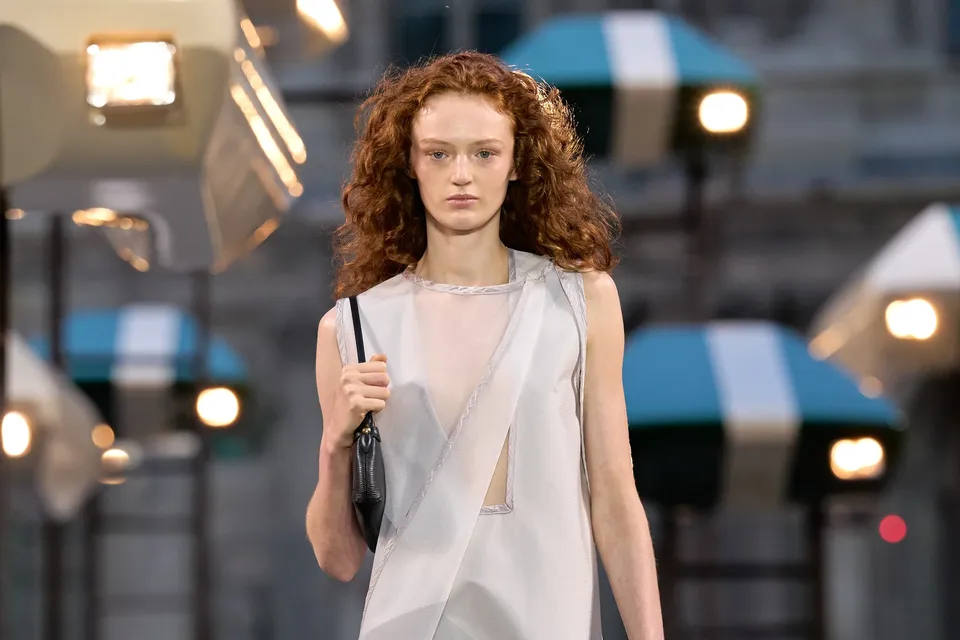
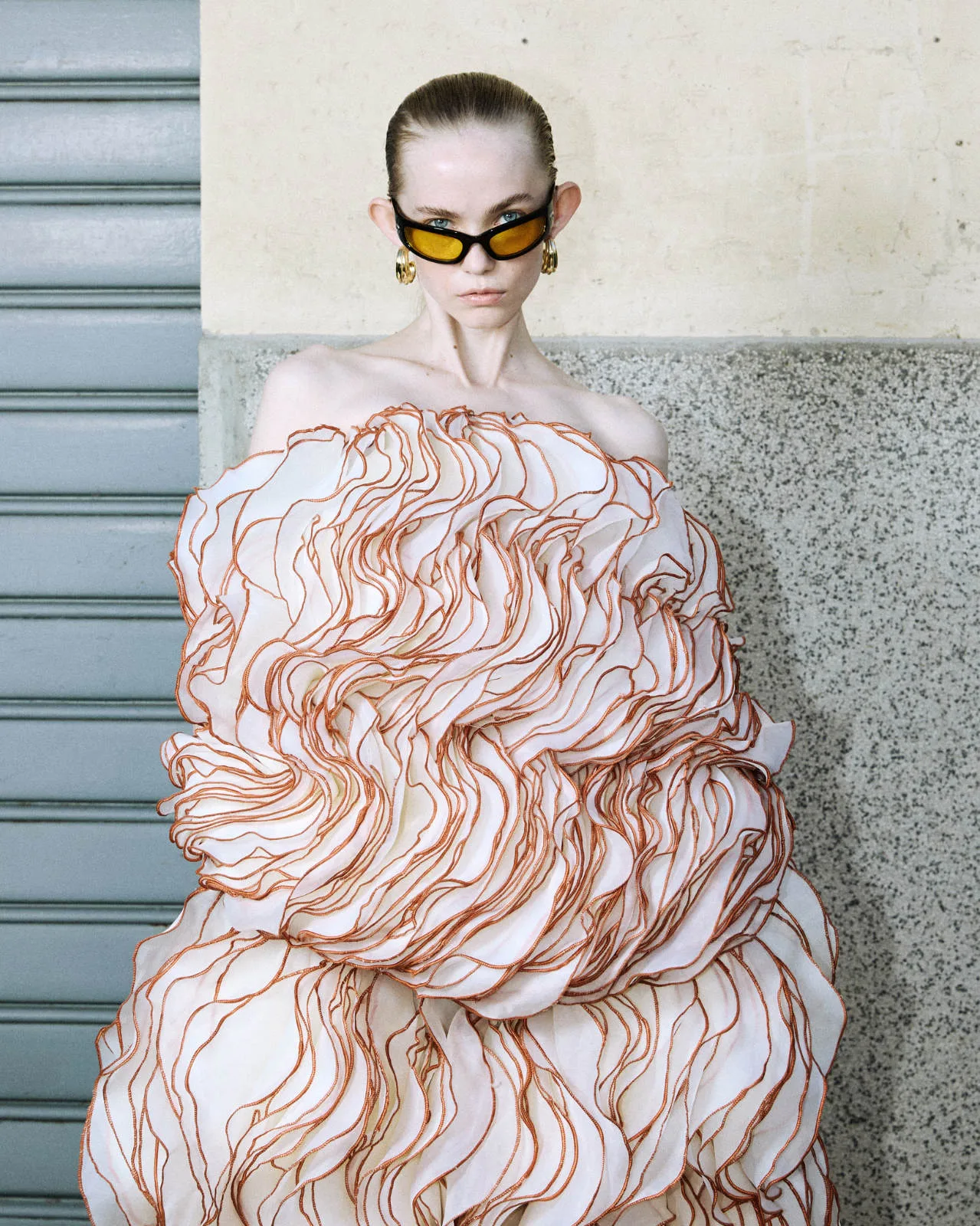
The official press release for Spring/Summer 2026 refers to the collection, “voluminous ruffles collide with sharp tailoring”, if these characteristics, voluminous ruffles and sharp tailoring were real people and had personalities, how do you think they’d interact with each other? Fancy ol’ Sharp Tailoring or Bold Young Rebellious Ruffles. Do you ever envision these garment properties as real people?
I do envision garments as people. If this collection had a personality, it would be as if Burna Boy and Adele had a child, raised in Battersea, London, with holidays in Lagos, Nigeria, and Christmas in Como, Italy. That tension between softness and strength, rebellion and elegance, is exactly where this collection lives.
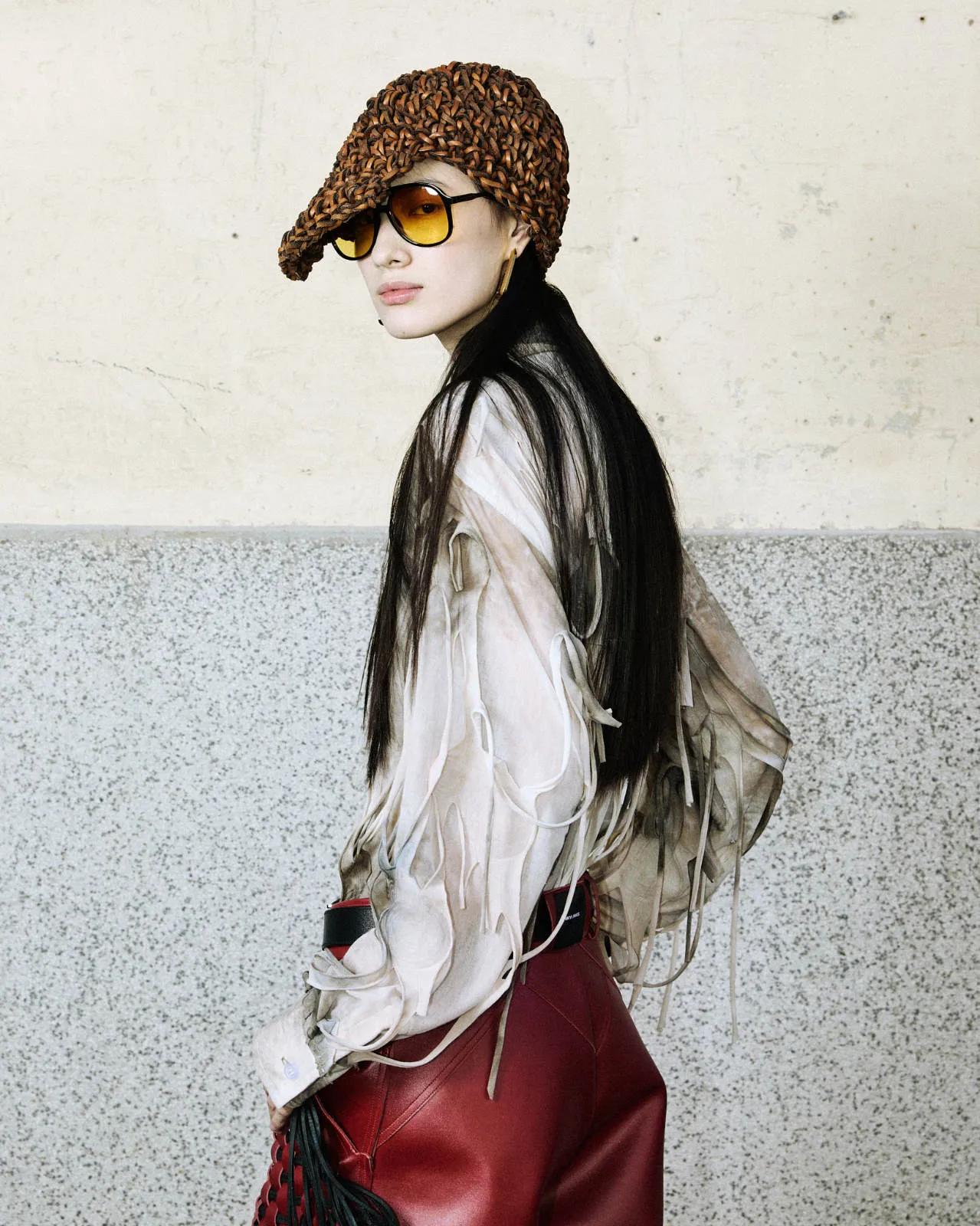
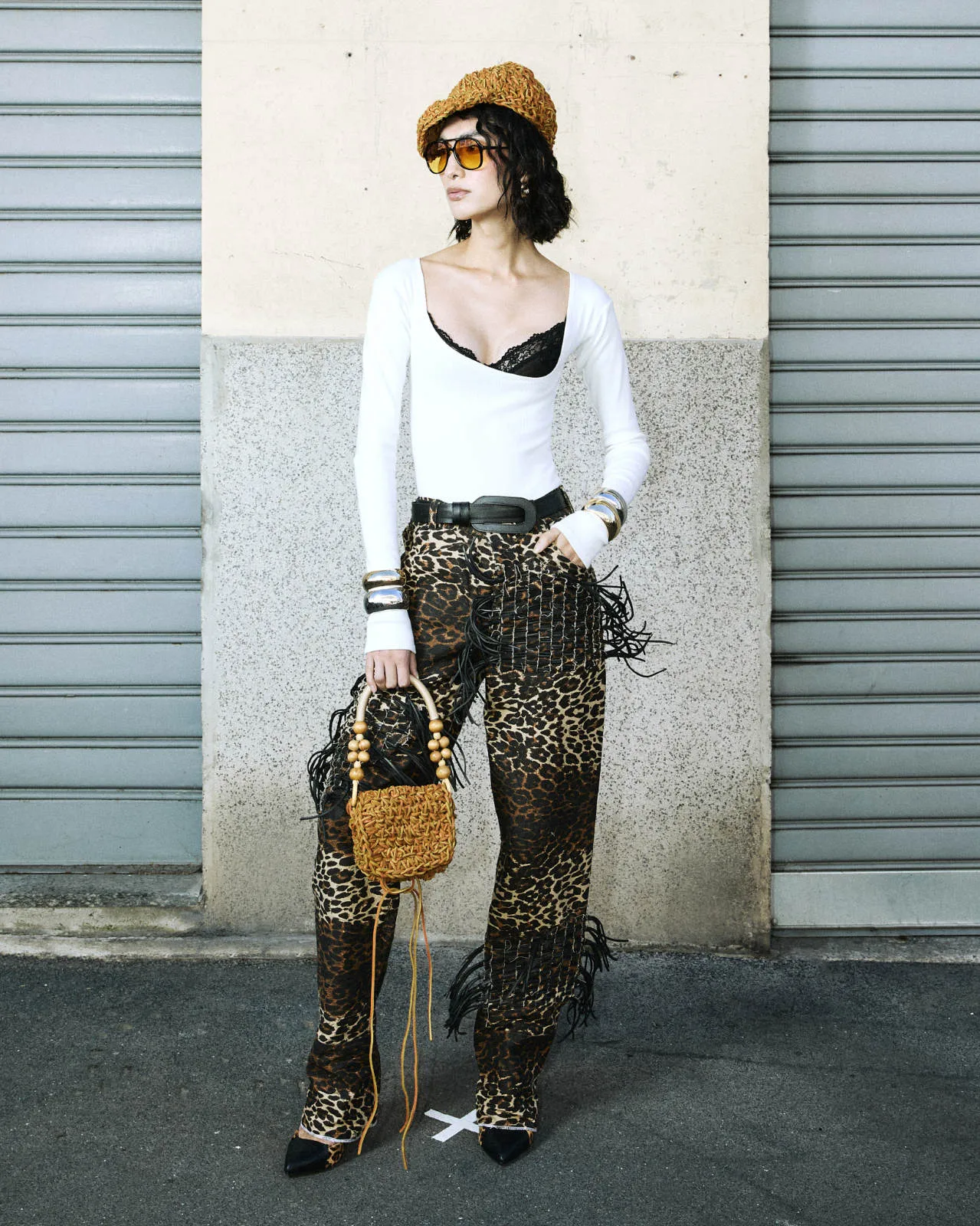
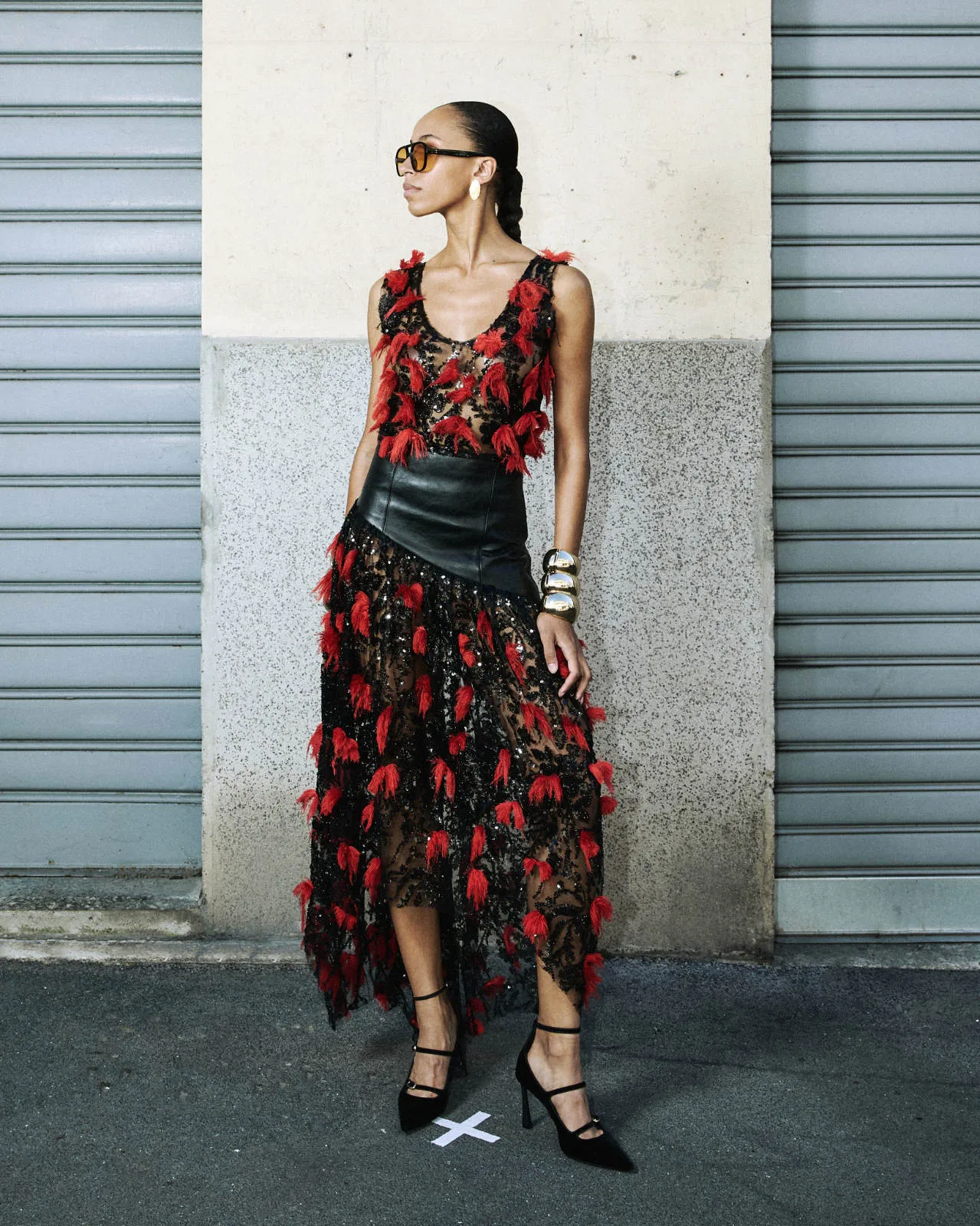
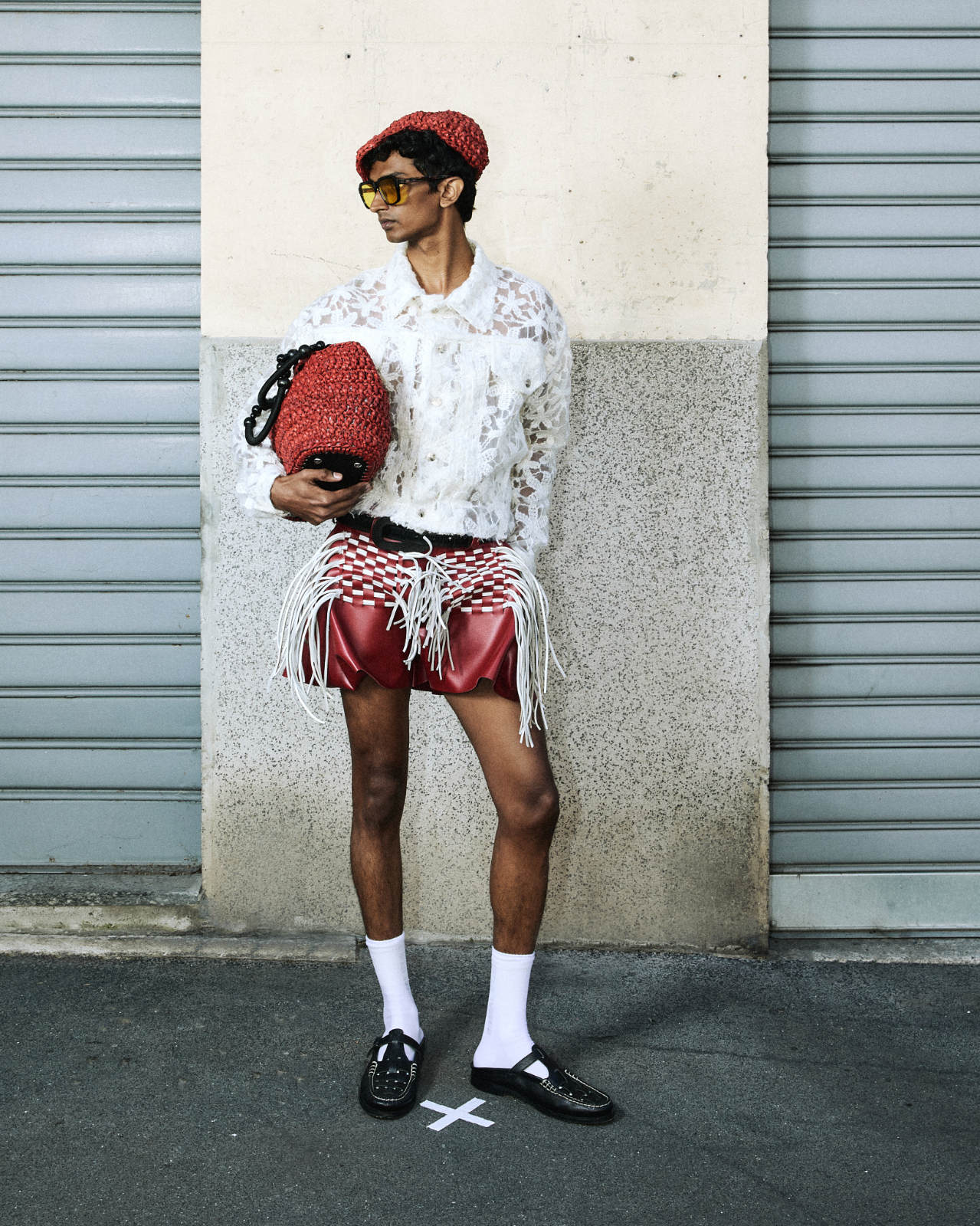
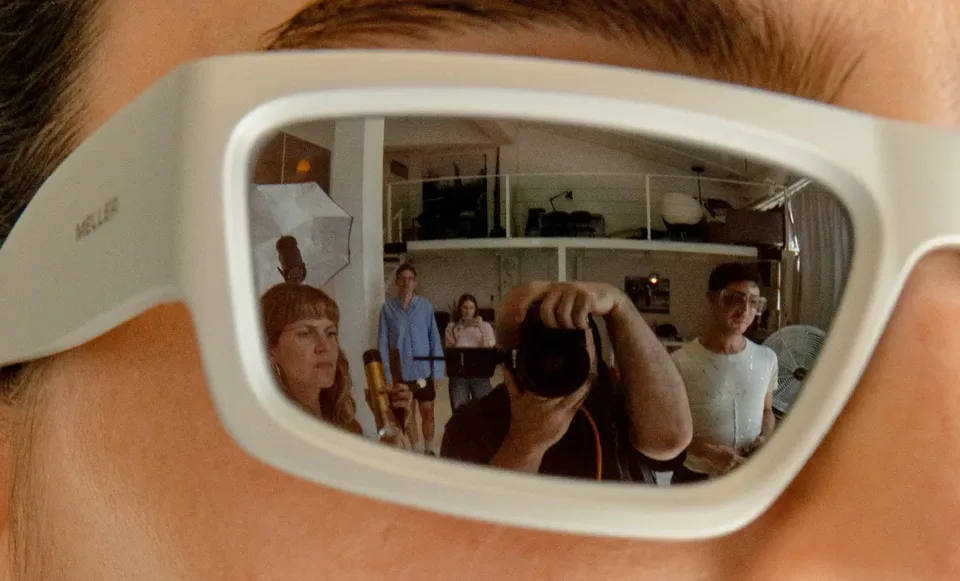
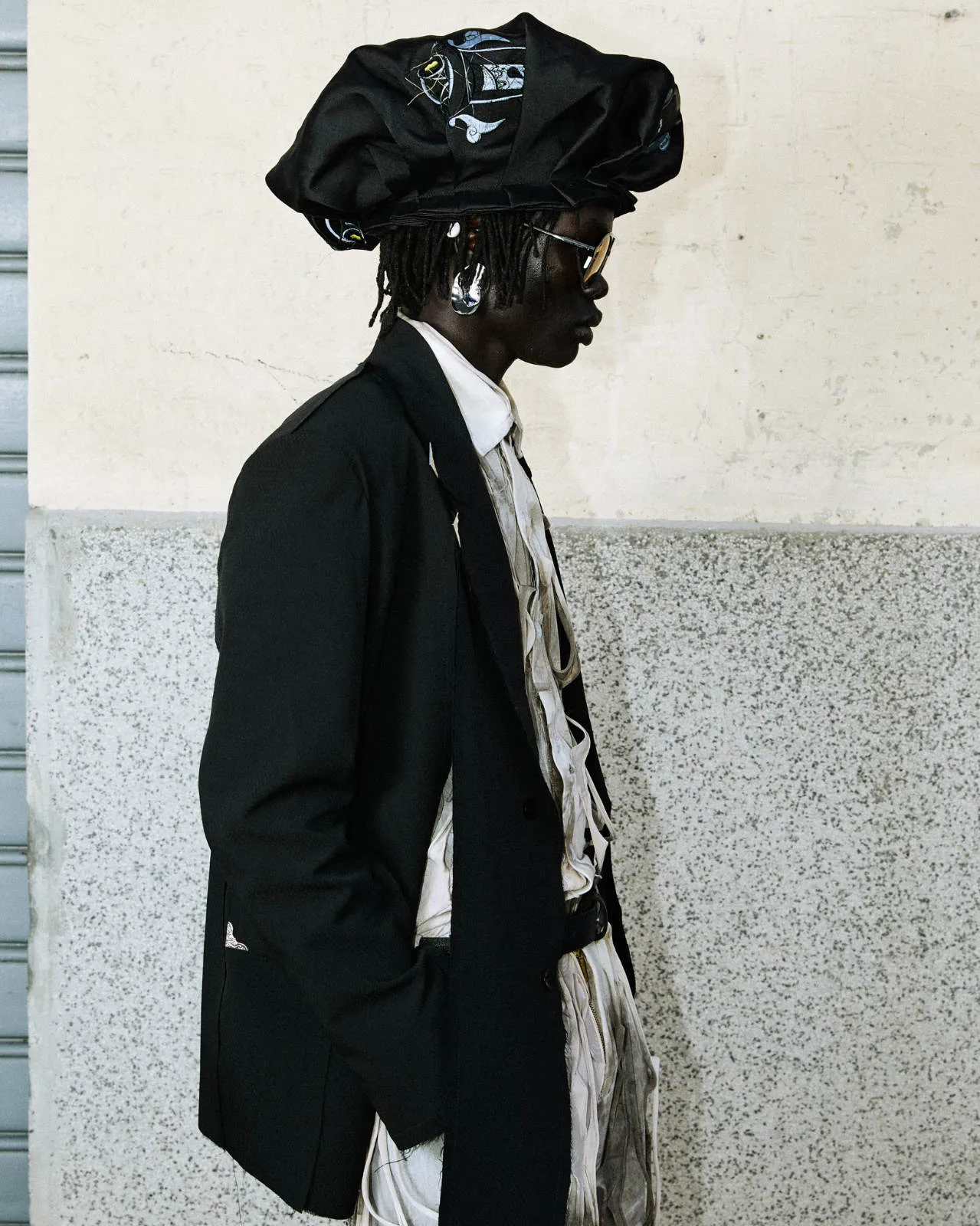
The models are seen wearing yellow-orange tinted glasses, any coded message? Or pure coincidental artistic choice?
They reflect the current state of the world. We see what is happening politically, socially and globally, but many of us pretend it will simply blow over. What we often forget is the generational impact of this moment, and how history will remember us for what we did or did not do. The glasses represent distorted vision, denial and selective seeing.
What’s behind the process of curating outfits for the runway, what guides or principles did you follow to make the looks of a collection which had the main objective as Chaos? How did you visually make sense of what you had in mind?
I always aim to create clothes that are conversation starters but still genuinely wearable. My role is to make people look amazing without them having to think too hard about it.
Aside from the shape and craftsmanship, the colour palette in this collection is remarkably unique and celebrates each model’s individuality. It takes a brilliant eye to harness such tones: orange, mauve, and these captivating patterns. Does colour and print resonate with your exploration of African luxury?
Very much so. Africa is an incredibly beautiful continent, rich with colour and sensory experiences. You feel this through food, architecture, textiles and fashion, with each country expressing it in its own way. Luxury in Africa is about living rather than performance. It is about freedom of choice, authenticity and expression, rather than spectacle for validation.
The official press release for this SS26 Collection Chaos mentions how you continue to “push the boundaries of fashion with a collection rooted in duality — chaos and order, fragility and strength, tradition and rebellion.” These words seem to carry such deep conceptual richness, and bring up idiosyncrasies of origins and communities, for instance: social order, global fragility, family tradition or spiritual rebellion. What impact does the global overview have in your creative process and what impact did it have on the creation of this collection?
Thank you for such a thoughtful question. We are all products of our environment and our associations. Every day we are shaped by what we consume, where we grow up and the worlds we move through. These influences shape our ideologies, opportunities, relationships and even how we imagine the future. As someone who has grown up navigating both the global majority and the global minority, that duality is embedded in everything I design. Societal pressures, cultural contrasts and lived realities from both worlds naturally inform my creative approach. Chaos is a reflection of that layered existence.
To close this interview, and hopefully for you to come back to read it in the future, I propose to make a narrative exercise. For those who missed the live runway of the SS26 Chaos collection, could you put into a little metaphor how both the beginning and the end of the show felt for you?
The beginning and the end of the show felt both exciting and exhausting. Fashion can feel like being on a constant wheel, always moving and producing. At the same time, there is a real sense of fulfilment when the vision finally comes to life, and that moment makes the fatigue worthwhile.