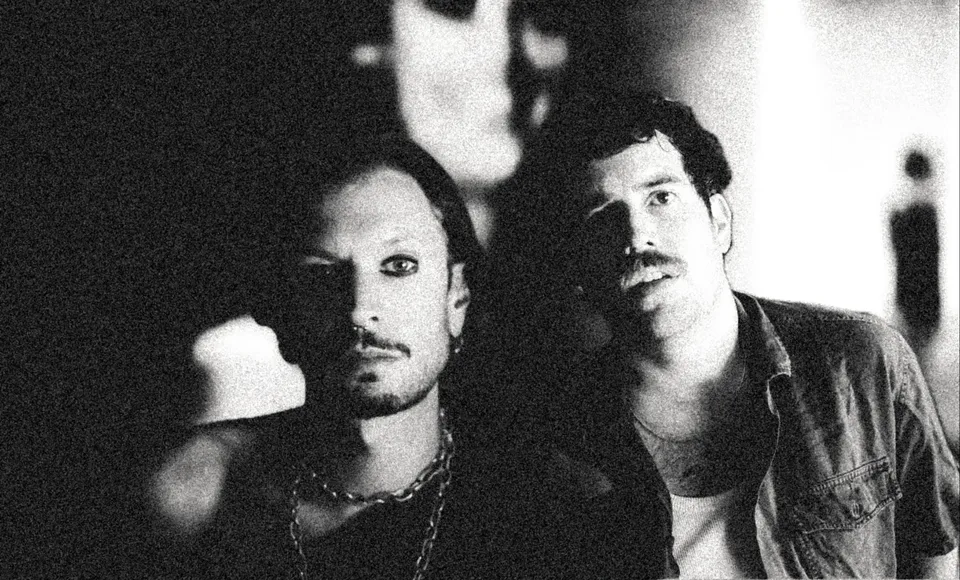
Montreal icon Tiga hasn’t returned quietly; he has reclaimed the room. As a figure who helped redefine the architecture of nightlife, this new chapter feels like a distilled version of his persona: precise and entirely self-assured. After years of playing with the spotlight on his own terms, this album tightens everything he’s explored before into something more focused, more deliberate. Hotlife is a statement, not a test.
The groundwork had already been laid through a trio of singles that hinted at the project’s direction: Ecstasy Surrounds Me, Silk Scarf, and Friction. Each sharpened a different edge of its identity. Here, those ideas fully crystallise, converging into a record rooted in his signature sound, often described as electroclash-meets-acid, a hybrid language he has long shaped.
Lyrically, this record cuts through personal terrain and cultural noise alike, unpacking internal struggles while taking aim at figures of hyper-capitalist mythology, the commodification of intimacy, and the endless churn of the music industry. It’s as much self-examination as it is external critique. Sonically, that duality drives everything. The tension between underground techno and pop is constant, never fully resolving, always pulling in opposite directions.
The opening track, Hot Wife (with Boys Noize), locks into a bass-led hypnosis. From there, the record leans further into heavier synth work, beginning with High Rollers, which sets the stage for IamwhatIam, featuring Norwegian MRD and standing as one of the album’s most intense peaks. Then Silk Scarf, in collaboration with Fcukers, slips into subtly funk-inflected rhythms, before Friction arrives with an unmistakable Gary Numan cadence. This brief shift is quickly overtaken by songs built on cyclical phrasing and looping structures, only to be disrupted once again by moments like I Am Your Detroit Sunrise, which introduces organic textures and unexpected instrumentation.
It’s around this midpoint that the emotional undercurrent becomes unavoidable. Tiga recently shared on Instagram: “There was a period of time, not so long ago, where I couldn’t do anything. Couldn’t make music, couldn’t make jokes, couldn’t function at all.” Framed through that lens, the record takes on a different weight. “This album in many ways is the soundtrack to this return.” What initially reads as dominance begins to feel like reconstruction, a way of reasserting identity through sound.
The final track of this meticulously crafted project reframes everything that came before, pulling its contrasts into a cohesive emotional arc where pop sensibility and underground intensity no longer compete but coexist. In that closing gesture, Hotlife lands with the certainty of something that has already endured its own contradictions and emerged stronger, like Tiga himself