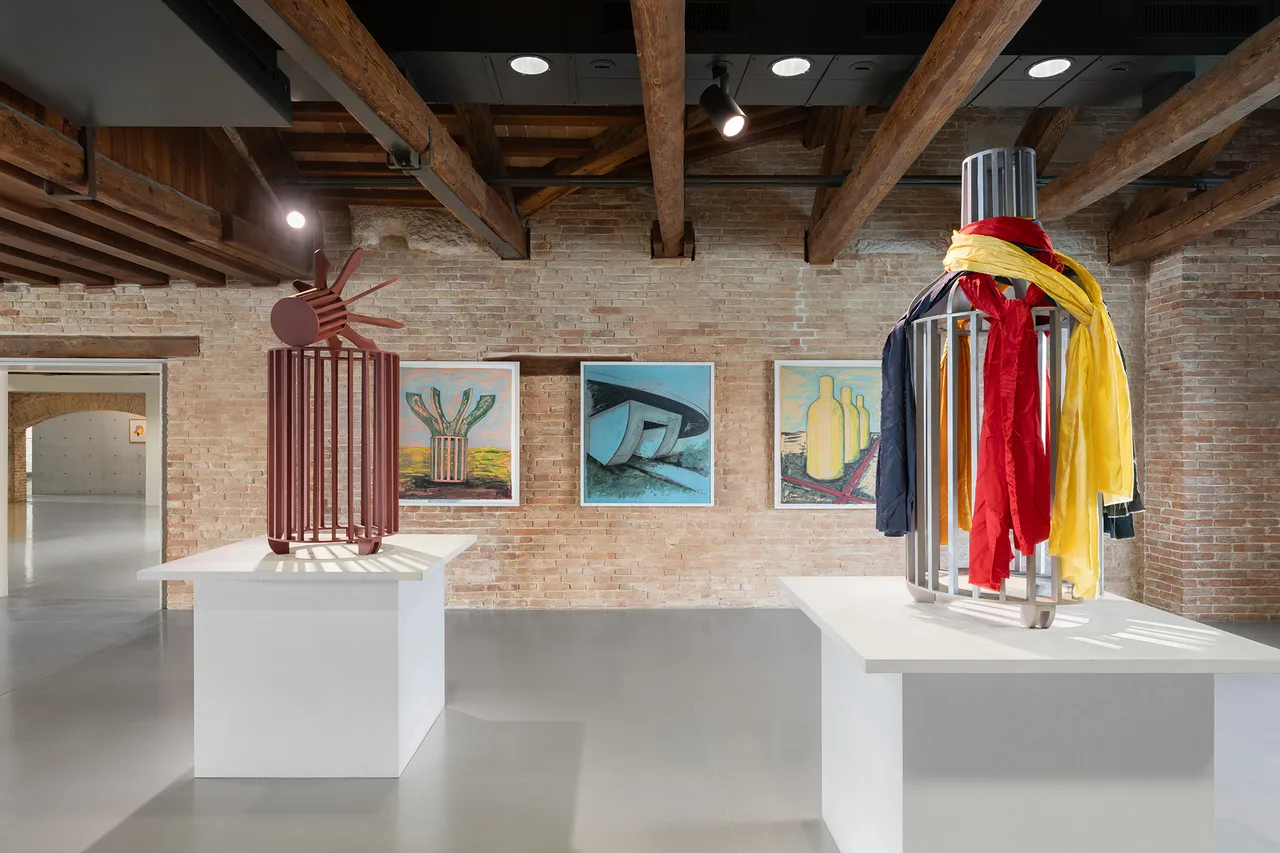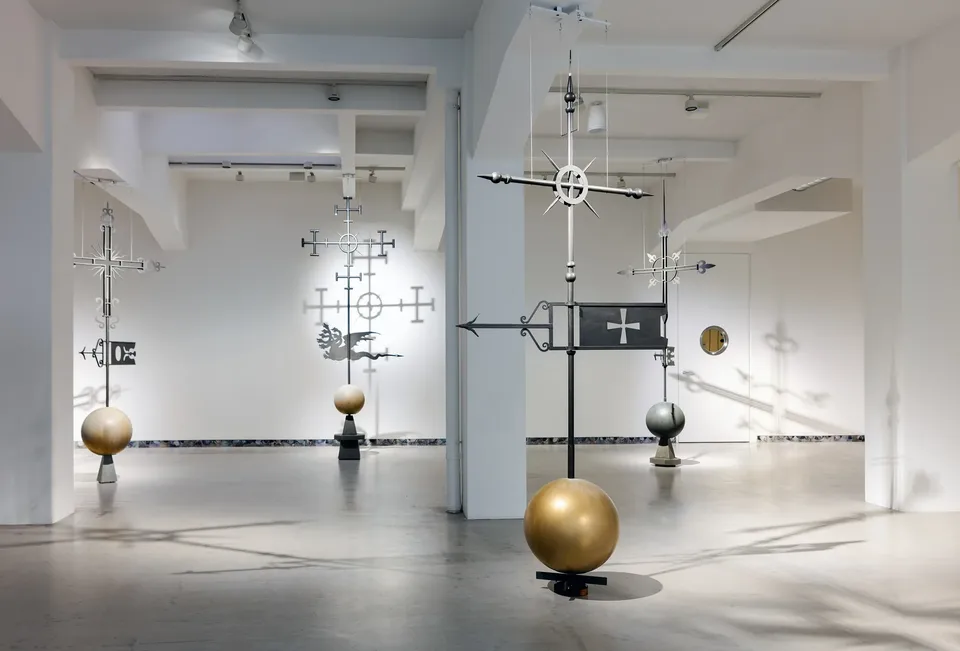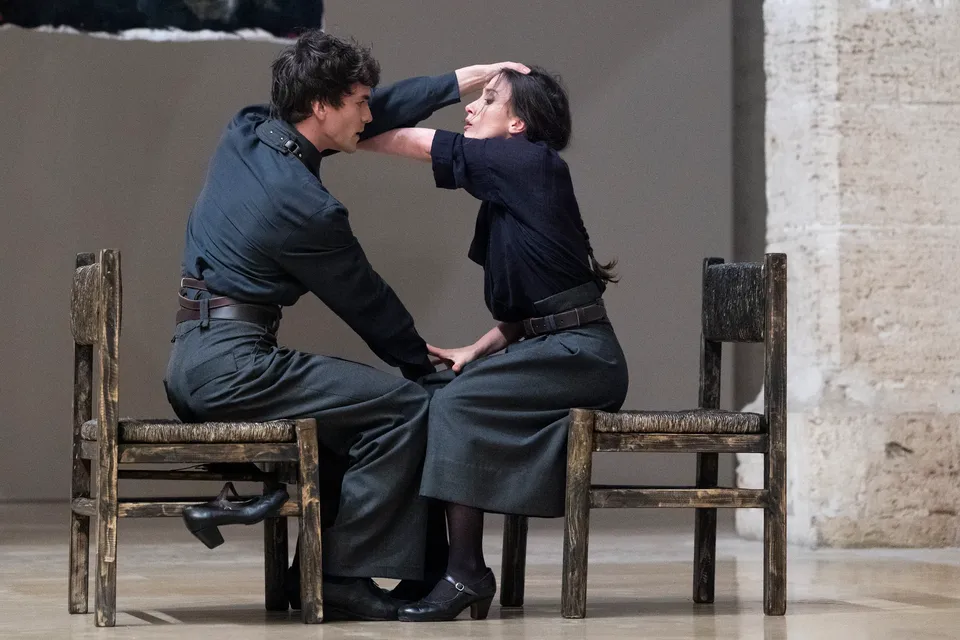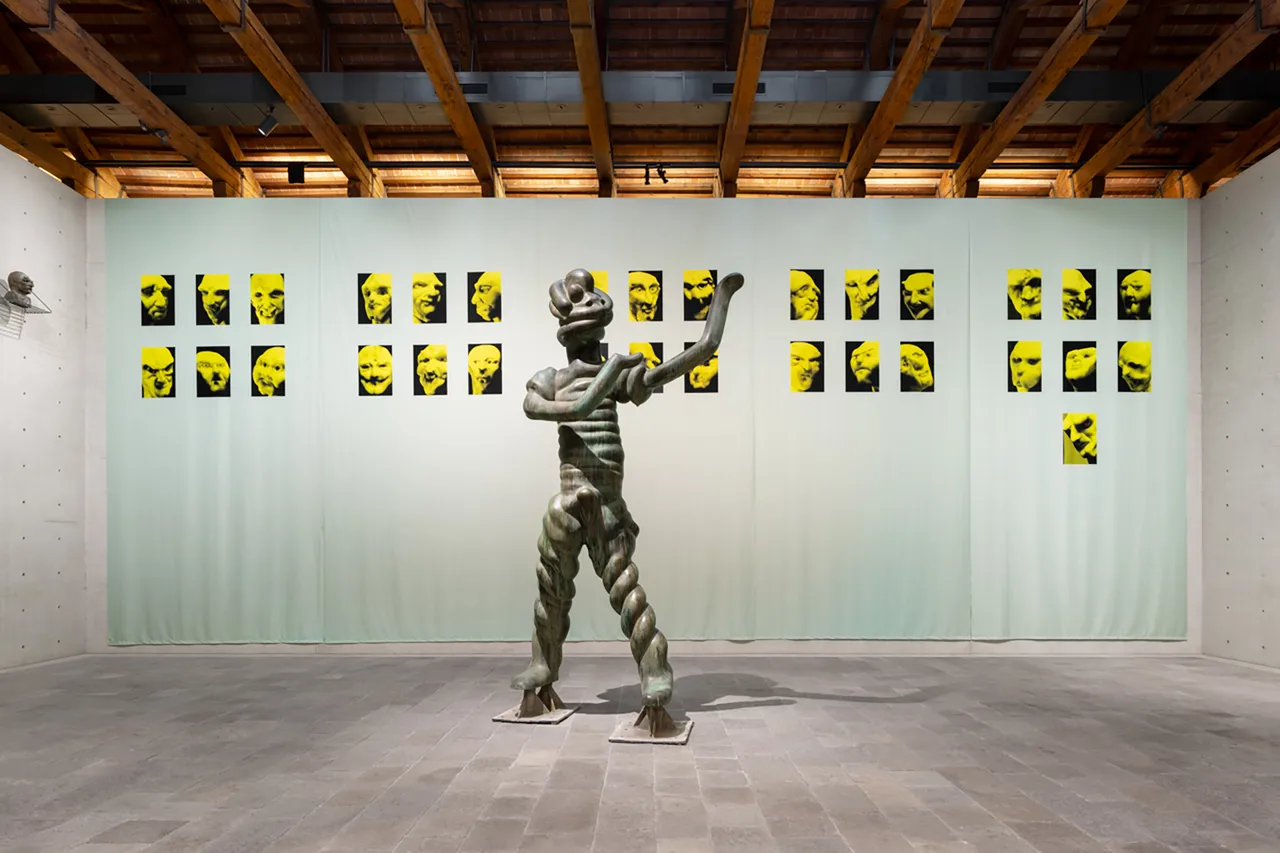
Unsettling. Self-reflective. Poignant. And slightly grotesque. These are the words that come to mind when passing through Thomas Schütte’s Genealogies exhibition presented by the Pinault Collection at Venice’s Punta della Dogana, on display until November 23rd. Curated by Camille Morineau and Jean-Marie Gallais, the solo presentation of the German artist showcases some never-before-seen pieces of Schütte. He is known to reflect on the human condition, inspiring irony and introspection through sculptures and paintings.
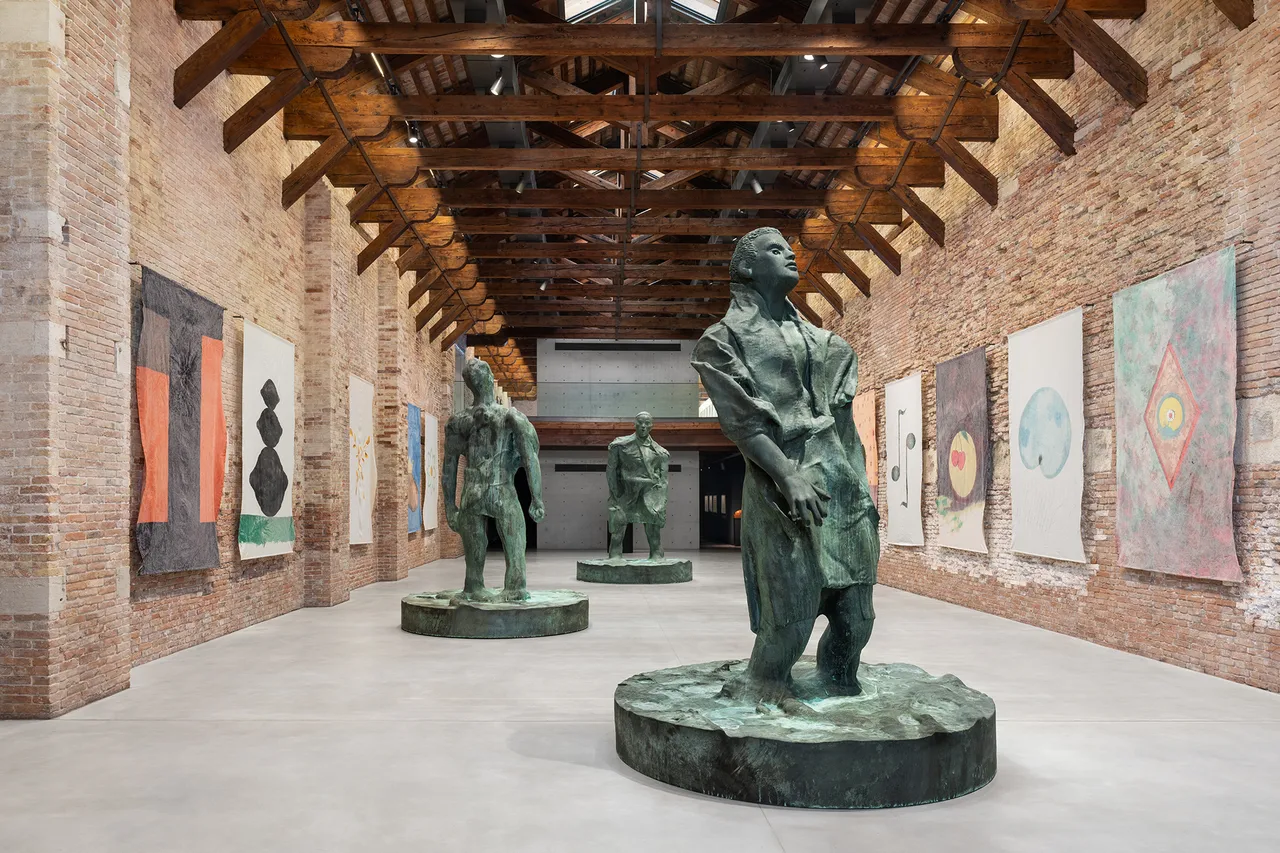
Genealogies goes a step further by reflecting on Schütte’s own artistic journey, displaying pieces from the 1970s onwards. The first room echoes some of his first creations and a sustained theme through his work of men stuck in the mud. The figures Man in Wind I-III (2018) we see are all young men sinking into the patinated bronze base as the wind blows their clothes tight against their bodies. Schütte questions their ability to move forward, victims of their own society and trapped in a state of passivity.
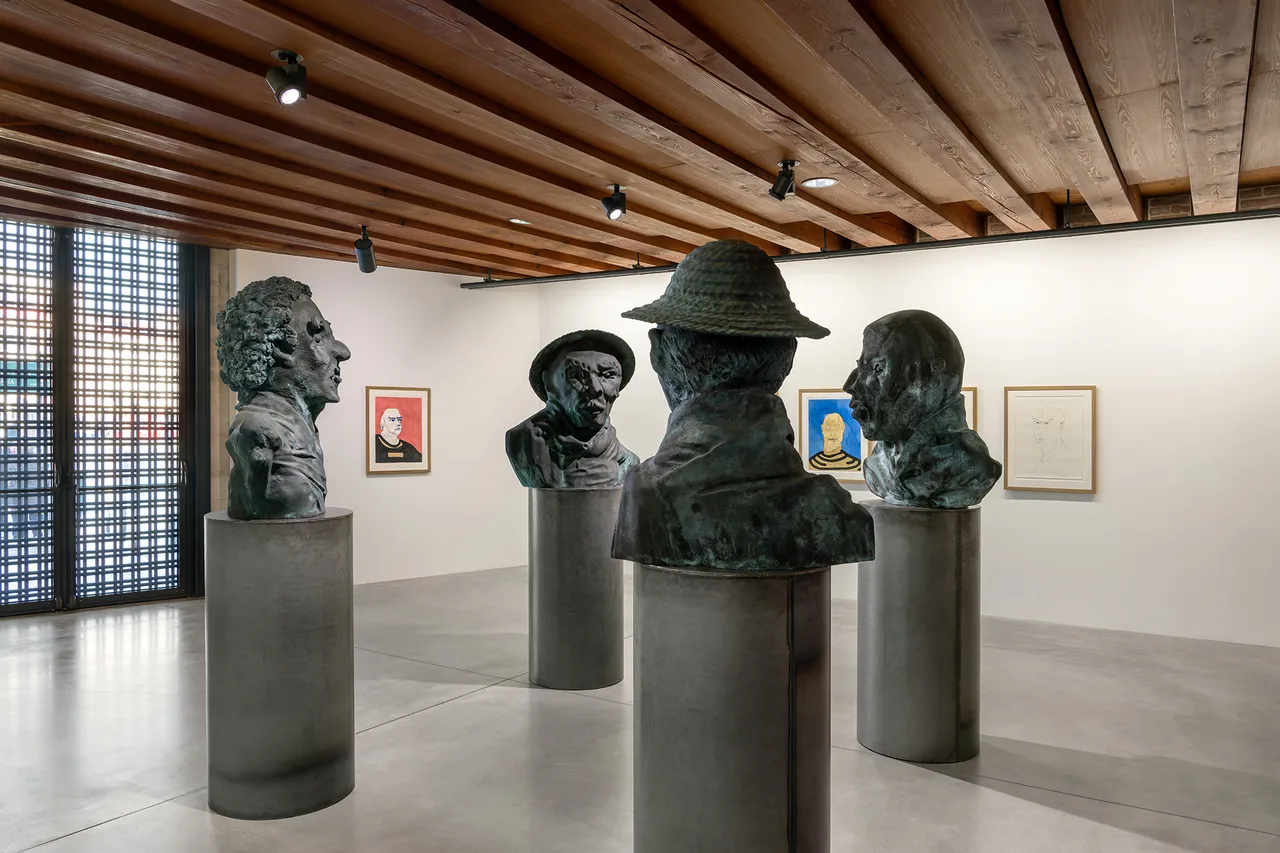
Little men bound together in pairs under glass jars in Untitled Enemies (1994) evoke the feeling of a lab experiment with small humans gone wrong as their distorted faces look out to visitors. Some faces angrily dare you to lift the jar and set them free. Others seem like they have nothing going on inside their head. Their stick legs, scrappy clothing, and confronting expressions make me feel as though they are the hangman figurines from my childhood come to life, and they’re angry at me for not guessing the word correctly.
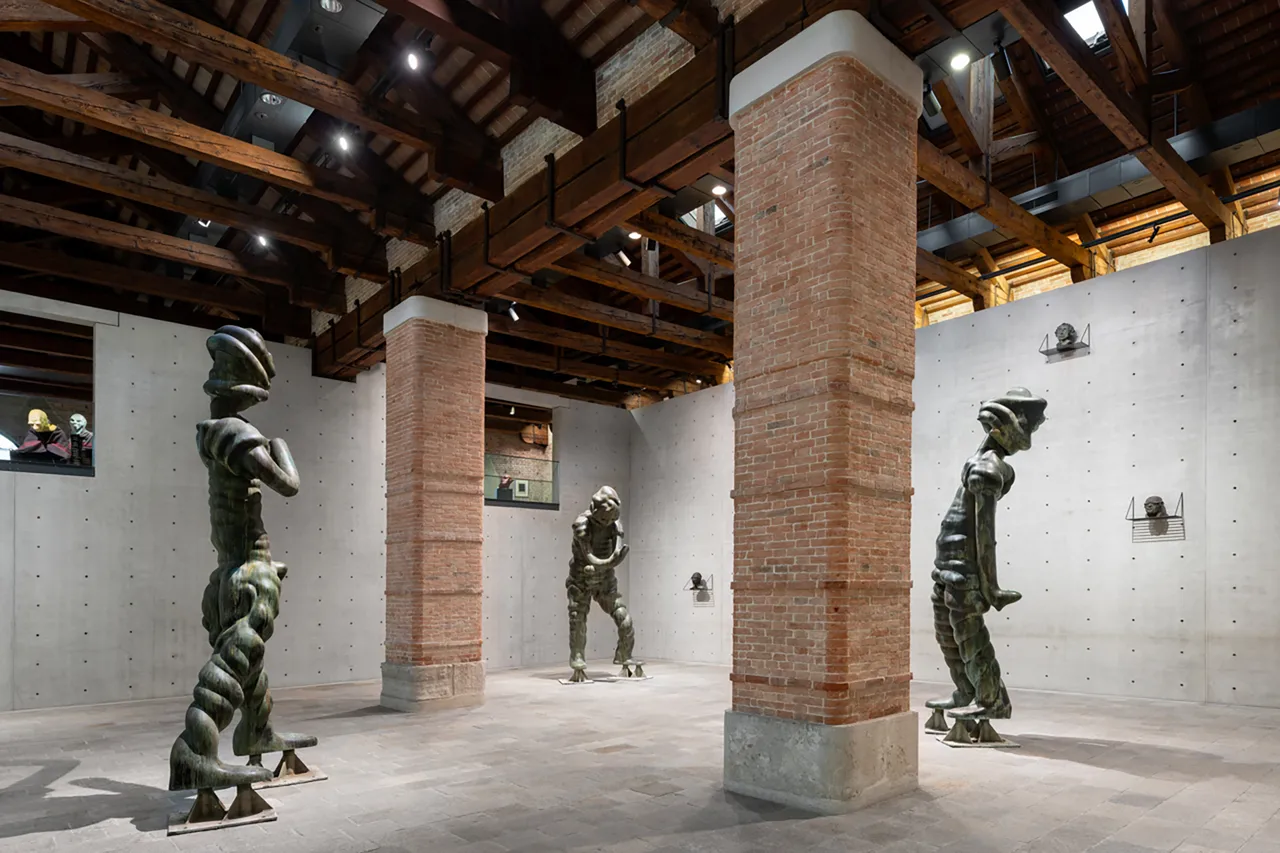
Braving through the exhibition you see a C-3PO lookalike in The Good and The Bad (2007-2009), who seem like victims of torture who’ve had their mouths stitched shut, eyes gouged and filled, nose kicked in, and encased in a sheeny gold and platinum glaze. They look as though they wish to talk to each other but can’t. So instead, they are communicating through their faces and whatever expression is left. Later on, Three Very Large Spirits (1998-2004) tower over the room. Their twisted legs and bodies sculpted from wax and blanketed in bronze look as if their muscles had been stretched out and wrapped around their bones. As they face each other, deformed, you can’t tell if they would be friends or fight each other to the death.
Schütte is known for his depiction of men primarily, however, his depictions of women are some of the most interesting in this exhibition. Weeping Women Nr. III (2011) is one of his bronze fountains portraying a woman’s face crying through the spigots. In these fountains, he reduces the woman’s expressions and faces to the bare minimum: two eyes and a mouth pouring out water to be collected in a basin. The fountains have been described by the Pinault Collection as depictions of primal art like masks and statuettes from Africa, but they also show the simplicity which we demand from women — contorted and condensed to barely legible humans.
The Aluminium Women (1998-2006) collection similarly warps the female figure but talks back to the simple, and many times sexualised, perspective women are boxed into. At first glance, the sculptures portray the feminine nude, but as you circle around them, each angle tells a different story. Laid out on steel tables, they are sliced up as if on display post-surgery. Those with faces look away from passers-by into the beyond or closing their eyes, constantly averting our gaze, as though they can see what is to come.
Schütte braves the question of human existence and the relationship between our mind and body in Genealogies. The exhibit’s storytelling and layout in non-chronological order shows us how his work is constantly elaborating on just a few core concepts and themes but preserves relevance throughout time.
The exhibition Genealogies by Thomas Schütte is on view through November 23 at Pinault Collection Punta della Dogana, Dorsoduro 2, Venice.